



Abstract
The percentage of older adults using social media has increased substantially in recent years, yet little research has been done to understand the foundations underlying social media technology usage by older adults. Such an understanding is useful for developing intelligent user modeling and personalization techniques specific to this growing community. The current work first compared characteristics of Facebook users to non-users among adults age 51 to 91 and found that older adult Facebook users were significantly more satisfied with their current social roles than non-users. Second, we explored several characteristics of active older adult Facebook users, providing detailed data regarding the ways in which they access social media, the kinds of personal information they typically share, and information about their public versus private communication practices, preferences, and concerns. Finally, we examined specific relationships between older adults’ Facebook communication habits and their attitudes regarding perceived loneliness and social role satisfaction. Controlling for factors such as age, gender, ethnicity, socioeconomic status (education and income), and marital status, we found that directed communications (as opposed to broadcast communications or passive consumption of content) was correlated with reduced loneliness as well as increased social role satisfaction among this distinct population.
Introduction, motivation, and synopsis
Social media technology has the potential to help facilitate social connectedness among older adults who otherwise might be physically or geographically isolated from family and friends. For example, older adults with mobility impairments might not be able to travel easily, thus missing out on community events, family gatherings, or routine socializing with friends. Whereas numerous previous studies explore how and why teens and younger adults use social networking site (SNS) technology, very little research has examined SNS use among older adults. Considering the prospective benefits of increased social connectedness to the health and well-being of this unique (and growing) population, as well as the practical value to technology designers and researchers developing models of social media uses and users (e.g., for personalization), research is needed to understand the distinctive social, cognitive, and psychological features of older adult users, and the impact that such technology has on important elements of their lives.
Even while the growth rate of the United States general population declines, the growth rate of the older adult segment of the population is dramatically increasing [35]. Furthermore, the population of people over 65 years of age is expected to more than double again by the year 2050, when it will account for more than 20% of the total U.S. population [34]. Along with this population growth is a similarly rapid increase in the number of older adults using social media technology [36]. At the same time, numerous studies are demonstrating the general benefits of social connectedness to the health and well-being of older adults [2,14,21,22,26,32]. With this in mind, it seems worthwhile to understand the role that social media technology plays in supporting such social connectedness. Likewise, an understanding of the foundations underlying social media technology usage by older adults would be quite valuable to designers and researchers wishing to develop better user models and personalization techniques specific to this growing community. To this end, we recruited 268 participants age 50 and over to complete a survey to investigate (1) the characteristics distinguishing social media users from non-users among older adults, (2) common activities of those who self-identified as active social net-working site users, and (3) relationships between older adults’ communication habits – both online and offline – and their outlooks regarding technology, perceived loneliness, and satisfaction with their own roles within their social networks.
When comparing social media users to non-users, we found no significant difference in frequency of traditional communications (e.g., phone or face-to-face). This suggests that social media is augmenting traditional channels of communication, not replacing them. We also found that age was negatively associated with the likelihood of social media use. On the other hand, privacy and security concerns, perceived complexity of social networking site (SNS) technology, and lack of interest or access to technology each contribute to why some older adults chose not to use social media. Interestingly, when comparing older social media users to non-users, significant differences emerged for dependent measures related to social role satisfaction, general confidence using technology, and the degree to which information and communication technology improved aspects of participants’ everyday lives. Counter to expectations, there was no significant difference in perceived loneliness between social media users and non-users.
We also examined certain social networking site (SNS) specific activities like directed communications (i.e., user-generated content that is intended for a specific person), broadcast communications (not intended for anyone in particular, but broadcast to the general network audience), and passive consumption (when a user merely reads or views content produced by others, rather than actively producing their own directed or broadcasted content). We investigated the impact these activities had on loneliness and social role satisfaction among older adult social media users. We found that older adults engaging in directed communications via SNS were significantly more satisfied with their own roles within their social networks and were also less lonely. Additionally, frequently engaging in passive consumption of social media content from friends and family significantly helped older adults feel less lonely but did not help them feel more satisfied with their social roles within the network. On the other hand, frequent broadcast communications helped to increase social satisfaction but did not significantly lessen perceived loneliness. Among older adults who use social media, a relationship between age and network size also emerged; that is, compared to younger-old adults, older-old adults have distinctly smaller social networks.
Background and related work
As the number of older adults reaches record levels, it becomes increasingly important to understand the implications that an aging population has on aspects of community and society, including family and social network characteristics. Previous studies examining social satisfaction and well-being among older adults have illustrated a need for strong social ties [2,21,32]. Research has shown that as adults progress through retirement and other life changing events – such as the death of a spouse – they are likely to become depressed [32]. In contrast, maintaining strong social connectedness with friends and family has been shown to decrease symptoms of depression [14,22], stimulate interest in daily activities [26], and improve overall life satisfaction [15].
Given the general benefits to the health and well-being of older adults that accompany stronger social connectedness, it seems worthwhile to understand the role that social media technology plays in supporting such connectedness. It is also noteworthy that the percentage of older adults who use social media has dramatically increased. According to the Pew Research Center’s nationally representative Internet and American Life Project, respondents age 65 and older who use social media has increased from 1% in 2006 to 38% by 2012 [36].
Older adults are quickly becoming more familiar with social networking technologies, but a lack of research in the uses and activities related to social networking among older adults is apparent. The capacity with which this unique population interacts with social media is diverse. However, many social networking sites tend to target a specific audience such as teens, parents, college students, singles, and those with certain political or religious affiliations. As a result, many social media applications are geared toward younger generations, catering to their needs and expectations, while an auspicious opportunity to gain access to a dramatically increasing segment of the population is lost. Herein lies another reason for understanding how and why older adults use (or do not use) social media – such information can be extremely valuable for helping to shape the development of personalized social media technology designed to address the needs, preferences, and concerns of this unique community of users.
Facebook is currently the largest social networking site on the internet. In 2011, Facebook reported having over 500 million users. Today, that number has grown to over one billion users worldwide.1
Facebook Key Facts.
In the past, large SNSs were often tailored to specific audiences without fully appreciating one very basic characteristic: the age of the user. In many cases, target audiences are assumed to be users under the age of 50. Similarly, research in social media and social networking has focused on younger adults. Several studies investigated social media use among teenagers and younger adults [4,11,24,25,31]; however, there is a lack of research that investigates SNS usage and social networking by older audiences.
Prior work shows that undergraduates, typically age 18 to 24, use Facebook out of “habit” and “time-passing” [27]. Similarly, Valentine (2012) explored the motivations for using Facebook among adults age 35 and older (the majority of Facebook users in her sample were 35 to 54 years old) [33]. Through factor analysis, she found five gratification factors from Facebook use, three of which applied to older users: interpersonal habitual entertainment, passing time, and self-expression.
Building from Valentine’s work, more recent research investigated whether older adults (age 52 to 91) have similar motivations for using Facebook [1,19]. They reasoned that older adults’ motivations for using social media sites likely differed from younger adults due to very dissimilar social roles and activities. Indeed, for adults over the age of 50, the number one reason for using social networking sites was to stay in touch with family (51.1%), compared to staying in touch with friends (22.7%), acquaintances (11.6%), colleagues (10.7%) or connecting with people they have never met (3.9%) [1]. These results were consistent with national telephone poll data [36] and are in direct contrast to the motives of younger adults, who typically report that staying in touch with friends is their number one reason for using social networking sites [11,30,36]. The current study explored whether older adults (age
These studies all contribute to helping understand the motives for using social media among different age cohorts, but little is reported regarding reasons for choosing not to use (or ceasing to use) social networking sites. Preliminary work by Bell and colleagues (2013) began to address this gap [19], since understanding such motives and barriers may help technology developers design their sites to improve social connectedness of older adult users, which in turn has potential benefits regarding the general health and well-being of this community. This paper presents additional data and expanded analysis in this regard.
Social networking site (SNS) activities
In differentiating between types of social media communication behaviors, Burke, Kraut, and Marlow (2011), identified three kinds of SNS activities: (1) directed communications with specific, targeted individuals; (2) broadcast communications, which are not targeted at anyone in particular; and (3) passive consumption of content [5]. In addition to one-on-one targeted communications (e.g., private messaging, chat), Facebook supports directed communications on a more public level via wall posts, comments, and lightweight interactions such as photo tagging, content sharing, and “Likes”.
These semi-public and lightweight interaction mechanisms are fairly novel features of social media communication channels. Even the lightest of lightweight interactions can signal that a person feels that a relationship is meaningful. Because personalized (directed) messages are more likely to contain content such as disclosure and supportiveness that strengthens social ties [5], directed communications are useful cues regarding the strength of relationships in social media [13,20]. Based on previously discussed literature (e.g. [2,14,21,22,26,32]), we hypothesized that such cues might also indicate the degree of social satisfaction older adults might have regarding their role within their own social networks. We also address the question of whether these behaviors impact perceived loneliness of older adult social media users.
Age, loneliness, and social satisfaction
Despite the evidence demonstrating the benefits of social connectedness to the health and well-being of older adults (cf., [2,14,15,21,22,26,32]), there have been only a few studies specifically targeted towards understanding the impact of social media use on feelings of loneliness and social satisfaction among older adults. Furthermore, the evidence is mixed about the relationship. For example, Sundar and colleagues (2011) conducted a nationwide survey of older adults (age
Clearly, the matter remains an open question. The current paper contributes to the knowledge base with regards to this apparent uncertainty. Our early work collected data related to both perceived loneliness and to perceived satisfaction with social roles and activities [1]. This preliminary work revealed social role satisfaction to be a significant factor distinguishing social media users from non-users. That finding was a distinct motivator for the current research – we investigated whether there were relationships between age, social media use and perceived loneliness or social satisfaction. We also compared the relative impact of SNS activities on loneliness and social satisfaction. Specifically, we leverage the insights produced by that early work, and tests the hypotheses that older adults who use social media will have a) greater confidence when learning or using technology, b) more positive attitudes towards information and communication technologies in general, c) higher satisfaction with their own roles within their personal social networks, and d) generally less loneliness than older adults who do not use social media.
Age and social network size
As adults move into their fifties and sixties, they often begin interacting less frequently with previous coworkers, friends, and acquaintances due to major life changes such as retirement, death (of friends, family, or spouse), illness, or mobility difficulties [8]. In a 2008 study of real life social networks (vice online social networks), Cornwell, Laumann, and Schumm (2008) outlined the social connectedness of American adults age 57–85, and they reported that the oldest segment of the participant sample had the smallest number of social network connections [8]. Additionally, Joinson (2008) explored basic demographics of Facebook users (focusing primarily on a younger population in which the mean age was about 26 years, with the oldest participant being 66) and also found that the number of friends declined as the age of the participant increased [21]. Based on this literature, we tested whether such a pattern of decreasing network size continues to be observed among our cohort of older adults (as opposed to, for example, leveling off within the cohort).
Research questions
The purpose of this exploratory study was to examine characteristics and distinguishing factors between older adult Facebook users and non-users and to investigate relationships between older adults’ communication habits, their perception of technology, perceived loneliness, and their self-reported satisfaction within their social networks. The specific research questions addressed in this paper are summarized below. Questions 1 through 5 involve descriptive characteristics to help us better understand this specific population of users. Questions 6 through 8 were analyzed post-hoc with the goal of developing a better understanding of the “landscape” of older adult SNS users and non-users.
What are the characteristics of social media users versus non-users among older adults? Why do some choose not to use social media technology? How do older adult Facebook users compare to non-users with regards to their frequency of using traditional communication channels? How do older adult Facebook users compare to non-users with regards to a) perceived loneliness, b) social role satisfaction, c) confidence with technology, and d) attitudes towards the impact of information and communication technology on various aspects of their lives? Among older adults who are active Facebook (FB) users: a) how do they typically access FB; b) what kind of personal information is shared and what type of content is typically posted; c) what are the representative public/private communication practices, preferences, and concerns; and d) besides FB, what other social media technologies are used? Among older adults who are active Facebook users, is there a relationship between age and size of online social networks? How do specific SNS communication activities (e.g., directed communications, broadcast communications, or passive consumption) impact social satisfaction among older adults? How do specific SNS communication activities (e.g., directed communications, broadcast communications, or passive consumption) impact perceived loneliness among older adults?
Methods
Participants
Older adults were recruited from a community of 268 participants enrolled in the Georgia Tech HomeLab initiative, a long-term research program developed to study various aspects of the health and well-being of older adults within the context of their own homes.2
The survey took approximately 10–20 minutes to complete (
Social media use survey
The web-based survey included 92 questions with skip logic that allowed respondents to move through the survey based on the answers chosen (a paper version was provided to participants who requested it). Survey items were divided into four parts. Part one dealt with demographics data related to age, gender, ethnicity, education level, income, and marital status (mostly collected during induction into the Georgia Tech HomeLab). Part two consisted of questions from a well validated assessment instrument used to explore satisfaction with social roles and activities (i.e., the PROMIS scale, described in Section 3.2.2), as well as a validated instrument for measuring perceived loneliness (described in Section 3.2.3). Part three collected information regarding the frequency with which older adults communicate via traditional versus social media channels. Part four was specific to experience and familiarity with Facebook. The questions in parts three and four were derived from previous literature addressing similar issues [17,33]. Questions were revised, where necessary, to address an older adult demographic. Of the 92 survey questions, 14 provided the opportunity to respond with additional free text comments.
Satisfaction with social role (PROMIS scale)
The Patient Reported Outcome Measurement Information System (PROMIS) is a collective of measures containing a library of highly reliable, valid, flexible, and precise assessment tools for measuring patient-reported health status. One of the PROMIS instruments, the Satisfaction with Social Roles and Activities scale, is a well-validated 8-item instrument to assess satisfaction with social roles and activities [3,16]. This assessment tool was chosen because it scores respondents directly with regards to their own satisfaction with perceived ability to do routine tasks associated with being social and meeting the needs of their friends and family. This is precisely the kind of shift that older adults may experience as they move into their fifties and sixties and begin interacting less frequently with previous coworkers, friends, and acquaintances due to major life changes related to retirement, death of loved ones, increased occurrences of illness, or mobility difficulties preventing them from getting out as often. There are practical advantages as well; the scale is short and simple, making it attractive for applied use (it is both easy for users to fill out and easy for researchers to score – this is especially important for longitudinal studies with repeated collections). Sample questions from the scale include: I am satisfied with my ability to do things for my family; I am satisfied with my ability to meet the needs of my friends; I am satisfied with my ability to do fun things with others. Each question has five response options ranging in value from one to five. To find the total raw score for a short form with all questions answered, the values of the response to each question were summed. A score conversion table was used to translate this total raw score into standardized T-scores for each person (allowing for comparisons to a normalized mean of 50 and a standard deviation of 10 – e.g., a person with a T-score of 40 is one SD below the mean). Standardized scores range from 26.2 to 65.6 with higher scores indicating higher satisfaction.
Loneliness scale
The revised UCLA loneliness scale [29] is a 20-item assessment which asked about how often participants felt alone or isolated. As opposed to the PROMIS scale, the Satisfaction with Life (SWL) survey, or the World Health Organization’s Quality of Life (WHO-QOL) survey, the loneliness scale is more relevant for investigating degrees of social connectedness/isolation – an area that social media technology is purported to specifically address. The scale has been shown to be highly reliable, both in terms of internal consistency (coefficient a ranging from .89 to .94) and test-retest reliability over a 1-year period (
Confidence with technology
Confidence with technology was measured using a 10-item technology self-efficacy measure developed by Laver and colleagues [23]. Sample questions include: I could use the new technology if someone showed me how to do it first and if I had only the product manual for reference. Respondents rated their level of confidence from 1 (not at all confident) to 10 (completely confident) for using an unfamiliar technology given varying types and amounts of assistance. Higher scores indicate higher confidence.
Attitude towards information and communication technology
Attitudes toward information technology were measured using a 6-item scale selected from [18]. The items focused on the degree to which information technology and communications devices have improved aspects of their everyday lives, including work, hobbies, education, and social networking. Sample questions include: How much, if at all, have communication and information devices improved your ability to do your job? and your ability to keep in touch with friends and family?. The response scale ranged from 1 (not at all) to 4 (a lot); higher scores indicate more favorable attitudes toward information and communication technology.
Traditional vs. social media communications
We asked social media users and non-users to answer 15 questions related to their typical communication habits. We separated communication into two categories: traditional channels versus social media-based channels. Traditional communication included face-to-face, telephone, and letter writing. Social media based communications included interacting on Facebook and video chatting (e.g., Skype). Each channel of communication was assessed for three kinds of recipients: 1) their children, not counting any living with them, 2) other family members, and 3) friends. For example, we asked, how often do you speak on the phone to your children, not counting any who live with you? and how often do you video chat with friends? Participants responded by choosing one of the following options: Never, Yearly, Monthly, Weekly, Daily, or Not Applicable.
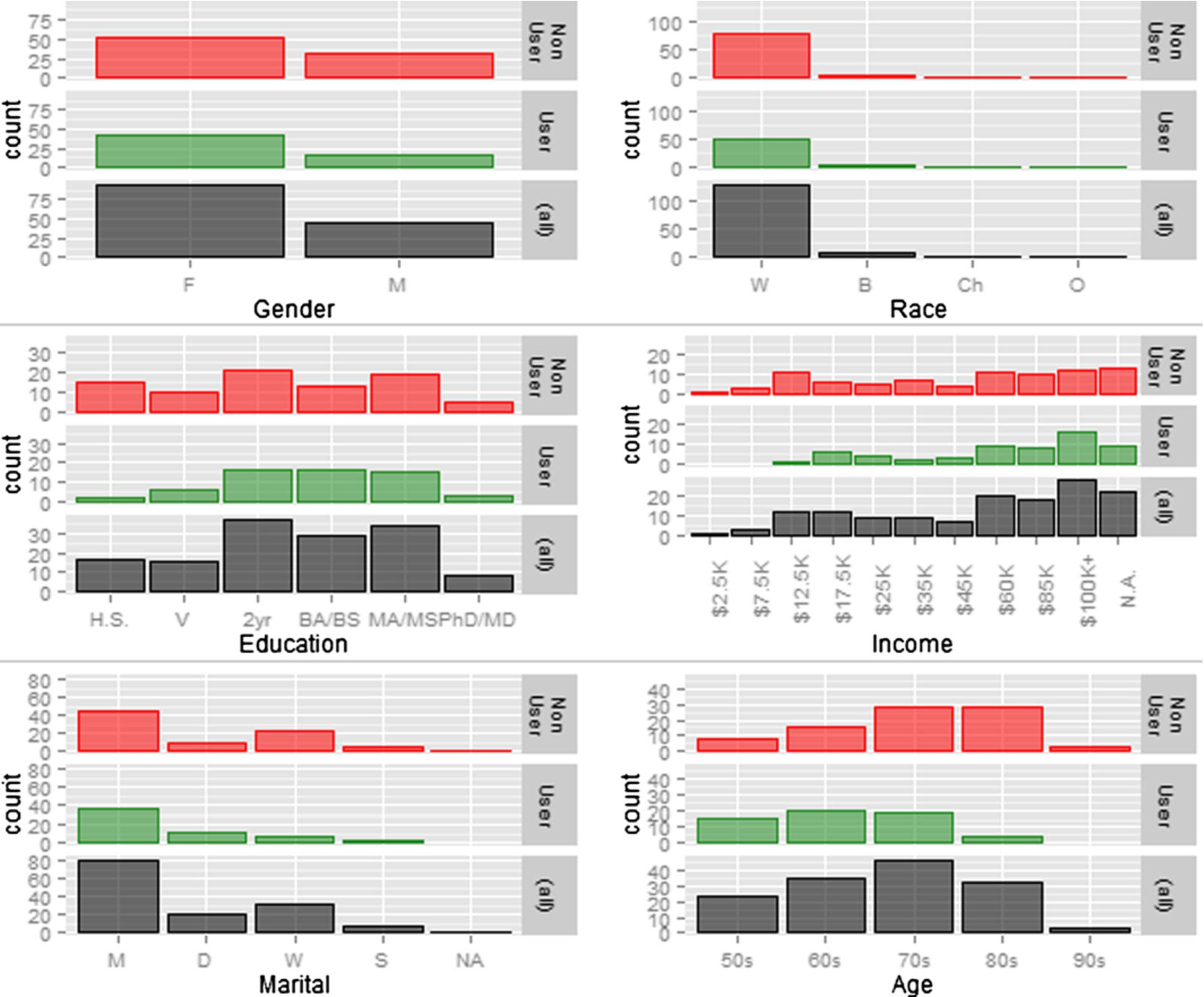
Demographics of the sample population (grouped as social media users, non-users, or all participants) [MARITAL—M=Married; D=Divorced; W=Widowed; NA=No answer; RACE—W=White; B=Black; Ch=Chinese; O=Other].
Frequency was converted to number of incidents reported per year and coded accordingly (e.g., Never = 0; Yearly = 1; Monthly = 12; Weekly = 52; Daily = 365; N/A = 0). This was then summed for each type of communication and for each set of recipients; higher scores for a particular channel indicate more frequent communication per year.
We asked social media users to answer 29 questions about typical SNS activities and the frequency with which they engage in each. We categorized SNS activities as either: 1) directed communications, 2) broadcast communications, or 3) passive consumption. The survey asked people to rate the frequency with which they engaged in activities like responding to news feeds (directed communication), posting photos (broadcast communication), and reading posts on others walls (passive consumption). Participants responded using the following answer selections: Never, Several times per year, Monthly, Weekly, Daily, and More than once per day. Responses were again converted to frequency of occurrences per year and coded accordingly (cf., Section 3.2.6). Each activity was summed for each type of SNS activity; a higher score for a particular activity indicates more frequent communication occurrences per year.
Results
There were 141 participants included in the final analysis, 95 of whom were female. The mean age of respondents was 71.17 years (
Characteristics of social media (Facebook) users versus non-users among older adults
Table 1 shows the Pearson’s Chi-Square test of independence for each demographic category against the outcome of either being an active Facebook user or a non-user. Of the six demographic factors assessed, only age was significantly different between the users and non-users (younger-old adults were more likely than older-old adults to use Facebook). This likely reflects the lack of variation in some of the demographic factors of participants in our sample, which is quite homogenous with regards to race and marital status. While this would be a limitation if we were relying on these factors to be equally represented in the user versus non-user groups, it actually becomes an advantage for most of our investigation; that is, it helps us hold these variables relatively constant as we explore our other research questions.
Pearson’s Chi-Square test against the outcome of either being an active Facebook user or non-user
Pearson’s Chi-Square test against the outcome of either being an active Facebook user or non-user
Levels of sig.:
=.001
Confidence with technology
Figure 2 (upper left) shows that social media users (
Attitudes towards ICT
Compared to non-users, Fig. 2 (upper right) shows that there was a significant difference in the degree to which social media users felt information and communication technology (ICT) had improved aspects of their everyday lives. Social media users had more favorable attitudes towards ICT (
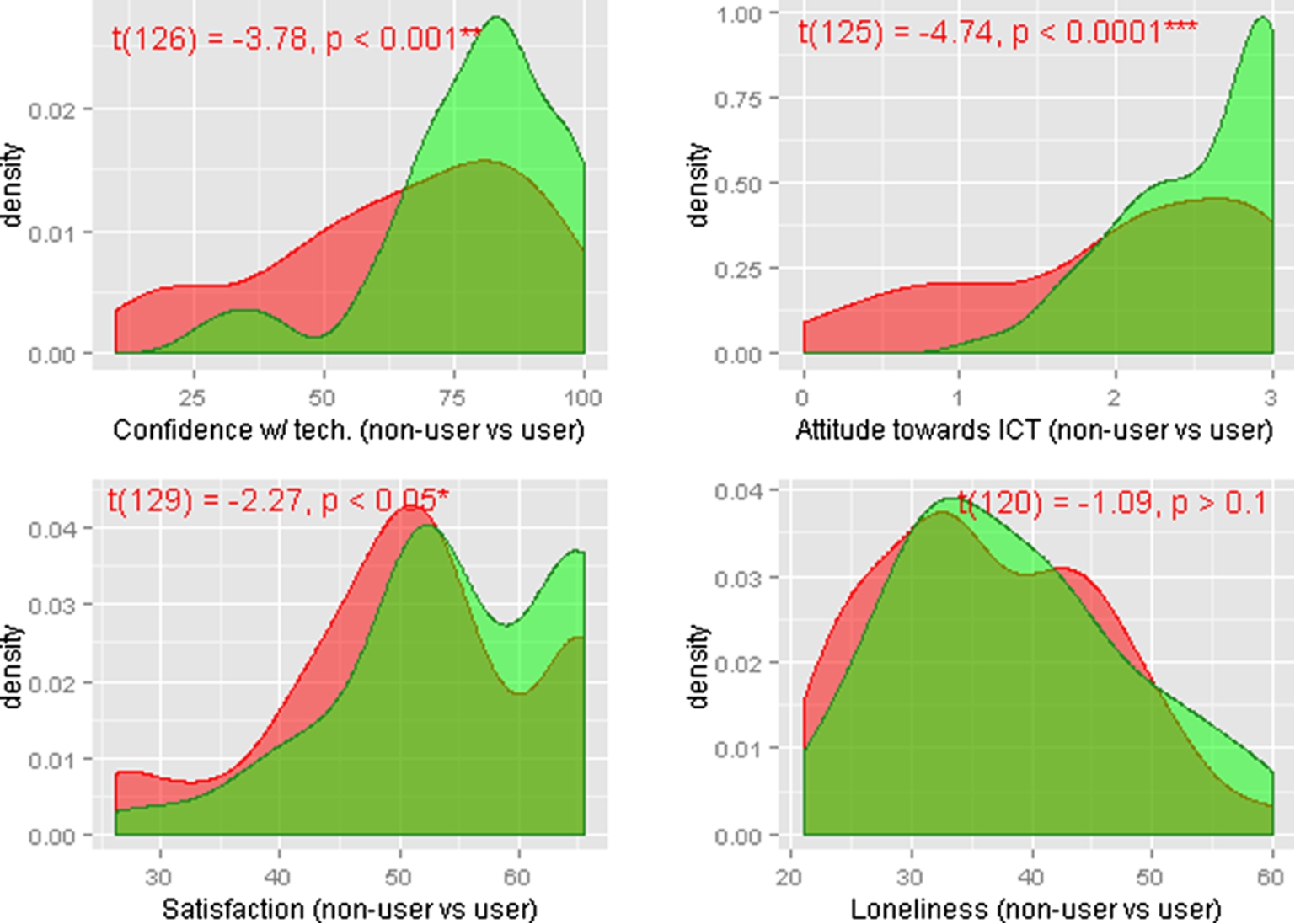
Group data distributions of social media users (green) versus non-users (red) for four dependent measures. X-axes: value of dependent measure; Y-axes: density (proportion of data, which here is the number of users observed at a particular value of the x-axis measure). (Color figure online)
Social role satisfaction
Figure 2 (lower left) shows that social media users (
Loneliness
Figure 2 (lower right) shows no significant difference between social media users (

Linear regression model of loneliness, given age.
In other words, older people, in general, perceived themselves to be less lonely. Interestingly, this lessening in loneliness with age was more clearly associated with Facebook users (
Figure 4 illustrates reasons why some older adults choose not to use other social media sites. Among non-users, many indicated that the reasons they chose not to use other social media sites was due to lack of interest and/or lack of access to a computer. The remaining responses indicated concerns about security or identity theft, a belief that social media is too complicated, or a lack of time. Respondents were allowed to choose more than one answer in this survey question, and they were given an opportunity to expand upon their answer, or describe other reasons why they do not use social media. Other reasons listed included low or no vision and lack of computer literacy.
Qualitative feedback on reasons for use and non-use of social media
Also, participants were asked at the end of the survey if they had any other additional comments to make. Some participants used this opportunity to express why they did not use (or why they stopped using) social media. One simply stated that they had other means of communicating that better suited their needs, such as “We live in a retirement community, and the residents are like our extended family. It’s easy to be happy and contented when you are surrounded by people who care about you.”
This theme was echoed by other non-users. One respondent wrote “The telephone is all I need.”, and another reported that convenience and ease of talking in person was their reason for preferring traditional methods of communication over social media: “Basic social exchanges of words and letters have served me well for 79 years and I have elected not to spend the time or energy in developing the new concept of social media.” Another non-user stated that it was just “too much trouble” to use social media.
Lack of access to a computer went hand in hand with not feeling comfortable using social media technologies. “I am curious about Face Book [sic] but have not taken the time to learn and have heard from a lot of people who have tried it and stopped using it.” Not having accessible technologies or not understanding how to use a computer kept some respondents from using Facebook or other SNS. For one person, having access to a computer was only part of the problem: “I sure would like to stop writing letters and try a computer, my problem, I am visually handicapped and so far, can’t read the screen!”
Some of the comments spanned more than one theme, such as lack of access to a computer and the need for traditional forms of communication. For example, “I am 84 years old and I do not like computers. I had rather talk to people.” Another stated lack of access and lack of trust as the reason for non-use: “I only have access to a community computer. I do not understand it and would not trust it.”
Others commented that they were too busy with other “rewarding” activities to get caught up in virtual reality. Comments included: “I enjoy other social activities like bingo – emails – Bible Study – Church activities – travel”, and “I have no time or interest to devote to it. When I did have email, it was too time-consuming and interrupted my schedule.”
Social media users and non-users alike shared a genuine interest in maintaining traditional forms of communication. When asked to provide additional comments related to use or non-use of social media, 21 out of 46 responses echoed the importance of communication activities such as face-to-face visits and telephone conversations. For example, one Facebook user wrote: “I worry that with so much social media and internet communication younger generations are not learning how to be true friends; social media can be a great tool, but should not always be a primary medium for communication”, and another respondent said: “use of these tools should in no way replace the humanity of face to face or verbal communication”. On the contrary, one user stated that, “if more seniors would take an interest in learning to use the computer for their entertainment, they would not be as lonesome.”
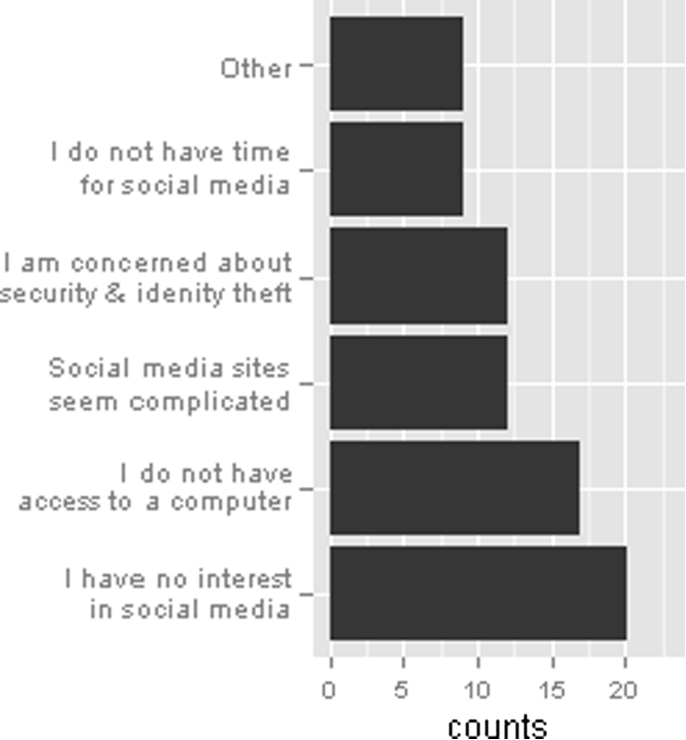
Reasons for not using social media.
Concerns about privacy and security resonate with both users and non-users
Another theme emerged with non-users that also resonated with Facebook users: concerns with privacy and security. Of the 10 participants who no longer use Facebook (but did in the past), 4 cited concerns about security and identity theft as a reason for ceasing to use Facebook. This was common among the entire population of users and non-users. Out of 58 current Facebook users, 47 of them (81%) expressed concerns with security on Facebook. Specifically, of those: 40 (70%) have concerns about privacy issues; 30 (51.7%) have concerns about identity theft; and 4 (7%) have “other” security concerns.
When queried about Facebook privacy settings, only 22 active FB users (37.9%) stated that they have their security settings set to their individual comfort level. Sixteen FB users (27.6%) claimed that they do not know where security settings are located while 5 FB users (8.6%) just use the default security settings. As many as 14 of 58 active FB users (24.1%) are not even sure what some of the security settings mean.
As we mentioned previously, nearly half of the qualitative feedback from additional comments (21 of 46) emphasized the importance of traditional communication channels. Indeed, when we investigated how older adult Facebook users compared to non-users with regards to their frequency of using traditional communication channels, there was no significant difference between users (
Having compared the characteristics of social media users to non-users, and having explored the self-reported reasons for non-use, we next turn to a detailed analysis of older adults who use Facebook.
Characteristics of social media usage among older adult Facebook users
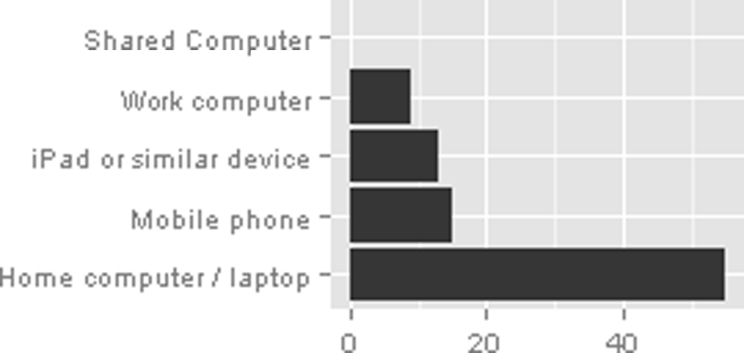
Typical means of accessing Facebook.
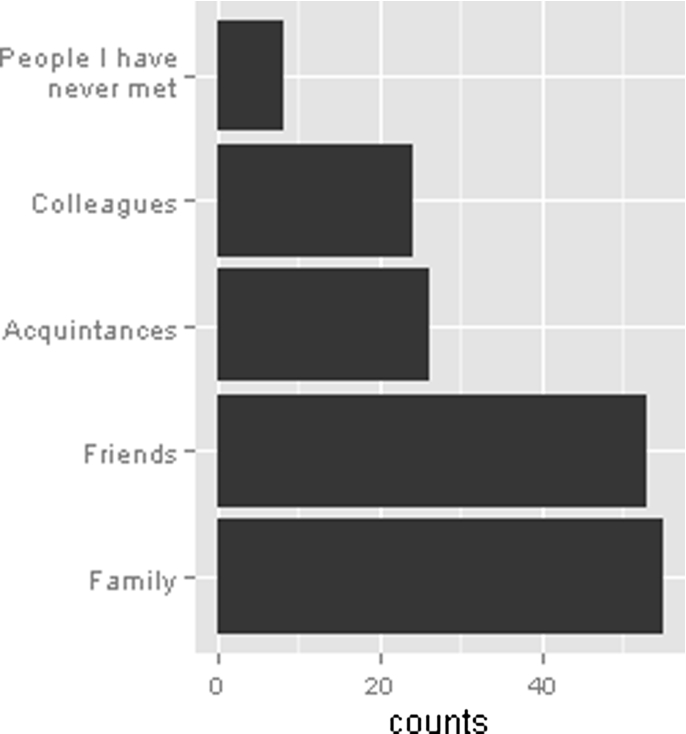
Who social media users connect with.
Typical means of accessing social media
Figure 5 shows typical ways that older adults access social media. Of the 58 Facebook users, 55 of them (over 94.8%) reported that they used their home computer or laptop to access the site. About a quarter of our sample (15, 25.9%) accessed Facebook via their mobile phones, followed by 13 (22.4%) who use an iPad or similar device. Another 9 (15.5%) routinely used their work computer to access the site. No one in our sample reported using a shared computer such as one at a local public library or senior center. Of the 58 older adult Facebook users in our sample, 46 of them (79.3%) log in to the site at least once per week. Of those, 29.3% use Facebook daily and 20% log in more than once per day.
With whom do older adult users connect?
The data in Fig. 6 depicts participants’ responses to the question “Who are your Facebook friends?” to which respondents indicated they used Facebook primarily for connecting with relatives and friends. In the survey, “Family” was broken out into the following categories: children, siblings, grandchildren, and parents. Approximately 49 (84.4%) Facebook users in this sample were friends with their children; 33 (56.9%) with their siblings, 28 (48.2%) with their grandchildren, and 7 (12.1%) with their parents.
Type of personal information users share
Older adult users report that they commonly share personal information on Facebook (see Fig. 7). The majority shared their profile picture (46, 79.3%), education (40, 69.0%), gender (38, 65.5%), birthday (34, 58.6%), work (30, 51.7%), and family information (27, 46.6%). Twice as many users were likely to share religious views (13, 22.4%) than political views (6, 10.3%).

Types of personal information shared.
Communication practices and preferences
Facebook users assert that they typically post to friends’ pages or send private messages rather than use Instant Chat. Among older adult Facebook users, 38 (65.5%) preferred to communicate on the site by posting comments to their friends’ pages. The two reasons reported for this preference were because “It is easier”, and “I get a quicker response”. Some users (26, 44.8%) reported a preference for sending private messages rather than posting comments publicly to their friends’ pages. Only five respondents (8.6%) use Instant Chat in conjunction with the other methods.
Respondents report they are most likely to post content related to family events (37, 63.8%), travels/places (25, 43.1%), and random observations and things that interest them (20, 34.5%), but rarely about political issues (5, 8.6%), sports events (5, 8.6%) or games scores (5, 3.4%).
Other social networking site technologies used
All 141 survey respondents were asked if they use other common social networking sites (see Fig. 8). Other than Facebook, popular SNSs include YouTube (46 users, or 32.6%), LinkedIn (30, 21.3%), and Classmates.com (25, 17.7%). Other commonly used sites included Pinterest (18, 12.8%), Twitter (14, 10%), and Match.com (10, 7%).
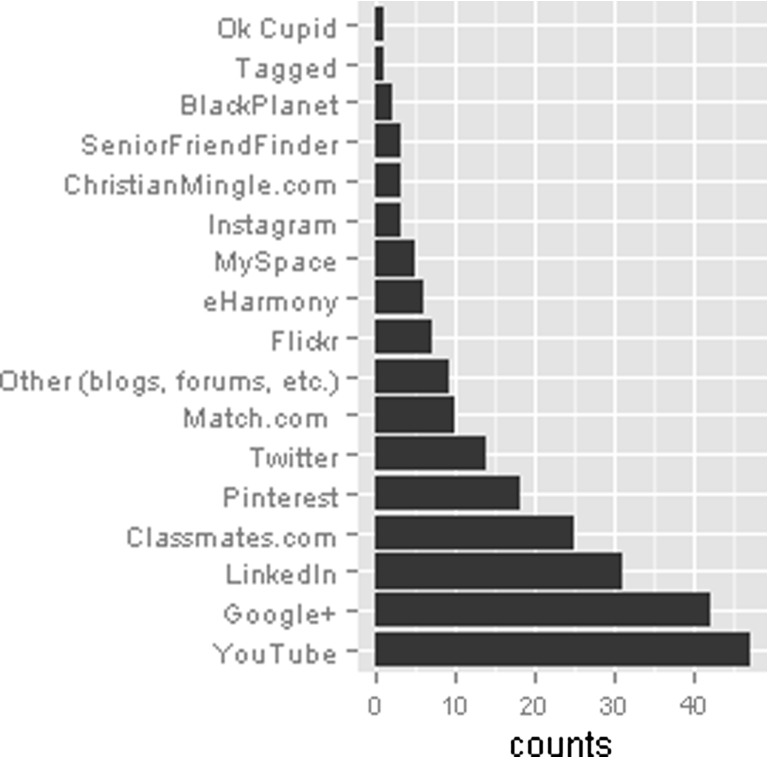
Other social networking sites used.
As expected, we found a significant relationship between age and the size of a person’s social network among active older adult Facebook users (Fig. 9). The Pearson correlation coefficient (

Linear regression model of social network size, given age.
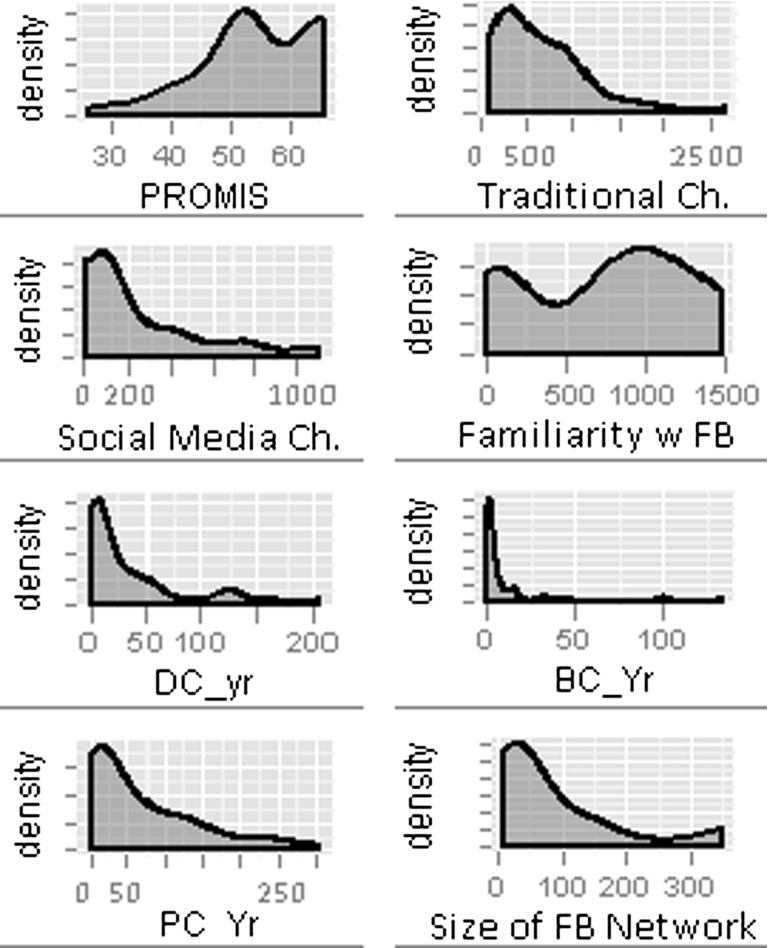
Density plots for the DV (PROMIS score) and IVs. X-axes: measured value; Y-axes: density of users observed at a value.
We next investigated how specific SNS communication activities (e.g., directed communications, broadcast communications, or passive consumption) impact social satisfaction among older adults. Figure 10 depicts the density plots for the dependent measure (PROMIS scores) and several input variables used in a linear regression analyses. Control variables included age, gender, ethnicity, education, and marital status. Independent variables were:
Number of times per year using traditional channels (e.g., face-to-face, phone, e/mail) and social media channels (SNS, video chat).
Familiarity with Facebook, calculated as the sum of the following: 1) Self-reported estimate of days the respondent has been a FB user, coded from survey responses as follows: 730 = A few years; 90 = A few months; 21 = Just getting started; 7 = I have a little experience, but I rarely log in to my account; 2) Estimate of annual frequency of accessing FB (730 = More than once per day; 365 = Daily; 52 = Weekly; 12 = Monthly; 0 = Never); and 3) Hours per week on FB.
Estimated ratio of times per year they performed each type of SNS communication activity (directed, broadcast, and passive consumption).
Size of Facebook network (i.e., no. of friends).
Table 2 shows the unstandardized coefficients (b), standard error, standardized beta (β) coefficients, and the significance levels (p-value) for each of our input variables. Regression analysis of the effects of using traditional versus SNS communication channels on social role satisfaction (after controlling for demographic factors, familiarity with Facebook, and network size) indicates that there is no significant impact resulting from the choice between traditional communication channels and social media technologies such as SNS or video chat. This supports our earlier results from the user versus non-user group comparisons indicating that social media does not replace traditional channels of interaction for older adults; it complements them with different types of interactions.
Unstandardized coefficients(b), standard error, standardized beta (β) coefficients, and significance levels (p-value) from a linear regression model of social role satisfaction (PROMIS)
Unstandardized coefficients(b), standard error, standardized beta (β) coefficients, and significance levels (p-value) from a linear regression model of social role satisfaction (PROMIS)
Levels of sig.:
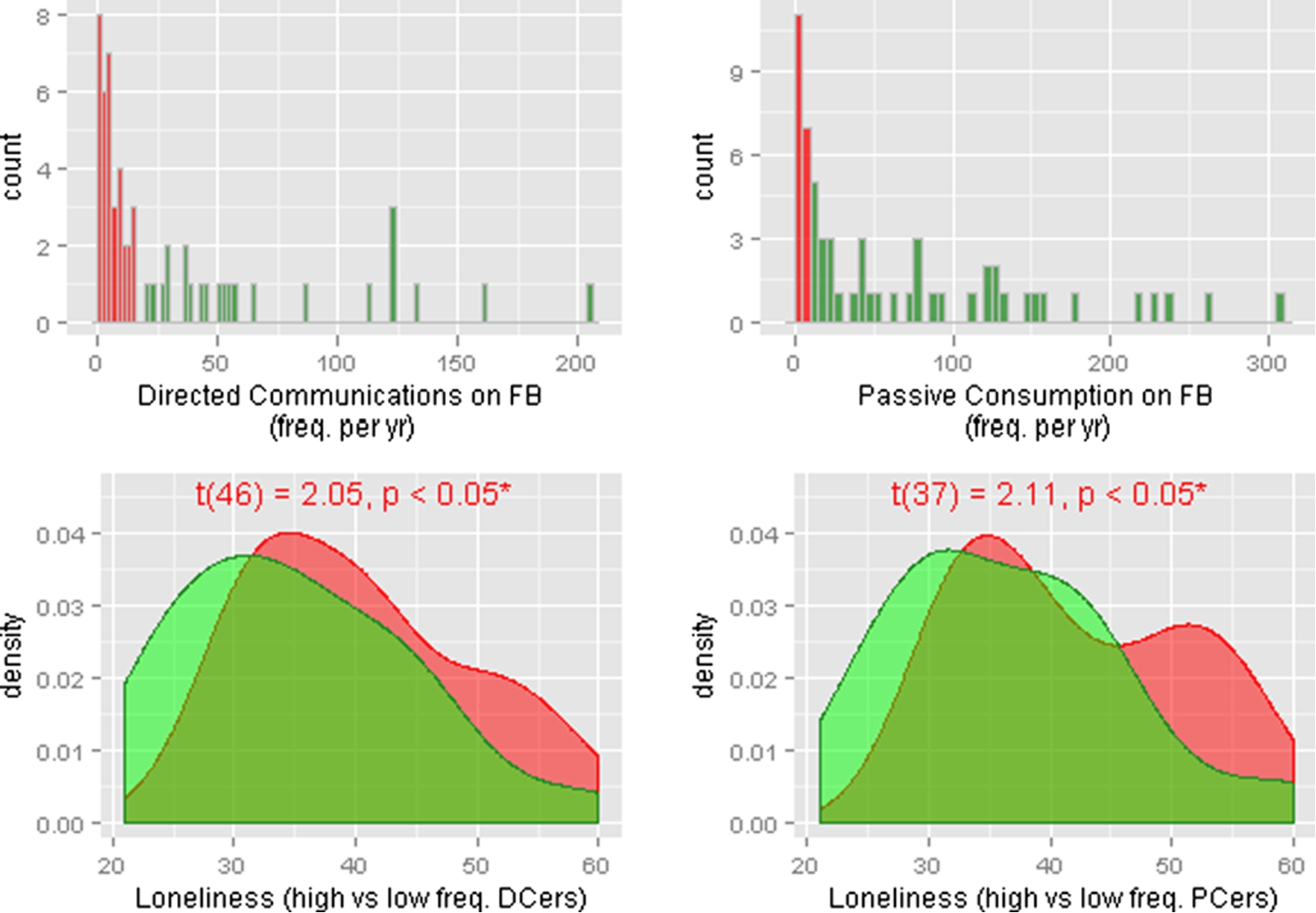
(Top) histograms for self-reported estimated frequencies of specific SNS-specific activity occurrences per year. (Bottom) Data distributions of loneliness scores for high versus low frequency SNS-specific communication groups.
We were also interested in examining how specific SNS communication activities affect the perceived loneliness of older adult social media users. Recall that when we compared the group distributions of social media users versus non-users (Section 4.1 and Fig. 2), there was no overall significant difference in perceived loneliness between the groups. Interestingly, however, when we focused on the subset of older adults in our sample that actively used Facebook, then we found that the type of communication behaviors employed by social media users does indeed impact perceived loneliness.
Using a data-driven threshold value (derived via inspecting the histogram), we compared the perceived loneliness of Facebook users who reported high frequency of directed communication activity per year (
Similarly, when we compared perceived loneliness of Facebook users who reported high frequency of passive consumption of content per year (
Discussion
For the current study, we deployed a survey to investigate (1) the characteristics distinguishing social media users from non-users among older adults age 50 and over, (2) common activities of those who self-identified as active social networking site users, and (3) relationships between older adults’ communication habits – both online and offline – and their outlooks regarding perceived loneliness. We also collected data regarding their confidence with using new technology (in general), their attitudes towards the influence of information and communication technology on their lives, and their degree of satisfaction with their current roles in their own social networks.
Keeping in touch with family as a motivation; self-efficacy as a mediator; site design & privacy concerns as barriers to social media technology use (or non-use) among older adults
We first explored descriptive characteristics to help us better understand a previously overlooked segment of the population, revealing the distinguishing characteristics of social media users versus non-users among adults over 50 years old. We found that adults on the younger end of our age spectrum tended to be the ones who reported being social media users (see Fig. 1 and Table 1). For many people, social media has become an integral part of daily life, but for many older adults, learning about new technologies is a daunting task. Unsurprisingly, our study results demonstrated that older adults who felt more confident using new technology were more likely to be Facebook users than those who felt less confident (see Fig. 2). Relatedly, the results indicate that participants who perceived a higher degree of positive impact from information and communication technologies were also more likely to be Facebook users. Our results are consistent with prior work by Czaja et al. [9], who found that computer self-efficacy mediated the negative relationship between age and the adoption of technology. Although older adults were less likely to use technology than younger adults, individuals who felt more confident in their ability to use computers were more likely to use technology than those who felt less confident. Similarly, in examining the difference between internet users and non-internet users, Eastin and LaRose (2006) hypothesized low internet self-efficacy to be a significant psychological barrier to internet use [10].
When asked who older adults use Facebook to connect with, the overwhelming majority (88.1%) responded that they use it to stay connected with friends and family (see Fig. 6). Thirty-seven percent of participants used Facebook to stay connected with colleagues or groups, and only 13.6% were interested in meeting new people on Facebook. Consistent with this, most participants had family members or friends as their Facebook friends. These findings support those from Zickuhr and Madden (2012), who found that older adults’ motivations for using social media sites differed from those of younger adults [36]. For instance, for adults over the age of 50, staying in touch with family is the number one reason they use social networking sites. For adults under age 50, staying in touch with friends is a bigger motivation. This finding has implications for social media technology designers who desire to find ways to personalize the technology to meet the needs of this user demographic. For example, social media technologies that employ a social network model (e.g., “friends” on Facebook, or “followers” on Twitter) might somehow privilege the communications from older adult users’ family members by making those communications more visibly prominent or more temporally persistent in the user interface (whereas for teenage users, communications from friends might be privileged).
Although there were a number of variables that distinguished Facebook users from non-users, such as age and gender, several similar themes emerged between the two groups. Traditional forms of communication, such as face-to-face conversations and telephone calls, were extremely important to the older adults in our sample. Although many older adults have adopted newer technologies, such as tablets and smartphones, they routinely rely on traditional forms of communication. Older adults are likely much more familiar with traditional forms of communication than social mediated-mediated communications, thus this finding was not unforeseen.
Concerns with privacy and identity theft certainly abound between both the users and non-users alike. This finding is not surprising, as it is again, a fairly novel technological concept. It was noted that 4 out of 10 people stopped using Facebook because they were concerned about security and/or identity theft. When Facebook users were asked if they have concerns with security on Facebook, 47 of 58 respondents said “Yes”. In terms of awareness, 16 of the 58 did not know where the security settings were located, 5 claimed to use only the default settings and 14 stated that they set their security settings themselves, but were unsure what some of the settings mean. Twenty-two users, however, stated that they had the security settings set to their own comfort level. This may lead back to the fact that some older adults are more confident in using new technologies, and therefore, are interested and take the time to learn how to protect use the various settings and features.
The implications of our results here are clear: by designing a system that is easier to navigate, designers boost users’ confidence in using that technology, thus increasing the likelihood that they will adopt it for routine use. (We discuss more specific design recommendations in Section 5.6). To the extent that we can understand how and why older adults use Facebook and other social media, efforts can be focused on technology support and training to increase older adults’ confidence with technology. When the technology is shown to impact the health and well-being of a substantial (and growing) segment of the world population by facilitating social connectedness, we are encouraged at the potential for even broader implications.
Older adults who use social media technology are more satisfied with their real life social roles
Our study also reveals a significant relationship between Facebook use and older adults’ satisfaction with their current (offline oriented) social roles. The older adults who were Facebook users had higher scores for perceived social role satisfaction as measured by the PROMIS scale [3,16]. With the current study, we cannot deduce causality; e.g., whether individuals who use Facebook become more socially satisfied or whether people who are already satisfied with their social roles are more likely to use Facebook as a means of communicating to establish or maintain connections. Although we cannot assume causation in either direction for social media technology use and social role satisfaction, we can infer that with increased social connectedness comes a better sense of well-being. Indeed, a well-established body of literature supports the notion that maintaining strong social connectedness with friends and family helps to moderate depression [14,22], stimulate interest in daily activities [26], and improve overall life satisfaction [15]. We know that maintaining social connectedness can become more difficult as adults age, due to mobility limitations, chronic diseases, and other age-related issues. For these reasons, social media technology may be viewed as a catalyst or enabling mechanism for facilitating continued social connections for older adults.
Social media technology augments, rather than replaces, traditional modes of communication for older adults
It is thought-provoking to consider that perceived loneliness did not differ significantly between Facebook users and non-users. (On the other hand, the annual frequency for specific types of SNS activities was significantly correlated with lower perceived loneliness – more on this in the next paragraph and in Section 5.5). The lack of a significant difference in loneliness between the user group and the non-user group may be resultant of the fact that there also is no difference between these two groups with regard to frequency of communicating via traditional channels (e.g., telephone or face-to-face). This fact, along with our analysis of the effects of using traditional versus SNS communication channels on social role satisfaction, supports the idea that social media may augment (rather than replace) traditional communication channels.
We also find it very interesting that both direct communication activities with family and friends and passive consumption of content on Facebook helped older adults feel more connected, and less lonely (see Fig. 11). A more controlled experiment focused on determining the direction of the causal relationship would be needed to confirm causal direction, because correlation does not necessarily mean causation (though it suggests a causal link might exist, we do not know the particular directionality or structure of causation). Because we are unable to make causal inferences from our study, it is unclear whether directly interacting with friends and family on Facebook leads to decreased loneliness, or whether older adults who feel less lonely are more likely to interact via online social media. Nevertheless, the relationship is interesting, both theoretically and practically. Our study suggests a direction for future work – perhaps with a longitudinal study that involves observing differences in perceived loneliness scores of older adults both before and after adopting social media technology usage.
Age is a strong indicator of social network size
We found a significant relationship between age and network size – older seniors had distinctly smaller social networks than younger seniors. Carstensen (2003) argues that as adults age, they become less interested in expanding their horizons (e.g., making new friends) and become more invested in deriving emotional meaning from life (e.g., making their ties with existing friends stronger) [6]. This sentiment supports our findings regarding the size of social media networks, where young-old Facebook users (age 50–64) tended to have more friends than old-old adults (age 65–91). Furthermore, research from Charles and Carstensen (2009) suggests that a pruning process of sorts occurs wherein older adults eliminate less intimate relationships while maintaining their more meaningful ties [7]. Indeed, our participants use Facebook primarily for staying connected with family.
While we examined the strength of the relationship between age and the size of social networks among older adults, what we were not able to answer here is whether older adults with fewer connections actually have stronger connections among their network ties. If the strength of ties between older adults and their network members is significantly stronger than the ties between younger adults in otherwise comparable networks, then this has meaning for a broad range of research interests that are based on social network simulation models or general studies of the diffusion of innovations [28]. We leave this interesting question to future exploration, but the current study serves to inform such work.
Social networking site (SNS) activities are associated with higher social role satisfaction and lower perceived loneliness for older adults
In terms of Facebook users’ SNS activities, results indicated that Facebook users who reported a high frequency of directed communication activity had both lower perceived loneliness and higher satisfaction with their social roles than those users with a lower frequency of directed communications. This may be due to the potential of directed communication to strengthen relationships as a result of its intimacy [5].
Likewise, when compared to Facebook users with low frequencies of passive consumption activities, users with a high frequency of passive consumption felt less lonely (but not significantly more satisfied with their social roles). While passive consumption lacks the one-on-one aspect of directed communication, it can still be important in helping older adults maintain relationships, for example by allowing them to unobtrusively be kept abreast of the happenings in the lives of their family and friends.
On the other hand, frequent broadcast communications was linked to increased social role satisfaction (but was not significantly associated with lower perceived loneliness). In contrast with directed communications that are tailored to individual people, broadcast messages may have a comparatively low cost (in terms of effort) while allowing the user to feel like he or she is still maintaining connections with a larger circle of friends, family, and acquaintances – especially with those people that he or she does not have the time to write to individually, or with whom some other obstacle prevents direct communication [5]. These three relationships are quite interesting on their own; however, limitations of the current study are also revealed, which we acknowledge here: a) our methods are unable to provide any insights with regards to causal directions for these relationships, and b) our sampling method does not allow us to determine whether these relationships are unique to older adults, or whether these patterns would also be observed in other age cohorts. Here again, our study provides a solid foundation from which to formulate future work. For example, with a longitudinal study that involves pre- and post-testing for observed differences in perceived loneliness scores and social role satisfaction of older, middle-aged, and younger adults in which each age cohort is examined via experimentally controlled means of social media technology usage (e.g., participants only interact using broadcast communication strategies, only passively consumption, or only direct communication strategies for a set period of time). If causal links can be determined for the types of relationships described in Sections 5.2, 5.3, 5.4, and 5.5, then the impact of design practices oriented around user modeling and personalization techniques for online social connectedness will have far-reaching effects – including positively affecting the offline (real world) health and well-being of social media technology users.
Implications for user modeling and design recommendations for personalization
Social media technology developers face the grand challenge of designing software for millions of users while at the same time attempting to meet the needs, desires, and preferences of each individual user (or types of users). The challenge is further complicated because the design cycle is often quite out of phase with the usage cycle – that is, historically, design has unavoidably preceded use. However, recent advances in capabilities for adaptive and adaptable systems have aroused the need for accurate user models. A user model is a representation that a system has of the end user (or class of user) [12]. Typical user models represent a collection of data such as personal interests, skills or knowledge, goals and motives, preferences and dislikes, concerns and apprehensions, as well as typical behaviors, practices, and usage habits. With the growth of adaptive and adaptable systems, the distinction between design time and use time has begun to blur.
Yet, even without dynamic adaptation, good design (in general) is best achieved if appropriate characteristics of the user population are fully known. Static and stereotype-based user models can provide valuable design guidance. The current paper makes explicit contributions to social media system designers interested in developing user models that consider these kinds of representations for older adult users. Indeed, we specifically address this need as a part of research question #5 (see Sections 2.5, 4.1 and 4.2), and we do so by relying on extensive qualitative and quantitative self-reported data from our unique sample of users. The wealth of user provided details about personal use habits for social media technology, sharing behaviors, communication practices, preferences, issues, and concerns provides a rich source of descriptive information that is directly relevant to user modeling and personalization. For example, we find that, among older adults, social media users tend to be younger seniors, female, educated with higher income, have higher confidence in technology and more positive attitudes of ICT, mostly access social media technology from their home computers, and typically desire to stay connected with family as their primary goal. As another example, sociologists and network analysts who model social networks should understand that network size has a very strong inverse relationship to user age, and that social ties among older adults differ from those among other age cohorts, as discussed in Section 5.4.
Such descriptive data will help with implementing good design practices that take into account usability and accessibility among rapidly increasing older population. Indeed, one of the main goals of user modeling is customization and adaptation of systems to meet user’s specific needs [12]. With an accurate user model, the system is more prepared to “say the right thing at the right time in the right way” [12]. Therefore, if the population is incorrectly defined or misunderstood, the very foundation of the design process will be weakened.
In this study, we explored a number of factors that can affect the customization or personalization of a social media application. The contextual insight available in social media offers researchers and marketers alike an opportunity to better understand and engage audiences with compelling, personalized content and experiences across channels. With this in mind, we provide the following design recommendations for addressing personalization for older adults:
Consider implementing adaptive algorithms which privilege the communications from family members of older adults (e.g., make posts and updates from family members more prominent and/or more persistent in the primary user interface). This will directly address the desire of older users who wish to primarily connect with family, while simultaneously helping to reduce feelings of loneliness for older users who enjoy spending time passively consuming social media content. Since direct communication activities are related to both a) reduced feelings of loneliness, as well as b) increased satisfaction with real life social roles among older adults, consider implementing mechanisms which detect opportunities to prompt the user to directly interact with others. For example, alert the user of relevant news or events from their friends’ timelines/newsfeeds (e.g., birthday, anniversary, sporting event of a grandchild, or detect incidents where congratulations are being posted/commented on a friend’s newsfeed, etc.), and suggest a suitable action or response from the user for the event. Personalization efforts can also be focused on technology support and training to increase older adults’ confidence with technology. For example, introducing new features of an application might be done with more instruction, or tutorials to help them acclimate to the changes. Easy to consume “Help” features, such as short videos that provide useful information or assistance to the user (e.g., introducing new functionality, or demonstrating how to complete a new task) might encourage them to try new things and lend more confidence to their experience with new technologies. Security, privacy, and perceived complexity can also be addressed by personalized design. To mitigate barriers to use, give additional attention to designing intuitive security and privacy settings, and make them easy to both interpret and manage.
Conclusions
Considering the prospective benefits of increased social connectedness to health and well-being of this unique and growing population, studies like this are critical to understanding social media usage among older adults and the impact such technology has on important elements of their lives. Furthermore, understanding the motivations, needs, and conventions, concerns associated with older adults using social media will directly benefit researchers looking to develop better user models or enhance their current social network simulation models.
In this paper, we study a previously unexamined segment of social media users (adults over age 50), while simultaneously addressing several open questions related to (a) contrasting motivations for use or non-use due to dissimilar social roles and activities, (b) decreasing network size associated with increasing age within this cohort of older adults, (c) specific SNS activities that are useful as cues regarding the degree to which older adults perceive their own ability to do routine tasks associated with being social and meeting the needs of their friends and family, and (d) addressing the apparent uncertainty regarding the impact of social media use on social role satisfaction among the elderly.
The result of the rapid increase in aging adults is of great significance in both science and technology. People are living longer, not only with physical impairments (visual, mobility) but also with cognitive and mental health issues (dementia, depression). Motivational factors for staying connected is becoming more essential to helping older adults function independently (e.g., age in place) and embrace a healthy sense of well-being. Understanding this special population will help researchers and technologists alike better accommodate the needs of the elderly.