



Abstract
BACKGROUND:
For passengers in private or public transportation systems, comfort is a major interest. Available comfort models are already used to correlate thermal comfort to influencing factors. However, the available models do not other sensory comfort aspect and specific influences as fragrances and ambient light.
OBJECTIVE:
This publication investigates the impact of fragrances with “warm” and “cold” associated meanings on thermal and overall comfort perception.
METHODS:
Human subject trials (n = 47) were performed in different temperature-controlled environments following a 3×3 within-subject design considering ambient fragrance (“neutral scent”, “peppermint”, “orange & cinnamon”) and ambient light as variables.
RESULTS:
Olfactory comfort is shown to have the larger effect on overall comfort perception, comparable in weight to the one of thermal comfort. The impact observed on thermal sensation was in line with the meanings associated the fragrances, whereas it was positive on thermal comfort appreciation regardless of the type of fragrance diffused.
CONCLUSIONS:
These initial results suggest that olfactory stimulations have the potential to positively impact thermal and overall comfort. The appreciation of the fragrance appears to have a major impact on these interactions and should be deeply considered in future research and features development.
Introduction
Electric vehicles (EV) are considered as the next automotive technology to be widely diffused in society [1]. A major driver of this new introduction is the ability of EVs to reduce the environment impact of the transportations sector (providing energy comes from renewable sources) [2], known to have the largest greenhouse gas footprint [3]. In this context, range limitations and related anxiety are considered as major barriers to user acceptance [4]. Research on extending the range of EVs is currently a hot topic, tackled from different perspectives (e.g. improve battery capacity, engine efficient, reduce consumption).
The EU-funded project DOMUS (www.domus-project.eu) aims at increasing the range of electric vehicles by 25% under a variety of ambient conditions without considering possible improvements on the battery and/or electric engine itself. The research directions explored by the consortium include for instance minimizing consumption of components, reducing losses, and removing unnecessary consumptions. The car cabin’s heating and cooling system is the car’s largest auxiliary load, and this system is closely related to personal comfort. When optimizing the energy consumption of the cabin it is therefore of high importance to monitor the changes made on occupants’ comfort level and their implications. The data collected in this study contributed to the efforts deployed by the consortium to collect experimental data in order to model personal comfort in a more holistic way (other comfort factors studied include for instance irradiation, task load, noise or thermal asymmetry). Although the methodology presented is illustrative of the approach taken by the DOMUS project, it is important to highlight that it only presents partial results: all the new comfort factors considered are not shown in the literature review section and the experiments presented consist of only one fifth all the jury tests to be conducted (the majority of them were not yet conducted at the time this publication was submitted).
In this context, this study’s primary aim it to investigate more specifically the impact of olfactory and visual sensory stimuli with “warm” and “cold” associated meanings on thermal and overall comfort perception. This objective will be pursued in this publication. In the next section, a literature review regarding different aspects of comfort will be introduced. Methods will be introduced first and will be followed by a presentation of results and analysis. The last section will discuss these findings and the next steps.
Literature review
Thermal comfort
In the automotive context existing thermal comfort model could be integrated with considerations on the human perception factor. Precursors of this approach include Fanger’s Predicted Mean Vote (PMV) [5], the Berkeley model and Nilsson’s equivalent temperature [6]. The factors considered by these thermal models are mainly related to the heat ex-changes happening between a human body and its environment (due to air temperature, surface temperature, radiation, and insulation). Their limitations become evident when considering cognitive moderating factors of thermal comfort (e.g. mental state, expectations) as well as non-thermal dimensions of comfort (e.g. acoustic, visual, olfactory) that are mainly absent. While the latter models, particularly PMV, have lasted well and are widely used, they appear, by definition and construction, not optimized to represent overall comfort and its wider range of sensory, cognitive and affective factors.
Overall comfort of the body
Comfort models such as the one proposed by Vink & Hallbeck [7], Moes [8], and Calas [9] are based on neurosciences are representative of the cognitive process resulting from sensory stimulation. Loriquet et al. [10] proposed a proposed a flow chart based on them to illustrate relevant stages of cognitive processes, explaining the chain of events from sensory stimulations to the subjective perception of comfort, discomfort or a neutral sensation in a public transport environment. The authors state a two-level representation of passengers’ appreciation of comfort. Starting from a local model of sensory interaction between the passenger and the support, the specific travel condition does not directly result in a feeling of comfort or discomfort. First, the human sensory receptors will send a signal to the central nervous system based on a physical interaction with the environment. The raw sensation in the cortical and subcortical areas can be perceived. In this perception, many influences can take place until an appreciation of negative, neutral or positive comfort is given. Attention, mood and expectations, which are strongly connected to the memory areas of the brain, influence the interpretation of a raw sensory signal. A physiological reaction or a physical action can then be based on a negative appreciation and lead to a change of the situation and therefore to a change of the sensory interaction with the environment (Fig. 1).
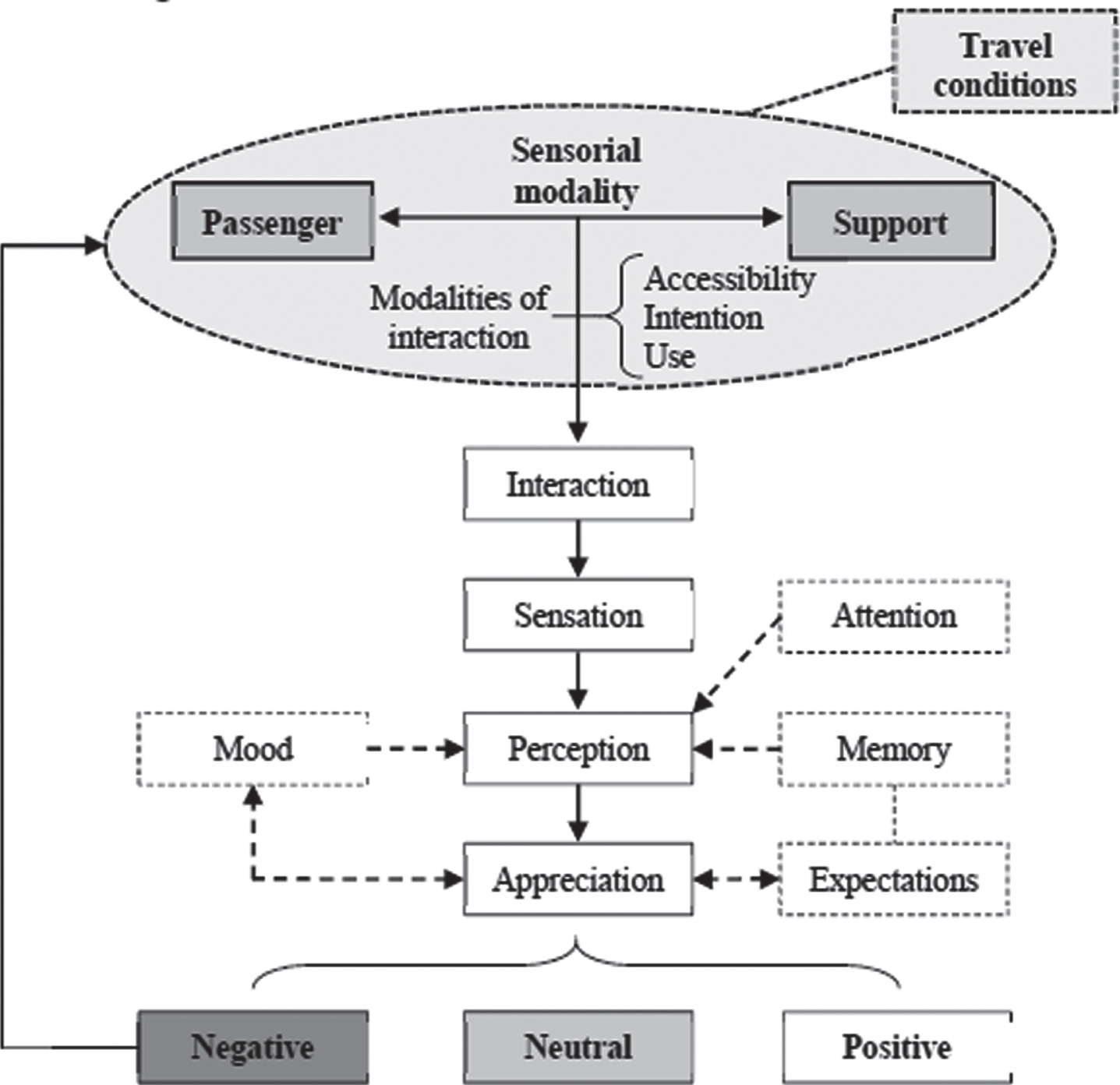
Comfort of the body: local sensory interaction between the passenger and his environment [10].
The subjective perception of comfort or discomfort as described above can have various causes. Those, in turn, might be hard to asses in a complex situation, where a high number of influences are present, due to the high number of interactions and the disability of a human perception to isolate a specific cause [11]. For instance, if external parameters like air temperature or humidity would lead to a highly heated up climate in a bus, the physical sensation of these parameters alone may lead to the subjective perception of discomfort (see also Fig. 1). However, chatting with a friend on comfortable seats, while watching the beautiful weather outside may mask those parameters triggering discomfort. These examples point out the importance of standardized and controlled studies when it comes to assessing the effect of a varied parameter (i.e. ambient fragrance) on the subjective perception of human beings (in the case of this study: comfort perception).
Bubb [12] has also discussed the interactions between comfort from different sensory stimulations and overall (dis)comfort in the automotive context. His analysis led to a pyramid-shape figure (Fig. 2) inspired by the Maslow pyramid. A discomfort sensation from sensory parameters situated on the lower part of the pyramid can convey an overall discomfort regardless of the sensation provided by parameters situated above. According to Bubb, in a bad-smelling but thermally comfortable environment, one would feel uncomfortable because of odors: the thermal environment does not influence the overall comfort perception in this context. The discomfort thresholds for which these kinds of interactions apply have nevertheless not been defined. It is also important to highlight importance of the situation on the ranking of sensory parameters: in a follow-up study, Bouwens et al. [13] have identified very different rankings for the following two activities “sleeping in an airplane” and “watching in-flight entertainment in an airplane”. Fragrances have also shown to have a positive influence on overall comfort in conditions where participants associated positive meanings to them [14]. Additionally, Brewster et al. [15] suggested strong links between the olfactory sense and memory, attention, reaction times, mood, and emotion. Looking again at the holistic comfort model described previously ([10] –Fig. 1), these links let us foreseen direction interactions between olfactory perception and other sensory (i.e. non olfactory) dimensions of comfort.
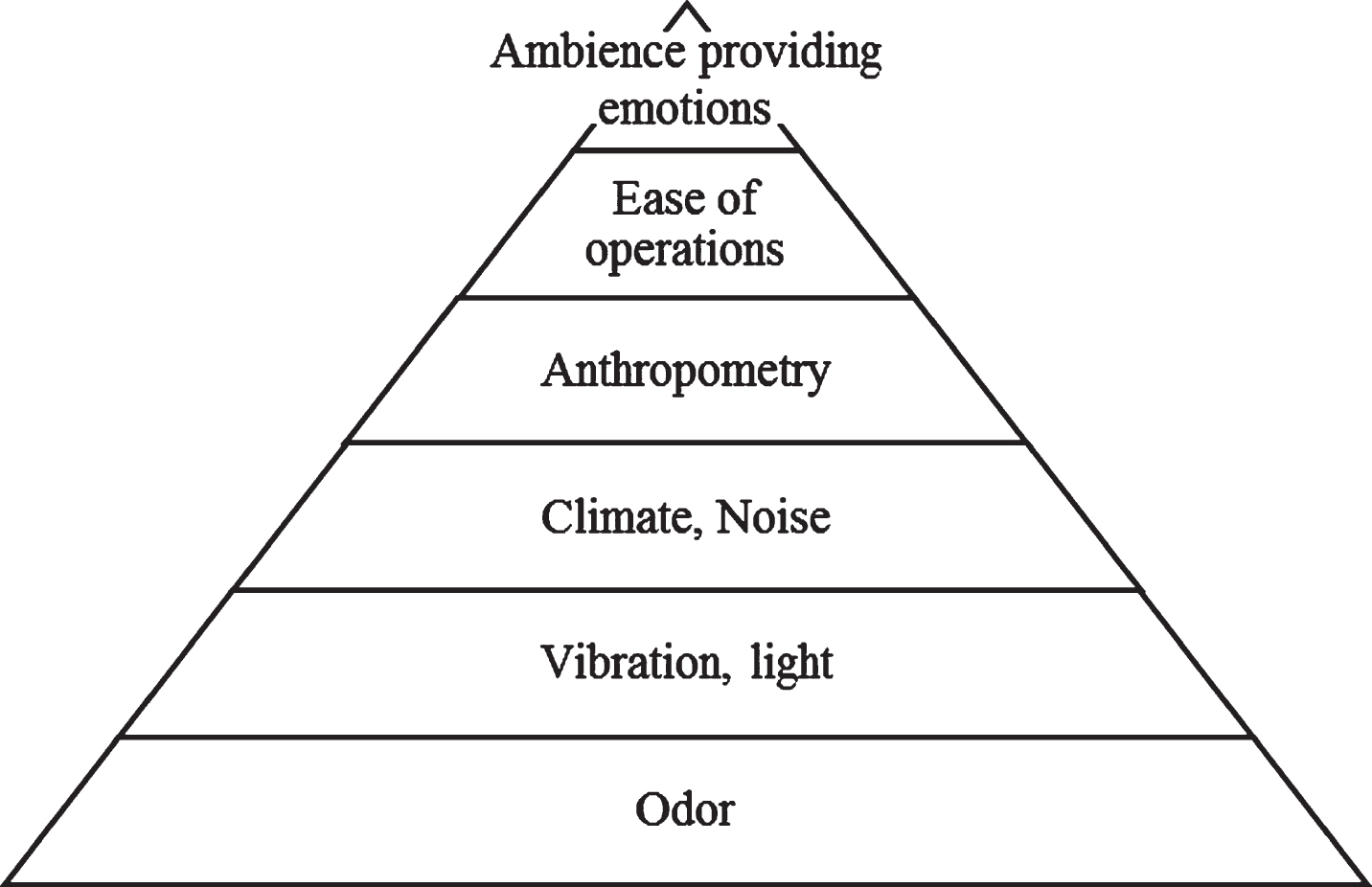
Discomfort dimensions in automotive environment categorized hierarchically (translated from [12]).
We will now review researches, conducted in non-automotive environments, suggesting that sensory stimulation such as ambient light color and fragrance can act as moderating factors for thermal comfort. Experimentations conducted in building (i.e. room) [16, 17] and aircraft cabin [18] environments have shown that different colors of lighting (with “warm” and “cold” meaning) can significantly impact the thermal perception of subjects. From a physiological perspective, research has also suggested that light stimulation stops the synthesis and release of melatonin which has a major role in regulating body temperature [19]. Morita et al. [20] suggested that this is one of the causes why preferred ambient temperature is significantly lower when exposed to light (i.e. body temperature is higher) than when it is not (i.e. body temperature is lower). When it comes to the moderating effect of ambient fragrances on thermal perception, the related literature exhibits at this stage and to our best knowledge few studies and non-significant results. As example, Jones [21] used “warm” (e.g. vanilla) and “cold” fragrances (e.g. peppermint) to analyze consumers buying behavior and body temperature perception.
Based on these observations from the literature, the following hypotheses regarding ambient fragrances will be tested in this study to research the impact of two types of fragrance on thermal comfort perception:
H1: “Warm” fragrance diffusion leads to a war-mer thermal sensation, whereas “cold” fragrance diffusion leads to a colder thermal sensation.
H2: “Warm” fragrance diffusion leads to a higher level of holistic comfort than “cold” fragrance diffusion in slightly cold conditions and vice versa in warm conditions.
Participants
Forty-seven participants took part, each undergoing an hour individual session. They all worked at Toyota Motor Europe in Belgium. Following the DOMUS guidelines, both genders were well represented (female [38%], male [62%]). Attention was also paid to have a diverse panel coving all sub-regions of Europe (Northern [13.5%], Western [42%], Eastern [13.5%], and Southern Europe [31%]) and a wide range of age groups (20–29 [46%], 30–39 [26%], 40–49 [19%], and 50–59 [9%]).
Domus guidelines
Within the DOMUS consortium, studies aiming to research new factors influencing thermal and overall comfort were conducted in five different locations. In order to guarantee comparability and generalizability of the data collected at the different study locations overall methods have been created. They consist in a list of factors to be considered as independent variables defined together with their level (i.e. value to target when factor is not manipulated) as well as related measurement set-ups. Partners also aligned on common dependent variables (i.e. sensation, comfort and task load values) taking the form of questionnaires and on a common evaluation procedure. The methods of this study, detailed in the next paragraphs, follow these guidelines and will allow to describe them with more details.
Factors considered
The set-up consisted of two vehicles located inside a thermal chamber. To control the thermal environment both, the thermal chamber and the vehicle’s HVAC system were monitored to provide the appropriate temperature in the room and cabin (controlled with two Type T thermocouples). This study was conducted in a steady-state condition. Similarly, to the research cited previously, the air temperature values were selected to put the participants in conditions ranging from cold to slightly warm thermal sensation (according to PMV model [5]) given appropriate clothing, metabolic rate, and humidity (all factors controlled –further explained in follow paragraph). The following values were used as target temperatures: 17.5 °C, 20 °C, 21.5 °C, 23.5 °C, and 24.5 °C. Temperature was considered as a between-subject variable.
To select fragrances with “cold” and “warm” associated meanings, a pre-study was conducted. Eight essential oils were selected as stimuli for the pre-study based on description of their properties provided by their vendors (i.e. “Woodland collection” and “Victsing Essential oils”). The following four fragrances were selected because of their potential “cold” associated meaning (properties including keywords such as “refreshing”, “cooling sensation”, “energizing”): “eucalyptus”, “white thyme”, “peppermint”, “sweet orange”. The following four were selected because of their potential “warm” associated meaning (properties including keywords such as “warming”, “cozy”, “calming”): “lavender”, “French cypress”, “orange & cinnamon” and “lemon grass”. N = 5 participants (2 females, 3 males, all between 25 and 60 years old) were exposed to the eight fragrances for two minutes each. After two minutes of exposure, participants were asked to rate the pleasantness (on a 9-point scale from “1 - very unpleasant” to “9 - very pleasant”) and meaning associated to the fragrance (on a 5-point scale from “1 - cool” to “5 - warm”). Between two exposures, participants were exposed to a neutral scent outside of the experimental room for 5 minutes. During this time the room was ventilated, and neutral deodorizer was sprayed in the room at the beginning of this process. The fragrances consisted of essential oil diffused in a vapor diffuser. The concentration was kept comparable (12 droplets in 60 ml of water). The results are displayed in Fig. 3.
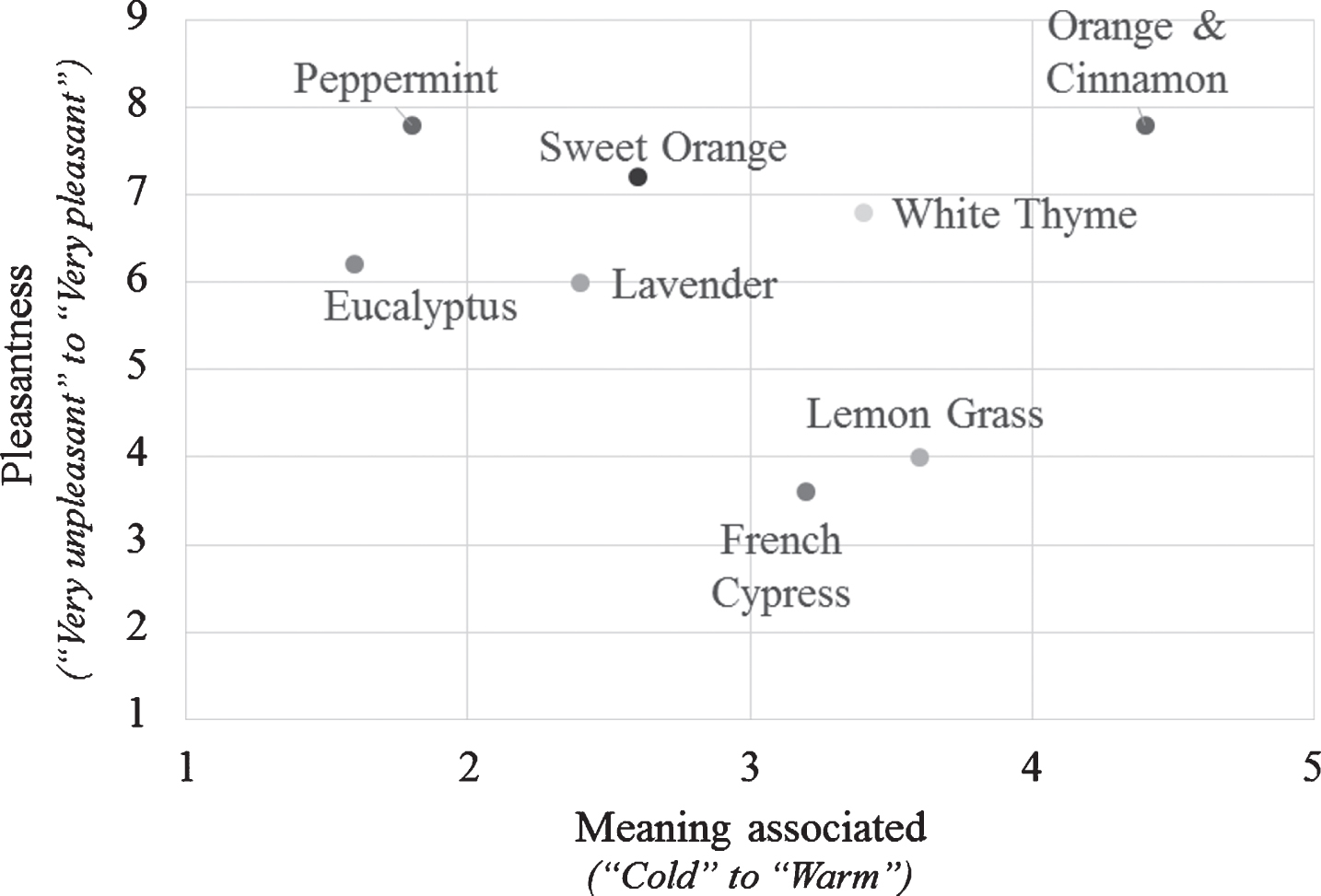
Meaning associated to and pleasantness provided by the 8 fragrances of the pre-study.
“Peppermint” and “orange & cinnamon” essential oils were selected as stimuli for the actual study, as they provided high pleasantness (respectively 7.8 [SD = 0.75] and 7.8 [SD = 0.75]) and conveyed opposite cool-warm meanings (respectively 1.8 [SD = 0.4] and 4.4 [SD = 0.8]). The “neutral” scent condition was achieved using a neutral deodorizer (“Envii Bed Fresh” - selected following subjective assessment) and ventilating the cabin for 2 minutes. The set-up regarding fragrance diffusion consisted of two scent diffusers (VAVA car diffusers –same as for pre-study) placed on the rear seat allowing the diffusion of the selected fragrances without being visible to the participant. To reset the car environment between test cases, an odor neutralizer was sprayed in the cabin by the experimenter. In the meantime, the HVAC ventilation was increased to a maximum to completely neutralize previously diffused fragrances. This procedure between two test cases lasted 2 minutes on average. During this time, participants were asked to wait outside and away from the vehicle cabin (further described in paragraph 3.4). They were exposed to an environment with neutral scent allowing them to reset their olfactory perception.
Ambient light colors used in studies conducted in building interior [16, 17] and aircraft cabin contexts [18] were adapted to the automotive context using an iterative approach of testing and evaluation. The following colors were finally used in the set-up: blue [R: 0, G:0, B:255] and yellow/orange [R: 200, G:44, B:0]) because of the respectively cold and warm meaning they convey. The white illumination of the room (3500K) and the light intensity at the level of participant’s eye (90 lux) were measured and kept constant across the test cases. The control set-up included masking all sources of colored light (e.g. screens, buttons). LED strips controlled by an Arduino board have been deployed to provide indirect illumination of driver and passenger foot spaces and were therefore positioned in the peripheral vision of the participants, similar to the position of ambient lighting of existing production models. Figure 4 illustrates the study set-up used for the visual factors described above.
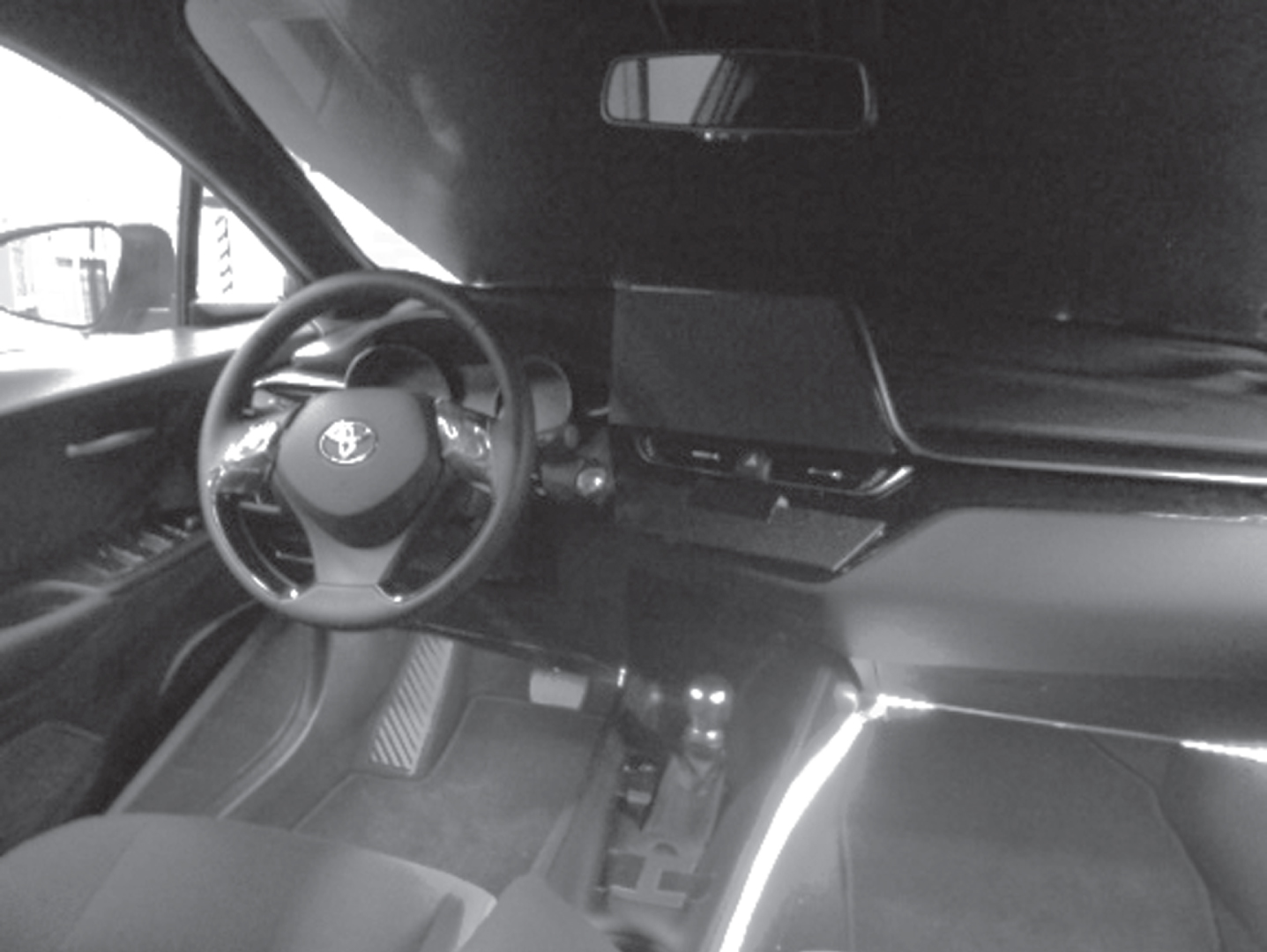
Picture of the interior of the evaluation cabin with ambient light on.
The variables manipulated in this study are highlighted in Table 1. Environment and individual factors controlled in this study to ensure comparability measurements are also described in Table 1. The factors considered, their baseline value (noted [BL] in the Table 1), and measurement methods were aligned among DOMUS consortium members as part of the overall methods guidelines (indicated in paragraph 3.2).
Description of main factors considered
For ambient light and scent, a 3×3 within-subject design has been adopted (see Fig. 5). From the 9 conditions of this matrix only five to seven could be tested. Each participant was exposed to a baseline test case (test case 1 (TC 1) –with not ambient light and neutral scent stimuli) and four test cases including single light or fragrance stimulus (TC 2 to TC 5) following the protocol described in Fig. 3. The order of presentation of these five test cases was counterbalanced. Participants were incrementally assigned to 5 groups and each group was exposed to the test cases TC 1 to TC 5 in a given order (balanced over the five groups). It was done in order to take account of two important sources of systematic variation: practice and boredom effects. When time allowed (i.e. if participant arrived on time and did not exceed the time allocated to the first two sections of the protocol), two extra test cases were added to explore the nature of the interaction between ambient light and fragrance (TC 6 and TC 7). The two conditions combining sensory stimuli with supposed opposed cold/warm meaning were not tested (e.g. “blue” ambient light combined with “orange & cinnamon” fragrance). Out the of 47 participants, 7 evaluated only 5 conditions (i.e. 35 test cases evaluation collected), 12 evaluated 6 conditions (i.e. 72 test cases evaluation collected) and 28 evaluated the 7 conditions (i.e. 196 test cases evaluation collected). Therefore, a total of 303 test cases evaluation were collected.
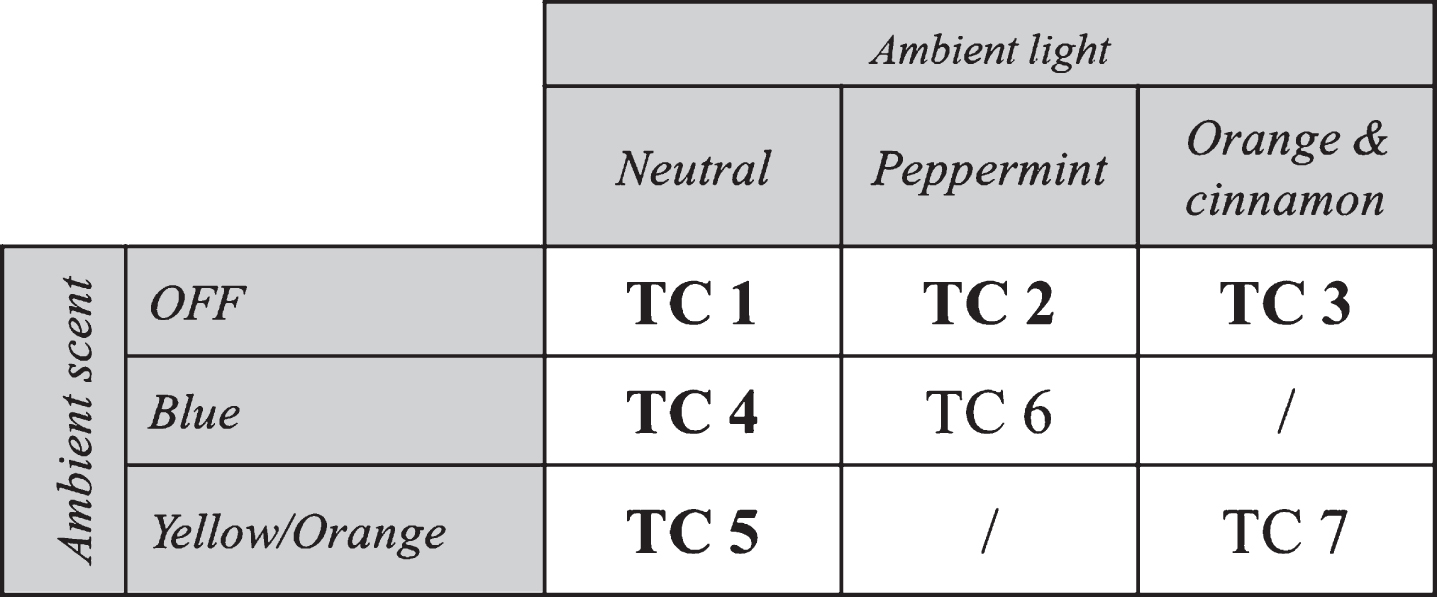
3×3 within-subject design (partially covered).
Each day a new temperature was set (between-subject variable), and attention was paid to have at least 8 participants a day and homogenous gender distribution. As this paper focuses on the interaction between thermal, olfactory and overall comfort perception, a stronger focus will be put on data from test cases labelled TC 1, TC 2, and TC 3 in the results section.
The five sections of the protocol presented in Fig. 6 are introduced below:

Simplified experimental protocol.
QA (questionnaire A) consisted in the collection of participants’ demographical data, noise and thermal sensitivity as well as temperature history.
MEC consisted in the calibration phase of the magnitude estimation method [22]. It allowed them to understand and familiarize themselves with the unusual format of this method. It was selected to assess and compare the comfort sensation from different sensory channels because it gives more freedom and flexibility to the participant when assessing and comparing these abstract notions. In practice, it consisted of expressing each comfort sensation felt by drawing a straight line and writing a positive number (longer line and higher number correspond to higher comfort).
TCx (test case x) represents the moment participants experienced a specific test case in a car cabin. Each test case consisted of a two minutes period within which participants were instructed to perform a task on a tablet while listening to an EV car noise through a headset (more details in Table 1). Before each test case the experimenter set the environment of the cabin to correspond to the next test case planned. During that time, participants were asked to exit the vehicle cabin had to wait inside the thermal chamber (at the desk they used to complete section QA and MEC). Questionnaire B were distributed at the beginning of each test case.
QB (questionnaire B) consisted of the evaluation of the test case experienced. It was filled in the cabin and is composed of three sections. The first section focused on thermal sensation with 7-point scales scale ranging from “cold” (-3) to “hot” (+3) [23]. The second section consisted of a comfort assessment of five sensory components (thermal, acoustic, seating, visual environments, and seating) as well as overall comfort using the magnitude estimation method [22]. The last section of this questionnaire consisted in a 9-point hedonic scale, ranging from “extremely dislike” (-4) to “extremely like” (+4), aiming to gather a liking score for each sensory channel [24] to complement the comfort rating collected in previous sections.
QC (questionnaire C) consisted in an evaluation of the task performed by the respondent during the study (i.e. Mobile Tracking Task on tablet). The questionnaire used for this section was the NASA Task Load Index [25].
Overall comfort components
In total, 303 test cases have been evaluated by the 47 participants. A confusion matrix was created (Fig. 7) based on thermal and overall comfort scores reported by participants in QB. According to it, thermal and overall comfort appreciation (“comfortable” or “uncomfortable”) are correlated in only 58.8% of the cases. It is also interesting to observe that only 47.5% of the test cases for which overall comfort was achieved were also reported as thermally comfortable. At the other end of the spectrum, when overall comfort was not achieved, participants felt thermally uncomfortable in only 61.9% of the cases. This shows that, in the experimental setup conditions, there might be other factors contributing to holistic comfort appreciation (“comfortable” or “uncomfortable”), and that thermal comfort scores alone cannot be used as an accurate indicator of holistic comfort. For a good understanding of the confusion matrix (Fig. 7), it is important to note that in “comfortable” corresponds to evaluations of “like slightly” (6th on a 9-point scale) and higher, and that “uncomfortable” corresponds to evaluations of “neither like nor dislike” (5th on the 9-point scale) and lower.
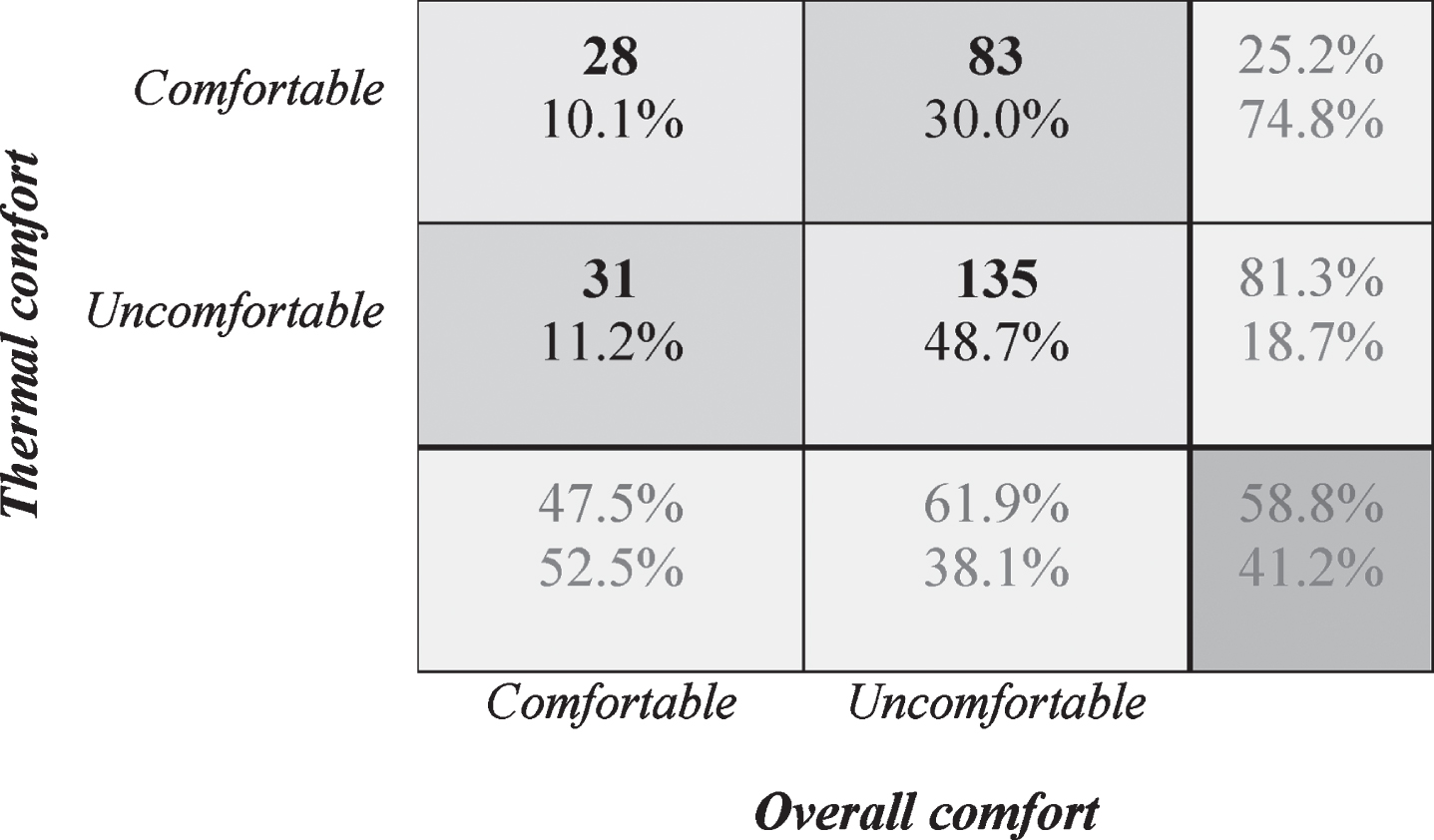
Confusion matrix.
Based on all participant evaluations, the overall comfort score (reported by participants as a hedonic score in QB) has been expressed as the weighted sum of each sensory comfort score (also reported in QB) using linear regression (Eq1). Given the coefficient of determination (R2 = 0.784), 77% of the variability of the dependent variable Overall (comfort) is explained by the five explanatory variables. Given the p-value (< 0.0001) of the F statistic computed in the ANOVA table, and given the significance level of 5%, the information brought by the explanatory variables is significantly better than what a basic mean would bring. The model parameters are presented in Table 2. It can be noted that the model fits relatively well with the comfort scores expressed by the participants. When interpreting it, we need nevertheless to keep in mind the specific condition of the experiment: static lab context, no extreme conditions (e.g. very cold temperature, scents commonly accepted as unpleasing).
Model parameters
In Equation Eq1 emphasis has been made on the comfort sensations related to the three variables of the experimentation (i.e. air temperature, ambient light color, ambient scent). Comparing their relative weight, it can be observed that olfactory (dis)comfort appears to be the most influential. Notably, in Bubb’s model (Fig. 2), olfactory discomfort was also presented as having the most influence on overall discomfort [12]. The second component having the most weight appears to be thermal comfort with visual comfort placing third on this relative comparison. Acoustic and seating comfort will need complementary experimental data (planned by other partners in the DOMUS consortium), with test cases focusing on these experimental factors to be discussed in the relative comparison.
Table 3 displays the overall thermal sensation reported by the participants (on a 7-point scale ranging from -3 [= cold] to+3 [= hot]) in slightly cold (19–21.5 °C) and slightly warm (23–25 °C) thermal environment. The mean and standard error of the mean (SEM) is displayed. The distinction is made between three different test conditions: “neutral fragrance” (TC 1), “peppermint” (TC 2), “orange & cinnamon” (TC 3) olfactory stimuli. Note that for both thermal environments, no significant difference in thermal sensation could be observed between the different test conditions. The observations made hereafter might therefore only serve to discuss and compare tendencies regarding their respective moderating impact. It nevertheless appears that for both thermal environments, the test condition involving “orange & cinnamon” fragrance is reported as providing a slightly warmer or equal thermal sensation than the one with neutral fragrance and the test case involving peppermint stimulation was on the contrary always rated colder than the baseline. Therefore, these findings are in line with the small moderating effect of lighting observed in non-automotive contexts (no significant effect identified either) [16–18]. The validation of the hypotheses that “warm” stimulus tend to lead to warmer thermal sensation and that “cold” stimulus tend to lead to colder thermal sensation (H1) would nevertheless require additional studies with larger sample sizes to be fully validated.
Overall thermal sensation reported in slightly cold and slightly warm environments
Overall thermal sensation reported in slightly cold and slightly warm environments
Table 4 displays the thermal comfort appreciation reported by the participants (on a 9-point scale ranging from -4 [=“dislike extremely”] to+4 [=“like extremely”]) in slightly cold (19 –21.5 °C) and slightly warm (23 –25 °C) thermal environment. The mean and standard error of the mean (SEM) is displayed. The distinction is made again between the TC 1, TC 2, and TC 3. For test conditions including a non-neutral olfactory stimulation, results are displayed for all participants (i.e. column “all”) and well as for participants that reported olfactory comfort (i.e. column “olf. comf.”). Olfactory comfort was considered reached when rated 0 (“neither like nor dislike”) or higher on the 9-point scale (from -4 to+4). Note that for both thermal environments, no significant difference in thermal comfort could be observed between the different test conditions. The observations made hereafter might therefore only serve to discuss and compare tendencies regarding their respective moderating impact. Looking at Table 4, for both thermal environments considered, the presence of olfactory stimuli improves in average thermal comfort. This observation is valid regardless of the “cold” or ”warm” meaning of stimuli. Thermal comfort appears to be further improved when considering only participants who reported olfactory comfort when exposed to fragrances. The hypothesis that “warm” stimuli tend to improve thermal comfort in slightly cold thermal environment and that “cold” stimuli tend to improve thermal comfort in slightly warm thermal environment (H2) is therefore not verified as this improvement is observed regardless of the stimulation. Results show that the appreciation of the olfactory stimuli by the respondent appears to be a more relevant criterion to consider when considering cross - modal interactions.
Thermal comfort reported in slightly cold and slightly warm environments
Thermal comfort reported in slightly cold and slightly warm environments
Looking at the overall comfort results, we observe that thermal comfort scores are not accurately estimating holistic comfort. Thermal comfort models (such as PMV [5]) are currently widely used in the automotive industry. Although their relevance to calibrate HVAC component is not questioned here, these results allow to highlight their limits and the need for new comfort models to describe comfort in a more holistic way, accounting for a wider range of sensory, cognitive and affective factors such as the ones described by Loriquet et al. [10] (see also Fig. 1). Olfactory and visual comfort are identified as two other major components (additionally to thermal comfort) of overall comfort. The three related sensory parameters can also be found at the basis of the discomfort hierarchy provided by Bubb [12] in a vehicle context. Although this similarity tends to validate the major weight of these components on overall comfort in a vehicle cabin, the limited numbers of conditions tested do not allow to generalize the results. As shown by Bouwens et al. [13] in a passenger airplane context, the activity performed can greatly influence the weight of overall comfort components. A growing trend in the automotive industry consists in offering a more personalized cabin atmosphere by letting users adjust a wide range of sensory parameters (e.g. temperature, ambient lighting color, fragrance but also softness of suspension and support of seat). From the perspective of the discussion above, this greater degree of adjustments appears very relevant to increase overall comfort regardless of the situation and the users’ individual sensitivity, taste and mood.
Complementary studies covering additional use cases (e.g. transient thermal environment), larger participant panels (allowing representative results regarding diversity sensitivity), a more natural and diverse environments (e.g. driving in different conditions, as a passenger), as well as a wider range of fragrances are envisioned as next steps. Beyond comfort considerations, fragrances have shown to be effectively changing occupants’ behaviors (e.g. calm, energized), shaking off drowsiness or conveying certain messages [26]. It would therefore also be valuable to integrate such considerations (when applicable) in future comfort studies.
The results regarding the impact of olfactory stimulation on thermal perception (i.e. thermal sensation and comfort) allow to observe direct interactions between these two sensory channels. To the best of our knowledge, this link has not yet been discussed based on experimental findings. The interactions observed between “warm” and “cold” olfactory stimulation and thermal sensation are limited (i.e. no statistical difference observed). They are notably comparable to the ones observed in building (i.e. room) [16, 17] and aircraft cabin [18] environments with “cold” and “warm” lighting. For the condition tested, “warm” stimulus tend to lead to warmer thermal sensation and that “cold” stimulus tend to lead to colder thermal sensation. Between olfactory stimuli and thermal comfort appreciation the interaction observed is different. Compared to “neutral” scent condition, the presence of olfactory stimuli appears to improve thermal comfort appreciation regardless of the “cold” or “warm” meaning of the fragrance and of the thermal environment. Furthermore, the appreciation of the thermal environment further improves in all conditions when considering only participants who reported olfactory comfort. The appreciation of the fragrance by the respondent appears to be a more relevant criterion than its “cold” or “warm” meaning when considering the impact of fragrances on thermal comfort appreciation. This could be motivated by the fact that the olfactory sense is strongly linked with attention, mood, and emotion [15] and that these cognitive and affective factors are influencing other sensory perception (including thermal) processes [7, 10]. Additional studies would be necessary to further understand these interactions.
If the tendencies observed are confirmed, the cross-modal interactions observed could be used to improve the thermal perception (i.e. thermal sensation and comfort) of vehicle occupants before an appropriate cabin temperature is reached by diffusing an appropriate fragrance (with “cold” or “warm” associated meaning and liked by the occupant). The feature drafted could also pave the way to novel energy reduction solutions balancing, from a holistic comfort perspective, the thermal comfort loss coming from a sized down HVAC unit with an improved olfactory comfort. This improvement could be achieved with no or limited additional energy consumption (e.g. through fragrance stimulation integrated in the HVAC unit).
Conclusion
These results suggest that olfactory stimulations can be major contributors to overall comfort appreciation (whether positive or negative). Results also suggest interesting effects on thermal sensation. Indeed, the exposure to a “warm” fragrance (“orange & cinnamon” essential oil was tested) led to a slightly warmer thermal sensation than for conditions with “neutral scent”, whereas a “cold” fragrance (“peppermint” essential oil was tested) provoked a colder thermal sensation. Having a major impact on thermal and overall comfort perception, the appreciation of the fragrances to which participants are exposed should be deeply considered and monitored in future research and features development. In order to validate and generalize these initial results, complementary studies should cover a wider range of use cases (e.g. transient thermal environment, driving in different conditions, as a passenger) and a wider spectrum of fragrances.
Conflict of interest
The authors declare that they have no competing interests.
Footnotes
Acknowledgments
This project has received funding from the European Union’s Horizon 2020 research and innovation programme under grant agreement no. 769902.