



Abstract
BACKGROUND:
Fruitculture workers are exposed to shoulder pain disorders due to long working times in overhead activities.
OBJECTIVE:
This study aims to analyze the association between the time of physical work and leisure activities over the perception of shoulder pain intensity in fruit growing workers.
METHODS:
This is a descriptive and correlational cross-sectional study. The sample consisted of 180 fruit-growing workers. Multivariable logistic regression was used, with an estimate of the Odds Ratio (OR) and 95% confidence intervals. The dependent variable: Numeric Pain Rating Scale (NPRS) (0–10 points), was categorized as low and high, with cutoff points of NPRS > 3 and NPRS > 4, and was associated with the independent variables (level of physical activity, personal, labour and psychosocial).
RESULTS:
Workers which are insufficiently active in leisure time are more likely to report high-intensity shoulder pain, NPRS > 3 (OR: 2.39; p = 0.049) and NPRS > 4 (OR: 2.85; p = 0.036). In addition, working time in overhead activities is a risk factor for high-intensity pain for NPRS > 3 and NPRS > 4 (OR = 1.01; p < 0.001). Underweight and normal-weight workers were less likely to report shoulder pain in NPRS > 3 (OR = 0.35; p = 0.020) and in NPRS > 4 (OR = 0.20; p = 0.001).
CONCLUSION:
Fruit-growing workers had a high prevalence of severe shoulder pain. In addition, workers who are insufficiently active at leisure, overweight and obese are more likely to report severe pain. It was observed that overhead tasks increase the chances of reporting high-intensity shoulder pain among workers.
Introduction
Work-related musculoskeletal disorders (WMSD) are generally associated with pain or dysfunction of the musculoskeletal system, which can have an impact on work functions [1, 2]. In addition to being considered a major cause of absenteeism and presenteeism [3], WMSDs have consequences for employers, family members and the economy [2]. Among the mainly affected regions, there are the WMSDs in the shoulder region, in which there can be estimated a prevalence rate ranging from 12% to 40,5%, depending on the activity [4, 5].
Risk factors that are considered for WMSDs on the shoulder region are repetitive movements, lifting heavy loads [6] and movements overhead [7]. Among the labour-intensive activities that combine these characteristics, we can mention the ones performed by fruit-growing workers [8]. However, literature is still unclear as to the inclusion of biological variables (individuals), such as gender, age, Body Mass Index (BMI) and level of physical activity, and occupational variables in models that analyze the relationship between shoulder pain and fruit production [6, 9–12].
In view of the aforementioned problems and health consequences, monitoring the perception of the intensity of shoulder pain [13, 14] and the practice of physical activity [15, 16] can minimize these negative impacts. Andersen et al. found that subjects with pain intensity≥4 points for the neck/shoulder region had a higher risk of absenteeism from work. This can be explained due to subjects with high-intensity pain presenting a wider impairment when it comes to the functionality of their work-related activities [13]. Therefore, this piece of information can assist in monitoring the intensity of workers’ pain, in order to avoid absenteeism and presenteeism at work.
Concerning the practice of physical activity, benefits to the components of physical fitness are expected [17] and in the prevention of chronic non-communicable diseases [17–19], as well as it can assist in reducing the intensity of pain [15]. Thus, Søgaard and Sjøgaard propose a model to control work demands and practice physical activity in order to perform a controlled overload to generate benefits and reduce pain. This model considers an individual’s physical activity profile (work, leisure and sleep) avoiding overload in some domains.
When analyzing the literature, it was found that 19 studies investigated the association of physical activity in musculoskeletal disorders and shoulder pain in workers, 13 of them with a cross-sectional design [4, 20–29] and six with a prospective design [6, 30–33].
Some studies have verified the protective effect of physical activity for pain and musculoskeletal disorders in the shoulder [4, 33], be it through running [12], sport activities [30], or general levels of occupational or leisure activities [33]. Moreover, carrying out these activities can improve the ability to work [24].
Despite presenting a scenario of physical activity and the relationship with WMSDs in workers, none evaluated this association in fruit-growing workers. This type of work requires a great manual toll, repetitive movements and long periods of overhead activity, which can increase the chances of shoulder disorders [34, 35]. It is worth mentioning that Brazil is among the largest fruit producers in the world [36], and the São Francisco Valley region is considered the largest fruit producer in Brazil. The region has a semiarid climate where workers are exposed to high temperatures and very dry climates. Several studies have described that the exposure of workers to high temperatures can negatively impact productivity, overload, and pain complaints [37, 38]. Thus, evaluating the factors associated with WMSDs in this population can mean generating economic and social benefits for the local region and the country.
In view of the gaps presented in the literature, the objective of this study was to analyze the association between the time of physical work and leisure activities on the perception of shoulder pain intensity in fruit-growing workers in the São Francisco Valley region, Brazil. As a hypothesis, it is believed that workers who are insufficiently active at leisure will be more likely to report high-intensity shoulder pain.
Methods
Study design and participants
This is a cross-sectional, observational, descriptive and correlational study. The study follows the recommendations of the Strengthening the Reporting of Observational Studies in Epidemiology (STROBE) [39]. This study was approved by the Ethics and Research Committee of the University of Pernambuco (CAAE: 17698619.6.0000.5207). All individuals were informed about the objectives of the study and signed a Free and Informed Consent Form (ICF), according to the rules of Resolution 466/12 of the National Health Council and the Declaration of Helsinki.
Participants were recruited from a farm that carries out irrigated fruit cultivation activities, located in the São Francisco Valley region, Brazil. The company’s managers were responsible for drawing up a list with the number of permanent workers, and the data were collected between November and December 2019.
The sample consisted of permanent workers, who met the following inclusion criteria: male or female workers, aged 18 or over and permanent workers of the company, all of whom signed the ICF. Subjects who gave up participating in the research during the interview or who had missing data in the questionnaire were excluded.
Variables
The dependent variable was the pain intensity considering a Numeric Pain Rating Scale (NPRS), being categorized as low or high. This was necessary to perform a sensitivity analysis, considering that the intensity of the standard pain was dichotomized into low (0 –3) and high (4 –10) for the cutoff point of NPRS > 3, according to a study by Boonstra et al. [13]. Also for sensitivity analysis, we consider NPRS > 4, according to studies by Hallman et al., dichotomized into low (0 – 4) and high (5 – 10).
The independent variables were divided into personal, psychosocial and occupational risks. Personal characteristics included the time of physical activity during leisure, BMI, gender and age of the workers. Psychosocial variables took into account issues related to health and well-being and interpersonal relationships at work. Finally, the labour variables included the time for carrying out the activities, handling of loads and experience at work.
Data sources/measurement
The questionnaires were applied through interviews and were carried out by previously trained researchers. Sociodemographic data of individuals were obtained using questionnaires. Height and body mass were self-reported, due to the impossibility of measurement since it was conducted in a real environment. After collecting this information, BMI was calculated based on the ratio between body mass per height in meters squared (kg/m2).
Numeric Pain Rating Scale (NPRS)
To assess the perception of shoulder pain intensity in the last three months, an NPRS of 11 points was used, being 0 (no pain) and 10 (worst possible pain) [40]. This instrument allowed individuals to subjectively indicate a score to refer to their perception of pain intensity.
Occupational and leisure physical activities
Occupational activities were assessed through individual reports of the participants, who described the approximate time they spent in each posture or performance of physical activities during their working hours [32]. Leisure activities were also evaluated, taking into account the time of postures adopted outside of work and the performance of physical activity. In regards to leisure-time physical activities, individuals were categorized as active and insufficiently active according to World Health Organization (WHO) recommendations [17].
Job Stress Scale (JSS)
In order to assess work stress, the JSS validated by Alves et al. was used, which contains 17 questions: five to assess psychological demand at work, six to assess control over work and six to assess social support. The participants specified their degree of agreement on a Likert-type scale (1–4), enabling the generation of a final score, which ranges from 5–20 for psychological demand and from 6–24 for control and social support.
Based on the demand and control dimensions (low and high) of the control demand model, the demand-control quadrants were categorized as “high demand” (high psychological demand and low control); “active work” (high psychological demand and high control); “passive work” (low psychological demand and low control); and “low demand” (low psychological demand and high control) [41, 42].
Methodological quality control
Some measures were adopted in order to minimize possible sources of bias: 1) Giving the necessary instructions; 2) Emphasizing to employees that their names would not be disclosed to the company; and 3) Conducting the questionnaire at a distance from other co-workers or managers, so as not to interfere in results.
Sample size
The sample calculation was carried out through the WINPEPI (PEPI-for-Windows) computer program version 10.5 [43], based on a study conducted by Dias [44], in which a prevalence of 13.6% for shoulder pain in fruit workers was verified. We also consider the number of permanent workers in the company, which totalled 330. Thus, for the sample calculation, we used a 95% confidence level, a maximum sampling error of 4% and an estimated loss of 10%. Therefore, the sample size required was 169 workers.
Statistical analysis
The data analysis was performed using the Statistical Package for the Social Sciences (SPSS) version 20.0. The descriptive analysis included the distribution of frequencies (absolute and relative) for categorical variables and values of mean and standard deviation for numerical variables.
To verify the association between shoulder pain and the personal, physical, psychosocial and labour characteristics of workers, a bivariate model of the association between the pain variable and each independent variable was initially constructed. Consequently, it was possible to observe which variables would enter the models (p < 0.20). Then, the collinearity diagnosis was used to verify the existence of multicollinearity between the independent variables. No tolerance index (all < 1) or VIF values (all < 2) indicated the presence of multicollinearity.
The association between the Physical Activity Level (PAL) (dichotomized as insufficiently active and active) and the intensity of shoulder pain (dichotomized as low and high) was determined using binary logistic regression models. Several types of modelling were tested to obtain a valid model that presented the best quality of fit. For these analyses, the Omnibus coefficient tests, the Nagelkerke R square test, and the Hosmer and Lemeshow test were considered.
The best indicators of validity and quality of fit were obtained in a hierarchical binary logistic regression model and with backward method. In this model, the dependent variable (pain intensity) was dichotomized into low (0 – 4) and high (5 – 10), considering an NPRS [22, 23]. In the first level, the independent variable of interest (PAL) and the individual risk factors and personal characteristics were inserted. In the second and third levels, the physical and psychosocial risk factors related to work were added, respectively.
To analyze the consistency of the results, a sensitivity analysis was performed based on the model described above (model 1). In model 2, the cutoff point 3 in the NPRS was considered for the dichotomization of the dependent variable to define mild pain, according to a study by Boonstra et al. [13].
In the analyses, the Odds Ratio (OR) estimate and 95% confidence intervals were used to express the degree of association between the dependent and independent variables. Values of p < 0.05 were used to express significant associations.
Results
Figure 1 shows the employee evaluation flowchart. After identifying the company’s 330 permanent workers, 184 consented to participate in the study and were evaluated. However, four subjects presented missing data and were excluded from the study, resulting in a total sample of 180 workers.
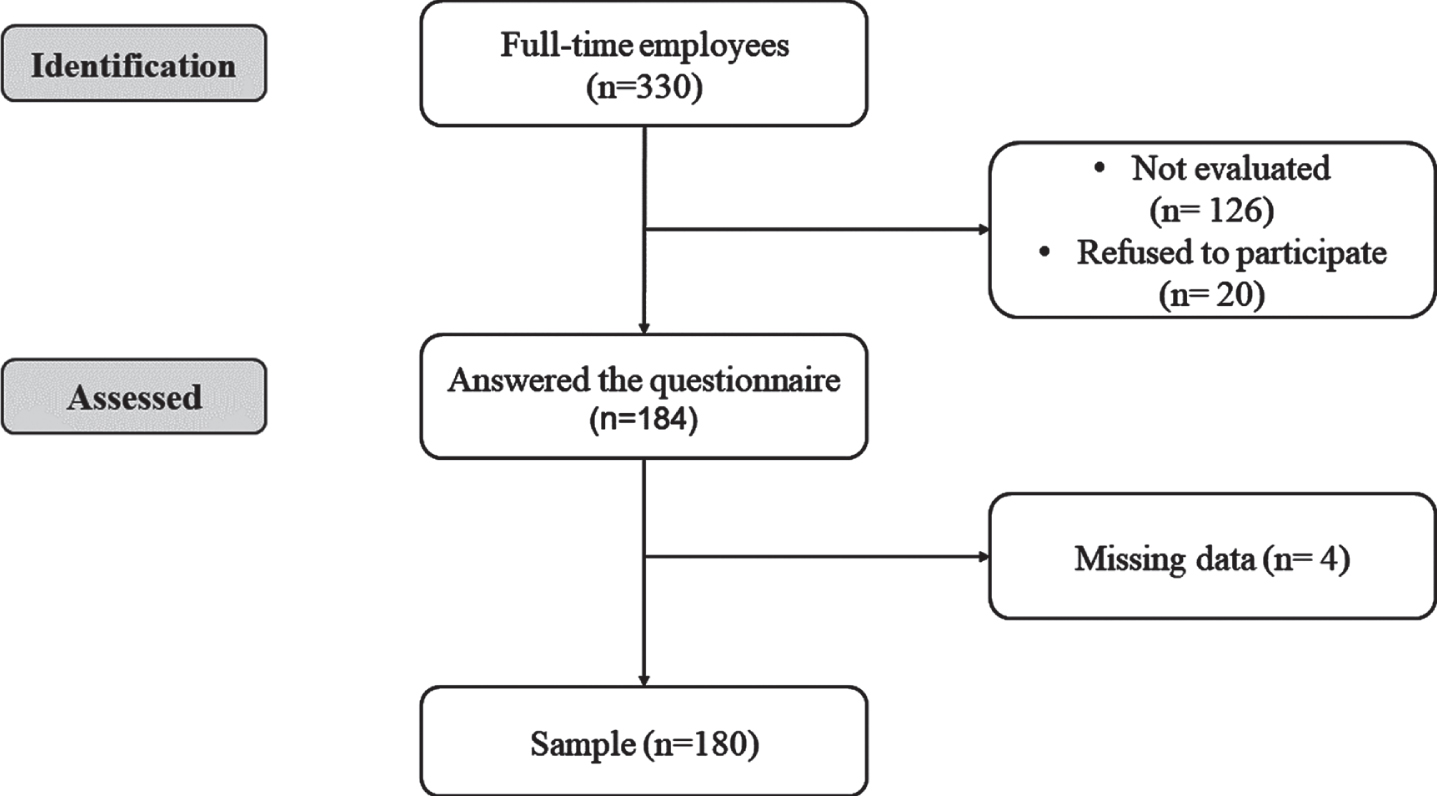
Flowchart of employee assessment.
The personal characteristics of fruit-growing workers are shown in Table 1. The sample consisted of more female individuals (72.8%), with an average age of 33.9 years and 57.8% of workers reported shoulder pain, with an average intensity of shoulder pain of 3.60 points (scale of 0–10). It was also observed that 70.6% of workers were insufficiently active at leisure and 60.6% were overweight or obese. In addition, 75% of workers occasionally had alcoholic beverages.
Personal characteristics of fruit-growing workers
Subtitle: n = Number of workers, BMI = Body Mass Index, SD = Standard Deviation, JSS Class = Job Stress Scale.
When analyzing labour characteristics, it was found that 72.2% of workers performed their activities in the field and worked in the same function for approximately 36 months. In addition, it was found that workers remained approximately 420 minutes standing and 357 minutes with their hands overhead for working.
Table 2 shows the results of multivariate logistic regression for shoulder pain intensity (NPRS > 3) and (NPRS > 4). The PAL showed a significant association when the model was adjusted for personal, work and psychosocial characteristics. When considering these factors in the analysis, it was identified that workers classified as insufficiently active have 139% more chances of reporting high-intensity pain in the shoulder (NPRS > 3) (OR: 2.39; p = 0.049). Similar results were verified for the NPRS pain intensity cutoff point > 4, with insufficiently active workers presenting 185% more chances of reporting high-intensity pain on the shoulder (OR: 2.85; p = 0.036).
Results of multivariate logistic regression for pain intensity on the shoulder region and physical activity level. Results for regression coefficient (β), odds ratio (OR) and 95% confidence intervals (CI 95%) for the OR
Results of multivariate logistic regression for pain intensity on the shoulder region and physical activity level. Results for regression coefficient (β), odds ratio (OR) and 95% confidence intervals (CI 95%) for the OR
a – Model adjusted for personal variables (chronic disease, current classification of current health, gender, BMI, alcohol consumption, use of medication, child at home). b - Model adjusted for work variables (absence from work due to muscle or joint pain, performance at work affected by muscle or joint pain, occupational time with raised arm, function performed, time carrying or lifting loads, sitting time). c - Adjusted model for psychosocial variables (family income, difficulty sleeping, difficulty waking up, relaxing after work, exhausted at the end of the working day, too tired to start another activity, JSS Class, difficulty returning to work) sleep, collaboration between employees and management / direction, influence on what you do at work).
Table 3 shows the variables that present an association when included in the final multivariate logistic regression model. In addition to physical inactivity, working time with hands overhead also proved to be a risk factor for complaints of high-intensity pain. For both cutoff points analyzed (NPRS > 3 and NPRS > 4), an OR = 1.01 and p values < 0.001 were observed.
Variables considered for the final model of multivariate logistic regression for pain intensity on the shoulder region
Subtitle: PAL = Physical Activity Level, BMI = Body Mass Index.
However, workers classified as underweight and normal-weight were 65% less likely (OR = 0.35; p = 0.020) to report high-intensity pain (NPRS > 3) and had 80% less chance (OR = 0.20; p = 0.001) of presenting high intensity pain (NPRS > 4) on the shoulder.
This study assessed the influence of the time of physical activity on the perception of shoulder pain intensity and its association with personal, psychosocial and work factors in fruit-growing workers in the São Francisco Valley region, Brazil. The hypothesis of this study was confirmed, verifying that workers who were insufficiently active at leisure were more likely to report high-intensity shoulder pain.
It is worth highlighting that the results of pain intensity in NPRS (0–10 points) were categorized according to cutoff points presented in the literature, NPRS > 3 [13] and NPRS > 4 [22, 23], allowing the performance of a sensitivity analysis. This type of strategy is important for data analysis, since subjects with higher pain intensities have a higher risk of absenteeism from work [14].
Fruit-growing workers had a high prevalence of leisure-time physical inactivity (70.6%). It was also observed that workers who were insufficiently active at leisure time and with greater intensity of shoulder pain for cutoff points NPRS > 3 and NPRS > 4, were more likely to have shoulder pain, being 139% and 185%, respectively. It should be noted that to verify the relationship between the level of physical activity during leisure time and the intensity of shoulder pain, it was necessary to use an adjusted model considering the personal, work-related and psychosocial factors. This strategy takes into account the multifactorial characteristics of pain [45].
Some studies have not found an association between the level of physical activity and pain in the shoulder region [26, 27]. A possible explanation for these findings is that the authors did not consider the set of personal, psychosocial and work-related factors in the statistical analysis, as well as having collected information on musculoskeletal disorders for the last 12 months, which could have resulted in a biased analysis. Another factor is that pain intensity was measured considering the last seven days, thus, it would only be possible to check the acute pain of the workers.
Whilst analyzing the literature, it is noticed that some studies have found that the practice of physical activity reduces the chances of developing shoulder pain [4, 25], as well as improving the ability to work [24]. In consequence, the practice of physical activity at work or at leisure time should be encouraged, given the benefits for improving the components of physical fitness [46] and better modulation of pain nociceptors [16], which can contribute to reducing shoulder pain. In addition, studies highlight the benefits of physical activity in the prevention of chronic non-communicable diseases [18, 19].
Despite generating a few adverse events [15], some care must be considered when performing physical activities. This is demonstrated in a recent study published by Ezzatvar et al. [28], in which it was found that practising vigorous physical activity lasting≥75 minutes increased the chances of mild pain in the neck/shoulder area in physiotherapists. Even knowing that low-intensity pain does not present a risk of absenteeism from work [14], it is necessary to control the intensity, duration and frequency of physical activity in the workplace and at leisure time [16]. In this sense, different instruments can be used to control the psychophysical demands [47].
Moreover, a recent systematic review and meta-analysis has verified that exercise in workers whose pain level is≥3 on the baseline, shows a beneficial effect in reducing the intensity of pain in the shoulder region [48]. The average pain reduction was 1,73 points, which represents a Minimal Clinically Important Difference (MCID), as well as showing a moderate to high evidence quality, assessed by the Grading of Recommendations Assessment, Development and Evaluation (GRADE).
In connection to BMI, this study found that workers classified as underweight and normal-weight had lower chances of high-intensity pain in the shoulder, in both cutoff points in the NPRS. These results can be explained in a physiological way, where underweight and normal-weight subjects have less activity of pro-inflammatory adipokines, these being the interleukins: IL-1, IL-6, IL-8, and TNFα, resulting in less inflammation [49]. Miranda et al. obtained results similar to our study, identifying that workers classified as overweight or obese had greater chances of shoulder pain, which may be related to the imbalance of pro- and anti-inflammatory adipokines resulting in tissue inflammation [50, 51]. A recently published study found that there is a positive correlation between BMI and the intensity of shoulder pain in patients with chronic pain [52], which could be justified by a large amount of pro-inflammatory adipokines.
However, Colim et al. [53] point out that overweight and obese workers have lower perceived exertion in activities that require an overload of between 10 and 15 kilograms. These results can be explained by the fact that overweight and obese people are adapted to greater physical loads, mainly due to excess body weight. Divergent results are verified when obese workers perform static activities [54]. It is noteworthy that fruit-growing workers have a greater predominance of isometric activity in the upper limbs, mainly in the movement overhead.
Finally, working time in overhead activities (≥100 minutes) was also considered to be a risk factor for high-intensity shoulder pain at both cutoff points in the NPRS. Our results show that the chance of shoulder pain increases by 1%, every minute during overhead activity. It is worth highlighting that workers of both NPRS cutoff points had a similar time in this type of activity, with an average of 357 minutes in overhead activities. Leong et al. [11] demonstrated that working with the shoulder above 90° increases the chances of rotator cuff tendinopathy by 141% and working for long periods uninterrupted about 4 minutes or more, increases the risk of neck and shoulder pain [55].
Similar results were seen in the study conducted by Miranda et al. [50], which confirmed that performing overhead movements of between 30 and 60 minutes increased the chances of shoulder pain by 40%. It is worth mentioning that the chance of reporting shoulder pain increased to 60% in workers who performed overhead activities lasting > 60 minutes. However, in another study conducted by Miranda et al. [51], there was no association between the incidence of shoulder pain and the performance of overhead movements. This divergence may be due to the longitudinal design of the study and the type of sample studied (forestry workers), performing mainly the activities of core rotation and strength. Thus, repetitive work activities carried out for long periods can be considered as risk factors for shoulder pain. In this study, the assessed population performed overhead movements during 85% of the working time (357 minutes), for pruning or harvesting the grapes. Kirkhorn, Earle-Richardson and Banks point out that these actions can generate risk for the development of WMSDs, and in this sense, economic impacts for producers and workers.
Even though work characteristics influence the duration of overhead activities, biomechanical and physiological factors can describe why this activity is considered a risk factor for shoulder pain and several pathologies [7, 11]. Regarding biomechanical factors, abduction movements of the arm above the head can generate compression of the bursa, tendon and supraspinatus muscle in contact with the acromion [56, 57]. In addition, long periods of overhead activity can result in reduced blood flow to the muscles and tendons, which could cause shoulder pain [58, 59].
Thus, this study can contribute to the use of strategies for the prevention of WMSDs, avoiding health expenses and loss of productivity. Hence, the inclusion of breaks in overhead activities and the maintenance of a healthy lifestyle with the performance of physical activity in a systematic way and a balanced diet can act to minimize the chances of developing WMSDs for the shoulder region.
Strengths and limitations
This study has the following strengths: 1) Analysis of the results categorized by the intensity of shoulder pain, allowing an analysis of the sensitivity of the results; 2) Evaluation of personal, work and psychosocial factors in the statistical analysis. Thus, it was possible to understand the risk factors associated with shoulder pain in grape fruit-growing workers, since pain is considered a multifactorial phenomenon; 3) This is a study that evaluated the presence of shoulder pain in fruit-growing workers exposed to high temperatures and dry weather and whose specific biomechanical characteristic of the task is overhead movement; 4) Low cost for conducting the research, allowing application in other fruit farms and by the company itself.
Amid the limitations, we can highlight: 1) Cross-sectional design of the study; 2) Self-reported measures of physical activity, psychophysical and BMI, which may underestimate or overestimate the data collected; and 3) Checking only the risk factors associated with shoulder pain.
Therefore, future studies can assess the level of physical activity with direct measures in order to investigate with more precision the amount of physical activity at work and leisure and its association with shoulder pain in fruit-growing workers. In addition, we recommend that future studies assess the biomechanical variables involved in performing the tasks as to understand possible overloads or changes in kinematics and electromyographic activity of the neck, shoulders, and upper limbs. Finally, checking the prevalence and risk factors in other body regions can enable the understanding of WMSDs in this type of work.
Conclusion
Effective fruit-growing workers had a high prevalence of severe pain in the last three months for the shoulder region. In addition, insufficiently active, overweight and obese workers are more likely to report severe pain. It was also found that long-term exposure to overhead tasks (≥100 minutes) represents a risk factor for shoulder pain, increasing the chances of reporting high-intensity pain.
Ethical approval
This study was approved by the Ethics and Research Committee of the University of Pernambuco (CAAE: 17698619.6.0000.5207).
Informed consent
All individuals were informed about the objectives of the study and signed a Free and Informed Consent Form, according to the rules of Resolution 466/12 of the National Health Council and the Declaration of Helsinki.
Conflict of interest
The authors declare no conflicts of interest.
Footnotes
Acknowledgments
The authors are grateful for the collaboration of the participants and employers, which made it possible to perform the data collection. They thank the support of the scholarship given by the Coordination for the Improvement of Higher Education Personnel (CAPES) for two master’s and PhD students: Gabriel de Amorim Batista and Sol Patricia Beltrán Picón.
Funding
This study was financed by the Brazilian National Council for Scientific and Technological Development (CNPq) under grant no. 420606/2018-1.