



Abstract
BACKGROUND:
The construction of a safety culture in coal mine enterprises is an essential component of coal mine safety management. Current studies do not address the mechanism for forming and constructing systems for coal mine enterprise safety culture, and many studies are based on imperfect theoretical frameworks and unsystematic empirical research, their policy recommendations are not systematic or operable, and they offer no feasible safety culture construction system.
OBJECTIVE:
This study is devoted to analysing the theoretical basis of safety culture construction in coal mine enterprises from the perspective of hazards and proposing the content, stages and targets of constructing a safety culture and develops pragmatic approaches for coal mining enterprises to improve safety culture.
METHODS:
A theoretical basis for safety culture construction in coal mine enterprises is proposed from the perspective of hazards by considering accident-causing mechanisms based on hazards. Furthermore, this study applied the case analysis and application to conduct empirical research on the proposed theoretical basis for safety culture construction from the perspective of hazards.
RESULTS:
Four aspects are proposed to capture the content and objectives of safety culture construction from the perspective of hazards: safety concept, behaviour safety, material state safety, and safety institutions. Furthermore, this paper provides a case study of safety culture construction by the Yimei coal group from the perspective of hazards, identifies the hazards based on the above four aspects, and then identifies preventative measures and controls for the identified hazards.
CONCLUSIONS:
Constructing a safety culture in coal mine enterprises from the perspective of hazards is operable and practical, and thus this study provides essential theoretical and practical value for improving coal mine safety.
Introduction
Mining remains one of the most hazardous occupations worldwide, and underground coal mines are especially notorious for their high accident rates [1–4]. Coal mine safety in China has witnessed marked improvement [5], as shown in Fig. 1. Nevertheless, the safety situation in coal mines has not fundamentally changed, and catastrophic accidents still haunt coal miners and the country. Against the background of frequent coal mine accidents, the construction of a safety culture in coal mine enterprises is a kind of “soft” countermeasure for preventing accidents. It is the most important task in improving safety quality for all employees of the enterprise, and therefore, it has strategic significance for ensuring safe production and preventing accidents.

Number of fatalities and fatality rate per million tonnes in China’s coal mines from 1949 to 2018. Note: The People’s Republic of China was founded on October 1st, 1949. Source: China Coal Industry Statistical Yearbook (2018) and the website of the National Coal Mine Safety Administration (NCMSA).
At present, coal mine enterprises in China have a weak safety culture foundation, and there are still many problems in the construction process. First, the safety management mode is relatively unsophisticated and needs to be improved. Current safety management is still in the stage of managing experience and institutions, and a pre-control safety risk management mode centred on controlling hazards has not been established. Second, the construction of a safety culture is not systematic and has not been perfected. The theoretical basis, content and method for constructing a safety culture are insufficiently clear, and there is no practical and feasible safety management system focused on the pre-control of risk. Third, safety management is still in a stage focused on dependence and punishment: managers apply strict rules and inspections to restrain employee behaviour. Employee safety awareness has not reached the ultimate goal of focusing on safety of the self and others, and this needs to be further improved. Fourth, some coal mining enterprises have established their own safety culture, but the established safety culture is not well integrated with the pre-control of risk, institution management and management procedures. Employees’ awareness of safety is shallow, and there is no systematic recognition of the safety concept culture, behaviour safety culture, material state safety culture, and safety institution culture.
In the past 20 years, domestic and foreign scholarly research on safety culture has focused on the following four aspects: the connotation of safety culture, the dimensions of safety culture, evaluations of safety culture, and the methods for constructing a safety culture. First, most of the research on the connotation of safety culture is from a practical perspective, rarely rising to the theoretical level; it tends to focus on psychological factors such as beliefs, concepts, and attitudes [6–8]. Second, in terms of the dimensions of safety culture, researchers often determine the dimensions of safety culture through questionnaire surveys focused on values and attitudes [9–11]. Because the research is based on various industries and people, the results vary, but management attitude, training, risk awareness and safety standards are recognized by scholars. Third, in terms of evaluating safety culture, the evaluation of safety culture depends on its definition and is generally qualitative [12–15]. However, with the development of safety culture practices and the introduction of new management concepts and methods, quantitative evaluations of safety culture become possible [16–20]; the basic idea in these evaluations is to classify the safety culture elements according to their characteristics as reflected by quantitative indicators and then to combine the categories to form a key performance indicator reflecting the overall state of safety culture [21–24]. Finally, in terms of safety culture construction, generally only suggestions are given in the current research, and no effective scheme has been implemented [25–29]. For example, Qi Guangfa proposed the “12345” safety culture system project [30], and Li proposed the construction of a comprehensive network culture security management system [31]. Throughout the research in China and worldwide, there are many studies on the concept, importance and construction of enterprise safety culture, but there are few directly aimed at the construction of a coal mine enterprise safety culture. The mechanisms and for forming and constructing systems of coal mine enterprise safety culture still need to be defined in-depth, and because many studies are based on imperfect theoretical frameworks and unsystematic empirical research, their policy recommendations are not systematic and operable, and no feasible system for constructing a safety culture is offered.
Therefore, given the existing problems in the construction of a safety culture among coal mine enterprises in China and the deficiencies in the relevant research at home and abroad, this paper is devoted to analysing the theoretical basis of safety culture construction in coal mine enterprises from the perspective of hazards by considering accident-causing mechanisms based on hazards. Moreover, four aspects are proposed to capture the content and objectives of safety culture construction: safety concept, behaviour safety, material state safety, and safety institutions. It proposes the content, stages and targets of constructing a safety culture and develops pragmatic approaches for coal mining enterprises to improve safety culture. The remainder of this paper is organized as follows. Section 2 analyses the theoretical basis of safety culture construction in coal mine enterprises from the perspective of hazards first and then proposes the construction content, stages and targets. Section 3 introduces a case study of safety culture construction in the Yimei coal industry group from the perspective of hazard sources. Finally, concluding remarks and prospects for further investigation are presented in Section 6.
Theoretical basis
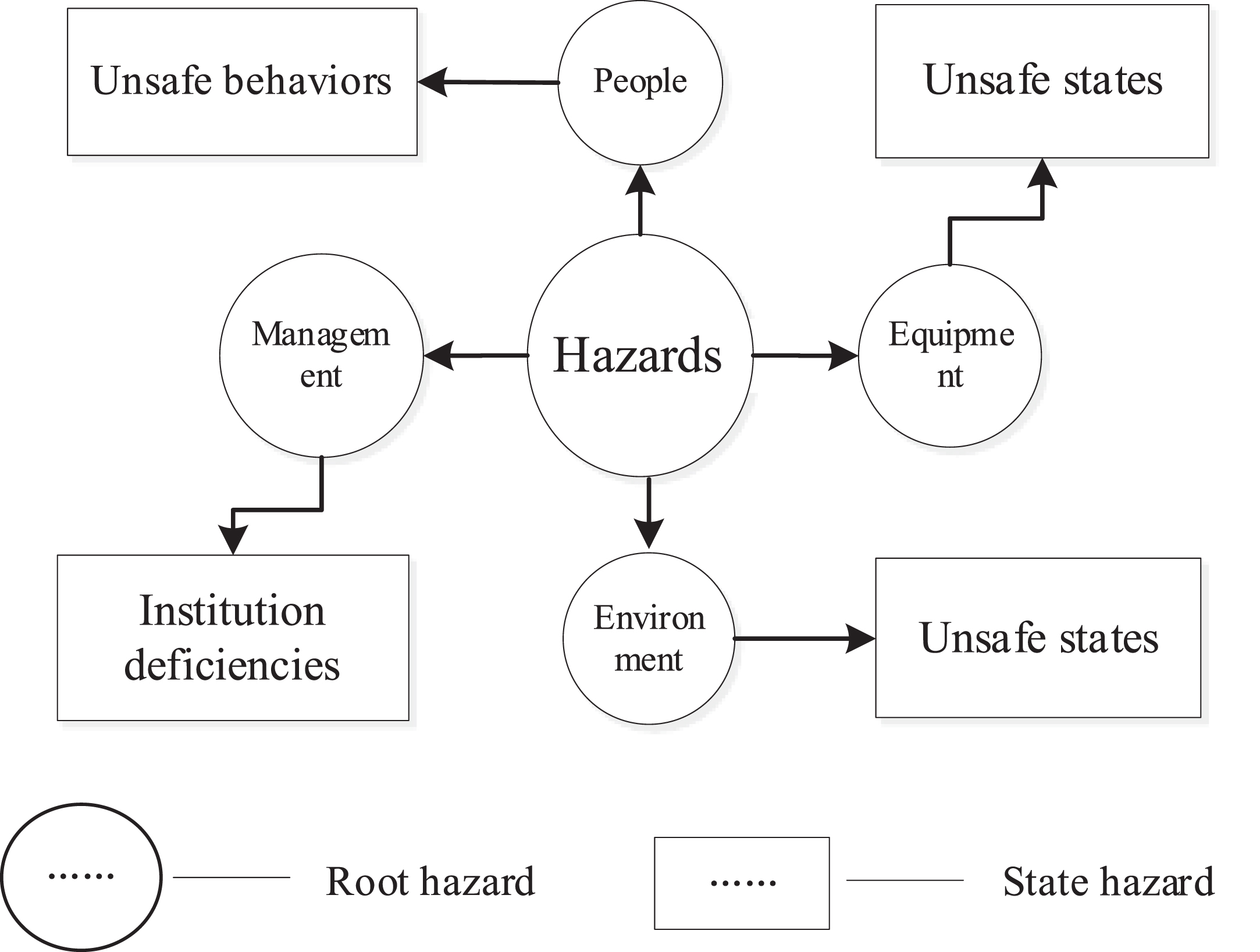
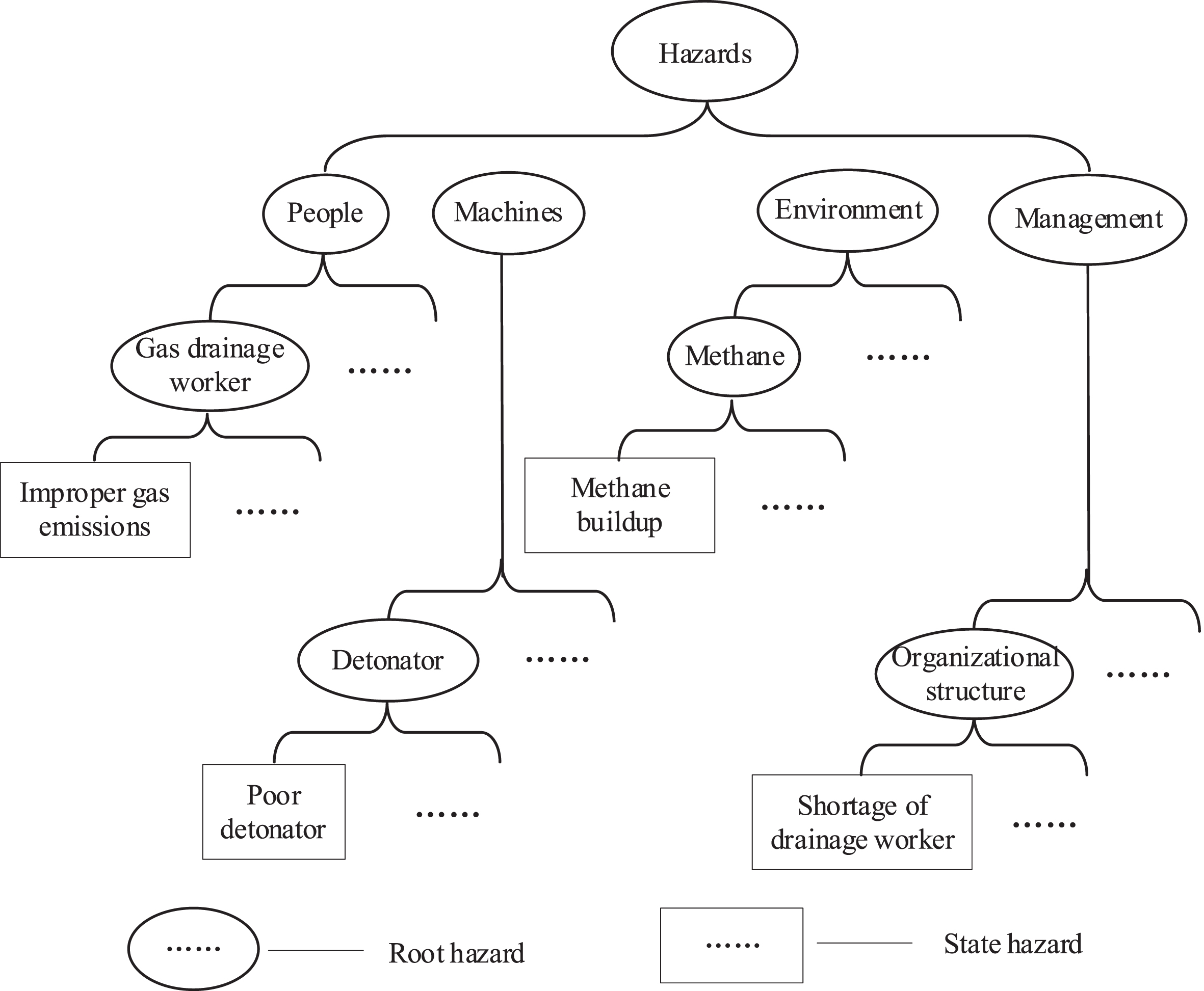
Hazards are the roots or states that could cause harm or loss and are sources of risk [32]. In this paper, hazards are categorized into root hazards and state hazards (Fig. 2). Root hazards are the root causes of accidents; they are objective and inherent in the underground coal mining and production process, whether they are identified or not. State hazards are the unsafe conditions or unsafe behaviours related to root hazards that can release or allow root hazards to trigger accidents. An example of root hazards and state hazards is shown in Fig. 3.
Root hazards and state hazards.
An example of root hazards and state hazards.
Risks are the possibility that harm (death, injury or illness) will occur when exposed to hazards. Risks are the effects of uncertainty on situations that are caused by variability and specific uncertain events. Risks are often measured in terms of consequences and probability. When all hazards are safely controlled, there are only residual risks. Conversely, when a certain hazard is out of control, i.e., there is an uncontrolled state hazard (hidden danger), then there is an unacceptable level of risk [33]. Uncontrolled state hazards are hidden dangers that are out of control and are the direct causes of accidents under some conditions. Therefore, an accident-causing mechanism based on hazards is proposed, as shown in Fig. 4.

Accident-causing mechanism based on hazards.
The accident-causing mechanism based on hazards shown in Fig. 4 indicates that hazards are the premise for the existence of risk. There is no risk if there is no hazard, but the presence of hazard does not mean that the risk will necessarily occur. When all hazards are under control, risk will not appear. When the hazards are out of control, that is, when a hidden danger or unsafe behaviour (state) occurs, risk will appear, and this may lead to the occurrence of accidents according to iceberg theory and Heinrich’s law.
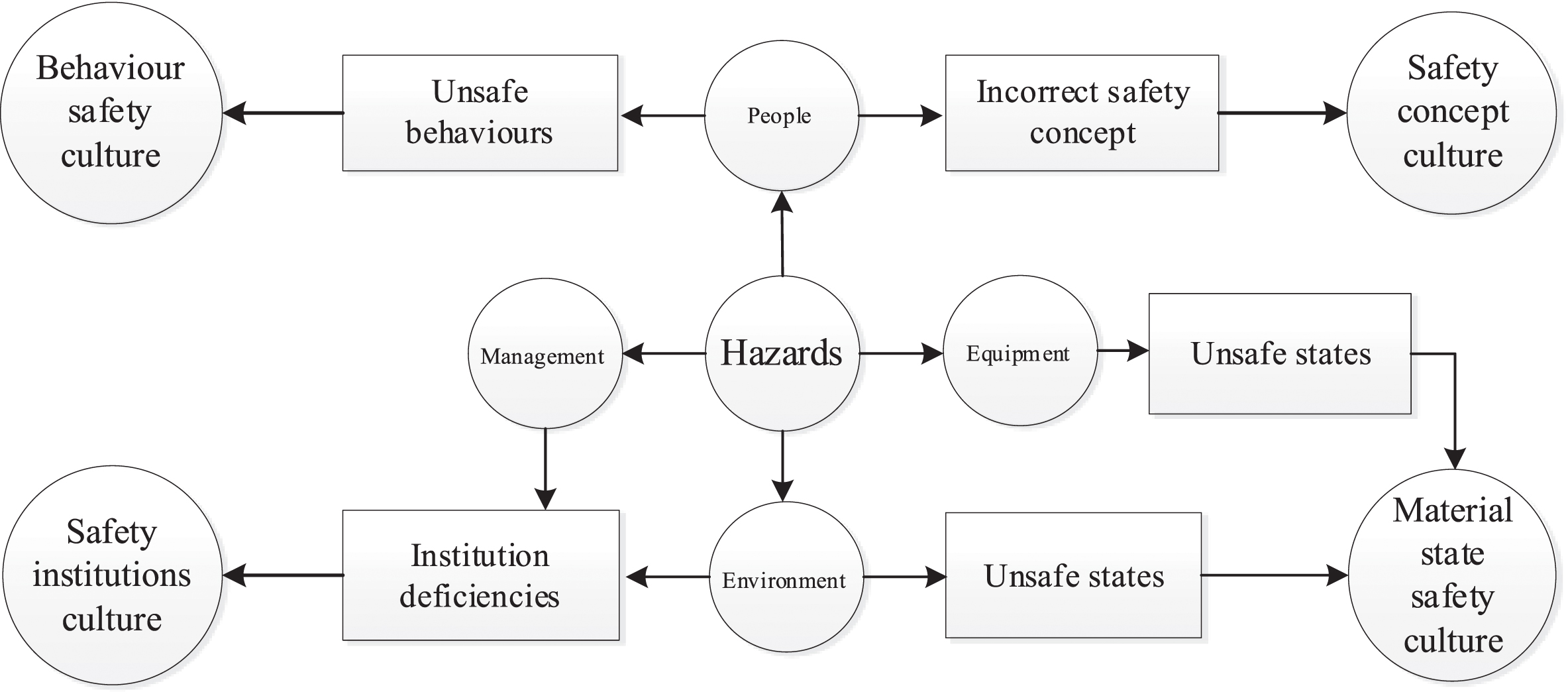
Considering the above accident-causing mechanism based on hazards, this paper proposes the content of the construction of safety culture systems in coal mine enterprises, as shown in Fig. 5.
Safety Cultural Construction Contents from the Perspective of Hazards.
(1) Safety concept culture
The safety concept culture resides in the inner or innermost layer of the safety culture. It refers to a general sense of the safety concept centred on values that is observed by all members and used to guide and control people’s behaviour safety. A safety concept culture mainly comprises safety consciousness, the safety concept, and safety value standards accepted by the decision-makers and the public. It also includes the awareness of protecting the self, insurance precautions, and prevention. By constructing a safety concept culture, coal mine enterprises can cultivate correct safety values among employees, help all employees appreciate core safety concepts such as “Everyone a the hazard, everyone is a safety officer”, “Hazards are the source of risk” and “I am responsible for my safety, and I am responsible for the safety of others”, and root these concepts in the thoughts and actions of employees to form an environment of team safety and mutual assistance.
(2) Behaviour safety culture
Behaviour safety culture is performance that meets the criterion for safe behaviour and that reflects modes of thought and behaviour among employees and production processes under the guidance of a safety concept culture. Behaviour culture is not only the concrete embodiment of the concept culture but also affects and changes the concept culture. In constructing a behaviour safety culture, targeted management standards and measures are formulated by studying and analysing the mechanisms and internal and external influencing factors that generate the occurrence of unsafe behaviours to define behaviour safety norms for enterprise employees; this gradually changes employees’ behaviour from “I want to be safe” to “I not only want to be safe myself, but I also want others to be safe”, reducing the probability that human-caused accidents occur.
(3) Material state safety culture
Material state safety culture is the surface of safety culture and is a condition of forming both concept and behaviour safety culture. Material state safety culture can reflect the safety awareness and attitude of enterprise leaders, reflect the concept and philosophy of enterprise safety management, and reflect the effectiveness of behaviour safety culture. Therefore, material is the embodiment of culture and the foundation of cultural development. The construction of a safety state culture will form a “tangible” safety culture atmosphere (equipment, facilities, signs, warnings, etc.) and coordinated relationships among humans, machines and the environment to realize the essential safety of the environment, equipment, production technology and technology.
(4) Safety institution culture
A safety institution culture has a normative and binding influence and effect on the behaviour of the social organization or enterprise organization personnel; it embodies the requirements of the concept culture and material state culture for leaders and employees. The construction of a safety institution culture includes establishing legal concepts, strengthening legal consciousness, developing the correct attitude towards scientifically formulating laws, standards and regulations, and developing strict law enforcement procedures and conscious law enforcement behaviours. This is the intermediate level of safety culture, and it provides coordination, guarantees, restrictions and promotions. By developing a safety institution culture that begins with the identification of hazards within the institution, a rational and reasonable institution construction process and control measures are built to provide a strong institutional guarantee for the construction of safety culture.
The above four levels constitute the overall structure of the coal mine enterprise safety culture system; they are interrelated, with mutual influences, penetration and restrictions. Among them, the material state safety culture is the foundation, the safety concept culture is the core and essence, and the behaviour safety culture and safety institution culture, as the intermediaries, are the bridge that link safety concept culture to material state safety culture. Through the construction of an enterprise safety culture, we can ensure that advanced concepts, reliable institutions, standard behaviours, and an intrinsically safe material state have been established. We can realize the organic combination and benign interaction between the “soft” construction of concept, behaviour, and institution culture and the “hard” construction of the material state culture to form a kind of self-restraining and continuously improving long-term safety mechanism, effectively prevent and control the occurrence of accidents, and ultimately move towards the goal of mutual team safety assistance, zero accidents, and zero casualties.
The construction of coal mine safety culture should take the pre-control of risk as its focus and the PDCA cycle method as the operation mode. Safety culture promotes the construction and implementation of a safety risk pre-control management system by constructing four cultural aspects—safety concept, behaviour safety, material state safety, and safety institutions—and ultimately realizes the control of all hazards that could directly lead to accidents, such as unsafe behaviours and an unsafe material state (equipment, environment), and the control of all hazards that could indirectly lead to accidents, such as erroneous safety concepts, defects in management institutions, violations of command by managers, and failure to perform duties. Based on the current situation of safety culture construction and the above accident-causing mechanism based on hazards, the Yimei Coal Group divided safety culture construction into four aspects: concept culture, behaviour culture, material state culture, and institution culture. Next, this paper provides a case study of safety culture construction by the Yimei coal group from the perspective of hazards, identifies the hazards based on the above four aspects, and then identifies preventative measures and controls for the identified hazards. Moreover, based on the identification of hazards in concepts, behaviours, material state, and institutions, eight core safety concepts were proposed, the system control process was constructed, the staff behaviour safety standard was formulated, and the construction approach and method to ensure the intrinsic safety of the material state was defined.
Safety concept culture
(1) Identification of conceptual hazards
Deviations in employees’ cognition, understanding and practice of the enterprise safety concept leads to conceptual hazards, which are not easy to identify and are often the root of behavioural hazards (unsafe behaviour). Conceptual hazards are mainly manifested in incorrect safety concepts, such as “production first, safety second”, “Coal mining is a high-risk industry, and accidents are inevitable”, “Safety management mainly depends on experience”, “Low gas concentrations will not cause an explosion accident”, “The superior will come to check tomorrow and rectify the hidden dangers”, “If others do it all right, I’m sure it is all right for me”, “If others violate the rules, it does not matter to me”, “No one sees it, and nobody knows that I’m breaking the rules”.
(2) Control of conceptual hazards
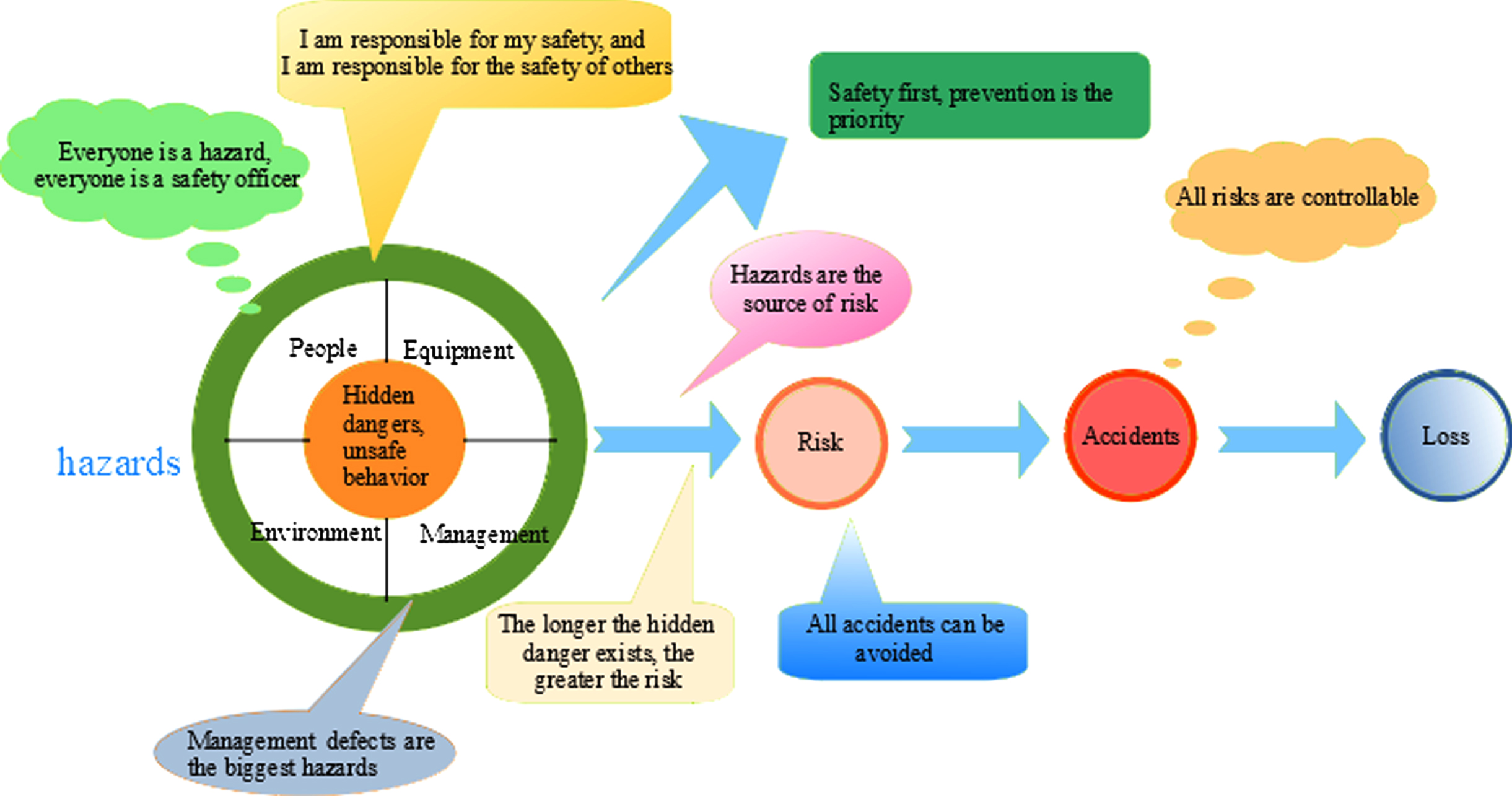
According to the above accident-causing mechanism based on hazards (Fig. 4), the occurrence of an accident is the conclusion of a series of causal chain reactions, and hazards are the source of the accident. The safety concept is derived from the above accident cause and effect chain. By combining the key points and characteristics of each link and each process, a meaningful and standardized safety concept was identified to form the safety concept system of the Yimei Coal Group, which includes the eight core concepts shown in Fig. 6.
Relationships between the eight core safety concepts and their theoretical basis for the Yimei Coal Group.
The eight core safety concepts of the Yimei Coal Group are “Safety first, prevention is the priority”, “Everyone is the hazards, everyone is a safety officer”, “Hazards are the source of risk”, “I am responsible for my safety, and I am responsible for the safety of others”, “All risks are controllable”, “Management defects are the biggest hazards”, “The longer the hidden danger exists, the greater the risk”, and “All accidents can be avoided”.
The establishment and formation of a safety concept culture must have a broad mass base, focus on safe production in enterprises, and encourage the participation of a majority of employees. Extensive research shows that the enterprise should learn from the advanced experience and practice of the safety concept culture construction at home and abroad, but eliminate the false and retain the true among these practices through summary, induction, refining, development and innovation. Moreover, various forms of communication should be adopted to publicize the concepts and educate employees, penetrate every link of production and operation activities, and gradually form a safety concept cultural system with its own characteristics.
(1) Identification of behavioural hazards
The identification of behavioural hazards should start by analysing the causes of unsafe behaviours. Through the systematic and comprehensive identification and risk assessment of unsafe behaviours, scientific and reasonable preventive measures can be formulated to control them, thereby effectively avoiding accidents [34]. First, master the methods of hazard identification (i.e., direct empirical analysis and system safety analysis) and consider the three tenses and states of unsafe behaviour. Second, adhere to pre-control risk management as the core, take the comprehensive identification of hazards in the system as the premise, collect all previous accident cases and lessons, use the employee unsafe behaviour identification card to identify unsafe behaviour, and use the risk matrix to conduct a risk assessment of the identified unsafe behaviour. Finally, combine the risk assessment results and develop targeted measures to control unsafe behaviour. In addition, in the daily operation process, identify any appearance of the newly discovered unsafe behaviour and supplement or improve the relevant control measures.
(2) Control of behavioural hazard
The control of behavioural hazards mainly includes the following steps. First, in view of the physiological, psychological, knowledge and skills and other factors that affect employees’ unsafe behaviours, control measures such as employee admittance, safety education and training, the correction of unsafe behaviour and subsequent specifications post specification are implemented. Second, given the environment, equipment technology, organization management, leadership, society and other external factors affecting employees’ unsafe behaviour, control measures such as improvements in the operating environment and the mediation of ideas and emotions are implemented to reduce and eliminate the effects of external factors and avoid unsafe behaviour. In the practice of constructing behaviour safety culture, the Yimei Coal Group formed a behaviour safety code centred on actively implementing the “Employee 6 S Basic Code of Conduct” and “3 Descriptions, 3 Objectives, and 1 Confirmation”.
The “Employee 6 S Basic Code of Conduct” includes Seiri, Sanitary, Sharp, Standardization, Safety, and Shitsuke. First, Seiri means categorize the items, clean them according to their codes, and store or remove them properly. Second, Sanitary means keep the all of the facilities, equipment, tools, materials, environment and other production factors on the operation site clean. Third, Sharp refers to accurate compliance with time rules and conventions. Fourth, Standardization follows the seven-step process of calibration ⟶ recognition ⟶ implementation ⟶ adjustment ⟶ confirmation ⟶ comparison ⟶ upgrading to standardize all work of the enterprise; therefore, all tasks have standards to follow, all tasks are carried out according to those standards, and all employees develop standardized behaviour habits. Fifth, safety means that there are no accidents during the operation process. Sixth, Shitsuke asks employees to continuously improve their professional skills, the quality of operations and basic citizenship.
“3 Descriptions 3 Objectives 1 Confirmation” includes the following. The “3 Descriptions” include the System Description (a description of the current working position, the basic situation, and emergency measures to avoid disaster given a sudden dangerous events), Job Description (a description of the specific work process), and a hazards description (a description of the identification of hazards in each individual position). The “3 Objectives” include Standardization (all tasks have standards to follow and are carried out according to the standard), Refinement (pay attention to every detail in safety management, fully grasp every link in the task, and determine all of the hidden dangers), and Paramilitary Management (all employees need to act according to the strict discipline of the army) “1 Confirmation” is a system in which the duty personnel confirm the safety situation on the job site to the team leader, security inspector and personnel before, during, and after entering the well.
Material state safety culture
(1) Identification of material hazards
To construct a material state safety culture, it is necessary to identify and evaluate the material hazards in the working environment, machinery and equipment and take corresponding measures to control them in advance. The identification of material hazards mainly focused on two areas: identifying hazards in the working environment and identifying hazards in machinery and equipment. First, identifying the hazards in the working environment mainly includes water threat; roof, floor and pressure threat; geothermal threat; gas and coal dust explosion threat; fire threat; gas outburst threat; and workplace temperature, humidity, dust, noise, toxic gas concentration exceeding regulations, etc. Second, identifying the hazards in machinery and equipment mainly includes lacking necessary equipment, equipment quality that does not meet the requirements, serious equipment damage, lack of equipment maintenance, and equipment warning signs are not complete, not clear, or incorrect.
(2) Control of material hazards
First, hazards are controlled in the working environment. An important component of coal mine safety state culture is to construct a good safety environment and create an intrinsically safe working environment, which generally includes a reasonable production layout and standard design, complete safety infrastructure and system, applicable communications for safety information, and appropriate safety and warning signs. Taking underground pipelines as an example, all pipelines are arranged based on a colour system, and directional signs with the words “air supply pipe”, “water supply pipe”, “drainage pipe”, “grouting pipe” and “oxygen pipe” are marked on each pipeline at a certain distance, as shown in Figs. 7 and 8.
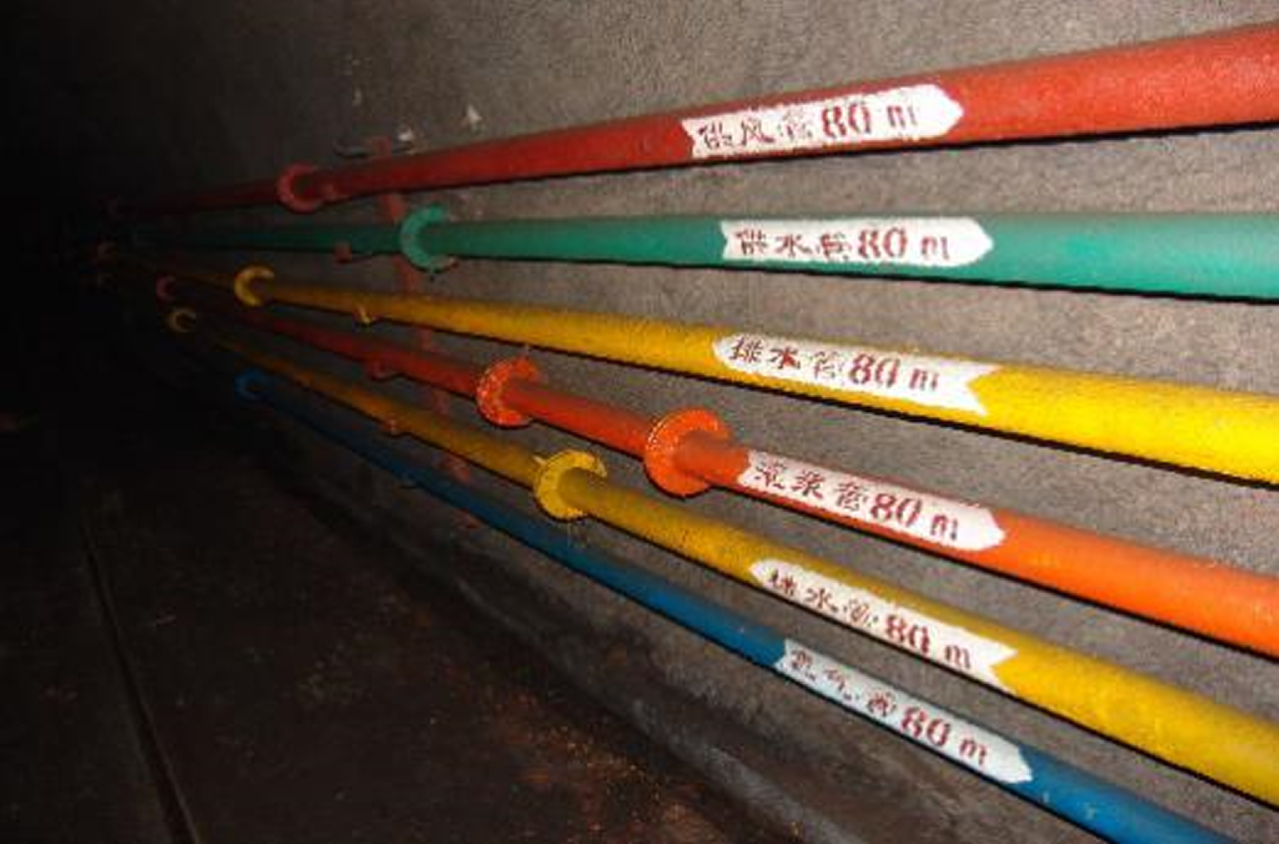
Underground pipeline arrangement (1).
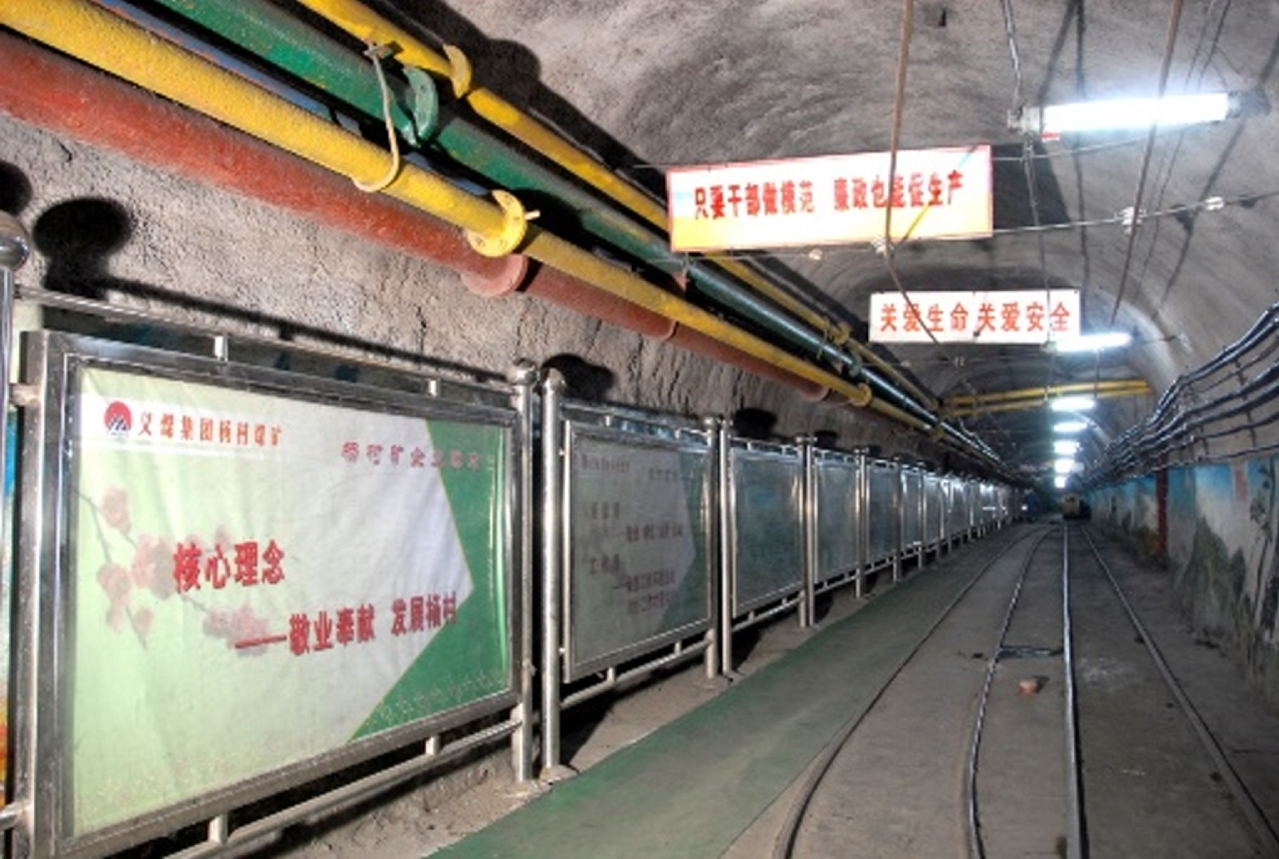
Underground pipeline arrangement (2).
Second, the hazards in machinery and equipment are controlled. The safety and reliability of machinery and equipment is the essence of safe production, the carrier of safe culture, and an important material guarantee of safe production. The control of hazards in machinery and equipment mainly includes the purchase of machinery and equipment that uses advanced technologies and that is applicable to production and economically rational; the good operation and maintenance of machinery and equipment is also essential, as is increasing the investment and use of intrinsically safe equipment. For example, the equipment in the coal mining face and driving face is shown in Figs. 9 and 10, respectively.
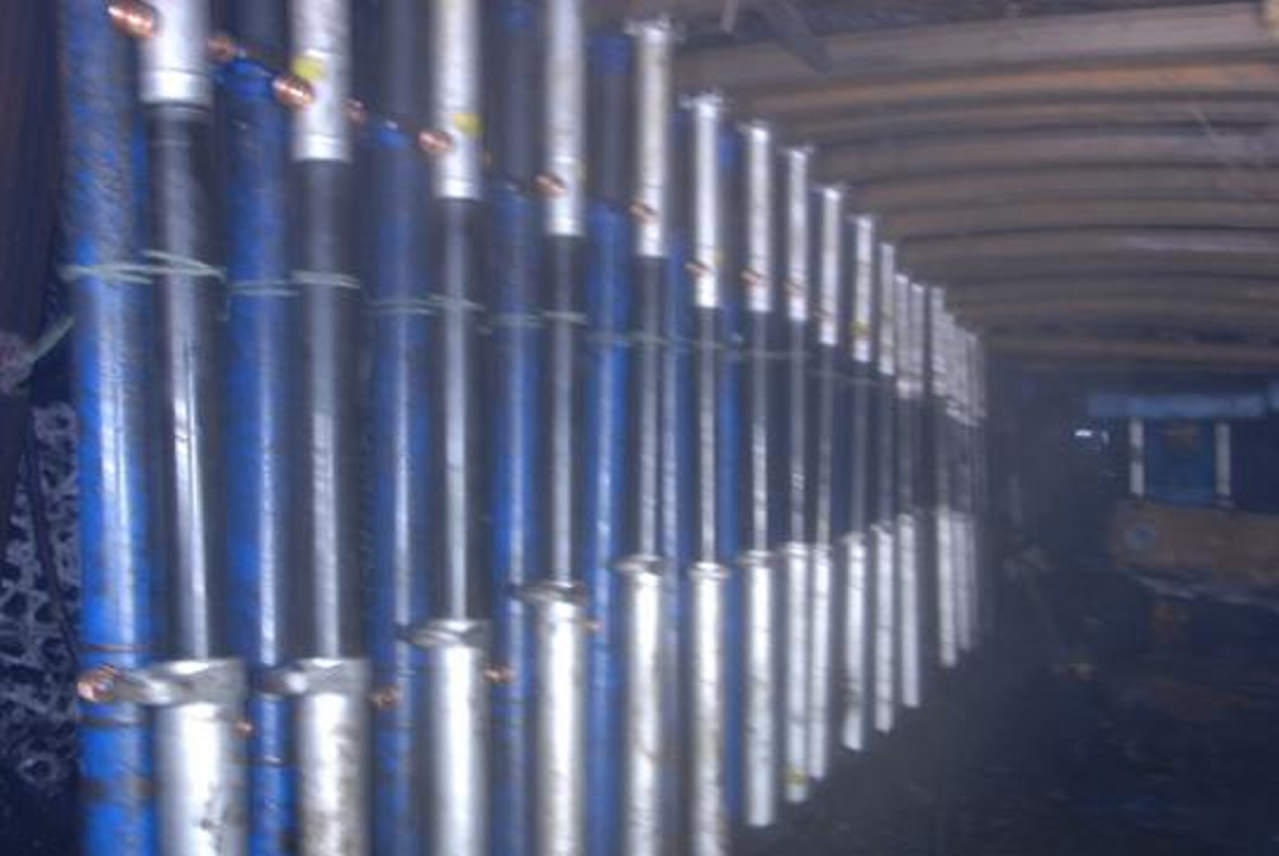
Equipment in the coal mining face.

Equipment in driving face.
(1) Identification of institutional hazards
Institutional hazards are an indirect factor of accidents, and they are deep-seated and potential causes of accidents. An irrational or inconsistent institution will lead to unsafe behaviour among on-site employees and the precarious state of the machine or environment, which will lead to accidents. Institutional hazards mainly include the following six components.
The first hazard exists in the formulation and revision of the institution, such as overdue institution formulation and revision, a non-standardized or irrational departmental or personnel composition, investigations and suggestions for relevant departments were not collected before the institution was written and revised, the formulated and revised institution lacked pertinence and operability, or the subject of each behaviour in the institution is unclear or missing.
The second hazard is related to the audit of the institution, such as when the audit content, is not comprehensive and specific, the audit process is unreasonable and nonstandard, the auditors are not familiar with the relevant business and lack the qualifications for auditing, or the institutional audit has not been carried out using the relevant procedures.
The third hazard relates to the release of the institution, for example, the release of the system, is not timely, the release method and channel are not suitable, the release target is incomplete or the release scope is inaccurate.
Fourth, the propaganda and implementation of the institution are a hazard, such as when information is not propagated or implemented by all executives, only one channel exists for disseminating information and implementation and the effects are weak, training is insufficient and lacks practical results, and records of information and implementation are lacking.
Fifth, the implementation of the institution can create a hazard, for example, if the institution implementation is inconsistent with the institution content, there is no record of institution implementation, or the institution implementation record is inconsistent with the actual situation.
The sixth is in the evaluation of the institution, such as if the assessor, is not familiar with the content of the institution, there is an interest relationship between the assessor and the institution implementation department, detailed assessment standards are lacking, or the assessment become a mere formality.
(2) Control of institutional hazards
To eliminate institutional hazards and make the institution more rational and reasonable, it was necessary to standardize the formulation, audit, release, publicity, implementation, supervision, and evaluation of the institution and formulate a complete set of processes to eliminate or reduce the risk of accidents caused by the institution to the greatest extent possible. To ensure the standardization and operability of institution construction and unify and standardize the drafting, examination, approval, implementation, revision, and abolishment of the system, an “institution construction” group headed by the mine director and the secretary of the party committee was established to make overall arrangements for the implementation and operation of institution construction. At the same time, the “institution construction” group was responsible for evaluating the institution construction for mines, departments, teams, and urging the improvement of other institutions beyond the coal mine safety management system. In addition, the “institution construction” group assessed the completion of the system and determined rewards and penalties.
The institutions are divided into four categories: organizational management institutions, safety management institutions, professional management institutions, and technical specifications; these are under the centralized management of mines, departments, teams, and groups. Among them, the organization management institutions are serve to standardize organizational behaviour, including the regulations at the mine level, the organization setting, the division of responsibility, and appropriate roles post setting. The safety management institutions are the “safety meeting” and 18 other institutions that must be implemented by the state for coal mining enterprises; the professional management institutions standardize the professional functions of various management departments; and the institutions other than the above three categories are classified as technical specifications. Technical specifications are regulations that clarify and determine technical requirements, including standards and procedures in production processes, environmental protection, and safety technology.
Conclusions and limitations
Conclusions
A theoretical basis for constructing a safety culture in coal mine enterprises is proposed that adopts the perspective of hazards, focusing on accident-causing mechanisms based on hazards. Hazards are the premise for the existence of risk. There is no risk if there is no hazard, but the presence of a hazard does not mean that the risk will necessarily occur. When all hazards are under control, risks are not manifested, but when hazards are out of control, that is, when a hidden danger or unsafe behaviour (state) occurs, risks emerge, which may lead to the occurrence of accidents. The construction of safety culture from the perspective of hazards mainly includes four aspects of culture: safety concept, behaviour safety, material state safety, and safety institutions culture. Specifically, conceptual hazards, behavioural hazards, material hazards, and institutional hazards must be identified and controlled. The four aspects are interrelated and have mutual influence, mutual penetration and mutual restrictions. Among them, the material state safety culture serves as the foundation, the safety concept culture is the core and essence, and the behaviour safety culture and safety institution culture, as intermediaries, are the bridge and link between the safety concept culture and material state safety culture. By constructing an enterprise safety culture, we can ensure that the concept is advanced, the institution is reliable, the behaviour is standardized, and the material state is intrinsically safe. The construction objectives of the four aspects of safety culture from the perspective of hazards are as follows. First, by constructing a safety concept culture, coal mine enterprises can cultivate correct safety values among employees, help all employees truly embody core safety concepts such as “Everyone is a hazard, everyone is a safety officer”, “Hazards are the source of risk” and “I am responsible for my safety, and I am responsible for the safety of others”, and root these concepts in the thoughts and actions of employees to form an atmosphere the prioritizes team safety and mutual assistance. Second, through the construction of a behaviour safety culture, by studying and analysing the occurrence mechanism and internal and external factors influencing unsafe behaviours, targeted management standards and measures can be formulated to form behaviour safety norms among enterprise employees to gradually change their behaviour from “I want to be safe” to “I not only want to be safe myself, but I also want others to be safe”, reducing the probability that human accidents occur. Third, the construction of a safety state culture will form a “tangible” safety culture atmosphere (equipment, facilities, signs, warnings, etc.) and a coordinated relationship among humans, machines and the environment to realize the essential safety of the environment, equipment, production technology and technology. Fourth, through the construction of a safety institution culture, beginning with the identification of hazards from the institution, scientific and reasonable institutions and control measures are constructed to provide a strong guarantee for the construction of a safety institution culture.
Limitations
The problem of coal mine safety production is very important and complex. This paper takes coal mine enterprises as the research object, analyses the theoretical basis of the content of safety culture construction, and proposes the components for constructing a safety culture within coal mine enterprises from the perspective of hazards; thereby, it establishes a set of methods and some practical and feasible suggestions for the prevention of coal mine accidents. However, this paper offers no systematic answer to the specific problems and treatment methods that may be faced in the practical application of its findings on the construction of safety culture systems in coal mine enterprises from the perspective of hazards; this gap will be improved in future research. Moreover, the concept culture, behaviour culture, material state culture, and institution culture in coal mine enterprises will be further studied based on the construction of a safety culture from the perspective of hazards.
Ethical approval
Not applicable.
Informed consent
Not applicable.
Conflict of interest
We declare that we do not have any commercial or associative interest that represents a conflict of interest in connection with the work submitted.
Footnotes
Acknowledgments
Not applicable.
Funding
This work was supported by the National Social Science Foundation of China (Grant no. 21BGL297).