



Abstract
BACKGROUND:
Although the environment of college students is relatively safe, they are faced with the pressure of study, interpersonal relationship, and even future employment, which leads to a variety of psychological disorders, among which stress response is the most common one. As a new concept of healthy self, it is not clear how self - compassion affects students’ stress response.
OBJECTIVE:
This study aimed to analyze the role of students’ self-compassion based on chronic stress response in negative emotional regulation and coping style selection caused by external pressure, and to provide a theoretical basis for the application of self-compassion in regulating individual emotions in the future.
METHODS:
The 427 students from many universities in China who have applied for the 2020 postgraduate entrance examination and were preparing for the examination were classified into S1 group (preparation time < 2 months), S2 group (2 months < 5 months), and S3 group (preparation time > 5 months). The students who didn’t apply for the examination were set as D0 control group. The total stress response score, learning pressure, and positive and negative emotional scores of each group were compared. The Bootstrapping sampling method was used to examine the mediating effect of self - compassion. The students applying for the examination were classified into high-level self-compassion group (G1) and low-level self-compassion group (G2).
RESULTS:
The scores of learning stress and negative emotion in S1, S2, and S3 groups were significantly higher than those in D0 group, and S1 > S2 > S3 (P < 0.05). The proportion of students in G1 group who responded to review setbacks in a mature way was significantly higher than that in G2 group, and the proportion of immature type was significantly lower than that of G2 group (P < 0.05). There was a very significant positive correlation between self-compassion and problem solving and asking for help (P < 0.001).
CONCLUSIONS:
Self-compassion concept can reduce students’ negative emotions facing external pressure and protect individual positive emotions. In conclusion, faced at external pressure and stress, individuals with high self-esteem would not escape from their own negative emotions, and were more inclined to choose a positive way to solve problems and seek help from others.
Keywords
Introduction
The phrase “stress response” was first put forward by Canadian physiologist Hans Selye in 1936. It refers to the systemic non-specific adaptive response caused by individual being stimulated by various factors in the external environment. When these stimuli exceed their tolerance level, a series of negative physical and mental changes will occur [1, 2]. The psychological stress response of contemporary college students is mainly reflected in the learning pressure, living environment pressure, interpersonal communication, employment pressure, and so on. Appropriate stress response can improve students’ ability to cope with social pressure and promote positive psychological response. When stress response is too intensive and the duration is too long, it will lead to the generation of various negative emotions, which will seriously harm the physical and mental health of students [3–5]. Relevant studies showed that when faced with the same stress event, there were large differences among different individuals. It involves a new concept of healthy self-concept, self-compassion, which has been put forward in recent years [6]. The concept of self-compassion stems from Buddhist philosophy and refers to the ability to have a warm and caring attitude towards one’s pain [7]. It includes individuals empathizing with their own experiences, caring for and being kind to themselves, taking an understanding and non-critical attitude toward their own shortcomings, and recognizing that their own experiences are universal [8, 9]. People in China haven’t known the concept of self-compassion for a long time, the relevant empirical research is little and it is necessary to make a detailed analysis.
At present, the research on self-help mainly fo-cuses on individual mental health and emotional regulation [10, 11]. Wei et al. [12] conducted a sample survey on 433 Asian American students. The connection between the feelings of the impostor and the psychological pain and how it’s mediated through self-compassion were explored. Self-compassion was found to significantly modulate the positive association between feelings of impostor and interpersonal shame. Jacobsona et al. [13] conducted an online self-questionnaire survey among 261 college students, assessing the correlation between self-compassion and lower levels of psychological pain and higher levels of positive emotions. It turned out that empathy was a unique predictor of the quality of romantic relationships. Stallman et al. [14] used structural equation model to analyze the key to maintaining happiness in the face of adversity or failure of 6,195 college students who completed the network survey. It turned out that the relationship between social support and happiness is mediated in part by self-compassion. Mental health is the basic condition for college students to live, study, and work smoothly [15, 16]. A review of previous studies has revealed that college students, under the joint protection of family and school, have not really been exposed to society, when confronted with the pressure of the external environment, they tend to be overwhelmed and lead to the aggravation of negative emotions, which leads to mental health problems. This is also the purpose of setting up psychological education counselling courses in many universities [17–19]. Therefore, this study focused on the analysis of the correlation between the concept of self-compassion and external pressure events, and provided new ideas for improving the mental health of college students.
To sum up, there are many studies abroad on the role of self-compassion in individual mental health, while there are relatively few studies on the concept of self-compassion in China. Based on this, 427 college students in Henan who had applied for the 2020 postgraduate entrance examination and were preparing for the examination and reviewing were selected as the subjects. The college students’ self-compassion scale, Adolescent Self-Rating Life Events Checklist (ASLEC), college students’ emotion scale, and coping style questionnaire were adopted to comprehensively evaluate the role of self-compassion in negative emotion regulation and coping style selection induced by external pressure.
Methodology
Research subjects
In this study, 427 college students in Henan who have applied for the 2020 postgraduate entrance examination and were preparing for the examination and reviewing were selected as the research objects. The average age was 22.08±1.57 years old (21–23 years old). Then, they were grouped according to the review time. Those whose review time was less than 2 months were in group S1. Those whose review time was 2–5 months were in group S2, and those whose review time was more than 5 months were in group S3. In addition, 218 students who did not take the postgraduate entrance examination in the same period were selected as the control group (D0 group). 723 copies of the questionnaire were distributed, 695 copies were recovered, and 678 copies were left after invalid data and incomplete data were eliminated, with an effective recovery rate of 93.78%.
As shown in Fig. 1, there were 197 males in the experimental group, accounting for 46.14%. There were 230 females, accounting for 53.86. There were 239 urban students, accounting for 56.17%. There were 188 rural students, accounting for 43.83%. There were 230 science students, accounting for 53.81%. There were 197 arts students, accounting for 46.19%. There were 157 students from one-child families, accounting for 36.82%. There were 270 students from non-one-child families, accounting for 63.18%.

Basic information of the experimental group. Note: A was the sex ratio; B was the proportion of the region of origin; C was the proportion of arts and science; D was whether they were in only child family.
Figure 2 showed the proportion of students in the experimental group with different preparation time. There were 81 students whose preparation time was less than 2 months, accounting for 18.94%. There were 232 students whose preparation time was 2–5 months, accounting for 54.28%. There were 114 students whose preparation time was more than 5 months, accounting for 26.78%.

The proportion of students with different preparation time in the experimental group.
College student self-compassion scale
This scale was based on the self-compassion scale compiled by Neff and modified in combination with the actual situation of Chinese college students. As show in Fig. 1, the three negative factors of isolation, self-criticism, and over-identification were eliminated, while three dimensions including self-friendliness, universal sexy, and mindfulness were retained. There were 8 items adopting reverse scoring. Likert 5-grade rating system was used, with 0–5 points indicating very inconsistent, inconsistent, general consistent, consistent, and very consistent, respectively. The higher the score, the higher the level of self - compassion.
College student self-compassion scale
College student self-compassion scale
Note: [#] indicated the reverse scoring item.
The scale was used to evaluate the frequency of life events and stress intensity of adolescents, mainly including interpersonal relationship, learning pressure, punishment factor, and loss factor, as shown in Table 2. The health adaptation factors included five dimensions and 26 life topics that would bring negative stress to students were provided. There were 6 questions in interpersonal relationship, 5 questions in learning pressure, 5 questions in punishment factor, 6 questions in loss factor, and 4 questions in health adjustment factor. Likert grade 5 rating system was adopted, with 0–5 indicating not occurring, no, mild, moderate, severe, and extremely heavy. The cumulative score of each event was the total stress score.
ASLEC
ASLEC
According to the two dimensions of positive emotion and negative emotion, this scale has a total of 20 adjectives, as shown in Table 3. Likert 5-grade rating system was adopted. 0–5 points mean almost no, relatively little, medium, relatively much, and extremely much, respectively. The higher the score, the higher the level of positive and negative emotions.
College student emotion scale
College student emotion scale
This questionnaire was based on the coping style questionnaire prepared by Xiao plan and revised in combination with the actual situation of postgraduate students. As shown in Table 4, some questions that were not applicable to postgraduate students have been deleted, and the left questions included six dimensions of problem solving, asking for help, fantasy, retreat, self-blame, rationalization. 30 questions were provided, 5 questions for each dimension. Each dimension was scored according to a two-level scoring system, with 1 point for selecting “Yes” and 0 points for selecting “No”. The dimension with the highest score indicated that students were more inclined to deal with stress in this way. In order to analyze the data in a more concise way, the students who tended to solve problems and seek help were defined as mature group, the students who tended to retreat, dream, and blame themselves were defined as immature group, and the students who tended to rationalize were defined as mixed type group.
Coping style questionnaire
Coping style questionnaire
This questionnaire was based on the learning characteristics of students applying for postgraduate entrance examination and was modified along with the previous questionnaire on frustration situations. It was a one-dimensional scale. As shown in Table 5, there were 11 items and five adopting reserve scoring. Likert 5-grade rating system was adopted, and 0–5 points represented complete nonconformity, comparative nonconformity, uncertainty, comparative conformity, and complete conformity, respectively. The lower the score, the more serious the student’s review frustration. A score of 5–10 indicated that students were severely frustrated in review; a score of 10–15 indicated that students were heavy frustrated in review; a score of 15–20 indicated that students were moderately frustrated in review; a score of 20–25 indicated that students were slightly frustrated in review; and a score of 25–30 indicated that students were not frustrated in review.
The review frustration questionnaire of students applying for postgraduate entrance examination
The review frustration questionnaire of students applying for postgraduate entrance examination
Study pressure, ASLEC (total stress score), and positive and negative emotion scores of students in groups S1, S2, S1, and D0 were recorded. The levels of self-compassion (self-kindness, general thinking, positive thinking), review frustration (no impact, mild, moderate, heavy, severe), coping styles (problem solving, asking for help, fantasy, self-blame, retreat, rationalization) were recorded for the high-level self-compassion group (G1) and low-level self-compassion group (G2)groups.
Statistical analysis
SPSS19.0 statistical software was used to analyze the data in this study. The measurement data was expressed as mean±standard deviation (
Results
Comparison of students’ scores on each scale
Figure 3 showed the learning stress score and ASLEC total score of students in each group. The score of study stress of S1 group was 11.64±3.69, and the total score of stress response was 41.63±9.42. The learning stress score of students in S2 group was 10.17±3.42, and the total stress response score was 42.02±8.82. The study stress score of students in S3 group was 8.66±2.71, and the total stress response score was 39.83±8.58. The score of study stress in D0 group was 7.02±2.95, and the total score of stress response was 39.95±7.52. The study stress scores of students in group S1 were significantly higher than those in other groups, and the difference was statistically significant (P < 0.05). Students’ study stress scores in S2 group were significantly higher than those in S3 group and D0 group, and the difference was statistically significant (P < 0.05). The study stress scores of students in the S3 group were significantly higher than those in the D0 group, and the difference was statistically significant (P < 0.05). There was no significant difference in the total score of stress response in each group (P > 0.05).

The study scores and ASLEC scores of students in each group. Note: A marked the SP of each group; B was the total ASLEC score of the students in each group. The different letters a, c, b, and d indicated that there were SSD between any two groups (P < 0.05).
Figure 4 showed the scores of positive and negative emotions of each group. The score of positive emotion was 37.21±6.74, and the score of negative emotion was 36.28±5.29. The score of positive emotion in S2 group was 37.95±5.86, and the score of negative emotion was 36.01±6.18. The score of positive emotion was 40.52±7.31, and the score of negative emotion was 32.57±5.42. The score of positive emotion in D0 group was 43.76±8.49, and the score of negative emotion was 27.68±6.12. The scores of positive and negative emotions of students in group S1 were significantly higher than those in group S3 and D0, and the difference was statistically significant (P < 0.05). The scores of positive and negative emotions in S2 group were significantly higher than those in S3 and D0 group, and the difference was statistically significant (P < 0.05). The scores of positive and negative emotions of students in group S1 were not significantly different from those in group S2 (P > 0.05).

The positive and negative emotions scores of students in each group. Note: A was the positive emotion score of each group; B was the negative emotions scores. The different letters a, c, and b indicated that the differences between any two groups were statistically significant (P < 0.05).
Correlation analysis of each dimension of subject’s self - compassion with ASLEC scale
Correlation analysis of each dimension of subject’s self - compassion with ASLEC scale
Note: P value in parenthesis and r value outside parenthesis.
The correlation analysis between the subjects’ emotion scale and the ASLEC scale
Note: P value in parenthesis and r value outside parenthesis.
As shown in Table 8 and Fig. 5, learning pressure was represented by LE, negative emotion by NE and self-compassion by SE. There was a significant negative correlation between subject self-compassion and learning pressure and negative emotion, so self-compassion was taken as an intermediate variable. Bootstrapping sampling method was used to examine the role of self-compassion in negative emotion affected by learning pressure. With 6,000 repeated samples, the confidence interval was chosen to be 95%. It was found that the indirect effect of learning stress on the prediction of negative emotional state through self-compassion was 0.217, which was in the 95%confidence interval [0.112, 0.268], and the mediating effect was significant.
The mediating effect analysis of self-compassion
The mediating effect analysis of self-compassion
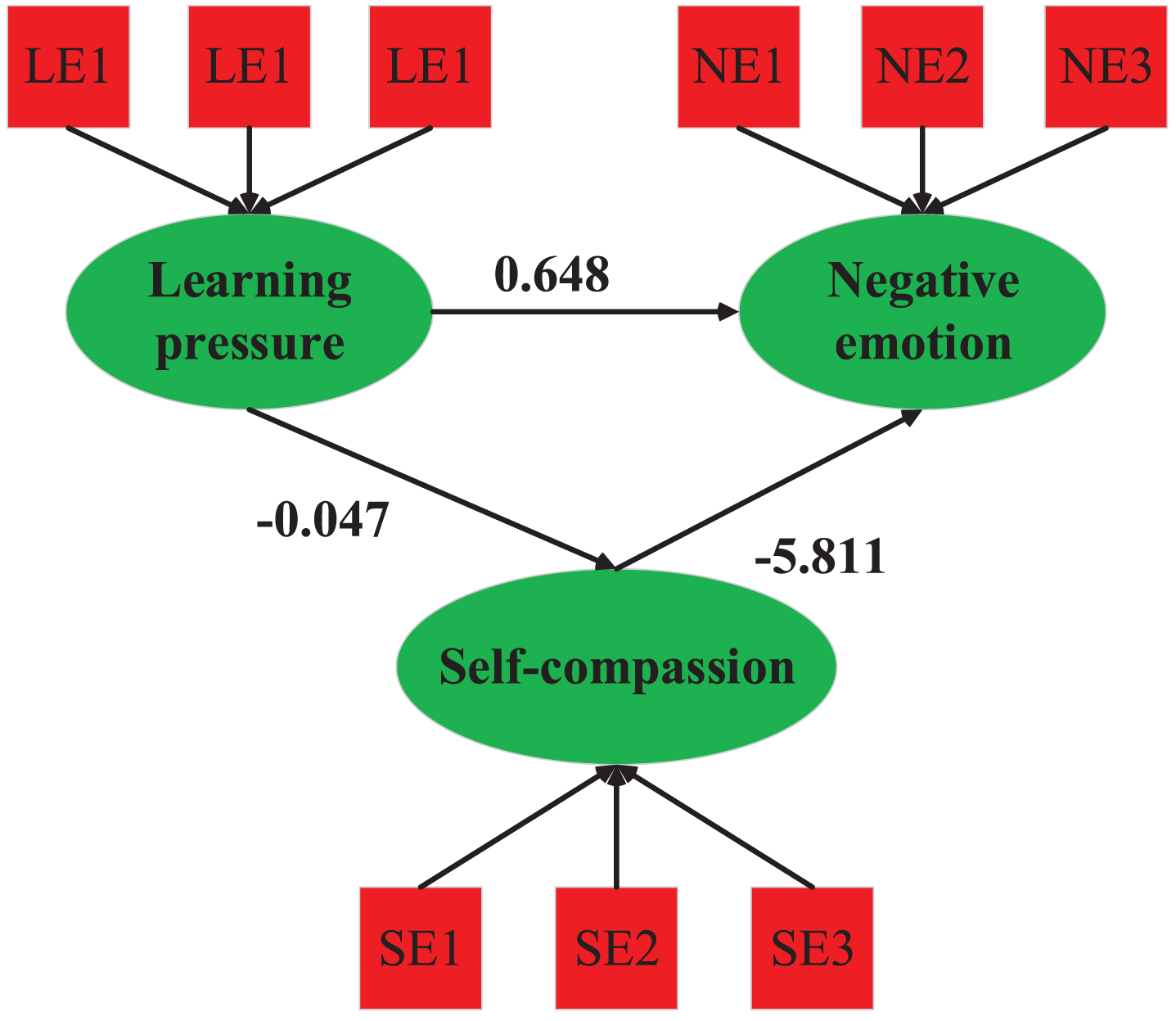
Self-compassion - learning stress - negative emotional relationship model.
As shown in Table 8 and Fig. 6, interpersonal relationship was represented by IN, positive emotion by PO, and self-compassion by SE. Bootstrapping sampling was also used to examine the role of self-compassion in interpersonal relationship affecting positive emotions. It was found that the indirect effect of interpersonal relationship on the prediction of positive emotional state through self-compassion was 0.258, which was in the 95%confidence interval [0.136, 0.328], and the mediating effect was significant.
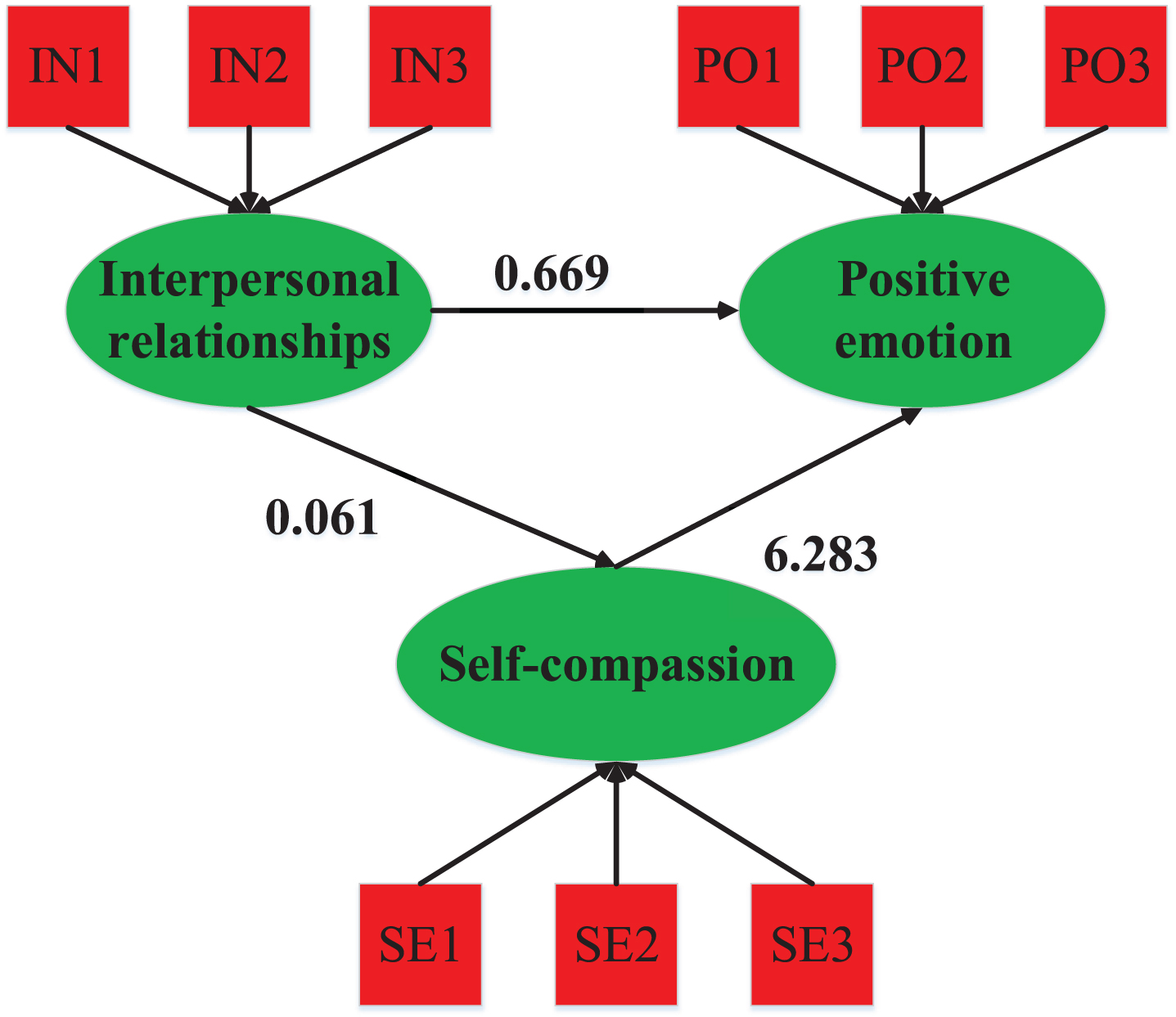
Self-compassion - interpersonal relationship - positive emotional relationship model.
In order to further analyze the coping styles of the students applying for the postgraduate entrance examination in the face of review setbacks, first, 427 students were assessed on self-compassion. Taking score 3.5 as a standard, those with a score greater than 3.5 were classified into the high-level self-compassion group, namely the G1 group, while those with a score lower than 3.5 were classified into the low-level self-compassion group, namely, the G2 group. The grouping is shown in Fig. 7. The number of students in the G1 group was 185, and the average self-compassion level was 4.28±0.96. The number of patients in the G2 group was 242, with an average level of 3.17±0.74. Among them, the level of self-compassion in G1 group was significantly higher than that in G2 group, and the difference was statistically significant (P < 0.05).
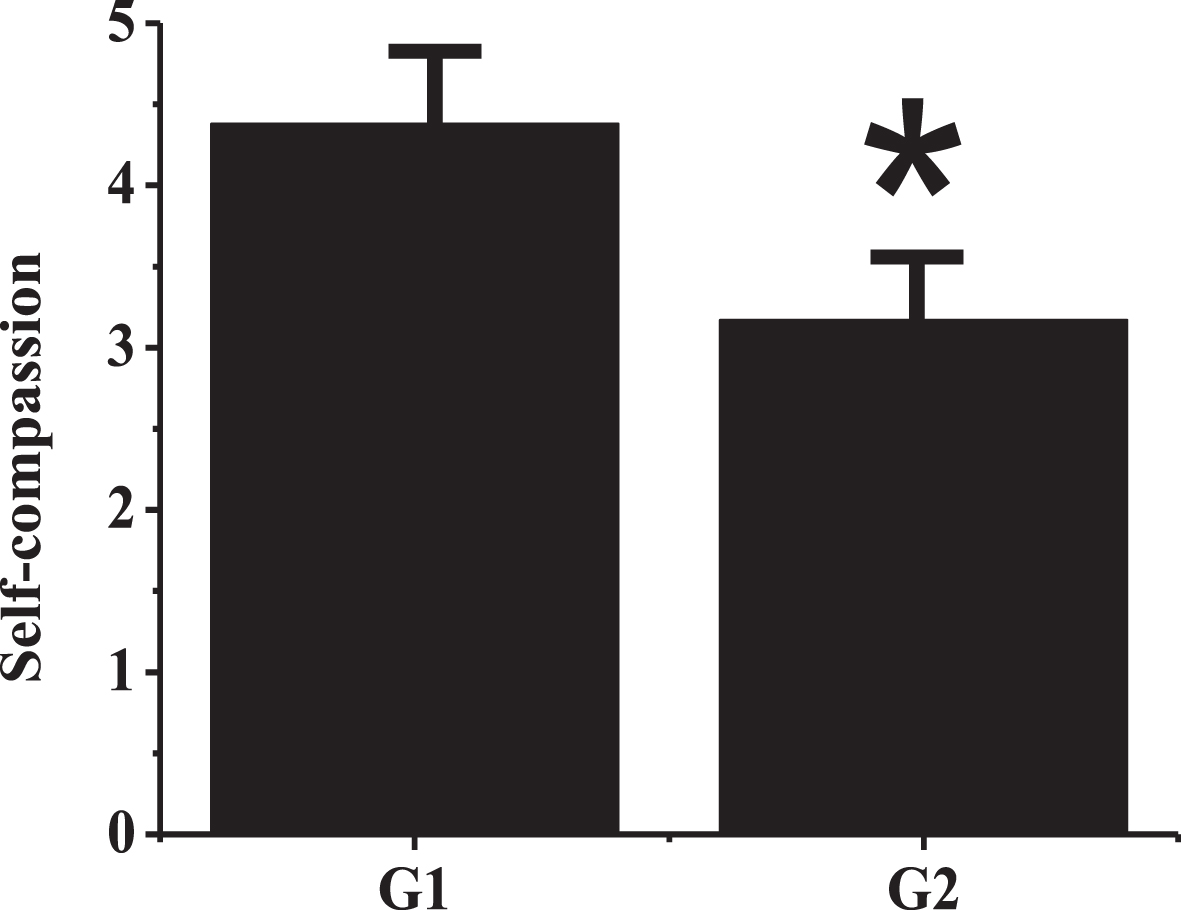
Self-compassion level grouping of students applying for the postgraduate entrance examination. Note: *Indicated that the difference was statistically significant compared with group G1 (P < 0.05).
As shown in Fig. 89, 20 students in G1 group were not frustrated in review, accounting for 10.57%. 58 students were slightly frustrated in review, accounting for 31.17%. There were 57 students with moderate frustration, accounting for 30.63%. There were 34 students with heavy frustration in review, accounting for 18.38%. There were 17 severely frustrated students, accounting for 9.25%. There were 19 students in the G2 group were not frustrated in review, accounting for 7.72%. There were 51 students with mild setback in review, accounting for 21.08%. There were 72 moderately frustrated students, accounting for 29.79%. There were 69 students with heavy frustration in review, accounting for 28.37%. There were 32 severely frustrated students, accounting for 13.04%. Among them, the proportion of students who were not frustrated and with mild frustration in review in G1 group was significantly higher than that in G2 group, and the difference was statistically significant (P < 0.05). The proportion of students in G1 group who suffered from heavy and severe revision frustration was significantly lower than that in G2 group, and the difference was statistically significant (P < 0.05). There was no significant difference between G1 group and G2 group on review frustration (P > 0.05).
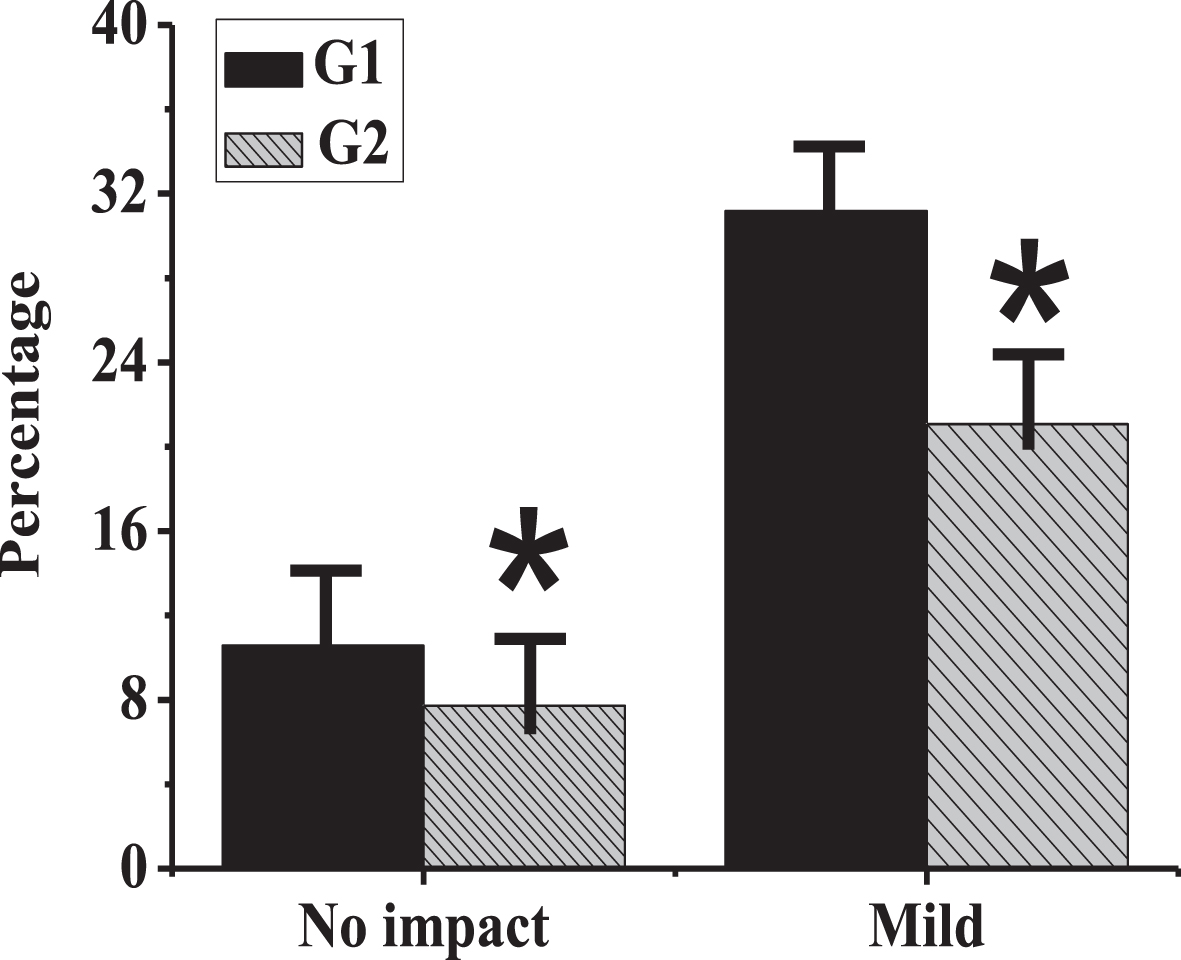
The proportion of students with no frustration and light frustration on review in G1 and G2 group. Note: *Indicated that the difference was statistically significant compared with group G1 (P < 0.05).

The proportion of students suffering moderate, heavy, and severe frustration on review in group G1 and G2. Note: *Indicated that the difference was statistically significant compared with group G1 (P < 0.05).
As shown in the Fig. 10, 80 students in G1 group were mature in coping with review setbacks, accounting for 43.18%. There were 54 immature types, accounting for 29.45%. There were 51 mixed types, accounting for 27.37%. In the G2 group, 85 students were mature, accounting for 35.06%. There were 88 immature types, accounting for 36.28%. There were 68 mixed types, accounting for 28.12%. Among them, the proportion of mature students in G1 group was significantly higher than that in G2 group, and the difference was statistically significant (P < 0.05). The proportion of students in G1 group with immature coping style when coping with review setbacks was significantly lower than that in G2 group, and the difference was statistically significant (P < 0.05). There was no statistically significant difference between the proportion of students of mixed types in G1 group and in G2 group (P > 0.05).

The coping style comparison of students in G1 and G2 facing review frustration. Note: *Indicated that the difference was statistically significant compared with group G1 (P < 0.05).
As shown in Table 9, first, Spearman correlation was used to analyze the correlation between each dimension of self-compassion and coping style. There was a significant positive correlation between the total score of self-compassion, self-kindness, positive thinking, problem solving, and asking for help (P < 0.05). There was a significant negative correlation between the total score of self-compassion, self-kindness, positive thinking and fantasy, self-blame, retreat and, rationalization (P < 0.05). There was no significant correlation between general thinking and problem solving, asking for help, fantasy, self-blame, retreat, and rationalization (P > 0.05).
Correlation analysis of each dimension of self-compassion and coping style
Correlation analysis of each dimension of self-compassion and coping style
As shown in Table 10, the multivariate regression analysis was carried out taking students applying for the postgraduate entrance examination as independent variables, and coping style (problem solving, asking for help, fantasy, self-blame, retreat, rationalization) as dependent variables. The regression coefficients of students’ self-compassion, problem solving and asking for help were 0.671 and 0.636, respectively, showing a very significant positive correlation (P < 0.001). and the regression coefficients of fantasy, self-blame, and rationalization were –0.537, –0.469, and –0.480, respectively, with significant negative correlation (P < 0.05), and the regression coefficient of retreat was –0.521, with extremely significant negative correlation (P < 0.001).
Regression analysis of each dimension of self-compassion and coping style
People face many pressures in daily life, such as job hunting, interpersonal relationship management, and examination study, and so on. If the individual can’t bear the stimulation brought by the outside world, it will cause stress response, leading to the emergence of various negative emotions and mental health problems [20]. As a very popular concept mentioned in recent years, self-compassion is defined as a positive self-concept, and its role in individual mental health has also been concerned by many scholars [21]. In this study, the students who were preparing for the postgraduate entrance examination in various universities were taken as the research object, and the emotional influence of self-compassion on the students who were facing the review pressure was analysed. The results showed that the stress scores of S1, S2, and S3 were significantly higher than those of D0 group (P < 0.05), which was consistent with the research results of Shin et al. [22], indicating that the study pressure of students applying for the postgraduate entrance examination was greater than that of students not taking the examination. The learning stress scores of students in group S1 was significantly higher than that of group S2 and group S3, and the learning stress scores of students in group S2 were significantly higher than that of group S3 (P < 0.05), which was similar to the research results of Zhang et al. [23], indicating that students’ learning pressure decreased with the longer preparation time. In addition, it was found that the negative emotion score of S1, S2, and S3 group was significantly higher than that of D0 group, and S1 > S2 > S3 group (P < 0.05). This also showed that the negative emotions of students applying for the postgraduate entrance examination were greater than those of students not taking the examination, and the longer the preparation time, the less negative emotions. In general, the study pressure faced by students may cause the emergence of negative emotions, which would continue to increase [24].
In order to further analyze and verify, Spearman was also used to analyze the correlation of each measurement indicator. It was found that there was a significant negative correlation between the total score of self-compassion and the total score of stress response, learning pressure and negative emotion, while there was a significant positive correlation between negative emotion and the total score of stress response and learning pressure (P < 0.05), which was similar to the results of Hirsch JK et al. (2019) [25], suggesting that self-compassion may play a certain role in the negative emotional regulation of students caused by learning pressure [26]. Therefore, Bootstrapping sampling method was used to analyze the self-compassion mediating effect. It demonstrated that self-compassion can reduce negative emotions caused by external pressure. In addition, it was found that there was a significant positive correlation between self-compassion and positive emotion and interpersonal relationship, and there was a significant positive correlation between positive emotion and interpersonal relationship (P < 0.05), which was the same as the research results of Centeno RPR et al. (2017) [27], who suggested that self - compassion may play an important role in the positive emotion of students under interpersonal pressure. It suggested that self - compassion reduced the negative emotions of individuals in bad interpersonal relationships and increased the positive emotions.
To analyze how individuals with different levels of self-compassion respond to external stress, taking 3.5 point as the standard, the students applying for the postgraduate entrance examination were divided into high level self-compassion group (G1) and low-level self-compassion group (G2). Two groups of students were analyzed in the review frustration situation. The proportion of students in G1 group who had no effect on review and suffered light frustration was significantly higher than that in G2 group, and the proportion of students in mild, heavy, and severe frustration was significantly lower than that in G2 group (P < 0.05), \epsfbox G:/Tex/IOSPRESS/WOR/WOR213501/IF-01.eps which were consistent with those of Guo et al. (2020) [28], suggesting that individuals with high levels of self-compassion were stronger and more optimistic in the face of external pressure. Students in G1 group had significantly higher proportion of mature type than that in G2 group, while the proportion of immature type was significantly lower than that in G2 group (P < 0.05), which was the same as the research results of Luo et al. [29], suggesting that individuals with high levels of self - compassion were able to choose a more proactive response to external stress. the multiple regression analysis was conducted taking the total score of the students’ self-compassion as the independent variable, the coping style (problem solving, asking for help, fantasy, self-blame, retreat, rationalization) as the dependent variables. It was found that there was a significant positive correlation between students’ self-compassion and problem solving and asking for help (P < 0.001). Yang et al. [30] believed that the self-compassion and coping style selection of problem-solving may depend on the understanding degree of the subject on the problem. If certain, then high level self-compassion individuals would choose to solve the problem by themselves, and if not, they would choose to seek help from others. This argument coincided with the results of this study. In addition, it was found that there was a significant negative correlation between self-compassion and fantasy, self-blame, rationalization, and retreat (P < 0.05), which was the same as the research results of Boyraz et al. [31], indicating that when exposed to external pressure, individuals with high self-compassion would not escape from their own negative emotions, but actively deal with them. Individuals with low self-compassion tended to escape from themselves, or even imagine that the problem had been solved, and then had a negative attitude towards themselves and fell into self-blame.
Conclusion
Based on the chronic stress response, the role of students’ self-compassion in negative emotional regulation and coping style selection caused by external pressure was analyzed, which provided a reference for the research on the role of self-compassion in college students’ mental health education. However, only the students applying for postgraduate entrance examination in several universities were selected as the research object, and the sample size was too small. In the following works, the sample size of students should be further expanded, and relevant research on the self-compassion among freshmen and sophomores should be implemented. In a word, the self-compassion can reduce students’ negative emotions in the face of external pressure and protect their positive emotions. In the face of external pressure and stress, individuals with high self-compassion would not escape from their own negative emotions, and were more inclined to choose a positive way to solve problems and seek help from others.
Footnotes
Acknowledgments
General Project of National Social Science Foundation, “Research on Social and Psychological Care of Disadvantaged Children and Adolescents from the Perspective of Resilience” (18BSH129)
Conflict of interest
None to report.