



Abstract
BACKGROUND:
interpersonal communication in workplace is a problem that is faced by every employee. It is common in all industries and increasingly lethal. When they are unable to bear such overload of psychological pressure, they tend to suffer from anxiety, irritability, depression, and other psychological disorders and even mental diseases. It is urgent to explore how to help employees relieve psychological stress.
OBJECTIVE:
the study aimed to analyze the effects of cognitive behavioral therapy (CBT) on workplace interpersonal stress, and provide help for professionals, especially newcomers, to relieve social pressure.
METHODS:
125 employees of Internet enterprises were given multi-baseline designed CBT (with baseline phase, treatment phase, and post-baseline phase). 43 subjects who did not finish the therapist program were set as the control group and 82 subjects who finished the treatment program were set as the experimental group. First, the differences of interpersonal stress of subjects with different gender, age, educational background, and monthly salary were analyzed. Then, social avoidance, distress, anxiety, and depression scores in baseline, treatment, and post-baseline periods were compared. Finally, the effects of gender, age, educational background, and monthly salary on social avoidance, distress, anxiety, and depression scores of the experimental group were analyzed by multiple regression. and the influence paths of the workplace interpersonal pressure was constructed.
RESULTS:
Social avoidance, distress, anxiety, and depression of employees earning 10000 or more per month were less than those earning 10000 or more per month. Social avoidance, distress, anxiety, and depression of employees aged 30–50 were higher than those aged < 30 and > 50 (P < 0.05). Social avoidance, social distress, and depression in males were lower than those in females (P < 0.05). Social distress, anxiety, and depression of employees with master’s degree or above were less than those with bachelor’s degree or junior college degree. There were significant differences between the two groups in the post baseline phase. The monthly salary had the greatest influence on the social avoidance and distress, anxiety, and depression scores of the employees after treatment, with the path coefficients of –0.183, –0.169, and –0.184, respectively.
CONCLUSIONS:
CBT can effectively relieve social avoidance and distress of workplace employees and can improve the symptoms of anxiety and depression. Educational level, age, and monthly salary had a certain influence on the improvement of social avoidance, distress, anxiety and depression.
Introduction
Cognitive behavioral therapy (CBT) is established based on modern behavioral science, the theories of learning psychology and the experimental methods of psychology, which is a kind of very general new psychological treatment method to correct the maladaptive behavior by training the individual repeatedly. According to the different treatment methods, it is classified into systematic desensitization therapy, aversion therapy, shock therapy, etc. [1–3]. CBT has a wide range of indications, such as phobias, obsessive-compulsive disorder, and anxiety disorders, mild depressive states and persistent emotional reactions, and some undesirable behaviors such as mild schizophrenia and mental retardation [4]. The financial burden of CBT for patients is much less relative to that of traditional psychotherapy, and it does not need to spend a long time in treatment due to direct exposure to symptoms [5]. In the current rapidly developing economic society, people’s social exchanges are increasingly frequent, and workplace interpersonal relationship has become a bridge and bond in work and career [6]. A good interpersonal relationship can promote the socialization process and deepen the self-knowledge of professionals, which is the main approach for maintaining the mental health of professionals [7, 8]. According to a workplace survey reported in 2007, interpersonal relationship has become a major psychological problem that bothers people after the work stress, even surpassing the psychological stress brought by their own work [9].
As the most widely used and effective psychotherapy in the world, CBT has attracted the attention of many scholars in improving people’s social disorder [10, 11]. Wootton et al. [12] used cerebral blood perfusion therapy (aCBT) to treat 17 patients with social anxiety disorder. They found that 59 percent of patients no longer met the criteria for social anxiety disorder after treatment, which expanded to 71 percent after three months of follow-up. Stangier et al. [13] used CBT based on virtual reality to treat 116 patients who avoided social occasions due to paranoia and anxiety during April 1, 2014 and December 31, 2015. It was found that adding virtual reality - CBT - to standard treatment reduced paranoid thinking and transient social anxiety. As a specific social organization environment composed of people, the workplace requires workers to be good at communicating with others, so as to establish interpersonal relationships [14]. However, due to the complexity of social relationships and personality differences between individuals, maintaining good relationships is not easy. Failure to establish a good social relationship has a great impact on our work, life, and mental health [15]. In addition, many people are deficient in social skills, especially the freshmen in the workplace, whose social barriers are particularly prominent [16–18]. Therefore, the effect of CBT on the stress relief of employees was explored in the study in order to provide references for the improvement of interpersonal relationship among the new employees.
In summary, although there are many researches on the treatment of interpersonal stress by CBT, there are few analyses on the application of interpersonal stress in the workplace. Based on this, 125 employees from Henan region were selected as the research objects and treated with CBT. Social avoidance, distress, anxiety, and depression scores in baseline, treatment, and post-baseline phases were compared. Then, the effects of gender, age, educational background, and monthly salary on the social avoidance and distress, anxiety, and depression scores of the experimental group were analyzed by multiple regression analysis, to comprehensively evaluate the relieving effect of CBT on interpersonal communication stress of the working group.
Methodology
Research object and basic information
In this study, 125 employees of Internet enterprises in Henan region were selected as research objects, with an average age of 31.76±6.98 years (21–47 years). All subjects were given multi-baseline designed CBT. Forty-three subjects were discontinued for personal reasons and did not finish the therapist’s program throughout the course of the treatment, which were set as the control group in this analysis, while the other 82 subjects who fully cooperated with the therapist were used as the experimental group.
Inclusion criteria: the employee’s entry time was within one year; the employee was informed and agreed to cooperate with the treatment; employees with no serious physical diseases affecting the mind; employees more than 18 years old; the score of communication anxiety scale was more than 48 points.
As shown in Fig. 1, among the 125 employees investigated in this study, 67 were male (53.26%) and 58 were female (46.74%). There were 14 students (11.27%) with junior college degree, 49 (39.16%) with bachelor’s degree, and 62 (49.57%) with master’s degree or above. Forty-three (34.39%) had a monthly salary of less than 5,000 yuan, 48 (38.05%) had a monthly salary of 5,000–9,999, and 34 (27.56%) had a monthly salary of 10,000 or more. 53 (42.16%) were under 30 years old, 46 (36.57%) were 30–50 years old and 14 (11.27%) were over 50 years old.

Comparison of basic data of subjects. Note: A was the gender ratio; B referred to educational background; C was monthly salary; D was age.
All subjects received a multi-baseline design of CBT, 2 weeks at baseline, and assessments were made twice. Treatment was initiated when the subject remained emotionally stable at baseline (it should be ensured that no healing occurred due to external factors). The treating frequency of treatment phase was once a week, one hour at a time, for a total of 10 weeks, with evaluation every two weeks. Subjects were evaluated three months after treatment. The schematic diagram of the overall program flow is shown in Fig. 2.
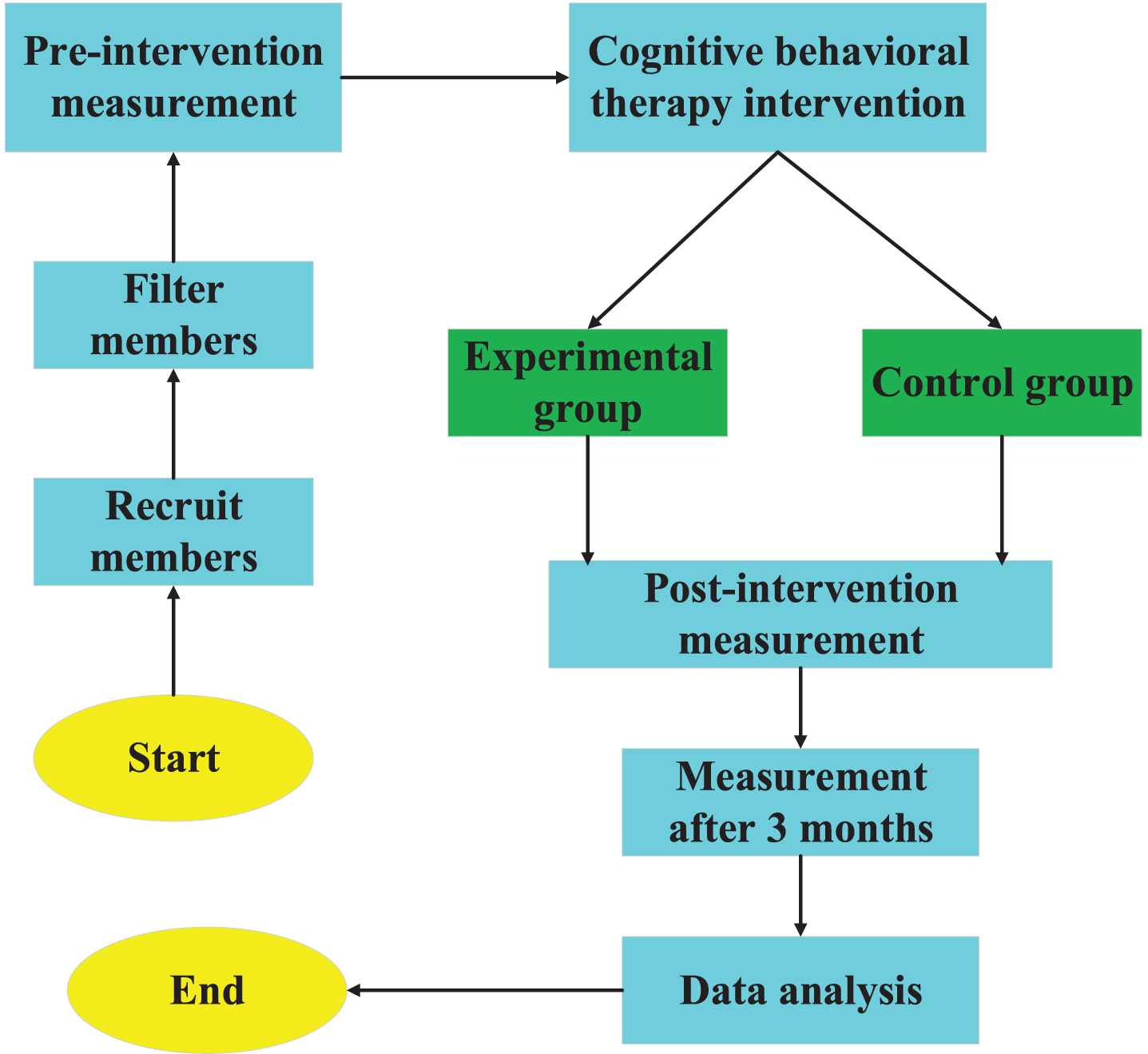
Schematic diagram of CBT program flow.
Specific contents of the treatment plan were as follows. I. The first stage was psychological education. The CBT was explained to the subjects, to make the subjects know their own problems, and correct the un-reasonable concept of workplace social. II. The second stage was cognitive reconstruction. Cognitive restructuring encouraged participants to share and discuss situational factors that contributed to their workplace interpersonal stress. Different challenge strategies were used for different types of subjects. Subjects were encouraged to take the initiative to communicate with others and actively participate in others’ conversations, or role-play. Then, reflection should be done after the training. III. The third stage was the end of treatment. By reviewing the progress of the subject in the treatment process, the factors that may trigger workplace stress in the later life were discussed and the subject’s self-confidence was enhanced.
Social avoidance and distress scale (SAD)
SAD scale for primary and secondary school teachers
SAD scale for primary and secondary school teachers
Social avoidance and distress refer to the tendency to avoid social interaction and the distress feeling when one is experiencing social interaction, respectively. Avoidance was a behavior, while distress was an emotional response. The SAD [19] scale was adopted to evaluate whether the subjects had social avoidance and distress problems. There were 28 items, 14 of which were used to evaluate social avoidance (2, 4, 8, 9, 13, 17, 18, 19, 21, 22, 24, 25, 26, 27) and 14 to evaluate social distress (1, 3, 5, 6, 7, 10, 11, 12, 14, 15, 16, 20, 23, 28). The score adopted a yes-no. The 14 questions (1, 3, 4, 6, 7, 9, 12, 15, 17, 19, 22, 25, 27, 28) were scored in reverse, and the answer “no” counted as 1 point. When the score was lower than 7, the individual’s performance was normal. Above 7, the higher the score, the bigger the problem.
SAS scale
SAS scale
The SDS scale
The SAS [20] scale was adopted in the study. The scale was used to assess the subjective feelings of individuals with symptoms of anxiety. As the basis for measuring the degree of anxiety and its changes in treatment, the scale was not affected by age, gender, economic status and other factors. The 4-level rating system was adopted, 0–4 meant no, a little bit of time, a lot of time, most of the time. Items 5, 9, 13, 17 and 19 were entitled reverse scoring. The threshold for anxiety rating was 50. There was no anxiety below 50. Above 50 points, the higher the score, the more obvious the anxiety tendency of the subjects.
The SDS [21] was adopted for assessment in the study. SDS was one of the scales recommended by the United States Department of Health and Human Services for psychopharmacology analysis. The 4-level rating system was used, and 0–4 meant no, a little bit of time, a lot of time, most of the time. The last 10 of them were reverse scoring. The cutoff score for depression was 50. Score lower than 50 indicated the subject was not depressed. Above 50 points, the higher the score, the more depressed the subjects were.
Statistical analysis
SPSS19.0 statistical software was used for data processing in this study, and the measurement data was expressed as mean±standard deviation (
Results
Analysis of subjects’ overall social performance in the workplace
Table 4 showed the scores of social avoidance, social distress, anxiety and depression of all subjects. It can be found that the average scores of social avoidance, social distress, anxiety, and depression were significantly higher than the threshold values, and the differences were statistically significant (P < 0.05).
The scores of social avoidance, social distress, anxiety and depression of all subjects
The scores of social avoidance, social distress, anxiety and depression of all subjects
As shown in Fig. 3, the scores of social avoidance, social distress, and depression of male employees were significantly lower than those of female employees, and the differences were statistically significant (P < 0.05). However, there was no significant difference in anxiety scores between male and female employees (P > 0.05).
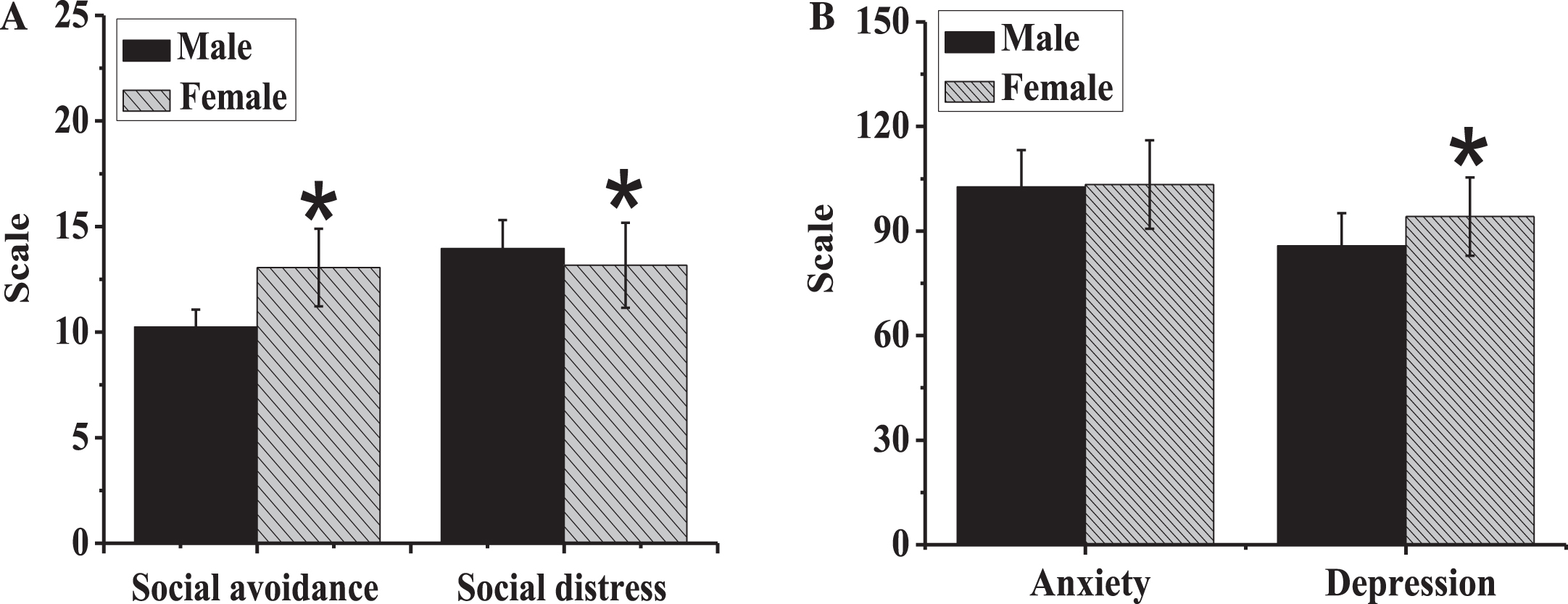
Social avoidance, social distress, anxiety, and depression scores comparison of different genders. Note: A referred to social avoidance and social distress; B was for anxiety and depression. *Indicated that compared with the male group, the difference was statistically significant (P < 0.05).
As shown in Fig. 4, social distress, anxiety, and depression scores of subjects with master’s degree or above were significantly lower than those with bachelor’s degree or junior college degree, with remarkable differences (P < 0.05). The scores of social distress, anxiety, and depression among subjects with a bachelor’s degree were significantly lower than those with a junior college degree, and the differences were statistically significant (P < 0.05). There was no statistically significant difference in the social avoidance scores of subjects with junior college degree, bachelor’s degree, and master’s degree and above (P > 0.05).

Social avoidance, social distress, anxiety, and depression scores comparison among subjects of different educational backgrounds. Note: A referred to social avoidance and social distress; B was for anxiety and depression. *Indicated that compared with the junior college group, the difference was statistically significant (P < 0.05). # Indicated that compared with the bachelor degree group, the difference was statistically significant (P < 0.05).
As shown in Fig. 5, social avoidance, social distress, anxiety, and depression scores of subjects with monthly salary of 10,000 or more were significantly lower than those with monthly salary of less than 5,000 and those with monthly salary of 5,000–9999, with remarkable differences (P < 0.05).
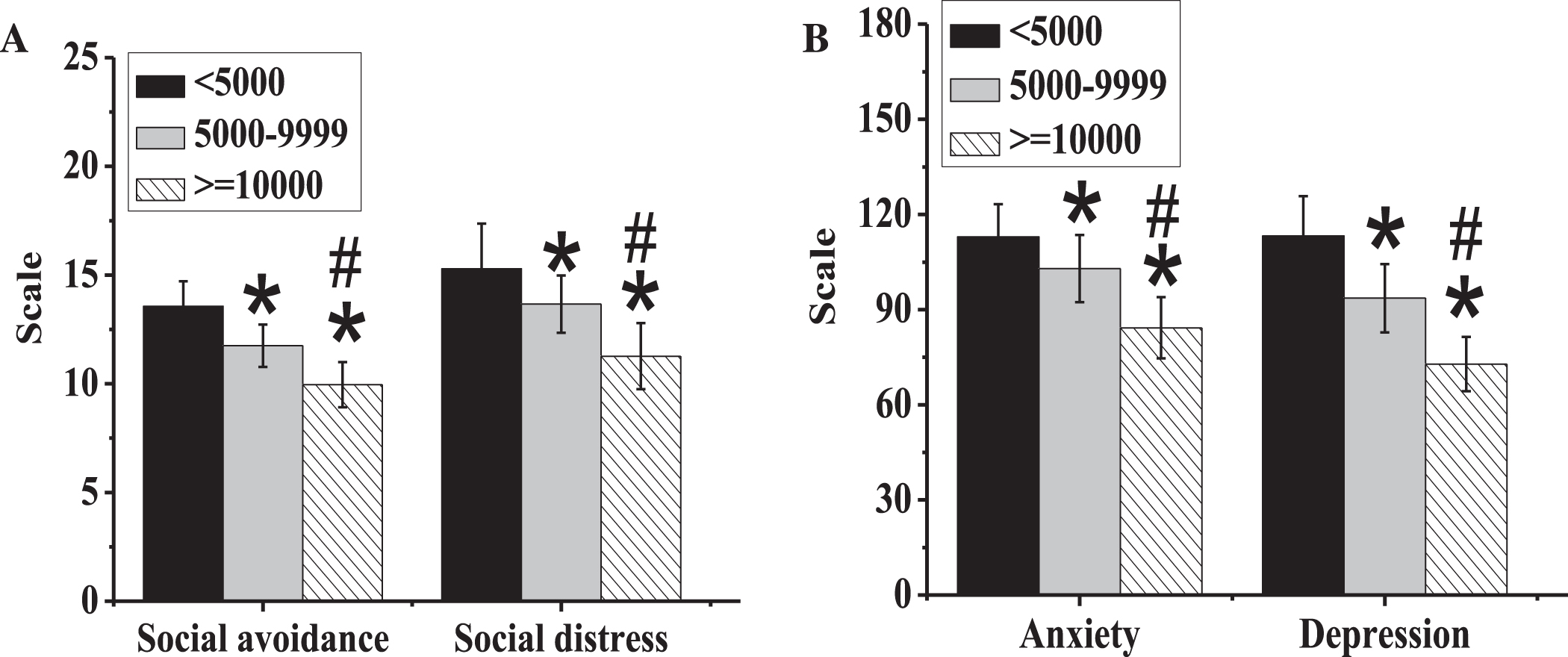
Comparison of social avoidance, social distress, anxiety and depression scores at different monthly salary levels. Note: A referred to social avoidance and social distress; B was for anxiety and depression. * Indicated that compared with the monthly salary of less than 5000, the difference was statistically significant (P < 0.05). # Indicated that compared with the monthly salary of 5,000-9999, the difference was statistically significant (P < 0.05).
As shown in Fig. 6, social avoidance, social distress, anxiety, and depression scores of subjects over 50 years old were significantly lower than those between 30 and 50 years and under 30 years old, with remarkable differences (P < 0.05). The scores of social avoidance, social distress, anxiety and depression of subjects younger than 30 years old were all significantly lower than those between 30 and 50 years old, with remarkable differences (P < 0.05).
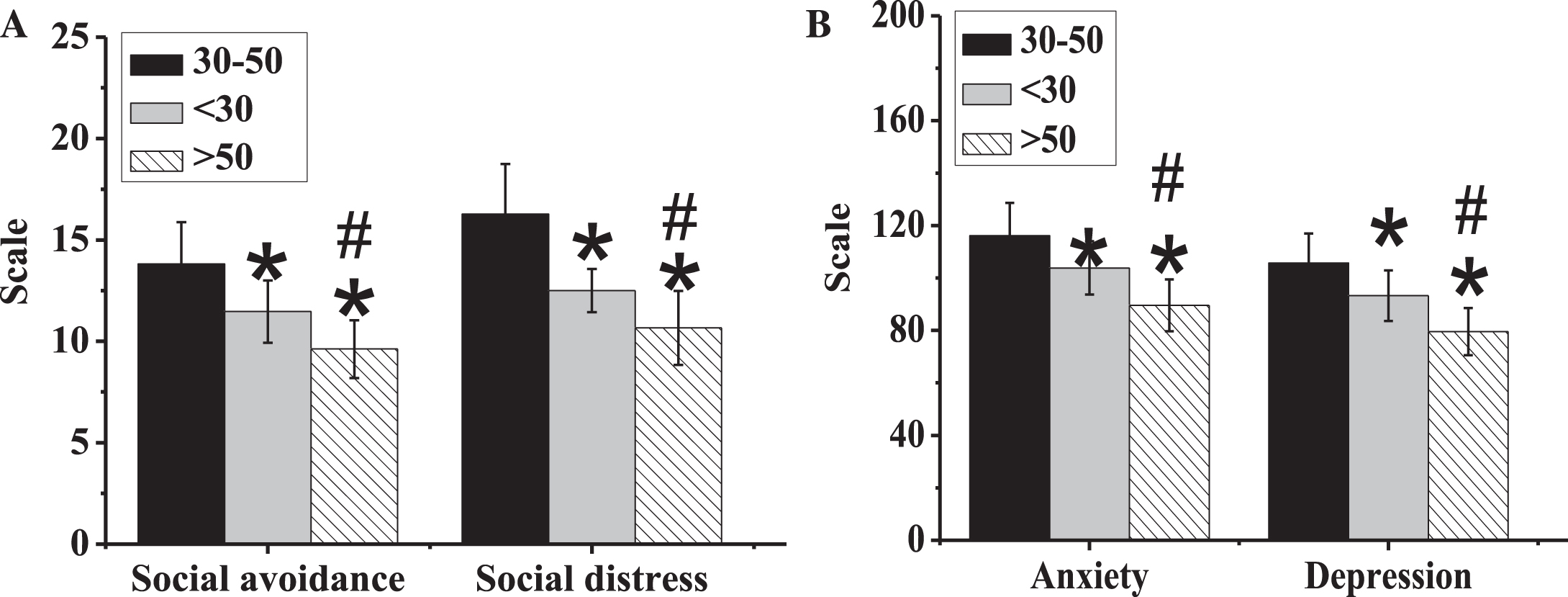
Social avoidance, social distress, anxiety, and depression scores comparison among different ages. Note: A referred to social avoidance and social distress; B was for anxiety and depression. * Indicated that compared to subjects younger than 30 years, the difference was statistically significant (P < 0.05). # Indicated that there were statistically significant differences compared with subjects between 30–50 years (P < 0.05).
As shown in Fig. 7, 1–3 were the subject scores in the baseline phases (B1), 4–8 were the scores in the treatment phases (T1), and 9–11 were the scores in the post-baseline phases (P1). At baseline phase, the social avoidance and social distress scores of the two groups were in a stable state. However, during the treatment phase, the scores of the two groups decreased continuously, and there was no significant difference in scores between the two groups during the treatment phases 4, 5, 6 and 7 (P > 0.05). At treatment phase 8, the scores of the control group were significantly higher than that of the experimental group, with considerable differences (P < 0.05). In the post-baseline phase, the social avoidance and social distress scores of the two groups showed an increasing trend, and the scores of subjects in the control group were significantly higher than those of the experimental group, with considerable differences (P < 0.05).
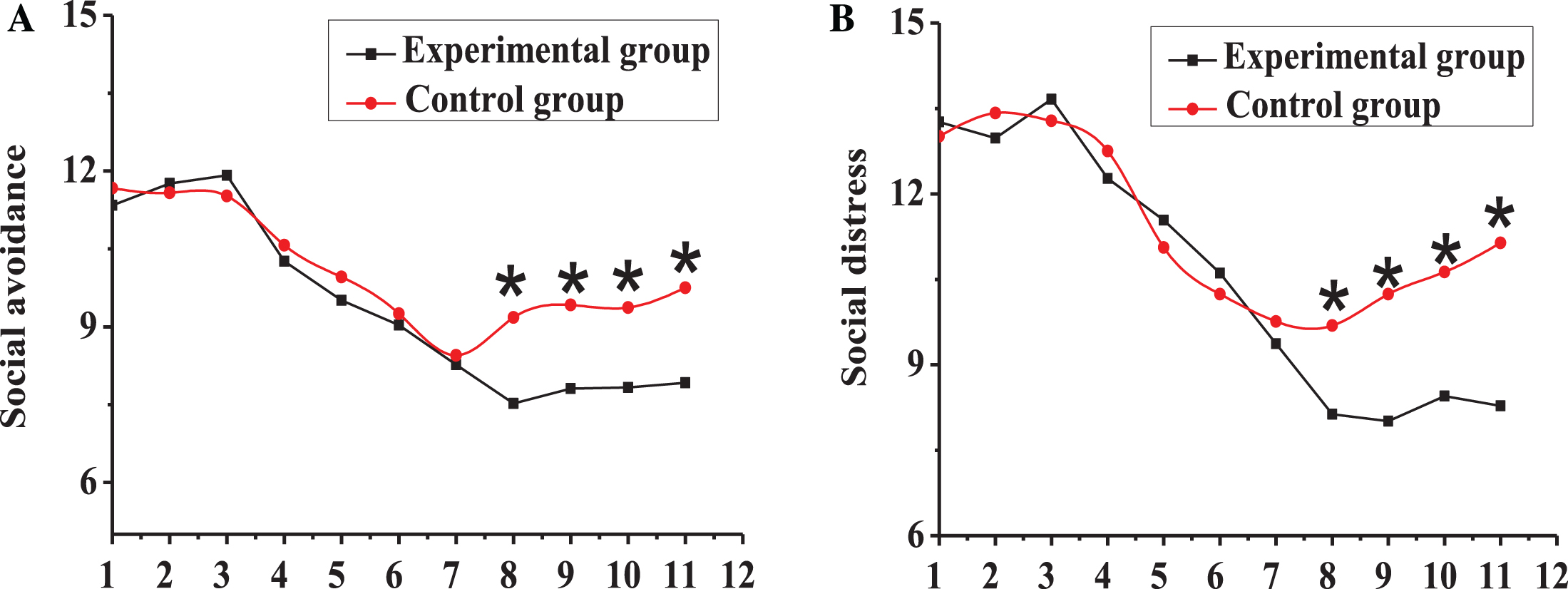
The social avoidance and social distress scores comparison of the two groups at different phases. Note: A referred to social avoidance; B was social distress. * Indicated that compared with the experimental group, the difference was statistically significant (P < 0.05).
As shown in Fig. 8, the anxiety and depression scores of the two groups were in a stable state during baseline phase. However, during the treatment phase, the scores of the two groups decreased continuously, and there was no significant difference in scores between the two groups during the treatment phases 4, 5, 6 and 7 (P > 0.05). At treatment phase 8, the scores of the control group were significantly higher than that of the experimental group, with considerable differences (P < 0.05). In the post-baseline phase, the anxiety and depression scores of the two groups showed a rising trend, while the scores of subjects in the control group were significantly higher than those of the experimental group, with considerable differences (P < 0.05).
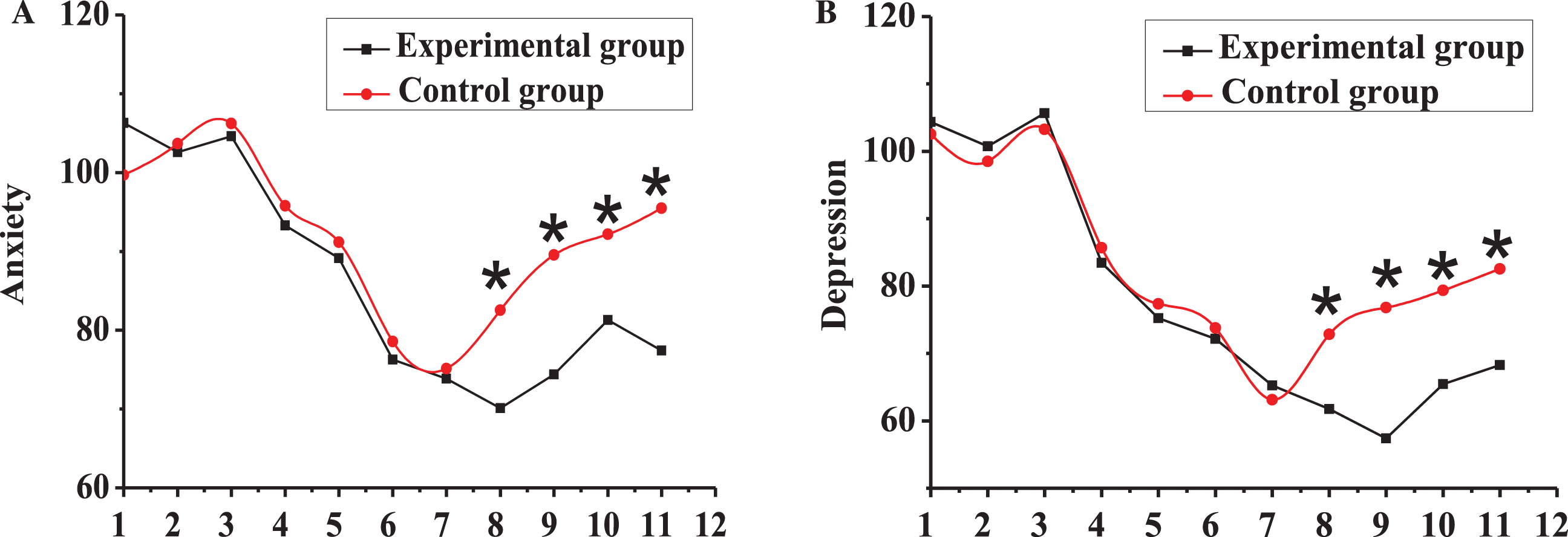
Anxiety, depression scores comparison between two groups of subjects at different phases. Note: A was the anxiety score; B was the depression score. * Indicated that compared with the experimental group, the difference was statistically significant (P < 0.05).
As shown in Table 5, the background variables of experimental group subjects were normalized, including gender (1 for male, 0 for female), education (0 for junior college degree, 1 for bachelor’s degree, 2 for master degree or above), age (1 for ages less than 30, 1 for 30–50 years old, 2 for more than 50 years), monthly salary (o for less than 5000, 1 for 5000–9999, 2 for more than 10000). Spearman correlation analysis with social avoidance, social distress, anxiety and depression scores was performed. There was a significant correlation between monthly salary, age and scores of social avoidance and distress, social avoidance, social distress, anxiety and depression (P < 0.001). Gender was significantly correlated with social avoidance and distress, social avoidance, social distress and depression scores (P < 0.001). Educational background was significantly correlated with scores of social avoidance and distress, social avoidance, social distress, anxiety and depression (P < 0.05).
Spearman correlation analysis of different background variables with social avoidance, social distress, anxiety, and depression scores
Spearman correlation analysis of different background variables with social avoidance, social distress, anxiety, and depression scores
As shown in Table 6, gender, educational level, age and monthly salary were taken as independent variables, and the total score of social avoidance and distress was taken as independent variables for multiple regression analysis. The total score of social avoidance and distress was negatively correlated with monthly salary and age (P < 0.001), and negatively correlated with gender and educational level (P < 0.05).
Regression analysis of gender, educational level, age, monthly salary with social avoidance and distress
As shown in Table 7, multiple regression analysis was conducted with education, age and monthly salary as independent variables and anxiety total sc-ore as independent variables. The total anxiety score was negatively correlated with educational level and age (P < 0.001), and negatively correlated with monthly salary (P < 0.05).
Regression analysis of educational level, age, monthly salary with total anxiety scores
As shown in Table 8, multiple regression analysis was conducted with education, age and monthly salary as independent variables and depression total score as independent variables. The total score of depression was negatively correlated with educational level and age (P < 0.001), and negatively correlated with gender and monthly salary (P < 0.05).
Regression analysis of educational level, age, monthly salary with depression score
As shown in Fig. 9, according to the above regression analysis, gender, educational level, age, and monthly salary were negatively correlated with the total score of social avoidance and distress (P < 0.05). These four variables were included in the relationship model with social avoidance and distress, which included four observational variables and one latent variable. Gender, educational level, age, and monthly salary all had their impact on social avoidance and distress. Among which, monthly salary had the greatest impact on social avoidance and distress, with an impact coefficient of –0.183. The second was age, and the influence coefficient was –0.127, followed by educational level, the coefficient of influence factor was –0.113. Gender had the least effect on social avoidance and distress. The specific proportion of the effect coefficient is shown in Table 9.
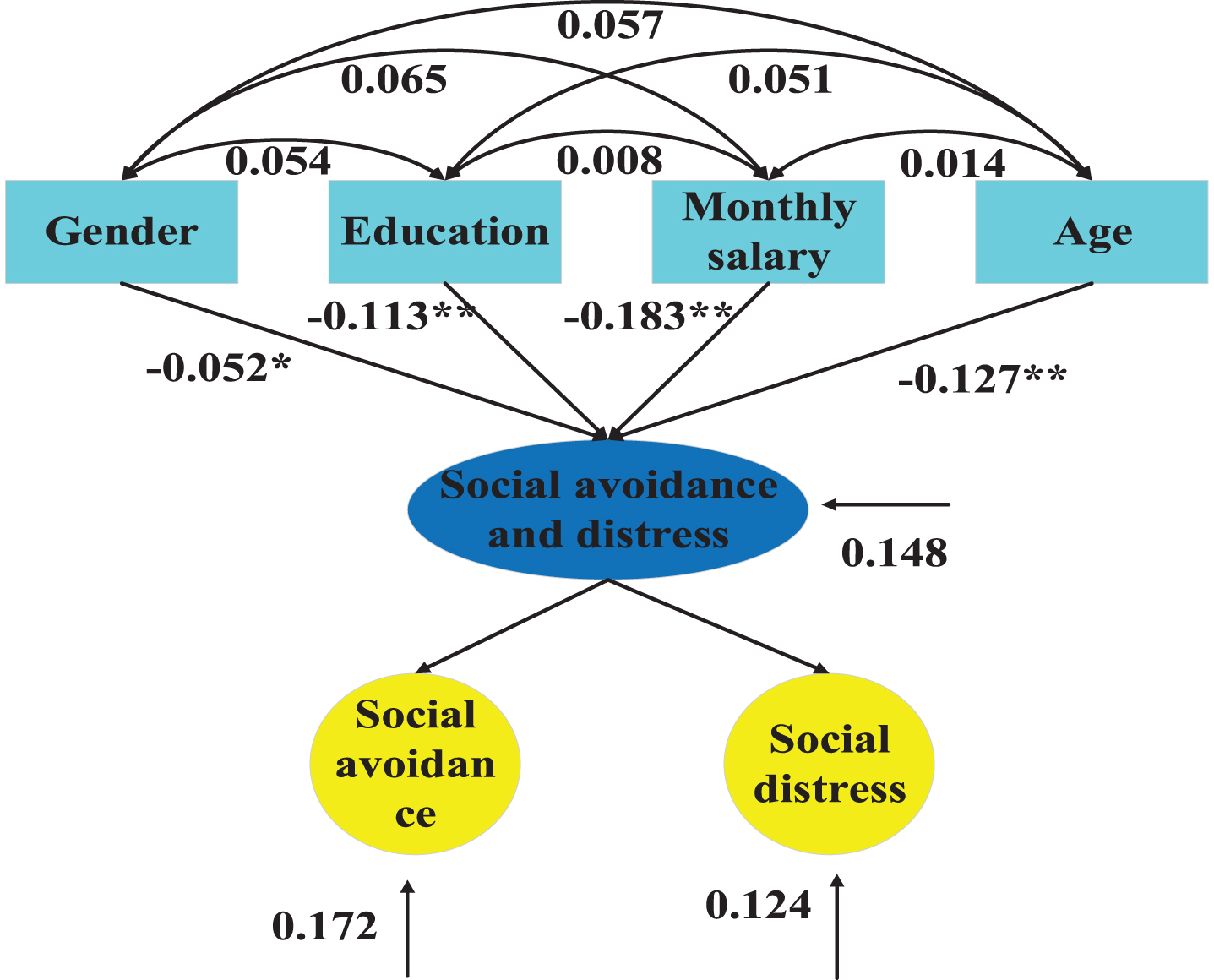
Analysis of the influence path of basic background variables on social avoidance and distress.
Effects of basic background variables on social avoidance and distress
As shown in Fig. 10, the three variables of education, age, and monthly salary were included in the relationship model with employee anxiety, which included three observational variables and one latent variable. Educational level, age and monthly salary all had influences on the anxiety of employees, among which monthly salary had the greatest influence on the anxiety, and the path coefficient was –0.169. The second was age, and the path coefficient was –0.151. The educational level had the least impact on the anxiety of employees, and the path coefficient was –0.097. The specific proportion of the effect coefficient is shown in Table 10.
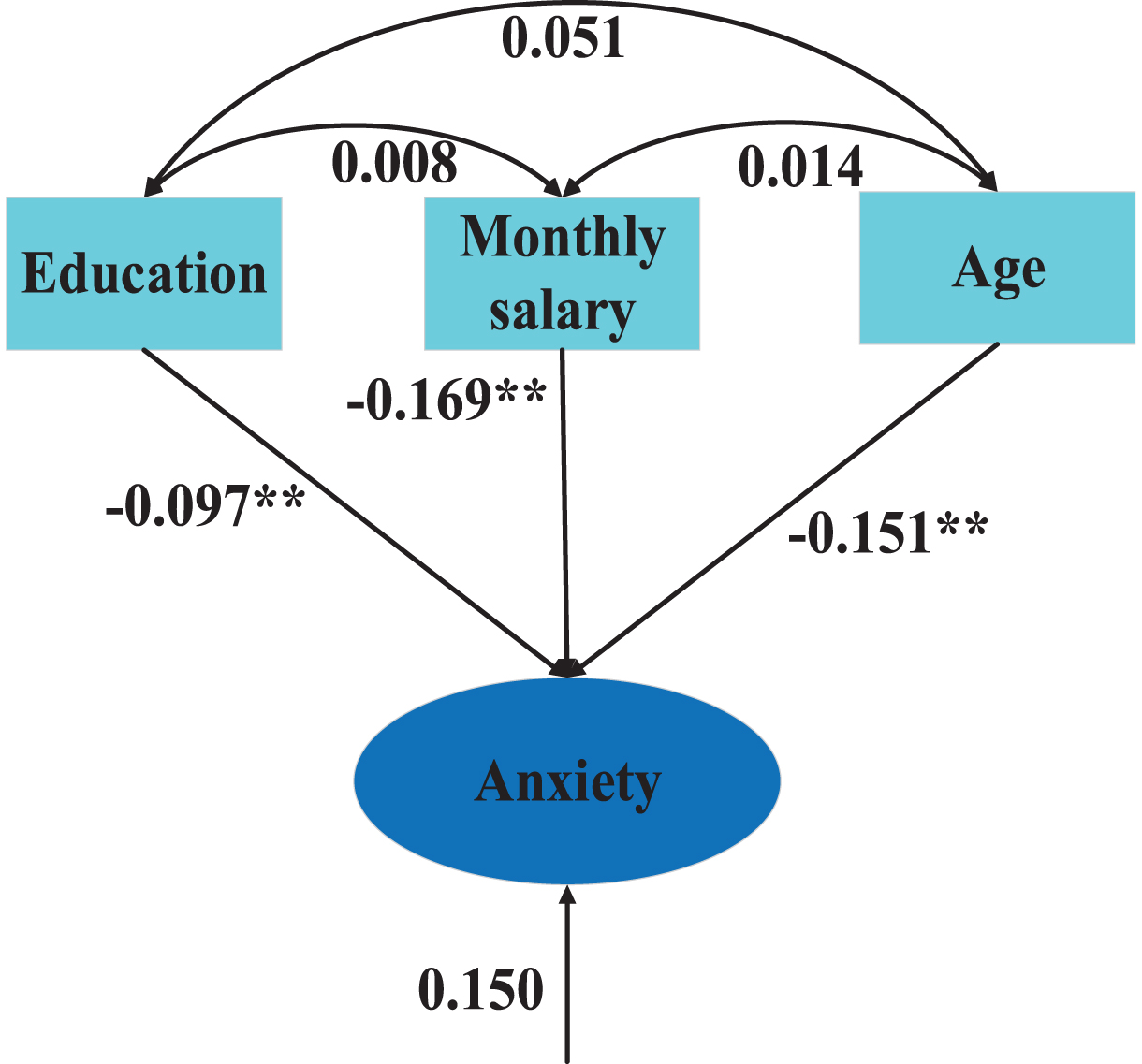
Analysis of the influence path of basic background variables on anxiety.
The effect of basic background variables on anxiety
As shown in Fig. 11, three variables of education, age, and monthly salary were included in the relationship model with employee depression, which included three observational variables and one latent variable. Educational level, age, and monthly salary all had influences on the anxiety of employees, among which monthly salary had the greatest influence on the anxiety, with the path coefficient of –0.184. The second was age, and the path coefficient was –0.147. The educational level had the least effect on the anxiety of employees, and the path coefficient was –0.106. The specific proportion of the effect coefficient is shown in Table 11.

Analysis of the influence path of basic background variables on depression.
Analysis of the influence path of basic background variables on depression
Stressful situations in the workplace include meetings, parties, communications, arguments, and public performances. Due to anxiety and fear, employees in enterprises will consciously avoid many occasions, which will lead to the unprosperous development of employees in the workplace. Therefore, in this study, CBT, which was highly recommended at present, was adopted to conduct phased treatment for employees in enterprises, so as to help employees in the workplace, especially new employees in the workplace, to relieve interpersonal communication stress [22, 23]. First, the differences of different background variables on employees’ interpersonal stress were analyzed. It was found that the scores of all scales of male employees were lower than that of female employees (P < 0.05), which was consistent with the results of Akhlaghi et al. [24], indicating that male employees had a strong stress resistance ability in work. The reason may be that male were more energetic and physically strong, which made them able to withstand higher intensity of work pressure. In addition, the difference of physiological structure also leaded to the difference of workplace social pressure between male and female. Subjects with master’s degree or above had less scores than subjects with bachelor’s degree or less (P < 0.05), which was the exact opposite of that the higher anxiety of highly educated employees by Nielsen et al. [25]. They argued that highly educated workers who did a lot of mental work tended to be more anxious than those who did simple and repetitive tasks. However, this study suggested that a higher education often meant a higher salary. Nowadays, many companies give salaries of different grades to individuals according to different levels of education. The educational levels are classified into four levels: specialized secondary school, junior college, bachelor’s degree, master’s degree or above, the salary is given according to the educational level, so that the knowledge talents can take the initiative to work and communicate, and reduce anxiety [26]. In terms of monthly salary, the scores of all scales of subjects with monthly salary of 10,000 or more were lower than subjects with monthly salary of less than 10,000 (P < 0.05), and the result was similar to the above analysis. In terms of age, the scores of all scales ranged from low to high in the following order: above 50 years old, below 30 years old, and 30–50 years old (P < 0.05). The reason may be that for employees between 30 and 50 years old, most of them have families and businesses, bear heavy life burdens, and have more obvious social avoidance [27].
At baseline phases, scale scores of subjects in both groups were in a stable state of scale scores, indicating no spontaneous recovery prior to treatment. During the treatment phases 4, 5, 6, and 7, the scores of the two groups decreased continuously, and the difference was not statistically significant (P > 0.05). Such results were consistent with the study results of Abdollahi et al. [28], suggesting that the workplace interpersonal communication stress can be relieved by CBT treatment. However, the post-baseline phase measurement showed that the social avoidance and social distress scores of the control group showed a significantly increasing trend, while the score trend of the experimental group was relatively stable. Such results were the same as the research results of Lebowitz et al. [29]. The good effect of CBT on employees’ workplace stress was well maintained. indicating that the treatment strictly following the therapist’s social program played a certain role in the relief and maintenance of stress. In addition, it was found that there was a significant negative correlation between education, age and monthly salary and social avoidance, distress, anxiety and depression scores of the employees after treatment (P < 0.05), which was the same as the study of Newby et al. [30], showing that education, age, and monthly salary can affect the therapeutic effect of CBT. The influence paths of different background variables on each score after treatment were also analyzed. It was found that the monthly salary had the greatest influence on the social avoidance, distress, anxiety, and depression scores of employees, with the path coefficients of –0.183, –0.169 and –0.184, respectively. Such results were similar to the research results of Markowitz et al. [31], suggesting that the salary level of employees affected the release of interpersonal stress in the workplace to a certain extent.
Conclusion
In this study, 125 employees in Henan area were treated with CBT, and the therapeutic effect was analyzed, which provided a theoretical basis for employees, especially freshmen, to alleviate the interpersonal stress. However, the control group was not set at the beginning of this study, the subjects were compared with those who interrupted treatment for personal reasons and did not finish the therapist program, which may cause deviation to the study results. In addition, the sample size was relatively small, so more subjects need to be analyzed by randomized control experiment in the future study. In conclusion, CBT can effectively alleviate the social avoidance and distress of professionals, and can improve anxiety and depression symptoms. In addition, educational level, age, and monthly salary has a certain influence on the improvement of social avoidance, distress, anxiety and depression.
Footnotes
Acknowledgments
This work was supported by the National Social Science Fund of the Spirit of the 19th CPC National Congress which is to study and interpret the special subject: research on the formation mechanism and construction path of socialist innovation culture with Chinese characteristics in the new era (ProjectNo. 18VSJ087).
Conflict of interest
None to report.