



Abstract
BACKGROUND:
Occupational safety risk management is a systemic process capable of promoting technical engineering solutions, considering a wide range of predictable, unexpected and subjective factors related to accident occurrences. In Brazil, the behavior of managers in relation to risk management tends to be reactive, and facilitates access to information for crucial practical and academic purposes when it comes to changing the attitude of managers, so that their actions become increasingly more proactive.
OBJECTIVE:
To identify, classify, analyze, and discuss the existing literature related to the topic, produced from 2008 to 2020, besides contributing to a broader understanding of risk management in occupational safety.
METHODS:
We did a systematic literature mapping. The research process was documented starting by the planning stage. Afterwards, the focus was on research conduction and information synthesis.
RESULTS:
Knowledge systematization and stratification about OHS risk management through various perspectives to identify, analyze and manage risks in the workplace. Were identified 37 tools for identifying and analyzing risks, management-related practices and future research trends.
CONCLUSIONS:
The set of tools and management practices identified can be used as a support for decision making in the selection process of tools and practices to reduce risks and improve occupational safety. Also, the results can help target future research.
Introduction
All organizations, regardless of how big they are and the economic area in which they operate, are influenced by internal and external factors that make goals achievement an uncertain endeavor [1]. Risk management is an important key for monitoring an entity’s viewpoint regarding its objectives, assisting in decision making and the establishment of strategies in an iterative way [2]. Thus, a risk is defined as the possibility of failure that could affect the patrimony of an entity. It also means the effect of uncertainty on an entity’s objectives, referring to potential events and their consequences [3, 4].
Managing occupational safety risks means providing technical engineering solutions, considering the interference of unpredictable, imponderable and subjective factors when it comes to accident occurrences [5]. Risk management is a compulsory process in occupational health and safety (OHS). It presents risk evolution as injury rates increase. Then, control actions are taken in order to determine whether the risks will be accepted or not, and that requires making necessary decisions [6]. The main goal of risk management is avoiding unnecessary risks, admitting only those which are absolutely necessary for the organization and acceptable according to society and environment standards [7]. Risks considered absolutely necessary are those that, regardless numerical values, for subjective or objective reasons, need to be accepted and faced for the survival of the parties involved, either organizations, individuals or society as a whole [5].
All work-related human activities involve some sort of risk, whether psychological, environmental, material or others. [8]. In Brazil, very little is discussed in terms of the interference of risks in decision making. That is why those risks related to work environment and security activities are seen by most organizations in this country as a problem to be solved, which means that their attitude towards the topic has a reactive character [9].
Providing easy access to information on occupational safety risk management for practical and academic purposes is one of the key factors for promoting a change in leaders and managers’ behavior towards increasingly proactive attitudes. In order to achieve that, studies must be carried out to raise awareness of the dynamics involved in risk management. An important tool is systematic literature mapping, which enables a holistic view of the existing literature, by registering and classifying the information in an orderly manner, thus enabling the replication of the results [10].
The general goal of this work is to identify, classify, analyze and discuss scientific articles on health and safety at work that provide an overview of risk management at the workplace. As for the specific objectives, they comprise identifying among the database those studies that address risk management in occupational safety to gather material to be evaluated, classifying and analyzing the selected studies for comparison among methods, tools, and outcomes and, at last, discussing the results found to synthesize their contributions.
Methodology
Systematic Literature Mapping (SLM) aims to classify and analyze the literature related to a topic to be studied, thus enabling a more generalist view of the studies and their respective results, seeking to map a research framework and not only answer a question in detail [10]. Regarding its structure, SLM is arranged in three steps: (i) planning [input], (ii) driving [processing] and (iii) discussion on results [output]. Our planning step involved the elaboration of the research protocol, which was organized in seven items: research questions, search string, search sources, selection strategy, selection process, extraction strategy and, finally, quality assessment. The processing step consisted of a search within the databases, classification, ordering and quality evaluation, whereas the step named discussion presented the synthesis of the results obtained.
The protocol was evaluated by four specialists who pointed out the following considerations: i) The evaluators partially agreed on the important engineering issue that the mapping sought to answer, and highlighted the significance of in-depth reading to achieve meaningful results; II) The experts’ answers related to quality of the evaluation was positive, but they added a caveat regarding rigor, which pointed to the need of greater commitment and meticulousness for its elaboration; III) in relation to the data extraction process, the evaluators considered that the data would be extracted appropriately; IV) Three out of the four evaluators considered that the procedure for data analysis is fully adequate to answer the research question, and the other one considered that the data analysis process is partially adequate. Thus, the remarks by the specialists were positive, and they stated that more rigor and thoroughness would be needed to carry out a good quality study.
Planning and execution
Research questions
There were three research questions developed for structuring the report presented by this study: RQ1: What are the risk management tools and methods that exist within the scope of occupational safety? RQ2: To what circumstances/types of business are they applied? RQ3: How do such methods and tools converge and/or diverge?
With regard to RQ3, the meaning of convergence and or divergence in relation to the methods and tools is their qualification. In a nutshell, if more than one author has recommended methods and or tools to be used in specific situations, that means convergence. If at least one author has made statements on the reasons and situations in which such methods and or tools should not be used, thus opposing to the others, then we have divergence.
Search String
The most important part of SML is the definition of search strings, and that demands identifying the terms referring to the research theme [10]. For devising the string, the following aspects were considered: based on the research questions, we identified the crucial words, translated the terms into English and used the logical operators OR and AND together with the keywords. For each search machine, adaptations were made to the general string, so that the most relevant results were returned. That way, the general string was established as follows: “Risk Assessment” OR “Risk Management” AND “Safety Workplace” OR “Occupational Safety” OR “Safety Framework”
Search sources
The databases used in the research were defined at first by the adequacy of their content to the research theme, and, in a second step, by the quantity of available journals containing the theme in question. The composition of the bibliographical portfolio considered the following search sources: Emerald Insight, ScienceDirect, Wiley Online Library and Taylor & Francis Online.
Selection strategy
Inclusion criteria were: (Restriction 1) articles published from 2008 to 2020, since we wished to obtain more in-depth information on the generation of knowledge corresponding to the last decade; (Restriction 2) articles published in journals exclusively in English for it is the internationally accepted scientific language; (Restriction 3) articles that include studies regarding methods, techniques and tools for risk management in occupational safety; (Restriction 4) papers that did not undergo peer review (gray literature), that is, those which were not evaluated by more than one reviewer and whose references were not checked; (Restriction 5) articles not related to safety at work; (Restriction 6) Articles that were considered not able to respond satisfactorily to the research question; (Restriction 7) in case of papers published twice (with changes), only the most complete one would be taken into account, even if they belonged to different databases.
Exclusion criteria were:
Selection process
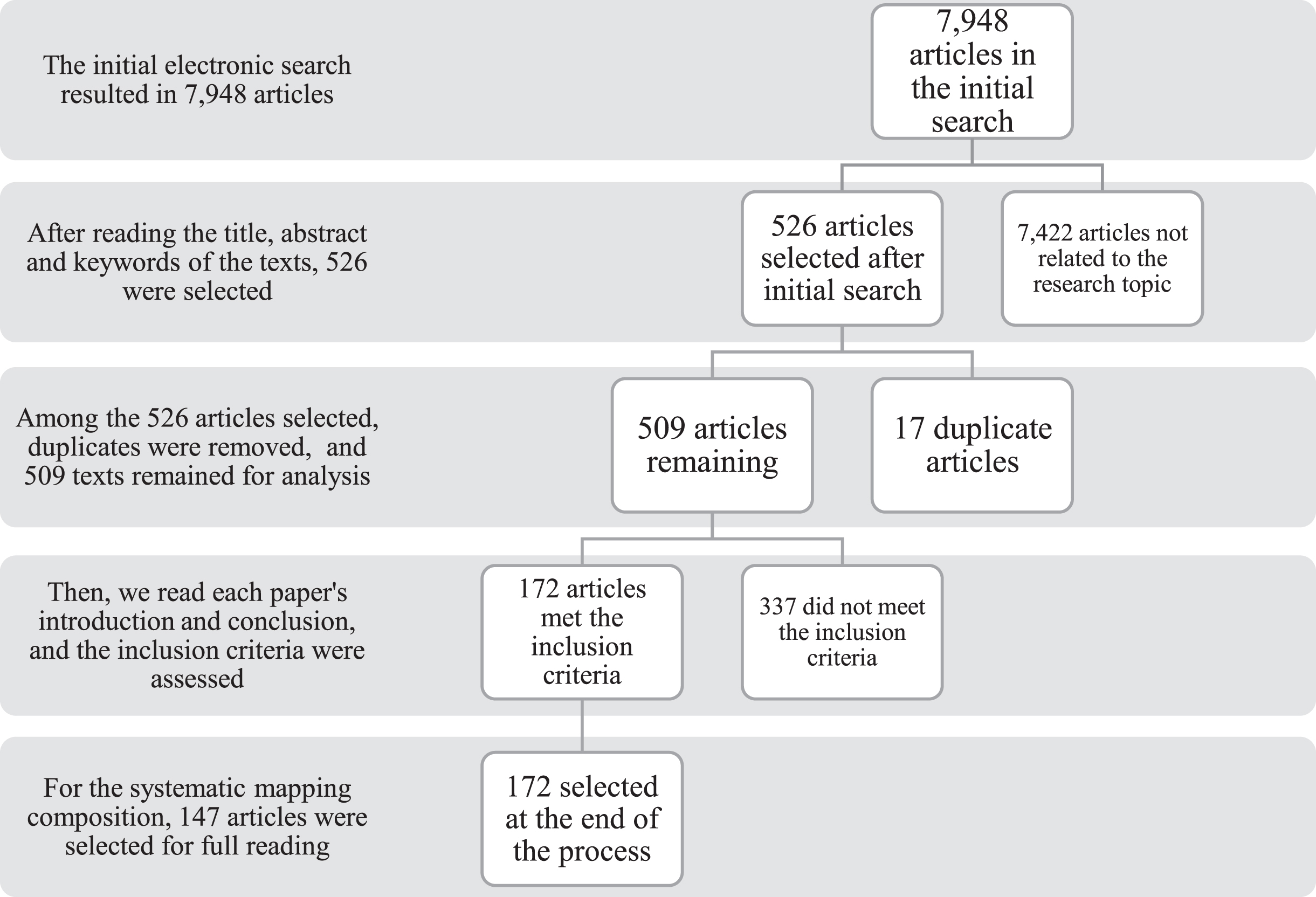
At the first stage of articles selection, the title, abstract and keywords were read. As for those papers that had been published twice (with changes), the most complete one was selected and the other one was ruled out. At the second stage, once the texts approved at the previous stage were gathered, their respective Introduction and Conclusion were read so that we could identify relevant contributions. At the third and final stage, the texts selected at stage 2 were painstakingly read for devising the mapping, as shown in Fig. 1.
Selection Process Steps.
Information extraction must enable the analysis of the studies based on selection criteria and also collect all the information necessary to answer the research questions [11]. Based on what was proposed by Paternoster et al. [12], we decided to extract the following information: i) title of the article; ii) author (s); iii) year of publication; (iv) type of source (journal, magazine, newspaper or conference); v) source title; vi) focus; vii) significance. viii) type of contribution. Table 1 presents the definitions of focus, significance and type of contribution.
Classification of studies
Classification of studies
Adapted from Paternoster et al. [12].
Regarding focus, 70 studies addressing risk management were found, 18 of which addressed elimination or reduction of risks. Besides, there were 41 studies reporting risk analysis and 43 whose main focus was risk identification. As for type of contribution, 49 articles classified as method were found, 42 offered contributions related to lessons learned, 34 proposed new tools, 23 presented new frameworks, 13 dealt with literature reviews and 11 contributed for innovation. Figure 2 presents focus in connection with type of contribution.
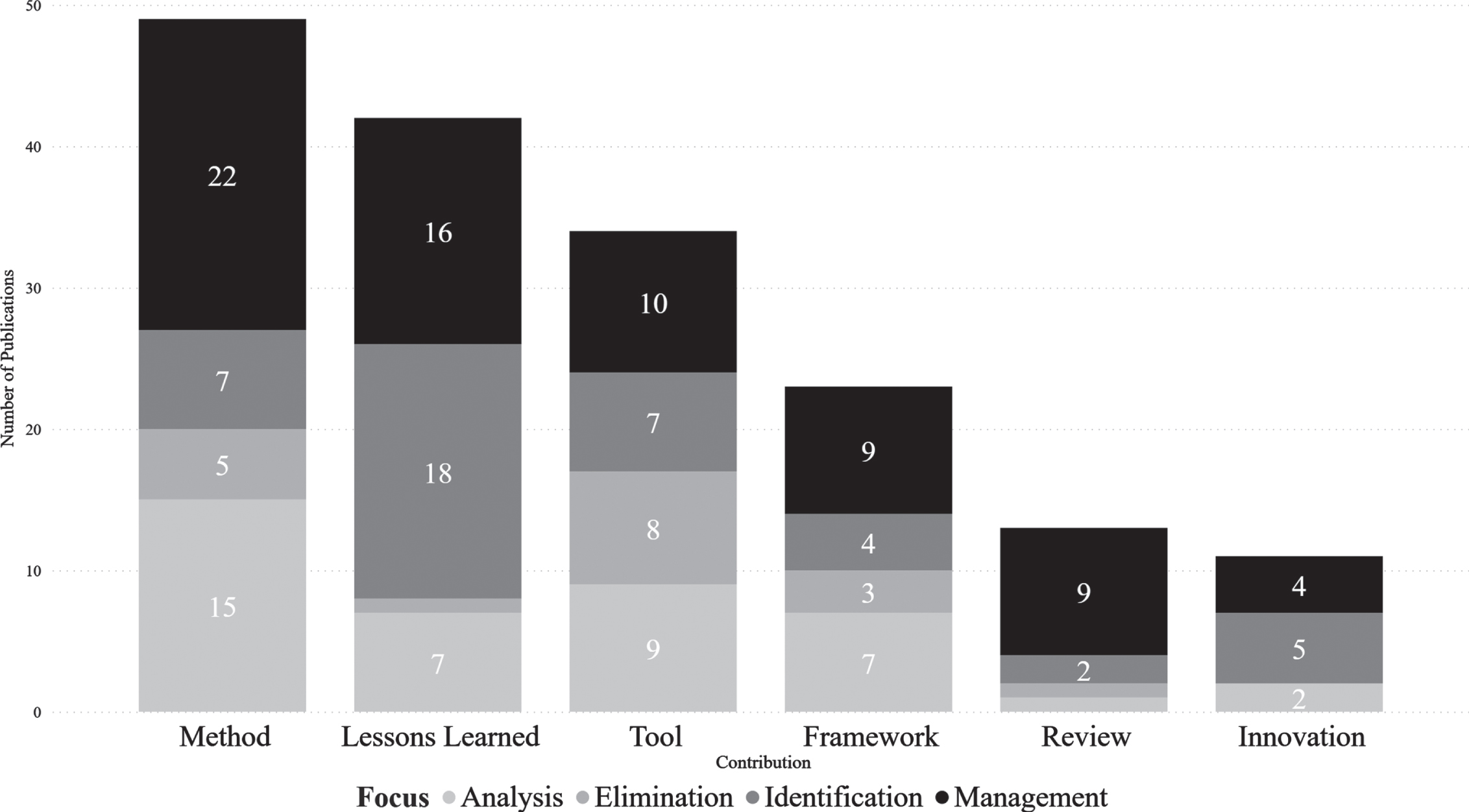
Relationship between Focus and Type of Contribution.
The studies were also stratified, establishing a relation between significance and the type of contribution as shown in Fig. 3. We found 22 studies of marginal significance, 50 considered to have partial significance, and 100 deemed of total significance.
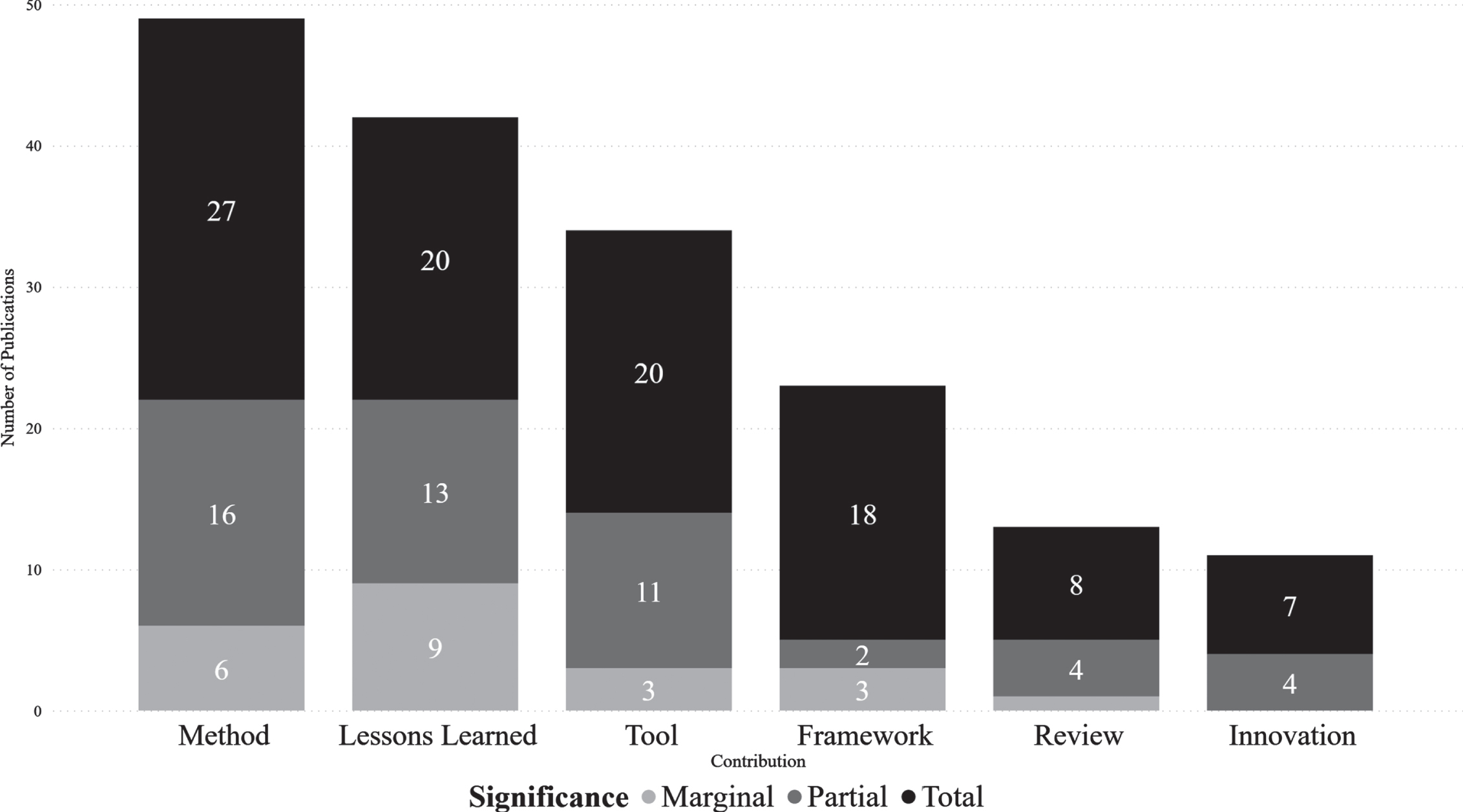
Relationship between Significance and Type of Contribution.
Based on the focus-versus-significance ratio presented in Fig. 4, it is possible to identify that the highest proportion of studies corresponded to total significance and risk management, totaling 47 occurrences, followed by identification with 24 occurrences and, finally, analysis totaling 22 occurrences, both of total significance. It is also evident that, gradually, there is a decrease in the number of articles selected, based on significance in all the focus classifications, so that most of the studies found are classified as of total significance.

Relationship between Focus and Significance.
In order to evaluate the quality of the studies, the questions were partitioned under the criteria of rigor and relevance. Rigor represents the precision used by the study in its research method and the way the study is presented. Relevance, in its turn, refers to the value of the study for the research community and for industry [13]. Questions 1 to 8 refer to rigor and questions 9 to 11 are related to relevance. Every positive answer (Yes) equals 1 and each negative answer (No) means 0, so the maximum value for the rigor criterion is 8, and the maximum value for the relevance criterion is 3. Questions regarding quality assessment were: 1) is the article based on research or is it just a report of lessons learned, based on experts’ opinion? 2) Is there a clear statement of the research objectives? 3) Is there adequate description of the context in which the research was carried out? 4) Was the research project appropriate to solve the research objectives? 5) Was the recruitment strategy adequate to the research objectives? 6) Was there a control group for comparing the treatments? 7) Were the data collected in a way that they addressed the research question? 8) Was the data analysis sufficiently rigorous? 9) Was the relationship between the researcher and the participants duly considered? 10) Is there a clear statement of results? 11) Is the study of value for research or practice?
Questions 1 to 8 related to rigor are arranged in the horizontal axis, whereas the ordinate axis refers questions 9 to 11, related to relevance. The graph containing the stratification of the answers is presented in Fig. 5.

Evaluation of Rigor and Relevance Criteria.
Question 1 addressed rigor, concerning the study being based on research. Question 11, represented in the graph by number 3 in relevance, referred to the value of the study for research or practical purposes. Based on that, 11 studies were spotted. Regarding rigor assessment (question number 3), which evaluated context description, 25 studies demonstrated the results clearly in relation to relevance, and 22 presented research value or practicality.
With regard to the answers to the research questions, the information presented in the Supplementary Materials was synthesized, so that RQ1 presented 119 corresponding articles, RQ2 brought up 131 papers, while RQ3 encompassed 124 texts. In the Supplementary Materials, it is also possible to visualize that there were texts that answered more than one research question, while others were limited to only one question, which applied to 1 study regarding RQ1 and 3 studies for RQ2.
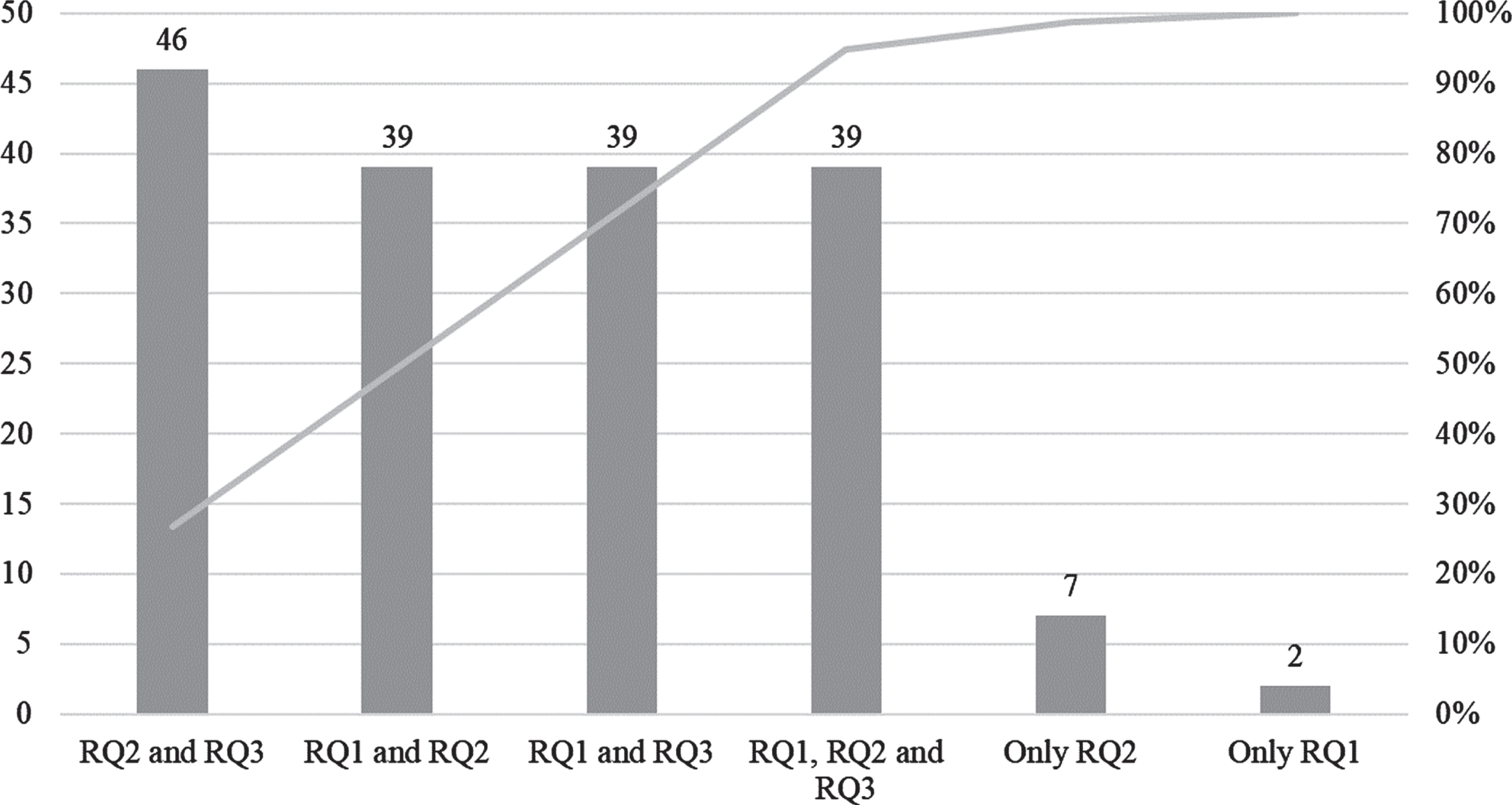
In relation to the studies that answered more than one research question, 39 articles answered RQ1 and RQ2, 39 papers provided answers to RQ1 and RQ3, 46 texts to RQ2 and RQ3, while 39 articles were considered to adequately answer all the 3 research questions, as shown in Fig. 6. For ease of understanding, the research questions and their corresponding articles were grouped into RQ1 and RQ2, RQ1 and RQ3, RQ2 and RQ3, only RQ1, only RQ2 and, finally, RQ1, RQ2 and RQ3, as exposed by Fig. 7.
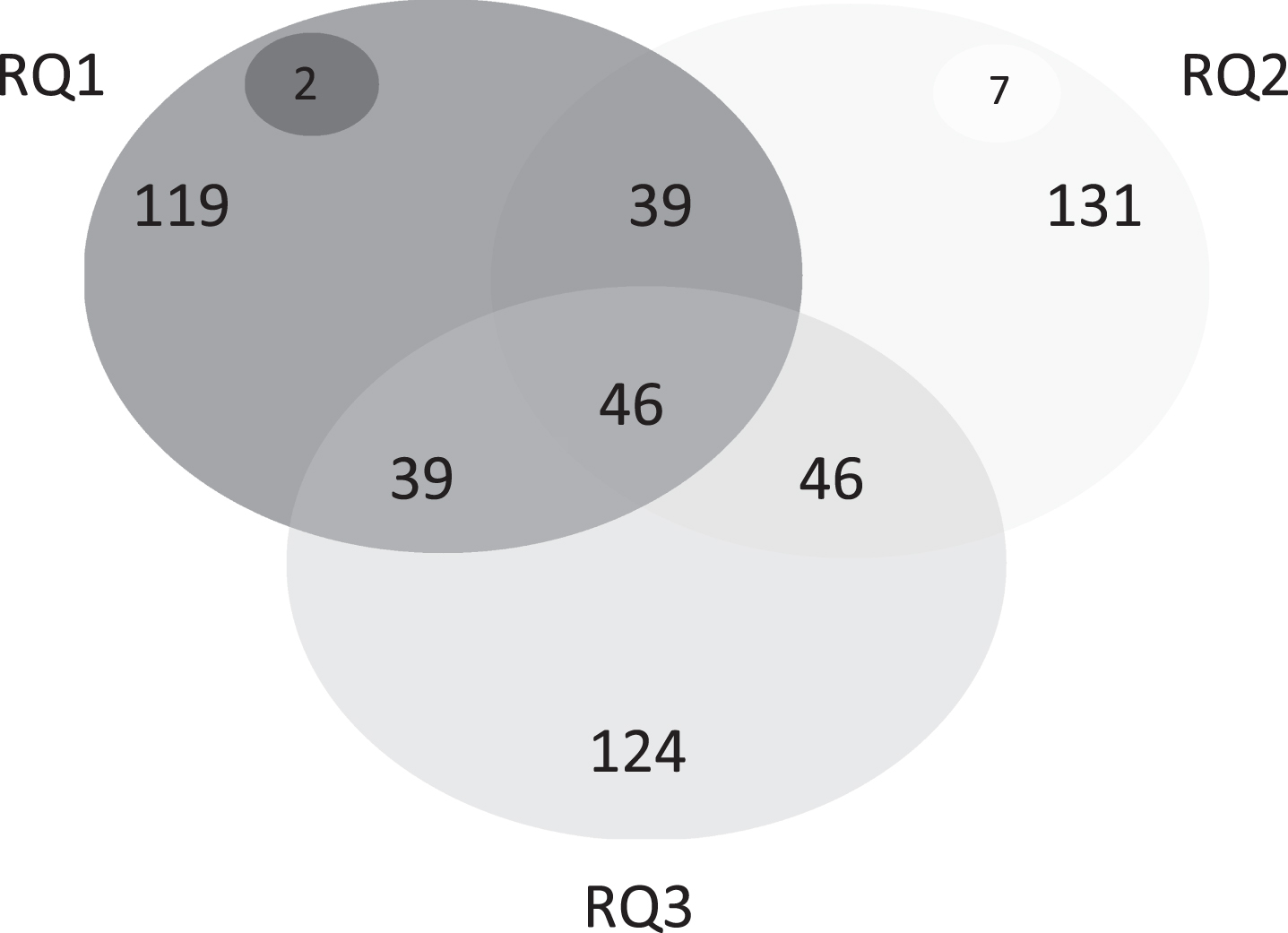
Venn Diagram for Research Questions.
Research Questions Pareto Diagram.
As we can see in Fig. 7, approximately 80%of the papers provided satisfactory response to more than one research question, which shows that the selected ones presented potential to obtain satisfactory results when it comes to the construction of the study. Another important factor evidenced in Fig. 7 is that 22%of the chosen studies answered the 3 research questions, reaching the milestone of 94,7%of the chosen studies answering more than one question.
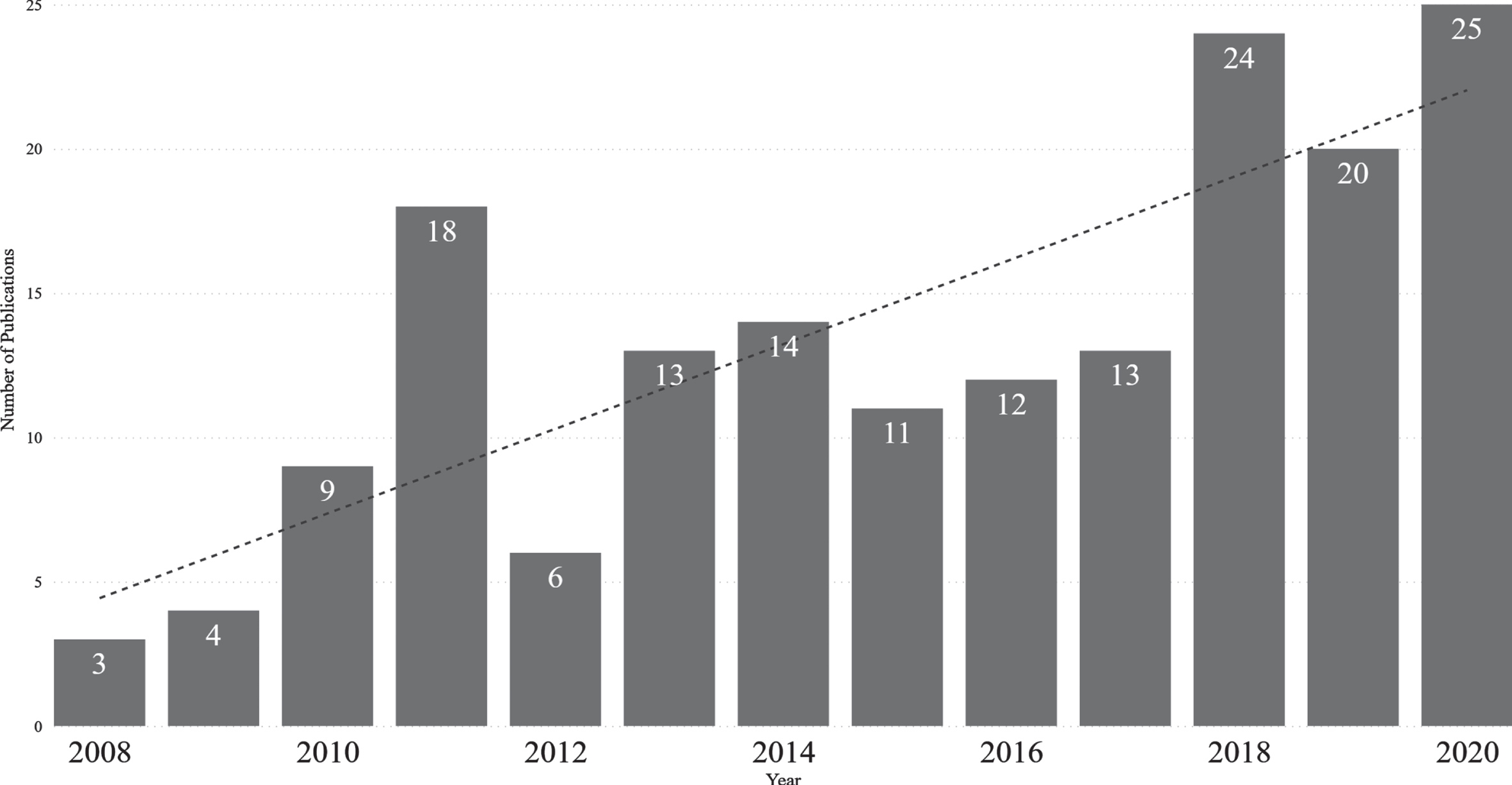
Data stratification was performed per year, so that it was possible to visualize the evolution of the occupational safety risk management topic over the years, which is presented in Fig. 8.
Evolution of the theme over the years.
With the trend line shown in Fig. 8, it is possible to see that research related to occupational safety risk management had an increase in the number of publications from 2008 to 2020. Although the amount of work in 2012 was lower than in the previous and the following years (2011 and 2013), but the total of publications has increased throughout the years.
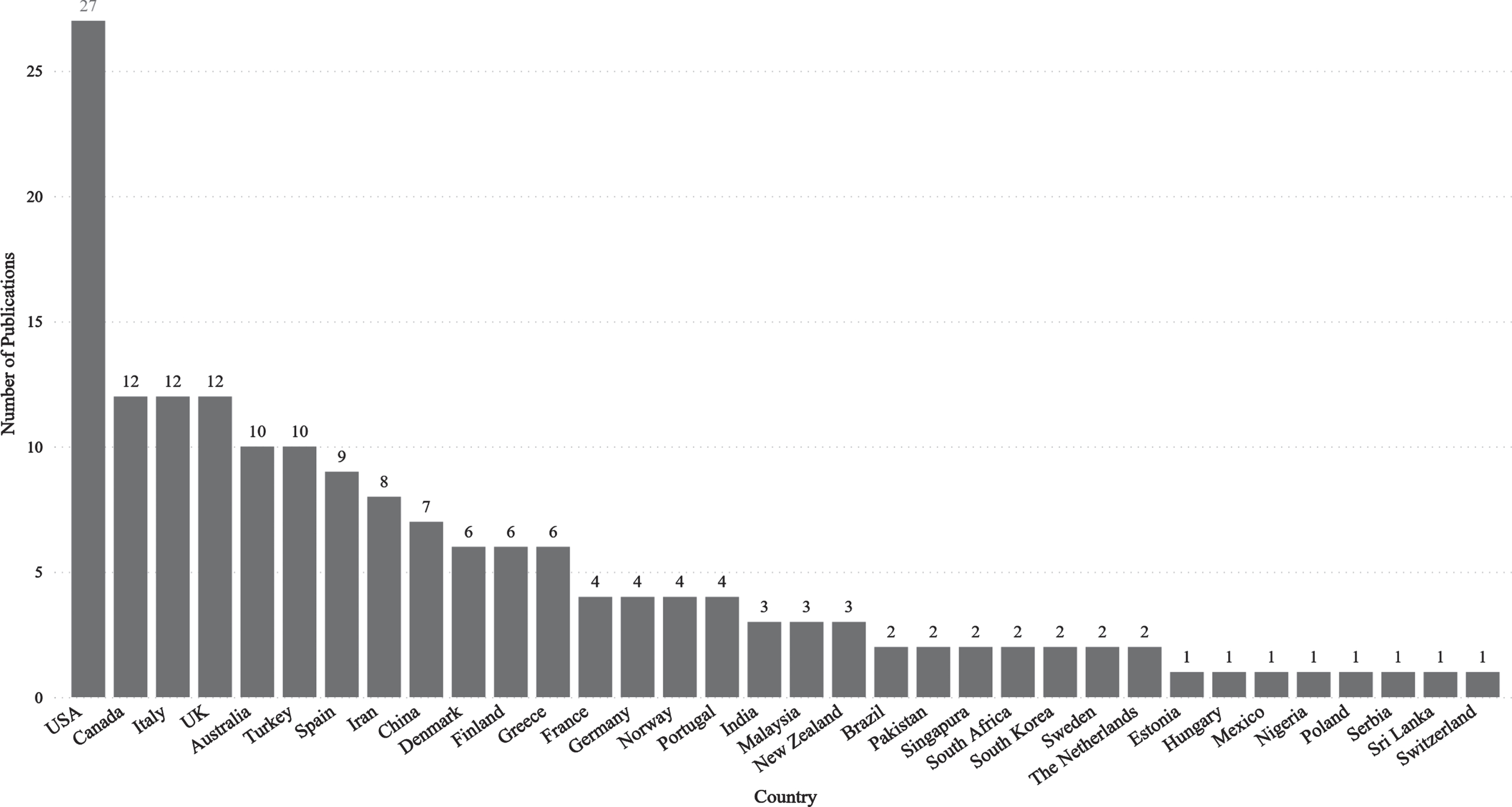
As we can see in Fig. 9, the five countries with the highest number of publications related to occupational safety risk management are developed nations (the United States of America, Canada, Italy, United Kingdom and Australia), where 73 of the chosen studies were carried out. Developing countries, such as Turkey, China, Iran, Finland and Greece (listed in descending order) were responsible for 37 studies. Figure 9 shows that Brazil, in its turn, contributed with only 2 papers related to the theme, the same number produced in South Africa and Pakistan. That points to the fact that scientific production in Brazil is still incipient when it comes to the subject in question.
Studies published (per country).
This section, regarding the answers to the research and discussion questions, was structured in order to monitor the risk management process proposed by ISO 31000:2009 and also to identify research trends. This way, it is divided into previous revisions (scope), risk identification, risk analysis and assessment, risk management process and innovation.
Previous revisions: RQ1 and RQ2
In order to answer research questions 1 and 2, we sought studies towards state of the art both regarding management process and the analysis or identification of risks in Occupational Health and Safety (OHS).
We found a translational literature review (an evidence-based intervention development process with health benefits at the population level) related to occupation safety practices in the fishing industry [14]. A number of 169 papers were studied from 1954 to 2013. For knowledge classification, the studies were structured within six categories. The authors spotted a research gap regarding fishing in developing countries. A total of 70%of the found studies fit the lesion description category. Approximately 18%referred to critical success factors in the implementation of safety management and also possible solutions. The remaining 12%remaining were distributed among population studies. Still in relation to the marine industry and in terms of literature review, there was a need to integrate the OHSAS: 2007 language with the ISM (International Safety Management) code in order to promote greater agreement in the work environment as well as compliance with international standards [15].
Regarding quantitative methodologies of risk management, MCDM (Multi-criteria decision-making) was classified as a set of essential tools for it includes human participation and judgment, having the following as alternative characteristics: criteria in relation to the alternatives evaluated, classifications scores on the criteria and weights on the criteria [16, 17].
Considering the essential tools for risk analysis among the studies related to revisions, the most important ones were: FMEA (Failure Mode and Effects Analysis), FTA (Fault Tree Analysis), Fuzzy methodologies and their variations, and HAZOP (Hazard and Operability Analysis) [16–19].
With regard to organizational climate, work structures for OHS management and leadership, we verified that leaders and managers play a pivotal role in leadership activities and safety guidance at a workplace [20–24]. The roles of workers and employers can change depending on organizational dynamics. Besides, the greater the engagement of leadership and workers with better safety activities is, the fewer injuries there will be [24]. It was also noticed that people are willing to change the way they order and prioritize their working activities to ensure higher safety in their duties [23].
Regarding the risk management process among the studies found, we tried to define the purpose of management systems, their elements, causal relationships and terminologies suitable to each situation [9, 25]. It was possible to establish some factors that influence safety management: organizational dynamics and their factors, ways of detection and risk analysis, interaction of risks related to safety with other problems of the organization, and records of the improvements made [26–28].
Concerning critical success factors and the existing barriers to the implementation of an OHS management system, the main obstacles found were the high cost for implementation and management, workers’ engagement with safety activities, organizational culture, difficulty in determining indicators and problems to control and document the management system [9]. The critical success factors listed were: organization managers’ engagement, promotion and improvement of OHS communication, internal and external improvement of the organization’s image, the development of a proactive OHS management, reduction in the number of accidents and occupational diseases, and improvement in the allocation of financial resources [9, 25].
Risk identification: RQ1 and RQ3
Considering the studies whose focus is risk identification, we found out that the main guiding tools made use of checklists (verification worksheets), interviews, questionnaires, approaches towards the identification of human error and also methods related to environmental and psychosocial risks.
Checklists were used in various segments such as civil construction, manufacturing, mining and small businesses for gathering information and verifying compliance with a specific environment and its workers [29–35]. In order to achieve efficiency in managing verification checklists, it is necessary to repeat cycles of inspections. In addition, a good checklist needs to cover leadership aspects, be in compliance with the legislation, promote engagement and learning for safety and stimulate continuous improvement. Last, but not least, it must be committed to social responsibility [29, 36–38].
Many of the studies analyzed made use of questionnaires in companies that have similar areas of activity to obtain answers about the risks that are inherent to the sector or context of a country. The questionnaires were used for data collection at services companies, nuclear power plants, and also in civil construction to evaluate the factors that influence the acceptance or rejection of risks. The conclusion was that the more financially vulnerable a worker is, the greater is their acceptance of unnecessary risks. Furthermore, the evaluation showed that leadership is a determining factor for injuries occurrence and worsening [39–44].
In the road transport industry, the studies found out that when improvements in communication between leaders and their teams are integrated with leader’s qualification in anticipating problems in a methodical way, it is possible to identify hazardous situations before they happen [45–47].
Concerning the conception of risk identification methods, we recognized approaches that aimed at ergonomics and were also oriented towards identifying hazards and errors in a given environment this is the case with the MHIAO methodology, which aims to facilitate the identification of hazards in aquaculture operations [48–55]. As it is a specific place, it has been studied that the number of suicides at work has been increasing in the last decade in the Alaska region since the particularities (e.g., the extreme cold and difficulties in accessing resources) in Alaska increase the number of cases of depression that cause workers to take their own lives and that deaths now happen more because of people’s mental state than under conditions of the work machinery [56].
An innovation regarding risk identification refers to psychosocial risks that have been considered to be labor risks in European countries. In addition, companies which have been awarded certification for worrying about psychosocial risks have higher credibility in the market sector in which they operate [57]. One of the characteristics that differs psychosocial risks from other risks is the fact that the former are invisible and their characteristics depend on the environment the worker is part of. Besides, it is not possible to measure them quantitatively. To top it off, they require inspection teams to be specially trained so that audits are more effective. There are insufficient studies that allow counterbalancing victimization attitudes or complaint making. Qualitative interviews are crucial when it comes to management and data collection. Management of psychosocial risks is based on dynamic and complex conditions, with greater relevance in work relations [8, 59]. A survey was conducted in Denmark to compare psychosocial risks with other risks and responses, it was found that the factors with the greatest influence on psychosocial risks are the same when related to the physical risks that are: support of company management, awareness regarding to the action plan and influence of teammates, immediate superiors and the occupational health and safety team [60].
In addition to the tools and methods of hazards identification presented so far, we also found some conceptual studies that sought to clarify the application of concepts, and hazards identification in specific areas. Such studies addressed the safety culture in civil construction, the relationship between female labor and risk assessment in production processes, the relationship between climatic conditions and the death of workers and tourists, and, finally, the relationships between the deaths of workers and technological advances [61–64].
Risk analysis: RQ1 and RQ3
The types of risk analysis found in the papers we analyzed are diverse and their objective depends on the characteristic of the application. There are analyses based on verification sheets, guided by historical data of a country, sector or company. There are also other approaches related to costs associated with security and, in order to ensure higher assertiveness, it is common to make use of two or more types [65–67]. The analysis tools that were most found are described below. The Fuzzy approach is used to model inaccuracy and uncertainty in situations of a real system where it is difficult for analysts to determine the value corresponding to the variables [68]. Thus, establishing values to the criteria/variables allows data classification [69]. AHP (Analytic Hierarchy Process) is a structured decision method for multiple attributes. Such method evaluates scales, proving to be able to model situations that lack measures. It presents three fundamental principles: structure decomposition, judgments comparison and priorities synthesis [70].
The FMEA (Failure Modes and Effects Analysis) tool assigns risk value by multiplying some factors, namely severity, probability and occurrence. FMEA allows ordering for it is a continuous scale of values [71, 72]. HAZOP (Hazard and Operability), in its turn, is a tool capable of systematically and critically identifying possible causes and associated consequences for each process deviation in a formal way [73]. The DEA (Data Envelopment Analysis) tool, originated from Linear programming and adapted to work safety, takes into account the input and output units of a given system, and it calculates relative technical efficiency [74].
The combinations of risk analysis tools found were oriented towards the categorization of existing risks, aiming at ordering for decision making. These combinations were established in various ways (e.g. Fuzzy, AHP and FMEA), presenting differences according to the industrial segment analyzed. Some of them incorporated qualitative approaches such as causality ratios, verification sheets and semi-structured interviews for risk analysis [75–84].
In addition to the qualitative analysis approaches and their integration with quantitative ones, during the research process, we found studies comparing methods and also tools, checking for compliance with legislation, and focusing on learning from accidents [85, 86]. Three studies which compared tools were found. Two of them aimed at ergonomics and one dealt with occupational hygiene. Regarding ergonomics, there was a study comparing a report by two ergonomists with the solutions presented by the software AAWS (Automotive Assembly Worksheet), which was developed to evaluate the ergonomics of workers of automotive industry regarding static postures, necessary strength for performing activities, and also activities such as walking and other movements. The findings showed that the software presented solutions similar to those of the ergonomists, thus validating the results [87]. Also concerning ergonomics, one of the studies compared three methods of ergonomic risk assessment regarding the same function in logging activities [88]. And, in the case of occupational hygiene, three methods for evaluating chemical hazard were assessed in several industries in order to offer guidelines on which to choose [89].
We found studies whose main approach was learning from accidents. They were supported by statistics on data, and their contribution refers to decision-making frameworks [90–100]. Specifically in biorefineries, risk analysis methodology ARAMIS (Accidental Risk Assessment Methodology for Industries) is used to identify possible accident scenarios and, thus, devise action plans [101].
Regarding conformity to legislation, there were two studies. One of them analyzed how far the reality of occupational safety was in Iranian trade. The other one, in the Norwegian fishing industry, addressed what is recommended by local legislation. In both cases, we used documented qualitative approaches (check-lists, interviews, observation), and they led us to conclude that companies disrespect the rules mainly due to lack of authorities’ inspection [102, 103].
Different from the others, one of the articles characterized the role of OHS professionals in the film industry. For each type of scene, professionals determine the level of safety by using FMEA as the final classification tool. Over time, a safety history is obtained [104]. Still in the context of different approaches, it was found that one of the articles analyzed sought to relate the implementation of lean and performance in health and safety at work, in addition to the factors that preceded health and safety at work that most affected the performance of the work. lean. An interesting point that is placed throughout the narrative is that it is suggested that the increase in activities aimed at lean can cause increased stress leading to a greater chance of accidents [105].
Risk management process: RQ1, RQ2 and RQ3
The occupational safety risk management process is a comprehensive effort in which an organization, based on the definition of safety goals, determines the necessary requirements, defines activities that must be implemented and characterizes the way data will be collected for putting such management into practice [106, 107]. The goals for risk management are many, and to suit the structure of this study, they were classified as environmental risks management, improvement of the organizational climate (stimulating a safety culture), integration of environmental risks management with a company’s culture and guidance on certification.
The management of environmental risks in OHS is characterized by managing the effects caused by the production process, which affect the environment conditions and, consequently, its occupants [108–110]. Such effects may be vibrations, emissions of chemical or biological compounds in any state of matter, friction between machines, heat emission and the workload [111, 112].
Maintenance service companies face high challenges in the management of occupational safety as the environment in which their activities are performed varies according to the demand and the typology of the repaired equipment [113]. There are several possible particularities in activities related to the provision of maintenance services, such as the lack of data on equipment information. Several service providers may “adapt” the machinery, so that it returns to operation. It is also important to mention that some equipment is exposed to weather [114]. In view of this reality, some studies have contributed to recommendations for safety management in maintenance services, suggesting ways of quantifying hazards through probabilistic relations based on previous accident information, aiming at greater security in maintenance activities [115, 116].
With regard to the construction industry, whose some characteristics are similar to those found in maintenance services, such as singularity of activities, certain studies focused on ways to manage environmental risks [117–121]. That being said, risk management in work planning was related to the importance of monitoring planned risks during execution. Thus, the potential risks to be found in a given civil construction project were stratified, and scales and metrics for the hazards were determined, as well as the suitable way to carry out the evaluation, documentation and management at each stage of the project [120, 121].
There were two studies addressing the environmental risks management in the renewable energy sector, one related to the wind industry, and the other in a hydroelectric power plant [122, 123]. Both studies stated the dangers and their consequences, and also the way they should be controlled according to each particularity. They also recommend that periodic inspections should be carried out.
Regarding exposure to chemical risks, their integration with workers’ health and also with external and internal factors, the studies established a cycle of identification, analysis and control, and made recommendations for each possible danger found in the organizations [124–128].
Organizational climate refers to the culture of occupational safety through transmission of information, relationship between the leader and the led, active care, training and follow-up for operational procedures [129, 130]. In other words, it is about making everyone in an organization figure out the safest way to perform a task before they make a decision involving some type of risk [131]. In terms of workplace safety and its relationship with the safety culture, the potential of human learning from accident occurrences was widely highlighted. Considering such potential, performance indicators related to culture and training is essential. The studies in question also emphasized that the way activities are assigned and their relation with potential hazards must be understood by the whole team, so that management will take place in an effective way [130–138].
Integrating environmental risk management at work with a safety culture has been a challenge faced by organizations, and this challenge has been an object of study of many researchers [139]. Several approaches have related team engagement with safety activities and the occurrence of accidents through performance indicators [140–143]. From investors’ perspective, we found studies that presented methods of integrating team training-related costs with amounts of money saved by avoiding work injuries and damage to property [144–146]. Therefore, it is evident that the costs related to security are not expenses, but rather investments [147, 148].
Rarely will an organization prioritize safety certification. Companies usually worry about quality certifications. Then comes environmental responsibility and, ultimately, work safety-related certification [149]. Even if a company is not certified, it is still subject to work-related laws in the territory in which it operates [150, 151]. Thus, entrepreneurs and workers, especially OHS professionals, must pay attention to current legislation and also seek new ways and methods to make safety management simple and, at the same time, effective. A good alternative to finding new methods and ways of management is benchmarking, that is, the comparison with the practices of other companies [152–156].
Regarding organizations seeking security management to be awarded certification, it is necessary paying attention to the requirements for implementing an OHS management system that enables developing a security policy, setting goals, devising processes, taking the necessary actions to improve the performance of the system and, finally, demonstrating its compliance with the requirements of both norms and legal obligations [1]. In order improve a company’s performance, as required by the norms, it is necessary to set performance indicators. Besides the instruments for data collection and analysis, as well as their periodicity, must be documented [155]. Each business has its own characteristics. Thus, it is essential to observe the corresponding legislation for each field of activity for proposing performance metrics that enable management aiming not only at certification. Although certification is the target, the whole process must provide concrete benefits in order to strengthen organizational security in a systemic and continuous way [155–158]. Companies that undergo safety-related inspection for being awarded certification have superior business performances when compared to non-certified companies [159].
During the research process, we found studies which used questionnaires for assessing risk management-related practices, compliance with legislation and leadership. As for the first item, the most effective performances found were those that presented systematic processes of analysis. Regarding legislation issues, companies that presented clearly devised processes were the ones to meet the legal requirements in a more efficient way [160–163]. With regard to leadership, the contexts in which a team participated in the security process were found to be less likely to injuries occurrences. Besides, in those contexts the leader played a determining role in the activities related to safety [160–163].
Strategies for risk management, comprising identification, analysis and the management process as a whole, aim at creating protection barriers for workers, the environment itself and also for machinery [25]. That is shown to be an efficient alternative when it comes to individual and collective protection. On the other hand, it may lead workers to feel continuously safe, which, over time, can induce an individual to underestimate the dangers they are exposed to and, consequently, make incorrect decisions in risky situations [164, 165]. Thus, effectively promoting occupational safety does not refer to simply creating barriers. It rather means raising awareness of uncertainties in specific situations [165]. The institutional rules regarding risk should be flexible, taking into account the rational capacity of individuals, so that adaptation to dangerous situations will have higher efficiency potential than rules that do not promote learning [165].
Discussion: OHS innovations
This topic, unlike those previously presented, did not aim to obtain answers to the research questions, but, rather, to point out the recent technological transformations considered relevant to OHS risk management. Real-time communication, big data, man-machine cooperation, remote sensing, monitoring and process control, equipment automation and connectivity are aspects that characterize the fourth industrial revolution [166]. Management ways, processes, people and organizations will have to evolve in order to remain in the market and continue to be competitive. Considering that scenario, the area of occupational safety faces a paradigm: “How to make the work environment increasingly safer in situations where work becomes more automated?” That question is what we sought to answer in this section by relying on the studies we analyzed. For an organization to succeed in integrating 4.0 industry with work safety, a strategy must be devised and, then, followed. An option in terms of strategy is the one that follows: OHS solutions should be adapted to surveillance and risk indicators, and control measures must be integrated with new technologies. Secondly, communication among the various stakeholders is pivotal for achieving collaborative and sustainable solutions. Besides, an OHS governance structure should be built. To top it off, actions should be geared towards the professional development of OHS workers [167].
That refers to a tool for managing safety in confined spaces that integrates data collection in real time with access to the previously existing database, so that the system recognizes the standards, and it signals abnormal operating conditions [168]. Thus, the purpose of that tool is predicting a potential accidental event in real time. In a similar study, the tool aforementioned was applied to civil construction with the aim of reducing the difference between actual reaction time to an adversity and the correct time for decision making (which is the time to avoid injuries) with the aid of sensors. It was an attempt to detect patterns, so that this difference could be reduced as much as possible [169].
Some studies have addressed machine learning for the prevention of occupational accidents. One of them dealt with the identification of new risks related to work in manufacturing processes where interaction between humans and robots happens with the conception of a new tool [7]. It was similar to what was done in another study [170] but, in that case, the focus was on ways of managing new and emerging risks in small businesses. In the civil construction machine learning sector, another study did something similar for developing indicators to classify risk environments in construction sites [171].
Also addressing the construction sector, a tool was developed integrating BIM (Building Information Modeling), game technology, location tracking and artificial reality [172]. The purpose of the tool is enabling workers to identify the risks they are exposed to during the safety training and, by conducting the work themselves, record the events of potential risks with applications integrated to their mobile device [173]. Another similar study also conducted in the construction sector made use of storytelling concepts applied to training for work aiming to pass the experiences of the most experienced collaborators to the new workers with the real context of the work day equipped with virtual reality [174].
Our mapping also found a study that related planning activities with the fourth industrial revolution. A simulation software was used to select the scenario which provided the best cost-security ratio, seeking to determine the resources to be allocated [175]. Measures were taken to raise professionals’ awareness and help them select and use checklists, as well as integrate this material with computational tools [176]. Another study, in its turn, established a relation between the use of internal surveillance cameras and the engagement of people with an OHS program [177].
One of the studies differed from the others in relation to risk analysis and, therefore, it was considered to be innovative for relating the occurrence of work accidents with the behavior of (best known) natural phenomena to determine the probability of events related to future accidents [177]. The authors achieved this by applying a set of data containing 814 observations related to the injury report and it was observed through the frequency distribution of the construction risk magnitude that the frequency distribution presented was similar to that of natural phenomena such as rainfall and earthquakes. Using advanced hydroclimatology and safety techniques, the authors introduced stochastic and nonparametric estochastic estochastic risk generators based on kernel density estimators. Such generators have enabled the generation of a large amount of synthetic but reliable safety risk values to the originals, allowing decision-making to be based on empirical evidence, enabling work safety to be evaluated quantitatively rather than being exclusively subjective as in most industries [178].
Conclusion
Risk management has been an object of study in several research fields. In occupational safety, it is a determining factor for decision-making in various contexts and business areas. This study aimed to carry out a systematic literature mapping seeking to understand the methods and tools that exist in the scope of occupational safety, as well as the common and divergent aspects according to the activity field.
The main contribution of this study is the knowledge systematization about OHS risk management. Was identified a set of tools and management practices that can be used to identify, analyze and manage risks in the workplace. Results can be used, in practical way, to select the adequate tools and practices to reduce risks and improve occupational safety. Also, the results can be used to target future research.
With regard to analysis and identification tools, the findings of our research evidenced the use of both quantitative and qualitative tools, besides combinations of both approaches to achieve better results. Such combinations led to the creation of new tools for several areas. However, since we did not find any studies in which they were used, they were not incorporated by our report. Anyhow, their characteristics were taken into consideration. As for risk identification, the tools found encompass interviews, verification sheets and observations. Regarding the ways of risk analysis, we can mention techniques such as AHP, DEA, HAZOP, FMEA and Fuzzy, and also some of them combined. It is important to stress that these techniques were originally conceived for other areas of study and adapted to the context of occupational safety.
As for methods, several studies were found, applied to many economic contexts, but, regardless of the approach, they generally converged to recommending management based on systemic processes. The participation of leaders, team engagement, as well as a training and safety culture were proven to be a conditioning factor in accepting/rejecting dangers in such a way that, when these elements are integrated into the management, they result in better organizational and financial performances.
The knowledge built in this study enables a comprehensive view of health risks management and occupational safety, thus accomplishing its goals. A factor that represents a threat to the validation of SML is researcher bias, which is eliminated through inclusion and exclusion criteria.
The safety management approach has been applied since 2016 in order to monitor the trends of the 4.0 industry with the real-time integration of processes, thus allowing data collection/analysis and decision-making to take place concomitantly to operations. In this way, the integration of information systems to operational activities tends to make risk management much more dynamic and effective when it comes to preventing work accidents. Research must continue to be carried out in this area, for both describing events and developing tools and management techniques, so that these applications will be increasingly disseminated in the labor context.
Regarding the perspectives for Brazil, more studies must be carried out in the context of risk management taking into account the reality of our country. That is evidenced by the fact that only two studies produced by Brazilians are part of our list of references. The change from a reactive to a proactive attitude in OHS management in technologically developed countries was due to process automation, a level that Brazil has been seeking to achieve.
