



Abstract
BACKGROUND:
Traffic enforcers are vulnerable to work accidents, injuries, and illnesses because they are commonly exposed to ergonomic risk factors while performing their tasks.
OBJECTIVE:
The purpose of this study is to determine the effects of environmental risk factors and postural risk factor to the prevalence of musculoskeletal disorders (MSDs) among traffic enforcers in Manila City, Philippines using binary logistic regression analysis.
METHODS:
A total of 120 participants were included in the study. The Nordic Musculoskeletal Questionnaire (NMQ) and Rapid Entire Body Assessment (REBA) were utilized. In addition, several devices such as a noise dosimeter, digital air thermometer, and IAQ sensors were also utilized to measure the environmental exposure of enforcers during their work shift.
RESULTS:
The prevalence of MSDs among traffic enforcers was high, with 71% of the respondents reporting symptoms of MSDs in more than one part of the body for the past 7 days. The body part that has highest prevalence was upper back, followed by lower back, and legs/ankles. Logistic regression analysis revealed that awkward work posture (OR = 4.61, 95% CI = 2.17, 9.83), noise exposure (OR = 1.42, 95% CI = 1.11, 1.82), heat exposure (OR = 0.53, 95% CI = 0.85, 1.05), and pollution exposure (OR = 0.94, 95% CI = 0.85, 1.05) were significant contributors for the prevalence of MSDs among traffic enforcers in Manila City.
CONCLUSION:
The prevalence of MSDs among traffic enforcers is caused by their work posture and exposure to psychosocial factors such as noise, heat, and poor air quality. Thus, to minimize the risk of MSDs, it is suggested to provide administrative controls, such as job rotation or shifting, and introduce frequent rest breaks. It is also recommended to provide enforcers with appropriate personal protective equipment, such as cooling vests, noise-canceling earplugs and N95 facemasks. This would help in uplifting musculoskeletal health for traffic enforcers and other workers in a similar field.
Keywords
Introduction
Traffic enforcers are essential in maintaining and improving traffic flow and road safety. They play a vital role in maintaining the public’s order and safety, especially motorists and pedestrians [1]. However, they are vulnerable to work accidents, injuries and illnesses because they are commonly exposed to ergonomic risk factors [2]. These are workplace situations that cause discomfort to the body, injuries, and lead to musculoskeletal disorders (MSDs). MSDs have been described as one of the major problems in many work situations and affect the well-being of workers [3]. According to a previous study, MSDs are the most common occupational disorders in many countries and are on the rise [4]. MSDs are mainly caused by force, posture, repetition and exposure to psychosocial factors such noise, heat, and air pollutants [5]. MSD development and exacerbation can be influenced by both environmental and psychosocial workplace variables [6].
According to Carayon [7], the prevalence of work-related MSDs has been reported high among traffic enforcers and is related to awkward position and uncomfortable posture. The working posture of traffic enforcers is usually in a standing position for a prolonged period of time, therefore, they are at risk for major MSDs as a result of this [7]. Because the center of gravity is normally between the hip and waist area while standing, the hip takes the majority of the body weight; hence, prolonged standing may induce muscle fatigue in the hip area. As a result, to distribute the weight on the back, the lower back acquires a highly arched position, resulting in lumbar strain and back pain [8]. This puts a strain on the joints and causes numerous musculoskeletal problems, which is the major cause of job absenteeism.
Furthermore, a study by Devare [9] in Bangladesh also examined the prevalence of MSDs among traffic enforcers, with 80% suffering from low back pain caused by working posture, working status, and other health factors. According to a study conducted in Pakistan [10], 69% of traffic enforcers suffered upper extremity pain, of which 54% had radiating pain to other areas. Low back pain is the most common spot for traffic enforcers to acquire work-related musculoskeletal issues, according to the study. The common cause could be long periods of standing, long working hours, or the nature of the job. Similarly, environmental risk factors also play an essential role in the safety and health of traffic enforcers. This includes exposure to hazardous air contaminants, noise pollution, and heat. Emissions from vehicles degrade ambient air quality, such as air pollutants such as carbon monoxide (CO), carbon dioxide (CO2), volatile organic compounds (VOCs), and particulate matter (PM2.5) emitted from vehicles may affect human health [11]. Over the past few years, many studies have shown evidence of the arising of high rates of pollution, particularly in China. A study showed that more than one million early deaths in China are caused by smog, resulting in a life duration cut by two to five years [12]. Likewise, in India, 1.2 million people die annually due to air pollution [13]. The World Health Organization (WHO) in 2012 reported that the Philippines has a high rate of mortality (82.7 per 100,000) which is a concern for people who are exposed to air pollutants [14]. The WHO stated that the best and safest air quality level is 90 micrograms per cubic meter. However, in 2016, the Metro Manila Development Authority (MMDA) recorded that the air quality index in Metro Manila is 120 micrograms per cubic meter [15], which proves that traffic enforcers in Metro Manila are at high risk for exposure to air pollutants. In 2019, a research team from the University of the Philippines (UP) revealed that MMDA traffic enforcers faced health risks such as high blood pressure and respiratory problems caused by air pollution [16].
Another environmental concern is the exposure of traffic enforcers to excessive noise levels. A study conducted by Asian Development Bank (ADB) in 2010 stated that the most vulnerable to noise pollution are residents in Manila City. They face a massive amount of vehicular noise, especially that of motorcycles and tricycles [17]. The study indicated that the level of noise emitted from vehicles produces noise levels as high as 90 to more than 110 dBA. Whereas the recommended noise level for residential areas in the daytime is 60 dBA while nighttime is only 50 dBA [17]. In addition, a study on noise exposure among traffic police officers in Sudan found that noise levels were high at all times, causing annoyance and tinnitus among the officers [18]. A study on traffic enforcers’ occupational noise exposure on selected Manila streets was also conducted in 2018 [19]. It was found that noise exposure levels on Recto-Rizal Avenue ranged from 81.5 dBa to 99.3 dBA, with a mean noise exposure level of 86.7±2.6 dBA and 86.0±2.1 dBA for the weekday AM and PM shifts, respectively. Based on the report, traffic enforcers on Quezon Boulevard and Recto–Rizal Avenue are subjected to noise levels that violate Philippine Occupational Safety and Health (OSH) regulations. According to WHO, exposure to excessive noise could cause damage to the human body, especially the fragile sense of hearing [20]. A global noise survey has also shown that traffic noise is often the most vital contributor to the recorded sound level and the most dominant source of annoyance or displeasure [21].
Another concerning environmental factor affecting the traffic enforcers is exposure to heat. Numerous studies have reported that hospitalizations increase accompany exposure to extreme heat due to heat-related illnesses and other diseases. According to Wilhemi [22], the vulnerability to heat stress is highly differentiated by the type of occupation. Individuals who work outside in hot conditions are at increased risk of heat strain and heat stroke due to the traffic enforcers’ work environment being highly susceptible to heat-related illnesses [22]. In India, a study by Raval [23] revealed that traffic enforcers were exposed to temperature levels exceeding the recommended threshold limit value by the American Conference of Governmental Industrial Hygienists guidelines. The finding suggests that traffic police are at risk for heat stress based on temperature estimates, which could lead to MSDs [23]. Similarly, in the Philippines, a study on the thermal comfort among traffic enforcers in Pasig City was studied [24]. Several factors such as air temperature, wind speed, UV index, relative humidity, and clothing comfortability were considered in measuring the perceived thermal comfort. Results showed that some of these factors do not favor thermal comfort among traffic enforcers [24].
Despite the alarming health effects of environmental and postural risk exposures of traffic enforcers in the Philippines, very little information exists for assessing its impact on the prevalence of musculoskeletal discomfort of traffic enforcers. The study’s findings will contribute to the institutions governing the traffic enforcers in designing their jobs and developing guidelines and necessary precautionary measures to lessen the exposure of traffic enforcers to ergonomic risk factors and prevent occupational health hazards.
The purpose of this study is to determine the musculoskeletal discomfort experienced by traffic enforcers in Manila City. This study also aimed to determine the effects of environmental and postural risk factors on the prevalence of MSDs among traffic enforcers using binary logistic regressionanalysis.
Methodology
Sampling design
The study was conducted among the six (6) sectors in the City of Manila, wherein the highest number of traffic enforcers are assigned, as described inTable 1. A total of 120 participants were involved in the study. The sample size of 120 is compared against the required sample size following the study by Yamane [25] where the level margin of error is set at 10%. Thus, the gathered sample size is acceptable.
Population of traffic enforcers per sector in Manila City
Population of traffic enforcers per sector in Manila City
Source: https://manila.gov.ph.
The non-probability sampling method, specifically purposive sampling using pen and paper questionnaires, was used in this study and was distributed to traffic enforcers after their work shift. The sampling frame was taken from the name list of all traffic enforcers at the Manila Traffic and Parking Bureau (MTPB). The questionnaire was briefly discussed with each respondent, and written consent was obtained from the respondents. The respondents were asked to fill out a consent form which indicates that the responses and information gathered will solely be used for academic and research purposes, following the Data Privacy Act or Republic Act No. 10173 in the Philippines. In addition, this study was approved by the Mapua University Research Ethics Committees. The questionnaire consists of two sections. The first part of the questionnaire determined the respondents’ demographic profile using 7-item questions, including age, gender, body mass index, drinking habits, smoking habits, years of service, and assigned sector. The second part of the questionnaire consists of the standardized Nordic Musculoskeletal Questionnaire (NMQ), which was used to evaluate the traffic enforcer’s experience of discomfort in different parts of their body. The NMQ is a 40-item questionnaire that includes a body chart and questions about musculoskeletal ache, pain, discomfort, or numbness occurrence in nine parts of the body over the past 12 months and past 7 days, which has prevented normal activity [26]. This questionnaire has been demonstrated to be a valid and accurate assessment instrument for measuring complaints of MSDs in groups of formal and informal sector employees based on study findings[27–29].
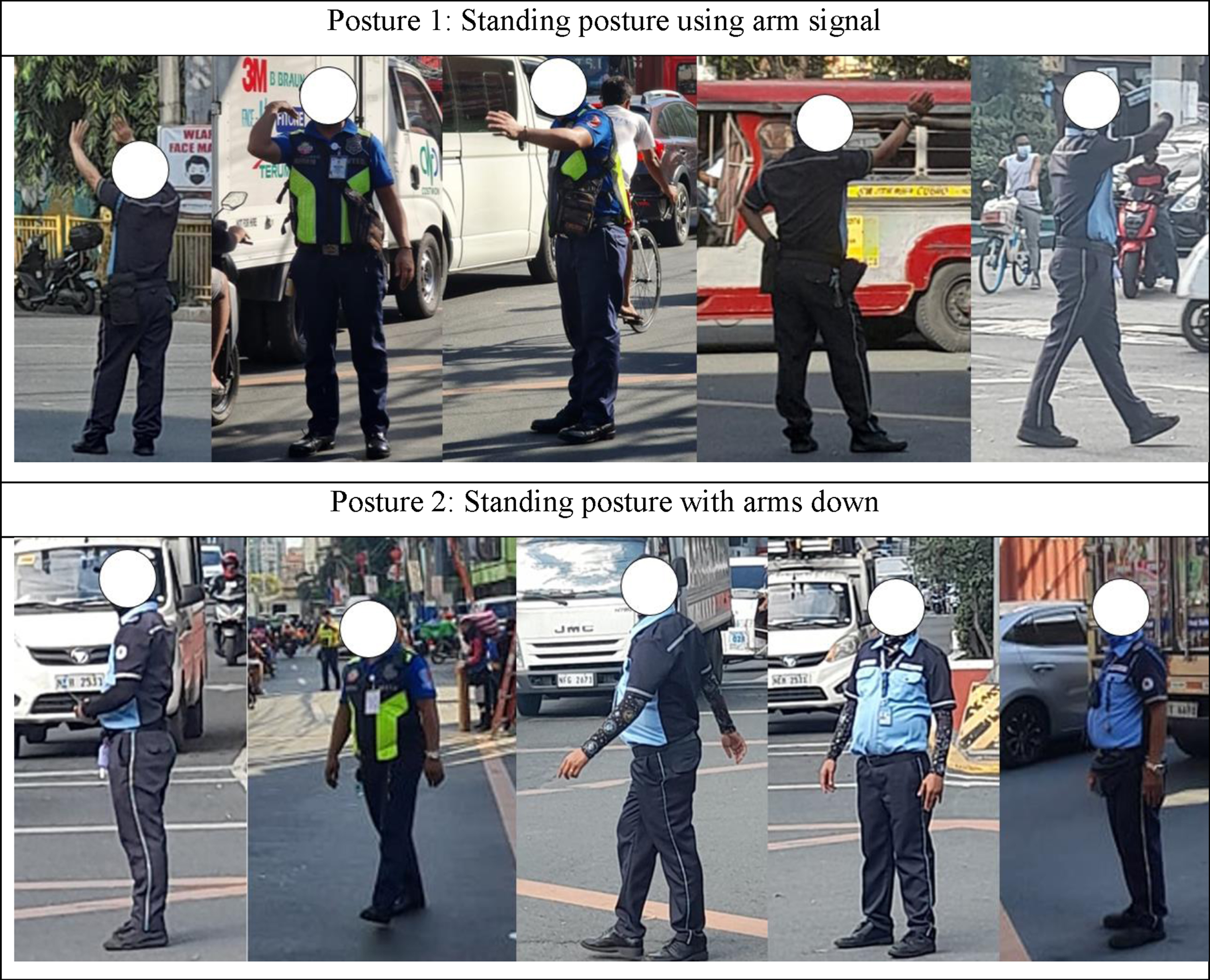
Rapid Entire Body Assessment (REBA) was utilized to evaluate the exposure of traffic enforcers to certain ergonomic risk factors using a single-page worksheet to assess the subject’s body posture, force, and repetition. According to Stanton et al. [30] and Hashim et al. [31], REBA assessment is suitable for whole body evaluation and optimum for both static and dynamic works comparable to work posture of traffic enforcers. The researchers evaluated the work posture of traffic enforcers during their work shifts as shown inTable 2. The chosen postures for REBA evaluation are based on the worst posture and held for lengthy periods. Two different postures were evaluated such as standing with arms down and standing using arm signal. Using the worksheet, the researchers assigned a score for each of the following body regions: wrists, forearms, elbows, shoulders, neck, trunk, back, legs, and knees. After the data for each region were collected and scored, tables on the REBA form were utilized to compile the risk factor variables, generating a single score representing the MSD risk level.
Types of work postures of traffic enforcers
Types of work postures of traffic enforcers
Environmental factors such as noise level, temperature level, and air quality were measured using appropriate devices such as a noise dosimeter, digital electronic thermometer, and IAQ sensor. The devices used met the requirement of the International Standards IEC 60651 and 60804. The data were collected for ten days (about one and a half weeks) per sector (sectors 1–6) to measure the noise level, temperature level, and air quality in the area of traffic enforcers. The devices were placed in the free field environment near the location or assigned area of the traffic enforcers during their work shift. The data were measured three times randomly at various times of the day.
Statistical analysis
The data gathered from the questionnaire and measurements obtained from devices were analyzed using Minitab version 20. The study was conducted using a 95% confidence level, and the results ofp < 0.05 were considered significant. The chi-square test was used to compare the prevalence of MSDs of traffic enforcers based on demographic, environmental, and postural risk factors. Furthermore, binary logistic regression analysis was employed in the study. The binary logistics regression analysis generates an equation to describe the statistical relationship between one or more predictor variables and the response variable. The significance and relationship of independent variables were determined and were used as the working equations for the basis in the interpretation of the impact of the independent variables on the dependent variable. In this study, the presence of MSDs (Yes/No) was identified as the dependent variable, while the postural risk level and environmental risk level (noise, temperature, and air quality) were identified as independent variables.
Results
Table 3 presents the descriptive statistics of respondents’ profiles. The results showed that the majority of the respondents are male (94.2%) within 41–50 years old (38.3%) and are working for 5–9 years (58.3%) as traffic enforcers. In terms of their health condition, most of the respondents have a normal body mass index (54.2%), they drink alcohol moderately (46.7%), and light smokers (65%). For the evaluation of their postural risk using REBA, 84.2% of the traffic enforcers were exposed to medium risk of developing MSDs, while 15.8% were exposed to high risk due to their stationary and awkward posture. Regarding environmental risk factors, the heat exposure measurements showed that 65% of the traffic enforcers are exposed to moderate risk, 29.2% are exposed to high risk, and 5.8% are exposed to extreme risk. For noise exposure, the measurements revealed that 70.8% have low risk, while 29.2% have high risk. Lastly, for exposure to air pollution, the measurement of the air quality index showed that the majority of the traffic enforcers are exposed to moderate risk (71.7%) while 28.3% have high risk.
Descriptive statistics
Descriptive statistics
The NMQ shows the prevalence of MSDs per body part for the past 12 months and the past 7 days. The results revealed that for the past 12 months, the highest prevalence was upper back (79%), followed by shoulder and leg/ankles (78%). While for the past 7 days, the highest prevalence was upper back (96%), followed by lower back (95%) and leg/ankles (92%). The results are shown inTable 4.
Prevalence of musculoskeletal disorders per body part among traffic enforcers
Prevalence of musculoskeletal disorders per body part among traffic enforcers
The chi-square test was employed to determine the association between the demographic and health factors (age, gender, years of service, BMI, drinking habits, and smoking habits); postural risk factor (REBA), and environmental risk exposure (noise, temperature, air quality) to the MSD symptoms reported by traffic enforcers for the past 7 days. The chi-square test revealed that factors that have significant association with MSD symptoms reported by traffic enforcers are postural risk (χ2 = 6.243,p = 0.012), heat exposure (χ2 = 18.997,p < 0.001), noise exposure (χ2 = 16.555,p < 0.001), and pollution exposure (χ2 = 12.45,p < 0.001). The results are shown inTable 5.
Association between risk factors and musculoskeletal disorders (MSDs)
Association between risk factors and musculoskeletal disorders (MSDs)
*p-value is significant at ≤0.05.**p-value is significant at ≤0.01.
Table 6 shows the results of the logistic regression analysis to determine significant predictors of the MSD of traffic enforcers. The results show that factors that significantly affect the MSD symptoms of traffic enforcers are postural risk, heat exposure, noise exposure, and pollution exposure. It was revealed that traffic enforcers who have poor working posture had higher odds to complain about MSD symptoms (OR = 4.61, 95% CI = 2.167, 9.83). The results indicated that odds for reporting MSDs increases 4.61 for every value increase in REBA risk score. Similarly, traffic enforcers who are exposed to noise, (OR = 1.42, 95% CI = 1.11, 1.82), heat (OR = 0.53, 95% CI = 0.85, 1.05), and pollution (OR = 0.94, 95% CI = 0.85, 1.05) had also higher odds to complain about MSD symptoms. The developed predictive model of MSDs is:
Logistic regression analysis
Logistic regression analysis
*p-value is significant at ≤0.05.**p-value is significant at ≤0.01.
Y’ = 9.83 + 1.529 REBA Score + 1.346 Heat level + 0.351 Noise level + 0.578 Air Quality Index.
The study showed that the prevalence of MSDs among traffic enforcers in Manila was high, with 71% of the respondents reporting symptoms of MSDs in more than one part of the body for the past 7 days. The body part with the highest prevalence was the upper back, lower back, and legs/ankles. This finding was consistent with several studies conducted among traffic enforcers in different countries. In Malaysia, Karrupiah et al. [32] showed that 67.9% of traffic enforcers had reported MSDs, particularly on the neck and shoulder, lower back, and waist/thigh. In Korea, it was found that 76.8% of traffic police officers experience pain, particularly on the shoulder, waist, neck, and leg/foot [33]. In Nigeria, it was also identified that 71% of police officers had gradual onset of MSDs, having lower back being the most reported body region [34].
This study showed that the risk factor that has the highest significant contributing effect to the prevalence of MSDs among traffic enforcers is the work posture. Since the traffic enforcers’ job posture is typically standing for lengthy periods thus, it puts them at higher risk for major MSDs. According to Devare [9], because the center of gravity is generally at the hip and waist area when standing, the hip takes most of the bodyweight; therefore, prolonged standing may induce muscle fatigue in the hip area. As a result, the lower back becomes severely arched to transfer weight evenly across the back, resulting in lumbar strain and back pain. Similarly, a study by Phadke et al. [35] found that a major cause of back pain can be attributed to reduced efficiency of base support located on the feet as traffic enforcers stand for a lengthy period. Because of this, the feet become tensed and have reduced ability to support the entire body to avoid a loss of balance. The muscles tend to contract more frequently, resulting in back pain.
It was also found in the present study that traffic enforcers in standing position using arm signals have a higher association with MSD symptoms. This is because joints in the body are most efficient when they are in the middle of their range of motion. When joints are operated outside of this mid-range repeatedly or for extended periods of time without enough recovery time, the risk of MSDs increases. According to Diyana et al. [36], awkward posture, such as prolonged arm over-reached comparable to posture during arm signal, can cause shoulder injuries, shoulder pain, and thoracic outlet syndrome, which can cause fatigue concerns for the neck and shoulder muscles. Hence, traffic enforcers should be able to adopt various body positions for optimum health and safety results: ideally, they should be able to switch between sitting, standing, and moving around [37]. As such, traffic enforcers should be encouraged to practice short exercises and stretching every 30 mins. Administrative controls such as job rotation and shifting should also be implemented [38] to provide traffic enforcers ample time to relax and rest. Rest periods should be used to soothe tired muscles, move stiff muscles, and walk when work limits the person’s ability to change postures or positions, among other things.
Furthermore, environmental risks exposures such as heat, noise, and pollution also significantly contributed to the prevalence of MSDs among traffic enforcers. Environmental factors such as temperature complaints have been shown in previous studies to have a substantial impact on the development and worsening of MSDs [39, 40]. Magnavita et al. [6] showed that temperature complaints were associated with upper limb disorders. In the present study, the outdoor temperature exposure of traffic enforcers during their work shift was measured between 29.16°C to 32°C. According to the National Institute of Occupational Safety and Health (NIOSH) [41], the most comfortable temperature is between 19°C to 26°C. Working in an area above 26°C increases the risk of an individual for heat stress. Heat stress occurs when the body absorbs more heat than it gives off, raising its core temperature. Depending on severity, heat stress can result in several forms of illness such as heat rash, heat cramps, heat exhaustion, and heatstroke [42]. This finding is consistent with the study by Raval et al. [23] in India. Based on the result, it was found that traffic enforcers are at risk for heat stress due to their exposure to a high temperature ranging between 28.2°C to 36.1°C. Even after the hottest months of the season, traffic enforcers were found to be exposed to temperature levels higher than the suggested threshold limit value, based on the American Conference of Governmental Industrial Hygienists recommendations [43]. Thus, to avoid the risks of traffic enforcers for MSDs and heat stress, traffic management should promote safety measures at work such as providing adequate sources of drinking water to keep workers hydrated, allowing frequent rest breaks in cool environments such as areas with shade, and providing protective equipment, including vests that are cooled by water, air or ice. In addition, a study by Raval [22] also suggested that traffic enforcers should be given light, breathable cotton material for uniforms instead of khaki or polyester material. They also proposed that traffic officers be given a peak cap to keep their faces cool and shaded.
Another environmental risk factor affecting the prevalence of MSDs among traffic enforcers is the noise exposure. According to a study [44], noise exposure could cause disruption on the cardiovascular system, raising blood pressure and releasing catecholamines into the blood, causing central nervous system exhaustion (CNS). A motor nerve was triggered by an insufficient central nervous system, resulting in weakness, discomfort, and diminished functioning ability. Cheta et al. [45] showed that noise factor had a huge impact on musculoskeletal symptoms among informal workers. Workers who are exposed to high levels of noise are more likely to develop MSDs.
In the present study, traffic enforcers’ measured average noise level during their work shift ranged between 82.83 dBA to 92.37 dBA. The obtained measurement varies with the findings of Fajardo et al. [46] in 1999, wherein the measured the noise level values in other busy streets in the city of Manila, such as Taft Avenue and Quirino Avenue, was measured between 76 dBA to 83 dBA, and 67 dBA to 77 dBA, respectively. The disparities may be attributed to several factors, such as the increase in the number of vehicles, residences, and other noise sources in the area.
According to the WHO, excessive noise can harm the human body, particularly the sensitive sense of hearing [20]. According to noise surveys conducted in various cities throughout the world, traffic noise is often the most important contributor to recorded sound levels and the most prevalent source of aggravation or discontent [47]. In a similar study in Sudan, it was reported that traffic enforcers are consistently exposed to a high level of noise during their work shift resulting in psychological and physiological effects on workers such as annoyance and tinnitus [18]. As such, protective equipment such as noise-canceling earplugs should be provided to workers to minimize their risk. Implementation of job rotation should also be encouraged by assigning enforcers in less noisy and busy sites every 4 hours to reduce their risk for noise-induced hazards.
Lastly, pollution exposure was also found to contribute to the prevalence of MSDs among traffic enforcers significantly. Queiroz et al. [48] showed that air pollutants can trigger an oxidative stress response leading to systemic inflammation and possible worsening of MSDs. Similarly, a study by Magnavita [6] hypothesized that air draughts in hot environment can be a further factor contributing to MSDs causing painful muscle contractures and reduced mobility. In the present study, traffic enforcers’ pollution exposure (PM2.5) during their work shift was measured between 52.98μg/m3 to 75.28μg/m3. Based on the National Ambient Air Standards established by the U.S. Environmental Protection Agency (EPA), the short-term standard for 24-hour or daily average exposure is 35μg/m3 of air, and the long-term standard (annual average) is 12μg/m3 [42]. Hence, the level of PM2.5 exposure of traffic enforcers was considered moderate to high risk. A study by Seposo et al. [16] revealed that exposure to PM2.5 among traffic enforcers in Metro Manila was associated with an increased risk of chronic obstructive pulmonary disease. The risk is strongly associated with age, smoking habits, and the primacy of chest pain. Thus, to avoid the risk of exposure to air pollution, it is recommended to provide enforcers with N95 face masks to protect them from airborne particles and other air contaminants and pollution.
Previous studies have shown the impact of poor work posture and environmental risk factors on the occupational health hazards of workers. Thus, detecting the occupational risk factors, work position standards, and following ergonomic interventions are highly recommended [28]. Environmental risk and its negative impact on workers are better understood through occupational health studies. They also allow for effective risk assessment and monitoring of defined exposures. Thus, these research findings are easily generalizable and can aid in our understanding of how environmental risk factors affect the general population.
Practical implications
The significant findings of this study shed some light on the relevance of focusing on enhancing the safety and health of traffic enforcers. Existing practices must be significantly expanded to address risk from all potential occupational safety and health hazards to reduce MSD symptoms of traffic enforcers. Since the present study showed that work posture and psychosocial factors influenced the prevalence of MSDs of traffic enforcers, it is vital for traffic managers to constantly modify the nature of tasks performed by workers and their work demands. As a result, traffic officers should be able to adopt a variety of body positions for the best health and safety outcomes: ideally, they should be able to switch between sitting, standing, and moving around and should be encouraged to do short exercises and stretching. In addition, it is recommended to give the enforcers appropriate personal protective equipment such as cooling vests, noise-canceling earplugs, and N95 facemasks. This could help minimize the development of MSDs and their exposure to environmental risk factors that could lead to occupational health complications. Moreover, the results will provide transport management units with an effective tool for use in evaluating the safety and health risk of traffic personnel. This could encourage traffic managers and local government units to include some of the recommendations suggested in the study in their policy development. As a result, the gap between practitioner demands and scientific research will be met [49–51].
Research limitations
Despite the study’s encouraging outcomes, a few drawbacks must be considered. First, the investigation only considered a postural risk factor associated with MSD symptoms of traffic enforcers. Hence, it would be beneficial to associate other risk factors to MSDs, such as work shift, work pattern, work duration, work frequency, and area of assignment. Association of other occupational risk factors would allow for a more comprehensive examination and explanation of the prevalence of MSD symptoms among traffic enforcers. Second, the study is limited in terms of its coverage. It was only carried out in the City of Manila, even though there were several traffic enforcers in the Philippines. Thus, the analysis could be replicated with data from other geographical regions to see if the results are consistent. This would also serve to validate the present study’s findings and interpretation.
Conclusion
The working environment has a significant impact on the health and safety of the workers. The likelihood of adverse health effects increases as the length of time spent exposed to occupational risks increases. Traffic enforcers are especially vulnerable in such scenarios as they are exposed to changing environmental factors such as ambient temperature, air pollution, and UV radiation, which all lead to the development of a variety of health disorders. Furthermore, the prevalence of MSDs has been significant among traffic enforcers, and it has been linked to awkward positions and uncomfortable posture. Traffic enforcers’ job posture typically stands for lengthy periods, putting them at risk for major MSDs.
Key findings from the study revealed that awkward posture and exposure to environmental risk factors such as heat, noise, and air pollution significantly contribute to the prevalence of MSDs among traffic enforcers in Manila City. The study also showed that the highest prevalence of MSDs is in the upper back, lower back, and leg/ankles. Hence, it is suggested to provide preventive measures and implement a safety plan to minimize the risk of MSDs of traffic enforcers such as administrative controls through job rotation or shifting and frequent rest breaks. Also, it is suggested to provide enforcers with appropriate personal protective equipment such as cooling vests, noise-canceling earplugs, and N95 facemasks.
Ethical approval
This study was approved by the Mapua University Research Ethics Committee (Document no. FM-RC-20-78).
Informed consent
Informed consent was obtained from all subjects involved in the study.
Conflict of interest
The authors declare no conflict of interest.
Footnotes
Acknowledgments
The authors would like to extend their deepest gratitude to the participants of this study.
Funding
This research was funded by Mapúa University Directed Research for Innovation and Value Enhancement (DRIVE).