



Abstract
BACKGROUND:
The high prevalence of mental illnesses has a serious impact on productive life and there is an urgent need to intervene using a variety of active and effective measures.
OBJECTIVE:
The concept of playfulness in space is introduced into the design of work spaces oriented towards active health interventions, creating a close interaction between the body and the space through play, thus developing a positive effect on the promotion of the physical and mental health of the staff.
METHODS:
With the help of the spatial order theory, the analysis of the interaction between body and space is attempted to explore the form, structure and scene of space in order to optimize the body’s perception, cognition and behavior in the space, thus creating an indoor workspace model with positive intervention effects on human health.
RESULTS:
Based on the idea of spatial playful participation in active health interventions, this study explores the interaction between the body and the architectural space to enhance the perception and cognitive guidance of the space for the individual and to have a pleasant spiritual experience in the interaction to relieve work stress and enhance mental health.
CONCLUSION:
This series of discussions on the relationship between architectural space and the human body is of great relevance in improving the public health of occupational groups.
Introduction
With the development of science, technology and the economy, the structure of the workforce has changed considerably, with the basic trend shifting from the manual to the mental workforce. Accordingly, the main factors affecting the health of the working population have changed from physical and chemical factors to psychosocial factors, especially work stress. Work stress refers to the stress caused by an excessive workload, excessive work responsibilities or changes. Mental disorders are highly prevalent in the working-age population and lead to substantial costs for society due to sickness absence, long-term working disability and unemployment [1–4]. New global World Health Organization (WHO) guidelines on mental health at work are reinforced by practical strategies outlined in a joint WHO/ILO policy brief. An estimated 12 billion workdays are lost annually due to depression and anxiety costing the global economy nearly US$ 1 trillion. “It’s time to focus on the detrimental effect work can have on our mental health,” said Dr Tedros Adhanom Ghebreyesus, WHO Director-General. “The well-being of the individual is reason enough to act, but poor mental health can also have a debilitating impact on a person’s performance and productivity. These new guidelines can help prevent negative work situations and cultures and offer much-needed mental health protection and support for working people.” “As people spend a large proportion of their lives in work – a safe and healthy working environment is critical. We need to invest to build a culture of prevention around mental health at work, reshape the work environment to stop stigma and social exclusion, and ensure employees with mental health conditions feel protected and supported,” said Guy Ryder, ILO Director-General [5]. In addition, WHO’s World Mental Health Report, published in June 2022, showed that of one billion people living with a mental disorder in 2019, 15% of working-age adults experienced a mental disorder. In 2019, nearly a billion people – including 14% of the world’s adolescents – were living with a mental disorder. Suicide accounted for more than 1 in 100 deaths and 58% of suicides occurred before age 50. Mental disorders are the leading cause of disability, causing 1 in 6 years lived with disability. People with severe mental health conditions die on average 10 to 20 years earlier than the general population, mostly due to preventable physical diseases [6]. Thus, in order to improve the mental health status and social well-being of workers and to diminish working disability costs, a variety of positive and effective interventions are needed to help workers reduce the health damage caused by work-related stress and improve their physical and mental health.
In response, in the field of architecture and the environment, the WELL Building Standard published and implemented in various countries have codified the promotion of the mental health of indoor populations as an important indicator in the evaluation criteria for indoor environments. Improving the mental health of the population by regulating the design factors in the building’s indoor environment has become one of the important objectives in the construction of architectural spaces. Existing studies have discussed the study of healthy architecture from different perspectives. (1) In terms of the connotation of health in architecture, the most representative one is Dadalina Hanc and other scholars who took the breadth and dimensions of well-being in architecture as the starting point and identified nine themes of well-being, in order of environmental satisfaction and comfort, subjective well-being, physical health, mental health, general social well-being, work efficiency and cognitive performance, ultimate well-being and others [7]. (2) In terms of factors influencing healthy buildings, some scholars have reviewed studies on ventilation systems [8], humidity [9], building health indices [10], indoor air pollution [11], post-occupancy assessment tools in hospitals [12], housing permitted development rights [13], and office workers [14], patients [15] and elderly population health [16] in relation to the built environment respectively. Although there is a large body of research on the spatial environment for population health, the results are concentrated in the field of human physical health research, while there is a lack of research on mental health as a very important element of health impact. Therefore, this paper attempts to analyse the feasibility of a playful indoor work environment to promote human mental health, and to consider the importance of playfulness in space for human mental health from an active health perspective. Through proper spatial design of health intervention environment, it creates an environment that attracts staff to actively participate in spatial activities, enhances their physical and mental dual activities, reduces negative factors that aggravate mental stress from the source, and further alleviates the health damage caused by mental stress through the creation of spatial vitality in order to promote physical and mental health and provide some reference for the construction of healthy work spaces.
This study analyses active health intervention spaces from a work environment perspective to promote mental health by enhancing the playfulness of the space and increasing physical engagement in the work space. Secondly, active health interventions aimed at promoting physical and mental health activities do a good job of complementing the traditional passive model of medical health. In addition, active health interventions in the work environment facilitate multidisciplinary research at the intersection of architecture, psychiatry and sociology. Overall, our research aims to link playfulness in the workplace with proactive interventions for population health, in an attempt to explore new ways of promoting healthy work practices.
Human health problems and proactive intervention ideas
The World Health Organization’s 1948 Charter states that “health is not merely the absence of disease or infirmity, but a state of well-being in terms of physical, mental and social activity” [17]. Today, the fast-paced, high-intensity working conditions put people in a state of chronic mental stress, and the frequent occurrence of mental health problems places a huge burden on the body, and mental health problems are also a major cause of sick leave, absenteeism and accidents at work. In Europe, about 3.24% of workers take more than three days of sick leave each year due to occupational stress; in China, this percentage is as high as 8.03%, and mental health problems in the workforce have a significant negative impact on social activities and economic efficiency [18]. Studies on the mental health status of the workforce have found that the direct economic cost of low productivity and high absenteeism due to mental health problems such as depression and anxiety exceeds US$1 trillion per year [19, 20]. Therefore, it is important to take active and effective measures to intervene in the mental health problems of the population for the sound functioning and development of society as a whole.
Le Corbusier included health systems in the urban development agenda at the inception of the Congrès International d’ Architecture Modern in 1928, and architectural spaces were closely integrated with the prevention and treatment of disease in the form of various hospitals and fitness facilities. In the 21st century, as the workforce shifts towards a knowledge-based structure, the traditional concept of passive healthcare no longer meets the diverse health and wellness needs of the masses [21]. The high speed of the social economy, the increased hours of individual involvement in work and the lack of time for physical exercise and mental relaxation have led to widespread interest in the concept of active health oriented towards active physical and mental regulation and have placed new demands on the way urban habitats are engaged. Providing more optimal environments for active health interventions with more rational design is a topic that the fields of design and architecture must engage with [22]. The use of spatial design to create environments that attract working people to actively engage in physical and mental activities, promote communication activities between people and the environment and between people, and reduce the health damage caused by work stress in order to improve organism health (Fig. 1). This is a proactive, interventionist approach that is a step-by-step process that is more likely to end up in the right place compared to medication, as opposed to traditional passive, therapeutic interventions for mental illness in the medical field. It is important to stress that neither medication nor environmental factors alone are sufficient to fully mitigate the prevalence of psychiatric disorders, which requires a multidisciplinary cross-fertilization [23, 24]. Proactive health interventions can complement traditional approaches, such as therapeutic interventions and medical treatment, in promoting the mental health of the workforce. Proactive health interventions may play a complementary role to traditional methods, such as therapeutic interventions and medical treatments, in promoting the mental health of the workforce.
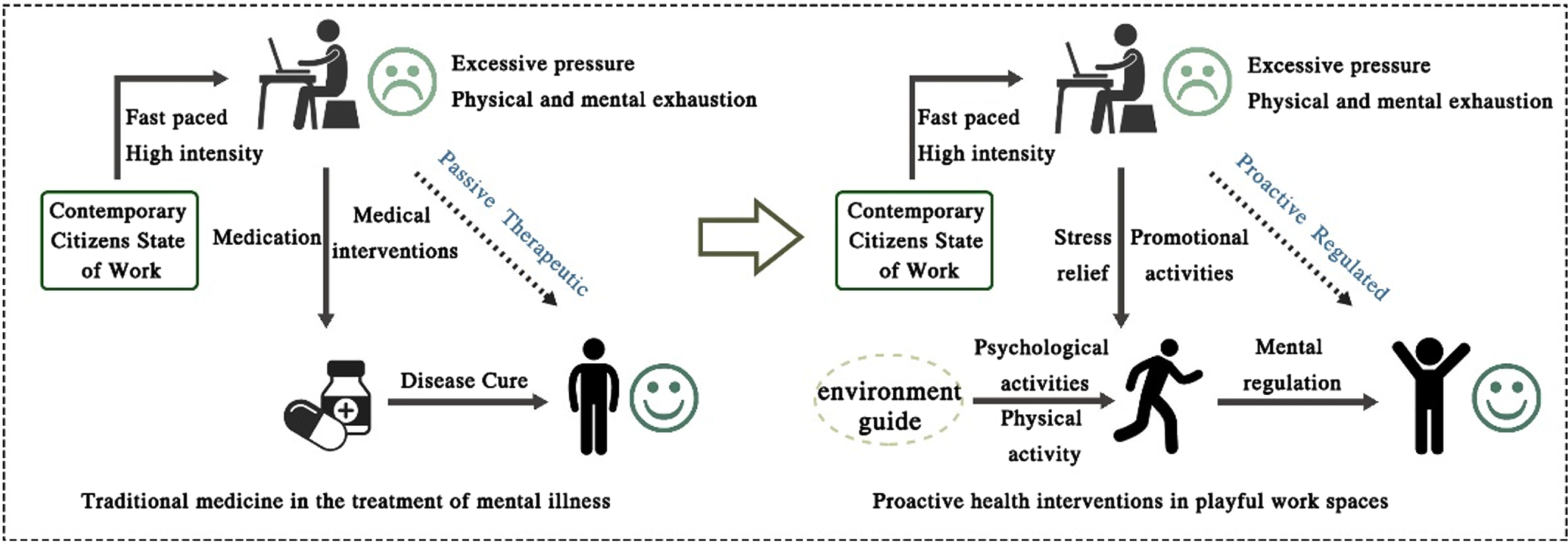
Trends in proactive health interventions in indoor work environments.
The concept of active health, which is different from the passive health care perspective of spatial playfulness, is manifested in three aspects: firstly, the core of active health space, i.e. the rediscovery and excavation of bodily experience; secondly, the methodological affiliation of active health space, i.e. the sociology and anthropology of architecture under positivism with human as the main object of study; thirdly, the design thinking approach of active health space, i.e. the playfulness of space.
The Dictionary defines play as “an activity whose main purpose is to obtain direct pleasure, and which must involve the interaction of a subject.” The concept of playfulness in the spatial playfulness perspective refers to the term of ‘play’ with two implications. First, it has the direct aim of gaining physical and psychological pleasure. Second, it requires the physical, verbal, or emotional interaction of the subject. While focusing on the subject’s access to pleasure, it also highlights the need for interaction, which also illustrates the relevance of active health and spatial playfulness from another perspective, providing a theoretical basis for the design of health intervention-oriented indoor work spaces. Accordingly, the spatial playfulness theory focuses on updating the workplace and changing the environment to increase subjects’ interactions with the space and improving their amusement and pleasure.
Regulatory mechanisms, a core component of health interventions
The basic approach to active health interventions from a spatial playfulness perspective is through the combined effects of perceptual guidance at the level of the five sensory experiences, emotional responses in the psychological and physiological systems, and neural regulation of the human brain mechanisms (Fig. 2). On the one hand, the perceptual experience of the spatial environment acts as a direct response to the individual’s psyche through the regulation of the nervous system, relieving mental stress and improving mental quality; on the other hand, the spatial environment indirectly influences the individual’s change in interaction and, through its emotional and cognitive guidance, restores physical and mental health and improves resilience and adaptability, achieving a good state of physical, mental and social activity [25, 26]. Playful, active health interventions in the workplace allow staff to regain focus and reduce fatigue during short breaks, and also enhance physical activity and active communication, resulting in more opportunities for informal exercise and social interaction, and thus a better mental outlook for workers.

Spatial regulation mechanisms.
Architect Alvar Aalto believed that “the latest issue in modern architecture is to bring the rational approach out of the technical realm and into the human and psychological realm” [27]. His 1955 studio design, in which the interior space was made outdoor and staged, was an exploration of the integration of recreational and leisure functions into work activities. In terms of health issues: in the high-intensity, overloaded contemporary urban work environment, frequent sedentary work and physical and mental exhaustion have led to physical and mental exhaustion, which has largely exacerbated the mental stress of employees [28]. Therefore, there is an urgent need to improve the mental outlook of the population [29, 30]. Spatial interventions: A moderately playful workspace can guide the physical and mental activities of staff, allowing them to withdraw from their busy schedules and immerse themselves in pleasurable perceptual experiences, to a certain extent relieving fatigue, stress and anxiety (Fig. 4). Proactive health intervention-oriented playful work spaces are low in time cost, high in freedom and highly targeted, and promoting research on human mental interventions in work spaces is significant for improving the health of urban populations [31, 32].
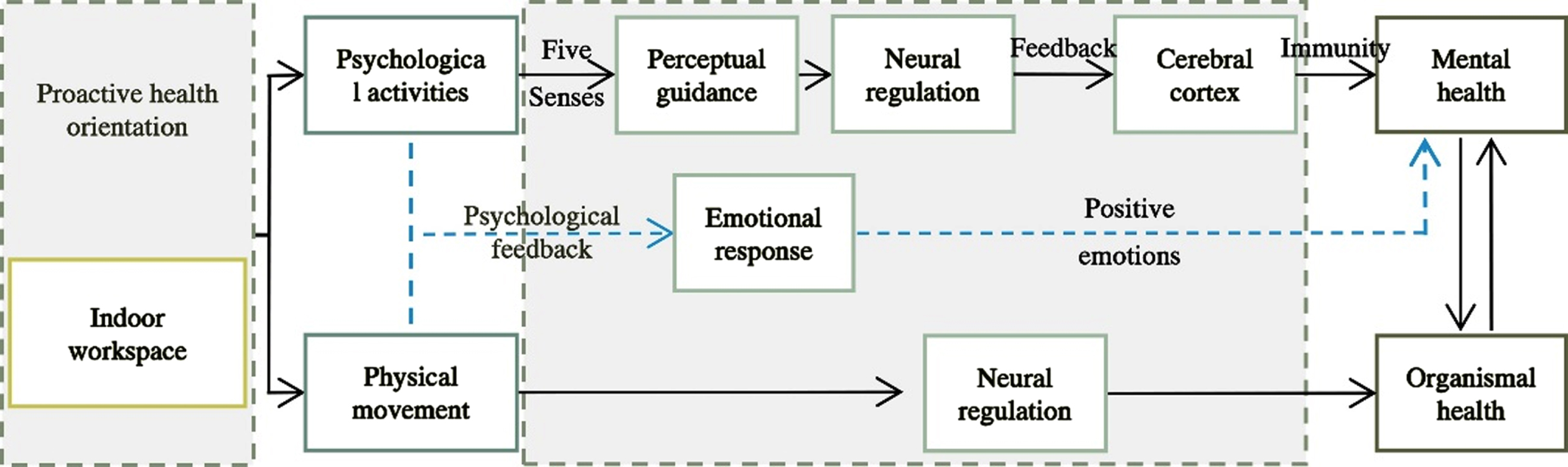
The indoor workspace as a physical vehicle for health interventions.
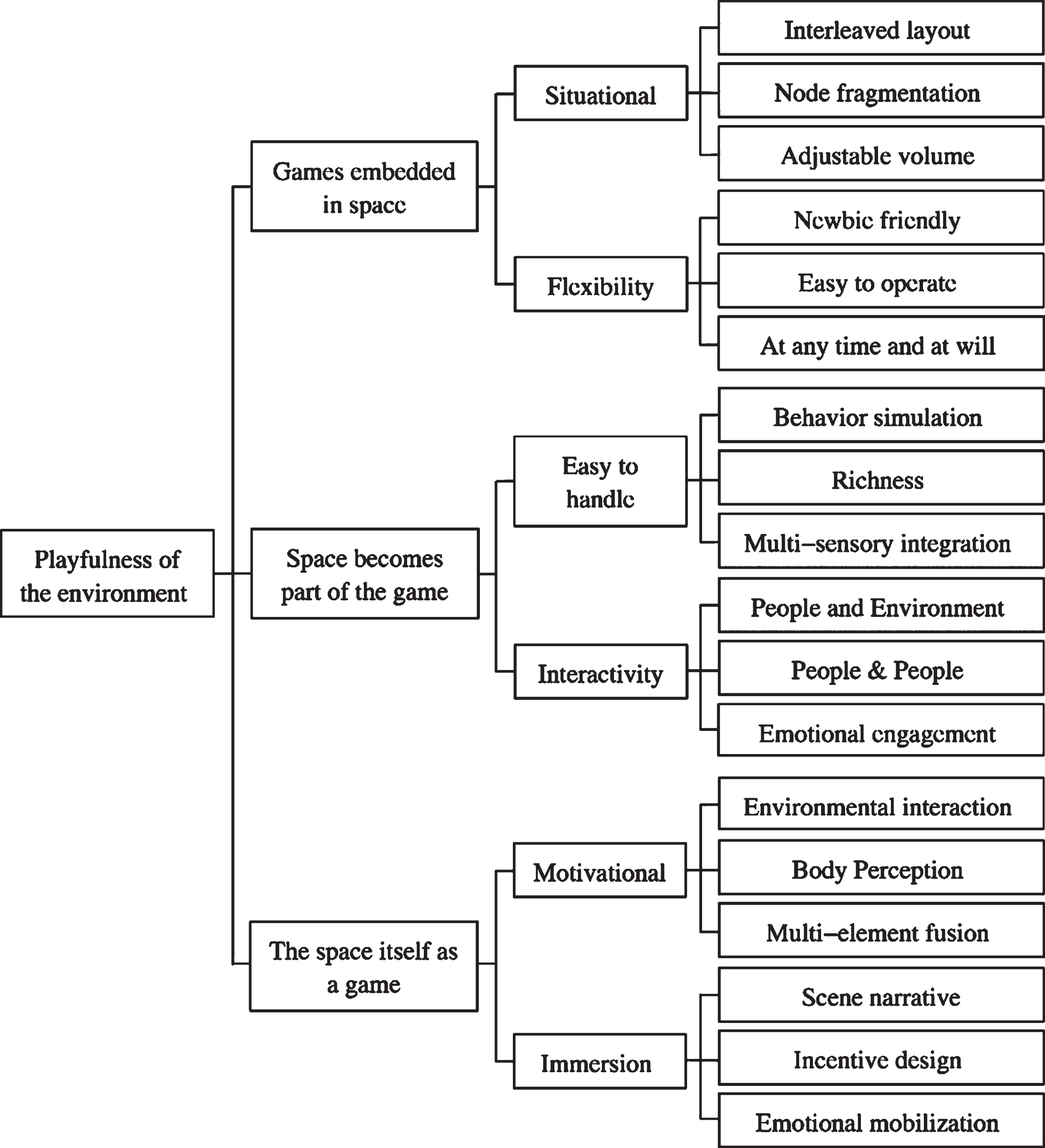
The playfulness of space goes.
Playful spaces play an active moderating role in intervening in the mental health of occupational groups. In the field of design, there is no clear definition of playfulness in space, which is accompanied by the pursuit and expression of different degrees of human experience of fun. Playfulness in architectural space exists in three broad categories (Fig. 4): firstly, where play is embedded in the space, focusing on the flexibility and ease of spatial planning; secondly, where the space becomes part of the play, focusing on the creation of the environment and the interaction of the participants’ actions; and thirdly, where the space itself acts as a game, focusing on the perceptual experience and the heightened mental concentration.
Games embedded in space
Spatial playfulness can add a whole new meaning to ordinary functions, enriching monotonous spaces and achieving a mental conditioning effect of the environment on people. Transitional and leisure spaces often have great potential in this regard. The Czech Republic’s Avast headquarters is a new type of office space that combines play and work, and the playfulness of the space is expressed through the implantation of simple game modules within the space: the design team’s goal was to explore an element that would not only fully engage the staff, but could also be used by them extensively and over the long term to embed in the work environment. They therefore came up with the idea of ‘office golf’, with a certain number of golf holes on each office floor, designed to provide some daily recreational activities for the staff within the office space. This is an appropriate spatial model that provides an effective way for employees to improve their physical and mental health under the pressure of a demandingworkload.
The integration of pure play modules into the environment is a simpler spatial model. This type of design approach can quickly activate a dull physical space, create a positive working atmosphere, achieve a regulating effect of environmental playfulness on people’s mental health and build a truly open, healthy and positive workplace. By relying on this modal spatial model, the design can be embedded in a suitable environment. It is the most widely used model of playful environmental design and is easier to use in spatial environments [33, 34].
Space becomes part of the game
Spatial playfulness can quickly erode the sense of scale of a place, interconnecting space and people and generating a range of positive behavioral activities. Within this genre, PONE ARCHITECTURE’s K18 office space at Poly International Plaza, an experiential place for the office of the future, provides a reference. The project aims to link the growth of the space to the experience of the participants, playing on the human being as the most positive factor in stimulating office dynamics. A work environment with the capacity to grow on its own. In this project, the participants, the space and the medium together form the basis for the functioning of the entire environment. Parallel and vertically intersecting blocks are stacked and interlocked to form different sized cut-outs and different levels of insertion. The blocks are freely interchangeable and interconnected, extending horizontally to create walls, ceilings, chairs, desks and bookcases, forming an ever-expanding system of communication that dissolves the functional boundaries of material constraint. It gives office workers the greatest degree of autonomy, releasing the office experience and stimulating different office cultures and aspirations, together creating a richly layered whole.
The environment is fully playful as a vehicle and becomes part of the game. The interactive game based on this model blurs the boundaries of the building’s interior space, with the working environment becoming the vehicle for the game, and people, the environment and the medium working together to create a playful space [35, 36]. The design of this type of playful event and interaction is closely integrated into the environment, while the work environment with its many possibilities provides a more spontaneous and vivid experience of stress relief. Here the whole and the local, the person and the work environment, the person and the person together form the shape of play - the mutual achievement of person, space and play.
The space itself as a game
Spatial playfulness can change the character of a space, transforming a bland office space into a distinctive workplace. A representative example is Canuch’s GAME FREAK headquarters in Tokyo, where the designer has created a unique workplace through the recreation of game scenes based on the theme of ‘spirit of adventure’. The aim of the project was to create a relaxed and harmonious working atmosphere through design that promotes coordination and communication between the various departments. The theme of the design revolves around the games ‘Pokémon Red and Pokémon Green’, making the participants in the space feel like they are in the world of the games. The reception hall is where the journey begins, creating an ‘evergreen forest’ effect by simulating the sounds, light and shadows, plants and other creatures of the Pokémon games. In addition to the ‘spirit of adventure’, staff can roam around this wilderness-like space to stimulate creativity. The project is designed to highlight the importance of the spirit of play in creating and building a positive world view and expresses GAME FREAK’s distinctive creative vision.
The environment itself as a place of play is increasingly emphasizing the experience of the act of playing - a state of mind experienced by paying attention, being fully engaged and enjoying it. According to Mihaly Csikszentmihalyi, one of the founders of positive psychology and the originator of the theory of ‘mind flow’, when we do something, in that state of total concentration and commitment, we produce a feeling of energy and great satisfaction, which is somehow the best state of human happiness [37]. Returning to the field of architecture, C. Alexander’s observation in The Eternal Way of Architecture that ‘we can only make architecture alive when we are not ourselves’ seems to be an apt illustration of this relationship between man and architectural space [38, 39]. It is important to note that the implementation of this model must be closely aligned with the properties of the company itself, so that the corporate philosophy and the work environment are complementary. Therefore, the precise control of the inherent properties of the company is the main entry point for exploring the environmental design of this model.
Analysis of a population health intervention from a playful spatial order perspective
In the 1930 s Paul Schilder introduced the concept of Body Image, stating that “body imagery can be extended into spaces and objects outside the body, and the degree to which this extension is stable depends on the closeness of the body’s relationship to its environment.” This phenomenon is also known as the ‘body bubble’ [40]. And Barzoki et al. do a good job of addressing the concept of Body Image as proposed by Paul Schilder in their research on self-subjectification, body image and body surveillance. By using a social psychological approach, the study focuses on the mediating role of contingent self-esteem within the objectification framework. The results of their study indicated that self-objectification brought about contingent self-esteem. This mental state can explain changes in self-esteem in turn. This mental state can explain changes in self-esteem in turn. It is thus proposed that contingent self-esteem can play an essential role in the context of objectification theory [41]. This provides a good explanation of the concept of body image and its relation with space and environment. The degree to which the construction of spatial order fits into the ‘body bubble’ determines the richness of one’s perceptual experience in space, which in turn leads to the body’s definition of spatial properties such as centrality, orientation, vision and momentum [42, 43]. Gilbert Ryle argues that our own way of being alive is rooted in our capacity to feel, and that deep down, the physical reality of being alive is rooted in the senses of our bodies - through direct experience, which is, in short, embodiment [44]. On this basis, playful spatial ordering is based on function, safety and feasibility, and investigates the embodiment of the ‘body’ in spatial perception.
Morphology: Spatial dynamics activate multiple body actions
The form of the enclosing structure in space has a multifaceted relationship with the scale of the body. The inclination of the top and sides of space, the curvature of curved surfaces outwards, etc., bring about a pushing force in a certain direction of space for the body, which generates a sense of direction and dynamic judgement of space through the body’s perception, constituting the pushing force of space, thus activating human actions in space. In addition, the vertical interface of space forms a concave form, which creates a sense of enclosure when the body is surrounded, constituting the gravitational force of space, and a sense of place is experienced in space (Fig. 5). The inherent unstable form-shifting properties of spatial thrust, applied to the workspace, bring about a sense of tension and movement, tugging on the body to trigger the body’s perception, thus quickly reducing the mental disorientation caused by sedentary workers [45, 46]. The elasticity and softness of spatial gravitational force are mostly seen in the space as wrapping and protection, enhancing the sense of spatial shelter through the enclosure of the body and soothing the impatience and anxiety caused by intense work.

Space thrust and gravity.
The definition of bodily boundaries is one of the essential properties of space, and spatial sequences play an important role in guiding perception, action and bodily orientation. There is less differentiation between elements in ordered space, and abstraction, homogeneity and homogeneity are the essential manifestations of ordered space, specifically in the form of lack of place-making and unclear perceptual and behavioral hubs. The kinetic requirements of the spatial sequence should accentuate the differences between elements and guide the cognitive actions of the body. The single and repetitive order in the interior workspace confines the staff’s thinking and leads to a tired mentality, while the complexity and messiness of the disordered space not only exacerbates the irritating spatial atmosphere but also greatly reduces work efficiency [47, 48]. The sequential space is varied and staggered (Fig. 6), guaranteeing unhurried work while giving positive kinetic guidance to staff perception, actions and body orientation, thus changing the oppressive feeling of the serious space and providing active health regulation.
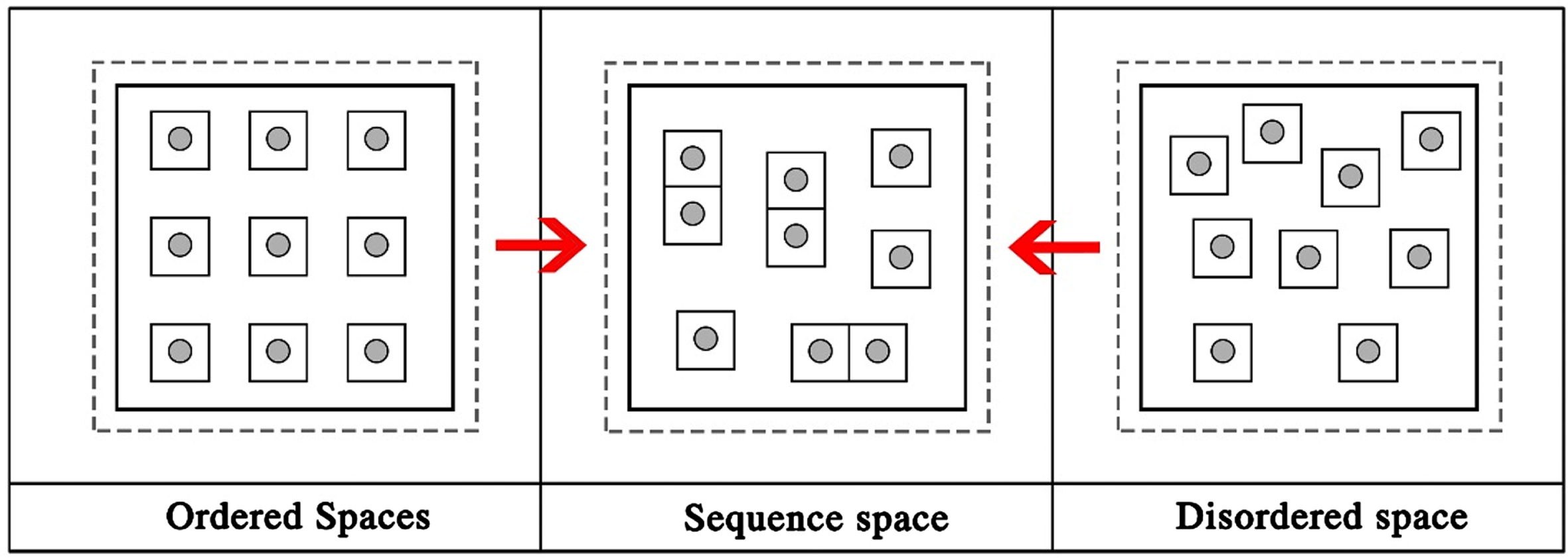
Illustration of the mobility of a spatial sequence.
The enclosure of spatial structures establishes and maintains the boundaries of the body. Changes in spatial components cause changes in the form of the enclosure, causing changes in the boundaries of bodily movement. The variety of ways of enclosure determines the diversity of spatial influences on the body’s perception and actions. Spatial enclosure can be broadly classified as: fully enclosed, semi-enclosed, virtual enclosure-frame, transparent boundary, symbolic distinction, etc. (Fig. 7). The fully enclosed spatial structure plays a good role in handling functional independence and bodily privacy, while the semi-enclosed style brings more behavioral experience to the body, while giving the space a functionally open nature [49]. The virtual enclosure is a defining mode that symbolically divides the space through structural changes, interlacing and contrasts. The body can more easily communicate with its surroundings in a virtual enclosure, reducing the limitations of physical activity. Transparent boundary, and symbolic distinction, where the envelope is transparent or divided by tones and shapes, give a good interactive experience between the space inside and outside the premises. Depending on the nature of the work, the virtual enclosure, transparent boundary and symbolic distinction modes of definition in non-private work spaces can help to break through the inherent limitations of modular spaces, transforming closed working environments and providing a more vivid visual and behavioral experience.
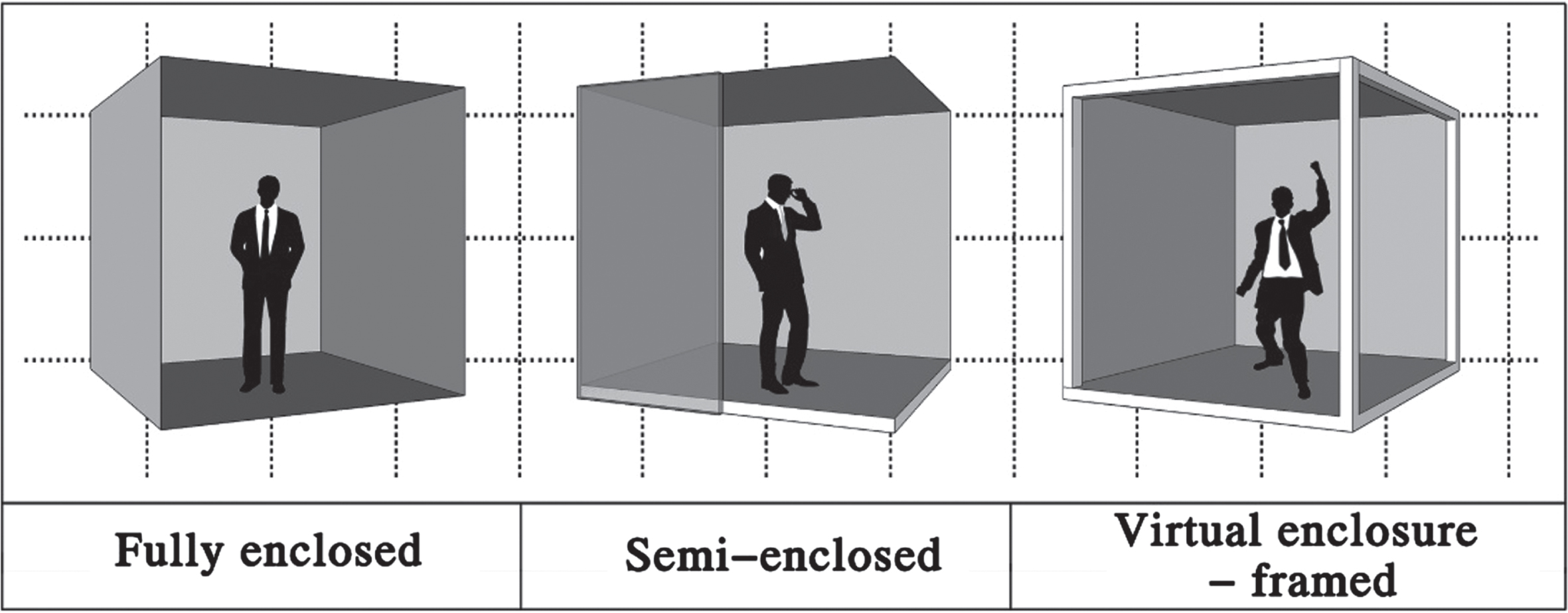
Spatial structure in three-dimensional form.
Heterogeneous structures play an important role in guiding the perception of body orientation. The combination of two forms with different forms or orientations creates a heterogeneous space where the boundaries of the two cross and accommodate (Fig. 8). The difference in orientation created by the larger space accommodating the smaller space is one of the most distinctive types of heterogeneous space, where the two spaces are formally complete and independent of each other, giving the body visual division and a clear definition of orientation and spatial function [50, 51]. Although the forms of heterogeneous structures are diverse, the guidance of the body’s perception of orientation in space is similar. The small space creates a distinctly different three-dimensional territory within a large, closed space, dissolving the constricted functional boundaries of the working space, giving staff the maximum perceptual experience in terms of visual impact and spatial change, preventing negative emotions caused by a static work and environment, and reducing the sense of confinement of the spatial environment.
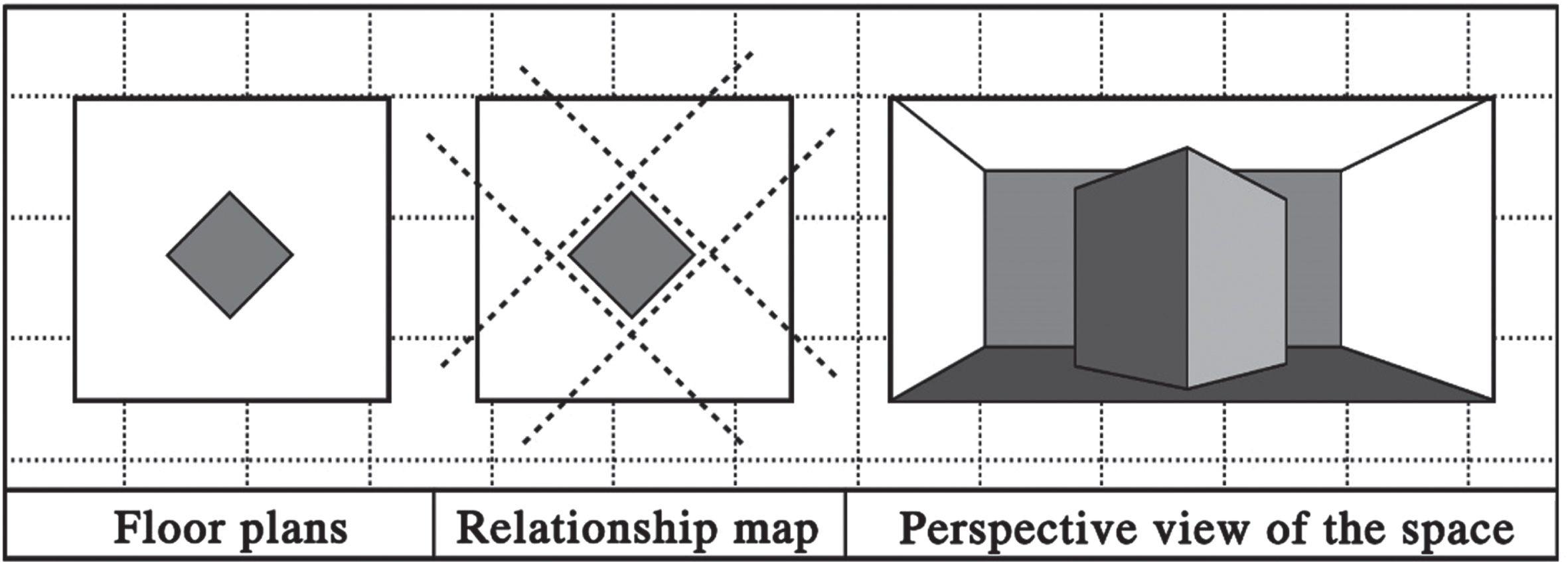
Forms of heterogeneous structure.
Visual differences affect people’s perception of spatial scale. In a fixed-position field of view, objects of the same volume may be arranged in different positions, resulting in a different sense of distance and proximity (Fig. 9). Similarly, a vertical wall can be tilted by visual difference, which is an error induced by visual point perspective. Using the principle of visual difference, spatial and material entities are used to organize human participation in the ‘event space’, which is a scene of human-spatial interaction by inducing events that lead to the production of stimulating actions. The event space emphasizes the unknown and the open, thus reflecting the ambiguity, randomness and fluidity of space through rich spatial relations, in order to mobilize the interactive act of body and space. By creating event space through visual differences, the space is endowed with spatial organization relationships that are movable and exploratory, moving away from the traditional model of patterned and mechanical workspace, with a rich feeling of scene, motivating activity participation and enhancing physical vitality [52, 53].
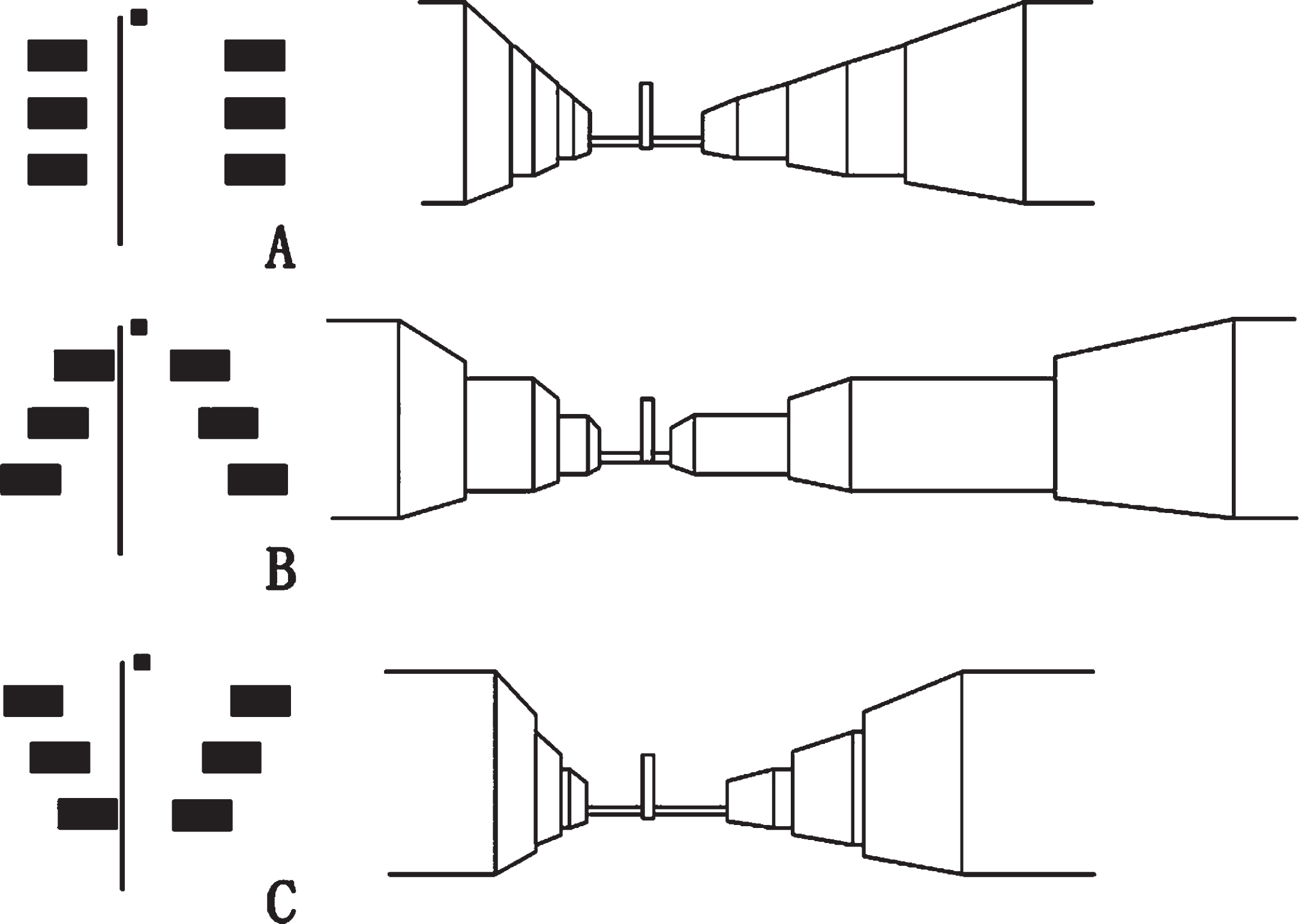
The different positions create a different sense of distance and proximity: the middle building in A is further away than in B and closer than in C.
The intersection of bodies in space can enhance the vitality of space. When the body interacts and communicates with the body, it shows the vitality of the body with greater intensity, thus strengthening the vitality of the space and the interactive association between the body and the space. Body-body intersections exist mainly in the form of central intersections, heterogeneous intersections, motor intersections and visual intersections (Fig. 10). In the workplace, the forms of central intersection and heterogeneous intersection are mostly reflected in more formal spaces such as meeting spaces and exhibition spaces; while the forms of movement intersection such as leisure spaces and corridors make the architectural intersection spaces external, meeting in activities and generating intersections between bodies; spatial interlacing and external prominence set visual intersections for bodies and enliven internal spaces [54, 55]. The intersection of bodies in space leads to the establishment of certain connections between participants, enhancing the sense of individual presence and creating harmonious and harmonious interpersonal relationships. To a certain extent, it reduces social differences, promotes social interaction and provides opportunities for people from different walks of life to communicate with each other.
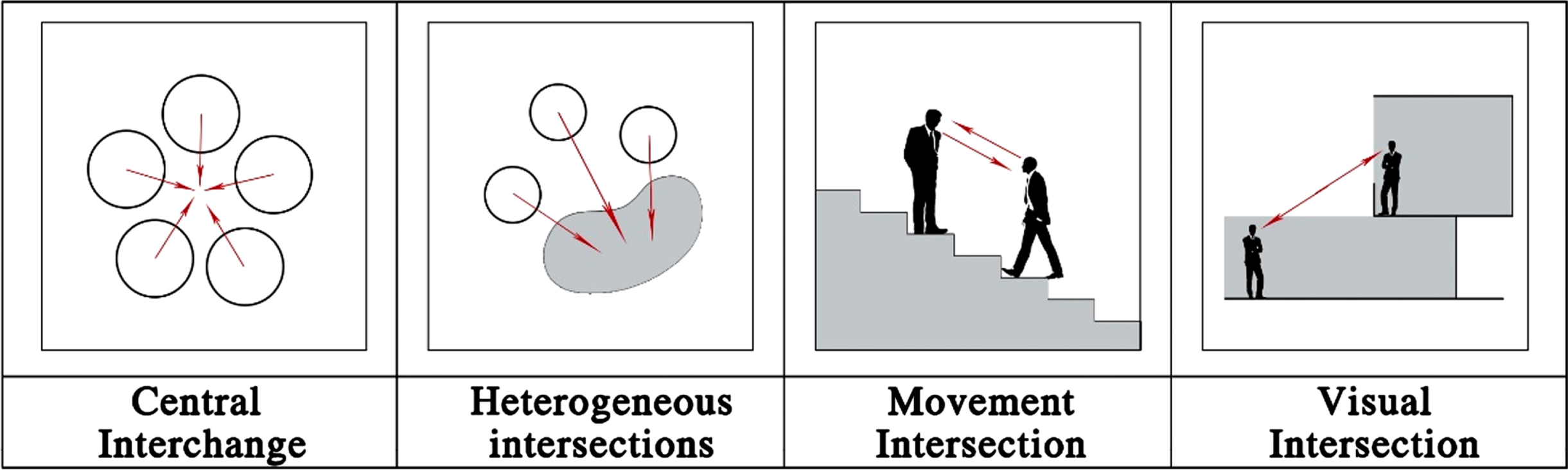
Creating places where bodies meet each other.
At the same time, the contribution of bodily intersections to fundamental psychological needs including belonging needs. Previous research has shown the role of actual and symbolic connections in supporting belonging needs, such as Gargurevich Espinoza et al. who concluded that the familiar fictional worlds can inhibit the negative effects of a rejection experience on the intention to engage in healthy and unhealthy behaviors [56]. The findings of Vahedi, Meisam the results supported the hypothesis that prayer objects can provide the experience of belonging through alleviating rejection-related feelings [57]. And the current work has added to that literature by demonstrating the role of the intersection of bodies in organizational spaces in fulfilling the basic needs of belonging, both in that bodily intersections in space can drive individuals to seek out and join groups and facilitate people’s interactions. It also enables social connections to be maintained in interpersonal interactions, allowing for social identity and support.
Analysis of key principles
Targeting the mental health of the population, this study focuses on the mental health indices of anxiety, depression, mania, paranoia and hostility. A playful, proactive health intervention workspace can attract people to engage in active interactions, increase physical and mental activity, reduce negative factors that exacerbate mental stress, and thus effectively alleviate negative emotions such as anxiety, depression and hostility. The concept of environmental playfulness provides an effective way of thinking about the design of mental health workplaces from the perspective of proactive interventions for the health of the population. In general, play is an essential part of human survival and a universal phenomenon. What people really need in play is a non-patterned, unexpected and self-directed spiritual experience. Therefore, the author considers the following three principles to be the basic premises related to the application of playfulness in the work environment (Fig. 11).
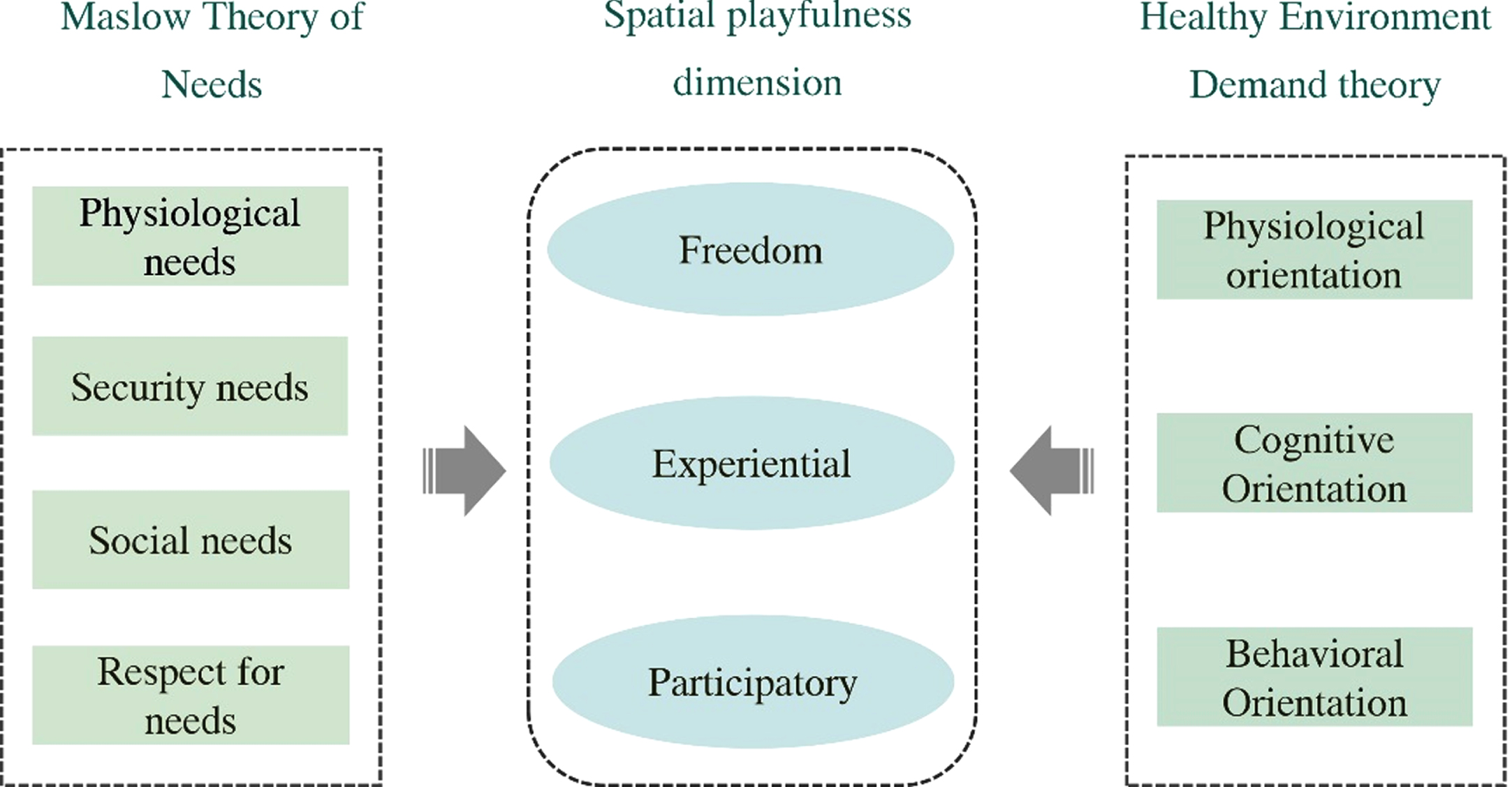
Playful application base model for work environments.
First, the principle of freedom. The classical German aesthetician Schiller pointed out in his On the Aesthetic Education of Man that “man is not free in real life, being compelled by the forces of nature and material needs as well as by all the constraints and compulsions of the laws of reason [58]. It is only when one ‘plays’ that one can be free from the compulsions of nature and reason and achieve true freedom". It is human nature to cherish freedom, and it is in play that we can achieve this state of freedom. Through independent exploration and perception, we express ourselves in a freeway and experience the spiritual pleasure given by freedom [59, 60]. As a gamer, we are free from the shackles of self-restraint, completely relaxed and thus gain a state of spiritual freedom.
Secondly, the principle of experiential. Experience is the interaction between the individual’s state of mind and the event, stimulated by a specific environment, and is the subject’s internal reaction to a certain trigger, with the characteristics of objectivity and uncertainty. The event space connects the inside and outside of the participant’s perceptual experience, triggering an exploratory state of mind in the participant in a process of integration, interaction and self-processing. Inspired by the event space, the emotions and actions of the participants are integrated into the scene, which in turn reconstructs the conventional spatial perceptions of the participants and enhances and sublimates their mental and emotional state. The greatest value of the playfulness embedded in the event space is the sense of well-being that one gains from the activity, that is, the pleasurable experience gained in the process [61]. In essence, people are guided by games to forget their worries, experience pleasure and satisfaction, and soothe their tired bodies and minds, and this approach is gradually becoming an important way for people to regulate their emotions.
Thirdly, the principle of participation. Many scholars have concluded that there is only one subject in the game - human beings - after summing up the philosophers’ research on the spirit of human games. The participation of people is the key to realizing the value of the game, and the game is a game because its subject is people. The game is made up of the player and other objective elements, and the game is affirmed and expressed through the participation of the player [62, 63]. Furthermore, games are not closed activities, but often require a certain amount of connection between the participants, taking into account the presence of others and establishing harmonious and harmonious interpersonal relationships. It can also go some way towards reducing social differences, promoting social interaction and providing opportunities for people from different walks of life to interact.
In order to enhance human health through the mental regulation of the playful environment, the indoor work environment can be designed by focusing on three fundamental principles of spatial design (Table 1).
Strategies for building a work environment that enhances mental health
Strategies for building a work environment that enhances mental health
Freedom, which frees environmental play from the framework of ‘manipulation’ that people so strongly resist. This is based on the specific needs of the participants in the game, i.e., on the subjective and self-controlled actions of the human being as a subject in the game. This requires that the playful approach to the workplace is not presented in a purely fun and enjoyable mode, nor is it a modular, mechanistic, formal model of space. It is a structure that is unpredictable, unexpected and exploratory. This spirit of freedom is therefore an essential condition for environmental play.
Experiential, which allows the value of environmental play to be revealed. The creation of a good experiential environment is the result of the interaction between the physical space and the psychological space in the place. The use of the dialectical relationship between the ‘whole’ and the ‘parts’ enables the player to experience the whole space without barriers and strengthens the communication between the human psychological communication with the place. This flexible structure breaks through the inherent limitations of modular units and gives a new dynamic to the working environment [64]. It can be argued that ‘experience’ plays a pivotal role in environmental playfulness and is of great importance in facilitating interaction and communication between people and space.
The participatory nature of environmental play retains its essential openness. The purpose of playfulness in the work environment is to facilitate the improvement of relationships between people and the environment and between people, as well as the regulation of individuals themselves on a spiritual level. Whereas a mechanistic work pattern reduces the frequency of social interaction and makes it difficult for individuals to develop in many ways, participatory play develops the potential diversity of the individual through human interaction and, to a certain extent, prevents the physical and psychological decline caused by a monotonous lifestyle. Therefore, participation in games is not just about safeguarding the integrity of the game, but more importantly, it has a profound significance for the social development and spiritual quality of the individual.
Based on the idea of spatial playfulness in active health intervention, this paper explores the interaction between the body and architectural space, enhancing the perceptual and cognitive guidance of the space to individuals, and the pleasurable mental experience in the interaction, in order to relieve work stress and enhance mental health. It is important to note that in terms of spatial design: spatial order, materials, hues and other design elements are all constitutive of a spatially active approach to health intervention design; in terms of human health: the joint promotion of multidisciplinary cross-fertilization is required. The aim of the study from the perspective of play is to reflect the positive response of playful spaces to the human body and mind, to awaken the human body as a subject, and to enhance the role of architectural space in relation to the body. The theoretical research reveals the important value of playful spaces for human health, and the design strategies that emerge from the exploration of spatial relationships can provide some direction for thought and practice for those concerned with human health. This series of discussions on the relationship between architectural space and the human body has important practical implications for improving the public health of occupational groups.
Gender, age, income and family status are also influential factors in individual mental health, and the proactive health intervention function in the workplace alone is one of the influencing factors that does not allow for a more comprehensive analysis of the influences on staff mental health interventions, which is a limitation of the study. The impact of each workplace environment on the psychological well-being of occupational groups is different and therefore cannot be assessed in general terms. This study provides a research methodology that can contribute to the development of ‘precision’ health promotion.
Ethical approval
Not applicable.
Informed consent
Not applicable.
Conflict of interest
Not applicable.
Footnotes
Acknowledgments
The authors would like to thank Sun Xuemei, a teacher at the School of Fine Arts, Chongqing Normal University, for her valuable comments and suggestions in the early stages of this study.
Funding
Not applicable.