



Abstract
BACKGROUND:
Night work includes working between 10 pm and 6 am, which has known effects on people’s health. One of the hormones influenced by the circadian rhythm is thyroid stimulating hormone (TSH).
OBJECTIVE:
Considering the effects of night shift-work on the thyroid gland, the purpose of this study was to investigate the relationship between thyroid nodules and night shift-work among the employees of Yazd Electricity Company.
METHODS:
This was a cross-sectional study on employees of Yazd Electricity Company. Demographic information including age, gender, level of education, smoking, work experience and shift- work was recorded and blood pressure, height and weight of the subjects were measured. Thyroid sonography was performed for the subjects. The frequency of thyroid nodules in each group of night shift and non-night shift work groups was determined and compared.
RESULTS:
Among 433 participants, 47 people (10.9%) were night shift-workers and 386 people (89.1%) were non-night shift-workers. The frequency of thyroid nodule was 12.8% among night shift-workers and 18.1% among non-night shift-workers, and no significant correlation was seen between two groups (P = 0.438). Also, the frequency of thyroid nodule was not significantly different between two groups in terms of smoking, gender and work experience. Uni-variate and multi-variate logistic regression model showed that old age and high BMI increased the probability of abnormal thyroid sonographic findings by 6% and 8%, respectively.
CONCLUSIONS:
There was no relationship between night shift-work and the frequency of thyroid nodule.
Introduction
Our society is rapidly changing and progressing, and time constraints no longer limit human activities. Considering the industrialization of societies and the needs of people in society for 24-hour services, there is a need for jobs in the form of shift- work [1, 2].
In shift-work, employees are forced to work at unusual hours of the day according to their duties. Shift-work is divided into regular afternoon, evening or night shifts, rotating shifts and irregular shifts [3, 4]. Currently, shift-work is common in most countries [4]. Almost one fifth of the workforce in Europe and Australia and one third in Korea and China have shift-work [5].
One of the sectors characterized by shift work is the electricity industry, which is crucial due to its role in supplying essential facilities and meeting fundamental human needs. Workers in this industry often engage in night shifts to ensure continuous service [6, 7]. Imbernon et al. studied the effects of shift work on employees of the electricity and gas company responsible for emergency responses and found that shift work adversely affected workers’ psychological balance and family and social life [7]. Similarly, Yuliani et al. investigated occupational accidents in the electricity industry and identified overtime and work outside standard hours as contributing factors to the rise in occupational accidents [8].
Night shift-work includes working between 10 pm and 6 am, which has known effects on people’s health. According to studies, night shift-work can cause cardiovascular diseases, sleep disorders, digestive diseases and breast cancer in women [9, 10]. Common sleep problems in night shift-workers include delay in falling asleep, insufficient sleep duration, and not feeling refreshed even after a good night’s sleep [11]. Also, these people are exposed to increased blood pressure, diabetes and metabolic syndrome [12]. In addition, to overcome stress and stay awake, they consume more cigarettes, food, coffee, and alcohol, which exposes a person to the risk of obesity, which in turn is harmful to his(her) health [10].
According to the studies, most of the people who worked at night were between 18 and 29 years old, and night shift-work had an inverse relationship with the level of education [10].
Physiological and biochemical processes, such as cell cycle, apoptosis or hormone secretion, are affected by the 24-hour rhythm (circadian), and night work and contact with artificial light during the night causes the internal biological clock of our body to be broken and have negative effects on health [13, 14].
Melatonin, which is secreted from the pineal gland under the influence of the circadian rhythm, has the highest secretion level during the night and its secretion decreases during the day. According to research, melatonin has a suppressive effect on tumors. Therefore, exposure to artificial light during the night reduces the secretion of melatonin and increases the risk of cancers [10, 15]. Among other hormones that are affected by the circadian rhythm are testosterone, cortisol, prolactin, growth hormone and thyroid stimulating hormone (TSH) [10].
Night shift-workers have been shown to have an increased risk of several types of cancer, mostly hormone-related, including breast and ovarian cancer. According to the report of the Agency for Research on Cancer (IARC), night shift-work has been ranked as a probable human carcinogen (group 2A) [10, 13].
When a person sleeps normally, the plasma TSH level starts to increase in the late afternoon and reaches its peak in the early night. Then it decreases during sleep to reach the daily low level, and according to studies, it has been proven that sleep has an inhibitory effect on TSH production, and people with sleep deprivation have higher TSH levels in the morning than other people [16].
In recent years, the prevalence of thyroid cancer has increased. It has been seen that about 10% to 15% of people with thyroid nodules progress to thyroid cancer [17, 18]. Identifying factors that elevate the risk of developing thyroid nodules is crucial. While most prior research has focused on the relationship between shift work and other thyroid disorders, fewer studies have specifically investigated the impact of shift work on thyroid nodules. For instance, the study by SH Moon et al., reported a higher risk of thyroid diseases among night shift workers compared to their counterparts [9], and Rizaa et al. similarly identified an increased risk of thyroid nodules in night shift employees [5]. Nonetheless, the association between shift work and the heightened risk of thyroid nodules and thyroid cancers remains a subject of debate.
In our country, numerous industries function under various shift patterns, including the electrical sector, where some employees work night shifts. Given the global rise in night shift work, particularly in industrialized nations, and the high prevalence of thyroid nodules, coupled with the scarcity of studies exploring the link between night work and thyroid nodules, this study aims to examine the relationship between night work and the incidence of thyroid nodules within an electricity company.
Methods
Subjects and sampling method
This cross-sectional study was conducted on employees of the Yazd Electricity Company in 2022. All employees aged between 18 and 60 years, who had been working for at least one year, were included in the study through a census approach. Pregnant women and those with a history of any thyroid disorder before employment were excluded. A total of 433 individuals meeting the inclusion criteria participated in the study. However, 23 individuals were excluded for various reasons: one due to pregnancy, three due to previous thyroid disorders, four due to work experience of less than one year, and five due to lack of consent to participate. See Fig. 1 for details.

Steps of the method and data collection.
Demographic information such as age, gender, level of education, smoking, work experience, night shift-work and history of thyroid disorders were recorded. Blood pressure was measured by a digital sphygmomanometer (Device: M3, Omron, Japan), and height and weight were measured to nearest accuracy of 100 grams and 5 mm (Device: ADE, Germany). Body mass index (BMI) was calculated as body weight (kg)/height2 (m2). Also, thyroid ultrasonography was performed on all subjects by a radiologist. Then, according to the presence of night shift-work, they were divided into two groups: night shift-workers (≥4 night shifts per month) and non- night shift-workers, and the frequency of thyroid nodules in each group was determined and compared.
Statistical analysis
After collecting the data, it was described using descriptive indices such as frequency, percentage, mean and standard deviation, and then analyzed using chi-square test and independent samples T test. If the statistical distribution of the data was not normal, equivalent non-parametric tests were used. Also, univariate and multivariate logistic regression were used to assess possible confounding factors (27.0.1), and α < 0.05 was considered significant.
Results
Among 433 participants in this study, 370 (85.5%) were men and 63 (14.5%) were women. In total, 47 people (10.9%) were night shift-workers and 386 people (89.1%) were non-night shift-workers. Age, body mass index (BMI), systolic and diastolic blood pressure and work experience did not have any significant difference between two groups (Table 1).
Demographic and clinical characteristics of participants stratified by work status
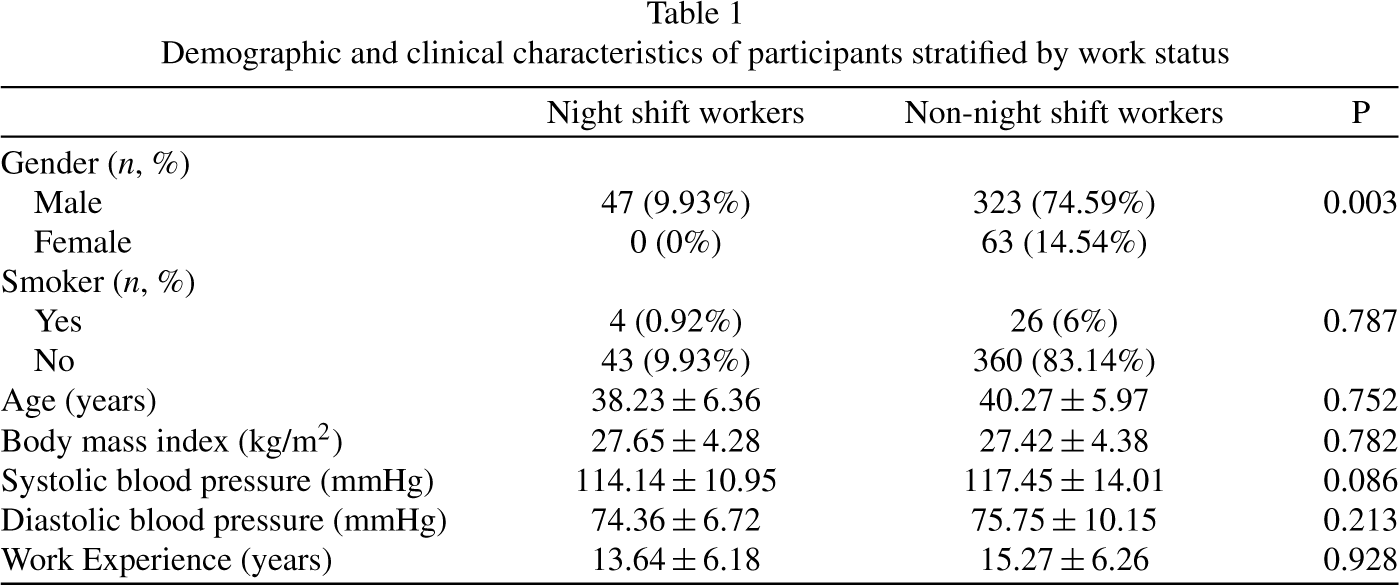
Demographic and clinical characteristics of participants stratified by work status
According to the results (Table 2), the frequency of thyroid nodule was 12.8% among night shift-workers and 18.1% among non-night shift-workers, and no significant relationship was seen between two groups (P = 0.438).
Comparing the frequency of thyroid nodule among night shift-workers and non-night shift-workers according to study variables
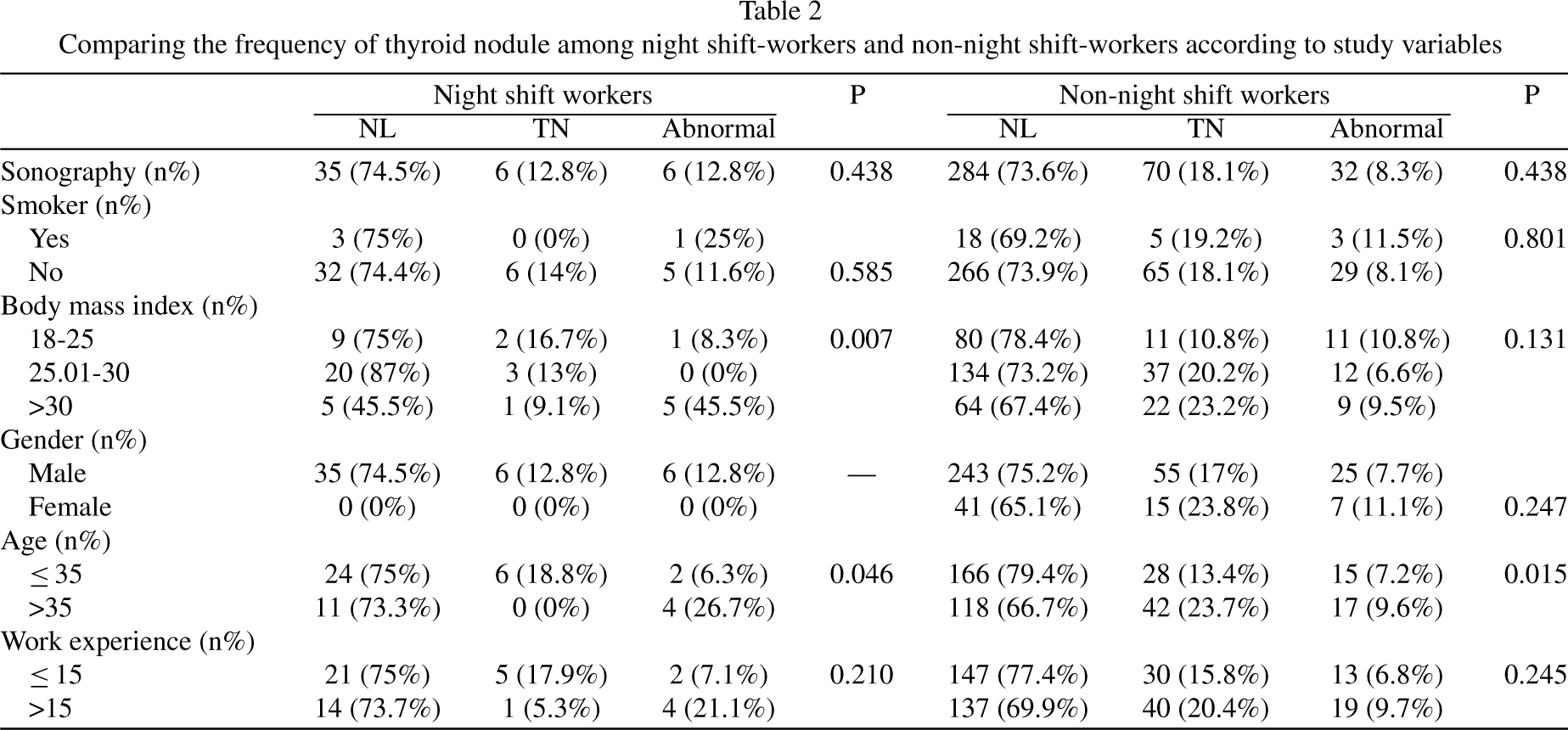
Sixty percent of night shift-workers with thyroid nodules had nodules equal to or larger than 10 mm, while most non-night shift-workers had thyroid nodules smaller than 10 mm, but there was no statistically significant between two groups regarding nodule size (P = 0.528). No significant difference was observed regarding the frequency of thyroid nodules between night shift-workers and non-night shift-workers according to smoking, gender and work experience.
There was a significant difference in ultrasound findings according to BMI in people with night shift-work; So that most people with normal BMI (18-25) and overweight (25.01-30) had normal ultrasound results, while most obese people (BMI above 30) had abnormal findings in thyroid ultrasonography.
There was a significant difference in the frequency of thyroid nodules between night shift-workers and non-night-shift workers according to age. Among the night shift-workers, all people who had thyroid nodules were at least 35 years old, but most of the non-night shift-workers who had thyroid nodules were older than 35 years old.
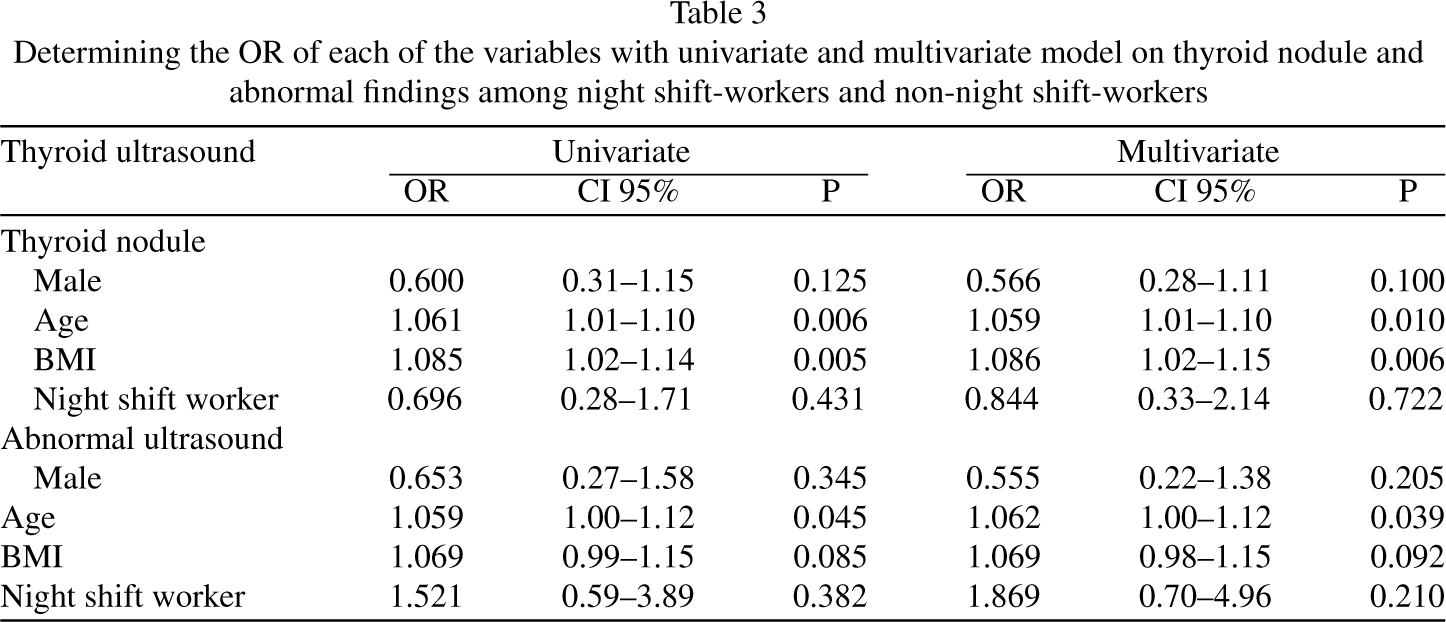
According to the results of univariate and multivariate logistic regression, in which the normal finding was considered as the reference group, older age increased the probability of thyroid nodule and abnormal ultrasound findings by 6%. Also, increasing BMI has increased the probability of thyroid nodule by 8%. However, no significant relationship was seen between gender and night shift-work with thyroid ultrasound (Table 3).
Determining the OR of each of the variables with univariate and multivariate model on thyroid nodule and abnormal findings among night shift-workers and non-night shift-workers
The aim of this study was to investigate the relationship between the frequency of thyroid nodule and night shift-work. In this study, 433 people who worked in the Electricity Company were examined, and no statistically significant difference was seen between the two groups. Most of the studies that had been done previously investigated the relationship between thyroid hormones and sleep and night shift-work, and we could find limited number of studies regarding the relationship between thyroid nodules and night shift-work. Considering that about 10 to 15% of people with thyroid nodules progress to thyroid cancer, it is important to investigate the factors affecting thyroid nodules [5].
In a large prospective cohort study that was conducted on female nurses, it was concluded that there was no link between night shift-work and thyroid cancer risk, but sleep problems among those who work night shifts may be linked to an increased risk of thyroid cancer [19]. However, in the study by Stefano Rizza et al., which was conducted retrospectively on 299 health care workers, they concluded that the frequency of thyroid nodules was higher in night shift-workers [5]. The reason for the non-alignment of the results of our study with this study can be attributed to the small number of night shift-workers in the current study; Also considering that level of occupational stress is different in various occupations, and the health care workers have a higher stress level than the employees of the electricity department, it can be said that this is another reason for the unevenness of the results.
Xudan Lou et al. concluded that a regular lifestyle and good sleep quality may give rise to low risks of thyroid cancer in elderly people [20]. Considering the contradictory results of past studies and the lack of studies regarding the relationship between night work and thyroid nodules, it is recommended to conduct more studies in this field.
Yuerong Yan et al. investigated the relationship between short night sleep hours with thyroid nodules on 2414 people. According to the results, the frequency of thyroid nodules in people who slept less than 5 hours was significantly higher than the groups with 5 to 8 hours and more than 8 hours of night sleep (P = 0.001). Also, no significant difference was observed between the duration of sleep per day, the time to fall asleep, the habit of napping during the day, or frequency of thyroid nodules [21]. The results of this study were different from the current study, which can be attributed to the larger sample size. Also, in Yuerong Yan et al.’s study, the relationship between sleep duration and thyroid nodule was assessed, while in our study, the relationship between night shift-work and the frequency of thyroid nodule was investigated and it is recommended that future studies investigate the relationship between sleep disorders caused by night work and thyroid nodules.
In a review by Jina Kim et al., factors associated with an increased risk of thyroid nodules included female sex, diabetes, high blood pressure, and red meat consumption; and weight loss was a protective factor [22]. In an ecological study conducted in 35 European countries on 178,905 workers between 2000 and 2015, they concluded that circadian rhythm disruption may be associated with an increased overall risk of thyroid cancer, but it appears that only in It affects women, not men [17].
In the present study, all night shift-workers were males, and considering the higher frequency of thyroid nodules in women, this can be another reason for the difference between the results of this study and other studies.
There was no relationship between the frequency of thyroid nodules in night shift-workers and non-night shift-workers regarding smoking. In a review study by Nils Knudsen et al. [23] who examined the risk factors of goiter and thyroid nodules, a positive relationship was mentioned between smoking and thyroid nodules. Also, in a cohort study conducted in Sweden, they concluded that smoking increases the risk of developing goiter and thyroid nodules requiring hospitalization. According to research, smoking can cause hyperplasia of the thyroid gland, activation of the hypothalamus-thyroid axis, and as a result, an increase in TSH secretion [24]. Among the participants of our study, 6.9% were smokers and 93% were non-smokers. Perhaps this inconsistency between two studies is the result of the small number of smokers in our study.
In the current study, most people with normal BMI (18–25) and overweight (30–25.01) had normal ultrasound findings, while most obese people (BMI above 30) had abnormal thyroid ultrasound, and the difference was statistically significant. In Xiao Chen et al.’s study [25], obesity was also mentioned as a risk factor for thyroid nodules and subclinical hypothyroidism, which is in line with the results of the present study. Considering that obese people have a higher volume of thyroid and a higher secretion of TSH, the thyroid nodule is more in these people [26]. Also, obesity is a state of chronic inflammation and causes an increase in leptin secretion, insulin resistance and activation of the hypothalamus-pituitary axis, all these factors provide the conditions in favor of the formation of thyroid nodules [27].Considering the increase in overweight and obesity in the world, and the results of this study, it is recommended to examine and screen people for thyroid nodules and encourage people to lose weight.
This study showed a significant difference between the frequency of thyroid nodules in night shift-workers and non-night shift-workers in terms of age, so that increasing age increased the chance of thyroid nodule and abnormal ultrasound findings by 6% compared to normal thyroid ultrasound. Inconsistent with these results, Stefano Rizza et al. [5] did not find a significant correlation between thyroid nodules and age; But Xiao Chen et al. [25] found a significant correlation between thyroid nodules and age, so that people aged 40 to 60 had a higher risk of subclinical hypothyroidism, and people over 60 had an increased risk of thyroid nodules.
Our study had a number of limitations: 1-The number of people who were in the night shift-work group was limited. 2-All the people who were in the night shift-work group were men and we did not have the possibility to compare the gender of women. 3-We only examined people’s night shift-work and did not examine people’s sleep disorders. 4-Our study was cross-sectional and it is not possible to express the cause and effect relationship.
Considering the contradictory results of past studies and the lack of studies on the relationship between night work and thyroid nodules, it is recommended to conduct more studies in this field.
Conclusion
According to the results of this study, no association was found between night shift work and the frequency of thyroid nodules in workers of the electrical industry. However, increasing age and high BMI were linked to a higher probability of thyroid nodules and abnormal findings in thyroid sonography. The study’s results should be cautiously interpreted and extrapolated due to the limited sample size and cross-sectional design. Future studies with longitudinal designs are recommended to confirm the association with higher certainty.
Ethical approval
This study was approved by the Ethics Committee of Shahid Sadougi University of Medical Sciences, Yazd with code number IR.SSU.MEDICINE.REC.1402.015.
Informed consent
The purpose of the study was fully explained to the participants and informed consent was obtained from all participants. All of them were above 18 years old.
Conflict of interest
The authors have no conflict of interests.
Footnotes
Acknowledgments
We extend our heartfelt gratitude to all individuals who contributed to the completion of this study, whose involvement made this research possible. We also thank the Industrial Diseases Research Center, Shahid Sadougi University of Medical Sciences, and the Vice-Chancellor of Research (project number 14740) and all the employees who accompanied us in this study.
Funding
Not applicable.