



Abstract
BACKGROUND:
Workplace safety violation is a significant challenge for global enterprises. However, prior studies have generated inconsistent findings, which calls for a holistic framework to reveal the complex causality between antecedent conditions and workplace safety violations in high-risk industries.
OBJECTIVE:
By embracing deterrence theory and social learning theory, this study aimed to examine how punishment (i.e., perceived punishment certainty and perceived punishment severity), shame (i.e., perceived shame certainty and perceived shame severity) and coworker safety violations (CSV) combine into configurational causes of employee safety violations (ESV).
METHODS:
A two-wave sampling approach was used to obtain 370 usable samples from various high-risk industries in China. The confirmatory factor analysis was performed to test construct validity, and an emerging fuzzy set qualitative comparative analysis (fsQCA) was conducted to explore the complex causality between ESV and its multiple antecedents.
RESULTS:
The fsQCA results indicate that no single antecedent condition is necessary for predicting high ESV, but three distinct configurations of multiple antecedents equivalently lead to high ESV. Among all configurations, a lack of perceived punishment severity, a lack of perceived shame certainty and severity, and high CSV play important roles in explaining ESV.
CONCLUSIONS:
This study represents a pioneering endeavor utilizing fsQCA to explore how different combinations of punishment, shame and social learning antecedents contribute to high ESV, which goes beyond previous research focusing on antecedents independently and offers new insights into interconnected antecedents of ESV and their complex causality.
Keywords
Introduction
Research background
Workers’ violations of (or non-compliances with) safety regulations and rules have been well established as a dominant drivers for workplace accidents and injuries [1, 2]. Hence, to prevent safety violations and reduce accidents and injuries, it is important to identify factors that may induce safety violations [3–5]. Prior studies have examined the individual, work systems/unite, organizational, and external environmental factors that determine whether employees violate or comply with workplace safety regulations, rules, and procedures [4, 6, 7]. These studies have provided important insights into the understanding of employee safety violations (ESV) that are complex and problematic at workplace, however, less is known about the deterrence effects of formal (punishment) and non-legal sanctions (shame) [8], and the contagion effect of coworker safety violations on employees’ violations of safety regulations and rules in the workplace [9].
Within the limited body of research that investigates the impacts of formal sanctions and more recently shame and social norms on users’ violations of information systems security (ISS) policies [10–12], these studies generate inconsistent findings on the effect of formal sanctions [12–15] and shame [16–18]. These mixed results prevent us from having a deep understanding of how they may contribute to ESV, and such findings may confuse safety practitioners to develop punishment-based approaches to improve workplace safety. Together, it is an aera that is ripe for theory development to understanding the complex conditions under which employees are more likely to engage in safety violations, which is the final aim of this study.
In line with complexity theory [19–21], we argue that the mixed results in literature can be explained by complex causality between multiple antecedent conditions and ESV [22]. First, the effect of formal sanctions on ESV may vary depending on other factors such as social norms [23]. Second, deterrence theory was originally developed to explain criminal behaviors with formal sanctions imposed by laws [24], which makes the deterrent effect of “non-legal costs” (e.g., shame) [25] and the learning effect of coworkers’ behavior on ESV be underexamined [12, 26]. Third, the complex causality between multiple antecedents and ESV may be asymmetric, thus inconsistent findings were found as a result of failing to capture this asymmetric causality [27]. To sum up, this study argues that there is complex causality between multiple antecedents and ESV, which leads to inconsistent findings in the literature.
This study aims to determine whether non-legal sanctions (i.e., perceived shame certainty and severity) and coworker safety violations together with formal sanctions (i.e., perceived punishment certainty and severity) influence ESV, and whether multiple configurations of formal sanctions, non-legal sanctions, and coworker safety violations lead to high ESV. Specifically, we employ the Fuzzy-set Qualitative Comparative Analysis (fsQCA) [28] to explore the complex causality between these five antecedent conditions and ESV with a dataset consisting of 364 frontline workers in Chinese enterprises of high-risk industries.
Theoretical overview and propositions
A deterrence theoretical perspective on safety violations
Deterrence theory rests on the proposition that human criminal behavior is a function of rational calculation and thus can be influenced by formal sanctions [29]. It include two central tenets, i.e., punishment certainty (i.e., the probability that a certain criminal behavior will be detected and punished) and punishment severity (i.e., the degree of punishment cost for a certain criminal behavior) [30]. Moreover, deterrence thoey states that punishment is an important reinforcement mechanism that inhibits deviant or illegal behaviors by increasing risk perception and fear [30]. Most ISS research documents that formal sanctions increases the perceived risk and cost of safety violations to employees, thus creating a deterrent to safety violations [11–13, 16]. Hence, we suggest that formal sanctions including perceived punishment certainty and severity, are associated with ESV.
After the last few decades of development, “non-legal costs” such as shame have been added to deterrence theory by Piquero and Tibbetts [25]. Shame refers to a feeling of guilt or embarrassment if others know of one’s socially undesirable actions [31]. Unlike formal sanctions, shame is a self-imposed sanction and a negative conscious emotion involving unethical choices that can reduce the rate of criminal behaviors [31]. According to Paternoster and Simpson [31] and Siponen and Vance [17], this study includes shame as a deterrent antecedent of ESV in addition to formal sanctions. If individuals perceives that the risk of being shamed is high when they caught violating safety regulations and rules (shame certainty), and being shamed is a serious problem to them (shame severity), they will not more likely to comply with safety-related laws [32]. Taken together, this study suggests that in addition to formal sanctions, employees’ perceived certainty and severity of shame are related to ESV.
A social learning theoretical perspective on safety violation
Social learning theory suggests that human behaviors can be influenced by others through direct observational learning and indirect reinforcement learning [33–35], and has been widely used to understand individuals’ criminal or deviant behavior [36]. Individuals (e.g. a focal employee) are especially likely to learn behaviors from their peers (e.g. coworkers) with whom they frequently interact [37]; that is, individuals are exposed to the norm or attitudes that support a behavior (e.g. safety violation) when they observe that others engage in the behavior [38]. According to social learning theory, coworker safety violations provide a modeling effect for an employee to engage in the same behaviors [39]. In the workplace safety literature, an earlier study by Choudhry and Fang [40] suggested that ESV are susceptible to the influence of others’ behaviors. Also, Liang et al. [2] indicated a positive relationship between coworker safety violations and ESV. Thus, we argue that coworker safety violations is an important antecedent influencing ESV.
Complexity theory and propositions
The complexity theory emphasizes the casual complexity between antecedent and outcome variables, and the possibility that complex causality would change depending on different configurations [19]. Complexity theory highlights complex causality between antecedent and outcome variables, which is characterized by three critical tenets [20, 21, 41]. The first tenet is the conjunction, which means that no one necessary antecedent condition (e.g., perceived punishment certainty) is sufficient for an outcome (e.g., ESV) and that the combination of multiple causal factors work together to produce an outcome (e.g., ESV). The second tenet is the equifinality, which means that different combinations of multiple causal factors may produce the same outcome. The third tenet is the asymmetry, which means that a single causal factor related to the outcome may be present in one configuration but absent in others [42]. These tenets of complex causality are especially related to human psychological processes of ethical decision-making (e.g., whether to comply with or violate safety regulations, rules, and procedures in occupational safety and health context), because the outputs of these processes derive from a comprehensive consideration of multiple interconnected and interacted causal factors [43]. To sum up, complexity theory offers a useful perspective for capturing the complex causality between variables of interest [19, 44], thus helping us get a more accurate understanding of the causes of ESV.
Based on the complexity theory and above discussions, we propose following propositions:
To test above three propositions, this study builds a comprehensive conceptual framework from a holistic perspective (as shown in Fig. 1) and uses the fsQCA approach to explore the configurational causes of ESV. Through the configurational analysis of the interrelationships and interconnected structures between five antecedent conditions, we make a better understanding of how multiple antecedent conditions and their combinations associate with ESV [28, 43].
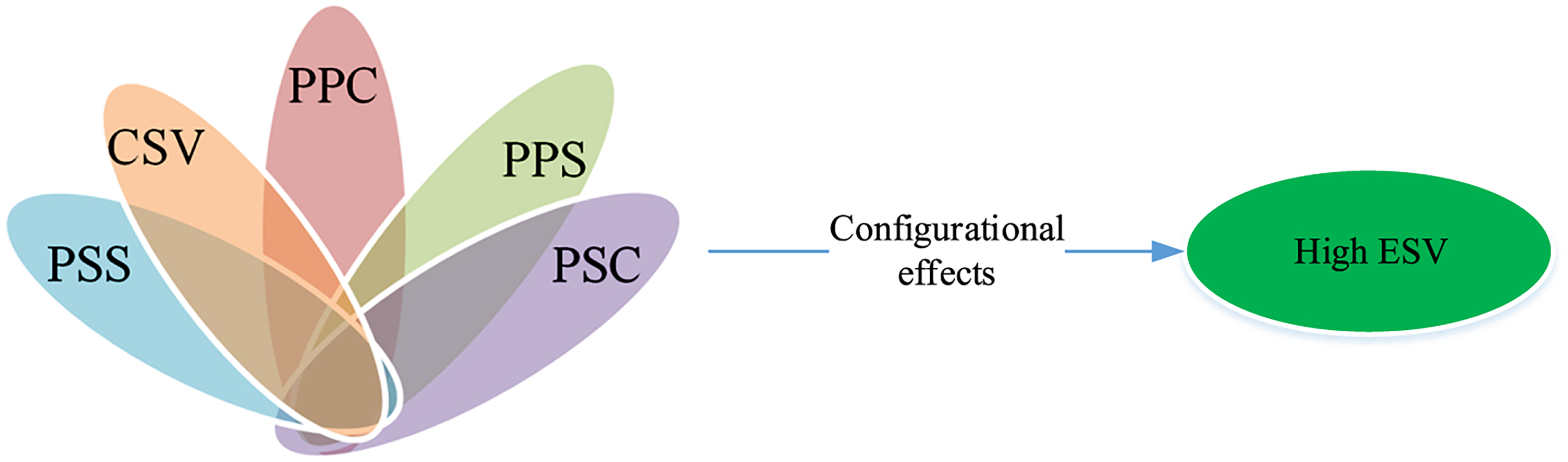
Venn diagram of the configurational model explaining high ESV. Note: PPC, Perceived punishment certainty; PPS, Perceived punishment severity; PSC, Perceived shame certainty; PSS, Perceived shame severity; CSV, Coworker safety violations; ESV, Employee safety violations.
Procedure and participants
The survey method was used to collect data. Our target subjects are frontline workers in recognized high-risk industries such as coal mines, non coal mines, hazardous chemicals, metal smelting, construction, machinery manufacturing, fireworks and firecrackers manufacturing, transportation,and electricity. These high-risk industries are determined in this study based on several factors: presence of potential hazards, the complexity of operations,stringent regulatory demands, and a history of frequent accidents. With the assistance of the Emergency Management Bureau of an industrial city with a complete range of industrial categories in Anhui Province, we attained approval to invite frontline workers from enterprises in high-risk industries, which are located in nine counties, districts, and economic development zones in this indusrial city.
Considering potential social desirability bias when collecting data for some sensitive variables, we used well-established scales from existing literature that have been widely used, and designed online questionnaire to disguising the survey’s purpose. Further, participants were also informend that there were no right or wrong answers to any of the questions and that their responses would be anonymous and used for research purposes only. These demand reduction techniques are considered effective in reducing social desirability bias [45–47]. To control for common method bia, following the recommendation of Podsakoff et al. [48], a two-wave survey with a one-month interval was conducted to collect dat in this study. This time interval would be sufficient for within-participant changes in cognition and behavior with allowing stability in participant ‘s work environment [48, 49], and consistent with existing behavioral studies (e.g., [50–53]). At Time 1, we sent an online questionnaire to 600 frontline workers and collected data on participants’ perceived shame certainty, perceived shame severity, coworker safety violations in the past month, and their sociodemographic and organizatioanl information. After eliminating invalid responses, 436 valid questionnaires were retained. At Time 2, one month later, a second questionnaire was administered to the 436 participants who completed valid questionnaires at Time 1 to collect data on their perceived punishment certainty, perceived punishment severity, and safety compliance in the past month. After eliminating invalid responses, a total of 370 valid matched samples were retained.
Participants were from various high-risk industries including construction (36.5%), hazardous chemical (19.5%), machinery manufacturing (15.4%), and others (28.6%). They were working in private enterprises (61.6%), state-owned enterprises (17.6%), foreign enterprises (13.5%), and joint ventures (7.3%). The samples worked for enterprises with more than 300 employees (24.1%), between 101 and 300 employees (38.1%), and no more than 100 employees (37.8%). Among 370 participants, 73% were male, 64.8% were educated up to high school or junior college, 64.6% were aging range from 31 to 50 years old, 74.6% had a monthly income between 3001–7000 RMB, and 70% had more than 5 years of working experience.
Measures
All measures were derived from existing literature. The precedure of translation and back-translation was adopted to ensure the accurate expression of semantics [54]. To align with the context of workplace safety among Chinese industries, the items were appropriately adapted without altering the original meaning.
Coworker safety violations: To reduce social desirability, coworker safety violations was measured using five reverse items of safety compliance scale from Liu et al. [55]. A sample item was “My coworkers use all the necessary safety equipment to do their job.” Participants rated the degree of their agreement with their coworkers’ compliance with workplace safety regulations, rules, and procedures in the past month. The scale ranged from 1 (”strong agree”) to 7 (”strong disagree”), with higher scores indicating higher level of coworker safety violations. The Cronbach’s α was 0.94.
Perceived punishment certainty: This scale was revised from three items developed by Siponen and Vance [17] in the context of ISS violation to measure perceived punishment certainty. A sample item was “What is the chance you would be punished if you violate the company safety regulations, rules, and operating procedures?” The scale ranged from 1 (”very unlikely”) to 7 (” very likely”), with higher scores indicating higher probability that safety violations would be detected and punished. The Cronbach’s α was 0.90.
Perceived punishment severity: We used three items to measure perceived punishment severity which was originally developed bySiponen and Vance [17] in the context of ISS violation. A sample item was “How much of a problem would it be if you received severe punishments If you are caught violating the company safety regulations, rules, and operating procedures?” The scale ranged from 1 (”very small”) to 7 (” very big”), with higher scores indicating higher degree of punishment cost. The Cronbach’s α was 0.95.
Perceived shame certainty: This perceived shame certainty scale was adapted from the shame certainty scale [17], and was measured with two items to evaluate the likelihood that an employee will be ashamed because of safety violations. A sample item was “How likely is it that you would be ashamed if coworkers knew that you had violated the company safety regulations, rules, and operating procedures?” Participants rated their likelihood of being ashamed if they were caught committing safety violation. The scale ranged from 1 (”very unlikely”) to 7 (” very likely”). The Cronbach’s α was 0.87.
Perceived shame severity: The perceived shame severity scale was adapted from the shame severity scale [17], and was measured with two items to evaluate the severity of being ashamed. A sample item was “How much of a problem would it be if you felt ashamed that coworkers knew you had violated the company safety regulations, rules, and operating procedures?” Participants rated the degree to which they cared about the feeling of being ashamed. The scale ranged from 1 (”very small”) to 7 (” very big”). The Cronbach’s α was 0.94.
Employee safety violations: We use the same five reverse items of coworker safety violations to measure employee safety violations. Unlike coworker safety violations, participants rated the degree to which they had abide by company safety regulations, rules and procedures themselves in the past month on a 7-point Likert scale (1 = ”strong agree”, 7 = ”strong disagree”). Hence, we change “my coworkers” in the items of coworker safety violations scale to “I” in the items of employee safety violations scale. A sample item was “I use all the necessary safety equipment to do my job.” To avoid any misunderstanding among respondents, data on coworker safety violations and employee safety violations were collected at Time 1 and Time 2, respectively. The Cronbach’s α was 0.95.
Analytical strategy
Qualitative Comparative Analysis (QCA), based on set theory and Boolean algebra, takes a holistic approach to explore how multiple antecedent conditions work together to lead to an outcome, and is therefore uniquely suitable for testing complex causality between multiple casual factors and their outcome [28, 41, 56]. QCA thereby differs from conventional variable-based approaches, which do not disaggregate cases into independent and analytically separate aspects, but instead treat configurations as different types of cases [56].
Compared to the crisp-set Qualitative Comparative Analysis (csQCA) and the multi-value Qualitative Comparative Analysis (msQCA), the fsQCA aopted in this study can resolve problems that binary or category variables cannot fully capture the complexity of cases that change with the degree, and analyze large samples to obtain generalized results [28, 41], thus helping to obtain deeper and richer data insights [44, 56]. Another advantage of fsQCA is that this appraoch is employable on different sample size ranging from very small (less than 50 cases) to very large (more than 1000 cases) [57]. Actually, many studies published in top-tier journals have a sample size ranging from 100 to 500 (e.g., Fiss [56], Park et al. [58], Mattke et al. [59], Ong and Johnson [60], and Witt et al. [61]). The sample size offers different options to the researcher, either to go back to the cases and interpret them separately, or identify patterns across many cases without returning to the cases [62]. Thus, to test three forms of complexity that are particularly relevant for our purposes: conjunctural causation, equifinality, and asymmetry [63], we adopted the fsQCA with a total of 370 cases to analyze the complex combinations of five casual factors of ESV based on our framework as shown in Fig. 1.
The fsQCA has been widely applied in many disciplines such as sociology, management and political science, but rarely in workplace safety. Except the first introduction by Winge et al. [64] who tested the configurational effect of safety management and environmental factors on construction safety performance, to the authors’ best knowledge, the present study was first to explore the configurations of safety violation.
Data analysis and results
Variable calibration
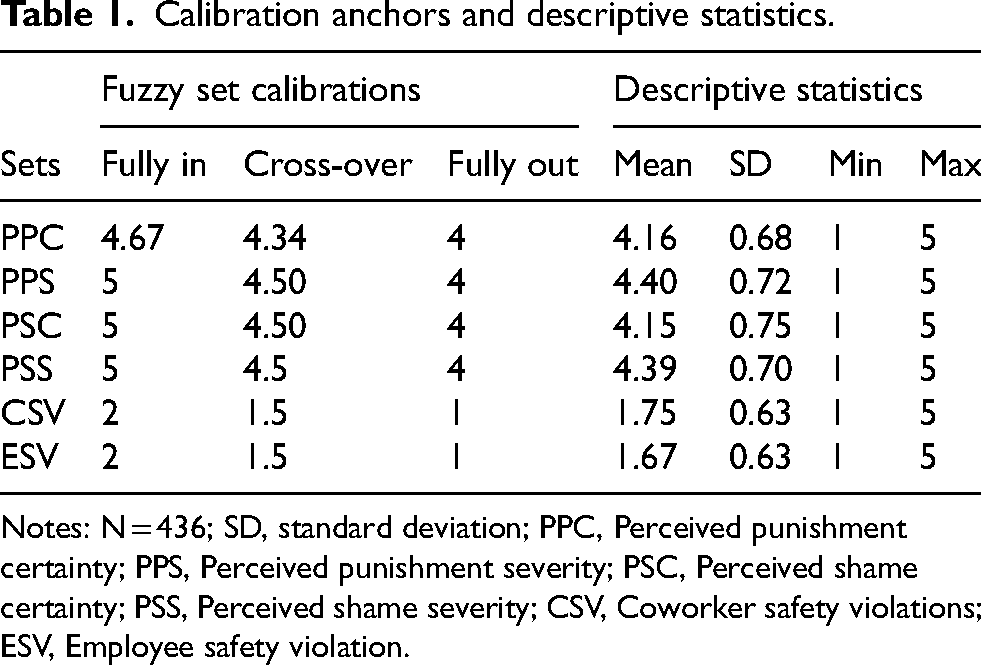
Before the configurational analysis, the calibration procedure was conducted to convert all variables into fuzzy-set values ranging from 0 to 1 [28]. A case with a score of 1 suggests a full membership in the set while a case with a score of 0 signifies full nonmembership in the set. A membership score of 0.5 represents cross-over point, which implies neither fully in nor fully out of the set. In the current study, we used the direct calibration method to calibrate the data into fuzzy-set scores [28, 56]. Questionnaire data are often calibrated using direct calibration method, for example, using percentile breakpoints as three anchors when substantive knowledge about the scale anchor is not available [65], and this method allows calibration of measures for any type of data, without being limited by their original values [57]. Therefore, we used the direct calibration method to calibrate five conditons and one outcome variable. Specifically, we followedPappas and Woodside [57] and Jiang et al. [66] and used the 5th (fully out), 50th (cross-over), and 95th (fully in)percentiles of our measures as the three anchor thresholds. Considering that the fsQCA cannot analyze the conditions that are set exactly on 0.5 [28], a small constant (usually 0.001) is suggested to add to the 0.50 fuzzy-set value to retain the configuration in subsequent configuration analysis [56]. The final calibration anchors and descriptive statistics are shown in Table 1.
Calibration anchors and descriptive statistics.
Calibration anchors and descriptive statistics.
Notes: N = 436; SD, standard deviation; PPC, Perceived punishment certainty; PPS, Perceived punishment severity; PSC, Perceived shame certainty; PSS, Perceived shame severity; CSV, Coworker safety violations; ESV, Employee safety violation.
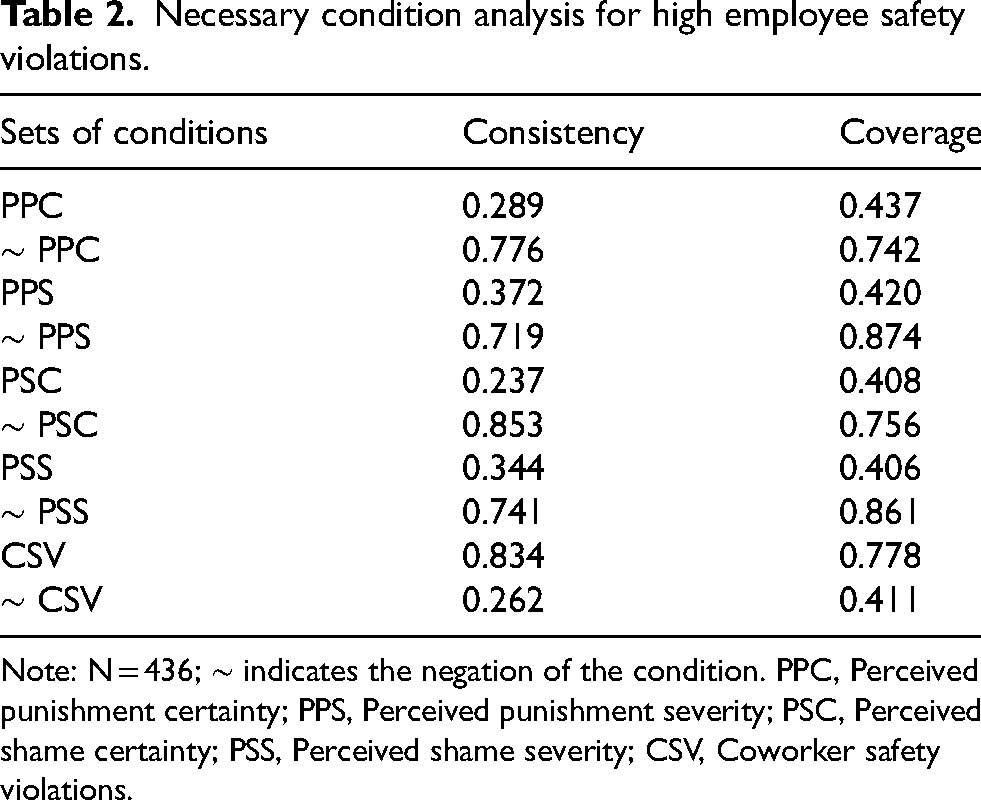
Before the configuration analysis, we tested whether single antecedent variables were necessary conditions leading to high ESV, that is, whether the outcome set was a subset of a certain antecedent set [28]. If a condition’s consistency is larger than 0.9, it is considered to be necessary [67]. The results shown in Table 2 indicate that the consistency levels of all conditions and their negations are less than 0.9, indicating that no single factor qualifying as a necessary condition for high ESV. Therefore, none of the five antecedent factors is the necessary condition to lead to high ESV.
Necessary condition analysis for high employee safety violations.
Necessary condition analysis for high employee safety violations.
Note: N = 436; ∼ indicates the negation of the condition. PPC, Perceived punishment certainty; PPS, Perceived punishment severity; PSC, Perceived shame certainty; PSS, Perceived shame severity; CSV, Coworker safety violations.
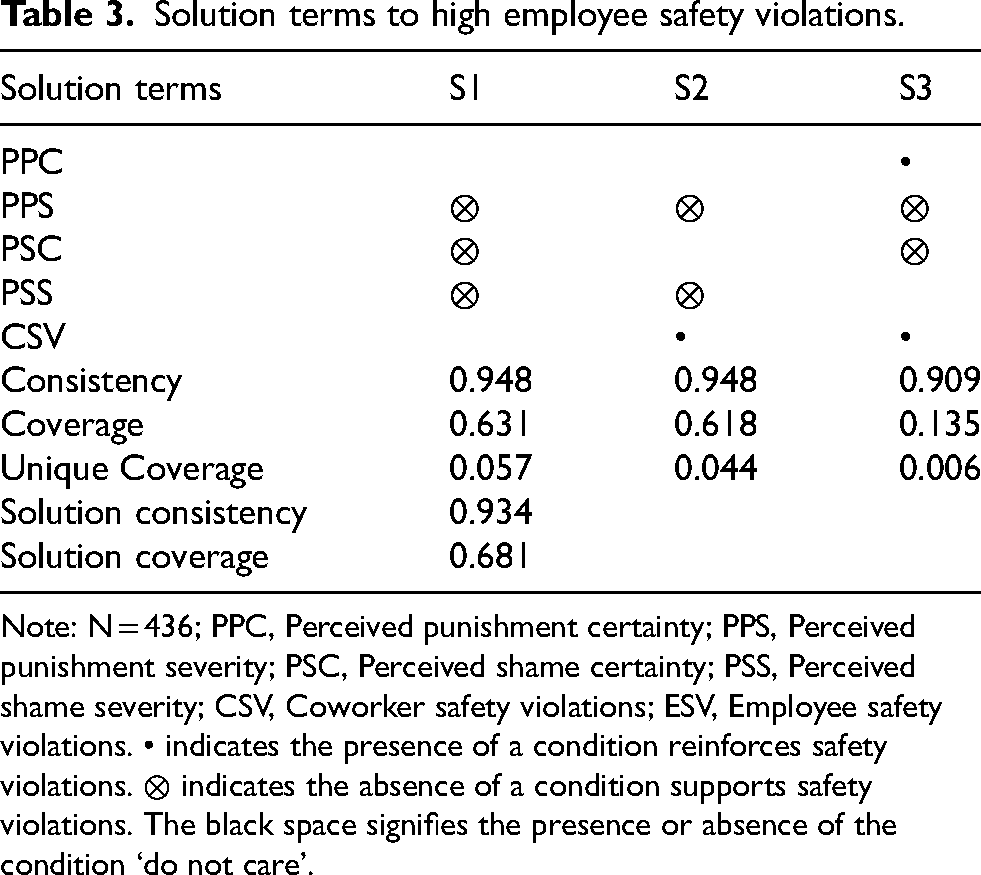
Next, we used the truth table algorithm to test whether they were sufficient configurations. We analyzed the configurations that reach high ESV. When using fsQCA for configuration analysis, raw consistency, proportional reduction in inconsistency (PRI), and case frequency thresholds need to be set to reduce the Truth Table rows to simplified combinations [56]. FollowingDe Crescenzo et al. [68], we set the case frequency to 1 for samples between 300 and 400. In line with Greckhamer et al. [69] and Pappas and Woodside [57], the raw consistency and PRI thresholds are set at 0.80 and 0.70, respectively. The configurational results were generated with fsQCA3.0 and reported in Table 3.
Solution terms to high employee safety violations.
Solution terms to high employee safety violations.
Note: N = 436; PPC, Perceived punishment certainty; PPS, Perceived punishment severity; PSC, Perceived shame certainty; PSS, Perceived shame severity; CSV, Coworker safety violations; ESV, Employee safety violations. • indicates the presence of a condition reinforces safety violations. ⊗ indicates the absence of a condition supports safety violations. The black space signifies the presence or absence of the condition ‘do not care’.
The configuration analysis resulted in three solutions, namely parsimonious solution, intermediate solution, and complex solution. Compared to the parsimonious and complex solutions, the intermediate solution terms show the most plausible conditional sets that contribute to an outcome [70], and the configurations identified by the intermediate solution has a wider coverage and stronger explanatory power [71]. The overall consistency is 0.934, and the individual consistency of these three solutions ranges from 0.909 to 0.948, which are larger than the threshold of 0.80, suggesting that the solutions correspond to the data well [28] and three solutions are consistently sufficient configurational causes for high ESV. The overall solution coverage is approximately 68.1 percent, indicating our three configurations as a whole explain the outcome, i.e., high ESV, well [22].
To evaluate the relative importance of each individual configurational solution, the fsQCA also reports another two coverages. The raw coverage evaluates the predictive power of an individual configurational solution, while the unique coverage measures the unique contribution of each configuration to the solutions by controlling for the overlapping sets by partitioning the raw coverage [28, 43]. The fsQCA results shown in Table 4 suggest that solution 1 has the highest raw coverage (0.631) and unique coverage (0.057) among three solutions and, thus, is the most empirically relevant configuration [22].
Further, we determined the core (large circles) and peripheral (small circles) conditions whether they existed and did not exist in both parsimonious and intermediate solutions [28, 56]. In our configurational results, solution 1 indicate that the absence of perceived punishment severity and the absence of perceived shame certainty and severity as core conditions are sufficient for high ESV, while the absence of perceived punishment severity and perceived shame severity and the presence of coworker safety violations as core conditions are sufficient for high ESV. Comparing solution 1 and solution 2 thus indicate that the absence of a high perception of shame certainty and the presence of coworker safety violations can be treated as substitutes. Solution 3 combining the presence of perceived punishment certainty and coworker safety violations as well as the absence of a high perception of both punishment severity and shame certainty as core conditions is sufficient for high ESV. Note that for all solutions, perceived punishment severity is a core condition, indicating that employees’ low perception of punishment severity plays a more important role in predicting their safety violation behaviors. Interestingly, for all solutions except solution 3, employee perceived certainty of punishment is not associated with high ESV, as shown by the blank space (“don’t care”) for perceived punishment certainty.
This study applies the complexity theoretical perspective and integrates the deterrence theory and social learning theory to develop a holistic and comprehensive framework, and first adopted the emerging fsQCA approach to understand the complex causality (i.e., conjunction, equifinality, and asymmetry) between multiple antecedents (including perceived punishment certainty and severity, perceived shame certainty and severity, and coworker safety violations) and employee safety violations. First, our results indicate that single antecedent conditions are consistently insufficient to explain high ESV, but their combinations, i.e., configurational causes, can sufficiently explain high ESV. We find that each of three configurations is a combination of three or four core antecedent conditions, which means that ESV results from the configurational effect of multiple antecedent factors. These findings confirm the conjunction tenet of complex causality and thus support proposition 1. Second, there are three different configurations of multiple antecedent conditions that can lead equivalently to high ESV (i.e., equifinality). Solution 1 highlights that a lack of perceived punishment severity and perceived shame certainty and severity play an important role in explaining high ESV. Solution 2 indicates the importance of the low perception of both punishment and shame severity as well as the presence of coworker safety violations in predicting high ESV. However, solution 3 underlines that high ESV results from the presence of coworker safety violations and high perception of punishment certainty as well as a lack of perceived punishment severity and perceived shame certainty. Taken together, our findings supports proposition 2, which anticipated the occurrence of multiple effective configurations equivalently lead to high ESV. Third, we find that except perceived punishment severity, all single causal factors related to high ESV is present (absent) in one or two configurations, but “don’t care”, that is, either absent or presnet in others. For example, high perceived punishment certainty is an ingredient in configuration 3, whereas its negation can also produce the same outcome as indicated in configurations 1 and 2. Similar phenomenons occur in coworker safety violations and perceived shame certainty and severity. Thus, these findings support proposition 3 and indicate the occurrence of asymmetry.
Theoretical implications
This study employs the fsQCA approach to examine the antecedent configurations of ESV by integrating deterrence theory and social learning theory, thus contributing to the workplace safety literature in three ways. First, although ESV has long been a major challenge for global enterprises, the causes of safety violation, compared to safety behavior or safety performance, in the workplace safety context have been under-researched [4]. Because employees’ violation or non-compliance with enterprise safety regulations, rules, and procedures is a deviant behavior and often influenced by peers in organizations [2, 39], we integrate the deterrence theory and social learning theory to develop an comprehensive framework, identify five rarely simultaneously examined antecedents and thus contributes to the theoretical development of workplace safety.
Second, this study also contributes to the workplace safety research by revealing the causal complexity between antecedent factors and ESV. The lack of theoretical integration and the sole focus on the net effects of single factors in the extant literature have led to inconsistent findings on formal sanctions and shame (e.g., [12, 15–18, 72]), thus limiting theory development on safety violation. For example, Siponen and Vance [17] and Cheng et al. [12] have proposed that formal and informal sanctions and self-shame are blended to deter criminal and violation behaviors. We extend this notion by providing more specific and nuanced understanding of the overlaps and interplays between formal sanctions (e.g., punishment certainty and severity), self-imposed sanctions (e.g., shame certainty and severity), social learning (e.g., coworker safety violations). Our configurational results demonstrates the importance of theoretical integration in understanding these observed mixed results in the literature, and indicates that safety violation results from comprehensive consideration and multiple configurations of various factors. Taken together, we offer useful insights and future research on safety violation (or compliance) should keep the complex causality in mind.
Third, unlike prior studies which measure the separate effect of any single antecedent on safety violation, this study uses an emerging set-theoretic method (fsQCA) to explore how the antecedents from different theoretical perspectives combine into multiple configurations to trigger high ESV. Prior studies on antecedents of workplace safe and unsafe behaviors have employed traditional regression-based methods [6]. However, the linear net effect of antecedents on the results is inaccurate [22], because the same antecedent can, in specific circumstances, produce different outcomes [21]. Our results allow for a better understanding of the complex relationships among antecedent conditions by first confirming the existence of causal asymmetry between high ESV and its single antecedent conditions. Hence, we highlight that integrating some underexpored antecedents (e.g., shame and coworker safety violations) with established antecedents (e.g., forma sanction) plays an important role in understanding the complex causes of ESV [73] and resolving inconsistent findings [56].
Practical implications
Our findings have important implications for safety management practitioners. First, both top management and safety managers may consider controlling measures to minimize ESV. ESV results not from a single factor, but a combination of these factors. For enterprises, especially small and medium-sized enterprises with limited safety investment and safety resources [55], a common safety practice is to strictly implement workplace safety policies to enhance perceived certainty of formal sanctions, but its effectiveness has found to be unsatisfactory [12, 30]. Our findings indicate that the deterrent effect of punishment certainty is complex and depends on many other factors such as punishment severity, shame certainty and severity, and/or coworker safety violations, thus providing a insightful theoretical explanation for the ineffectiveness of punishment–based countermeasures. Consistent with previous findings [10] to some extent, our findings highlight that practitioners have to consider the complex effects of punishment-based measures when designing and implementing safety management policies.
Second, our findings demonstrate a reinforcing effect between the lack of punishment severity and perceived shame as well as coworker safety violations on high ESV. These findings suggest that practitioners should take comprehensive measures to simultaneously increase employees’ perception of punishment severity and self-imposed costs (e.g., publicizing violation of workplace safety regulations and rules [26]). It should be noted that deterrence-based measures themselves can not automatically produce deterrent effects because employees may be unaware of these deterrence mechanisms. Hence, they should disclose and communicate the safety policies more explicitly [43]. Meanwhile, they need to pay more attention to strengthening group and organizational safety climate, as well as encouraging colleagues to comply with safety regulations and rules [74], thus preventing coworker from engaging in safety violations and avoiding the contagion of safety violations within work teams.
Finally, the present study supports the ues of proactive workplace interventions to reduce ESV. As suggested by Schwatka and Rosecrance [37], our study also support the necessity to understand the influence of coworkers. Specifically, building a commitment to safety among coworkers may be an effective means of eliminating ESV. Compared to supervisors, employees may feel closer to and responsible for the safety of their coworkers [2]. Whether employees violating safety regulations and rules are influenced by their coworkers commitment to safety and pressure to conform to group norms [75]. In practice, coworkers commitment to safety to safety should be seen as just as important in generating a safe work environment as supervisors’ punishments to safety.
Limitations and future research
A key limitation of this study is the data and sample. We collected self-reported data from frontline workers, thereby suffering from common method bias [76]. A future study can adopt other qualitative methods such as in-depth interviews and observations, that can provide supplementary explanations for the results [22]. Moreover, our samples were collected from enterprises in high-risk industries, located in a Chinese industrial city, which may prevent these findings from being generalizing to other countries or cultures. Considering that workplace safety policy violation is a global phenomenon, and the deterrent effect of punishment varies from different cultures [16], further research is needed to test the robustness of our findings with samples from different countries or cultures. Another limitation of this study is focusing on the certainty and severity of formal punishment. Due to the difficulty of measurement and its limited contribution to the theory [27, 77], the celerity of formal sanction, another dimention of formal sanction, was not included in our framework. Moreover, informal sanction (another type of non-legal costs) as a deterrent may also related to safety violation [16] and misbehaviors [22]. Accordingly, we urge future research to explore the complex causality between these factors, expecially in combination with the antecedent factors examined in the present study, and employee safety violation. Finally, by combining deterrence theory into social learning theory, we identified five antecedent factors, and revealed different configurations of these factors in explaining employee safety violation. However, we did not confirm which factors play more important role than the others among different configurations. Future research is recommended to explain whether and under what circumstances, one or more factors may dominate or offset other factors [78]. Also, as a response to Fiss [56], we call for further research to focus on change in configurations by exploring the dynamic mechanisms in configurations.
Conclusion
As safety policy violation in workplace is a common challenge faced by global enterprises, a deep understanding of the complex causes that affect employee safety violations is needed. This study aimed to reveal the complex causality behind employee safety violations by integrating deterrence theory and social learning theory within a complexity theoretical perspective. Utilizing fsQCA, we identified multiple configurations of antecedent factors that lead to high ESV, underscoring the importance of considering both formal and informal sanctions, as well as social influences in workplace safety. Our findings highlight the need for a nuanced understanding of safety management, emphasizing that a combination of factors, rather than any single factor, drives ESV. This study contributes to the field by revealing the causal complexity and offering insights into the development of effective safety policies. For practitioners, it underscores the necessity of a multifaceted approach to safety management that addresses the interplay of various factors influencing employee behavior. The significance of these findings lies in their potential to guide the design of proactive interventions that foster a culture of safety, thereby enhancing workplace safety and reducing ESV.
Footnotes
Acknowledgments
The authors particularly appreciate all the survey participants. They are also very grateful to two anonymous reviewers and the handling editor for their valuable comments and suggestions.
Ethical approval
The study was conducted according to the guidelines of the Declaration of Helsinki, and approved by the Research Ethics Committee of School of Business at Anhui University of Technology (SB-AHUT-REC-2021-04-HS03, and 10.04.2021).
Informed consent Statement
Informed consent was obtained from all subjects involved in the study prior to the survey.
Conflicts of interest
The authors declare no conflict of interest.
Funding
This paper is supported by the National Natural Science Foundation of China (Grant no. 72304002, 72172002), the Key Project for Cultivating Excellent Young Teachers of Anhui province (Grant no. YQZD2023028), and the Excellent Scientific Research Innovation Team Foundation of Anhui Province (Grant no. 2023AH010018).