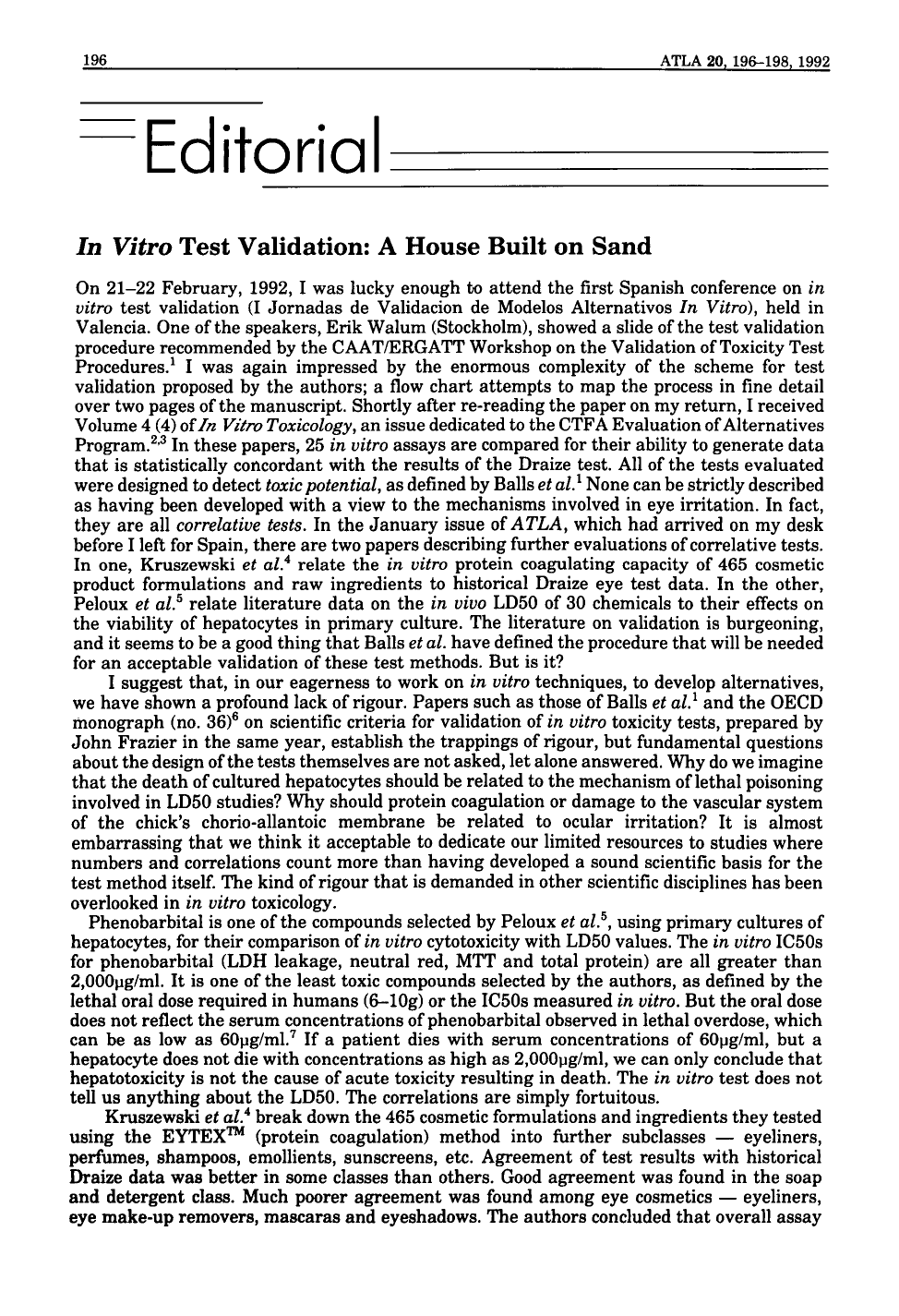
Editorial
Select search scope: search across all journals or within the current journal


The two renal cell lines, MDCK (distal tubule) and LLC-PK1 (proximal tubule), have been used for toxicity testing of three different X-ray contrast media: the ionic monomer Isopaque, the ionic dimer Hexabrix and the non-ionic monomer Omnipaque. The cells were grown to confluency in monolayer cultures in a chemically-defined serum-free medium before the contrast media were added, to give final concentrations corresponding to 0–100mg iodine/ml. Toxicity was assessed by cell viability and by biochemical assays of marker enzymes. The results demonstrate a concentration-dependent toxic effect from the contrast media on cellular appearance, and on the activity of brush border and lysosomal enzymes. The non-ionic X-ray contrast media appeared to be less toxic than the ionic contrast media investigated.
The effects of NiSO4, K2CrO4, PbAc2, CrCl3 and CdAc2 on gap junctional intercellular communication (GJIC) were studied. Two exposure procedures were used — A: an established monolayer of cells was exposed to the compound, and B: the compound was mixed with the cells before seeding. The apparent inhibition of GJIC by CrCl3 and CdAc2 could be accounted for by cytotoxicity, i.e. disruption of physical contacts between cells. PbAc2 had no effect on GJIC. The effects of NiSO4 and K2CrO4 depended on the exposure procedure and cell type studied. Specifically, K2CrO4 induced a significant increase in GJIC in BPNi cells by procedure A, and a decrease by procedure B. The cytotoxic effects of NiSO4 were examined in more detail. The toxic concentrations varied widely between the methods used. The results indicate that the effect of compounds on GJIC may vary with different exposure procedures, and that inhibition of GJIC is not due to general cytotoxic effects.
An established epithelial cell line (A6) from a South African clawed toad
Primary cultured rat skeletal muscle cells were used to determine concentration-dependent effects of the first twenty MEIC chemicals on three endpoints, spontaneous contractility and viability after 1 and 24 hours, and glucose consumption during 24 hours of exposure. The contractions of cultured muscle cells depend on spontaneous electrical activity of the excitable cell membranes. The majority of the test compounds inhibited contractility at concentrations which affected neither viability nor glucose consumption. Most of these compounds are known to interact with excitable membranes in a site-specific or non-site-specific manner, thereby causing therapeutically intended or toxic effects. The results indicate that inhibition of spontaneous contractility of cultured skeletal muscle cells may reflect important non-cytotoxic biological activities of test chemicals which might be more relevant for their acute toxicity than cytotoxic action.
The cytotoxicity of the first twenty chemicals on the MEIC list was evaluated by determining the haemolytic activity of the chemicals. All the tested chemicals, except malathion, were haemolytic. With digoxin and sodium fluoride, however, the maximum degree of haemolysis achieved remained less than 50%. The EC10 for the chemicals varied from 0.38mM (digoxin) to 4,830mM (ethylene glycol). Comparing our data for the first ten MEIC chemicals with data obtained with other
In attempts to overcome the problem for cell culture cytotoxicity tests represented by highly volatile test materials, the wells of 96-well tissue culture plates were sealed individually, either by means of adhesive plastic film spread across the whole plate or by the addition of a small amount of paraffin oil to each well. Use of the adhesive film reduced the growth of control 3T3-L1 murine fibroblast-like cells by nearly 40%, whereas the addition of paraffin oil did not affect cell growth. The latter method was therefore used to compare the cytotoxicities of 27 liquid and 11 water-soluble solid test materials in sealed and unsealed wells, using the FRAME 72-hour kenacid blue method.
Of the 27 liquids tested, acetaldehyde, acetone, acetonitrile, allyl alcohol, ethanol, ethyl acetate, methanol, pyrrole and propanol had significantly greater cytotoxic effects in oil-sealed than in unsealed wells. The cytotoxicities of acetic acid, aniline, butanol, 1,2-dibromomethane, dimethyl formamide, dimethyl sulphoxide, glycerol, hydrochloric acid, 2-methoxyethanol, octanol, pentanol, sulphuric acid, tributyltin chloride, trichlorobenzene, trifluoroacetic acid and Tween 20 were not affected by the layer of paraffin oil. Heptanol and hexanol showed significantly
The use of paraffin oil as a partial well sealant in 96-well tissue culture plates promises to improve the applicability of
Cultured hepatocytes and hemisphere neurons from chick embryos and mouse neuroblastoma cells were exposed to carbon tetrachloride (CC14; 0, 1, 2, 3 and 4mM) for 1 hour, using a perfusion system developed for studying the effects of volatile substances. In the perfused cultures, three parameters were compared: lipid peroxidation, membrane integrity and cellular respiration. In addition, cytochrome C oxidase activity was determined after incubation of cell homogenates with CC14. A concentration-dependent increase in lipid peroxidation and membrane permeability was found in the neuroblastoma cells. The hepatocytes responded to a lesser extent with respect to membrane permeability and their lipid peroxidation did not differ from that of controls. The hepatocytes responded with a 35% decrease in respiration when exposed to 3mM CC14, and a 20% decrease in cytochrome C oxidase activity after treatment with 1.5mM CCl4. In the neuronal cells, much smaller decreases in respiration were found and their cytochrome C oxidase activity remained unaffected. These results are very similar to those obtained after incubation in a closed chamber system. However, the perfused cells were found to be less sensitive to CCl4 than cells exposed under static conditions.
Progress in the implementation of
Cell volume was determined by measuring [14C]-3-
It therefore seems that mercurial-induced changes in cell volume can be regulated by astroglial receptor stimulation.
Isolated human platelets represent a model system which could be used in
BALB/C 3T3 mouse fibroblasts or CHO cells grown in 96-well microtitre plates were used for the neutral red viability assay. The cytotoxicity and ability of microsomes or an S9 mixed function oxygenase to activate cyclophosphamide were compared. A pronounced cytotoxic effect of both activation systems was found using CHO cells, but not using 3T3 cells. 3T3 cells were more sensitive than CHO cells to the active metabolites of cyclophosphamide. Cyclophosphamide was more efficiently converted to toxic metabolites by microsomes than by the S9 mix. A concentration of microsomes corresponding to 0.032mg protein per ml of medium was shown to be optimal for the activation of cyclophosphamide in both cell lines.
The toxicity of allyl alcohol and several glycols (ethylene glycol, 1,2-propanediol, 1,3-propanediol, methoxyethanol, and the glycol ether dioxane) was studied in cultures of 3T3 cells and in co-cultures of 3T3 cells with microcarrier-attached hepatocytes. Metabolism-mediated effects on the cytotoxicity to 3T3 cells were recorded by differences in the growth of the cultures exposed in the presence or absence of hepatocytes. Hepatocyte viability was determined by depletion of intracellular lactate dehydrogenase and effects on the biotransformation ability of hepatocytes were assessed by determination of
The toxicities of the therapeutic drugs amitriptyline and diazepam, the metal compounds methyl mercury and triethyllead, and the essential fatty acids linoleic acid and α-linolenic acid, were determined in a system of rat glial cells in culture with microglia activation as the parameter for evaluation of toxicity. The markers of activated microglia — increased expression of complement receptor 3 and transformation of microglia to phagocytes — were evaluated by immunocytochemical staining with the monoclonal antibody OX-42 and after incubation with fluorescent latex beads. Concentrations which activated microglial cells were compared to EC50 values from acute toxicity tests, and to concentrations which in previous studies activated oligodendroglial cells. The results show that the drugs amitriptyline and diazepam, and fatty acids linoleic acid and α-linolenic acid, activated microglia at 10–25 times lower levels when compared to the EC50 values. Microglia activation was induced by α-linolenic acid and amitriptyline at about 10 times lower levels when compared to linoleic acid and diazepam. The microglia activating concentrations of the metal compounds were, 1,000 times lower, when compared to acute toxicity values. The activation of microglia was initiated by the same concentrations of the compounds that in previous studies were found to activate oligodendroglial cells.
Continuous amulatory peritoneal dialysis (CAPD) is a well-established treatment for renal failure. Peritonitis is the most important and serious complication to CAPD. The predisposition of patients to contract peritonitis has been attributed to functional impairment of immunoactive cells in the peritoneal cavity due to cytotoxicity of the dialysis solutions used.
A model for biocompatibility studies of CAPD solutions is presented, in which the migration and phagocytotic capacity of normal isolated human polymorphonuclear granulocytes (PMN) were examined after exposure to the test solutions. The methods proved to be highly reproducible.
The commercially-available lactate-based CAPD solutions tested reduced PMN function, mostly due to their low pH. Cell function was improved by elevation of pH, but not to the control level, when the cells were exposed to RPMI — a standard cell culture medium. A new bicarbonate-based CAPD solution proved to be less cytotoxic than the lactate-based ones, and is at present undergoing clinical evaluation.
The cytotoxicities of the first ten MEIC chemicals were assayed by estimation of IC50 values on cultures of the fungus
Within the framework of the MEIC (the multicentre evaluation of
The present paper deals with the general anaesthetic effect of organic solvents. The emphasis is on cell membranes as models for predicting the adverse reactions of the human nervous system to organic solvents, and for studying the mechanisms of their anaesthetic action. Human and rat erythrocyte and platelet membranes, rat synaptosomal membranes and cultured neural cell membranes were exposed
This study shows that the
The lethal concentrations (LC10 and LC50) in the 24-hour
Recent trends in the field of
The use of a microporous membrane as an interface between a cell culture and a substance dissolved into a non-aqueous, non-cytotoxic medium made it possible to study the cytotoxicity of non-hydrosoluble substances, without addition of any adjuvant for dispersion or solubilisation. The LC50s of raw materials widely used in cosmetic and pharmaceutical products were established on skin human fibroblasts.
This method was used for the study of cosmetics and toiletries which could be tested directly in their actual galenic forms. A relationship between exposure time and cytotoxicity was established for 50 products and a cytotoxicity index was calculated. The results were compared with those of the Draize irritation test on the rabbit eye. This comparison showed a very good correlation between the calculated cytotoxicity index and the ocular irritation index (p < 0.001).
From the results of this preliminary study, it appears that the method could provide an alternative to animal studies on the ocular tolerance of cosmetics and toiletries.
Normal human epidermal keratinocytes were differentiated on Millipore Millicell CM microporous membranes overlaid with an acellular cross-linked collagen gel. The extracellular calcium concentration was elevated, and stratification of the monolayer to a 20-cell thick multilayer ensued within 5–7 days. Transmission electron microscopy of this stratified, human epidermal model (HEM) revealed typical ultrastructural markers of differentiation, including numerous desmosomes, keratinohyalin granules, keratin filaments, lamellar-type bodies, and squamous-shaped cells in the apical region, but not the basal region, of this HEM. Preparations lifted to the air–liquid interface had electron-dense apical cells suggestive of cornification. An electron-dense lamina appeared on the basal surface in both submerged and air–liquid interface cultures, suggesting that this structure can be produced without the help of underlying dermal cells and is independent of the air–liquid interface conditions. The uniform thickness of the epidermis, the absence of dermal fibroblasts, the lack of contraction of the epidermis, and the thinness of the underlying collagen gel, made this HEM a suitable candidate for use in an automated, fluorescence multiple endpoint assay. Fluorescent probes monitoring lysosomal integrity, epidermal permeability and plasma membrane integrity were monitored using the CytoFluor 2300 fluorescent plate reader. Our data suggest the feasibility of using multilayered human tissues for automated multiple endpoint analysis.
The toxicity of two essential trace elements, the heavy metals zinc and copper, has been studied in Caco2 cells, a human colon carcinoma cell line able to differentiate in culture into mature enterocytes.
The ID50 for zinc and copper in Caco2 cells was determined from dose-effect curves. The ID50 is the same (500μM) for zinc and copper in undifferentiated cells, but in differentiated cells the ID50 for zinc (1mM) is higher than the ID50 for copper (600μM). Total protein synthesis is more severely affected by both metals in undifferentiated Caco2 cells than in differentiated cells. This difference could be explained by the different intracellular accumulation of the two metals at the two stages of differentiation. Copper inhibits total protein synthesis more than zinc, at both stages of differentiation. A protective role of zinc-induced metallothionein is discussed in relation to these results.