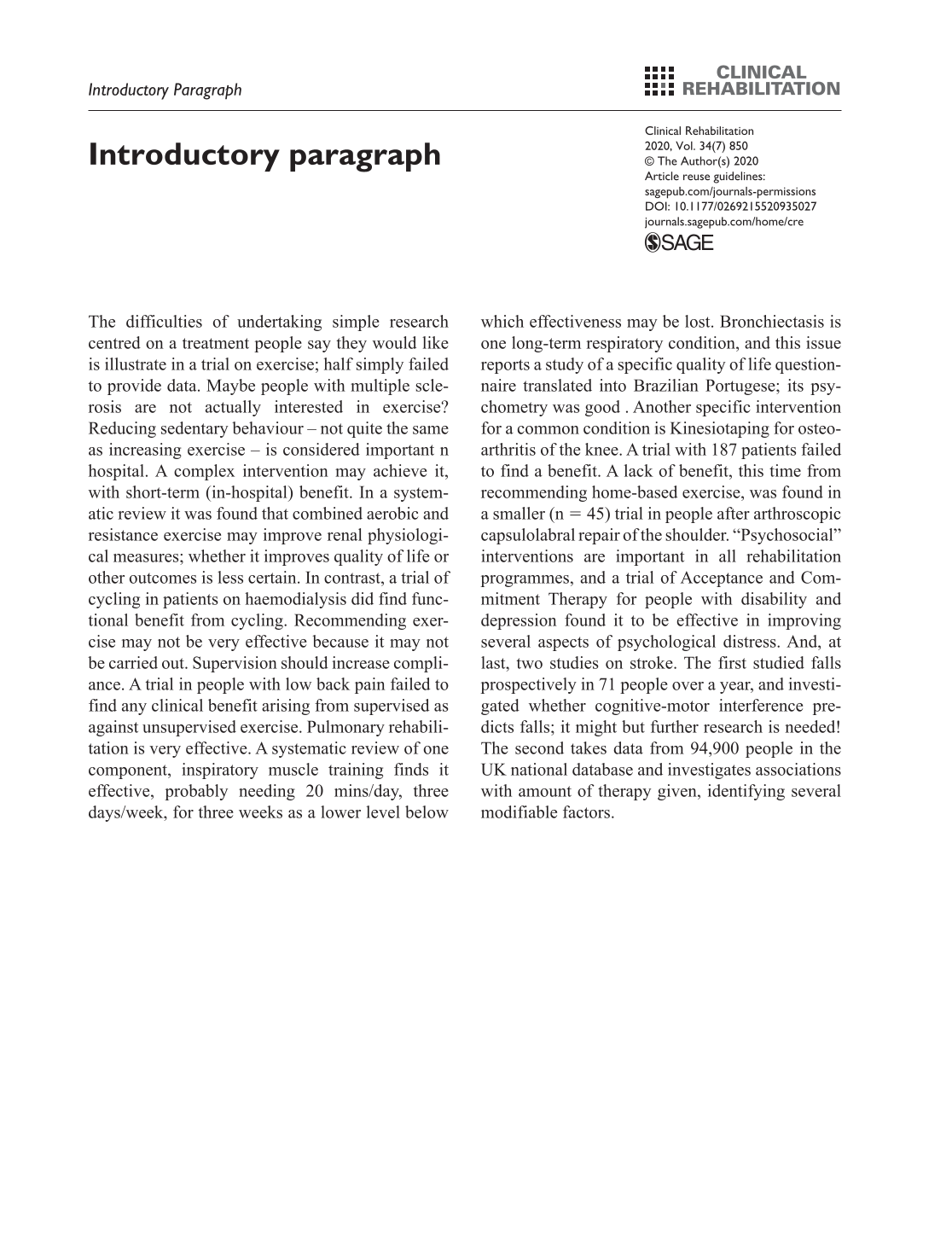
Editorial
 Restricted accessEditorialFirst published July, 2020pp. 850-850

Select search scope: search across all journals or within the current journal


 Restricted accessEditorialFirst published July, 2020pp. 850-850Restricted accessResearch articleFirst published July, 2020pp. 851-865
Combined aerobic and resistance exercise (CARE) is beneficial for improving renal function. To confirm this, we conducted a meta-analysis to evaluate the effects of CARE on renal function in adult patients with chronic kidney disease (CKD).
The last date of search was 22 February 2020. We searched Cochrane Central Register of Controlled Trials (CENTRAL), MEDLINE, Embase, Allied and Complementary Medicine (AMED), CINAHL, Web of Science, SPORTDiscus, and three Chinese databases (China National Knowledge Infrastructure (CNKI), Wangfang, Journal Integration Platform (VIP)) for articles of randomized and quasi-randomized controlled trials.
We used the Cochrane tool and the JBI Critical Appraisal checklist to assess randomized controlled trials and quasi-randomized controlled trials, respectively.
A total of 12 studies and 745 patients were included. Compared with usual care or no exercise, CARE resulted in a significant improvement in the estimated glomerular filtration rate (between-group analysis: mean difference (MD) =5.01, 95% confidence interval (CI): 2.37 to 7.65; within-group analysis: MD = 3.01, 95% CI: 0.86 to 5.16). The serum creatinine levels also showed a significant improvement after CARE (between-group analysis: MD = −8.57, 95% CI: −13.71 to −3.43; within-group analysis: MD = −6.33, 95% CI: −10.23 to −2.44). Patients who performed CARE also demonstrated a decline in the blood pressure in the within-group analysis (systolic blood pressure: MD = −5.24, 95% CI: −7.93 to −2.54; diastolic blood pressure: MD = −3.63, 95% CI: −5.35 to −1.91). However, there were no significant differences in proteinuria, lipid levels, physical composition, and quality of life.
The study results support the concept that CARE intervention improves renal function. It provides strong evidence for guiding clinical decisions and implementing renal rehabilitation exercises.
Restricted accessResearch articleFirst published July, 2020pp. 866-876 , Yu Zheng, Yini Dang , [...]
The aim of this study was to investigate the effects of inspiratory muscle training in post-stroke patients and to explore the effective training protocol.
PubMed/Medline, Web of Science, Scopus, Embase, Cochrane database, China National Knowledge Infrastructure, and China Science Periodical Database were searched through April 2020.
Trials examining effects of inspiratory muscle training on pulmonary function, cardiopulmonary endurance, pulmonary infection incidence, and quality of life in post-stroke patients were included. Subgroup analysis was performed to compare different training programs. Mean differences and risk ratios with 95% confidence intervals were presented. Risk of bias was assessed with the Cochrane tool.
Thirteen randomized controlled trials involving a total of 373 participants were identified. Meta-analysis conducted in 8 out of 13 trials revealed evidence for beneficial effects of inspiratory muscle training on forced vital capacity (MD: 0.47, 95% CI: 0.28–0.66), forced expired volume in 1 second (MD: 0.26, 95% CI: 0.18–0.35), 6-minute walk test (MD: 52.61, 95% CI: 25.22–80.01), maximum inspiratory pressure (MD: 18.18, 95% CI: 5.58–30.78), inspiratory muscle endurance (MD: 19.99, 95% CI: 13.58–26.40), and pulmonary infection incidence (RR: 0.11, 95% CI: 0.03–0.40). Omitting individual trials from the meta-analysis did not significantly change the results. The effective inspiratory muscle training protocol was suggested by subgroup analysis with three repetitions per week and more than 20 minutes per day for three weeks.
Inspiratory muscle training can be considered as an effective intervention for improving pulmonary function and cardiopulmonary endurance, and reducing pulmonary infection incidence in patients after stroke.
 Open accessResearch articleFirst published July, 2020pp. 877-889, Raimondas Kubilius
To evaluate the effectiveness of the Kinesio Taping® method for mobility and functioning improvement for patients with knee osteoarthritis (KO).
Randomized, double-blinded, controlled trial.
Outpatient rehabilitation department.
A total of 187 subjects with symptomatic I–III grade KO participated; of these, 157 subjects were included in the analyses (intervention group,
The intervention group received a specific Kinesio Taping application, and the control group received non-specific knee taping for a month.
Changes in Knee injury and Osteoarthritis Outcome Scores (KOOS), knee active range of motion, 10-Meter Walk, and the five times sit to stand tests (5xSST) were assessed at baseline, after four weeks of taping, and a month post taping intervention. Subjective participants’ experiences and opinions on the effect of knee taping were evaluated. The chosen level of significance was
The mean age of participants was 68.7 ± 9.9 in intervention group and 70.6 ± 8.3 in control group (
Investigated Kinesio Taping technique did not produce better results in mobility and functioning improvement over non-specific knee taping; however, it had higher patient-reported subjective value for symptom attenuation and experienced mobility enhancement.
Open accessResearch articleFirst published July, 2020pp. 890-900, Pauli Kiuru, Kirsi Piitulainen , [...]To compare the effects of a 12-month home-based exercise program to usual care in patients after arthroscopic capsulolabral repair of the shoulder.
Randomized controlled trial.
Outpatient physical and rehabilitation medicine clinic.
Forty-five patients (mean age: 35 years; standard deviation (SD): 10 years) who underwent arthroscopic capsulolabral repair due to labral lesion were randomized into an exercise group (EG) or a control group (CG).
The EG received a 12-month home-based additional exercise program with four physiotherapy follow-up visits, while the CG received standard postoperative exercise instructions.
Self-reported shoulder disability was assessed with the American Shoulder and Elbow Surgeons Standardized Shoulder Assessment Form (ASES) and quality of life with the Short-Form (SF)-36 Health Survey. The function of the operated shoulder was evaluated with strength and range of motion measurements.
No between-group differences were observed in any of the outcomes at the follow-up. Mean ASES score improved by 16 (95% confidence interval (CI): 10–23) points from the baseline 78 (SD: 17) in the EG and 13 (95% CI: 7–19) points from the baseline 79 (SD: 17) in the CG. Both groups achieved a significant improvement in the dimensions of Physical Functioning, Role-Physical, and Bodily Pain of the SF-36 and in every aspect of strength and range of motion measures. In EG, exercise adherence was moderate (52%) during the first six months and poor (22%) during the last six months.
Home-based additional exercises with four outpatient follow-up visits did not improve outcome after arthroscopic capsular repair of the shoulder.
Open accessResearch articleFirst published July, 2020pp. 901-915, L van Bodegom-Vos, WG Volker , [...]The aim of this study was to evaluate the feasibility and preliminary effects of a multicomponent intervention to decrease sedentary time during and shortly after hospitalization.
This is a quasi-experimental pilot study comparing outcomes in patients admitted before and after the implementation of the intervention.
The study was conducted in a university hospital.
Participants were adult patients undergoing elective organ transplantation or vascular surgery.
In the control phase, patients received usual care, whereas in the intervention phase, patients also received a multicomponent intervention to decrease sedentary time. The intervention comprised eight elements: paper and digital information, an exercise movie, an activity planner, a pedometer and Fitbit Flex™, a personal activity coach and an individualized digital training program.
Measures of feasiblity were the self-reported use of the intervention components (yes/no) and satisfaction (low–high = 0–10). Main outcome measure was the median % of sedentary time measured by an accelerometer worn during hospitalization and 7–14 days thereafter.
A total of 42 controls (mean age = 59 years, 62% male) and 52 intervention patients (58 years, 52%) were included. The exercise movie, paper information and Fitbit Flex were the three most frequently used components, with highest satisfaction scores for the fitbit, paper information, exercise movie and digital training. Median sedentary time decreased from 99.6% to 95.7% and 99.3% to 91.0% between Days 1 and 6 in patients admitted in the control and intervention phases, respectively. The difference at Day 6 reached statistical significance (difference = 41 min/day,
Implementing a multicomponent intervention to reduce sedentary time appeared feasible and may be effective during but not directly after hospitalization.
Restricted accessResearch articleFirst published July, 2020pp. 916-926, Mei-Hua Wang, Chin-Che Hsu , [...]To evaluate the effect of intradialytic cycling exercise on physical functional performance with gain in muscle strength and endurance in end-stage renal disease patients with haemodialysis.
Randomized controlled trial, with repeated measurements at baseline and after 4, 8, and 12 weeks of intradialytic cycling exercise.
A 50-bed haemodialysis centre in a regional hospital in Taiwan.
Seventy-six regular haemodialysis patients, recruited and equally and randomly assigned to exercise and control groups.
The intradialytic cycling exercise was performed for 12 weeks and comprised warm-up, main, and cool-down exercise phases. A stationary cycling equipment was used, which involved aerobic and resistance modalities. The intensity was maintained at somewhat hard exertion. Each intradialytic cycling exercise was implemented for 30 minutes, starting at the second hour of treatment.
Measured outcomes were 6-minute walk distance, time taken to complete 10 sit-to-stand-to-sit cycles and number of sit-to-stand-to-sit cycles in 60 seconds.
Average (standard deviation) participant age was 55.47 (13.00) years. Therefore, the 6-minute walk distance was significantly different at weeks 8 (
Twelve-week intradialytic exercise for patients on haemodialysis can improve physical functional performance with gain muscle strength and endurance. This is a safe and effective method for improving health.
Restricted accessResearch articleFirst published July, 2020pp. 927-937, Kedar KV Mate, Ryan Reid , [...]To estimate, among people with multiple sclerosis, the extent to which a personally tailored exercise programme (MSTEP©) resulted in greater improvements in exercise capacity and related outcomes over 12 months in comparison with general exercise guidelines.
Two-group randomized trial.
Ambulatory and sedentary.
MSTEP©, a personally adapted exercise regimen done on most days including two days of high intensity exercise; guidelines recommending 30 minutes of moderate intensity aerobic and strength training two times per week.
Primary outcome was peak oxygen consumption (VO2peak) at 12 months; secondary outcomes were composite measures of physical function, fatigue, and health-related quality of life.
In total, 137 people were randomized, 66 were lost over 12 months leaving 71 with outcome data, 34 in MSTEP© group, and 37 in the Guideline group. Exercise enjoyment and confidence and exercise-induced fatigue predicted retention. There were no differences between groups on the proportion making a 10% increase in VO2peak (27.1% MSTEP© vs 29.6% Guidelines; OR: 0.83; 95% CI: 0.23–3.08) by the 12 month assessment. The effect on fatigue was larger in the MSTEP© group than the Guideline groups (OR: 1.59; 95% CI: 0.93–2.74), the effect on physical function was more modest (OR: 1.35; 95% CI: 0.80–2.25), and null for health-related quality of life outcomes.
The disappointing exercise retention suggests that people with multiple sclerosis may not consider exercise important to their brain health. Either type of exercise resulted in stable exercise capacity over 1 year in those sticking with the programme.
Restricted accessResearch articleFirst published July, 2020pp. 938-947, Sharmin Mozaffari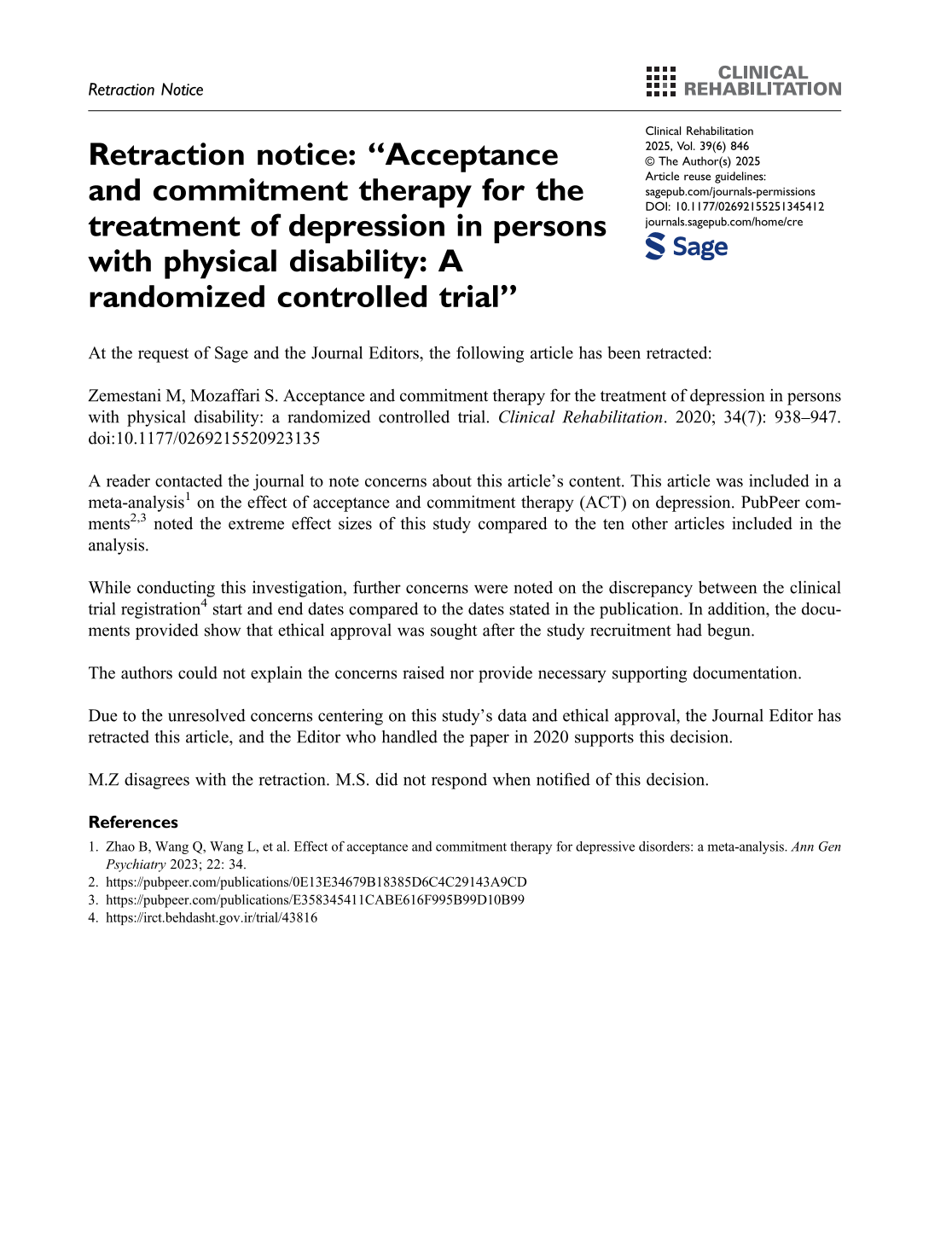 Restricted accessResearch articleFirst published July, 2020pp. 948-959, Eduardo Antequera Soler , [...]
To compare the effectiveness of supervised physical therapy program versus non-supervised on pain, functionality, fear of movement and quality of life in patients with non-specific chronic low back pain.
A randomized double-blind clinical trial.
Clinical outpatient unit; home.
A total of 64 participants with non-specific chronic low back pain were randomized into either supervised exercise group (
The supervised group was treated with therapy exercises (strengthen lumbopelvic musculature), while the non-supervised received an informative session of the exercises, which were performed un-supervised at home. Both groups received three weekly sessions for eight weeks.
Pain, disability, fear of movement, quality of life, trunk muscle endurance and trunk anteflexion motion were assessed at baseline, two, and six months of follow-up.
Although analysis of variance (ANOVA) test showed statistically significant differences between groups for pain (
Patients with chronic low back pain who received supervised exercise showed more improvement in both the short and long term in all patient-rated outcomes over the non-supervised group, but the differences were small and not clinically significant.
Restricted accessResearch articleFirst published July, 2020pp. 960-970To evaluate the psychometric properties of the Brazilian Portuguese version of the Quality of Life Questionnaire-Bronchiectasis.
Cross-sectional study.
Outpatient clinic.
Clinically stable individuals with a diagnosis of bronchiectasis.
The evaluations performed were spirometry, incremental shuttle walk test, Saint George’s Respiratory Questionnaire, and the modified Medical Research Council dyspnea scale. The Quality of Life Questionnaire-Bronchiectasis was administered twice (seven to 14 days apart). Psychometric analyses were performed as follows: reliability, construct validity, criterion validity, and interpretability.
In total, 108 individuals (48 ± 14 years, 61 women) participated in the study. Internal consistency was considered adequate (Cronbach’s alpha ⩾ 0.70) for the majority of scales (from 0.58 to 0.93). Test–retest coefficients were moderate to excellent (intraclass correlation coefficients from 0.70 to 0.93). In the construct validity, 35 of 37 items correlated more strongly with their assigned scale than a competing scale. The convergent validity showed significant correlations between scales of the Quality of Life Questionnaire-Bronchiectasis with modified Medical Research Council dyspnea scale, and incremental shuttle walk test (r from 0.20 to 0.59). A low to moderate correlations was revealed between all scales of the Quality of Life Questionnaire-Bronchiectasis and the Saint George’s Respiratory Questionnaire domains (r from 0.26 to 0.70). The standard error of measurement was acceptable. Ceiling effects were found for the Social Functioning and Treatment Burden scales.
The Quality of Life Questionnaire-Bronchiectasis is a reliable, valid instrument with adequate internal consistency for the evaluation of the impact of bronchiectasis on the health-related quality of life of Brazilian adults.
Restricted accessResearch articleFirst published July, 2020pp. 971-980The aim of this study was to examine the fall predictive value of single-task walking tests and extent of interference observed in dual-task walking tests in ambulatory individuals post stroke.
This is an observational study with prospective cohort.
The study was conducted at the university laboratory.
A total of 91 community-dwelling individuals with chronic stroke participated in the study.
Time required to complete a 10-m walk test with and without obstacle negotiation was measured in isolation and in conjunction with performance of a verbal fluency task (category naming). Fall incidence, circumstances, and related injuries were recorded by monthly telephone calls for 12 months.
A total of 91 individuals (mean (SD) age = 62.7 (8.3) years; mean (SD) post-stroke duration = 8.8 (5.3) years) participated in the study; 29 (32%) of them reported at least one fall during the follow-up period, with a total of 71 fall episodes. There was a significant difference in obstacle-crossing time under single-task (mean difference = 8.3 seconds) and dual-task (mean difference = 7.4 seconds) conditions, and also the degree of interference in mobility performance (increased dual-task obstacle-crossing time relative to the single-task obstacle-crossing time; mean difference = 3.3%) between the fallers and the non-fallers (
The degree of mobility interference during dual-task obstacle-crossing was the most effective in predicting falls among all the single-task and dual-task walking measure parameters tested. This simple dual-task walking assessment has potential clinical utility in identifying people post stroke at high risk of future falls.
Open accessResearch articleFirst published July, 2020pp. 981-991To understand why most stroke patients receive little therapy. We investigated the factors associated with the amount of stroke therapy delivered.
Data regarding adults admitted to hospital with stroke for at least 72 hours (July 2013–July 2015) were extracted from the UK’s Sentinel Stroke National Audit Programme. Descriptive statistics and multilevel mixed effects regression models explored the factors that influenced the amount of therapy received while adjusting for confounding.
Of the 94,905 patients in the study cohort (mean age: 76 (SD: 13.2) years, 78% had a mild or moderate severity stroke. In all, 92% required physiotherapy, 87% required occupational therapy, 57% required speech therapy but only 5% were considered to need psychology. The average amount of therapy ranged from 2 minutes (psychology) to 14 minutes (physiotherapy) per day of inpatient stay. Unmodifiable characteristics (such as stroke severity) dominated the variation in the amount of therapy. However important, modifiable organizational factors were the day and time of admission, type of stroke team, timely therapy assessments, therapy and nursing staffing levels (qualified and support staff), and presence of weekend or early supported discharge services.
The amount of stroke therapy is associated with unmodifiable patient-related characteristics and modifiable organizational factors in that more therapy was associated with higher therapy and nurse staffing levels, specialist stroke rehabilitation services, timely therapy assessments, and the presence of weekend and early discharge services.