Editorial
Select search scope: search across all journals or within the current journal

This is a visual representation of the abstract.
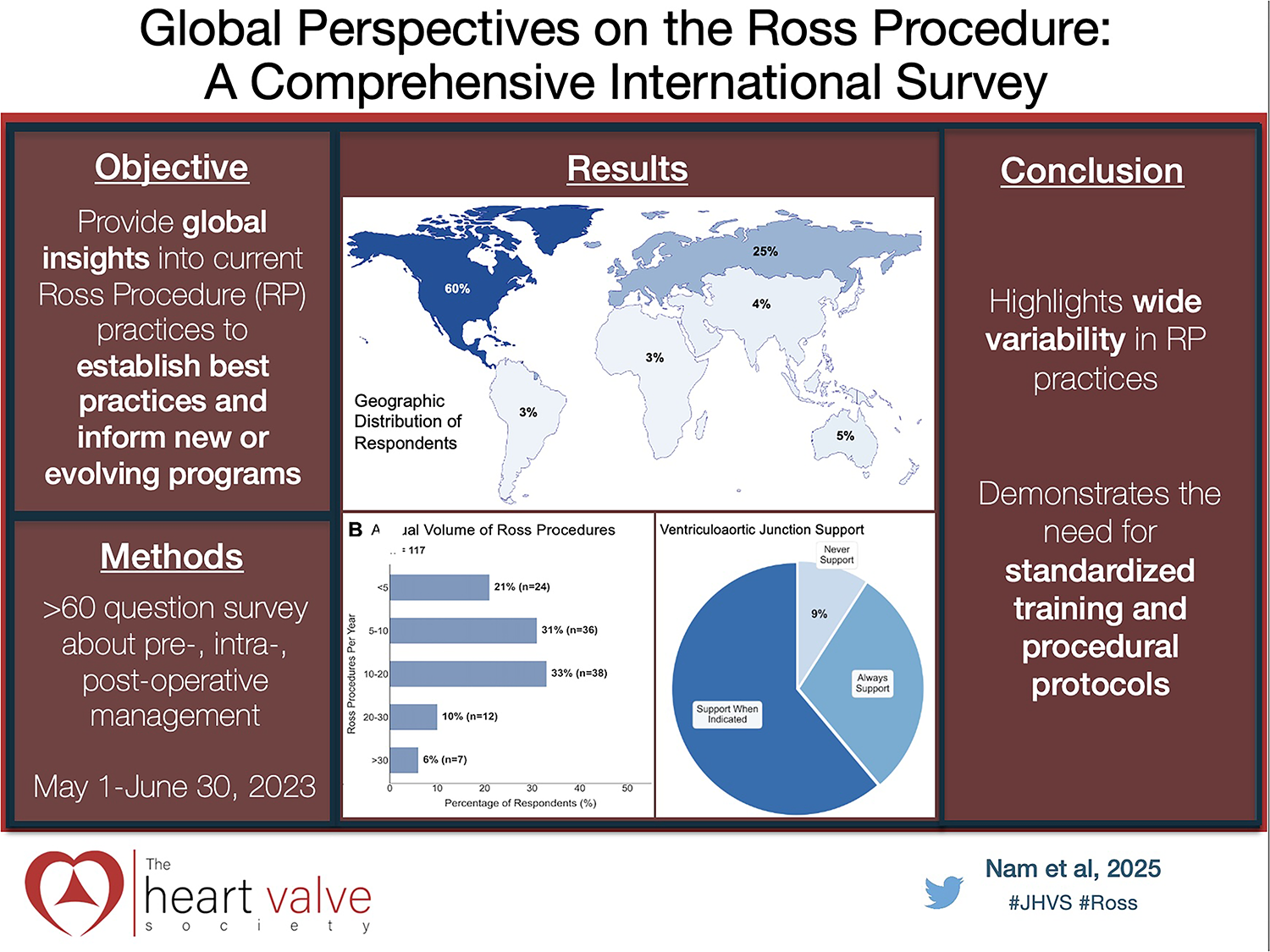
Recent data demonstrating superior outcomes and enhanced life expectancy with the Ross procedure (RP) have sparked renewed interest and increased utilization. However, the RP remains technically challenging compared to conventional aortic valve replacement (AVR), necessitating specialized expertise and careful patient selection. This study provides global insights into current RP practices to establish best practices and inform new or evolving programs.
A web-based survey (> 60 questions) was distributed globally to cardiac surgeons known to perform the RP from May 1 to June 30, 2023. The survey queried surgeon experience, RP volumes, patient selection criteria, preoperative imaging, intraoperative techniques, and postoperative care practices. Responses were analyzed to identify global trends and optimal approaches for RP management.
Of the 167 respondents, 123 (74%) performed the RP, with 75% performing 5 to 30 procedures annually. Approximately half involved a second attending surgeon. Most treated younger patients and preferred homografts for right ventricular outflow tract reconstruction. Variations existed in the ventriculoaortic and sinotubular junction support (30% vs 45% always support). Most surgeons (89%) enforce strict blood pressure control postoperatively, with 65% prescribing beta-blockers. About 54% use postoperative inflammatory prophylaxis, and 90% obtain imaging prior to discharge, with 78% performing annual echocardiograms.
This international survey highlights wide variability in RP practices, underscoring the need for standardized training and procedural protocols. These insights may guide new or evolving RP programs, improve access, and ensure durable outcomes by aligning global practices with contemporary evidence.
This is a visual representation of the abstract.

Transcatheter aortic valve replacement (TAVR) has revolutionized the treatment of aortic stenosis, yet the majority of TAVR devices are optimized for Caucasian and Latin American aortic root anatomies. Unfortunately, data specific to the South Asian (SA) population is limited.
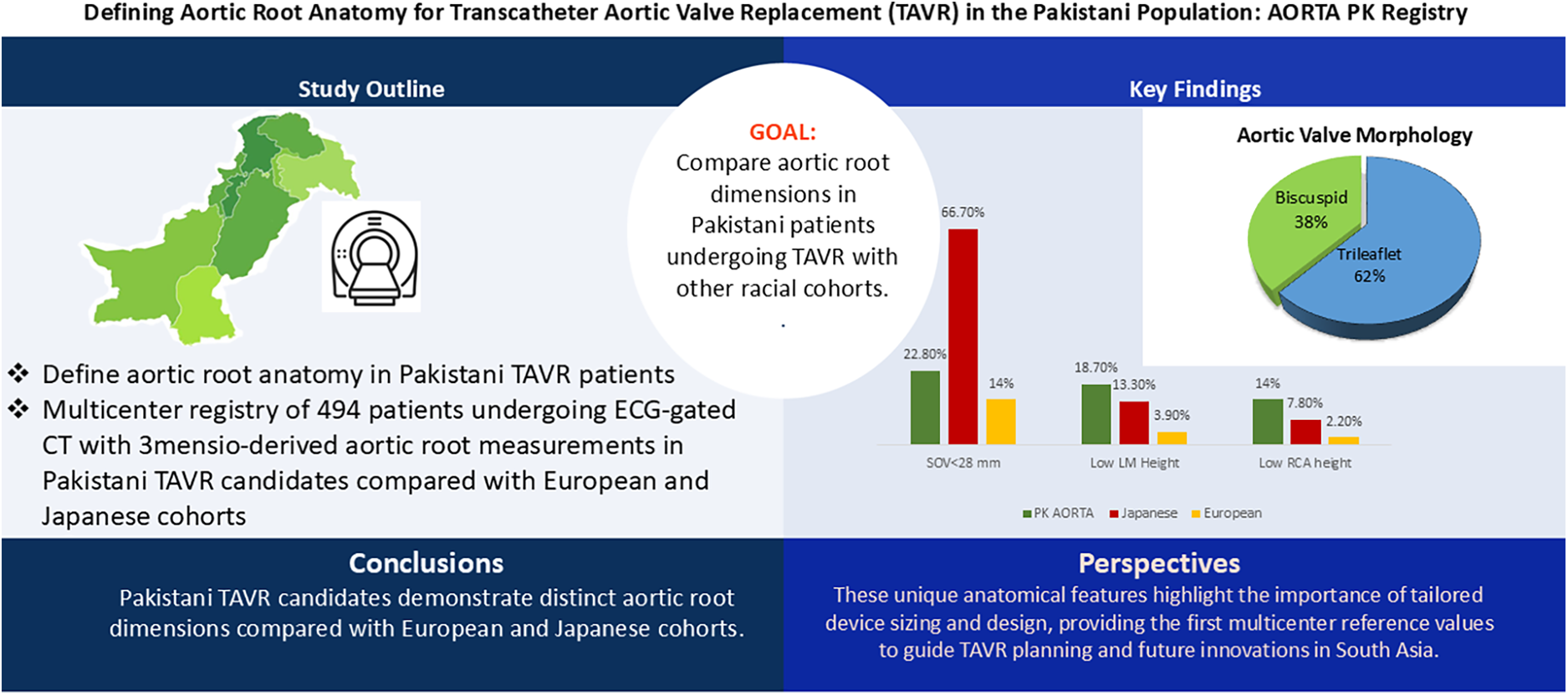
This study sought to evaluate and compare aortic root dimensions in Pakistani patients undergoing TAVR with those of other racial groups.
This study included consecutive patients undergoing TAVR workup at 2 tertiary care centers in Karachi, Pakistan. A comprehensive assessment of aortic root anatomy and dimensions was performed via cardiac computed tomography angiography. Data for 90 patients from a Japanese cohort and 181 patients from a European cohort were obtained from the published literature.
In a sample of 494 patients, 58.1% (287) were male, and the mean age was 71.2 ± 9.7 years. The mean annular area was 427.33 ± 122.49 mm2, and the mean perimeter was 73.96 ± 10.17 mm. In comparison, the sinus of Valsalva (SOV) was <28 mm in 22.8% (113) versus 66.7% (60) versus 14% (17); left main height was <10.7 mm in 18.7% (90) versus 13.3% (12) versus 3.9% (7); and right coronary artery height was <12.7 mm in 14% (69) versus 7.8% (7) versus 2.2% (4) among the Pakistani, Japanese, and European cohorts, respectively.
The Pakistani population exhibited a higher incidence of smaller SOV dimensions compared to the European cohort and a higher incidence of shorter coronary artery heights. These findings highlight the need for tailored TAVR device designs and procedural strategies to accommodate the unique anatomical characteristics of the SA population, ensuring optimal outcomes in this demographic.
This is a visual representation of the abstract.

To evaluate hemodynamic performance and midterm durability of the Inspiris Resilia Valve (IRV) in pulmonary position in patients with different cardiac anomalies.
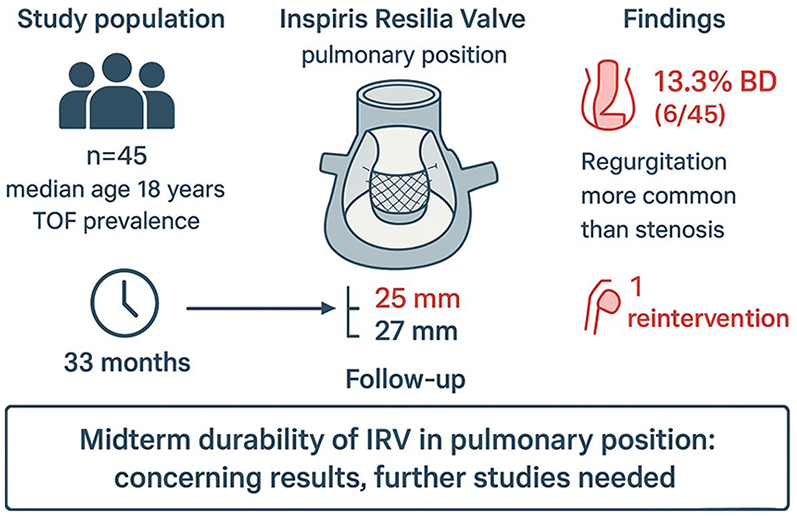
We retrospectively reviewed the medical records of 45 patients who underwent pulmonary valve implantation with IRV between January 2018 and August 2023. Demographic data included primary diagnosis, age at surgery, intraoperative data, and follow-up (FU). Primary outcomes are bioprosthesis dysfunction (BD) and prosthesis-related reintervention. BD was defined as moderate or severe bio-prosthesis insufficiency or trans-prosthesis peak gradient >50 mmHg.
Most common primary diagnosis was Tetralogy of Fallot (28 patients). Indication for surgery was severe pulmonary regurgitation with significant right ventricle (RV) dilatation, with median RV end-diastolic volume of 164 (151–174) ml/m2. Median age and weight at surgery were 18 years (interquartile range [IQR] 15–30) and 62 kg (IQR 47–72). Most common IRV size implanted was 25 mm (31 patients), followed by 27 mm (11 patients). After a median FU time of 33 months (IQR 18–45), 6 patients (13.3%) developed BD and 1 required trans-catheter reintervention. All patients who developed BD had a 25 mm IRV implanted. Our statistical analysis showed that higher peak gradient and higher RV systolic pressure were associated with increased BD occurrence (
Despite short–medium-term FU, our results suggest that IRV durability in the pulmonary position is concerning. Further discussion and collaboration are needed to evaluate this prosthesis for pulmonary valve replacement on a larger scale and with a longer FU.

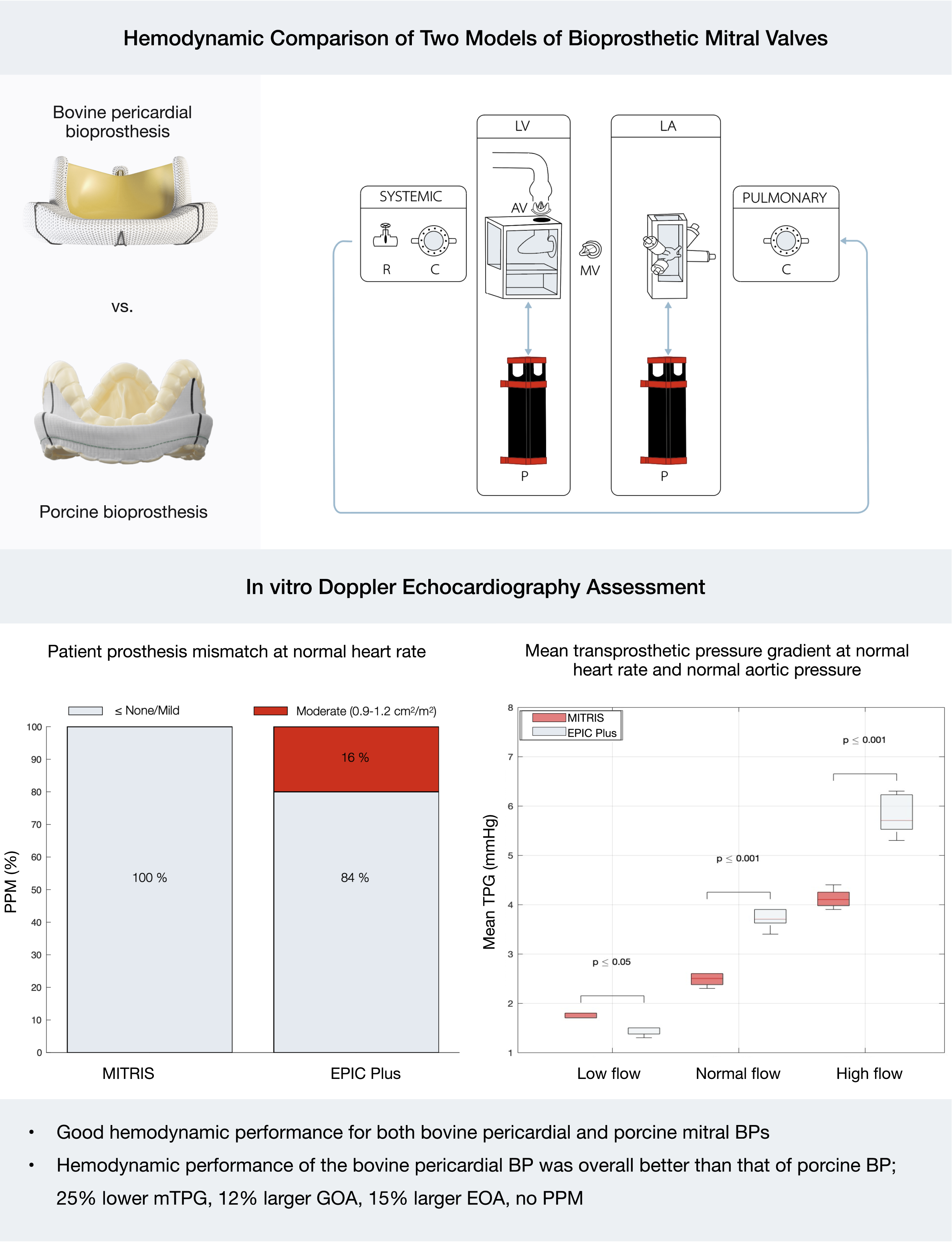
Mitral valve replacement may be considered in patients with mitral valve disease when durable repair is not feasible. In recent decades, an important shift toward the use of bioprostheses for mitral valve replacement was observed and the surgical valve design has undergone several iterations to optimize the prosthesis hemodynamic performance. The objective of this study was to compare the hemodynamic performance of the stented porcine (EPIC Plus) versus the stented bovine pericardial (MITRIS) bioprostheses under standardized in vitro conditions.
Three MITRIS 27 mm and three EPIC Plus 29 mm, which are equivalent in terms of actual sizing (ie, fit into the same mitral annulus size of 38 mm), were tested in vitro in a double activation left heart duplicator system including anatomically shaped, deformable silicone moldings of left heart cavities and aorta. The valves were tested under several standardized hemodynamic conditions: heart rate: 70 and 120 bpm, mean aortic pressure: 100 and 160 mm Hg, stroke volume: 30, 70, and 100 mL. Mean mitral transprosthetic pressure gradients (mTPGs) and effective orifice areas (EOAs) were measured by continuous-wave Doppler and the geometric orifice areas (GOAs) were obtained using high speed, en-face, imaging.
For normal heart rate (70 bpm) and normal mean aortic pressure (100 mm Hg), the mTPGs were similar (1.76 ± 0.10 vs 1.44 ± 0.09 mm Hg) in low-flow conditions, but lower (
This study demonstrates excellent valve hemodynamic performance for these two types of mitral bioprosthetic valves. However, the overall hemodynamic performances were superior with the MITRIS valve compared to the EPIC Plus valve for all flow conditions.
This is a visual representation of the abstract.

This is a visual representation of the abstract.

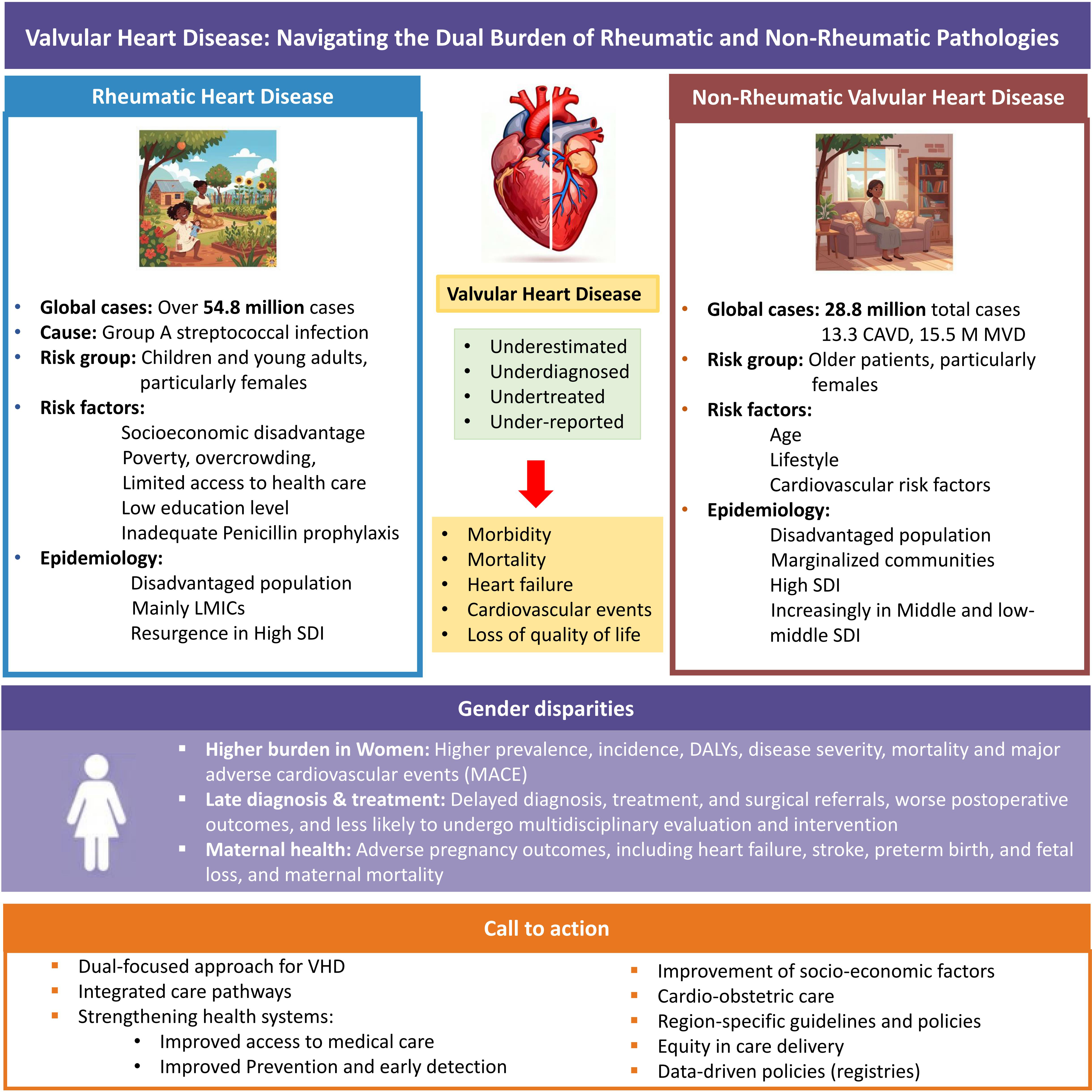
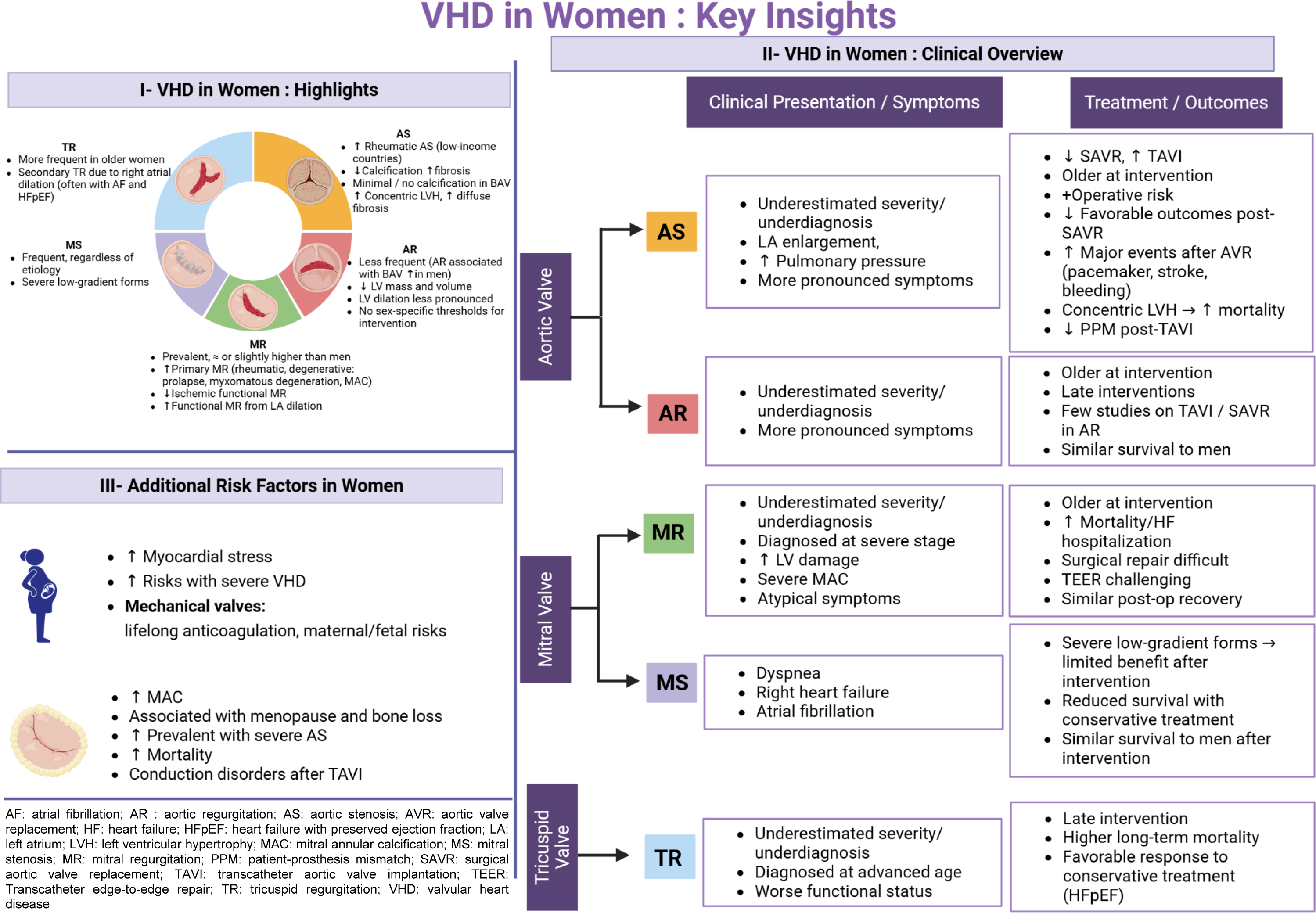
Valvular heart diseases (VHDs) pose significant challenges to cardiovascular health globally, contributing substantially to morbidity and mortality. Despite advancements in therapeutic strategies, women frequently face delayed diagnoses, surgical referrals, and encounter poorer postoperative results compared to men. This inequity stems from historical biases where women were underrepresented in pivotal studies shaping current medical guidelines. However, emergent research focuses more frequently on women, highlighting remarkably sex-differences in VHD etiology, diagnosis, and treatment. Acknowledging and addressing these differences is required for fair healthcare and optimized clinical outcomes for both sexes in the current era. Hence, this review proposes to highlight the implications of sex-differences concerning diagnosis, treatment modalities, and outcomes among patients affected by VHDs.
This is a visual representation of the abstract.
Despite significant diagnostic and therapeutic advances in valvular heart disease (VHD) care, all populations do not yet benefit equally. Established evidence reveals persistent disparities across the VHD care continuum, particularly affecting underserved populations such as women, racial and ethnic minorities, low-income individuals, and rural residents. In recent years, advancements in healthcare information technology (IT) infrastructures and the rapid emergence of artificial intelligence (AI) models have equipped us with smarter, more capable electronic health record (EHR) systems and digital tools to help tackle underdiagnosis and undertreatment challenges. However, without a specific equity lens embedded in both research initiatives and real-world implementations, these technological advancements risk leaving disparities unaddressed. In this review, we call for translating current awareness about disparities in VHD care into measurable actions. First, we review documented disparities across three main domains: diagnosis/detection, surveillance/referral, and treatment. Then, we discuss promising IT-based solutions aimed at mitigating these disparities, focusing on three key areas: AI-augmented diagnostic tools, EHR-based clinical decision support systems, and telehealth.
This is a visual representation of the abstract.


The Heart Valve Society Young Professional Network Board Initiative was established to foster the professional development, scientific engagement, and leadership potential of early career clinicians and researchers in the field of heart valve disease. Building on our previously published mission and vision, the initiative serves as a dynamic and inclusive platform for mentorship, interdisciplinary collaboration, and scientific engagement. It envisions a future where emerging leaders drive innovation and excellence in patient care, research, and education, strengthening the global heart valve community.