EditorialFree accessEditorialFirst published April, 2018pp. 1-3Past imperfect Rachael JolleyPreview abstractPDFAbstract

OtherFree accessOtherFirst published April, 2018pp. 6-7The Abuse of History: The Powers Being Used to Manipulate the Past Preview abstractPDFAbstract
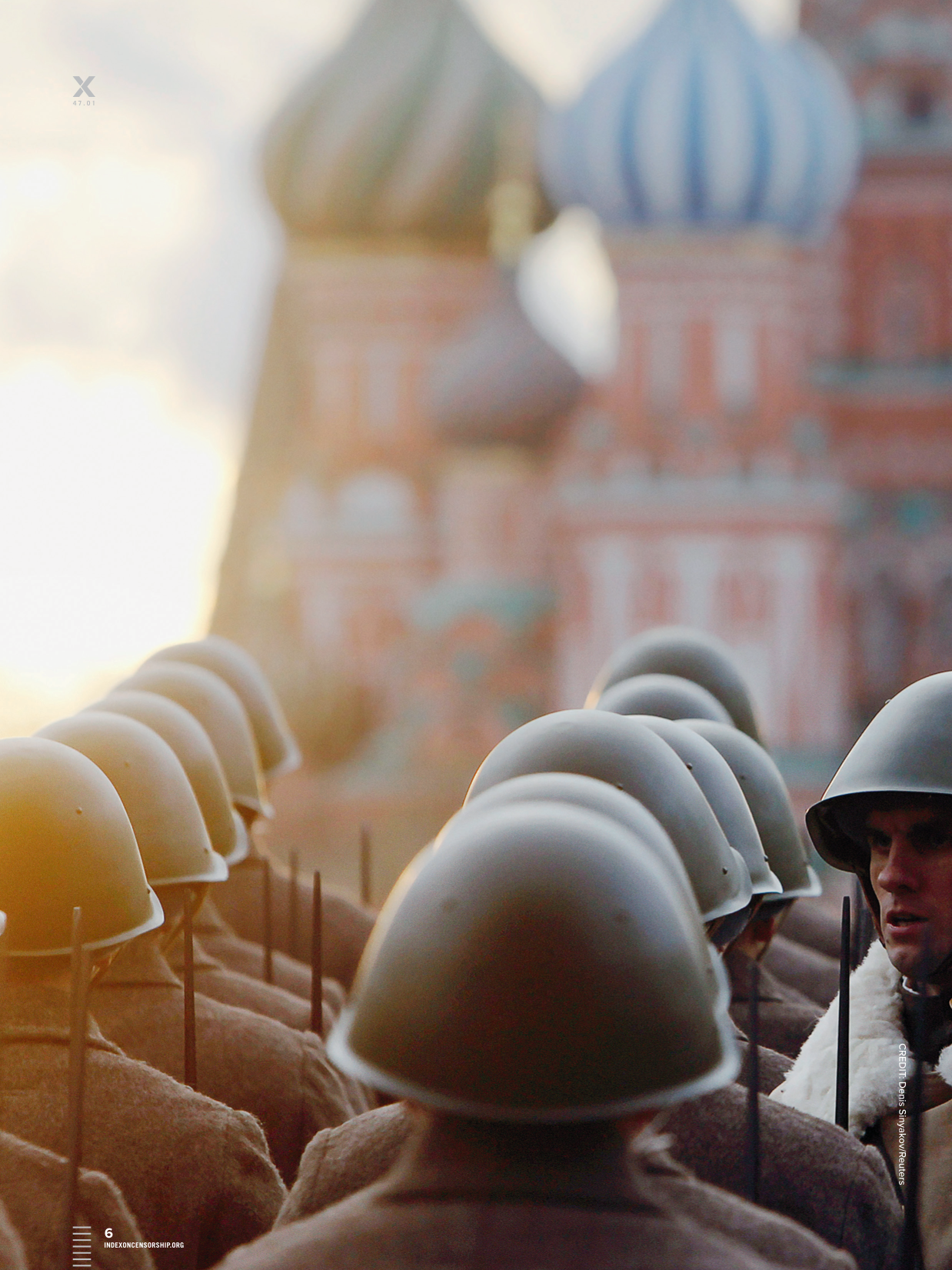
OtherFree accessOtherFirst published April, 2018pp. 11-13Who controls the past controls the future…: Fall in line or be in the firing line is the message historians are receiving from governments around the world Sally GimsonPreview abstractPDFAbstract
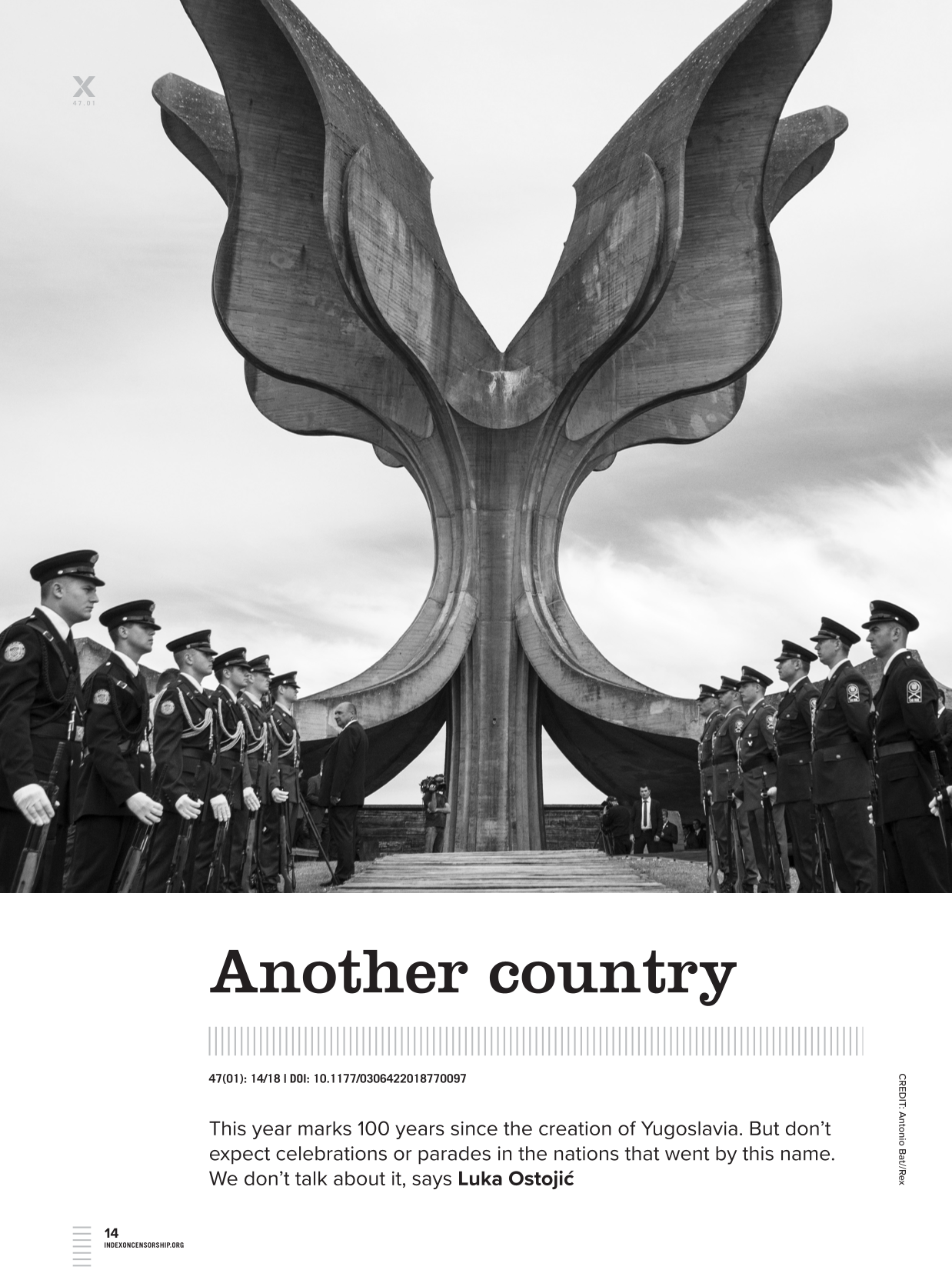
OtherFree accessOtherFirst published April, 2018pp. 14-18Another country: One hundred years after the creation of Yugoslavia,there are few signs it ever existed in Croatia. Why? Luka OstojićPreview abstractPDFAbstract
OtherFree accessOtherFirst published April, 2018pp. 19-21No comfort in the truth: It’s the episode of history Japan would rather forget. Instead comfort women are back in the news Annemarie LuckPreview abstractPDFAbstract
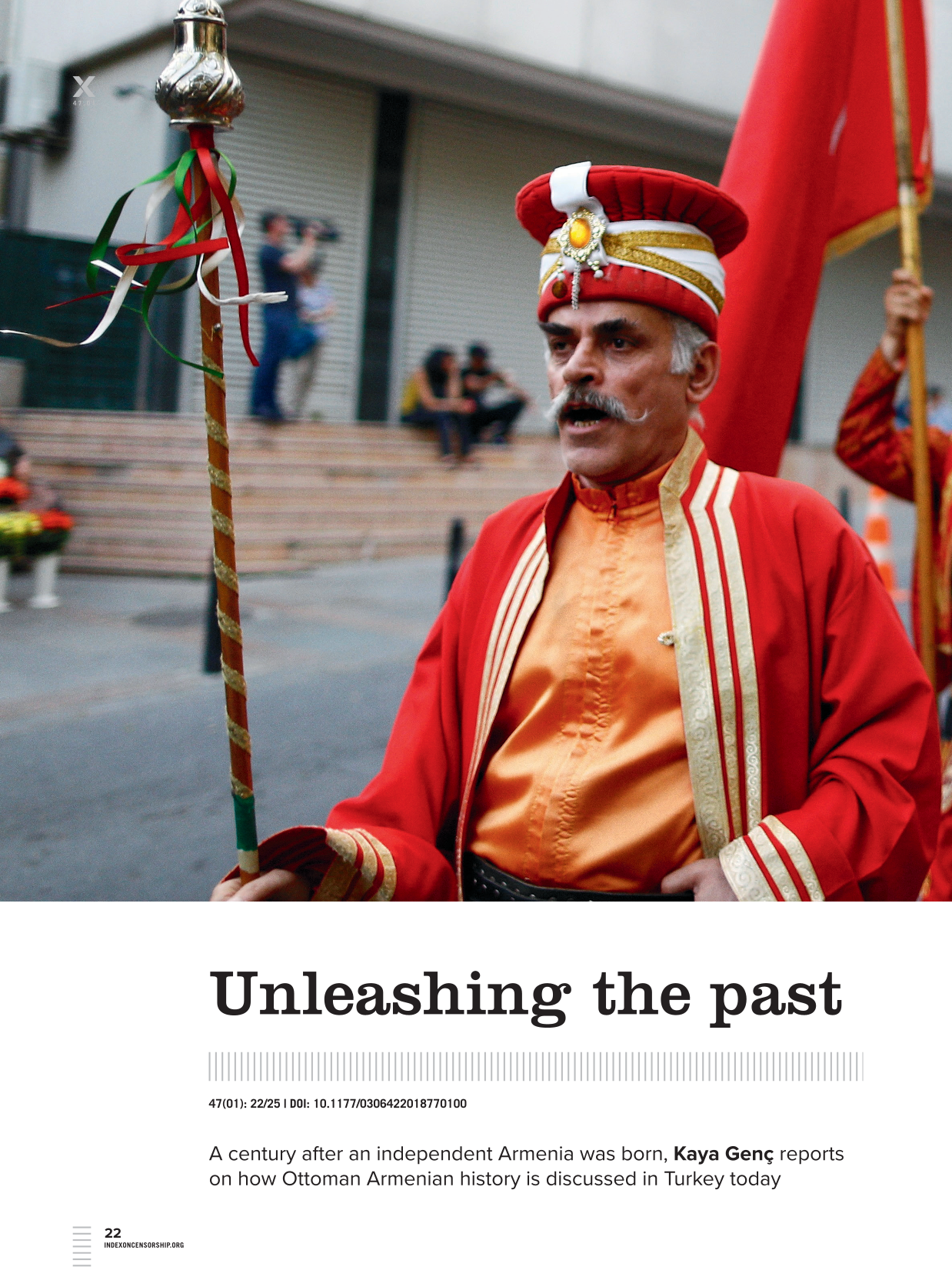
OtherFree accessOtherFirst published April, 2018pp. 22-25Unleashing the past: Freedom to publish on the World War I massacre of Turkish Armenians is fragile and threatened Kaya GençPreview abstractPDFAbstract
OtherFree accessOtherFirst published April, 2018pp. 26-27Stripsearch: Mister History is here to teach you what really happened Martin RowsonPreview abstractPDFAbstract
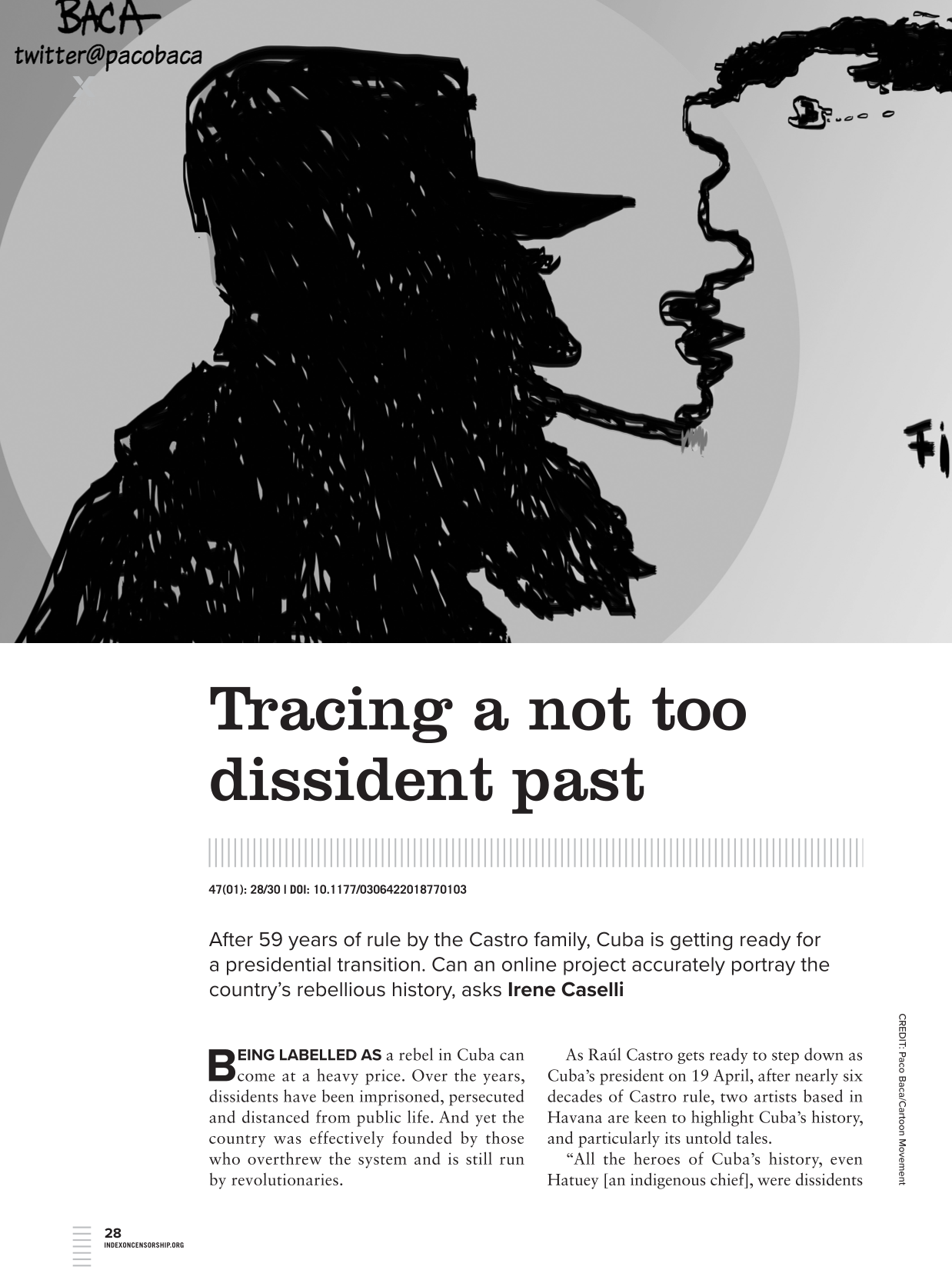
OtherFree accessOtherFirst published April, 2018pp. 28-30Tracing a not too dissident past: As Cubans prepare for a post-Castro era,a digital museum explores the nation’s rebellious history Irene CaselliPreview abstractPDFAbstract
OtherFree accessOtherFirst published April, 2018pp. 31-34Lessons in bias: Leading historians and presenters discuss the black holes of the historical universe Margaret Macmillan, Neil Oliver, Lucy Worsley , [...]View AllPreview abstractPDFAbstract
OtherFree accessOtherFirst published April, 2018pp. 35-37Projecting Poland and its past: Poland wants you to talk about the “Polocaust” Konstanty GebertPreview abstractPDFAbstract
OtherFree accessOtherFirst published April, 2018pp. 38-39Battle lines: One battle,two countries and a whole lot of opinions. We talk to people in China and Japan about what they learnt at school about the Nanjing massacre Hannah Leung, Matthew HernonPreview abstractPDFAbstract
OtherFree accessOtherFirst published April, 2018pp. 40-43The empire strikes back: Ukraine and Belarus approach their recent former Soviet status in opposite ways. Plus Stephen Komarnyckyj on why Ukraine needs to not cherry-pick its past Andrei AliaksandrauPreview abstractPDFAbstract
OtherFree accessOtherFirst published April, 2018pp. 44-46Staging dissent: When a Britiish prime minister was not amused by satire,theatre censorship followed. We revisit plays that riled him,50 years after the abolition of the state censor Simon CallowPreview abstractPDFAbstract
OtherFree accessOtherFirst published April, 2018pp. 47-49Eye of the storm: The historian known as Mosul Eye on documenting what Isis were trying to destroy Omar MohammedPreview abstractPDFAbstract
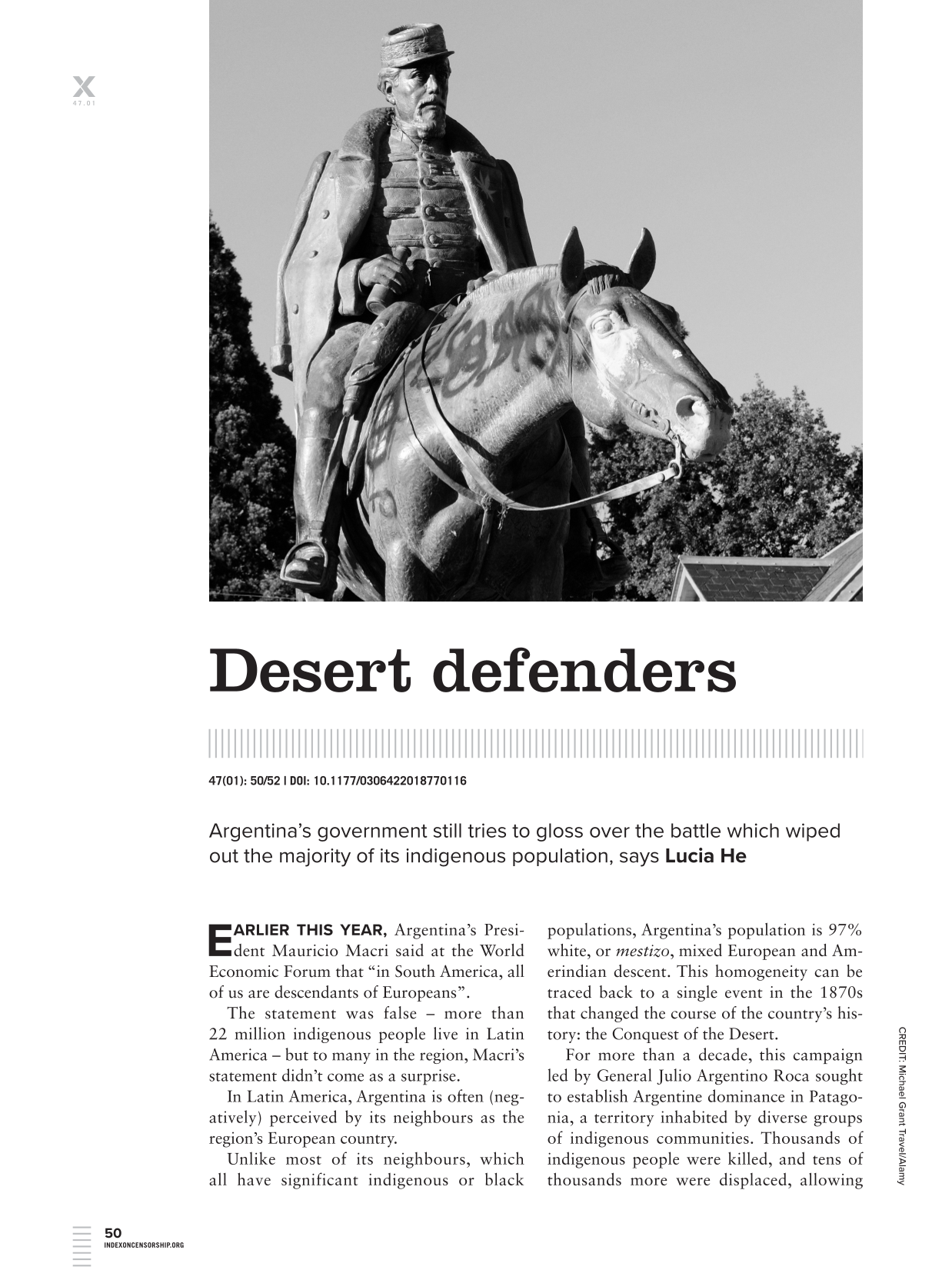
OtherFree accessOtherFirst published April, 2018pp. 50-52Desert defenders: An 1870s battle in Argentina saw the murder of thousands of its indigenous people. But that history is being glossed over by the current government Lucia HePreview abstractPDFAbstract
OtherFree accessOtherFirst published April, 2018pp. 53-54Buried treasures: Britain’s historians are struggling to access essential archives. Is this down to government inefficiency or something more sinister? David AndersonPreview abstractPDFAbstract
OtherFree accessOtherFirst published April, 2018pp. 55-56Masters of none: Post-war Germany sets an example of how history can be “mastered”. Poland and Hungary could learn from it Bernt HagtvetPreview abstractPDFAbstract
OtherFree accessOtherFirst published April, 2018pp. 57-59Naming history’s forgotten fighters: South Africa’s government is setting out to forget some of the alliance who fought against apartheid. Some of them remain in prison Raymond JosephPreview abstractPDFAbstract
OtherFree accessOtherFirst published April, 2018pp. 60-63Colombia’s new history test: A new law is making history compulsory in Colombia’s schools. But with most people affected by decades of conflict,will this topic be too hot to handle? Irene CaselliPreview abstractPDFAbstract
OtherFree accessOtherFirst published April, 2018pp. 64-66Breaking from the chains of the past: Recounting Caribbean history accurately is hard when many of the documents have been destroyed Audra DipteePreview abstractPDFAbstract
OtherFree accessOtherFirst published April, 2018pp. 67-69Rebels show royal streak: Some of the Iranian protesters at recent demonstrations held up photos of the former shah. Why? Layli ForoudiPreview abstractPDFAbstract
OtherFree accessOtherFirst published April, 2018pp. 70-71Checking the history bubble: Historians will have to use social media as an essential tool in future research. How will they decide if its information is unreliable or wrong? Mark FraryPreview abstractPDFAbstract
OtherFree accessOtherFirst published April, 2018pp. 72-73Franco’s ghosts: Many bodies of those killed under Franco’s regime have yet to be recovered and buried. A new movement is making more information public about the period Silvia NortesPreview abstractPDFAbstract
OtherFree accessOtherFirst published April, 2018pp. 74-75Standing together: If we don’t support those whose views we dislike as much as those whose views we do,we risk losing free speech for all Jodie GinsbergPreview abstractPDFAbstract
OtherFree accessOtherFirst published April, 2018pp. 78-80How gags can remove gags: Comedian Mark Thomas discusses the taboos about stand-up he encountered in a refugee camp in Palestine Tracey BagshawPreview abstractPDFAbstract
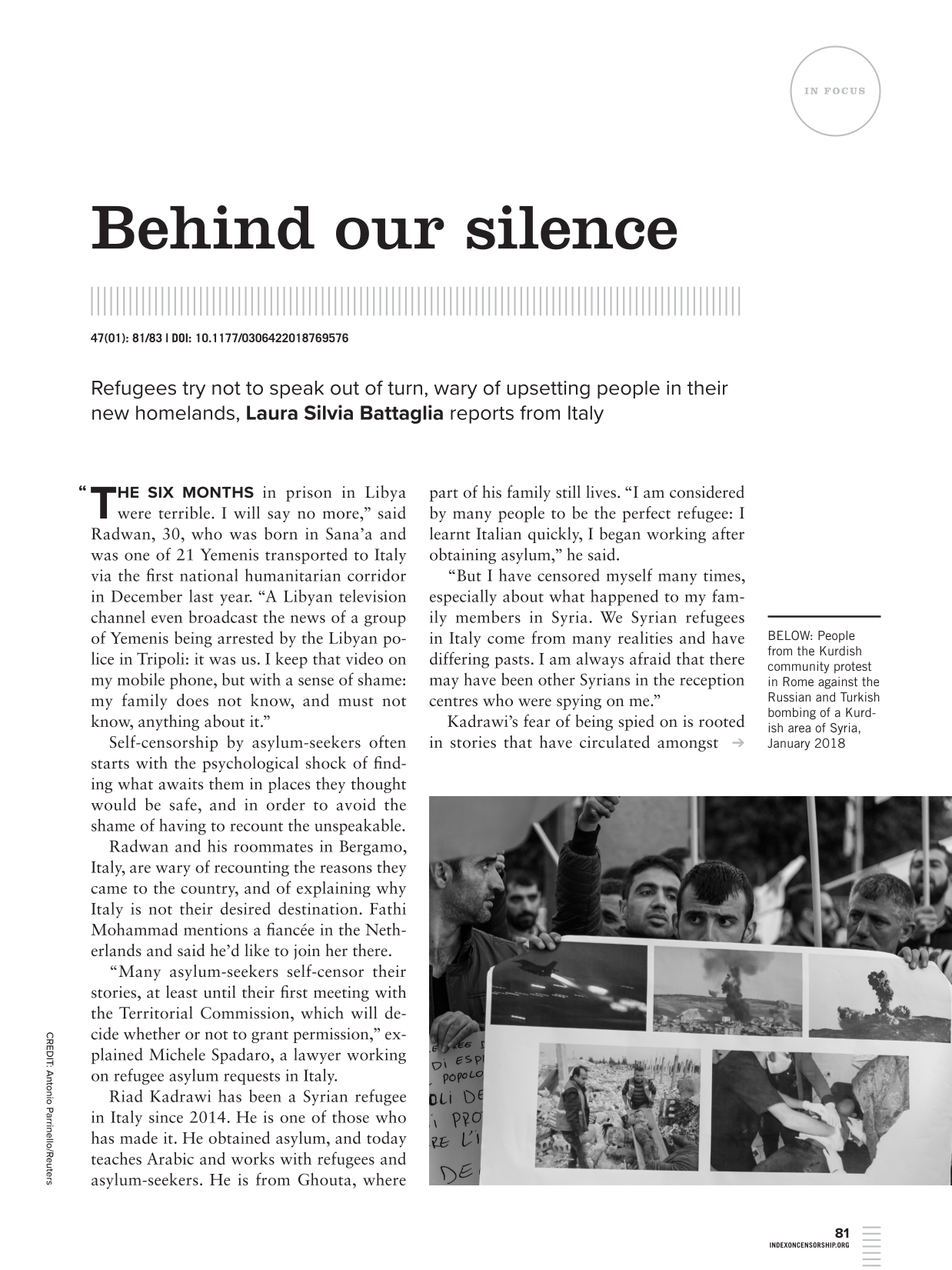
OtherFree accessOtherFirst published April, 2018pp. 81-83Behind our silence: Refugees feel that they are not allowed to give their views in public in case they upset their new nation,they tell our interviewer Laura Silvia BattagliaPreview abstractPDFAbstract
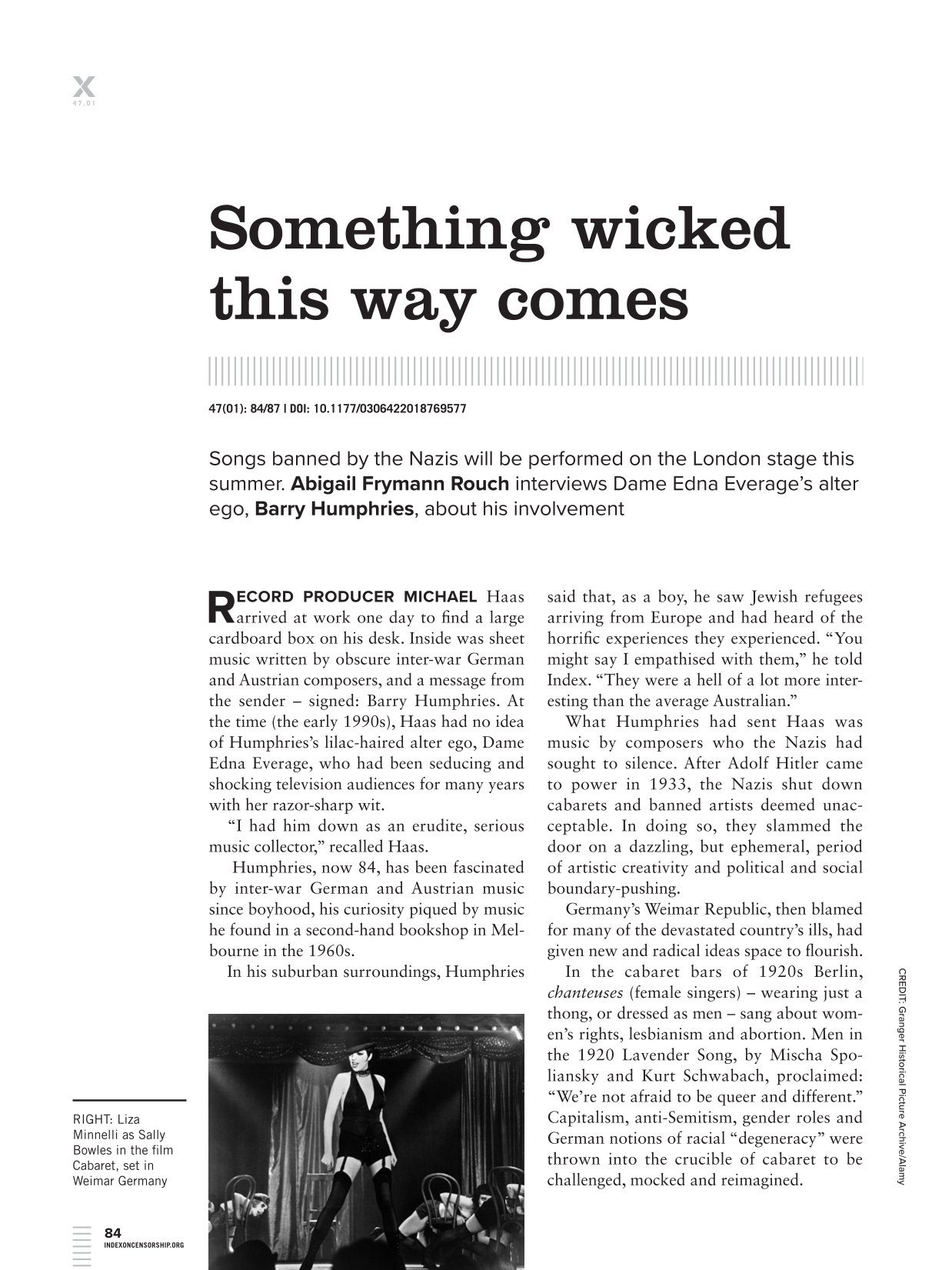
OtherFree accessOtherFirst published April, 2018pp. 84-87Something wicked this way comes: They were banned by the Nazis and now they’re back. An interview with Barry Humphries on his forthcoming Weimar Republic cabaret Abigail Frymann RouchPreview abstractPDFAbstract
OtherFree accessOtherFirst published April, 2018pp. 88-91Fake news: the global silencer: The term has become a useful weapon in the dictator’s toolkit against the media. Just look at the Philippines Caroline LeesPreview abstractPDFAbstract
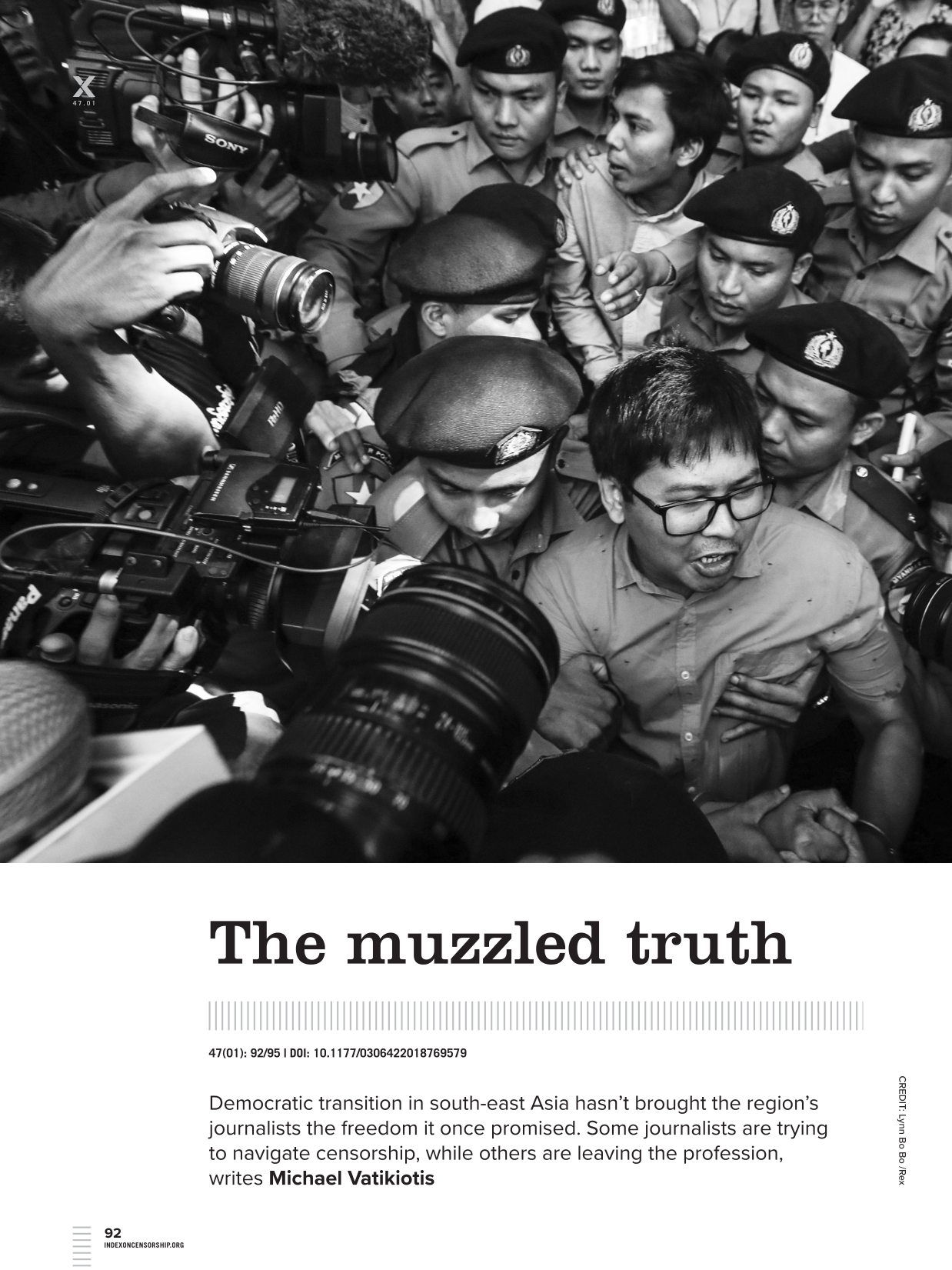
OtherFree accessOtherFirst published April, 2018pp. 92-95The muzzled truth: The media in south-east Asia face threats from many different angles. It’s hard to report openly,though some try against the odds Michael VatikiotisPreview abstractPDFAbstract
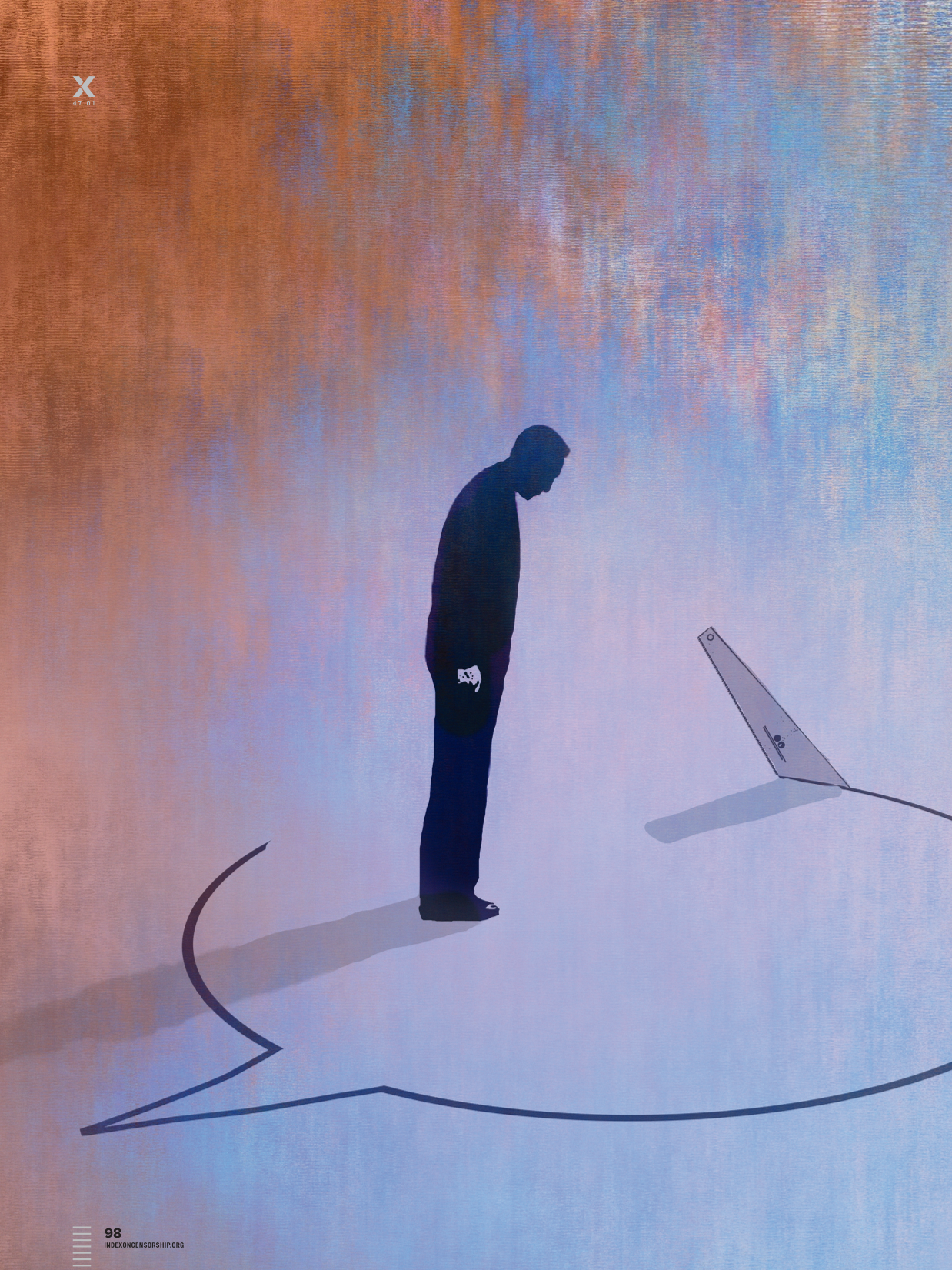
OtherFree accessOtherFirst published April, 2018pp. 96-97Carving out a space for free speech: As journalists in Singapore avoid controversial topics,a new site launches to tackle these Kirsten HanPreview abstractPDFAbstract
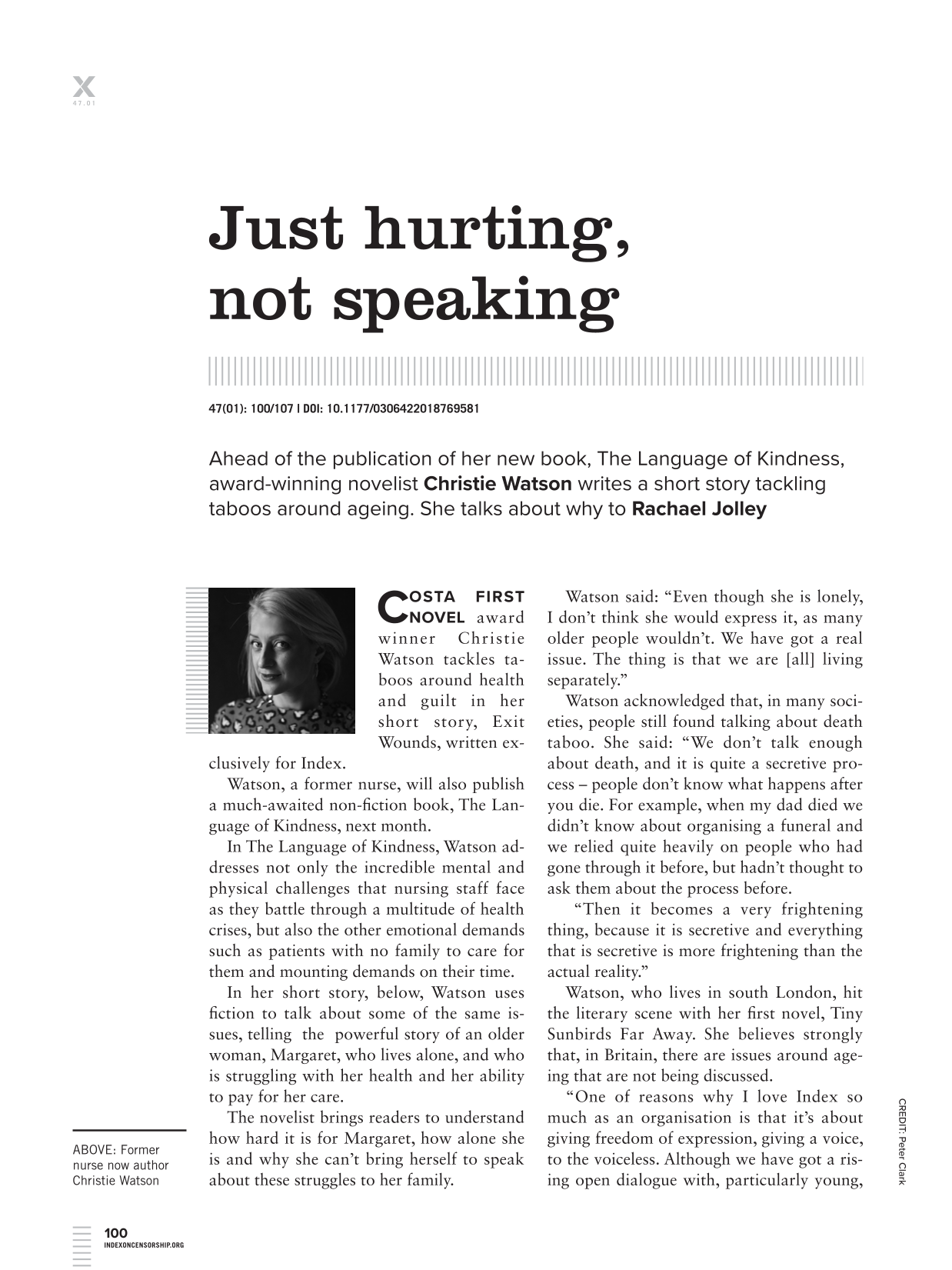
OtherFree accessOtherFirst published April, 2018pp. 100-107Just hurting,not speaking: Rachael Jolley interviews the author about her forthcoming book,why old people are today’s silent community and introduces a short story written exclusively for the magazine Christie WatsonPreview abstractPDFAbstract
OtherFree accessOtherFirst published April, 2018pp. 108-115Ban and backlash create a bestseller: The bestselling Palestinian author talks to Jemimah Steinfeld about why a joke on Yasser Arafat put his life at risk. Also an extract from his latest book,translated into English for the first time Abbad YahyaPreview abstractPDFAbstract
OtherFree accessOtherFirst published April, 2018pp. 116-117Ultimate escapism: The award-winning poet speaks to Layli Foroudi about fighting adversity in prison. Plus,a poem of Sabet’s published in English for the first time Mahvash SabetPreview abstractPDFAbstract
OtherFree accessOtherFirst published April, 2018pp. 118-120Index around the world: Research from Mapping Media Freedom details threats against journalists across Europe Danyaal YasinPreview abstractPDFAbstract
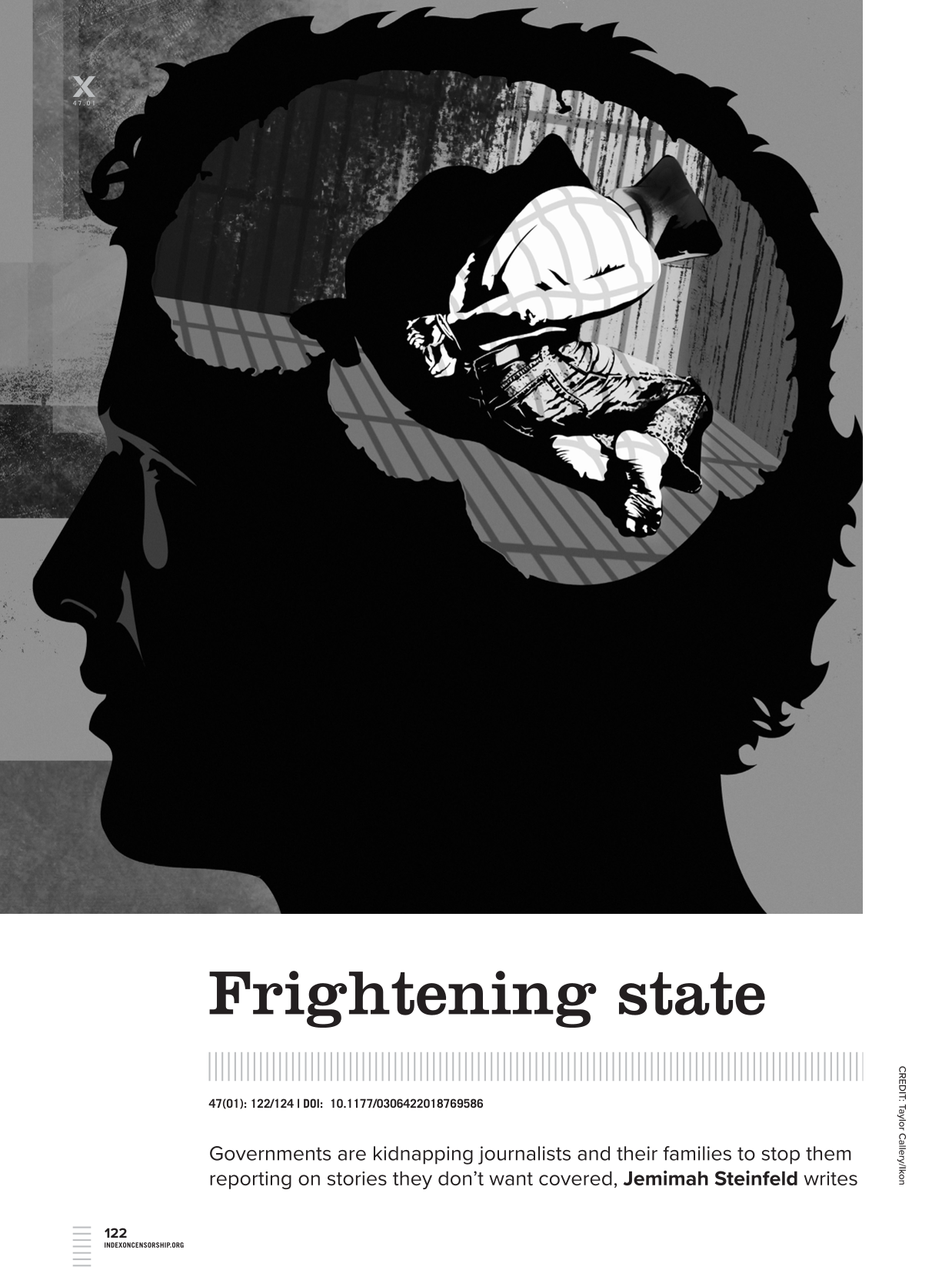
OtherFree accessOtherFirst published April, 2018pp. 122-124Frightening state: States are increasing the use of kidnapping to frighten journalists into not reporting stories Jemimah SteinfeldPreview abstractPDFAbstract