




Abstract
Abstract
Mercury mine waste contains other toxic metals in addition to Hg, such as Ag, Cd, Cu, Ni, Pb, Fe, Mn, As, and Sb, which may contribute to environmental pollution. Leaching characteristics of mine waste treated by solar thermal desorption were studied, and removal and mobilization processes were evaluated. Concentrations of Cd, Ni, and Pb in mine waste leachates before thermal treatment do not exceed the limits in European standards, and after the treatment, their concentration decreased significantly in some samples. Hg is the only metal with concentrations above the European leaching limits, although, in the treated samples, the concentrations of dissolved Hg decreased significantly, showing the effectiveness of the thermal treatment. Thus, in the mining wastes sample AS, Hg concentrations decreased from 1100 μg/L in the original sample to 73 μg/L in the treated sample, although this concentration is above the European leachate concentration levels (30 μg/L). In the calcine sample M03, Hg leached only decreased from 13 to 9 μg/L in the treated sample, although when characterized by percolation experiments, these levels were below the European leachate limits for nonhazardous solid-waste landfills. In the soil samples M02 and BS, the Hg leaching showed an opposite behavior, indicating in the Azogue soil sample M02 that the Hg concentration decreased from 66 to 6 μg/L in the treated sample, while in the Bayarque soil sample BS, the concentration of leached Hg increased from 9 to 51 μg/L in the treated sample. Results of geochemical modeling showed that the dominant species in the leachates of the untreated samples were HgClOH, Hg(OH)2, HgCl2, HgCl3−, and Hg0, which was in agreement with the high Hg and chloride concentrations in some leachates. In the leachates of the treated samples, the dominant species were Hg0, Hg(OH)2, HgClOH, and HgCl2.
Introduction
Mercury released into the environment in Hg mining areas is generally associated with abandoned mine waste, which is mainly composed of calcines (waste from Hg metallurgy) and mine waste impoundments, containing waste rock and low-grade ore stockpiles (Rytuba, 2003; Zhang et al., 2004; Fernández-Martínez et al., 2006; Higueras et al., 2006; Navarro et al., 2006, 2009a, b; Qiu et al., 2006; Zhang et al., 2009), and from Hg amalgamation in gold mining (Shaw et al., 2006).
Mercury mine waste and Hg-enriched soil are a potential source of particulate and soluble Hg and may be transported from contaminated areas as Hg0 vapor (Navarro et al., 2000; Gustin et al., 2002), as ionic soluble phases, and by colloid particles (Lowry et al., 2004). Current remediation techniques for the soil polluted by Hg0 include encapsulation and amalgamation, solidification/stabilization, ex situ thermal treatment, and in situ thermal desorption (Sanchez et al., 2002; Chang and Yen, 2006; Kunkel et al., 2006). Thermal desorption is an innovative treatment technology where contaminated soil is heated (100°C–600°C) to release volatile contaminants and separate them from the soil (Khan et al., 2004; Navarro et al., 2009).
The use of solar energy in these environmental applications is a novelty, as the majority of the known experiments focus on the use of solar energy for conventional applications (Funken et al., 1999; Steinfeld and Palumbo, 2001; Kaneko et al., 2004). Moreover, depending on the system operating temperature, solar thermal desorption could be used to treat soil polluted with volatile organic compounds, polycyclic aromatic hydrocarbons, pesticides, polychlorinated biphenyls, and cyanide (Troxler et al., 1997). The main reason for the application of thermal desorption to the soil polluted by metallic Hg is its high volatility.
Leaching tests are widely applied to evaluate risks and alternative remedial treatments (Brusseau, 1994; Chiang et al., 2009; Choi et al., 2009; Karamalidis and Voudrias, 2009;). The best known dynamic leaching test is probably the column flow test (Bone et al., 2004). When infiltration is similar to rainwater, it is possible to study the mobility of pollutants under controlled laboratory conditions (Navarro and Martínez, 2008). Analytical and numerical methods applied to the results of leaching tests may also be useful for evaluating the efficiency of different remediation measures (Brusseau, 1994; Shackelford and Glade, 1997; Sváb et al., 2008).
Mine waste leaching tests may, therefore, be considered a useful way for assessing the mobilization of metals from old mine impoundments; thus, column tests conducted on Hg calcines have shown Hg in leachates of more than 2000 μg/L (Navarro et al., 2009b) and 1500 μg/L, with a mean of 96 μg/L (Gray, 2003), indicating that water-soluble Hg compounds or colloids may be present (Table 1). For instance, leaching tests on mine waste from the New Idria and Sulphur Bank Mercury Mines (Lowry et al., 2004) showed Hg concentrations of 2000 μg/L, attributed to the release of particulates (hematite, jarosite-alunite, quartz, and HgS).In addition, the leaching of Hg mine tailings showed the mobilization of high amounts of Hg: 12,900–1300 μg/L in Murray Brook mine (Shaw et al., 2006) and 8200 μg/L in Sulphur Creek (Churchill and Clinkenbeard, 2003) (Table 1). In mine water and surface water, the Hg concentrations may be low, although in catchment areas near the mining impoundments, the Hg may reach elevated concentrations (Rytuba, 2000).
Values in μg/L.
SW, surface water.
The aim of this study is to evaluate metal leaching, especially Hg, in soil and mine wastes from old mine sites in Almeria (southeast Spain), before and after solar thermal desorption. The hydrochemical features of the leachates are employed to determine the limitations of solar thermal desorption for the remediation of polluted soils, and to evaluate the factors that may control the mobilization of contaminants remaining in the treated waste.
Materials and Methods
Characterization of mine waste
Soil and mine waste samples were collected at the Azogue Valley Mine (southeast Spain), which was the most important Hg mine in the Betic Mountain Range from around 1873 until 1890, and the old Bayarque mine, located 60 km northwest of the Azogue Valley Mine (Viladevall et al., 1999; Navarro et al., 2006).
Approximately 1.5-kg samples of mine waste and soil were manually extracted and crushed to 10 mesh in a jaw crusher, quartered, and pulverized in an agate mortar, rehomogenized, and repacked in plastic bags. Samples were sent to Activation Laboratories (ACTLABS; Ancaster, Canada), where Au, Ag, As, Ba, Br, Ca, Ce, Co, Cr, Cs, Eu, Fe, Hf, Hg, Ir, La, Lu, Na, Ni, Nd, Rb, Sb, Sc, Se, Sm, Sn, Sr, Ta, Th, Tb, U, W, Y, and Yb were quantitatively analyzed by instrumental neutron activation analysis (INAA), and Mo, Cu, Pb, Zn, Ag, Ni, Mn, Sr, Cd, Bi, V, Ca, P, Mg, Tl, Al, K, Y, and Be were analyzed by inductively coupled plasma- emission spectroscopy (ICP-OES). The thermally treated samples were analyzed in the same manner.
The quality of the Hg and metal determinations in solid samples was controlled by method blanks, duplicates, and certified reference materials: DMMAS-101 for INAA and AN-G, SDC-1, DNC-1, SCO-1, GXR-1, GXR-2, and GXR-4 for total digestion and ICP-OES analysis. The limits of determination were 1 ppm for total Hg, although some samples were analyzed by cold-vapor FIMS with a 0.5-ppb limit. The analysis of standard reference materials showed small differences between the samples and certified materials.
The soil and mine waste samples were studied at the Electronic Microscopy Laboratory of the Autonomous University of Barcelona (Spain) using transmitted and reflected light microscopy, X-ray diffraction, and scanning electron microscopy (SEM) with an attached energy dispersive X-ray spectroscopy (EDS) system. SEM and EDS were used to characterize the solid forms of Hg in ore, soils, and waste samples.
The Hg phases were also determined by solid-phase-Hg-thermo-desorption (SPTD), based on the specific thermal desorption or decomposition of Hg compounds from solids at different temperatures (Biester and Scholz, 1997; Navarro et al., 2006). Hg thermo-desorption curves were determined by means of an in-house apparatus, consisting of an electronically controlled heating unit and an Hg detection unit. Measurements were carried out at a heating rate of 0.5°C/s and a nitrogen-gas flow of 300 mL/min. The sample weight was 1–20 mg depending on the Hg content of the sample. The lowest level of detection under the given conditions is in the range of 40–50 ng if all Hg is released within a single peak (Biester and Scholz, 1997). Results are depicted as Hg thermal desorption curves, which show the release of Hg0 over temperature.
Thermal treatment of mine waste
Thermal desorption was applied to contaminated soil and mine wastes to determine the Hg and As released (Navarro et al., 2009a). The experiments were performed in a fluidized bed reactor in the Solar Platform of Almeria (PSA) solar furnace and in a low-temperature solar system at the UPC laboratories. The PSA solar facility consists of a continuously solar-tracking flat heliostat, a parabolic concentrator mirror, an attenuator, and a test zone (Román et al., 2008). The concentrator dish is the main component of the solar furnace. It concentrates incident light from the heliostat, multiplying the radiant energy in the focal zone to a peak flux of 300 W/cm2 and a total power of 68 kW.
Waste samples were inserted in the fluidized bed chamber, which was gradually heated by concentrated solar radiation as the shutter opened to the reference temperature of 400°C, and this temperature was maintained for ∼30 min. During treatment, a blower forces air through the absorber module, where it is heated, and a part of the energy in this air is transferred into the fluidized bed chamber through its steel walls, heating it, and then preheating the air or gas that fluidizes the bed as it passes through the coil behind it. When this has been accomplished, the digital data are saved. At the end of the experiment, when the sample is cold, it is taken out and analyzed.
Leaching experiments
Leaching tests were performed to evaluate metal mobility, using a column with an internal diameter of 150 mm, a length of 751 mm, and an endpiece with a 0.50-μm filter. Low-mineralization water was entered into the column by a rainfall simulator connected to a titration pump, which provided a constant flow rate. Leaching experiments were performed using a stationary flow rate of 2.8 L/min for 240 min, the equivalent of ∼7.0 pore volumes. The column dimensions minimized channeling, which is usually the main problem in column experiments, by making the column diameter at least 30 times the maximum size of the particles found in the material, which, in this study, ranged from 0.2–2 mm, and, therefore, the column diameter is sufficiently larger than the particle size.
The pH, temperature, oxidation-reduction potential, and electrical conductivity were determined in the effluents from the experiments, and the samples were stored at 4°C. The pH was potentiometrically measured with a pH-meter calibrated before each measurement. Conductivity was determined using a conductimeter calibrated with an NaCl solution. The oxidation-reduction potential, measured using an ORP meter with a combined platinum electrode, was used as approximate data for geochemical modeling.
Samples were then acidified with HCl (pH=1.9) and analyzed using inductively coupled plasma mass spectrometry (ICP-MS) at ACTLABS. Cr, Mn, Fe, Co, Ni, Cu, Zn, As, Se, Ag, Cd, Sb, Ba, Au, Hg, Tl, and Pb were determined. Unacidified samples were stored in low-density polyethylene bottles, and Cl, CO3H, CO3, NO3, and SO4 were analyzed using ion chromatography and other common methods. The accuracy of the results was assessed by examining blanks and replicates and by performing charge-balance calculations. Standard reference material NIST 1640 (ICP-MS) was used to evaluate accuracy.
Hydrogeochemical analyses of leachates were performed using the Minteq numerical code (Allison et al., 1991) to evaluate the speciation of dissolved constituents and calculate the saturation state of the effluents.
Results and Discussion
Mineralogy and geochemistry of mine wastes
The soil and mine wastes used in this research were obtained from an old mining area in the Azogue Valley in Almeria, except the soil BS sampled at Bayarque mine. In the Azogue Valley, the ore is composed of stibnite, cinnabar, As minerals (realgar and orpiment), sphalerite, siderite, chalcopyrite, pyrite, quartz, calcite, and barite (Table 2). Hydrothermal and supergene alteration of primary minerals resulted in an association of secondary Fe-Mn and Sb-As oxides and hydroxides, kaolinite, jarosite, and gypsum. Other minerals detected include metacinnabar (HgS), Se-HgS, tiemannite (HgSe), corderoite (Hg3S2Cl2), shakhovite [Hg4SbO5(OH)3], and schuetteite [Hg3(SO4)O2]. The samples used in the leaching tests are mainly composed by quartz, barite, illite, dolomite, calcite (Table 2), and sulfides.
High-medium abundant minerals.
Detected phases by DRX in calcine sample M03.
Detected phases by DRX in mining wastes sample AS.
DRX, X-ray diffraction; AS, mining wastes of the Azogue Valley mine.
Furthermore, SPTD determinations showed that Hg was released from the samples in two different temperature ranges: 220°C–250°C and 300°C–330°C (Fig. 1). The first Hg release peak detected indicates Hg released from the matrix, whereas the second peak at higher temperatures indicates the occurrence of cinnabar (Biester et al., 1999; Navarro et al., 2006). The Hg-matrix phase detected may be found in calcinated samples because of cinnabar processing, which produces Hg0 that may be readsorbed to the calcinated material during cooling. In soil samples (BS and M02) and mining wastes sample AS, dominant Hg0-matrix and cinnabar was detected, while in calcine sample M03, the only Hg-phase detected was Hg0 adsorbed in the solid matrix.
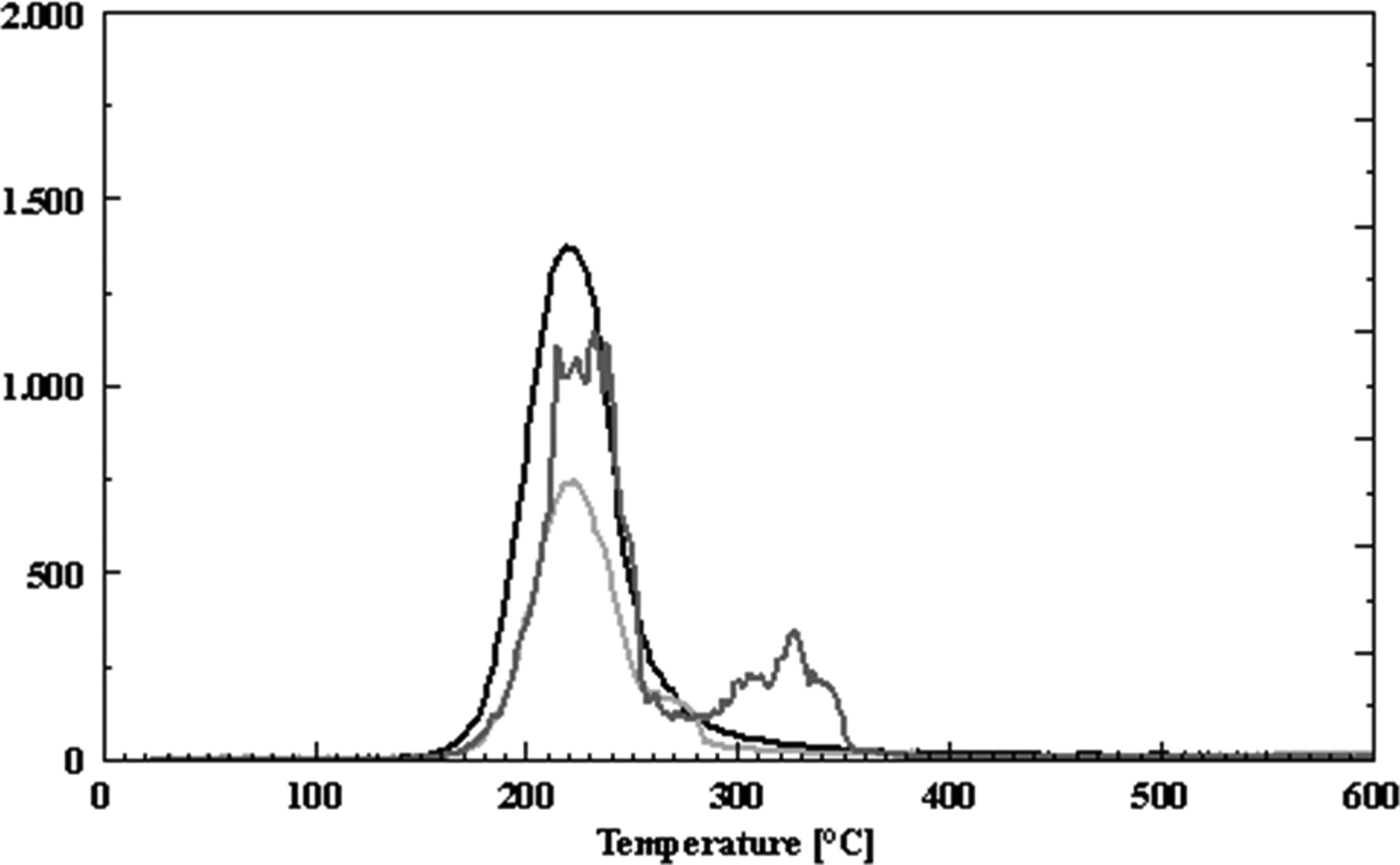
Solid-phase-Hg-thermo-desorption of soil sample M02 used in the leaching tests.
Detailed SEM and EDS examination of mining wastes sample AS showed the presence of primary and secondary cinnabar associated with barite, pyrite, and botroydal pyrite, and small particles containing both Hg and Cl that may be associated with calomel (Hg2Cl2). Moreover, some particles containing both Hg and Br were observed that may be associated with kuzminite [Hg2(Br,Cl)2].
The geochemical composition of mine wastes samples M03 and AS was shown to contain Hg at concentrations of 470 and 600 mg/kg, respectively (Table 3). These materials also showed high amounts of Ag, As, Ba, Cd, Cr, Hg, Pb, Sb, and Zn exceeding the maximum allowed by the Netherlands Soil Contamination Guidelines (Table 2). The high Hg concentrations in calcines may be due to the inefficient and incomplete process of cinnabar retorting, the possible readsorption of Hg by calcines into the furnace, or mine waste exposed to stack emissions for several years. The results of thermal treatment showed a decrease in Hg content in the samples The final concentration of Hg was 176 mg/kg in mine waste (AS) and 60 mg/kg in the calcined sample (M03) (Table 2). In the soils, high concentrations of Hg (M02: 450 mg/kg, BS: 33 mg/kg) and higher amounts of metals were detected, although their concentrations were below the detected values in mine wastes. The thermal treatment showed a decrease of Hg to 200 and 21 mg/kg, respectively (Table 3).
Untreated samples.
M02, contaminated soil of the Valle del Azogue mine; M03, calcine of the Valle del Azogue mine; BS, contaminated soil of Bayarque mine; -T, thermal-treated samples; cert, certified reference materials; NA, not analyzed.
Leaching experiments
Figure 2 shows the Ag and Cd concentrations found in leachates from thermally treated and untreated mine waste sample AS. Before thermal treatment, the concentration of Ag and Cd leachates did not exceed the European standard limits, as the Cd European limits is 0.3 mg/L and after treatment, the concentrations significantly decreased (<1 μg/L). Neither Ni nor Cu leaching (Fig. 3) exceeds the European limits for nonhazardous waste leachates (Table 4), which are 3 and 30 mg/L, respectively, and both show the reduction in leached Ni from the treated sample, compared with the Ni leached from the original mine waste sample. On the other hand, the Cu concentration is similar in both the leached treated and untreated samples, which is possible because the heating of Cu sulfides causes the formation of Cu-soluble salts, as in sulfide ore roasting, although the concentrations of dissolved Cu were very low.
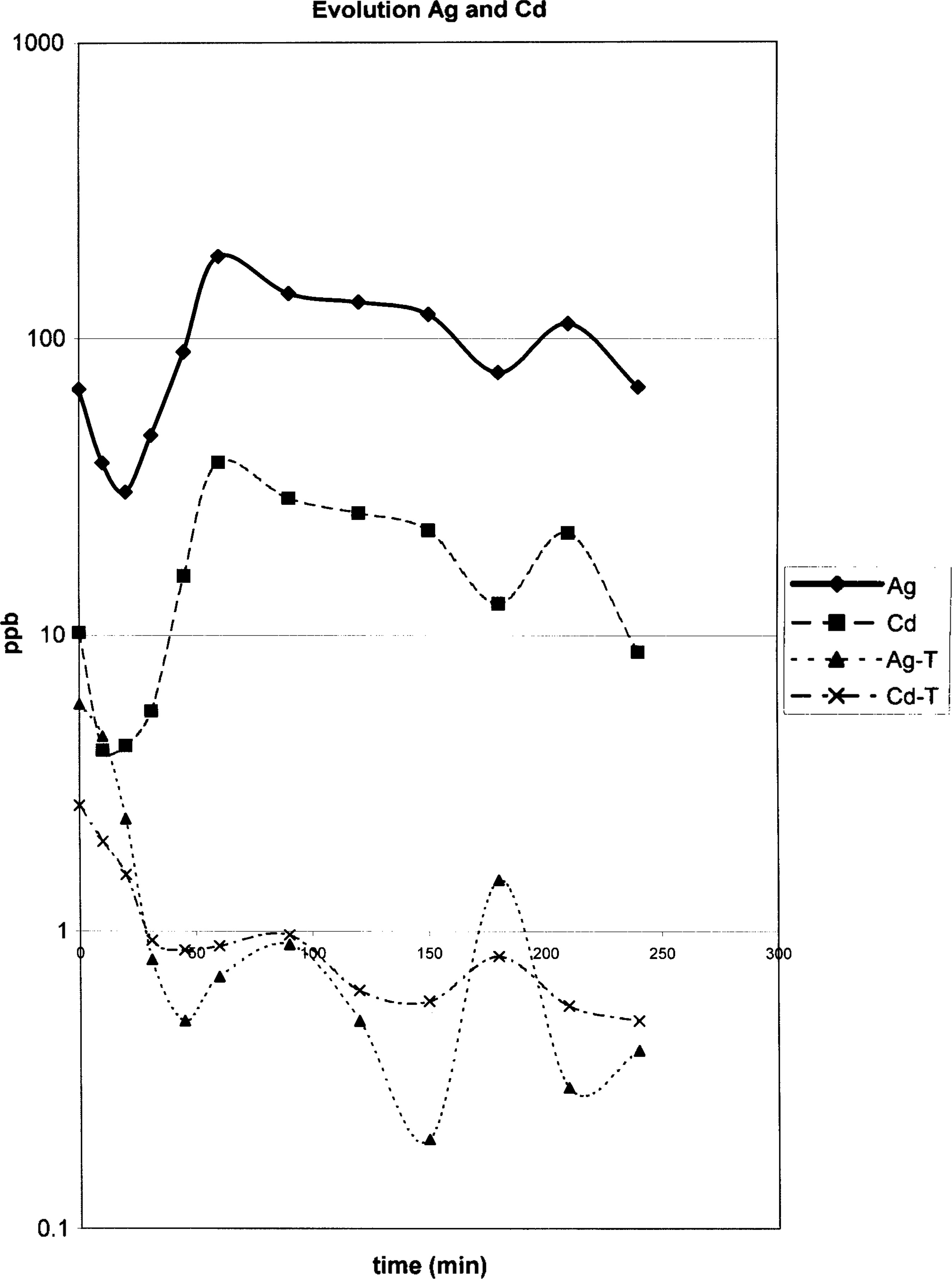
Changes in Ag and Cd in the leaching tests of pure (no suffix) and thermal-treated (-T) AS, mining wastes sample.
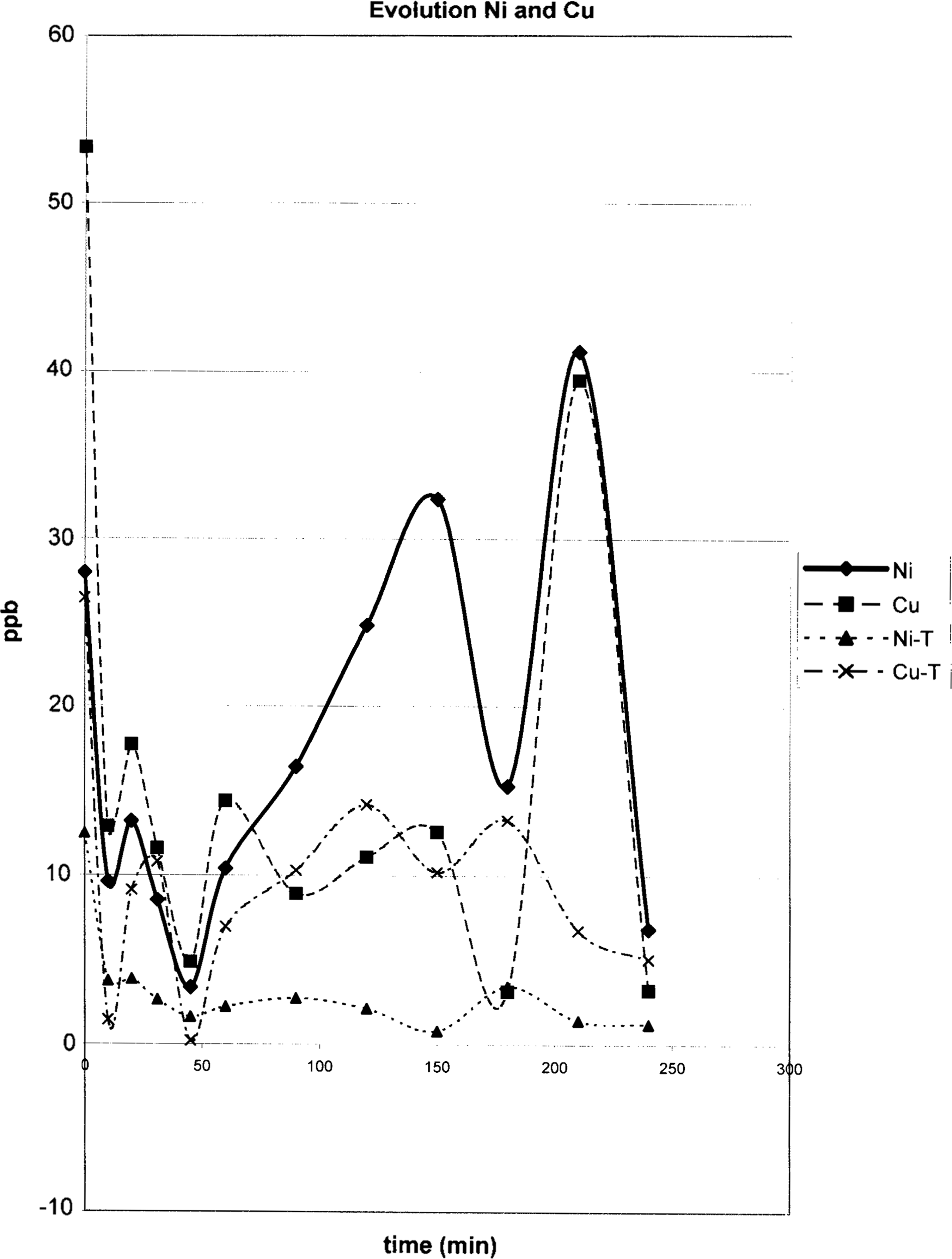
Changes in Ni and Cu in the leaching tests of pure and thermal-treated AS sample.
The concentrations match with the first flush at each experiment. Values in mg/L.
Untreated samples.
EUL, European limits of leachate concentrations for nonhazardous solid waste landfills (percolation assays).
Leached Hg concentrations of mining wastes sample AS (Fig. 4) are above European leaching limits (0.03 mg/L, Table 3); however, in the treated sample AS-T, the concentrations of dissolved Hg had significantly decreased, demonstrating the effectiveness of the thermal treatment. Thus, in the mining wastes sample AS, the Hg concentration decreased from 1100 μg/L in the original sample to 73 μg/L in the treated sample, although this concentration is above the European leachate concentration levels (30 μg/L).

Changes in Hg and Pb in the leaching tests of pure and thermal-treated AS sample.
The evolution of leached Pb in the AS mining wastes sample is similar in both samples (Fig. 4), and again, the concentration decreases in the thermally treated sample. Other metals, such as Fe and Mn (Fig. 5) and metalloids that mobilize in anionic species, such as As and Sb (Fig. 6), were significantly mobilized. Nevertheless, the concentrations of As and Sb in the treated samples are below leaching standards, which are 0.3 and 0.15 mg/L, respectively, although detected Sb concentrations (>0.1 mg/L) are inaccurate. In addition, high concentrations of Cl and SO4 were detected during the leaching test, which are possibly associated to the dissolution of secondary phases.
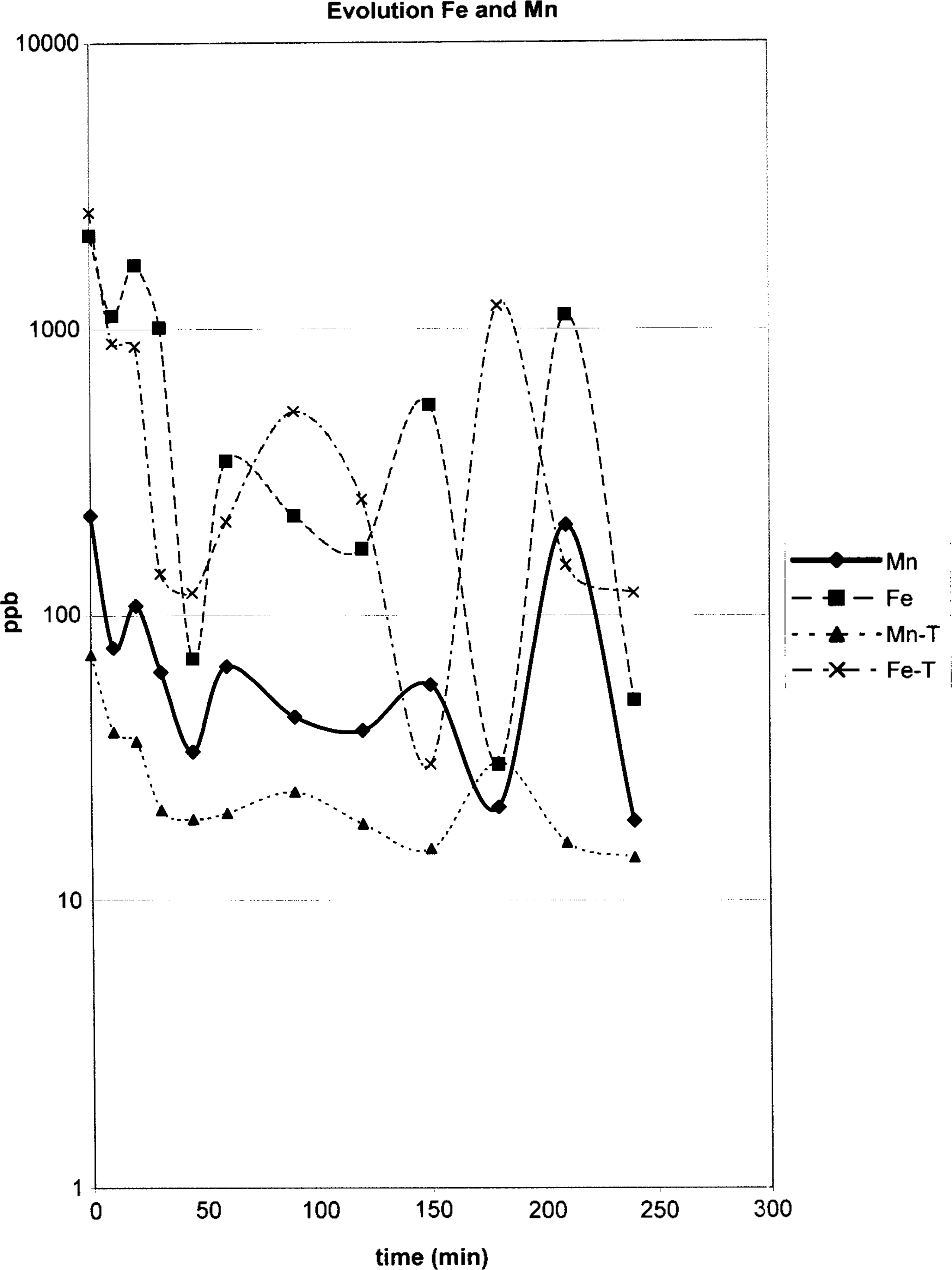
Changes in Mn and Fe in the leaching tests of pure and thermal-treated AS sample.

Changes in As and Sb in the leaching tests of pure and thermal-treated AS sample.
Figure 7 shows the metal concentrations found in leachate from calcine sample M03, before and after thermal treatment, where the metal concentration in the leachate does not exceed European standards (Table 4). Unlike sample AS-T, metal leaching in treated sample M03-T is quite low, with the exception of Sb, which mobilizes in both thermally treated and untreated samples.

Changes in Mn, Ni, Cu, As, Ag, Cd, Sb, Hg, and Pb in the first leachate of the leaching tests of the pure and thermal-treated M03 sample.
Mobilization of As was also significantly reduced, contrary to what was observed in sample AS (Fig. 7, Table 3), possibly because of the volatilization of As by the high peak temperature reached in the thermal treatment (38°C–482°C). Thus, As content in the treated sample decreased from 1610 to 578 mg/kg (Table 2). Moreover, leached Ag, Cd, Cu, Ni, and Pb decreased from 5.5, 7.92, 72.6, 16.8, and >200 μg/L, respectively, to 0.9, 1.6, 15.5, 11.9, and 54.1 μg/L, respectively, in the thermally treated sample.
In the calcine sample M03, Hg only decreased from 13 to 9 μg/L in the treated sample, although when characterized by percolation experiments, these levels are below the European leachate limits for nonhazardous solid-waste landfills. On the contrary, soil samples (M02 and BS) showed a clear increase in the metal mobilization after the thermal treatment, except for Ag and Hg in the soil M02 (Table 4, Fig. 8).This phenomenon is amplified in the thermal treatment of soil BS, as their leachates showed greater metal contents than the leachates of untreated samples (Fig. 9). Possibly, the mobilization of Fe may be caused by the dry oxidation below 340°C, in the following reaction:

Changes in Mn, Ni, Cu, As, Ag, Cd, Sb, Hg, and Pb in the first leachate of the leaching tests of the pure and thermal-treated M02 sample.
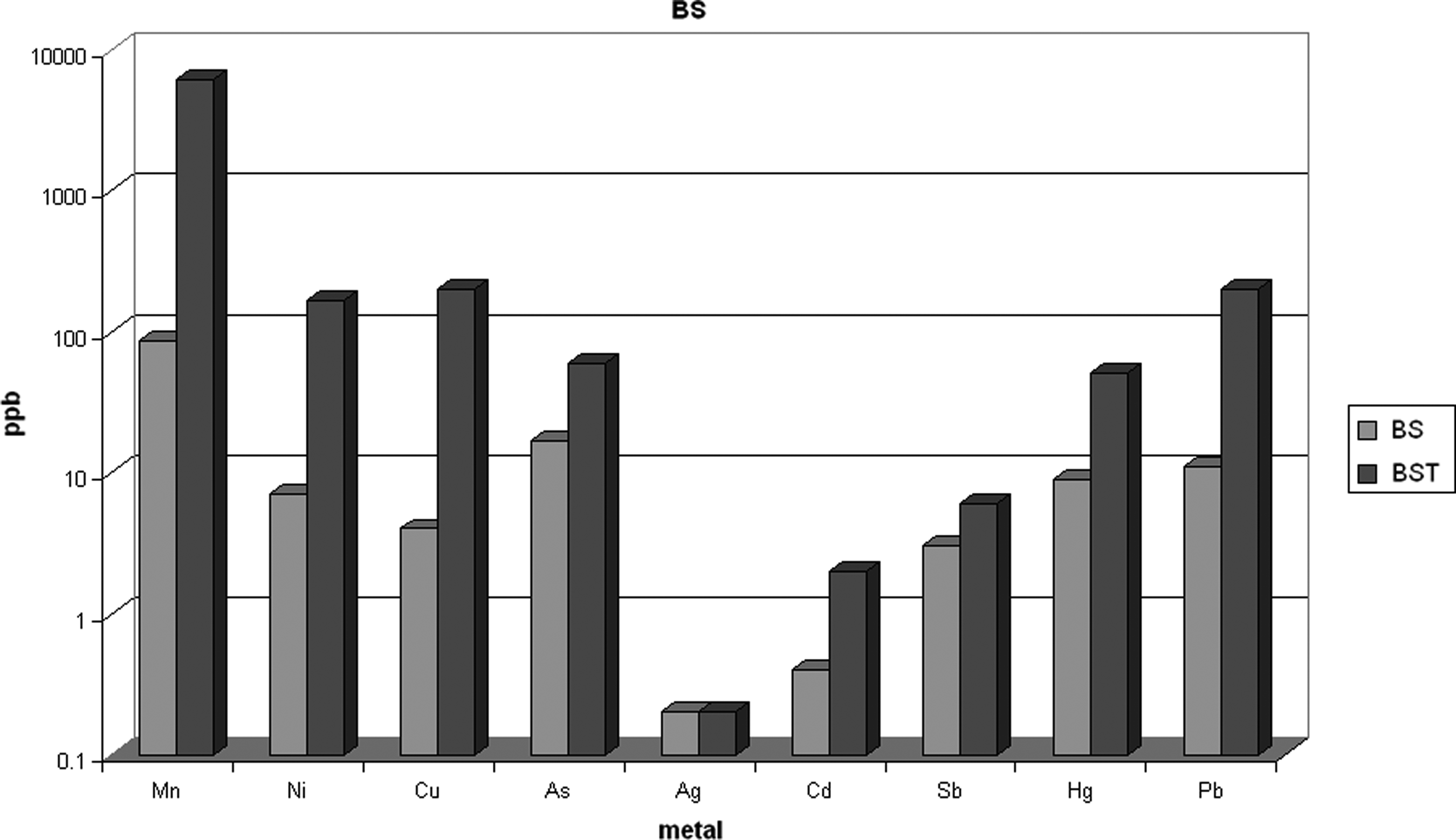
Changes in Mn, Ni, Cu, As, Ag, Cd, Sb, Hg, and Pb in the first leachate of the leaching tests of the pure and thermal-treated BS sample.
Production of soluble sulfates and the thermal decomposition of realgar, oripment, and stibnite may explain the mobilization of Fe, As, and Sb in treated mining wastes sample AS-T. Furthermore, during the first percolation in the column experiments, the leachate concentration may be influenced by first flush associated with extraordinarily large original concentrations of trace metals, chlorides, and sulfates (Fig. 10) due to the presence of easily soluble salts (Wehrer and Totsche, 2008).

Changes in Cl− and SO4−2 in the leaching tests of pure and thermal-treated AS sample.
Moreover, the high mobilization of Zn in the treated and untreated samples at concentrations above 0.25 mg/L (Table 4) may be associated with the thermal decomposition of sphalerite, which produces soluble Zn oxides:
Zn is perhaps the metal that was the least affected by thermal treatment, although the concentrations were below the European standards.
Geochemical modeling
The use of numerical code MINTEQ (Allison et al., 1991) for leachate speciation calculations (Table 5) showed that the most abundant Ag species in sample AS is AgCl2− and in sample AS-T, is AgCl. The silver concentration in the leachates may be caused by the presence of chlorargyrite and argentojarosite in the mine waste. Considering that Ag forms even stronger complexes with Cl and “soft” halogens such as Br and I (Langmuir et al., 2005) and high concentrations of these two elements are detected, it is reasonable to assume that they are responsible for the concentrations of Ag in the eluates.
Data expressed in molality.
The chlorargyrite saturation index near 0 (Table 6) may indicate that this mineral controls the mobilization of Ag along with Ag0 in the samples. The pH-Eh silver diagram, plotted using the MEDUSA hydrogeochemical code (Puigdomenech, 2004), suggests that metal silver (Ag0) and AgCl limit its solubility under the pH-Eh conditions of the column experiments. In natural water, the concentration varies from 0.3 to 10 μg/L (Hem, 1989), while in the leachates, it ranges from <2 to 24 μg/L. The decrease in Ag content in the thermally treated sample may be associated with the supersaturation of Ag0, which is the most stable species under these pH-Eh experimental conditions.
Positive values indicated supersaturation, and negative values indicated undersaturation.
Ni mobilization in the column experiments (Fig. 3 and Tables 5 and 6) may be caused by the presence of significant amounts of leachable Ni in the mine wastes (Table 3). Under the pH-Eh conditions of the column experiments, the most stable Ni species are Ni2+, and under oxidizing conditions, NiCO3. The precipitation of Ni(OH)2 is only possible under oxidizing conditions at a high pH (>8.5), and the possible precipitation of NiCO3 could explain the removal of Ni in the thermally treated sample with diminishing pH. At a low redox potential, a low pH could cause the precipitation of the sulfide NiS.
For Hg speciation modeling, representative leachates were used; the pH-Eh conditions of the column experiments and the geochemical system were considered to be in equilibrium with Hg0. The results of geochemical modeling showed the possible distribution of the Hg species in leachates (Table 5). The dominant species in the untreated samples were HgClOH, Hg(OH)2, HgCl2, HgCl3−, and Hg0, which is in agreement with the high Hg and chloride concentrations in some leachates (Fig. 4). In the treated samples, the dominant species were Hg0, Hg(OH)2, HgClOH, and HgCl2 (Table 5).
The Hg stability depends on the pH-Eh conditions in the column experiments, and the pH-Eh diagram indicates that inorganic Hg, Hg0 may theoretically be the dominant inorganic Hg species in the leachates. However, inaccuracies in measuring Eh and pH could cause a deviation from the real thermodynamic equilibrium conditions in the leaching experiments.
Possible dissolution reactions that might explain Hg mobilization in the leaching experiments are suggested by the saturation indices of the main minerals calculated by the MINTEQ numerical code (Table 6). For example, in all the leachates, calomel, Hg(OH)2, and montroydite are undersaturated, which suggests the possibility of their solution. Moreover, the solubility of calomel is ∼2 mg/L (Davis et al., 1997), a concentration similar to the total Hg detected in some leachates.
The thermally treated samples showed a great variability in the concentration of Pb leached (Table 4). In the pH conditions of the column experiments (7.51–8.14), geochemical modeling indicates that lead speciation (Table 5) may be dominated by PbCO3(aq) PbOH+ and Pb2+ in the leachates without thermal treatment and by PbCO3(aq) and Pb2+in the leachates from the thermally treated sample. Therefore, the lead concentration could be controlled by several of the possible minerals, such as anglesite (PbCO3) and Pb(OH)2, which are undersaturated in the leachate samples (Table 6). However, the most stable species, cerrusite, is supersaturated with a saturation index near 0, which may indicate that it controls Pb mobility. The high ionic strength of the leachates and high pH along with low Eh may remove Pb under these conditions due to the formation of stable minerals such as Pb(OH)2 and PbS. At a low pH, Pb may be mobilized, as it tends to form relatively soluble chloride complexes such as PbCl+ and PbCl2.
Conclusions
Leaching characteristics of Hg mine wastes, before and after solar thermal desorption, were investigated in the present study, from mining wastes and calcines of the Azogue Valley Mine.
Concentrations of Ag, Cd, Ni, and Pb in mine waste leachates before thermal treatment do not exceed the limits in the European standards, and after the treatment, they decrease significantly. Other metals, such as Cu, Fe, and Mn, and metalloids that mobilize in an anionic species, such as As or Sb, showed significant mobilization.
Some leached Hg concentrations were above the European leaching limits; however, in the treated samples, the concentrations of dissolved Hg had significantly decreased, demonstrating the effectiveness of the thermal treatment. Thus, in the mining wastes sample AS, the Hg concentration decreased from, 100 μg/L in the original sample to 73 μg/L in the treated sample, although this concentration is above the European leachate concentration levels (30 μg/L). In the calcine sample M03, Hg leached only and decreased from 13 to 9 μg/L in the treated sample, although when characterized by percolation experiments, these levels are below the European leachate limits for nonhazardous solid-waste landfills. Moreover, in the soil samples M02 and BS, the Hg leaching showed an opposite behavior. Thus, in the Azogue soil sample M02, the Hg concentration decreased from 66 to 6 μg/L in the treated sample, while in the Bayarque soil sample BS, the concentration of leached Hg increased from 9 to 51 μg/L in the treated sample.
Possible solution reactions that might explain Hg mobilization in the leaching experiments are suggested by the saturation indices of the main minerals calculated by the MINTEQ numerical code; thus, calomel, Hg(OH)2, and montroydite are subsaturated, which suggests the possibility of their solution. Moreover, the solubility of calomel is ∼2 mg/L, a concentration similar to the total Hg detected in some leachates of the nontreated samples.
The results obtained from this investigation have shown that Hg and several metals (Ag, Cd, Ni, and Pb) may be safely immobilized with the use of solar thermal desorption.
Footnotes
Acknowledgments
This work was funded by The Spanish Ministry of Science and Technology (project REN2003-09247-C04-03 y REN2003-09247-C04-01 and ENE2006-13267-C05-01/ALT y ENE2006-13267-C05-03/ALT) in collaboration with the PSA-CIEMAT (Centro de Investigaciones Energéticas, Mediombientales y Tecnológicas), and the 2003-2004 Technical and Scientific Infrastructure Program (FEDER CIEM-E008). The authors wish to thank Alfonso Vázquez and Bernardo Fernández of the CENIM-CSIC for their participation in the design and development of the fluidized bed in collaboration with CIEMAT, and, finally, the PSA Furnace personnel, especially Jose Galindo, for their technical support in this project.
Author Disclosure Statement
No competing financial interests exist.