




Abstract
Abstract
This study focused on the degradation of the emerging contaminant naproxen in aqueous solutions by gamma irradiation. Influence of initial naproxen concentration, solution pH, various additives (CH3OH, H2O2,
Introduction
In recent years, naproxen and naproxen-based products have been detected in surface water, groundwater, wastewater, and even in drinking water at a concentration range from ng/L to several μg/L (Marco-Urrea et al., 2010). Unfortunately, these compounds have adverse effects on biota such as impairing the lipid peroxidation system of bivalves (Gagné et al., 2006). Naproxen contamination is, therefore, becoming a serious problem.
Many studies have been carried out on naproxen removal, mainly via biodegradation and physicochemical treatments. Marco-Urrea et al. (2010) reported that white-rot fungus could degrade naproxen. Felis et al. (2007) used H2O2/UV to degrade naproxen in surface water; 90% naproxen degraded, but only 10% mineralization was achieved. Boyd et al. (2005) showed that naproxen could be removed from water by chlorination, but disinfection by-products formed. In the study of Tixier et al. (2003), phototransformation and biodegradation were identified as the main processes for elimination of naproxen in surface water. Rivera-Jimenez et al. (2011) reported that Co-Al-HDTMA-NaBt adsorbent could effectively remove naproxen from water at natural pH.
Gamma irradiation is an advanced oxidation method. It has been employed for decomposition of various pollutants in aqueous solutions (Mohamed et al., 2009; Cao et al. 2011). The first study of gamma-irradiated naproxen was conducted by Polat and Korkmaz (2002). In this study, only the kinetic features of the radicals induced in gamma-irradiated naproxen sodium were investigated, and the effects of operational parameters on naproxen degradation by gamma irradiation were not discussed. Therefore, further studies are needed to determine the feasibility of irradiation as a way of treating naproxen-contaminated solutions.
The major aim of this work was to study the effects of operational parameters, such as solution pH and various additives (H2O2, CH3OH,
Materials and Methods
Chemicals and reagents
Naproxen, CH3CN, CH3COOH, and CH3OH (HPLC grade) were purchased from Sigma-Aldrich. High-purity humic acid was also obtained from Sigma-Aldrich. H2O2, NaNO3, HCl, and NaOH (analytical-grade) were obtained from Shanghai Chemicals Factory, China. Ultrapure water was generated with a Milli-Q system (Elix5+Milli-Q A10).
Procedures
Sample preparation
Following on from the studies of Boyd et al. (2005) and Marco-Urrea et al. (2010), a 23.6 mg/L naproxen solution was used to test the effect of absorbed dose on degradation efficiency and to examine the changes of pH and total organic carbon (TOC) after gamma irradiation. Different additives (H2O2, CH3OH,
Irradiation process
Gamma irradiation of naproxen was carried out by using a 60Co source. The initial activity of the source was around 1.85×10¹⁶ Bq. The irradiation time was fixed at 5 h. Naproxen solutions were allowed to equilibrate at atmospheric pressure and room temperature (22°C±2°C) before irradiation. The dose absorbed by the samples was determined with a silver dichromate dosimeter (Zhang et al., 2008).
Analysis
According to the method of Méndez-Arriaga et al. (2008), an HPLC system (Agilent 1200) was employed to determine the naproxen concentration. The naproxen degradation efficiency was calculated from Equation (1).
η—The naproxen degradation efficiency (%);
Ct—The residual naproxen concentration after gamma irradiation (mg/L);
C0—The initial naproxen concentration (mg/L).
According to the method reported by Aresta et al. (2006), LC-MS (ThermoQuestLCQ Duo) was employed to identify naproxen and the products of its radiolytic degradation. TOC was determined by a TOC analyzer (Shimadzu, TOC-5000A). pH values were measured by a pH monitor (Shanghai Kangyi Instrument Co., Ltd., PHS-2C).
Naproxen radiation chemical yield (G-value)
The radiation chemical yield of naproxen (defined by the number of molecules formed or destroyed in solutions absorbing 100 eV of radiation energy) was calculated by using Equation (2) (Woods and Pikaev, 1994; Sánchez-Polo et al., 2009).
ΔR —The amount of reduced naproxen (mol/L);
D —The absorbed dose (Gy).
Results and Discussion
Radiolytic degradation of naproxen
Degradation of water pollutants by gamma irradiation is initiated by the primary products of water radiolysis (e.g.,•OH, H•, (The values in parentheses are the radiation chemical yields of these species per 100 eV of absorbed energy) (Woods and Pikaev, 1994).
The naproxen degradation efficiency at different absorbed doses is shown in Fig. 1. The naproxen concentration decreased with increasing absorbed dose, and most of naproxen in the aqueous solution degraded when exposed to a dose of 1.0 kGy. Gamma irradiation is an effective method to remove naproxen from aqueous solutions.
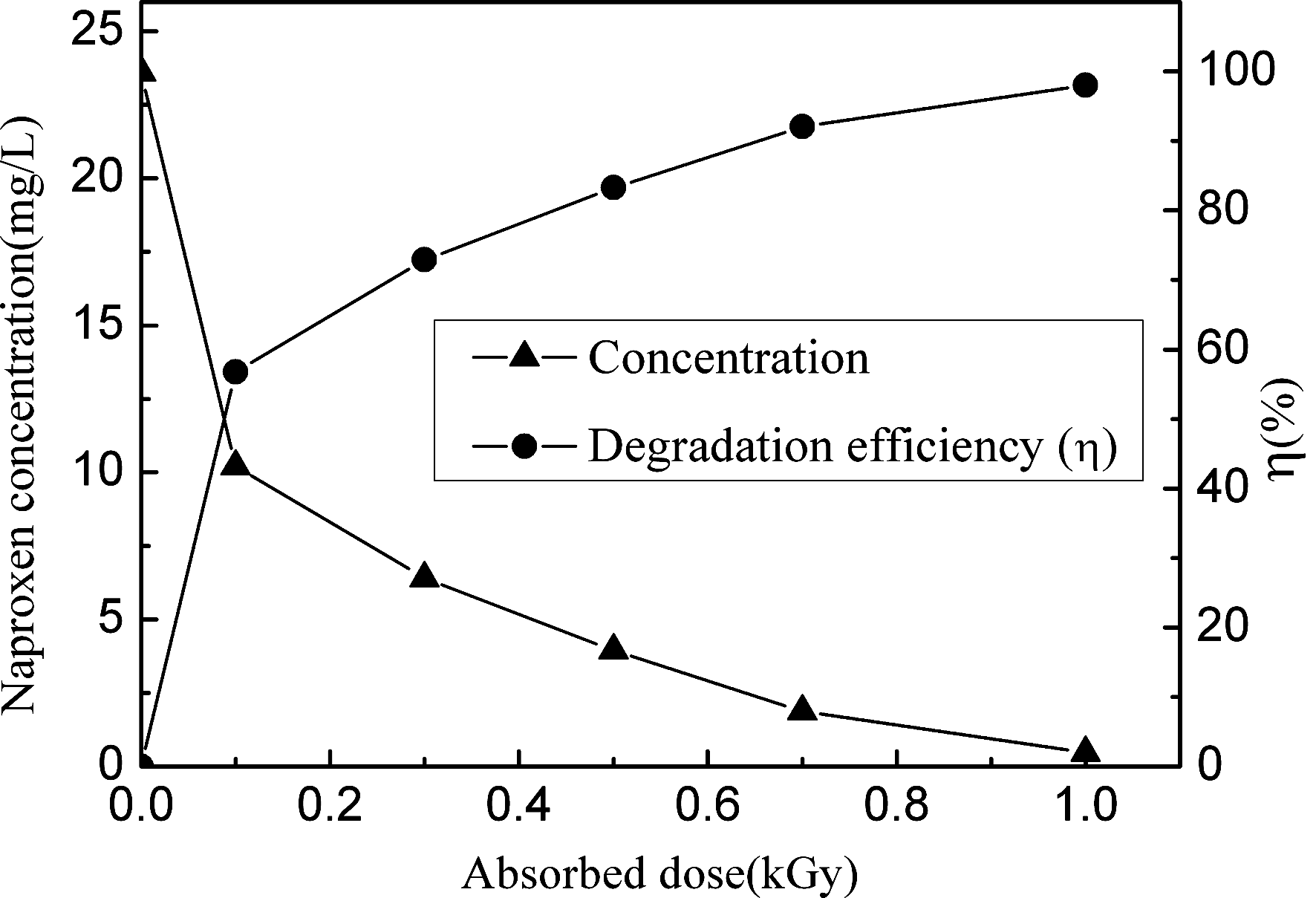
Degradation of naproxen as a function of absorbed dose.
The G values of naproxen [calculated using Eq. (2)] at different absorbed doses are shown in Table 1, and decreased with increasing absorbed dose. Due to the increase in radical species at higher absorbed doses, the absolute rates for radical–radical reactions [Eqs. (12)–(15)] also increase, thus reducing the effective concentrations of radicals (e.g., •OH) available to react with naproxen, and, hence, decreasing the G value. The radiation chemical yield trend reported here is similar to the trends reported for radiolytic degradation of malathion and lindane (Mohamed et al., 2009).
By plotting the natural logarithm of naproxen residual concentration (Ct) as a function of the absorbed dose, a linear relationship could be derived: Ct=23.6e−2.778D (R2=0.9929). This indicated that the kinetics of the naproxen degradation were of first order with regard to the absorbed dose.
Influence of operational parameters on the naproxen degradation
Effect of naproxen concentration
Figure 2 shows the results of the radiolytic degradation of naproxen at different initial concentrations. The initial concentration greatly affected the degradation of naproxen by gamma irradiation. The rate constant was largest at the lowest naproxen concentration studied—at a naproxen concentration of 11.8 mg/L, the rate constant was 4.01 kGy−1. However, at initial concentrations of 23.6 and 40.2 mg/L, the rate constants were 2.778 and 2.174 kGy−1, respectively. These results are consistent with published findings for radiolytic degradation of individual polychlorinated biphenyl (PCB) congeners (Mincher et al., 2002).

Effect of initial concentration on naproxen degradation.
Effect of solution pH
Figure 3 shows the significant effect of solution pH on naproxen degradation. Acidic conditions enhanced the naproxen degradation, because of the higher relative concentration of H• present [Eq. (7)]. However, in alkaline solutions, OH− readily reacts with the H• to generate

Effect of pH on naproxen degradation.
Effects of H2O2 and
\documentclass{aastex}\usepackage{amsbsy}\usepackage{amsfonts}\usepackage{amssymb}\usepackage{bm}\usepackage{mathrsfs}\usepackage{pifont}\usepackage{stmaryrd}\usepackage{textcomp}\usepackage{portland, xspace}\usepackage{amsmath, amsxtra}\pagestyle{empty}\DeclareMathSizes{10}{9}{7}{6}\begin{document}
$${ \rm NO}_3^ -$$
\end{document}
on naproxen degradation
It is well known that H2O2 is an •OH promoter that can accelerate the degradation of pollutants in aqueous solutions (Basfar et al., 2005). Figure 4 shows the effect of H2O2 on naproxen degradation. In fact, 0.5% H2O2 accelerated the naproxen degradation as a result of increased •OH in the medium. However, 1.5% H2O2 inhibited naproxen degradation, thus indicating that a massive dosage of H2O2 does not lead to more available •OH in the aqueous solutions. Instead, it may compete with naproxen for •OH and, thus, reduce the naproxen degradation efficiency. These results are similar to those previously reported results by Sánchez-Polo et al. (2009).
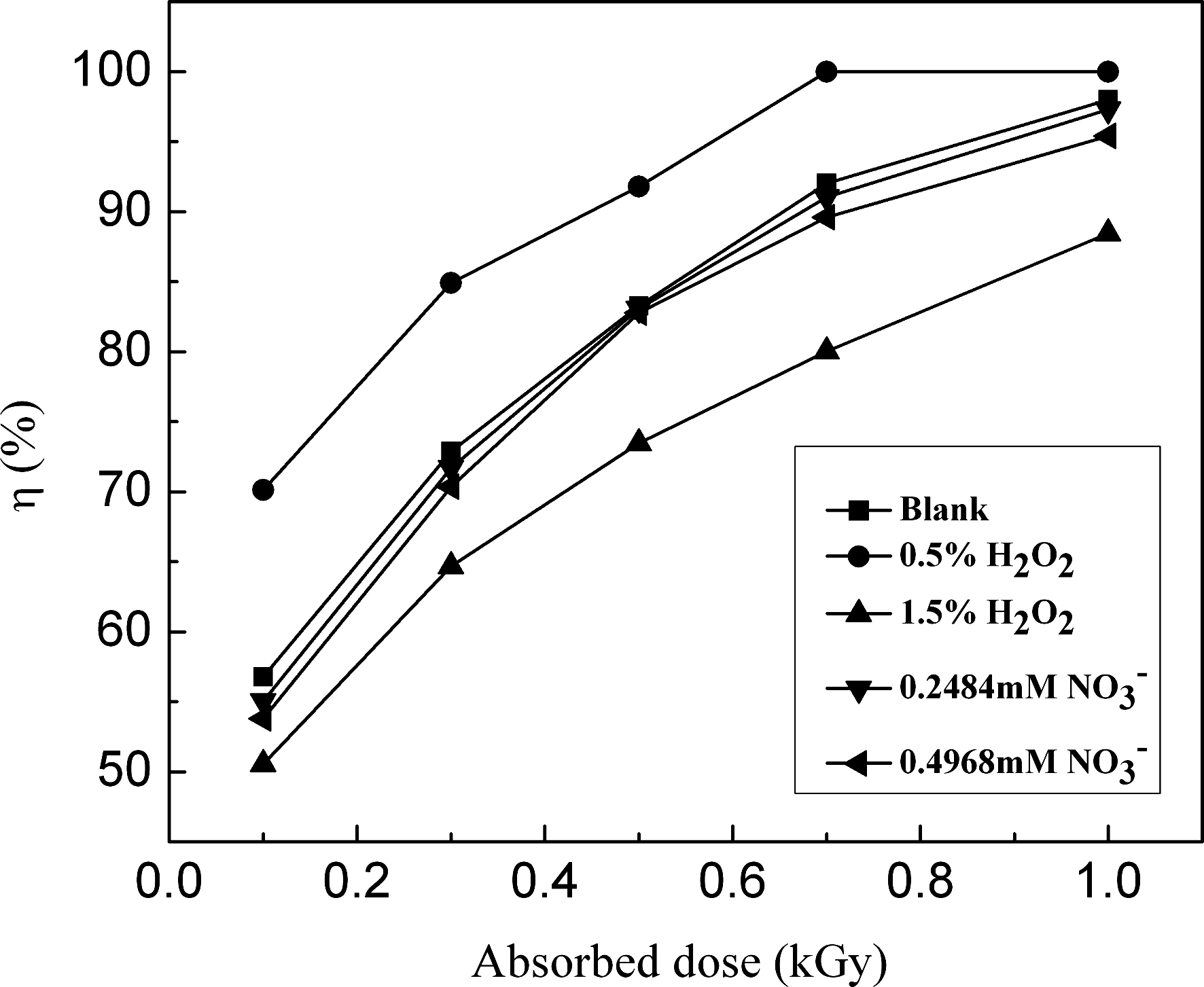
Effects of H2O2 and
According to Fig. 4, 0.2484 and 0.4968 mM added
Effects of CH3OH and humic acid on naproxen degradation
As shown in Fig. 5, when 1.5% CH3OH was added, the degradation efficiency of naproxen significantly decreased. The effect of CH3OH is because of the well-known fact that it reacts more rapidly than naproxen with •OH and

Effects of CH3OH and humic acid on naproxen degradation.
When 40 mg/L humic acid was added, naproxen degradation efficiency was enhanced. The results are similar to those previously reported by Mohamed et al. (2009). Irradiated humic acid can generate excited triplet states (3HA*) and various reactive oxygen species, including •OH, 1O2, and H2O2 (Sandvik et al., 2000), thus increasing the concentrations of radicals for reaction with naproxen.
Variation of solution pH
The effect of gamma irradiation on solution pH value is shown in Fig. 6. The pH value decreased with increasing absorbed dose, going from a value of 6.56 without irradiation to 6.09, 5.81, 5.53, 5.36, and 5.07, at absorbed doses of 0.1, 0.3, 0.5, 0.7, and 1.0 kGy, respectively. This decrease in pH is possibly due to the production of a large amount of H3O+ during the irradiation process [Eq. (3)].
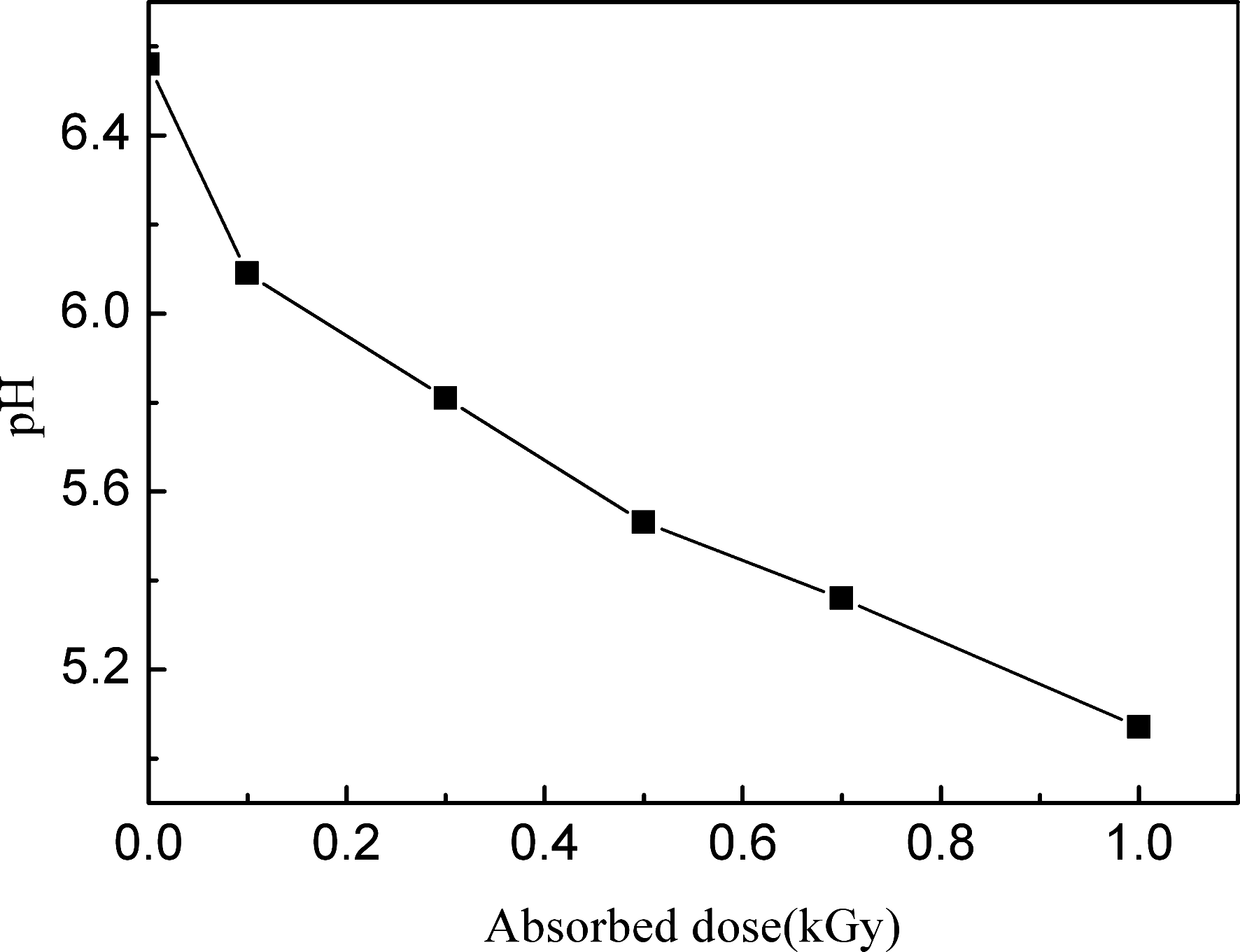
Change of solution pH value with irradiation.
Variation in TOC during irradiation
Figure 7 describes the TOC change of naproxen aqueous solutions after irradiation. The TOC value decreased with increasing absorbed dose, which indicated that gamma irradiation could lead to both degradation and partial mineralization of naproxen in aqueous solutions.
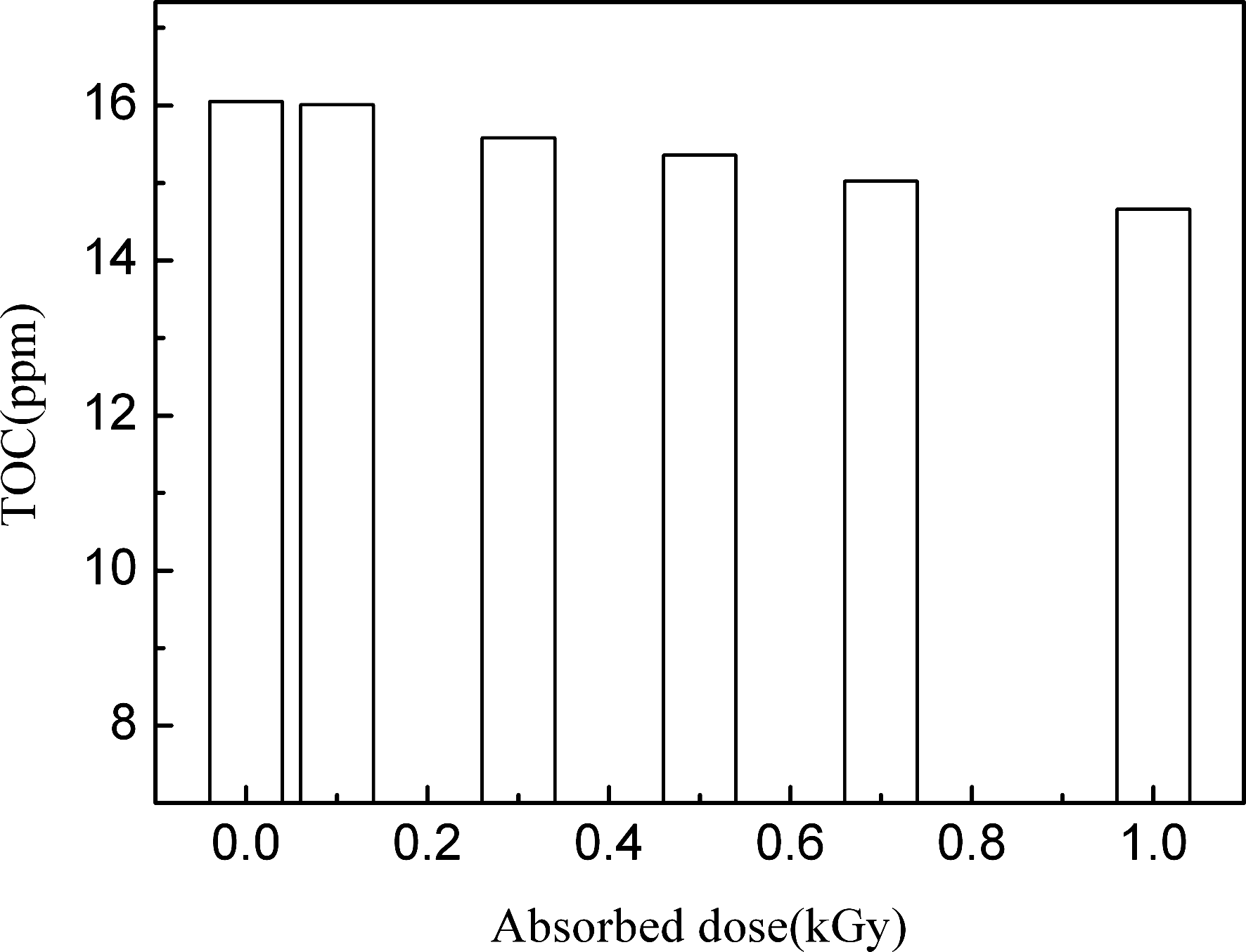
Change of solution total organic carbon (TOC).
Identification of degradation products
The full-scan ESI mass spectrum of naproxen (negative ions) is reported in Fig. 8. The [M]− (m/z 228.8) ion was clearly observed in the spectrum, along with the corresponding isotope peak. Fragmentation of deprotonated naproxen in the ion source leads to the formation of two main product ions, arising from the loss of CO2 (m/z 184.9) and the consecutive losses of CO2 and CH3 (m/z 169.9).
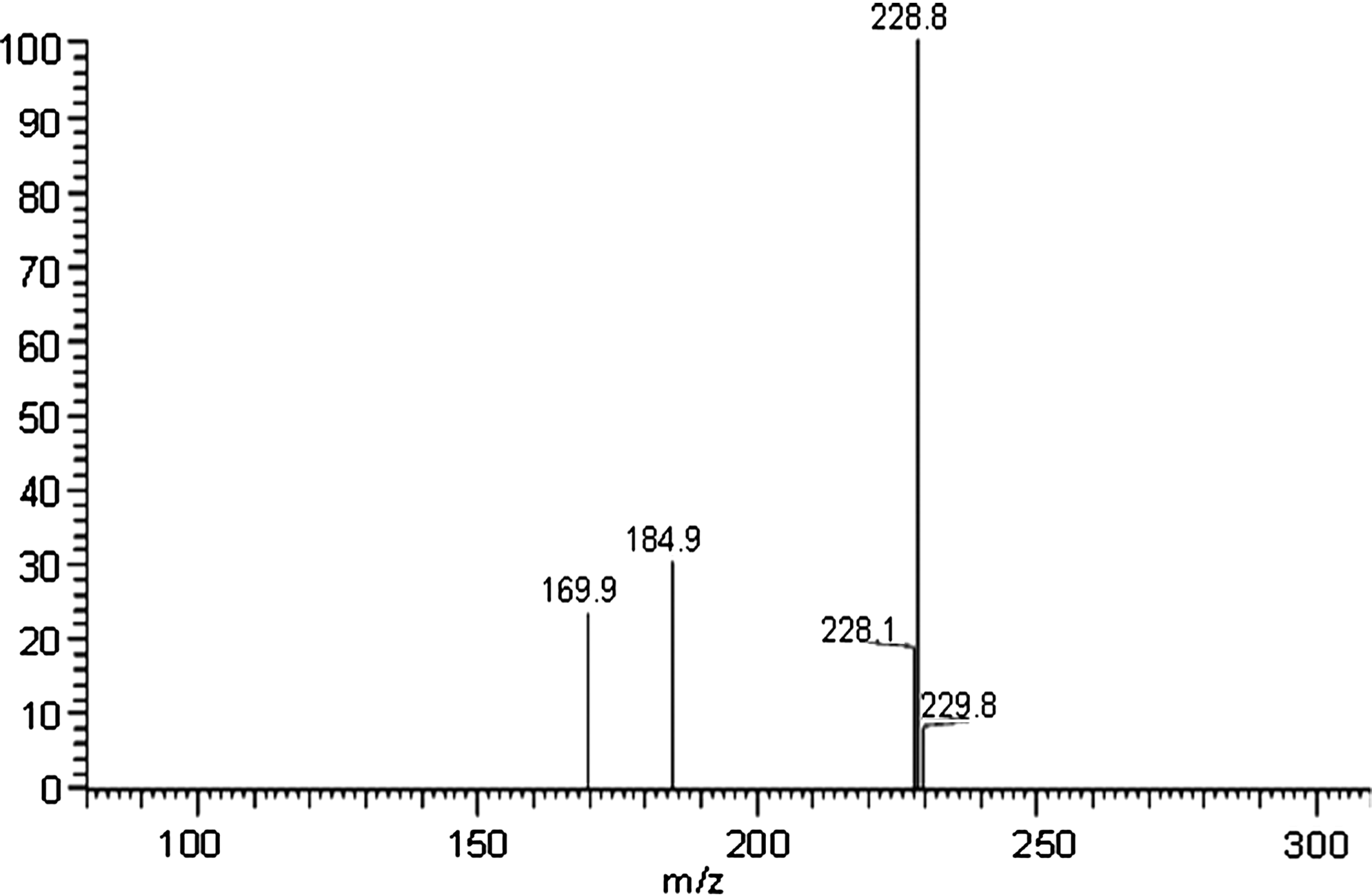
Full-scan electrospray ionization (ESI) mass spectrum of naproxen (negative ions).
According to Fig. 9, the major molecular ion ([M]−) that correlated with the degradation of naproxen by gamma irradiation was at m/z 184.9, 44 u lower than the naproxen ion, thus indicating that gamma irradiation caused decarboxylation. The results are consistent with published findings for the photocatalytic degradation of naproxen (Méndez-Arriaga et al., 2008). The degradation pathway of naproxen by gamma irradiation is shown in Fig. 10.
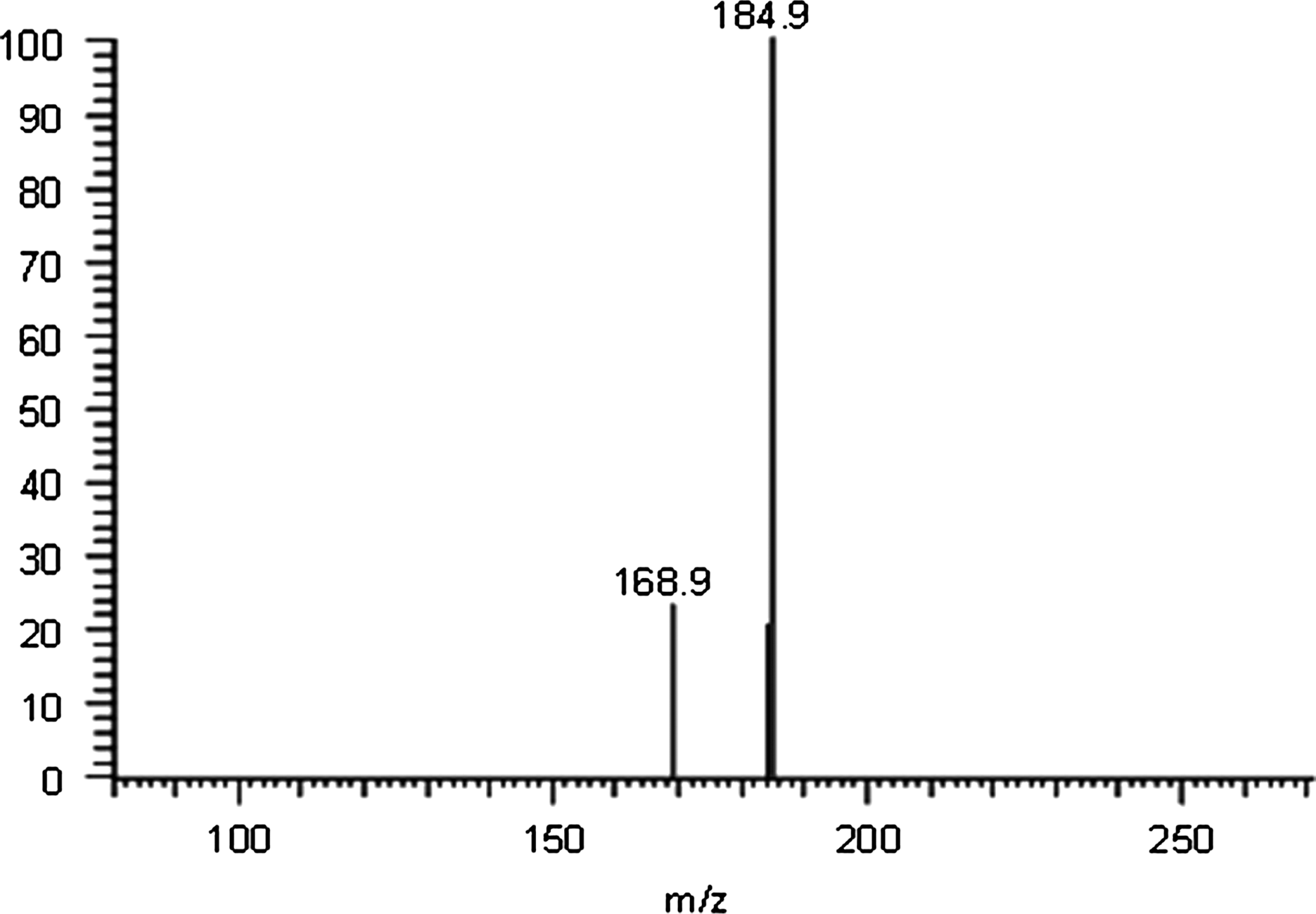
Full-scan ESI mass spectrum of the m/z ion 184.9.

The degradation pathway of naproxen by gamma irradiation.
Conclusions
Gamma irradiation effectively degraded naproxen in aqueous solutions. At an absorbed dose of 1.0 kGy, naproxen degradation efficiency was 98%. The naproxen degradation process followed first-order like kinetics. The degradation yield was higher under acidic conditions than in neutral or alkaline media. Addition of 40 mg/L humic acid or 0.5% H2O2 enhanced the naproxen degradation. However, naproxen degradation was significantly inhibited by addition of 1.5% H2O2 or 1.5% CH3OH, and slightly inhibited by 0.2484 or 0.4968 mM
Footnotes
Acknowledgments
The authors are grateful for support from the Major Project on Control and Rectification of Water Body Pollution, P.R. China (Foundation item no. 2008ZX07101-004) and the National Natural Science Foundation of China 11075039.
Author Disclosure Statement
All authors report no conflicts of interest.