




Abstract
Abstract
Feasibility of salicylic acid removal from an aqueous solution was investigated in an electrochemical cell equipped with either aluminum or iron plates by using electrocoagulation (EC). Several parameters, including electrode materials, solution pH variation, applied voltage, and solution temperature, were investigated. In addition, effects of applied voltage and solution temperature on electric energy consumption and time needed to reach 90% removal were investigated. Experimental results indicated that the Al/Al electrode pair was the most efficient choice of the two electrode pairs tested in terms of salicylic acid removal efficiency. In terms of pH variation during EC, generation of coagulant metal hydroxides for the Al/Al electrode pair was greater than that for the Fe/Fe electrode pair, which also enhanced the removal efficiency. The optimum applied voltage and solution temperature were found to be 20 V and 308 K, respectively. A pseudo-second-order kinetic model provided a good fit to the experimental results at various applied voltages and solution temperatures. In addition, the activation energy was calculated as 20.21 J mole−1 based on pseudo-second-order rate constants from the Arrhenius equation, indicating that salicylic acid precipitation in an aqueous solution was attributable to the EC process.
Introduction
A considerable number of scientific studies on the removal of salicylic acid have been performed. Most of these studies have focused on advanced oxidation processes, initiated degradation processes, such as photocatalysis with TiO2/UV or modified TiO2/UV systems (Chhor et al., 2004; Zahraa et al., 2006), ozonation (Karpel Vel Leitner et al., 1999), H2O2/UV/oxygen systems (Scheck and Frimmel, 1995), catalytic wet air oxidation with LaFeO3 (Yang et al., 2007), and photo-assisted Fenton using Fe ions on an acidic ion exchange resin (Feng et al., 2004). However, to date, there is little research on the development of a simple electrochemical treatment for the removal of salicylic acid.
Electrochemical technologies have been utilized in various ways for environmental remediation (Brillas et al., 2003). These methods can prevent pollution problems from industrial effluents due to their versatility and environmental suitability; their main reagent, the electron, is a clean reagent (Pletcher and Walsh, 1993; Janssen and Koene, 2002; Chen, 2004). Electrocoagulation (EC) is an electrochemical method of treating polluted water, whereby sacrificial anodes dissolve to produce active coagulant precursors (usually aluminum or iron cations) into solution. The electrochemically generated metallic ions hydrolyze near the anode to form a series of metal hydroxides that destabilize the dispersed particles present in the wastewater to be treated. The destabilized particles are responsible for the aggregation and precipitation of suspended particles and for the adsorption of dissolved pollutants. Simultaneously, electrolytic reactions evolve gas (usually as hydrogen bubbles) at the cathode that can enhance the process; this effect is known as electroflotation (Chen, 2004; Holt et al., 2005; Khemis et al., 2006). Several studies have proved the viability of the EC technology, which is able to eliminate a variety of pollutants from water and wastewaters, such as potable water (Holt et al., 2002), laundry wastewater (Wang et al., 2009), metal laden wastewater (Heidmann and Calmano, 2008), dyeing wastewater (Daneshvar et al., 2006), restaurant wastewater (Chen et al., 2000), chemical mechanical polishing wastewater (Wang and Chou, 2009; Chou et al., 2010), and wastewater containing phosphates (İrdemez et al., 2006), fluoride (Mameri et al., 2001), arsenic (Parga et al., 2005), indium (Chou and Huang, 2009), and polyvinyl alcohol (Chou, 2010; Wang et al., 2010). However, to date, there has been scarce research on the development of methods for the removal of salicylic acid from aqueous solutions using EC.
In the present study, parameters such as electrode materials, applied voltage, solution pH variation, and solution temperature were investigated in terms of their salicylic acid removal efficiency. A technically effective process should be economically feasible with regard to its electrical energy consumption and practically applicable to environmental problems. The effects of the applied voltage and solution temperature on the electric energy consumption for salicylic acid abatements under the optimum conditions were evaluated in this study. In addition, the kinetic constants for the removal of salicylic acid in an aqueous solution at various applied voltages and solution temperatures were determined. The activation energy of the EC process was also calculated using a pseudo-second-order kinetic model.
Experimental
Chemicals and apparatus
Salicylic acid (with a molecular weight of 138.121 g mol−1) was obtained from ACROS, with purity of at least 99%. Aqueous solutions containing salicylic acid were prepared by dissolving an appropriate quantity of salicylic acid in deionized water for EC tests. The concentration of the supporting electrolyte was adjusted by adding of NaCl (Tedia Company). All of the chemicals used were at the least reagent grade. The chemical reagents were prepared by diluting with deionized water to obtain the desired concentrations. Figure 1 shows a schematic diagram of the experimental apparatus and electrode assembly for the EC system. The electrolytic cell was a 1.0-L Pyrex glass reactor equipped with a water jacket and a magnetic stirrer. The temperature of the electrolytic cell was controlled by continuously circulating water through the water jacket from a refrigerated circulating bath (Model BL-720). A magnetic stirrer bar (Suntex, SH-301) spun at the center of the bottom of the reactor. Cast iron and aluminum (Al) plates (8 × 6 × 0.3 cm3) were used for the two (Fe/Fe, Al/Al) different combinations of anode and cathode pairs. The electrode pair was dipped into an aqueous solution of salicylic acid at a depth of 5.5 cm, with the two electrodes ∼2 cm apart. The effective area of the immersed electrode pair was 33 cm2. The assembly was connected to a direct current power source (Fann-chern; GC50-20D) operating in constant-voltage mode (range: 0–50 V). The salicylic acid solutions were characterized using a pH meter (Sartorius; Professional Meter PP-20) and by measuring their conductivity (Euteoh; Cyber Scan 510).
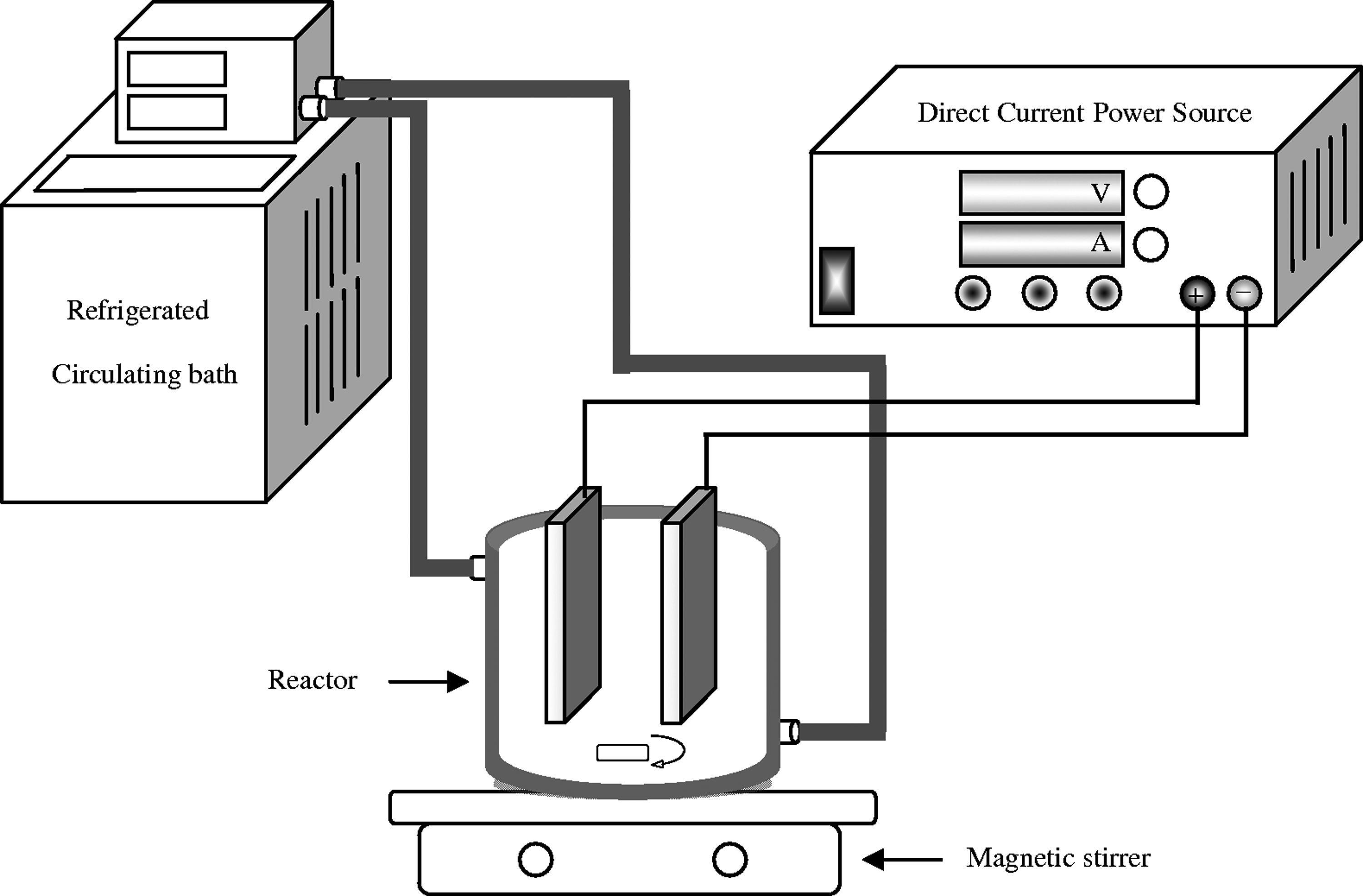
Electrocoagulation process apparatus.
Procedure and analysis
Before each experiment, the electrodes were polished with sandpaper to remove the scale build-up, then dipped in a 3 N HCl solution at a depth of 5.5 cm for 10 min, and then finally cleaned with successive rinses of deionized water (Chou, 2010). During each test run, 0.5 L of aqueous solution containing salicylic acid was placed into the reactor. Then, the magnetic stirrer was turned on and set at 300 rpm; this stirrer speed was sufficient for good mixing in the electrolytic cell and was sufficiently low so as to not disrupt the flocks formed during the treatment process. A fixed amount of NaCl (100 mg L−1) was added to the aqueous solution to increase the solution conductivity and facilitate the EC process. The direct current power source was operated at a constant applied voltage of 10, 15, 20, 25, or 30 V. A constant temperature (288 to 318 K) was maintained by circulating refrigerated water through the water jacket. EC test runs lasted no >120 min in all experiments. At the end of EC, all samples were centrifuged (Hsiangtal; Beginner's Economy Centrifuges) in a 15-mL centrifuge tube (set at 4,000 rpm for 1 h). After the EC treatment, the conductivity and pH of the salicylic acid aqueous solution were measured with a multi-meter and a pH meter, respectively. The salicylic acid concentration in the aqueous solutions was determined using a NEWLAB UV-7504 PC. A calibration curve was obtained by plotting the absorbance value at 297 nm as a function of the salicylic acid concentration. The salicylic acid removal efficiency after EC was calculated according to the following equation:
where C0 is the initial concentration in mg L−1; Ct is the concentration at time t in mg L−1; V0 is the initial volume of the treated wastewater in liters; and Vt is the volume of the treated wastewater at time t in liters. All experiments were repeated five times to ensure the reproducibility of the data. The statistic standard deviation and coefficient of variation were 0.0117 and 1.358 × 10⁻⁴, respectively.
Results and Discussion
Comparison of electrode material
In any electrochemical process, the electrode materials and the type of electrode pair are regarded as significant factors affecting the performance of the EC process (Mollah et al., 2001). Both Fe and Al plates are cheap, readily available, and proved effective. The results obtained for the removal efficiency of salicylic acid for these two kinds of electrodes using the same applied voltage are shown in Fig. 2. The removal efficiency of salicylic acid for both electrodes increased whereas the duration of the electrolysis treatment increased. As seen in this figure, the salicylic acid removal increased to 92% for the Al/Al electrode pair after 20 min and increased to 68% for the Fe/Fe electrode pair after 80 min. Further, the EC of metal hydroxides had no positive effect on salicylic acid removal above 20 and 80 min for the Al/Al and Fe/Fe electrode pairs, respectively. Nevertheless, with increasing time, the rates of salicylic acid removal obtained with the Al/Al electrode pair were relatively higher than the rate with the Fe/Fe electrode pair. In addition, there was a clean and colorless effluent when using the Al electrode in the EC process, whereas the Fe electrode resulted in a blurry and more turbid effluent. Figure 3 demonstrates the photograph result of color comparison in the presence of different electrode materials. Some studies (Chen et al., 2000; Kobya et al., 2006) that investigated the pollutant removal of wastewaters by EC reported that a relatively stable and clean solution could result from using an Al electrode in the process. It is obvious that aluminum is a better electrode material than iron for the present study. To explain the reason for the better performance when using Al anodes, the effect of the pH variation during EC was investigated in the following section. In addition, all subsequent EC experiments were performed using the Al/Al electrode combination.

Effect of different electrode pairs on removal efficiency of salicylic acid. (C0 = 100 mg L−1, initial pH 3.35, V = 30 V, T = 298 K, t = 120 min, NaCl = 100 mg L−1, agitation speed = 300 rpm).
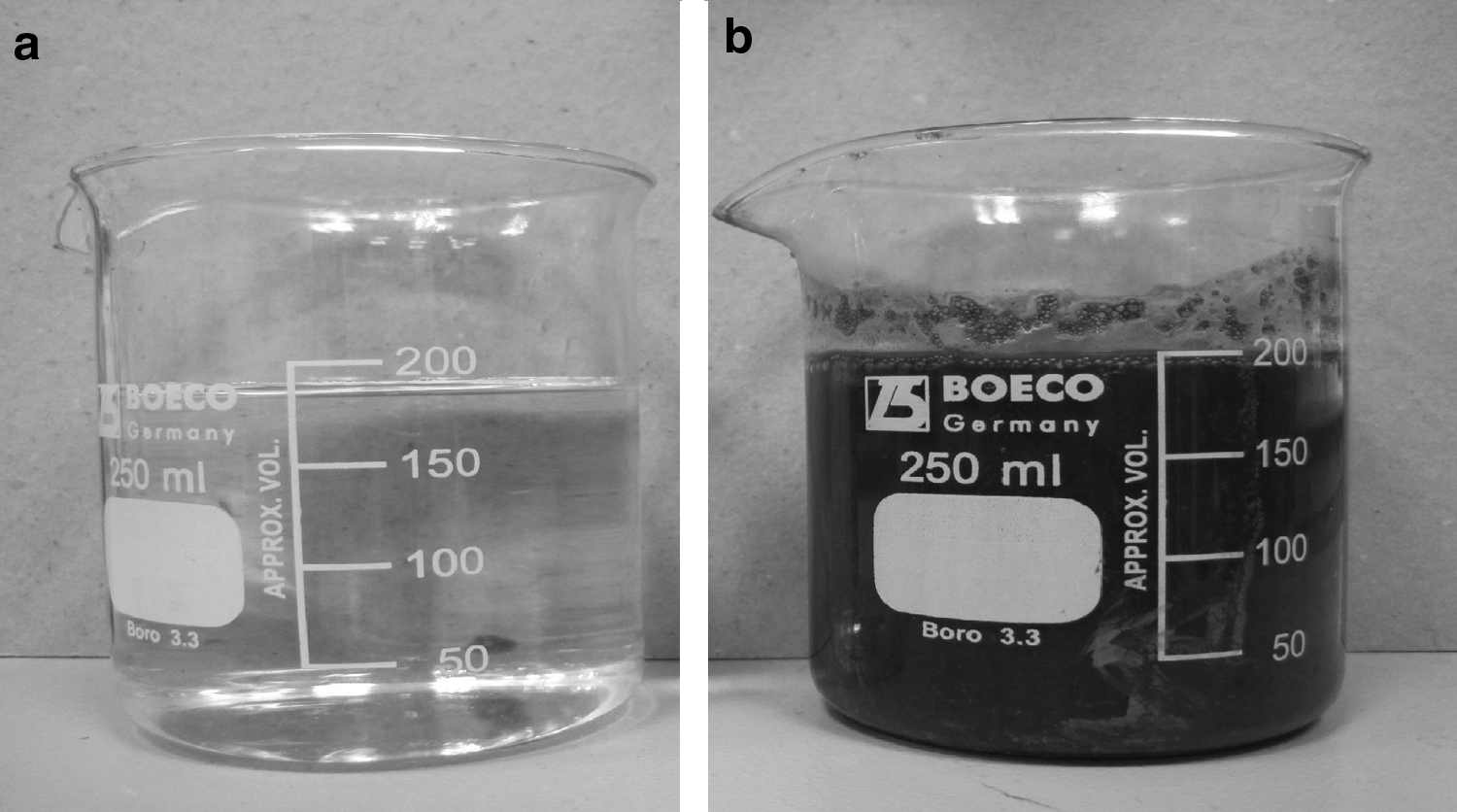
Photograph of color comparison under different electrode materials (
Effect of pH variation during EC
When dissolved in water, the salicylic acid solution has a pH at equilibrium from 3.2 to 3.5. Figure 4 shows the effect of the operating time on the pH variation at an applied voltage of 30 V during the EC process. Initially, the solution pH increased at a high rate, and then the rate fell regardless of the electrode pair used (Al/Al or Fe/Fe). The treatment induced an increase in pH during the EC process, which could be interpreted in terms of the excess hydroxyl ions produced at the cathode under acidic conditions. These observations also implied that the cathodic water reduction and the chemical dissolution of the aluminum or iron electrodes increased the pH value. In the case of the aluminum electrode, the pH value increased rapidly between 0 and 20 min, increasing from 3.4 to 7.1; however, there was no significant variation in pH after 20 min of electrolysis. The effect of pH variation on the EC process was explained as follows: the dominant aluminum species present in the aqueous solution were different according to the solution pH; Al3+ and Al(OH)2+ ions were dominant in the acidic pH range 2–3; and in a pH range of 4–9, the Al3+ and OH− ions generated by the electrodes reacted to form various polymeric species, such as Al7(OH)174+, Al13O4(OH)247+ were finally transformed into insoluble precipitates of Al(OH)3(s), which lead to a more effective treatment (Bayramoglu el al., 2004). In the case of the iron electrode, the pH value increased rapidly between 0 and 20 min, increasing from 3.4 to 5.4; however, there was no significant variation in pH after 20 min of electrolysis. As observed in a previous investigation (Sengil et al., 2004), Fe(OH)3 was the dominant species in the pH range 6–10 according to the predominance-zone diagrams for Fe(III) chemical species in aqueous solutions. In the present study, the pH values of the salicylic acid solutions were in the range of 3.4 to 5.8 during the EC process, as shown in Fig. 4. This result indicates that the dominant metal hydroxide (Fe(OH)3) functioning as an adsorbent was insufficient to completely destabilize the suspended salicylic acid in the solution. In contrast, the formation of Al(OH)3(s) was optimal in the pH range 4–9, which corresponded to a variation in pH of 4–8 during the EC process in the present study. These observations also imply that the generation of coagulant metal hydroxides was greater at the Al/Al electrode pair, and, therefore, the removal efficiency of salicylic acid for the Al/Al electrode pair was greater than that of the Fe/Fe electrode pair, as shown in Fig. 2.
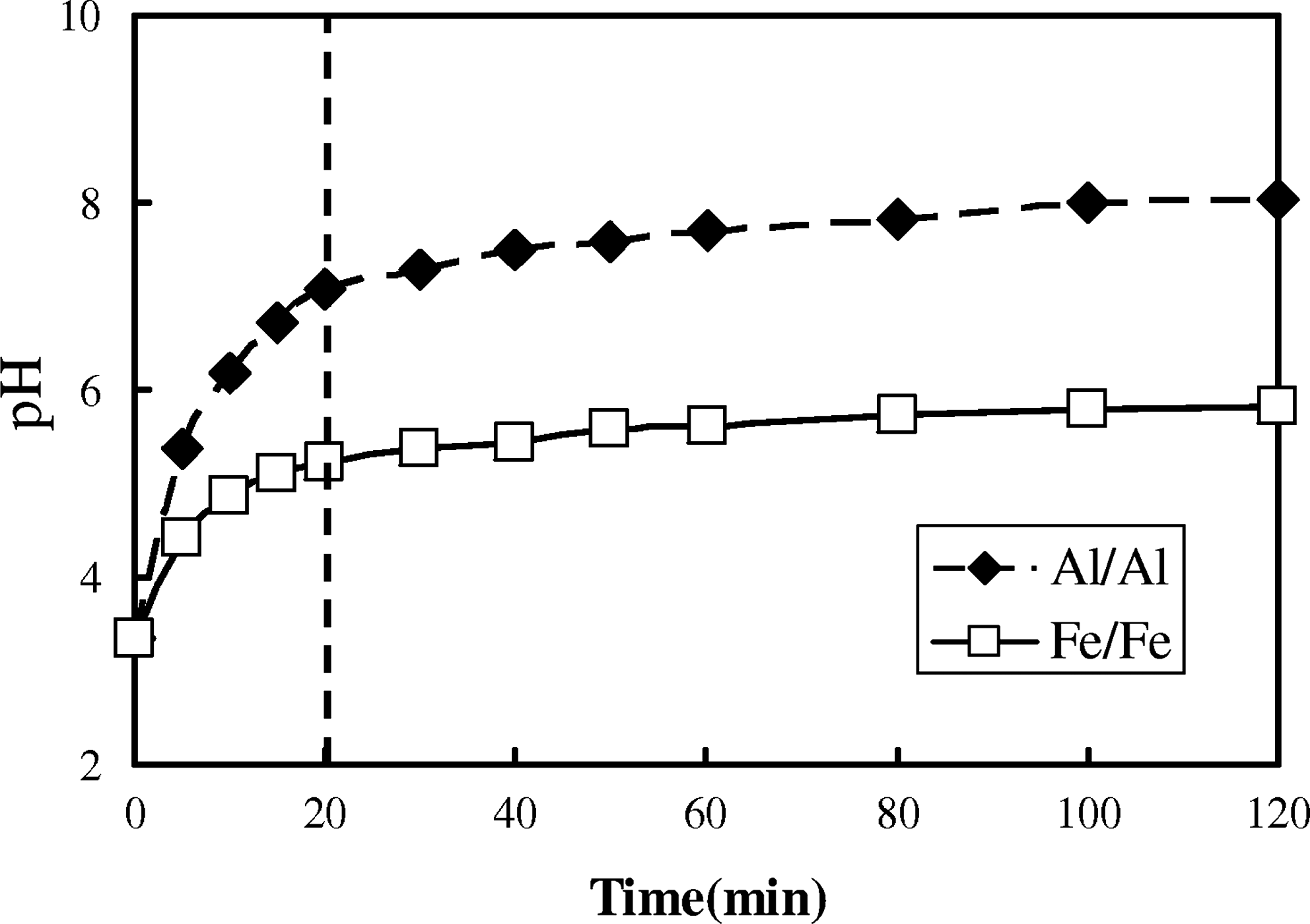
Effect of different electrode pairs on pH of salicylic acid. (C0 = 100 mg L−1, initial pH 3.35, V = 30 V, T = 298 K, t = 120 min, NaCl = 100 mg L−1, agitation speed = 300 rpm).
Effect of applied voltage
In electrochemical processes, the applied voltage strongly affects the performance of EC. The DC power was turned on with applied voltage at 10, 15, 20, 25, and 30 V, corresponding to current densities of 0.9–1.2, 1.2–1.8, 2.4–2.8, 3.1–3.6, and 3.6–4.8 mA cm−2, respectively. Figure 5 shows the effect of the applied voltage on the removal efficiency of salicylic acid for various durations of electrolysis. As the duration of electrolysis increased, comparable enhancements in the removal efficiency of salicylic acid were observed for all applied voltages. The removal efficiencies of salicylic acid were 65.7%, 82.5%, 91.1%, 92.3%, and 92.6% after 30 min of electrolysis at 10, 15, 20, 25, and 30 V, respectively. As the applied voltage increased, the removal efficiency of salicylic acid increased. With sufficient current flowing through the solution, the metal ions generated by the dissolution of the sacrificial electrode (aluminum or iron) were hydrolyzed to form a series of aluminum hydroxides or iron hydroxides (Linares-Hernández et al., 2009). The treatment times required to reach 90% salicylic acid removal were 18, 20, 24, 38, and 50 min for applied voltages of 30, 25, 20, 15, and 10 V, respectively. As the applied voltage increased, the required time for the EC process decreased. A sufficient level of voltage through the solution caused the metal ions generated by the dissolution of the sacrificial electrode to hydrolyze, forming a series of metal hydroxides. These metal hydroxides neutralized the electrostatic charges on the dispersed particles, thereby reducing the electrostatic interparticle repulsion so that the van der Waals attraction dominated and facilitated agglomeration (Mollah et al., 2001). However, no significant improvement in removal efficiency was observed when the applied voltage was increased from 20 to 30 V. To investigate the optimum applied voltage, the performance of the electric energy consumption at a certain applied voltage during EC was evaluated as described in the following section.

Effect of different applied voltage on removal efficiency of salicylic acid. (C0 = 100 mg L−1, initial pH 3.35, T = 298 K, t = 120 min, NaCl = 100 mg L−1, agitation speed = 300 rpm).
Effect of applied voltage on electric energy consumption
The electrical energy consumption of wastewater treatment was evaluated to determine whether EC is economically viable for salicylic acid removal from aqueous solution. Once the required voltages and the corresponding currents were obtained from the EC experimental tests, the amount of energy consumed was estimated. The electric energy consumption function was calculated based on per-kg salicylic acid removal during EC (kWh kg−1) at a constant voltage, using the following equation:
where U, I, and t are the applied voltage (V), current (A), and electrolysis time (min), respectively. In addition, C0 is the initial concentration in milligrams per liter; Ct is the concentration value at time t in milligrams per liter; Vo is the initial volume of the treated wastewater in liters; and Vt is the volume of the treated wastewater at time t in liters. A reasonable time to reach 90% removal and relatively low energy consumption was determined below.
Salicylic acid solutions were treated using aluminum EC at applied voltages in the range of 5 to 30 V to determine the time to reach 90% removal and electric energy consumption. The results are shown in Fig. 6 Here, we see that an increase in the applied voltage from 10 to 30 V led to a dramatic increase in the electric energy consumption, from 2.2 to 8.8 kWh kg−1. When the applied voltage increased from 10 to 20 V, the electric energy consumption increased by a factor of two, whereas the time to reach 90% removal decreased by almost 50% simultaneously. However, when the applied voltage increased from 20 to 30 V, the electric energy consumption significantly increased by almost 200%, whereas the corresponding time to reach 90% removal slightly decreased by 25%. Consequently, considering both the electric energy consumption and the time to reach 90% removal, an applied voltage of 20 V provided the optimum performance for the present study and resulted in a reasonable time to reach 90% removal with relatively low electric energy consumption.
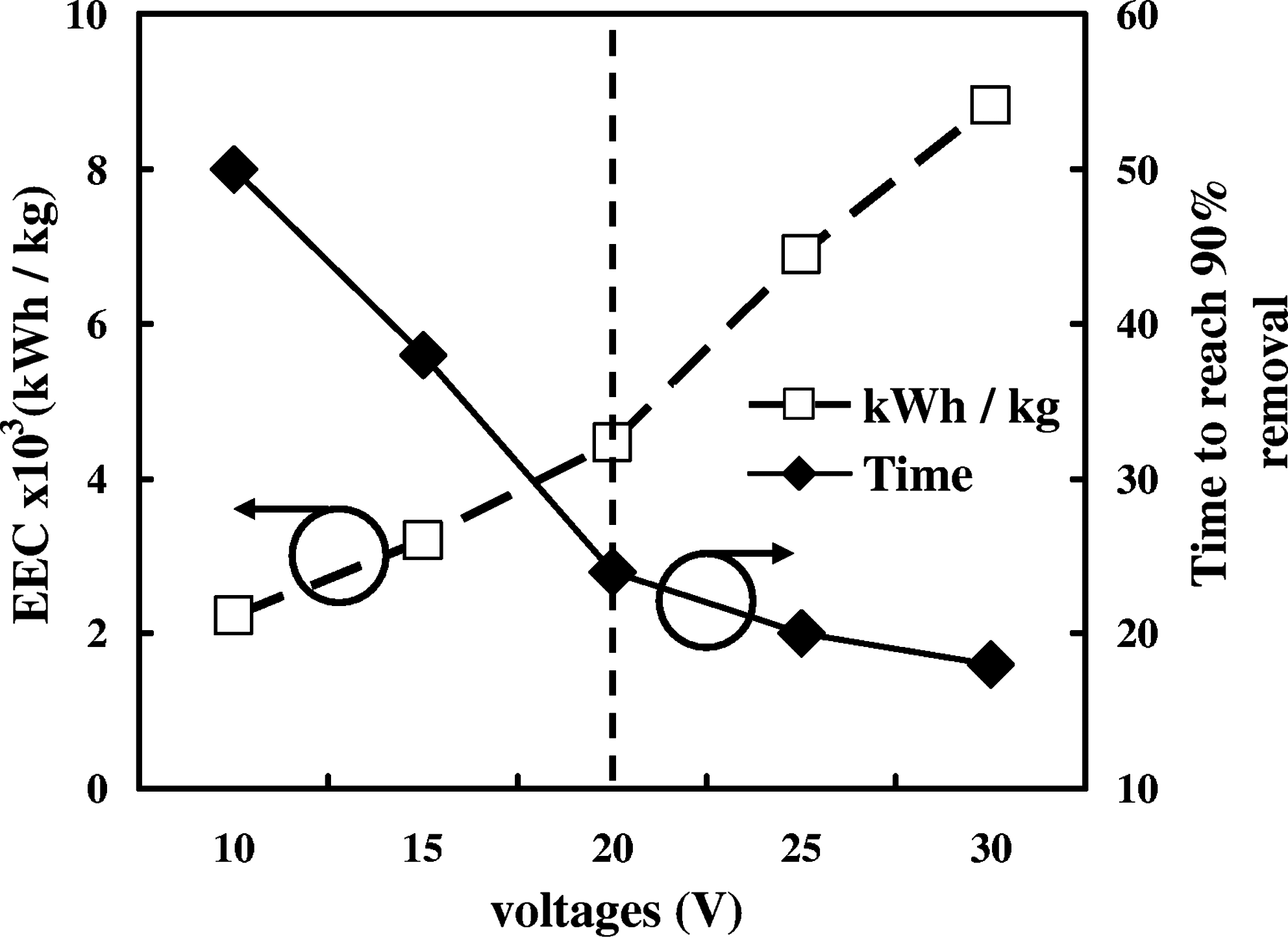
Effect of applied voltages on time to reach 90% removal of salicylic acid and electrical energy consumption. C0 = 100 mg L−1, initial pH = 3.35, T = 298 K, NaCl = 100 mg L−1, agitation speed = 300 rpm).
Effect of temperature
In the present study, the effect of the temperature on the salicylic acid removal efficiency was studied at 288, 298, 308, and 318 K, as shown in Fig. 7. As the electrolysis time increased, comparable increases in the salicylic acid removal efficiency were observed for the different temperatures. After 20 min of electrolysis, we observed that the salicylic acid removal efficiency reached 82.9%, 88.3%, 90.2%, and 91.5% for temperature of 288, 298, 308, and 318 K, respectively. The treatment times required to reach 90% removal of the salicylic acid were 15, 16, 24, and 40 min for temperatures of 318, 308, 298, and 288 K, respectively. Thus, the electrochemical reaction rate, as with the other chemical reaction rates, increased with increasing solution temperatures. The temperature influence can be attributed to an improved destruction of the aluminum oxide film on the anode surface and an increase in the rate of all reactions involved in the process according to the Arrhenius equation (Chen, 2004). In addition, higher temperatures promote the generation of metal hydroxides in the EC process, which leads to a greater mobility and collisions that are more frequent with the metal hydroxides, resulting in an increased adsorption rate between the metal hydroxides and the pollutants (El-Ashtoukhy et al., 2009). However, there was no significant improvement in the salicylic acid removal efficiency after 20 min of electrolysis once the solution temperature was beyond 298 K, as shown in Fig. 7. At higher temperatures, the movement of the generated hydroxyl ions increased and, consequently, had less opportunity to aggregate and produce metal hydroxides. This observation can be also explained by the fact that higher temperatures lead to an increase in the solubility of the precipitates or to the generation of unsuitable flocks, both adverse effects (Yilmaz et al., 2005). According to the present results, it seems that within the temperature range of 288 to 298 K, the beneficial effects dominate over the adverse effects. For temperatures higher than 298 K, the beneficial effects are balanced by the adverse effects.
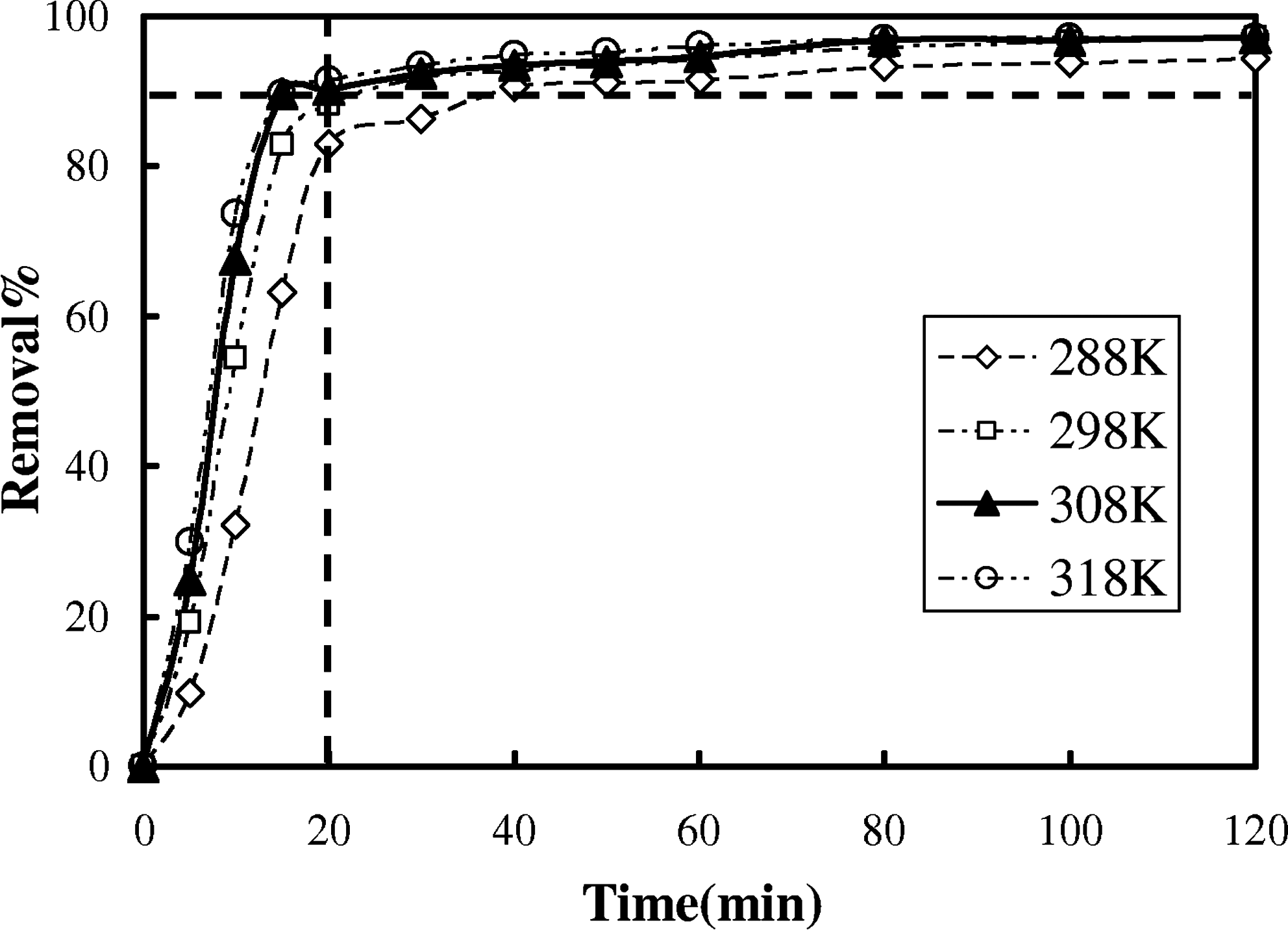
Effect of different temperature on removal efficiency of salicylic acid. (C0 = 100 mg L−1, initial pH 3.35, V = 20 V, t = 120 min, NaCl = 100 mg L−1, agitation speed = 300 rpm).
Effect of temperature on electric energy consumption
To evaluate the effect of solution temperature on the electric energy consumption and time to reach 90% removal, a number of experiments were performed with the Al/Al electrode pair, 100 mg L−1 of initial salicylic acid, 100 mg L−1 NaCl, 20 V of applied voltage, and 300 rpm agitation speed. Figure 8 shows the effect of solution temperature on the performance of electric energy consumption and time to reach 90% removal using aluminum EC. The electric energy consumption decreased significantly by ∼50% when the solution temperature increased from 288 to 308 K, whereas the corresponding time to reach 90% removal decreased remarkably from 40 to 16 min. However, beyond a solution temperature of 308 K there was an upward tendency for the electric energy consumption. When the solution temperature increased from 308 to 318 K, the electric energy consumption increased from 3.8 × 10⁻³ kWh kg−1 to 4.7 × 10⁻³ kWh kg−1, whereas the time to reach 90% removal decreased slightly from 16 to 15 min. Consequently, when considering both the electric energy consumption and the time to reach 90% removal, a temperature of 308 K offered the best overall performance.
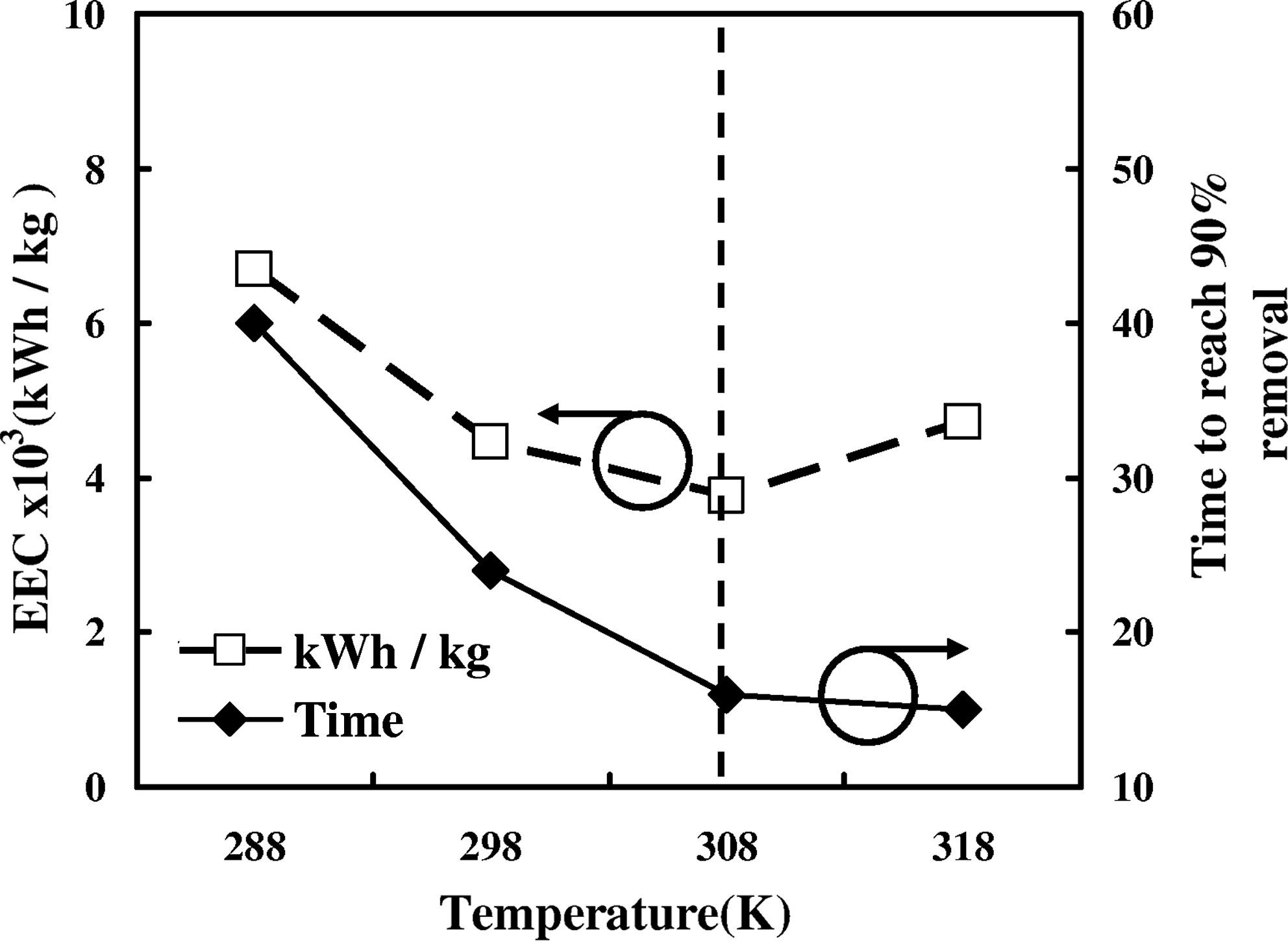
Effect of temperature on time to reach 90% removal of salicylic acid and electrical energy consumption. (C0 = 100 mg L−1, initial pH = 3.35, V = 20 V, NaCl = 100 mg L−1, agitation speed = 300 rpm).
Salicylic acid removal kinetics of EC
The overall EC process for salicylic acid removal kinetics was described by a pseudo-kinetic model. For a pseudo-first-order reaction, the first order reaction kinetics is:
The slope of ln(Ct/C0) versus time gives the value of the rate constant k1 (min−1). Here, C0 is the initial concentration in milligrams per liter; Ct is the concentration value in milligrams per liter at time t; and t is the time in minutes.
For a pseudo-second-order reaction, the second order reaction kinetics is:
The slope of 1/Ct versus time gives the value of the rate constant k2 (L mg−1 min−1). The values of the rate constants for the pseudo-first-order and pseudo-second-order models for salicylic acid removal at various applied voltages and temperatures were determined graphically and are shown in Tables 1 and 2, respectively. The conformity between experimental data and the model values was evaluated using correlation values (R2). As shown in Table 1, regardless of the applied voltage, the R2 value for the pseudo-second-order model was relatively higher than that for the pseudo-first-order model. As shown in Table 2, regardless of the solution temperature, the correlation value (R2) for the pseudo-second-order model was relatively higher than that for the pseudo-first-order model. This result suggests that the salicylic acid removal from aqueous solution by EC follows a pseudo-second-order kinetic model at various applied voltages and solution temperatures.
C0 = 100 mg L−1, initial pH 3.35, T = 298 K, t = 120 min, NaCl = 100 mg L−1, agitation speed = 300 rpm.
C0 = 100 mg L−1, initial pH 3.35, V = 20 V, t = 120 min, NaCl = 100 mg L−1, agitation speed = 300 rpm.
The rate of a reaction depends on temperature. To understand the relationship between temperature and the reaction rate, we assume that the rate constant depends on the temperature of the reaction. The pseudo-second-order rate constant is expressed by the Arrhenius equation.
where A is the proportionality constant of the reaction; Ea is the activation energy (J mole−1); R is the gas constant (8.314 J mol−1 K−1); and T is the temperature (K). The Arrhenius equation can be used to determine the activation energy of a reaction. We start by taking the natural logarithm of both sides of Equation (5):
According to this Equation (6), a plot of ln k vs. 1/T should produce a straight line with a slope of - Ea/R. An activation energy of 20.21 J mole−1 was calculated using the slope of the fitted equation (least-squares correlation coefficient = 0.979).
Conclusion
This study indicated that EC is a promising treatment for the removal of salicylic acid from aqueous solutions and showed the feasibility of removing salicylic acid by adsorption with metal hydroxides. The following conclusions were drawn based on the present investigation:
(1) Unlike the Fe electrode, using an Al electrode does not result in more turbidity for the aqueous solutions and is found to be more effective at removal, thus making the use of an Al electrode more efficient and more advantageous than the Fe electrode. (2) In terms of the pH variation during EC, the generation of coagulant metal hydroxides for the Al/Al electrode pair is greater than that for the Fe/Fe electrode pair, which also enhances the removal efficiency. (3) Considering both the electric energy consumption and the time to reach 90% removal, an applied voltage of 20 V and a temperature of 308 K are optimum values for the present EC process. (4) Values of the kinetic rate constants for salicylic acid removal at various applied voltages and solution temperatures were calculated. The kinetic results show that a pseudo-second-order kinetic model fits the experimental data. In addition, the activation energy is 20.21 J mole−1 based on pseudo-second-order rate constants from the Arrhenius equation, indicating that salicylic acid abatement from aqueous solutions is attributable to the EC process.
Footnotes
Acknowledgment
The authors would like to thank the National Science Council of Taiwan, ROC, for financially supporting this study under contract number NSC98-2221-E-241-004-MY2.
Author Disclosure Statement
The authors declare that no competing financial interests exist.