




Abstract
Abstract
This study surveyed the behavior of diazinon pesticide in the water column of the Tajan River and its potential effects on river biota. The Tajan River is located on the southern basin of the Caspian Sea in Iran and diazinon enters the river from rice fields almost every year between the months of June and October. The sampling plan of flowing water was plotted in a 3-week period on five sites along the river and also at the end of tributaries. Samples were collected seven times during a 6-month period; they were analyzed for diazinon residues and some physicochemical characteristics. Total diazinon concentration range was between 0.01 and 46.99 μg/L in sampling stations. The calibrated AQUATOX model was applied to simulate fate processes and ecotoxicity of diazinon in the Tajan River. The model demonstrated that the diazinon residues in the Tajan River reacted to three major degradation processes (microbial, hydrolysis, and photolysis) and sedimentation; however, the river discharge played the main role in transport of diazinon from the Tajan River. Analysis of results confirmed that the existing period of diazinon in the Tajan River could have severe undesired effects on the river fauna, especially upon the benthic invertebrates and fish. These effects could change the distribution and abundance of the Tajan river fauna.
Introduction
The Tajan River (Fig. 1), with a mean yearly discharge of 423 MCM, is one of the most important aquatic ecosystems in Iran, and it provides habitat for commercially valuable fish species such as sturgeons and edible fish such as common carp (Cyprinus carpio). The Tajan River basin, located in the southern coast of the Caspian Sea along the Mazandaran Province of northern Iran, is one of the most productive agricultural regions in the Middle East. Within the Mazandaran province, a large quantity of pesticides is used to protect crops from pests; in 2006, almost 30,000 tons of pesticides were used in the agricultural areas. As a consequence, chemical pollutants have been found at high levels in various environmental compartments of this area, that is, riverine runoff (Shayeghi et al., 2001; Babaei et al., 2007), sediments (Kalantari et al., 2006; Babaei et al., 2007), fish (Ebadi and Zare, 2005; Hosseini et al., 2008), and birds (Rajaei et al., 2010). Considerably high levels of pesticides have also been detected in human samples such as human milk (Behrooz et al., 2009). Diazinon is one of the most commonly used organophosphate pesticides and is frequently detected in the Tajan River water (Shayeghi et al., 2001; Babaei et al., 2007). These findings indicate that pesticides, especially diazinon, are widespread in the environment of the Tajan River basin and can possibly raise adverse effects to aquatic ecosystem health. To understand the fate and effects of diazinon in the Tajan River, including the residence time, the AQUATOX model (Park et al., 2008) was used. It has been designed to be a general, realistic dynamic model of the combined fate and effects of nutrients and toxic organics in aquatic ecosystems (Park and Clough, 2009a).

Location of water sampling sites in the Tajan River and tributaries (Zaremrood and Chahardangeh) and hydrology stations. The Tajan River is divided into three segments (segments 1, 2, and 3 from upstream to downstream, respectively) and two tributaries (Zaremrood and Chahardangeh) for simulation of diazinon fate and effects in the model.
In the present study, the general objective was to evaluate the fate of diazinon and its potential effects in the Tajan River. Thus, after collecting and analyzing the samples, the AQUATOX model was applied to simulate the Tajan River ecosystem. Diazinon concentration measurements were used in calibrating and validating the AQUATOX model in the Tajan River.
Materials and Methods
Study area environment
The Tajan River originates from forested mountains and continues through the agricultural areas of the coastal plain, where it eventually terminates in the Caspian Sea, the biggest land-locked aquatic ecosystem in the world. This river drains an area of 4,028 km2 and is comprised of the three main streams Tajan, Zaremrood, and Chahardangeh in the study reach (Fig. 1). The study area includes the majority of agricultural areas, where the slope of the land is used for agriculture and has also been enlarged and so the main cultivation is paddy fields. In the study area, land uses are generally forest in high slope and elevation regions, whereas agricultural areas are on the valley floor, especially river banks. The water of the Tajan River is used for irrigation around agricultural fields, industries, animal farming, and providing an aquatic ecosystem for river biota such as fish and benthic invertebrates. The main stream begins and receives inflowing water from the Shahid Rajaee Dam upstream and terminates in Sari (the city center of the Mazandaran Province) in the study reach downstream. Previous monitoring (Shayeghi et al., 2001; Ebadi and Zare, 2005; Kalantari and Ebadi, 2006) in the main reach of the Tajan River identified nine OP and organochlorine pesticides as important pollutants to water, sediments, and fish; these are reported in Table 1, which describes the general status of organic pollutants in the river.
Ebadi et al. (2005).
Kalantari and Ebadi (2006).
Shayeghi et al. (2001).
Fish name.
Sample collection and extraction
Details on the sample sites selection and protocols have been employed as stated by Bartram and Balance (1996) and the general locality of five selected stations (St1 to St5) is displayed in Fig. 1. Sampling, containers, preservation, and the transferring of samples were performed according to the methods described by APHA (1999), USEPA (2007), and Zhang (2007). Samples were collected in 3-week periods starting in May through October 2008. At each station, duplicate water samples were collected in 1,000-mL amber glass-stoppered bottles. Samples were collected and tested for diazinon, nitrate, nitrite, ammonium nitrogen, and phosphate. For diazinon residues, samples were extracted without any filtration according to the method described by Zweig and Devine (1969) and Zweig (1972), with slight modification. In this method, 800 mL water and 80 mL dichloromethane solution were used for diazinon extraction. Then the extracts were spotted on chromatoplates (plastic sheet coated with silica gel 60 F254). Final solution was obtained from eluting of silica gel areas. All chemicals and solvents for residue analysis were purchased from Merck (Darmstadt, Germany).
Instrumental analysis
Samples were analyzed with a Shimadzu Model LC-6A (Shimadzu, Japan) of High-Performance Liquid Chromatography (HPLC), a Shimadzu LC-10AT pump (Shimadzu, Japan), and an UV spectrophotometric detector (operated at 220 nm). The separation was performed on a Shimadzu CLC-ODS (M) (4×150 mm) column using methanol/water (70:30, v/v) as mobile phase at a flow rate of 0.9 mL/min and the column was operated at 40°C. A Palintest Photometer 8000 (Palintest Ltd., Tyne & Wear, United Kingdom) and reagents from Palintest kits were used to measure nitrate nitrogen, nitrite nitrogen, ammonium nitrogen, and phosphate in the samples following the instructions provided in the Palintest kits. A DO meter Eutech Instruments (CyberScan DO 300; Eutech Instruments Ptv. Ltd., Singapore), and Multiparameter Eutech Instruments (CyberScan PC 300; Eutech Instruments Ptv. Ltd.) were used to measure in situ the dissolved oxygen (DO), total dissolved solids (TDS), temperature, and pH, respectively.
Quality assurance and recovery
Laboratory blanks were processed within each sample batch throughout the sampling analysis. The results showed that blanks were below the detection limit (with concentration lower than 0.01 mg/L diazinon) for all tested analytes. The accuracy of total diazinon analysis via HPLC was checked by running three samples of standard reference material. The average recovery of diazinon in water was 84%. Diazinon was identified by a comparison of its relative retention time to the peaks from the calibration standards. Quantification was based on a comparison with calibration curves in the concentration range of 0.01, 0.1, 1, 2, 5, 10, 20, and 40 ppm.
The analysis of diazinon was performed at the University of Tehran, Department of Plant Protection, Analytical Toxicology Laboratory.
Model
AQUATOX model
The AQUATOX model (USEPA, Office of Water, Washington, DC, release 3) was developed by the U.S. Environmental Protection Agency (USEPA) (Park et al., 2008) to predict the fate and effects of pollutants on the ecosystem components. The fate portion of the model includes partitioning among organisms, sediments, detritus, and water. The effects portion of the model includes direct toxicity to the various organisms modeled, and indirect effects such as release of grazing and predation pressure. This model is capable of calculating endpoint concentrations for pollutants in both water and bottom sediments. Detailed descriptions of the equations used in the model include the specific calculations for the fate, the effects of parameters, and the model applications, all of which have been illustrated in the technical documentation (Park and Clough, 2009a), in the user's manual (Park and Clough, 2009b), and by Park et al. (2008).
Model calibration and validation
The Tajan River is divided into five linked segments for simulation and environmental characteristics of the river. The major tributary has a length of 35 km and is divided into three segments and two eastern tributaries (Zaremrood and Chahardangeh), each represented by one model segment. The AQUATOX model was calibrated for diazinon and nutrients, which were measured at five stations located on the five linked segments. The most sensitive and pertinent model input parameter values were obtained from measurements in the field and laboratory. The initial level of diazinon was set at a value of zero and then the measured values were introduced to the model as dynamic loading for calibration and validation (Table 2). Also, measured values for dissolved oxygen, pH, temperature, nitrate, ammonia, and phosphate were used as dynamic loading for calibration of the model. Daily flow values at the gaging station were available for all segments. Parameters without field measurements, such as channel slope, mean evaporation, light, and wind, were compiled using databases from various governing organizations. For physicochemical properties of diazinon, default values were applied from the model library. In addition, for diazinon toxicity data (LC50 and EC50), the values in Table 3 were used in the model. The main characteristics for five segments of the Tajan River and tributaries are summarized in Table 4. Biotic groups and associated parameters were used from a previously calibrated AQUATOX study involving a river of similar size in the arid US West. To predict diazinon fate and toxicity, the calibrated AQUATOX model was run during years 2008–2009 and used for model validation. Figure 2 shows an example of the model performance for predicted concentration of diazinon in station 3 during the validation period. AQUATOX difference graphs were used to isolate the effects of diazinon on the biota.
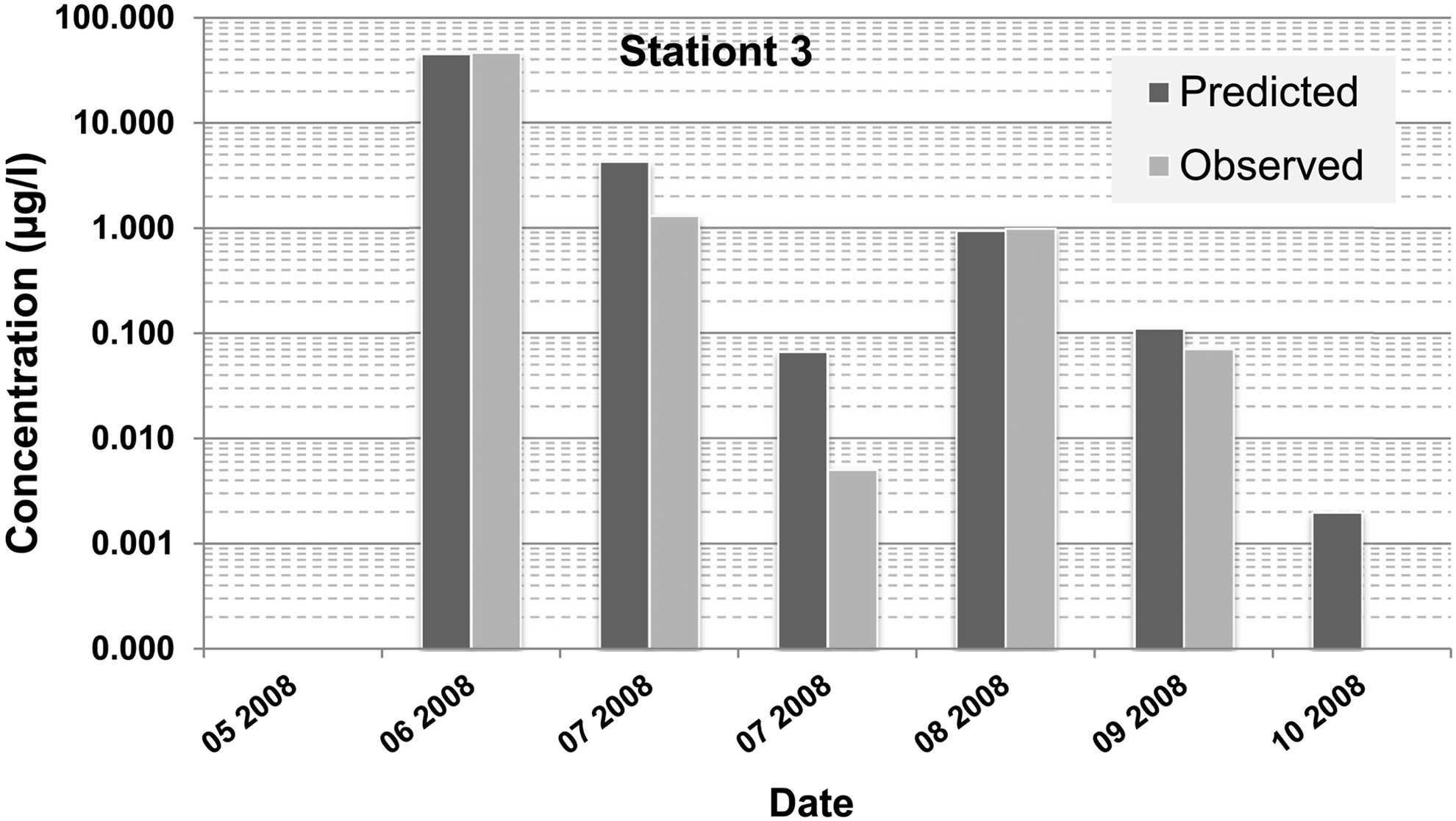
Comparison of simulated and observed diazinon concentrations in station 3.
nd, nondetected.
LC50
USEPA (2010a).
USEPA (2010b).
Regr., Regression.
Sensitivity analysis
AQUATOX includes both nominal range sensitivity analysis and statistical sensitivity analysis that allows the user to specify the types of distributions and key statistics for almost all input variables (Park and Clough, 2009a). In the present study, nominal range sensitivity analysis of the model loadings and parameters was performed to identify which input parameters have influence on the model output. Sensitivity analysis of input parameters was performed with a 10% change. A sensitivity statistic may then be calculated, such that when a 10% change in the parameter results in a 10% change in the model result, the sensitivity is calculated as 100%. A set of model inputs such as water volumes, initial concentrations of diazinon and nutrients, initial condition of fish and invertebrates, water temperature, and light loading were tracked to understand which one of these parameters are important to the model output.
Results and Discussion
Residue levels and water physicochemical characteristics
The levels of diazinon concentration and physicochemical properties in the Tajan River that were used as input to the AQUATOX model are shown in Table 2, and the distribution pattern of diazinon residue in water samples is shown in Fig. 3. The highest level of diazinon was 46.99 μg/L in station 3 in the mainstream of the Tajan River in June; diazinon is usually used as a pesticide in the rice fields during that month (Talebi, 1998; Ghassempour et al., 2002). Diazinon was not detected in water from the initial sampling in May because the application of diazinon had not yet started in the study area. After starting the pesticide use, the highest levels of pollutant were detected in June compared with all other sampling times. Another peak in the distribution pattern of diazinon residue (Fig. 3) occurs in August, when diazinon is used in the fields to provide protection from pests before harvesting. Based on the field survey results, harvesting occurs in late September, and thereafter, generally, diazinon and other pesticides do not show up in the study area. Previous investigation has also demonstrated the absence of pesticides in the Tajan River at this time (Shayeghi et al., 2001). Diazinon concentrations in the Tajan River were similar to or less than concentrations from various locations in the world (Table 5).
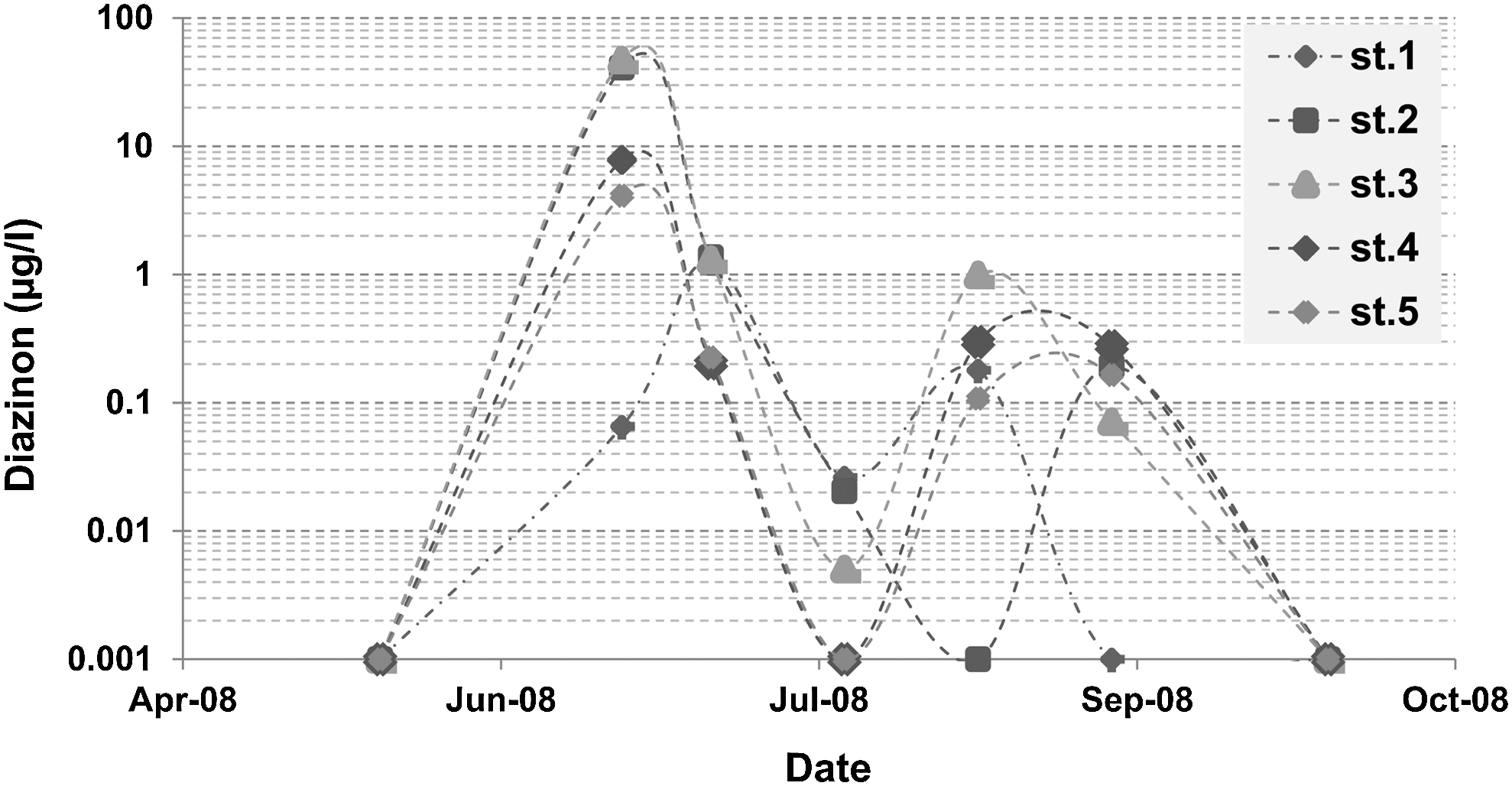
Distribution of measured diazinon concentrations in five sampling stations of the Tajan River and tributaries (2008).
Water quality variables were measured at sampling locations (Table 2) for use as model loadings. These values also indicate the general condition of river water quality. The DO concentrations ranged from 8.1 to 11.8 mg/L, indicating that water quality is good, but ammonia and dissolved phosphate concentrations are slightly high in the river ecosystem. However, the values of nitrate and nitrite are low.
Sensitivity and uncertainty analysis
Table 6 shows the mean sensitivity values of some fish and invertebrates for all tested variables to a ±10% change in tested parameters. The optimum temperature was the most sensitive parameter for the biomass of Brown trout, Siah mahi, Siah koli, Kafal, Mayfly, and Chironomid. Gastropod biomass was also highly sensitive to the optimal temperature for its maximum consumption. Generally, the optimum temperature, maximum consumption, initial condition, and pH were the most sensitive parameters for the fish and invertebrates biomass. The most sensitive physicochemical parameters were investigated for uncertainty and there was no effect on biomass of fish and invertebrates (range:±1 standard deviation). Uncertainty with respect to fish and invertebrate parameters was also investigated. The Siah koli, Sphaerid, and Caddisfly respirations and Barbel consumption were found to be the most critical for biomass of fish and invertebrates and the microbial degradation was outside the range of ±1 standard deviation.
max, maximum; opt, optimum.
Diazinon fate modeling results
Several principal processes affect the diazinon concentration in the water of the Tajan River, including riverine discharge, hydrolysis, photolysis, volatilization, microbial degradation, and sedimentation. The simulation results show that the most important loss of the diazinon is through washout down the river. In other words, discharge is the dominant agent in the Tajan River to reduce the diazinon concentration in the water. The results illustrate loss of diazinon that is equal to the total approximate washout and degradation of diazinon through hydrolysis, photolysis, volatilization, and microbial metabolism, all which are negligible against washout. The diazinon degradation processes and comparison to washout are indicated in Fig. 4. The next most important loss process is sorption to detritus in the Tajan River. In this process, dissolved diazinon is absorbed by sediments. However, comparison between Fig. 4 and Fig. 5 indicates that the sorption through sediments is negligible when compared with washout.

Predicted degradation of diazinon processes in Tajan River mainstream (left-hand vertical axis) and comparison with washout (right-hand vertical axis). KG, cumulative mass of diazinon degraded and washout over the simulation.
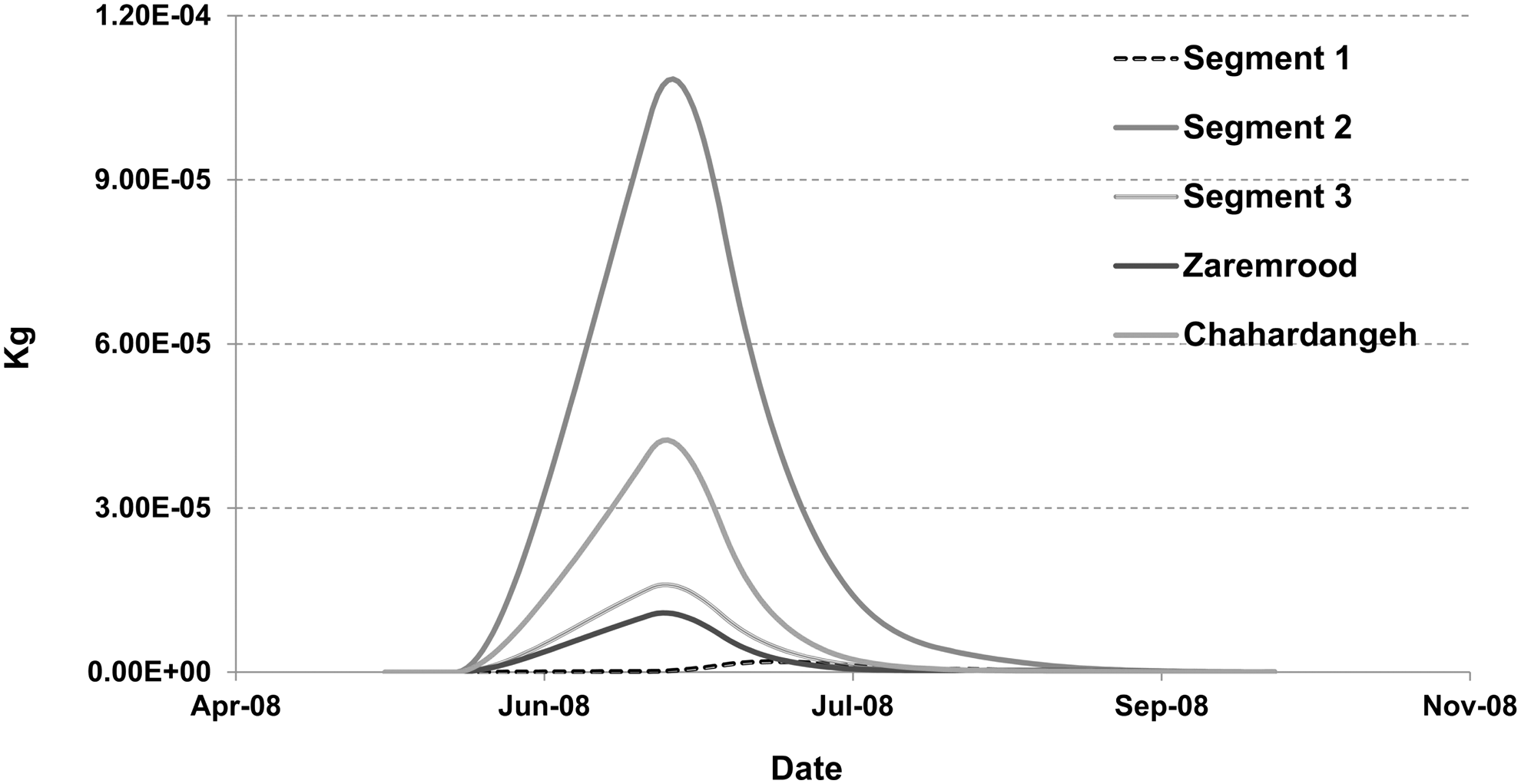
Mass (kg) of absorbed diazinon in the sediments of the Tajan River segments and tributaries in the simulation time.
Diazinon toxicity effects in the Tajan River ecosystem
To conduct diazinon toxicity effects in the Tajan River, the AQUATOX model was set up for perturbed simulation and control simulation. Perturbation starts the simulation with changed conditions (with a toxicant) and control starts the simulation without the stressor. The model plots the biomass percentage difference in the perturbed and the control values for a given organism or different organisms and presents whether the effects are acute, chronic, or indirect. Figure 6A shows the simulated biomass percentage differences for some fish in the Tajan River mainstream. This difference graph plots the results of the perturbed simulation minus the control simulation as percentage of differences. Comparing the perturbed simulation and control simulation indicates that a decrease clearly exists in the fish biomass when diazinon occurs in the Tajan River. The range of declined biomass is from <8% for Barbel to >99% for Brown trout and Whitefish, which is a significant difference between the mean predicted biomass and the assumed mean biomass of each species, using t-test. These results (declined biomass) are consistent with similar studies (Giddings et al., 2000; USEPA, 2005). In Fig. 6A there are peaks for Siah mahi (Varicorhinus capotea) and Kafal (Mugila auratus), indicating fish were recovered because of a recovery of prey species following a decline of diazinon. Also, a longer simulation period showed that most of the detrimental effects on the fish appear to diminish by the end of diazinon loss.
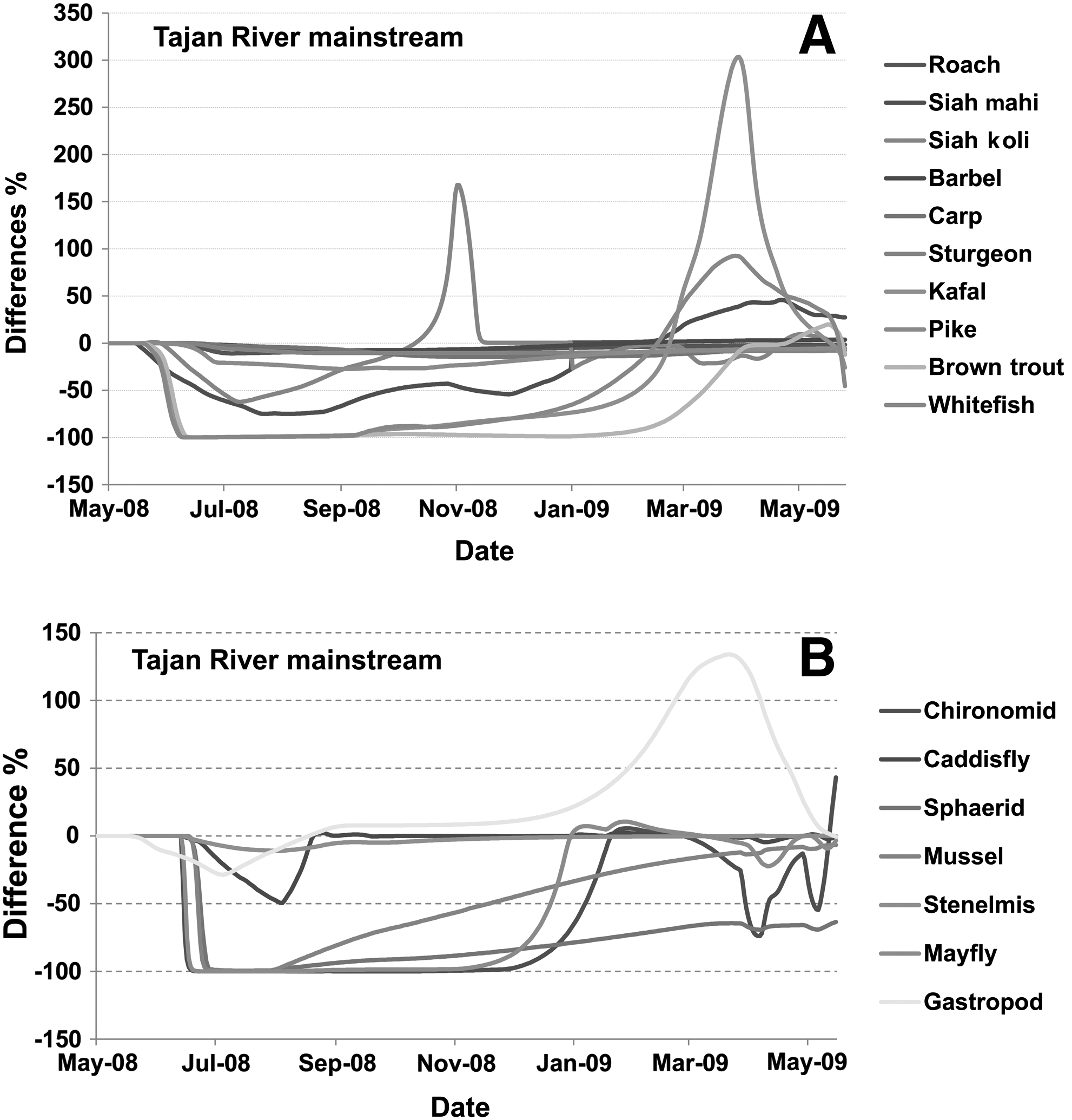
AQUATOX results for
Invertebrates are generally more sensitive to diazinon than vertebrates. Figure 6B illustrates the results for the simulated biomass percentage of differences for some benthic invertebrates. Chironomids, mayflies, Sphaerid, and Mussel immediately decline on account of toxicity effects of diazinon, and they are food for some fish. Also, some invertebrates (Gastropods, Stenelmis, and Caddisfly) benefit from release of predation pressure and increased their biomass rapidly according to the simulation. These results indicate the distribution and abundance of organisms changed based on the exposure to high and long periods of diazinon concentration as well as the existing prey and predatory systems in the trophic levels. In addition, Fig. 7 is an example of a graph of tissue contamination in fish in the Tajan River. Because fish are potentially consumed by humans, such graphs can provide alarms for possible food safety risk to humans from consumption of the Tajan River's fish. Previous studies have demonstrated the occurrence of chemical contaminants in fish in this region (Ebadi and Zare, 2005; Hosseini et al., 2008).

Concentrations of diazinon in tissue of fish. It diminishes in the end of the simulation period.
Conclusions
Rivers are breeding habitats for a large number of riverine and marine species. These habitats are often contaminated with chemicals input into these areas. Therefore, understanding the fate and effects of chemical contaminants in these systems is important. The AQUATOX model was employed to simulate diazinon fate and effects, and it predicted the diazinon behavior in the Tajan River and tributaries. Based on the simulated and measured results, the washout of diazinon in the Tajan River is most important to the processing of the chemical in the river water. Diazinon degradation through hydrolysis, photolysis, volatilization, and microbial metabolism has a only small role in breaking down the chemicals. Sorption to organic detritus and bioaccumulation account for small amounts of diazinon. Diazinon toxicity is expected to affect biota in the Tajan River.
In the Caspian Sea, there are six commercially valuable sturgeon species, four of which produce 90% of the world's caviar (Hosseini et al., 2008). The Tajan River is one of the most important breeding habitats for sturgeon species and it provides spawning grounds for them. The high concentration of diazinon pesticide is a threat to the Tajan River ecosystem and may contaminate the fish products consumed by humans.
Footnotes
Acknowledgments
This work was funded in part by the Iran Water Resources Management Co. (WRMC) under contract 50998-152. The authors are grateful for the assistance of Dick Park for comments, feedback, and use of AQUATOX model and Neda Jafari for language assistance.
Author Disclosure Statement
No competing financial interests exist.