




Abstract
Abstract
Pot-culture experiments were carried out to assess the phytoremediation potential of 14 ornamental plants in weathered petroleum-contaminated soil, which was collected in the Shengli Oil Field, one of the biggest oil fields in China, by examining their impact on the degradation potential of total petroleum hydrocarbons (TPHs) and its composition. Results showed Gaillardia aristata, Echinacea purpurea, Fawn (Festuca arundinacea Schreb), Fire Phoenix (a combined F. arundinacea), and Medicago sativa L. could effectively reduce TPHs and its composition in 10,000 mg kg−1 TPH-contaminated soil. After a 30-day pot-culture experiment, the removal rates were 37.16%, 46.74%, 49.42%, 41.00%, and 37.93%, respectively, significantly higher than that in the control (only 12.93%). Removal rates of TPH composition including saturated hydrocarbon, aromatic hydrocarbon, asphaltene, and polar compound reached 39.41%, 38.47%, 45.11%, 42.92%, and 37.52%, respectively, also higher than that in the control (only 6.90%). Further, the total biomass did not significantly decrease for all plants tested in 10,000 mg kg−1 TPH-contaminated soil. Fourier transform infrared spectroscopy confirmed the presence of oil in the plant tissues. These results suggested that the typical ornamental species including G. aristata, E. purpurea, Fawn, Fire Phoenix, and M. sativa can be adopted in phytoremediation of oil-contaminated soil.
Introduction
Typical treatments for petroleum-contaminated soil involve in excavating the soil and removing it for treatment using physical or chemical methods (Zhou, 1995; Li et al., 1997; Hans-Holgar and Alexander, 2000; Juck et al., 2000). These treatments, though effective, are costly and involve in extensive site disturbance. To find more financially acceptable options, biological methods have been investigated, such as phytoremediation, that is, using living green plants in situ to “clean-up” contaminated lands. Phytoremediation is a low-input approach depending on natural attenuation by biodegradation and physiochemical mechanisms that decrease the pollutant concentration wherein sowing plants may be the only intervention (Schwab et al., 1999; Liste, 2000; Joner and Leyval, 2001; Muratova et al., 2003; Robson et al., 2004; Zhou and Song, 2004; Parrish et al., 2005).
In the past decade, it has produced an extensive body of research on the phytoremediation of both organic and inorganic contaminants (Chaîneau et al., 1997; Dzantor et al., 2000; Singer et al., 2003; Smreczak et al., 2003; Rentz et al., 2004). Most hydrocarbon degradation is believed to occur through a rhizosphere effect; plants exude organic compounds through their roots, which increase the density, diversity, and activity of specific microorganisms in the surrounding rhizosphere, which in turn degrade hydrocarbons (Siciliano and Germida, 1998; White et al., 2003; Rutherford et al., 2005). Few studies only by Zhou and coworkers (Peng et al., 2009; Cai et al., 2010; Zhang et al., 2010), however, have examined ornamental plants for phytoremediation of petroleum-contaminated soils. This has their advantages in revegetation cover and beautifying surrounding environment. Phytoremediation using ornamental plants can avoid entering food chains and effectively reduce the pollution, than using crops. The aim of this work was to screen out ornamental plants with high effectiveness for treating petroleum-contaminated soil, by examining the removal rate of TPHs and its composition after a 30-day pot-culture experiment in TPH-contaminated soil.
Experimental
Sampling and tested materials
Weathered petroleum-contaminated soil was collected (sampled to a depth of 250 mm) from the Shengli Oil Field in Dongying City, Shandong Province, China. Soil analysis was done by the Key Laboratory of Terrestrial Ecological Process, Institute of Applied Ecology, Chinese Academy of Sciences, Shenyang, China. The contaminated soil had been classed as a drained brown soil with pH 7.66, and carbon (C), phosphorus (P), nitrogen (N), and available P concentrations were 45.77, 0.65, 0.73, and 0.002 g kg−1, respectively. Uncontaminated reference soil samples were collected from the Wanliutang Park, Shenyang, China. The average concentration of TPHs in contaminated soil collected was 28,000 mg kg−1 and its composition of TPHs was 40.76% of saturated hydrocarbon fraction, 27.02% of aromatic hydrocarbon fraction, and 30.82% of asphaltene and polar fraction. Collected soil was sieved through a 4.00-mm sieve to ensure homogeneity. According to the pretest results, all plants tested could not grow in the weathered petroleum-contaminated soil directly. Through the addition of uncontaminated reference soil, contaminated soil collected was diluted to 10,000 mg·TPHs kg−1 (WTPHS/Wsoil) according to the experimental design.
The tested seeds of plant species were purchased from Kelaowu Seeds Company, Beijing, China.
Experimental design
The tested plants and their basic botanical characteristics are summarized in Table 1. Soil tested (2.5 kg) was added to 20-cm-diameter pots. A disc of filter paper was placed in the bottom of each pot to prevent the dry soil escaping out from the drainage holes and pots were placed on saucers. To each pot, single plant species treatments (n=6) were transformed, and germination of each seed took place in 15 days.
Then, each ornamental plant studied in three replicates in contaminated soil (TPHs=10,000 mg kg−1) was harvested at the end of the experiment. Three replicates of the control (no plants and only soil) were also simultaneously maintained with the same contaminated soil. The control soils were identically processed at the time of watering plants and all treatments were processed during 30 days. Plants were sown in a grown chamber with a 16 h/25°C day and 8 h/15°C night cycle. Pots were watered every second day to maintain approximately 25% gravimetric water content. The study length represented an optimal growing season for the northeastern region of China. The experiment started from April 28, 2009 and lasted for 30 days.
Roots were shaken to dislodge loose soil and then the attached rhizosphere soil was archived at −20°C for hydrocarbon analyses. Following analysis, washed roots and detached shoots were dried at room temperature for 1 week and then weighed.
TPH analysis
TPHs in soil were examined according to the US EPA 3550 (US EPA Method 3550; US EPA Method 1664). At first, TPHs were extracted from 5.0 g petroleum-contaminated soil, which had been previously sieved through a 4-mm sieve, and transferred to a 40-mL glass centrifuge tube, 25 mL chloroform was added, and the tube was closed to cover. Then they were ultrasonically extracted for 1 h. During the extraction, some cold water was added to keep the bath temperature below 40°C. After extraction, the samples were centrifuged for 10 min under 3000 rpm, and the extracts were transferred into an Erlenmeyer flask, dried to a constant weight, and bathed under 65°C to evaporate volatile chloroform. After evaporation of the solvent, the amount of residual TPHs was gravimetrically determined.
The removal rate of TPHs was calculated using the following expression:
where M2 is the concentration (mg kg−1) of TPHs in soil before remediation, M1 is the concentration (mg kg−1) of TPHs in rhizosphere soil after remediation, and R is the removal rate of TPHs.
TPH composition and soil pH
The determination of saturated hydrocarbon, aromatic hydrocarbon, asphaltene, and polar compound in petroleum-contaminated soil was performed by separation using aluminum oxides. First, the sample was confected, after TPHs were examined, into ethane with 0.05 g mL−1, saturated hydrocarbons were cleaned out using ethane with 50 mL after rendering the sample, and the effusing was received with a bottle and dried to a constant weight; afterward, aromatic hydrocarbons were cleaned using ethane and methylene dichloride (v/v=1:1) with 50 mL and the effusing was received with another bottle and dried to a constant weight; and then, asphaltene and polar compound were cleaned using methanol with 50 mL and the effusing was received with the third bottle and weighed after drying. Put the three bottles above in draught cupboard, until solvent in the bottles had been evaporated to a constant weight; then the saturated hydrocarbon, aromatic hydrocarbon, asphaltene, and polar compound were gravimetrically calculated, respectively (Xie, 1987).
Soil pH was determined by the pH meter (pHs-3B) (Xiong, 2001).
Statistical methods
Statistical analysis was carried out using the Excel XP, SPSS 17.0. Sampling and chemical analyses were examined in triplicate in order to decrease the experimental errors and to increase the experimental reproducibility. The confidence of data generated in the present investigations has been analyzed by standard statistical methods to determine the mean values and standard deviation (SD). The values in figures were expressed as mean±SD of the three replicates. Differences among treatments were analyzed by one-way analysis of variance (least significant difference test).
Results and Discussion
Growth of plants and their biomass
Figure 1 describes a variation in plant biomass among plant species in the study. After a 30-day culture, root and shoot biomass ranged from 1.55 to 5.76 g dry weight in TPH-contaminated soils. The tested plant species including #1, #3, #4, #5, and #8 grown in the contaminated soil yielded significantly (p<0.05) less dry weight than that in the control, particularly in #3 (Adonis aestivalis L.), and had decreased to about 50% (p<0.01) of that in the control. The biomass of tested plant species decreased in the petroleum-contaminated soil, which was in accordance to Kulakow et al. (2000) and Tesar et al. (2002). Kulakow et al. (2000) reported a 77% reduction of ryegrass biomass after 30-day growth in soil contaminated with 25 g petroleum hydrocarbons kg−1. Tesar et al. (2002) showed that existence of 5 g diesel kg−1 soil led to a biomass reduction of 82%. In this work, the biomass reduction was less than the previous studies. This may be attributed to the use of freshly spiked soil, which was reported to be more toxic to plants and microorganisms than aged contaminations (Bäk and Krömer, 1997), where pollutants are in general adsorbed to a higher degree on soil particles and therefore less available for growing. After a 30-day culture, the biomass of the species including #2 (Antirrhinum majus), #6 (Gaillardia aristata), and #14 (Medicago sativa Linn.) increased significantly (p<0.01) in contaminated soil than that in the control, whereas the biomass of #14 (M. sativa Linn.) in contaminated soil rose by 67.93% than that in the control. It may be because carbon in TPH-contaminated soil can be absorbed as a nutrition substance by #14 (M. sativa Linn.) and also because of its ability to fix atmospheric nitrogen as legumes (Gudin and Syratt, 1975). There was no significant correlation between the concentration of TPHs in contaminated soil and biomass of the tested plant species including #7, #9, #10, #11, #12, and #13 (p>0.05). However, #12 (Fire Phoenix) and #13 (Cold-Tolerant No. 1) were species whose yields increased a little in contaminated soil than that in the control. The differences may be attributed to the different organic compounds exuded by plants through their roots, which affect the density, diversity, and activity of specific microorganisms in surrounding rhizosphere.
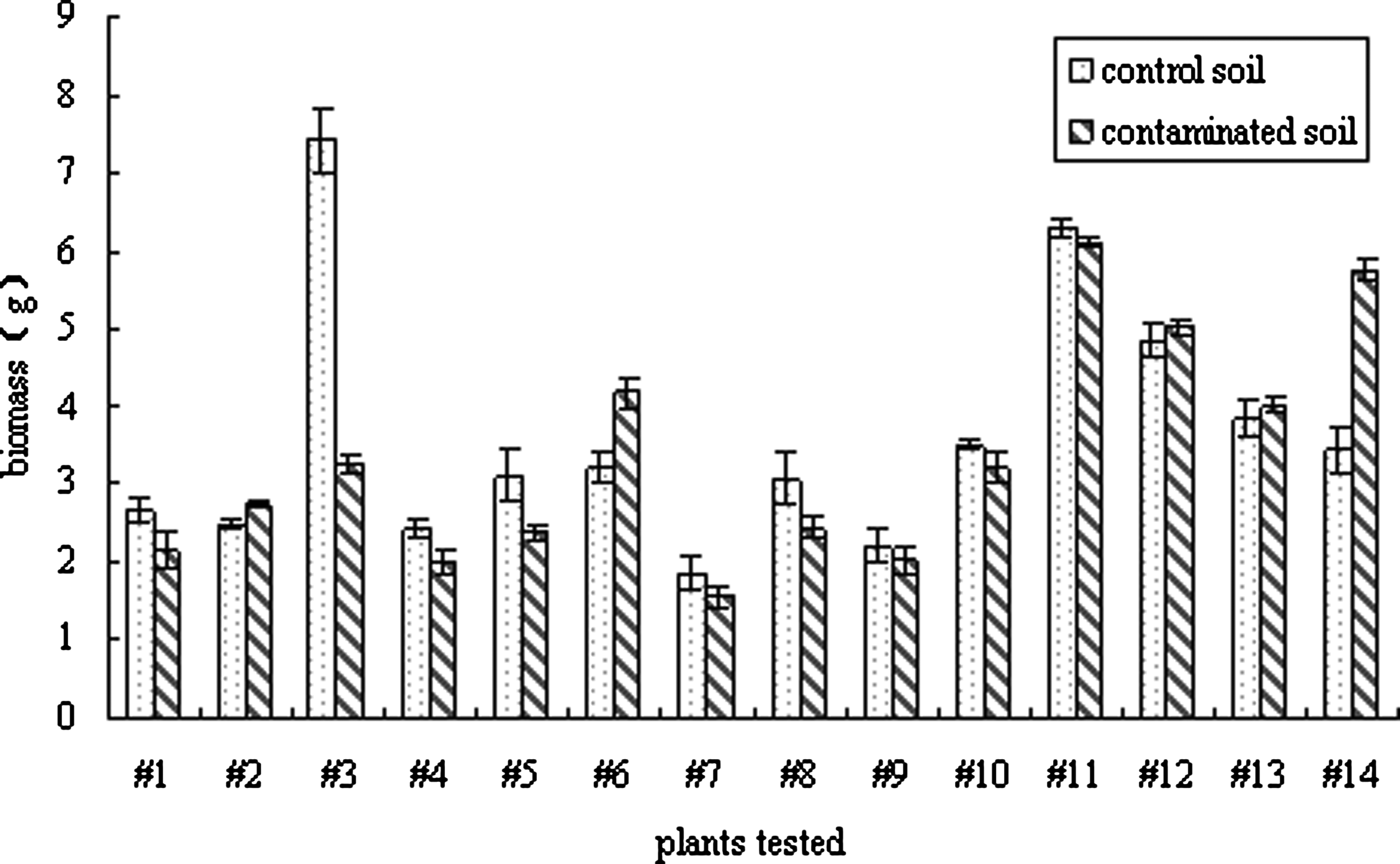
Growth of plant species tested and their biomass in control and rhizosphere soil at 30 days following transformation.
Treatment effectiveness of TPHs
After treatment by the specific plants, reduction in TPHs was observed during this study (Fig. 2). After a 30-day culture, the removal rate of TPHs ranged from 19.54% to 49.42% in contaminated soil after remediation, and that was 12.93% in the control. The species #1 (Centaurea cyanus) (19.54%) and #2 (A. majus) (20.69%) had the lowest removal rate, whereas #7 (Echinacea purpurea) (46.74%) and #11 (Fawn) (49.42%) had the largest overall TPH removal rate among 14 species tested. The concentration of TPHs after remediation by #11 (Fawn) after a 30-day culture could reach the Canada industrial levels (5000 mg·kg−1) for surface soil (Cunningham et al., 1996; CWS, 2008). The removal rate of TPHs may reach more than 35% for the tested plant species including #4, #5, #6, #10, #12, and #14 after a 30-day culture. The enhanced degradation of TPHs was observed in petroleum-contaminated soil compared with that in the control, by sowing plant species tested. This was in agreement with the results of Soleimani et al. (2010), who also observed a degradation of 64%–72% in 4700 mg TPHs kg−1 soil using Tall Fescue. It may be brought about by a combination of plant and soil interactions such as improvement of physical and chemical properties of a contaminated soil, increase in soil microbial activity, and increase in contact between rhizosphere microbes and TPHs in a contaminated soil. Further, the degradation mediated by plant-secreted enzymes in the rhizosphere could also cause the enhancement of TPH removal (Salt et al., 1998; Margesin, et al., 2003; Singer et al., 2003; Espinosa-Urgel, 2004). The mechanisms of plant and soil interactions will be studied in the future. Integrating the results of biomass (Fig. 1) and the removal rate (Fig. 2), we believe that the tested plant species including #4, #5, #6, #7, #10, #11, #12, and #14 may have better ability of remedying petroleum-contaminated soils for further study.
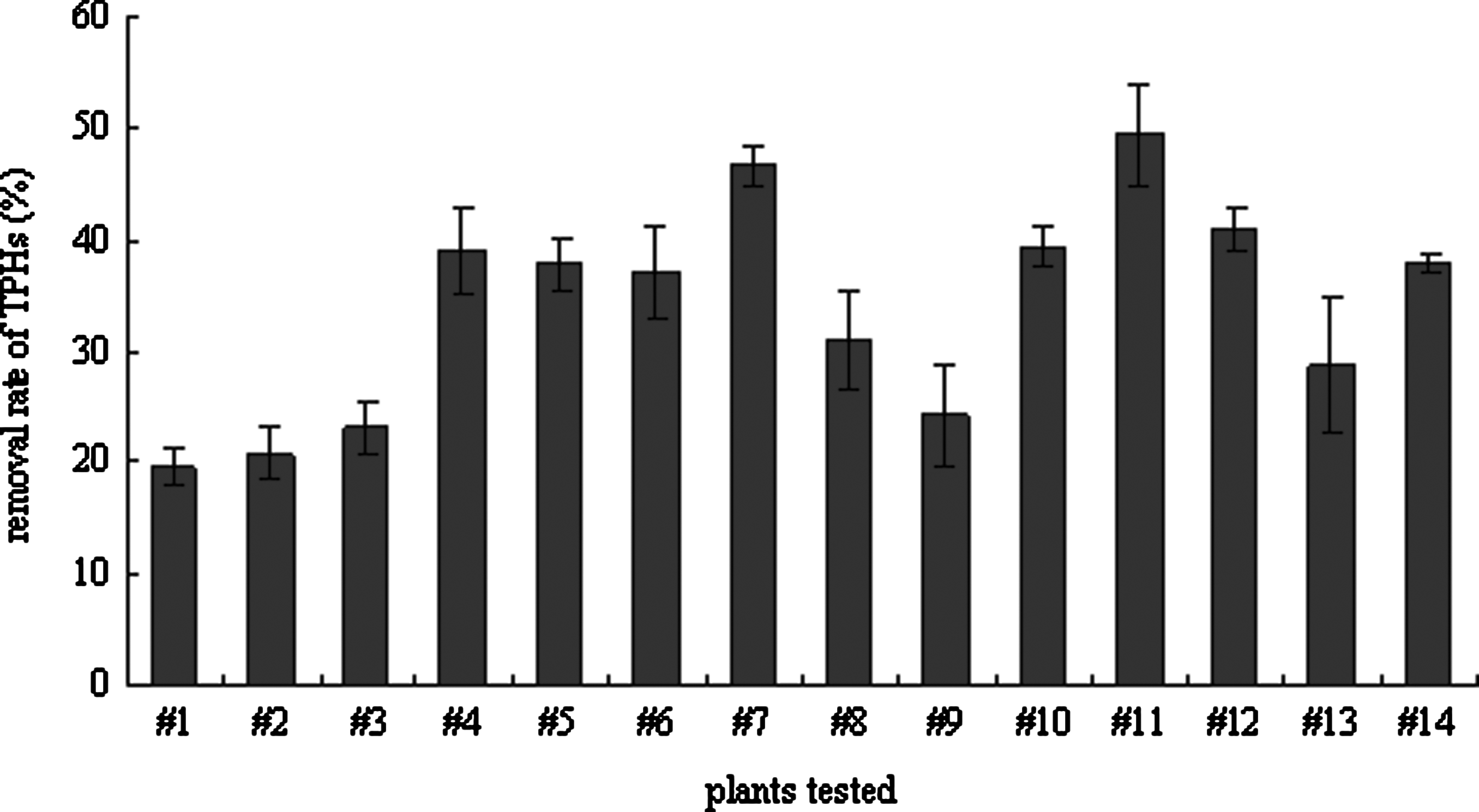
Removal rate of TPHs for plant species tested in control and rhizosphere soil at 30 days following transformation. TPHs, total petroleum hydrocarbons.
Changes in TPH composition
The total removal rates of various TPH composition including saturated hydrocarbon, aromatic hydrocarbon, asphaltene, and polar compound are depicted in Fig. 3. There were great differences in the removal rate among 14 plant species tested. The removal rate ranged from 16.79% to 45.11% in the contaminated soil, higher than that in the control (only 6.9%). Figure 3 shows that degradation of saturated hydrocarbon fraction was mostly greater than that of the other two fractions, which was in line with other reports (Merkl et al., 2005; Kaimi et al., 2007). The removal rate was higher for saturated hydrocarbons, for example, 20.81% by #7 (E. purpurea), 19.61% by #10 (Sandland No. 1), and 19.64% by #11 (Fawn). The fraction of asphaltene and polar compound had a lower degradation generally during phytoremediation. It might be because oxidation of TPH composition in soil depends on enzyme types, which are mostly related to the type of oil-degrading bacteria (Van Beilen et al., 2003). More extensive degradation of saturated hydrocarbon than aromatic hydrocarbon, asphaltene, and polar compound in the rhizosphere of plants might be due to changes in the bacterial community structure, with special enzymes to oxidize these compounds (Van Beilen et al., 2003). Further, TPHs with composition including aromatic hydrocarbon, asphaltene, and polar compound are hydrophobic solids and consequently are difficult to degrade because of their low water solubility and high aliphatic solubility (Balba et al., 1998). However, #11 (Fawn) (14.20%) and #12 (Fire Phoenix) (14.91%) contained significantly higher removal rate of asphaltene and polar compound after a 30-day culture than all other plant species tested, compared with that in the control (only 1.47%). It may be because more root biomass and root surface area, such as grass, which increased secretion of microbial enhancing metabolites such as water-soluble phenols, could also stimulate microbial activity in soil. It was also beneficial to the degradation of TPH composition (Aprill and Sims, 1990).
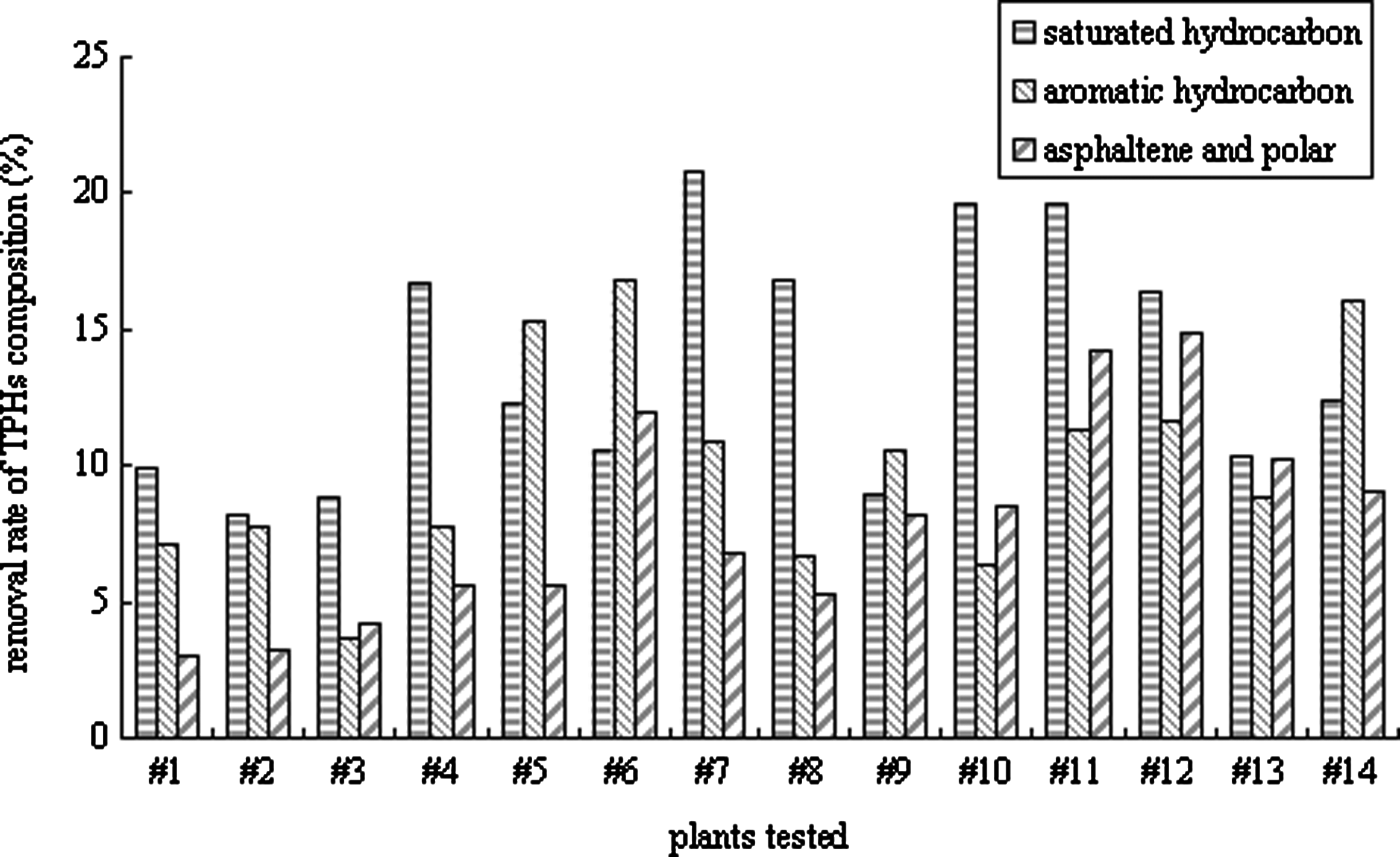
Removal rate of TPH composition for plant species tested in control and rhizosphere soil at 30 days following transformation.
Changes in soil pH
Figure 4 depicts a change of pH in planted soils after a 30-day culture. The little significant difference was observed among 14 species; it was in accordance with the reference (Huang et al., 2005). There was a little increase in soil pH, except #11 (Fawn) and #14 (M. sativa Linn.). This may be attributed to the difference in properties of rhizosphere secretion by sowing different plant species. pH values decreased after growing #11 (Fawn) and #14 (M. sativa Linn.), perhaps because organic acid occurred in process of growing plants and carbonic acid which was sacrificed, in the process that carbon dioxide formed from biorespiration was dissolved in water. The plants had a certain effect on special rhizosphere secretions (i.e., organic acid and citric acid) and rhizosphere microbial communities in plant treatment.
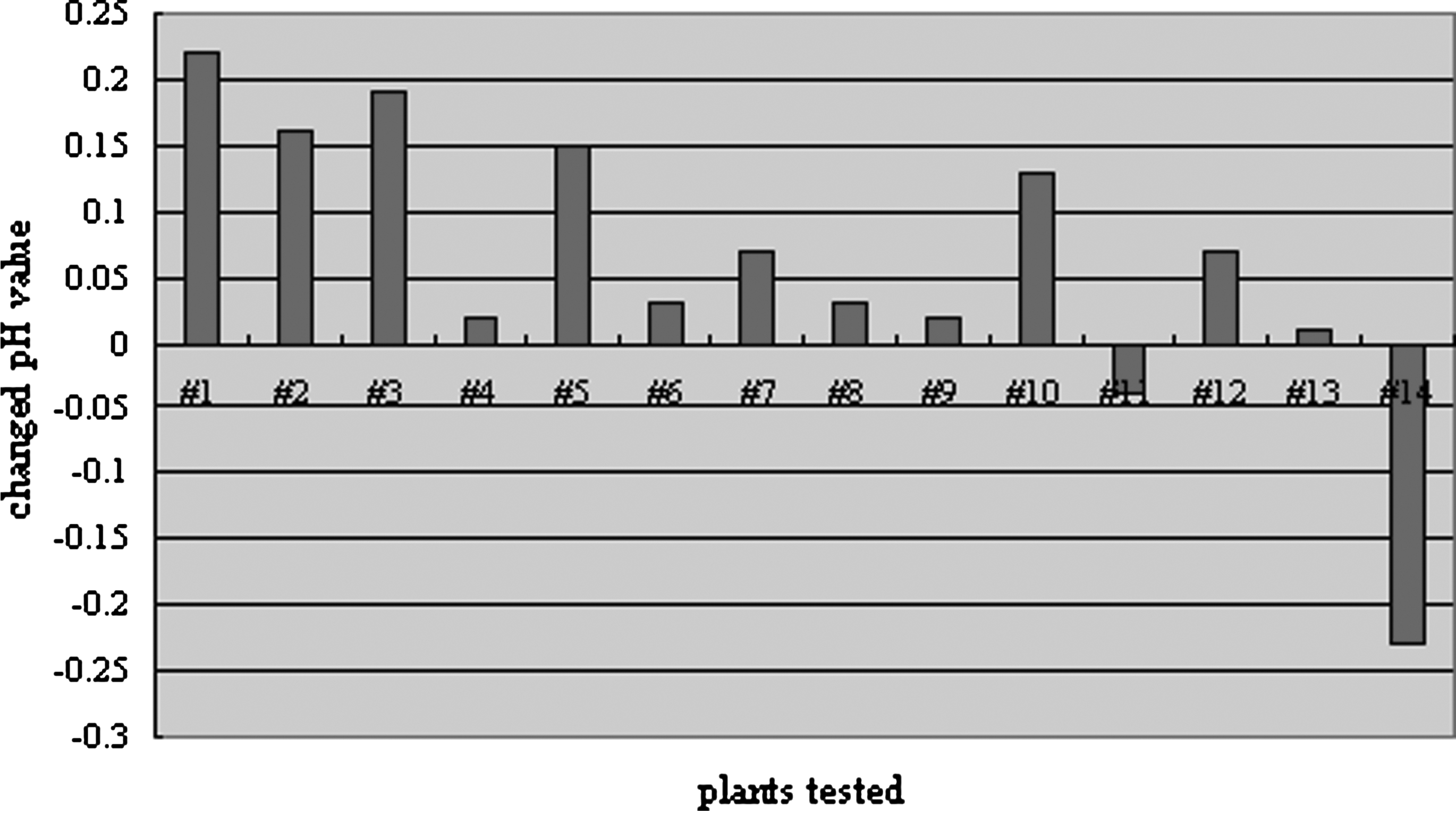
Changed pH value for plant species tested in control and rhizosphere soil at 30 days following transformation.
Fourier transform infrared analysis
The infrared (IR) spectra of the ornamental plants in noncontaminated soil as well as those planted in oil-contaminated soil (Fig. 5) were obtained using a Fourier transform infrared spectrometer (FTIR RX 1; Perkin-Elmer). For the FTIR study, 30 mg of finely ground biomass of whole ornamental plants (including roots and stems) was encapsulated in 300 mg of KBr (Sigma) in order to prepare translucent sample disks. The results clearly showed that the IR spectra of plants sown in contaminated soil and that of noncontaminated soil were showing different absorption patterns in the IR region. Particularly, the shifting of bands in IR spectra was observed in the hydrocarbon-contaminated plants around 1000, 1400, 1600, and 3400 cm−1 because of interaction between hydrocarbons of the oil and various functional groups present in these plants. Many of these bands shift toward the higher or lower frequency, clearly indicating the impact of oil contamination. For instance, the band around 1640 cm−1 in the IR spectra of ornamental plants (Fig. 5) may be attributed to the C=O functional groups present in the structure, which shift toward the lower wave number (3–15 cm−1) in case of plants sown in petroleum-contaminated soil.
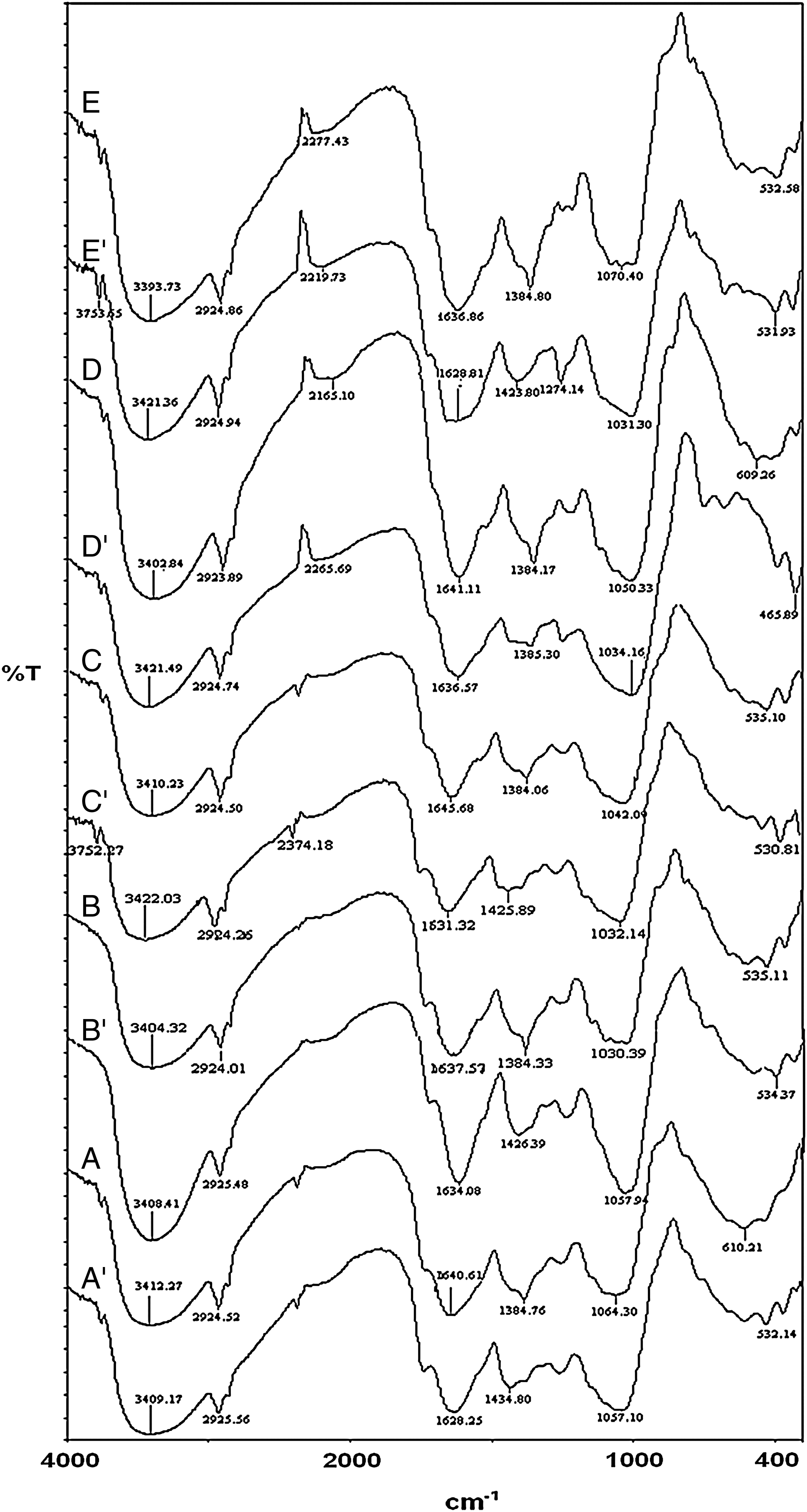
Infrared spectra of
Conclusion
Considering these results for biomass, TPHs, TPH composition, and pH change, #6 (G. aristata), #7 (E. purpurea), #11 (Fawn), #12 (Fire Phoenix), and #14 (M. sativa Linn.) are plant species that have a larger potential for removing TPHs and its composition in petroleum-contaminated soil. This study has shown that phytoremediation using special ornamental species is one of the treatment methods in terms of effectiveness of TPH degradation in petroleum-contaminated soil.
Footnotes
Acknowledgments
This work was supported by the National Natural Science Foundation of China for a Young Scholars Project (Grant No. 30900204) and the National Natural Science Foundation of China general project (Grant No. 31170478).
Author Disclosure Statement
No competing financial interests exist.