




Abstract
Abstract
Thiophene (T) is considered one of the most refractory organic sulfur compounds in oxidative desulfurization. This study used an ultrasound-assisted oxidative desulfurization process to optimize T oxidation on a bench scale. Four control factors, including durations of sonication, the amounts of transition metal catalyst (TMC), phase transfer agent (PTA), and hydrogen peroxide, were carefully examined. The best operation condition, evaluated by using the analysis of variance, was found at mass ratios of T:H2O2:PTA:TMC at 1:1.5:0.005:0.01 with 20 min of sonication, where almost 73.5% of T, 89.9% of benzothiophene (BT), and 100% of dibenzothiophene (DBT) were oxidized to their corresponding sulfones. Moreover, the electron density on the sulfur atom of various compounds, including T, BT, and DBT, and their methyl-substituted derivatives and oxidation rate constants were also examined. The oxidative reactivity of sulfur compounds increased with the increasing electron density on sulfur atoms. The T that is commonly considered more difficult to the oxidized is attributed to the combined effect of low electron density of the sulfur atom and low boiling temperature under mild oxidation reaction. This information is essential for the deep desulfurization process under oxidative conditions.
Introduction
To improve the efficiency for ODS, Mei et al. (2003) and Wan and Yen (2007, 2008) demonstrated an innovative desulfurization technology, the ultrasound-assisted oxidative desulfurization (UAOD) process, which had been designed to combine three complementary techniques, including ultrasonication, phase transfer catalysis, and transition metal catalysis. Mei et al. (2003) has demonstrated an effective process that used phosphotungstenic acid and tetraoctyl ammonium bromide, and ultrasound energy was operated at 75°C to complete the oxidation of OSCs, which were then extracted with acetonitrile. The experimental results indicated that dibenzothiophene (DBT) and its derivatives were removed from diesel fuel by 99% treatment rate (Mei et al., 2003). Moreover, Wan and Yen (2007) have successfully optimized the UAOD process by using longer alkyl substituted quaternary ammonium salts (QAS) with small anions as phase transfer agent (PTA) and transition metal catalyst (TMC) with the assistance of ultrasound and hydrogen peroxide, which also permits a complete recovery and highly efficient reuse of TMC. High yields of benzothiophene (BT), DBT, and their families converted to corresponding sulfone compounds were also confirmed. Moreover, in the study of UAOD process applied to pyrolysis oil, Chen et al. (2010) illustrated that Ts and alkylated Ts remained after the desulfurization process. The Ts were confirmed to be the most refractory organic sulfur species under the UAOD process.
The aim of this research was to define the most effective UAOD conditions for the removal of T compounds. A series of experiments were carried out to evaluate the reaction conditions, including different reaction ratios of TMC, H2O2, PTA, and sonication time, where the principal component analysis (PCA) was executed to process the optimization. Moreover, the oxidation efficiencies of three major aromatic sulfur compounds (T, BT, and DBT) under optimized conditions were also examined. The relationship between electron density on sulfur atoms in different sulfur compounds and their oxidative reaction rates was also evaluated.
Materials and Methods
Materials
Model sulfur compounds and chemicals, including T, BT, DBT, 2-methyl benzothiophene (2MBT), 4-methyl dibenzothiophene (4MDBT), 4,6-dimethyl dibenzothiophene (46DMDBT), tetraoctylammonium bromide (TOAB), phosphotungstic acid hydrate (H3PW12O40·20H2O, HPW), solvent (toluene), and hydrogen peroxide (30 vol%), were obtained from Aldrich Chemical, Milwaukee, WI.
Experiment methods
The bench-scale UAOD procedure is described as following: An appropriate volume of the T solution (500 ppm) containing different amounts of tetraoctylammonium bromine (PTA, 0.1–0.5 g), hydrogen peroxide (20–40 g), and phosphotungstic acid (TMC, 0.2–1.0 g) were added to the glass reactor. The mixture was irradiated by 20 kHz ultrasound under different sonication time (5 to 25 min) and under controlled temperature at 75°C to 85°C. Moreover, for the study of mixing sulfur compounds simulation, an appropriate volume of the T, BT, and DBT solution (1500 ppm) was executed under previously evaluated optimal UAOD conditions, where the conversion percentage (X) of sulfur compounds was calculated using the initial concentrations (C0) and final concentrations after t min (Ct), in the following equation:
Gas chromatograph/sulfur chemiluminescence detector quantitative analysis
Gas chromatograph/sulfur chemiluminescence detector (GC/SCD) analysis exhibited linearity (of the equation quantifying sulfur concentrations) and higher sensitivity and selectivity toward sulfur compounds than pulsed flame photometric detection. The sulfur compounds in the feed and product were analyzed by Agilent's GC (7890A) equipped with a SCD (355). A fused-silica capillary column HP-5 ms (30 m×0.25 mm I.D.) with 0.25 μm film thickness (J & W Scientific, Folsom, CA) was used. Two temperature programs were executed to examine the qualitative analysis of OSCs: (1) The column temperature program was first retained at 50°C for 1 min, heated at an increasing rate of 10°C/min to 100°C, and kept at 100°C for 5 min; (2) The column temperature program was first retained at 50°C for 3 min, heated at an increasing rate of 6°C/min to 300°C, and kept constant for 5 min. The Ts, BTs, DBTs, and their families were identified and quantified.
Statistic analysis for experimental optimization
The PCA is a mathematical procedure that uses an orthogonal transformation to convert a set of observations of possibly correlated variables into a set of values of uncorrelated variables called principal components (Shaw, 2003). In this study, analysis of variance (ANOVA) was selected as the statistical model to examine the optimal experimental conditions. The evaluation formula is as follows:
where Xijkl=four way interaction, α,β,γ,δ=four different factors, i,j,k,l=the sizes of sample, and μ=overall mean of matrix. In this study, a four-way ANOVA interactions plots analysis using Minitab 15 (State College, PA; Minitab) was selected to simulate the optimal operation condition of T oxidation.
Results and Discussion
UAOD conceptual model
The UAOD process is a biphasic system consisting of two immiscible phases, namely a liquid catalyst phase and a product/reactant phase with intense mass transfer between them. The advantage of biphasic systems is that they combine the catalytic reaction and product separation in one step, thereby avoiding difficult separation problems encountered with other techniques. Utilizing previous mechanistic studies on Ishii-Venturello epoxidation and the applications of phase-transfer catalysis, a conceptual model of the oxidation step in UAOD process has been simplified and depicted as the catalytic cycle shown in Fig. 1, which consists of six basic steps (Wan and Yen, 2007).
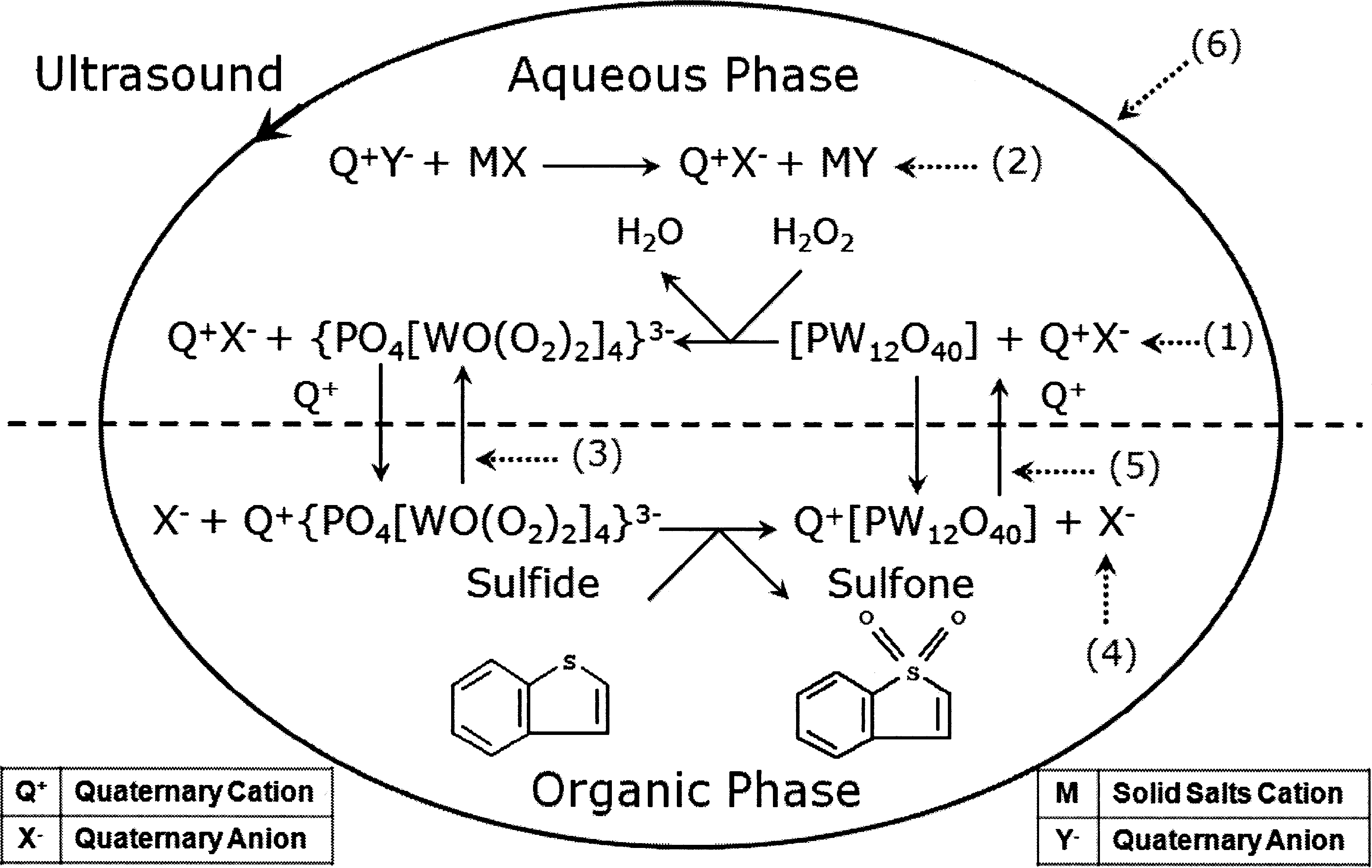
Conceptual model of catalytic oxidation in UAOD process (Wan and Yen, 2007). UAOD, ultrasound-assisted oxidative desulfurization.
Step (1) is the key element in the UAOD process. In the presence of excess H2O2, phosphotungstic acid, the metal precursor simply represented as [PW12O40]3, is peroxidized and disaggregated to form an anionic peroxometal complex, the polyperoxometalate {PO4[WO(O2)2]4}3−, which is the effective species for epoxidation. Step (2) illustrated the solid-liquid anion exchange of PTA in the aqueous phase. Step (3) indicates that QAS react as PTAs which bring the polyperoxometalate into the oil phase to activate the oxidative reaction of OSC [Step (4)]. The reduced peroxometal complex then dissociates with PTA and returns to the aqueous phase [Step (5)]. Finally, ultrasound energy [Step (6)] enhances the efficiencies of the oxidation reaction [Steps (1)–(5)].
Therefore, to reach the optimum operation conditions in this study, most important control parameters of the UAOD process, including effects of sonication time, TMC, PTA, and H2O2, were evaluated.
The optimization study of T oxidation
Many studies have illustrated that T and alkylated Tss remained in high percentages after the oxidation process. Chen et al. (2010) confirmed that Ts were considered the most refractory sulfur species in the UAOD process. Less than 40% oxidative conversion efficiency was found in our previous studies. For reaching the optimal T operation condition, the TMC, PTA, and hydrogen peroxide, and duration of sonication were considered for examination and evaluation in this research.
Effect of sonication time
In the UAOD process, ultrasonic emulsions are much smaller in size and more stable than those obtained from conventional methods. The fine emulsions increased the effective local concentrations of reactive species and enhanced mass transfer in the interfacial region, thus leading to a sizeable increase in the sulfur oxidation reaction rate (Chen et al., 2010).
Figure 2 indicated that the oxidation efficiency of T was concentration driven and influenced by an increase of sonication time. The T oxidative percentages reached the highest efficiencies at 60.0% after 20 min of sonication, demonstrating that increasing ultrasound irradiation enhanced the oxidation process through the biphasic transfer of oxidants (Khan et al., 2006; Wan and Yen, 2008). However, since the cavitation force is stronger at the center of the collapsing bubbles where the high temperature and pressure occurs (Suri et al., 2008), the reaction temperature increased up to 90°C after 20 min of sonication. The T oxidative percentages decreased owing to low boiling temperature for T and its sulfone (<85°C) that were evaporated at high temperature. The optimum T oxidation rate was found to be the 20 min of ultrasonic contacting time. It was evidenced that the oxidative reaction rate was greatly influenced by the intensity of cavitation. Thus, the 20 min ultrasonic contacting time is selected as the control parameter for further experiments.
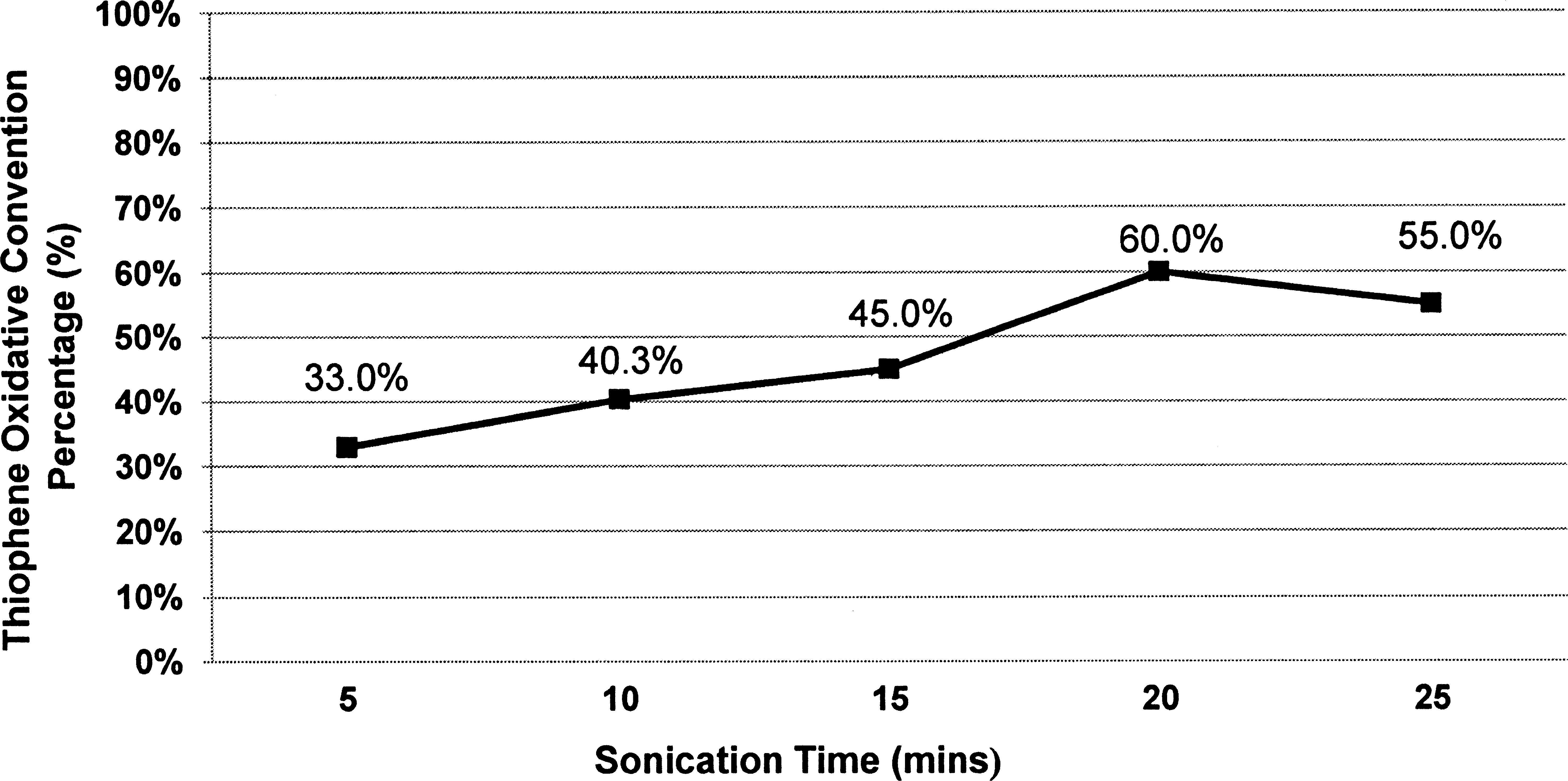
Oxidative efficiency of thiophene under different sonication times (T:H2O2:TMC:PTA=1:1.5:0.01:0.01). PTA, phase transfer agent; TMC, transitional metal catalyst.
Effect of TMC
From previous studies, it is known that the phosphotungstic ions would be converted to polyoxoperoxo species in the presence of H2O2. The oxidative rates of T under different amounts of TMC are shown in Fig. 3. The highest oxidative efficiency reached at 75.8% under a mass ratio of T solution to TMC at 100:1. It is because the polyoxoperoxo species are formed in this system, where the activities are not dictated by the original Keggin structure (and its redox potential), but by the oxidative activities of the derived polyoxoperoxo species, such as {PO4[WO(O2)2]4}3− (knowing as Ishii-Venturello epoxidation). However, less T oxidative efficiencies were achieved by adding more TMC. It is a phenomenon that transition metal catalysis without enough amounts of H2O2 results in less T conversion effect in this polyoxometalate/H2O2 system (Duncan et al., 1995).

Oxidative efficiency of thiophene under different amounts of TMC (T:H2O2:PTA=1:1.5:0.01, sonication time 20 min).
Effect of hydrogen peroxide
According to Moiseev et al. (1999), hydrogen peroxide is very stable in neutral aqueous solution. By simply adjusting the conditions of the reaction, hydrogen peroxide can often oxidize one pollutant over another, or even favor different oxidation products from the same pollutant (Wan and Yen, 2007). Moreover, previous discussion has confirmed that higher oxidative efficiency of OSCs was reached by the formation of the polyoxoperoxo species in the presence of H2O2 (Wan and Yen, 2007). Thus, the desired amounts of H2O2 were examined in this study to increase more TMC reactivity through the formation of intermediate peroxides, which are more effective oxidants than H2O2 itself in T oxidation.
Figure 4 shows the result of T oxidation under a different mass of H2O2. It indicates that the T oxidative efficiency increased with the increasing amount of H2O2. Thiophene sulfones (TO) conversion of 75% was achieved under a mass ratio of T solution to H2O2 at 1:1.5. More H2O2 presented in the solution results in more formation of the polyoxoperoxo species, which enhances the T oxidation. However, adding excessive H2O2 into the solution dramatically decreased the T oxidative efficiency, in which the total concentrations of TMC and PTA are diluted by the higher amount of H2O2, which decreases the possibility of TMC to reach the sulfur atom of T, as well as the selectivity and ability of oxidative catalysis.
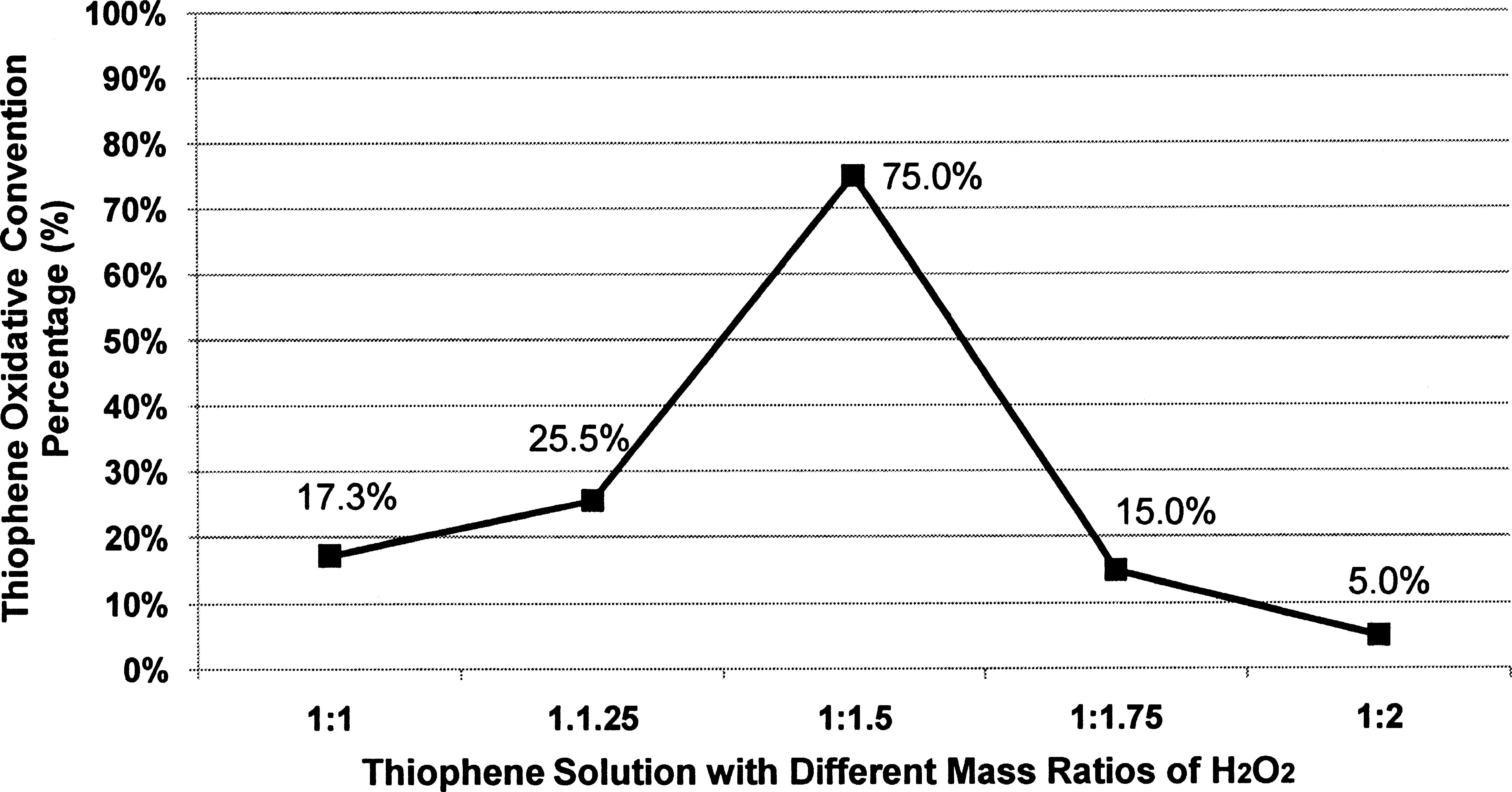
Oxidative efficiency of thiophene under different amounts of H2O2 (T:TMC:PTA=1:0.01:0.01, sonication time 20 min).
Effect of phase-transfer agency
Based on Fig. 1, the UAOD process permits the biphasic reaction with an intensive mass transfer. Choosing an appropriate PTA is the most important step in design and development of the UAOD process. Wan and Yen (2007) indicated that the effective oxidant in the reaction system is the formation of peroxo metal anion. The cationic surfactants, for example, QAS, could function as a PTA to deliver the anion catalyst into the organic phase or interfacial region, thus facilitating the oxidation of OSCs.
Figure 5 shows the results of T oxidation under different volumes of PTA. The highest TO conversion percentage was achieved at 75% under a mass ratio of T solution to PTA at 100:1. However, adding more PTA resulted in a lower efficiency for T oxidation. Based on a literature review, it was a phenomenon that typically occurred where the reaction rates are linearly dependent on the concentrations of phase-transfer catalyst (Dehmlow and Dehmlow, 1993).
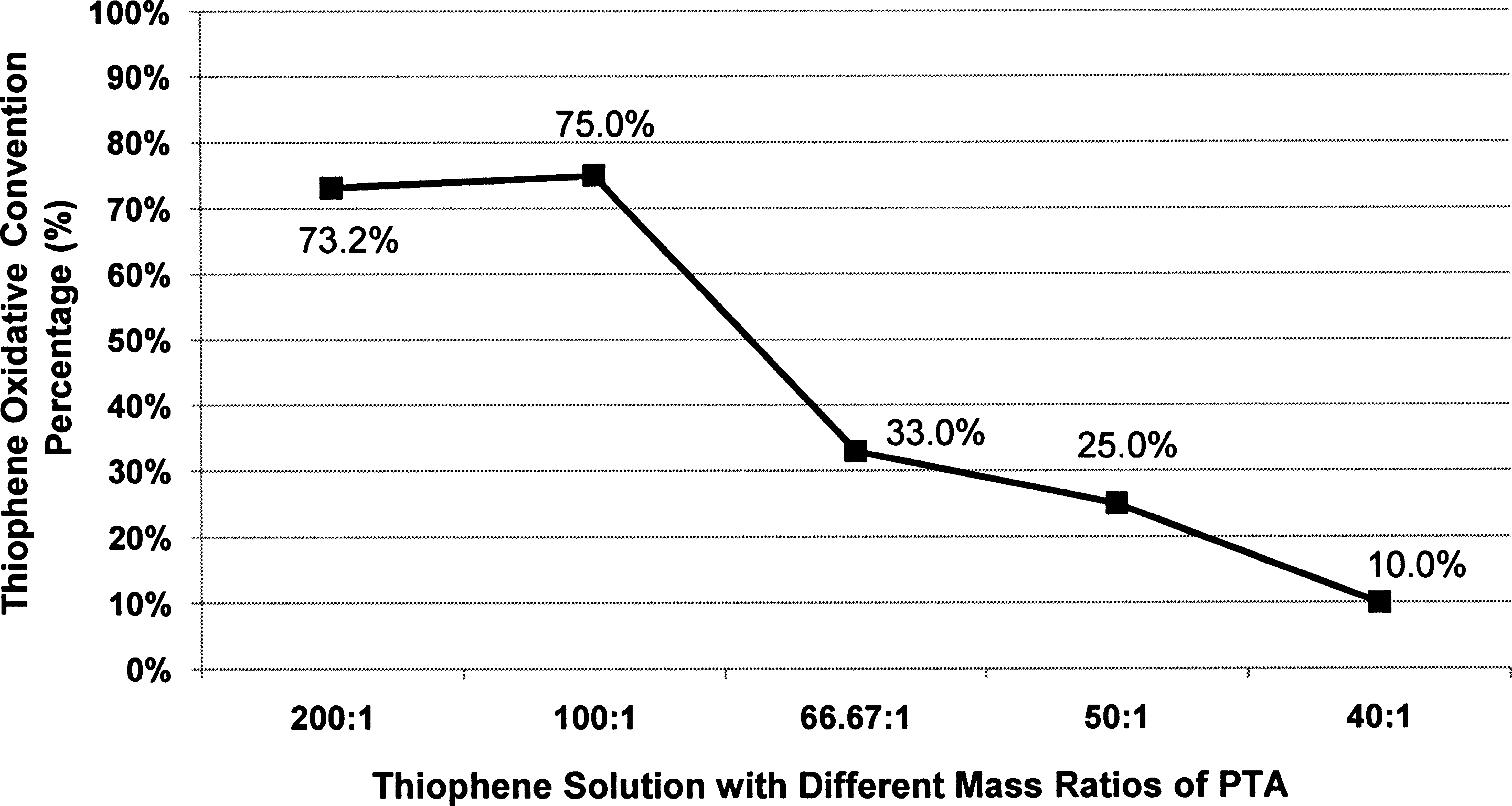
Oxidative efficiency of thiophene under different amounts of PTA (T:H2O2:TMC=1:1.5:0.01, sonication time 20 min).
Statistic analysis of optimized UAOD conditions for T
In this UAOD process, each complementary element influences the other. The best T oxidative condition was determined by the ANOVA, where the best efficiency was integrated by bench experiments under four control conditions. The simulation result is shown in Fig. 6, which indicates that the optimal UAOD conditions for T removal was at the mass ratio of T, H2O2, PTA, and TMC of 1:1.5:0.01:0.01. Thus, it is essential to evaluate this optimized condition in examining other OSCs to reach the goal of highest desulfurization efficiency.

Analysis of variance analysis of optimized UAOD conditions for thiophene.
Optimized UAOD conditions applied to major sulfur compounds
In general, T, BT, DBT, and their methyl-substituted derivatives are typical thiophenic sulfur compounds that exist in fossil-fuels derived oil. The T, BT, and DBTS were selected and performed to compare their reactivity under previously evaluated optimal UAOD conditions. Figure 7 illustrates the different reaction efficiencies of three major OSCs under these conditions. Almost 89.9% of BT and 100% of DBT were oxidized to their corresponding benzothiophene sulfone and dibenzothiophene sulfones, respectively. However, only 73.5% of T was oxidized to TO, which indicates that T remains more refractory than BT and DBT under optimal UAOD conditions.
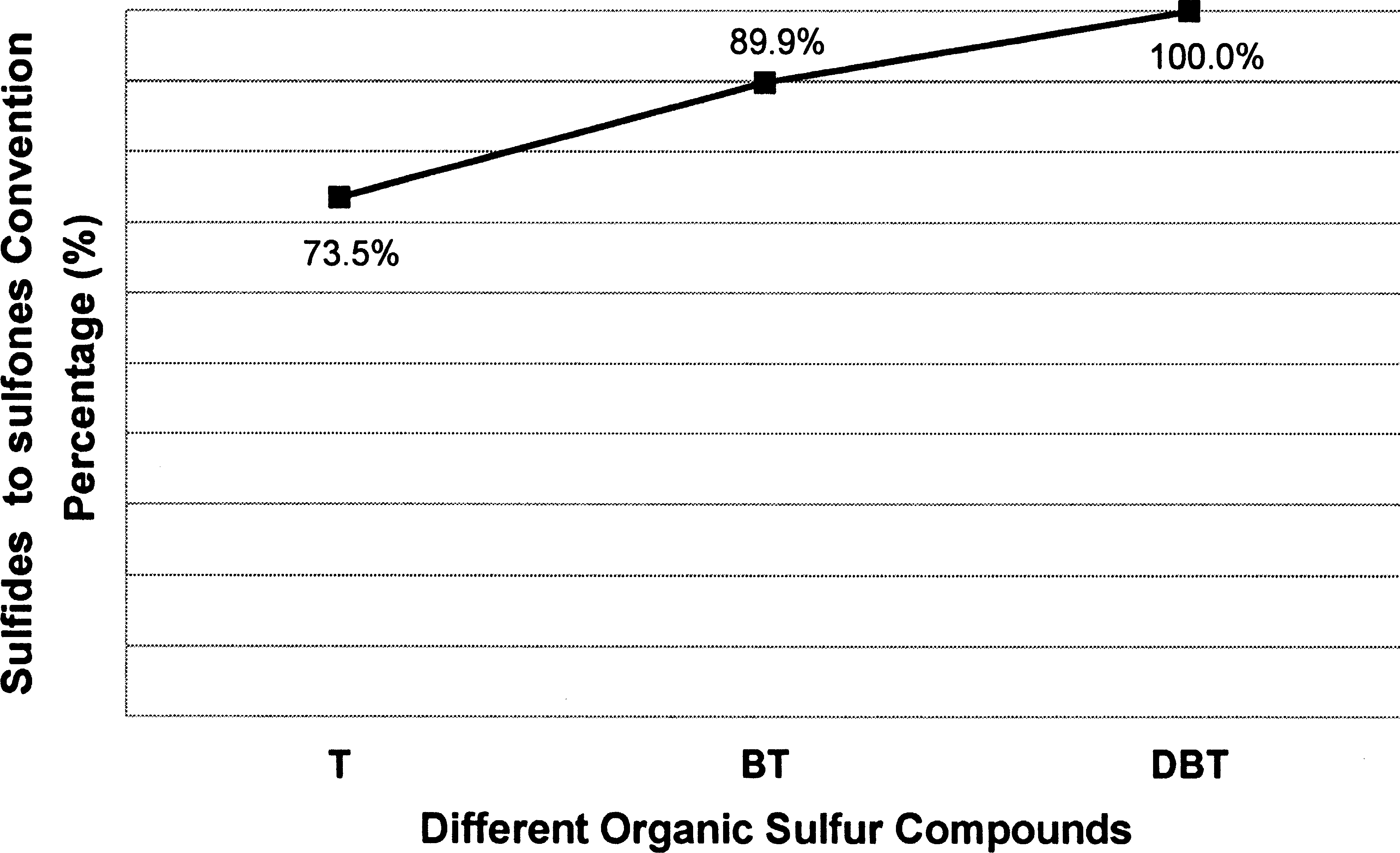
Oxidative efficiency of different sulfur compounds under optimized UAOD conditions (T:H2O2:TMC:PTA=1:1.5:0.01:0.01, sonication time 20 min).
Relationship between kinetic study and electron density on sulfur atom
This study was conducted by using a series of model compounds representing the different classes of OSCs present in fossil-fuel derived oil. These compounds, either reactive or resistant to hydrodesulfurization, are all susceptible to oxidation. Moreover, several studies indicated that, in presence of an excess of H2O2, the oxidation of OSCs follows pseudo-first-order kinetics in carboxylic acid/H2O2 and polyoxornetalate/H2O2 systems (Collins et al., 1997; Otsuki et al., 2000; Te et al., 2001). In this study, conversion of sulfur compounds was calculated using Equation (1).
Based on experimental results, T, BT, and DBT oxidations follow pseudo-first-order reaction kinetics that were described using Equation (3):
A plot of ln (Ct/C0) versus time (t) should be linear, and the value of the apparent rate constant, k, could be obtained by the slope of the linear relationship. The electron density on the sulfur atom of sulfur compounds and their oxidation rate constants, including T, BT, DBT, and their methyl-substituted derivatives, are shown in Table 1. The electron densities were in the range of 5.696–5.760. The oxidation relativities of these OSCs were found in a decreasing order of 46DMDBT>4MDBT>DBT>2MBT>BT>T. It is because the divalent sulfur of DBT can be oxidized by the electrophilic addition reaction of oxygen atoms to the hexavalent sulfur of DBT sulfone. Hence, the reactivity of oxidation becomes higher for sulfur atoms with a higher electron density.
Electron density was from Otsuki et al. (2000).
Otsuki et al. (2000) reported that the lowest electron density of the sulfur atom for sulfoxidation by hydrogen peroxide under mild conditions is between 5.716 and 5.739. The T that exhibited the lowest electron density at 5.696 had the rate constant of only 0.0637 (min−1). Otsuki et al. (2000) also reported similar results that the oxidation rate of thiophenic compounds was lower than that of other OSCs. Moreover, the observed trend of the reaction rates with the structure accounted for (a) reduced availability of the lone pair electrons and (b) steric strain in the reaction products (sulfoxides and sulfones). The sulfur atoms with low electron densities are effectively not to be oxidized by hydrogen peroxide and formic acid (Otsuki et al., 2000).
The relationships between the rate constants of various OSCs oxidized to their corresponding sulfones (excluding thiphene owing to its low rate constant), and their electron densities are shown in Fig. 8; the results confirmed that the oxidative reactivity of different OSCs increased with an increasing in electron density on sulfur atoms. Moreover, the reactivates of BT and DBT derivatives were influenced by the electron donation of substituted methyl groups, which slightly enhance the oxidative reaction. However, high-methyl substituted sulfur compounds may result in more electron donation, which may also lower their electron density, as well as oxidation reaction rate. Therefore, the previous study identified that the four major sulfur organic compounds left in either desulfurized marine diesel or desulfurized transportation diesel (which categorized as the group of 3 methyl substituted BTs, 4 methyl substituted BTs, 5 methyl substituted BTs, and 3 methyl substituted DBTs) were among the most refractory compounds in marine logistic diesels under UAOD conditions.
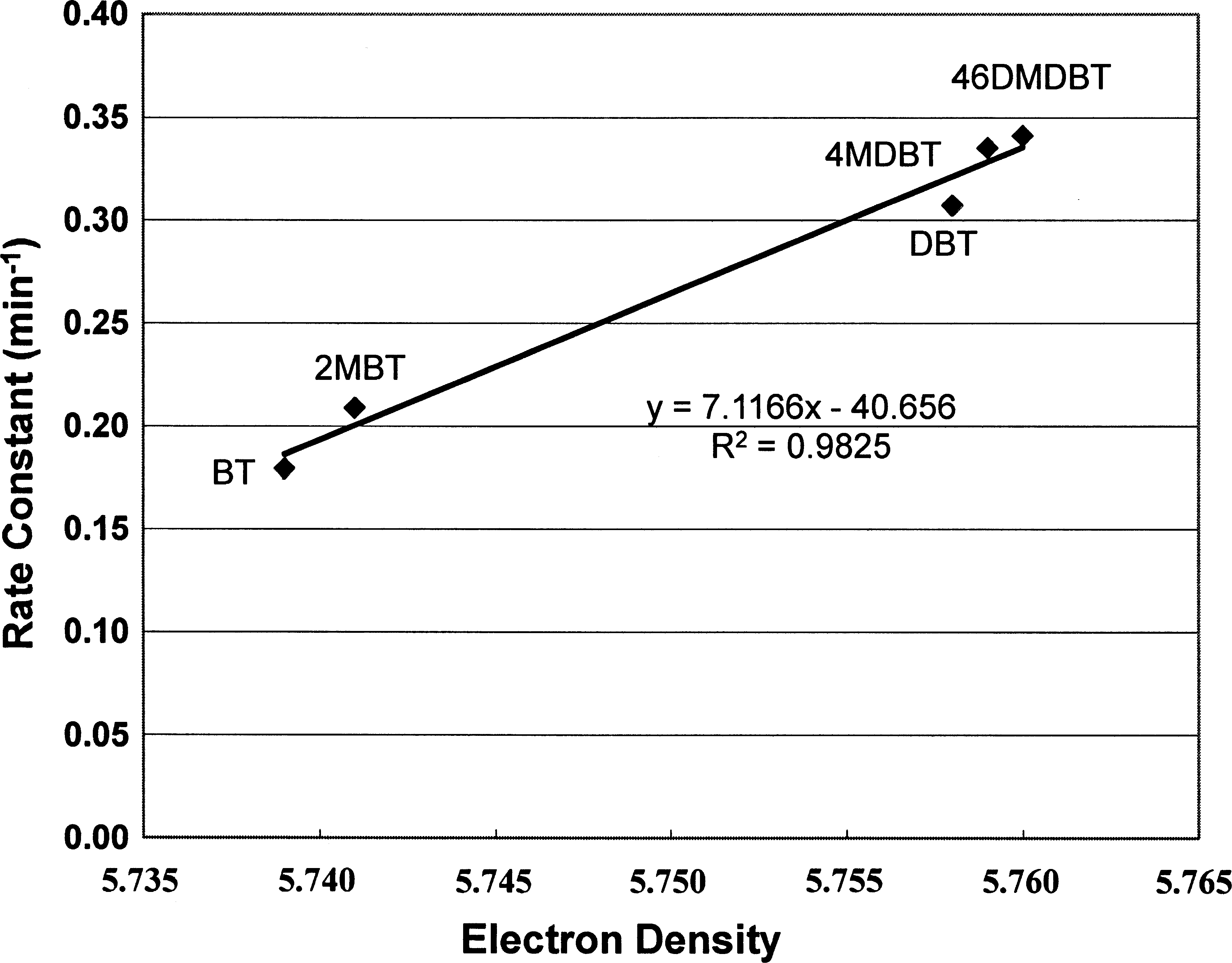
Comparison of the rate constants (k) with the electron densities for selected model sulfur compounds. DBT, dibenzothiophene; 2MBT, 2-methyl benzothiophene; 4MDBT, 4-methyl dibenzothiophene; 46DMDBT, 4,6-dimethyl dibenzothiophene.
The T is commonly considered difficult to be oxidized by hydrogen peroxide under mild conditions (Shiraishi et al., 2002). In this study, it is evident that T is the most persistent sulfur compounds in fossil-fuels derived oil under the UAOD process. It attributes to the combined effect of low electron density of the sulfur atom and low boiling temperature under mild oxidation reaction.
Conclusion
The T was first selected to evaluate the optimal operation conditions under the UAOD process. The best oxidative condition was found at a as mass ratio of T solution and H2O2, PTA, and TMC at 1:1.5:0.005:0.01 with 20 min of sonication. Moreover, a group of typical (OSCs) were studied to determine their oxidative reactivates under optimal UAOD conditions, and it was found that oxidation of OSCs under UAOD followed the pseudo-first-order reaction kinetics. The oxidative reactivates of OSCs were found in a decreasing order of 46DMDBT>4MDBT>DBT>2MBT>BT>T. Further, the sulfur electron density simulation indicated that the rate constant increased with the increasing order of electron density. Thus, T was confirmed as the most persistent sulfur compound under the UAOD process, owing to its low electron density (5.696).
Footnotes
Author Disclosure Statement
No competing financial interests exist.