




Abstract
Abstract
The significant yield of dissolved oxygen (DO) is one advanced advantage of the electrocatalytic technique for wastewater treatment. Here, we measure DO concentrations during electrocatalytic processing of Taiwanese municipal wastewater and landfill leachate. Chloride ion–containing electrolytes in the wastewater had the most deleterious effect on the production of DO. In contrast, other anions including carbonates, nitrates, sulfates, and phosphates improved DO yield. The Cl− effect can account for electrode erosion, because the anode surface will be impacted by chloride ions. This erosion results in the release of metal ions at the anode that react with DO to form species of metal oxides and deplete the DO in wastewater. However, other cations in the wastewater such as Na+, Ca2+, and Mg2+ are irrelevant with the DO yield in the electrocatalytic system. Results indicate that inert anodes such as dimensionally stable anodes can increase DO concentration, but the metal-related anodes such as stainless steel and TiO2 will decrease DO concentration during the electrocatalytic process in the presence of chloride ions.
Introduction
An electrocatalytic process consists of two decomposition mechanisms to mineralize organic contaminants, that is, direct and indirect oxidation (Comnimellis, 1994). Direct oxidation is when organic compounds are absorbed directly onto the anode surface and then subsequently oxidized. In contrast, the indirect oxidation is conducted by OH• species that are produced by the electrocatalytic cleavage of H2O at the anode. The OH• species is a very strong oxidant that effectively oxidizes any organic contaminants in the wastewater.
An important advantage of the electrocatalytic process is the enhancement of dissolved oxygen (DO) in the treated wastewater, which is attributed to the presence of hydrogen peroxide and OH• radicals produced during the process (Cho et al., 2004). The DO concentration along with the chemical oxygen demand (COD) is an important water-quality indicator. In discharge water ecosystems, the yield of the DO is often very high in an electrocatalytic process. This DO yield is also believed to be influenced by the complex organic and inorganic constituents of the wastewater; however, the influence of these compounds is still not fully understood. To date, there are limited studies on the yield rate of the DO concentration using various electrolytes in the electrocatalytic process. In this study, municipal wastewater and landfill leachate are treated with the electrocatalytic technique using various electrodes and electrolytes in order to provide insights into their impacts on the DO yield.
Experimental
Materials
The wastewater samples included municipal wastewater (collected from a wastewater treatment plant at Chaoyang University of Technology, Taiwan) and landfill leachate (collected at Da-Li landfill plant, Taichung County, Taiwan). Table 1 lists the water-quality properties of the general wastewater and leachate according to the following references (Ksibi, 2006; Deng and Englehardt, 2007; Bashir el al., 2009). Various electrolytes were prepared to investigate the effect of ions on the DO yield in an electrocatalytic process. Table 2 shows the type, source, and purity of these electrolytes.
COD, chemical oxygen demand; DO, dissolved oxygen.
Electrocatalytic system
A schematic diagram of the electrocatalytic system is depicted in Fig. 1. This system was equipped with an electrolysis cell (reactor), a direct-current power supply (35H20D; Toptrans Company Ltd.), a magnetic stirrer (Stirrer/Hot; Corning), and a pair of electrodes (i.e., an electrocatalytic anodes and a graphite cathode). The size of the reactor was 150 mm (diameter)×75 mm (height), and the effective volume was approximately 1.0 L. The magnetic stirrer was placed under the reactor for constant stirring and mixing of the water sample.
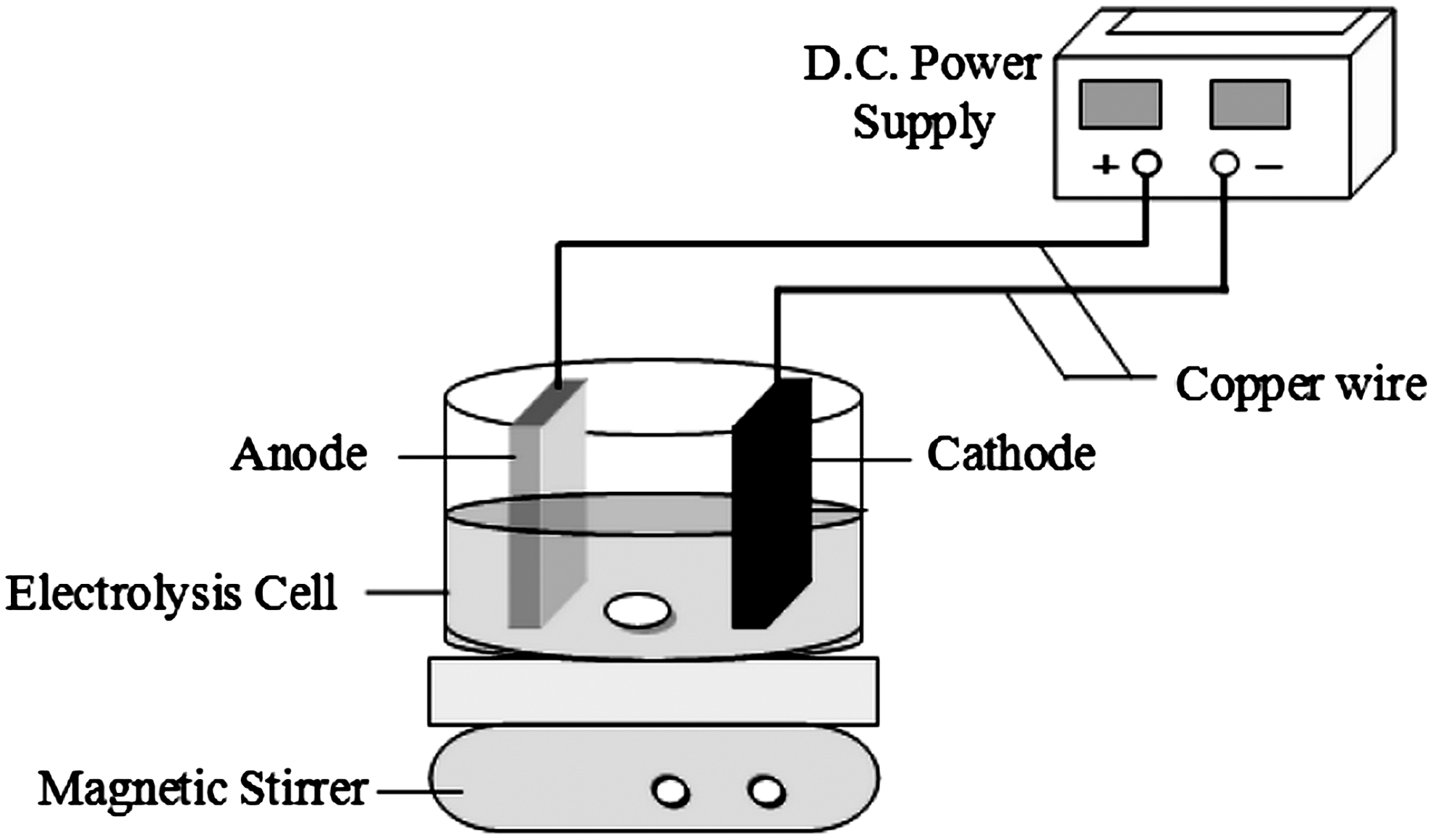
Schematic diagram of the electrocatalytic system.
DO experiments in the electrocatalytic system
Before conducting the electrocatalytic experiments, the electrodes were ultrasonicated in deionized water for 30 min and then dried at room temperature in order to eliminate any impurities on the electrode surface.
The wastewater volume for each experiment was 700 mL. From our previous work (Chang et al., 2009), an appropriate voltage gradient for this electrocatalytic system is 5.0 V cm−1, with a total time of operation of 60 min. The first set of experiments involved the measurement of DO yields (mg L−1) and changes in temperature (°C) from electrocatalytically treated municipal wastewater (two different samples, 1 and 2) and landfill leachate. The second set of experiments involved the measurement of DO yields after the distilled water had been doped with various electrolytes at 200 mg L−1. For clarifying the effect of chloride ions, the Cl− concentration was controlled at 20, 50, 100, 150, and 200 mg L−1, respectively, under the electrocatalytic process (TiO2 served as the anode). Finally, the third set of experiments involved the measurement of DO yields using different types of anodes, namely stainless steel, graphite, and dimensionally stable anodes (DSA) in the presence of NaCl (200 mg L−1). During each electrocatalytic experiment, the pH, DO, and temperature were determined every 10 min using a pH meter (SUNTEX, SP-701) and DO meter (YSI 550A), respectively.
Results and Discussion
DO variation of municipal wastewater and landfill leachate
Figure 2a shows the DO variation of municipal wastewater (tested twice, samples 1 and 2) and landfill leachate after electrocatalytic treatment using a TiO2 anode at an applied voltage of 5 V cm−1. The DO concentration of landfill leachate is initially around 1 mg L−1 then diminishes to zero after 30 min. On the contrary, the DO concentration of the municipal wastewater (sample 1) increases from initially 2.9 to 10.5 mg L−1 after 60 min. This result is similar to our previous investigation (Chang et al., 2009). Theoretically, the DO concentration can be increased, because the hydroxyl radicals and oxygen gas can be produced during the electrocatalytic process. However, the DO concentration of sample 2 shows similar behavior to the landfill leachate and decreases from 3.2 to 0.5 mg L−1 after 30 min. The reason for the difference between the 2 samples may be due to the fact that they were collected on different days, in which case the constituents may be different. In fact, the pollution index of municipal wastewater such as COD (organic contents), SS, and pH are quite stable. In contrast, the inorganic components such as NaCl (wastewater from kitchens) and NaNO3 (wastewater from septic tanks) usually vary significantly. Accordingly, inorganic components in wastewater possess a high potential for influencing the DO variation during the electrocatalytic process.
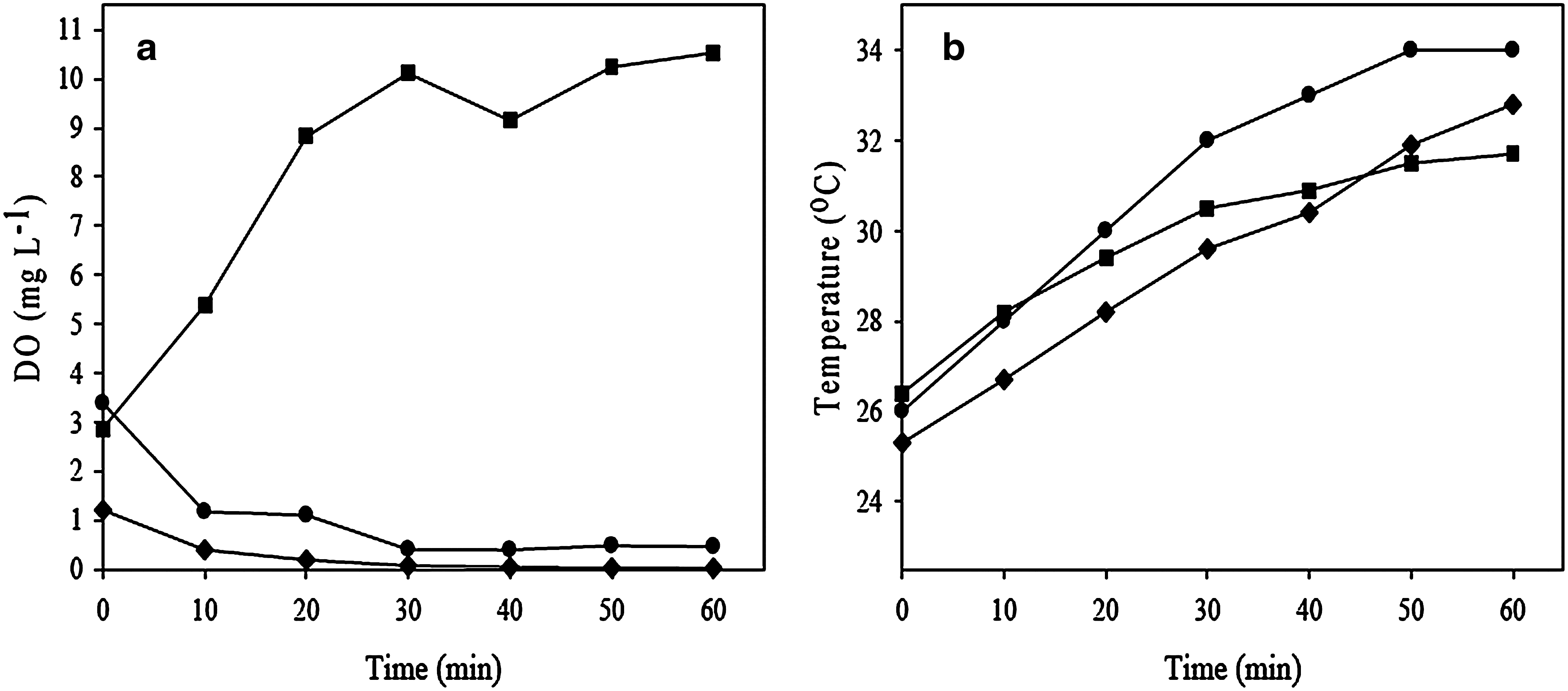
In addition to the components of wastewater, temperature, pH, and COD degradation of wastewater may influence the DO yield in the electrocatalytic system. Figure 2b shows the temperature variation of the two wastewater samples and landfill leachate with treatment time. Results show that the temperature is independent of the DO concentration and that the rise in temperature observed is typical of the resistance heating effects of the solution. In terms of the pH, it was observed (data not shown) that the pH only increased slightly for municipal wastewater and landfill leachate, remaining between 7.8 and 8.5. That is, pH is not the factor causing DO difference in these two wastewater samples as well. To consider the correlation between DO and COD, the COD removal efficiency reached 60%; meanwhile, the DO concentration increased from initial 0 to 6 mg L−1 based on a previous study (Chang et al., 2009). The phenomenon just mentioned indicated that the organic pollutants could be degraded effectively, and the DO concentration increased simultaneously during the electrocatalytic system. Accordingly, the DO depletion is irrelevant with temperature, pH, and COD removal mechanisms. There are some other common factors such as electrolyte and electrode that cause the DO depletion for different types of wastewater in the electrocatalytic system.
DO variation with different electrolytes
Effect of different anions in the electrolytes
Figure 3 depicts the DO variation with electrolytes with different anions typically abundant in normal wastewaters. All electrolytes are sodium salts with different anions, namely chloride, sulfate, nitrate, carbonate, and phosphate. According to Fig. 3, the DO concentrations are slightly enhanced from 8 to 13 mg L−1 with electrocatalytic time up to 60 min for electrolytes containing the sodium salts Na2SO4, NaNO3, Na2CO3, and Na3PO4. Among them, DO concentrations of various electrolytes except NaCl are similar at approximately 13 mg L−1 after 60 min treatment time. In the case of NaCl as the electrolyte, there is an apparent significant hindering of the DO yield in the electrocatalytic system. This electrolyte was then tested with regard to concentration.
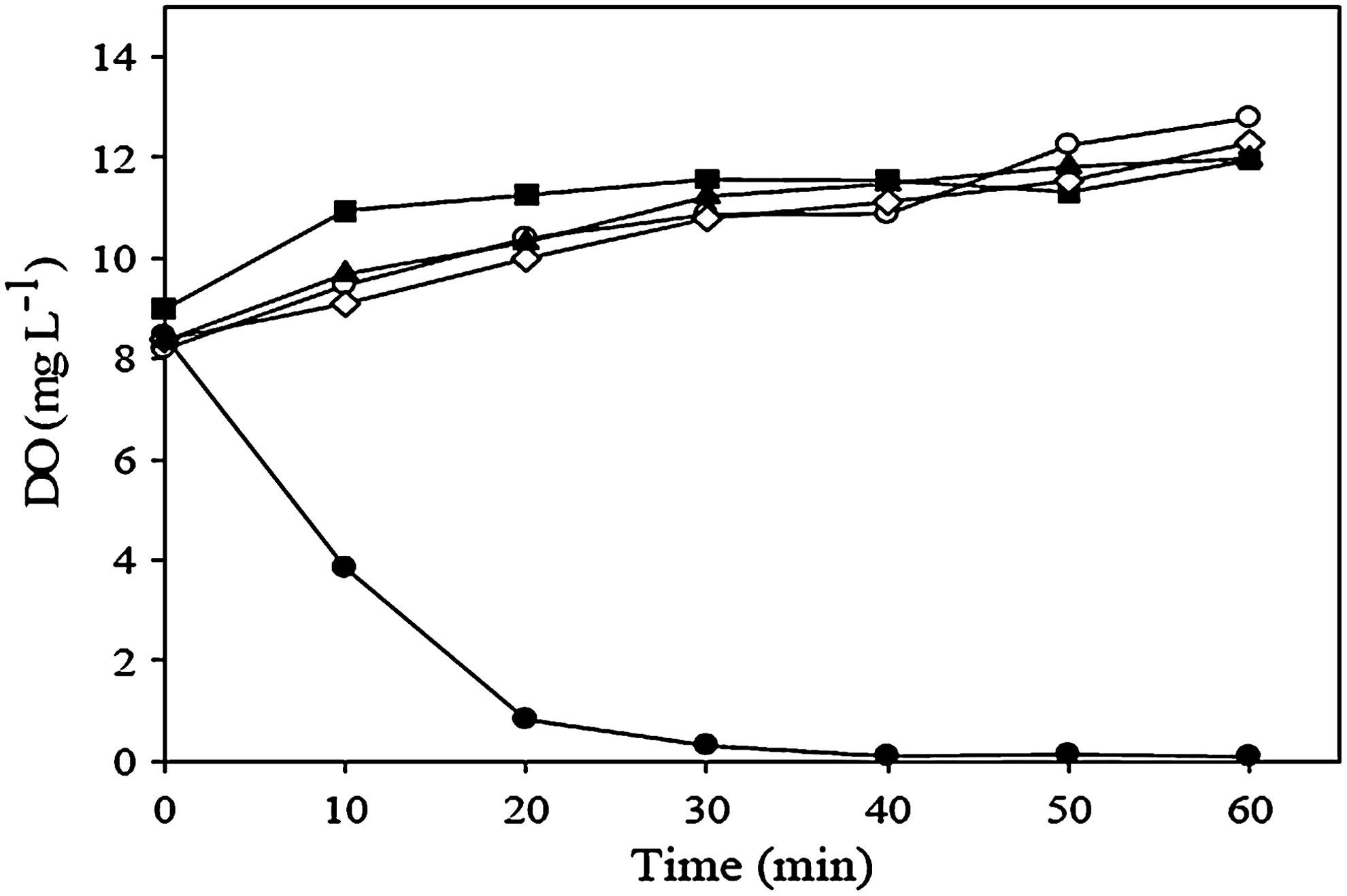
DO variation (mg L−1) versus time (min) of different anionic electrolytes at 200 mg L−1 (-•- NaCl, -○- Na2SO4, -▪- NaNO3, -○- Na2CO3, and -▴- Na3PO4) after treatment with a TiO2 anode and graphite cathode at 5 V cm−1.
Figure 4 shows a plot of the DO variation versus time and the decreasing ratio taken after 20 min treatment time, respectively, as a function of NaCl concentration (mg L−1). The DO decreasing ratio, the difference between initial and final DO concentration was divided by the initial DO concentration, was used to express the DO variation in the system. From Fig. 4, DO concentration appears to exponentially descend from 8 to 0 mg L−1 after 40 min treatment time. By substituting experimental data into the first-order kinetic model, the rate constant, K=0.114 min−1, and the correlation coefficient, R2=0.993, could be obtained. In addition, there is a clear linear trend, R2=0.972, showing that as the NaCl concentration is increased, the DO decreasing ratio decreases. This trend indicates that the Cl− concentration strongly impacts the electrocatalytic system proportionally.
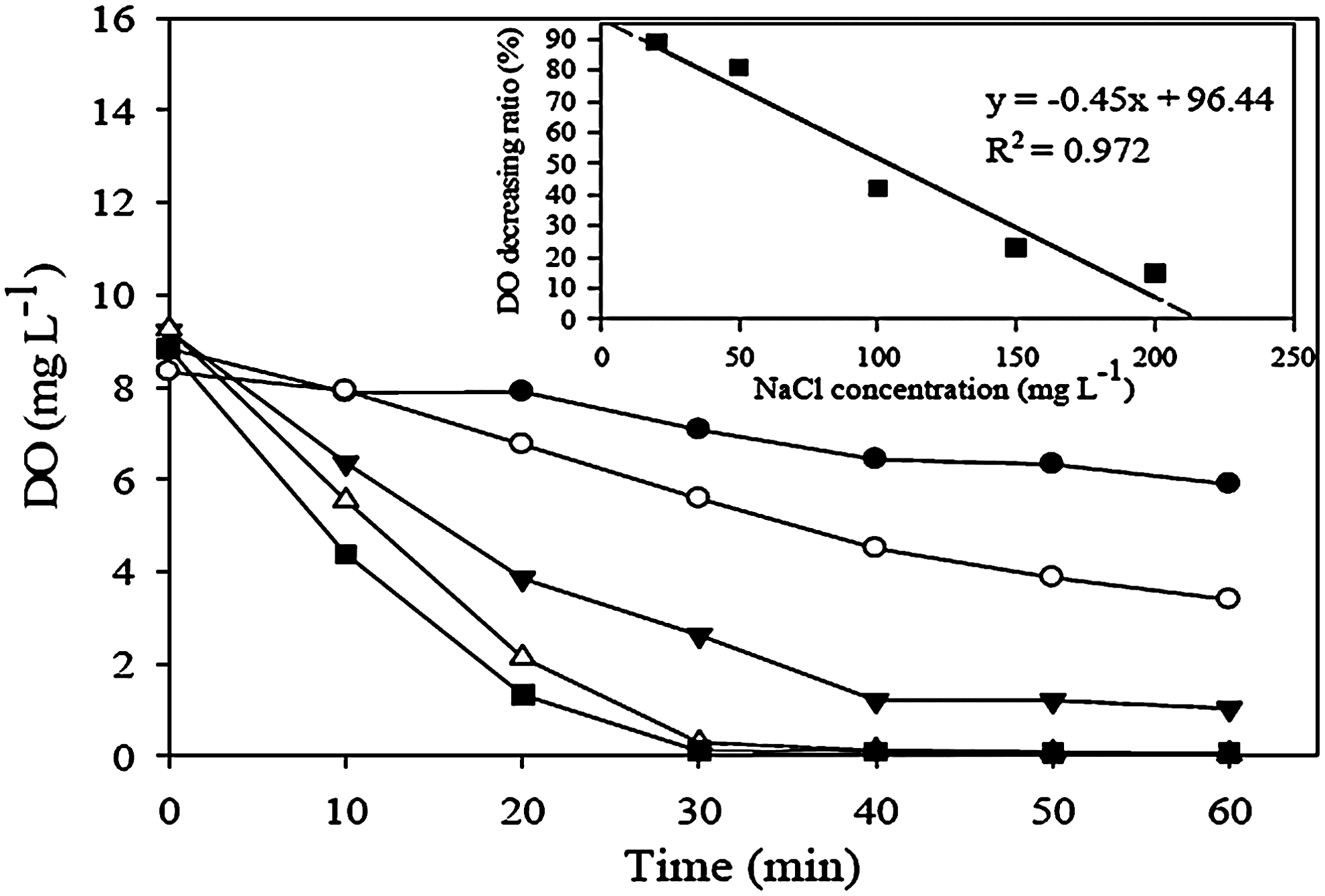
DO variation (mg L−1) versus time (min) of different NaCl concentration (-•- 20 mg L−1, -○- 50 mg L−1, -▾- 100 mg L−1, -Δ- 150 mg L−1, and -▪- 200 mg L−1) after treatment with a TiO2 anode and graphite cathode at 5 V cm−1.
Effect of cation electrolytes
In addition to the anion effect on the DO yield in the electrocatalytic system, different cations may influence the DO as well. Figure 5 shows the change in DO concentration with electrolytes that contain different cations. From Fig. 5, all electrolytes containing sulfate ions increased the DO concentration with treatment time, while all electrolytes containing chloride ions decreased the DO concentration with treatment time. Again, it is evident that chloride containing electrolytes have the most deleterious effect on the DO yield. In neither case did changing the cation significantly alter the behavior of the electrolyte.

DO variation (mg L−1) versus time (min) of various cationic electrolytes with chloride at 200 mg L−1 (-•- NaCl, -▪- MgCl2) and -▴- CaCl2, and sulfate (-○- Na2SO4, -□- MgSO4, and -Δ- CaSO4) after treatment with a TiO2 anode and graphite cathode at 5 V cm−1.
DO variation with different electrodes
Figure 6 shows the DO variation with different types of anodes, including TiO2, stainless steel, graphite, and DSA in the presence of chlorides. The process can be regarded as an electrocatalytic one only when TiO2 or DSA anodes are used. However, when stainless steel or graphite anodes are used, this is categorized as direct electrolysis. In particular, graphite behaves as an inert electrode in comparison to stainless steel and exclusively reacts with water molecules. In contrast, many other oxidation reactions can occur on the surface of stainless steel. Figure 6 shows that the DO concentration decreases with time for both the TiO2 and stainless steel. This decrease is less pronounced for the graphite electrode where the DO concentration decreases linearly from 8 to 5 mg L−1 after 60 min. Due to the inert characteristics of graphite electrode, the water electrolysis is the major reaction on the graphite surface. In comparison to DSA anodes, the DO yield comes from the interaction with water molecular dominantly rather than hydroxyl radicals. As a result, the DO concentration of the graphite system was smaller than that of DSA anodes. In fact, the anode surface will be dipped in the presence of chloride ions (Ilkhchi et al., 2007; Rajahram et al., 2009). When this surface attack occurs on the metal electrodes, the surface erosion may cause the release of metal ions.
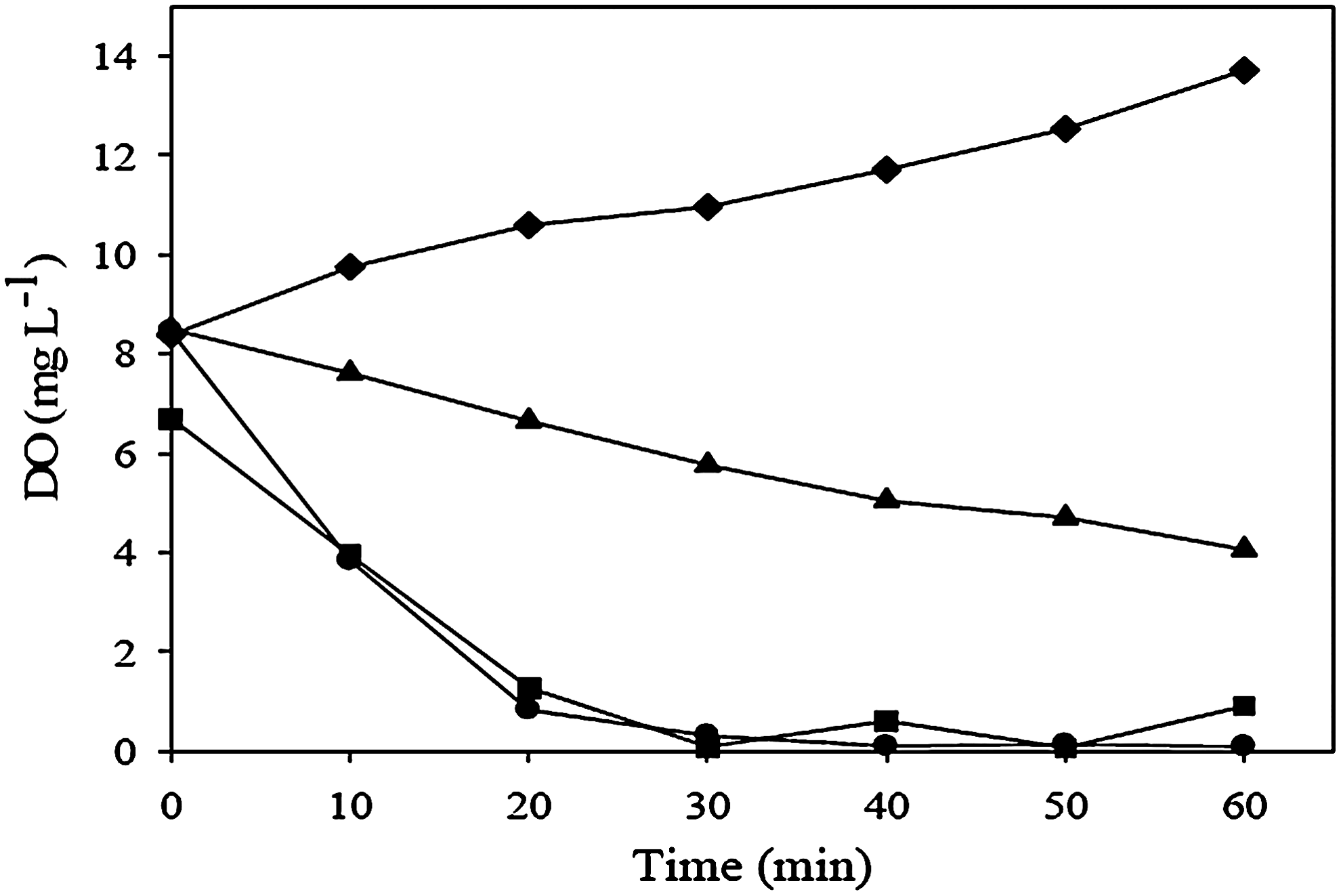
DO variation (mg L−1) versus time (min) of a NaCl electrolyte (200 mg L−1) after treatment at 5 V cm−1 with different anodes (-•- TiO2, -▪- stainless steel, -▴- graphite, and -♦- dimensionally stable anode) using a graphite cathode.
From Fig. 6, the concentration of DO decreased from 7.0 to ∼0 mg L−1 at 30 min treatment time by using the stainless steel electrode. During the electrochemical process, the anode of stainless steel will dramatically release ferrous ions and two electrons in the presence of chlorides because of the dipping reaction. Based on experimental data, the average current of 0.4 A (data not shown) produced around 4.6×10⁻³ moles L−1 of ferrous ions in the solution (treatment time: 1,800 s, Faraday constant: 96,500 C mol−1). In order to find out the relationship between the metal oxides and DO depletion theoretically, the software of Visual MINTEQ (for computation of chemicals concentration based on chemical thermodynamic equilibrium) was employed. This software has been extensively employed in other research (Yao et al., 2009; Wu and Hendershot, 2010). By substituting ferrous concentration, chloride ions concentration, and average pH value 8.5 (data obtained in the electrocatalytic experiments) into Visual MINTEQ, the FeOH+ concentration of 9.4×10⁻⁴ M was obtained. The FeOH+ formation of such a concentration will react with a DO concentration of around 6.6 mg L−1 according to chemical stoichiometry. Consequently, the DO concentration approached zero when the electrochemical process operated in the presence of Cl− and metal-related anodes. Moreover, the concentration of Fe2+, Fe(OH)20(aq) was around 10−6 M based on Visual MINTEQ, which could be ignored compared with the contribution of FeOH+ formation. The explanation just given for DO depletion is only a theoretical hypothesis that needs further investigation to clarify it.
Different from other materials, the DO concentration will increase prominently when DSA is used as the anode, almost at the saturation point, from initial 8.4 to 13.7 mg L−1. Due to the characteristics of excellent mechanical and chemical resistance of DSA electrode (Martínez-Huitle and Brillas, 2009), the DSA electrode can not be corroded by chloride ions (Ramalho et al., 2010). As a consequence, the DO concentration can be rapidly enhanced by even the concentration of sodium chloride upto 400–1000 mg L−1 (data not shown) for the DSA electrode. To sum up, inert anodes such as DSA can increase DO concentration, but the metal-related anodes such as stainless steel and TiO2 will decrease DO concentration during the electrocatalytic process in the presence of chloride ions.
Figure 7 shows the DO variation with different voltage gradients in the presence of chloride ions. It can be found that the DO concentrations are stably maintained without the application of electrical voltage. This means that sole chlorides ions will not deplete DO, namely, the disappearance of DO should be contributed by some electrochemical reactions. According to Fig. 7, the DO concentration was between 0.5 and 1 mg L−1 for 3.0, 5.0, and 7.0 V cm−1 is 30, 20, and 10 min, respectively. This implies that the decrease of DO yield rate corresponds to the increase of the voltage strength. Moreover, these results also support our explanation of DO depletion (i.e., metal-related anode+chlorides will decrease DO significantly).
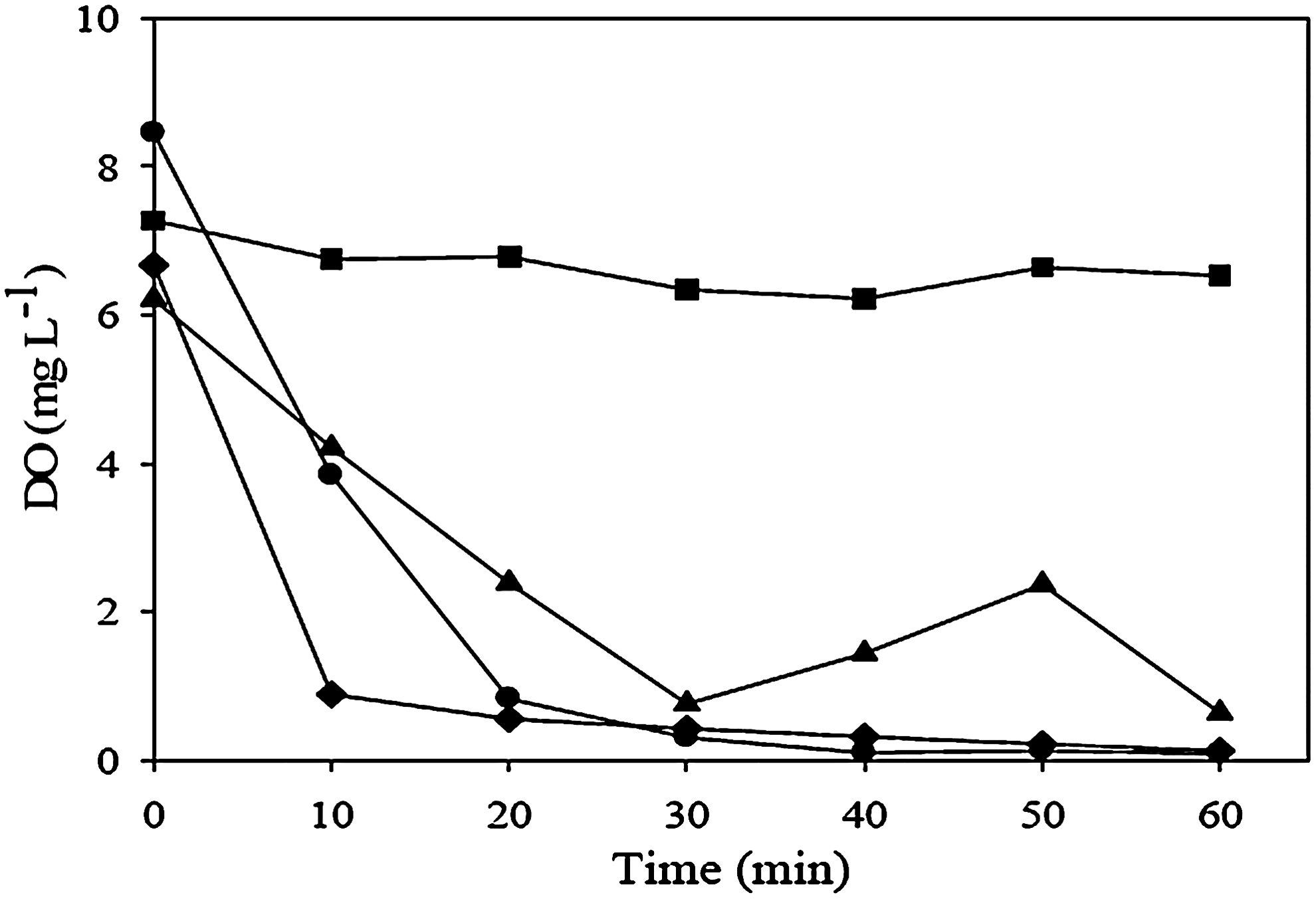
DO variation (mg L−1) versus time (min) of a NaCl electrolyte (200 mg L−1) after treatment at different applied voltages: -▪- 0 V cm−1, -▴- 3 V cm−1, -•- 5 V cm−1, and -♦- 7 V cm−1 after treatment with a TiO2 anode and graphite cathode.
Conclusions
The chloride ions significantly hinder the DO yield in the electrocatalytic system (Cl− effect). The higher Cl− concentration results in a faster decrease of DO concentration. The Cl− effect may be attributed to the fact that the electrode erosion happens because the anode surface will be dipped in the presence of chloride ions. Moreover, inert anodes such as DSA can increase DO concentration, but the metal related anodes such as stainless steel and TiO2 will decrease DO concentration during the electrocatalytic process in the presence of chloride ions.
Footnotes
Author Disclosure Statement
No competing financial interests exist.