




Abstract
Abstract
A series of precious metal catalysts (M/titanium dioxide [TiO2], M = Ru, Rh, Pd, Ag, Ir, Pt, or Au) were prepared by a light deposition method, and for the first time, synergistic effects of photocatalytic degradation of phenol (20 mg/L) under UV irradiation (365 nm) by M/TiO2 with electron capture agent hydrogen peroxide (H2O2) have been investigated. Results showed that H2O2 plays a great synergistic role on M/TiO2, and the photocatalytic activity of M/TiO2 is closely related to its work function. Ag loading greatly enhanced activity of TiO2 due to the normal reduction mechanism and the “activated” mechanism between H2O2 and Ag nanoparticles. Under the optimum conditions of Ag loading at 0.5 wt.%, Ag/TiO2 concentration at 0.1 g/L, H2O2 concentration at 50 mmol/L, and pH value of the reaction solution at 5, the phenol can be degraded by 65% within 3 h, which is 45% more than that in the TiO2 photocatalytic system. Kinetics of the degradation of phenol can be characterized as pseudo-first order. Such synergistic photocatalytic degradation by precious metal supported TiO2 with H2O2 provides a new approach for the degradation of refractory pollutants in waste water.
Introduction
P
In recent years, heterogeneous photocatalysis has generated attention for the treatment of phenol in wastewater (Fabbri et al., 2006; Zhang et al., 2009). Photocatalytic oxidation is one of the most attractive technologies, because it can mineralize the organic pollutants to form H2O and CO2. In addition, the photocatalytic technology produces fewer toxic intermediates. Among the various photocatalysts, titanium dioxide (TiO2) is generally used due to its high photocatalytic activity and stability (Khraisheh et al., 2013). Nevertheless, the main problem of TiO2 photocatalysis lies in the separation of photogenerated electron-hole pairs. To overcome this problem, different routes have been proposed such as: (1) combining the photocatalyst with another semiconductor (Sivakumar et al., 2013) or conductive substrate such as graphene (Wang et al., 2011) or carbon nanotube (Chai et al., 2012); (2) doping transition metal ions (Rathinavelu et al., 2013; Pang et al., 2014) or rare earth metallic elements (Tian et al., 2014, 2015) to the catalyst and depositing nanometal particles on the surface of the catalyst (Zhang et al., 2013); and (3) adding some sacrificial agent in the reaction system (Harir et al., 2008; Shi et al., 2011; Sivakumar et al., 2013). Among the sacrificial agents, H2O2 has been utilized widely (Harir et al., 2008; Sivakumar et al., 2013). However, to the best of our knowledge, the studies about the synergistic photocatalytic degradation activity by precious metal supported TiO2 with H2O2 have rarely been reported.
In the present study, the synergistic photocatalytic degradation of phenol has been investigated in aqueous conditions by precious metal supported TiO2 with addition of H2O2 under UV irradiation, and the effects of a series of experimental parameters on the degradation efficiency have also been discussed.
Experimental
Preparation of photocatalyst
All chemicals were analytical grade and were used without further purification. Anatase TiO2 (Hehai Nanometer Science and Technology Co. Ltd.; Surface area ≥250 m2/g, 98.5% anatase, grain size ≤30 nm) was used in all experiments. Metal was deposited on the TiO2 surface (M/TiO2, M = Pt, Pd, Rh, Au, Ir, Ag, and Ru) by a photodeposition method (Lee et al., 2009). RuCl3 · 3H2O (Kunming Boren Precious Metals Co. Ltd.; 99.9%), RhCl3 · nH2O, HAuCl4 · 4H2O, PdCl2, H2IrCl6 · 6H2O, H2PtCl6 · 6H2O, and AgNO3 (Shanghai July Chemical Co. Ltd.; 99.9%) were used as the metal precursors. In a typical procedure, 0.2 g TiO2 and 500 mL deionized water (Millipore Milli-Q) were added into 1-L Pyrex glass beaker and the slurry was dispersed ultrasonically for 15 min. Then, it was placed under the 125 W low pressure mercury lamp (Shenzhen Stone-lighting Opto Device Co. Ltd.; λmax = 365 nm, 64.9 μW/cm2) and was irradiated for 30 min to remove adsorbed organic impurities from the particle surface. The system was then purged with nitrogen gas at a flow rate of 60 mL/min for 20 min. Thereafter, 20 mL methanol was added to the system, acting as a hole scavenger. The metal precursor was added to the required loading (0.05, 0.1, 0.5, 1.0, 3.0, and 5.0 wt.%) while the pH value was adjusted to 3 using diluted perchloric acid. In the following procedure, the slurry was illuminated for 2 h with the M/TiO2 particles recovered and washed with deionized water thrice. The washed particles were dried in an oven at 80°C for 10 h and then stored in a desiccator.
Photocatalytic reaction
The photocatalytic reaction system used in this study is shown in Fig. 1. The temperature for all the photocatalytic reactions was kept at 25°C by the circular water outside the Pyrex cell. Typically, the TiO2 particles (20 mg) were suspended in a 20 mg/L phenol (Sinopharm Chemical Reagent Co. Ltd.; 99.9%) aqueous solution (200 mL) in a 500-mL cylindrical Pyrex vessel, followed by the addition of 2 mmol H2O2. The pH of solutions was measured using a digital pH meter (8682, AZ Instrument Corp.,) and adjusted by HCl (0.1 mol/L) or NaOH (0.1 mol/L). The system was then purged with nitrogen gas at a flow rate of 60 mL/min for 20 min. Solution was then stirred in dark for 90 min to reach the adsorption equilibrium. The experiments lasted for 60 min, and the lamp was the same as that used in the photocatalyst preparation. Two milliliter solution was drawn to measure the concentration of phenol at 15 min interval of irradiation. The liquid sample was centrifuged at 3,000 rpm for 10 min and, subsequently, filtered to separate TiO2 particles. The analyses of phenol were performed in a high-performance liquid chromatograph (LC2000; Shanghai Techcomp Instrument Ltd.) using a Symmetry C18 column and a mobile phase consisting of 70% methanol (chromatographic pure) and 30% water. The LC conditions are as follows: flow rate of mobile phase at 1.0 mL/min, oven temperature at 20°C, and the UV detection wavelength at 277 nm.
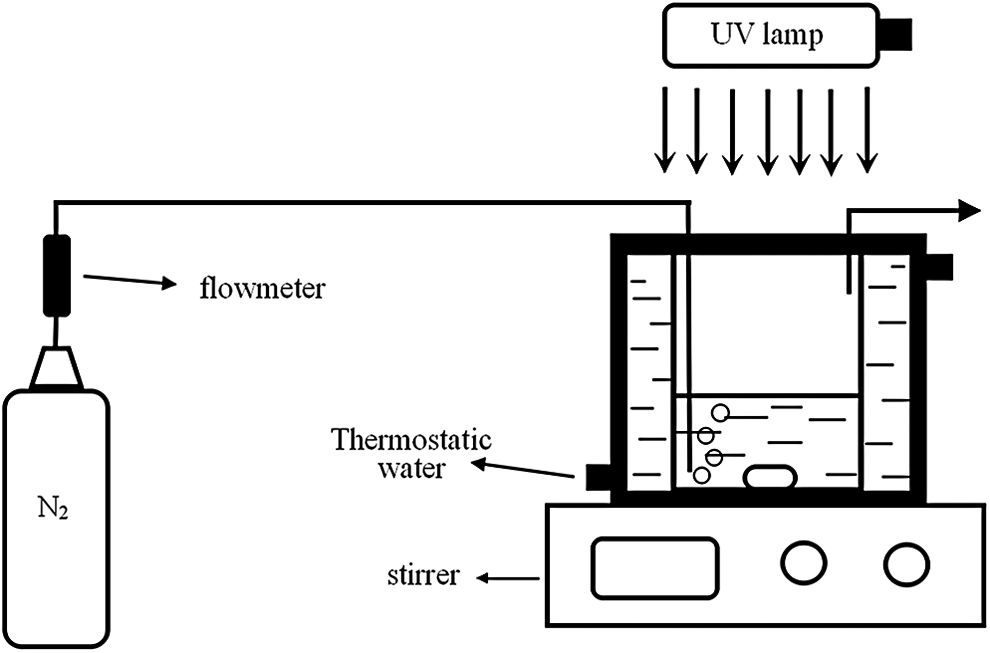
Photocatalytic reaction system.
Characterization
Brunauer-Emmett-Teller (BET) surface area was evaluated by N2 adsorption in a constant volume adsorption apparatus (Bel sorp II; Bayer Japan Co. Ltd.). UV-vis diffuse reflectance spectroscopy (DRS) was recorded using a spectrophotometer (UV-2501PC; Shimadzu) in the spectral range of 200–800 nm. The surface morphology of the M/TiO2 particles was obtained using a scanning electron microscope (SEM; S-4800; Hitachi). The chemical compositions of the sample were tested by an energy dispersive X-ray detector (EDX; EMax-250; Horiba).
Results and Discussion
Characterization of catalysts
BET surface areas of M/TiO2 are listed in Table 1. With the introduction of precious metals on the surface of TiO2, there is no apparent change in BET surface areas among M/TiO2 and TiO2. This result shows that the pore microstructure properties of these samples are similar, indicating that the change of specific surface area is not a main factor to affect the photoactivity.
EDX, energy dispersive X-ray detector; TiO2, titanium dioxide.
Optical properties of M/TiO2 are shown in Fig. 2. The absorption properties of M/TiO2 are similar to those of pure TiO2 in the UV region. Only when the incident light wavelength is above 375 nm, the absorption performance of Au/TiO2 is stronger than others, which is due to the photon absorption corresponding to Au particles (Chiarello et al., 2010). DRS results show that these precious metals are deposited on TiO2 surface. The main wavelength of the light source used in our experiments is about 365 nm, and thus, there are no significant differences in the absorption properties of M/TiO2 in this region.
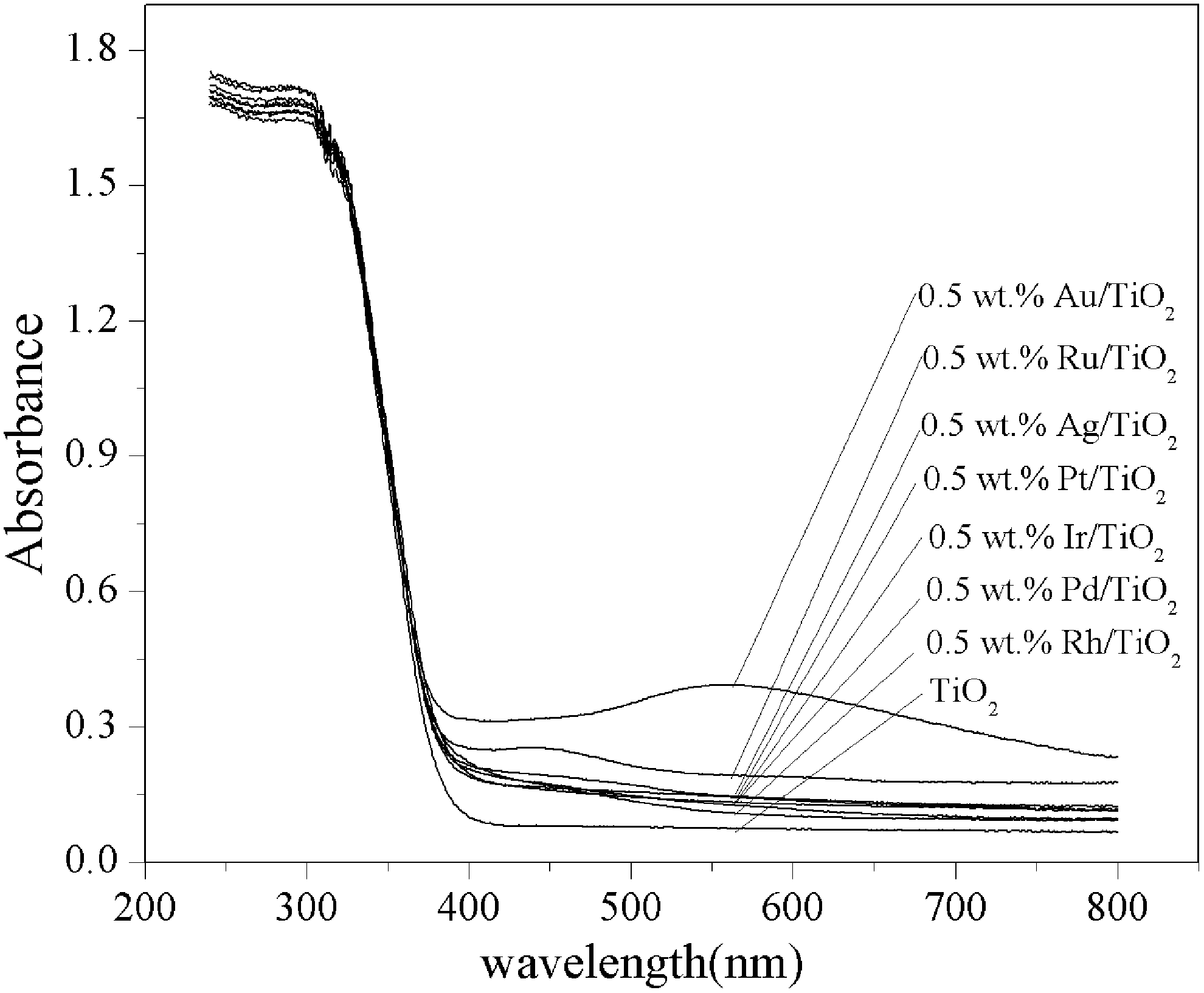
UV-Vis diffuse reflectance spectra of different catalyst samples.
SEM images of TiO2 samples are shown in Fig. 3. From Fig. 3a, we can see that the TiO2 particles exhibit flat sheet morphology with a wide distribution of diameters ranging from 50 to 100 nm. The surface morphologies of 0.5 wt.% M/TiO2 (in Fig. 3b–f) and TiO2 (Fig. 3a) are similar, and no metal particles are observed on 0.5 wt.% M/TiO2.
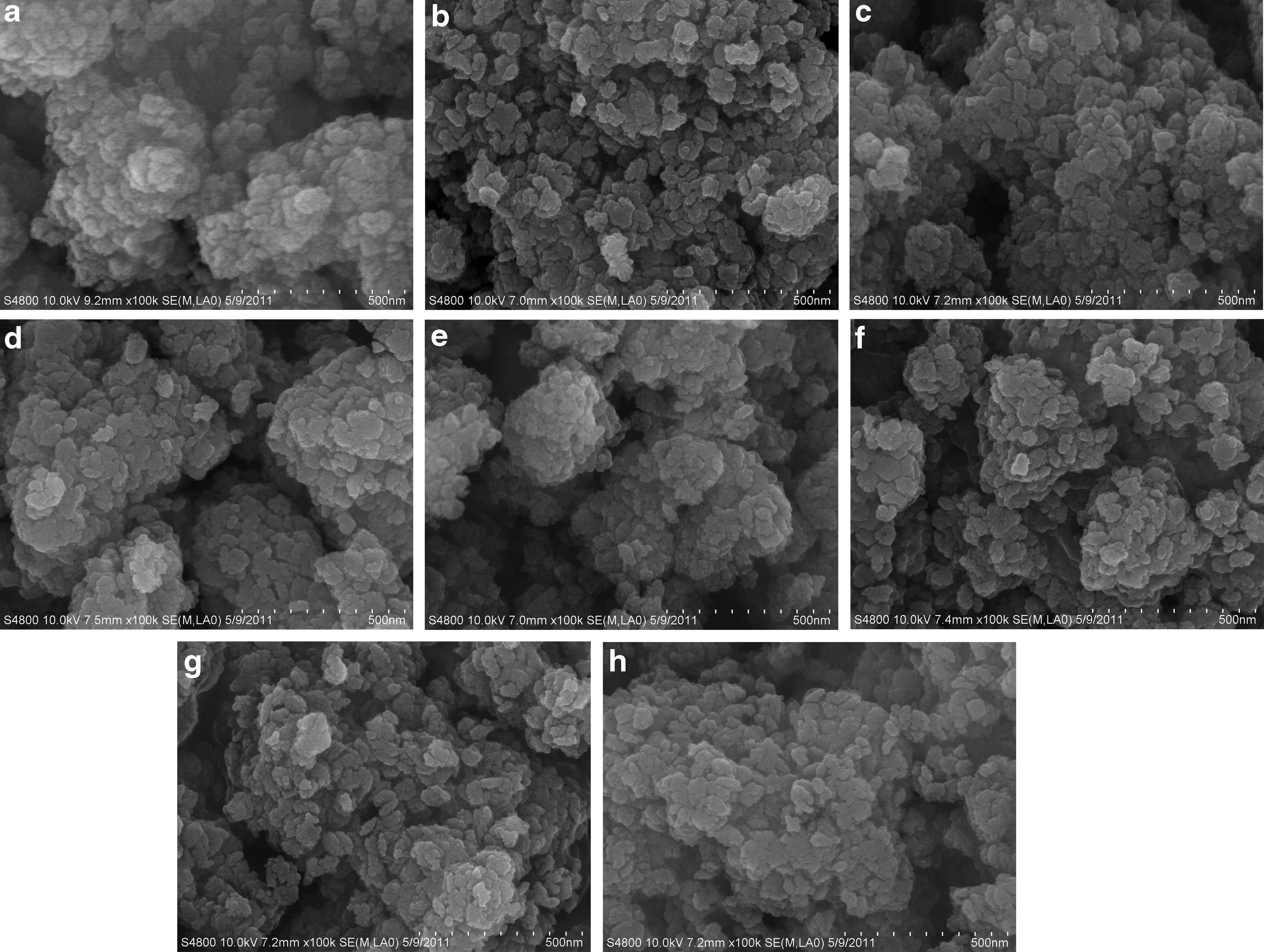
The loading amounts of metals characterized by EDX are listed in Table 1. As shown in Table 1, the content of the metal deduced from the EDX spectrum is close to the theoretical value 0.5 wt.%, which provides direct proof that the metal is deposited on nano-TiO2 surface. As there is no observation of metal particles in SEM image, the light deposition method can effectively disperse precious metals on the TiO2 surface and inhibit their aggregation. For the C elements, it may be due to the methanol residue used in the preparation process.
Overall, specific surface area, absorption property, and surface morphology are not main factors to affect the photoactivity. That is to say, it is the nature of the precious metal itself that affects the activity of the catalyst.
Synergistic activity of M/TiO2 with H2O2
Degradation curves of phenol under different conditions are shown in Fig. 4. The efficiency of direct photolysis of phenol under UV light is low. In addition, phenol can hardly be degraded in the presence of H2O2 alone. Furthermore, the degradation rate of phenol is limited when adding either UV or TiO2 and H2O2. Thus, it is difficult to degrade phenol under all the experimental conditions mentioned above.
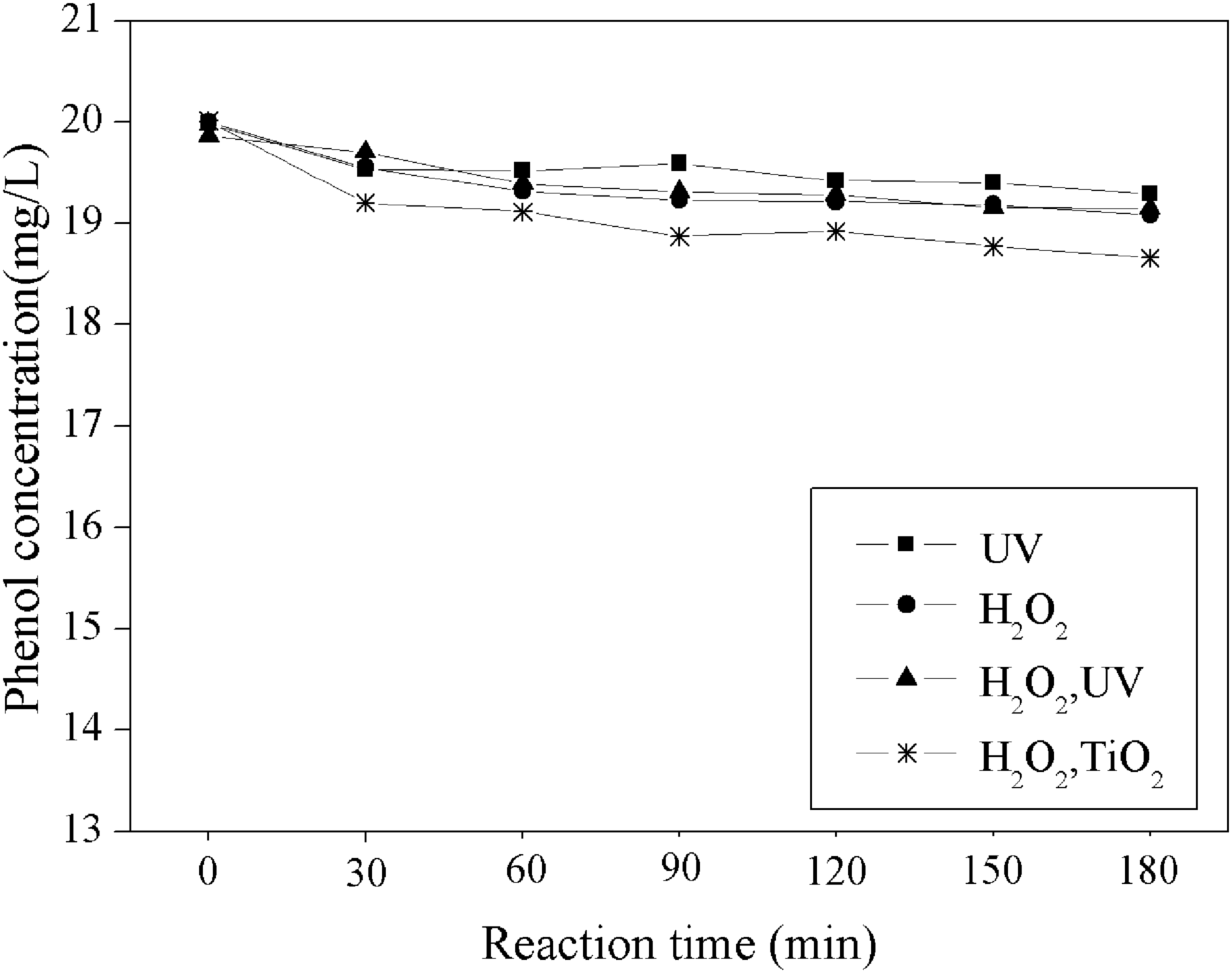
Degradation of phenol under different conditions.
Photocatalytic degradation of phenol over M/TiO2 are shown in Fig. 5. Compared with the experimental results without adding H2O2, the photocatalytic activity has been significantly improved when adding H2O2, which is consistent with the results reported by Mahmoodi (2013). The enhancement of degradation by the addition of H2O2 is due to the increased production of valuable hydroxyl radicals (Reaction 1) (Sivakumar et al., 2013) and inhibition of the eCB−/hVB+ recombination process. Therefore, H2O2 plays a great synergistic role on M/TiO2 in the photocatalytic degradation of phenol.
It is also noted that, when there is no H2O2, the sequence of the catalytic activity is Pd/TiO2 > Pt/TiO2 > Rh/TiO2 ≈ TiO2 > Au/TiO2 ≈ Ag/TiO2 > Ru/TiO2 > Ir/TiO2, while with the addition of H2O2, the sequence is Ag/TiO2 > Pd/TiO2 > Pt/TiO2 > Rh/TiO2 > TiO2 > Au/TiO2 > Ru/TiO2 > Ir/TiO2. These two sequences are similar except for Ag/TiO2. The reasons will be discussed in the following section.
Many researchers have evaluated the impacts of different precious metals on the catalytic activity in terms of molar loading (Michaelson, 1977; Fu et al., 2008). The activities per mole metal of photocatalytic degradation of phenol over 0.5 wt.% M/TiO2 are shown in Fig. 6. In the absence of H2O2, the sequence of the activity per mole metal is Pt/TiO2 > Au/TiO2 ≈ Pd/TiO2 > Rh/TiO2 > Ag/TiO2 > Ir/TiO2 > Ru/TiO2. This sequence is consistent with that reported by Fu et al. (2008). This is mainly related to the work function of the noble metals (Michaelson, 1977). In the presence of H2O2, the sequence of the production per mole metal turns out to be Pt/TiO2 > Ag/TiO2 ≈ Au/TiO2 > Pd/TiO2 > Rh/TiO2 ≈ Ir/TiO2 > Ru/TiO2. This sequence is similar to that of no H2O2 except for Ag/TiO2. It is worth noting that the catalytic activity of Ag/TiO2 is promoted greatly and better than Pd/TiO2, Au/TiO2, and Rh/TiO2 when H2O2 is added. In addition, the work functions of Pd, Au, and Rh are higher than Ag (Michaelson, 1977). For the high activity of Ag/TiO2, this may be related to the normal reduction mechanism and the “activated” mechanism between H2O2 and Ag nanoparticles (Flaètgen et al., 1999; Campbell et al., 2009). As reported, Ag nanoparticles can accelerate the reduction reaction of H2O2, leading to the electrons being quickly transferred to H2O2, which will allow it to avoid the recombination of photogenerated electron-hole pairs efficiently. As a result, the catalytic activity of Ag/TiO2 is high when adding H2O2. In addition, in regards to the noble metals that show inhibition effects on degradation compared with TiO2 as shown in Fig. 5, this may be due to the high metal loading so that these noble metals have become the electron-hole recombination centers (An et al., 2009).
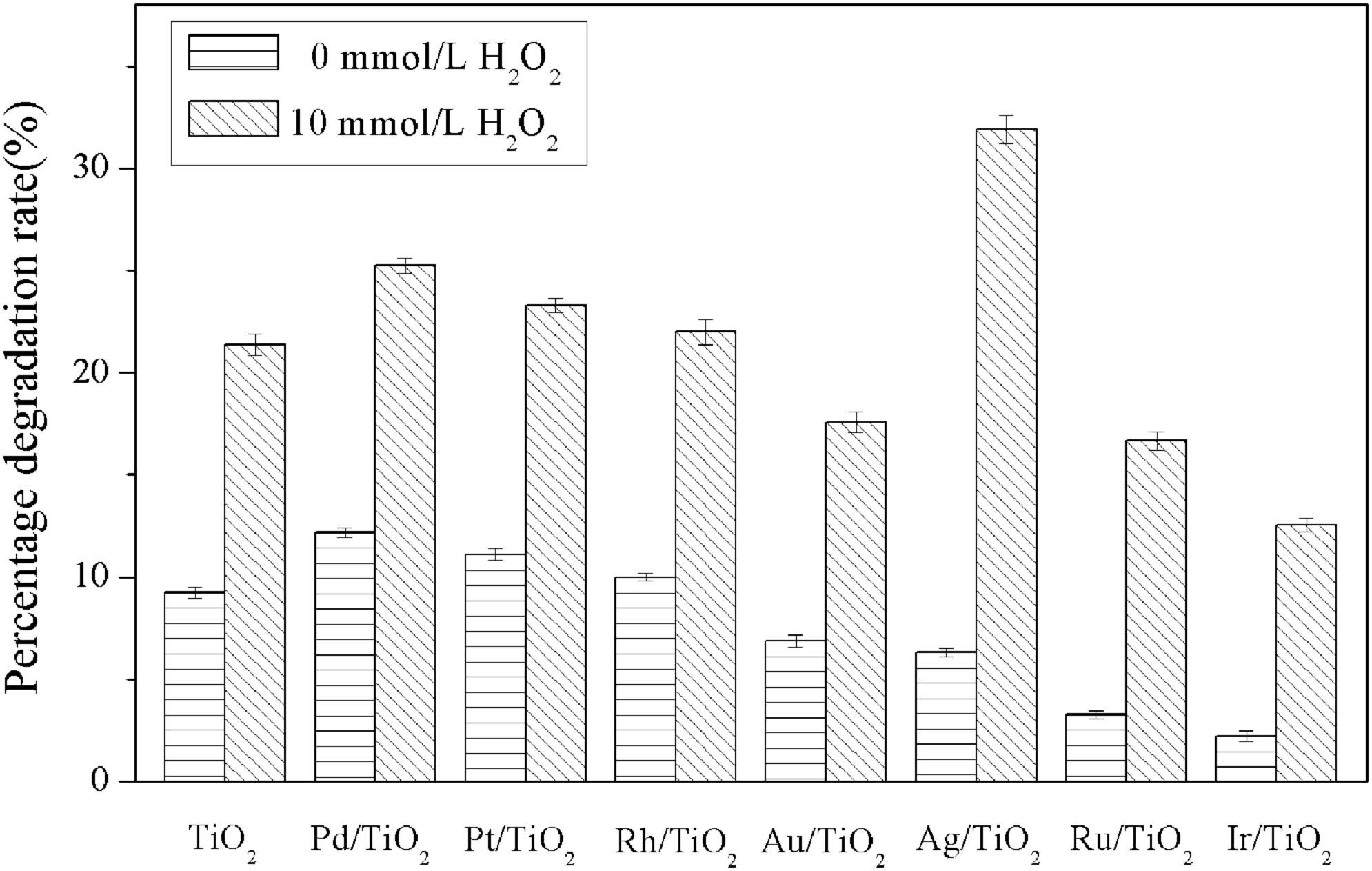
Photocatalytic degradation of phenol over M/TiO2.
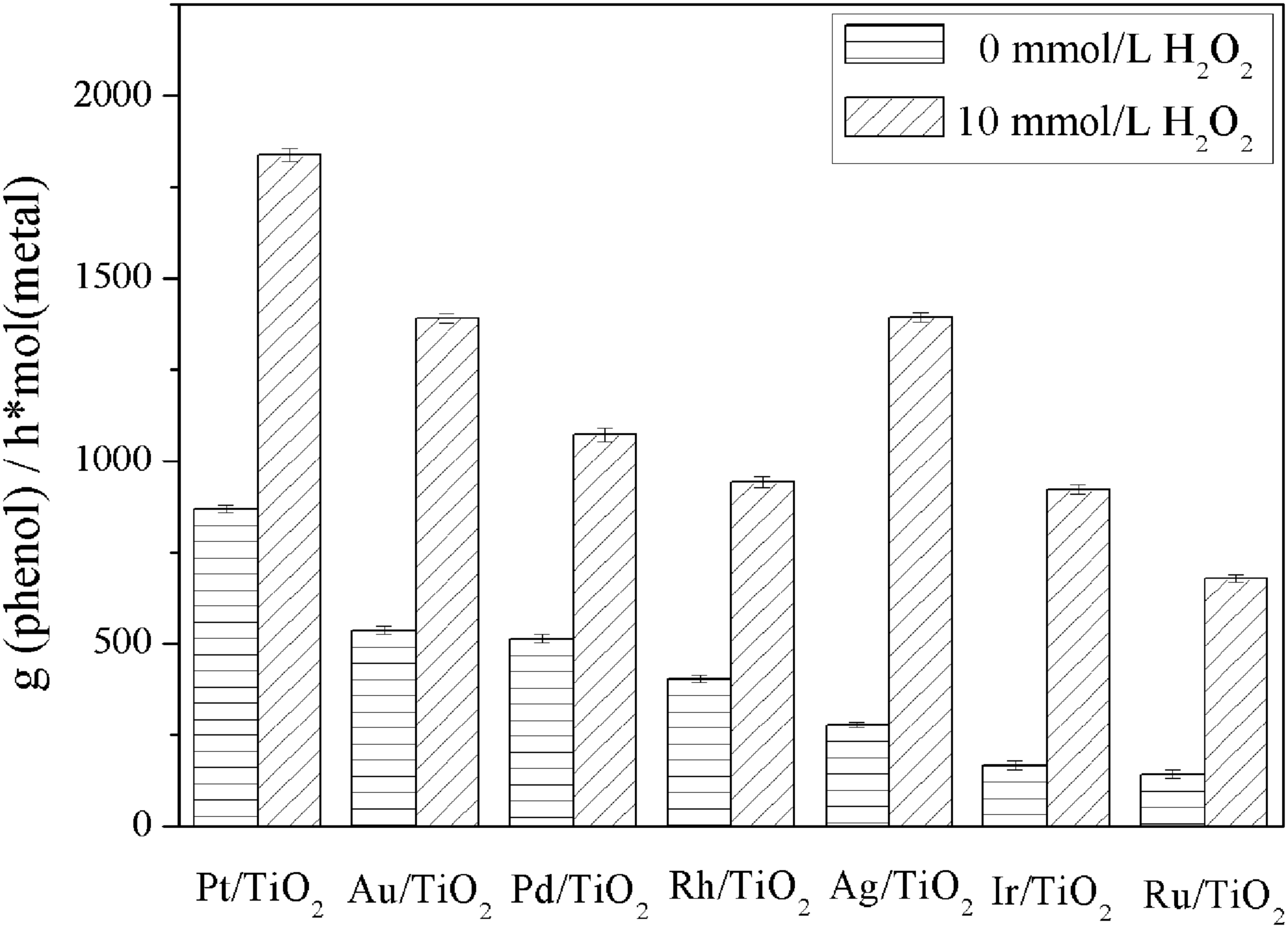
Activity per mole metal of photocatalytic degradation of phenol over M/TiO2.
From the above discussion, the factors such as the precious metal loading, the catalyst concentration, and the H2O2 concentration have a great influence on the synergistic effect of photocatalytic degradation phenol by M/TiO2 with H2O2.
Effects on activity
Effects of the loading
The effects of Ag loading are shown in Fig. 7. As we can see, the degradation efficiency first increases with the loading of Ag, then decreases sharply. The highest catalytic activity is achieved when ∼0.5 wt.% Ag is loaded. The result shows that the loading of Ag has an obvious promoting effect on the photocatalysis of TiO2, in accordance with the report by Martins et al. (2009). This is mainly because the active site of the TiO2 surface is limited when the Ag loading is too small, while excessive Ag nanoclusters cover the surface of the TiO2 to form a recombination center when the Ag loading is too large.
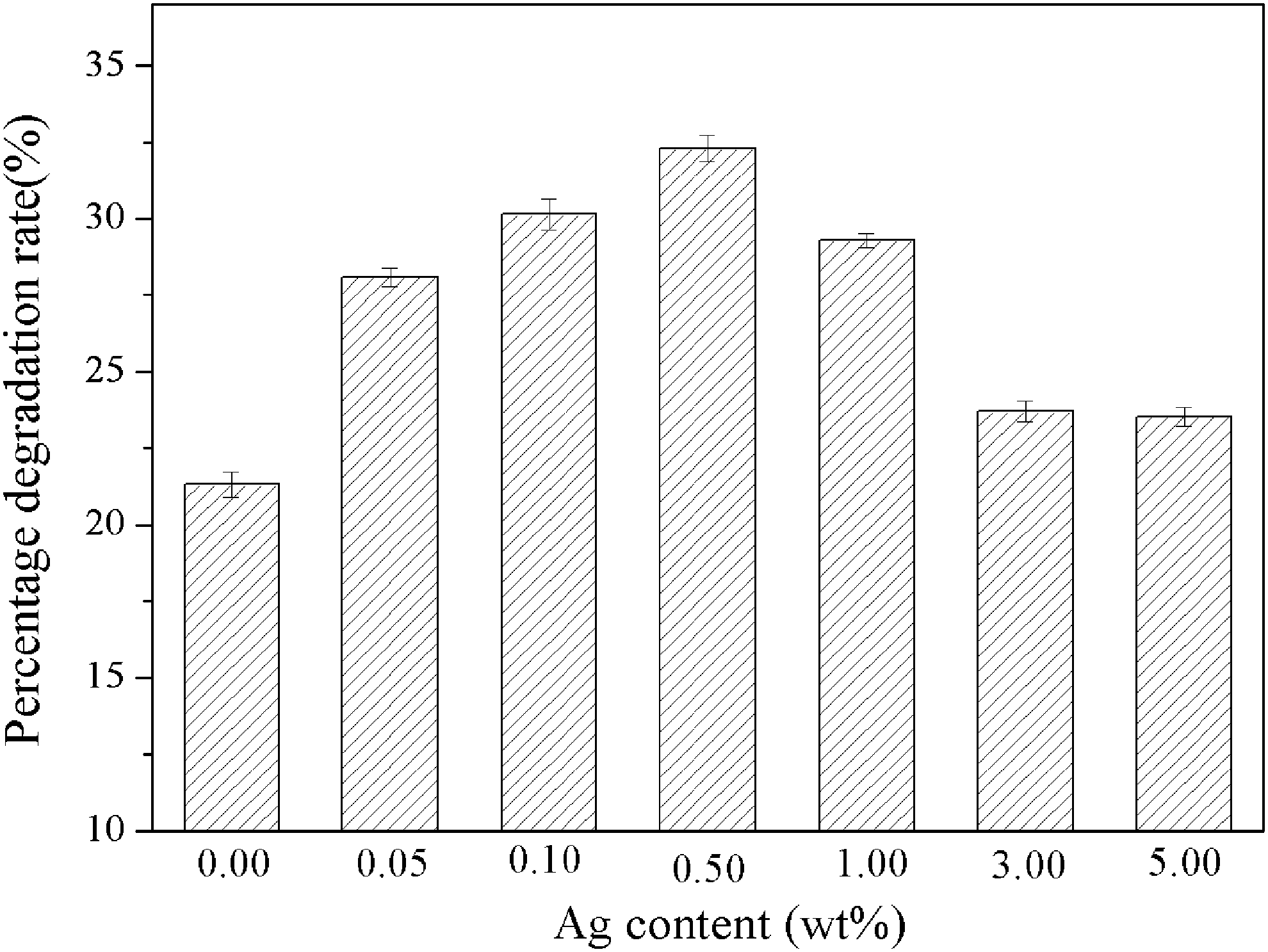
Effect of Ag loading amount on degradation of phenol.
Effects of the catalyst concentration
The effects of the concentration of Ag/TiO2 on the degradation of phenol are shown in Fig. 8. When the concentration is 0.10 g/L, the photodegradation efficiency of phenol increases sharply, and decreases significantly when the catalyst concentration continues to increase. This result is consistent with many reports (Harir et al., 2008; Yang et al., 2008; Kashif and Ouyang, 2009). The increase of the number of catalyst particles will facilitate the absorption of photons and adsorption of phenol molecules. A further increase of the catalyst concentration beyond 0.10 g/L may cause a light barrier, light scattering, or screening effects. The excessive opacity of the suspension prevents UV light from illuminating the catalyst. The scattering and screening effects reduce the specific activity of the catalyst. In addition, at high concentrations of the catalyst, particle aggregation may also reduce the catalytic activity. Therefore, the photodegradation efficiency of phenol decreases gradually. In this study, the optimum amount of catalyst is found to be 0.10 g/L for the degradation of phenol.
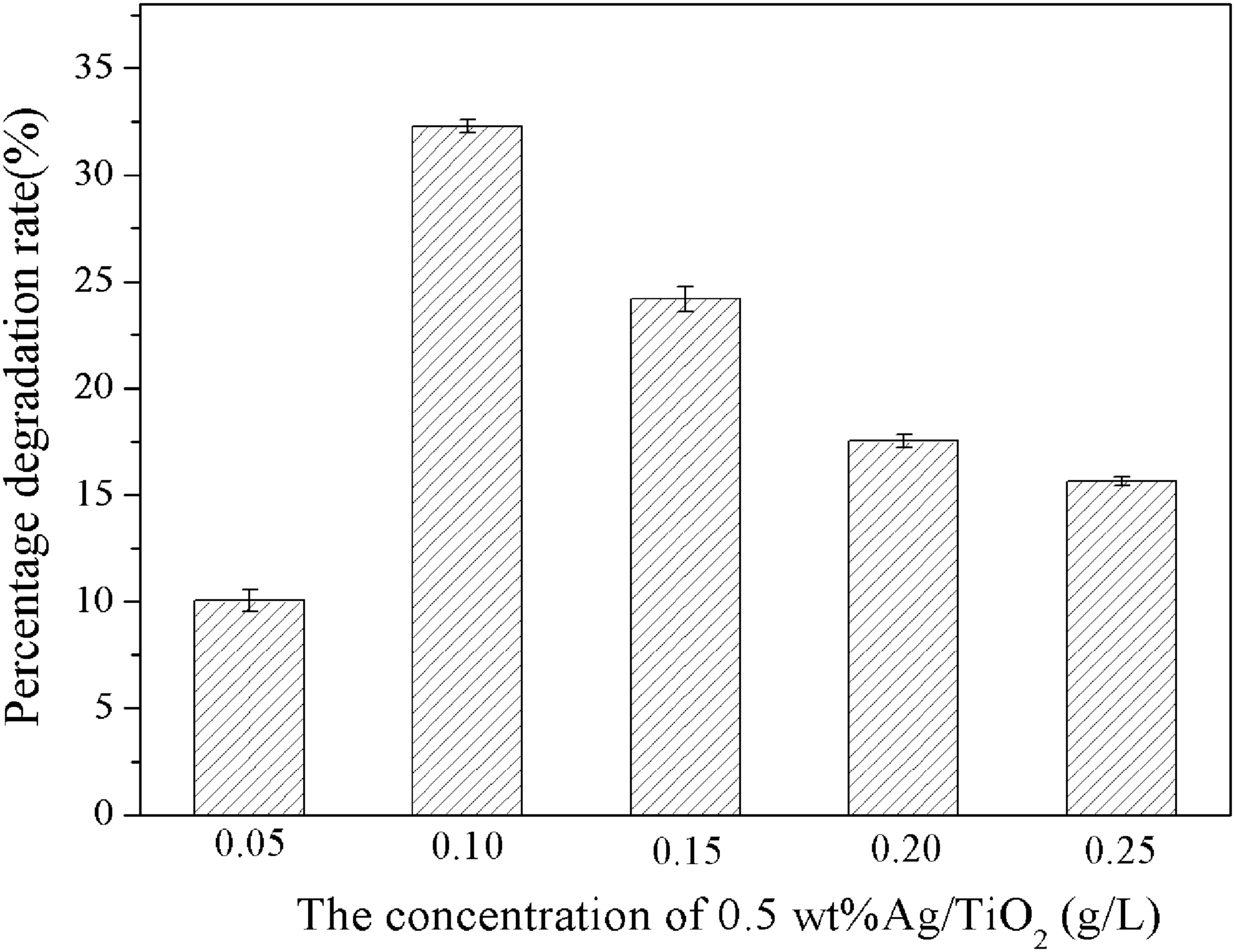
Effect of concentration of Ag/TiO2 on degradation of phenol.
Effects of H2O2 concentration
The effects of the H2O2 concentration on the degradation of phenol are shown in Fig. 9. The degradation efficiency of phenol increases rapidly from 7% to 37% when a small amount of H2O2 is added (up to 50 mmol/L). If the H2O2 concentration is larger than 50 mmol/L, the degradation efficiency decreases gradually. This is because there cannot be sufficient H2O2 to capture photogenerated electrons when the concentration of H2O2 is low; but at the high concentration of H2O2, H2O2 reacts with HO• to produce HO2• with weak oxidizing ability. HO2• then reacts with HO• to produce H2O and O2. The overall result is that the excess H2O2 consumes HO•, as in the following two reactions (2 and 3) below (Sivakumar et al., 2013):
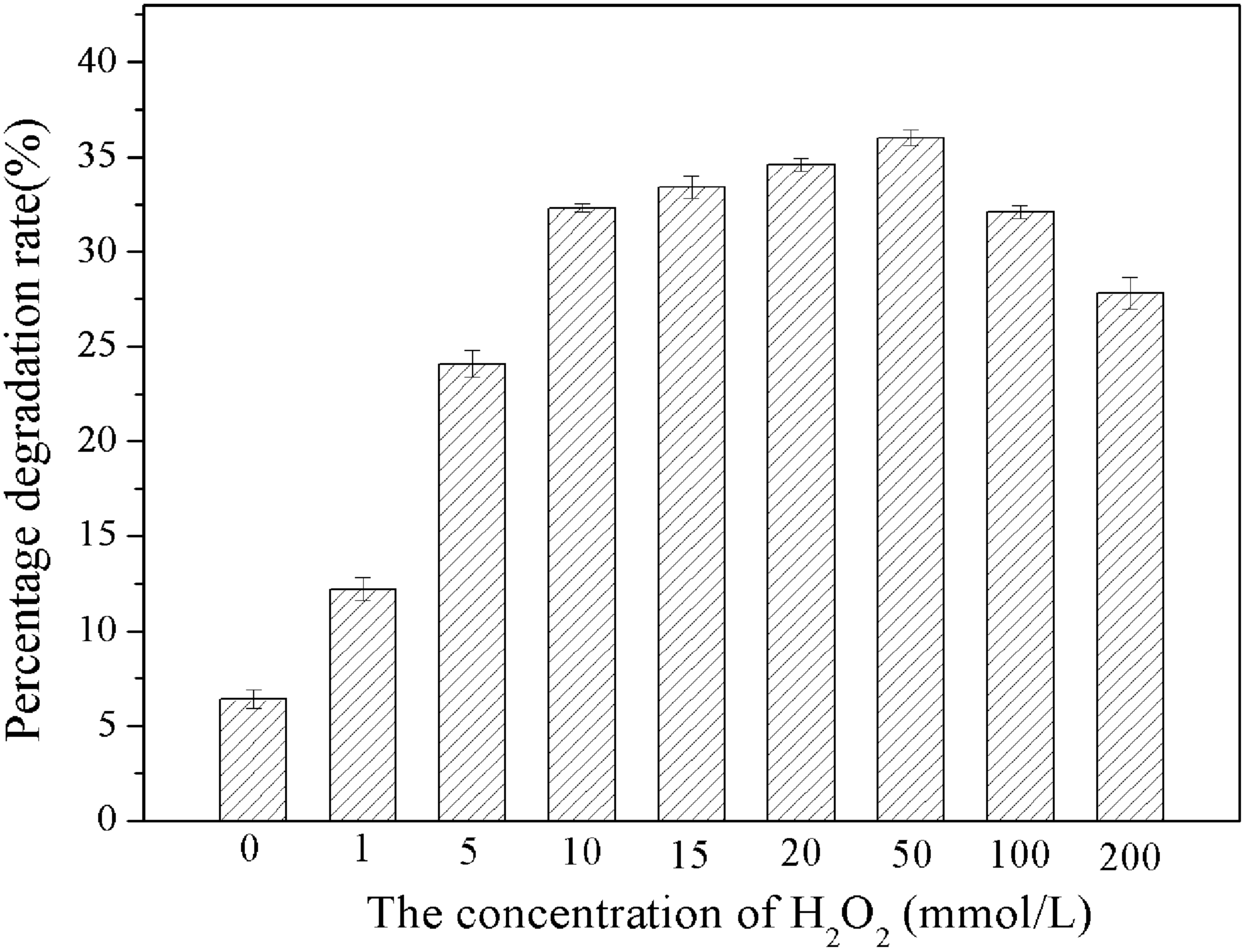
Effect of concentration of H2O2 on degradation of phenol. H2O2, hydrogen peroxide.
Effects of pH
Effects of the pH on the degradation of phenol are shown in Fig. 10. As shown in Fig. 10, the phenol photocatalytic degradations in acid and neutral environments are better than in alkaline environments, which are primarily related to the nature of TiO2 in solutions of different pH values (Zhao et al., 2004). The pHzpc (the pH at zero point of charge) of TiO2 is about 6.8 (Alaton et al., 2002). This implies that when pH value is higher than 6.8, the surface of TiO2 is covered with negative charges, while positive charges are rich when pH is lower than 6.8. In an alkaline environment, the reaction is slower because of the decrease in adsorption. The semiconductor will repel the negatively charged phenolate, which becomes the dominant organic form in the solution (the pKa of phenol is 9.9) (Akbal and Onar, 2003). Furthermore, in an alkaline environment, it favors the formation of bicarbonate ion and carbonate ions (the pKa1 and pKa2 of H2CO3 were 6.38 and 10.33), which are effective scavengers of OH−, and will reduce the efficiency of degradation processes (Reactions 5 and 6) (Wu et al., 2002). At pH 7, the reaction solution is neutral. As the Reaction (1) occurs, it will bring some amount of OH−. It will benefit the production of HO• as the following Reaction (4) (Yang et al., 2008).
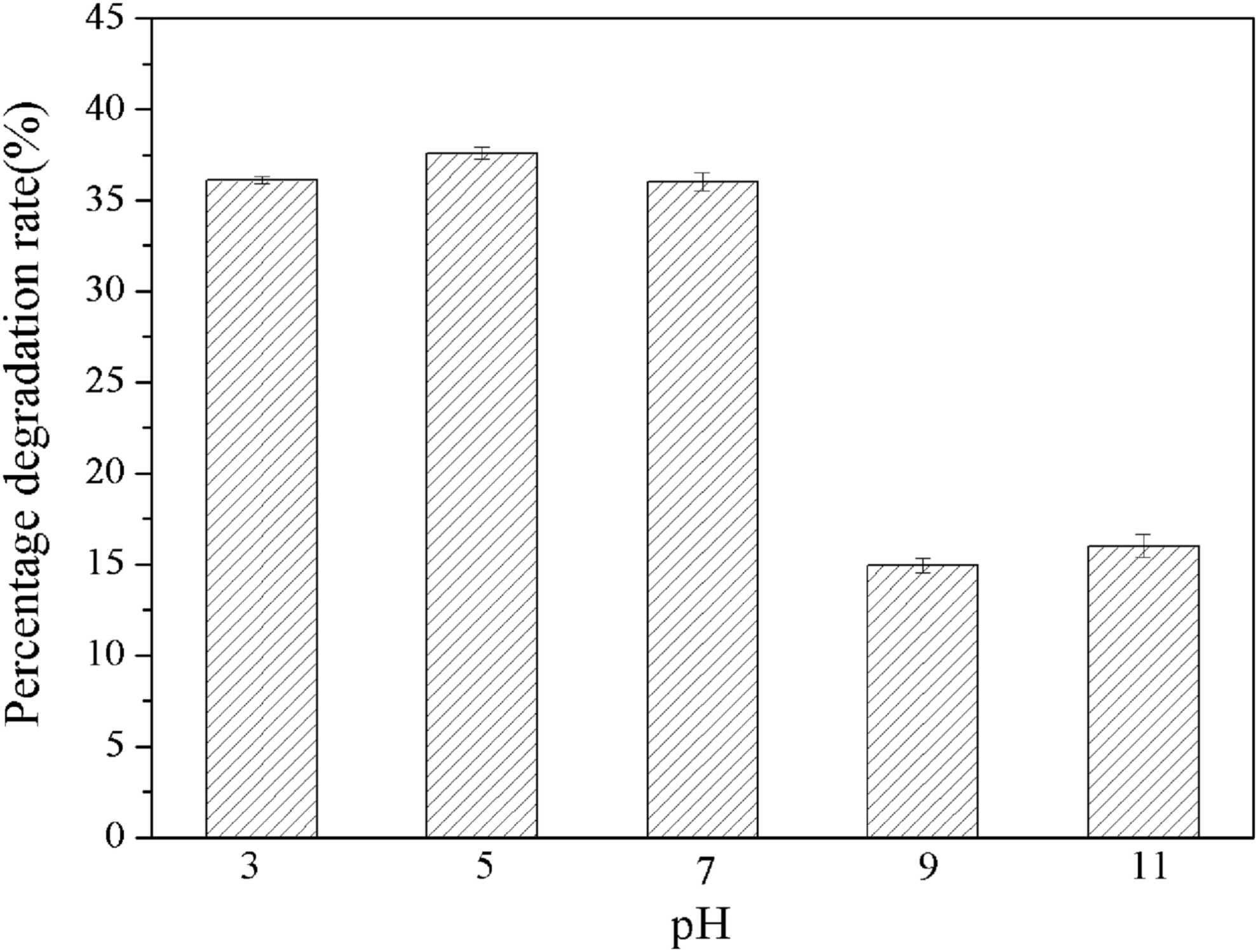
Effect of pH on degradation of phenol.
Photocatalytic degradation kinetics
Photocatalytic degradation kinetics
Kinetic curves of three photocatalytic systems (TiO2 + UV, H2O2 + TiO2 + UV, and H2O2 + Ag/TiO2 + UV) under the optimal conditions are shown in Fig. 11. The photocatalytic degradation of pollutants on TiO2 in liquid can be characterized as the first-order kinetics, which is most widely used to describe heterogeneous photocatalytic reactions (Muruganandham et al., 2006; Muruganandham and Swaminathan, 2006). The kinetic curves of three catalytic systems are fitted with the first-order kinetics as listed in Table 2. The three catalytic systems are all consistent with the first-order kinetics (R2 in the ranges of 0.9626–0.9953). Moreover, the reaction rate constant k of the system (H2O2 + Ag/TiO2 + UV) is 4.2 times and 1.5 times higher than for the systems (TiO2 + UV) and (H2O2 + TiO2 + UV), respectively, indicating that adding the electron capture agent and loading the precious metals can effectively improve the photocatalytic reaction.

Kinetic curves of photocatalytic degradation of phenol. (Reaction conditions: phenol concentration 20 mg/L, 0.5 wt.% Ag loading, catalyst concentration 0.1 g/L, H2O2 concentration 50 mmol/L, and pH = 5).
H2O2, hydrogen peroxide.
Conclusions
H2O2 plays a great synergistic role on the photocatalytic degradation of phenol with M/TiO2.The photocatalytic activities of M/TiO2 are mainly related to the work function of these noble metals. Ag loading could greatly enhance the activity of TiO2 due to the normal reduction mechanism and the “activated” mechanism between H2O2 and Ag nanoparticles. Experimental conditions have a significant impact on the catalytic activity. The phenol can be degraded by 65% within 3 h over Ag/TiO2 under the conditions of 0.5 wt.% Ag loading, 0.5 wt.% Ag/TiO2 concentration of 0.1 g/L, H2O2 concentration of 50 mmol/L, and pH value of the reaction liquid at 5, which are 45% more than that in the TiO2 photocatalytic system. Furthermore, the degradation kinetics of phenol follows the first-order kinetics, and the determined reaction rate constant for phenol degradation is 176.6 × 10⁻³/min.
Footnotes
Acknowledgments
All the authors gratefully acknowledge support from the Fund for the Research and Development of Science and Technology in Shenzhen (No. JCYJ20150731104949789, JCYJ20150403161923536, CXZZ20130516145955144), the Special fund for the Development of Strategic and New Industry in Shenzhen (No. JCYJ20120613114951217), and the National High Technology Research and Development Program of China (2012ZX07206-002).
Author Disclosure Statement
The authors declare that all statements are correct. No competing financial interests exist.