




Abstract
Abstract
Chemical absorption was employed for the harmless treatment of sulfuryl fluoride (SO2F2) in the simulated residual fumigant. SO2F2 was absorbed by sodium hydroxide (NaOH) solution in a packed column. Effects of spray density, gas flow rate, concentration of NaOH solution, and inlet SO2F2 volume concentration on SO2F2 removal efficiency were investigated at room temperature. It was found that SO2F2 could be removed completely when inlet SO2F2 volume concentration, spray density, gas flow rate, and NaOH concentration were 0.50%, 12 m3/(m2 · h), 0.12 m3/h, and 0.68 mol/L, respectively. According to the two-film theory, a mathematical model based on Onda correlations was developed to describe the removal efficiency of SO2F2. Comparison between the experimental data and the calculated data proved that the predictability of the proposed model was within the maximum deviation of 8.0%. Aqueous NaOH solution after absorption was analyzed. It was found that the SO2F2 was fixed and converted to NaF, NaSO3F, and Na2SO4.
Introduction
S
However, the toxicity and greenhouse effect of SO2F2 have recently aroused much attention. SO2F2 gas is considered as an inhalation hazardous material, which can cause damage to the human central nervous system and inhalation system after long-term exposure, and its occupational exposure limit is 5 ppm (Tsai, 2010). In addition, the atmospheric lifetime and global warming potentials (100-year time horizon, relative to carbon dioxide) for SO2F2 are ∼36 years and 4,780, respectively (Papadimitriou et al., 2008). Since 1978, SO2F2 has been accumulated in the global atmosphere with a growth rate of 5% ± 1% per year (Mühle et al., 2009). To date, SO2F2 has been registered for fumigation use in the United States, Canada, the Caribbean, Japan, the European Union, and so forth (Papadimitriou et al., 2008). However, almost 100% of SO2F2 is emitted to the atmosphere after use. Consequently, it is urgent to develop an effective method to remove SO2F2 after fumigation.
To solve this problem, in 2013, a two-step method was developed based on the dielectric barrier discharge (DBD) plasma followed by a chemical absorption (Nie et al., 2013b). However, the high energy consumption of the DBD plasma process limited its industrial application. Recently, a new approach for the removal of SO2F2 has been developed using chemical absorption alone, and aqueous sodium hydroxide (NaOH) solution was used as an absorbent (Nie et al., 2013a). SO2F2 is nearly insoluble in water in neutral conditions; however, SO2F2 can be rapidly hydrolyzed in aqueous NaOH solution due to the fact that nucleophilic hydroxyl ions will attack the S atom and replace one of the F ions (Cady and Misra, 1974). In 2014, the mass transfer and reaction kinetics of SO2F2 absorption with aqueous NaOH solution in an experimental double-stirred cell have been investigated, results showed that SO2F2 absorption by the aqueous NaOH solution was a fast pseudofirst-order reaction, and the liquid-phase mass transfer was the rate-determining step; moreover, the enhancement factors were also determined in the experimental double-stirred cell (Nie et al., 2014). The aforementioned research has provided the fundamental data for further treatment of SO2F2 by chemical absorption.
In this article, chemical absorption in a packed column was used for the harmless treatment of SO2F2 in the simulated residual fumigant. The effects of gas flow rate, spray density (defined as the ratio of liquid flow rate to the cross-sectional area of packed column), NaOH concentration, and inlet SO2F2 volume concentration on the removal efficiency of SO2F2 were investigated, respectively. According to the two-film theory, a mathematical model based on Onda correlations to describe the removal efficiency of SO2F2 was developed (Onda et al., 1968b; Tan et al., 1990). A comparison between the experimental data and the results calculated by the proposed model was performed. Moreover, products in NaOH solution after absorption were analyzed by an ion chromatogram.
Experimental Protocols
Materials
SO2F2 (99.9%) stored in a cylinder was purchased from Hangzhou Maoyu Electronic Chemicals Co., Ltd. Sodium hydroxide (96%), potassium biphthalate (99.9%), potassium fluorosulfonate (99.9%), sodium fluoride (99.5%), and sodium sulfate (99.5%) were purchased from Sinopharm Chemical Reagent Co., Ltd.
Apparatus and procedure
The schematic diagram of the experimental apparatus is shown in Fig. 1. The well-mixed air from a fan and SO2F2 from a cylinder were fed into the bottom of the packed column for chemical absorption. The SO2F2 flow rate was controlled by a rotameter, and the volume concentration of SO2F2 ranged from 0.10% to 0.54%, in which the volume concentration of 0.50% was equivalent to a regular SO2F2 application rate of 20 g/m3 used in container fumigation. The flow rate of mixed air and SO2F2 was measured with an orifice plate flow meter.
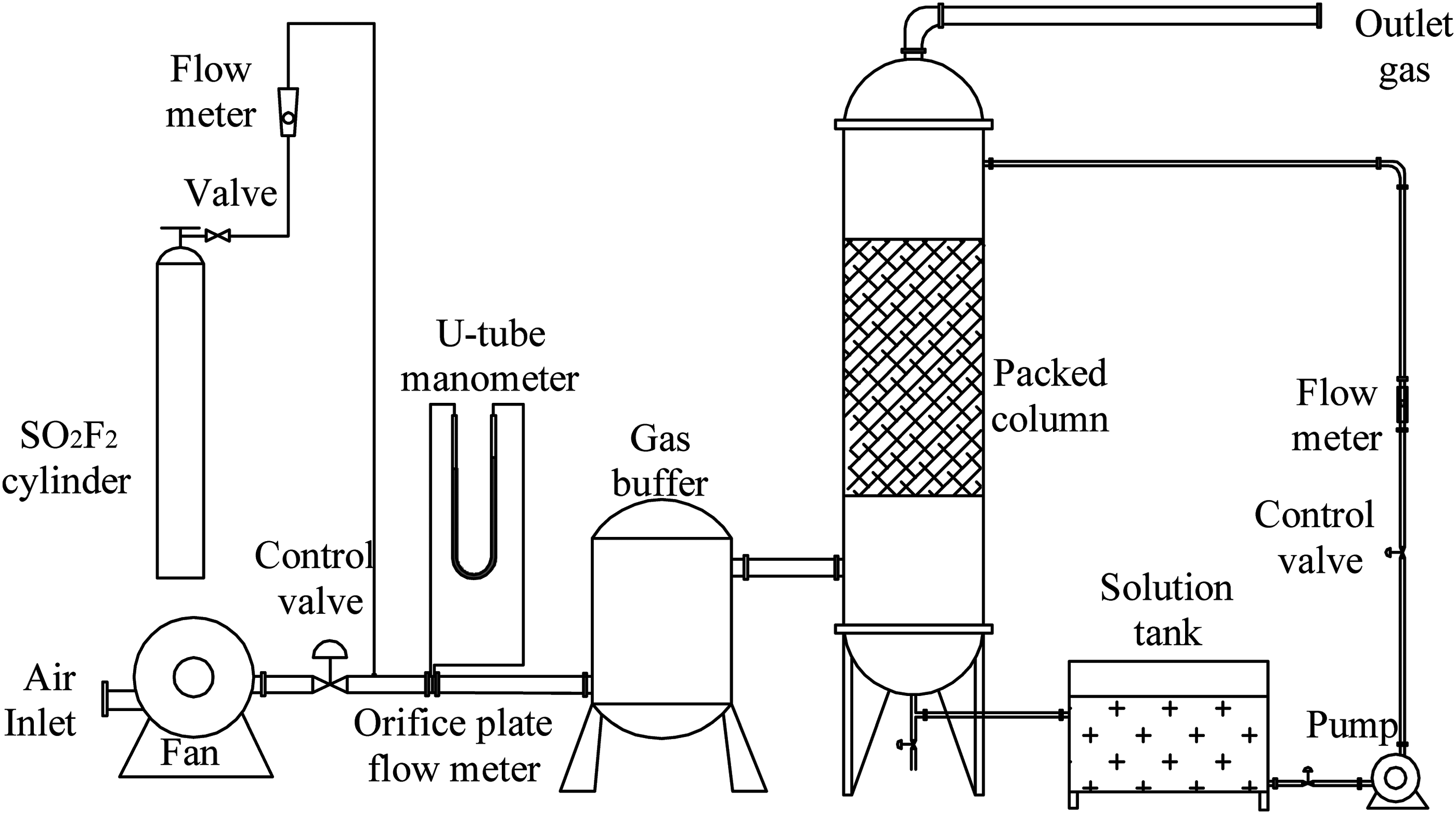
Schematic diagram of experimental apparatus.
The column was packed with a 12-mm ceramic Rasching ring, and the total height was 85 cm. The aqueous NaOH solution was used as the chemical absorbent, which was circulated between the column and solution tank by the pump. The flow rate of aqueous NaOH solution was measured by a rotameter, and the temperature was controlled at room temperature (25°C) by thermostatic bath. The operating pressure was controlled at atmospheric pressure.
Analysis
Inlet and outlet concentrations of SO2F2 were analyzed by a gas chromatography (GC), equipped with a Gaspro plot column and a flame photometric detector (Agilent 7890A). The sensitivity of the GC for SO2F2 analysis was 0.5 ppm. The analytical conditions of GC were described as follows: N2, H2, and air flow rate were 10, 30, and 300 mL/min, respectively; the temperature of the inlet, column, and detector was 80°C, 80°C, and 250°C, respectively. The concentration of NaOH solution was calibrated using the potassium biphthalate solution, and the components in the aqueous NaOH solution after chemical absorption were determined by ion chromatography (IC), equipped with a Supp4-250 anion-exchanged column and an electrical conductivity detector (Metrohm 883 Basic IC plus). The mobile phase of IC was the buffer solution of NaHCO3 and Na2CO3, and the flow rate was 1 mL/min. The temperature of the IC detector was 40°C. Thus, the removal efficiency could be evaluated using the following equation:
where η (%) is the removal efficiency of SO2F2, and CAin and CAout are the inlet and outlet volume concentrations of SO2F2 in the packed column, respectively.
Mathematical Model
According to the two-film theory, a mathematical model based on Onda correlations was developed to describe the removal efficiency of SO2F2. In the Mass Balance of SO2F2 in the Packed Column section, the relationship of the removal efficiency of SO2F2 with structure parameters of the column, operating parameters, and overall gas-phase mass transfer coefficient was obtained. To calculate the earlier mass transfer coefficient, the correlations of overall gas-phase mass transfer coefficient and effective interfacial area are listed in the Overall Gas-Phase Mass Transfer Coefficient section, and the corresponding physical properties of the system are listed in the Physical Properties of the System section.
Mass balance of SO2F2 in packed column
Based on a previous study, the chemical absorption of SO2F2 by aqueous NaOH solution is a fast pseudofirst-order reaction. Since the equilibrium partial pressure of SO2F2 in liquid bulk is zero, mass transfer rate NA can be described as follows (Tan et al., 1990):
where KG is the overall gas-phase mass transfer coefficient, PA is the partial pressure of SO2F2 in the gas bulk, P is the atmospheric pressure, and yA is the molar fraction of SO2F2 in the gas bulk.
In the packed column, the cross section, molar gas flow rate, and the differential volume in height dZ are denoted as S, Q, and SdZ, respectively. Thus, the amount of SO2F2 absorbed in section dZ can be denoted as −QdyA, in which dyA is the differential change of yA, and the change of Q is neglected for the absorption of dilute gases. The corresponding mass balance can be described as follows (Tan et al., 1990):
where a is the effective interfacial area per unit packed volume.
Since the SO2F2 concentration in the gas mixture is quite low and the concentration of NaOH solution remains almost constant in the column, KG is independent to SO2F2 concentration (Tan et al., 1990). Integrating Equation (2) into Equation (3) can yield the following equation:
where yAin and yAout are SO2F2 molar fractions at the inlet and outlet of the packed column, respectively, and Z is the height of the packing column. In this case, SO2F2 removal efficiency η can be also described as follows:
Combining Equation (4) with Equation (5) yields the following equation after rearrangement:
Overall gas-phase mass transfer coefficient
Based on the two-film theory, the overall gas-film mass transfer coefficient KG of SO2F2 can be described as follows:
where kG and kL are the mass transfer coefficients of gas and liquid phases, respectively, and H is the Henry's constant of SO2F2, while E is the enhancement factor.
The correlations developed by Onda were employed to calculate the gas-side mass transfer coefficient kG and liquid-side mass transfer coefficient kL, as well as the effective interfacial area per unit packed volume a (Onda et al., 1968a, 1968b).
where G is the superficial mass velocity; at is the total surface area per unit packed volume; μG is the viscosity of gas phase; ρG is the density of gas phase; DG is the diffusivity of gas phase for the absorbed gas; DP is the diameter of packing; R is the gas constant; and T is the absolute temperature.
where L is the superficial mass velocity of liquid; a is the effective interfacial area per unit packed volume; μL is the viscosity of liquid phase; ρL is the density of liquid phase; DL is the diffusivity of liquid phase for the absorbed gas; and g is the gravitational constant.
where σc and σL are the critical surface tension of packing material and surface tension of liquid phase, respectively.
The enhancement factor E at 298.15 K can be calculated as follows (Nie et al., 2014):
where CNaOH is the concentration of NaOH solution.
Physical properties of the system
The diffusivity DL of SO2F2 in the water can be estimated using the equation developed by Tyn and Calus (Poling et al., 2000). The diffusivity DG of SO2F2 in the air can be estimated using the equation developed by Fuller et al. (Poling et al., 2000). The solubility of SO2F2 in water can be calculated based on the previous studies at 298.15 K (Derrick et al., 1990; Tsai, 2010). The modified Stokes–Einstein equation (12) is used to estimate the diffusivity of the solute SO2F2 in aqueous NaOH solution (Onda et al., 1968a).
The Van Krevelen method is used to estimate the saturated concentration of SO2F2 in aqueous NaOH solution (Onda et al., 1970). Diffusivities, Henry's law constant of SO2F2, and properties of NaOH solution used in this study are given in Table 1. Properties of the packed column are given in Table 2.
Results and Discussion
Effect of gas flow rate
Effect of gas flow rate on the removal efficiency of SO2F2 was investigated with constant spray density, NaOH concentration, and inlet SO2F2 volume concentration. As can be seen from Fig. 2, the values calculated from the model were in good agreement with those from experiments. The removal efficiency of SO2F2 decreased with the increase of gas flow rate. This is because the mass transfer rate of SO2F2 (mol/s) mainly depends on the liquid-side film resistance. According to Equations (2) and (10), when the gas flow rate increases, the mass transfer rate NA and effective interfacial area per unit packed volume a change slightly; thus, the mass transfer rate of SO2F2 (mol/s) remains almost constant, while the feeding rate of SO2F2 (mol/s) increases dramatically, as a result, the removal efficiency η decreases. In addition, as shown in Fig. 2, the removal efficiency of SO2F2 could reach 100% when the initial SO2F2 volume concentration, spray density, gas flow rate, and NaOH concentration were 0.50%, 12 m3/m2/h, 0.12 m3/h, and 0.68 mol/L, respectively.
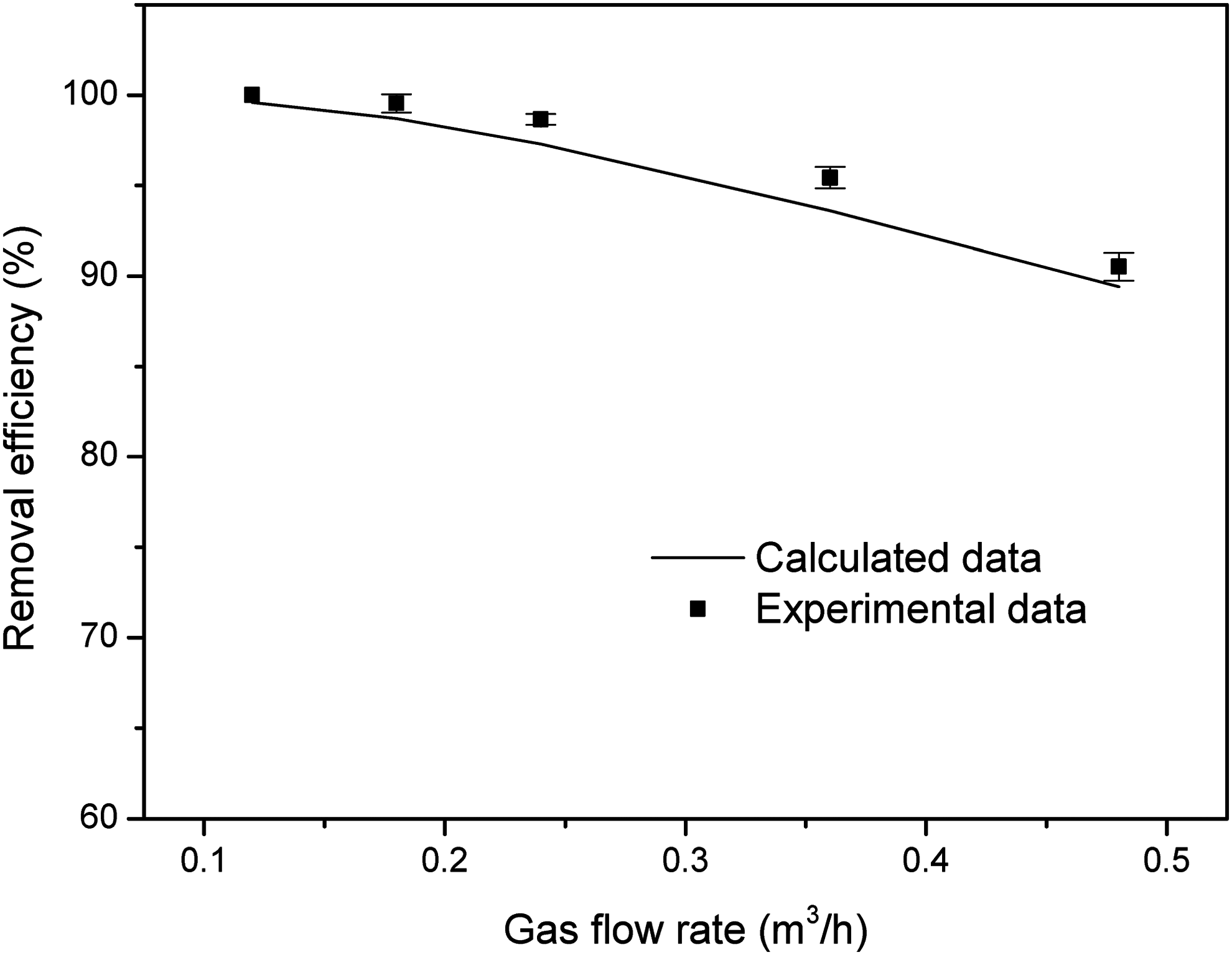
Effect of gas flow rate on removal efficiency of SO2F2. Initial SO2F2 concentration: 0.50%; spray density: 12 m3/(m2 · h); sodium hydroxide (NaOH) concentration: 0.68 mol/L; and gas flow rate ranged from 0.12 to 0.48 m3/h.
Effect of spray density
The effect of spray density on the removal efficiency of SO2F2 was investigated with the constant gas flow rate, NaOH concentration, and inlet SO2F2 volume concentration. As can be seen from Fig. 3, the removal efficiency of SO2F2 increased with the increase of spray density. The reason is that spray density affects the effective interfacial area, as shown in Equation (10). Larger spray density results in a larger effective interfacial area, and hence, a higher mass transfer rate of SO2F2 (mol/s), as shown in Equations (10) and (4). As a result, the removal efficiency η increases as shown in Equations (10) and (6). A similar trend for calculated data is observed in Fig. 3.
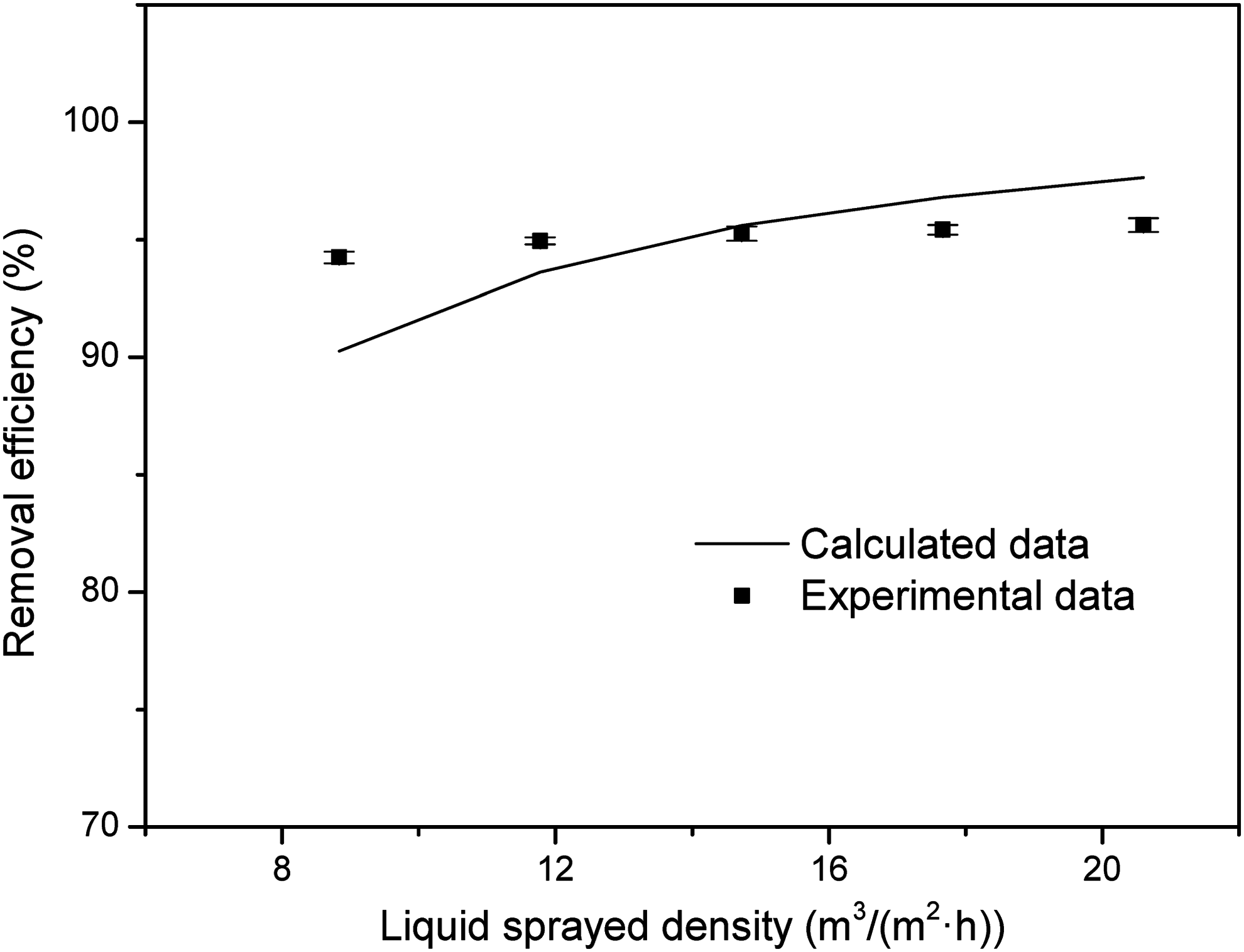
Effect of spray density on removal efficiency of SO2F2. Gas flow rate: 0.36 m3/h; initial SO2F2 volume concentration: 0.50%; NaOH concentration: 0.68 mol/L; and spray density ranged from 9 to 21 m3/(m2 · h).
Effect of NaOH concentration
Effect of NaOH concentration on the removal efficiency of SO2F2 was investigated with the constant gas flow rate, spray density, and inlet SO2F2 volume concentration. As can be seen from Fig. 4, the tendency of the calculated data coincided well with the experimental data. It was also noted that the removal efficiency of SO2F2 increased with the increase of NaOH concentration; however, the increase rate was lower when the NaOH concentration was high. The reason is that NaOH concentration influences the enhancement factor E, as shown in Equation (11). With the increase of NaOH concentration, the enhancement factor E increases, and hence, the mass transfer rate of SO2F2 (mol/s) increases, as shown in Equations (7) and (4), contributing to the increase of removal efficiency η, as shown in Equations (7) and (6). However, with the increase of NaOH concentration, the solution is more viscous, and hence, the diffusivity coefficient and Henry's law constant of SO2F2 become smaller. As a result, the increase rate of removal efficiency η decreases.
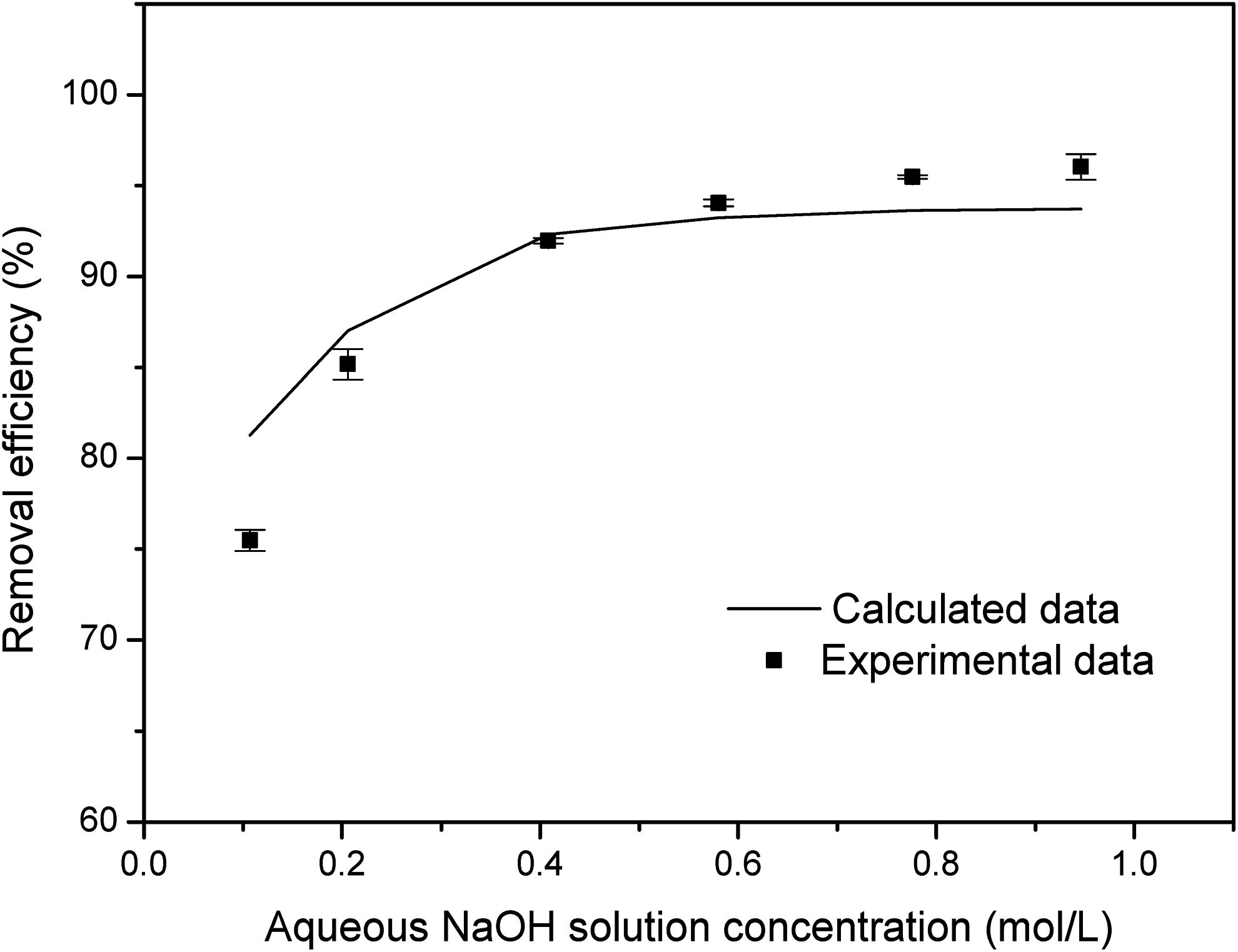
Effect of NaOH concentration on removal efficiency of SO2F2. Gas flow rate: 0.36 m3/h; spray density: 12 m3/(m2 · h); initial SO2F2 volume concentration: 0.50%; and NaOH concentration ranged from 0.11 to 0.96 mol/L.
Effect of inlet SO2F2 volume concentration
The effect of inlet SO2F2 volume concentration on the removal efficiency of SO2F2 was investigated with the constant gas flow rate, spray density, and NaOH concentration. As can be seen from Fig. 5, the inlet SO2F2 volume concentration had almost no influence on the removal efficiency of SO2F2. There was good agreement between the calculated and experimental data. The behavior can be explained by the fact that the chemical absorption of SO2F2 is a fast pseudofirst-order reaction, and NaOH concentration remains almost constant in the absorption process of dilute SO2F2. According to the mass balance [Eq. (6)], inlet SO2F2 volume concentration is unrelated to the removal efficiency η. Meanwhile, it is confirmed that the enhancement factor E is unrelated to the gas concentration in this case.
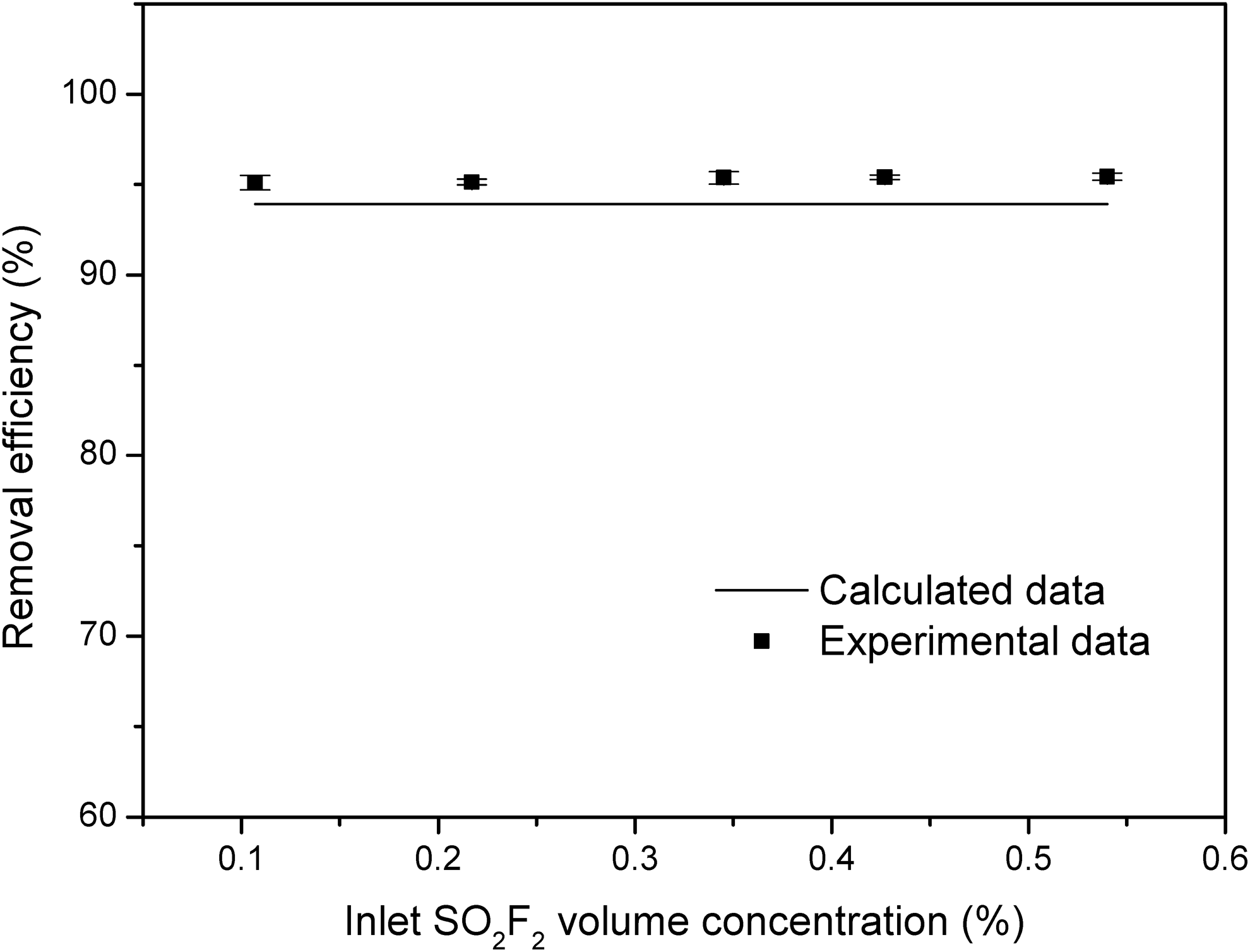
Effect of inlet SO2F2 volume concentration on removal efficiency of SO2F2. Gas flow rate: 0.36 m3/h; spray density: 12 m3/(m2 · h); NaOH concentration: 0.68 mol/L; and initial SO2F2 volume concentration ranged from 0.10% to 0.54%.
Comparison of experimental and calculated data
As shown in Fig. 6, the proposed model expression based on Onda correlations gives a good agreement with the experimental data, since the average relative deviation is 1.9%, and the maximum relative deviation is 8.0%. Thus, the proposed model expression could be used to predict the removal efficiency of SO2F2 in the packed column.
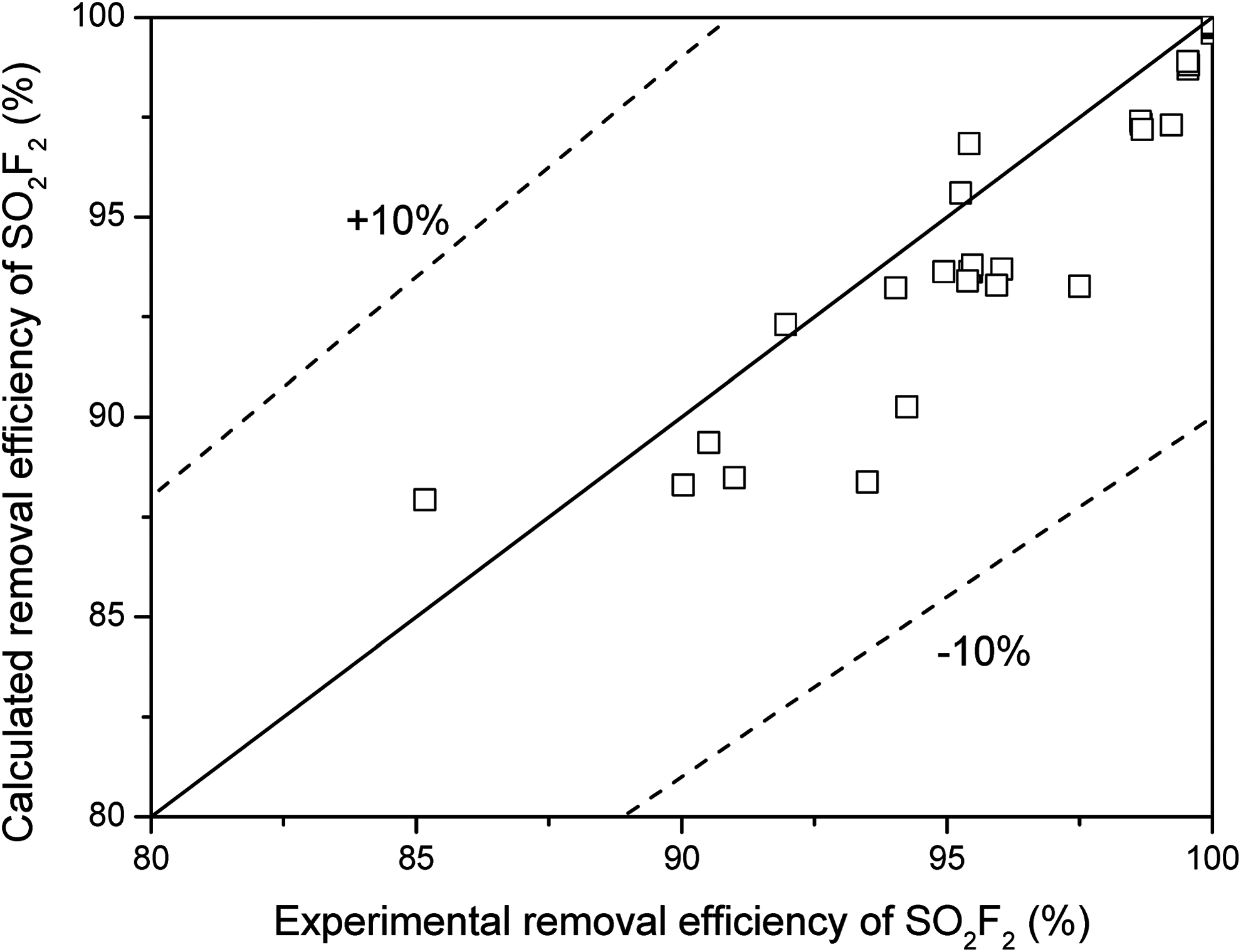
Comparison of experimental and calculated data for removal efficiency of SO2F2.
Products analysis after chemical absorption of SO2F2
Aqueous NaOH solution after chemical absorption of SO2F2 was analyzed using an ion chromatogram, as illustrated in Fig. 7; fluoride ion (F−), sulfate ion (SO42−), and fluorosulfate ion (SO3F−) were detected in the aqueous NaOH solution. The result shows that the overall process for this chemical absorption can be described as follows (Cady and Misra, 1974):
By means of chemical absorption, SO2F2 was removed through Equations (13)–(15) and finally converted to NaF, NaSO3F, and Na2SO4. The salts in the solution could be further recycled by the crystallization method.
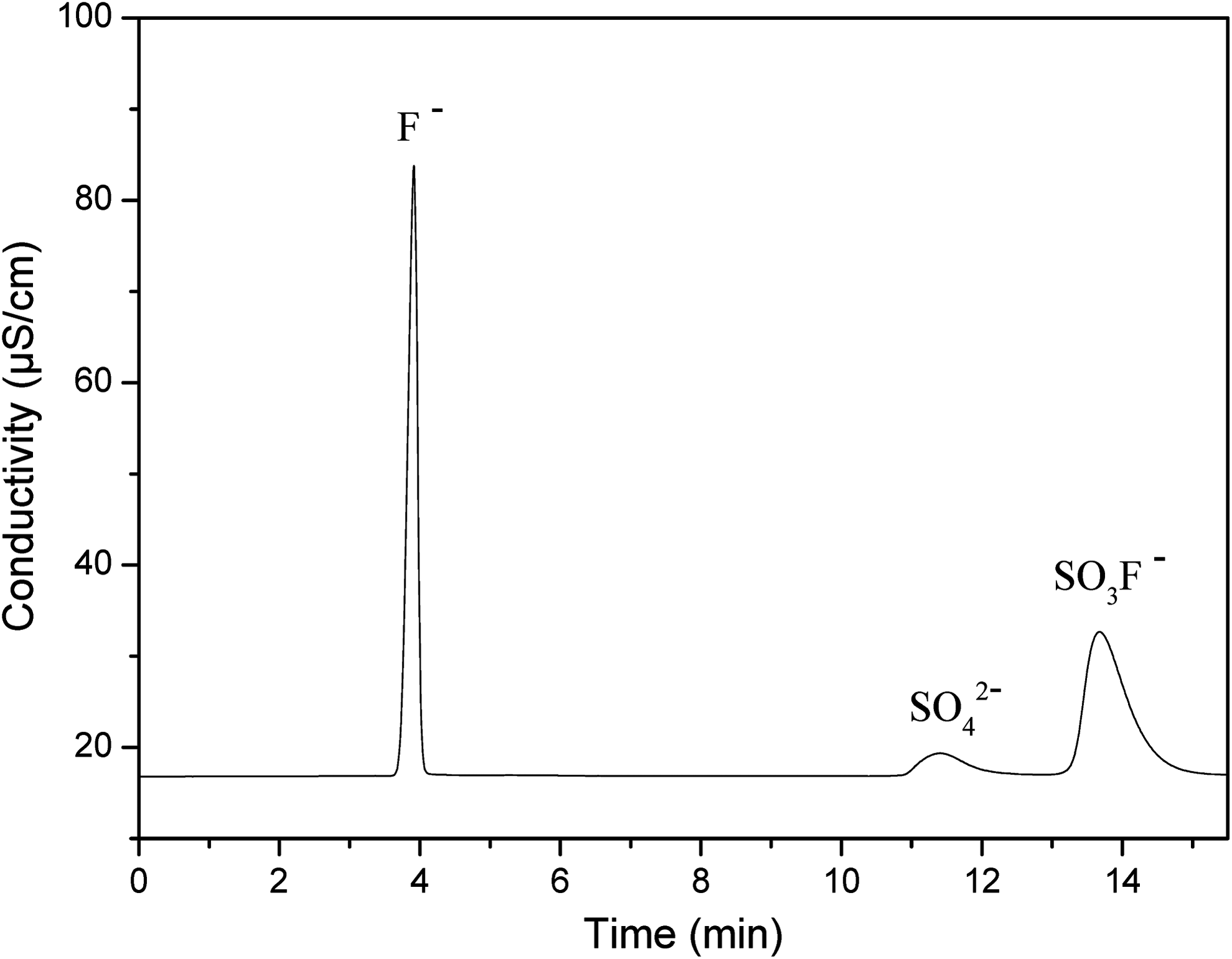
Ion chromatogram spectrum of aqueous NaOH solution after absorption.
Conclusions
(1) At 298.15 K, SO2F2 can be removed with alkaline absorption when inlet SO2F2 volume concentration, spray density, gas flow rate, and NaOH concentration were 0.50%, 12 m3/(m2 · h), 0.12 m3/h, and 0.68 mol/L, respectively.
(2) According to the two-film theory, a mathematical model based on Onda correlations to describe the removal efficiency of SO2F2 was developed. The comparison between the calculated and experimental results showed a good agreement regarding the removal efficiency of SO2F2. The maximum relative deviation is 8.0%.
(3) Results from experiments and the proposed model show that the liquid spray density and NaOH concentration had a positive influence on removal efficiency of SO2F2. However, the gas flow rate had a negative influence on removal efficiency of SO2F2. The inlet SO2F2 volume concentration had almost no influence on the removal efficiency of SO2F2.
Footnotes
Acknowledgments
The financial support from the Natural Science Foundation of China (NSFC) (Grant No. 51107118) and Science and Technology Plan of General Administration of Quality Supervision of the P.R.C. (Grant No. 201010256651.9) are gratefully acknowledged.
Author Disclosure Statement
No competing financial interest exists.