




Abstract
Abstract
Transport of mercury ions (Hg (II)), through a polypropylene (Celgard 2400) supported liquid membrane (SLM), employing trioctylphosphine oxide (TOPO) as carrier and toluene as a solvent, has been investigated. The work was conducted under different operating conditions with respect to feed pH and concentration, carrier concentration, and stripping phase concentration to explore optimum conditions for maximum extraction of Hg (II) ions; 0.2 mol/L was the optimum concentration of TOPO for recovery of mercury. Experiments were conducted in the cotransport mode using hydrazine as the stripping reagent. It was observed that extraction of mercury increased with increase in concentration of hydrazine up to 0.05 mol/L when stirred at 1,500 rpm. Extraction of mercury was about 90%, under optimum conditions in 3 h. The present SLM was found to be stable for about 50 h of use.
Introduction
D
Many conventional processes such as precipitation, coagulation, electrodialysis, adsorption, solvent extraction, chemical oxidation and reduction, and ion exchange have been employed for mercury separation (Yavuz et al., 2006; Ersoz, 2007). Membrane technology has the advantage over other separation technologies in terms of high separation capacity, selectivity, and energy efficiency. On the basis of high selectivity, the liquid membranes (LMs) have received much attention and are now becoming a promising alternative technique for metal removal from aqueous solutions. The use of carriers in the LM process makes it highly selective and, thus, removes only the desired species or toxic contaminants. LM, in general, is a three-phase system in which a homogeneous thin film of organic liquid phase is interposed between two aqueous phases of different concentrations. The desired solute is transferred from one aqueous phase (feed) to another (strip) phase through the LM by the action of the carrier. LMs are generally of two types, that is, supported liquid membrane (SLM) and non-SLM. In SLM, a hydrophobic porous membrane support is impregnated with the carrier solution and then interposed between two aqueous phases. The transport of components occurs by means of the diffusion process (Bansal et al., 2005).
Several studies show pronounced potentials of SLM for the removal of mercury from aqueous solutions. Chakrabarty et al. (2010a) studied the separation of mercury from its aqueous solution through SLM using environment-friendly diluents. Safavi and Shams (1998) reported the efficient method for the transport of Hg (II) through SLM using methyl red as a carrier. The simultaneous removal of arsenic and mercury from natural gas coproduced water using synergistic extractant through the hollow fiber supported liquid membrane (HFSLM) is described by Lothongkum et al. (2011). Chakrabarty et al. (2010b) investigated the synchronized separation of mercury and lignosulfonate through SLM using trioctylamine (TOA) as a carrier. The transport of mercury through different types of LM containing calixarene as carriers was evaluated by Ersoz (2007). Fontas et al. (2005) reported the selective removal of mercury with a benzoylthiourea solid using the SLM system. Shamsipur et al. (2006) illustrated the SLM system for the concurrent separation of silver (I) and mercury (II) from its aqueous solutions. Suren and Pancharoen (2012) and Yoong et al. (2012) applied the HFSLM technique for the separation of lead and mercury ions using different extractants such as D2EHPA, Cyanex 471, Aliquat 336, and TOA.
In the present investigation, an effective study of transport of mercury ions from aqueous effluents of various hospitals in Peshawar, Pakistan, was performed under optimum conditions through an SLM containing trioctylphosphine oxide (TOPO) as a carrier and toluene as a solvent. This investigation was also conducted to probe the performance of TOPO as a carrier in the separation of mercury. Polymeric material such as polypropylene was used as a suitable support for SLM. The effects of concentration of feed, carrier, and stripping phases on the transport of mercury (II) ions have also been explored to optimize the conditions. Moreover, the stability of the SLM was also evaluated.
Experimental Protocols
Chemicals and reagents
All reagents used in this research work were of analytical grade. Aqueous solutions were prepared using double distilled water. Mercuric chloride was obtained from Fluka. TOPO was procured from Sigma-Aldrich. Toluene, hydrochloric acid, and hydrazine were purchased from Merck. The stock solution of mercury (II) (10 mg/L) was made by dissolving 13.54 mg of mercuric chloride and HgCl2 in 1 L of double distilled water. The feed phases of various initial concentrations were prepared from this stock solution by the dilution method. The concentrations of HCl solutions were prepared in the same way. The receiving (or stripping) solution was aqueous hydrazine.
Membrane
In flat sheet SLM, polypropylene film (Celgard 2400) was utilized as support for the organic liquid phase. The physical characteristics of this support material are as follows: 25 μm thickness, 41% porosity, and 0.043-μm mean pore diameter.
Sampling area
Effluents from four different hospitals of Peshawar, Pakistan, were taken for different intervals of time, and the representative sample of each area was selected and analyzed individually. The sample was filtered to remove the suspended particles and subjected to the SLM system without any pretreatment.
SLM cell
The SLM cell (permeator) employed in this endeavor is shown in Fig. 1. It consists of two equal-volume compartments (made of acrylic sheet) connected to each other. The porous support was impregnated with a carrier (TOPO diluted with toluene) and held between the two compartments that act as a medium for solute transport. The respective compartments were filled with 250 mL feed and strip solutions each. The solutions were continuously stirred by mechanical stirrers whose speeds (in rpm) were controlled by voltage regulators. During the process of separation, the solute gets transferred through the membrane from the feed phase to the stripping phase. The effective membrane contact area was 0.0016 m2.
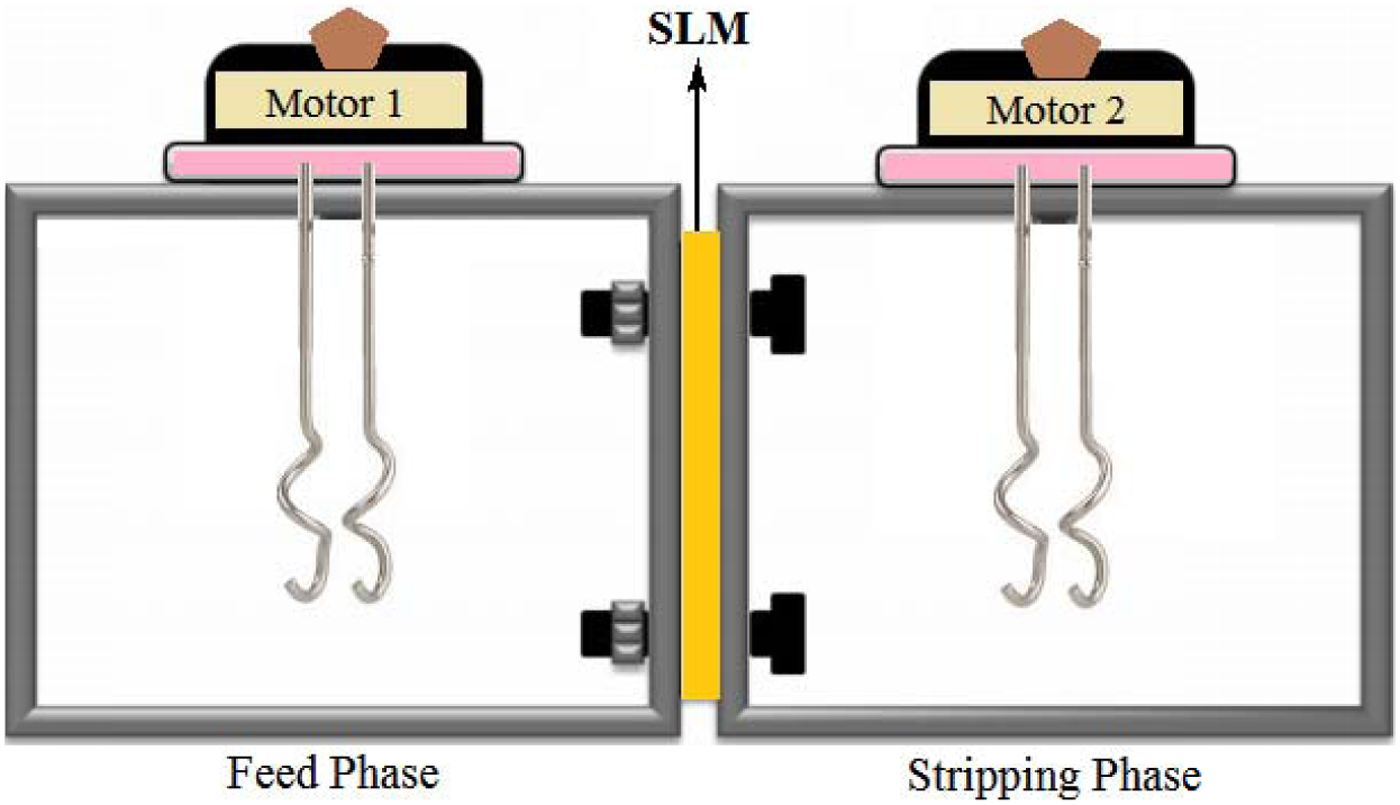
Schematic setup of liquid membrane permeator cell.
Analytical techniques
A UV–Visible spectrophotometer (UV-1602) was employed for the measurement of concentration of mercury ions. The detection limit of mercury ion was ∼0.04 mg/L. A calibration curve was drawn using known concentrations of mercury within the range of 1–100 mg/L (measured at wavelength of 590 nm), and the pH of solutions was monitored with a NEOMET model 200L digital pH meter.
Preparation of SLM
Microporous polymeric support was impregnated by immersing it in the TOPO solution in toluene for 24 h. The pores of the membrane were filled with the solution by capillary action. After impregnation, it was taken out of the solution and then allowed for a few seconds to drip down the extra solution before placing it in the permeation cell.
Experimental technique
SLM transport experiments were carried out in the permeation cell. The volumes of both feed phase and stripping phase were 250 mL each. The solutions were stirred with the speed of 1,500 rpm, which was essential to ensure uniformity of concentration in aqueous phases. Stirring also minimizes the concentration polarization at the membrane interface. Samples from both the aqueous phases were collected intermittently for the analysis of mercury ions.
Analytical procedure
Samples were taken out from the feed and strip solutions at selected time intervals. The concentration of mercury in these samples was determined by the Rhodamine B method as follows (Au Yoong et al., 2012). An aliquot of 1 cm3 Hg (II) solution was transferred to a 25-mL volumetric flask. One milliliter of 10.8 mol/L H2SO4, followed by 1 mL of 0.15 mol/L KI, was added into the solution. After shaking for 1 min, 1 mL of 5 × 10⁻⁴ mol/L of Rhodamine B was added to the mixture. Finally, 5 mL of 1% PVAl (polyvinyl alcohol) was mixed with a solution, diluted up to the mark, and left for 10 min for stabilization. The absorbance of respective solution was measured against blank at 590 nm.
Flux determination
Flux was calculated by the following equation:

where Δt represents the time interval (s).
Transport Mechanism
Feed phase includes mercury chloride and hydrochloric acid, while the membrane phase consists of TOPO diluted with toluene and strip phase contains aqueous solution of hydrazine. The HCl plays a vital role in extraction by forming a mercury-chloro complex as given by Equations (1b) and (2a) below. Kherfan (2011) have reported an enhanced extraction of cadmium using HCl in the feed phase along with the TOPO as a carrier. TOPO has the ability to extract metal ion due to its high polarity. TOPO binds with metal ion as a result of the dipolar phosphorus–oxygen bond. The octyl group of TOPO renders it soluble in low polar solvents such as kerosene, toluene, and so on. (Watson and Rickelton, 1992). Ghazy et al. (2000) have used hydrazine derivatives for mercury extraction. Facon et al. (2011) have used thiourea–hydrazine–sodium hydroxide as a stripping agent for the extraction of metal.
In the extraction process, the solute diffuses through an aqueous feed phase and reacts with extractant to form a complex inside the pores of the solid support membrane at the feed–membrane interface. Due to the concentration gradient, the complex diffuses through the membrane, entering into the stripping phase at the strip–membrane interface.
The reaction on the feed side may be given as follows:
Reaction of HCl with HgCl2 in aqueous solution results in the formation of complex [HgCl2-n]n- as follows (Ali et al., 2015):
The number of chloride ions attached with HgCl2 cannot be predicted at this stage, therefore, we assume n the chloride ions attached with HgCl2 as follows:
where n can be determined experimentally.
[HgCl2+n]n−combines with H+ to form an acid complex [HnHgCl2+n]:
This complex moves toward the feed–membrane interface to react with the carrier molecule, OP(C8H17)3 (Trioctylphosphine oxide; Matsui et al., 1974), at the membrane interface with the following equilibrium reaction:
where the subscript org denotes the presence of species in the organic phase.
The overall reaction at the feed–membrane interface is as follows:
Transport mechanism of Hg(II) ions, therefore, is supposed to be a coupled coion transport type, in which both H+ and complex [HgCl2+n]n− are moving toward the stripping phase across the membrane phase.
The reaction on the strip side may be given as follows.
The complex [Hn HgCl2+n. {OP(C8H17)3}
n
]org is unstable, which immediately dissociates at the strip–membrane interface releasing mercury ions. The Hg(II) ions form a complex with hydrazine (N2 H4) in the stripping phase as follows (Lothongkum et al., 2011):
Theory
The extraction constant for Hg(II) ion in the feed side is given by KHg:
The distribution coefficient of Hg(II) ion λHg, is shown by the following equation:
By inserting the value of distribution constant in Equation (4):
On rearranging Equation (6a) we obtain
According to Fick's First Law, the rate of diffusion dn/dt of metal ions across an area A is known as diffusion flux (J) and it is given by the following equation (Rehman et al., 2012; Khurshid et al., 2015):
where D is the diffusion coefficient, A is the area of the membrane,
If the distribution constants of metal ion between organic and aqueous phases at the membrane face in the feed and strip side are λf and λs, respectively, then
where Cm is the concentration of metal ions in the organic phase, C is the concentration of the same ion in the aqueous phase, and f and s denote the feed and strip phases, respectively.
Considering Fig. 2 and Fick's first law, the concentration gradient dc/dx (or simply Δc/Δx) is negative as Δc is equal to Cmf − Cms, which is positive since Cmf > Cms, whereas Δx is negative as x varies from 0 to x. Since the final value of x is higher than the initial value, that is, 0 − x = −x.
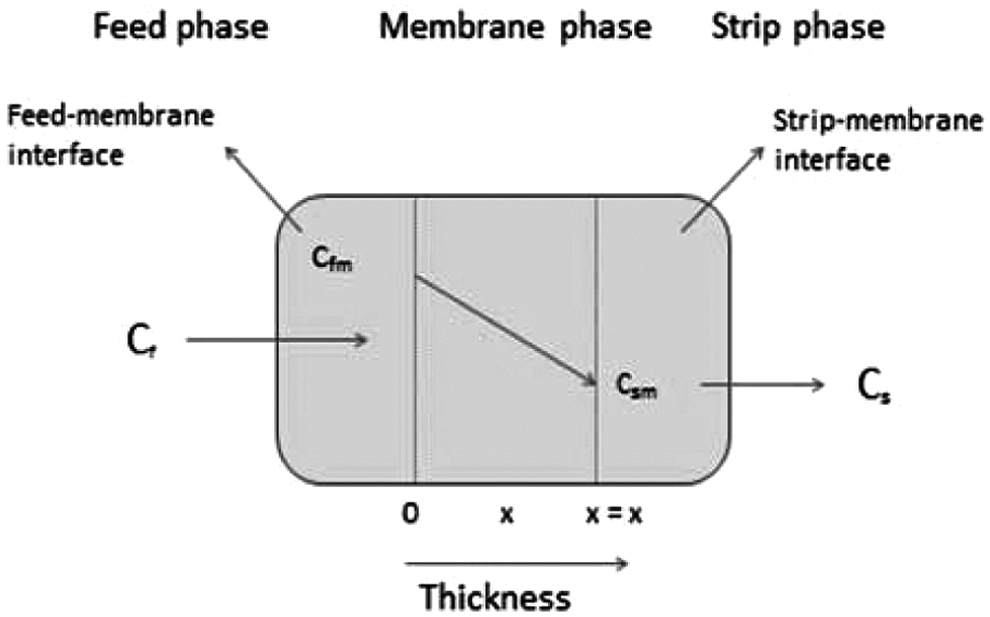
Concentration gradient of mercury ions at the feed and strip sides of the membrane.
Thus,
By the Fick's first law, the rate of flow through the membrane is
The diffusion coefficient D is, therefore, calculated from the measurement of the rate of flow; the area A, thickness x, and concentration difference Cmf − Cms can readily be determined.
From Equations (8) and (9), we obtain the following:
and
In the light of Equations (12) and (13), Equation (11) changes to the following:
As there is no extraction from the stripping phase to membrane phase, λs is taken as 0 and Equation (14) reduces to the following:
And we can consider λf = λHg and Cf = CHg,
where λHg is given by Equation (6b); therefore, Equation (15) can be written as follows:
According to the Wilke–Chang relation
where T is the absolute temperature, η is the viscosity of TOPO solution in toluene, and
Since
Thus Equation (18) reduces to the following:
On rearranging Equation (20), we obtain the following:
Taking log of Equation (21):
Since in a specially designed experiment the concentration of TOPO OP(C8H17)3 was kept constant, thus, Equation (22) reduces to the following:
Here B includes all the constants as mentioned earlier, including log K and [OP(C8H17)3].
Equation (23) can be used to determine the number, n, of TOPO molecules associated with Hg in the form Hn HgCl2+n. {OP(C8H17)3} n . Equation (23) is a straight line equation, in which logJn can be plotted on y axis and log[H+] on x-axis. The slope of this curve will furnish n.
Results and Discussion
Effect of HCl concentration in feed phase on extraction of mercury
In the extraction of Hg2+, HCl plays an important role by providing H+ and Cl− for the formation of Hn HgCl2+n and Hn HgCl2+n. {OP(C8H17)3} n , which are responsible for the transport of Hg2+ ions from the feed phase to stripping phase through a membrane phase. Moreover, Hg2+ ions are made soluble by these complexes in the organic, hydrophobic membrane phase to diffuse through it for entering into the aqueous stripping phase (Kocherginsky et al., 2007).
The concentration range studied for HCl in feed solution was 0.1–2 mol/L (Fig. 3a), while the concentrations of TOPO at 0.05 mol/L in toluene and N2H4 at 0.03 mol/L in the stripping phase were kept constant (Fig. 3b), and the results are presented in Table 1. Figure 3 exhibits a decrease in the concentration of the mercury ions in the feed solution (Fig. 3a), while the same concentration of the HCl corresponding curve shows an increase in the concentration of mercury ions in the strip phase with the passage of time (Fig. 3b). Moreover, as can be observed from Fig. 3b, with the increase in the concentration of HCl, the extraction increases up to 1 mol/L HCl while it decreases thereafter. The decrease in the extraction is due to the excess amount of H+ ions, which suppresses the extraction. The Cl−/Hg2+ ratio may have a significant effect on extraction efficiency; fewer Cl− ions result in the formation of HgCl+, while excess leads to the production of HgCl3−or HgCl42− (Chakrabarty et al., 2010a). At very high concentrations, common ion effect steers the reaction in the reverse direction and inhibits the formation of Hg-TOPO complex. Thus, 1 mol/L HCl concentration is optimum for the extraction of mercury ions.
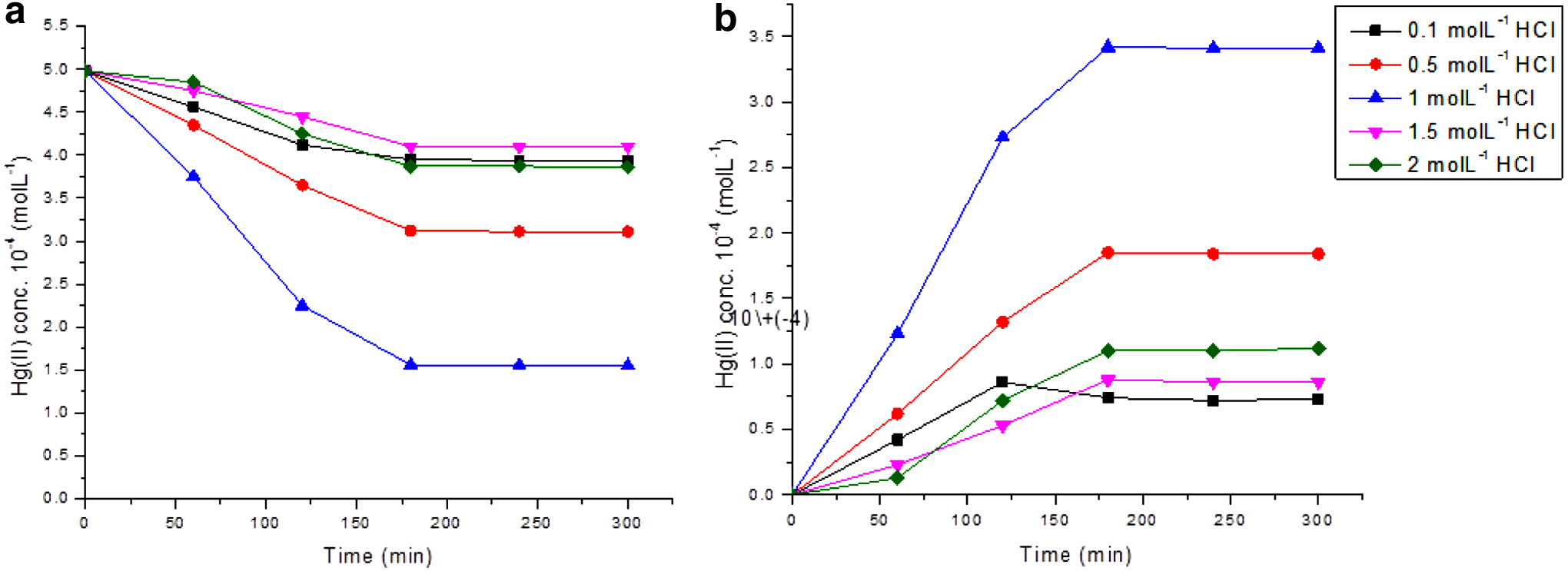
Variation in the Hg (II) ion concentration with time in
Change concentration of Hg (II) ions (mg/L).
The flux of Hg (II) is directly proportional to the [H+] as indicated by Equation (23) and shown in Fig. 4. The data of flux values are shown in Table 2. The flux increases as the concentration of HCl increases and reaches to a maximum value at 1 mol/L HCl and then decreases thereafter. This trend is consistent with the variation in the concentration of the HCl as discussed earlier.
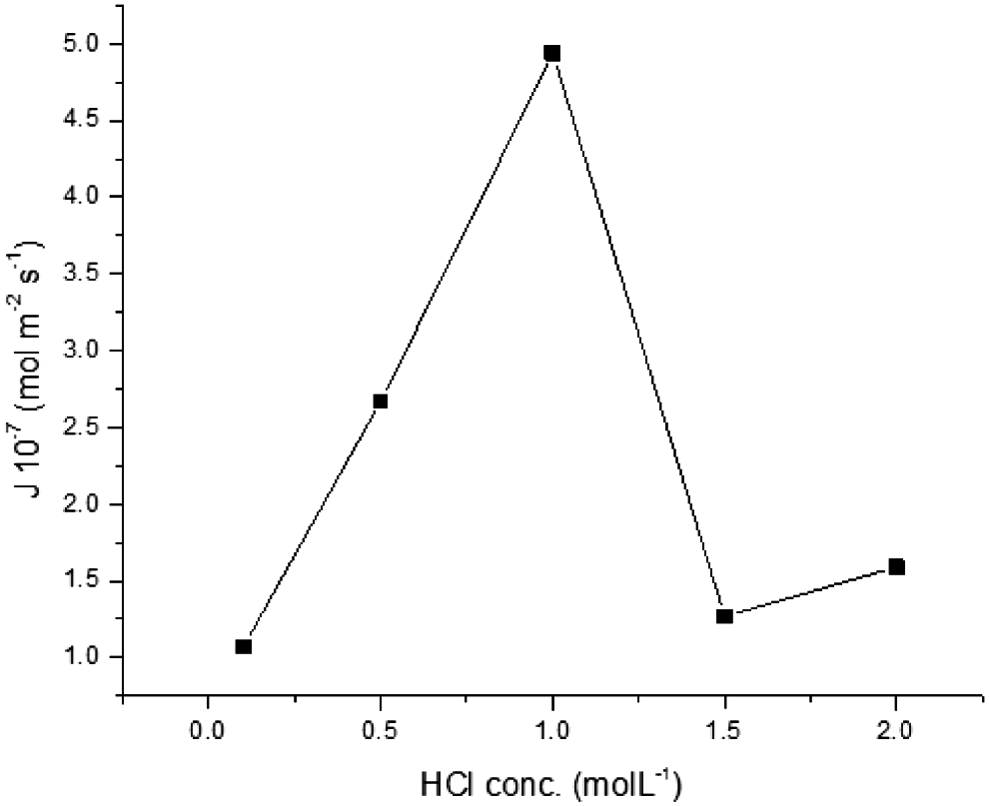
Effect of HCl concentration on Flux. (Hg (II) ion conc.: 4.98 × 10⁻⁴ mol/L, HCl conc.: 0.1–2 mol/L, N2H4 conc.: 0.03 mol/L, TOPO conc.: 0.05 mol/L).
The pH of feed solution was measured by keeping the HCl concentration at the optimum value, that is 1 mol/L, at different time intervals to investigate the behavior of H+ ions (Fig. 5). It can be noted from Fig. 5 that an increase in the pH is observed upto the 180th minute, which becomes constant subsequently. The decrease in pH reveals that the protons of feed solution are being utilized by carrier (TOPO) molecules to convert it into a charged species by protonation at the feed–membrane interface.

Variation in pH of feed solution with time. (Hg (II) ion conc.: 4.98 × 10⁻⁴ mol/L, HCl conc.: 1 mol/L, N2H4 conc.: 0.05 mol/L, TOPO conc.: 0.1 mol/L).
Determination of n
The number of H+ in the proposed Hg-TOPO complex was determined using Equation (23). Keeping the CHg and [TOPO] constant, the plot of log Jη versus log [H+] gives a straight line, which furnishes the value of n from its slope. The calculated slope (0.996 ≈ 1) indicates that 1 mol of H+ [Eq. (2a)] and Cl− [Eq. (1b)] is involved in the complex formation.
Thus, we can say that the mercury-chloro complex, [Hn HgCl2+n], supposed to be present like [HHgCl3] and the number of TOPO molecules, is also one as given in the mercury-TOPO complex Hn HgCl2+n. {OP(C8H17)3} n . Hence, the formula of Hg-TOPO complex can safely be written as HHgCl3. OP(C8H17)3.
From the above-mentioned discussion, Equation (2b) can be written as follows:
Consequently, this equation gives the stoichiometry of the mercury-TOPO complex formation.
Effect of Hg (II) ion concentration on extraction
The concentration range of 1.28–2.49 × 10⁻⁴ mol/L was investigated for extraction of mercury ions in the feed solution. The concentration of HCl in the feed solution was adjusted at 1 mol/L, N2H4 in the stripping solution at 0.03 mol/L, and TOPO in the membrane phase at 0.05 mol/L. It was noted that the extraction increases with the increase in the Hg (II) ion concentration, and a maximum extraction was observed at 4.98 × 10⁻⁴ mol/L Hg (II) ion concentration (Fig. 6a, b). Various species taking part in extraction involved equilibrium reactions between them. Since the equilibrium constants for these reactions have not been evaluated, therefore, the exact concentration of these species is not known. The optimum concentration of mercury, that is 4.98 × 10⁻⁴ mol/L, can be attributed to the stoichiometric limitation of the concerned reaction, which cannot be specified due to the reason that the value of equilibrium constants is not known. Stoichiometric limitation might have its role in reactions in the feed, membrane, or strip phases or interrelated/interdependent on these phases.
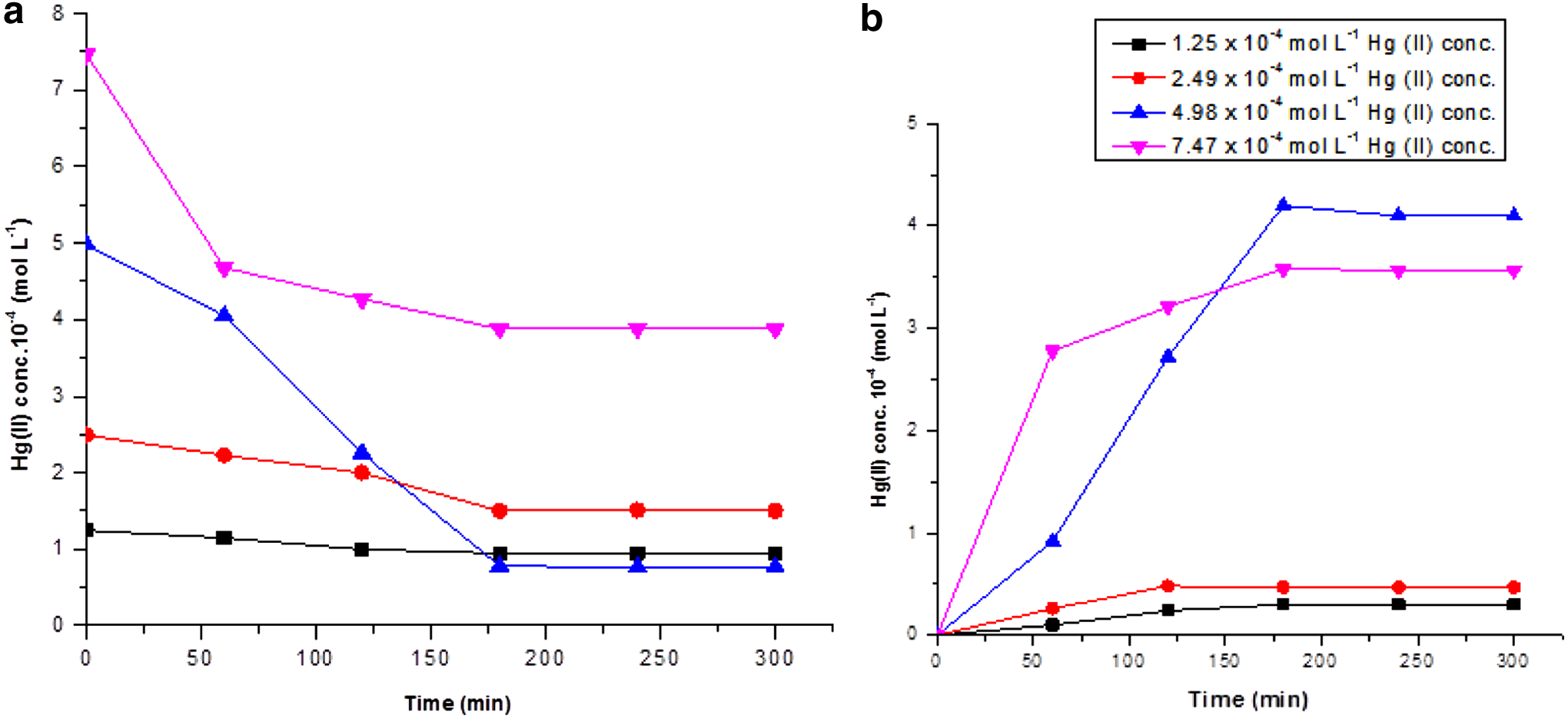
Variation in the Hg (II) ion concentration with time in
The flux is a function of the feed concentration; therefore, when the concentration of mercury ion increases, the flux value also increases and attains a maximum value of 6.07 × 10⁻⁷ mol · m2 · s at 4.98 × 10⁻⁴ mol/L Hg (II) ion concentration, as shown in Fig. 7. However, beyond 4.98 × 10⁻⁴ mol/L, the flux value decreases due to reasons as discussed earlier.
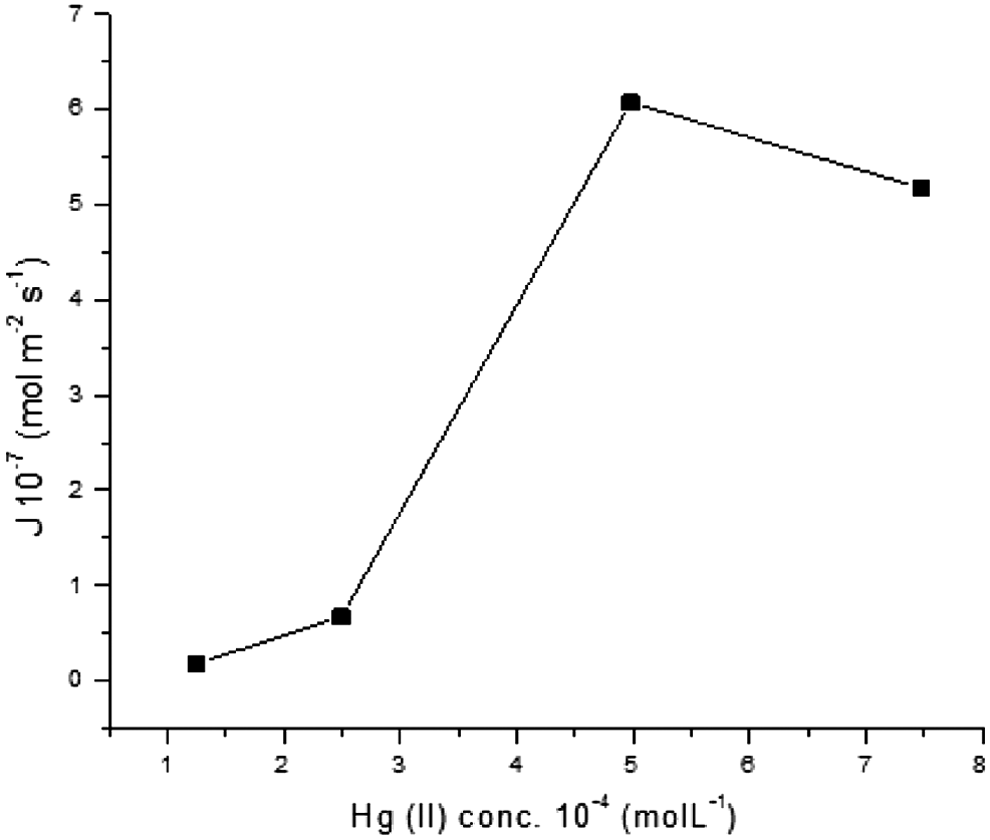
Effect of Hg (II) ion concentration on Flux. (Hg (II) ion conc.: 1.25–7.47 × 10⁻⁴ mol/L, HCl conc.: 1 mol/L, N2H4 conc.: 0.03 mol/L, TOPO conc.: 0.05 mol/L).
Effect of TOPO concentration
The effect of TOPO concentration on extraction of mercury (II) is presented in Fig. 8a and b. With the increase in concentration of TOPO, extraction of mercury (II) ions also increases due to the formation of complex, Hn HgCl2+n. {OP(C8H17)3} n . The optimum concentration of TOPO is 0.2 mol/L at which maximum extraction was achieved (Fig. 8b), beyond which a decrease in extraction was observed. The flux value increases with the increase in the concentrations of TOPO, reaches to a maximum at 0.2 mol/L, and decreases thereafter, as indicated in Fig. 9. This may be due to an increase in the organic phase viscosity on increasing the TOPO concentration that hampers the transport of the mercury complex through the membrane (Rehman et al., 2011).

Variation in the Hg (II) ion concentration with time in
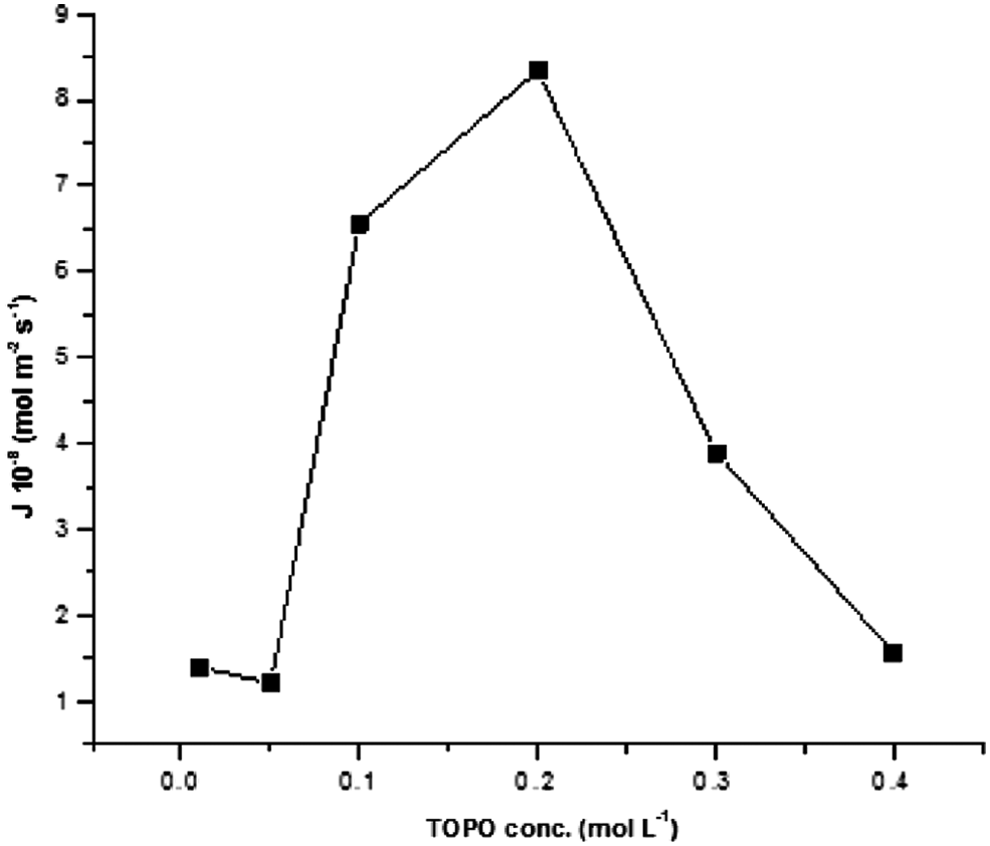
Effect of TOPO concentration on Flux. (Hg (II) ion conc.: 4.98 × 10⁻⁴ mol/L, HCl conc.: 1 mol/L, N2H4 conc.: 0.03 mol/L, TOPO conc.: 0.001–0.4 mol/L).
Effect of hydrazine concentration
Hydrazine sulfate is a versatile ligand, which forms a wide variety of complexes with various metal ions (Bottomley, 1970). In this experiment, we have used hydrazine as a stripping agent in the strip phase. To study the effect of hydrazine concentration on the extraction of mercury, different concentrations of hydrazine ranging from 0.01 to 0.06 mol/L were employed keeping 1 mol/L HCl and 4.98 × 10⁻⁴ mol/L Hg (II) ions in the feed solution and 0.2 mol/L TOPO in the membrane constant. The results are illustrated in Fig. 10a and b.
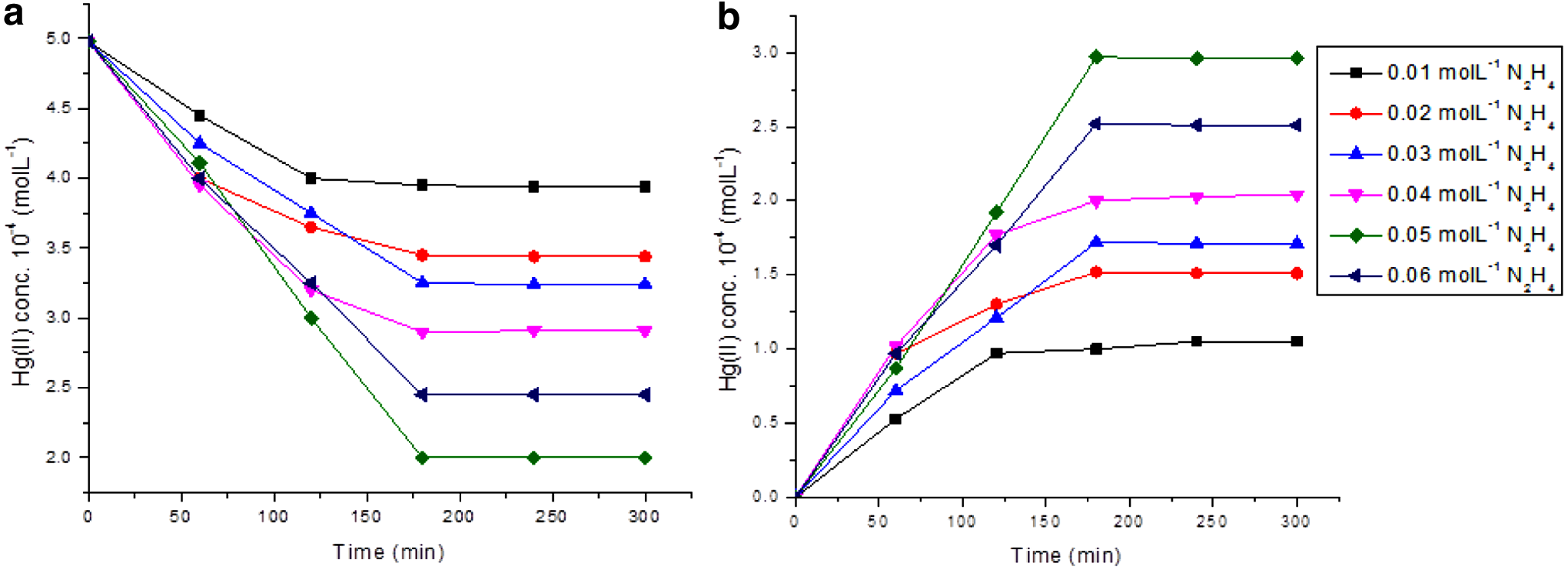
Variation in the Hg (II) ion concentration with time in
It has been observed that on increasing hydrazine concentration, extraction of mercury rises and reaches a maximum value at 0.05 mol/L of hydrazine. Below 0.05 mol/L, fewer hydrazine molecules were available to form a complex with mercury. Above 0.05 mol/L hydrazine, the extraction abruptly decreases, which might be due to overcrowding of hydrazine molecules at the stripping-membrane interface forming a layer of complex over the membrane surface, clogging membrane pores, and reducing mercury extraction. Consequence, 0.05 mol/L hydrazine concentration was considered as optimum for the extraction of mercury. At the strip membrane interface, the mercury-TOPO complex dissociates and reacts with hydrazine in the following way:
Figure 11 exhibits the flux profile with hydrazine. At the beginning, the flux increases slowly, reaches maximum at 0.05 mol/L concentration, and subsequently declines very sharply. This trend clearly indicates that at a higher concentration, more of the mercury–hydrazine complex is deposited over the membrane surface, resulting in the blockage of membrane pores, thus flux is decreased.
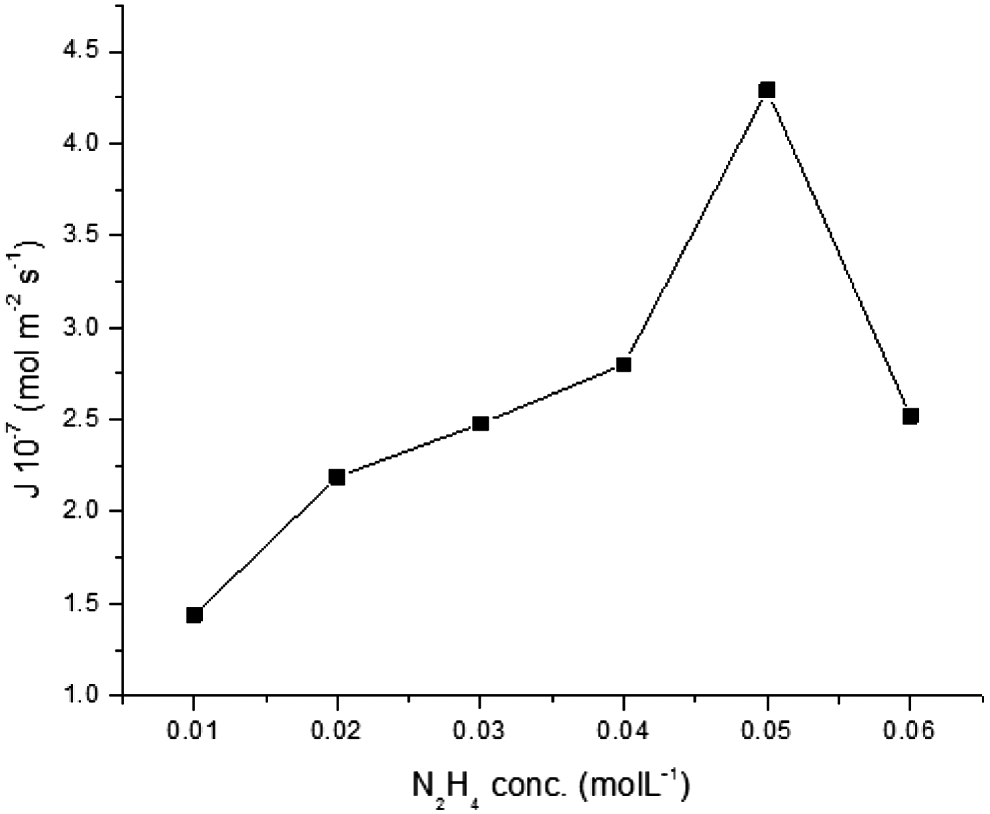
Effect of N2H4 concentration on Flux. (Hg (II) ion conc.: 4.98 × 10⁻⁴ mol/L, HCl conc.: 1 mol/L, N2H4 conc.: 0.01–0.06 mol/L, TOPO conc.: 0.2 mol/L).
SEM analysis
Morphology of the SLM (Celgard 2400) before and after the extraction is reproduced in Fig. 12. It is observed that before extraction, the surface of membrane is smooth having some irregular cracks at 40,000 magnifications (Fig. 12a). After the extraction process, the complex (Hg-N2H4) gets deposited on the membrane surface that entails the blockage of membrane pores as shown in Fig. 12b, even at a low magnification of 20,000 (Mitiche et al., 2008).
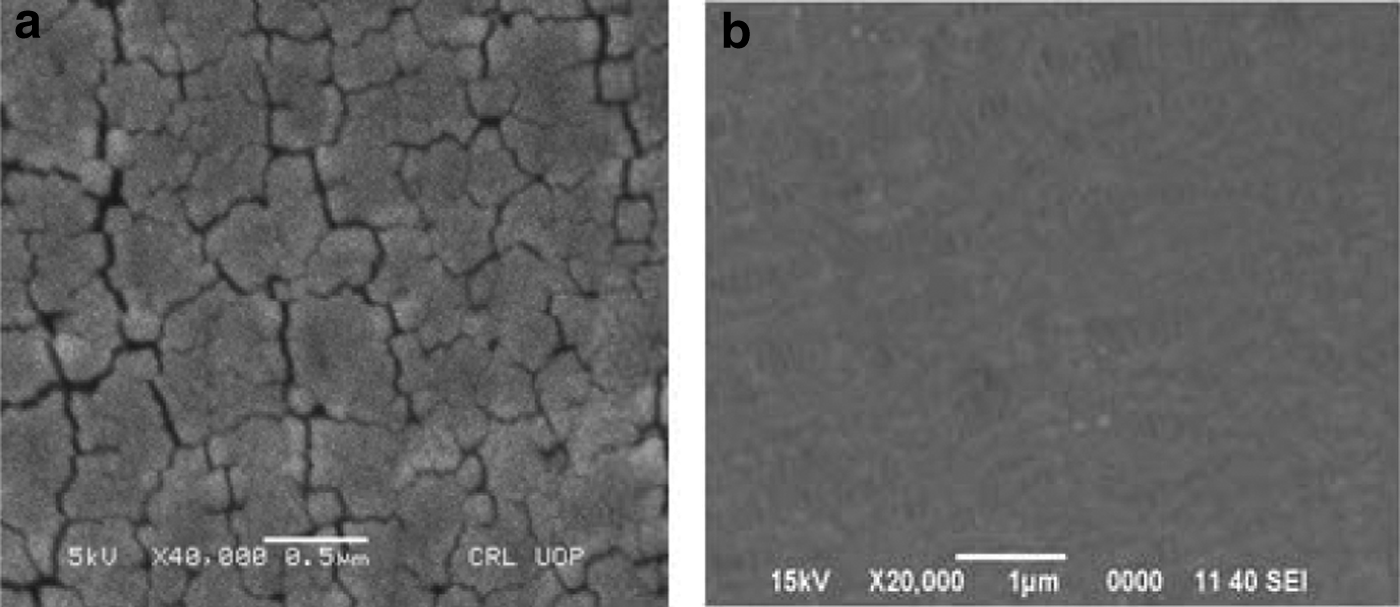
SEM image of membrane.
Extraction time
Figure 13 depicts the extraction time for mercury ion. At optimum conditions, the concentration of mercury ions in the feed phase decreases with the passage of time. As illustrated in the Fig. 13, the concentration of mercury ions increases in the strip phase with the passage of time and attains maximum value at the 180th minute where the extraction was found to be about 90%. Thus, 180 min is the optimum extraction time for the transport of mercury ions.
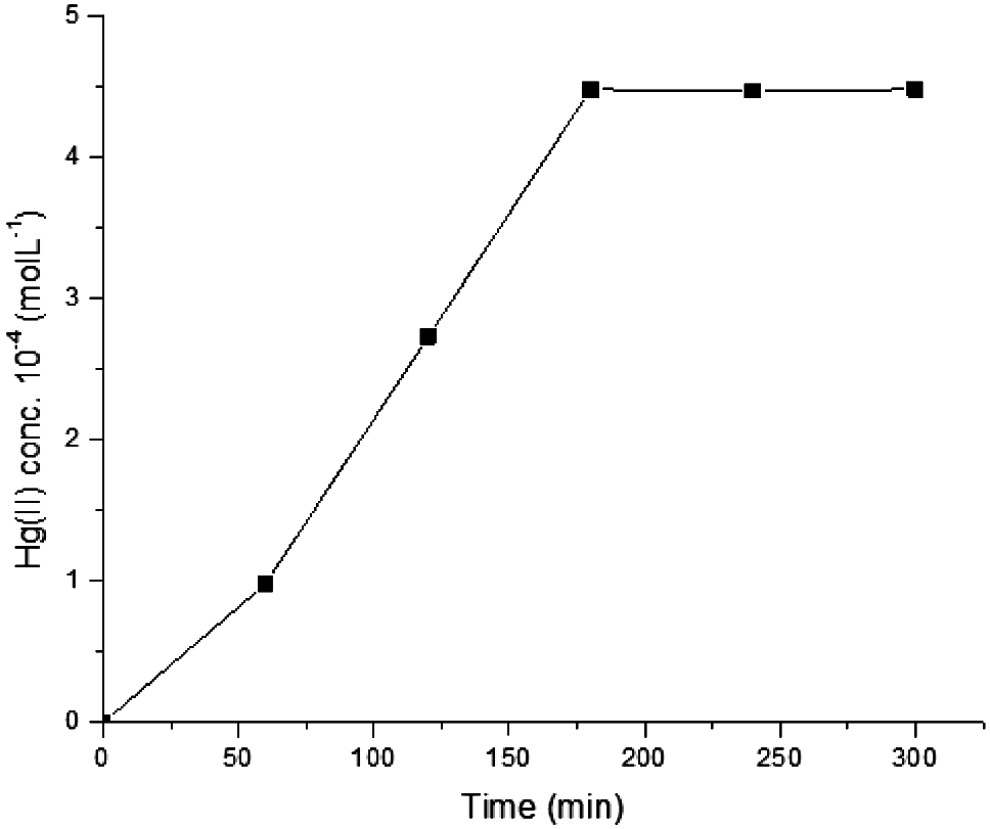
Variation in Hg (II) ion concentration with time. (Hg (II) ion conc.: 4.98 × 10⁻⁴ mol/L, HCl conc.: 1 mol/L, N2H4 conc.: 0.05 mol/L, TOPO conc.: 0.2 mol/L).
Stability of membrane
Stability of SLM was investigated in terms of carrier loss from the solid support (Zha et al., 1995). To observe the stability of polypropylene–TOPO–toluene, SLM, 10 independent extraction experiments (1 experiment each day) were carried out at optimum experimental conditions, that is, Hg (II) ion concentration at 4.94 × 10⁻⁴ mol/L along with 1 mol/L HCl in the feed solution, 0.2 mol/L TOPO in the membrane phase, while 0.05 mol/L N2H4 was taken in the strip phase when maintaining stirring speed at 1,500 rpm. Each experimental run was of 5 h duration using the same membrane impregnated only once; however, solutions into feed and stripping compartments were replaced with fresh ones for every experiment. Between the successive experiments, the cell compartments were filled with distilled water to avoid dryness. The results reveal (Fig. 14) that in all these experiments 90% extraction was observed, which is an indication of stability of the membrane. Thus, these series of experiments prove that the membrane is stable for 50-h use.
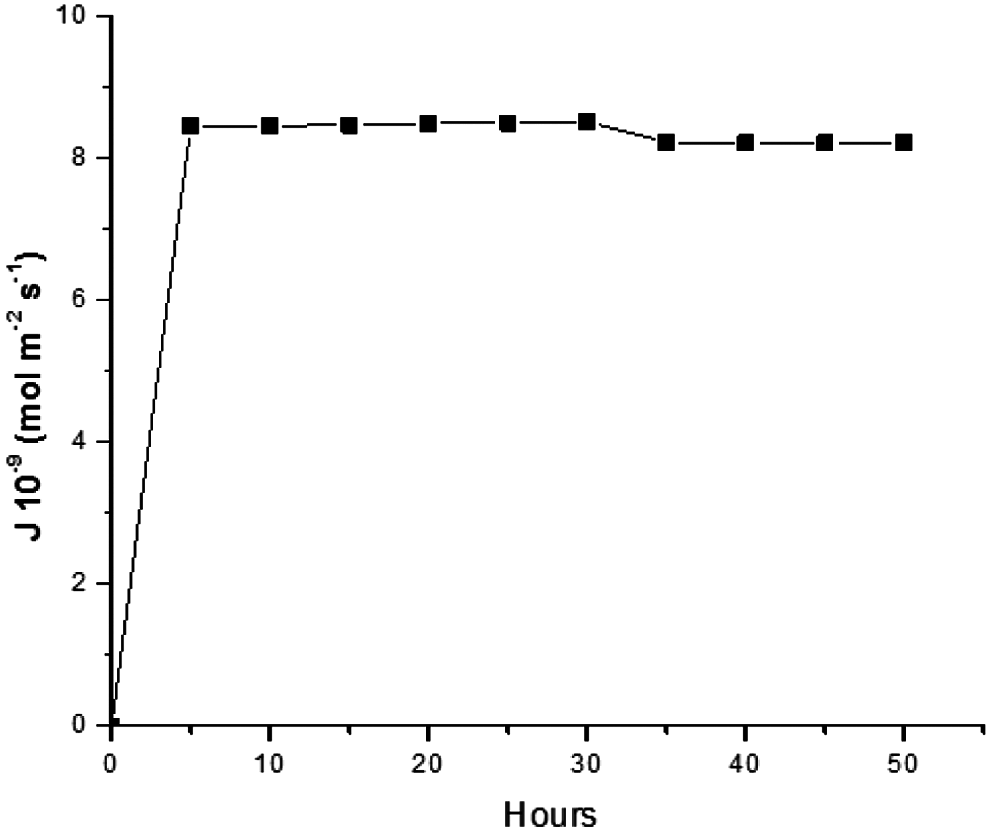
Stability of supported liquid membrane, flux versus time. (Hg (II) ion conc.: 4.98 × 10⁻⁴ mol/L, HCl conc.: 1 mol/L, N2H4 conc.: 0.05 mol/L, TOPO conc.: 0.2 mol/L).
Extraction of Hg (II) ions from hospital effluent
The present SLM designed for Hg (II) ion extraction shows efficient transport ability. One of the major applications of mercury is its use as amalgam in the hospitals. The optimized SLM was employed for the removal of mercury from four different hospital effluents. The effluent samples from each hospital were first filtered with Whatman filter paper to remove the suspended particles. The filtrate (80 mL) was diluted with distilled water up to 250 mL and analyzed spectrophotometrically before subjecting the sample for extraction. The extraction was carried out at the optimum experimental conditions as described earlier. Ninety percent Hg (II) was removed from all the samples under these conditions. The analytical results of the strip solution of the hospital waste water show that some other metals were also extracted along with the mercury ions (Fig. 15). The data are represented in Tables 3 and 4.

Variation in the Hg (II) ion concentration with time in feed and strip solution (Hospital wastewater in feed) (Hg (II) ion conc.: 4.69 × 10⁻⁴ mol/L, HCl conc.: mol/L, N2H4 conc.: 0.05 mol/L, TOPO conc.: 0.2 mol/L).
AE, after extraction; BE, before extraction; Hospital-I, University Town; Hospital-II, University road; Hospital-III, Hayatabad; Hospital-IV, Charsadda road.
Conclusion
TOPO–toluene-based flat-sheet SLM system was utilized for transport of Hg (II) ions. The effect of concentration of HCl, TOPO, mercury ions, and hydrazine along with extraction time on the extraction of Hg (II) was investigated. The results reveal that maximum extraction of mercury was achieved in 180 min at a carrier concentration of 0.1 mol/L, 4.98 × 10⁻⁴ mol/L of mercury in the feed concentration, 1 mol/L of HCl, 0.05 mol/L concentration of hydrazine (N2H4) in the stripping phase, and at a stirring speed of 1,500 rpm. The present SLM was found to be stable for about 50 h of use. Under optimum conditions, this SLM was employed for the extraction of metal ions from the hospital effluents, and ∼90% Hg (II) ion extraction was achieved.
Footnotes
Acknowledgment
The authors are thankful to the Higher Education Commission (HEC), Pakistan, for funding this project and providing PhD scholarship to one of the authors (R.N.).
Author Disclosure Statement
No competing financial interests exist.