




Abstract
Abstract
Removal of effluent organic matter (EfOM) from a wastewater secondary effluent by aluminum sulfate (alum) coagulation and its effects on haloacetic acid (HAA) formation were studied in the range of alum dose 0–120 mg/L and the pH range 4.0–9.0. Surrogate parameters, such as dissolved organic carbon (DOC), UV254, specific UV absorbance (SUVA), and fluorescence regional integration method were employed to evaluate organic removal efficiency. Results indicated that incomplete coagulation noticeably increased HAA formation in treated effluent and that enhanced coagulation significantly reduced disinfection byproducts (DBPs) precursors. pH control was more important for reducing DBP formation than coagulant dosage in terms of precursor removal from the EfOM. Under the same coagulation conditions, removal efficiencies of DOC, UV254, and SUVA were very different, but all reached their maximum values at pH 6. Removal efficiency of EfOM by coagulation was not as high as that reported for natural organic matter removal in water treatment. This is likely due to the unique nature of the EfOM characterized by the inclusion of soluble recalcitrant microbial products in the effluent. In contrast to what was observed in water treatment, UV254 was found to be a better indicator for the precursor of HAA formation for the wastewater effluent. Dichloroacetic acid and trichloroacetic acid were the major species generated following chlorination of both the raw and treated effluent. Presence of bromide and iodide ions in solution increased formation of fractions of bromo- or iodoacetic acids and also total haloacetic acids (THAA) following chlorination after alum coagulation at all pH values. Minimum THAA formation was observed at the optimum coagulation pH of 6 regardless of addition of bromide ions and iodide ions.
Introduction
C
A number of studies have shown that the effluents possess high disinfection byproduct formation potential (DBPFP) from chlorination due to the high concentrations of dissolved organic carbon (DOC) (Chen et al., 2008; Liu and Li, 2010; Liu et al., 2014). Waters with higher organic matter concentrations are found to produce more DBPs during chlorination (Gang et al., 2005; Chen et al., 2008). Specific isolated fractions of EfOM and their correlated DBP formation have been also reported. Hydrophobic organics, especially hydrophobic acids, showed higher DBPFP (Ma et al., 2001; Zhang et al., 2009). Compared with drinking or natural water, pathogen levels are higher. Thus more chlorine is necessarily added, which leads to increased DBP formation in the effluents (Shon et al., 2006). In addition, wastewater secondary effluents contain inorganic substances such as ammonia, nitrite, bromide, and iodide, which would also affect DBP formation (Xue et al., 2008; Sun et al., 2009).
Apart from trihalomethanes (THMs), significant attention has been also focused on haloacetic acids (HAAs) during the last decades. These substances are potentially carcinogenic and mutagenic materials, and developmental and reproductive toxins (Tao et al., 1998), which are regulated by the United States (U.S.) Environmental Protection Agency (EPA) under the Disinfectants/DBP Rule for drinking water (U.S. EPA, 1998). Their disposal should be controlled because of their hazardous impact on the natural water environments (Cahill and Seiber, 2000). There are nine major HAAs, namely monochloroacetic acid (MCAA), monobromoacetic acid (MBAA), dichloroacetic acid (DCAA), bromochloroacetic acid (BCAA), dibromoacetic acid (DBAA), trichloroacetic acid (TCAA), bromodichloroacetic acid (BDCAA), chlorodibromoacetic acid (CDBAA), and tribromoacetic acid (TBAA). Similar to the formation of chloroacetic acids and bromoacetic acids (Br-HAAs), iodoacetic acids (I-HAAs) could be formed during chlorination or chloramination, particularly when raw source water contains iodide or iodinated compounds (Smith et al., 2010; Duirk et al., 2011). I-HAAs have been found in drinking waters at ng/L to μg/L levels and monoiodoacetic acid (MIAA) was the most genotoxic and cytotoxic within the group (Krasner et al., 2006).
Removal of organic precursors before chlorination could reduce DBP formation. In wastewater treatment and disposal, after the biological treatment processes coagulation and flocculation followed by sedimentation and filtration are the most common and economical processes for the removal of DBP precursors (Jacangelo et al., 1995). The U.S. EPA has suggested that enhanced coagulation and granular activated carbon adsorption are the most viable technologies to control the formation of DBPs in conventional treatment processes (U.S EPA, 1998). A number of studies have shown that coagulation and the subsequent separation processes could significantly remove the organic carbon and reduce THM formation potential (THMFP) (Krasner et al., 2008). Coagulation can effectively remove high molecular weight hydrophobic organic matter, which tends to have high THMFP (Sharp et al., 2006b; Bond et al., 2010). Coagulation does not remove bromide or iodide ions, consequently increasing the ratio of halides to DOC. This could lead to preferential formation of brominated or iodinated DBPs, which are more toxic than their chlorinated analogs (Plewa et al., 2002; Richardson et al., 2007). A systematic study on the removal of EfOM by alum coagulation and its effect on the reduction of HAA formation would provide more useful information for wastewater secondary effluent treatment and quality management.
The objectives of this research are as follows: (1) to evaluate the effects of the coagulant dosage and solution pH on the EfOM removal and HAA formation in wastewater secondary effluent; (2) to examine the correlations between the different types of HAA formation and the surrogate parameters; and (3) to investigate the effects of bromide ion and iodide ion on HAA formation and speciation.
Materials and Methods
Materials
Aluminum sulfate (Guaranteed Reagent, GR) was obtained from Xi'an Chemicals Ltd. Sodium hypochlorite solution (Analytical Reagent, AR, 5%), hydrochloric acid (GR, 36–38%), sulfuric acid (GR, 98%), sodium hydroxide (GR), and ascorbic acid (AR) were purchased from Sinopharm Chemical Reagent Co. Ltd. A mixed standard solution of the nine HAAs (MCAA, MBAA, DCAA, BCAA, DBAA, TCAA, BDCAA, CDBAA, and TBAA) (2,000 mg/L for each individual compound, ≥99%) and MIAA (≥99.5%) were obtained from Sigma-Aldrich Corporation. Methanol (High Performance Liquid Chromatography [HPLC] grade) and formic acid (HPLC grade) were obtained from Merck Chemicals. Ultrapure water (18.2 MΩ cm, total organic carbon [TOC] ≤1 μg/L) was produced by an Elga Purelab Ultra Analytic system. All the glassware used in the experiments was cleaned using a standard method (Domino et al., 2003).
Instruments and measurement methods
Coagulation experiments were carried out using a multistage standard jar test apparatus (JJ-4C; Suzhou Weier Experiment Equipments Co. Ltd.). Zeta potentials of the coagulated suspensions were measured with a Zetasizer analyzer (Nano ZS). The pH of water samples was measured by a pH meter (PHS-3C) and the results were reported with an error of ±0.05. The UV absorbance at 254 nm (UV254) was analyzed in accordance with APHA Standard Methods 5910 B (Eaton et al., 1995) using a UV-vis spectrometer (DR5000; HACH) with a 10 mm quartz cuvette. Fluorescence spectra of water samples were measured using a fluorescence spectrometer (FP-6500; JASCO). All samples were diluted five times and acidified to pH 7 with HCl to reduce the fluorescence intensities to below the detection limit (1,000 arbitrary units), with a background electrolyte of 0.01 M KCl. The reading for a blank solution (0.01 M KCl solution in ultra-pure water) was subtracted from the spectra of the samples. DOC was analyzed using a TOC analyzer (TOC-V CPH; Shimadzu) with APHA Standard Methods 5310 D (Eaton et al., 1995). Specific UV absorbance (SUVA) is defined as the value of UV254 absorbance expressed in m−1 divided by the DOC concentration in mg/L. Samples were filtered through prerinsed 0.45 μm polyether sulfones (PES) membrane filters before UV254, DOC and fluorescence spectral analysis. Free residual chlorine was measured based on the APHA Standard Methods 4500-Cl G (Eaton et al., 1995). The concentrations of bromide and iodide in water samples were detected by inductively coupled plasma mass spectrometry (Elan-DRCe; Perkin-Elmer). HAAs were determined using a method developed in this laboratory based on ultra-performance liquid chromatography tandem mass spectrometry (Acquity TQD) (Duan et al., 2013, or see section “Haloacetic acids analytical methods” in Supplementary Data).
Sample preparation
Effluent samples were taken from the secondary sedimentation tank of Xi'an No.2 municipal wastewater treatment plant. The plant has a capacity of 120,000 m3/day, and consists of two grilles, a grit and aerobic chamber, a bio-denipho process, and secondary settling tanks (Duan et al., 2012b). The samples were collected in amber-colored glass bottles sealed with polytetrafluoroethylene (PTFE)-lined screw caps and shipped to the laboratory on the same day. The samples were kept in the absence of light and stored in a refrigerator at 4°C. All the samples were collected at one time and used for all the experiments in this study within 4 weeks. The characteristic quality of wastewater secondary effluent was analyzed based on the APHA standard methods (Eaton et al., 1995) and the averaged values of triplicate measurements are summarized in Table 1.
SD, standard deviation.
Coagulation and chlorination procedures
Coagulation experiments were conducted in a 500 mL beaker on a jar test apparatus with water bath. After a few minutes of hand-shaking of the stock bottle, 300 mL of the raw water was transferred to the beaker and the water samples from the refrigerator were allowed to equilibrate to water bath temperature (20°C) before testing. The pH was adjusted using predetermined amounts of HCl and NaOH before adding the coagulant and rapid stirring for 30 s at 500 rpm. After addition of alum, the solution was mixed for 1 min at 500 rpm followed by slow mixing at 50 rpm for 15 min and 1 h of quiescent settling. A 5 mL sample was taken for measurement of the zeta potentials of the coagulated suspension immediately after the fast mixing; a final pH value was taken at the end of the slow mixing and reported with an error of ±0.05. A 200 mL sample was taken at the end of the settling period and filtered through a PES membrane filter (0.45 μm pore size). A small part of the filtrate was used for measurement of UV254, DOC and fluorescence spectra to evaluate the removal efficiencies and the rest of it was used for chlorination. Note that the dosages of alum were calculated as mg/L Al2(SO4)3. All the experiments were repeated twice and the average values for each condition were reported.
Chlorination was carried out at pH 7.0 ± 0.2 with 1 mmol/L phosphate buffer following APHA Standard Methods 5710 (Eaton et al., 1995). In an amber flask, sodium hypochlorite was added into 100 mL of the sample filtrate to give a free residual chlorine concentration of 1.0 ± 0.5 mg/L as Cl2 after 24-h reaction at 20 ± 2°C in the dark. Then, 20 mg/L ascorbic acid was added into the flask to quench free residual chlorine and prevent further reaction.
To assess the effect of bromide on HAA formation during chlorination, a bromine incorporation factor (BIF) was introduced and calculated using Equation (1). The BIF was defined as below (Gang et al., 2005).
where [HAA]
i
is the micromolar concentration of the HAA species with i bromine atoms. Higher BIF values indicate an HAA speciation shift in favor of the formation of more-brominated compounds. Similarly, the iodide incorporation factor (IIF) was used to express how many moles of iodine are incorporated per mole of the 10 HAAs produced [Eq. (2)].
Results and Discussion
Influences of alum dosage
Coagulation of dissolved organic materials (DOM) by alum involves charge neutralization precipitation and adsorption (Edwards, 1997; Duan and Gregory, 2003; Matilainen et al., 2010). Previous studies showed that effective pH was in the range of 5.5–6.0 for optimum coagulation removal of organic matter (measured as TOC or DOC) (Musikavong et al., 2005; Uyak and Toroz, 2007; Matilainen et al., 2010). In this study, influence of alum dose on EfOM removal and HAA formation was conducted at pH 6 (Figs. 1 and 2). The zeta potentials of the coagulated suspensions indicated charge neutralization with the increase of alum dose to the isoelectric point (IEP) at 40 mg/L, followed by a small degree of charge reversal with further increase of the coagulant dose (Fig. 1a).
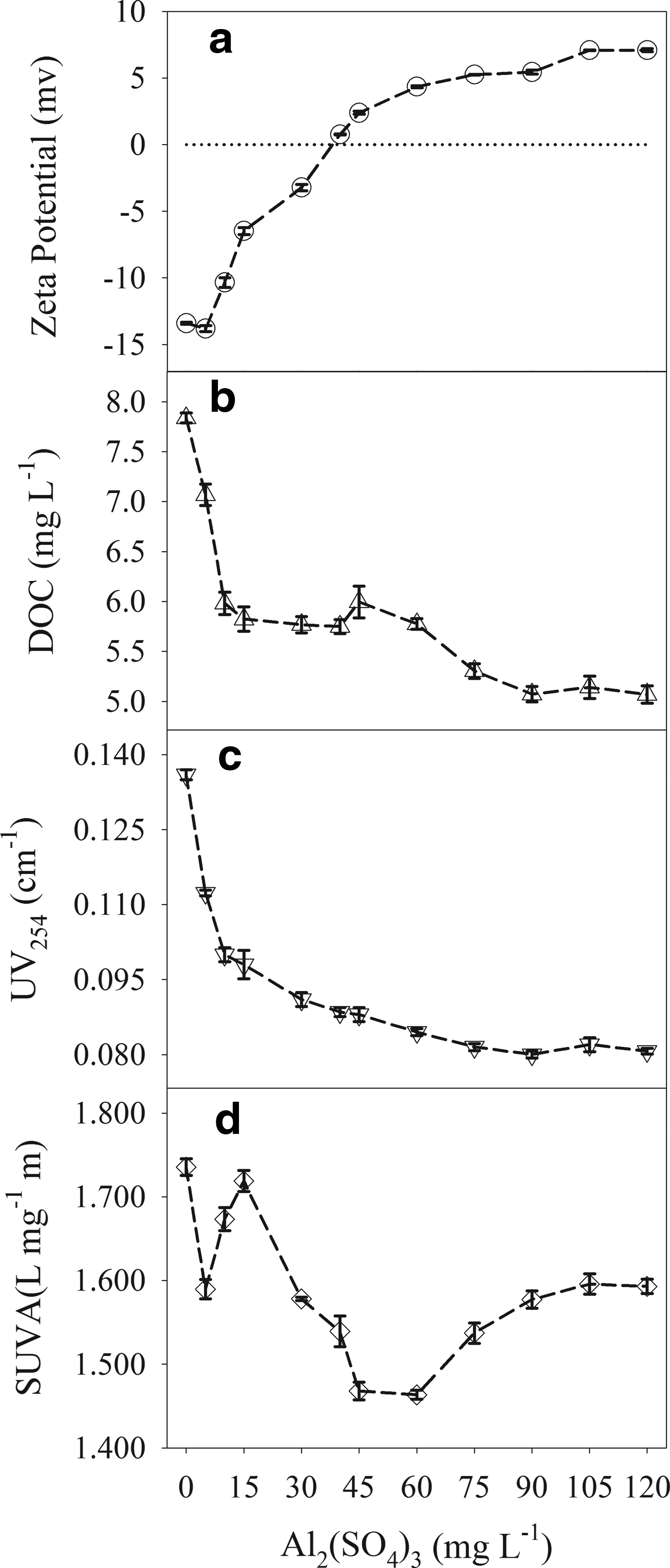
Effects of coagulant dosage on coagulation of wastewater secondary effluent by alum at pH 6.0.
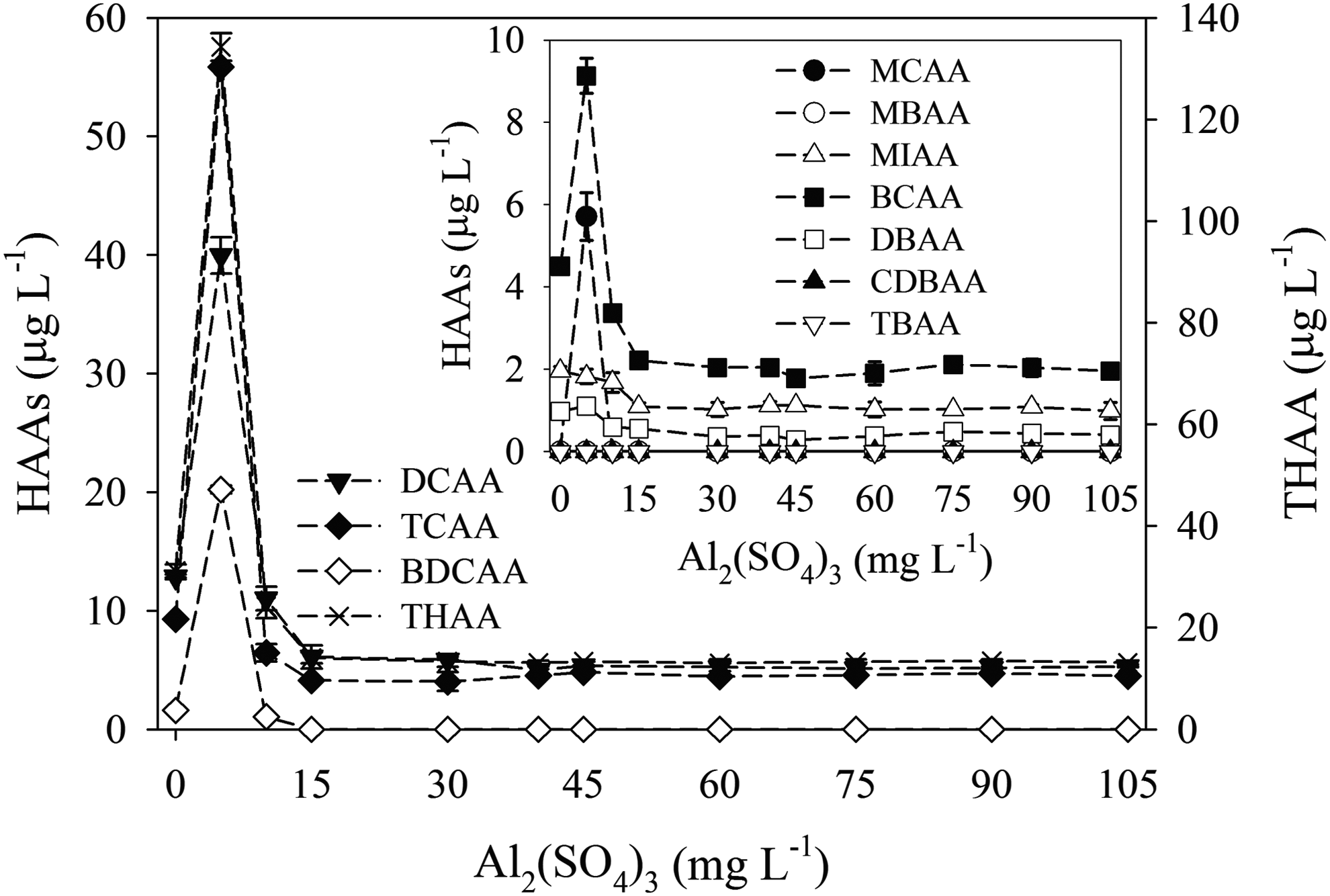
HAA formation of the treated secondary effluent versus alum dosage at pH 6.0 following chlorination at pH 7. HAA, haloacetic acid.
Variations of DOC and UV254 of coagulated effluent versus alum dosage are shown in Fig. 1b and c. The DOC and UV254 decreased with the increase of coagulant dosage as also observed previously (Musikavong et al., 2005; Uyak et al., 2007). However, a significant removal in both DOC and UV254 was seen with a relatively smaller alum dose up to 15 mg/L (25.7% and 27.9%, respectively) before the IEP. As the coagulant dosage was further increased, the removal of DOC and UV254 was increased, but only at a small rate. At the dosage of 45 mg/L a small reduction in DOC removal was observed with a slight charge reversal of the coagulated flocs. A low level charge reversal and relatively small amount of alum precipitate formation resulted in a slight reduction in DOC removal. However, at a high dose of 90 mg/L, substantial DOC and UV254 removal (35.27% and 41.18%, respectively) was achieved due to a predominant sweep coagulation mechanism (Duan et al., 2012a). Interestingly, compared with removal of DOC, the removal in UV254 appeared not to be affected by the small charge reversal effect at alum dose 45 mg/L.
In addition, the removal efficiency of organic material measured by UV254 was greater than that by DOC. This indicates that the fraction of high molecular weight or the hydrophobic aromatic organic compounds measured by UV intensity was removed more effectively by coagulation than other fractions (Musikavong et al., 2005; Krasner et al., 2006; Uyak and Toroz, 2007). Thus, the results indicate that enhanced coagulation at pH 6 and the high alum doses was relatively more effective for removal of the organic matter with high UV254 absorption from the wastewater secondary effluent. It was suggested that the residual organic matter after coagulation removal contained mainly the hydrophilic non-acid fraction (Sharp et al., 2006a). The maximum removal efficiency of DOM was around 30% (as DOC removal) for alum dosage up to 100 mg/L (Krasner et al., 2008), which is slightly lower than observed in this study.
A higher SUVA value supposedly indicates a larger amount of aromatic organic materials, which were found to be correlated with THM and HAA formation during chlorination (Reckhow et al., 1990). NOM with high SUVA values could be effectively removed from natural source water by hydrolyzing metal salt coagulation (Bose and Reckhow, 2007; Matilainen et al., 2010). In this study, the SUVA value is rather small (1.74 L/mg · m), indicating that the EfOM contained mostly lower molecular weight and low aromaticity fractions as compared with those from natural surface waters. Interestingly, variation of SUVA as a function of the coagulant dosage showed some unique features. The SUVA value first dropped at a small alum dose of 5 mg/L, then increased quickly to a high value as alum dose increased. As the alum dose further increased from 15 to 45 mg/L, the SUVA decreased again and reached its lowest values between 45 and 60 mg/L (Fig. 1d). Unexpectedly, with further increase of alum dose the SUVA value again increased. It would be interesting to analyze how the variation in SUVA was connected to the DBP formation (see later).
Recently, excitation–emission matrix (EEM) fluorescence spectroscopy has frequently been used to differentiate the composition of NOM with experimentally defined domains, to which DBP formation could be correlated. Five regions were defined for characteristic organic materials: region I (220 nm < λex < 250 nm, 250 nm < λem < 330 nm) and II (220 nm < λex < 250 nm, 330 nm < λem < 380 nm) for aromatic protein; region III (220 nm < λex < 250 nm, 380 nm < λem < 480 nm) for fulvic acid-like; region IV (250 nm < λex < 350 nm, 250 nm < λem < 380 nm) for soluble microbial byproduct-like, including tyrosine-, tryptophan-, and protein-like components; region V (250 nm < λex < 500 nm, 380 nm < λem < 600 nm) for humic acid-like (Chen et al., 2003; Yang et al., 2008; Johnstone and Miller, 2009). The EEM of wastewater effluent was reported previously to indicate the presence of protein-like substances, likely originating from SMPs (Krasner et al., 2008). In this study, the intensities of EEM for humic acid-like (V) and microbial-related materials (IV) were much more noticeable, and those for protein-like and fulvic acid-like were comparatively weak (Supplementary Figs. S1 and S2).
Removal efficiencies in terms of EEM corresponding to the five regions were calculated based on the fluorescence regional integration technique (Chen et al., 2003, see also section “The calculated detail of fluorescence regional integration method” in Supplementary Data). The results are presented in Table 2. Overall, more substantial humic-like materials were removed than protein-like materials, as previously reported (Krasner et al., 2008). Noted that, although removals in region I appeared high from calculations, mass removal of the organic materials of the region I was small since their concentrations (or intensities) were very low (Supplementary Figs. S1 and S2). Compared with the removal of NOM in water treatment, the removal efficiency of EfOM by alum coagulation was relatively poor. This is due to the fact that large fractions of organic matter in wastewater effluent were degraded to smaller hydrophilic molecules, which were more difficult to remove by coagulation.
EEM, excitation-emission matrix
Removal of organic materials is important in reducing DBP formation (Musikavong et al., 2005). The formation of total haloacetic acids (THAA) and individual HAAs under different alum dosages at pH 6 is presented in Fig. 2. Even with the high DOC concentration, the THAA formation (31.17 μg/L) for the raw wastewater secondary effluent (after membrane filtration) during chlorination was relatively small, likely due to the unique nature of the EfOM in the effluent. After the biological treatment, the effluent nature is characterized by a higher fraction of inert organic matter, which is less aromatic or has less conjugated double bonds and thus is very different from NOM in surface waters. In addition, formation of chloramines due to the presence of ammonia in the effluent during chlorination may further reduce the DBP formation (Sun et al., 2009). It was found that DCAA and TCAA were the predominant species in the effluent and treated water, as reported for drinking water conditions (Gang et al., 2005; Duan et al., 2012a). A relatively high concentration of MIAA (1.96 μg/L) was detected due to the presence of a relatively high amount of iodide ion (0.339 mg/L). Noticeably, there were also low concentrations of BCAA (4.50 μg/L), DBAA (0.97 μg/L), and BDCAA (1.59 μg/L) in the raw effluent.
Compared with the raw effluent, the concentration of HAAs (except MIAA) drastically increased at a small coagulant dosage 5 mg/L. This sudden increase was quite unexpected, particularly considering that it corresponded to a reduced value of SUVA. At the alum dose, the removal efficiencies of DOC, UV254, and SUVA were 9.8%, 17.4%, and 8.4%, respectively. It may be that, removal of some small colloidal organic materials from the effluent somehow enhanced chlorine reactivity with the resulting fraction of dissolved organic matter for HAA formation. Also, it may be possible that some structural change of organic materials and their reactivity with chlorine, during coagulation and in the presence of residual aluminum, contribute to the increased HAA formation. However, as alum dose further increased, most of the colloidal organic materials and more fractions of the dissolved organic matter could be removed to reduce the HAA formation, as observed when alum dose increased from 5 to 15 mg/L.
It is worth noting that, although the removal of DOC and UV254 increased steadily as alum dose further increased from 15 to 120 mg/L, the formation of HAAs remained almost unchanged, even as SUVA increased from the alum dose of 60 to 120 mg/L. The SUVA here showed no correlation with HAA formation. This may suggest that SUVA does not capture the reactive sites on EfOM moieties responsible for HAA formation in low-SUVA waters (Weishaar et al., 2003; Ates et al., 2007). Therefore, SUVA could not predict DBPFP in waters with low SUVA values and correlations between SUVA and DBPs were merely water source dependent. Comparatively, UV254 showed a better correlation with the DBP formation under the present experimental conditions.
From Fig. 2, more DCAA and TCAA were formed than all other HAAs. Formation of MCAA and MBAA was found to be lower than that of DCAA and TCAA. Reactivity of chlorine with carbon–carbon double or triple bonds is stronger than with single carbon–carbon bonds, which leads to formation of mono-acetic acids (Westerhoff et al., 1999; Sirivedhin and Gray, 2005).
In this study, detection of EEM provided additional information on the effect of organic matter removal on DBP formation. At the coagulant dosage of 5 mg/L, the removal efficiencies of organic matter in the domains II and IV were relatively higher than in all the other regions (Table 2; See also Supplementary Fig. S1). HAAs increased sharply when the alum dose increased from 0 to 5 mg/L, for the reasons discussed before. Previous studies have shown that the formation of DCAA, chloroform, dichloroacetonitrile, and total organic halides was not correlated with the organics in domains II and IV (Yang et al., 2008). As alum dose further increased from 5 to 15 mg/L, a greater increase of organic matter removal in all other domains (I, III, and V) led to a decrease in the formation of HAAs likely because HAAs precursors were more effectively removed by alum coagulation, though there was also an increase of organic matter removal in the domains II and IV.
Influences of pH
Solution pH has a great influence on the removal efficiency of organic matter by alum coagulation (Uyak and Toroz, 2007; Matilainen et al., 2010). The optimum pH was reported mostly in terms of DOC removal in the range 5–6, depending on the nature or organic matter composition of water samples (Volk et al., 2000). In this study, the influence of pH was examined in terms of DOC, UV254, and SUVA together with zeta potential measurement of the coagulated flocs (Fig. 3).
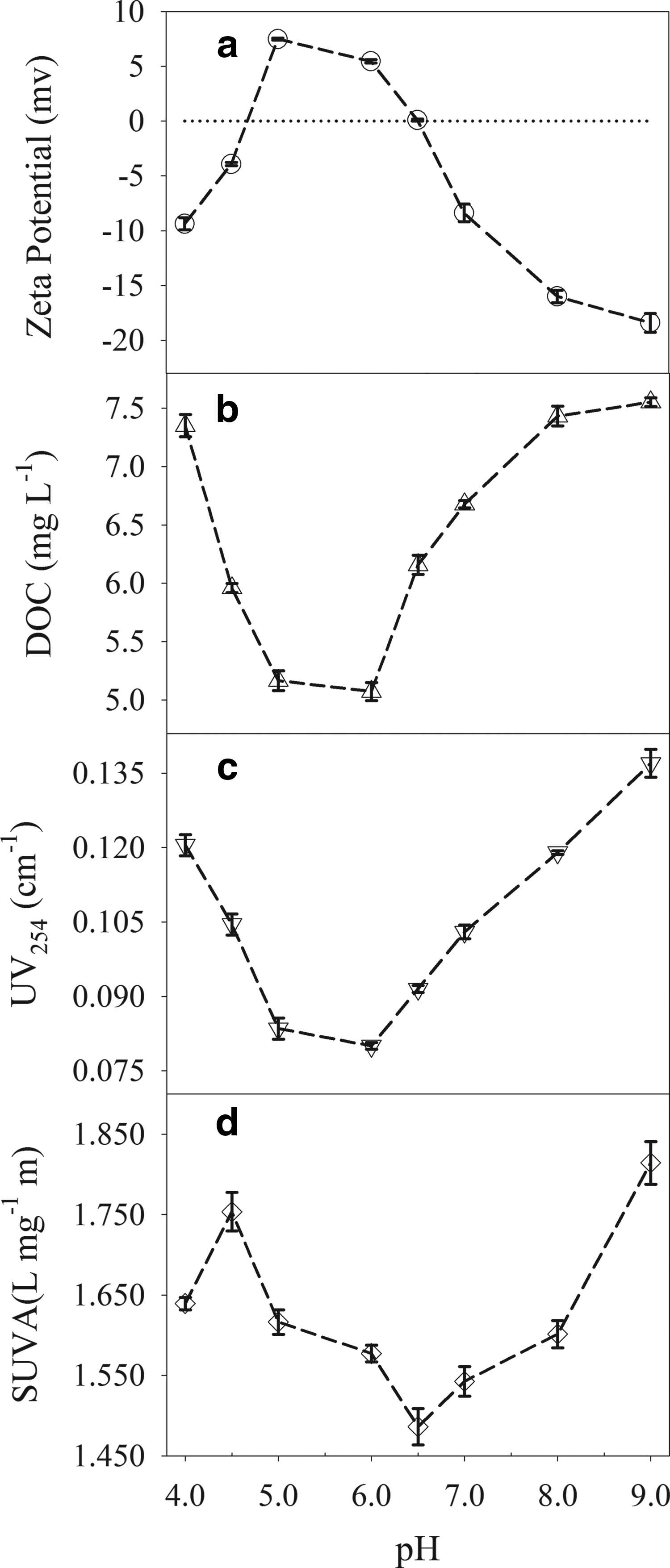
Effects of solution pH on coagulation of wastewater secondary effluent at an alum dose of 90 mg/L.
Generally, the maximum removal of organic matter in terms of DOC and UV254 occurred at pH 6 (Fig. 3b, c). The zeta potentials of the coagulated suspensions were positive at pH 5 and 6, indicating a low level of charge reversal (ζ < 8 mV) (Fig. 3a). Charge neutralization and precipitation and adsorption facilitated the effective coagulation process with negatively charged organic matter (Duan and Gregory, 2003). Maximum NOM removal has been observed in the range of zeta potential of coagulated flocs between −10 and +5 mV (Bond et al., 2010; Matilainen et al., 2010).
However, compared with DOC, the removal of UV254 appeared more pronounced at this high coagulant dosage. The maximum removals of DOC and UV254 at pH of 6.0 were at 35.27% and 41.18%, respectively. This indicated that aromatic materials were more effectively removed than other organic matter fractions (Uyak et al., 2007; Matilainen et al., 2010). Aromatic materials (high UV254 organic matter) could be removed more effectively by chemical coagulation than other organic matter fractions (Musikavong et al., 2005; Chow et al., 2008). UV254 was frequently used to evaluate the content of conjugated bonds and aromaticity of the organic matter in water, and also used to evaluate DOM removal in the water treatment process (Uyak and Toroz, 2005, 2007; Yang et al., 2008). The values of DOC and UV254 decreased greatly as pH increased from 4.0 to 5.0 and increased gradually when solution pH increased from 6.0 upward (Musikavong et al., 2005; Uyak and Toroz, 2007). Interestingly, the profile of the removal of SUVA versus pH was not consistent with those for DOC and UV254. The maximum removal of SUVA occurred at pH 6.5 (14.4%), while the removals at pH 5 and 6 were comparatively rather poor.
EEM showed similar removal trends to those for DOC and UV254. Maximum removal efficiencies were observed for all the five regions at pH 6 (Table 3; See also Supplementary Fig. S2). However, the actual maximum removal efficiency of the EEM was dependent on the individual regions, varying from 34.3% to 61.8%. The removal efficiency is the highest in the Region V for the humic acid-like materials. Hydrophobic humic like organic matter was preferentially removed than all other types of organics (Krasner et al., 2008). The percentage of removal for EEM was higher than those for DOC and UV254. This indicates that EEM is more sensitive, a better indicator, for organic removal by coagulation.
Formation of the 10 HAAs following chlorination of the coagulation-treated effluent at different pH is presented in Fig. 4. Apart from MCAA, MBAA, CDBAA, and TBAA, all the other six HAAs were detected. DCAA and TCAA are the predominant species as observed for surface source waters (Gang et al., 2005; Duan et al., 2012a). Moreover, the trends of THAA, DCAA, BCAA, and TCAA formation versus solution pH are similar to the trends of variation in the concentrations of DOC, UV254, and EEM versus pH. The lowest HAA formation corresponded to the highest removal of DOC, UV254, and EEM at pH 6. Again, SUVA, supposedly a better indicator of the precursors than DOC and UV254 for the DBP formation, unexpectedly showed a poor correlation with the formation of HAAs. The smallest value of SUVA did not give the lowest HAA formation. Finally, solution pH has the most profound effects on the removal of the precursors of HAA formation, even at a high alum dose, such as 90 mg/L.
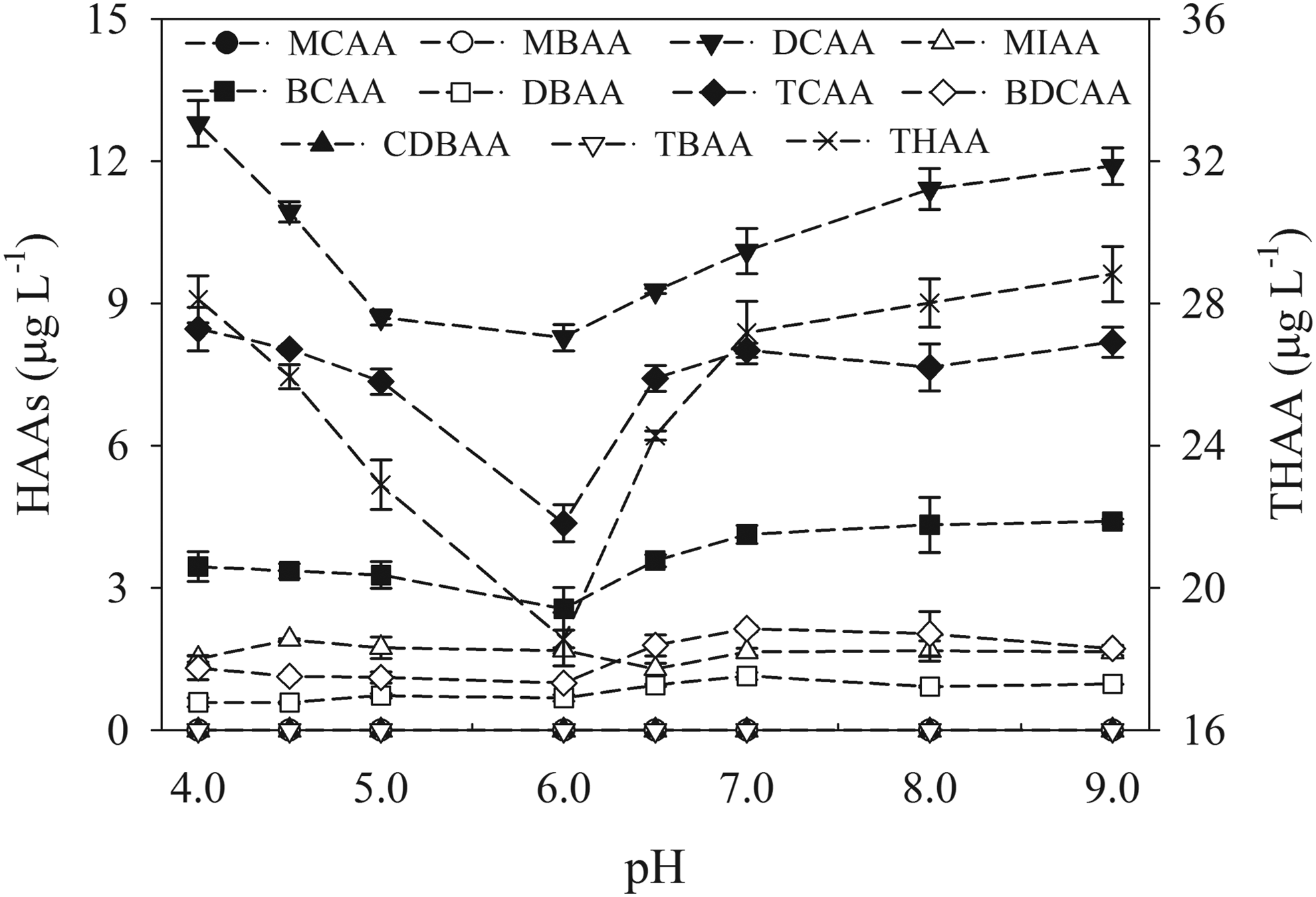
HAA formation in effluents treated by alum coagulation at different solution pHs, at an alum dose of 90 mg/L following chlorination at pH 7.
Influence of bromide and iodide ions
Bromide or iodide ions in water can be oxidized to bromine or iodine during chlorination consequently affecting the formation and speciation of DBPs (Nokes et al., 1999). Bromo- and iodio-DBPs have caused increasing concern due to their strong carcinogenic effects (Nokes et al., 1999; Yang et al., 2005; Xue et al., 2008). The formation and speciation of HAAs in the treated secondary effluent during chlorination has only received limited attention in the past (Yang et al., 2005).
Effects of Br− and I− on the HAA formation were investigated by adding small amounts of the two chemicals into the effluent. The THAA concentrations after chlorination followed by coagulation at different alum dosages are presented in Table 4. Compared with the previous observations, the concentration of THAA again increased significantly with the presence of Br− and I− in treated effluent (Chellam and Krasner, 2001; Xue et al., 2008).
THAA, total haloacetic acids; BIF, bromine incorporation factor; IIF, iodide incorporation factor.
The THAA concentrations after chlorination at a high alum dosage of 90 mg/L are presented in Fig. 5a. Several findings are noteworthy. First, the minimum formation of HAAs remained at pH 6 upon addition of Br− and I− to the effluent samples. However, the concentration of HAAs was evidently higher than those without the addition of Br− at all the pH values (Fig. 5a). Second, if the concentration of I− ions was kept constant (e.g., 0.339 mg/L), the THAA concentrations increased as the ratio of the concentration of Br− over I− increased at any fixed value of the pH. Likewise, if the concentration of Br− was kept constant (e.g 0.5 mg/L), I− concentration increased from 0.339 to 0.839 mg/L, as the ratio of concentration I−/Br− increased the THAA formation clearly decreased. This may be because of an extra chlorine consumption by the presence of iodide in water and the possible formation of HAAs containing more than one iodine atom in the reaction between of hypoiodous acid and EfOM (Xue et al., 2008; Smith et al., 2010).
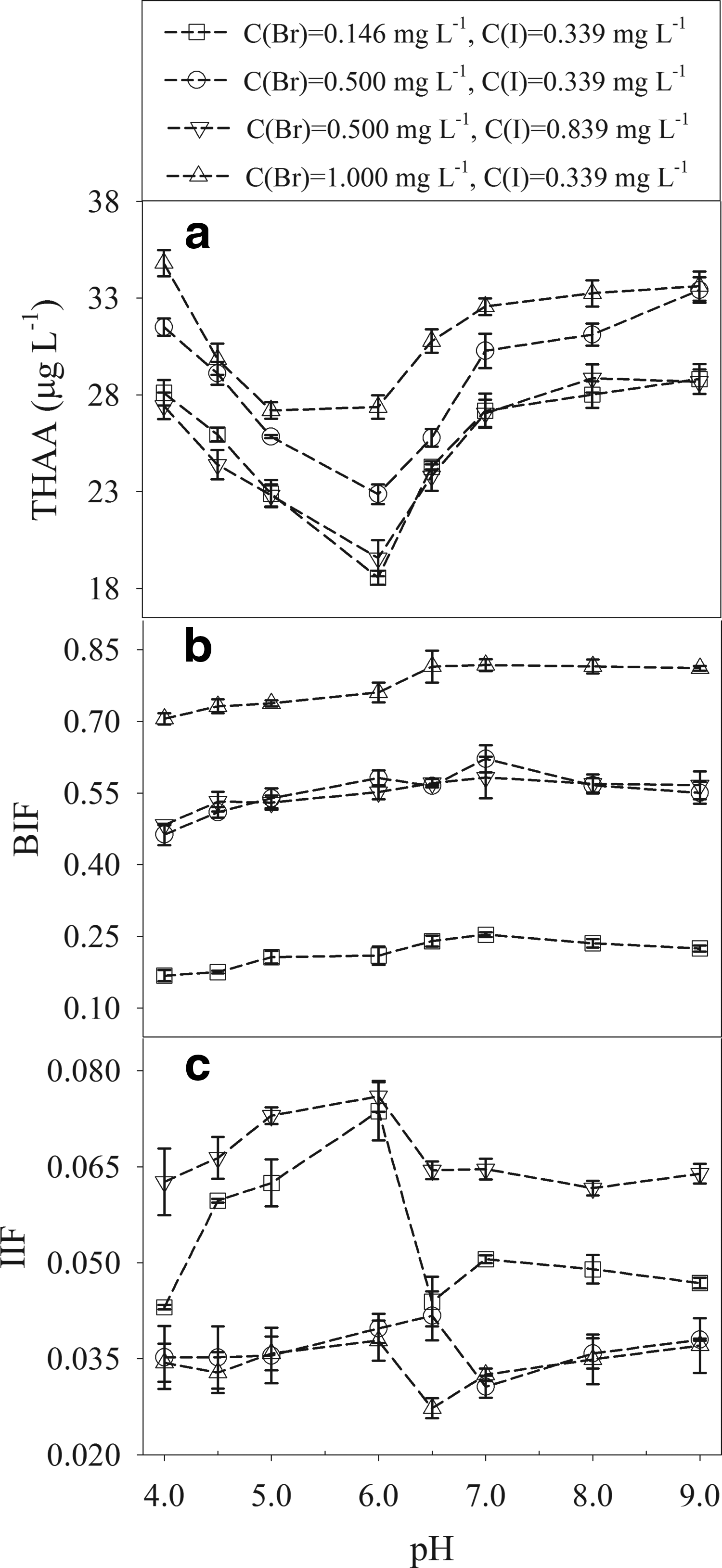
Influence of bromide and/or iodide on the THAA formation and speciation of treated effluent at different solution pHs following chlorination at pH 7.
The value of BIF increased at all the pH values when the concentration of the bromide added in the effluent increased from 0.146 to 1.00 mg/L, (at a constant iodide concentration of 0.339 mg/L) (Fig. 5b). This indicated that the increase in bromide concentration, and thus the concentration ratio of Br− over I−, enhanced the formation of Br-HAAs (Fig. 5a, b). However, at a constant concentration of Br- (0.500 mg/L), as the concentration of iodine increased from 0.339 to 0.839 mg/L, the BIF value remained almost unchanged at all the pH values. It should be pointed out that the BIF increased gradually as the pH value increased up to the neutral value. This indicates that HAAs containing more Br increased as the solution pH increased from acidic to neutral.
The value of IIF increased when iodide concentration increased from 0.339 to 0.839 mg/L at all the pH values (Fig. 5c). The increase in IIF does not correspond to an increased THAA formation (see also Table 4). In addition, the IIF also showed a different profile of change versus pH from that of the BIF, probably due to the different chemical reaction behavior in solution of the bromine and iodine under different pHs. Finally, we comment that, even with the presence of bromide and iodide, the formation of HAAs was less than previously reported in water treatment (Sirivedhin and Gray, 2005; Xue et al., 2008), largely due to the unique nature of the organic materials in the wastewater secondary effluent.
Conclusions
This study investigated the effects of coagulation by alum on the removal efficiency of organic materials in wastewater secondary effluent and the reduction in HAA formation during chlorination. The main findings are summarized below:
(1) The removal efficiency of EfOM was relatively poor compared to the removal of NOM in water treatment, due to the unique nature of the EfOM, which contained recalcitrant, less hydrophobic and small molecular weight compounds. At the optimum solution pH of 6, the maximum removal efficiencies were different for the water quality parameters investigated: percentage removals for DOC (35.3%), UV254 (41.2%), and SUVA (15.7%) respectively were obtained at the alum dosage of 60 mg/L or above.
(2) Incomplete coagulation at a small alum dose could result in a large increase in HAA formation, likely due to the removal of the colloidal organic materials or possible change of structure of the dissolved organic compounds during coagulation or in the presence of alum, which would result in an increased reactivity of the dissolved organic matter with chlorine. Observed a significant increase in THAA formation from 31.17 μg/L for the filtered raw effluent to 134.24 μg/L for the coagulated and filtered effluent at an alum dose of 5 mg/L after chlorination.
(3) A substantial reduction (58.4%) in HAA formation was obtained under the enhanced coagulation condition (alum dose >60, pH = 6) due to the removal of organic matter in the wastewater secondary effluent.
(4) DCAA and TCAA were the major chlorinated DBPs. With the increase of bromide in the effluent, the concentrations of Br-HAAs and the THAA increased, as observed by the increased BIF. At a constant concentration of bromide, increase in iodine ion concentration resulted in I-HAA formation with an increased IIF value. However, the formation of Br-HAAs and THAA were decreased.
(5) UV254 has a good correlation with DBP formation, while SUVA showed no correlation with the HAA formation. Results clearly indicated that, although the wastewater secondary effluent has a high content of DOC, the content of organic material fractions, which are chlorine-reactive for DBP formation, was relatively small as compared to surface waters.
Footnotes
Acknowledgments
This work was financially supported by the National Nature Science Foundation of China (No. 51308437), Foundation of Shaanxi Educational Committee of China (2013JK0980), and Shaanxi Province Postdoctoral Science Foundation. The authors gratefully acknowledge the support of the three foundations.
Author Disclosure Statement
No competing financial interests exist.
References
Supplementary Material
Please find the following supplemental material available below.
For Open Access articles published under a Creative Commons License, all supplemental material carries the same license as the article it is associated with.
For non-Open Access articles published, all supplemental material carries a non-exclusive license, and permission requests for re-use of supplemental material or any part of supplemental material shall be sent directly to the copyright owner as specified in the copyright notice associated with the article.
