




Abstract
Abstract
Formation of barite (BaSO4) scale is a potential problem for unconventional (shale) gas extraction, as the excessive scale can reduce well productivity by plugging the proppant pack. This study was designed to evaluate the impact of antiscalants on the formation and transport of barite particles through proppant sand under well-controlled laboratory conditions using batch and column experiments. Extensive attachment of BaSO4 particles to proppant sand was observed at typical background salinity and in the absence of antiscalants due to relatively large barite particle size and screened electrostatic interaction. Presence of polymeric antiscalants can enhance the mobility of BaSO4 particles by decreasing their size and providing electrosteric repulsion. Ethylene glycol that may be added to hydraulic fracturing fluid to prevent scale deposition can reduce the size of BaSO4 precipitates but has no impact on the deposition of BaSO4 particles during transport through proppant sand. Polymaleic acid and sulfonated poly-phosphino-carboxylic acid that are generally considered when the goal is to inhibit formation of mineral scales are unlikely to prevent barite formation at high supersaturation conditions that are typical for unconventional gas industry. However, they can reduce the size and alter the morphology of barite particles as well as inhibit the deposition of bulk precipitates onto proppant sand surface by inducing stronger repulsive interactions.
Introduction
I
Among the three common sulfate scales (i.e., CaSO4, SrSO4, and BaSO4), barium sulfate (barite) is a unique and troublesome scaling agent in many industrial processes, due to its low solubility and resistance to acid cleaning. Previous studies have demonstrated that barium sulfate can be chemically removed using expensive chelating agents, such as diethylenetrinitrilopentaacetic acid and ethylenedinitrilotetraacetic acid (Dunn and Yen, 1999). Scaling control strategies, such as alteration of feed water quality, optimization of operational parameters, and the use of antiscalants, are required to mitigate the deposition of barite scales (Antony et al., 2011).
Antiscalants can function by one or more mechanisms, which depends on their functional groups, molecular weight, and dosage (Antony et al., 2011; Li et al., 2011). Threshold inhibition is the most common application of antiscalants, which involves adding substoichiometric amounts of antiscalants (usually below 80 mg/L) to inhibit the formation of mineral scale in the bulk phase for a supersaturated solution (Jones et al., 2002; Li et al., 2011). Ion complexation relies on the addition of stoichiometric concentrations of antiscalants that act as chelating agents and prevent scale formation (Dunn and Yen, 1999). Deprotonated antiscalants can adsorb onto newly formed particles to disrupt the crystal growth and prevent particle agglomeration (Greenlee et al., 2010). Common antiscalants used for barite scaling include phosphonate compounds and carboxylic polymers (Xiao et al., 2001; Jones et al., 2002). Numerous studies have demonstrated that antiscalants can effectively interfere with nucleation and/or crystal growth of barium sulfate at a relatively low supersaturation level (Saturation Index [SI] <3.0) (Xiao et al., 2001; Jones et al., 2002). By limiting sulfate concentration in the fracturing fluid, the antiscalants can possibly act as threshold inhibitors to prevent the formation of BaSO4 scales in the subsurface.
When sulfate-rich fracturing fluid is injected into Marcellus Shale, it is certain that barite will form in the subsurface due to high supersaturation levels that are typical for this formation. Furthermore, it is most likely that all of the sulfate will be consumed by this reaction due to the substantial presence of barium (Barbot et al., 2013). Preliminary calculations shown in Table 1 indicate that the volume of barite that would form downhole can range from 0.1% of the proppant volume in the case when the fracturing fluid contains 200 mg/L sulfate to as much as 1.2% of the proppant volume when the fracturing fluid contains 2,000 mg/L sulfate. Although it seems that the volume of barite particles formed downhole is not significant, the mobility of these particles through the proppant sand that is placed in the induced fractures (Economides and Nolte, 1999) is an important factor to assess the potential damage to well productivity. However, the transport of barite particles through packed sand under elevated ionic strength (IS) condition and the potential mobility enhancement by the addition of antiscalants were not previously studied. Polymaleic acid (PMA) and sulfonated poly-phosphino-carboxylic acid (SPPCA) are two common antiscalants used to alleviate barite scaling (van der Leeden, 1991; van der Leeden et al., 1992; Shaw et al., 2012), whereas ethylene glycol (EG) is reported to be used to prevent the deposition of scales on pipes (US DOE, 2009; Gregory et al., 2011). In addition, EG is used to prevent formation of gas hydrates (Kan et al., 2003) as well as a cross-linker or friction reducer aid (FracFocus.org).
Assumptions: • volume of fracturing fluid is 3 × 10⁶ gallons.
• Proppant fraction is 9% by volume.
• Barite density is 4500 kg/m3.
• All sulfate injected downhole forms barite.
In this study, the impact of antiscalants on barite formation and subsequent transport through proppant sand was evaluated to gain insight into the fate of barite particles formed in the subsurface when sulfate-rich fracturing fluid is used in Marcellus Shale.
Materials and Methods
Chemical reagents
PMA and SPPCA, both with 50% active content by weight, were provided by Kroff Chemical Company and BWA Water Additives, respectively. According to the providers, the molecular weights of PMA and SPPCA are 1,000 g/mol and 3,700 g/mol, respectively. Barium chloride dihydrate (Fisher Scientific), anhydrous sodium sulfate (J.T. Baker), sodium chloride (Fisher Scientific), sodium hydroxide (Fisher Scientific), EG (Fisher Scientific), and hydrochloric acid (37.3%; Fisher Scientific) used in this study were ACS grade reagents.
Preparation and characterization of BaSO4 particles
The suspension of BaSO4 particles used in column experiments was prepared by mixing equimolar amounts of BaCl2 and Na2SO4 (4.29 mM) in a 200-mL beaker. Antiscalants and NaCl were added from stock solutions to reach desirable inhibitor dosage (10 mg/L) and background salt concentration (8.6–508.6 mM) before barite precipitation was initiated by the addition of Na2SO4. HCl or NaOH solutions (0.1 M) were used to adjust the solution pH between 4 and 8.5. Both salinity and pH were selected to represent typical conditions in the Marcellus Shale flowback water (Barbot et al., 2013). The feed solution was mixed at 400 rpm throughout the experiment using a magnetic stirring bar.
Particle-size distribution of precipitates that formed in the solution was measured using a laser diffraction analyzer (Microtrac S3500; Microtrac, Inc.). Before particle size measurement, 1% sodium hexametaphosphate was added to the suspension to ensure dispersion of barite particles. A scanning electron microscope (SEM, Philips XL30; FEI Co.) was used to analyze the morphology of barite particles under different experimental conditions. The barite particles for SEM analysis were sampled from the feed solution, deposited on a 0.45 μm nylon membrane, washed with deionized (DI) water, and air-dried for at least 2 days. A section of the membrane was placed on a plate sampler and coated with palladium for 60 s in vacuum at 40 mA current. Zeta potential of BaSO4 particles was measured using a Malvern Zetasizer (Malvern Instruments Ltd.).
Column experiment
A glass chromatography column with an inner diameter of 10 mm and a length of 10 cm (Omnifit) was used to study BaSO4 transport through saturated proppant sand. A 125-μm nylon mesh screen was placed on each end of the column to retain proppant sand while enabling the passage of barite particles.
Actual proppant sand used in hydraulic fracturing in Marcellus Shale was procured for column experiments. The proppant sand was sieved through a 20 U.S. mesh sieve to obtain a relatively uniform sample with an average particle size of 0.249 mm verified by Microtrac S3500. Sieved proppant sand was rinsed with DI water three times to remove fines and was wet-packed into the column to eliminate air bubbles in the column. Porosity of a packed sand column of 0.36 was determined using a quartz density of 2.59 g/cm3 (Johnson et al., 1996).
Before BaSO4 transport experiments, the packed column was flushed with at least 10 pore volumes (PV) of DI water to remove fines created during packing and 10 PV of NaCl solution with identical concentration and pH as the feed solution to precondition the sand. BaSO4 feed solution that was prepared at different conditions (i.e., pH, background NaCl concentration, presence/absence of antiscalants) was injected into the column using a peristaltic pump at a constant flow rate of 13 mL/min (4.6 PV/min) at room temperature (21°C). The flow velocity in all column experiments was 0.27 cm/s. The column effluent was sampled every 30 s and analyzed by UV/VIS spectrophotometer at a wavelength of 500 nm to determine BaSO4 concentration. The spectrometer was calibrated with barite solution before each column experiment. The breakthrough data shown for each column test represent the average results from duplicate measurements.
Results and Discussion
Characterization of BaSO4 particles
Several studies focused on the impact of antiscalants on the kinetics of nucleation and crystal growth at low supersaturation conditions where threshold inhibition is the dominant mechanism (van der Leeden et al., 1992; Jones et al., 2002; Mavredaki et al., 2011). Under such conditions, the presence of antiscalants can interfere with the nucleation phase and result in a prolonged induction period.
Batch tests revealed that the three antiscalants evaluated in this study had minimal effect on the retardation of BaSO4 precipitation, with the antiscalant dosage ranging from 10 to 100 mg/L. The induction period was always less than 1 s based on the visual observation of abrupt turbidity increase, whereas the equilibrium was essentially achieved within 30 min of reaction based on barium concentration measurements (data not shown). The immediate formation of BaSO4 particles at high initial supersaturation was likely, because the formation of nuclei was so rapid that the antiscalant failed to limit their growth beyond the critical size (i.e., the smallest size of nuclei that facilitates stable growth). The inability of antiscalants to inhibit BaSO4 precipitation at high supersaturation condition is consistent with previous studies (Greenlee et al., 2010; Mavredaki et al., 2011). These results suggest that the formation of BaSO4 is inevitable when injection fluid with a high-sulfate concentration is used for hydraulic fracturing. Therefore, it is important to evaluate the transport of BaSO4 particles through the proppant sand to fully understand the fate of barite in the subsurface.
Although the selected antiscalants were unable to inhibit barite precipitation, SEM images illustrated that the morphology and size of barite particles were substantially altered in the presence of 10 mg/L of each antiscalant (Fig. 1). The BaSO4 particles depicted in this figure were formed in the presence of 0.5 M NaCl to represent high salinity of the formation brine in shale gas reservoirs. Barite particles formed in the absence of antiscalants had a rhombohedral shape and a relatively large size (Fig. 1a). The elongated shape was likely due to the difference in growth velocity in selected crystallographic directions (Risthaus et al., 2001). Benton et al. (1993) observed the same morphology of barite particles formed at a similar experimental condition. Barite particles formed in the presence of antiscalants were visibly smaller and had an ellipsoidal shape (Fig. 1b–d). Several studies reported similar barite morphology in the presence of organic matter (Benton et al., 1993; Uchida et al., 2001; Jones et al., 2002).
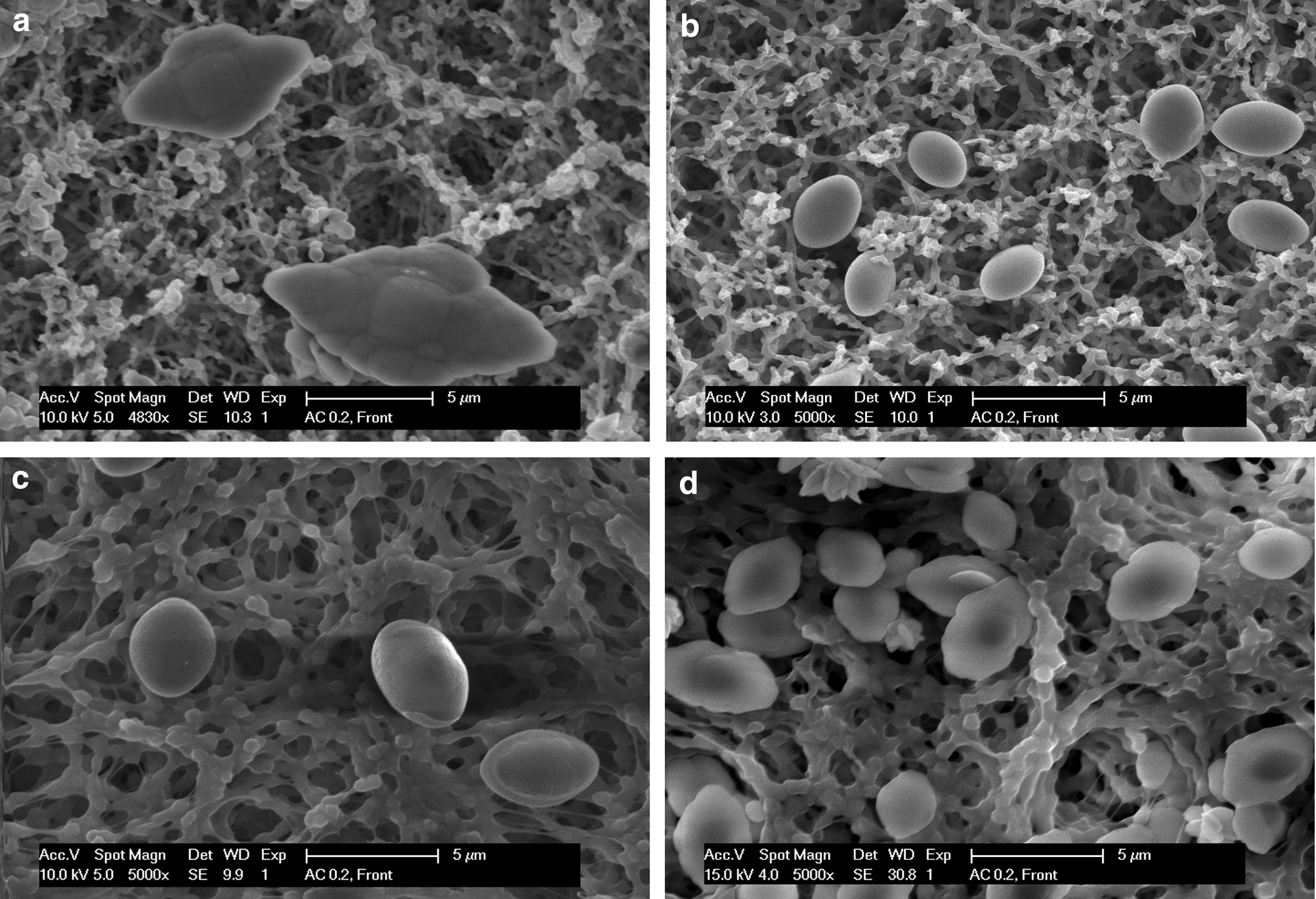
Scanning electron microscope images of BaSO4 particles formed in 0.5 M NaCl solution with
The impact of antiscalants on the size of BaSO4 particles formed at different IS was analyzed using Microtrac S3500. As shown in Fig. 2, the average particle size of BaSO4 increased from 2.0 to 5.1 μm when the background NaCl concentration increased from 8.6 to 508.6 mM. Risthaus et al. (2001) studied barite growth at a background NaCl concentration up to 0.8 M using atomic force microscopy and found that the growth rate increased due to reduced interfacial energy at higher IS. On the other hand, the average size of barite particles formed at pH 7 in the presence of three antiscalants was much smaller (Fig. 2), and it increased only slightly with IS. Among the three antiscalants used in this study, SPPCA was the most effective in controlling the size of BaSO4 particles. The reduced size and the altered shape of barite particles can be attributed to adsorption of antiscalants onto nucleating crystals, which leads to distorted crystal growth (Jones et al., 2002; Greenlee et al., 2010). A schematic explanation of the effects of polymeric antiscalants on BaSO4 precipitation at high supersaturation levels is shown in Fig. 3. For the case where no antiscalants are added, homogeneous nucleation, seed growth, and aggregation of newly formed small BaSO4 particles contribute to the large size of BaSO4. When polymeric antiscalants are present, the seed growth on the formed BaSO4 surface is inhibited, as polymers occupy active growth sites on the surface, resulting in distorted crystal growth. Stronger electrostatic and steric repulsion induced by polymers can prevent the particles from agglomeration (Greenlee et al., 2010).
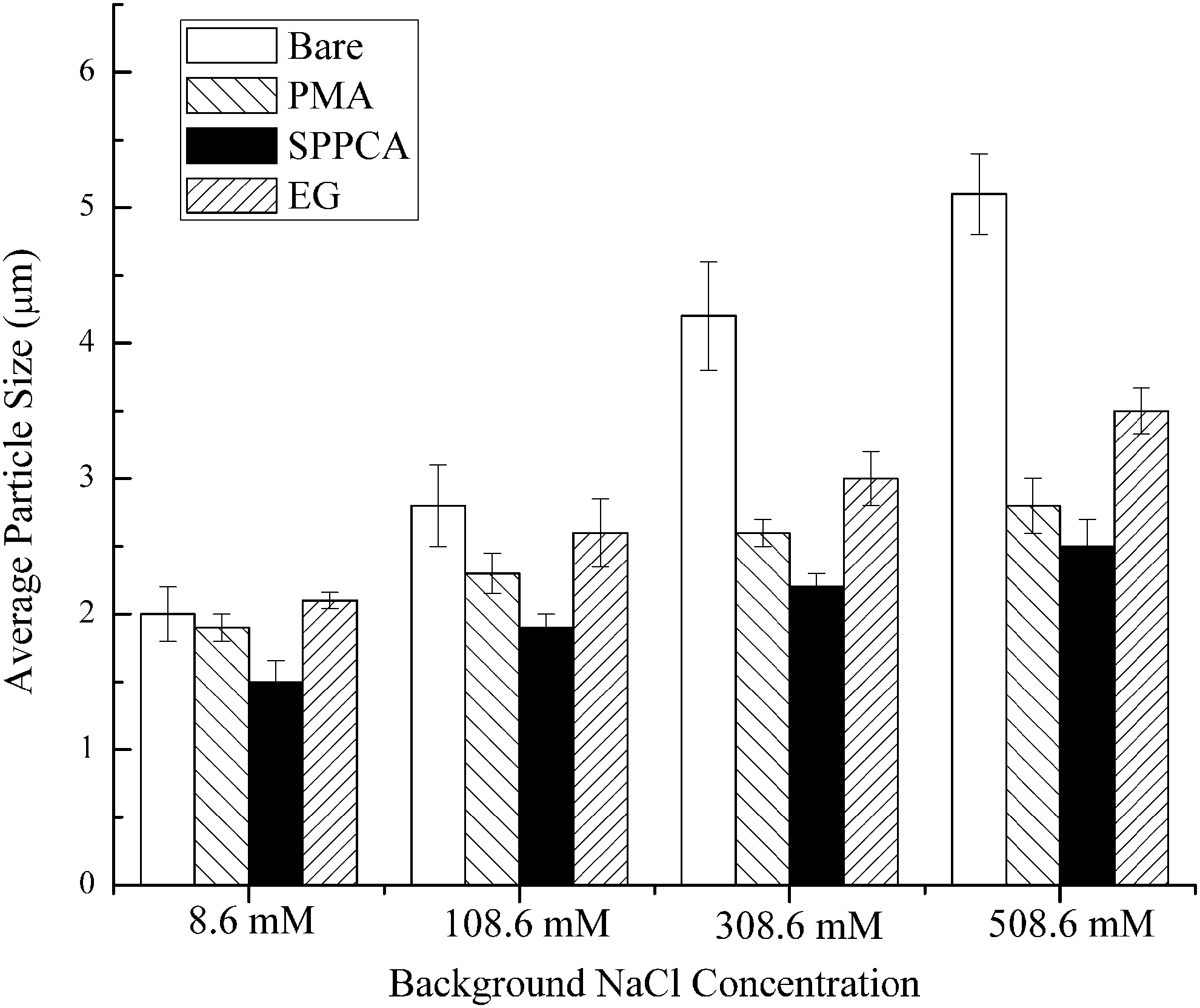
Impact of antiscalants on average particle size of BaSO4 formed at different NaCl concentrations.
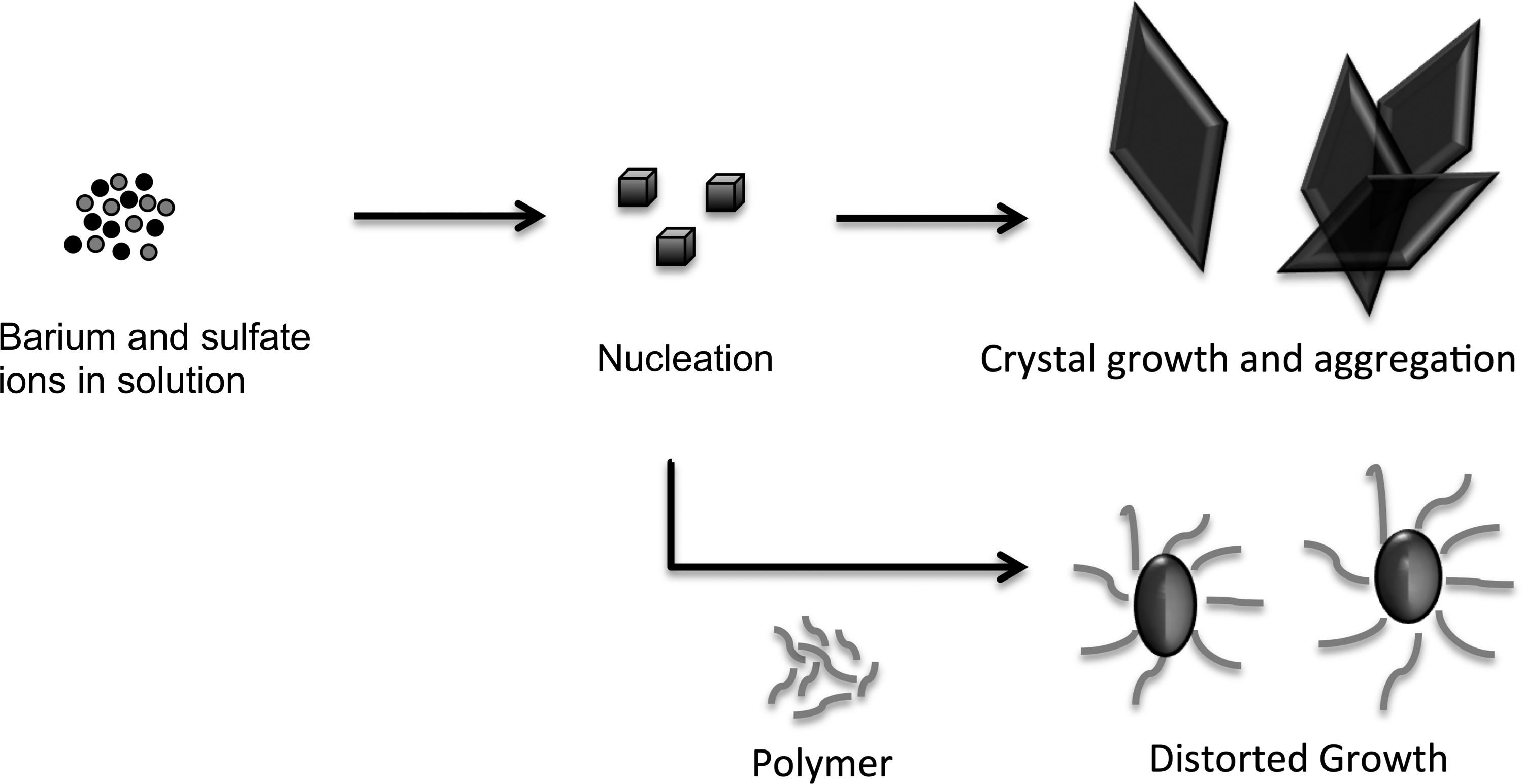
Schematic diagram of BaSO4 formation at high ionic strength in the presence/absence of polymeric antiscalants.
Mobility of bare BaSO4 through proppant sand
Considering the high salinity of shale formation brine, it is important to investigate the impact of background salt concentration on the mobility of barite particles through proppant sand. Column experiments with barite feed solution formed in the absence of antiscalants revealed that the mobility of BaSO4 particles decreased with an increase in the background salt concentration. As can be seen in Fig. 4, when the background NaCl concentration was below 0.1 M, a gradual increase in BaSO4 concentration in the effluent was observed, suggesting “blocking” of retention sites by previously deposited BaSO4 particles (Redman et al., 2004). The “blocking effect” decreased with an increase in NaCl concentration, which was attributed to the compression of an electrical double layer surrounding the surface of barite particles (Johnson and Elimelech, 1995). When 0.5 M NaCl was added to the feed solution, negligible breakthrough of BaSO4 particles was observed even after 30 PV of feed solution passed through the column.
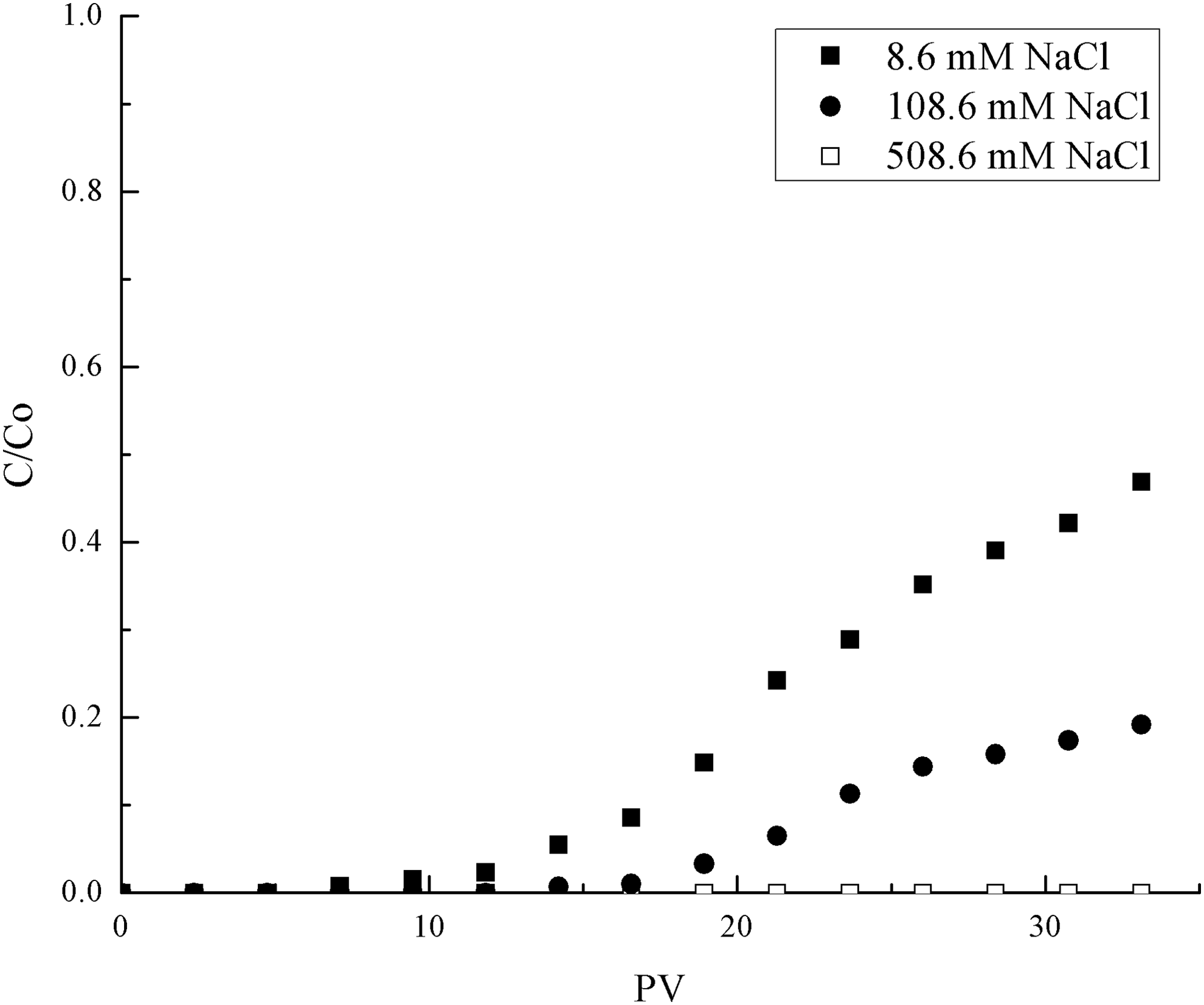
Impact of ionic strength on BaSO4 transport through proppant media. PV is pore volume of the proppant sand column.
The effect of low IS on the transport of colloidal particles through the packed sand column has been widely studied and can be explained by the classical Derjaguin-Landau-Verwey-Overbeek (DLVO) theory (Liu et al., 1995; Bradford et al., 2007; Saleh et al., 2008). However, elevated salt concentrations used in this study not only reduced the electrostatic interactions but also increased the size of BaSO4 particles. The increased particle size results in greater frequency of particle–collector (i.e., particle–grain) collisions, whereas the reduced electrostatic repulsion leads to a greater fraction of these collisions resulting in attachment.
Impact of antiscalants on BaSO4 particles transport through proppant sand
Because the selected antiscalants could not inhibit BaSO4 precipitation under the experimental conditions used in this study, it is important to evaluate the transport of antiscalant-modified barite particles through proppant sand to understand the effectiveness of antiscalants to prevent surface attachment and fate of barite particles when they are added to the hydraulic fracturing fluid. Antiscalant concentration used in practice is somewhat proprietary, but it is generally on the order of 100 mg/L. Antiscalants evaluated in this study could not prevent the formation of barite particles at high saturation levels (SI >3.54), even at a dosage of 100 mg/L (data not shown). When tens or hundreds of mg/L of sulfate are present in the fracking fluid and when barium concentration in the produced water is hundreds or, more likely, thousands of mg/L, it is clear that the barite saturation level will be very high. Therefore, the focus of this study was on the effect of reasonable doses of antiscalants on barite morphology and particle size as well as on the mobility of barite particles through proppant sand.
The effect of selected antiscalants on the transport of barite particles through proppant sand was compared at a 0.5 M background NaCl concentration and pH 7. As shown in Fig. 5, both polymeric antiscalants (i.e., PMA and SPPCA) can significantly improve mobility of barite particles at high IS. However, the presence of EG did not yield any measurable barite in the effluent throughout the experiment, suggesting that EG had no impact on the mobility of BaSO4 through the proppant sand. The lack of mobility of bare and EG-modified barite particles suggests that these particles will most likely be retained by the proppant pack in the subsurface during the flowback period, which could potentially cause significant reduction in well productivity.

Impact of SPPCA and PMA on BaSO4 transport through the proppant column at pH 7 and a high background NaCl concentration of 508.6 mM. PV is pore volume of the proppant sand column.
Zeta potential of barite particles was measured to determine the impact of polymeric antiscalants on the surface charge of barite particles. As illustrated in Fig. 6, the presence of both SPPCA and PMA resulted in the shift of point-of-zero charge of freshly precipitated BaSO4 toward lower pH. Because the surface of silica (the most commonly used proppant sand material) is negatively charged at pH above 3 (Solovitch et al., 2010), particles with greater negative surface charge will exhibit greater mobility because of particle–collector and particle–particle electrostatic repulsion. Electrostatic interactions between particle and collector and between barite particles were calculated using classical DLVO theory with the assumption of sphere-plate geometry (Hiemenz and Rajagopalan, 1997). Zeta potential of silica particles was calculated for an NaCl concentration of 0.5 M using Graham's equation, assuming a constant surface charge density (Hiemenz and Rajagopalan, 1997; Johnson, 1999; Saleh et al., 2008; Solovitch et al., 2010). These calculations revealed that all electrostatic energy barriers in the presence of 508.6 mM NaCl were zero for all pH conditions (pH = 4.0–8.5) evaluated in this study. This finding is consistent with previous findings that the electrostatic repulsion is essentially eliminated for IS >0.3 M (Redman et al., 2004; Saleh et al., 2008). Although the variation in surface charge properties may be beneficial to prevent deposition of barite particles on silica sand in relatively dilute solutions (e.g., groundwater), it is not an important factor for the conditions that are prevalent in unconventional gas extraction from deep formations.
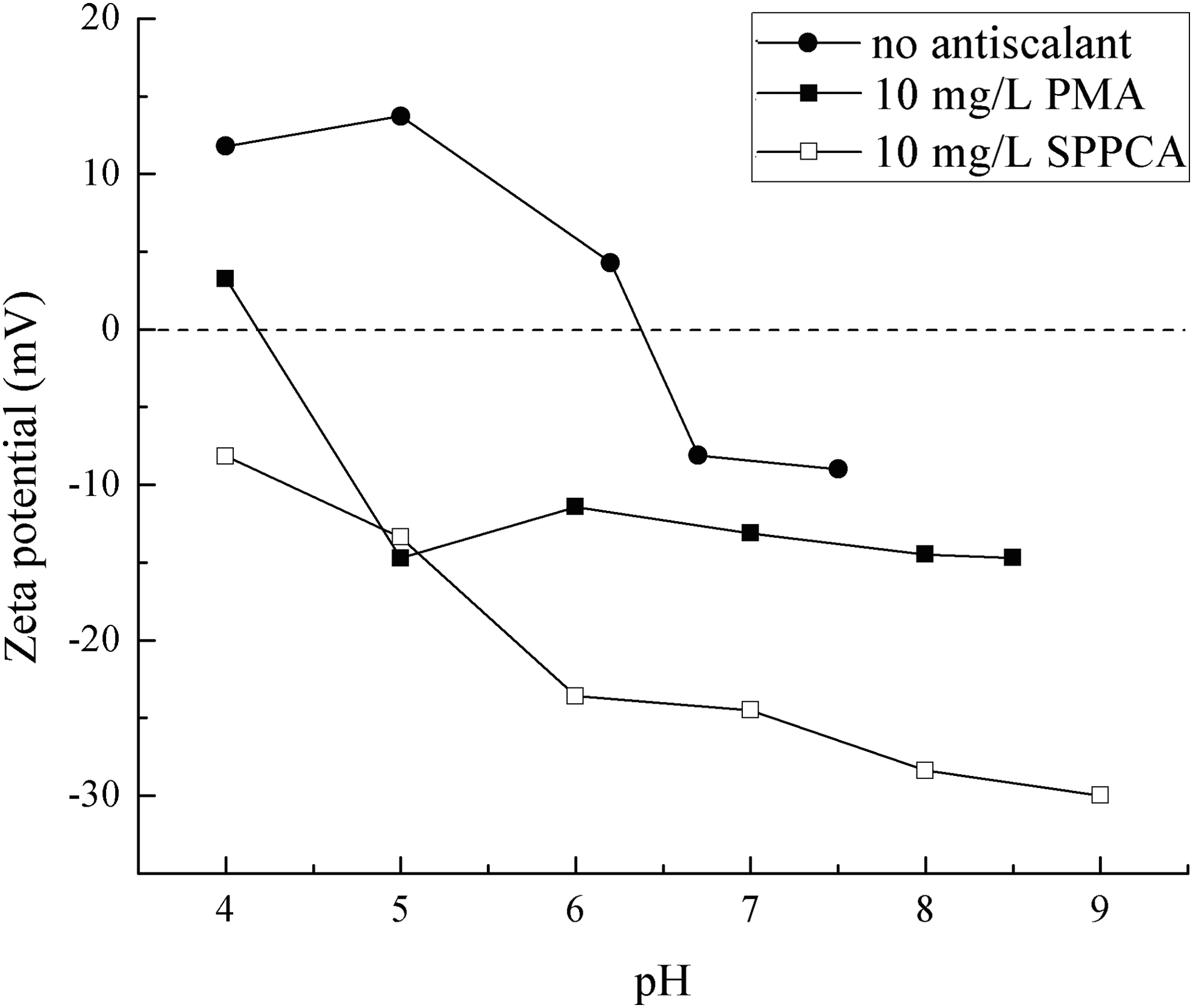
Zeta potential of BaSO4 particles formed in the presence of PMA and SPPCA.
As the electrostatic interactions are screened at high salt concentrations that are typical for deep formation brines, the enhanced mobility observed for polymer-modified barite particles suggests the existence of steric repulsion that remains strong even at high IS (Saleh et al., 2008). Accordingly, the monomeric EG that is too small to provide steric repulsion has no impact on barite mobility through the proppant sand at high background NaCl concentrations (Hotze et al., 2010). The results in Fig. 5 also indicate that SPPCA is more effective than PMA in enhancing the mobility of barite particles through proppant sand, which can be attributed to greater steric repulsion induced by SPPCA with a higher molecular weight (Saleh et al., 2008).
Mobility of barite particles formed in the presence of PMA and SPPCA was very dependent on the solution pH. As can be seen in Fig. 7, mobility of barite particles increased with pH for both polymeric antiscalants tested in this study. This change was particularly dramatic in the case of PMA where no breakthrough of barite particles was observed at pH 4 and rapid breakthrough was observed at pH 8.5 (Fig. 7b). The increase in pH can result in deprotonation of PMA and SPPCA, which affects the electrostatic properties and, potentially, the conformation of the polymer itself (van der Leeden, 1991; Wan et al., 2004).
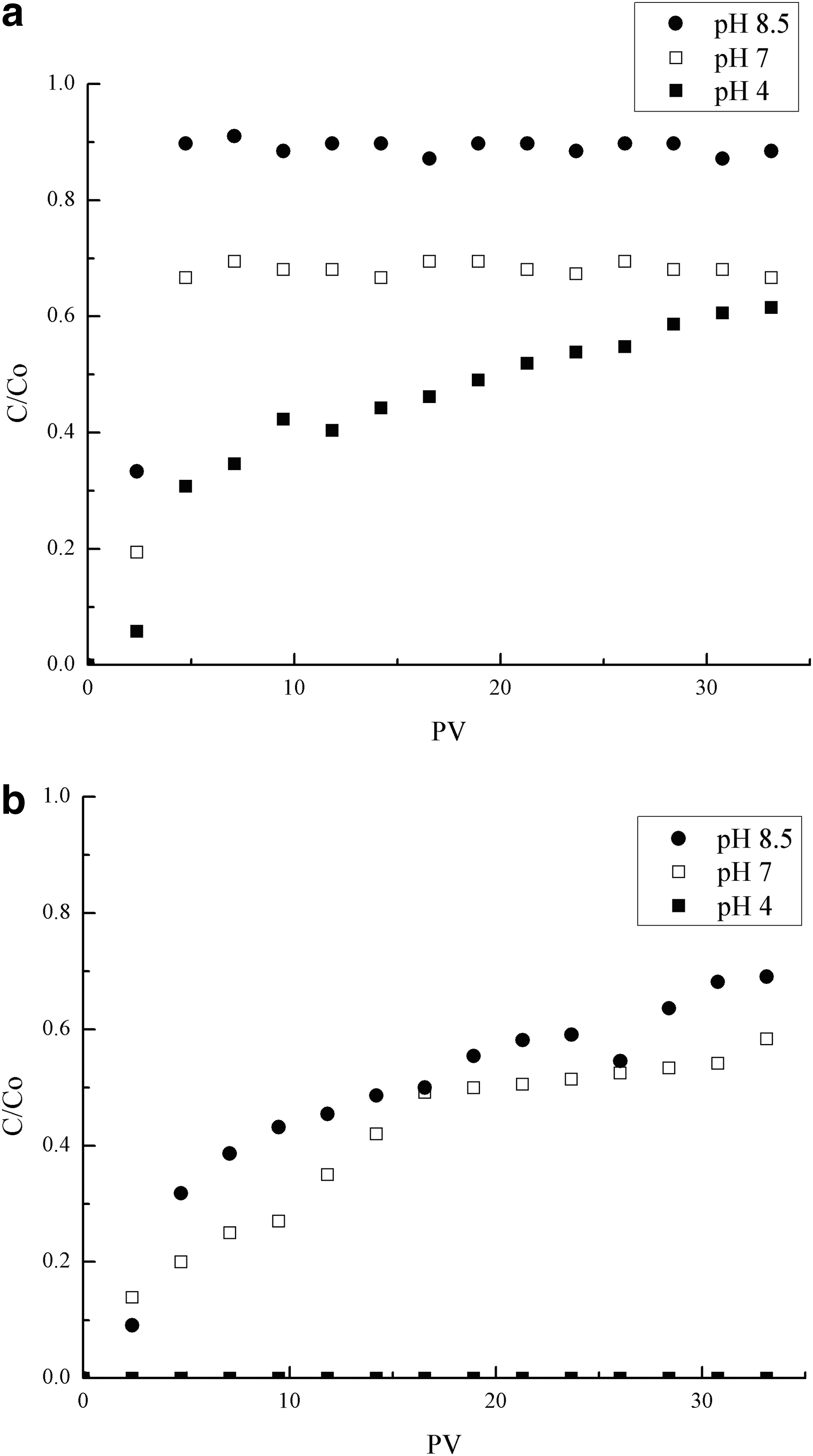
Breakthrough of
Because the electrostatic repulsion had minimal influence on barite deposition at high IS evaluated in this study, the difference in mobility of polymer-modified BaSO4 at various pH levels was likely due to polymer conformation. It was previously reported that the conformational transition of a polymer is attributed to the tuning of polymer charge with pH (Kirwan et al., 2004). For highly charged polymers, extended-coil conformation occurs due to electrostatic repulsion between the charged units, whereas the polymer chain generally collapses into a compact coil at reduced charge density (Yu and Somasundaran, 1996; Kirwan et al., 2004). Deprotonation of the carboxyl group on PMA and SPPCA at higher pH can increase the charge density of these polymers, which results in the extended-coil conformation. Increase in the thickness of the polymer “brush” layer can, in turn, result in greater particle–collector and particle–particle steric repulsion, which reduces the retention of barite particles by the proppant sand (Hotze et al., 2010).
Conclusions
Impact of antiscalants on the formation and transport of barite through the proppant pack was evaluated in this study. Antiscalants that are generally used as threshold inhibitors are unlikely to prevent formation of barite particles when sulfate-rich fracturing fluid is used in Marcellus Shale because of the supersaturation levels that are typical in this shale play. Although the antiscalants evaluated in this study cannot inhibit barite formation, they can reduce the size and morphology of barite particles that will be formed.
Barite particles that will inevitably precipitate in the subsurface when sulfate-rich fracking fluids are used will travel through the proppant pack during the flowback period. An understanding of the mobility of barite particles through a saturated porous proppant pack is important to estimate the potential of these particles to cause well plugging. This study evaluated the transport of BaSO4 particles formed at various conditions to elucidate the role of antiscalants in controlling the fate of barite particles. The breakthrough experiments revealed that the retention of bare BaSO4 particles in the proppant pack at a high background NaCl concentration (508.6 mM) is significant because of the large particle size and screened electrostatic repulsion. EG, which may be used in shale gas extraction to control scaling in the subsurface, has limited impact on the mobility of barite particles through the proppant pack at high IS. Therefore, in the absence of specific barite antiscalants (e.g., PMA, SPPCA) or in the presence of EG, BaSO4 particles that are formed in the subsurface are most likely to be retained by the tail-end section of the proppant pack along the shale fractures, which could substantially reduce well productivity.
On the other hand, polymeric antiscalants, such as PMA and SPPCA, can mitigate the retention of BaSO4 particles by the proppant pack, even at high background NaCl concentrations by limiting the particle size and inducing stronger steric repulsion between particles. Mobility of polymer-modified barite particles increases with pH, which is likely due to the extended-coil conformation of these polymeric antiscalants. The enhanced mobility of polymer-modified BaSO4 particles will likely reduce their impact on well productivity.
This study evaluated the impact of selected antiscalants on the formation and subsequent transport of barite through proppant sand when the IS is adjusted by NaCl. However, alkaline earth metals contribute to the overall salinity of the flowback water, and their impact on barite formation and the fate of barite particles in the proppant pack needs to be investigated. Furthermore, numerous organic compounds and surface-active agents (e.g., surfactants) that are present in the flowback water can also alter particle interactions in the subsurface, and it would be important to verify the findings of this work using actual flowback water samples from different shale plays.
Footnotes
Author Disclosure Statement
No competing financial interests exist.