




Abstract
Abstract
Implementation of water demand reduction strategies may impact downstream water quality. These practices and impacts are particularly important for arid west regions with frequent water supply shortages. Downstream water quality impacts on indoor conservation, source separation, and graywater and effluent reuse were quantified for an arid water system where receiving water stream is predominantly fed by snowmelt and experiences large fluctuations in flow. Estimates of indoor conservation indicate that, without wastewater treatment facility (WWTF) process modifications, conservation practices implemented during drought conditions to stretch a water supply will result in an increase in receiving water body nutrient concentrations (>25% increase in total nitrogen [TN] and total phosphorous [TP]). Graywater reuse practices for toilet flushing or irrigation have negligible impacts on WWTF performance and downstream water quality even with wide adoption of the practice (100% population adoption). Conversely, adoption of source separation is estimated to notably improve influent nutrient loading, which corresponded to an improvement in WWTF effluent loading. To meet potential stream standards, city-wide adoption of source separation would be necessary and there are likely more cost-effective and feasible opportunities for improvements at the WWTF. The downstream impact of WWTF effluent reuse is largely dependent on the receiving water body and seasonality of flows, but the practice is beneficial during mid-range flow and dry conditions when effluent reuse is most valuable as an additional supply (>25% decrease in TN and TP). However, water reuse does not provide a benefit to the WWTF under concentration-based permits.
Introduction
W
In arid western states, like California, water conservation and use restrictions are adopted to conserve water during drought conditions (Mini et al., 2015). Even areas not suffering from drought conditions will strive to achieve water efficiency to promote development and accommodate population growth. For example, New York has historically utilized water conservation to offset costly development of new water sources (Paulsen et al., 2007).
More stringent water quality regulations are closely connected with the issue of water scarcity to protect the water quality of existing supplies. Nutrients are one of the primary contaminants of concern, which may lead to eutrophication, resulting in decreased dissolved oxygen, killing native species, and producing compounds toxic to humans (Smith, 2003). Nutrient removal is one of the biggest challenges facing WWTF (Reardon et al., 2013) and many states are adopting nutrient regulations for WWTFs. For example, Colorado has implemented nutrient regulations for annual median total inorganic nitrogen of 15 mg N/L and median total phosphorous (TP) of 1 mg/L for existing facilities (CDPHE, 2012). Wisconsin has established statewide TP limits of 1 mg/L (WDNR, 2011).
The Chesapeake Bay has implemented a total maximum daily load approach for limiting the annual dischargers from contributions across New York, Pennsylvania, Maryland, Delaware, District of Columbia, West Virginia, and Virginia (EPA, 2017). North Carolina has also implemented basin-specific load-based regulations requiring facilities to reduce annual total nitrogen (TN) and TP discharge loads by as much as 40% and 77% (NCDEQ, 2016a), respectively, for nutrient sensitive waters, resulting in the need for some WWTFs to treat wastewater to 5.5 mg/L TN and 0.5 mg/L TP (NCDEQ, 2016b). These stringent regulations may have substantial operational and cost implications on WWTFs (Daigger et al., 2014), rendering even slight effluent concentration changes caused by water management practices important.
Common practices to reduce water demand include installation of water-conserving fixtures, behavioral changes for reducing water use, graywater reuse for toilet flushing and/or irrigation, and WWTF effluent reuse (Attari, 2014; DeOreo et al., 2016; WSTB, 2016; Christova-boala, et al., 1996; Rockaway et al., 2011). Indoor conservation can substantially decrease water use through simple retrofits, appliance replacement, and behavioral changes (DeZellar and Maier, 1980; Attari, 2014). During times of drought, these practices may be adopted at a widespread scale and incentivized by utilities. Conservation practices reduce indoor water use, but increase pollutant concentrations as pollutant load per capita is independent of water use (Daigger, 2009).
Graywater has been estimated to account for as much as 50% of indoor water use (Sheikh, 2009), with nutrient concentrations averaging 14 mg/L TN and 4 mg/L TP (Jokerst et al., 2011). A study on graywater reuse for toilet flushing estimated that a 27% reduction in residential water demand corresponds to an increase in influent biochemical oxygen demand (BOD) and ammonia concentrations of 41% and 43%, respectively (Parkinson et al., 2005). Graywater reuse for irrigation diverts hydraulic load and associated contaminant load. However, graywater is not as highly loaded with contaminants as wastewater and the result is lower hydraulic load and increased wastewater constituent concentration.
Utilizing graywater reuse does require some investment in additional infrastructure, including dual plumbing, on-site storage, and some level of on-site treatment, and is typically easier in a new construction. Unlike conservation, adoption of graywater reuse may be highly heterogeneous and is more difficult to adopt at a widespread scale. WWTF effluent reuse diverts a portion of the treated effluent flow for nonpotable water use, thus decreasing the associated pollutant load discharged to the stream. In North Carolina, where load based regulations are implemented, WWTF may receive a credit for the nutrients diverted with effluent reuse (NCDEQ, 2016b). In addition, the TN and TP load provide a beneficial nutrient source in irrigation reuse applications to improve plant growth (Toze, 2005).
Benefits of these water management practices on improving water supply have been widely studied, and conservation approaches like graywater reuse are recognized to potentially provide notable potable water savings, particularly in arid regions (WSTB, 2016). In addition, the impacts of water conservation on sanitary collection systems have been studied to correspond to reduced flushing velocities and an increase in sediment deposition (Marleni et al., 2012).
However, little work has been done to understand the impacts that water management practices have on WWTF operations and downstream water quality. Increasing influent wastewater BOD concentrations (between 25% and 40%) has been noted as a result of water conservation, while little to no observed change in per capita BOD load was observed (DeZellar and Maier, 1980). There is limited current research on impacts of conservation on influent water quality. A statistical analysis performed on multiple New York WWTFs conclude that water conservation resulted in constant or increasing influent nitrogen concentrations, but lower effluent TN loads, likely from longer hydraulic residence time and longer solids residence time (Paulsen et al., 2007).
While it is well understood that indoor water conservation and graywater reuse (Min and Yeats, 2011) result in more concentrated wastewater (WSTB, 2016), the resulting impact on WWTF operations and performance and receiving water body quality is not well understood. The impact of water conservation and graywater reuse on WWTF performance is complex because while nutrient concentrations increase, the resulting decrease in hydraulic load increases hydraulic and solids residence time.
Understanding the impact of effluent discharge on receiving water bodies when these strategies are adopted is further complicated due to potential reduction in wastewater discharge flow and variable impacts on receiving water body flow, depending on whether conserved water remains in stream. Extensive modeling of water conservation and graywater reuse impacts based on receiving water body flow conditions is needed to better understand the impacts of these practices on downstream water quality. This is particularly important in arid west regions where wastewater discharge can have a large impact on receiving water body quality during low-flow and drought conditions.
One other water management strategy that is considered for the positive impact on nutrient load reductions is source separation, also known as urine diversion, where urine is source separated at the toilet (Wilsenach and van Loosdrecht, 2003). Urine accounts for 75–80% of the nitrogen and 50–55% of the phosphorous mass loading in wastewater (Fewless et al., 2011); therefore, source separation will reduce the flow associated with urine flushing and decrease nutrient loading to a WWTF. Source separation has been hypothesized to potentially be a more effective way of nutrient pollution management than conventional centralized treatment (Ishii and Boyer, 2015).
The separated urine is collected at smaller scales (household, multiresidential, and neighborhood) and treated separately, resulting in a concentrated nutrient and phosphorous product. Additional infrastructure is required to allow for source separation, collection, and treatment through physicochemical and/or biological processes (Fewless et al., 2011), and like graywater reuse, adoption will be heterogeneous and costly at large scale. It is well understood that source separation of urine could potentially lead to decreased nutrient loads in wastewater by up to 80% of TN and 45% of TP (Wilsenach and van Loosdrecht, 2003). However, the downstream impact of this reduction to WWTF influent and receiving water bodies has not been well studied.
The objective of this research is to quantify the water quality impact of several water management practices on nutrient discharge concentration and load, and subsequent impact on receiving water body quality. This research applies a systems approach to evaluate the effects of indoor conservation, source separation, graywater reuse and WWTF effluent reuse using influent loading estimation, BioWin process modeling, and analysis of receiving water body nutrient loading. Several scenarios were developed at different levels of adoption and modeled at a Colorado WWTF with biological nutrient removal for various flow conditions (e.g., low, medium, and high) in receiving water bodies.
Experimental Protocols
The studied area was selected because it is reflective of many arid west water systems with limited water supply, seasonal irrigation demands, and highly variable stream flow. Given these characteristics, water management practices and water quality standards are important in stretching and protecting the water supply. The water system is composed of interbasin and imported supply, two water treatment plants (primary and seasonal), and one WWTF (Fig. 1). The system's dependence on imported supply, seasonal irrigation use, and utilization of a secondary water treatment facility for summer peak flows creates challenges in terms of water management and receiving water body quality impacts. There is a notable incentive in implementing water management practices that stretch the existing supply and minimize the dependency on imported flows, while protecting the downstream water quality.

Water system schematic.
Scenarios were developed for each of the management practices to analyze the influent, effluent, and downstream water quality. The influent scenarios included analysis of flow and concentration of 5-day biochemical oxygen demand (BOD5), total suspended solids (TSS), TN, and TP to characterize variations in the influent water quality at the WWTF. All analysis was based on 2014 water quality data, provided by the studied WWTF, with a baseline population of 114,195 (PS) people and an average wastewater production of 492.1 L/ [capita·day] (dB) (Base Scenario) representing wastewater flows from all sources (residential, inflow, and infiltration, and commercial, institutional, and industrial [CII]).
Indoor conservation was considered based on different levels of indoor water use on a per capita basis (dIN). Source separation (PSS) and graywater toilet and irrigation reuse (PGWT and PGWI) were considered at different levels of population adopting the technology. WWTF effluent reuse was considered at different levels of percent effluent reuse (R%). The water management scenarios are summarized in Table 1. These scenarios were selected to develop a range of evenly distributed practice implementation up to extreme levels of adoption. The analysis was evaluated at a municipal scale where the influent wastewater is homogeneous and not dependent on site-specific adoption. The baseline influent water quality is summarized in Table 2.
WWTF, without wastewater treatment facility.
COD, chemical oxygen demand; DO, dissolved oxygen; MGD, million gallons per day; SS, suspended solids; TKN, total kjeldahl nitrogen; TP, total phosphorous; TSS, total suspended solid.
To characterize the impacts on influent flow and water quality, a mass balance approach was adopted similar to Wilsenach and van Loosdrecht (2003). For graywater reuse, it was assumed that reuse is only from residential sources assuming collection from showers, clothes washer, bathtub, and 25% of faucet (excludes kitchen water) equating to 94.6 L/[capita·day] (dGI) (DeOreo et al., 2016). The volume of water associated with toilet reuse was assumed to be 45.4 L/capita/d (dT), within the typical range of 42.4–53.8 L/[capita·day] (DeOreo et al., 2016). For source separation, the reduction in influent wastewater flow was assumed to be 36.3 L/[capita·day] (dSS) (Wilsenach and van Loosdrecht, 2003). The influent wastewater flow for each scenario was calculated based on Equation (1).
where,
QIN = influent flow to treatment facility (volume/day)
dB = base indoor water demand (volume/[capita·day])
dIN = indoor water demand (volume/[capita·day])
ΔdC = dB – dIN = change in average indoor water demand based on conservation (volume/[capita·day])
dT = toilet flush demand (volume/[capita·day])
dGI = graywater used for irrigation (volume/[capita·day])
dSS = flow reduction from source separation (volume/[capita·day])
PS = service population (capita)
PGWT = population adopting graywater reuse for toilet flushing (capita)
PGWI = population adopting graywater reuse for irrigation (capita)
PSS = population adopting source separation (capita)
To evaluate the impact on influent water quality, source water quality characteristics were defined for influent wastewater load, graywater concentrations, and urine separation loading rates. A mass balance approach was utilized to evaluate the impacts a given scenario will have on the WWTF influent in terms of flow, BOD5, TSS, TN, and TP. The per capita wastewater load (LIN) indicated in Table 3 was calculated based on the 2014 service area population and the influent flow and water quality (Table 2). Of note is that estimates of LIN include load from CII flows. The calculated BOD5 and TSS LIN are comparable to design standards of 110 and 100 g/[capita·day] (10 State Standards, 2004).
Calculated from the modeled influent concentration at the 75th Street Wastewater Treatment Facility and service population in 2014.
BOD, biochemical oxygen demand.
Studies on graywater have reported highly variable water quality depending on the contributing sources with ranges of 76–200 mg/L BOD5, 54–200 mg/L TSS, 5–17 mg/L TN, and 0.1–2 mg/L TP (Eriksson et al., 2002). In a study of the behavior of nutrients in a constructed wetland for graywater treatment, average graywater concentrations of 86.3 ± 40.3 mg/L BOD5, 16.5 ± 7.2 mg/L TSS, 13.5 ± 8.7 mg/L TN, and 4.0 ± 1.8 mg/L TP have been reported (Jokerst et al., 2011). Based on the large variability associated with graywater quality, representative concentrations of graywater (CGW) were selected consistent with typical ranges and averages (Table 3).
Studies on the water quality of source separation report nitrogen and phosphorus loads of 6.8–12 g N/[cap·day] and 0.63–1 g P/[cap·day] (Vinneras, 2002; Wilsenach and van Loosdrecht, 2003; Von Munch and Winker, 2009); therefore, a urine separation loading rate (LSS) of 11 g N/[cap·day] and 1 g P/[cap·day] was selected (Table 3). Based on the selected source water quality and calculated influent flow, the impact on influent wastewater quality was calculated for each scenario based on Equation (2).
where,
CIN = influent concentration to treatment facility (mass/volume)
LIN = base constituent load (mass/[capita·day])
CGW = graywater constituent concentration (mass/volume)
QGWI = dGI × PGWI = graywater irrigation demand (volume/day)
LSS = source separation constituent load (mass/[capita·day])
QIN = influent flow to treatment facility (volume/day)
PGWI = residential population adopting graywater reuse for irrigation (capita)
PS = service population (capita)
A BioWin 5.0 (EnviroSim Associates Limited, 2016) calibrated and validated process model was used to evaluate the change in influent water quality for each water management scenario. The evaluated WWTF is a Modified Ludzack Ettinger process with nitrification and denitrification, an average flow of 0.65 m3/s, and a permitted capacity of 1.10 m3/s. The model was developed based on 2014 influent and effluent data and validated to 5 months of 2015 data (McKenna et al., 2017). The model calibration was developed by McKenna et al. (2017), and the base observed and calibrated modeled effluent water quality are provided in Table 4. Each scenario was modeled in BioWin to determine the effluent flow, concentration (CEFF), and load (LEFF), and used to model the impacts on receiving water body.
TCBOD, total carbonaceous biochemical oxygen demand.
WWTF discharges to the Boulder Creek (Boulder, CO), which is primarily fed by snowmelt and results in high peak flows in the spring and low flows in the winter, and can experience flashy behavior resulting from heavy spring, summer, or fall precipitation. A flow duration curve was prepared from 2000 to 2016 at USGS Site Number 06730200, located immediately upstream of the effluent discharge to characterize historical stream flows (Fig. 2). These stream characteristics are common in arid west regions where streams are primarily fed by snowmelt and the arid climate results in large variations between high and low flows. The flow duration curve is segmented into high flow, moist conditions, mid-range flow, dry conditions, and low flow based on the frequency of flow occurrence corresponding to flow values of >5.47, 5.47–1.53, 1.53–0.88, 0.88–0.25, and <0.25 m3/s (<193, 193–54, 54–31, 31–9, and <9 ft3/s), respectively.
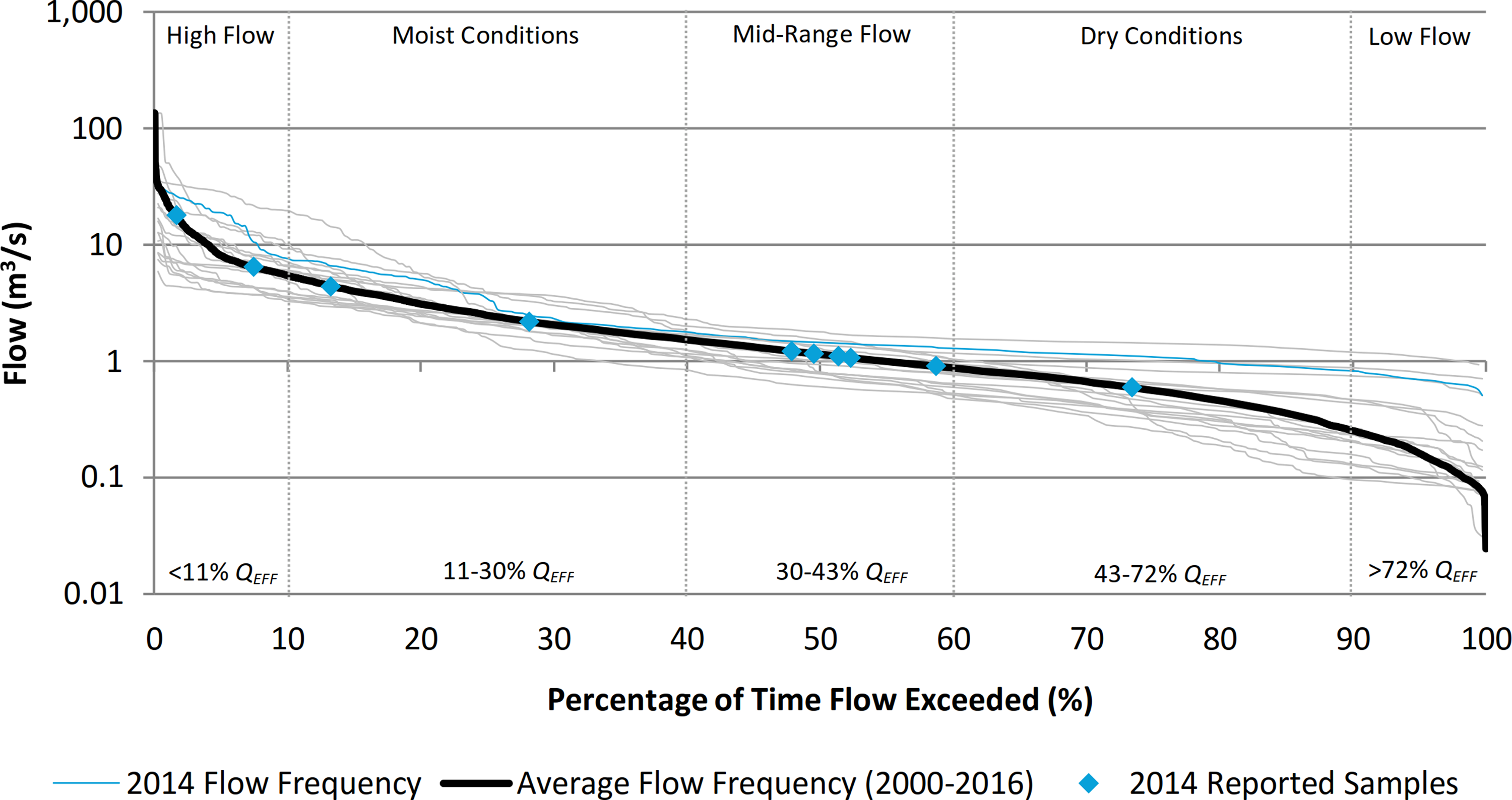
Average Boulder Creek flow duration curve at USGS station 06730200 based on daily stream flows from 2000 to 2016, indicating high flow, moist conditions, mid-range flow, dry conditions, and low flow and highlighting 2014 flow frequency. Data points indicate 2014 reported water quality samples and corresponding average flow frequency condition. The percent of effluent contributing to stream flow is indicated based on the average 2014 effluent discharge.
With this large variability in flow, the stream is generally more influenced by the effluent water quality in the fall and winter (low flow) and less influenced in the spring (peak flow). However, high flow and moist conditions can be observed at various times in the year during heavy rainfall events and mid-range flow, low flow, and dry conditions can be common during periods of drought. The stream gauge is located immediately upstream of the WWTF effluent. During the study period (2014), the stream flows were above average ranging from 0.51 to 30.56 m3/s.
The studied WWTF collected 12 monthly grab samples of flow, TN concentrations, and TP concentrations in 2014 and reported to the CDPHE for nutrient regulation compliance (STORET, 2016). Samples are reported for the discharge as well as upstream and downstream of the discharge location. The scenario effluent flow, TN, and TP were used to estimate downstream water quality on a monthly basis based on the upstream reporting data correlated to the historical flow frequency. In 2014, the monthly average discharge from the WWTF was 0.535–0.811 m3/s (12.2–18.5 million gallons per day [MGD]) and the monthly average discharged flow accounted for 4–47% (average 30%) of the downstream flow with average monthly upstream flows ranging from 0.59–17.89 m3/s (13.6–408.5 MGD).
The receiving water body will be more sensitive to changes in effluent concentration when the stream is effluent dominated and thus the percentage of stream flow comprising effluent was provided for reference based on the average 2014 effluent WWTF flows and historical stream flows (Fig. 2). The 2014 stream flow was high compared to the historical stream flow with one sample representative of average dry conditions, seven samples representative of average mid-range flow, two samples representative of moist conditions, and two samples representative of high flow conditions (Fig. 2). Historically, Colorado frequently experiences drought conditions where in 2008 and the Boulder stream exhibited historical mid-range flow, low flow, or dry conditions for 75% of the year.
Downstream flow (QDS) was determined based on the upstream flow (QUS) and effluent flow (QEFF) discharged from the WWTF. For the indoor conservation scenarios, the downstream flow was calculated under two conditions, assuming either conserved flow (QCONS) stays in the stream [Eq. (3)] or conserved flow is removed from the stream for consumptive use or not available [Eq. (4)]. For source separation, graywater reuse for toilet flushing, and graywater reuse for irrigation, it was assumed that conserved water does not remain in the stream [Eq. (4)]. For WWTF effluent reuse, the discharged effluent flow was calculated removing the percentage of water allocated for reuse (R%) [Eq. (4)]. Downstream concentrations (CDS) were determined based on the effluent flow and concentration (CEFF) and upstream flow and concentration (CUS) indicated in Equation (5). The calculated downstream flow and concentrations were used to calculate the downstream load (LDS).
where,
QEFF = effluent flow from treatment facility (volume/day)
QIN = influent flow to treatment facility (volume/day)
QCONS = ΔdC x PS = flow conserved (volume/day)
R% = percent wastewater effluent reuse (percent)
where,
CUS = upstream constituent concentration (mass/volume)
QUS = upstream flow (volume/day)
CEFF = effluent constituent concentration from treatment facility (mass/volume)
QEFF = effluent flow from treatment facility (volume/day)
CDS = downstream constituent concentration (mass/volume)
R% = percent wastewater effluent reuse (percent)
Results
In general, influent water quality was more notably impacted with indoor conservation and source separation adoption (Fig. 3A, B), and less impacted by graywater reuse adoption (Fig. 3C, D). Intuitively with adoption of indoor conservation, a constant influent load and decrease in water use equate to a notable increase in concentration (Fig. 3A), where a 54% reduction in flow resulted in an increase in TN and TP concentration of 117% and 118%, respectively (Fig. 3A). Source separation was estimated to have a substantial decrease in influent TN and TP (Fig. 3B) where full adoption of source separation would reduce influent flow by 7%, corresponding to a reduced influent TN and TP concentration of 63% and 40% respectively, and TN and TP load of 66% and 44%, respectively (Fig. 3B).
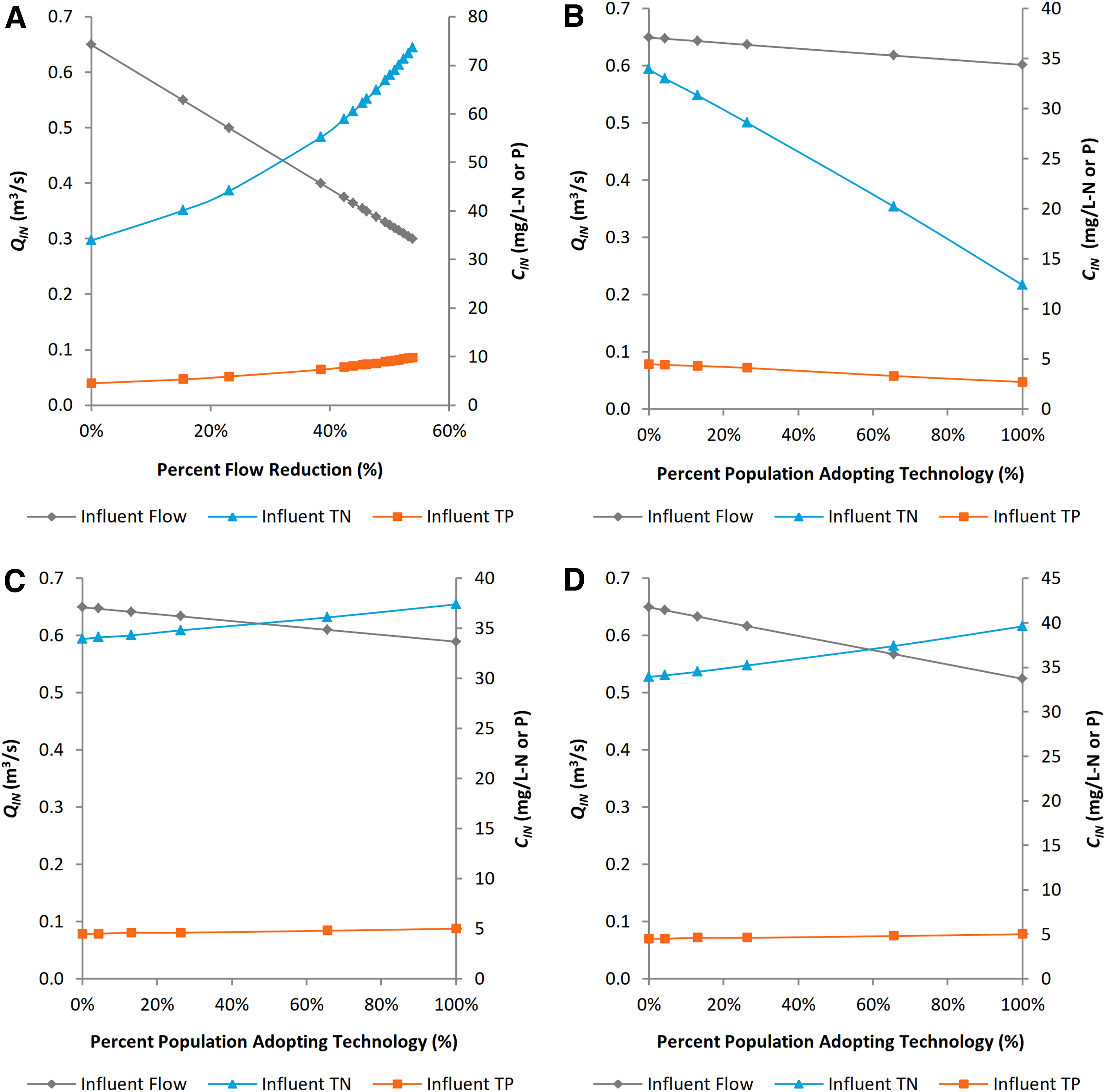
Impact on influent flow (QIN) and influent TN and TP concentration (CIN) for indoor conservation
Like indoor conservation, graywater reuse for toilet flushing also assumed a constant influent nutrient load to the WWTF. However, the impacts on flow reduction were much less compared to indoor conservation, resulting in a less drastic increase in influent concentrations where even at full scale adoption, a 9% reduction in flow equated to an increase in TN and TP concentration by 10% and 11%, respectively (Fig. 3C). Similarly, graywater reuse for irrigation had notable impacts on influent flow, but less drastic impacts on nutrient concentration as the reduction in flow is much greater than the reduction in load, where at full scale adoption, the flow is reduced by 19% and the influent TN and TP concentration increase by 17% and 11%, respectively (Fig. 3D).
It is important to note that to observe this level of adoption for graywater toilet or irrigation reuse, it would require a significant amount of infrastructure investment, including dual plumbing of buildings, on-site storage, and some level of on-site treatment. This level of adoption is not likely, and the model results overall suggest that these practices have negligible impacts on wastewater quality.
Using the above influent water quality scenarios, effluent concentration of TN and TP was predicted based on BioWin modeling, assuming no change in operational parameters. The resulting impacts at the highest levels of adoption evaluated are summarized in Table 5. The scenarios with more drastic influent impacts, conservation and source separation, showed the most notable impacts on effluent concentrations (Fig. 4A, B), and the scenarios that showed little to no impact on the influent concentrations, graywater reuse, had negligible impacts on effluent water quality (Fig. 4C, D). At high levels of indoor conservation, a reduction of effluent TN load is observed, similar to findings from Paulsen et al. (2007). This indicates that the TN load removal is improved with conservation; however, the wastewater treatment facility is not able to meet the same performance metrics in terms of concentration (Table 5; Fig. 4A).
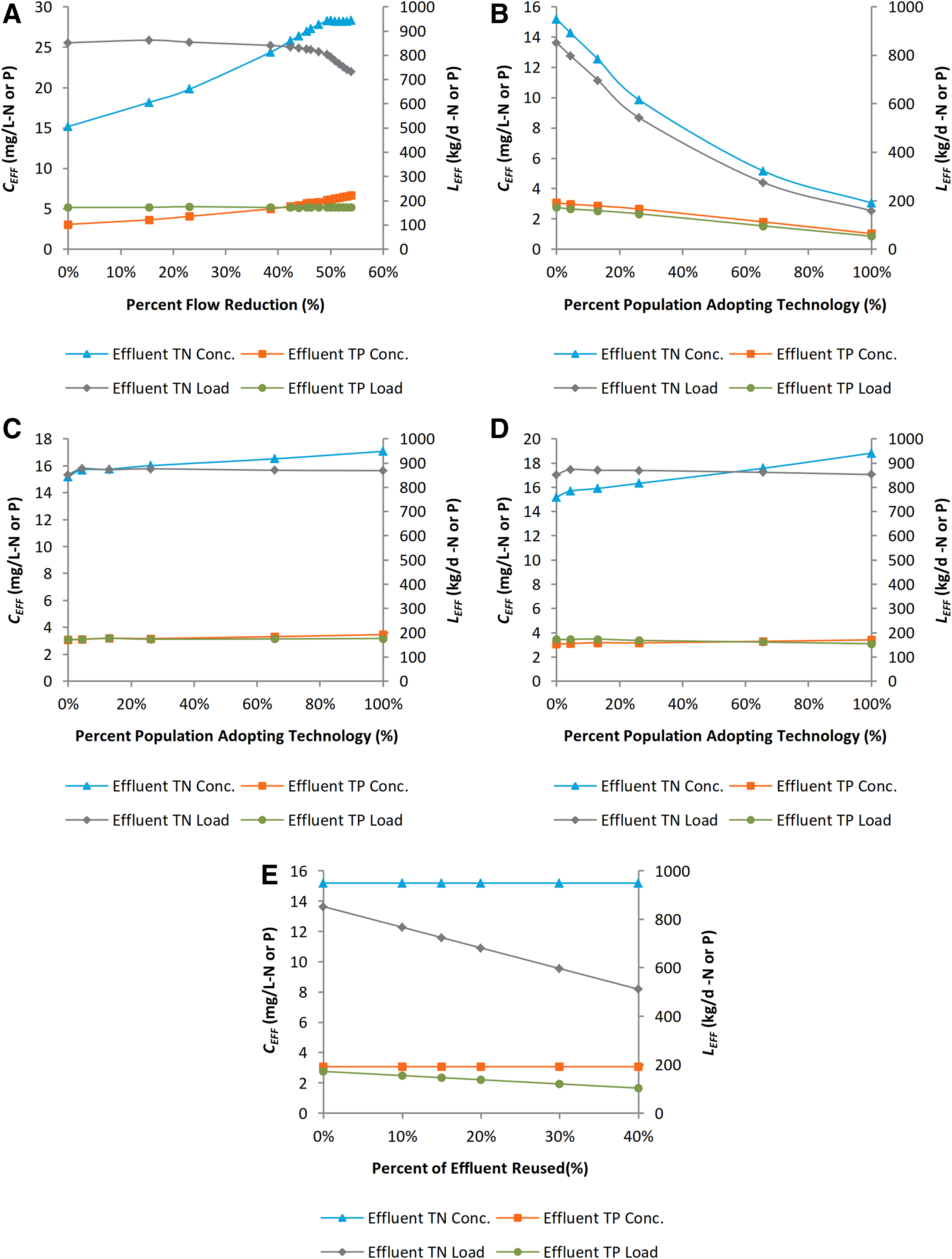
Impact on effluent TN and TP concentration (CEFF) and loading (LEFF) for indoor conservation
Similarly, an improved load removal is estimated with an increasing adoption of source separation, indicating an improvement in wastewater treatment facility efficiency where a reduction of influent TN and TP load by 66% and 44%, respectively, corresponded to a reduction in effluent TN and TP load of 81% and 69%, respectively (Table 5), indicating that the percentage load removal increased with higher levels of adoption. While, the impacts of wastewater effluent reuse on concentration and load are clearly understood, they are provided graphically for comparison where a 40% reduction in effluent flow equates to a 40% reduction in nutrient loads, but no impact on effluent concentrations (Fig. 4E; Table 5).
The primary purpose of this work was to evaluate the impacts of water management practices on receiving water quality. For indoor conservation, while the effluent concentration increases with adoption, the effluent load is relatively constant, or even slightly improved (i.e., load reduction; Fig. 4A), and there is little impact on downstream concentrations. If conserved flow stays in the stream, the result to the downstream concentrations is actually slightly improved, where a 54% reduction in flow with indoor conservation reduces the TN concentration, particularly in mid-range flow and dry conditions (Fig. 5A). However, conservation practices are often implemented under drought conditions when water scarcity is an issue. If conserved flow is instead utilized for a consumptive use, the downstream impacts are noteworthy evident with the mid-range flow and dry conditions considered (Fig. 5B).
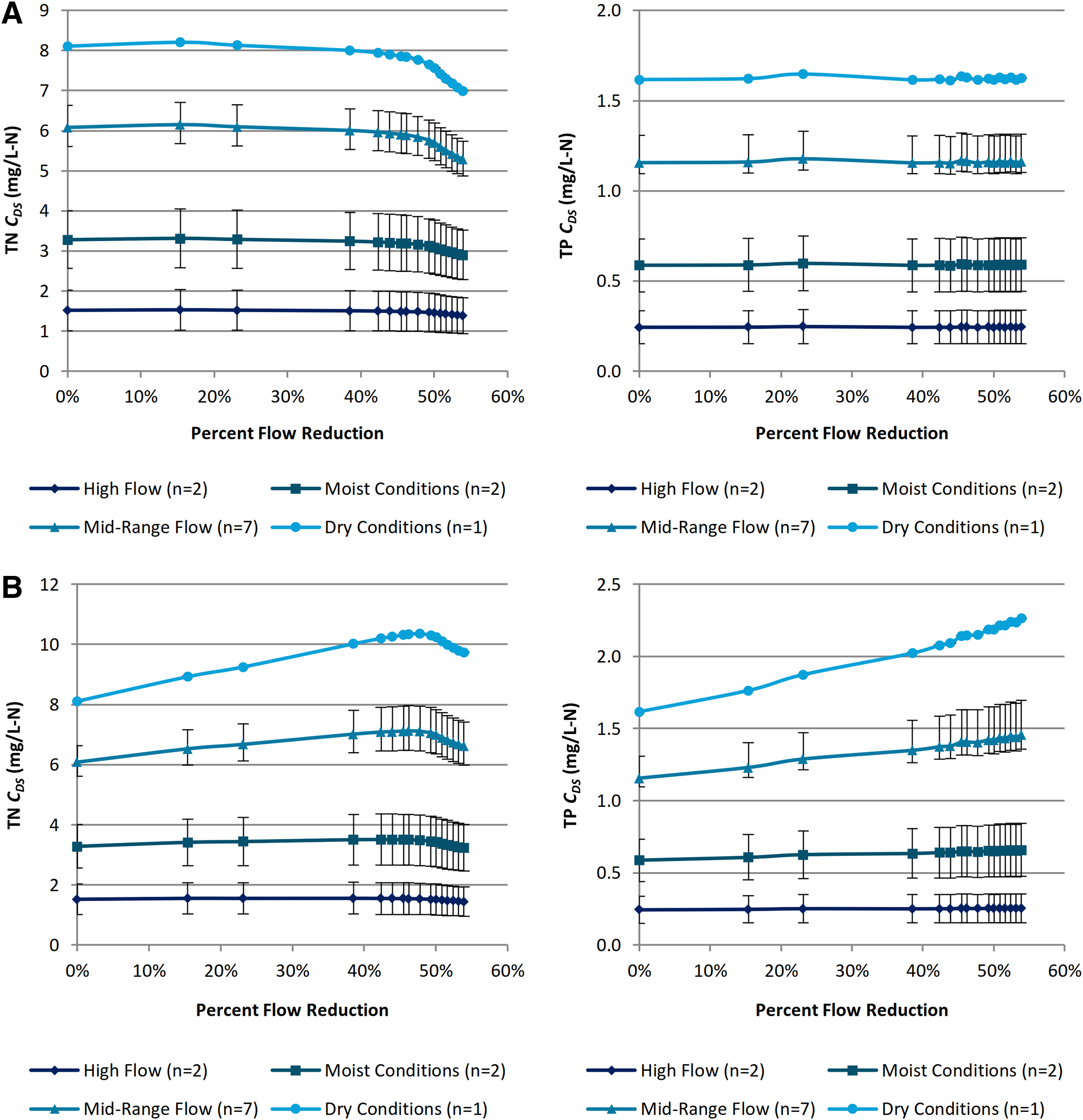
Indoor conservation impact on downstream TN and TP concentration (CDS) with conserved flow returned to stream
For source separation, the positive effluent load reduction impacts on downstream water quality can be considerable, particularly under dry and mid-range flow conditions, which are common in the arid west where the effluent flow can dominate upstream flows (Fig. 6). Both graywater reuse for toilet flushing or irrigation had negligible impacts on influent and effluent water quality, corresponding to negligible estimated changes in downstream TN and TP concentrations, regardless of stream conditions (Fig. 7). Last, the downstream concentration improvements associated with WWTF effluent reuse were considerable in mid-range flow and dry conditions where effluent reuse is most beneficial as an additional water source (Fig. 8).
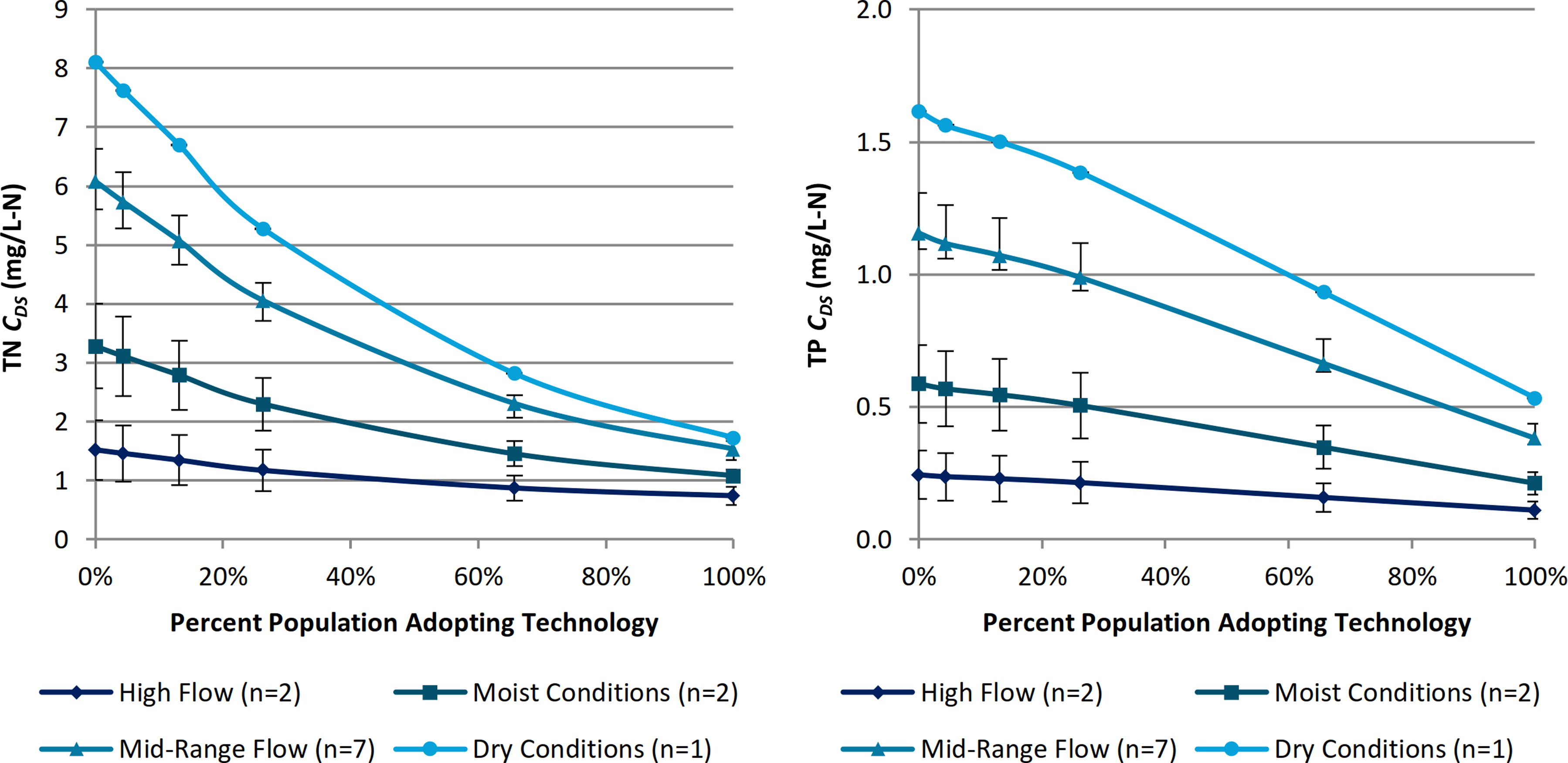
Source separation impact on downstream TN and TP concentration (CDS) based on receiving water body flow condition with number of samples indicated in legend and maximum and minimum values indicated by bars.

Impact on downstream TN and TP concentration (CDS) for graywater reuse for toilet flushing

WWTF effluent reuse impact on downstream TN and TP concentration (CDS) based on receiving water body flow condition, with number of samples indicated in legend and maximum and minimum values indicated by bars.
To further illustrate the receiving body impacts, load duration curves were developed, assuming a stream standard of 2.01 mg/L TN and 0.17 mg/L TP (projected Colorado standards; CDPHE, 2017), for indoor conservation, source separation and effluent reuse, where notable impacts on downstream concentrations were estimated (Figs. 9 and 10). These figures highlight the challenges for WWTF to sufficiently reduce effluent discharges to meet nutrient standards where even at full scale adoption of source separation, TP in the stream is still above the standard and TN load just meets the stream standard in dry conditions. However, practices like effluent reuse can be part of the solution to reduce nutrient loads (Figs. 9 and 10). Water conservation showed minimal impacts on stream loads and that is also reflected in the load duration curves (Figs. 9 and 10).

Downstream load duration curve based on a TN stream standard of 2.01 mg/L and adoption of indoor conservation
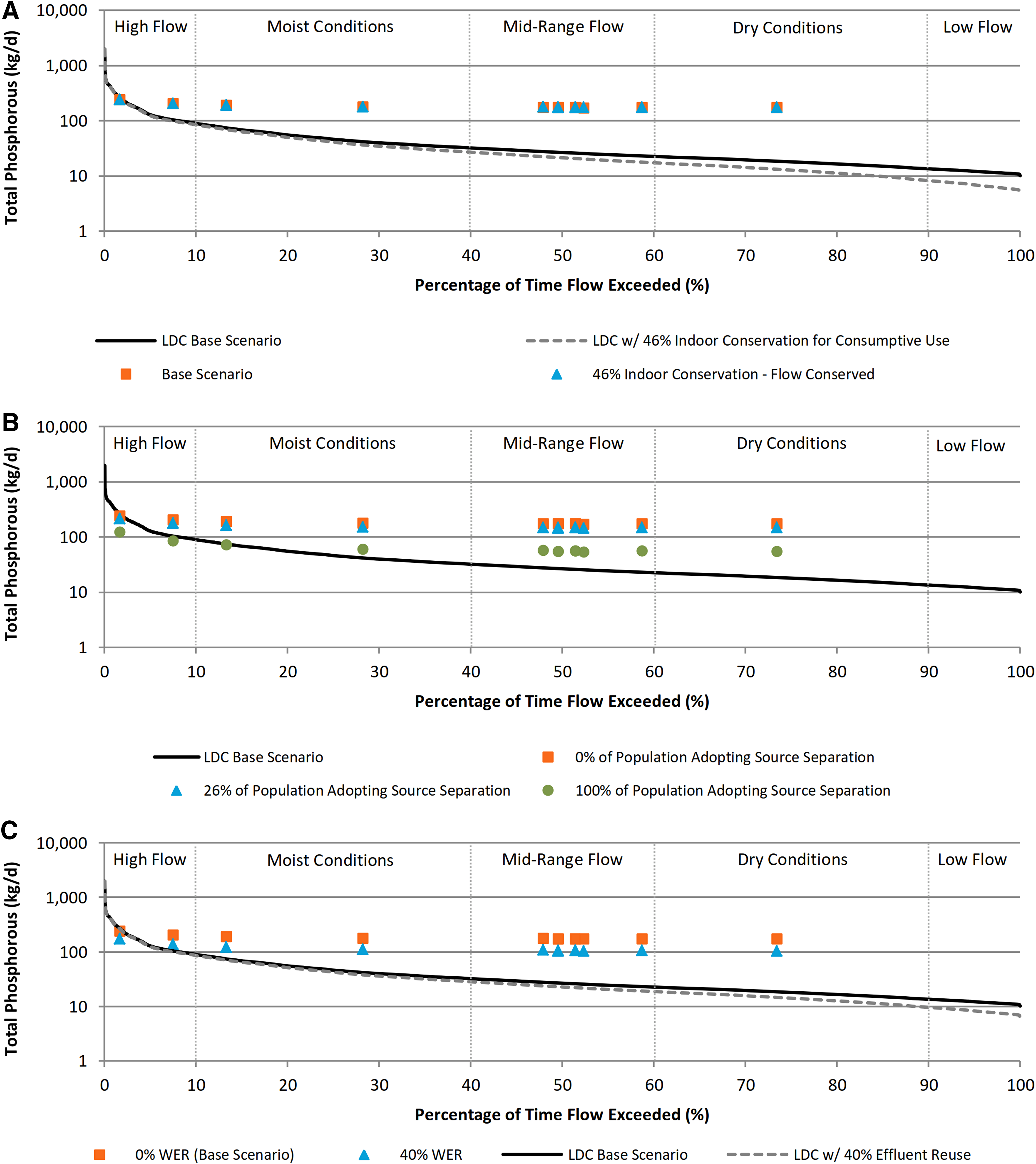
Downstream load duration curve based on a TP stream standard of 0.17 mg/L and adoption of indoor conservation
Discussion
The study area evaluated the impacts of water management practices in a typical arid west water system where water supplies are limited and receiving water bodies are predominantly snowmelt dominated with large fluctuations in flow. Such water systems face great challenges for water supply management and preserving water quality. The results indicate that there are some noteworthy implications of water management practices on downstream water quality, particularly when the stream is experiencing mid-range flow, low flow, or dry conditions. These conditions can be common during drought and effluent discharge can account for greater than 30% of the stream flow. These conditions are common in arid west systems where practices like source separation and effluent reuse could provide positive benefits to receiving water quality and high adoption of indoor water conservation could impact WWTF operations.
Receiving water body quality impacts on water management practices
Water conservation
Between 1996 and 2016, it was estimated that there was a 15% residential indoor water use decrease per capita (DeOreo et al., 2016). However, notable improvements in indoor conservation are still viewed as possible with the potential for an additional 35% reduction in indoor water use for residential uses, with the implementation of high-efficiency devices (DeOreo et al., 2016) and further opportunities to reduce CII water use.
Increasing water conservation over a range of adoption levels was estimated to have negligible impacts in terms of WWTF load removal performance, but notable increase in effluent concentrations. McKenna et al. (2017) evaluated an increased adoption of indoor conservation and observed similar trends across the study area and three other WWTFs. As influent concentration increases, the WWTF load removal is limited with increasing influent concentrations as a result of pH inhibition, insufficient alkalinity, and carbon deficiency, limiting nitrification and denitrification (McKenna et al., 2017). Therefore, as conservation increases, WWTF may need to supply additional carbon or alkalinity to improve process efficiency (Lowe et al., 2009; McKenna et al., 2017).
Importantly, with many WWTFs regulated for effluent nutrient concentrations, increasing water conservation may require additional operational costs and treatment improvements and it is important to consider the downstream impacts. Two alternatives were evaluated where conserved flow stays in stream or is diverted for consumptive use, representing two extremes. Under the first extreme where all conserved flow is maintained in streams, the downstream impacts are negligible as there is little change in effluent load with conservation and the conserved stream flow provides additional dilution capacity (Fig. 4A). However, under the other extreme where all conserved flow is diverted for consumptive use or limited based on supply, the downstream impacts on concentration are noteworthy, particularly under mid-range flow and dry conditions where conservation practices are most commonly implemented (Fig. 4B).
The impacts observed on WWTF performance noted in this study are likely broadly observed over WWTFs (McKenna et al., 2017). Thus, projected trends noted in this study in periods of varying flow conditions are likely to be observed in other similar receiving water bodies. The results from this study indicate that adopting conservation practices during drought conditions to stretch a water supply will have negligible impacts on influent and effluent loading, but noteworthy impacts on downstream concentration. Increased indoor water conservation could require treatment modifications at the WWTF to improve system performance, to meet permit requirements and preserve downstream water quality.
Source separation
Source separation was evaluated for extreme levels of adoption, including evaluation of the entire population adopting source separation, which corresponded to a TN and TP load reduction of 66% and 44%, respectively, at the WWTF (Fig. 3B). The large potential for wastewater nutrient reduction occurs because urine represents a substantial fraction of the nitrogen load (75–80%) and phosphorous load (50–55%) in wastewater (Fewless et al., 2011). Worth noting is that the reduction of influent load also resulted in an improved percent load removal at the WWTF where the effluent TN and TP load was reduced by 81% and 69%, respectively (Fig. 4B; Table 5).
While source separation does improve the estimated percent load removal at the WWTF, this does not necessarily indicate a more effective way of reducing downstream nutrient load. The percent load removal improvement is largely a function of a smaller influent load skewing the calculation. However, looking at the mass balance at the WWTF influent (Fig. 3B) and effluent (Fig. 4B), the results generally indicate that every 1 kg of TP removed at the influent corresponded to an effluent reduction of 1.0 kg TP, indicating a linear 1 to 1 mass decrease in influent and effluent TP load. Interestingly, for TN, the effluent load removal return diminished as source separation adoption increases (Fig. 4B).
At less than 26% population adoption, every 1 kg TN removed at the influent (Fig. 3B) corresponded to an effluent reduction of 0.94 kg TN (Fig. 4B). However, if 100% of the population adopted source separation, every 1 kg of TN removed at the influent would only correspond to a reduction of 0.6 kg TN at the effluent (Fig. 4B). One may hypothesize that reducing the influent load may notably improve the WWTF performance, resulting in further reduction of effluent loads, but this does not appear to be the case for TN. The lack of improved performance is likely to be a function of dilute influent impacting nitrification/denitrification.
As expected, reduction of effluent load corresponds to notable improvements in downstream TN and TP loading and concentration (Fig. 6). Based on the identified stream criteria, the TN standard is achievable with source separation, but would require full scale adoption (Fig. 9). Improved treatment at the WWTF would still be necessary to meet the TP standard (Fig. 10).
While the results for source separation show notable positive impacts on treatment operations, permit compliance, and downstream loading, there are significant social and economic barriers for adoption (Fewless et al., 2011). In addition, pharmaceuticals present in urine must be considered for appropriate management and treatment of the urine stream (Fewless et al., 2011). The cost to overcome these barriers may be more effectively spent to improve treatment practices at the WWTF, particularly for TP, where source separation alone was not sufficient for achieving the desired stream standard. However, source separation may be an effective management practice in decentralized systems, particularly in high-density locations like a residence hall (Ishii and Boyer, 2015) or in rural areas served by on-site septic systems where treatment of nutrients is unreliable and difficult to achieve.
Graywater and effluent reuse
In general, graywater reuse for toilet flushing and irrigation showed minimal impact on influent and effluent water quality. At full scale adoption, where all graywater is collected for toilet or irrigation use, the impact in terms of effluent load is negligible (Table 5), and minimal impacts to downstream concentrations are projected (Fig. 7). As previously discussed, full scale adoption would be infrastructure intensive and not practical, showing that even at extreme scales, the impact of graywater reuse to water quality is negligible. While graywater reuse has well-studied benefits in terms of water conservation and supply, due to the relatively dilute nutrient concentrations, adoption of graywater reuse for irrigation or toilet reuse does not pose a notable concern or benefit for receiving water body quality.
Intuitively, when WWTF effluent reuse is adopted, there is a corresponding reduction in effluent load and no change in effluent concentration (Fig. 4E). However, given that many WWTFs are regulated based on effluent concentrations, the downstream impacts of effluent reuse are often not credited for permit compliance. The impact of effluent reuse on downstream water quality is largely dependent on the percentage of effluent flows that comprise the total downstream flow. In effluent-dominated streams, which can occur during low flow, dry conditions, or mid-range flow, there will be more notable reduction in downstream nutrient concentrations (Fig. 8).
These conditions are common in the arid region water systems. Typically, effluent reuse receives greater consideration for adoption in drought conditions when supplies are limited. Under these low-flow stream conditions, effluent reuse could result in more notable improvements to downstream water quality, accounting for the flow diverted for reuse. Of note is that impacts on water quantity to support ecosystem health should also be considered. Conversely, effluent reuse for irrigation in the spring, during nondrought periods when peak stream flow is observed, has little impact on stream nutrient concentrations (Fig. 8). This suggests that observed benefits from effluent reuse on receiving water body quality may not be as notable in high flow receiving water bodies that are not effluent dominated.
Effluent reuse alone was not sufficient in meeting the desired in-stream TN and TP stream standards (Figs. 9 and 10, respectively), and while there is a clear beneficial load reduction with effluent reuse, the benefit in downstream concentration will be highly dependent on local conditions, including the seasonality of stream flows and the timing of demands for effluent reuse. Depending on the watershed, seasonal variations may need to be considered when accounting for the beneficial load reduction, recognizing a larger benefit in low-flow and dry conditions and a reduced value during peak flow conditions. Importantly, effluent reuse does not help WWTFs meet concentration-based regulations, whereas a load-based regulation can account for the beneficial reduction in pollutant load.
Graywater and effluent reuse have the potential to decrease irrigation demand, which is particularly beneficial in reducing seasonal irrigation demands. In the case study area, stretching the existing supply can reduce the annually imported water and potentially negate the need for a secondary water treatment facility by reducing the seasonal potable water demands. The associated cost and energy savings may be significant, justifying adoption of water reuse practices. Many municipalities in the arid west region of the United States have similar needs for additional imported water and secondary water treatment facilities to meet peak demand during the irrigation season. Because graywater and effluent reuse are likely to result in negligible or positive impacts to receiving water body concentration, these practices can offer water supply benefits without negatively impacting receiving water body quality.
Summary
The evaluated water demand reduction practices had a variety of water quality implications. As the influent becomes more concentrated with an increased adoption of indoor conservation, WWTFs may not be able to maintain existing effluent concentrations, resulting in increased effluent TN and TP concentrations. As a result, WWTF may require process modifications, including alkalinity and/or carbon addition (McKenna et al., 2017). While the water conservation can have notable benefits for stretching a water supply and downstream loading impacts may be negligible, downstream concentration impacts are noteworthy when conservation measures are implemented under drought conditions.
For source separation, the results generally indicated that for every 1 kg of TN and TP removed at the influent, a 1 kg reduction in the effluent was observed. However, this trend diminishes for TN at high levels of adoption. While notable load reductions of TN and TP can be achieved with source separation, the social barriers and implementation cost may limit widespread adoption, and it is likely more cost effective to invest in treatment improvements at the WWTF. While the benefits of source separation are largely a function of the high source concentrations, graywater is comparably dilute and adoption of graywater reuse for toilet flushing or irrigation is estimated to have negligible impacts on WWTF operations and downstream water quality even at high levels of adoption during dry conditions.
Conversely, the downstream impact of WWTF effluent reuse is largely dependent on the receiving water body and seasonality of flows, but notably beneficial during mid-range flow and dry conditions. Graywater and effluent reuse in arid regions during peak months may reduce imported supply or possibly negate the need for a supplementary treatment facility with either positive or negligible impact on WWTF operations and receiving water body quality. Importantly, while downstream water quality improvements are projected to be noteworthy when effluent reuse is adopted in drought conditions, effluent concentrations remain constant, which deters effluent reuse adoption under concentration-based regulations.
This research focused on quantifying the impacts of individual practices; further studies should be done to quantify the combined impacts of water management practices because many of the practices are likely to be adopted in combination. Additionally, the research focused on water quality impacts at the WWTF where water quality is typically homogeneous; however, adoption of conservation practices is often heterogeneous and therefore, there may be local, site-specific impacts that are negative or beneficial and have not been quantified with this study.
Footnotes
Acknowledgments
This publication was made possible by USEPA grant RD835570. Its contents are solely the responsibility of the grantee and do not necessarily represent the official views of the USEPA. Furthermore, USEPA does not endorse the purchase of any commercial products or services mentioned in the publication. We would like to thank the 75th Street Wastewater Treatment Facility staff for their support and willingness to provide historical data and the collaborative work with the University of Colorado–Boulder.
Author Disclosure Statement
No competing financial interests exist.