




Abstract
Abstract
In this article, effects of different sodium salts on the adsorption capacity of modified clinoptilolite for ammonia nitrogen were systematically compared. Natural clinoptilolite (C-Natural) was modified with sodium chloride (NaCl), sodium hydroxide (NaOH), sodium citrate (Citra), and sodium dodecyl sulfate (SDS). Effect of anions on modification mechanisms of sodium compounds was studied. The mesopore proportion increased from 63.82% to 73.78%, 74.52%, 74.48%, and 74.85% in NaCl-modified clinoptilolite (C-NaCl), low concentration of NaOH-modified clinoptilolite (C-NaOH), Citra-modified clinoptilolite (C-Citra), and SDS-modified clinoptilolite (C-SDS), respectively. Results of X-ray powder diffraction, Fourier transform infrared spectrometry, and X-ray photoelectron spectrometry showed that the crystal and the skeleton structure of clinoptilolite did not change. Anion exerted a certain influence on modification with sodium compounds; that is, OH− increased the number of the hydroxyl groups of the framework and slightly reduced the adsorption capacity. The function of citric acid root improved the adsorption capacity of C-Citra. C-NaCl demonstrated improved adsorption ability than C-SDS because the radius of Cl− is smaller compared to that of anions in SDS. The efficiency of C-NaCl, C-NaOH (L), C-Citra, and C-SDS to remove ammonia nitrogen in water was significantly increased from 53.15% to 82.17%, 79.66%, 85.57%, and 80.06%, respectively. The modification mechanism of sodium compound modified clinoptilolite mainly involved the exchange of Na+ with the metal cation, resulting in widened pore channels and increased proportion of mesopores; consequently, ammonia nitrogen removal was improved.
Introduction
T
Clinoptilolite is a relatively common class of zeolites and has been utilized extensively. Clinoptilolite is an aluminosilicate mineral composed of silicon oxide tetrahedron and aluminum oxide tetrahedron. The interior of the clinoptilolite is full of tiny holes and channels, with strong electrostatic adsorption and ion exchange ability. Impurities on the surface and unobstructed channel of clinoptilolite reduce the adsorption ability. The sodium salt modification is considered to be the most effective modification method to enhance the ammonium adsorption capacity of clinoptilolite for removing ammonia nitrogen because it can improve the ion exchange capacity of clinoptilolite (Watanabe et al., 2003). Previous studies found that modification with sodium compounds can improve the ability of zeolite to remove ammonia nitrogen (Huo et al., 2012). Zhang et al. (2016) found that the Na-form zeolite improved the ammonia nitrogen removal efficiency from 78% to 95%. Lin et al. (2013) revealed that sodium chloride (NaCl) modification effectively increased ammonium adsorption capacity of zeolites.
The present study focuses on using a single sodium salt to modify clinoptilolite and investigates the effect of modification. Thus far, no studies have investigated yet the influence of different anions in sodium compounds on the effect of modification. In this work, clinoptilolite, modified with NaCl, sodium hydroxide (NaOH), sodium dodecyl sulfate (SDS), and sodium citrate (Citra), was used as adsorbent to remove ammonia nitrogen. The morphology, composition, pore size distribution, cation exchange capacity, and adsorption ability of clinoptilolite modified with different sodium compounds were compared. The modified clinoptilolite was characterized by X-ray diffraction (XRD), Fourier transform infrared spectroscopy (FTIR), and X-ray photoelectron spectrometry (XPS). In addition, the role of anion in modification was studied, and the mechanism of modification was determined.
Materials and Methods
Characteristics of natural clinoptilolite
Natural clinoptilolite (C-Natural) used was obtained from Shenyang, China. The clinoptilolite was washed several times with deionized water and dried at 60°C for 24 h. Particles of 100–200 μm in size were used. The proportion of the main elements and Si/Al ratio greatly influences the ability of clinoptilolite to remove ammonia nitrogen (Alshameri et al., 2014a). Table 1 shows the main chemical composition of C-Natural. The main constituent elements of C-Natural were Al and Si and low amounts of K, Ca, Na, and Mg, which affect the ion exchange capacity of C-Natural. Modification with sodium compounds increased the cation content, which can be exchanged with ammonia nitrogen, thereby improving the adsorption ability of the material.
Preparation of sodium compound modified samples
According to previous experimental results (unpublished), 3.0 mol·L−1 was selected for the research. C-Natural samples (6 g) were placed in conical flasks, each containing 200 mL of 3.0 mol·L−1 NaCl, NaOH, Citra, and SDS. The mixtures were shaken at 200 rpm using a shaking incubator at 25°C. After 24 h, the samples were separated, washed with deionized water several times until the solution pH was ∼7.0, and then dried at 60°C for 3 h to obtain NaCl-modified clinoptilolite (C-NaCl), NaOH-modified clinoptilolite (C-NaOH (H)), Citra-modified clinoptilolite (C-Citra), and SDS-modified clinoptilolite (C-SDS). Studies have found that when NaOH concentration was 3.0 mol·L−1, the pore structure is seriously damaged and can no longer be compared with other sodium compound-modified samples (Lin et al., 2015). Therefore, 1.5 mol·L−1 NaOH was used to modify the C-Natural to allow comparison of C-NaOH (L) with other modified samples.
Analytical methods
Adsorption capacity of adsorbents for ammonia nitrogen was studied. The ammonia nitrogen solution of 6 mg/L was prepared by dissolving anhydrous NH4Cl in deionized water. About 100 mL of the prepared ammonia nitrogen solutions and 0.2 g of the adsorbents were mixed in a series of 250 mL conical flasks. Samples were filtered through 0.45μm filter membranes to analyze the ammonia nitrogen concentration through the Nessler's reagent spectrophotometry method (Chinese NEPA, 2012). The ammonia nitrogen was measured at 420 nm using a spectrophotometer (WFZ UV-2000). The amount of ammonia nitrogen adsorbed on the adsorbent (mg/g) was calculated using:
Where C0 and Ct are the initial and final concentrations of ammonia nitrogen in solution (mg/L), V is the solution volume (L), and m is the mass of adsorbent (g).
Cation exchange capacity: First, 1 g of samples was added into 150 mL of 1 mol·L−1 of NH4Cl. After boiling for 20 min on the electric furnace, the supernatant was decanted, and the wet samples were transferred to a glass funnel and washed with distilled water until no Cl− was detected. The samples were treated thrice in the same procedure and then eluted several times with 100 mL of 10% KCl aqueous solution at 60°C. The eluent was collected, and the total amount of NH4+ eluted was determined by the formaldehyde method (Dohrmann, 2006; Jha and Hayashi, 2009). According to the formula:
Where QC is the cation exchange capacity, mmol (100 g)−1;
Physicochemical characterization of samples
The surface area of the samples was obtained by a surface area analyzer (V-Sorb 4800P) using BET method. Changes in the morphology of the samples were observed using a scanning electron microscope (SEM; JSM-6510A); X-ray powder diffraction (XRD) patterns were measured at a scanning range of 5°–40° using a diffractometer (Dmax-RD12kW). The molecular groups were analyzed by FTIR (Nicolet Nexus 670) within 4000–550 cm−1 range. The binding energy was recorded by XPS (Axis Ultra DLD).
Results and Discussion
Morphology and change in composition
SEM images show the surface morphology of the modified samples (Fig. 1), which exhibits a high amount of ravines, debris, and tiny holes. No significant difference was observed among samples modified with different sodium compounds. Energy dispersive spectrometer test results (Table 2) revealed that the main elements of C-Natural were O, K, Ca, Na, Mg, Al, and Si. The proportion of O, Al, Si, and Mg remained unchanged in C-NaCl, C-Citra, and C-SDS, whereas the Si/Al and Si/O ratios slightly changed. After modification with high and low NaOH concentrations, the proportion of Al element increased from 5.78% to 5.96% and 6.02%, respectively; the proportion of Si element decreased from 23.50% to 22.16% and 22.01%, respectively, and the Si/Al ratio decreased from 4.07 to 3.72 and 3.66, respectively. Clinoptilolite modified with the four sodium compounds showed reduced Ca and K levels with increasing Na levels. In C-NaCl, C-NaOH (L), C-NaOH (H), C-Citra, and C-SDS, the proportion of Ca declined, respectively, by 36.14%, 24.10%, 30.12%, 30.12%, and 24.10%; K element decreased, respectively, by 33.09%, 29.50%, 37.41%, 38.85%, and 29.50%; and Na element, respectively, increased by 2-, 1.8-, 2.7-, 1.7-, and 1.4-fold compared with C-Natural. The result showed that sodium replaced the metal cation in the C-Natural, and thus, the sodium content increased. The increasing order of sodium content was as follows: C-NaOH (H) > C-NaCl > C-NaOH (L) > C-Citra > C-SDS.
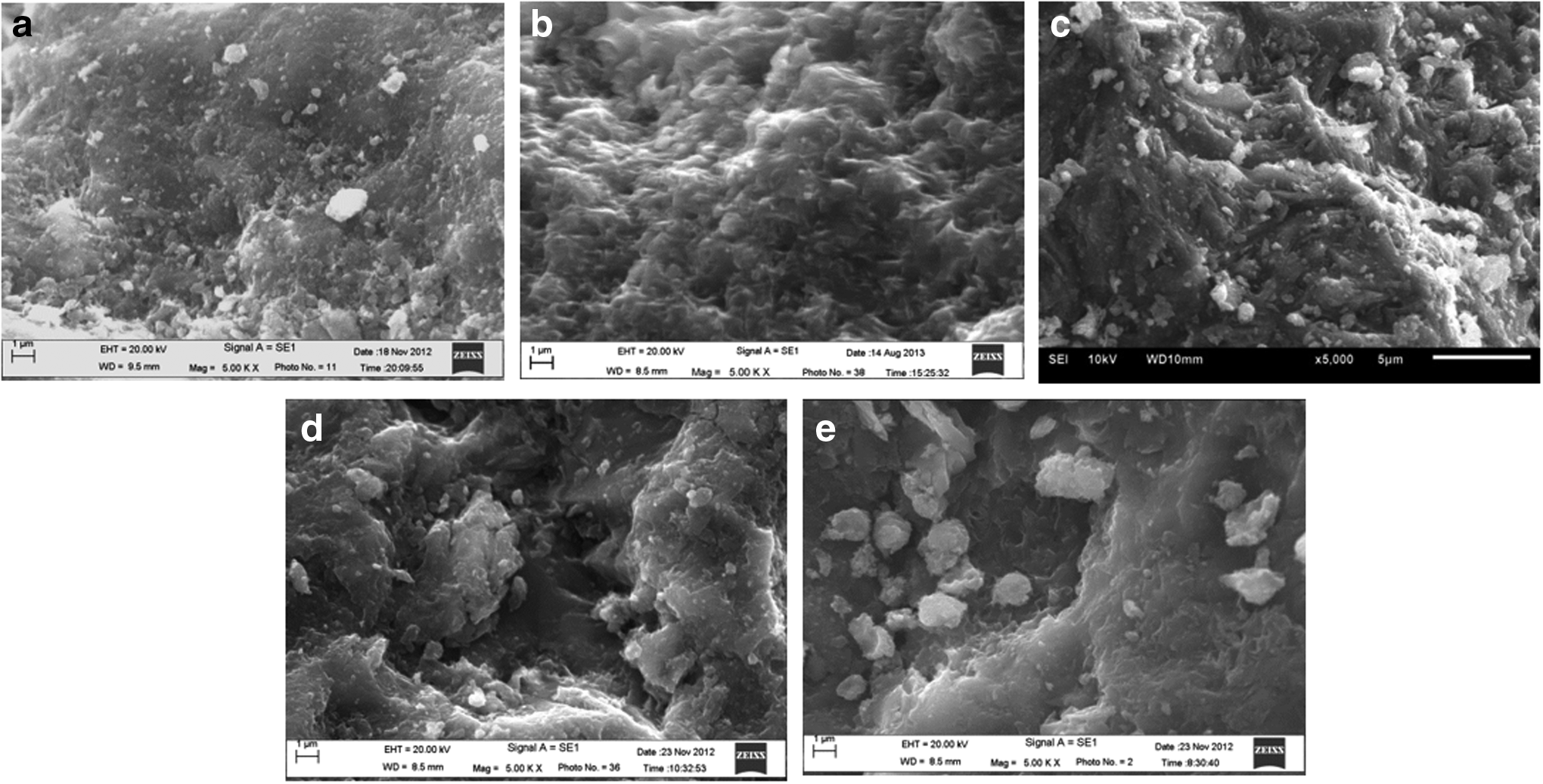
SEM of sodium compound modified clinoptilolite ( × 5000).
C-Citra, sodium citrate-modified clinoptilolite; C-NaCl, sodium chloride-modified clinoptilolite; C-NaOH, sodium hydroxide-modified clinoptilolite; C-Natural, natural clinoptilolite; C-SDS, sodium dodecyl sulfate-modified clinoptilolite.
Changes in surface area and pore volume distribution in samples
Table 3 shows the changes of surface area and total pore volume of clinoptilolite modified with different sodium compounds. In addition to NaOH modification, the surface area and total pore volume slightly decreased when modified with other sodium salts. This phenomenon was observed mainly because introduction of Na+ resulted in a slight reduction in surface area (Huang et al., 2010). When modified with low NaOH concentration, the surface area increased dramatically from 35.97 to 51.83 m2·g−1, 1.44 times that of C-Natural, and the total pore volume increased from 0.0725 to 0.1044 cm3·g−1. However, high NaOH concentration reduced the surface area. By combining this finding with the result of pore volume distribution, we found that high NaOH concentration greatly increased the proportion of large holes. Increase in total pore volume was lower than the low concentration of the NaOH modified C-Natural, indicating that high NaOH concentration destroys the pore structure of C-Natural. NaOH modification thus significantly influenced the pore structure of C-Natural.
Figure 2 shows the pore volume distribution in C-Natural modified with sodium compounds. In addition to the high concentration of modified NaOH, the macropore proportion of the remaining modified C-Natural decreased with slight changes in the micropore. Table 3 also shows that the total pore volume of C-NaCl, C-Citra, and C-SDS slightly changed, demonstrating that Na+ mainly entered into the macropore of C-N, thereby reducing the macropore volume and surface area.

Effect of modification on pore volume distribution of clinoptilolite.
Changes in pore volume ratio of macropores, mesopores, and micropores for C-NaCl, C-Citra, and C-SDS were consistent. Compared with that of C-Natural, micropore volume ratio decreased from 24.69% to 11.05%, 10.83%, and 11.28%. In addition, the proportion of macropore volume slightly changed. By contrast, the mesopore volume substantially increased from 61.93% to 73.78%, 74.48%, and 74.85% in C-NaCl, C-Citra, and C-SDS, respectively. In terms of pore volume distribution ratio, the macropore, mesopore, and micropore volume ratios of C-NaOH (L) showed the most pronounced changes, that is, from 24.69%, 61.93%, and 13.38% to 8.72%, 74.52%, and 16.76%, respectively. The micropore volume ratio of C-NaOH (H) increased sharply, demonstrating that modification with high NaOH concentration can destroy the pore structure and produce many new micropores (Huang et al., 2014).
Effect of modification with sodium compounds on surface potential (Zeta) of C-Natural
Zeta potential is an important electrokinetic property of adsorbents and plays an important role in studying the adsorption mechanism of pollutants on the surface of an adsorbent (Zhao et al., 2016). Figure 3 shows the Zeta potential on the surface of C-Natural under changing pH values. After modification, the Zeta potential on the surface of C-Natural under different pH conditions increased, and increase rate gap was small when different sodium compounds were used in modification. With the increase in pH value, the Zeta potential on the surface of the natural and modified samples was low mainly because the increase in pH value causes more OH− to be adsorbed onto the surface of the adsorbent. The Zeta potential of C-NaCl, C-NaOH (L), C-NaOH (H), C-Citra, and C-SDS increased, which is possibly caused by the entry of the metal cation into the C-Natural framework placeholder (Martinez et al., 2008). The increase in Zeta potential will reduce the electrostatic adsorption ability of ammonia nitrogen, demonstrating that the electrostatic attraction was not the main removal mechanism for ammonia nitrogen adsorption (Moussavi et al., 2011).

Effect of sodium compound modification on Zeta potential of clinoptilolite.
Changes in cation exchange capacity of samples
Figure 4 shows the change in cation exchange capacity of C-Natural modified with different sodium compounds. In contrast to the reduced cation exchange capacity of C-NaOH (H) to 150.12 mmol·(100 g)−1, the cation exchange capacity of C-NaCl, C-NaOH (L), C-Citra, and C-SDS, respectively, increased from 169.7 mmol·(100 g)−1 to 192.3, 186.25, 197.5, and 194.2 mmol·(100 g)−1.
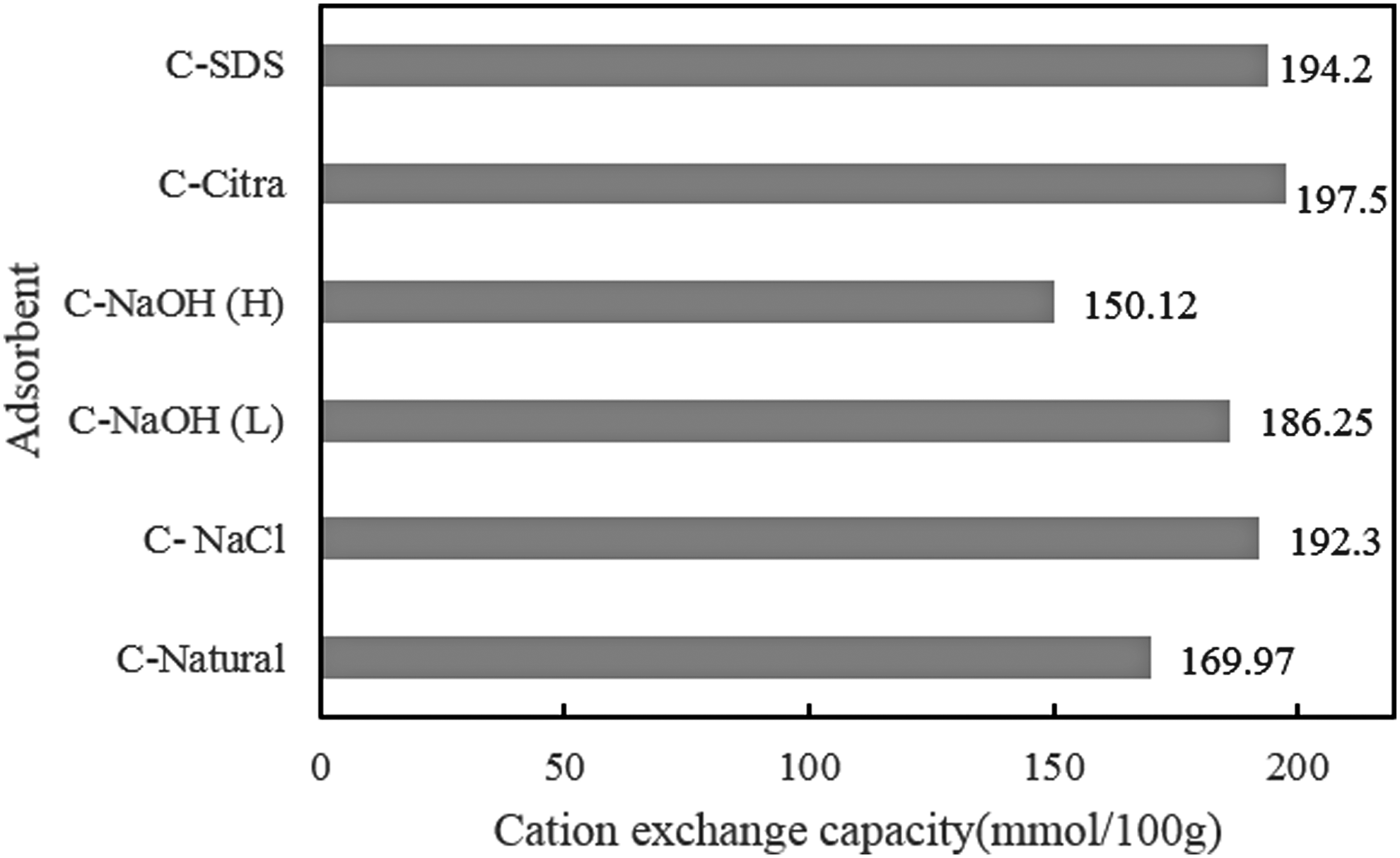
Effect of sodium compound modification on cation exchange capacity of clinoptilolite.
The ion exchange property of C-Natural was mainly related to Si/Al ratio, cavity, and position of the cation (Malekian et al., 2011). Modification with sodium compounds significantly influenced the cation exchange capacity resulting from the exchange of metal cation, activating the cation in the skeleton. In addition, the framework was negatively charged, and some spaces are not filled with metal cation; salt modification induces the metal cation to fill the vacant pores in C-Natural, increasing the cation exchange capacity (Zhang et al., 2011).
Crystallization curve of C-Natural modified with sodium compounds
Figure 5 shows the XRD pattern of C-Natural modified with sodium compounds. XRD results showed that the clinoptilolite contains a small amount of heulandite and unnamed zeolite (Castaldi et al., 2008). Clinoptilolite is one kind of zeolite, which is rich in silica and very common (Du et al., 2005).
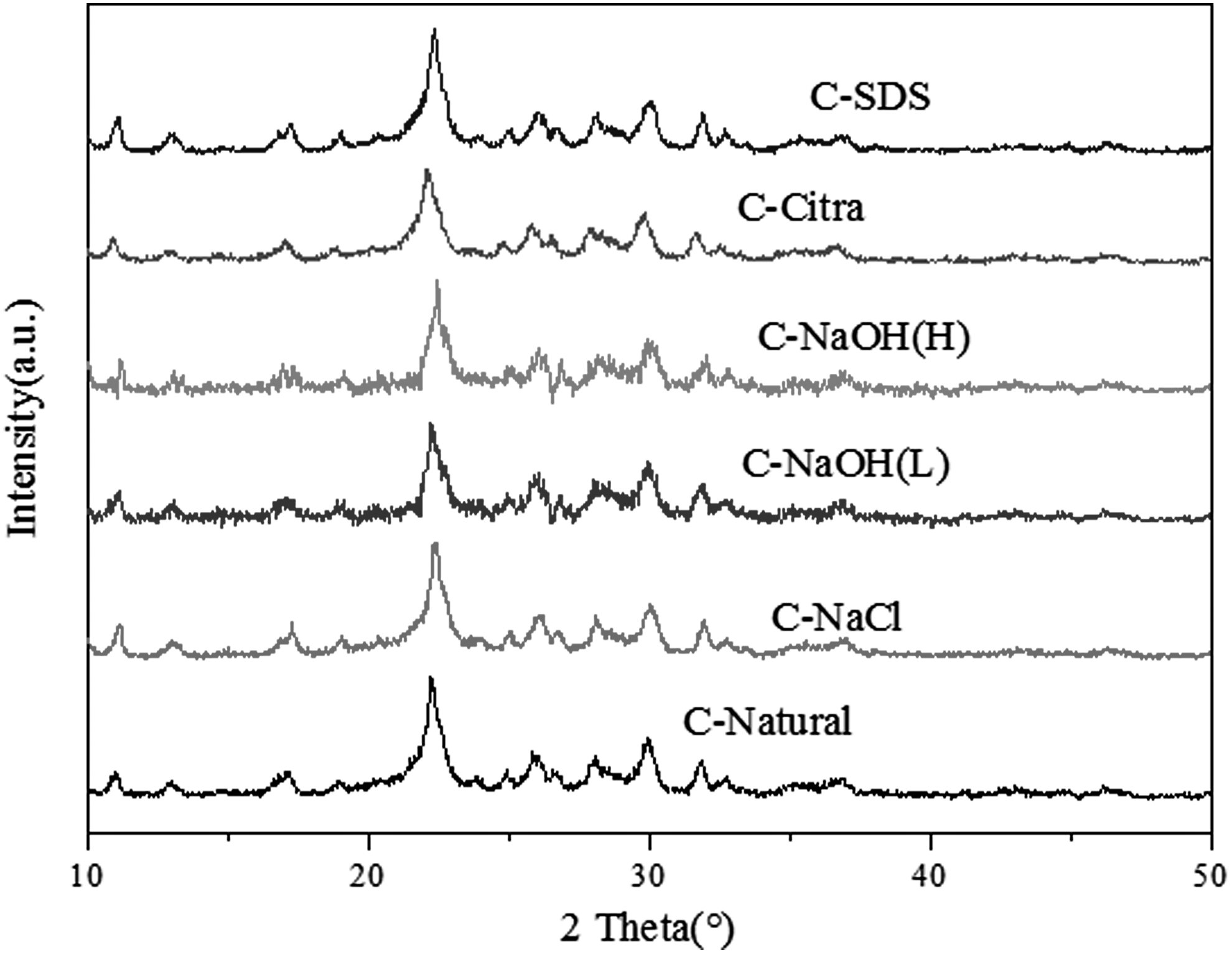
X-ray diffraction patterns of clinoptilolite modified by sodium compounds.
XRD patterns of the modified samples all showed the typical diffraction peaks of C-Natural and no additional peaks appeared. High NaOH concentration can destroy the pore structure of C-Natural, although the crystal structure of C-Natural was not obviously damaged, suggesting that C-Natural demonstrated a good alkali resistance (Lund et al., 2010).
Table 4 shows the change in crystallinity and the main diffraction peak parameters of sodium compound-modified C-Natural. The crystallinity of the samples was calculated using the XRD spectrum analysis software Jade 6.5. The crystallinity of C-NaCl, C-Citra, and C-SDS did not change significantly. By contrast, the crystallinity of C-NaOH (L) and C-NaOH (H), respectively, increased from 90.54% to 92.52% and 92.99%. This finding was attributed to alkali modification. Compared with sodium modification, alkali modification would selectively remove silicon, which combines weakly with C-Natural and does not destroy the crystal structure of C-Natural, resulting in slight increase in crystallinity. After modification with sodium compounds, the main diffraction peaks of the diffraction angle did not change, but the intensity of diffraction peaks decreased. The diffraction peak intensity of C-Citra displayed the greatest reduction by 1171. The decline in diffraction peak intensity was mainly due to the exchange of Na+ with the metal cation in C-Natural (Pilter et al., 2000).
FTIR studies
Figure 6 shows the FTIR spectra of natural and modified samples. Table 5 illustrates the transmittance of the major groups in C-Natural. After modification with sodium compounds, the spectrum peaks of the C-Natural shifted and the vibration of the part group weakened (Van Oers et al., 2014).
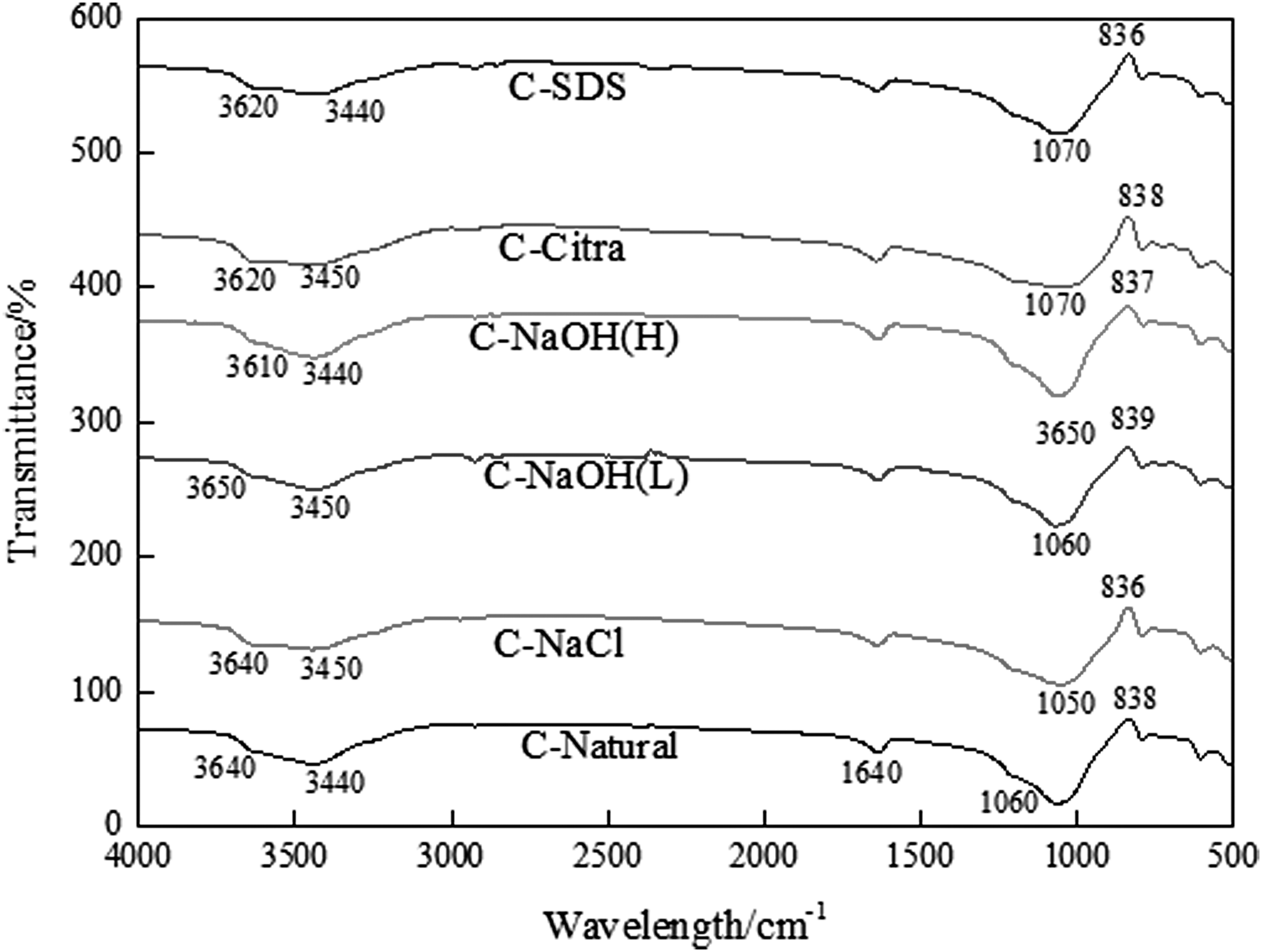
Fourier transform infrared spectra of clinoptilolite modified by sodium compounds.
Modification with sodium salt weakened the peaks between 1070 and 3640 cm−1, which are assigned to the skeleton hydroxyl vibration, the peaks between 3440 and 1640 cm−1, which are assigned to the combined water absorption, and the band at 838 cm−1, which is attributed to Al-O-Si groups (Góra-Marek et al., 2015). By combining this finding with the XRD results, we found that sodium salt modification slightly affects the framework of C-Natural. The combined water and hydroxyl vibration peak reduced and identified sodium salt modification replaced the hydroxyl in framework and the combined water (Luan and Fournier, 2005).
The appropriate NaOH concentration removed the dissolved silica in C-Natural, increasing the surface area and adsorption active sites, promoting physical adsorption ability. The mechanism for ammonia nitrogen removal mainly involved ion exchange. Owing to OH−, NaOH modification increased the vibration peak of skeleton hydroxyl and combined water (Góra-Marek and Datka, 2006). By contrast, sodium salt modification reduced the skeleton hydroxyl and combined water absorption peaks of C-Natural (Van Oers et al., 2014). Sodium salt modification improved the ability of C-Natural to remove ammonia nitrogen compared with NaOH-modified samples.
Influence of sodium compound modification on binding energy of atoms
The changes of silicon oxide tetrahedron and aluminum oxide tetrahedron content and the state of metal cations in clinoptilolite all lead to the transformation of atomic electron cloud density (Ruiz-Serrano et al., 2010). To further verify the possible modification mechanism of sodium compound on clinoptilolite, the XPS spectrum analysis was conducted. The appearance of peaks at around 72.3, 529.65, and 100.5 eV on the binding energy scale was assigned to Al2p, O1s, and Si2p photoelectrons, respectively. Figure 7 shows that the Al2p, O1s, and Si2p spectra of C-Natural modified with sodium compounds changed inconspicuously. Sodium salt and NaOH modifications did not influence the silicon aluminum frame of C-Natural (Kim et al., 2016). The introduction of Na+ into the C-Natural framework through substitutions or adsorption will affect the electron cloud density around the Si, Al, and O atoms, and this change was not measured in XPS detection (Kaushik et al., 2002). The modification of clinoptilolite by sodium salt was mainly achieved by ion exchange.
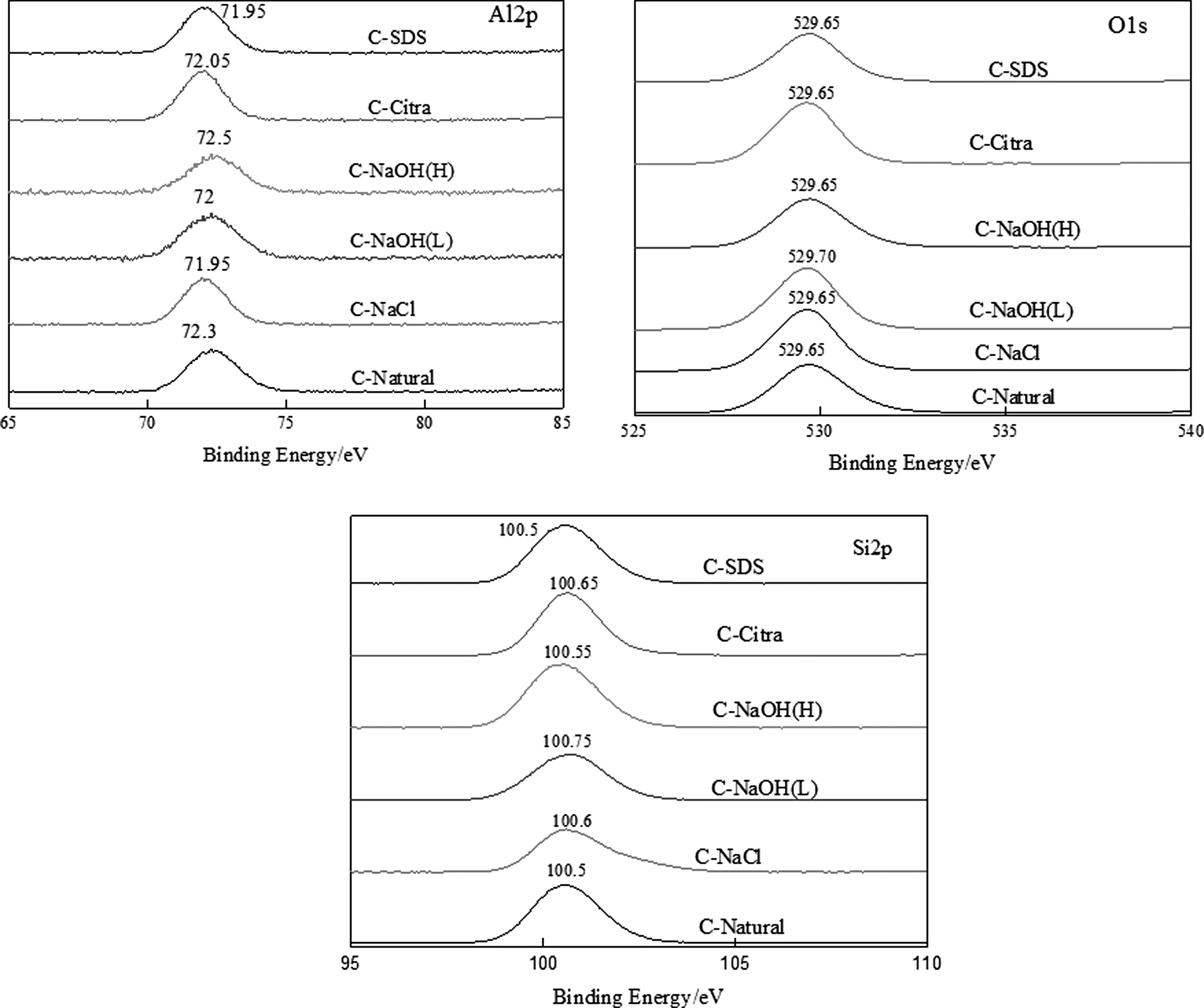
Al2p, O1s, and Si2p spectra of clinoptilolite modified by sodium compounds.
Ammonia nitrogen removal ability of samples
Figure 8 shows the ammonia nitrogen removal ability of C-Natural modified with different sodium compounds. The efficiency of C-NaCl, C-NaOH (L), C-Citra, and C-SDS to remove ammonia nitrogen in water was significantly increased from 53.15% to 82.17%, 79.66%, 85.57%, and 80.06%, respectively, and the adsorption capacity increased up to 2.47, 2.39, 2.57, and 2.40 mg·g−1, respectively. The adsorption capacity of C-NaOH (H) decreased compared with that of C-Natural. Modification with high concentration of alkali may destroy the pore, which can partly inactivate the exchangeable metal cations, reducing the adsorption performance of ammonia nitrogen in water.
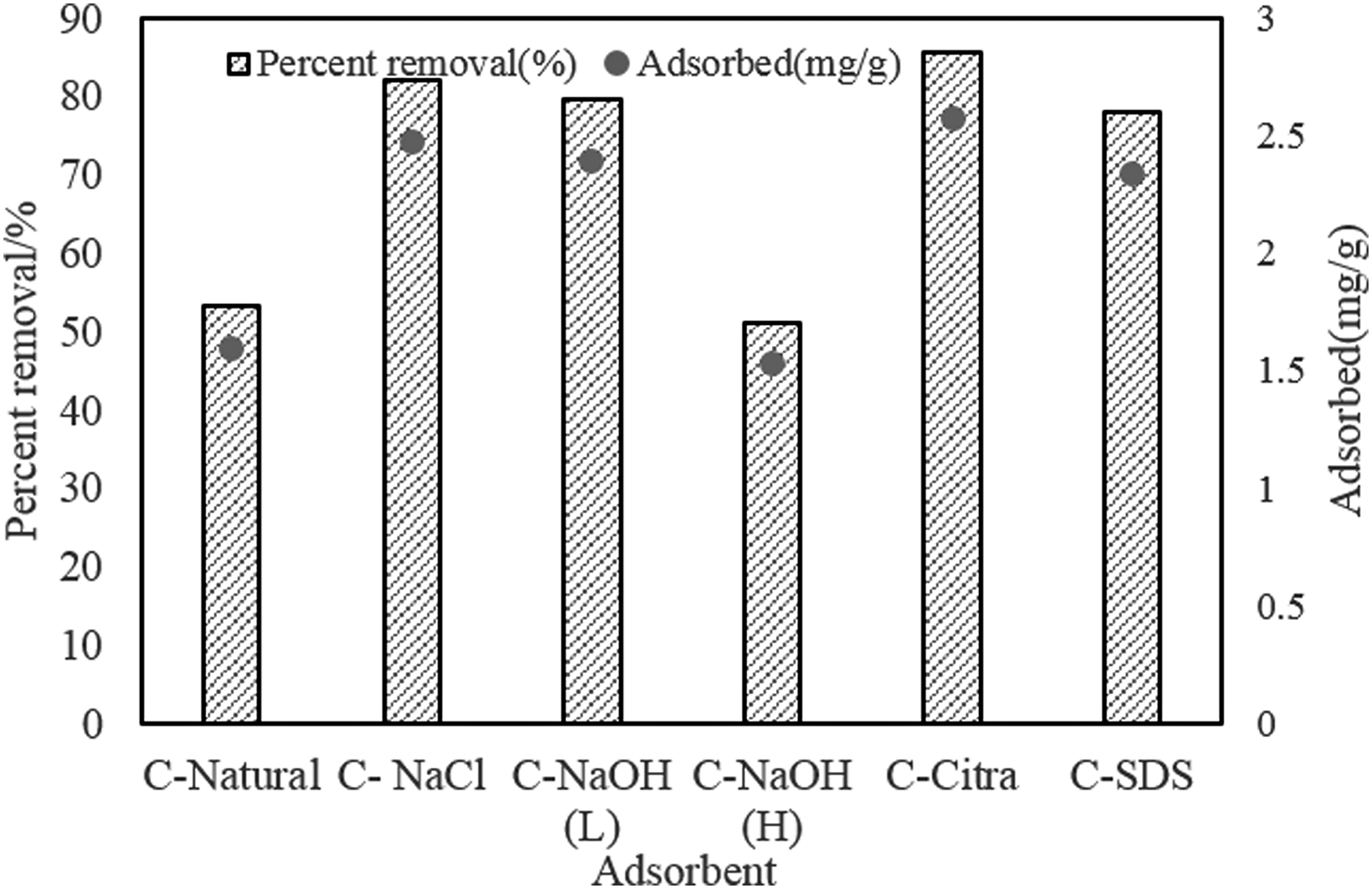
Effect of sodium compound modification on ammonia nitrogen removal ability of clinoptilolite.
The results presented in Section “Changes in surface area and pore volume distribution in samples” show that salt and modification with the appropriate NaOH concentration will increase the proportion of mesopore, improving the adsorption ability to ammonia nitrogen. The increase in surface area and total pore volume can increase the number of the adsorption activity center, thereby improving the physical adsorption of ammonia nitrogen in water. The surface area and total pore volume of C-NaCl, C-Citra, and C-SDS were lower compared with C-NaOH (L). Their adsorption capacity for ammonia nitrogen was higher compared with C-NaOH (L), demonstrating that physical adsorption was not the main cause of the increase in ammonia nitrogen adsorption ability and that the main mechanism of ammonia nitrogen adsorption was ion exchange.
Modification with sodium compounds can increase the amount of Na+. Na+ follows NH4+ in the exchange order and NH4+ can easily replace Na+, thereby increasing the removal efficiency for ammonia nitrogen. By combining this finding with the results in Table 2, we found that the increasing amplitude of sodium ion was not positively correlated with ammonia nitrogen adsorption capacity (Alshameri et al., 2014b). This phenomenon is possibly caused by the anion in sodium compounds and by the pore structure (Campos and Buchler, 2007). The increasing of mesopore volume ratio also can improve the adsorption capacity for ammonia nitrogen in water.
Analysis of modification mechanism and anionic effect
The anion exerts a certain influence on the effects of sodium compound modification (Xie et al., 2014). The decreasing order of ammonia nitrogen removal ability was as follows: C-Citra > C-NaCl > C-NaOH (L) > C-SDS > C-Natural > C-NaOH (H). The modification mechanism of NaCl and SDS was similar owing to exchange of Na+ with K and Ca and other metal cation in C-Natural, resulting in greater number of mesopores and enhanced ability for ammonia nitrogen removal. The difference in ability to remove ammonia nitrogen was mainly attributed to anionic radius. Figure 9 shows the modification mechanism and anionic effect of sodium compounds. In addition to the replacement of Na+ with other metal cations, NaOH modification introduced more -OH onto the surface of C-Natural. The effects of modification with Citra and other sodium compounds differ in introduction of H+, which improved the cation exchange effect and dissolved the impurities on channel surface. Therefore, the ability of C-Natural to remove ammonia nitrogen was strongest under modification with Citra (Shrestha et al., 2015).
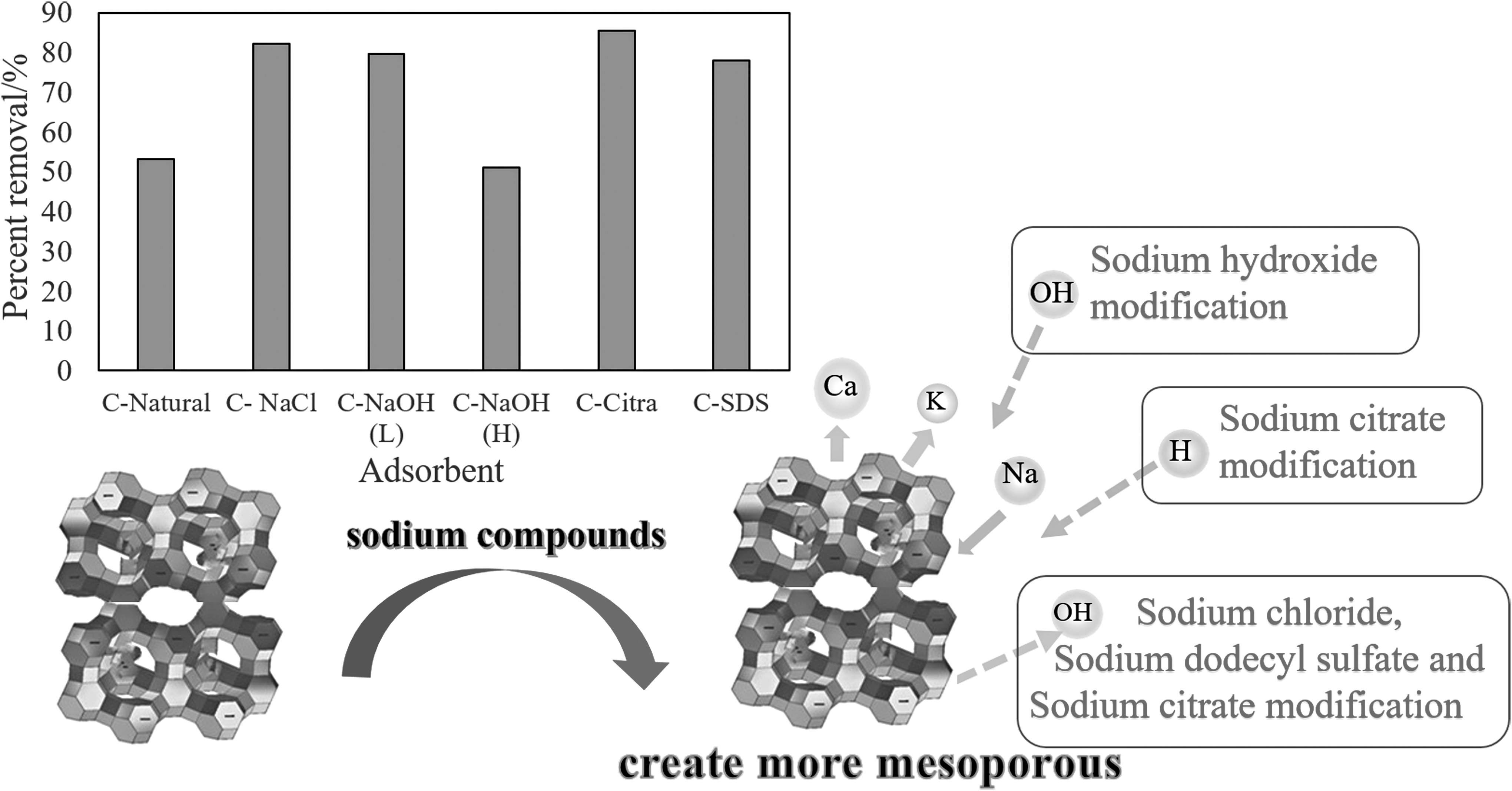
Modification mechanism and anionic effect of sodium compounds.
Conclusion
1. All modifications using different sodium compounds increased the content of Na+ and reduced the content of other cations. Modification with low NaOH concentration increased the surface area and total pore volume. Given that modification with high NaOH concentration would destroy the pore structure, the surface area is reduced. Modification with sodium salt slightly influenced the surface area and total pore volume. However, modification with sodium salt and low concentration NaOH significantly increased the proportion of mesopores. The Zeta potential of the modified C-Natural increased compared with C-Natural but decreased with increasing pH value.
2. Modification with low concentration NaOH and sodium salt significantly improved the cation exchange capacity and ammonia nitrogen removal ability. The ammonia nitrogen removal ability was positively correlated with cation exchange capacity, but not with addition of sodium ion content. The decreasing order of ammonia nitrogen removal capacity was C-Citra > C-NaCl > C-NaOH (L) > C-SDS > C-Natural > C-NaOH (H). The capacity of C-Citra to remove ammonia nitrogen increased to 85.87%. The difference in removal ability for ammonia nitrogen was mainly attributed to anions.
3. XRD, FTIR, and XPS test results showed that modification with sodium compounds slightly influenced the crystal structure, molecular groups, and the binding energy of atoms. The modification mechanism was attributed to exchange of Na+ with K, Ca, and other metal cation in C-Natural, resulting in greater number of mesopores and enhanced ammonia nitrogen removal ability.
Footnotes
Author Disclosure Statement
No competing financial interests exist.