




Abstract
Abstract
The bonds of chlorine and carbon in chlorine-functionalized reduced graphene oxide (RGO) can provide reactive handles for modifications. In this work, sulfhydryl-functionalized RGO was synthesized using chlorine-functionalized RGO and sodium hydrosulfide. The product was characterized by Raman spectroscopy, Fourier-transform infrared spectroscopy, powder X-ray diffraction, and X-ray photoelectron spectroscopy. Some chlorine atoms were substituted and others were eliminated. The sulfhydryl group was successfully attached to a graphene sheet. It served as a spacer or pillaring agent between graphene sheets; the average interlayer space of the product was higher than that of RGO, the average interlayer space of graphitic material should be influenced by both pillaring agent and its amount. The sulfhydryl group may improve the adsorption capacity. High adsorption capacities are observed at a pH of 8–9. Removal efficiency of Methylene Blue (MB) was not affected by sodium and potassium ions. For magnesium and calcium ions, removal efficiency slightly decreased. The product had an adsorption capacity of 197.1 mg/g for MB, which was higher than those of RGO (78.2 mg/g) and commercial activated carbon (47.3 mg/g) at ambient temperature. Adsorption capacity was also high at a high temperature.
Introduction
W
Compared with certain technologies, such as photochemical degradation, membrane filtration, chemical oxidation, and coprecipitation, adsorption technology may be an effective method for the removal of low-concentration dyes. Numerous prominent adsorbents were prepared. For example, Zhang et al. (2016) prepared graphitic carbon nitride 3D network with high selectivity for absorbing specific dyes, such as Methylene Blue (MB). Ceria hollow spheres were synthesized by Hu's group and used as an adsorbent for the efficient removal of acid dye (Hu et al., 2017a). Kim and coworkers demonstrated a simple approach to synthesize hierarchical nanoporous MnO2 for organic dye removal (Kim et al., 2017). Peng et al. (2016) reported superabsorbent cellulose–clay nanocomposite hydrogels for the highly efficient removal of MB. Machado et al. (2016) used carbon nanotubes as adsorbents for dye adsorption. A novel biopolymer-based aerogel was synthesized from crosslinking bifunctional hairy nanocrystalline cellulose and carboxymethylated chitosan, and the adsorption capacity of aerogel for MB is approximately 785 mg/g (Yang et al., 2016). Porous SiO2 prepared by Cui et al. (2017) displayed significant adsorption capacity for MB. Sehaqui et al. (2017) used cellulose nanofibers as adsorbent with high adsorption properties toward MB. Other adsorbents, such as starch-derived mesoporous materials (García et al., 2015) and halloysite nanotubes (Chao et al., 2013, 2014), were prepared. Although numerous adsorbents have been prepared for dye removal, considerable work on adsorbents remains.
Many graphitic adsorbents have also been prepared using graphene oxide (GO) and reduced graphene oxide (RGO). These adsorbents include ionic liquid–graphene oxide sponge (Zambare et al., 2017), and bifunctional adsorbent–catalytic hemin–graphene nanosheets (Wang et al., 2017a). GO and RGO possess abundant oxygen-bearing functional groups, such as epoxy groups, hydroxyl groups, and carboxylic acid groups. These groups act as reactive sites in covalent modification process. Diazonium salts are mostly used to functionalize graphene (Xia et al., 2016; Ejigu et al., 2017; Wang et al., 2017b) because the salts easily form phenyl radicals, and phenyl radicals possess high reactivities. For example, graphene is covalently grafted by p-phenyl SO3H or p-phenyl NH2 groups (Xin et al., 2016); Abellán et al. (2017) prepared graphene alkylated by the salts, and the iodonium salts phenyl iodide, n-hexyl iodide, and n-dodecyl iodide were adopted. The phenyl radical is also produced by benzoyl peroxide, and the chemical functionalization of graphene is achieved (Liu et al., 2017). Carbene exhibits high reactivity, and can also functionalize graphene (Sainsbury et al., 2016; Hu et al., 2017b). Addition reaction is also applied. The chemical functionalization of graphene proceeds Diels–Alder reaction between graphene and diene groups (Li et al., 2016). Daukiya et al. (2017) reported that the (1,2) cycloaddition reaction can be carried out on the graphene plane. Graphene is treated with the alkalide reductant [K(15-crown-5)2]Na and electrophilic aryl or alkyl halides, and then condensation reactions proceed at room temperature, yielding the corresponding aryl- or alkyl-appended graphenes (Biswal et al., 2017). The bond of C and F in fluorine-functionalized graphene is used to form functionalized graphene. Fluorinated graphene is functionalized by urea (Ye et al., 2016). Cyanographene and graphene acid were prepared from fluorographene by Bakandritsos et al. (2017). GO is still used to obtain functionalized GO. GO is functionalized using 1-hexyl-3-methylimidazolium chloride (Zarrin et al., 2016). Xu et al. (2016) prepared a series of GO derivatives, including aminated GO, poly(acrylamide)-functionalized GO, poly(acrylic acid)-functionalized GO, and poly(ethylene glycol)-functionalized GO. De Leon et al. (2017) reported the simultaneous reduction and functionalization of GO using the Ritter reaction.
The bond of C–Cl in chlorine-functionalized RGO (ClRGO) may provide reactive handles for modifications of graphene (Wang et al., 2015a). Chlorine was substituted by NH2CH2CH2NH2 (Zhang et al., 2017). However, the reaction of C–Cl in ClRGO has not been fully investigated. Chlorine might be substituted by the sulfhydryl group, and sulfhydryl-functionalized RGO (SRGO) was formed. The sulfhydryl group was successfully attached to the graphene sheet.
In general, the adsorbent surface and the adsorption space mainly affect the adsorption processes. In addition, functional groups of adsorbents may be a factor by providing active sites. In particular, graphitic materials possess layered structures, and functional groups influence the structure, such as average interlayer spacing (Song et al., 2016). The structure may be affected by certain groups attached on the sheets. The sulfhydryl group may improve the adsorption capacity.
Materials and Methods
Synthesis of SRGO
A mixture of chlorine-functionalized RGO (0.2 g) (Wang et al., 2015a) and water (10 mL) was sonicated for 1 h. Sodium hydrosulfide hydrate (70%, 1.04 g, 0.013 mol) was added at room temperature with stirring for 1 h. Then, the mixture was heated at 100°C for 3 h. The product was separated by filtration, washed with dilute hydrochloric acid (V:V = 1:10) and deionized water. The product was placed in a drying oven at 50°C.
MB adsorption
Adsorption experiments were carried out in batch mode in 250-mL glass bottles. SRGO powders (2.0 mg) were dispersed in MB solution (100 mL, 4–12 mg/L). The mixtures were placed in an oscillator, and shaking was maintained. The temperature of the bottles was regulated to the desired temperature with a variation of ±0.02°C. The concentrations were measured by a UV/vis spectrometer at maximum absorption wavelength (663 nm). For determining the adsorption capability of the SRGO, ionic strengths and pH levels of the solution were examined. The experimental data were presented as the average of three trials. The relative errors of the data were less than 5%.
Characterization
Morphology of SRGO was characterized through scanning electron microscopy (SEM; FEI-Quanta 200 scanning electron microscope) with energy-dispersive X-ray (EDX) and high-resolution transmission electron microscopy (HRTEM; JEOL JEM-2011). Fourier-transform infrared (FTIR) spectra were carried out using an FTS-40 (Bio-Rad, CA). A Renishaw InVia multichannel confocal microspectrometer with 532 nm excitation laser was used to obtain the Raman spectra. The phase composition of the SRGO was determined by an X-ray powder diffractometer (XRD, X'pert PRO) with Co Kα radiation. The elemental composition of the product was identified using X-ray photoelectron spectroscopy (XPS; Thermo Fisher Scientific Co. ESCALAB 250) with monochromatized Al Kα X-ray (hν = 1486.6 eV) radiation. The shift in binding energies was corrected using the C 1 s signal at 284.6 eV as internal standard.
Results and Discussion
Structural features of the SRGO
The microstructure of SRGO might be shown from different perspectives of SEM and HRTEM images. The twisted sheet structure of SRGO was evident, possibly enhancing the adsorption efficiency of SRGO. Figure 1a and b reveal the presence of twisted and/or folded sheets with ridge-and-valley structures, which are possibly features of few-layered graphene sheets. The sheets of graphene with more layered sheets (layer number exceeding 10) were flat, and multilayer graphene appear similar to a book in which paper has slight wrinkles. The EDX spectrum of the sample demonstrates the elements of S, O, and C in SRGO, indicating that chlorine was substituted by the sulfhydryl group. SRGO may produce H+ and negative groups, which can enhance adsorption capacity. The sheet structure may also influence material.
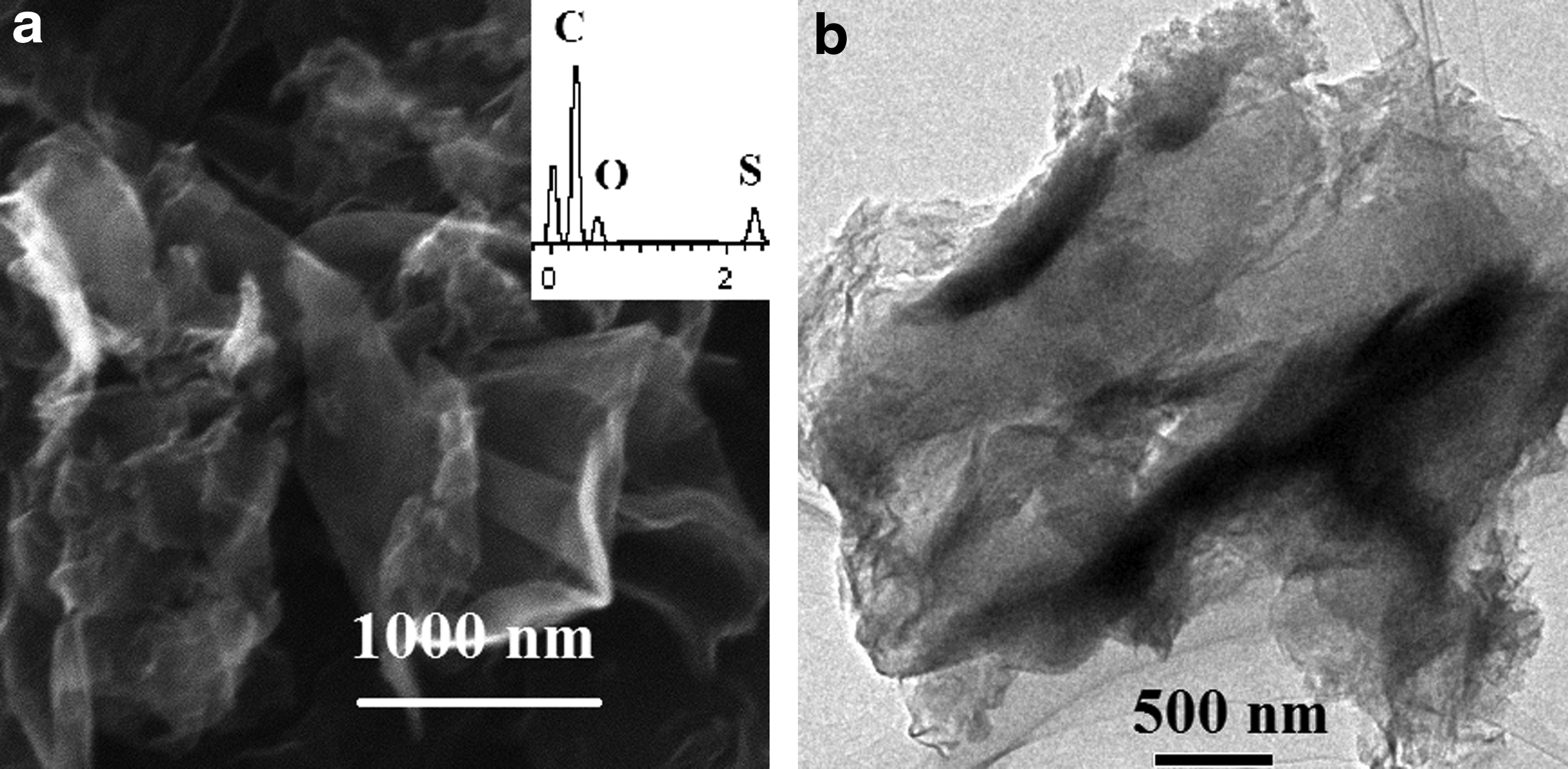
Images and EDX spectrum of SRGO. Image (SEM) and EDX spectrum of SRGO
Figure 2a is FTIR spectra of SRGO, ClRGO, and RGO. The peaks of ClRGO and RGO had been reported by literature (Wang et al., 2015a). The peaks at 3430, 1728, 1568, 1206, 1104, 2528, and 682 cm−1 are ascribed to O–H stretching in SRGO, C = O stretching, skeletal vibrations of unoxidized graphite, C–O vibrations, ether linkage stretching, S–H stretching, and C–S, respectively. The FTIR spectrum confirmed that SRGO possessed abundant functional groups, which are potent adsorption sites that may improve adsorption efficiency.
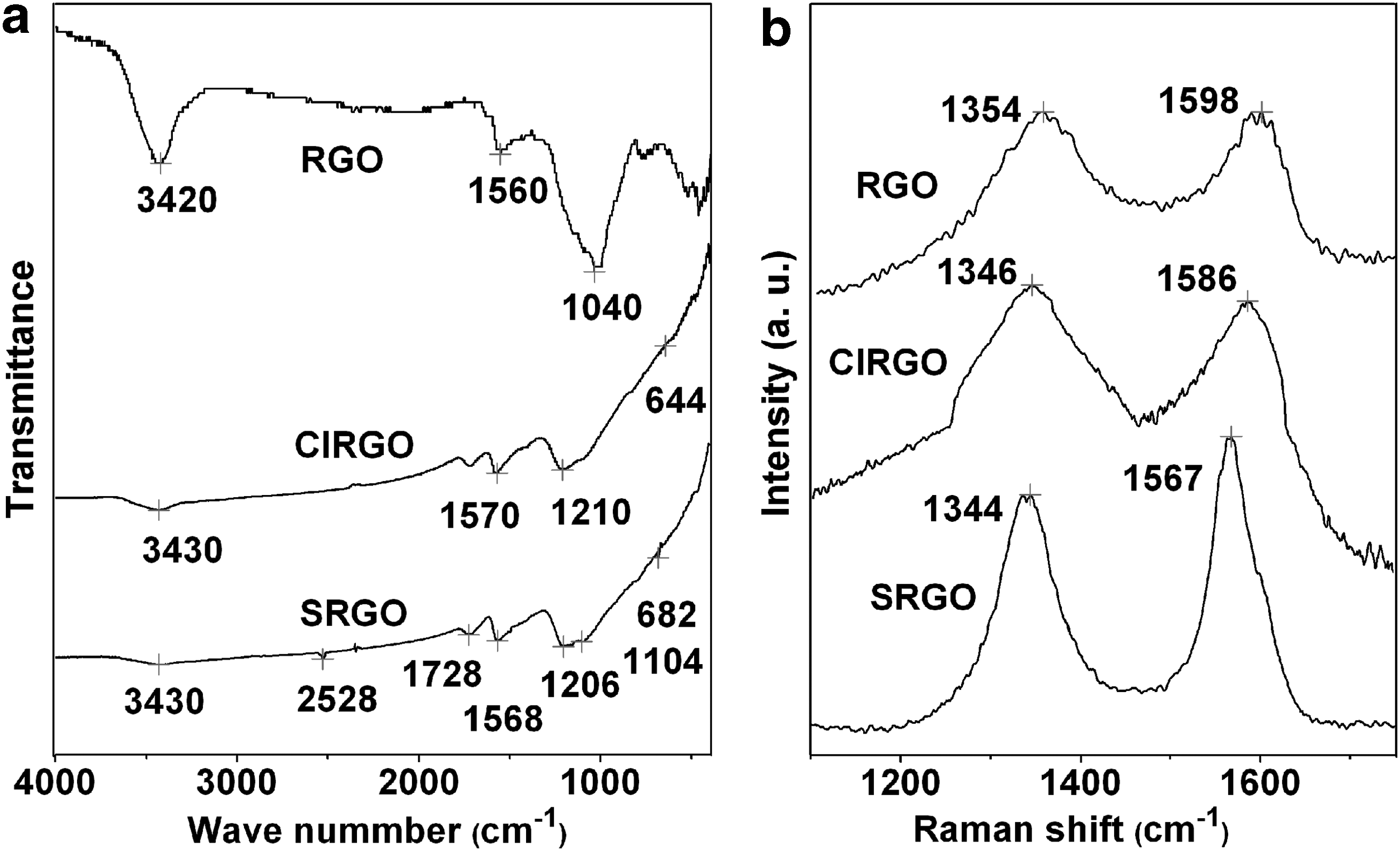
FTIR spectra of RGO, ClRGO, and SRGO
Raman spectra of SRGO, ClRGO, and RGO are shown in Fig. 2b. Compared with the G band of ClRGO (1586 cm–1) and RGO (1598 cm–1), SRGO presents a wide G band (1567 cm–1) and may thus possess a “larger” conjugated system, with the peak appearing at lower frequencies. The D band is related to the vibration of sp3 carbon atoms. The D band at 1344 cm–1 of SRGO is weak, indicating that the sheet may be sequentially reduced by the sulfhydryl group. The D band of ClRGO is strong, implying that the magnitude of the sp2 carbon decreases probably owing to substitution. Compared with those of ClRGO, the D and G bands of SRGO present small shifts in the spectra. The ID/IG ratio of the SRGO is 1.08, which is lower than those of ClRGO (1.34) and RGO (1.15) (Wang et al., 2015a). This outcome implies that more graphene parts are generated in the SRGO sheet when the chlorine and oxygen-bearing groups on ClRGO are eliminated (Ni et al., 2008).
SRGO was further characterized by XPS in Fig. 3. The peaks at the 163.7 and 164.9 eV are attributed to S 2p3/2 and S 2p1/2 in Fig. 3a. These peaks indicate that the material may contain sulfide. The peak of O 1 s is shown in Fig. 3b. The binding energy signal at 532.4 eV is related to the oxygenated functional groups. The signals of C 1 s are in Fig. 3c. The peak is located at circa 284.6 eV, which may be related to the graphitic sp2 carbon atoms, and the signal at 286.1 eV originates from C–S. The signal of C–O is situated at 285.5 eV, whereas that of C = O is located at 287.9 eV. The elements of S, O, and C of SRGO are shown in the XPS survey spectra in Fig. 3d.
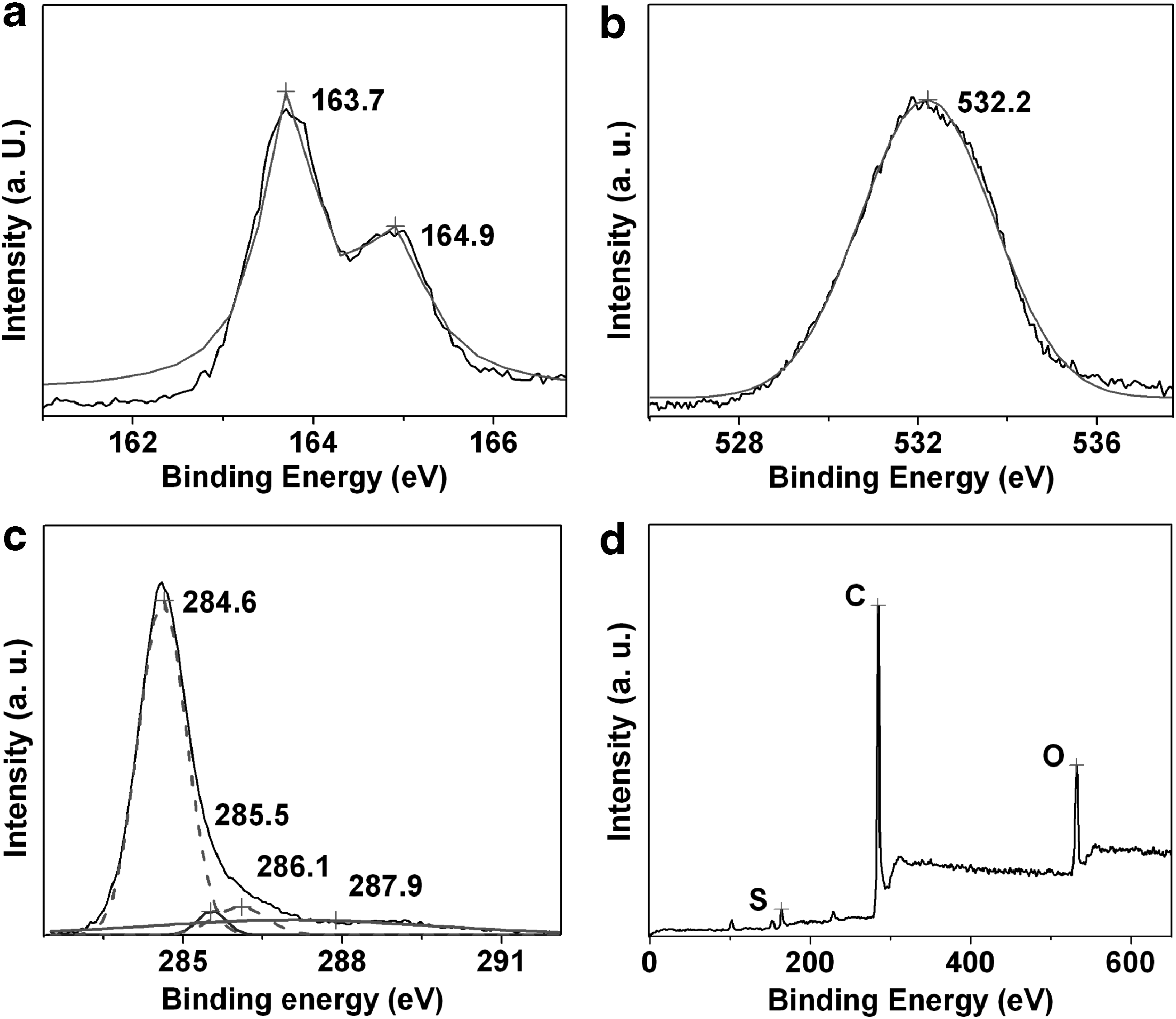
S 2p3/2 and S 2p1/2
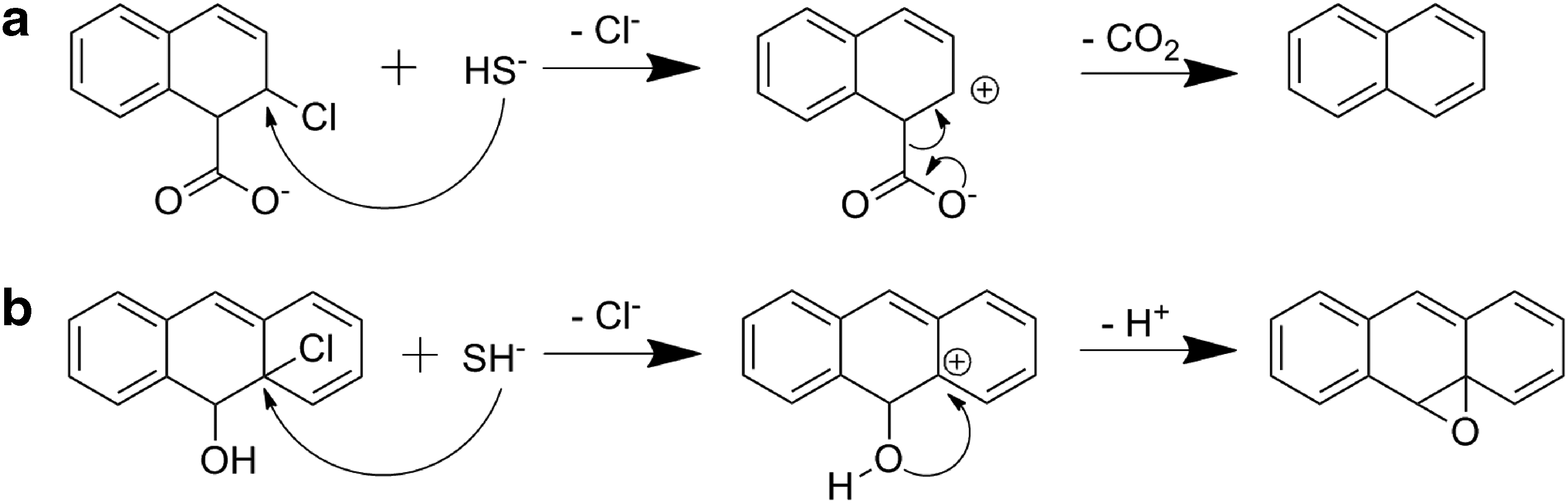
Sulfur content of SRGO should be similar to the chlorine content of ClRGO. In fact, the sulfur content of SRGO is lower than that of ClRGO (in Table 1). The sulfhydryl group is a good nucleophile. Chlorine should be fully substituted by the sulfhydryl group. Compared with ordinarily condensed rings, such as naphthalene, anthracene, and phenanthrene, graphene group may present a “larger” conjugated system. The carbonium ion in graphene group is more stable because of π electron delocalization. Several carbonium ions may react with the sulfhydryl group, that is, certain chlorine atoms are substituted by sulfhydryl groups. Otherwise, a fraction of the carbonium ions in graphene group may not react with the sulfhydryl group; other small molecules, such as CO2 and HCl, are released, and then sp2 carbon atoms and ether linkages are formed in Fig. 4a and b. In other words, some chlorine atoms are eliminated in reaction.
RGO, reduced graphene oxide; ClRGO, chlorine-functionalized RGO; SRGO, sulfhydryl-functionalized RGO.
Wide-angle XRD pattern (Fig. 5) demonstrates the structure of SRGO, ClRGO, and RGO. RGO and ClRGO exhibit the peaks at 27.6° and 24.8°, the interlayer spacing of RGO and ClRGO are approximately 0.37 and 0.41 nm. SRGO presents a peak at 26.7°, and the interlayer spacing of ClRGO is approximately 0.39 nm.–Cl and–SH are spacer or pillaring agents between graphene sheets. The Cl content of ClRGO is higher than the S content of SRGO, and the amount of pillaring agent in SRGO may be smaller than that of ClRGO. The average interlayer space of graphitic material should be influenced by both pillaring agent and its amount. Moreover, a certain part of SRGO is reduced by NaHS.
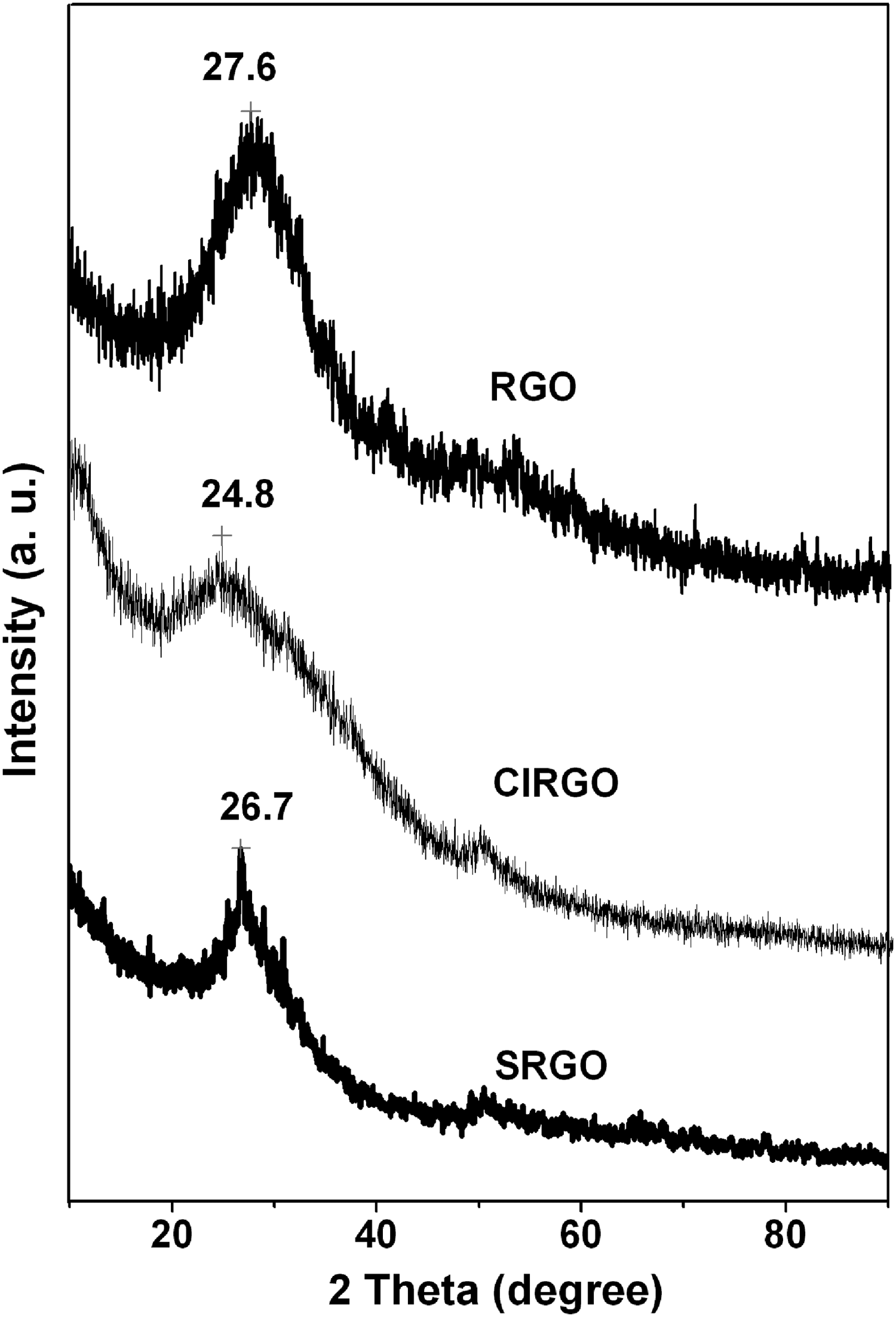
XRD patterns of RGO, ClRGO, and SRGO. XRD, X-ray powder diffractometer.
Adsorbing performance
Adsorption capacity of SRGO was compared with those of commercial activated carbon (AC) and RGO, as shown in Fig. 6a. The adsorption capacity of SRGO (197.1 mg/g) was higher than those of AC (47.3 mg/g) and RGO (78.2 mg/g). The electrostatic force between the adsorbate MB and the adsorbent SRGO may be an important factor. SRGO contains abundant negatively charged functional groups, such as sulfhydryl, hydroxyl, and carboxyl groups, as well as numerous available adsorption sites.

Adsorption of MB by SRGO, RGO, and AC
MB was used by many factories in China, and much water was polluted by MB. Some adsorbent has good adsorption capacity for recommended compounds, but they do not have good adsorption capacity for MB, such as AC. Photosensitization might be an important factor for MB, and MB is easily decomposed under light irradiation. The adsorption experiments were carried out in a dark place.
The pH of mixture affects the charge transfer process on the SRGO/solution interface and further influence the adsorption process. Figure 6b shows the experimental data in the pH region from 2.0 to 10.0 (Saad et al., 2015). High adsorption capacities are observed at high pH of 8–9. The coordination interaction between–SH and MB+ is one of the causes of MB adsorption. MB+ can react with–SH, and H+ is released. The pH of the mixture is an important factor that influences MB removal.
Electrostatic interaction between the adsorbate and adsorbent is another factor. Therefore, the ionic state of oxygenated functional groups (–OH and–COOH) on the SRGO sheet is another important element that influences adsorption efficiency. Therefore, pH = 8–9 may be a suitable range in the succeeding experiments.
Effect of temperature for an adsorption of MB on SRGO (2.0 mg) was investigated at six different temperatures (293 K, 303 K, 313 K, 323 K, 333 K, and 343 K) using MB (6 mg/L) at ambient temperature. The adsorption capacities are 142.1, 148.3, 158.7, 167.4, 183.1, and 177.5 mg/g. The adsorption capacity increased with the increase of temperature in the range of 293 K–333 K. The oxygen-bearing functional group and sulfhydryl group easily form negative group, electrostatic attraction between adsorbent and MB+ was reinforced. Moreover, MB diffusion was enhanced. However, high temperature is also favorable to desorption, the influence of desorption cannot be ignored at 343 K. The removal efficiency decreased. The adsorption temperatures are 293 K, 303 K, 313 K, 323 K, and 333 K. The desired temperature is about 333 K.
For assessing the actual adsorption efficiency of SRGO, the effect of electrolyte should be investigated. Common metal ions, such as Na+, K+, Mg2+, and Ca2+, may compete with MB+ for active adsorption sites on the SRGO sheet. The effect of electrolytes should be tested to estimate the actual adsorption capacity of SRGO in the removal of MB. NaCl, KCl, CaCl2, and MgCl2 were used to adjust the solution salinity in Fig. 6c. The removal efficiency of MB was not affected by Na+ and K+. For Mg2+ and Ca2+, removal efficiency slightly decreased. Mg2+ and Ca2+ possess more positive charges and may easily react with–S−,–O−, and–COO−. The divalent cations (Ca2+ and Mg2+) increased in the extent of aggregation of graphene sheet (Ye et al., 2018). In the presence of divalent cations, the graphene sheet structure becomes tighter. In addition adsorbate does not easily penetrate into the mesopore and slit. The adsorption process proceeds at a high pH. The concentrations of Mg2+ and Ca2+ are possibly low, and their influences may be negligible. Therefore, the pH range of 8–9 was used in the succeeding experiments.
For further analyzing the kinetic adsorption of MB on SRGO, the pseudo-first, second-order, and intraparticle diffusion kinetic models were applied to the experimental data. Table 2 and Fig. 7 show the parameters of different kinetic models. The pseudo-second-order model yielded high correlation coefficients, and the differences between the calculated qcal and experimental qexp values were small, proving that MB removal by the SRGO fits the pseudo-second-order kinetic model in this experiment. The plots of intraparticle diffusion models do not pass through the origin, indicating that intraparticle diffusion is part of the adsorption (Vasudevan and Lakshmi, 2012; Kamaraj and Vasudevan, 2016).
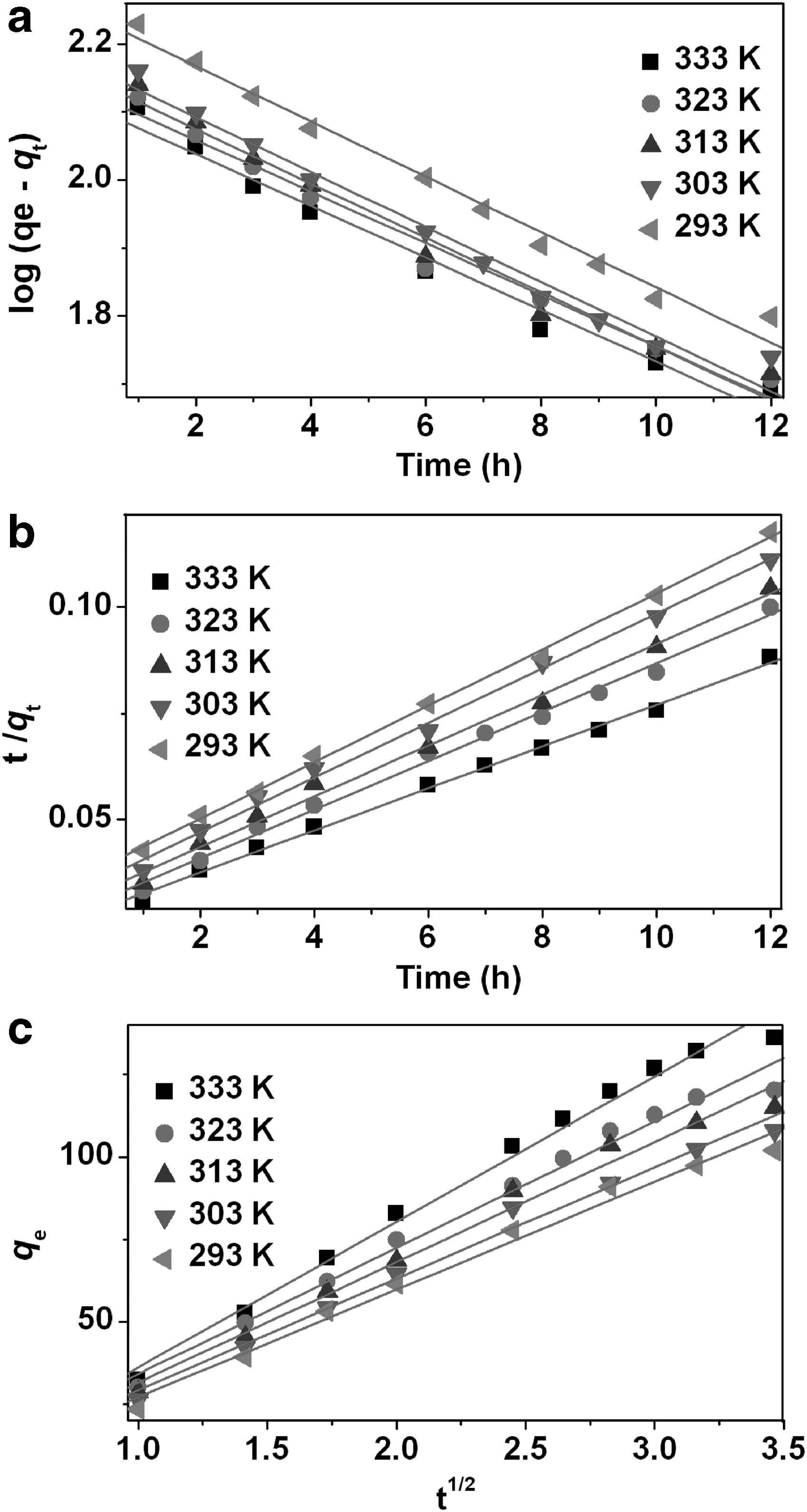
Adsorption kinetics of MB by SRGO for pseudo-first-order
Concentration = 8 mg/L.
For clarifying the adsorption mechanism, conventional isotherm models, such as Freundlich, Langmuir, and Dubinin–Radushkevich (D–R), are used in this experiment in Fig. 8. High regression coefficient is seen in Table 3; the adsorption isotherms of MB on the SRGO are well described by the Langmuir model. The range of constant RL belongs to the favorable range (between 0 and 1), implying a favorable process. Moreover, the adsorption equilibrium constant (b) and the maximum adsorption capacity (qm) increase with experimental temperature. This information implies that the adsorption is an endothermic process, and occurs in a single layer. As for the D–R model, the apparent energy is used to discriminate physical from chemical adsorption. The E values are all less than 8.0 kJ/mol under experimental conditions, indicating that physisorption probably dominates the adsorption process. Moreover, the value of E increases with experimental temperature. The carboxyl, hydroxyl, and sulfhydryl groups are weak electrolytes, and high temperature facilitates the formation of negative groups. The sheets present abundant negative charges, which repel each other, and interlayer spacing may be wide in aqueous solution at a high temperature. The adsorption process is generally governed by the surface and pore texture of the adsorbent (Parker et al., 2012). Adsorbates diffuse rapidly in solution at a high temperature. The SRGO is a porous structure, so the adsorbates can easily penetrate into the mesopore and slit. High adsorption capacity is observed at a high temperature.

Adsorption isotherms of Langmuir
Adsorption mechanisms include many factors, such as van der Waals, and hydrophobic interactions between SRGO and MB (Wang et al., 2014, 2015b). The SRGO has negatively charged functional groups which have electrostatic interaction. Other factors still affect the adsorption, and then physisorption probably dominates the adsorption process.
Conclusions
A certain fraction of chlorine atoms in chlorine-functionalized RGO are substituted by sulfhydryl groups, whereas the other portion can be eliminated by sodium hydrosulfide; thus, RGO is continually reduced. Sulfhydryl groups in graphene sheet affect the graphene structure, such as average interlayer space. The average interlayer space of graphitic material should be influenced by both pillaring agent and its amount. The product exhibits improved efficiency of MB removal. Adsorption capacity is high at a high temperature. The adsorption process fits the pseudo-second-order rate model. The adsorption isotherms of MB on the product were well depicted by the Langmuir model. Physical adsorption may be the major factor in experimental temperature. Sulfhydryl-functionalized RGO may be an important intermediate for other graphene-based materials.
Footnotes
Acknowledgments
The authors gratefully acknowledge the financial support from the Fund of the Xinxiang University (No. 15ZP05), the Science and Technology Bureau of Xinxiang (Nos. 13SF39 and ZG15022), the Education Department of Henan Province (Nos. 12B210022, 18A430025), and the Science and Technology Department of Henan Province (No. 162300410015).
Author Disclosure Statement
The authors declare that they have no competing interests.