




Abstract
Abstract
Recent studies have shown that phosphorus leaches from bioretention soil mixes (BSMs), which can lead to algal blooms in receiving waters. Water treatment residuals (WTRs), by-products of the water treatment process (which commonly contains alum [Al2(SO4)3·14H2O]), may help retain phosphorus in soil. Aluminum complexes with phosphate to form a precipitate (AlPO4), effectively removing it from stormwater. Many water treatment plants have to pay to dispose of WTRs at a landfill. Using WTRs in bioretention can be a beneficial reuse and cost-saving measure for municipalities. However, the vast majority of studies have been small-scale column and batch experiments conducted in a laboratory or other controlled setting. In this study, large-scale testing was conducted in the field by adding WTRs to BSMs to evaluate phosphorus retention. Five planters were constructed: a control with BSM only, two planters with bioretention soil mixed with WTRs, and two planters with layers of compost, WTRs, and sand. Compared with the control, total phosphorus (TP) and phosphate concentrations in mixed planters were 58% and 67% lower on average, respectively. TP and phosphate concentrations in layered planters were 89% and 95% lower than the control on average, respectively. Aluminum levels in the effluent from mixed and layered planters were very similar to levels in the effluent from the control planter. After the first test, aluminum levels in the effluent from all planters were below 0.55 mg/L. This study shows that the use of WTRs in bioretention beds, particularly when soil components are layered, is an effective method for reducing the amount of phosphorus leached from the soil mix at the field scale. Stormwater managers, particularly in watersheds where phosphorus is a concern in receiving waters, should consider using WTRs and layering for future bioretention installations.
Introduction
B
Water treatment residuals (WTRs) may help retain phosphorus in the soil. WTRs are by-products of the drinking water treatment process, which commonly contains alum [Al2(SO4)3·14H2O]. Aluminum, a component of alum, complexes with phosphate to create a precipitate (AlPO4) and effectively removes phosphorus from stormwater (Palmer et al., 2013). The use of WTRs as BSM soil additives has the potential to reduce phosphorus leaching, in addition to providing an alternative to disposing WTRs in landfills. Municipalities may potentially see significant cost savings in the water treatment process as well as added stormwater treatment if WTRs can be effectively used in bioretention. Small-scale column and batch studies have shown that WTRs reduce phosphorus leaching (Babatunde et al., 2008; Lucas and Greenway, 2011; Palmer et al., 2013; Lee et al., 2015). However, some studies have shown that aluminum can leach at relatively high levels from the BSM with WTRs (i.e., Palmer et al., 2013), whereas low levels of aluminum were observed in other studies (i.e., Babatunde et al., 2008). More research needs to be conducted to ensure that WTRs are safe to use in bioretention systems, with minimal leaching of aluminum, and whether results of previous studies scale up to a full-scale bioretention cell in the field.
The vast majority of studies evaluating WTRs in bioretention systems have been conducted in a controlled laboratory environment (Elliott et al., 2002; Dayton and Basta, 2005; Babatunde et al., 2008; Lucas and Greenway, 2011; O'Neill and Davis, 2012a, 2012b; Palmer et al., 2013). Palmer et al. (2013) conducted column studies using soil media that included WTR as a soil amendment and found that WTRs effectively removed 67–80% orthophosphate from stormwater. While other amendments such as fly ash, red gypsum, and blast furnace slag were considered in the Palmer et al. (2013) study, WTRs were chosen due to promising results of the Lucas and Greenway (2011) study where 92% removal of phosphate from stormwater was observed. Findings were similar to those of a column study conducted by O'Neill and Davis (2012a, 2012b), who found that event mean concentrations of the effluent from the column containing WTRs were consistently below EPA standards for surface water (<25 μg/L). A few studies have evaluated retrofitting existing bioretention systems by adding WTRs to the top portion of the BSM (Liu and Davis, 2013; Roseen and Stone, 2013). Liu and Davis (2013) found that effluent concentrations of total phosphorus (TP) and orthophosphate were consistently at or below the target level of 0.1 mg/L set by the EPA when WTRs were added to an existing bioretention system. Roseen and Stone (2013) observed 90–99% removal of orthophosphate. These studies were promising; more field studies are needed to evaluate the efficacy of WTRs at a scale and environment that mimic practical applications.
In the general design of bioretention cells, components of the BSM (sand and compost) are mixed together, with a mulch layer on top and a gravel drainage layer below the BSM (Hinman, 2012; City of Portland, 2016). Separating the components in layers may help decrease phosphorus leaching from compost. With the compost layer on top where plants need it and the sand layer below, the sand layer may provide a protective polishing layer that can help retain phosphorus. Similar in concept to a slow sand filter used in the water treatment process, sand removes small particles from water as it flows through the system (Davis, 2011). Suspended solids often associated with phosphorus may be removed in the sand layer. A few studies have evaluated the impact of layering by grain size (Hsieh et al., 2007; Cho et al., 2009). Cho et al. (2009) focused on infiltration rates and nitrogen transformation. Hsieh et al. (2007) found that more efficient phosphorus removal was achieved when high hydraulic conductivity media were overlaid by low hydraulic conductivity media. More research is needed to investigate layering and whether this technique can improve phosphorus retention in bioretention systems.
In this study, we have extended the prior work by exploring the effectiveness of WTRs when exposed to rain and other weather elements, the impact of layering the different components of BSMs, and the potential for aluminum to leach from bioretention systems. Five planters were constructed: a control with BSM only, two planters with bioretention soil mixed with WTRs, and two planters with layers of compost, WTRs, and sand. Five tests were then conducted with stormwater collected from an urban drainage system.
Methods
Five bioretention planters were constructed from 275-gallon (1,041 L) standard intermediate bulk containers that were 48″ (122 cm) long and 40″ (102 cm) wide. Bioretention planters are often used at sites where space is limited and larger scale bioretention systems are not feasible (City of Portland, 2016). The top of the tote was removed and a standpipe and spigot added to allow for creation of a saturated zone in the bottom gravel layer. A perforated drainpipe at the bottom of the tote was connected to the standpipe to ensure drainage. The totes were all lined with planter fabric, and all piping and connections were made of polyvinyl chloride (PVC). The WTRs used in this study were obtained from the Lake Oswego (LO) Water Treatment Plant (WTP) in West Linn, OR, and from the Joint Water Commission (JWC) WTP in Forest Grove, OR. The LO WTP withdraws water from the Clackamas River. The upper portion of the Clackamas River watershed is located in the Mt. Hood National Forest, and the lower portion is mixed agriculture and urban land use (Clackamas River Basin Council, 2017). The JWC WTP treats water from the Tualatin River, which has been identified as impaired and has a phosphorus Total Maximum Daily Load (TMDL) (Environmental Protection Agency [EPA], 2012). The upper portion of the Tualatin River watershed is in the Cascade Range, and the lower portion is mixed agriculture and urban land use. Both WTPs use alum, but the treatment processes are slightly different. The JWC WTP utilizes conventional treatment with alum as a coagulant and adds a polymer to help with turbidity and optimize suspended solid removal (Joint Water Commission, 2015). The LO WTP uses conventional filtration plus ozone treatment processes with alum as a coagulant (City of Lake Oswego, 2016b). Both WTRs comprised a fine powder that could be easily mixed in with the BSM and had no discernable difference in physical characteristics.
In each of the planters, the top 6″ (15.25 cm) were used for ponding (Fig. 1). The control planter contained 24″ (61 cm) of BSM and a 12″ (30.5-cm) gravel drainage layer. The BSM consisted of 30–40% compost and 60–70% sand with gradation criteria (City of Lake Oswego, 2016a). The two mixed planters contained 24″ (61 cm) of 90% BSM mixed with 10% WTRs and a 12″ (30.5-cm) gravel drainage layer. Previous column studies have shown that 10% WTR is a sufficient amount to reduce phosphorus leaching (O'Neill and Davis, 2012a, 2012b; Palmer et al., 2013; Yan et al., 2017). The two layered planters consisted of 7.2″ (18.3 cm) of compost, 2.4″ (6.1 cm) of WTRs, 14.4″ (36.5 cm) of sand, and a 12″ (30.5-cm) gravel drainage layer (Fig. 1). These quantities result in 30% compost, 60% sand, and 10% WTRs. One mixed and one layered planter had LO WTRs, and one mixed and one layered planter had JWC WTRs. All soil components were purchased from S&H Landscape Supplies and Recycling located in Portland, OR.
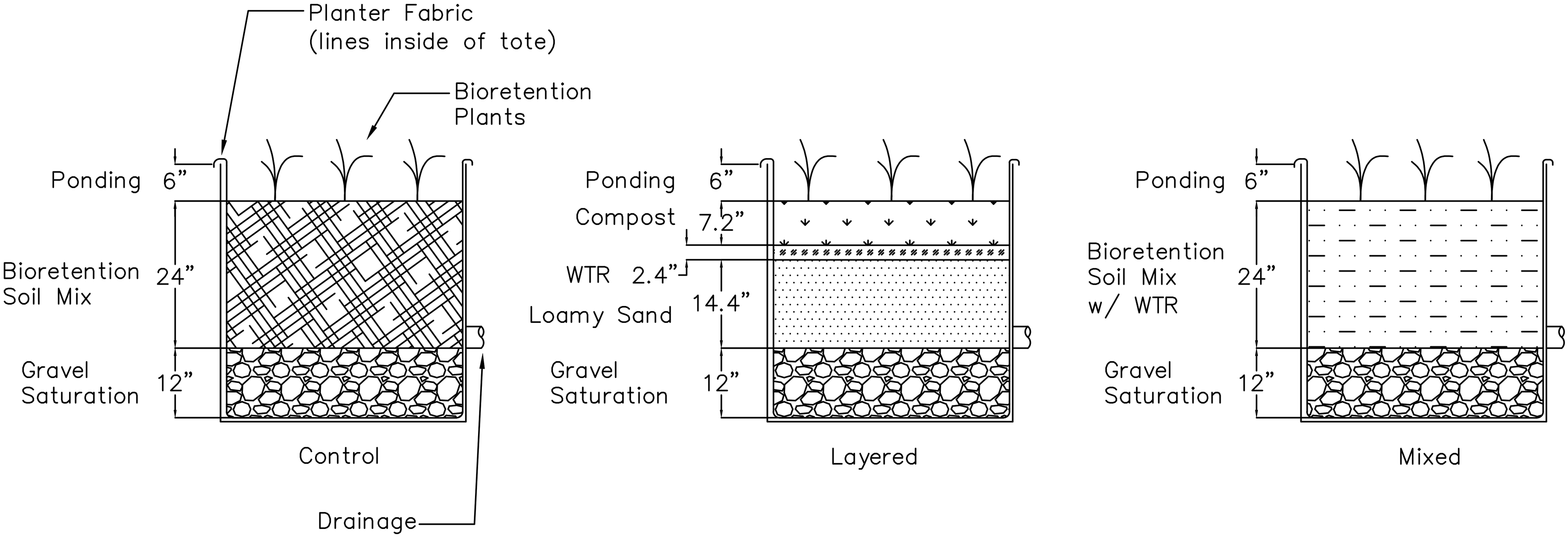
Cross-sectional view of control, layered, and mixed planter configurations.
After soil placement, four plant species native to Portland, OR, were planted in each planter. The plant species used were Tall Oregon Grape (Mahonia aquifolium), Slough Sedge (Carex obnupta), Birch Leaf Spirea (Spiraea betulifolia var. lucida), and Soft Rush (Juncus effuses). Plant establishment occurred for 60 days before testing commenced. Plants were watered with tap water during this establishment period. The planters were located in a parking lot, similar to a typical field application.
For the five tests, stormwater obtained from the Oregon Department of Transportation (ODOT) Stormwater Technology Testing Center (STTC) was used. The drainage area includes an interstate freeway (I-205) and a mixed industrial/residential area. A stormwater volume of 60 gallons (227 L) was applied to each planter per test. The volume of stormwater was determined using the City of Lake Oswego water quality design storm, which is 1.0″ (2.54 cm) over 24 h, a runoff coefficient of 0.9, and a runoff ratio of 10:1 (City of Lake Oswego, 2016a). Using a submersible pump, water was pumped through a PVC pipe to a five-way split with valves that allowed even distribution of stormwater to each planter. During each test, a flow rate of 4 gallons/h (15 L/h) was applied to each planter to allow for adequate ponding on the surface. Infiltration tests were conducted using a modified version of the ASTM D 3385-18 (2018) double-ring infiltrometer method. Because testing was conducted in planters, there was no need for the double-ring apparatus. Water was instead poured into the planter, and infiltration rates measured as specified in the ASTM method.
During each test, effluent drained from the spigots into 55-gallon (208-L) acid-washed plastic bins. All of the effluent was collected in bins, and a subsample of this composite was taken when stormwater was no longer draining from the planters. To ensure that the subsample was representative of the composite, the effluent was mixed by shaking and rotating the 55-gallon bins. The total volume of effluent was measured after the sample was taken. Influent samples were also taken at the beginning of each test. Turbidity and pH of the influent and effluent were measured using an HACH model 2100P portable turbidimeter and a Vernier wireless pH meter. Soil samples were collected from the top layer of each planter before and after each test.
Sample containers were either HDPE or glass, depending on the constituent, in accordance with standard methods (Rice et al., 2012). All sample containers and glassware used during testing and sample analysis were acid washed, and samples were preserved and stored at 4°C according to standard methods (Rice et al., 2012). Samples were immediately placed in a cooler and transported to the laboratory where they were placed in a refrigerator. TP and phosphate (PO43−) were analyzed at the University of Portland, Shiley School of Engineering Environmental Laboratory, in accordance with Standard Methods Section 4000: Inorganic Nonmetal Constituents (Rice et al., 2012). The colorimetric method was used to determine PO43− concentrations, and the persulfate method was used to determine TP concentrations. Soil and metal analyses were completed at the EDGE Analytical Laboratory (Wilsonville, OR). Metal analyses included aluminum, and soil analyses included TP and aluminum. Total solids (TS), total suspended solids (TSS), total organic carbon, and dissolved organic carbon were also analyzed at the EDGE Analytical Laboratory. To determine whether differences in effluent concentrations from the planters were statistically significant, Kruskal–Wallis and Wilcoxon signed-rank tests were used (Lowry, 2000). The Kruskal–Wallis test was first used to determine whether there was a significant difference between all treatments (control, JWC mixed, LO mixed, JWC layered, and LO layered). If the test indicated a statistically significant difference, the Wilcoxon signed-rank test was then used to conduct pairwise comparison between the control and each treatment. The Wilcoxon signed-rank test is the recommended statistical method for small, paired water quality experiments (Helsel and Hirsch, 2002).
Results and Discussion
Of the 60 gallons (227 L) of stormwater applied to each planter, ∼51 gallons (193 L) drained out of the planters during testing, which indicates that only ∼15% of the stormwater was retained. There was no observable increase or decrease in effluent volume with continued testing. Infiltration rates were 20.6–30.0″/h (52.2–76.2 cm/h), as shown in Table 1. Variations in infiltration rates over time (indicated by standard deviation) were larger than the difference in infiltration rates between planters.
± indicates standard deviation.
JWC, Joint Water Commission; LO, Lake Oswego.
Influent pH ranged from 6.6 to 6.9, and effluent pH was 6.9–7.6 for all planters. There was no significant difference in pH between the five planters. This suggests that the added WTRs did not significantly affect the overall chemistry in the planters. The following sections describe water quality and treatment efficacy during each test.
Solids
For the control and planters with WTRs mixed with bioretention soil, TSS and TS were higher in the effluent compared with influent (Tables 2 and 3). The effluent from planters with layers had lower TSS and TS than the control and mixed planters in general, and in a couple of tests, TSS were nondetect. The same trend was observed with turbidity, with an average of 26 Nephelometric Turbidity Units (NTU) for the control, 18 NTU for mixed planters, and 4.3 NTU for layered planters. The sand layer is likely acting as a filter and retains solids.
Phosphorus
In all five tests, TP in the effluent of all planters was higher than the influent, indicating TP is exported from bioretention planters (Fig. 2). Phosphorus in the effluent is likely from compost; soil TP concentrations in all planters were an average of 1,240 mg/kg (Table 4). The layered planters had higher amounts of TP in the soil, which is likely due to layering. Soil samples were taken from the top portion of the planter, and layered planters had only compost in the top ∼7″. The soil in the top portion of other planters consisted of the standard mix of sand and compost. Soil from the JWC mixed planter had higher levels of phosphorus compared with the LO mixed planter. This may be due to the water source for the JWC WTP; the Tualatin River has a phosphorus TMDL. Phosphorus from the river may have settled with alum and particulates (which form WTRs) during the treatment process. Soil concentrations of TP in each planter were relatively consistent between tests. On a mass balance basis, the mass of TP going into the planters was consistently lower than the effluent. This indicates that although more mass is leaving the planters than entering, soil storage of phosphorus is not significantly depleted.
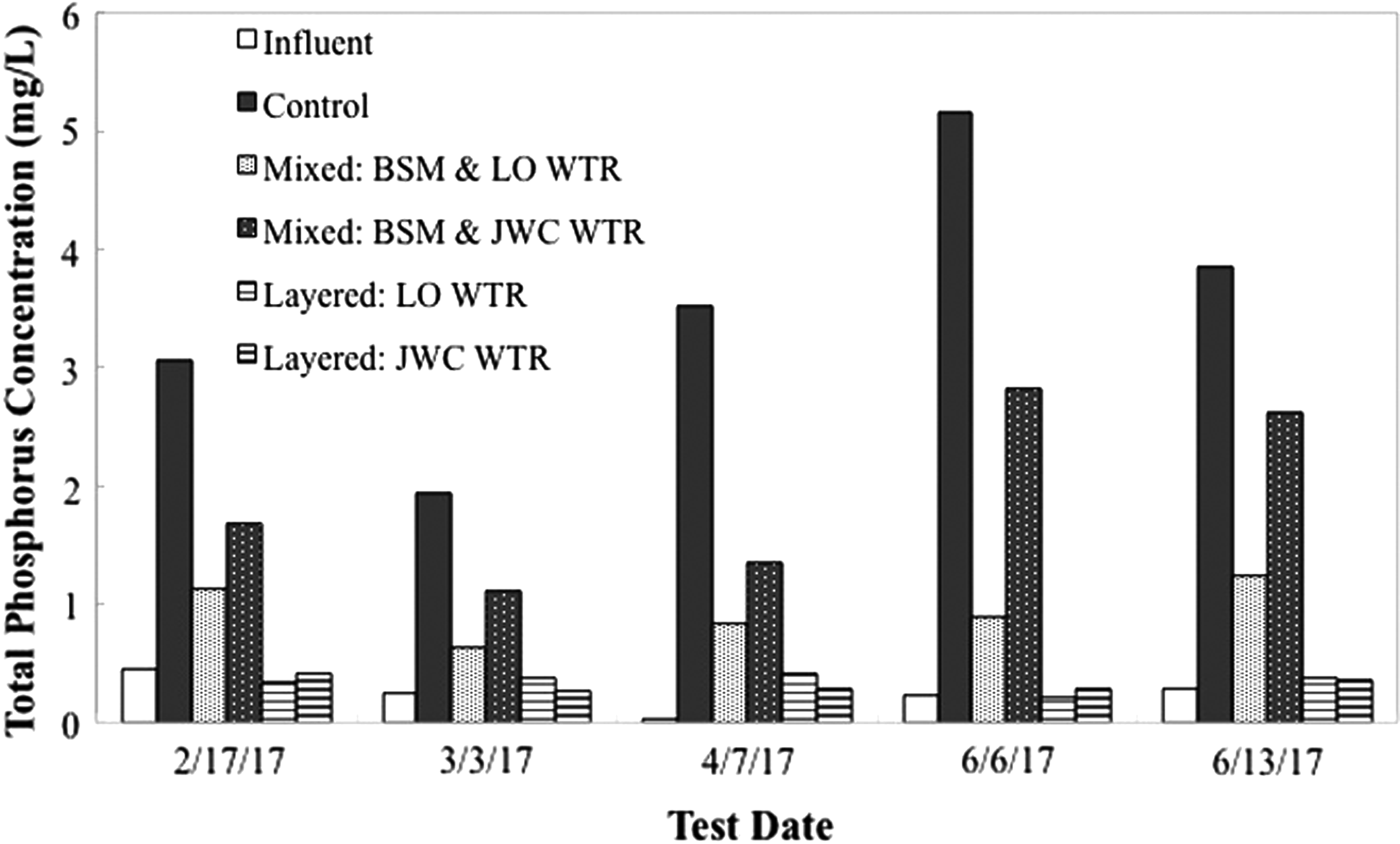
Total phosphorus influent and effluent concentrations for each test.
± indicates standard deviation (n = 10).
Effluent from the control planter, which only contained BSM, had consistently higher TP concentrations than the other planters. Between the two mixed planters, effluent from the planter containing LO WTRs had lower levels of TP than the planter containing JWC WTRs. The effluent TP concentrations from the mixed planter containing BSM and LO WTRs were 63–83% lower than the control, while effluent TP concentrations from the mixed planter containing JWC WTRs were 32–45% lower than the control (Table 5). Concentrations in the effluent from the layered planters were within ±0.08 mg/L of the influent except during the third test, where influent levels were lower than other tests. TP concentrations in the effluent of the layered planters were 80–95% and 86–94% lower than the control for LO and JWC WTRs, respectively (Table 5). The difference between the effluent concentration from the control and effluent concentration from planters with WTRs (both mixed and layered) was statistically significant (p < 0.05). The difference in effluent concentrations between the LO WTR and JWC WTR mixed planters was also statistically significant (p < 0.05).
Negative indicates a higher concentration than the control; ± indicates standard deviation.
Effluent PO43− concentrations showed a similar trend, with the highest effluent concentrations from the control planter (Fig. 3). Although plant uptake is likely occurring in all planters, the export of PO43− from the control planter indicates that plant uptake is not significant enough to retain phosphorus in bioretention systems. On average, effluent PO43− concentrations from the mixed planter containing LO WTRs were 77% lower than the control, while effluent PO43− concentrations from the planter containing JWC WTRs were 57% lower than the control. The effluent PO43− concentrations from the LO WTR and JWC WTR layered planters were 95% and 96% lower than the control, respectively (Table 5). The difference between the effluent from the control and both the mixed planters and layered planters was found to be statistically significant (p < 0.05). The difference between the LO WTR mixed planter and the JWC WTR mixed planter was also found to be statistically significant (p < 0.05).
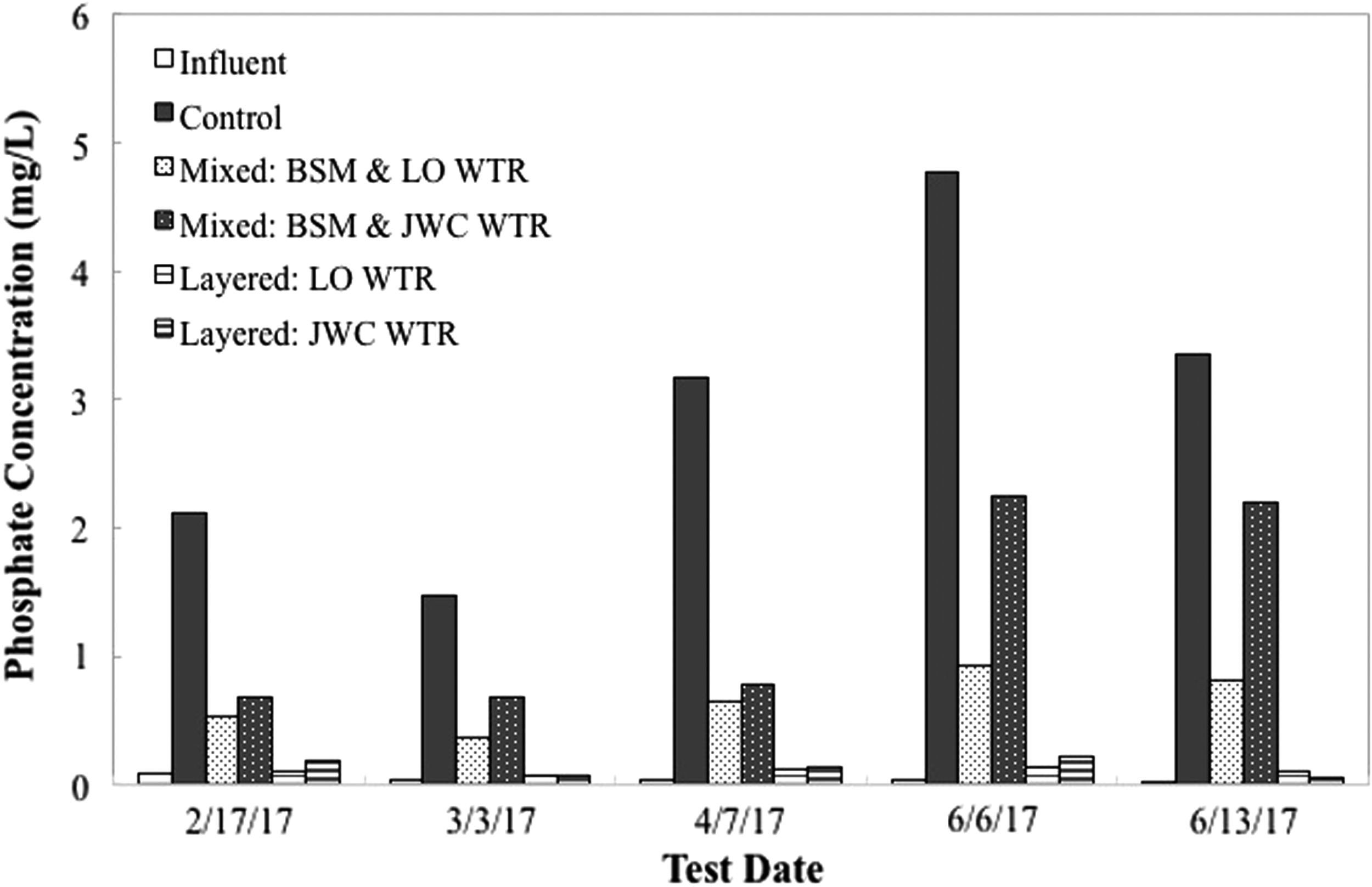
Phosphate influent and effluent concentrations for each test.
Although planters with both types of WTRs exported significantly lesser phosphorus compared with the control, results indicate that the type of WTR plays some role in the amount of phosphorus retained. Since the WTRs used came from two different treatment plants, the difference may be due to the water source and/or treatment processes used at the plant. Different treatment processes and/or difference in quality of these water sources could affect precipitation of AlPO4. The JWC WTP treats water from the Tualatin River, which is high in particulates. During the treatment process, alum adsorbs and enmeshes particles through formation of floc. High particulate levels in the Tualatin River may render the aluminum less available for the precipitation reaction with phosphorus. In addition, the Tualatin River has a phosphorus TMDL; some aluminum may have already reacted with phosphorus during the water treatment process, making it unavailable when added to bioretention planters.
Phosphorus concentrations in the effluent from the mixed planters were similar to findings in other studies (Elliott et al., 2002; Dayton and Basta, 2005; Lucas and Greenway, 2011; O'Neill and Davis, 2012a, 2012b; Palmer et al., 2013). Effluent from the layered planters consistently had the lowest levels of phosphorus, regardless of the WTR being used. In addition to the precipitation reaction that removes phosphate to form AlPO4 (s), the sand layer may be providing an additional removal mechanism for phosphorus. The sand layer below the compost and WTRs likely acted as a filter that physically removed solids from stormwater. Many studies have shown that phosphorus is associated with particulates (Sharpley and Smith, 1990; Simard et al., 2000; Gentry et al., 2007) and phosphorus has been found to be correlated with TSS in stormwater (Sansalone and Buchberger, 1997). If solids are removed in bioretention systems, then the phosphorus associated with solids may be removed as well.
Aluminum
Effluent aluminum concentrations in all planters were highest during the first test, then dropped to <0.55 mg/L during subsequent tests (Fig. 4). These results indicate that much of the aluminum was flushed out during the first test, and aluminum concentrations in the effluent were substantially lower during the remaining four tests. After the first test, effluent concentrations from the control, which contained BSM with no WTRs, were statistically the same as effluent concentrations from mixed planters (Table 5). Effluent aluminum concentrations were higher in the control than the layered planters. The difference between effluent aluminum concentrations from the control planter and layered planters was found to be statistically significant (p < 0.05).
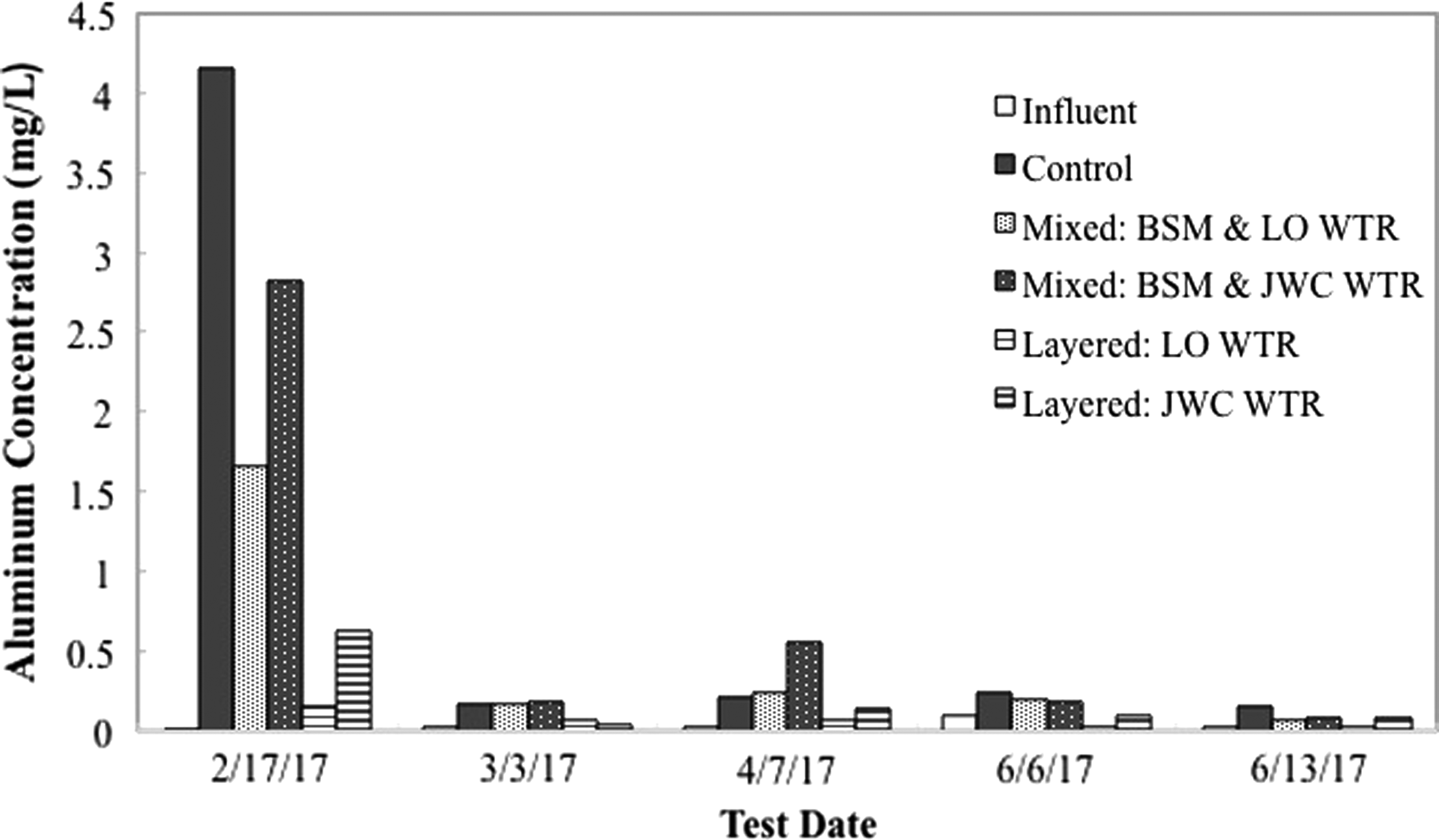
Aluminum influent and effluent concentrations for each test.
Since no aluminum was added to the control, excess aluminum may be from the bioretention soil. Table 6 shows the average soil content of aluminum in each planter; aluminum content was statistically the same for all planters except the JWC mixed planter, which was significantly higher than the control (p < 0.05). Although the JWC mixed planter had higher soil aluminum content than the control, aluminum concentrations in the effluent were statistically the same in these two planters. This may be due to the small amounts of WTRs that were added (10%), which likely did not increase aluminum content enough to cause a significant difference.
± indicates standard deviation (n = 10).
Conclusions
The following conclusions can be made as a result of this study:
WTRs decrease phosphorus leaching from bioretention soils. Effluent TP and PO43- concentrations from the planters with both mixed and layered WTRs were significantly lower than the control (p < 0.05). Layering of soil components provides additional reduction in phosphorus leaching to within ±0.08 mg/L of influent concentrations for all tests except Test 3, where influent levels were lower than other tests. Effluent TP and PO43− were 89% and 95% lower in layered planters compared with the control, respectively. The source of WTR impacts efficacy when mixed with the BSM, but not when layered. When mixed with the BSM, reduction in phosphorus leaching from LO WTRs was higher than JWC WTRs. When soil components were layered, reduction was similar for both JWC and LO WTRs. WTRs do not significantly contribute to aluminum leaching if 10% or less WTR is used. Aluminum leached out of the BSM during the first test, but decreased substantially during subsequent testing. Aluminum in the effluent from the control was similar to effluent from the mixed planters and higher than the effluent from the layered planters. This suggests that aluminum from WTRs does not increase aluminum in the effluent.
Based on these conclusions, it is recommended that WTRs and layering be considered for future bioretention installations. To determine if results remain consistent over time and at the full bioretention scale, further long-term research is needed in the field. There is potential for all of the aluminum to be used up and the precipitation reaction to reverse if the concentration of free aluminum gets low enough. Phosphate could be released from the precipitate and leached out of the bioretention system. Further studies are needed to determine how long WTRs will remain effective and whether new WTRs will need to be added after a period of years. In addition, larger scale studies are needed. These studies were conducted in planters, which are often used in urban settings where space is limited, but some bioretention systems can be up to 10–20 times larger. When scaling up to larger systems, the dominant removal mechanisms may change. Studies are needed to determine whether similar results (and removal mechanisms) are observed in larger scale bioretention systems. Overall, these results are promising for reducing phosphorus leaching from bioretention systems.
Footnotes
Acknowledgments
The City of Lake Oswego provided funding to complete this study. The authors are grateful to the ODOT for allowing them to collect stormwater at their STTC facility and the LO and JWC WTPs for providing WTRs. The authors would also like to thank Jacob Amos and Nathan Hale for assistance in constructing the planters and Connor Mansberger, Jocelle Tade, Jenna Kube, and Mustaf Mohamed for their help with sampling.
Author Disclosure Statement
No competing financial interests exist.