




Abstract
Abstract
Sludge handling is becoming one of the bottlenecks in dealing with wastewater treatment plants (WWTPs) management issues. A comprehensive nationwide WWTPs investigation program was performed to analyze the key design parameters (scale, treatment process, and effluent standard), chemical oxygen demands (COD) reduction, and geographical distribution of WWTPs in terms of sludge production. It was found that integrated effects of key factors on sludge production should be given full consideration. To achieve the minimal unit sludge production, membrane bioreactor can be the best candidate (0.390 kg/m3). Besides MBR, biological filter is the best option for small- and large-scale WWTPs (<5 × 10⁴ m3/day and 10–20 × 104 m3/day), whereas sequencing batch reactor is suitable for medium-scale and super large-scale WWTPs (5–10 × 104 m3/day and >20 × 104 m3/day) and oxidation ditch is not fit for large-scale WWTPs (10 × 104 m3/day to 20 × 104 m3/day). Comparatively, the effects of WWTP treatment process on unit sludge yield prevail over those of effluent discharge norm. In general, there was a marked positive correlation between COD reduction and sludge production. Additionally, unit WWTPs sludge production per COD reduction was summarized systematically. The present work will assist in understanding of how and to what extent key factors are incorporated in design guidelines and also help decision makers and engineers construct and upgrade WWTPs in the best possible way.
Introduction
S
Previous studies mainly focused on the development of technologies to reduce the yield of sludge (Liu, 2003; Zhang et al., 2009; Wang et al., 2015, 2017; Yang et al., 2015; Syed-Hassan et al., 2017). For example, various sludge reduction technologies such as the addition of metabolic uncoupler (Ferrer-Polonio et al., 2017), lysis–cryptic growth (Lan et al., 2013), and worm predation (Li et al., 2017) were developed to minimize the sludge production. To cope with the tough dilemma of sludge handling, the key design parameters of WWTPs should also be given full consideration. Although some researches mentioned that regional economy (Zhang et al., 2016), treatment scale (Wang et al., 2017), and operation load mode (Zhang et al., 2009) could have influence on sludge production, there are still lack of in-depth analysis of the relationships between key design parameters and sludge production. Additionally, to identify the underlying factors affecting sludge production, other core parameters including treatment process, effluent standard, as well as chemical oxygen demands (COD) reduction cannot be disregarded. However, existing information about the interrelation between sludge production and these parameters has not been synthesized and cannot be widely distributed to WWTP designers and operators.
In this study, a total of 1,605 urban WWTPs at a national level were included to systematically characterize the relationship between the core parameters (scale, treatment process, effluent standard, and COD reduction) and sludge production of WWTPs. A holistic assessment of WWTPs sludge yield of different geographical distribution was also carried out. Based on the above analysis, specific recommendations and strategies were provided to help optimize design and operation of WWTPs in the context of minimization of sludge production.
Data and Methodology
Data
Comprehensive national databases of 3,508 WWTPs were inventoried, and 1,605 WWTPs were selected for the analysis of sludge production after excluding the samples at town level and county level as well as extremely small scale (<1,000 m3/day). Unit WWTPs sludge production (UWSP) was used as the indicator to assess the sludge production in WWTPs. The UWSP (kg/m3) was defined as the mass of wet sludge produced by the treatment of 1 m3 wastewater. The UWSP value was directly from the Ministry of Housing and Urban-Rural Development of the People's Republic of China, 2014. These data cover three decades of WWTPs from 1984 to 2013. Note that all information referred to mainland China (i.e., not including Hong Kong, Macao, and Taiwan). The data were collected from design documents, field investigation, and phone survey.
Factors for consideration
Potential factors that influencing WWTPs sludge yield were chosen as follows: (1) Region: Mainland China can be divided into seven regions, namely North China (N), East China (E), Northeast China (NE), Central China (C), South China (S), Southwest China (SW), and Northwest China (NW). (2) Scale: According to the treatment capacity, WWTPs could be classified into <5 × 10⁴ m3/day, 5–10 × 104 m3/day, 10–20 × 104 m3/day, and ≥20 × 104 m3/day. This classification refers to the Standards for Construction of Municipal Wastewater Treatment Projects (JB77-2001). (3) Effluent discharge standard: The widely used national effluent standard (GB 18918-2002) divides WWTPs effluents into Grade I-A, Grade I-B, Grade II, and Grade III, of which Grade I-A is the highest quality and Grade III is the lowest. The Grade III standard was not included in this study due to its demands behind the time. (4) Treatment processes: Three mainstream WWTP processes including anaerobic–anoxic–oxic plus anaerobic–oxic (AAO [AO]), oxidation ditch (OD), sequencing batch reactor (SBR), and biological filter (BF) were analyzed. Additionally, special consideration was given to membrane bioreactor (MBR) process due to its ever-increasing application in newly built and upgraded WWTPs.
Statistical analysis
The Shapiro–Wilk test and Normal Q-Q plots were used to determine the data distribution, and the Levene test was used to test for homogeneity. To test differences in UWSP for each factor under consideration, one-way ANOVA (analysis of variance) followed by multiple comparisons based on least significant difference tests were applied. ArcGis 10.2.2 was adopted to analyze the regional distribution of sludge production.
Results and Discussion
Assessment of sludge production in different regions
The economy is the most important driver for the development and operation of WWTPs. Considering the notably unbalanced economic development in China, the geographical distribution of sludge production was investigated. Figure 1 demonstrates the profiles of regional-level distribution of UWSP and per-capita gross domestic product (GDP). It was found the average UWSP varied from region to region (p < 0.05). To test whether economic level is an important reason for the regional differences in UWSP, the relationship between the average per-capita GDP and UWSP was discussed in different regions. Generally, an U-type trend was observed. Both the highest per-capita GDP regions (North China and East China) and the lowest per-capita GDP regions (Southwest and Northwest) present the relatively high UWSP. Specifically, the UWSP in North China was the largest (0.627 kg/m3) and then was Northwest (0.591 kg/m3), East China (0.580 kg/m3), and Southwest (0.483 kg/m3).

Map of UWSP and per-capita GDP in seven regions of China: North China (N: Hebei, Beijing, Shanxi, Tianjin, and Inner Mongolia); East China (E: Jiangsu, Zhejiang, Anhui, Fujian, Jiangxi, Shandong, Shanghai, and Taiwan); Northeast (NE: Heilongjiang, Jilin, and Liaoning); Central China (C: Hubei, Hunan, and Henan); South China (S: Guangdong, Guangxi, Hainan, Hong Kong, and Macau); Southwest (SW: Sichuan, Yunnan, Guizhou, Chongqing, and Tibet); Northwest (NW: Shaanxi, Gansu, Qinghai, Ningxia, and Xinjiang). No data processed for Taiwan, Hong Kong, and Macau. GDP, gross domestic product; UWSP, unit wastewater treatment plants sludge production.
For the economically advanced North China and East China, high UWSP can be mainly attributed to stricter effluent standards adopted in these regions. Take Beijing as an example. To meet the requirements of wastewater reclamation, Beijing upgraded the effluent quality standards to the Class IV of surface water (DB11/307-2013). However, as for the undeveloped regions (Northwest and Southwest), the notion of overemphasis on wastewater rather than sludge always lead to neglecting the sludge reduction when upgrading the technology as well as selecting the operation strategies to improve water quality.
To further investigate the relationship between the average per-capita GDP and UWSP and reduce the effect of disparities between provinces within one region, the profiles of province-level distribution of UWSP and per-capita GDP were also discussed (Fig. 2). A similar trend was found and the top two provinces were Beijing and Gansu, with the high and low per-capita GDP, respectively. It was noted that Tianjin was exceptional, for its UWSP was below the average value (0.502 kg/m3), even with the highest per-capita GDP. As a whole, the UWSP of other low-GDP provinces including Xinjiang, Shanxi, and Henan was far beyond average. The average-GDP provinces (municipality and autonomous zone) such as Shaanxi, Heilongjiang, and Ningxia demonstrate their UWSP near the mean value (0.502 kg/m3). However, it has to be admitted that besides uneven economic conditions, the regional differences in UWSP also depend on other factors such as influent characteristics, climate, and treatment process.
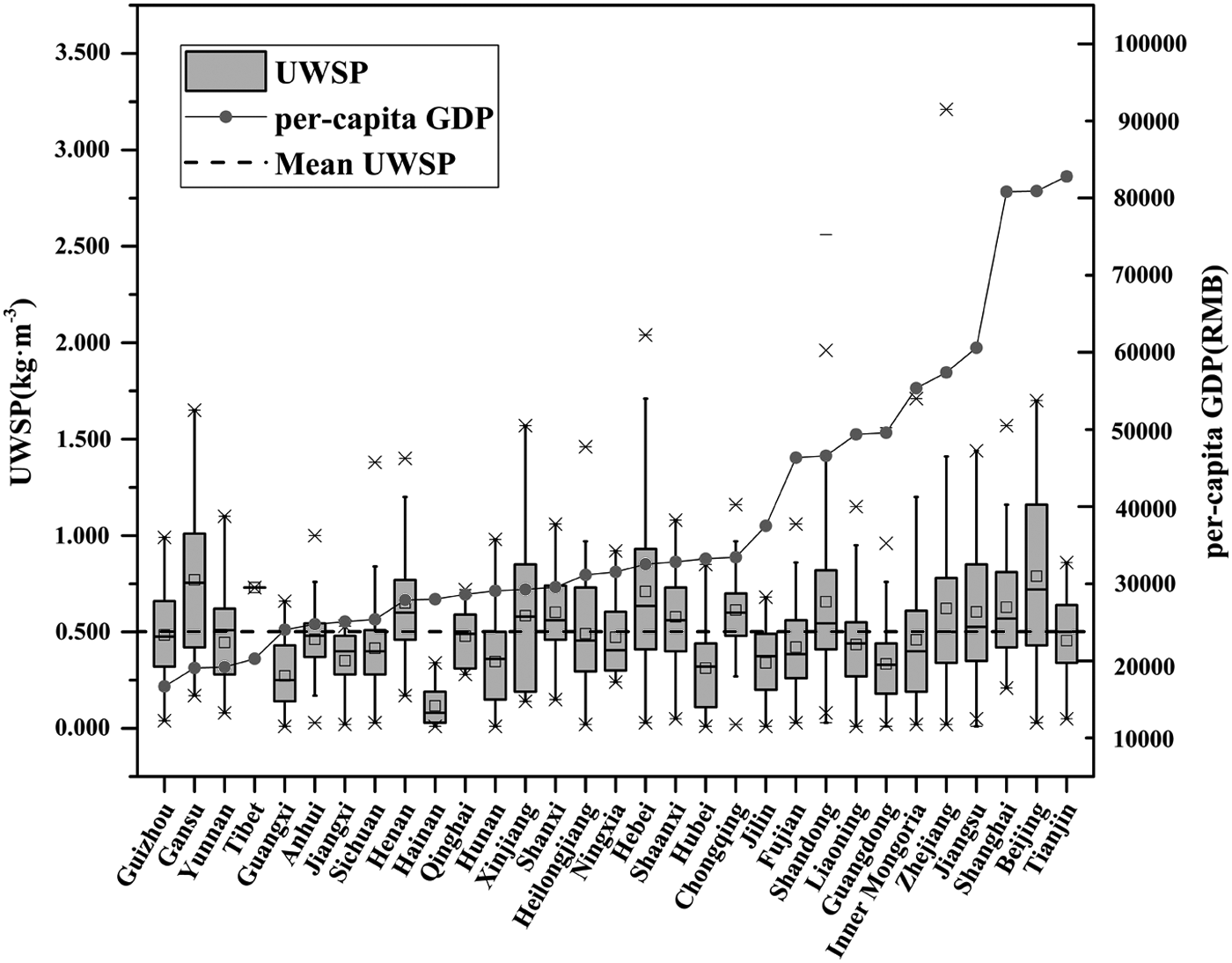
Profiles of province-level distribution of UWSP and per-capita GDP.
Assessment of sludge production of WWTPs with different scales
As a key design parameter, the scale of WWTPs deserves consideration in the context of minimization of sludge production. Figure 3 demonstrates the profiles of unit sludge production with different design (Fig. 3a) and actual (Fig. 3b) scales of WWTPs. It was found that there was a slight difference of UWSP between the design scale and actual scale due to different utilization ratios of WWTPs. It is worth mentioning that about 85% WWTPs whose utilization ratio were more than 0.7 in this study.
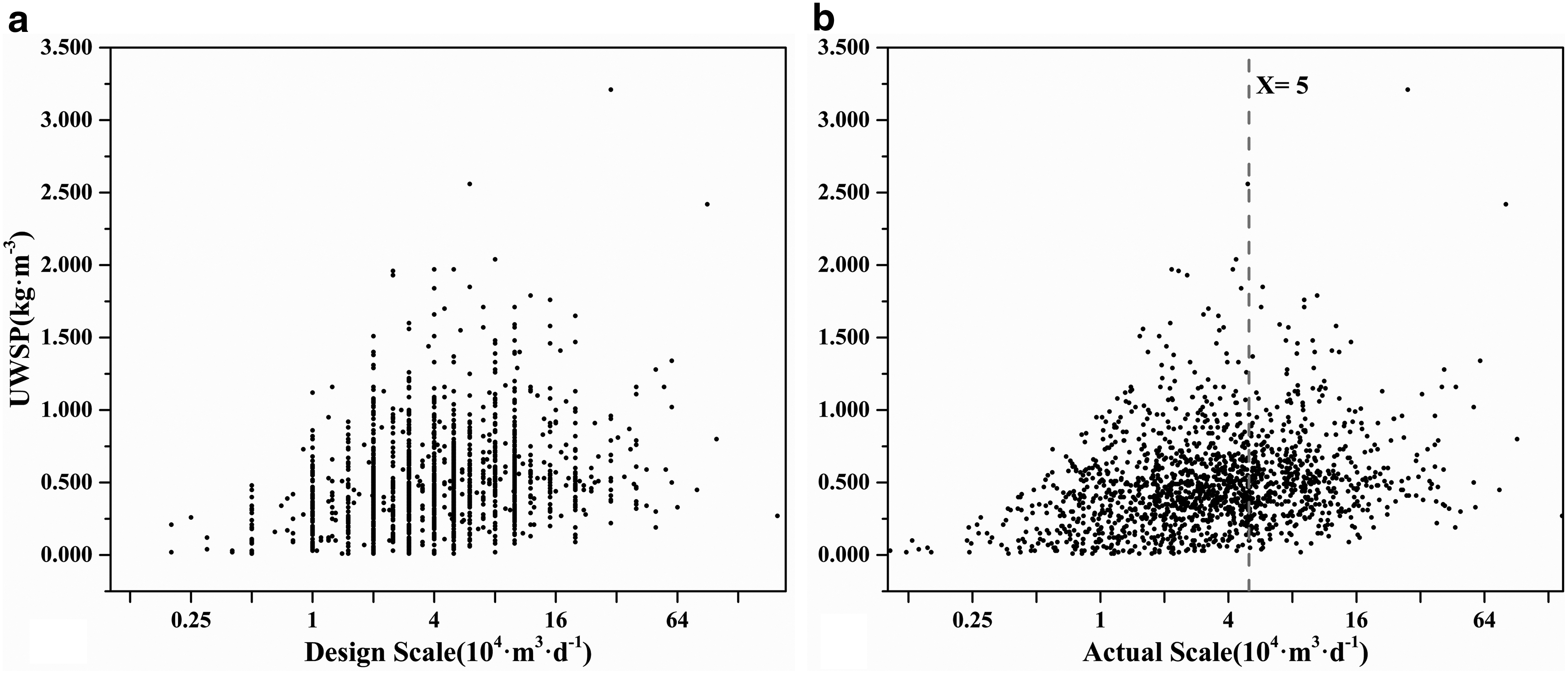
Profiles of UWSP with different design
A marked initial UWSP increase was observed within WWTP treatment scale of 5 × 10⁴ m3/day. After that, it was found that the UWSP had a great degree of dispersion, and there was no obvious correlation between UWSP and scale (Fig. 3b). This observation shows that the scale is not a crucial factor affecting unit sludge yield especially for relatively large-scale WWTPs. Centralized or decentralized construction of WWTPs has become one of the current focuses of concern among those involved with the management of WWTPs (Liu et al., 2010; Shen et al., 2016). Jing's work (Jing et al., 2002) showed that small-scale WWTPs help to reduce sludge yield of WWTPs, which is in agreement with our finding. Taken together, to achieve the minimization of sludge production, small-scale WWTPs (<5 × 10⁴ m3/day) was recommended.
Assessment of sludge production of WWTPs with different treatment processes
The selection of wastewater treatment process is essential for the construction of WWTPs, which depends on multiple factors such as treatment efficiency, cost, energy consumption, and sludge production. Figure 4 summarizes the averaged unit sludge production with treatment process of AAO (AO), SBR, OD, BF, and MBR, respectively. In general, the UWSP of MBR was the smallest (0.390 kg/m3), followed by BF and SBR (0.472 and 0.475 kg/m3), and then was OD (0.494 kg/m3), with AAO (AO) the last (0.552 kg/m3). As a whole, MBR demonstrates considerable advantages in minimization of sludge, whereas AAO (AO) presents the opposite.
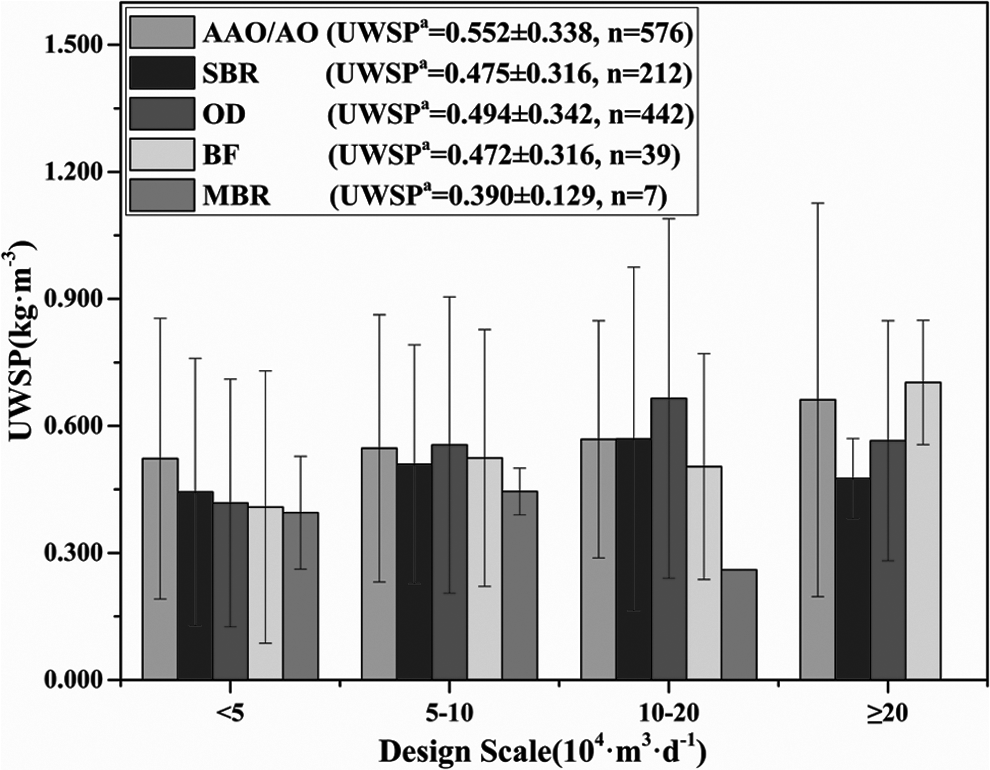
Profiles of UWSP of AAO (AO), SBR, OD, BF, and MBR with different scales of WWTPs. aValues are expressed as means ± SD. n represents sample number. AAO (AO), anaerobic–anoxic–oxic plus anaerobic–oxic; BF, biological filter; MBR, membrane bioreactor; OD, oxidation ditch; SBR, sequencing batch reactor.
Additionally, the effects of scale on sludge production of WWTPs with different treatment processes were also discussed. It was noted that the differences in averaged UWSP among AAO (AO), SBR, OD, and BF depend heavily on the treatment scale of WWTPs (Fig. 4). In particular, AAO (AO) always presents relatively high UWSP. When WWTP scale was within 5 × 10⁴ m3/day to 10 × 104 m3/day or >20 × 104 m3/day, SBR had notably lower UWSP than those of other conventional processes (AAO [AO], SBR, OD, and BF). However, BF demonstrates the highest UWSP among other conventional processes with WWTP scale beyond 20 × 104 m3/day. When WWTP scale was within 10 × 104 m3/day to 20 × 104 m3/day, the UWSP was the lowest among these processes. Hence, the selection of treatment process should fully consider given treatment scale for minimal production of sludge. To achieve the minimal production of sludge, besides MBR, BF is the best option for small- and large-scale WWTPs (<5 × 10⁴ m3/day and 10–20 × 104 m3/day), whereas SBR is suitable for medium-scale and super large-scale WWTPs (5–10 × 104 m3/day and >20 × 104 m3/day). Comparatively, OD is not fit for large-scale WWTPs (10 × 104 m3/day to 20 × 104 m3/day).
In the WWTPs of China, AAO (AO), SBR, and OD are the mainstream treatment processes, whereas MBR is an emerging advanced wastewater treatment technology that has been successfully applied at an ever-increasing number of locations in China (Zeng et al., 2016). MBR offers special advantages for extremely low sludge production due to its relatively long sludge retention time (SRT, 20–50 days) (He et al., 2005; Gao and Zhang, 2013; Liu et al., 2017; De Arana-Sarabia et al., 2018). However, MBR is recognized as a high-energy-use process (Gu et al., 2016). It is noted that low sludge yield of BF is also due to long SRT inducing endogenous decay (Velasquez-Orta et al., 2018). Comparatively, AAO (AO) is of the highest UWSP, which is mainly attributed to its relatively short SRT (8–15 days). To help enhance the removal of phosphorus, low SRT is always required (Li and Huang, 2005). Accordingly, the selection of treatment process should depend on the major decision criteria, such as effluent standard, sludge yield, energy supply, and local conditions (Singh and Kazmi, 2018).
Assessment of sludge production of WWTPs with different effluent standards
All WWTPs effluent must meet certain standard before discharge. The effects of effluent discharge norm on sludge production deserve consideration. Figure 5 presents the profiles of unit sludge production with effluent standard of Grade I-A, Grade I-B, and Grade II, respectively. The averaged UWSP value increased from 0.449 to 0.558 kg/m3 with effluent standard elevated from Grade I-B to Grade I-A. However, the highest UWSP (0.590 kg/m3) was observed with effluent norm of Grade II. This seemingly paradoxical observation can be explained by the fact that WWTP with Grade II discharge mainly adopted high UWSP treatment processes (38.3% AAO [AO] and 32.6% OD). Multiple comparison of the average UWSP among different effluent standards showed that there was of significant difference (p < 0.05) between Grade I-A and Grade I-B, whereas the difference between Grade I-A and Grade II was insignificant (p > 0.05). Hence, it is concluded that the effects of WWTP treatment process on unit sludge yield prevail over those of effluent discharge norm.
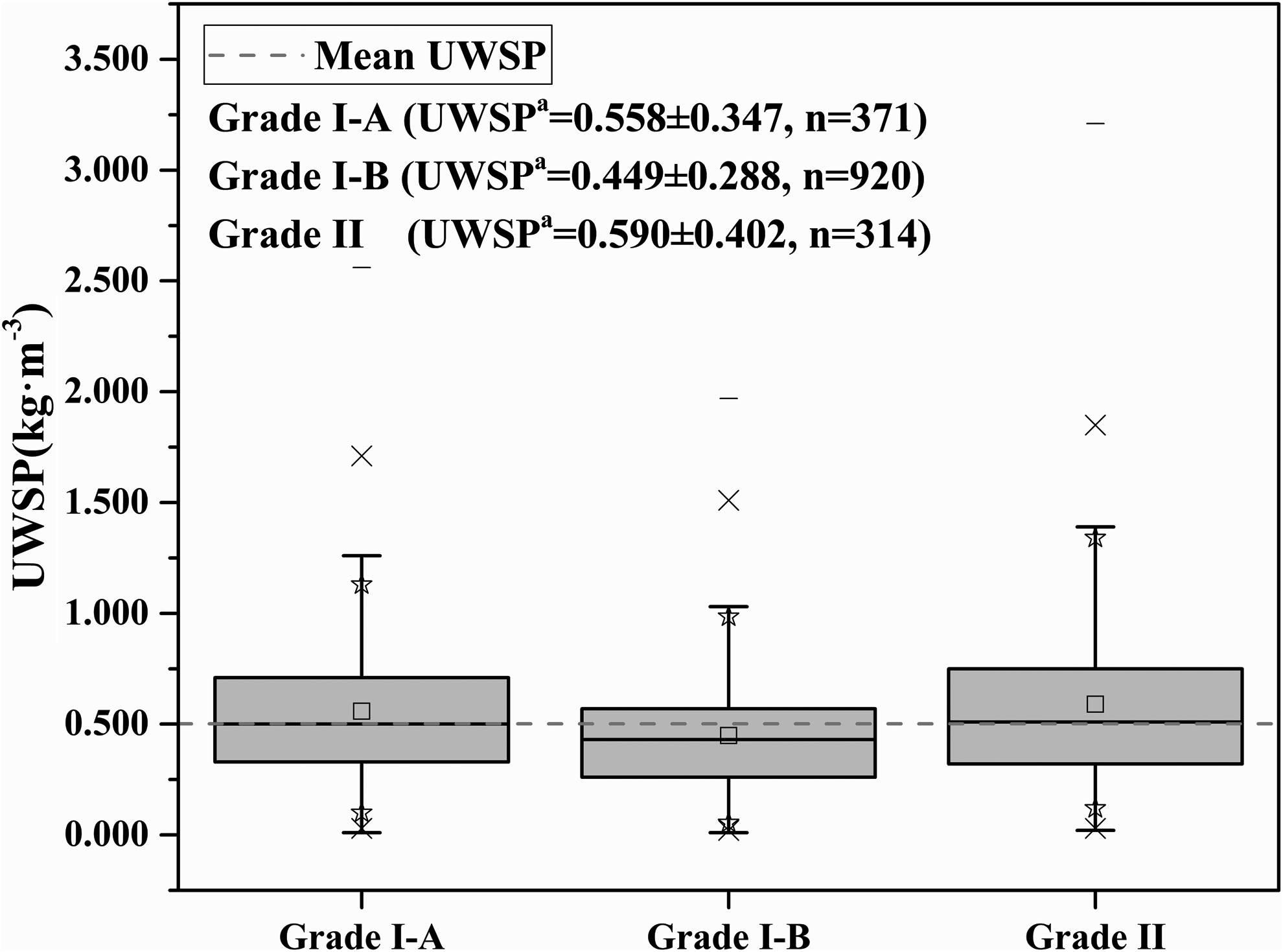
Profiles of UWSP with effluent standard of Grade I-A, Grade I-B, and Grade II.
Assessment of sludge production of WWTPs with different COD reduction
During the biological treatment process, part of COD was removed and then converted to sludge. Accordingly, it could be inferred that there should be a linear correlation between the COD reduction and sludge production. Figure 6 presents the profiles of unit sludge production with different COD reduction. Generally, a positive correlation was observed between the average UWSP value and COD reduction (p < 0.01). This finding confirmed the work of Zhao (2015) that sludge yield is positively related to COD reduction.
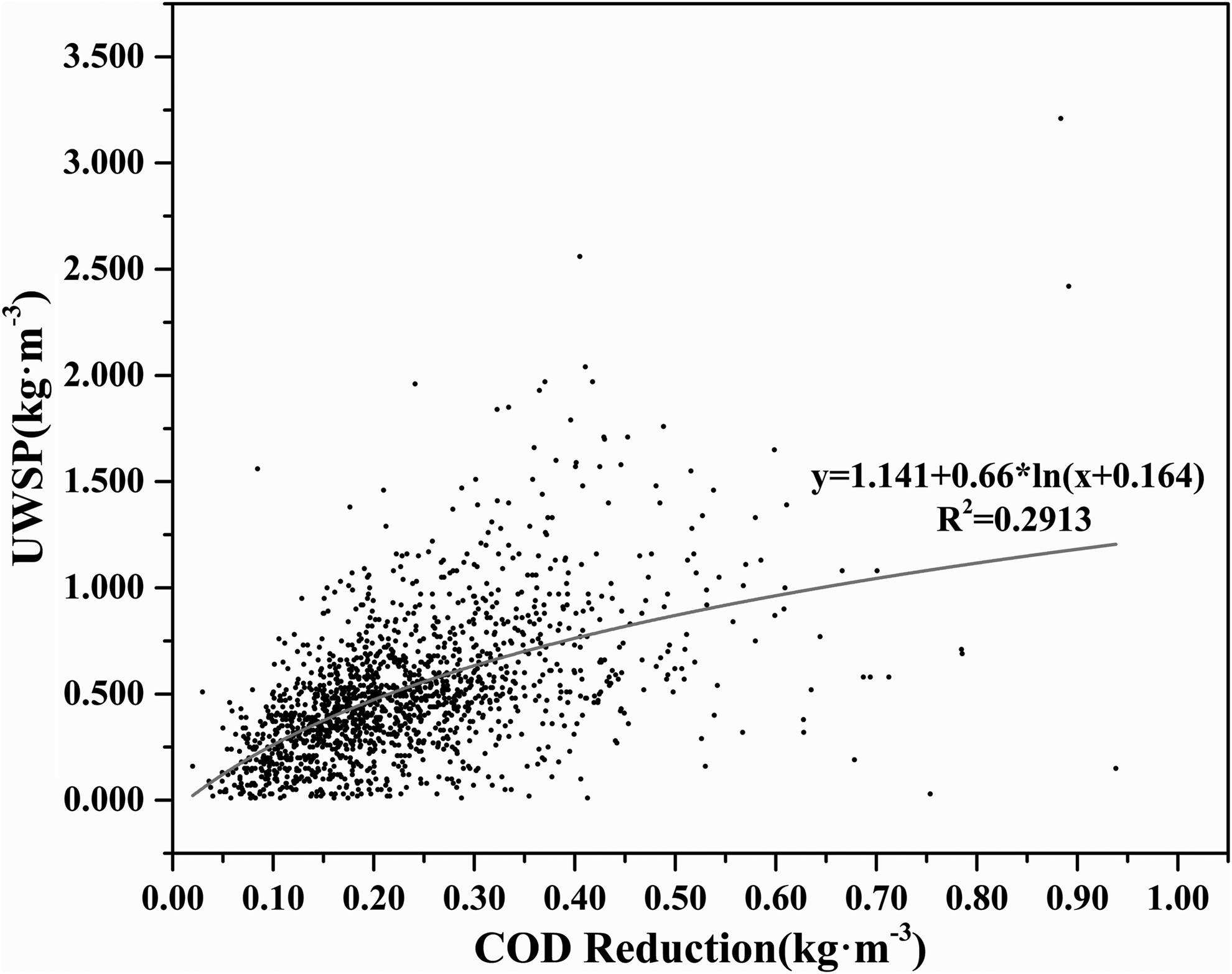
Profiles of unit sludge production with different COD reduction. COD, chemical oxygen demands.
To perform a holistic analysis of the relationship between unit sludge production and COD reduction, the index of UWSP per COD reduction (UWSP-PCR, kg sludge/kg COD) was used, and the UWSP-PCR was summarized with different regions, scales, treatment processes, and discharge standards (Table 1). It was found that northern regions were of relatively low UWSP-PCR values (lower than the average value of 2.30 kg/kg). The average UWSP-PCR of Northwest, Northeast, and North China was 1.78, 1.92, and 2.07 kg/kg, respectively. It may be due to the low temperature conditions in northern regions inducing to decrease the activity of microbes. Furthermore, the average UWSP-PCR of small scale (<5 × 10⁴ m3/day, 2.20 kg/kg) was lower than that of the other three scales (2.42, 2.43, and 2.42 kg/kg), which could account for small scale facilitating for sludge reduction.
Values are expressed as means ± SD.
AAO (AO), anaerobic–anoxic–oxic plus anaerobic–oxic; BF, biological filter; MBR, membrane bioreactor; OD, oxidation ditch; SBR, sequencing batch reactor.
Concluding Remarks and Future Perspectives
For the past decades, WWTPs have been bringing ever-increasing pressure on environmental engineers and policy makers to minimize sludge treatment especially in fast-urbanized developing countries such as China. To cope with the tough sludge handling, optimizing design of core parameters deserve attention. Based on the above analyses, the integrated effects of key factors on sludge production should be given full consideration. For example, the regional differences of the UWSP value are significant, which mainly ascribe the different distribution of treatment scale, process, discharge norms, and economic status.
Additionally, the UWSP value of different processes varies with treatment scales. To achieve the minimal unit sludge production, MBR can be the best candidate (0.390 kg/m3). Besides MBR, BF is the best option for small- and large-scale WWTPs (<5 × 10⁴ m3/day and 10–20 × 104 m3/day), whereas SBR is suitable for medium-scale and super large-scale WWTPs (5–10 × 104 m3/day and >20 × 104 m3/day) and OD is not fit for large-scale WWTPs (10 × 104 m3/day to 20 × 104 m3/day). Comparatively, the effects of WWTP treatment process on unit sludge yield prevail over those of effluent discharge norm. In general, there was a marked positive correlation between COD reduction and sludge production.
It is also vital to implement new technologies to minimize sludge production as much as possible. Some technologies have been developed including metabolic uncouplers addition (Fang et al., 2015), sonication–cryptic growth (Zhang et al., 2009), sludge predation (Tamis et al., 2011), and other derivative technologies (Wang et al., 2017). However, there are still challenges for the engineering application of these emerging technologies, and lots of breakthrough solutions and optimized procedures are under investigation. In general, on the basis of the specific required situation, it is reasonable to integrate different strategies from optimized design, operation, technology, as well as management to reduce sludge to the greatest extent.
Footnotes
Acknowledgments
This work was carried out with the financial support from the Shanghai Pujiang Talent Program (16PJD023), the Shanghai Natural Science Foundation (16ZR1408800), the Shanghai Science and Technology Development Funds (16QB1403300), and the National Science and Technology Special Project (2013ZX07314003).
Author Disclosure Statement
No competing financial interests exist.