




Abstract
Abstract
In this study, the effect of cavitation parameters on bisphenol A (BPA) removal using hydrodynamic cavitation (HC) was investigated. The geometry of orifice plate was examined and operational parameters of the process were selected. The effects of initial concentration, temperature, and pressure on the removal of BPA were investigated. It was found that the degradation efficiency rose first and then decreased with increasing temperature and pressure, as well as decreasing solution concentration. In addition, the optimum conditions were determined on the basis of orthogonal tests as follows: solution concentration 10 mg/L, pressure 0.3 MPa, treatment time 3 h, and temperature 35°C, the removal rate of BPA was 27.58% under the optimum conditions. The geometry of orifice plate (α, β, and arrangement) was found to be an important factor in getting the maximum cavitational effect using HC. The result shows that under the same operating conditions, the influence of β on the removal rate of BPA is caused by the different pore diameter and pore number of the porous plate. The system with orifice intersect layout can produce more uniform cavitation cloud and has better treatment effect than that with radial layout. This study suggests that the removal rate of BPA by HC is influenced by a variety of factors, and high BPA removal rate could be achieved under appropriate conditions.
Introduction
Bisphenol A (BPA) is a representative endocrine disrupting compound because of its large consumption as a monomer for the production of polycarbonate, epoxy resins, unsaturated polyester resins, and flame retardants (Im et al., 2015; Kimura et al., 2016). For this reason, BPA has been frequently detected in both industrial waste water and drinking water recently and people have a considerable risk of being exposed to it. What is worse is that even the low concentration (μg–ng) level has adverse effects on animals and humans, for example, waking competitor of estradiol for the binding to the estrogen receptor (Le et al., 2008). Many studies on BPA have shown that it can induce acute toxicity to the nervous system and the reproductive system of biological organisms (Lee et al., 2007). BPA also increases the proliferation rate of breast cancer cells for its affinity with estrogen receptor (Murray et al., 2007). Therefore, it is essential to explore highly efficient methods of BPA removal for both human health and environment protection.
Recently, conventional processes for BPA treatment have been developed such as activated sludge, biological aerated filter, adsorption, and coagulation. However, these methods generally exhibit limited applicability and low efficiency (Ike et al., 2000; Kuruto-Niwa et al., 2002; Korshin et al., 2006; Zhao et al., 2018). Therefore, several alternative processes have raised extensive attention. The most methods of application include photocatalytic oxidation (Muruganandham and Swaminathan, 2004; Karunakaran and Senthilvelan, 2006; Sarwan et al., 2012), Fenton process (Kavitha and Palanivelu, 2004; Nidheesh and Gandhimathi, 2012; Babuponnusami and Muthukumar, 2015; Nidheesh, 2015), ozonation process (Vedaraman et al., 2013), persulfate oxidation (Sarath et al., 2016), peroxicoagulation process (Nidheesh and Gandhimathi, 2014), hydrodynamic cavitation (HC) (Torres et al., 2007), and so on. Recently, HC is considered as a promising advanced oxidation method for the removal of organic contaminants, because of advantages of convenient operation, low-energy consumption, and environmental friendliness.
HC can be defined as the formation, growth, and subsequent collapse of microbubbles filled with a vapor–gas mixture. Cavitation occurs when a moving fluid encounters a sudden change in velocity that results in a localized pressure drop. When cavities are carried to higher pressure region, they implode violently and very high pressures (about 5 × 10⁷ Pa) and temperature (up to 5,000°C) can occur (Torres et al., 2007). The extreme environment of high-temperature, high-pressure, and high-speed jet caused by cavitation releases large magnitudes of energy locally, not only causing the thermal decomposition of organic compounds, but also inducing the cleavage of water molecules to yield highly reactive free radicals and oxidants, such as HO·, H·, and H2O2. These initiate a series of radical reactions to breaking the molecule of organic compounds generating compounds with lower molecular weight (Liu et al., 2016; Deng et al., 2018). At the same time, the powerful shear forces and shock waves formed by cavitation is sufficient to break the bonds in organic compounds.
In fact, there have been some reports related to the use of HC for the depolymerization dealing with understanding the effect of operating parameters (Gogate and Pandit, 2005; Prajapat and Gogate, 2015). In these works, optimization of a HC reactor, for maximizing the extent of hydroxyl radical generation, has been investigated. The research has shown 15% improvement in the hydroxyl radical generation when the distance between the orifice and transducer is 5–10 mm (Amin et al., 2010). Prajapat and Gogate (2015) studied the depolymerization of aqueous guar gum using HC. They observed that lower initial concentration, higher inlet pressure, and orifice plate as cavitating device result in high extent of depolymerization. In addition, HC has been demonstrated to be more energy efficient and applicable at larger scale of operation. Sivakumar (2002) and Saharan et al. (2011) have studied the degradation of dye by using multiple hole orifice plates and compared the cavitational yield in acoustic and HC. The results have proved that the removal rate of dye solution using HC is higher, and HC is more energy efficient than ultrasonic cavitation. Similar results have also been obtained in some of the earlier literature (Save et al., 1997; Gogate et al., 2001). In addition, HC has also been devoted to investigating this phenomenon as a tool of water disinfection (Save et al., 1997; Jyoti and Pandit, 2003; Wang et al., 2015). However, reports on the removal of BPA by HC using multiple hole orifice plates are seldom, so this article makes up for the vacancy.
The objective of this study was to explore the effects of orifice geometrical parameters and cavitation operation parameters on the cavitation removal of BPA. In particular, the key parameters, that is, the inlet pressure, and α and β of orifice were optimized to maximize the removal rate of BPA by HC.
Experimental and Methods
Materials
BPA was obtained from Tianjin Damao Chemicals Factory. Ethanol was obtained from Tianjin Wind Ship Chemicals Technology Co. Ltd. All chemicals used were of analytical grade and the solutions in the experiment were prepared by deionized water.
HC reactor
Schematic of the experimental setup used for HC is given in Fig. 1. It is a closed loop system designed to draw the BPA solution from a holding tank of 50 L volume. The other major components of the system include centrifugal pump (1.1 KW, 2900 rpm; Southern Pump Industry Co. Ltd.), cavitation reactor (a hard glass tube and orifice plate), cooling jacket (with this the temperature of the medium was maintained), control valves (V1, V2, and V3 are provided at appropriate places to control the flow rate and pressure), flowmeter, and pressure meter. The inside diameter of delivery line of centrifugal pump is 40 mm. The detailed information of the geometric parameters of orifice plates is given in Table 1 and the arrangement of holes on the plate is given in Fig. 2.

HC experimental configuration set-up. HC, hydrodynamic cavitation.
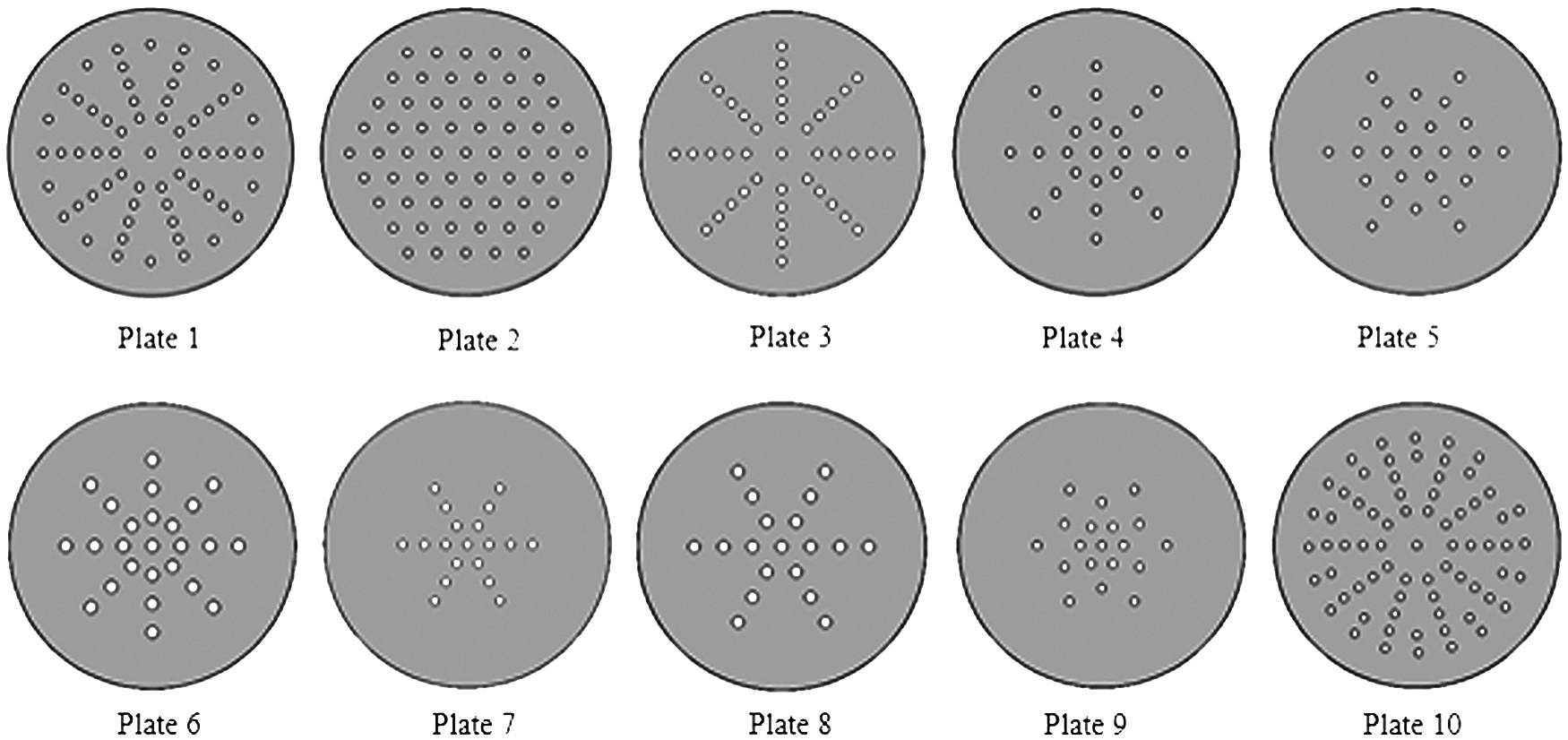
Arrangement of holes on orifice plates.
Geometric Parameters of Orifice Plates
A parameter α is defined as the ratio of total perimeter of holes to the total area of the opening. α is described as follows:
Another parameter β can be defined as the ratio of the total flow area (or the area of the hole opening) to the cross-sectional area of the pipe (or the area of plate). β is described as follows:
where d1 and d2 are the diameter of the plate and the hole opening, respectively, and n is the number of holes.
The cavitational yield (G) is defined as the ratio of the cavitational effect (moles of BPA removed) to the total energy input to the system. G is described as follows:
where ΔM is moles of BPA removed, ρ and H are density and pressure head of the flowing liquid, respectively, Qm is mainline flow rate, and t is the time of operation.
Analytical technique
All experiments were carried out with BPA solution of 20 L and constant circulation time of 3 h. The concentration of BPA was determined using DR5000 UV-vis spectrophotometer at λ = 278 nm. Fourier transform infrared spectrometer (FT-IR) spectra of initial and degraded BPA were collected on a Spectrum 100 FT-IR spectrophotometer (Perkin Elmer, Inc.). The BPA intermediates were identified by high performance liquid chromatography-mass spectrometry (HPLC/MS) using a Agilent series Agilent 1100. The Agilent 1100 detector temperature was kept at 30°C, and mixture of acetonitrile–water solution (50/50, v/v) at a flow rate of 1 mL/min was used as the eluent throughout analysis.
where R represents the removal rate of BPA, and Ct and C0 represent the instantaneous concentration and initial concentration of BPA (mg/L), respectively.
Results and Discussion
Effects of operation parameters on BPA removal
Effect of pressure
Pressure is an important factor for the removal of BPA by HC. The effect of inlet pressure was investigated over the operating range of 0.2–0.4 MPa, and keeping other conditions constant with a solution concentration of 15 mg/L, temperature of 35°C, treatment time of 3 h, and plate 2. The removal rates and rate constants were further calculated as given in Fig. 3 and Table 2, respectively. It can be observed that the removal rate increased firstly and then decreased with the rising pressure, and the optimum pressure was determined to be 0.3 MPa. The values of first-order rate constants exhibit the same tendency with a peak of 1.838 × 10⁻³ s−1 at 0.3 MPa, which is in agreement with removal rate.
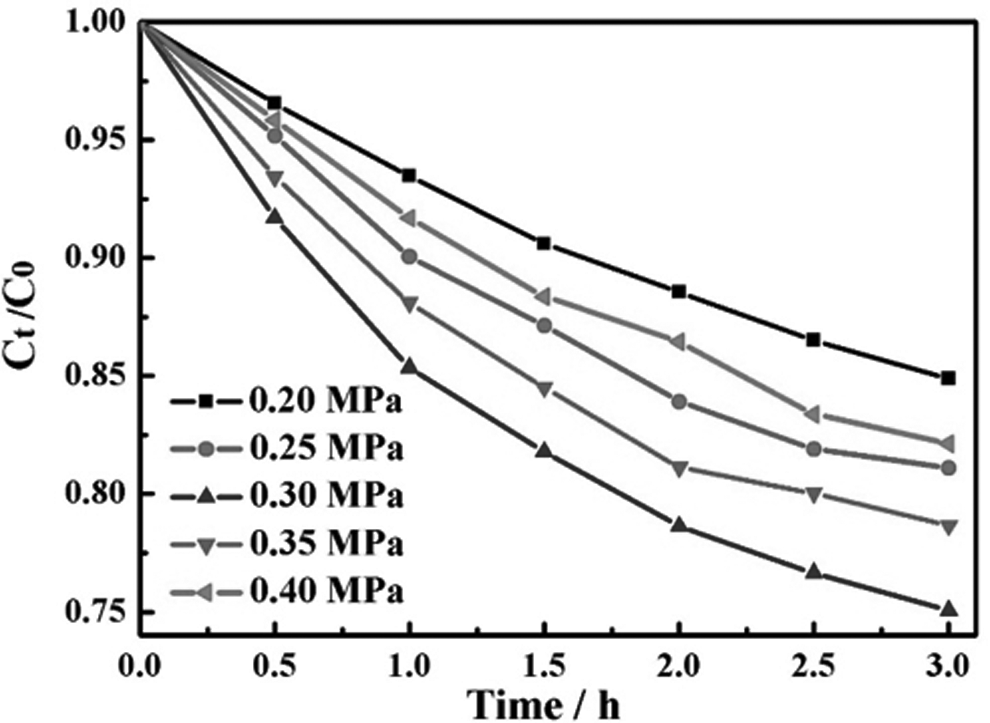
Effect of inlet pressure on removal rate of BPA. BPA, bisphenol A.
Kinetic Rate Constants at Different Inlet Pressures
Higher pressure facilitates the increase of cavitational intensity generated by collapse of cavities, and then leading to higher quantum of free radicals for BPA removal (Mishra and Gogate, 2010). However, with the increase of inlet pressure after the optimum pressure, more numbers of cavities are formed and start coalescing to form a larger bubble. These larger bubbles escape the liquid without collapsing, thus reducing the cavitational yield. Saharan et al. (2011) have also concluded that cavitational intensity is maximum under optimum pressure, thus maximum degradation was obtained.
Effect of the solution temperature
Effect of temperature on the removal of BPA was investigated by changing the magnitude of temperature, and keeping other conditions constant with BPA concentration of 15 mg/L, inlet pressure of 0.3 MPa, treatment time of 3 h, and also plate 2. The results are given in Fig. 4 and Table 3. It can be observed that the removal rate initially increases with the rise of temperature till an optimum value of 35°C. In addition, the kinetic rate constant k increases from 1.342 × 10⁻³ to 1.838 × 10⁻³ s−1 as the temperature increased from 25°C to 35°C and then decreases to 1.728 × 10⁻³ s−1 at temperature 40°C. The maximum removal rate of 25% was obtained at the optimum temperature of 35°C.
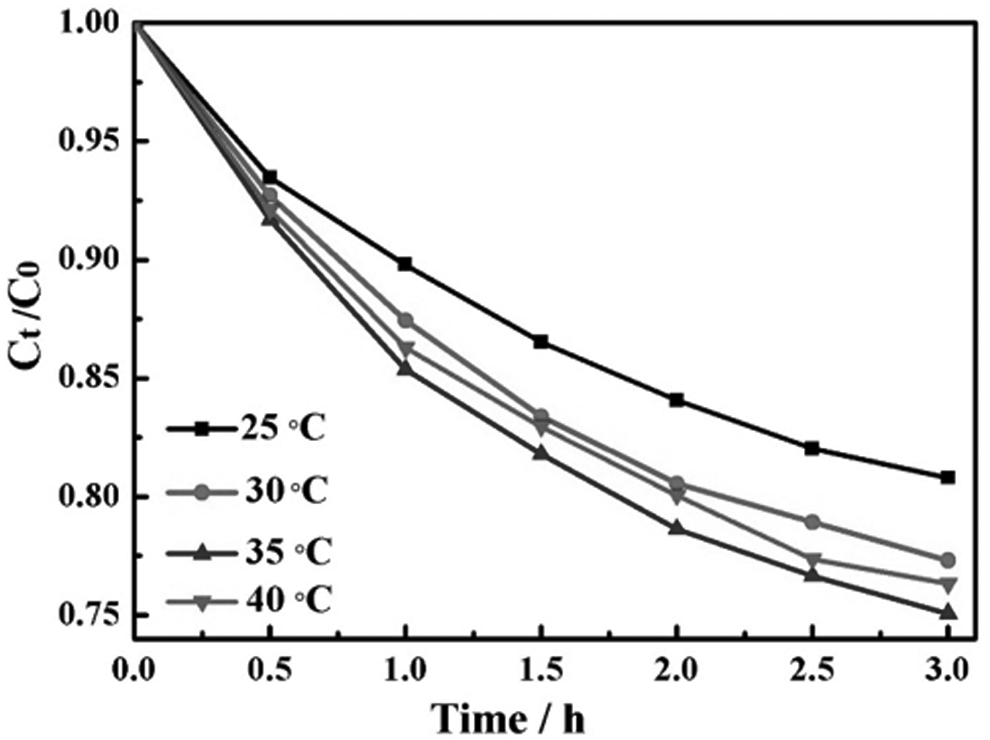
Effect of temperature on removal rate of BPA.
Kinetic Rate Constants at Different Temperatures
The saturated vapor pressure of liquid increases when the temperature increases, then resulting in the decrease of the gap between liquid flow pressure and saturated vapor pressure and makes it easier to form cavitation. With the increase of temperature, the dissolved gas content in water and the vaporization core decreases, thereby resulting in the decrease of cavitational effect. Related scholars (Wang et al., 2009) also have pointed out that when the temperature is too high, the vapor pressure in the cavitation bubble increases, which enhances the cushioning effect and weakens the effect of cavitation.
Effect of solution initial concentration
Effect of initial concentration of BPA on the removal rate has been investigated (at 0.3 MPa, 35°C, plate 2, and treatment time of 3 h). Figure 5 and Table 4 depict the variation in the removal rate with respect to time at different concentrations. It was found that the maximum removal rate of 27.58% was obtained at the initial concentration of 10 mg/L, and the kinetic rate constant k decreased from 2.121 × 10⁻³ to 1.056 × 10⁻³ s−1 with an increase in the concentration from 10 to 30 mg/L.

Effect of initial concentration on removal of BPA.
Kinetic Rate Constants at Different Initial Concentrations
These results may be because the ·OH free radicals produced by the hydraulic cavitational effect are quantitative. In other words, at the same level of cavitation energy input, the energy needed to degrade BPA was diluted by the increase of BPA concentration (Sivasankar et al., 2007; Wang et al., 2009).
Orthogonal experiment
Orthogonal experiment to determine the optimum parameter with other factors fixed by orthogonal test method was investigated. In this section, the effect of controllable variables, such as pressure (A), concentration (B), and temperature (C), were selected, each at three levels. With reference to the experimental design theory, the orthogonal array L9 (33) was selected to arrange the test program. The corresponding values are given in Table 5.
Experiment Arrangement and Corresponding Results
Obviously, by comparing the R values in Table 5, the influential order of the three factors on BPA removal rate is A > B > C, and it is shown that the contribution of A and B for the BPA removal rate are significant and pressure is the main influencing factor. According to the value of k, the optimum condition is A2B1C2. To verify the optimum condition of A2B1C2, BPA was degraded with the condition of A2B1C2 and the experiment was repeated three times with the BPA removal rate of 27.5%. Thus the optimum conditions were determined as follows: solution concentration 10 mg/L, pressure 0.3 MPa, and temperature 35°C.
Effect of geometry of orifice plates on BPA removal
Influence of the geometrical parameters of the orifice plate on the removal performance of BPA was investigated under the condition of optimal operating parameters (0.3 MPa, 10 mg/L, 35°C, and 3 h). The obtained results including removal rates and rate constants are given in Fig. 6 and Table 6. The detailed effect of the geometrical characteristics of different orifice plates on the removal rate will be described later.
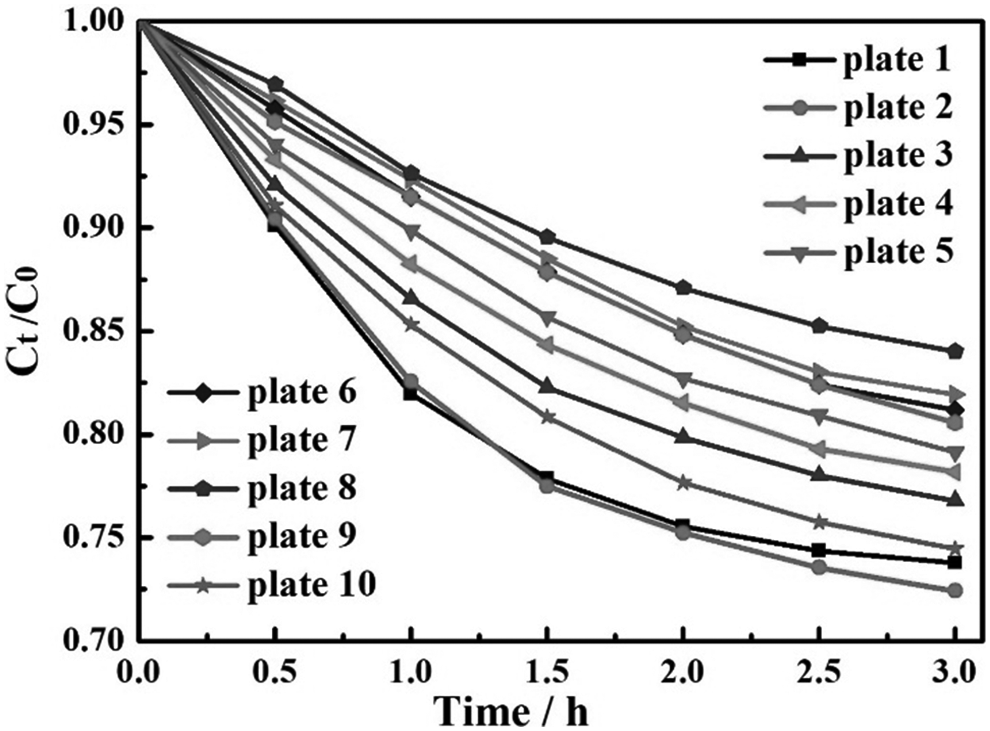
Effect of different orifice plates on removal of BPA.
Kinetic Rate Constants at Different Orifice Plates
Effect of geometry of α parameter
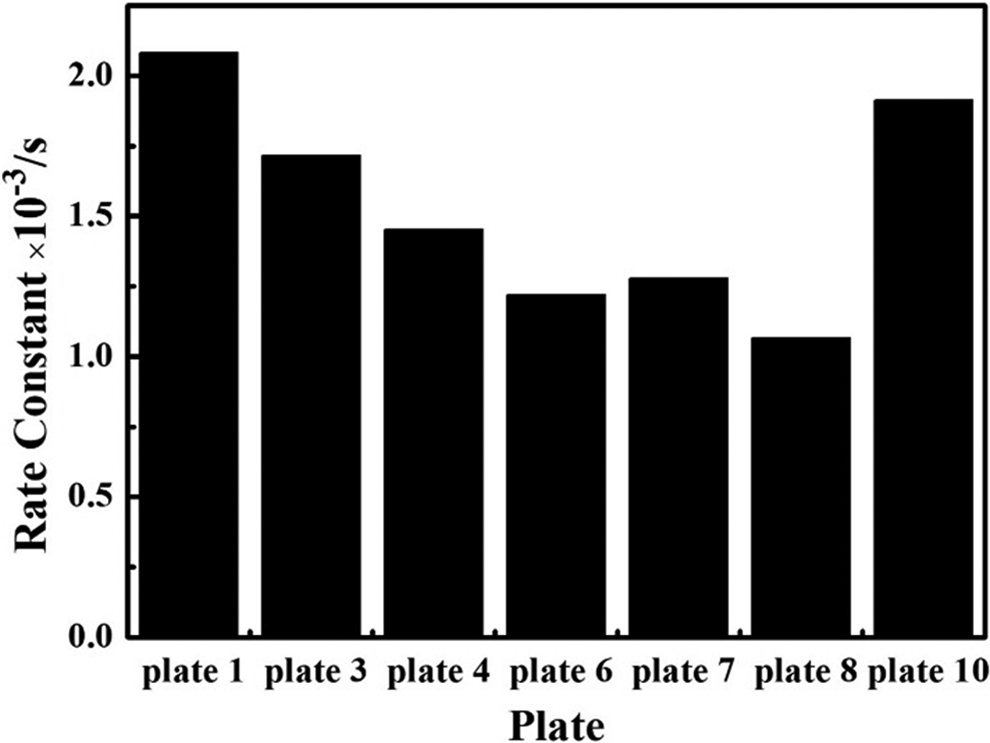
Effect of the parameter α on the removal of BPA was investigated and the results are given in Fig. 7 and Table 6. It has been observed that for the plates with the same flow areas, the BPA removal rate increases with the increase of α (plates 1 > 6, plates 3 > plate 8, plates 4 > plate 7). In addition, for the plates with the same value of α, the BPA removal rate is higher for the plate that has a larger number of holes, that is, larger total perimeter of holes (plate 1 > plate 10 > plate 3 > plate 4 > plate 7; plate 6 > plate 8) (Huang et al., 2013).
Effect of geometry of α parameter on BPA removal.
Gogate (2002) has also shown that degradation of iodine increases with an increase in the number of holes. The possible reason for these results is that removal of BPA requires comparatively lower cavitational intensities; hence, as the number of cavitational events increases and makes cavitation easier to be generated, so the cavitational activity was enhanced. However, cavitational intensity can be reduced by furthering increasing the number of holes (plates 1 > plate 10). The cavity collapse is not fully developed under the influence of the cavity intensity, so the cavitation efficiency was reduced.
Effect of arrangement of each hole
Arrangement of orifice plate determines the distribution uniformity of cavitation cloud and has a certain influence on the cavitational effect (Gogate, 2002; Amin et al., 2010). The effect of the arrangement of orifice plate on the BPA removal is given in Fig. 8 and Table 6. Overall it can be said that for the same hole number and size, the cavitational effect of cross-hole arrangement system is better than that of radial hole arrangement system (plate 2 > plate 1, plate 5 > plate 4, plate 9 > plate 7).

Effect of arrangement of each hole on BPA removal.
The reason may be that the liquid can pass through the plate of cross-hole arrangement system more smoothly, while reducing the resistance of the porous plate and making more energy into the kinetic energy of the fluid. Thus, the plate of cross-hole arrangement system is to the benefit of cavitation formation and enhancement of the cavitational effect.
Effect of geometry of β parameter
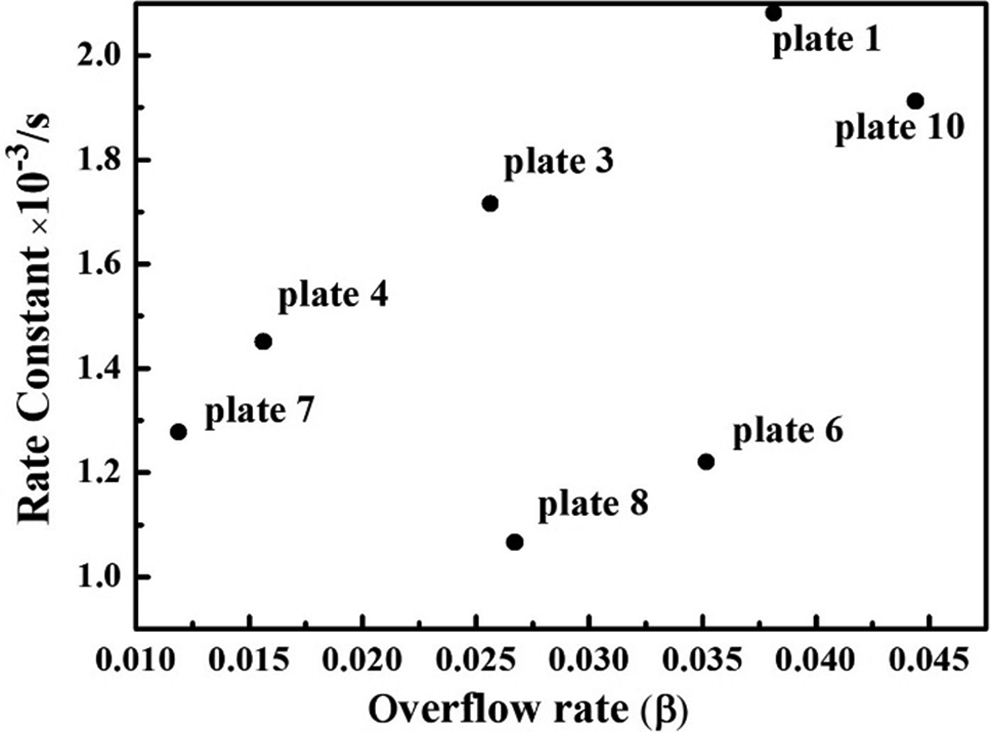
The range of β in this study is 0.01–0.045 (Table 1). The effect of β on the rate constant for the removal of BPA is given in Fig. 9. It can be seen that the change of β is caused by the change of hole diameter and number of plates under the same operating conditions. The BPA removal rates of the plates with a larger hole size is less when the numbers of holes are equal (Fig. 9, plate 8 [β = 0.0267] < plate 7 [β = 0.0119], plate 6 [β = 0.0352] < plate 4 [β = 0.0156]). Gogate and Pandit (2000) have also confirmed that the number of cavities increases when the diameter of the hole increases. However, there is a downside associated with an increase in the diameter of the hole. Cavitational yield can be weakened by using the plates with higher diameter of small hole that provides maximum radius of cavitation bubble.
Effect of geometry of β parameter on BPA removal.
If plates with the same diameter of holes are compared, those that have a larger number of holes show less cavitational activity, and the cavitational yield can be weakened by gathering cavitation bubbles into large bubbles (Fig. 9; plate 1 < plate 10 < plate 3 < plate 4 < plate 7, plate 6 > plate 8). Sivakumar and Pandit (2001) have also obtained similar results experimentally with the degradation of a dye rhodamine B. At the same time, the pore size of plates determines the cavitation cloud area directly and further influences the cavitational effect of BPA.
Analyses
Fourier transform infrared spectrometer
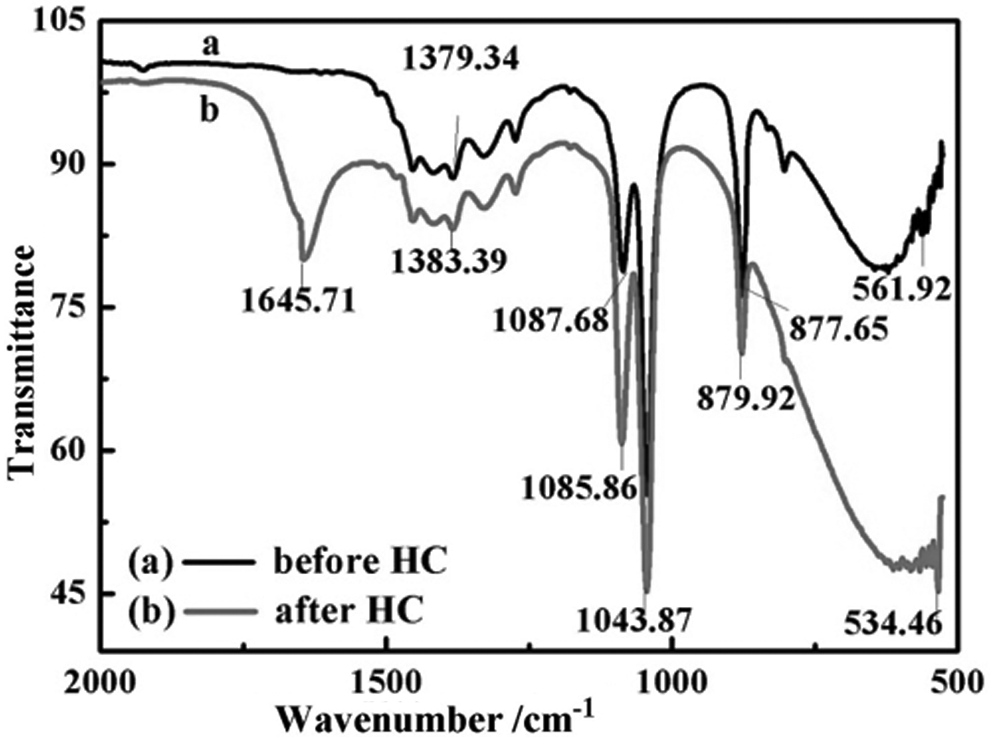
FT-IR is an important tool for the study of physicochemical properties of substance. The FT-IR spectra before and after cavitation are given in Fig. 10 and Fig. 11. The spectra display maximum absorbance bands at ∼3338.67 cm−1, which were attributed to the stretching vibration of O-H (Contu et al., 2012). And the strong bands observed at 2980 and 2881 cm−1 are assigned to methyl C-H asymmetric stretching vibrations. The strong and sharp peaks at 1100–1040 cm−1 are assigned to C-O stretching (Contu et al., 2012; Sideridou et al., 2016).

FT-IR spectra of BPA before and after cavitation (4000–2500 cm−1 range). FT-IR, Fourier transform infrared spectrometer.
FT-IR spectra of BPA before and after cavitation (2000–500 cm−1 range).
The spectra of BPA before and after cavitation show the characteristic peaks within the range of 2000–500 cm−1 (Fig. 11). The ring stretching vibrations are expected to locate at 1620–390 cm−1 (Contu et al., 2012). The C-C stretching vibration observed at 1645 cm−1 is slightly above the expected range, which may be ascribed to the impact of dimethyl substitution group. The C-C stretching vibrations are observed at 560 cm−1 (out of plane ring C-C band) and the C-H stretching vibrations are observed at 840 cm−1 (out of plane banding [
The FT-IR spectrum of the degraded BPA was compared with the original BPA. The new bands and peaks appeared to prove the new matter formation. The drop in the intensity of bands indicates the presence of hydroxyl groups and aromatic rings after cavitation. At the same time, the drop in the intensity of bands can also be considered as evidence of the reduction in the number of compounds containing these functional groups. So cavitation has positive effects on the decomposition of BPA.
High performance liquid chromatography-mass spectrometry
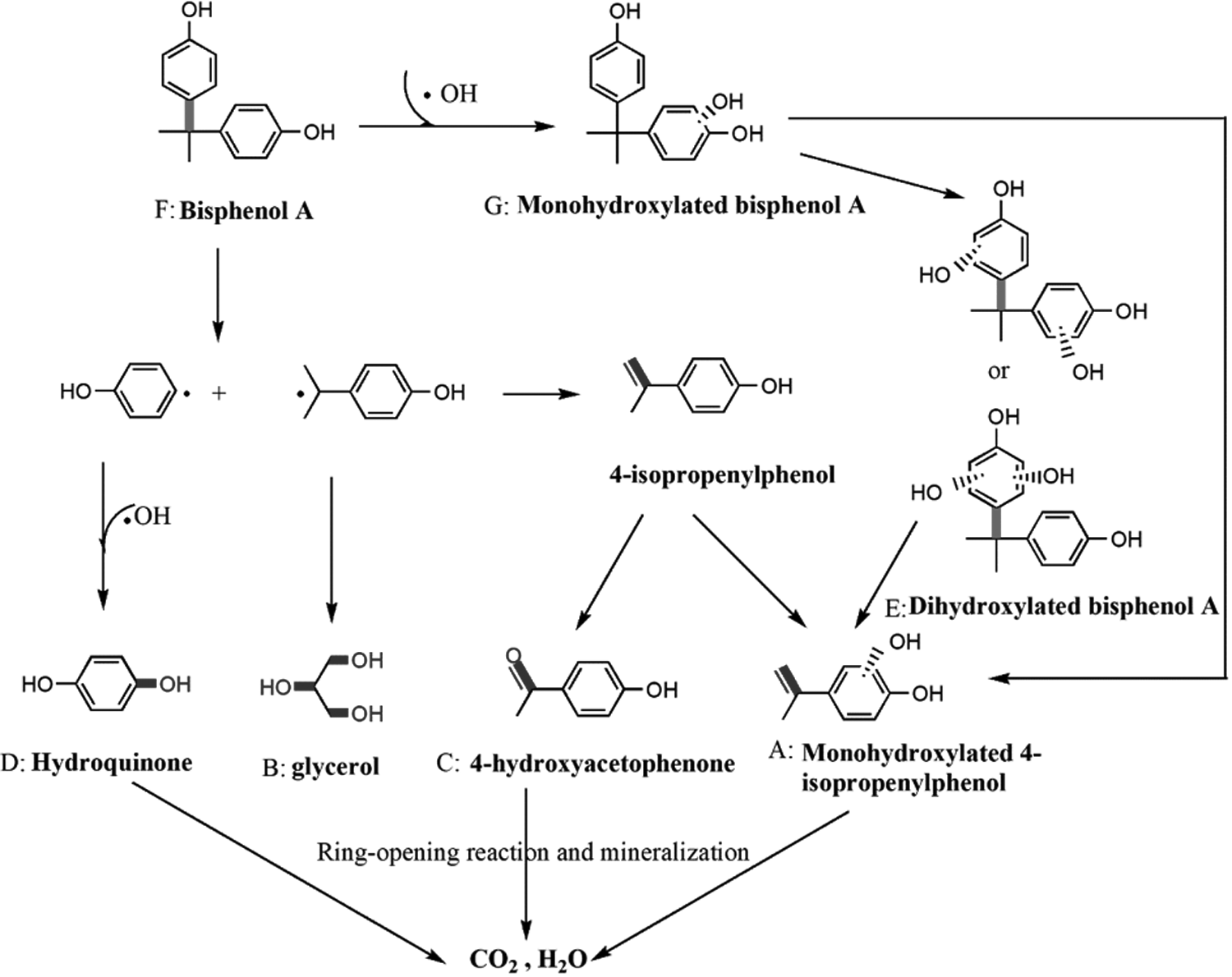
To further determine the intermediates of BPA under HC and gain its cavitational degradation pathways, we identified the intermediates of BPA using HPLC/MS. The BPA intermediates are given in Table 7. Based on the intermediate products listed in Table 7 and the results obtained by other researchers (Fukahori, et al., 2003; Torres et al., 2007, 2008; Guo and Feng, 2009), the possible degradation pathway for BPA is proposed in Fig. 12. The HC degradation of BPA was mainly attributed to the attack of ·OH radicals resulting from water dissociation.
Main degradation pathways of BPA during HC treatment.
Mass Fragment Ions (m/z) and Molecular Structure of Intermediates and Bisphenol A Obtained from High Performance Liquid Chromatography-Mass Spectrometry Spectra
BPA, bisphenol A; RT, retention time.
The first ·OH reactions yielded monohydroxylated BPA, whereas the breaking of C-C bond between isopropyl and benzene ring produced ·C(CH3)2C6H4OH and ·C6H5OH radicals. The radicals were then converted into 4-isopropenylphenol. Besides, HC made isopropyl split from benzene ring in the ·C(CH3)2C6H4OH radicals and hydroxylation of ·C6H5OH radicals, and they further formed glycerol and hydroquinone, respectively. Subsequent hydroxylation of 4-isopropenylphenol led to the generation of 4-hydroxyacetophenone and monohydroxylated 4-isopropenylphenol. Hydroxylation of monohydroxylated BPA led to the dihydroxylated BPA and monohydroxylated 4-isopropenyl phenol. These end compounds can be mineralized in oxidative ring-opening reaction at the level of C-C bonds between adjacent hydroxyl or ketone groups, which lead to the formation of aliphatic compounds (Fukahori, et al., 2003; Torres et al., 2008).
Cavitational yield
Cavitational yield is defined as the ratio of the cavitational effect to the total energy input to the system (Sivakumar and Pandit, 2001). Cavitational effect can be measured in moles of BPA removed under the optimum conditions in this study. So the comparison between HC in this study and ultrasonic cavitation by other earlier scholars has been carried out on the basis of cavitational yield.
Figure 13 shows that the cavitational yield for the hydrodynamic orifice plate 2 under optimum conditions is higher than that of ultrasonic irradiation (Pétrier et al., 2010) and ultrasonic wave (Gültekin and Ince, 2008). The basic reason for the high cavitational yield of HC is because the reactor can run continuously, and large volume of solution can be handled. Therefore, it is demonstrated HC is more energy efficient than ultrasonic cavitation. Some earlier studies (Save et al., 1997; Gogate et al., 2001; Sivakumar, 2002; Saharan et al., 2011) have also revealed that HC was far more energy efficient and had more cavitational yield than acoustic cavitation.
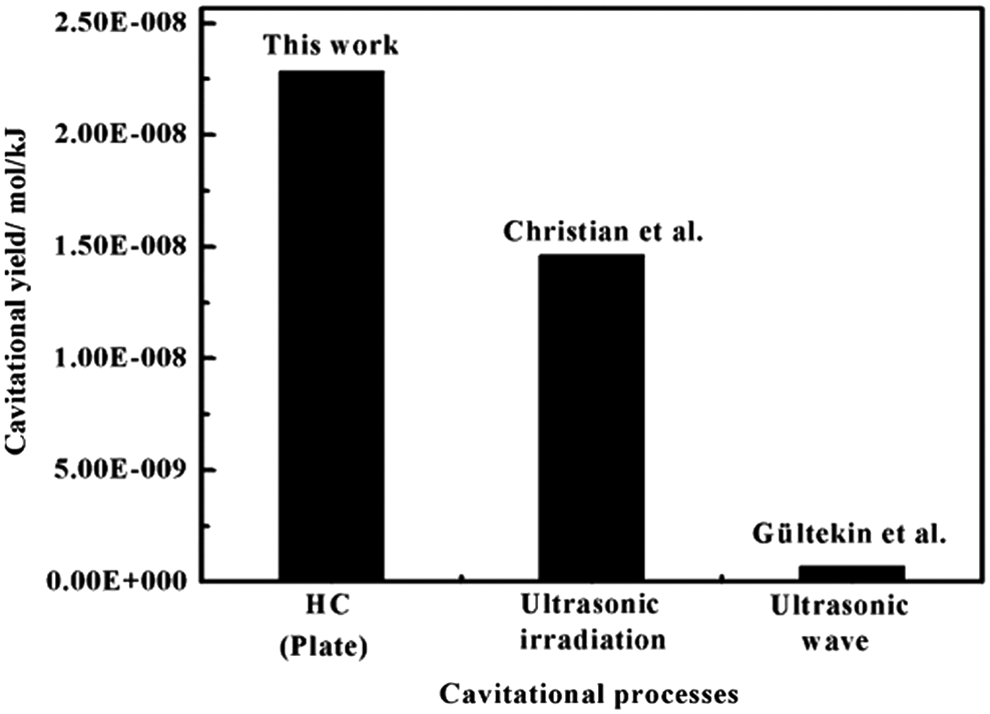
Variation of cavitational yield for different cavitational processes.
Conclusions
In this study, a set of experimental device for HC was designed and established, and the removal efficiency of BPA by HC was also investigated. The main factors including operating parameters (inlet pressure, solution concentration, and temperature) and the geometry of orifice plate (α, β, and arrangement of orifice plate) were evaluated by the single factor tests. Moreover, an orthogonal test was conducted to obtain the optimum conditions, specifically including inlet pressure of 0.3 MPa, solution concentration, 10 mg/L, and temperature, 35°C. FT-IR and HPLC/MS spectra analysis further proved the positive effect of cavitation on decomposition of BPA. Based on the conclusions, we can expect extensive application of HC in water treatment.
Footnotes
Acknowledgments
This study was supported by the National Natural Science Foundation of China (No. 5147846) and Key Projects of Tianjin Science and Technology Support Plan (No. 10ZCGYSH02000).
Author Disclosure Statement
No competing financial interests exist.