




Abstract
Abstract
Polyaluminum chloride (PACl) has been commonly used in drinking water treatment. However, it is not easy for drinking water treatment plant to carry out an effective coagulant dosing with PACl for low turbidity water with high pH where the excessed Al would remain in the water, which has been a concern for its risk to human health. The goal of this study is to investigate the effects of dosing approaches with alternative coagulants on the minimization of residual particulate matter and Al after coagulation-sedimentation process, and their coagulation behaviors. Two coagulant dosing approaches, including single and dual dosing, were adapted to evaluate coagulation performance in terms of turbidity, remaining Al and filterability for natural low turbidity water. A real-time floc image analyzer (i.e., FlocCAM™) was used to evaluate the floc size during coagulation with commercial PACl or ferric chloride (FeCl3) and the combination. The results showed that FeCl3 coagulation gives the fastest and biggest growth in floc size with active Fe(OH)3, but single FeCl3 dosing brings an adverse effect on filterability of low turbidity water treatment. At dual dosing (PACl/FeCl3 = 1:1), the residual turbidity (RT) and Al minimization are not further improved even though floc formation is facilitated. However, the single dosing with alternative PACl coagulant (PACl-C) would result in equivalent RT and dissolved Al with change in dosage. This study showed that a tailored PACl-C with low monomeric Al and high colloidal Al content can be used for the substitution of dual dosing (PACl+FeCl3) to achieve minimization of RT and Al in low turbid water treatment.
Introduction
Coagulation is an essential treatment process used to aggregate small particles in drinking water treatment. Polyaluminum chloride (PACl) is a commonly used type of hydrolyzed coagulant in the water treatment process. Operators usually applied overdosing of coagulants to reduce turbidity and to ensure the quality of treated water, but resulting in excessed residual Al in finished water more than the limit of drinking water standard. High level of aluminum in the human body is known to have negative effects toward the brain, especially in conditions such as Alzheimer's disease and dementia (Kawahara and Kato-Negishi, 2011; Killin et al., 2016). Aluminum as a potent neurotoxin can accumulate in the human body and has side effects such as memory loss and impaired coordination (Yasui et al., 1997); in addition of its immunotoxicity effect to the human body (Zhu et al., 2014).
To comply with drinking water standard limitation, in conventional drinking water treatment plants (DWTP), dual dosing with Al- and Fe-based coagulants was alternatively conducted to lower the residual Al in finished water to an acceptable level (<0.2 mg/L as Al) for drinking water safety (U.S. Environmental Protection Agency, 2018) and (<0.16 mg/L as Al) for drinking water safety limit in Taiwan. Single dosing with Al-based coagulant was not effective in reducing residual Al after coagulation, especially for low turbidity water (10–15 nephelometric turbidity unit [NTU]).
In general, there are fewer suspended remaining particles with small particle size in low turbidity water. In addition, particles collision and flocculation occurrence can be very low even before coagulation (Nidheesh et al., 2017). Thus, it lowers the possibility of Al ion or hydrolyzed Al species to be adsorbed to the surface of suspended particles during coagulation (Yao et al., 2014). Alternatively, ferric chloride (FeCl3) coagulant has been used to replace some parts of PACl coagulant (PACl-C) to reduce Al concentration in finished water and improve coagulation performance for removal of colloidal or organic contaminants from water (Qureshi and Malmberg, 1985; Park et al., 2016).
In theory, flocs formed by coagulation with Al-based coagulants are quite different from that with Fe-based coagulants. Al-flocs are less compact than Fe-flocs, which could affect the coagulation performance for turbidity reduction (Jarvis et al., 2012). In addition, the chemical properties of coagulation using dual coagulants are more complex than that of single coagulants. Complexity and competition between the two coagulants might reduce their effectiveness, and/or the zone of coagulation for the mixed coagulant might be larger than either coagulant by itself. There is no discernible improvement in coagulating ability by dual coagulation over single coagulant (Johnson and Amirtharajah, 1983).
In practice, it is better to have an effective single-dosing approach to achieve lower turbidity and Al concentration in finished water. Studies have reported that tailored PACl with low content of monomeric Al or high content of polymeric Al is effective to lower residual Al in coagulation process (Yang et al., 2010; Kimura et al., 2013). On the contrary, other studies have indicated that pH effect on residual turbidity (RT) or organic matter level and remaining Al is also significant for drinking water treatment (Duan and Gregory, 2003; Yan et al., 2008; Yang et al., 2011).
Controlling the final pH of PACl coagulation in the range from 5.5 to 6 is an effective and feasible way for reducing remaining Al in water. Unfortunately, coagulation is commonly conducted at neutral pH to improve the floc formation and turbidity reduction by enmeshment as the operators run the DWTP. Either single or dual dosing with Al-and Fe-based coagulants has its own limitation to improve the coagulation performance in terms of turbidity and Al reduction.
Although it has been proved that dual dosing with Al- and Fe-based coagulants would improve the reduction of residual Al in finished water for DWTP, it also increases the difficulty to constantly control the dosing ratio between Al- and Fe-based coagulants. It is known that single dosing with PACl-C containing lowered monomeric Al can avoid the occurrence of high residual Al concentration (Kimura et al., 2013) in finished water, but it may result in an adverse effect on coagulation performance for turbidity reduction, depending on the formation of flocs and their structure characteristics (Lin et al., 2008a).
In engineering application, an effective single or dual dosing with alternative coagulants is crucial to improve coagulation performance for simultaneous reduction of turbidity and residual Al in drinking water for DWTP. However, the coagulation behaviors between single and dual dosing with Al- and Fe-based coagulants are still unclear and the effect of their hydrolyzed coagulant species on particle destabilization and residual Al minimization need further investigations, especially for low turbid water.
This study aims to investigate more rational approaches to enhance coagulation for RT and Al minimization using Al- and Fe-based coagulants in drinking water treatment for low turbid water, particularly the single or dual dosing with PACl and FeCl3 coagulant. Their coagulation behaviors with different hydrolyzed coagulant species were compared to identify the conditions affecting the minimization of residuals (i.e., particles and Al).
Materials and Methods
Raw water quality
Raw water was collected from Hsinchu Water Treatment Plant, Taiwan and tested for its characteristics. pH was measured using pH meter (sensION+ pH 1; Hach) at pH 7.7 ± 0.1, turbidity was measured using turbidity meter (2100P; Hach) at 15 ± 1 NTU, and dissolved organic carbon was measured using total organic carbon (TOC) analyzer (TOC-5000A; Shimadzu) at 2.1 mg/L.
Characterization of coagulants
Two commercially used PACl coagulants, designated as PACl-C (Chung Hwa Chemical Industrial Works) and PACl-W (Train sound), were used in this study. Al speciation of PACl-C and PACl-W was determined by Ferron method (Lin et al., 2008b). The PACl-C contains about 33% monomeric Al (Ala), 17% polymeric Al (Alb), and 50% colloidal Al (Alc), while the PACl-W has 43% monomeric Al (Ala), 28% polymeric Al (Alb), and 29% colloidal Al (Alc). Aluminum concentration was analyzed by an inductively coupled plasma optical emission spectrometry (ICP-OES 7000 series; Agilent). In addition, a reagent-grade FeCl3 coagulant was used for this study. FeCl3 species distribution was measured by a time complexation spectroscopy method (Dong et al., 2014). PACl-C, PACl-W, and FeCl3 characteristics and species distribution are shown in Table 1. The working solutions containing 2,000 mg/L Al or Fe were freshly prepared before each test.
Characteristics and Species Distribution of Coagulants
Ala, monomeric Al; Alb, polymeric Al; Alc, colloidal Al; FeCl3, ferric chloride; PACl, polyaluminum chloride.
Coagulation protocol
Standard jar trials (Phipps and Bird) were conducted to evaluate coagulation performances. Two kinds of coagulant dosing approaches, including single dosing (PACl-C or PACl-W and FeCl3) and dual dosing (PACl+FeCl3), were carried out for this study. Initial rapid mixing was conducted at 200 rpm (G = 350/s) for 1 min followed by a slow mixing at 30 rpm (G = 25/s) for 20 min. The suspension was left undisturbed for 20 min. After settling, the turbidity of supernatant was measured by a turbidity meter (2100 P; Hach) and the residual dissolved Al was quantified by ICP-OES (ICP-OES 7000 series; Agilent). The zeta potentials of the suspension were measured via a laser zeta analyzer (Zetasizer nano ZS; Malvern, Inc.) immediately after the rapid mixing without dilution. All tests were conducted in triplicate.
Filterability test
A suction time index (STI) test was first reported by Ives (1978) to evaluate the filterability of water samples. The filtration times of 500 mL of supernatant and distilled water were determined separately by use of a suction filtration device (membrane filter with a pore size of 1 μm) at −680 mmHg to calculate the STI value as follows:
Floc formation analysis
Average floc particle total number and diameter were analyzed using a FlocCAM™ camera installed on the standard square jar beaker used in coagulation protocol following similar methodology by Lapointe and Barbeau (2017). Built-in FlocCAM software sorted flocs into pixels and indexed as follow: (with N as a reported parameter for total particle count).
Average floc particle diameter was calculated by converting areas from square pixels into square millimeters based on FlocCAM calibration factor, using the following formula:
Spherical flocs areas were calculated based on the effective diameter [d(i)] using the following formula:
Identification of fractal shaped flocs formation is based on both flocs area and circumferences. Circumferences were calculated by counting the edge pixels of each floc in units of pixels that later converted into millimeters using FlocCAM calibration factor. Fractal dimension (FD) as the parameter was calculated by plotting a graph of the logarithm of the flocs area and the logarithm of their circumferences where the slope of the linear-fit line is equal to fractal dimension, where the FD is the two-dimensional fractal dimension. Other than that, the floc formation rate was determined by following formula:
Results and Discussion
Particle destabilization
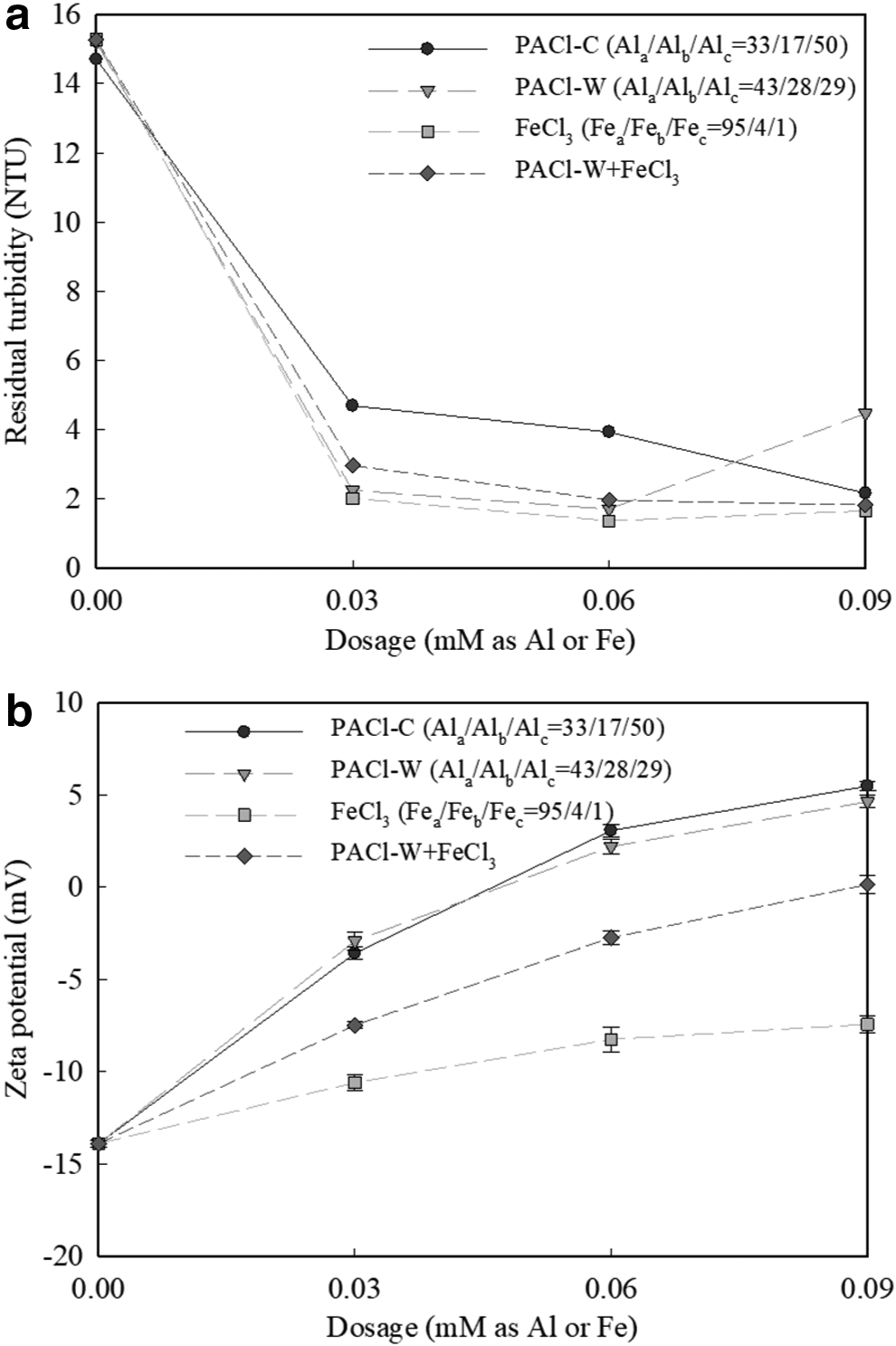
Figure 1 shows the influence of dose (0.00–0.09 mM) on RT by PACl-C, PACl-W, FeCl3, and PACl-W+FeCl3 (molar ratio = 1:1). As shown in Fig. 1a, there are no significant differences in RT before dosing for all coagulants. At low dosage (0.03 mM), PACl-W coagulation resulted in lower RT at 2 NTU than PACl-C coagulation at 5 NTU. However, with increasing dosage to 0.09 mM, the RT reduction by coagulation with PACl-C was improved, although overall RT reduction was still worse than PACl-C. On the contrary, dual dosing by combination of PACl-W with FeCl3 at the lowest dosage of 0.03 mM reduced the RT as low as 3 NTU, and it shows insignificant changes toward RT with further increases in dosage. FeCl3 coagulation resulted in the lowest turbidity reduction at increasing dosages. These results indicate that dosing approaches with single or dual dosing would significantly affect the coagulation performance for turbidity reduction. The marked difference in turbidity reduction for single dosing also occurred while two kinds of PACl coagulants containing different Al speciation were used.
Influence of dose on changes in
Figure 1b shows the influence of dose (0.00–0.09 mM) on zeta potential changes by PACl-C, PACl-W, FeCl3, and PACl-W+FeCl3. There is an increase in zeta potential from −15 to +5 mV along with the increase in single or dual coagulant dose. Zero zeta potential is reached for PACl-C and PACl-W at similar dose between 0.03 and 0.06 mM, but it has occurred with a higher dose of 0.09 for dual coagulant dosing with PACl-W+FeCl3. On the contrary, the zeta potential remains below neutral between −5 and −10 mV with increasing dosage for FeCl3 coagulation. The optimal turbidity reduction occurred with increasing dose of PACl-W, FeCl3, and PACl-W+FeCl3 at 0.06 mM, however, it was reached for PACl-C coagulation at 0.09 mM. Therefore, either single PACl-W dosing or dual dosing with PACl-W and FeCl3 can bring optimal particle destabilization at near neutral surface charge of destabilized particles by charge neutralization.
This is owing to the polymeric Al content of PACl-W at 28% Alb although lesser charge neutralization also occurs for PACl-C at lower polymeric Al content at 17% Alb. This reaction is in accordance with the previous study by Duan and Gregory (2003) and Zhang et al. (2018) where particle destabilization, in this case residuals, takes place due to the repulsion force by neutralization of negative charges. Moreover, PACl-C containing dominant colloidal Al [i.e., Al(OH)3] is able to induce particle destabilization by enmeshment (Liu et al., 2009) as well as FeCl3 containing voluminous monomeric Fe(III) would hydrolyze to Fe(OH)3 precipitates during initial coagulation for particle destabilization (Dong et al., 2014). It is likely that active Fe(OH)3 precipitates formed by the hydrolysis of Fe (III) are able to adsorb onto colloids partially, which is evidenced by the negative zeta potential. Adsorption of active Fe(OH)3 precipitates improved particle aggregation and floc formation for effective turbidity reduction by formation of many binding sites. Thus, the single PACl-C and FeCl3 dosing predominantly favors enmeshment induced by hydrolyzed Al(OH)3 and Fe(OH)3, respectively. The results showed that tailored PACl-C containing dominant colloidal Al can improve turbidity reduction at optimum dosage, while turbidity reduction by dual coagulation with PACl-W and FeCl3 is lower than by either coagulant itself.
The lower the STI value, the higher the filterability of supernatant with lower particle counts (Lin et al., 2015). As shown in Fig. 2, the filterability of supernatant was constant with STI value of 5.8 before coagulation. The STI values decreased with increasing coagulant dosage for single coagulation with PACl-C or PACl-W and dual dosing with PACl-W and FeCl3. However, single FeCl3 dosing resulted in insignificant changes in STI values with increasing dosage. FeCl3 coagulation is known to favors enmeshment resulting in voluminous Fe(OH)3 which remains in the supernatant, thus increases burden of the filter and lower the corresponding filterability. These results indicate that single PACl-C or PACl-W dosing and dual dosing with PACl-W and FeCl3 effectively lower suspended particle counts of low turbidity water after coagulation and sedimentation process, but single FeCl3 coagulant dosing brings an adverse effect on filterability for low turbidity water treatment.
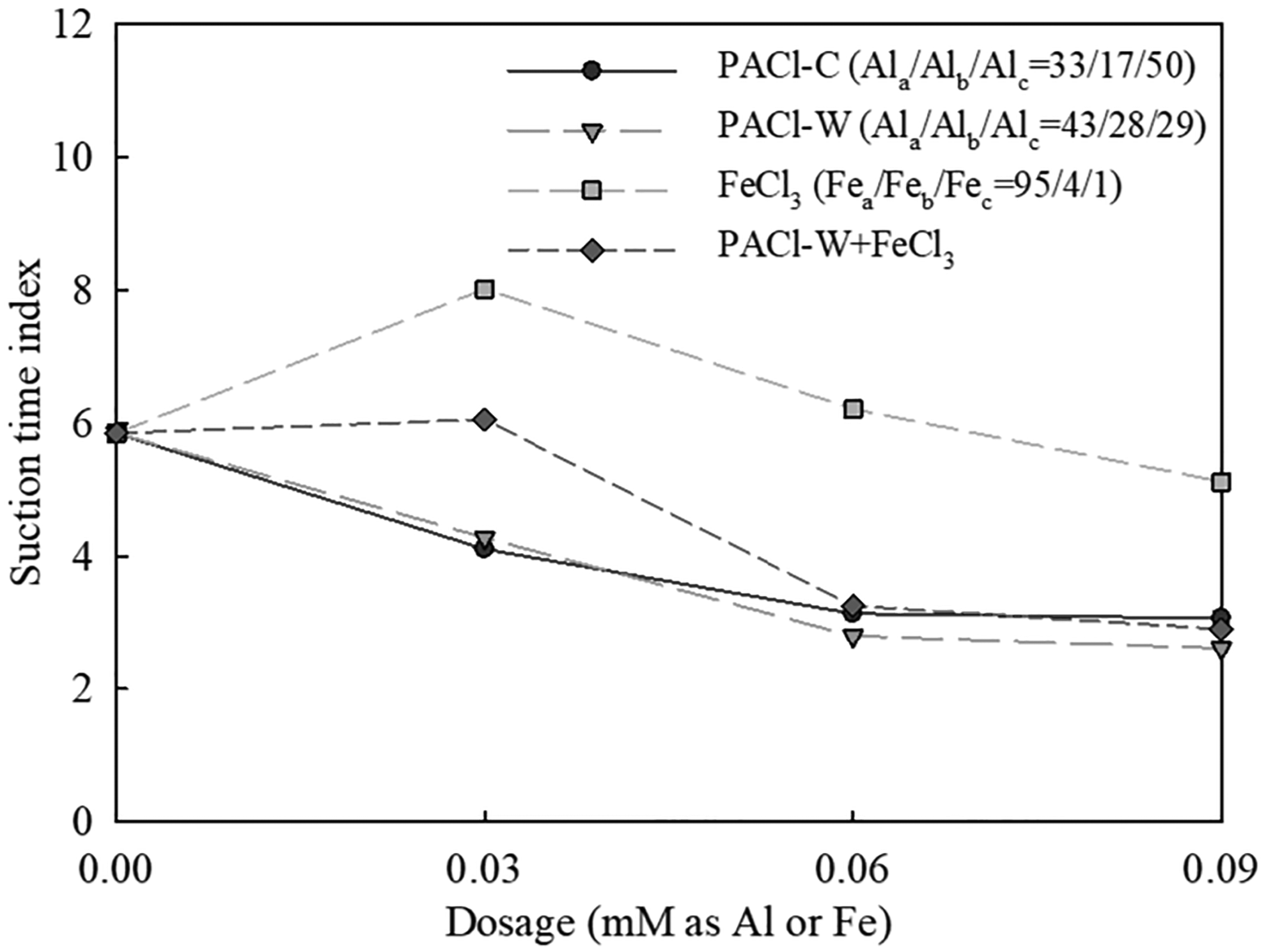
Effect of dosage toward filterability of supernatant by coagulation with single- or dual-dosing approaches.
Dissolved Al minimization
Removal of dissolved Al after the addition of Al-based coagulants during conventional coagulation water treatment process can be challenging because most of dissolved Al would penetrate through the filter to form residuals. Therefore, it is important to minimize the residual dissolved Al in coagulation in the water supply. For all coagulation approaches, the residual dissolved Al concentration at pH 7.6 ± 0.1 (Fig. 3b) increased following initial dosing at 0.03 mM (Fig. 3) with further increases in dosage showed an insignificant decrease in residual dissolved Al concentration. Residual Al reached as low as 0.045 mg/L for PACl-C coagulation with a similar trend for PACl-W+FeCl3 coagulation, while PACl-W coagulation resulted in a higher residual dissolved Al of 0.08 mg/L.
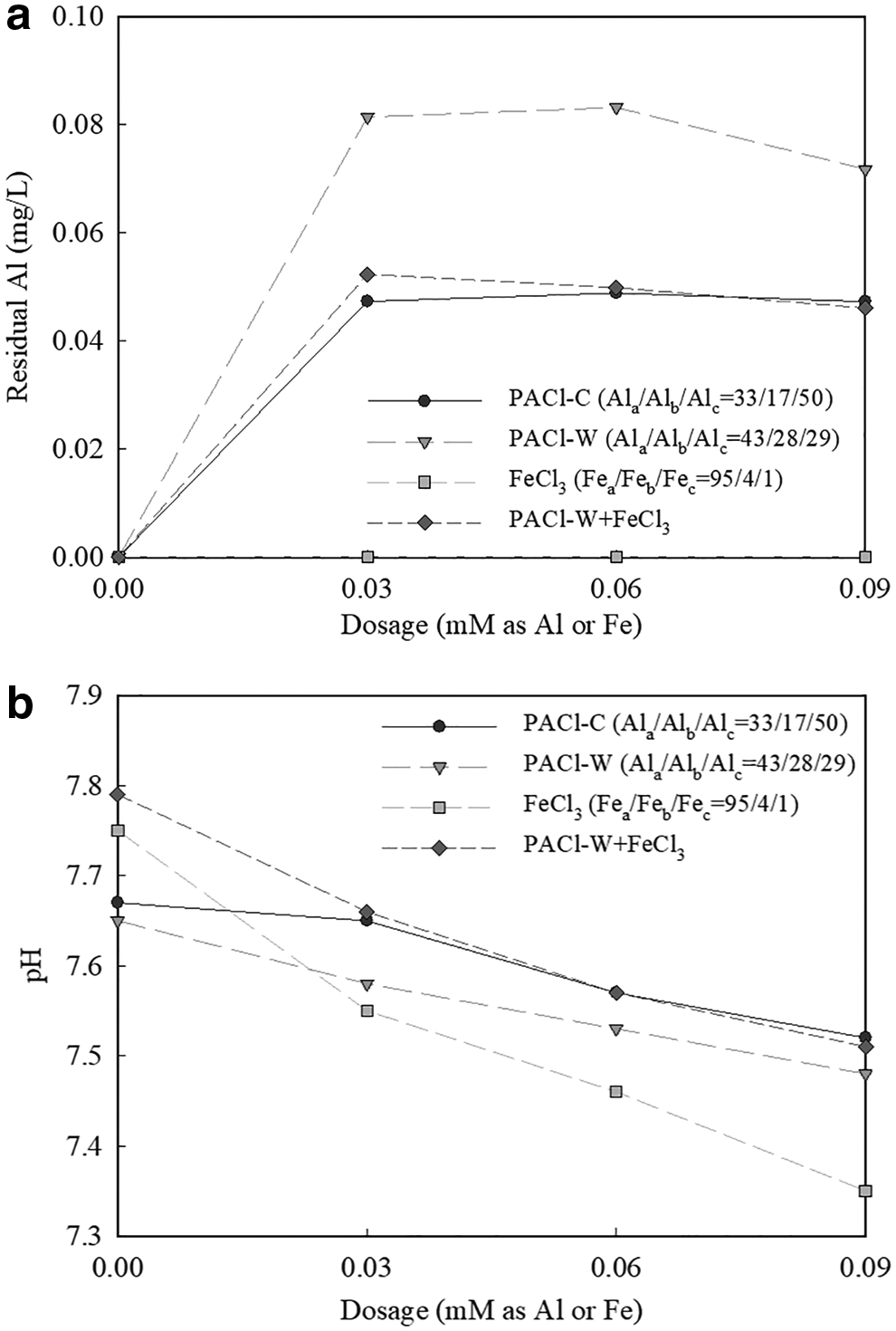
Influence of dose on
Study has proved that lowering monomeric Al in PACl coagulant can lower the residual dissolved Al in solution based on water chemistry principle (Kimura et al., 2013). The particle count in low turbidity water is too little to provide sufficient surface for monomeric or polymeric Al adsorption, resulting in more residual Al in supernatant. Since PACl-C coagulant contains half colloidal Al [Al(OH)3] and fewer monomeric Al ion as low as 33%, it could produce lower residual dissolved Al in coagulation for low turbidity water treatment. In contrast, PACl-W containing higher monomeric and polymeric Al, more than 70% of total Al concentration and lesser colloidal Al, would easily result in more residual dissolved Al in the supernatant since monomeric Al has higher possibility to remain in solution at low turbidity.
As discussed by Duan et al. (2014), monomeric Al may form small and weak monomeric Al complex which is hard to be removed, in contrast with polymeric and colloidal Al species that can form bigger and more compact flocs that readily absorb particles. These findings have verified that a single dosing with tailored PACl-C containing higher colloidal Al and lower monomeric Al level can perform an effective coagulation at an optimum dosage to lower the RT and remaining dissolved Al in supernatant for the substitution of dual dosing with PACl-W and FeCl3.
Floc formation
In addition, particle aggregation and floc formation would substantially influence coagulation performance for turbidity reduction. As shown in Fig. 4, FlocCAM image analysis shows the floc growth by single and dual dosing at dosage of 0.03, 0.06 and 0.09 mM between 0 and 20 min during the coagulation process. In respect to particle aggregation, FeCl3 coagulation initially causes the fastest and biggest growth in floc size at various dosages. After coagulation, the size of floc formed by FeCl3 coagulation reached around 600 μm at an optimum dosage of 0.06 mM. At similar dosage, PACl-W+FeCl3 coagulation showed a smaller growth by forming floc size of 400 μm after coagulation. It is found that PACl-C and PACl-W coagulation show insignificant differences with the floc size of 300 ± 20 μm after coagulation at optimum dosage.
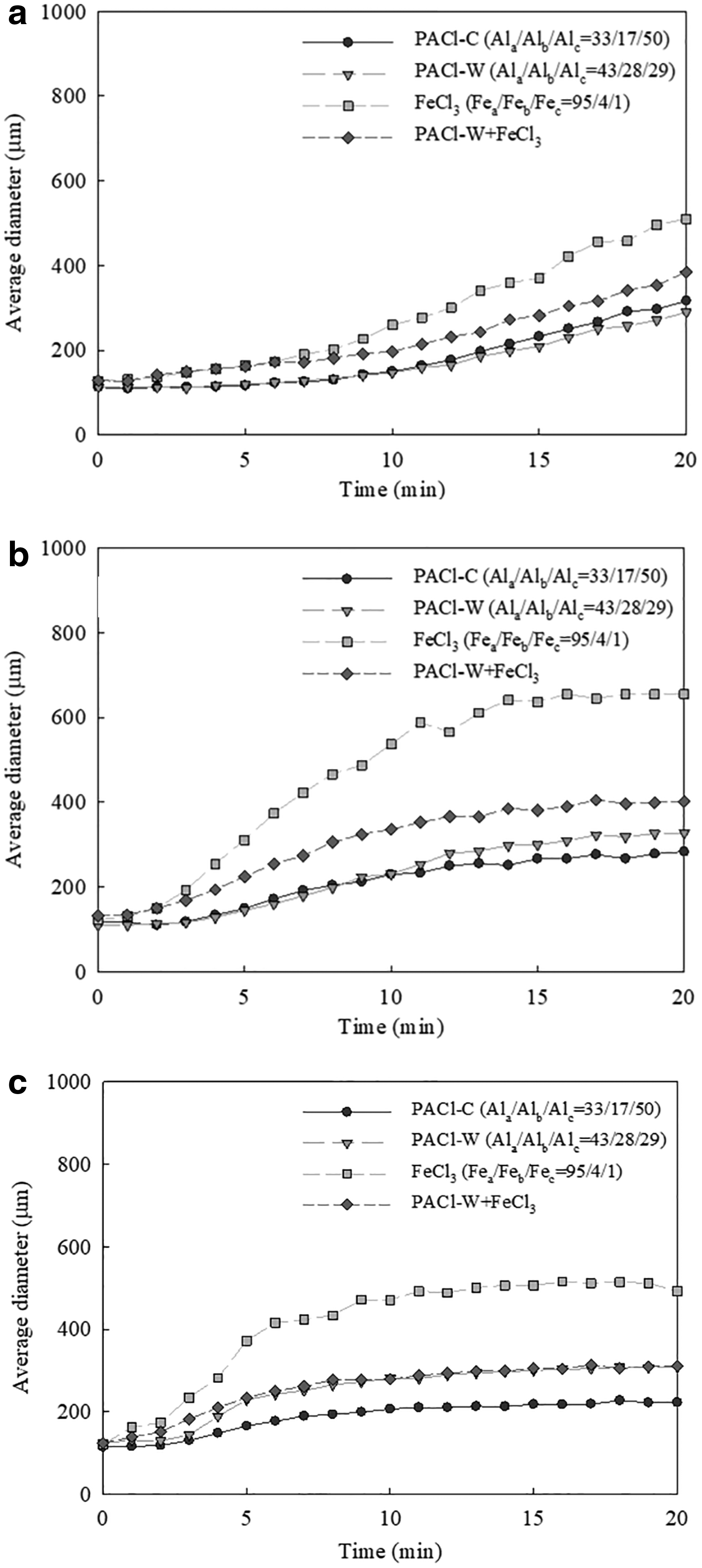
Changes in floc size and counts during coagulation with single- or dual-dosing approaches at various dosages [
It can be determined that FeCl3 coagulation results in the biggest floc formation with fastest particle aggregation. Dong et al. (2014) have reported that FeCl3 coagulant with more monomeric Fe would cause a bigger floc during coagulation and has better performance in terms of turbidity reduction. Although previous study has reported that there is no discernible improvement in coagulating ability by the dual coagulant over the single coagulant (Johnson and Amirtharajah, 1983), our study showed that the combination of PACl-W and FeCl3 can improve particle aggregation, resulting in the improvement for minimization of turbidity for low turbidity water, compared to single dosing with PACl-W or PACl-C.
The floc formation rate at various coagulant dosing approaches was also shown in Fig. 5. It shows the variation of floc formation rate with dosage for single and dual dosing. The floc formation rate increases with increasing dosage. At the optimum dosage of 0.06 mM, the FeCl3, PACl-C, and PACl-W+FeCl3 achieved maximum floc formation rate and decreases with a further increase in dosage to 0.09 mM. Overall, FeCl3 or PACl-W+FeCl3 coagulation has better floc formation rate compared to coagulation with single dosing by PACl-W or PACl-C.

Changes in floc formation rate during coagulation with single- or dual-dosing approaches at various dosages.
Floc properties such as size and fractal dimension for single or dual dosing are shown in Table 2. Both fractal dimension (FD) and average diameter of floc formed by coagulation with single FeCl3 dosing are the largest (i.e., FD = 1.63 and average diameter = 650 μm) at optimum dosage of 0.06 mM, which means the floc formed by FeCl3 coagulation is larger with more compact structure compared to single PACl-W and PACl-C dosing or dual dosing with PACl-W+FeCl3.
Characterization of Floc Formed by Coagulation with Single- or Dual-Dosing Approaches at Optimum Dosage (0.06 mM)
FD, fractal dimension.
In addition, it is found that the FD of floc formed by dual coagulation with PACl-W and FeCl3 is very similar to that at single dosing with PACl-C or PACl-W. It is known that the higher the FD, the more compact the floc is (Chakrabortia et al., 2003; Lin et al., 2008a), but as mentioned in other study, compact flocs with high FD can erode easily by shear, especially for low turbid water where strength of flocs is low (Lin et al., 2013). As mentioned above, dual dosing with PACl-W and FeCl3 would not improve the compactness of floc compared to single PACl-W and PACl-C dosing. It can be concluded after evaluation of floc properties that dosing approaches with single or dual coagulant would strongly affect the floc formation and its structure. The addition of FeCl3 coupled with PACl-W at 1:1 can improve more particle aggregation and bigger floc size than single PACl-W dosing, but it would have little effect on the compactness of floc.
Possible coagulation behaviors
A proposed coagulation behavior for single or dual dosing with PACl and FeCl3 is plotted as Fig. 6 based on the results of particle destabilization and aggregation. As single dosing with PACl containing high monomeric or colloidal Al content is carried out, a lot of monomeric Al (Al3+) or colloidal Al [Al(OH)3(colloidal)] would continuously hydrolyze into positively charged amorphous aluminum hydroxide [Al(OH)3(am)] that preferentially adsorb to the surface of colloids during initial coagulation and then particle aggregation occurs to form smaller floc with loose structure. In the case of single FeCl3 dosing, voluminous Fe(OH)3 would precipitate on the surface of colloids by Fe3+ hydrolysis and then form a big floc with dense structure. Because the solubility of Fe3+ is much less than that of Al3+ at neutral pH (Duan and Gregory, 2003), active Fe(OH)3 precipitates are able to adsorb onto colloids partially where the negative zeta potential is found at various dosage. By the adsorption of active Fe(OH)3 precipitates, many binding sites are formed to improve particle aggregation between colloidal contacts, causing the formation of big and dense flocs.
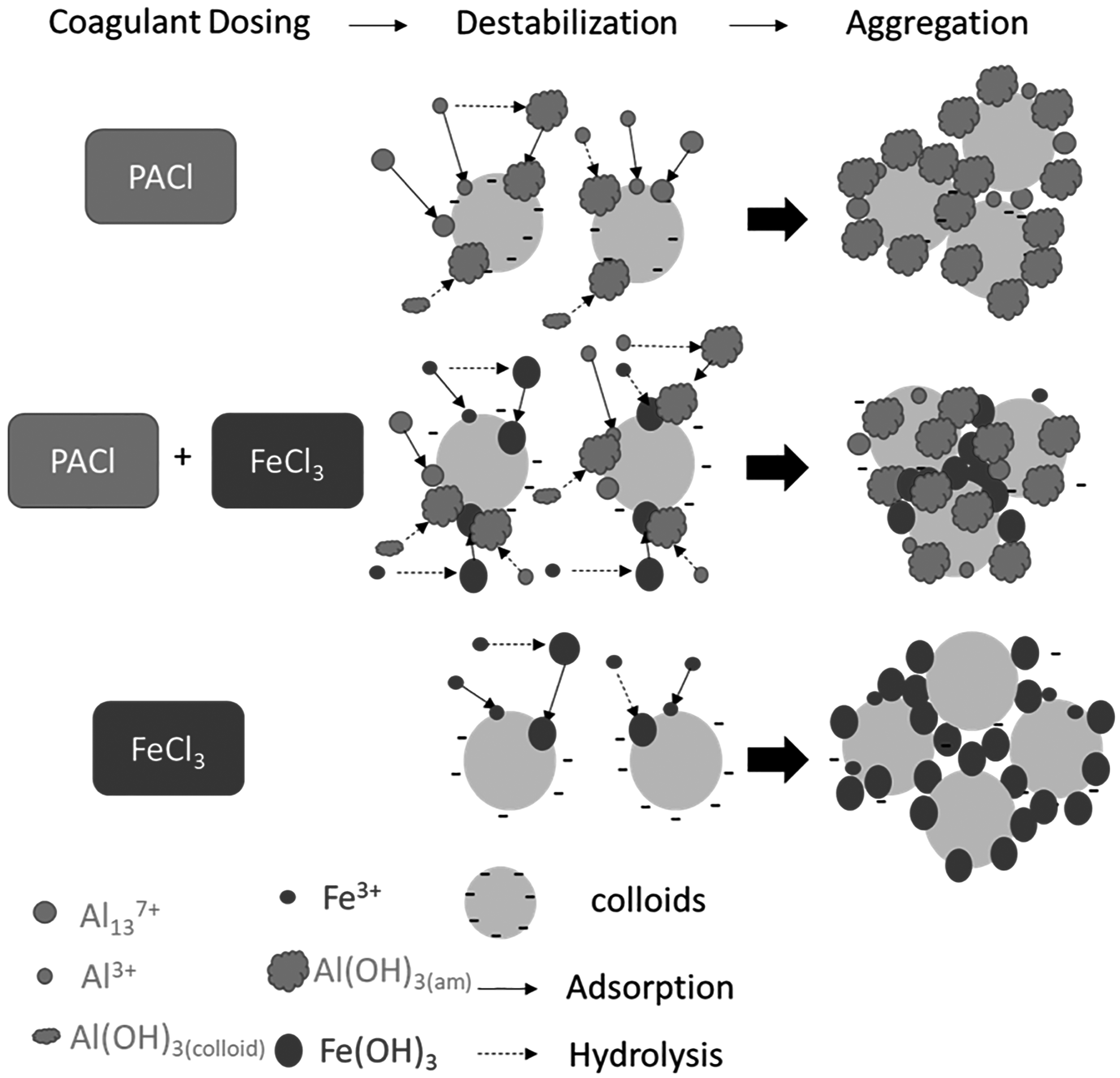
Possible coagulation behaviors for single or dual dosing with PACl and FeCl3. FeCl3, ferric chloride; PACl, polyaluminum chloride.
However, it is more complicated in particle destabilization and aggregation for coagulation using dual dosing with PACl and FeCl3. At dual dosing, it is likely that the majority of Fe(OH)3 preferentially adsorb to colloids followed by other Al(OH)3(am) precipitates during coagulation, which induces the precipitation of Al(OH)3(am) on the Fe(OH)3. This reduces the number of binding site with active Fe(OH)3, and possibly inhibit the particle aggregation, resulting in the smaller flocs compared to coagulation with single FeCl3 dosing.
Conclusions
Enhanced coagulation for remaining turbidity and dissolved Al minimization by a hybrid coagulant dosing with commercial PACl and FeCl3 can be achieved in low turbidity water treatment as well as it would be substituted by a single dosing with alternative PACl coagulant containing lower monomeric Al with higher polymeric and colloidal Al. In addition, the turbidity reduction by coagulation with mixed PACl and FeCl3 is slightly less than either coagulant by itself. Generally, FeCl3 coagulation causes the fastest and biggest growth in floc size, but single FeCl3 dosing brings an adverse effect on filterability for low turbidity water treatment. The addition of FeCl3 and PACl coagulant at 1:1 can accelerate floc formation compared to single PACl dosing, but the compactness of floc would be insensitive to the combination of dual coagulants. For natural low turbidity water, it is feasible to achieve minimization of RT and dissolved Al using dual dosing with PACl and FeCl3 or single dosing with a commercial PACl-C containing high colloidal Al.
Footnotes
Acknowledgments
We are grateful to Taiwan Water Corporation and Mr. Chen Chien-Chang for the assistance in water sampling and the data analysis of coagulation experiments.
Author Disclosure Statement
No competing financial interests exist.