




Abstract
Abstract
Ammonia-nitrogen recovered from synthetic anaerobic membrane bioreactor (AnMBR) permeate facilitated by natural zeolite (clinoptilolite) ion exchange was released during regeneration with tap water into a recirculating, vertical hydroponic system to demonstrate a potential method for nitrogen recovery and reuse from domestic wastewater. Exhausted clinoptilolite leached ammonium into the tap water, which was then used for the hydroponic fertigation of butter crunch lettuce (Lactuca sativa) in vertical hydroponic towers. Crop mass and pigment development of lettuce grown in the zeolite desorption solution were favorable compared to the control (consisting of diluted, synthetic AnMBR permeate). Nitrification occurred faster in the desorption solution compared to the control, resulting in an 11% and 19% increase in fresh and dry mass, respectively, and greater chlorophyll-a and chlorophyll-b development. A system is proposed for implementing vertical trickling hydroponic systems integrated with zeolite regeneration to realize a reusable nutrient recovery system. This work demonstrates the potential of the proposed nutrient recovery system to simultaneously attenuate AnMBR ammonia-nitrogen content, while providing a renewable source of nitrogen for use in soilless agriculture.
Introduction
Intensification of climate change and its associated effects and the global trend of urbanization are shifting the paradigm of how waste and natural resources, particularly water, are managed. Public and private sectors are realizing the need to shift toward more sustainable operation protocols to ensure future economic viability.
Agriculture accounts for most of the world's fresh water and land use and is set to increase to meet a projected 70% increase in global agricultural production as the world population nears 10 billion people by the year 2050 (FAO, 2011). The use of freshwater for nonpotable applications like agricultural irrigation will require supplementation to satisfy both the water and food requirements of the growing global population (Wichelns et al., 2015). Prioritizing the recovery of useable water, nutrients, and energy resources from wastewater is an essential paradigm necessary for sustainable management at the nexus of water, food, and energy systems (Guest et al., 2009).
Anaerobic membrane bioreactor (AnMBR) technologies are capable of treating high-strength wastewater in smaller footprints than conventional wastewater treatment facilities, offering sanitation solutions with the capacity to recover nutrient, energy, water, and biomaterial resources (Bair et al., 2015; Jain, 2018). The combination of anaerobic digestion and membrane filtration yields methane-rich biogas, digestate, and membrane permeate. The latter contains high concentrations of nitrogen and phosphorus, warranting additional treatment to remove nutrients before discharge of the AnMBR system effluents (Ozgun et al., 2013; Batstone et al., 2015).
Conventional wastewater treatment facilities utilize a series of biological processes to facilitate nitrogen removal, requiring considerable space and energy inputs to accommodate large biological reactors and provide sufficient aeration to support aerobic nitrification processes where ammonia nitrogen is oxidized to first nitrite, and then, nitrate (Gupta et al., 2015). In addition, heterotrophic denitrification requires anoxic environments and inputs of organic carbon to serve as the electron donor, facilitating the reduction of nitrate to nitrogen gas (N2), which bubbles out of solution spontaneously, yielding a much lower effluent nitrogen concentration (Gupta et al., 2015). Further manipulation of the biological nitrogen removal (BNR) process can result in phosphate removal by luxury uptake into bacterial cells, which are then removed with wasted biosolids (Ahn, 2006).
The material and energy inputs as well as the space and sludge handling requirements needed to support these BNR processes reduce their feasibility for integration with low-footprint technology platforms such as AnMBRs, especially when deployed in decentralized and undeveloped contexts. An emerging BNR process known as anammox (anaerobic ammonia oxidation) reduces energy, material, and space requirements by utilizing slow-growing anammox bacteria that combine ammonium and nitrite, forming N2 gas (Kuenen, 2008). The use of nitrite, rather than nitrate, reduces the requirement for dissolved oxygen (DO); however, the anammox process still requires careful monitoring and process control and is subject to common disadvantages associated with biological processes, for example, vulnerability to changes in temperature, shock loading, maintaining optimal DO concentrations, and greenhouse gas production.
Ion exchange (IX) processes have proven effective for removing ammonium from AnMBR permeate with potential to reduce costs and environmental impact by recovering nitrogen rather than complete removal (Lin et al., 2016). Naturally occurring aluminosilicates, that is, zeolites, have been widely used as a low-cost IX material, particularly for the removal of total ammoniacal nitrogen (TAN), as some zeolites (e.g., clinoptilolite and chabazite) exhibit selectivity for ammonium cations (Hedstrom, 2001). Regeneration of exhausted zeolite requires constant use of saline and/or brackish solutions, adding cost and complexity to the handling and reuse of the recovered TAN (Hedstrom, 2001). Highly concentrated solutions of NaCl and NaOH are utilized to exchange captured NH4+ with Na+, requiring additional treatment to remove TAN from the spent regenerant solution before reuse. Regeneration methods that do not use brine support efforts to recover nitrogen for fertilizer by avoiding the presence of deleterious salinity (Lancellotti et al., 2014). Alternatives to chemical regeneration (i.e., regeneration with brine) include electrochemical, ultrasonic, and biological regeneration, each fostering respective material and energy requirements for effective operation (Li et al., 2010).
Beler-Baykal et al. (1996) observed that ammonium-saturated clinoptilolite is capable of desorbing ammonium ions into tap water, although at very low concentrations of 2 mg NH4+/L, exhibiting a leaching effect of exhausted clinoptilolite by tap water desorption (Beler-Baykal et al., 1996). Desorption of NH4+ with tap water, while seemingly ineffective, can be enhanced by increasing the concentration of competing cations in the regenerant solution. Tap water can contain various mineral cations that can exchange with zeolite-bound NH4+.
In addition, tap water containing nitrogen can be utilized as a fertigation solution in a soilless plant cultivation configuration, as is practiced in hydroponics and aquaponics systems. In these systems, nutrition is delivered directly to the plant roots by a liquid medium with plants and/or plant roots being supported by inert media. Facilitating nitrification within a hydroponics configuration further improves crop productivity as generally, for terrestrial crops, nitrate is the preferred form of nitrogen (Resh, 2013). Nitrification is even more crucial in aquaponics systems that simultaneously cultivate plants and fish, as NH3 is toxic to fish in concentrations as low as 1 mg/L NH3-N (Bernstein, 2011). The combination of zeolite-ammonium release into tap water with hydroponic plant production would thus realize a low-cost and low-footprint method for simultaneous wastewater nutrient recovery and reuse (Smith and Smith, 2016, 2017; Lin et al., 2016; Amini et al., 2017; Guaya et al., 2018).
A reusable nutrient recovery system (RNRS) is proposed in this work to enable this realization. The objective of this work is to assess the ability of the proposed RNRS to recover the TAN content from synthetic AnMBR permeate, then subsequently release the recovered TAN content into tap water to support the growth of Lactuca sativa (buttercrunch lettuce) in a vertical, soilless crop cultivation system (i.e., hydroponics). The nutrient recovery efficiency under the given conditions is assessed and nitrification of the TAN content in the hydroponic systems is observed to assess possible impacts of the hydroponic configuration. The effects of the hydroponic solution on lettuce crop development were also observed to identify nutrition deficiency and crop quality. Successful performance of the RNRS for hydroponic fertigation could provide nutrient material inputs for various horticultural practices.
Experimental Protocols
Material selection and preparation
IX and adsorbent media
Clinoptilolite zeolite with average particle diameter of 0.5–1 mm, obtained from ChemSorb® (Wood Dale, IL), was used to facilitate adsorption and IX of ammonium ions from synthetic AnMBR permeate. The zeolite used in this study was prepared by rinsing several times with distilled water to remove excess dust, and then dried at 105°C for 24 h. The dried zeolite was then sieved to select for particle diameter ranging from 0.5 to 1.0 mm. The composition of the clinoptilolite zeolite used in this study is presented in Table 1.
Chemical Composition of ChemSorb Natural Zeolite (Clinoptilolite)
Hydroponic lettuce
Lettuce (L. sativa) seeds were started in 2″ rock wool cubes. The hydroponic cultivation method and configuration were adapted from Resh (2013) and Storey (2013). Ten days after germination, buttercrunch lettuce (L. sativa) seedlings were transplanted into the hydroponic towers to start a 14-day crop development cycle. A 14-day crop growth cycle was chosen to examine the effects on crop development and nitrogen removal within a single batch of hydroponic solution.
Synthetic AnMBR permeate
The synthetic wastewater used in this study was designed to simulate the concentrations of dissolved salts present in AnMBR permeate to observe their effect on TAN removal and hydroponic growth. The synthetic AnMBR permeate solution (SP) was produced by adding 0.445 g/L NH4Cl, 0.092 g/L K2HPO4, 0.074 g/L Na2SO4, and 0.254 g/L NaCl to tap water to yield the following concentrations: 150 mg/L NH3-N, 50 mg/L PO43−P, and 50 mg/L SO42−. Concentrations of NH3-N and PO43− in the SP were higher than typical AnMBR system effluents, as observed by Deng et al. (2014), to simulate highly concentrated effluents, as described by Prieto et al. (2013) and Bair et al. (2015).
Experimental setup
Reusable nutrient recovery system
The RNRS comprised a 10″ (25.4 cm) filter housing modified to accommodate upward fluid flow by introducing fluid at the bottom of the cartridge, directing liquid flow upward and exiting the housing at the top (Fig. 1). A peristaltic pump (Cole Parmer) was used to convey liquid through the filter housing.

Schematic of experimental RNRS column used for removal of ammonium from synthetic wastewater. The same configuration was utilized to release the recovered ammonium ions into tap water. RNRS, reusable nutrient recovery system.
Vertical hydroponic system
The hydroponic configuration utilized for this study consisted of vertical plant support towers with nutrient solution recirculation. The ZipGrow™ towers (ZGTs) (ZipGrow Inc., Ontario, Canada) comprised a 5.08 cm square PVC post containing a 2.54 cm slit spanning the length of the post. Fibrous, thermo-polypropylene media were inserted in the tower to facilitate passive aeration of the nutrient solution during downflow. Each of the 3, 1.52 m ZGTs were cut into four, 38.1 cm sections, yielding twelve, 38.1 cm hydroponic towers. Two towers were stacked in a series configuration to accommodate four lettuce seedlings, while minimizing the system footprint. Each stacked tower system utilized nutrient solution from a reservoir holding 10 L of the respective nutrient solution located below the bottom tower. Peristaltic pumps conveyed the nutrient solution from the bottom of the reservoir to the top of the first tower. Nutrient solution trickled out of the first tower into the second tower through a funnel, down the second tower, and then into the reservoir.
Four separate hydroponic systems contained 10 L of each solution (Table 2), characterized as follows: (1) synthetic AnMBR permeate solution (SP) diluted with tap water to 12% of its original formula to equate the total nitrogen content to that of the RNRS desorption solution, (2) RNRS desorption solution (DS), and (3) DS amended with acetic acid to 0.02% (DSa). Illumination was supplied by an OSRAM HQI-T 400 W/D PRO metal halide lamp (OSRAM GmbH, Munich, Germany) following a 12-h light/12-h dark cycle. The photosynthetic photon flux rate averaged 250 μmol photons m−2 s−1 [10.8 mol/(m2/d)].
Description and Symbol of Fertigation Solutions Used in This Study
AnMBR, anaerobic membrane bioreactor; RNRS, reusable nutrient recovery system.
Experimental design
RNRS column exhaustion
SP was prepared for pumping through the RNRS IX column at a flow rate of 100 mL/min (2.22 bed volumes/min). Column operation for ammonia removal from the SP solution was halted when the effluent NH4+-N concentration reached 30% of the influent concentration (i.e., 30% breakthrough [BT]), where the column was deemed exhausted.
Ammonium-nitrogen release
Release of recovered ammonium into solution was facilitated by pumping 50 L of tap water through the RNRS column, yielding a 50 L batch of RNRS desorption effluent, referred to as DS. The flow rate of tap water through the RNRS column during NH4+-N release was 60 mL/min.
Recirculating hydroponic fertigation
Recirculation of the 10 L hydroponic fertigation solutions studied (SP, DS, DSa, and tap water blank) was maintained for a 14-day period to observe the initial nitrification rate occurring after startup of the systems. Twenty milliliters of solution was collected daily from the hydroponic feed tube of each system for analysis.
Analytical methods
Water quality analyses
The pH, electrical conductivity (EC), and NH4+-N concentration were measured using Vernier EC and pH probes (Vernier Software and Technology, Beaverton, OR) and a NeuLog® ammonium logger sensor NUL-240 (NeuLog, Rochester, NY). Figure 1 depicts the location of the ammonium, pH, and EC probes. Analysis of the hydroponic solution NH3-N content was performed pursuant to the standard manual spectrophotometric method referenced in NEN-ISO 7150-1:2002. Nitrate, phosphate, chloride, and sulfate ion concentrations of the daily hydroponic solution grab samples were measured by ion chromatographic spectroscopy using a ThermoScientific® Dionex ICS-1100 equipped with a DV-sampler, based on the standard method SM4110B.
Crop quality analyses
Crop mass development (fresh and dry) and chlorophyll content were selected to serve as indicators of crop quality. At the end of the crop development cycle, lettuce plants were harvested by cutting the plant where the stem meets the original seedling plug. The fresh weight of harvested plant materials was then recorded immediately to minimize water loss. Fresh crops were then dried at 70°C for 12 h, cooled in a desiccator, and then the dried plant mass was recorded. Before drying and after fresh weight measurement, leaf samples were taken from old and new leaves of lettuce crops as sacrificial samples for chlorophyll analysis. Chlorophyll content was measured by spectrophotometric analysis described by Wintermans and De Motts (1965).
Results
RNRS performance
Initial RNRS sorption serviced a total of 413 bed volumes (BV = 45 mL) at a flow rate of 133 BV/h before reaching 30% BT. The influent TAN concentration was 150 mg NH3-N/L. Figure 2 depicts the number of BV served by the RNRS against effluent TAN concentration expressed as percentage of influent TAN concentrations (Cout/Cin). Natural clinoptilolite zeolite in the RNRS column passively recovered TAN from synthetic AnMBR permeate, reaching 5% BT after 150 BV, 10% BT after 286 BV, and 30% BT at ∼413 BV. The BT curve behaved linear after 237 BV (Fig. 3).
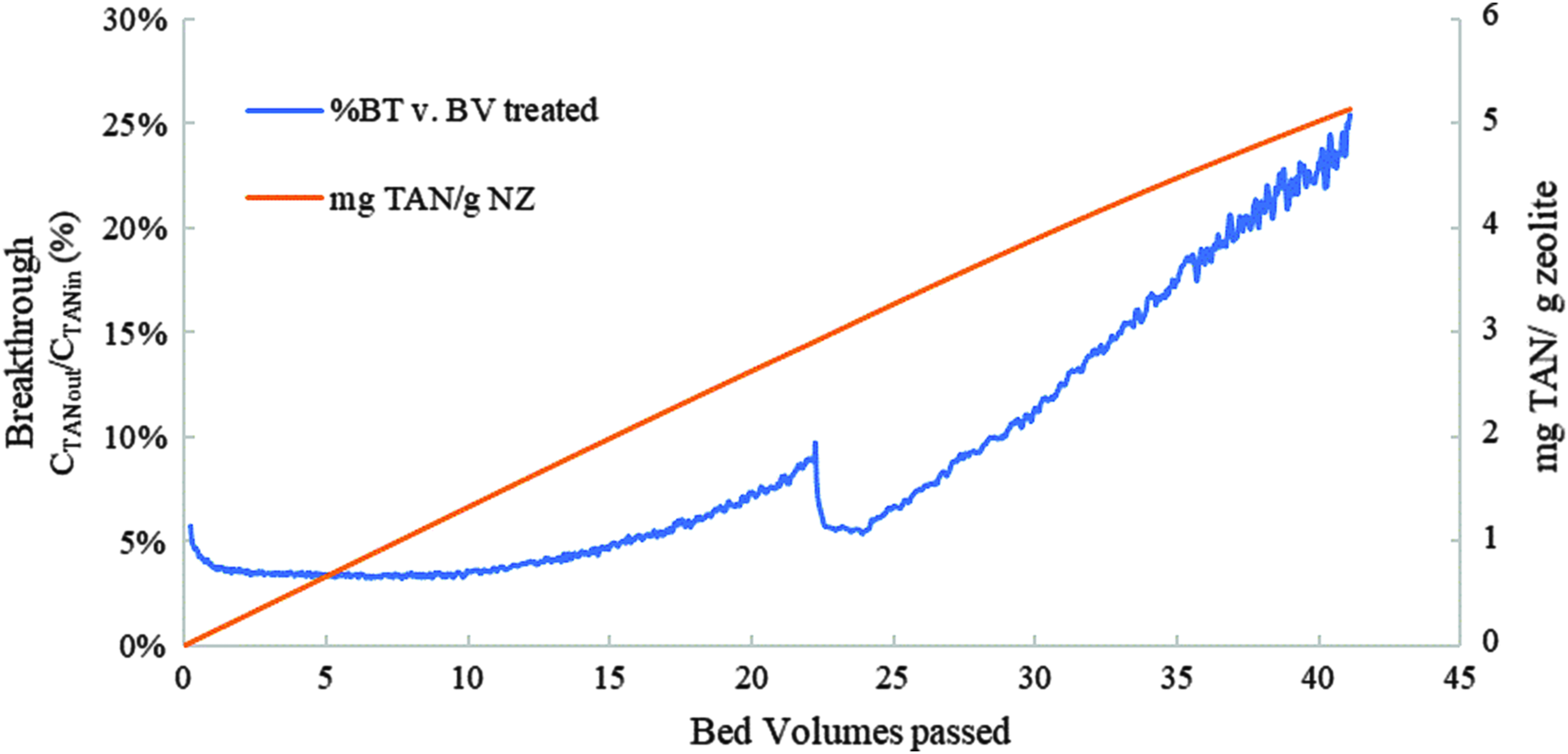
TAN removal from synthetic permeate by RNRS column filtration operation. Concentration breakthrough is plotted against the bed volumes treated. Mass of TAN accumulation per mass of zeolite is also plotted against the bed volumes treated. TAN, total ammoniacal nitrogen.

TAN release during RNRS desorption process with tap water.
Ammonium-nitrogen concentration in RNRS desorption effluent throughout the duration of the desorption process was sustained above zero (Fig. 3). The equilibrium discharge concentration during tap water desorption ranged from 10 to 15 mg NH4+/L for the first 10 h of desorption operation. An initial high effluent TAN concentration was observed. After 10 h of desorption operation at a flow rate of ∼3.6 L/h, the equilibrium discharge concentration decreased below 10 mg NH4+/L, averaging 8–9 mg NH4+/L for the remainder of the desorption operation.
Nitrification in hydroponic systems
Analysis of the hydroponic solutions revealed decreasing ammonia and increasing nitrate concentrations in DS, SP, and DSa solutions. DS showed a higher maximum nitrification rate, generating 3.6 g NO3− m−3 d−1, while SP and DSa achieved 3.0 g NO3− m−3d−1 and 0.14 g NO3− m−3d−1, respectively, over the same period. Acetic acid-amended DS (DSa) did not show significant nitrate removal as seen in the DS and SP crop series and showed insignificant vegetative growth due to the proliferation of fungi in the root zone. Thus, the nitrate concentration in the DSa did not decrease during the crop development period due to the lack of substantial vegetative growth (Fig. 4). SP reached a higher overall maximum nitrate concentration as the initial nitrogen content was slightly higher (Fig. 4). All hydroponic solutions showed complete removal of NH3-N by day 9; however, DS showed the highest initial NH3-N removal rate.
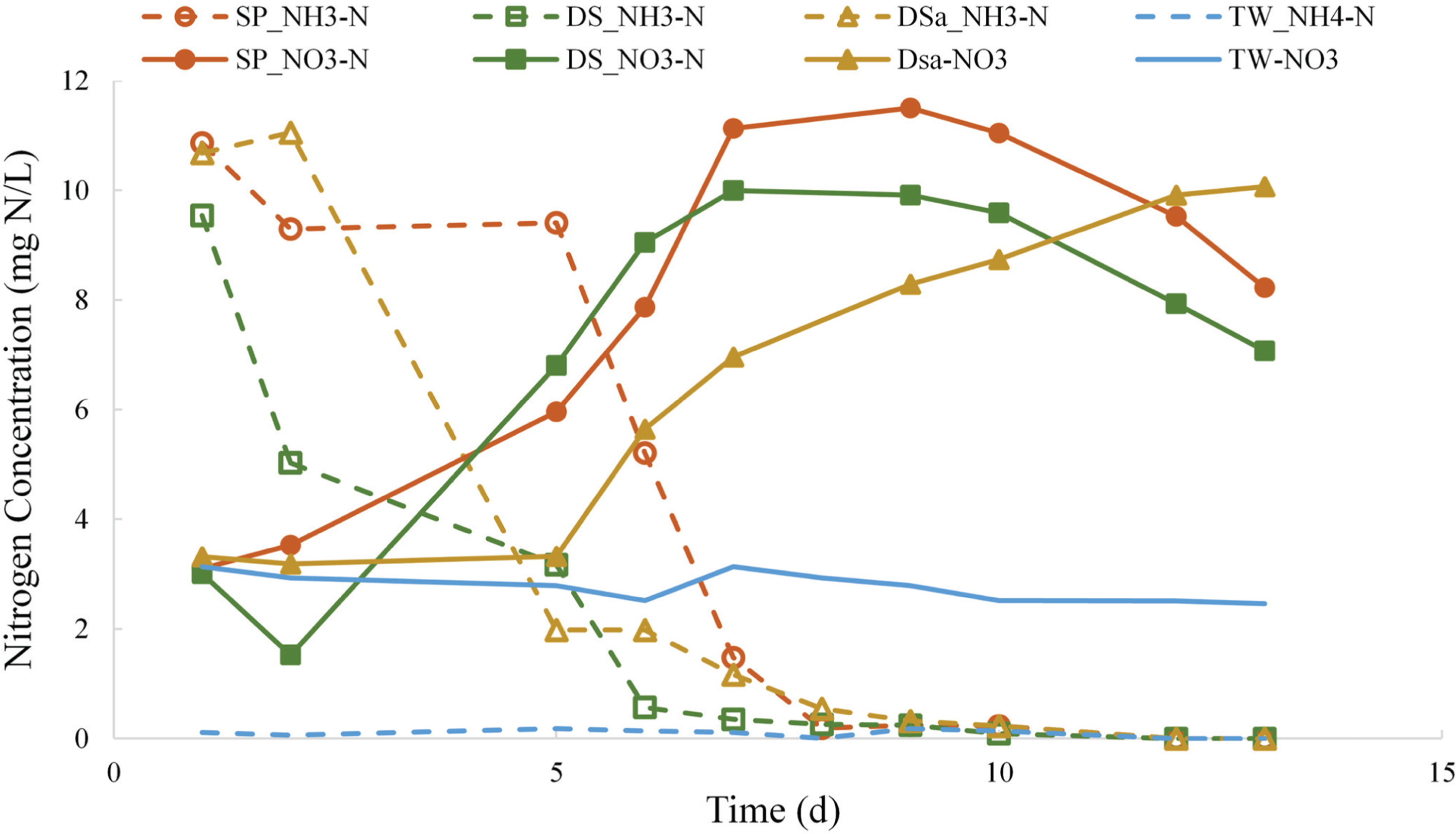
Nitrification of TAN in hydroponics system during the 13-day crop development period.
The hydroponic solutions exhibited varying effects on solution pH (Fig. 5). An initial increase of solution pH was observed in all solutions, except tap water. After day 5, the pH decreased to day 7 and then continued to gradually increase until the end of the crop development period. No significant change of pH was observed in hydroponic systems containing tap water.

pH of hydroponic solutions.
Crop development
DS crops accumulated 11% and 19% more fresh and dry mass, respectively, as well as a higher chlorophyll (Chl-a and Chl-b) content in new leaf growth compared to the SP crops (Fig. 6). SP crops maintained a higher chlorophyll content in older leaves (Fig. 6). DS crops exhibited a higher chlorophyll (both a and b) content in newer leaves as well as a higher Chl-a:Chl-b ratio in newer leaves. Phaeopigment development resulting from the decomposition of chlorophyll by acidification with HCl was observed in SP crop tissues.
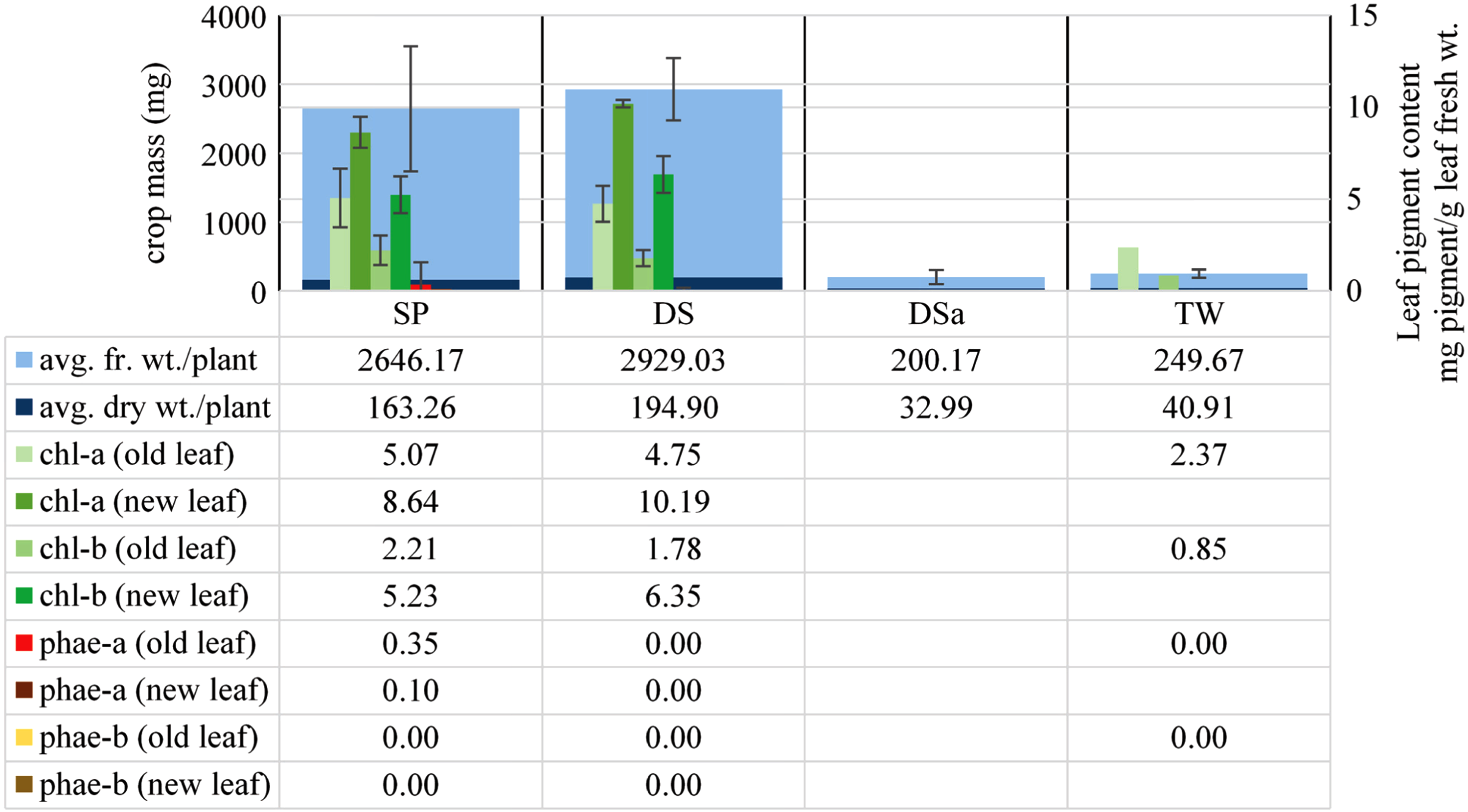
Mass (both fresh and dry) and pigment development of lettuce crops grown in SP, DS, DSa, and TW for 13 days. DS, desorption solution; DSa, DS amended with acetic acid; SP, synthetic permeate; TW, tap water.
Discussion
RNRS performance
This study showed that the proposed RNRS can support the use of nitrogen recovered from AnMBR-treated wastewater for hydroponic fertigation. The RNRS selectivity for ammonium mitigated the uptake of deleterious materials such as sodium, chloride, and dissolved organic compounds that pass through the RNRS column, while NH4+-N is recovered. The IX performance of the zeolite in the RNRS also corroborates the clinoptilolite-zeolite IX performance observed by Beler-Baykal et al. (1996). However, the sustained release of ammonium from zeolite using tap water has not been deliberately explored as a means of regeneration, most likely because tap water is of relatively low ionic strength resulting in lengthy and inefficient regeneration cycles. In this study, hydroponic fertigation is proposed as a concomitant process with zeolite regeneration to simultaneously recover and utilize ammonium-nitrogen from the waste stream.
Approximately 50 L of tap water released 53% of the captured TAN by desorption. The tap water contained the cations Na+ and Ca2+ at average concentrations of 45 and 49 mg/L, respectively, enabling ion exchange with ammonium ions. However, the observed ammonium desorption rate was low due to the relatively low concentration of Ca2+ and especially Na+ in the tap water. Sodium has been widely used to regenerate exhausted zeolite columns as selectivity for Na+ and NH4+ ions are similar (Hedstrom, 2001; Wang and Peng, 2010); thus, highly concentrated Na+ solutions can regenerate zeolite columns in as little as six BV (Guo et al., 2013).
Future research should consider optimizing nutrient desorption rates and capacity as the sustained effluent concentration during RNRS desorption was low to sustain substantial growth of hydroponic lettuce crops. One possibility is to include the RNRS into the hydroponic recirculation line rather than generating a batch of desorption solution, thus allowing the hydroponic system to nitrify released ammonium, similar to the ex situ biological regeneration of regenerant solution presented by Hedstrom (2001). Ammonia release can be further enhanced by increasing the concentration of competing cations in the regenerant solution. Ca2+, Mg2+, and K+ can be added to the regeneration solution to enhance the rate of NH4+ release by IX, potentially enhancing the agricultural performance or the RNRS by providing additional macronutrients (Hedstrom, 2001; Payra and Dutta, 2003; Bernardi et al., 2015; Smith and Smith, 2016).
Hydroponic nitrification performance
Hydroponic systems promoted biological nitrification by passive aeration of the hydroponic solution trickling down the hydroponic fibrous media of the ZGT. Increasing nitrification rates were observed in similar systems operating at steady state as these rates reflect the startup of hydroponic tower systems (Storey, 2013). In this study, a more favorable nitrification response was observed in the DS hydroponic system, where the main ionic species was NH4+ (Fig. 4). Sodium and chloride ion concentrations present in SP were not present in DS; thus, any potentially deleterious effect they could have on both nitrification and crop development was avoided in the DS system. A study of longer duration would confirm the stabilization of nitrification rates observed in each hydroponic solution.
RNRS desorption solution amended with acetic acid (DSa) displayed delayed nitrate production and uptake (Fig. 4). The presence of acetate resulting from the dissociation of acetic acid provided a source of dissolved organic carbon (DOC) for heterotrophic respiration. Competition with heterotrophic microorganisms for DO could have delayed nitrate production. In addition to causing various plant infections, fungal organisms also consume oxygen, resulting in poor root zone conditions [16]. Observation of DSa crop roots revealed evidence of poor root development resulting from root rot and low root zone DO (Resh, 2013). These observations are of major concern as AnMBR permeate from wastewater treatment applications can contain up to 24 ± 4 mg/L DOC, warranting additional treatment and/or quality control if hydroponic applications are to be considered (Prieto et al., 2013). Activated carbon can be utilized as an additional component to the RNRS media to remove DOC from either AnMBR permeate or hydroponic reservoirs to attenuate any deleterious effect DOC may cause (Zhu et al., 2014).
Crop development
Lettuce seedlings were cultivated in the vertical hydroponic systems with various nutrient solutions for 13 days. SP and DS crops developed similar plant mass with a slight increase observed in the DS system. The presence of Na+ and Cl− in SP may have caused the decrease in crop growth as these ions increase solution salinity, which begins to inhibit crop development at salinity concentrations as low as 50 mM Na+ (Al-Maskri et al., 2010; Resh, 2013). RNRS intervention mitigates the inhibitory effects of Na+ and Cl− on lettuce crop development. The proposed hydroponic system can support the growth of a wide variety of crops, which will respond differently to the hydroponic system conditions. Mitigation of Na+ in the fertigation solution by the proposed RNRS is advantageous for soil-based agricultural application as the sodium absorption ratio (SAR) is kept low, thus avoiding the buildup of sodium in the soil, which can lead to degradation of soil structure and tilth, as well as decreasing the infiltration and permeability of soils (Rengasamy and Marchuk, 2011).
Both et al. (1997) observed the average dry mass of lettuce crops reaching 1.00 g at 23 days after sowing under similar lighting conditions; thus, DS and SP crops both developed significantly less dry mass than what is achieved in controlled environment hydroponic systems with optimal growth conditions (Both et al., 1997). Resh (2013) recommends concentrations of 165 mg/L NO3−N and 25 mg/L NH4+-N to achieve optimal lettuce crop development (Table 3). Aquaponic cultivation systems are also effective for lettuce crop cultivation, while utilizing lower aqueous nitrogen and phosphorus concentrations. However, nitrogen and phosphorus concentrations in the DS and SP solution are significantly lower than those utilized in optimized horticultural systems (Table 1).
Typical Concentrations of Nitrogen Species in Nutrient Solutions for Lettuce Cultivation in Nutrient Film Technique Hydroponics, the University of the Virgin Islands Aquaponics System, and the Synthetic Permeate Solution and Desorption Solution of This Study for Comparison
ND, not detected.
A major disadvantage of the proposed RNRS is the current, low capacity to effectively recover phosphorus from the synthetic AnMBR permeate. Phosphorus is a necessary plant macronutrient that must be present in the fertigation solution to yield adequate growth, especially of fruiting and flowering crops (Resh, 2013). Methods to simultaneously recover ammonium and phosphorus have been demonstrated in laboratory settings by various methods, most notably by pretreating zeolites to modify the zeolite particle surface to facilitate simultaneous adsorption of ammonium and phosphate ions (Zhang et al., 2007; Guaya et al., 2015), co-precipitation of calcium phosphates or struvite (Xu et al., 2015; Wan et al., 2017), or a combination of both (Lin et al., 2014). Further development of the proposed RNRS platform should assess the various methods to simultaneously recover nitrogen (N) and phosphorus (P) from synthetic AnMBR permeate for feasibility of integrating with the intended operation of the proposed RNRS platform, the main considerations being the material and energy required to facilitate nutrient recovery by adsorption, IX, chemical precipitation, or combination of two or more of the processes previously mentioned. The RNRS proposed in this work was designed to limit the use of consumable materials and requires simple operation. In addition, Lin et al. (2016) concluded that integrating P recovery significantly reduces the environmental impacts of the zeolite ion exchange for N removal from AnMBR effluents due to eutrophication caused by the discharge of P: incorporating P recovery estimates a 97% reduction of the environmental impacts associated with eutrophication.
The RNRS was able to generate batches of desorption solution with 10–12 mg/L NH4+-N; however, continuous recirculation of the DS hydroponic system through the RNRS would facilitate simultaneous nitrification and ammonium release, resulting in an increase of the DS total nitrogen content over time. Recirculation operation resembles aquaponic processes, where ammonia-nitrogen constantly supplied by fish is rapidly converted to nitrate by nitrification to mitigate ammonia toxicity, as NH3(aq) concentrations as low as 1 mg/L can affect fish behavior, feeding habits, and be fatal (Rakocy et al., 2004).
Chlorophyll content of the developing lettuce crops was analyzed to serve as a proxy for crop quality and indicator of nitrogen assimilation. Several studies have evaluated the correlation of nitrogen fertilization and chlorophyll development in an effort to identify ideal nitrogen fertilization to maximize chlorophyll development, thus enhancing nutritional quality and aesthetic value of the crop (Kopsell et al., 2007; Barickman and Kopsell, 2016; Kowalczyk et al., 2018). SP crops maintained a higher chlorophyll (both a and b) content in older leaves than DS crops, indicating mobilization of plant nutrients from older leaves to newer, developing leaves in DS crops (Resh, 2013). The higher Chl-a:Chl-b ratios in DS crops indicate higher rates of photosynthesis, positively affecting crop mass development (Evans, 1988). Phaeopigments resulting from the decomposition of chlorophyll by acidification with HCl, as observed in SP crop tissues, indicate less healthier crops (Wintermans and De Motts, 1965). SP crop pigment development could have been compromised by the relatively high sodium content present in solution that can affect L. sativa development as it is not a highly salt-tolerant crop (Kim et al., 2008). Phaeopigments in DS crops were not observed within measurable limits. Additional crop quality parameters that would better serve to evaluate nutritional quality such as plant tissue mineral composition, antioxidant content, and carotenoid pigments were not assessed in this study, but should be included in future analyses.
The nitrification rate observed in the ZG systems showed potential for biological regeneration of exhausted RNRS-zeolite when combined with tap water desorption, yielding a viable hydroponic fertigation solution. Potential benefits of the proposed RNRS include scalability, adaptability, low capital and energy costs, and widely ranging applications for treatment scenarios involving various types of end users of recovered nutrient materials. Integrating a low-cost RNRS can provide municipalities lower operation costs associated with TAN removal by outsourcing the nitrification process of recovered TAN to various horticultural end uses.
Summaries
Ammonium-nitrogen released into a tap water solution during regeneration of a zeolite column was enough to support the growth of buttercrunch lettuce in a recirculating, vertical hydroponic system.
RNRS intervention mitigates salinity (from Na+ and Cl−) in fertigation solutions derived from simulated AnMBR system effluent; thus, RNRS intervention can maintain low SAR.
DOC content (e.g., acetate) in the DSa solution facilitates fungal growth in recirculating hydroponics systems, inhibiting crop development. Additional treatment of dissolved organic content in an AnMBR permeate is necessary before hydroponic fertigation application to avoid growth of undesirable microorganisms.
The RNRS proposed in this study is effective at recovering nitrogen for fertigation, but ineffective for recovering phosphorous.
Footnotes
Acknowledgments
This work was financially supported by The Alfred P. Sloan Foundation University Center of Exemplary Mentoring, the Florida Education Fund (FEF) McKnight Dissertation Fellowship Award, and The National Science Foundation through the Partnership for International Research and Education (PIRE) grant (Grant No.: DUE 0965743). Any opinions, findings, and conclusions or recommendations expressed in this material are those of the author(s) and do not necessarily reflect the views of the National Science Foundation. We also wish to acknowledge the support of the laboratory staff at IHE Delft for their technical support and material contributions that facilitated this research.
Author Disclosure Statement
The corresponding author, Mr. Calabria additionally reports that Mr. Jorge Calabria and Dr. Daniel Yeh hold a patent: “Systems and Methods for Nutrient Recovery and Use” with royalties paid by Eram Scientific Solutions Pvt. Ltd.