




Abstract
Abstract
Hierarchically porous Na-P zeotype composites with excellent ammonium adsorption performance were prepared via a two-step method. A porous ceramic support was first prepared using coal fly ash, red mud, and coffee grounds, and then zeolite in situ crystallized on the support surface. Characterization of obtained materials indicated that hierarchical porosity was generated from microporous NaP1 zeolite and macroporous ceramic support, and the former accounted for about 23.1 wt% of the total material. Batch experiments were carried out to investigate the ammonium ion adsorption performance on the as-prepared adsorbent. Results indicated that the adsorption capacity could be affected by contact time, initial ion concentration, and solution temperature. Adsorption kinetics followed a pseudo-second-order model with a small thickness of boundary film revealing a chemical reaction related to valence forces and weak ion diffusion resistance to adsorption sites due to the hierarchically porous structure of the adsorbent. Adsorption isotherms coincided well with the Langmuir model. The thermodynamic study suggested that the adsorption was an endothermic and spontaneous process. Moreover, all targeted toxic metals analyzed in the leachate were far below the regulatory levels of toxicity characteristic leaching procedure, demonstrating the feasibility and environmental friendliness of the as-prepared adsorbent for wastewater treatment.
Introduction
Nitrogen, an element widely existing in the environment, is essential for the growth of biological organisms. However, an excessive discharge of nitrogen in surface and groundwater leads to an increase in oxygen demand and eutrophication, which is harmful to the aquatic ecosystem. Ammonium (NH4+), either released from wastewaters such as municipal sewage, domestic and industrial wastewater, or decomposed from organic N compounds in these wastewaters, is the most common form of nitrogen in aqueous environments (Alshameri et al., 2014). So far, great amounts of efforts have been put into developing efficient and low-cost technologies to remove NH4+ from contaminated water.
The reported methods for NH4+ removal include air stripping, adsorption, ion exchange, and biological methods (Imchuen et al., 2016; Millar et al., 2016; Yuan et al., 2016; Ahmadiannamini et al., 2017; Mal et al., 2017; Provolo et al., 2017). Among these, adsorption has attracted much attention because of the low cost and high NH4+ ion removal efficiency. The utilization of zeolites as adsorbents for NH4+ removal has been researched for decades due to their large specific surface area, high cation exchange capacity, and great affinity for NH4+ ions. Zeolites can either be natural or synthetic. Compared with natural zeolites, synthetic zeolites display the advantage of higher ammonium sorption capacity and repeatable material quality but are invariably more costly (Millar et al., 2016). Therefore, it is necessary to develop economically feasible techniques to prepare zeolite materials as effective adsorbents for NH4+ removal.
Consequently, a technological solution of interest is to synthesize zeolites using industrial solid waste containing Si and Al. For example, many researchers have achieved satisfactory results employing coal fly ash to synthesize different zeolites, such as 4A, Na-X, sodalite, and Na-P1 (Fotovat et al., 2009; Izidoro et al., 2013; Musyoka et al., 2013; Cardoso et al., 2015b; Aldahri et al., 2016; Ojumu et al., 2016). However, the utilization of synthetic zeolites for industrial applications is often limited because of either the particle size problem or the diffusion problem. For zeolites in powder form, there is difficulty in separating these from the medium during practical application since the particles are too small (Cao et al., 2008; Faghihian et al., 2013; Liu et al., 2013). Zeolites of large sizes may be favorable for practical use. However, the sole existing micropores in a large block may bring out the diffusion problem because of restricted access and slow mass transport within the pores (Lopez-Orozco et al., 2011).
“Hierarchical” structured zeolites, integrating at least two levels of porosity, offer a solution to the dilemma. These not only have a larger dimension, which is facile to solid–liquid separation, but also can solve the diffusion problem associated with traditional microporous zeolites by incorporating mesopores or macropores with improved mass transfer performance (Lopez-Orozco et al., 2011; Zhang and Ostraat, 2016). Recently, many different types of hierarchically porous adsorbents have been fabricated for contamination removal from wastewaters. For example, Al-Jubouri et al. prepared hierarchically porous zeolites through coating a layer of zeolite over support (diatomite or carbon) surface and found that their ion adsorption capacities had improved and that ion diffusion resistance to the active sites was reduced (Al-Jubouri et al., 2016; Al-Jubouri and Holmes, 2017).
Due to its macroporous structure, which offers a high mass transfer rate, porous ceramics may be a suitable support for the fabrication of hierarchically porous composites. Besides, porous ceramics, which mainly consist of silica and aluminate, possess the potential to be converted into zeolite. Therefore, it is possible to fabricate a hierarchically porous adsorbent combining macroporous ceramics and microporous zeolites. In fact, efforts have been put in to prepare zeolite/ceramic composites for the removal of heavy metal ions from water (Li and Zhang, 2015; Wang and Chen, 2017). However, few researches are about the removal of ammonium ions using the zeolite/ceramic composites.
In this article, a hierarchically porous Na-P zeolite/ceramic composite for ammonium removal was prepared via a two-step method using solid wastes: fly ash, red mud, and coffee grounds. Several techniques were carried out to characterize the as-prepared material, including X-ray diffraction (XRD), X-ray fluorescence spectrometry (XRF), scanning electron microscopy (SEM), and thermogravimetric and differential scanning calorimetry (TG-DSC). And then, batch adsorption experiments were performed to determine the effects of contact time, initial ion concentration, and solution temperature on ammonium removal efficiency. Kinetic and isotherm models were applied to describe the experimental data. Finally, a toxicity characteristic leaching procedure (TCLP) test was conducted to evaluate the possible toxicity of the as-prepared adsorbent.
Materials and Methods
Materials
In this study, fly ash was collected from the electrostatic precipitators of the Qujing Thermoelectric Power Plant (Yunnan, China); red mud was obtained from Wenshan Aluminum Corporation (Yunnan, China); and coffee grounds were sourced from Erhai Coffee Co. Ltd. (Yunnan, China). Sodium hydroxide and sodium aluminate of analytical grade, obtained from Sinopharm Chemical Reagent Co., Ltd. (Shanghai, China), were used without further purification. Ammonium solutions were prepared using deionized water to which appropriate amounts of ammonium chloride were added.
Synthesis of hierarchically porous Na-P zeotype composite
The synthesis of hierarchical porous Na-P zeotype composite was carried out in two steps: preparation of ceramic support using solid wastes and formation of zeolite over the ceramic support. In the first step, a mixture of fly ash, red mud, and coffee grounds (85:15:6 weight ratio) were mixed together with an appropriate amount of deionized water. The mixture was made into pellets of diameter 5–10 mm. After drying for 2 h in a drying oven at 378 K, the pellets were sintered in muffle furnace and sintered at 1273 K for 30 min.
In the second step, 10 g of sintered pellets was activated by alkaline solution and then subjected to heating in a baking oven for the synthesis of zeolite. During the process, Si and Al species dissolved from the ceramic support in the presence of NaOH, and zeolite crystallized over the ceramic support. To obtain zeolite of NaP structure, the influence of NaAlO2 (0, 0.5, 0.7, and 1 g), concentration of NaOH (1, 2, and 3 M), reaction temperature (363, 373, 383, and 393 K), and reaction time (12, 18, 24, and 36 h) on crystallization was investigated (data not shown). The results showed that maximum adsorption capacity was obtained when the pellets were hydrothermally treated in 2 M NaOH with 1 g NaAlO2 at 373 K for 24 h. The resulting solid product was washed with deionized water several times until pH was 8–9 and then dried at 378 K overnight.
Characterization of synthesized zeolites
The crystalline structure of as-synthesized hierarchical porous zeolites was determined by the XRD pattern in the 2θ range of 5–60° at room temperature on D/max-2500 (Rigaku, Japan) using Cu-Ka radiation (c = 0.15406 nm at 40 kV and 45 mA). The compositions of samples were examined with XRF (Axios-max; Panalytical, Netherlands). SEM measurement was performed on JSM-5600LV (JEOL, Japan). TG-DSC (Netzsch STA 449F3, Germany) was used to analyze the thermal behavior of coffee grounds at a heating rate of 10 K/min from room temperature to 1273 K.
Ammonium ion removal from wastewater with synthesized Na-P zeotype composite
A series of adsorption experiments was carried out by batch method under different conditions. In a typical procedure, 1.5 g synthesized sorbent was placed in contact with 250 mL ammonium solution of various concentrations. The pH of the solution was not adjusted. After vibration in a thermostatic shaker for 24 h, the supernatant was filtrated through a 0.22-μm filter membrane. The initial and final ammonium concentrations remaining in solutions were analyzed with the standard Nesslerization method using a UV spectrophotometer to monitor absorbance changes at a wavelength of ammonium adsorbed (420 nm) (Yang et al., 2014). The measurements were carried out in triplicate, and the average values were used. Ammonium loading was determined from the difference between their initial and equilibrium concentrations.
The amount of ammonium loaded on the adsorbent (Qe, mg/g) and distribution coefficient (Kd, mL/g) were calculated using the following equations:
where Ci (mg/L) and Ce (mg/L) are the initial and equilibrium concentrations of ammonium ions in aqueous solutions, respectively; V (mL) is aqueous volume; and m (g) is weight of the adsorbent.
Leaching test
To evaluate the heavy metal leaching properties of as-prepared hierarchical porous zeolite, a TCLP test was carried out in accordance with the US Environmental Protection Agency (EPA) test method 1311. TCLP results were determined by inductively coupled plasma-atomic emission spectrometry (Thermo ICP-MSXII) based on the general rules (JY/T 015-1996).
Results and Discussion
Composition and structure
Table 1 shows the chemical compositions of coal fly ash and red mud. The coal fly ash is rich in silica, while red mud has abundant fluxing constituents, such as Fe2O3, CaO and Na2O. The composition point could fall in or near “area of bloating” (Riley, 1951) as shown in Fig.1. It suggests that coal fly ash and red mud, due to their chemical positions, are potential materials for bloating ceramsite fabrication. XRD results (Fig. 2) show that the main phases in coal fly ash are quartz (SiO2) and mullite (3Al2O3·SiO2); and in red mud, hematite, katoite, and sodalite. As for the bloating agent, volatiles and fixed carbon contents of coffee grounds are 62.1% and 23.5%, respectively. The moisture content is 6.3% and ash content is 9.0%. During sintering, gases produced by the decomposition of coffee grounds contributed to the porous architecture of ceramsites, and the heat released (shown in Fig. 3) benefited the formation of vitreous phase, which is essential for sintering and bloating (Wang et al., 2013).
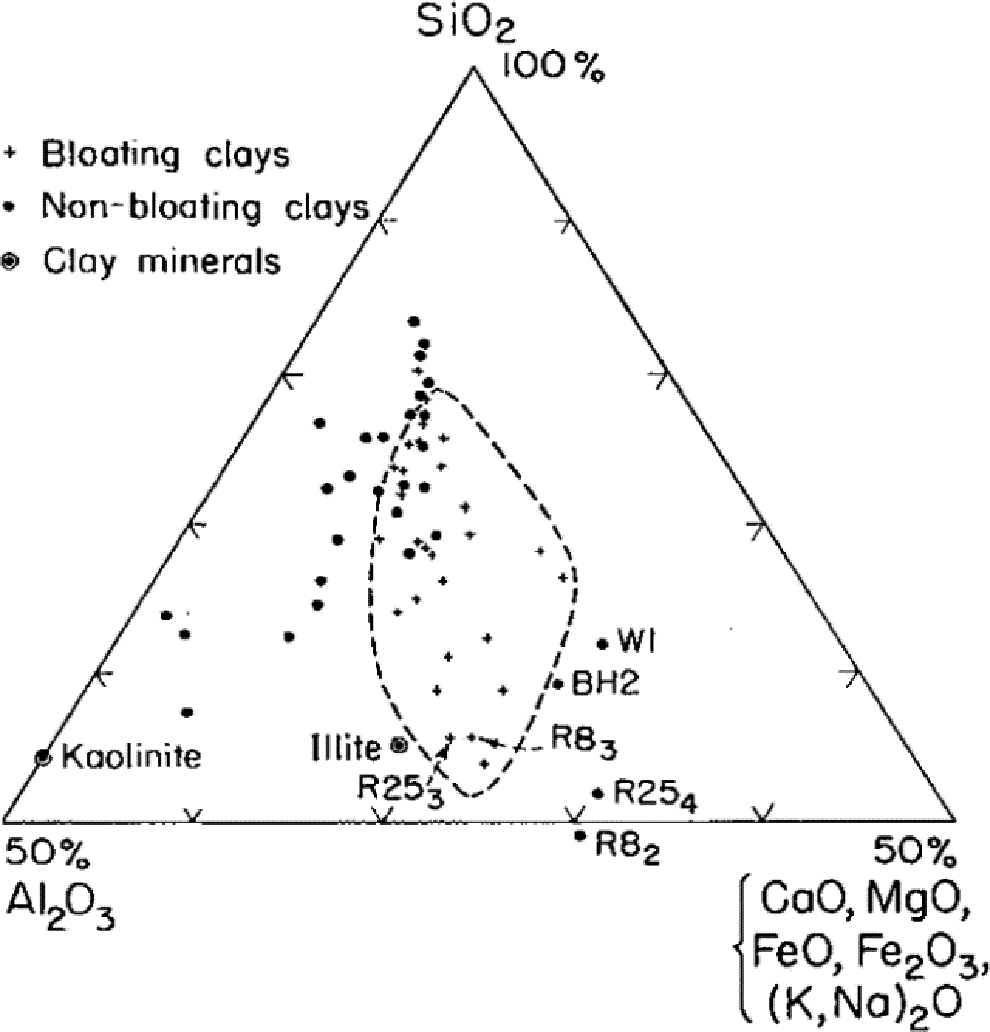
Composition of bloating clay (Riley, 1951).
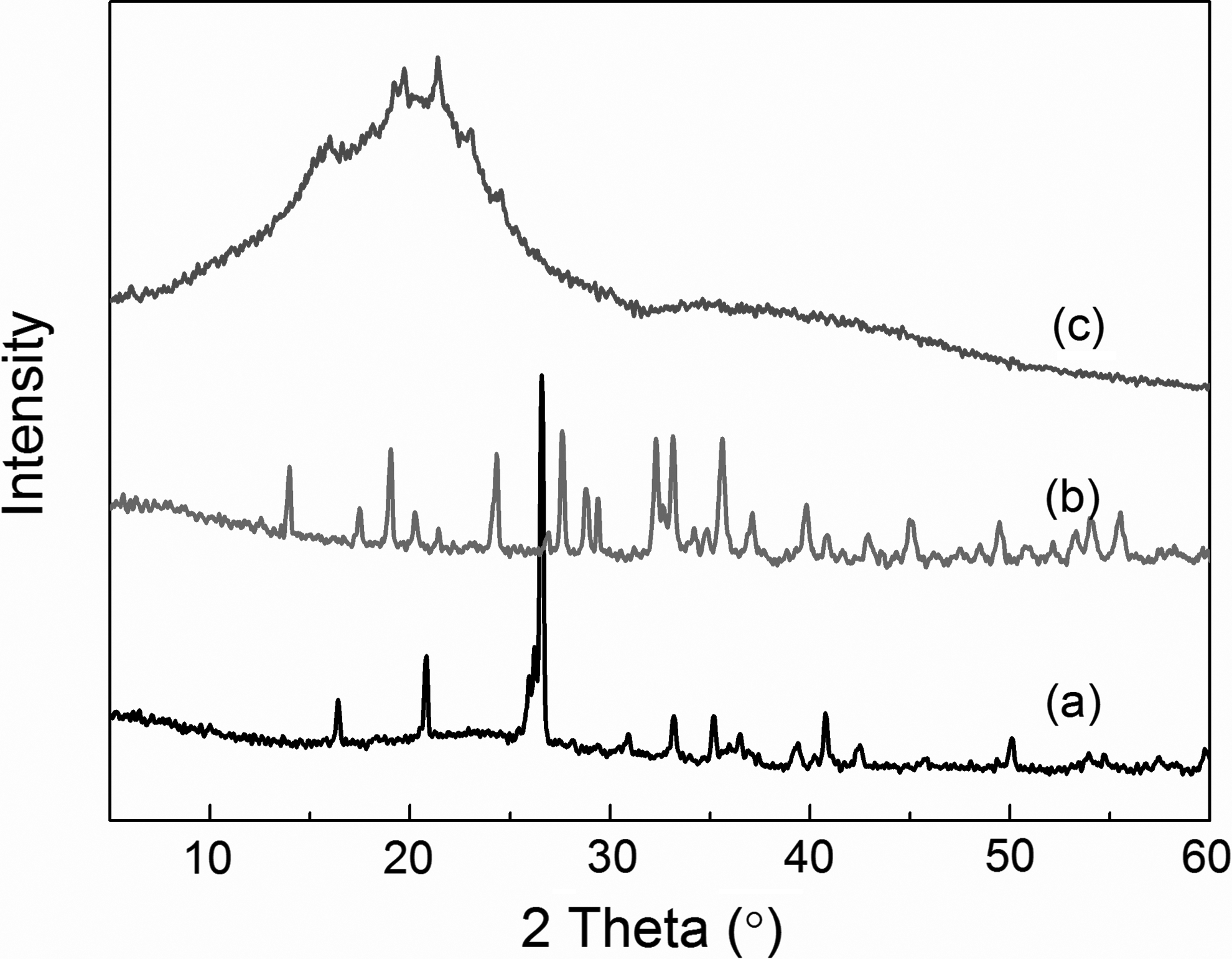
XRD patterns of coal fly ash

TG-DSC curves of coffee grounds. TG-DSC, thermogravimetric and differential scanning calorimetry.
Chemical Composition (wt%) of Fly Ash and Red Mud (Dry) Samples
The XRD patterns of as-prepared ceramsites and zeolitized samples are illustrated in Fig. 4. Based on the present XRD patterns, after sintering, the characteristic peaks of sodalite and katoite phases existing in red mud completely disappeared, and mullite and quartz phases included in coal fly ash significantly decreased. No new crystalline phase could be observed from the XRD pattern, suggesting that the dissolved phases were converted into an amorphous phase. This change signifies the activation of Si and Al compounds and is favorable for zeolite synthesis (Wang and Zhang, 2013). As seen in Fig. 4, hydrothermal conversion to zeolite from ceramsites resulted in the conversion of the amorphous phase to NaP1 zeolite with main characteristic peaks at 2θ: 12.5°, 21.7°, 28.1°, and 33.4° (Cardoso et al., 2015a, 2015b).
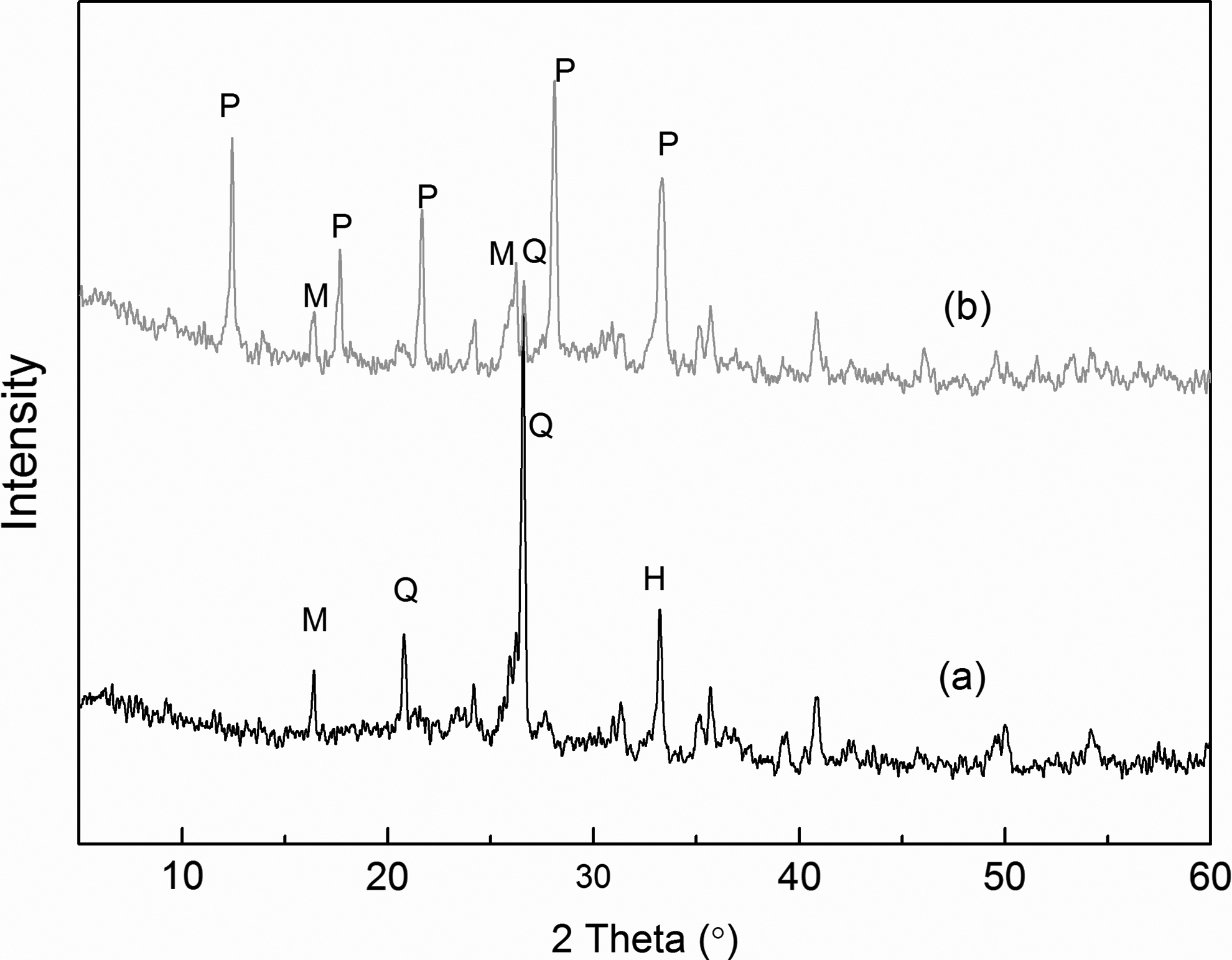
XRD patterns of ceramsite
The chemical composition of zeolitized sample is listed in Table 2. Compared with the as-prepared ceramsite, the content of SiO2 in zeolitized sample decreased significantly, whereas the contents of Al2O3 and Na2O obviously increased. These results were brought about by the dissolution of silicon element in alkaline solution and the growth of NaP1 zeolite. Besides, the amounts of Fe2O3, CaO, and TiO2 changed little during synthesis. Based on this, the percentage of NaP1 zeolite in zeolitized sample was determined by RIR method (Al-Jaroudi et al., 2007), which was approximately 23.1%.
Chemical Composition (wt%) of Ceramsite and Zeolite/Ceramsite Composite
Figure 5 shows the SEM micrographs of as-prepared ceramsite and zeolitized sample. As shown in Fig. 5a, pores inside as-prepared ceramsite are uniform with a range of several micrometers to hundreds of micrometers, confirming that the macroporous support was successfully prepared. After crystallization, the surface of ceramsite is covered with small spherulitic zeolite crystals (shown in Fig. 5b), which is a typical characteristic of synthetic NaP1 zeolite morphology (Cardoso et al., 2015a). SEM results are in good accordance with XRD results. The formation of NaP1 zeolite contributed the microchannel structure to the alkaline hydrothermally treated samples. In fact, the hydrothermally treated sample is a hierarchically porous NaP1 zeolite composite, combining micro and macro levels of porosity.

SEM images of the cross-sections of ceramsite
Ammonium adsorption performance
Effect of initial concentration
The influence of initial ion concentration on NH4+–N adsorption is shown in Fig. 6. It can be seen that the NH4+-N adsorption capacity of the NaP1 zeolite composite, Qe, gradually increased with increasing initial ion concentration. This was because, with an increase in initial ammonium concentration, the concentration gradient between aqueous and solid phases increased, leading to an increase in the driving force for mass transfer and ion exchange (Al-Jubouri and Holmes, 2017).

Effect of initial NH4+ concentration on the adsorption capacity of the NaP1 zeolite composite (adsorbent dose = 1.5 g, solution volume = 40 mL, contact time = 24 h, and temperature = 303 K).
Effect of solution temperature
Figure 7 shows the effect of solution temperature on the ammonium adsorption capacity of the NaP1 zeolite composite. The amount of ammonium ions removed per unit mass of adsorbent increased by increasing the temperature to ∼318 K. This was probably because the rate of intraparticle diffusion of ammonium ions was enhanced by the rising solution temperature due to: (1) an increase in the mobility of ammonium ions with an increase in solution temperature; and (2) a reduction of the limitation for diffusion in the inner part of pore system arising from a decrease in effective radius caused by a decrease of the ion hydration shell (El-Kamash et al., 2005; Al-Jubouri and Holmes, 2017). Meanwhile, we also noticed that the increase in ammonium adsorption capacity from 303 to 318 K was very slight, not as prominent as that from 288 to 303 K. This may be attributed to the tendency of ammonium molecules to escape from the solid phase to the bulk phase with an increase in solution temperature (Zhao et al., 2010; Alshameri et al., 2014).

Effect of solution temperature on the adsorption capacity of the NaP1 zeolite composite (adsorbent dose = 1.5 g, solution volume = 40 mL, and contact time = 24 h).
Thermodynamic parameters, such as enthalpy change (ΔH°), entropy change (ΔS°), and Gibbs free energy change (ΔG°), for the adsorption of ammonium ions on the NaP1 zeolite composite were calculated using Van't Hoff equations:
As summarized in Table 3, the positive value of ΔH° shows that ammonium adsorption on the NaP1 zeolite composite was endothermic (Zhang et al., 2013; He et al., 2016). The negative value of ΔG° indicates that adsorption was spontaneous and energetically favorable (Alshameri et al., 2014). The positive value of ΔS° suggests an increase in randomness at the solid–solution interface during adsorption due to the increasing mobility of ammonium ions and the surrounding water molecules caused by the dehydration of ammonium ions (Zhang et al., 2015a).
Change in Thermodynamic Parameters with Temperature (Initial Concentration = 200 mg/L, Adsorbent Dose = 1.5 g, Solution Volume = 40 mL, and Contact Time = 24 H)
Effect of contact time
As shown in Fig. 8, the uptake of ammonium ions by the NaP1 zeolite composite increased rapidly with increasing contact time in the initial stage. After that, it increased gradually until it reached the equilibrium. This may be attributed to the fact that initially all adsorption sites were vacant and the solution concentration gradient was high. Afterward the uptake rate of ammonium ions by the NaP1 zeolite composite decreased significantly due to a decrease in adsorption sites (Yang et al., 2014).

Effect of time on adsorption (ion initial concentration = 200 mg/L, adsorbent dose = 6.0 g, solution volume = 80 mL, and temperature = 303 K).
To investigate the adsorption kinetics mechanism, pseudo-first-order and pseudo-second-order kinetic models were used to analyze the experimental data. Due to the different axial settings and the varying error distributions depending on the way equations were linearized, the results of linear regression would be altered and the process of determination would be influenced (Kumar and Sivanesan, 2006). Therefore, it is more appropriate to use nonlinear methods to estimate the parameters involved in kinetic models.
The nonlinear forms of the pseudo-first-order and pseudo-second-order rate equations are expressed by Equations (5) and (6), respectively.
where t is the contact time (min), Qt (mg/g) is the amount of ammonium ions adsorbed on the solid phase at contact time t, Qe (mg/g) is the amount of ammonium ions adsorbed on the solid phase at equilibrium conditions, K1 is the pseudo-first-order rate constant (min−1), and K2 is the pseudo-second-order rate constant (g/[mg min]).
Table 4 shows that the correlation factor obtained for the pseudo-second-order model (R2 = 0.97) is higher than that obtained for the pseudo-first-order model (0.95). Also, the theoretical value of Qe calculated (Qe(Theoretical)) according to the pseudo-second-order model is much closer to the experimental value (Qe(Experimental)). These results demonstrate that ammonium adsorption on the NaP1 zeolite composite can be better described by the pseudo-second-order model than pseudo-first-order model. This indicates that ammonium adsorption onto the NaP1 zeolite composite was likely a chemical sorption involving valence forces through a sharing or exchange of electrons between adsorbent and adsorbate ions (Visa, 2016; Zhang et al., 2016).
Kinetic Constants for Pseudo-First-Order Model and Pseudo-Second-Order Model
Rate-limiting steps
Generally, there are four steps involved in ammonium adsorption: (1) ammonium ions diffuse from the bulk solution to the boundary film (bulk transport); (2) ammonium ions move from the boundary film to the solid surface (film diffusion); (3) ammonium ions transfer from the solid surface to intraparticle active sites (intraparticle diffusion); and (4) ammonium ions are adsorbed on the active or binding sites of the solid (adsorptive attachment) (Alshameri et al., 2014; Sánchez-Hernández et al., 2018). Herein, the rates of bulk transport and adsorptive attachment were much faster than that of film diffusion and intraparticle diffusion since adsorption was performed under homogenous mixing. The rate-limiting step could be film diffusion, intraparticle diffusion, or a mix of both. The Webber and Morris model [Eq. (7)] was used to fit the experimental kinetics data to reveal the relative contribution of these two mechanisms to the kinetics.
where Kpi is the rate constant of stage i (mg/[g·min0.5]) and Cpi is a constant related to the thickness of the boundary layer.
As shown in Fig. 9, the multilinear plot of Qt versus t0.5 indicates that ammonium adsorption proceeded by film diffusion (first stage) and intraparticle or pore diffusion (second stage), which is in good agreement with literatures (Alshameri et al., 2014; Luukkonen et al., 2016). The values of Cpi and Kpi obtained from the two straight-line sections are listed in Table 5. For the first straight-line section, the low value of Cp1 (0.09) indicates small boundary layer effect on the rate of adsorption, and the high value of Kp1 (0.37 mg/[g·min0.5]) confirms rapid adsorption within a short duration (Wu et al., 2009; Elwakeel et al., 2014). For the second straight-line section, the smaller value of Kp2 (0.025 mg/[g·min0.5]) suggests a slower transfer rate, while the high value of Cp2 (4.91) indicates a high boundary layer effect on the rate of adsorption. The results reveal that intraparticle diffusion is the dominating mechanism for ammonium adsorption (Mohseni-Bandpi et al., 2016). This may be partly attributed to the hierarchically porous structure of the NaP1 zeolite composite: the multiplex porous structure enlarged the surface area and pore volume of the sorbent, thereby increasing the rate of film diffusion; and the abundant micropores introduced by the zeolite structure were responsible for a low rate of intraparticle diffusion.
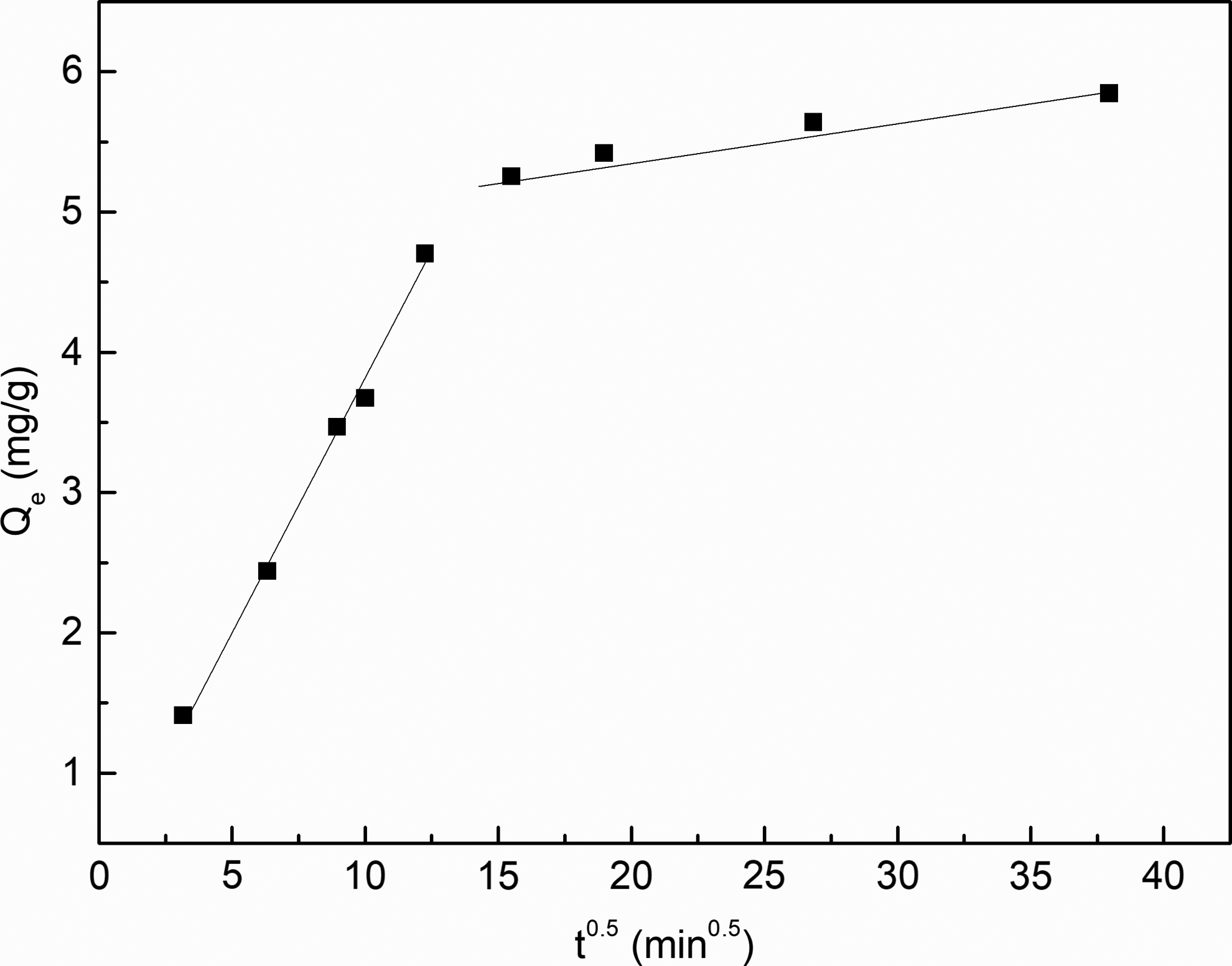
Weber–Morris plot for ammonium adsorption onto the NaP1 zeolite composite.
Webber and Morris Model Parameters for Ammonium Adsorption onto the NaP1 Zeolite Composite
Study of adsorption isotherms
Equilibrium isotherms, generally relating the mass of sorbent with equilibrium concentration of ions in the solution at a constant temperature, play an important role in calculating the maximum ion exchange capacity and ion-exchange (Al-Jubouri and Holmes, 2017). The Langmuir, Freundlich, and Dubilin–Radushkevich (D–R) isotherm models were used to describe the equilibrium experimental data (shown in Fig. 10), and the least squares method was used to determine isotherm parameters. Generally, nonlinear fitting results are much closer to the experimental data than linear regression, since the transformation of nonlinear isotherm equations to a linear form implicitly alters their error structure and may also violate error variance and normality assumption of standard least squares (Zhang et al., 2016). Therefore, in this study, nonlinear forms of three isotherm models were used to fit the experimental data.

Langmuir
The Langmuir isotherm model assumes monolayer coverage at identical sites with homogeneous energy. A nonlinear form of the Langmuir isotherm equation is as follows:
where Qm is the maximum adsorption capacity of the adsorbent (mg/g) and KL is a constant for the Langmuir isotherm (L/mg).
The Freundlich isotherm, assuming uptake at multilayer sites with heterogeneous energy, is an empirical equation to describe adsorption on heterogeneous surfaces, and its nonlinear form is expressed by Equation (9).
where KF is the Freundlich constant related to adsorption capacity (mg/g), and n is a constant related to adsorption intensity or surface heterogeneity.
The D–R isotherm, which explains adsorption on both homogenous and heterogeneous surfaces, was also employed to fit the experimental data. The model is expressed by Equation (10):
where R is the universal gas constant (8.3145 J/[mol·K]), T is the absolute temperature (K), and E is the free energy change when 1 mole of ions is transferred to the surface from infinity.
The computed Langmuir isotherm constants, Freundlich isotherm constants, D–R isotherm constants, and correlation factors (R2) are presented in Table 6. R2 measures the validity of the model to the experimental data, and a higher value of R2 indicates a better fit of the model to the experimental data. The high R2 values (0.97, 0.95, and 1) reported in Table 6 confirm the good fit of experimental data by the Langmuir model. This indicates homogeneous ion-exchange sites on the surface of the zeolite/ceramsite composite. Qm is 8.3, 11.3, and 13.1 mg/g NH4+-N at 288, 303, and 318 K, respectively.
Langmuir, Freundlich, and Dubilin–Radushkevich Model Parameters for NH4+-N Adsorption on the NaP1 Zeolite Composite
D–R, Dubilin–Radushkevich.
Furthermore, affinity between the adsorbate and the adsorbent can be predicted by the dimensionless separation factor RL using Langmuir parameters.
Values of 0 < RL < 1 indicate favorable adsorption (Yusof et al., 2010). In this study, the values of RL for ammonium adsorption on the NaP1 zeolite composite lay between 0.33 and 0.95 for all concentrations and temperature ranges. This indicates that the adsorption of ammonium ions onto the NaP1 zeolite composite was very favorable.
The relatively high correlation coefficients (0.90–0.98) given by the Freundlich model indicate that the isotherms can also be described by the Freundlich relationship. The parameter 1/n was <1, signifying again that the adsorption was favorable (Luukkonen et al., 2016).
The value of mean free energy, E, from the D–R model gives information about the mechanism of adsorption. Physical adsorption may occur as E < 8 kJ/mol (Zhang et al., 2015b). Adsorption follows an ion-exchange mechanism when E is in the range of 8–16 kJ/mol (Zhao et al., 2016). As shown in Table 6, since E < 8 kJ/mol at 288 K, physical uptake of ammonium ions prevailed in the prepared adsorbent. Values between 8 and 16 kJ/mol at 303 and 318 K suggest that ammonium ion adsorption on the hierarchical composite was mainly governed by ion-exchange mechanism.
Comparison with other adsorbents reported in literatures
The maximum NH4+-N adsorption capacity of the studied material is compared with that of other adsorbents reported in literatures. As presented in Table 7, the NaP1 zeolite composite showed a reasonable removal capacity, being generally higher compared with untreated solid wastes, such as coal fly ash, coal gangue, sludge, and red mud (Uğurlu and Karaoğlu, 2011; Zhang et al., 2013; Zhong et al., 2015). Compared with natural zeolites, the studied sorbent also exhibited competitive sorption properties. However, its adsorption capacity was obviously lower than that of synthetic zeolites prepared from solid wastes. This was probably because the adsorbent was not of a pure phase but a composite of ceramic support and zeolite in situ crystallized on its surface, in which the ceramic support contributed less to the adsorption capacity of the composite, compared with zeolite. It is worth noting that a ceramic sorbent with a high ammonium adsorption capacity of 75.5 mg/g reported by Zhao et al. also contains a certain proportion of zeolite (ratio of zeolite/clay = 3/4) (Zhao et al., 2013). The studied NaP1 zeolite composite is competitive since, apart from its adequate sorption properties at relatively low concentrations, it is a low-cost adsorbent and most of the ingredients used in its preparation are solid wastes. In this sense, the NaP1 zeolite composite shows promising adsorption characteristics, making it a potential adsorbent for ammonium removal from wastewaters.
Comparison of Ammonium Adsorption Capacities of Different Adsorbents
Values not reported in the literatures.
D60, the diameter of the material at which 60% of the particles pass through the sieve based on accumulative frequency.
Leaching test
The TCLP test was used to estimate the toxicity of the prepared adsorbent. The results of dissolution of heavy and toxic elements from the as-prepared ceramsite and the NaP1 zeolite composite during standard leaching tests are shown in Table 8. It is clear that all targeted toxic elemental concentrations were far below the regulatory levels of TCLP. This indicates that heavy and toxic metals could be stabilized during sintering. Both the as-prepared ceramsite and the NaP1 zeolite composite can be characterized as nonhazardous and environmentally friendly. Therefore, the NaP1 zeolite composite has the potential to be used as a safe, low-cost adsorbent in wastewater treatment.
Leachability of Heavy and Toxic Elements from the As-Prepared Ceramsite and the NaP1 Zeolite Composite
TCLP, toxicity characteristic leaching procedure.
Conclusion
In the present work, a zeolite/ceramic composite was successfully prepared by a two-step method using coal fly ash, red mud, and coffee grounds. The as-prepared adsorbent was a hierarchically porous NaP zeolite composite, combining micro and macro levels of porosity. Its adsorption performance for ammonium ions was affected by contact time, initial ion concentration, and solution temperature. The kinetics study indicated that ammonium adsorption followed the pseudo-second-order model with intraparticle diffusion as the rate-controlling step. Thermodynamic parameters displayed that the adsorption of ammonium on the as-prepared adsorbent was spontaneous and endothermic. The unique structure of NaP1 facilitated the retention of ammonium ions in the solid phase at a high temperature under our experimental conditions. For all temperatures studied, the Langmuir model fit well with the experimental data of ammonium ion removal by the NaP1 zeolite composite, and the maximum capacity was 13.1 mg/g at 318 K, which is relatively high compared with other sorbent materials such as untreated solid wastes and natural zeolites. Furthermore, the TCLP leachability test indicated that the NaP1 zeolite composite is nonhazardous and environmentally friendly. Therefore, the as-prepared composite has the potential to be used as a safe, efficient, and low-cost adsorbent for ammonium removal from aqueous solutions.
Footnotes
Acknowledgments
The project was supported by the National Natural Science Foundation of China (NSFC 21806062) and the National Key R&D Plan of China (grant no. 2017YFC0703302). We are very grateful to all member units of the project team for their help.
Author Disclosure Statement
No competing financial interests exist.