




Abstract
Abstract
4-Nonylphenol (4-NP) is one of the endocrine disrupter chemicals (EDCs) in reclaimed water. With agricultural soil widely irrigated by reclaimed water, groundwater and soil are contaminated by EDCs. Sorption and desorption behavior of 4-NP and a branched 4-NP (4-NP111) on three reclaimed water-irrigated soils (S1, S2, and S3) were carried out by kinetic and thermodynamic experiments. Kinetic experimental results showed that >90% of sorption of 4-NP on soils occurred during the initial rapid stage within 15 min. Isothermal sorption of 4-NP on soils conformed to a linear model. Sorption coefficients (Kd) were 767.9, 133.5, and 128.0 L/kg for S1, S2, and S3, respectively, at the condition of pH 7, 25°C, 0.01 M CaCl2. Sorption coefficient of pollutants on organic carbon compounds (Koc) were 4.47 × 10⁴ L/kg for S1, 1.78 × 10³ L/kg for S2 and 2.04 × 10³ L/kg for S3, respectively, indicating that 4-NP was limited to migrate to deep soil. Sorption capacity of 4-NP and 4-NP111 on soils decreased with the increasing pH and temperature, and increased with the concentration of Ca2+. The Kd were maximum when the solution pH was 3, the experimental temperature was 25°C and the concentration of Ca2+ was 0.2 M. The contribution of humic acid (HA) to the sorption of 4-NP exceeded 90%. Variation of peak intensity at 2,900–3,400 cm−1 of the Fourier transform infrared spectrometer spectra for the NP-adsorbed soil suggested some NP may be entrapped within the cavity of HA in soil.
Introduction
Global water resource shortage is becoming increasingly serious, and reclaimed water irrigation is an important means of alleviating agricultural water shortage (FAO, 2012). But the pollutants in reclaimed water, especially the endocrine disrupter chemicals (EDCs) can cause potential risks to soils, which has attracted wide attention recently (Lee et al., 2016; Tabassum et al., 2017). 4-Nonylphenol (4-NP) is one of the typical EDCs with high detection in reclaimed water, which can adsorb on soil during the irrigation, which can lead to human health risks, influencing the reproductive development and immune system of humans (EC, 2002).
4-NP mainly comes from the degradation of nonylphenol Nonylphenol Ethoxylates (NPnEO) (Di Gioia, 2009; Komori et al., 2015). 4-NP in reclaimed water generally ranges from 0.05 to 8 μg/L (Campbell, et al., 2006; Hao et al., 2006; Wang et al., 2015; Diao et al., 2017), and 4-NP in groundwater is no >3.85 μg/L (Loos et al., 2010; Félix-Cañedo et al., 2013; Luo et al., 2014; Wang et al., 2015). Landfill leachates, sewage irrigation, and septic tank leachates are the primary sources of 4-NP in groundwater (Luo et al., 2014). The concentration of 4-NP in sewage spray fields and fertilization farmlands ranges from 0.01 to 27,882 μg/kg (Vikelsøe et al., 2002; Dong et al., 2015; Diao et al., 2017; Liu et al., 2017). 4-NP is composed of a variety of isomers (Katase et al., 2008; BS ISO, 2009; Shan et al., 2011; Ieda et al., 2005) (Supplementary Data S1). Isomers with branch at α-carbon have higher toxicity than other structures (Gabriel et al., 2008). The most toxic isomer is 4-(3-ethyl-2-methylhexan-2-yl) phenol, which is named as 4-NP111 (Kim et al., 2005; Saito et al., 2007; Katase et al., 2008; Uchiyama et al., 2008; Wang et al., 2013).
Recently the migration of hydrophobic organic pollutants (HOC) in soil has attracted much attention, whereas sorption and desorption are the main roles influencing HOC's migration (Kah and Brown, 2007). The sorption of 4-NP on soils, sediments, or humic acids (HA) are rapid, within several hours (Murillo-Torres, 2012a). The sorption of 4-NP on agricultural soils (Düring et al., 2002; Murillo-Torres et al., 2012a), suspended particles (Hou et al., 2006), and marine sediments (Yang et al., 2011) follow a linear model. In contrast, the sorption of 4-NP on river sediment and activated sludge predominantly follow a Freundlich model (Hung et al., 2004; Navarro et al., 2009). Sorption of 4-NP on soils are affected by a variety of factors, including total organic matter (TOM) (Stumpe and Marschner, 2010), temperature (Wang et al., 2014), pH (Bautista-Toledo et al., 2005; Soni and Padmaja, 2014), and ionic content (Yang et al., 2011), among which TOM plays a significant role (Sharma et al., 2009; Sun et al., 2012). With respect to the sorption of 4-NP, previous studies mainly focused on terrestrial soils (Li et al., 2013; Murillo-Torres et al., 2012a, 2012b), minerals (Li et al., 2012), and sediments (Navarro et al., 2009; Yang et al., 2011). There are few studies on reclaimed water-irrigated field. Tongzhou irrigation district, located in Beijing, was one of the typical sewage districts in China irrigated for >40 years. Previous studies of this district mainly focused on the inorganic pollution. The results revealed a high concentration of heavy metals, ammonia nitrogen and nitrate nitrogen in soil (Wu et al., 2009; Bao, 2014), which put potential threat to local ecological environment. There is no study of EDCs in soil in this district. 4-NP, as one of typical EDCs, has been detected with high concentration in groundwater in this district (Wang et al., 2015). Sorption is the main fate of NP migrating from soil to groundwater, so the study of sorption and desorption of NP on soil is necessary, especially the most toxic isomer 4-NP111. The study of the individual isomer is also few because of the difficulty in the separation of NP isomers.
The aim of this study is to investigate the following:
The kinetics sorption of 4-NP and 4-NP111 on field soils irrigated with reclaimed water. The effects of different environmental factors on the sorption of 4-NP and 4-NP111—pH, temperature, and concentration of Ca2+. The contribution of HA in soil to the sorption of 4-NP and 4-NP111. The mechanism of sorption of NP on soils and HA by Fourier transform infrared spectrometer (FTIR) analysis.
Materials and Methods
Materials and reagents
Soils (S1, S2, S3) from 0 to 20 cm depths were collected from three different fields irrigated with reclaimed water in Tongzhou, Beijing, China (39°36′N, 116°21′E) (Table 1). The soil samples were air dried. Stones, plant roots, and other impurities were removed. The soils were passed through a 0.3-mm siever and finally stored in a brown glass bottle. 4-NP (a technical mixture with branched isomers, 0.25 g, 100%) was purchased from Dr. Ehrenstorfer GmbH (Germany). 4-NP was dissolved in methanol (high performance liquid chromatography (HPLC) grade) with a concentration of 1,000 mg/L. Dichloromethane (HPLC grade) was purchased from Honeywell Burdick & Jackson. NaN3 (200 g, 99%) was obtained from Sigma-Aldrich. Anhydrous calcium chloride (CaCl2) (500 g, >96%) was obtained from Tianjin Fuchen Chemical Reagents Factory (China). Sodium chloride and anhydrous sodium sulfate (Na2SO4) were high-grade pure (Tianjin Siyou Fine Chemicals Co., Ltd.) and baked in muffle oven at 400°C for 12 h.
Physicochemical Characteristics of Three Soils
CEC, cation exchange capacity; SSA, specific surface area; TOC, total organic carbon; TOM, total organic matter.
Kinetic experiment
One gram soil was added into a 40 mL-brown glass bottle with 30 mL 0.01 M CaCl2 solution as the background electrolyte and 200 mg/L NaN3 for sterilization. 4-NP solution was added into the glass bottle and the concentration was 1 mg/L. A series of glass bottles was placed in a thermostated shaker at 25°C and 200 rpm. At 15 min, 30 min, 1 h, 2 h, 4 h, 8 h, and 12 h, respectively, the samples were taken out and centrifuged for 10 min (3,000 rpm), and 4-NP in the supernatant was extracted. One gram NaCl was added into the supernatant, adjusting pH to 2 with HCL, and 4 mL methylene chloride was added, then the solution was shaken for half an hour for the uniformity (200 rpm). The solution can get separated in half an hour. Then the methylene chloride solvent was transferred to a new vessel. This process was repeated three times and the extracted solution was combined. Na2SO4 was added to remove residual water, and the solution was concentrated to 1 mL by nitrogen blowing. At last 1 mL solution was put into a 2 mL brown vial, stored at 4°C.
4-NP was determined using gas chromatograph mass spectrometer (6890 N/5975; Agilent Technologies), with automatic sampler (7683B Series) and capillary-column (60 m × 0.25 μm × 0.25 mm, DB-5MS; Agilent Technologies). The parameters were as follows: the inlet and the detector temperatures were set at 250°C and 280°C, respectively. Helium was used as the carrier gas and the flow rate was 1 mL/min. The injection mode was splitless, at a sample volume of 1 μL. The oven was heated as follows: initial temperature was set at 40°C and maintained for 1 min, heated to 150°C at a rate of 8°C/min and maintained for 1 min, and then heated to 230°C at a rate of 5°C/min and maintained for 2 min. The ion source was electron impact and the temperatures of the ion source and triple-quadrupole were 230°C and 150°C, respectively; the voltage was set at 70 Ev. Data were acquired with both Scan and Sim mode, and the scan range was from 50 to 300 amu. The quantitative ions are 107, 121, 135, 149, 163, and 191. The total ion chromatogram of 4-NP was in Supplementary Data S1.
The 4-NP adsorbed on soil was calculated by formula (1).
where Cs is the adsorbed pollutant on soil (mg/kg), C0 is the initial concentration of pollutant (mg/L), V0 is the initial volume (L), Ci is the concentration of pollutant in the liquid at t min (mg/L), and m is the weight of soil (kg).
After the adsorption experiment, 4-NP desorbing from the soil was determined. Thirty milliliters 0.01 M CaCl2 and 200 mg/L NaN3 were added into the glass bottle. A series of brown glass bottles was placed in a thermostated shaker at 25°C and 200 rpm, which was the same as the adsorption experiment. The samples were centrifuged for 10 min (3,000 rpm) after 15 min, 30 min, 1 h, 2 h, 4 h, 8 h, and 12 h, respectively. 4-NP in the supernatant was extracted and determined as earlier.
The 4-NP remaining on the soil after desorption was calculated by formula (2).
where Cs′ is the pollutant concentration that remained on the soil after desorption (mg/kg), Cs(e) is the equilibrated concentration of the pollutant on the soil in the adsorption experiment, Ci′ is the liquid concentration of the pollutant in the desorption experiment at t min (mg/L), V0 is the liquid volume (L), and m is the weight of the soil (kg).
Isothermal sorption experiment
The isothermal sorption experiments were carried out under the condition of pH7 at 25°C. One gram soil was added into a brown glass bottle with 30 mL 0.01 M CaCl2 solution as the background electrolyte and 200 mg/L NaN3. 4-NP solution was added as concentrations of 200, 500, 1,000, 1,500, 2,000, 3,000, and 4,000 μg/L. Glass brown bottles were placed in a thermostated shaker at 25°C (200 rpm). 4-NP on soil can get the sorption equilibrium within 48 h. The samples were then centrifuged for 10 min (3,000 rpm) and 4-NP in the supernatant was extracted and determined as earlier.
The effect of environmetal factors on 4-NP sorption was studied, including the pH of the solutions (pH at 3, 7, and 11), temperature (5°C, 25°C, and 45°C), and the concentration of CaCl2 (0, 0.01, and 0.2 M). When tested for the influence of pH, the temperature was set at 25°C and the concentration of CaCl2 was set at 0.01 M; when tested for the influence of temperature, pH was set at 7 and the concentration of CaCl2 was set at 0.01 M; when tested for the influence of the concentration of CaCl2, pH was set at 7 and the temperature was set at at 25°C. Particularly, 4-NP111, as the most estrogenic and toxic isomer was studied using the same method.
Extraction of HA from soil
HA is an important composition of soil. They were isolated from soils according to the method of the International Humic Substances Society (IHSS) with modifications (Swift, 1996). In brief, the soil samples were extracted by 0.1 M NaOH solution at a solid–liquid ratio of 1:10. The suspension was shaken for 4 h at 150 rpm on a horizontal shaker, then the pH of supernatant was adjusted to around 1 by 1 M HCl. The mixture was left to flocculate overnight and then centrifuged. The precipitate was completely redissolved in 0.1 M NaOH solution and then centrifuged again to remove impurities. The pH of supernatant was adjusted to 6.3–6.5 as raw HA solutions. Finally, the solution was rinsed and freeze-dried to get solid HA.
Data analysis
The commonly used isothermal sorption models are the linear sorption model, the Freundlich model, and the Langmuir sorption model as follows.
Linear sorption model
where Kd is sorption equilibrium constant (L/kg), Ce is the concentration of pollutants in the liquid phase at equilibrium (mg/L), and Cs is the concentration of pollutants in the solid phase at equilibrium (mg/L).
Freundlich sorption model
where Kf is sorption equilibrium constant (mg1−(1/n)·L1/n/kg), Ce is concentration of pollutants in the liquid phase at equilibrium (mg/L), Cs is concentration of pollutants in the solid phase at equilibrium (mg/L), and 1/n is the sorption force parameter (dimensionless).
Langmuir sorption model
where Qmax is maximum sorption amount of pollutants on solids (mg/kg), KL is sorption equilibrium constant (L/mg), Ce is the concentration of pollutants in the liquid phase at equilibrium (mg/L), and Cs is the concentration of pollutants in the solid phase at equilibrium (mg/kg).
Sorption on organic carbon compounds
The main sorbent in soil was organic carbon compounds. Koc was a characterization of the sorption capacity of organic carbon compounds. The formula is as follows:
where Koc is the sorption coefficient of pollutants on organic carbon compounds (L·kg), Kd is the sorption coefficient of pollutants on soil (L/kg), and f is the organic carbon proportion in soil %.
Thermodynamic parameters
where ΔG is the Gibbs free energy, R is the gas constant (8.314 J/[mol·K], T is the absolute temperature (K), and Kd is the sorption coefficient (L/kg). ΔG < 0 indicates that the reaction can proceed spontaneously.
where ΔH is the enthalpy change (KJ/mol), ΔH < 0 indicates an exothermic reaction, ΔS is the entropy change (KJ/[mol·K], ΔS < 0 indicates a decrease in the degree of disorder, and ΔS > 0 indicates an increase in the degree of disorder.
FTIR analysis
S1 and S2 before and after adsorpted NP were characterized by FTIR-650 with a deuterated triglycine sulfate detector. The instrument was under continuous dry air purge to eliminate atmospheric water vapor. Interferograms were averaged from 400 to 4,000 scans at 4 cm−1 resolution.
Results and Discussion
Kinetic experiment
The kinetics of the adsorption and desorption process of 4-NP on the three different soils are shown in Fig. 1. It shows that there were big differences for the sorption and desorption capacity of 4-NP among the three reclaimed water-irrigated soils. Adsorption of 4-NP on glass bottle is below the MDL. 4-NP was adsorbed effectively by soil up to 97.37% on S1. It showed that the sorption could reach equilibrium within 12 h (Fig. 1a). The sorption process can be divided into two stages, rapid sorption stage and slow sorption stage, which was similar to the study of Han et al. (2012) and Liao et al. (2014). This sorption process included many interactions, such as 4-NP molecules adsorbed on the external and internal soil particle through pore diffusion, which controlled the sorption process (Düring et al., 2002; Zhou et al., 2010). At the beginning of 15 min, 4-NP adsorbed on the soil fast and it is a distribution process. After 15 min, all the sorption sites on soil were saturated and the sorption reached equilibrium. The influence of mass transfer needs to be considered in the sorption study (Vasudevan et al., 2015, 2016). But in this study, at the first 15 min, it is just a distribution process. After 15 min, it was quite stable and there is no increasing trend. That means the influence of the mass transfer is quite little and can be ignored. The sorption capacity of 4-NP on S1 within 15 min was up to 29.21 mg/kg, which were 8.14% and 11.12% greater than adsorption on S2 and S3, respectively. In desorption experiments, 4-NP was desorbed only 2.79% from S1, 5.00% from S2 and 5.04% from S3 within 1 h, 0.5 h and 2 h, respectively (Fig. 1b). And this was in accordance with the amount of TOC and TOM content in soil (Table 1). It is a fact that S1 presented the highest sorption capacity owing to the high TOC and TOM content. The more TOC or TOM, the more 4-NP molecules were partitioned into the organic coatings of soil particle and more difficult to desorb.

Sorption and desorption kinetics of 4-NP on three soils. 4-NP, 4-nonylphenol.
Isotherm studies
The isotherm studies of 4-NP sorption and desorption on the three soils are shown in Fig. 2. The model parameters are listed in Table 2. It was found that except for S3, the correlation coefficient (R2) of linear fitting is greater than the Freundlich model for S1 and S2. So the linear model provided better fit to describe the sorption and desorption of 4-NP on reclaimed water-irrigated soils than the Freundlich model. Similar results were reported from other agricultural soils (Düring et al., 2002; Murillo-Torres et al., 2012a), suspended particles (Hou et al., 2006), and marine sediments (Yang et al., 2011). In contrast, the sorption of 4-NP on some river sediment and activated sludge found to be fitted by the Freundlich model (Hung et al., 2004; Navarro et al., 2009). However, Francis et al. (2005) and Jiang et al. (2012) concluded that the Freundlich model and the Dubinin-Ashtakhov model were appropriate for the sorption of 4-NP on soil. The different results may be mainly related to the soil composition (Zhang et al., 2016).
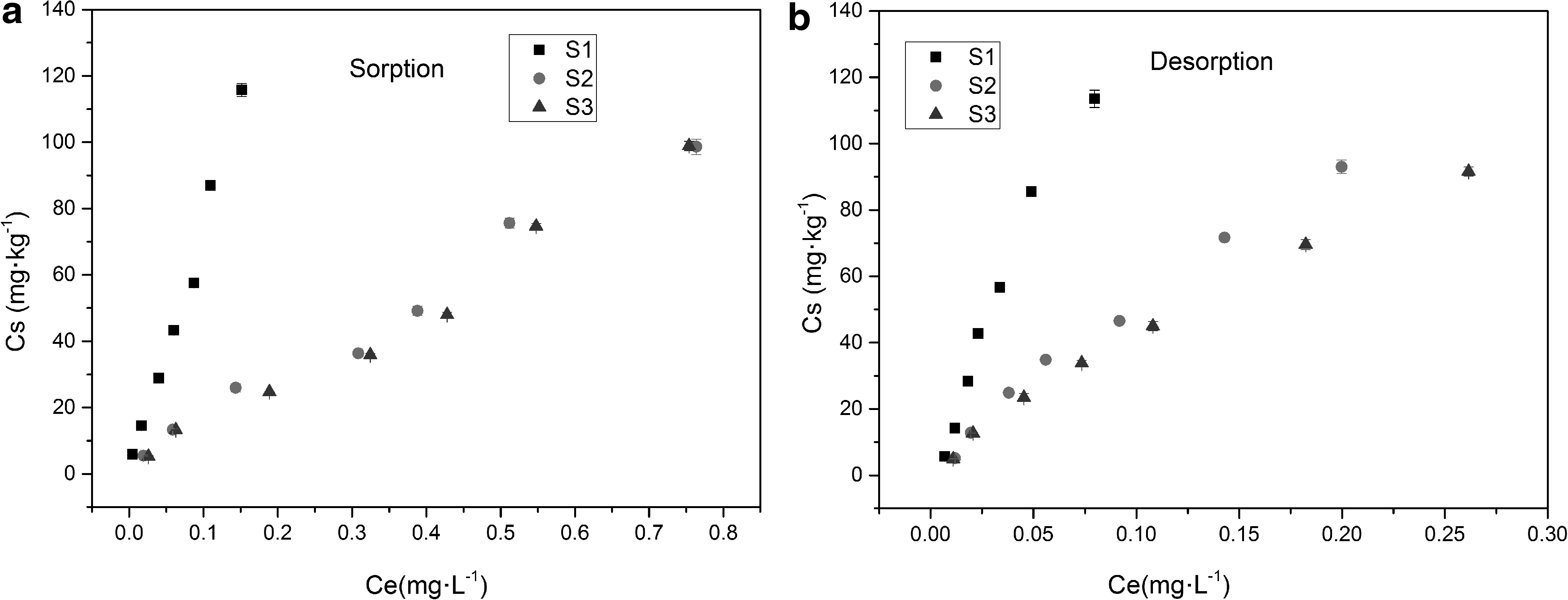
Isotherm studies of 4-NP on three soils.
Parameters of Sorption and Desorption of 4-Nonylphenol for Different Models
Kd (L/kg), Kf (mg1−n·Ln/kg) were partition coefficients.
The adsorption and desorption of 4-NP on soil in this study does not fit for Langmuir model.
4-NP, 4-nonylphenol.
In the adsorption experiments and desorption experiments, it showed that Kd (S1) > Kd (S2) > Kd (S3) and Kd-des (S1) > Kd-des (S2) > Kd-des (S3); Kd of the three different soils were 767.9 L/kg (S1), 133.5 L/kg (S2), and 128.0 L/kg (S3), respectively, and the content of the TOM in S1 was 19.8%, which was 4.15 times of that in S2 and S3. The same phenomenon was seen in the desorption experiments, proving again that TOM content played a main role in controlling the fate and transport of 4-NP in soils (Navarro et al., 2009; Yang et al., 2011). The Kd-des of the three soils were higher than Kd, implying more or less hysteresis (Kan et al., 1994; Düring et al., 2002). This might be owing to the strong bond between the organic matter and pollutant (Zeng et al., 2006). There existed a large amount of organic matter in soils, and organic matter presented a high sorption capacity, due to the molecular structure of organic matters (such as rubbery and glassy type carbon). 4-NP molecules in the solution could have been efficiently bonded with alkyl C by the way of hydrophobic interaction (Li et al., 2011) (Table 3).
Hysteresis Factors of 4-Nonylphenol on Three Soils
Kd (L/kg) was sorption partition coefficient. Kd-des (L/kg) was desorption partition coefficient.
The Koc of 4-NP on the three reclaimed water-irrigated soils were 4.47 × 10⁴ L/kg for S1, 1.78 × 10³ L/kg for S2 and 2.04 × 10³ L/kg for S3 (Table 4), respectively. According to McCall et al. (1980), 4-NP was limited to migrate to deep soil.
Koc of 4-Nonylphenol on Three Soils
A lot of researches have been carried out on the Koc of 4-NP. The Koc of 4-NP on sediments in New York Gulf (Ferguson et al., 2001), Australian ocean sediments (Ying et al., 2003), and Spanish rivers (Navarro et al., 2009) were 2.45 × 10⁵, 3.98 × 10⁴, and 1.35 × 10⁴–4.9 × 10⁴ L/kg, respectively. In suspended particles in a Canadian (Sekela et al., 1999) or in Tianjin and Shenyang rivers (Hou et al., 2006), the Koc were 1.91 × 10⁵ and 1.32 × 10⁵ L/kg, respectively. However, the Koc of a German terrestrial soil (Düring et al., 2002), Heilongjiang black soil (Wang et al., 2011), and an Iberian Peninsula agricultural planting soil (Milinovic et al., 2015) were 9.33 × 10³, 3.70–4.33 × 10³, and 6.92 × 10³–1.10 × 10⁴ L/kg, respectively. It can be seen that sediment and suspended particles had higher sorption of 4-NP than field soils. In this study, the Koc of 4-NP on S1 was 4.47 × 10⁴ L/kg, which was similar to researches of suspended sediments and particles in river, whereas the Koc of 4-NP on S2 and S3 were at 10−3, which was similar to aforementioned researches of agricultural soils. This was related to the TOM content in soils, for TOM in S1 was much more than that in S2 and S3 (Table 1). And maturity and structure of organic matter in soil also played an important role. The higher the maturity of the organic matter, the more the sorption of HOCs on soil (Khalaf, 2003; Li et al., 2012).
Environmental factors on sorption
S1 and S2 were selected to study the different environmental factors (pH, temperature, concentration of Ca2+, HA, and FA in soil) on the sorption of 4-NP, because the characteristics of S2 and S3 were similar, so the difference in sorption and desorption behavior between S2 and S3 was little. In addition, 4-NP111, as the most estrogenic isomer, was selected to study the sorption and desorption behavior.
pH
Figure 3 shows the sorption of 4-NP and 4-NP111 on soils at different pHs. Obviously, S1 had a higher sorption capacity of 4-NP than S2. Kd of 4-NP and 4-NP111 were 833.9 and 762.2 L/kg for S1 and 246.5 and 143.3 L/kg for S2, respectively, at pH3, which was higher than that at pH7 and pH11. The sorption of 4-NP and 4-NP111 on soils decreased with increasing pH, which was consistent with previously reported results (Bautista-Toledo et al., 2005; Soni and Padmaja, 2014). The reason for this change is that 4-NP and 4-NP111 were deprotonated when the solution pH was approaching to their dissociation constants (pka), which enhanced the electrostatic interaction between the pollutants and soils by converting molecules into ions (Yoon et al., 2003). As the soil surface was negatively charged, the electrostatic repulsion between 4-NP and soil increased under the alkaline condition, resulting in a decrease in sorption capacity. But the decrease extents were different. For S1, at pH7, the Kd of 4-NP and 4-NP111 decreased by 7.9% and 59.11%, respectively, compared with pH3, whereas Kd of 4-NP and 4-NP111 decreased by 29.44% and 36.57%, respectively, at pH11 compared with pH7. For S2, at pH7, the Kd of 4-NP and 4-NP111 decreased by 48.1% and 64.34%, compared with pH3, and Kd of 4-NP and 4-NP111 decreased by 64.45% and 38.75%, respectively, at pH11 compared with pH7.
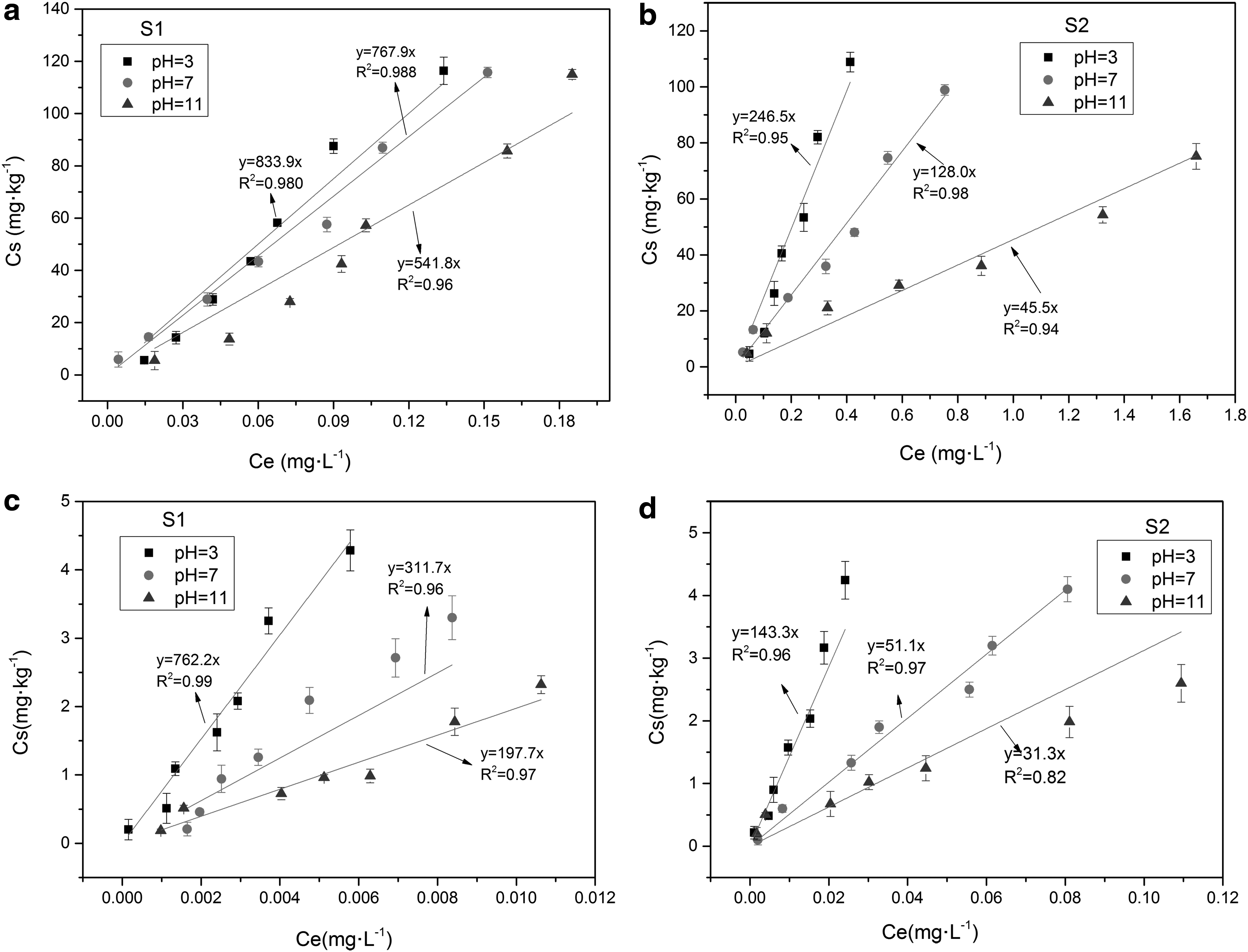
In this study, Kd of 4-NP111 were all smaller than that of 4-NP. The sorption of 4-NP on soil is not only related to TOM but also depends on the structures of the isomers. The alkyl chain of 4-NP111 is a relatively symmetrical structure (Supplementary Data S2), which is less polar than that of other 4-NP isomer, so it was weakly hydrophilic, and more easily adsorbed on the soil. The sorption of 4-NP isomers has also been studied previously. Düring et al. (2002) found that 4-n-NP had a Koc value of 7.9 × 10⁴ L/kg on soils, which is eight times higher than the Koc of the branched 4-NP. The Koc of 4-n-NP in sediments from Ebro River was 4.0 × 10³–4.9 × 10⁴ L/kg (Navarro et al., 2009), which all indicated that the capacity of the sorption of 4-NP depends on the structures of the isomers.
Temperature
As shown in Fig. 4, Kd for 4-NP on S1 was 974.3 L/kg at 5°C. At 25°C and 45°C, it decreased by 21.18% and 37.54%, respectively. For 4-NP111, at 5°C, Kd on S1 was 586.4 L/kg. When the temperature were 25°C and 45°C, Kd decreased by 46.85% and 50.89%, respectively. Kd for 4-NP on S2 was 143 L/kg at 5°C. At 25°C and 45°C, it decreased by 10.49% and 24.48%, respectively. For 4-NP111, at 5°C, Kd on S2 was 123.4 L/kg. When the temperature were 25°C and 45°C, Kd decreased by 58.27% and 75.61%, respectively. It can be seen that the sorption of 4-NP and 4-NP111 on soils all decreased with increasing temperature, which was similar to the results of previous studies (Yang et al., 2011; Wang et al., 2014). But it is obvious that the effect of temperature on 4-NP111 was greater than that of 4-NP (Table 5).

Sorption of 4-NP and 4-NP111 on soils under different temperatures.
Thermodynamic Parameters of 4-Nonylphenol Adsorbed on Soil at Different Temperatures
With increasing temperature, the sorption of 4-NP and 4-NP111 decreased. This was related to the thermodynamics. Oepen et al. (1991) studied the sorption calorific values of various forces and concluded that the sorption of pollutants on soil was the result of the interaction of oxygen bonds, van der Waals forces, and dipole bonds. It can be seen from Table 5 that ΔH at each temperature was <0, indicating that the sorption of 4-NP on soil was an exothermic process. And the exothermic process was not conducive to a positive reaction with the increasing temperature, resulting in a decrease in the sorption capacity. And ΔS > 0, which indicated that the sorption of 4-NP on the soil reduced the degree of disorder.
Concentration of Ca2+
The Kd of 4-NP was 463.3 L/kg for S1 at the concentration of 0 M Ca2+, which were 65.75% and 72.27% less than that of 0.01 M Ca2+and 0.2 M Ca2+, respectively. The Kd of 4-NP was 116.2 L/kg for S2 at a concentration of 0 M Ca2+, which were 9.22% and 79.28% less than that of 0.01 M and 0.2 M Ca2+, respectively. The Kd of 4-NP increased with the concentration of Ca2+. 4-NP111 followed the same trend (Fig. 5).
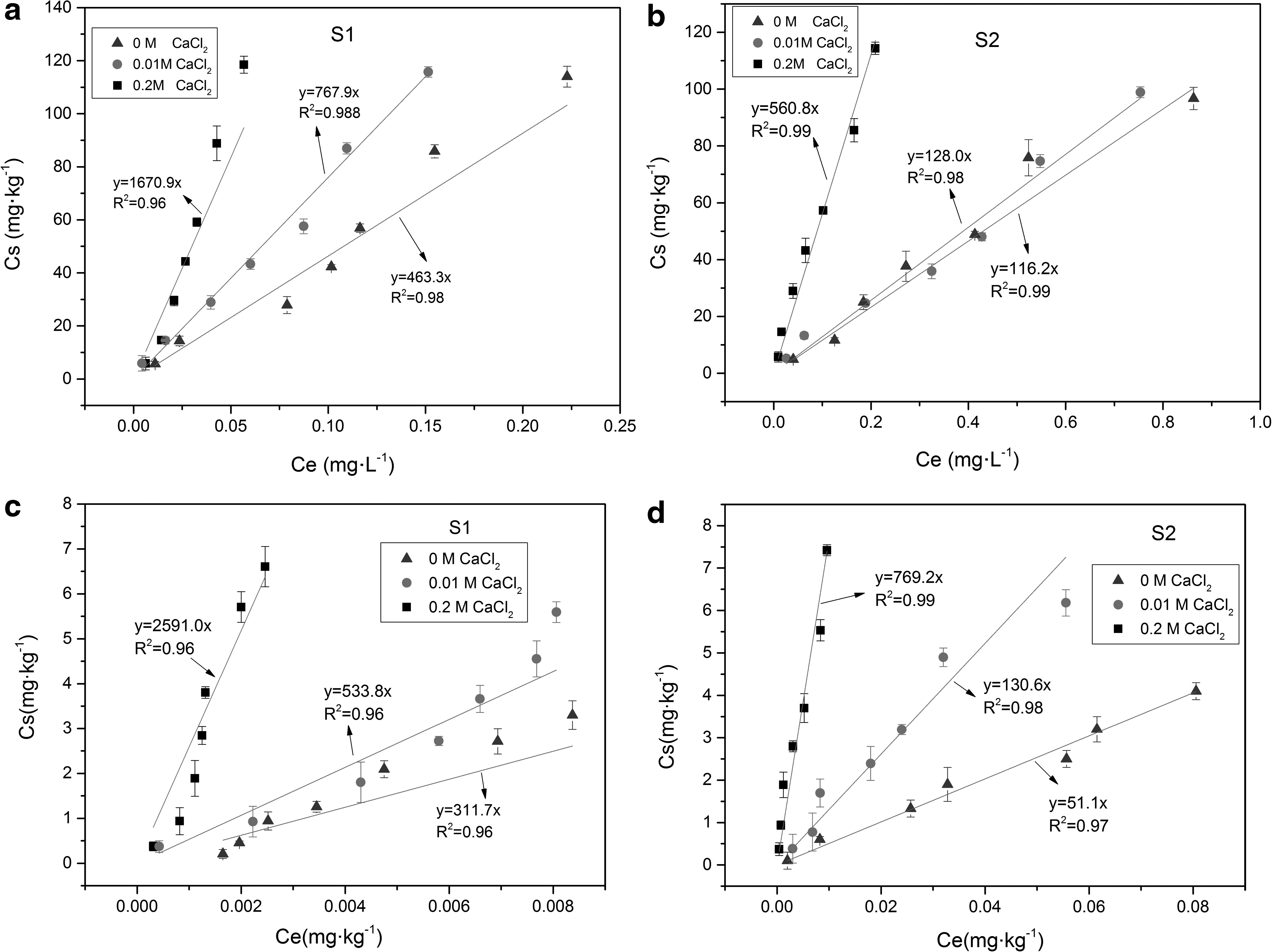
Sorption of 4-NP and 4-NP111 on soils under different concentrations of Ca2+.
The sorption capacity of 4-NP and 4-NP111 increased gradually as the Ca2+concentration increased, which was mainly owing to the increased ionic strength of the soil solution destroying the stable double layer structure of soil particles. This allowed more active sites to be exposed on the surface of the soil particles, increasing the ability of soil particles to adsorb contaminants (Yang et al., 2011). At the same time, as a result of the salting-out effect of the cation, the solubility of the contaminants and organic matter in water is reduced, thereby in reverse increasing their hydrophobicity and enhancing the sorption capacity of the soil (Spark and Swift, 2002). In addition, the bridging effect of Ca2+ also plays a role in promoting sorption (Choi and Lee, 2017), because polymers may be formed. When the concentration of Ca2+ was 0.01 or 0.2 M, organic matter may polymerize with Ca2+, and the polymers can offer more sites for the sorption of 4-NP, which leads to an increasing sorption of 4-NP.
All of the Kd of 4-NP111 were less than that of 4-NP except Kd at the concentration of 0.2 M Ca2+. And at the concentration of 0.01 M Ca2+ for S2, the Kd of 4-NP111 was also more than that of 4-N, but it was almost the same. This indicated that cations played a complicated effect on the sorption of pollutants, and this needs a further study between the structure of 4-NP111 and concentrations of Ca2+ in the soil.
Contribution of HA in soil to the sorption
Experiments for the contribution of HA to the sorption were carried out (Fig. 6). The Kd of 4-NP on S1 and S2 were 767.9 and 133.5 L/kg, respectively (Table 2). While the Kd of 4-NP on S1and S2 with HA removed were 62.62 and 9.16 L/kg (Fig. 6), which were 8.15% and 6.86%, respectively, less than those of the soils with HA. So the contribution of HA was 91.85–93.14% to the sorption of 4-NP. The same phenomenon was shown for the sorption of 4-NP111. This again indicated that HA played a main role on the sorption of 4-NP and 4-NP111. HA is rich in amino, carboxyl, carbonyl, methoxy, phenolic hydroxyl, and other reactive functional groups, which can interact with 4-NP, thus increasing the sorption. Studies have shown that sorption of 4-NP on soil was significantly positively correlated with organic matter content (Xu et al., 2008; Li et al., 2011). Liao et al. (2014) reported that the sorption of 4-NP by the high temperature treated soil was much less than that of the original soil, because the organic matter has been removed.

Sorption of 4-NP and 4-NP111 on soils without HA. HA, humic acid.
But the Kd of S2 without HA was greater than that of S1. This was related to the SSA. SSA of S2 was 2.80 times larger than that of S1 (Table 1). In addition to organic matter, SSA of the soil also affects the sorption of the pollutants: the larger the SSA is, the greater the sorption capacity is.
FTIR spectra analysis
The soils before and after sorption of NP characterized by FTIR-650 are shown in Fig. 7a and c. HA before and after sorption of NP are shown in Fig. 7b and d. Infrared bands in Fig. 7a and c were not normalized, for there were no characteristic peaks. Figure 7b and d were normalized with respect to the C-O stretching at the band of 1,220–1,230 cm−1. The peak area of absorptions arising from a particular species is directly proportional to the concentration of that species. Thus, in principle, it was possible to determine the concentration of multiple analytes from a single spectrum (Jackson et al., 1997). Shifts in peak positions, changes in bandwidths, intensities, and band area values of the infrared bands were used to obtain valuable structural and functional information about interactions between the matters (Melin et al., 2001; Severcan et al., 2005).
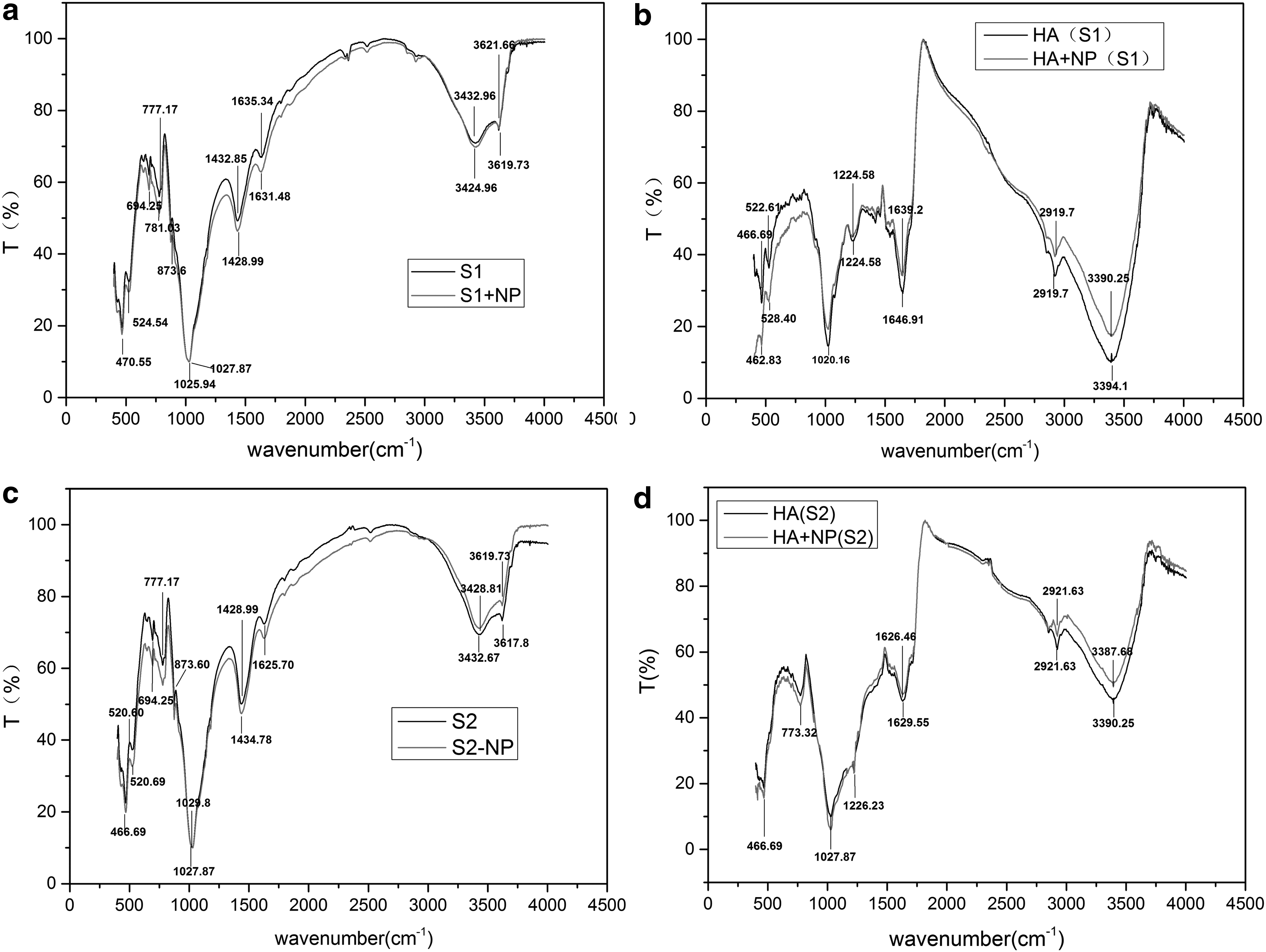
FTIR spectra of sorption of NP and NP111 on soils and HA.
There were no big differences of spectra for S1 and S2 after NP adsorption. But spectra between soils and HAs were of differences. Compared with (Fig. 7a), there occured many peaks at the bands of 1,020–1,600 cm−1 in (Fig. 7b), indicating that there were more proportion of aromatic carbon in HA (S1) than S1. Although HA (S1) was extracted from S1, the aromatic carbon peaks in S1 were maybe disturbed by other impurities. Both in (Fig. 7a) and (Fig. 7c), bands at 693,777 and 873 cm−1 regions were caused by phenyl and phenol groups, such as phenyl C-P or C-H bending vibration; Bands at 1,428 cm−1 were caused by scissor bending vibration; bands at about 3,400 and 3,600 cm−1 in (Fig. 7a, c) were O–H in phenol, ethanol, etc., and/or amide and amine N–H. But there were no big differences of spectra for S1 and S2 after NP adsorption, because the amounts of NP adsorpted on the soil were little, <140 mg/kg at the normal conditions. There is only one functional group (O–H) in NP that may react with the organic matters in soil, but some studies indicated that the capacity of O–H is low (Wan, 2012). That is another reason why the differences before and after sorption NP was not significant. In all the four figures, there were bands at about 1,620–1,640 cm−1, and they were the stretching vibration of C = O incorporated in amide groups of proteins or C = C stretching vibration in aromatic ring alkenes. Compared with Fig. 7a and c, bands at 1,224.58 and 1,226.23 cm−1 were observed in Fig. 7b and d, suggesting C-O or C-O-C, C-CO-C stretching vibration, indicating alcohol, phenol, ether, ester, or acid anhydride in HA. In Fig. 7b and d, bands at 2,919.7 and 2,921.63 cm−1 were caused by stretching vibration of C-H of hydrocarbon compound and N-H of amine or acid amides, indicating that there was more aliphatic C–H bands in HA than in soil (especially CH2 groups) (Melin et al., 2000). And it was obvious that the increase of T at the trough of the peaks in HA were much greater than that in soils at brands of 2,900–4,000 cm−1 after sorption of NP. And it has been shown that the strengthening of the van der Waals interactions in the alkyl chains caused a decrease of nCH2 (Mimeault and Bonenfant, 2002), suggesting that NP molecules can form stronger interactions with cavities of HA. This result meant that a greater quantity of NP may be entrapped within the cavity of HA. The alkyl chains of NP seemed to form van der Waals interactions with the cavity of HA.
Conclusion
This study, based on laboratory batch experiments, had been successful in studying the kinetics and thermodynamics of sorption and desorption of 4-NP and 4-NP111 on reclaimed water-irrigated soils. The results indicated that the sorption and desorption process of 4-NP on soil included two main stages: fast and slow. Linear model could better explain the thermodynamics sorption and desorption of 4-NP on soils. The sorptions of 4-NP and 4-NP111 on soils decreased with increasing pH and temperature because of the protonation and thermodynamics, whereas the sorption capacity increased with the concentration of Ca2+. For all the environmental factors, the sorption capacity of 4-NP111 was less than 4-NP except at the different concentrations of Ca2+. The effect of Ca2+ was complicated, and the interaction between Ca2+ and components of the soil need futher study. HA played a significant role on the sorption. The FTIR spectra suggested that a quantity of NP may be entrapped within the cavity of HA. But there is no clear variation before and after the sorption of NP on soil, and that was maybe because of the disturbance of matrix in the soil. The greater complicated sorption behavior of 4-NP on terrestrial soil would arise with long-term sewage irrigation.
Footnotes

References
Supplementary Material
Please find the following supplemental material available below.
For Open Access articles published under a Creative Commons License, all supplemental material carries the same license as the article it is associated with.
For non-Open Access articles published, all supplemental material carries a non-exclusive license, and permission requests for re-use of supplemental material or any part of supplemental material shall be sent directly to the copyright owner as specified in the copyright notice associated with the article.
