




Abstract
Abstract
By using soft reactive grinding route, mesoporous Mn–Co oxides were fabricated in the presence or absence of polyvinylpyrrolidone (PVP), respectively. Physicochemical properties of samples were characterized and their catalytic properties for degradation of methylene blue (MB) solution with H2O2 were evaluated. Results show that PVP-assisted Mn–Co mesoporous oxide displayed a quadrangled structure just with particle size of 4.6 nm and possessed high specific surface area of 166.8 m2/g. The degree of MB degradation reached 100% in 270 min over PVP-assisted Mn–Co oxide, whereas it only reached 86.6% over template-free catalyst. Excellent catalytic ability was ascribed to the increased specific surface area. Kinetics was also studied for the MB degradation over Mn–Co oxides. The activation energy was calculated to be 43.0 kJ/mol for the PVP-assisted Mn–Co oxide, higher than that of the PVP-free Mn–Co catalyst (23.4 kJ/mol). Quenching tests showed that hydroxyl radical played a dominant role in MB degradation. The current template-assisted solid-state synthetic technique is quite facile and effective to prepare other nanomaterials with improved physicochemical properties and catalytic performances.
Introduction
Large amounts of organic wastewater containing hazardous and toxic organic compounds are discharged with the development of industry, which have lead to many environmental problems. Organic dyes released from textile industries, pharmaceutical products, and cosmetics are water pollutants. To remove these pollutants, tremendous efforts have been dedicated to minimize the hazardous effects. Advanced oxidation processes have received significant attention recently to eliminate organic pollutants because of their effectiveness. The strong oxidizing potential of advanced oxidation technique is based on the production of reactive radicals, such as hydroxyl radical (HO·) generated from H2O2.
The most popular solid catalysts are based on transition metal oxides (Cheng et al., 2014; Das and Bhattachayya, 2014; Kim et al., 2015; Li et al., 2015; Thankachan et al., 2017). Among them, cobalt-based oxides show increasing interest. Shi et al. (2012) studied the grapheme oxide-supported Co3O4 as heterogeneous catalysts for peroxymonosulfate (PMS) to oxidize Orange II. Raja et al. (2007) used a polytetrafluoroethylene film-supported Co3O4 to oxidize organic dyes under light irradiation. Cheng et al. (2013) reported that the SnO2–Co3O4 hybrids possessed stronger photocatalytic degradation property for methylene blue (MB) under irradiation of UV light. Reda et al. (2017) reported that Co3O4–ZnO exhibited an elevated photocatalytic activity in the degradation of Rhodamine B under UV irradiation. However, the mentioned improved performance of cobalt-based catalysts had only been gained in the presence of light irradiation or by the use of stronger oxidant (PMS). Warang et al. (2012) found that MB was unable to degrade only in the presence of Co3O4 catalyst and H2O2. Edla et al. reported that MB dye was completely degraded only when Co3O4 catalyst is exposed to visible light in the presence of H2O2 (Edla et al., 2015). Xiao et al. (2008) also revealed that MB could not be decomposed using the H2O2+Co3O4/Bi2WO6 system without visible light irradiation.
Mn-doped Co3O4-based catalysts have attracted wide attention because of their wide application, including catalysts, batteries, and supercapacitors (Barakat, 2013; Perera et al., 2015; Ahn et al., 2016). However, so far as we know, only a few studies have been conducted on the degradation of organic dyes; Yao et al. (2015) recently reported that the CoxMn3-xO4 catalyst had excellent catalytic activity in PMS oxidation in Rhodamine B degradation for the first time. It was worth noting that almost no catalytic activity was found over Mn–Co mixed oxides once the PMS was replaced by H2O2 (Yao et al., 2015). Therefore, it is apparent that the catalytic performance of cobalt-based catalyst to degrade dye solution is limited only in the presence of catalyst and H2O2. In view of these circumstances, the more active cobalt-based oxide catalyst system is still expected to be developed.
It is well known that the preparation methods often greatly affect the catalytic activity of the resultant catalysts (Wolski et al., 2017). In our previous research, we found that soft reactive grinding (SRG) is an effective technique for metal oxides synthesis (Liu et al., 2009, 2012, 2013, 2017a, 2017b). To the best knowledge of the authors, the synthesis of Mn–Co through polyvinylpyrrolidone (PVP)-assisted solid-state method and the good activity in degradation of MB with H2O2 have not been reported in the literature. Herein, for the first time, we synthesized the Mn–Co mixed oxides through a grinding route with the presence and absence of PVP and evaluated their catalytic activities in the degradation of MB using H2O2 as the oxidant.
Experimental Section
Preparation of catalysts
The dry SRG technique to synthesize Mn–Co mixed oxide with Mn/(Mn+Co) of 30% is as follows: a certain amount of MnCO3 and basic 2CoCO3·3Co(OH)2·H2O (cobaltous carbonate), premixed with oxalate, were put in an agate jar (50 mL) with agate balls. Then, PVP (molecular weight = 200,000) was added into the mixture with 10% weight. The weight ratio of agate balls to raw material powders was kept as 10:1. The ball-grinding condition was set to 2 h in a QM-1SP04 planetary mill with the mill speed of 600 rpm. Then the precursor was calcined at 300°C in air for 4 h. The final catalyst was designated as MnCo30–PVP. For comparison, the MnCo30 catalyst was prepared similarly without the addition of PVP.
Characterization of catalysts
The XRD patterns of the powders were recorded on a Bruker AXS D8 Avance X-Ray Diffractometer using nickel filtered Cu Kα radiation. To detect the mesoporous structure and the Brunauer-Emmett-Teller-specific surface area of the catalysts, adsorption–desorption of nitrogen at liquid nitrogen temperature were determined on a Micromeritics TriStar 3000 instrument. The TEM images were recorded on a JEOL 2011 electron microscope operated at 200 kV. The SEM was carried out on a Philips XL 30 microscope.
Catalytic activity measurement
As a model reaction, the degradation of MB in water with the catalysts was investigated. The catalytic reaction was performed in a glass flask (250 mL) at 35°C, which contained as-prepared catalyst (20 mg) and 100 mL of aqueous MB solution (10 mg/L). Once 20 mL of H2O2 (30 wt.%) was added to the mentioned solution, the reaction begins immediately under static condition. The progress of degradation progress was monitored by spectrometric measurements using a 722-UV spectrophotometer. The absorption peak was chosen as 665 nm. The degradation degree was calculated according to the formula (A0 − A)/A0, where A0 is the absorbance value at t = 0 and A is the absorbance value at a given reaction time. Kinetic study was performed under similar reaction conditions using 10 mg catalyst powder as catalyst.
Results and Discussion
Characterization of catalysts
Figure 1 shows the XRD patterns of the Mn–Co oxides, only the spectral peaks of spinel phase of Co3O4 were observed. The average crystallite size of MnCo30–PVP sample calculated using the Scherrer equation was 4.6 nm, which is much smaller than that of PVP-free MnCo30 (10.6 nm), showing that the addition of surfactant suppressed the growth of crystal.
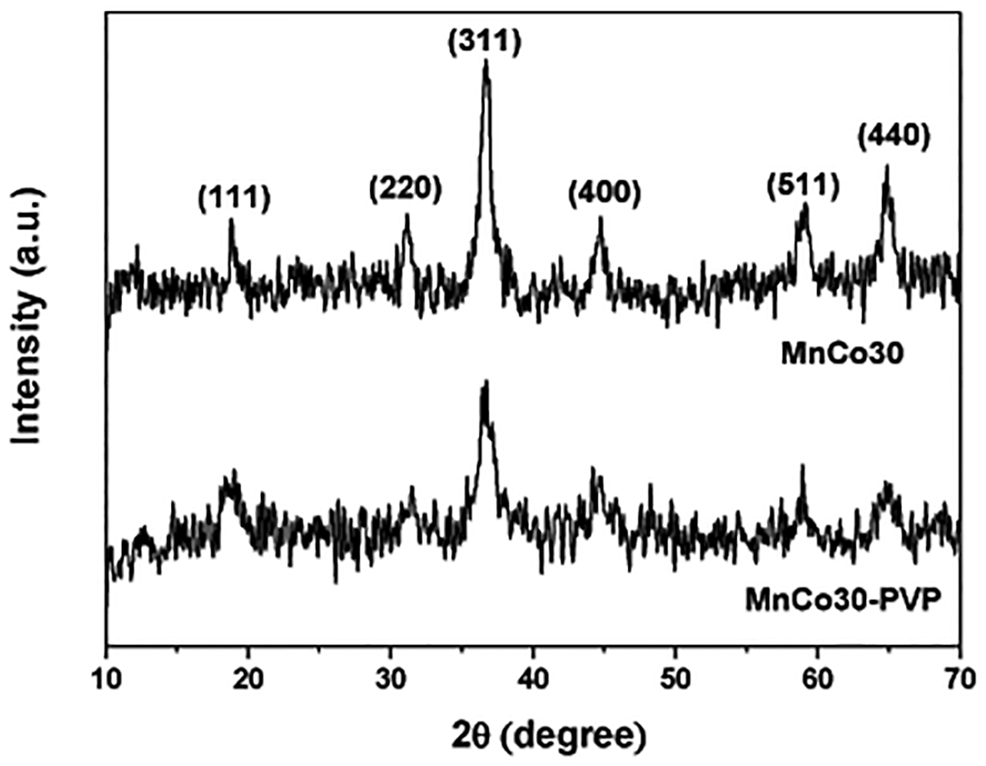
XRD pattern of as-prepared Mn–Co–O catalysts.
Figure 2 displays the SEM and TEM images of the MnCo30 and MnCo30–PVP samples. From the SEM images shown in Fig. 2a, the PVP-free MnCo30 sample exhibits irregular spherical structure. Once using the PVP as a template, cubes formed on a large scale (Fig. 2e). The TEM analysis as shown in Fig. 2b–d further clarifies that the MnCo30 sample is composed of irregular spherical particles with the particle size of 10 nm. However, MnCo30–PVP is composed of smaller quadrangular nanoparticles (Fig. 2f–h). Therefore, PVP that served as a molecular soft template could be effective in controlling crystals growth to form quadrangular morphology (Cao et al., 2008).
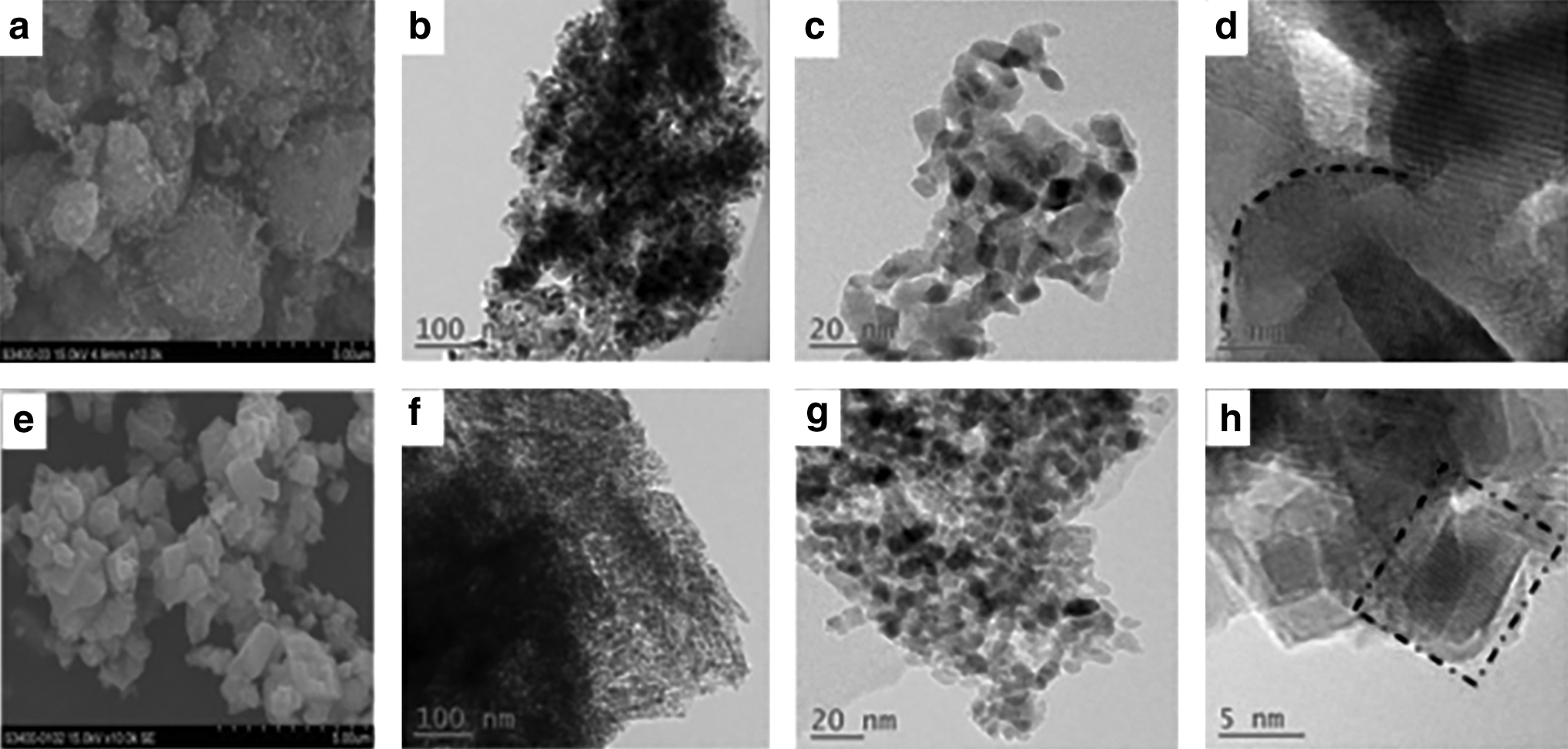
SEM
The N2 adsorption/desorption isotherms of the catalysts are shown in Fig. 3. The corresponding pore size distribution diagrams are also shown in Fig. 3. Each isotherm shows a type IV with a H3 hysteresis loop, indicating the mesoporous structure of catalysts (Chen et al., 2016). For PVP-free MnCo30 catalyst, a narrow distribution centered at 5.4 nm was found. The pore size of MnCo30–PVP showed a unique bimodal distribution at ∼2.6 and 4.1 nm. The generation of pore structure will facilitate the diffusion of reactants and then promote the activity. In addition, the BET surface area for MnCo30–PVP was measured to be 166.8 m2/g, much higher than that of MnCo30 (98 m2/g). It is worth noting that the addition of PVP as template can significantly enlarge the specific surface area of sample.
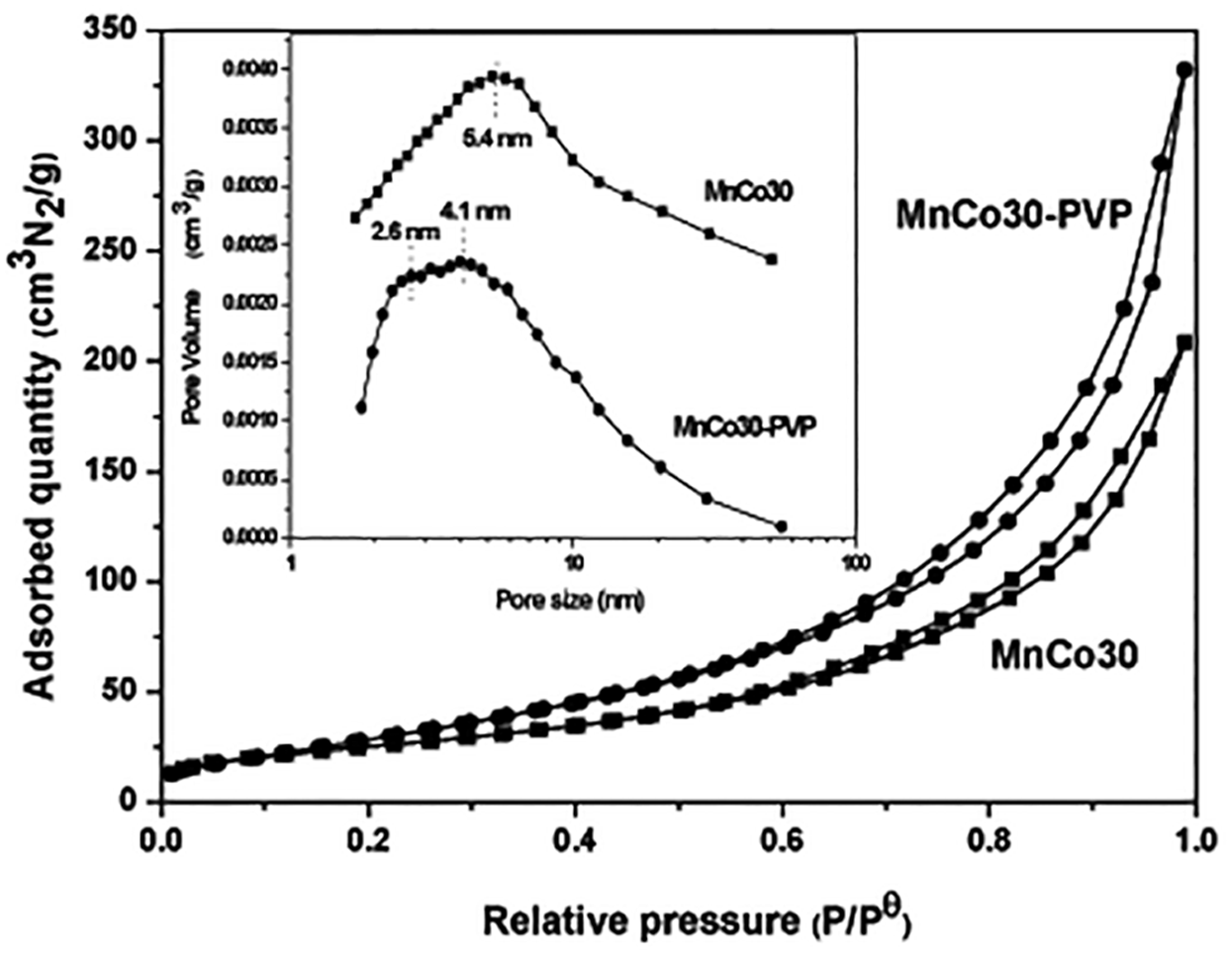
Nitrogen adsorption–desorption isotherms and pore size distribution (inset) of the Mn–Co catalysts.
Catalytic activities of catalysts
The catalytic activities of catalysts in the oxidation of MB using H2O2 as the oxidant were studied. As shown in Fig. 4, the degree of degradation reached 100% in 270 min over MnCo30–PVP catalyst, whereas it only reached 86.6% over MnCo30. What is noteworthy is that MB was hardly decomposed using Co3O4-based metal oxides as catalysts in the presence of H2O2 (Xiao et al., 2008; Warang et al., 2012). In addition, the activity is superior than some popular CuO catalysts reported in the literature (Srivastava et al., 2011; Yang and He, 2011; Mageshwari et al., 2015). The excellent degradation activity over MnCo30–PVP was first reported and could be ascribed to the enhanced surface area. A large surface area is well known to afford more active sites for the adsorption of contaminants and promote the formation of hydroxyl radicals, which explained the obtained experimental results. The current template-assisted solid-state synthetic technique is effective to prepare other nanomaterials with improved physicochemical properties and catalytic performances.
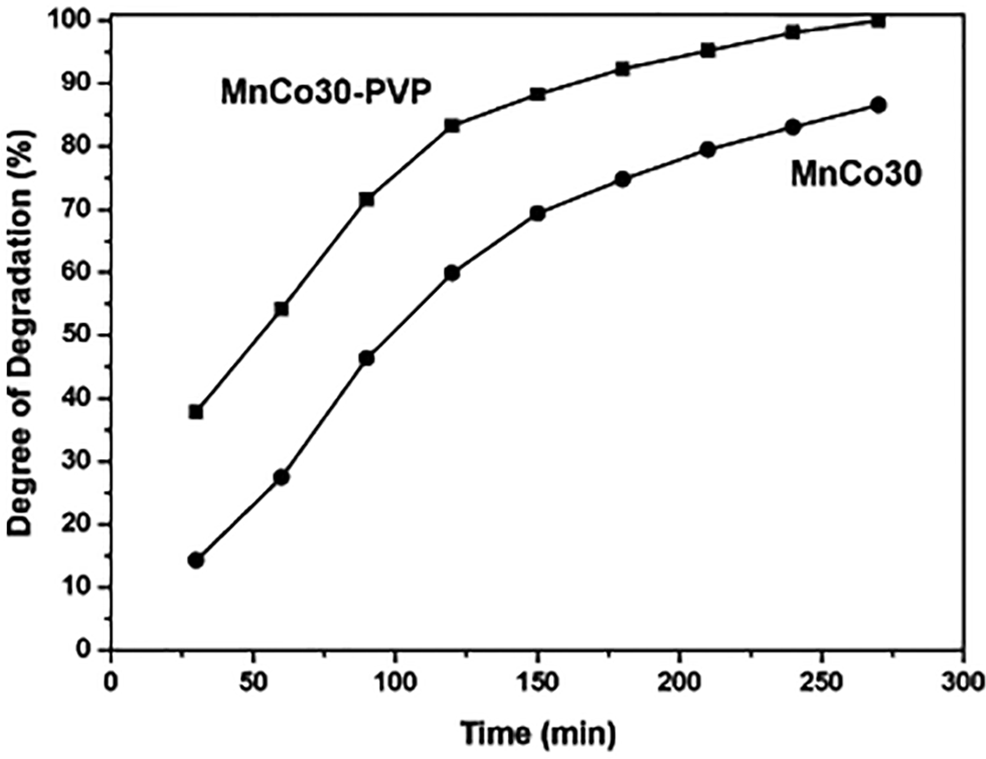
Time profiles of methylene blue degradation. Reaction conditions: MB (10 mg/L, 100 mL), H2O2 (30 wt.%, 20 mL), catalysts (20 mg). MB, methylene blue.
Kinetic studies of catalysts
Kinetic studies were studied for the degradation of MB. Figure 5 shows an assumption of first-order kinetics, a plot of ln(C0/C) versus time for MB degradation using MnCo30 or MnCo30–PVP as catalyst. C0 represents the initial concentration of the MB solution before reaction, and C is the concentration of MB solution at different reaction times. The excellent linear correlation (R2 = 0.990 or 0.996) fitted from the initial 5 h data, suggesting that the oxidation reaction can be regarded as the first-order kinetics with respect to MB. The slope of the linear line indicates that the first-order rate constant of k is 0.00714 min−1 over MnCo30 catalyst. The rate constant of k is 0.0123 min−1 for MnCo30–PVP catalyst. Clearly, the catalytic performance of MnCo30–PVP is superior than that of MnCo30, which is consistent with the order of their BET surface areas. The excellent activity of the grinding-derived Mn–Co mixed metal oxides is further demonstrated in Table 1, where a rough comparison of the rate constant for MB degradation with a variety of transitional metal oxide catalysts has been made.
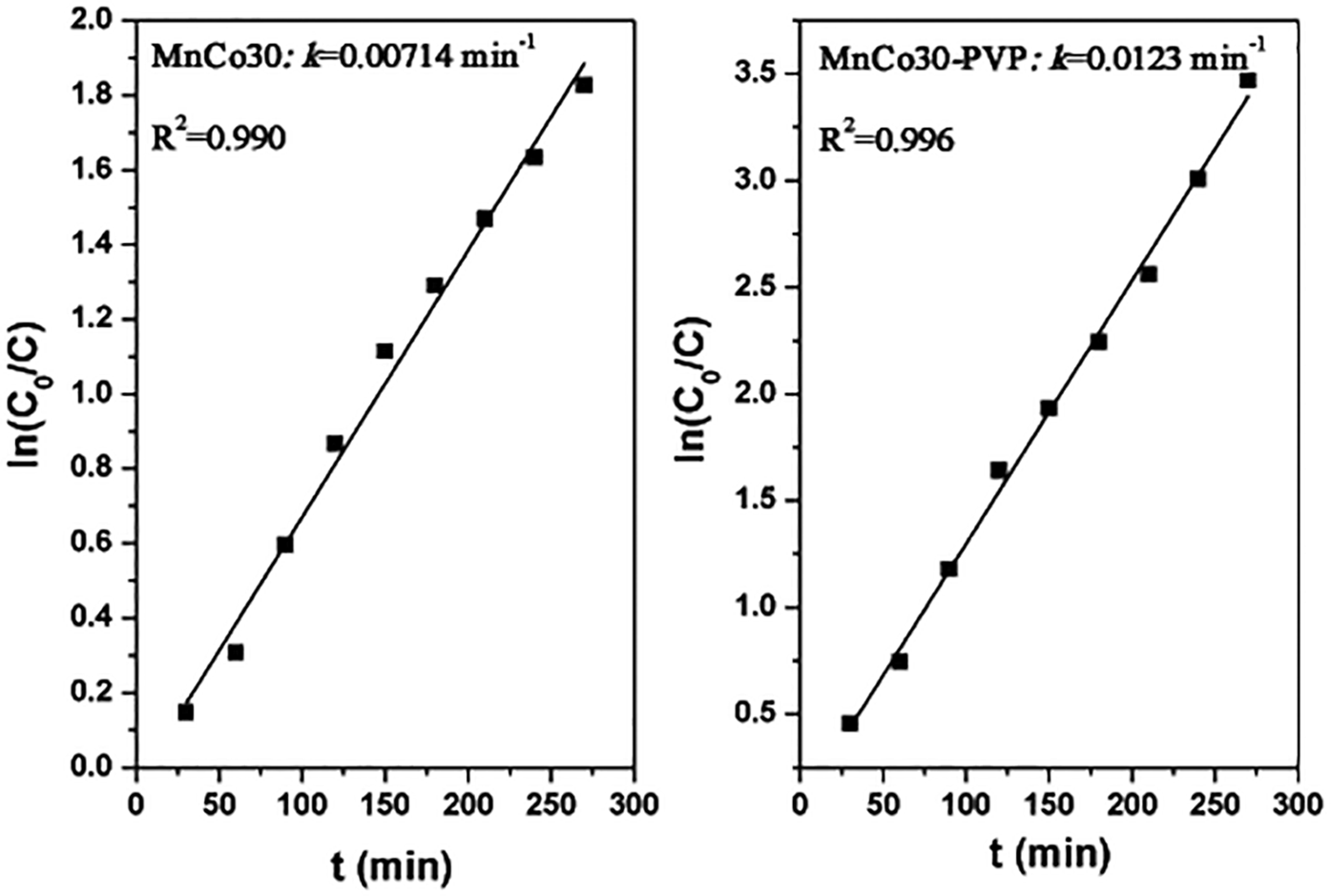
First-order kinetic plot of ln(C0/C) versus time of MB (10 mg/L, 100 mL) degradation in presence of H2O2 (30 wt.%, 20 mL) and catalyst (10 mg) at 35°C.
Comparison of Rate Constant for Methylene Blue Degradation Over Grinding-Derived Mn–Co Mixed Oxides with CuO Catalysts Reported in the Literature
MB, methylene blue.
The rate constant was measured at six different temperatures (25°C, 30°C, 35°C, 40°C, 45°C, and 50°C). Figure 6 shows the graph of rate constant versus reaction temperature, which shows a direct linear relationship between lnk and 1/T. The activation energies were calculated to be 23.4 and 43.0 kJ/mol for MnCo30 and MnCo30–PVP, respectively. The activation energy over MnCo30–PVP was higher than that of MnCo30, showing that additional energies are essential for PVP-assisted Mn–Co oxide. The relatively low Ea for MnCo30 indicates the slow degradation kinetics even when extra energy is supplied (e.g., at elevated temperatures). The difference of activation energies may be attributed to different oxidant mechanism of dye degradation. As to the kinetic study of organic dyes degradation, several activation energy investigations have been reported and summarized in Table 2. It can be seen that Mn-Co mixed oxides have lower Ea values than Mn3O4 (Yao et al. 2013), Ferrocene (Wang et al. 2014), and Co nanoparticles (Mondal et al. 2015). The Mn-Co oxides have similar apparent activation energy values with CuO catalysts (Liao et al. 2015; Zhu et al. 2013).
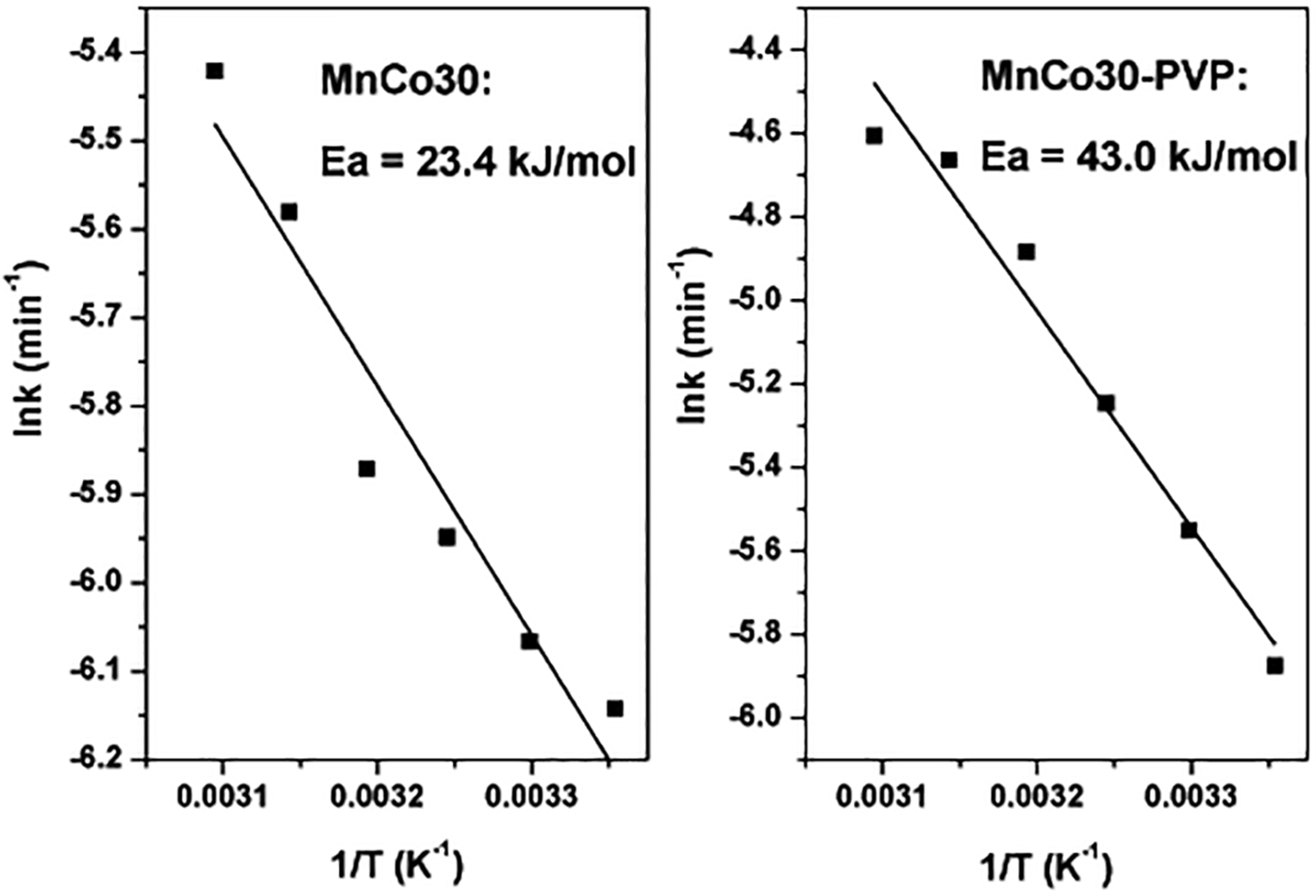
Plots of lnk versus 1/T in the temperature range of 25–50°C over MnCo30 or MnCo30–PVP catalyst. Reaction conditions: MB (10 mg/L, 100 mL), H2O2 (30 wt.%, 20 mL), catalysts (10 mg).
Comparison of Activation Energy of Various Catalysts for Dye Degradation
MB degradation mechanism in presence of Mn–Co oxides and H2O2
The changes of MB concentration with time in aqueous solution under different operating conditions were performed and summarized in Fig. 7. The results show that the contribution of adsorption by MnCo30–PVP catalyst is negligible. Chemical oxidation efficiency by H2O2 alone is also limited. Approximately 100% MB degradation can be achieved in 270 min in the presence of MnCo30–PVP catalyst and H2O2. Therefore, an important chemical reaction occurs in the process of MB degradation in the presence of catalyst and H2O2.
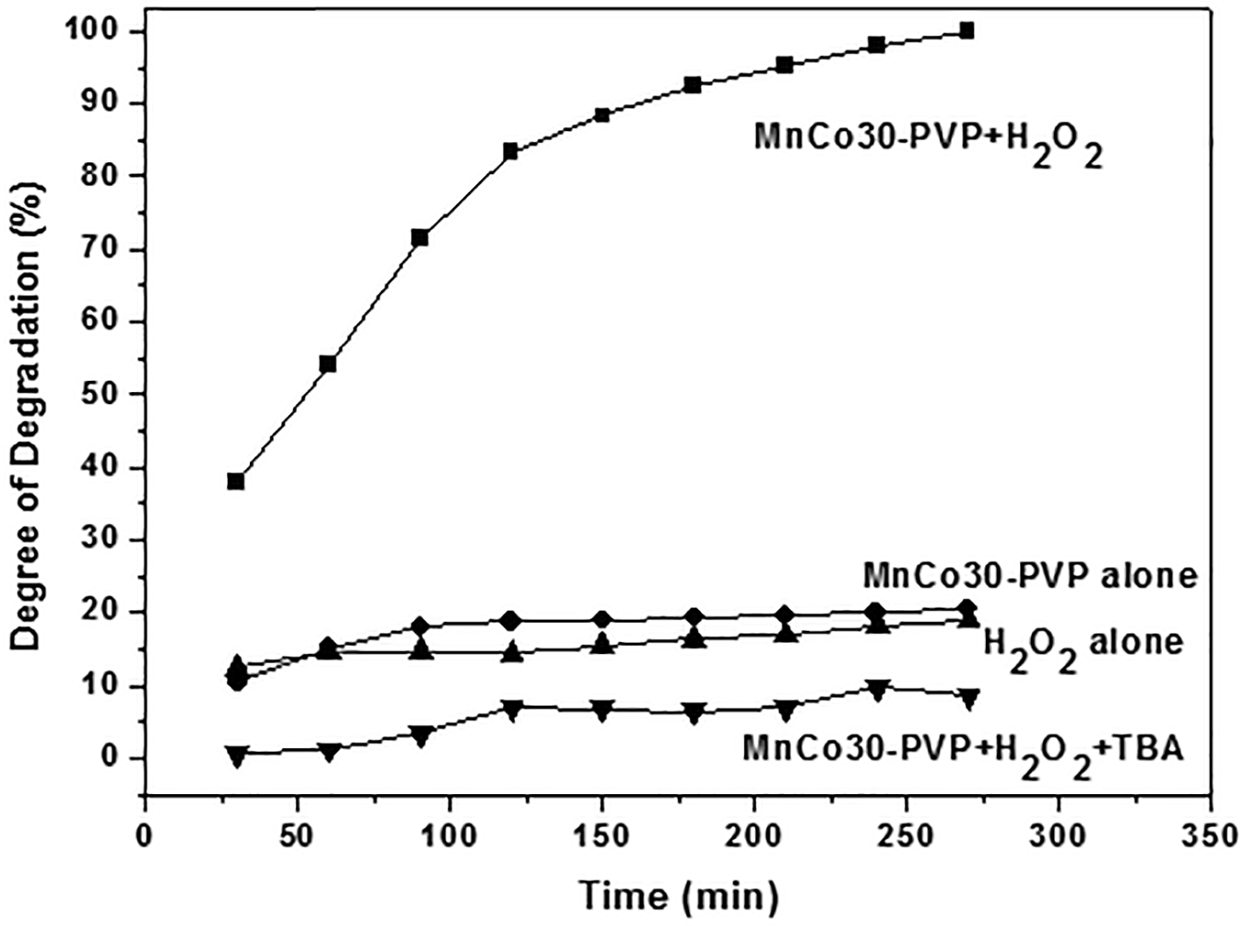
Removal of MB in aqueous solution under different operational modes. Reaction conditions: MB (10 mg/L, 100 mL), H2O2 (30 wt.%, 20 mL), MnCo30–PVP (20 mg), TBA (20 mL). TBA, t-butyl alcohol.
The dye degradation mechanism is widely accepted that H2O2 and dye are first adsorbed on the catalyst surface. Subsequently, H2O2 is decomposed by the catalyst into some reactive free radical species, such as HO· or HOO·. These species have high oxidative ability and cause destructive oxidation of the organic dye. Finally, small molecules are desorbed from the surface of catalyst, and the catalyst is regenerated. Quenching test involving addition of t-butyl alcohol (TBA) was performed to investigate the dominant radical species formed during H2O2 activation by the catalyst. Figure 7 shows that addition of TBA greatly hinders MB degradation. The degradation efficiency dramatically decreased to 8.6% in 270 min, which is far less than the 100% value. This implies that the hydroxyl radicals (HO·) generated by H2O2 activation by MnCo30–PVP are the dominant free radical species in MB degradation.
It is interesting to note that the addition of PVP during process of synthesis of Mn–Co mixed oxide led to a 41.2% increase in the specific surface area and 42.0% increase in the first-order rate constant of k. Therefore, a higher surface area of catalyst increases the number of adsorption sites and provides more active sites for activating hydroxyl radicals generated by H2O2 and, therefore, leads to a significant enhancement in the oxidation degradation rate.
Reusability of MnCo30–PVP catalyst
The reusability of MnCo30–PVP catalyst in MB degradation was investigated. The used catalyst was recovered, washed with distilled water, dried at 60°C, and calcined at 300°C for 1 h. Then the regenerated catalyst was immediately used in the next run. Figure 8 shows the recycling performance of MnCo30–PVP catalyst. It shows that MB degradation decreased from 100% to 92% in the fifth run, indicating a high stability of the MnCo30–PVP catalyst.
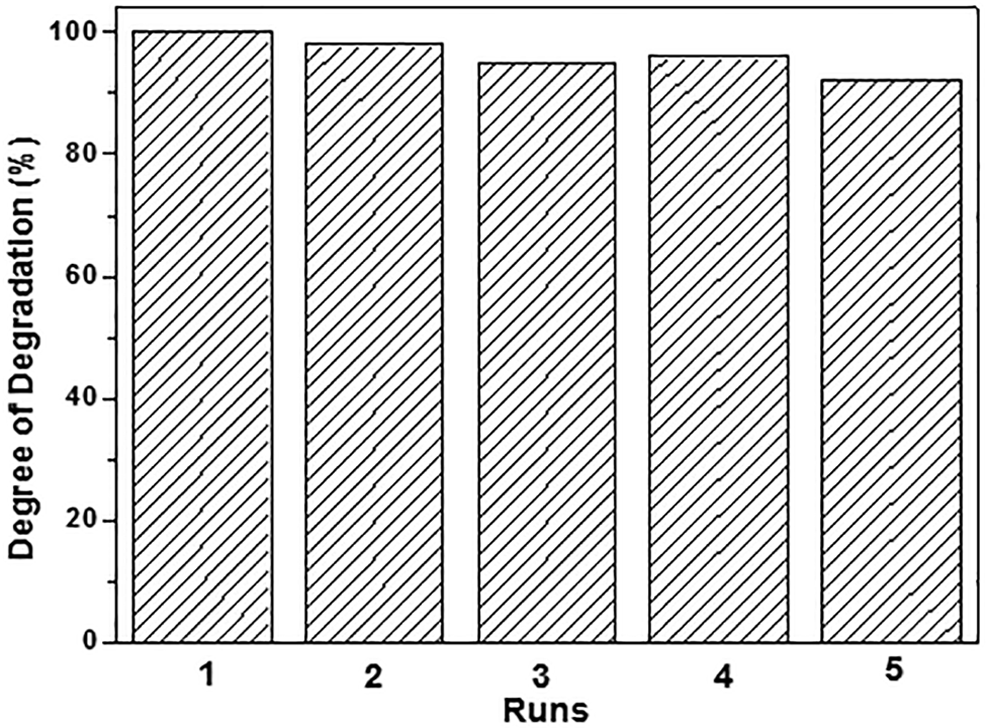
Recycling performance of MnCo30–PVP catalyst for MB degradation. Reaction conditions: MB (10 mg/L, 100 mL), H2O2 (30 wt.%, 20 mL), MnCo30–PVP (20 mg).
Conclusions
In summary, quadrangular Mn–Co mixed oxide with large BET surface area and mesoporous texture was fabricated through a surfactant-assisted SRG technique. The as-prepared sample exhibited excellent performance for degradation of MB with H2O2. Quenching tests showed that hydroxyl radical played a dominant role in MB degradation. The results indicate the potential application of template-assisted solid-state synthetic strategy to fabricate nanomaterials with improved physicochemical properties and catalytic performances.
Footnotes
Acknowledgments
This study was supported by the National Natural Science Foundation of China (Grant Nos. 21403093 and 21563014) and the Foundation of Jiangxi Educational Committee (Grant Nos. GJJ160411, GJJ160378, and GJJ170278).
Author Disclosure Statement
No competing financial interests exist.