




Abstract
Abstract
Nutrient removal and recovery (NRR) technology was investigated using green sorption media with respect to 4 distinct clay and iron filing quantities in the media matrix. Column study tests were conducted to analyze distinct percentage clay contents (2%, 4%, 6%, and 8%) and iron filing contents (2.5%, 5%, 7.5%, and 10%) from a total of seven sorption media recipes. Through this effort, the optimal recipe of iron filing-based green environmental media (IFGEM) for stormwater runoff treatment was determined to be composed of 2% clay, 83% sand, 10% tire crumb, and 5% iron filing content by volume within the NRR technology hub. Removal efficiencies of total nitrogen (TN) and total phosphorus (TP) as well as ammonia recovery potential were thoroughly investigated and realized. Parameters such as NOx, ammonia, oxidation/reduction potential, pH, and dissolved oxygen were recorded for integrative analysis. Higher ammonia removal efficiency (98%) was observed for the influent condition (0.9 mg/L NO3−, 0.3 mg/L PO43−) with the lowest nutrient concentrations, while higher TN (94%) and TP (92%) removal was achieved for the influent condition (1.7 mg/L NO3−, 0.7 mg/L PO43−) with the largest nutrient concentration. The synergistic effect of clay and iron filing within the optimal recipe of IFGEM was realized for final justification of possible nutrient recovery.
Introduction
Urban runoff can carry heavy metals (Cu, Pb, As, Zn, CR, and Ni) (Wu and Zhou, 2009), total suspended solids (Shammaa et al., 2002; Surbeck et al., 2006), nutrients (nitrogen and phosphorus), fecal bacteria (Roesner et al., 2001), and pesticides, and discharge them into natural water bodies. Groundwater pollution resulting from nutrients, pesticides, and pathogens in stormwater infiltration has also been documented (Bucheli et al., 1998; Clark and Pitt, 2007; Weiss et al., 2008). The effects of nutrients on water quality can be detrimental, including eutrophication and harmful algal blooms (O'Reilly et al., 2012a; Jones et al., 2015; Chang et al., 2016). Developing efficient and effective nutrient removal and recovery (NRR) technologies has been recognized as an important step towards sustainable water management. Extensive analyses of green sorption media applications for nutrient removal were conducted in the last two decades (Güngör and Ünlü, 2005; Chang et al., 2010; Xuan et al., 2010; Erickson et al., 2012; Wen et al., 2018). The best management practice for preventing nutrient contamination and reducing the impact of eutrophication on receiving water bodies is the removal of the nutrients, such as nitrate and phosphorus, at their sources. Different types of green sorption media were thus invented to remove nutrients that could otherwise damage ecosystem integrity due to stormwater runoff at any landscape (Cho et al., 2009; Hossain et al., 2010; O'Reilly et al., 2012a).
The utilization of green sorption media to treat stormwater was recently introduced after sand filters failed to recover nutrients (Chang et al., 2010). Distinct types of media with different material compositions were tested for water quality control at different low-impact development facilities. Green sorption media, such as biosorption activated media (BAM) that utilizes waste recycling material, has been studied and proven cost effective for nutrient removal through a variety of laboratory and field tests. This media mix is composed of 85% poorly graded sand, 10% tire crumb (no metal contents), and 5% clay by volume and have been used to remove nutrients at various stormwater dry and wet ponds (O'Reilly et al., 2012b; Chang et al., 2018b). The efficient use of BAM for promoting nitrification and denitrification processes in stormwater treatment was confirmed by Chang (2011).
The benefit of the addition of iron to sand filter media for increased phosphorus removal was analyzed for distinct iron filing contents (Erickson et al., 2012). The iron filing in this media acts as an electron donor, contributing to nitrate reduction and phosphate adsorption. Nutrient removal can also be performed by a sorption media called iron filing-based green environmental media (IFGEM). The IFGEM acts as a unique sorbent for chemical species to physically and chemically react with the sorbates until an equilibrium is obtained. The media of IFGEM have demonstrated effective removal efficiencies and the recovery/reuse potential of nutrients under varying temperature conditions (Chang et al., 2018b). It has become a cost-effective alternative to treat point and nonpoint sources of nutrients.
Two types of IFGEM were previously created and analyzed using column studies. IFGEM-1 contained 96.2% fine sand and 3.8% ground iron filings by volume, while IFGEM-2 contained 80% sand, 10% tire crumb, 5% pure clay, and 5% ground iron filings by volume (Chang et al., 2018b; Wen et al., 2018). These two types of IFGEM were previously analyzed with respect to reaction kinetics, product microstructure, temperature effects, and species competition in nitrogen and phosphorus adsorption and removal. In these studies, the two green sorption media (IFGEM 1 and 2) have been effective in terms of removal efficiencies and recovery potential of nutrients, although removal efficiencies are not as high as expected (Chang et al., 2018b; Wen et al., 2018). The varying ratios of these components in IFGEM play different roles, but their synergistic effect is critical in NRR. The tire crumb, sand, and clay are the key factors for tuning the hydraulic conditions for the desired treatment effectiveness. When iron filing is added, the surrounding clay attracts nitrate onto the surface of iron, hence more intensive nitrate reduction reaction happens. The products are ammonia and ferrous iron, the former of which can be adsorbed by clay and the latter is able to precipitate the phosphorus. Both improve the nutrient recovery potential collectively. However, the composition of the optimal recipe remains unclear.
Parameters such as oxidation/reduction potential (ORP) will enhance the understanding of interactions between clay and ground iron filings in nutrient removal caused by the physicochemical properties of the green sorption media. Given the presence of iron filings in our media matrix composition and the existence of phosphorus in the influent, ORP can be a significant parameter to explain phosphorus adsorption by the iron particles due to the high-specific surface area (Zhou et al., 2005). ORP may impact, but not completely control, phosphorus adsorption (Zhou et al., 2005). Furthermore, ORP, dissolved oxygen (DO), and pH can be used collectively to indicate the oxidative and biological state of water streams (Ga and Ra, 2009; Hasan et al., 2010), and a similar approach can be implemented for stormwater runoff.
This study aims to determine the optimal recipe of IFGEM and its nutrient recovery potential via a suite of comprehensive column tests, which may be regarded as the second generation of NRR technology for advanced stormwater treatment. It primarily determines the optimum clay content and secondarily the optimum iron filing content by volume in sequence, given three tangible nutrient influent concentrations. The proposed iron filing-based green environmental media 3 (IFGEM 3 hereafter) is a newly developed media with a refined media recipe whose main constituents are sand, clay, tire crumb, and ground iron filing particles. The percent by volume of clay and ground iron filings in the IFGEM 3 mix was fine-tuned due to their role in nitrate and phosphorus removal in this study. The results obtained from the experiment may lead to the selection of the unique green sorption medium that best fits the necessary stormwater applications at the field condition.
The determination of the clay and iron filing percent content of IFGEM 3 may aid in real-world applications for stormwater and even wastewater treatment. Thus, this study seeks to answer the following three scientific questions. (1) What is the optimal percent of clay and iron filings by volume for different stormwater influent conditions? (2) What is the optimal recipe of IFGEM 3 for improving stormwater treatment and nutrient recovery potential with respect to varying influent phosphorus and nitrate concentrations? (3) Is there any leakage of iron ions from the iron filing aggregate of the proposed IFGEM 3 in the effluent? We hypothesize that a substantial increase of clay content may inhibit nitrogen and phosphorus removal by binding them to the iron filings in the media, preventing the chemical process from occurring, and an increase in iron filing content may enhance phosphorus removal until an equilibrium is reached.
Materials and Methods
Experimental setup
This study comprised a suite of fixed-bed column experiments developed to search for the optimum clay and iron filing contents by volume for three influent conditions. A total of seven distinct media were analyzed by varying the clay and iron filing contents systematically. Previously developed recipes of green sorption media, including IFGEM 1, 2, and BAM, were used for determining the range of clay and iron filing variation. A 2–8% clay and 2.5–10% iron filing content (by volume) was selected for variation. To understand the effect that clay and iron filing contents have on NRR, the experiment was divided into two parts (Fig. 1). First, the clay content was varied with constant iron filing content of 5% (Table 1); the iron filing content was then varied with fixed clay content determined from the first part of the experiment (Table 2). The influent conditions for both parts of this column study simulate field stormwater conditions at three phosphate and nitrate concentration levels.
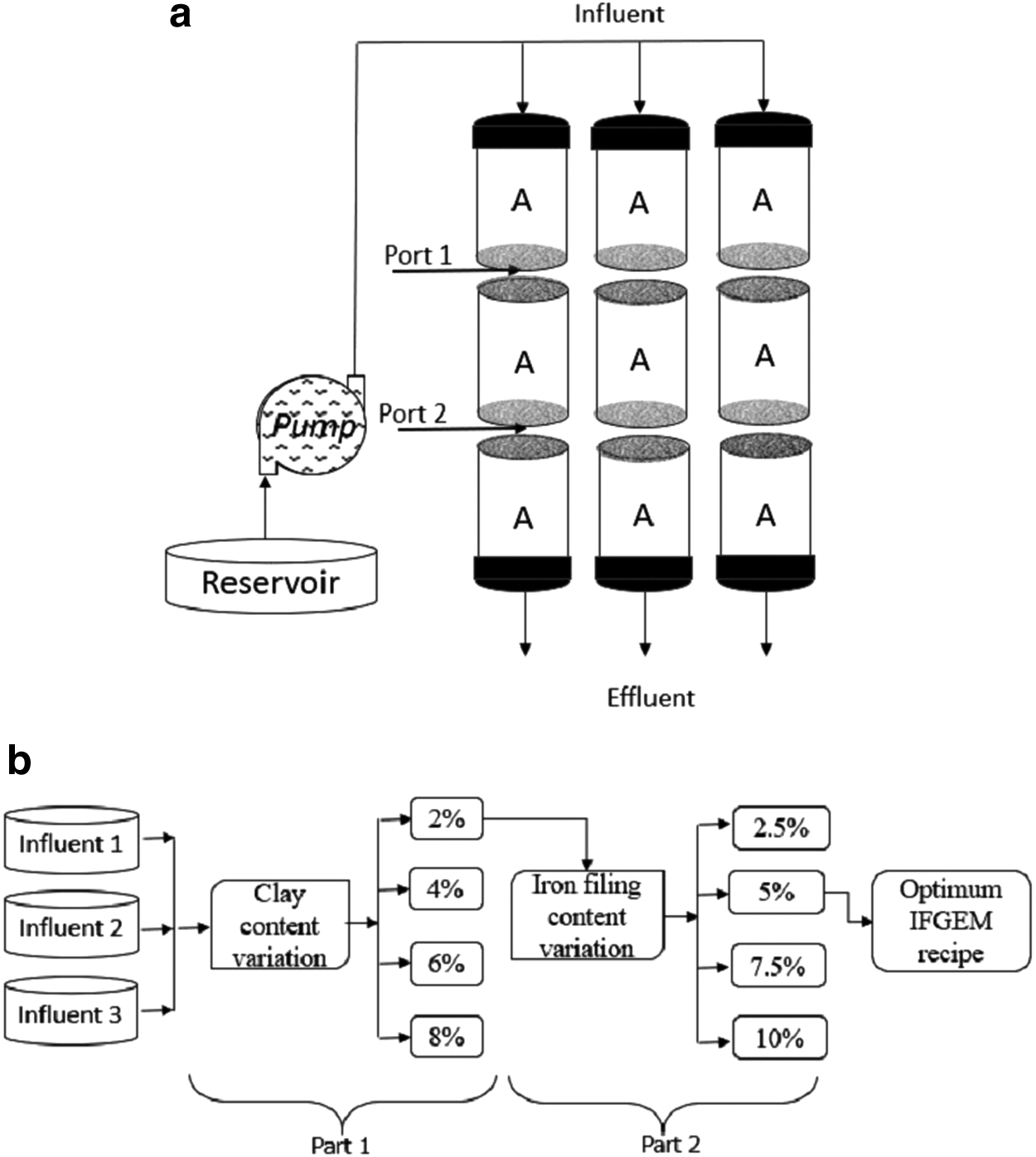
Composition of Iron Filing-Based Green Environmental Media 3 Recipes with Respect to Varying Clay and Sand Contents
IFGEM, iron filing-based green environmental media.
Composition of the Iron Filing-Based Green Environmental Media 3 Recipes with Respect to Iron Varying Filings and Sand Contents
Material characterization
The movement of water is affected by porous media characteristics. Saturated hydraulic conductivity (ks) describes the movement of a fluid through saturated porous spaces (Al-Kaisi et al., 2017). The saturated hydraulic conductivity enables the determination of the hydraulic residence time, and thus, it can impact the nutrient removal efficiencies by affecting the water contact time required for treatment. The hydraulic characteristics of the seven media with clay content variations are described in Table 3.
Characteristics of Iron Filing-Based Green Environmental Media Recipes for Clay Variation
Tire crumb is maintained constant at 10% (by volume) for the seven recipes.
Column study
Three PVC columns of 76.2 cm length and a diameter of 7.62 cm with three equivalent sections were utilized for the analysis of the four clay and iron filing variations by volume under the three distinct influent conditions (Fig. 1). The columns were divided into three 25.4 cm sections for sampling purposes. Dry media with varying clay content (Table 1) and iron filing content (Table 2) were packed in each column section. The bottom of each column section was sealed with a perforated cap to enable water to be distributed as it travels to the next column section. The space between each column section was sealed with parafilm to prevent the intrusion of outside sources. A bottom filter with a layer of pebbles was placed to prevent particles from escaping the column sections at each port (Hossain et al., 2010; Nilsson et al., 2013; Jones et al., 2015), while a layer of pebbles was placed at the top of each column section to aid in water distribution. The columns were flushed with tap water for ∼10 h to eliminate any substance present in the media before the addition of each dosed influent.
The influent consisted of distilled water spiked with nitrate and phosphate ISE (ion selective electrode) standard solutions to produce three influent conditions that simulate stormwater nutrient concentrations. The three influent conditions studied were 0.3 mg/L of phosphate and 0.9 mg/L of nitrate, 0.5 mg/L of phosphate and 1.3 mg/L of nitrate, and 0.7 mg/L of phosphate and 1.7 mg/L of nitrate. The distinct influents were continuously pumped from the reservoir to the inlet in a downward flow from top of the columns using peristaltic pumps at a flow rate of 8 mL/min during a period of 3 h, after which samples were collected at the influent, effluent, port 1, and port 2. This procedure was conducted for both clay and iron filing variations.
Sample collection and analysis
Triplicate samples were collected at the influent and at each column section corresponding to port 1, port 2, and the effluent for the three scenarios (i.e., influent conditions). These samples were analyzed for ammonia, total phosphorus (TP), DO, pH, and ORP, while total nitrogen (TN), nitrate, nitrite, and iron were analyzed from the influent and effluent ports. The analyses were performed in the University of Central Florida laboratory within 24 h of collection (Jones et al., 2015; Wen et al., 2018). Furthermore, effluent iron concentrations were analyzed to determine the presence of iron leakage from the iron filing component of IFGEM 3. Table 4 summarizes the parameter and instrumentation used for analysis of the laboratory tests.
Parameters and Instrument for Column Study
DO, dissolved oxygen; ORP, oxidation/reduction potential.
Criteria for the selection of optimum recipe
The criteria for selecting the optimal recipe with respect to clay content followed by iron filing content (by volume) are presented in continuation. The performance of each media in NRR was analyzed. A screening process was conducted to determine adequate clay and iron filing contents based on two factors, including (1) average nutrient removal efficiency and (2) potential nutrient recovery. Although ammonia and phosphorus removal within the distinct depths of the green sorption media is desired, the TN, TP, and ammonia removal in the effluent was utilized as the selection criterion as it best represents the envisioned stormwater treatment by the green sorption media. Furthermore, a high nutrient recovery, mainly ammonia recovery, in the media can indicate a better potential reuse for green sorption media in applications such as fertilizer substitution. Overall, the analyzed parameters described below will aid in determining the optimal clay and iron filing contents. They include the following: (1) TP percent recovery, (2) TN percent removal, (3) ammonia percent removal, (4) phosphate recovery, (5) ammonia recovery potential, and (6) iron leakage in the effluent. Although the highest ammonia, TP, and TN removal for each influent condition may not be consistent with the same media component, the overall nutrient removal for the influent conditions was assessed.
Statistical analysis
A two-way analysis of variance (ANOVA) was used to determine if there were any statistical differences between columns for nutrient removals at each influent condition. The clay and iron filing variations for each influent condition were compared to establish whether there were any significant differences in TP, TN, and ammonia removals. The variations in the clay and iron filing contents and the influent conditions were the two required independent variables. For this analysis, there were three null hypotheses (Ho) and three alternative hypotheses (H1). If the p-value is less than α (0.05), the null hypothesis can be rejected (Ananda and Weerahandi, 1997), favoring the alternative hypothesis. The three null hypotheses were as follows: (1) Ho: the average nutrient removals for clay/iron filing variations are the same (H1: the average nutrient removals for clay/iron filing variations are different), (2) Ho: the average nutrient removals from the varying influent conditions are the same (H1:the average nutrient removals from the influent conditions are different), and (3) Ho: there is no interaction between influent conditions and clay/iron filing variations in the columns (H1: there is interaction between influent conditions and clay/iron filing variations in the columns).
Results
Clay content variation
Minimal ammonia concentrations were detected at the influent, where the average ammonia concentrations at each port demonstrated an increase in ammonia concentration in port 1 before decreasing from port 2 to the effluent (Fig. 2). Thus, the ammonia concentration in port 1 was used as the initial concentration to determine ammonia removal at the subsequent ports. However, according to the increase in ammonia concentrations at port 1 and port 2, ammonia generation can be presumed. The ammonia concentrations at each port can be related to ammonia adsorption and recovery potential within the section of the column. Sections with higher ammonia removal have greater ammonia adsorption and thus a better potential for ammonia recovery from the media.

Average ammonia concentration for individual sample ports 2% clay content (10% tire crumb, 5% iron filing, 83% sand by volume), 4% clay content (10% tire crumb, 5% iron filing, 81% sand by volume), 6% clay content (10% tire crumb, 5% iron filing, 79% sand by volume), and 8% clay content (10% tire crumb, 5% iron filing, 77% sand by volume) for influent condition of
The effluent TN, TP, and ammonia removal differences among the recipes with 2%, 4%, 6%, and 8% clay content in each influent condition are presented in Table 5. For the three influent conditions, 2% clay content outperformed the remaining three clay contents in ammonia and TN removal. In general, the ammonia percent removal decreased from the 2% to the 8% clay content (Fig. 3). Furthermore, the highest TP removals for influent concentrations 1, 2, and 3 were achieved by 4%, 6%, and 2% clay, respectively.
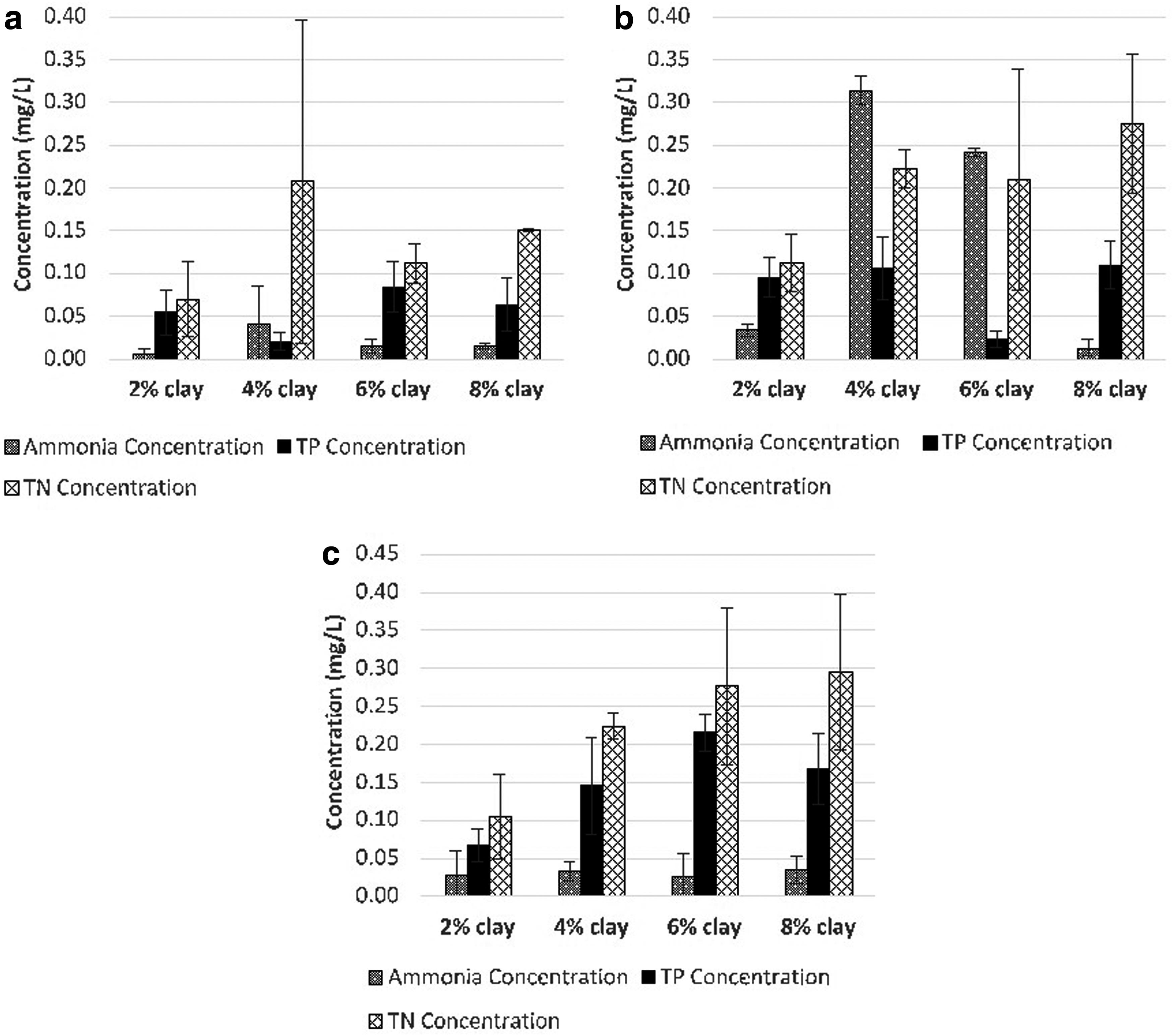
Effluent ammonia, TP, and TM concentration for clay variation for
Summary of Effluent Nutrient Removal for Clay Variation
Bold values mark the highest % removals for the four clay contents.
TN, total nitrogen; TP, total phosphorus.
The last parameter of analysis was the iron ion concentration in the effluent. The minimal amount of iron leakage for the first and third influent conditions was present in the 2% clay content, followed by 4%, 6%, and 8% clay content (Fig. 4). In the second influent condition, the 4% clay content had the largest iron concentration in the effluent, while 2% clay content had the smallest effluent iron concentration. The difference observed in effluent iron concentrations from the different clay variations can be attributed to the abundance of iron filing particles in a specific region in the columns, which was translated into the effluent iron concentration measured, as it is expected that the uniformity and homogeneity of the media mix can affect the collected results. In addition, the change in ORP, DO, and pH for each sample port can aid in understanding the reaction potential with respect to nutrient removal (Table 6). As the pH values are all within the range of the neutral condition, DO and ORP measurements vary from 8 to 11 mg/L and from 200 to 340 mV, respectively, across different scenarios of varying clay contents. These parameters can be utilized to evaluate water quality. In general, the ORP values in the effluents are much smaller than those in the influents, which indicates the possible achievement of equilibrium in the end of the column.
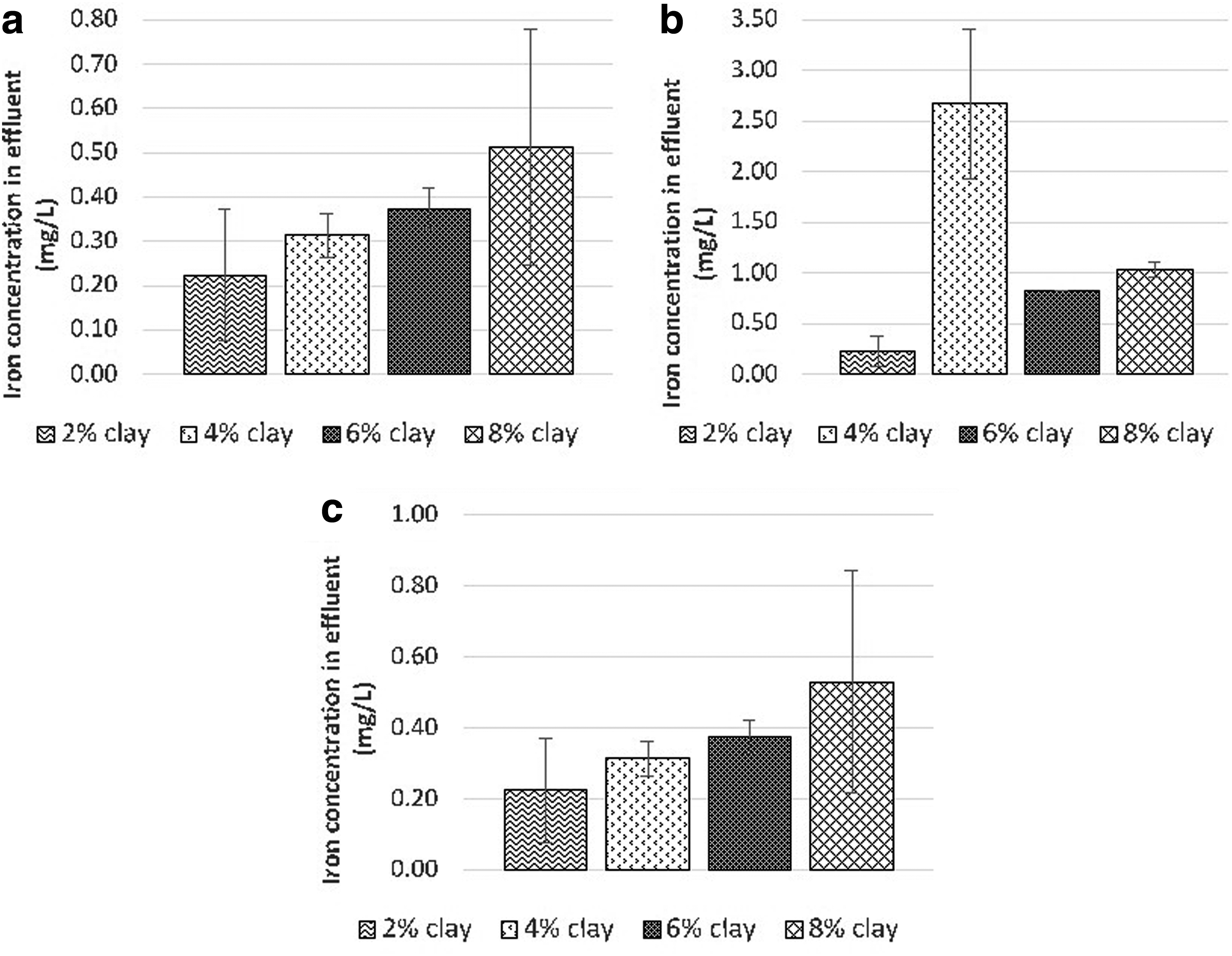
Effluent iron concentration for 2% clay content, 4% clay content, 6% clay content, and 8% clay content for influent condition
Average Measurements for Oxidation/Reduction Potential, Dissolved Oxygen, and pH for Clay Content Variation
Iron filing content variation
The impact that iron filing content in green sorption media has on ammonia, TN, and TP removal percent was explored. Overall, ammonia concentration increased greatly in port 1 but decreased from port 2 to the effluent (Fig. 5). However, an exception was noted in the 7.5% iron filing content, where a small increase in ammonia concentration in the effluent was seen for the first influent concentration. Furthermore, an increase in ammonia generation in the effluent port was observed with each increase in iron filing content.
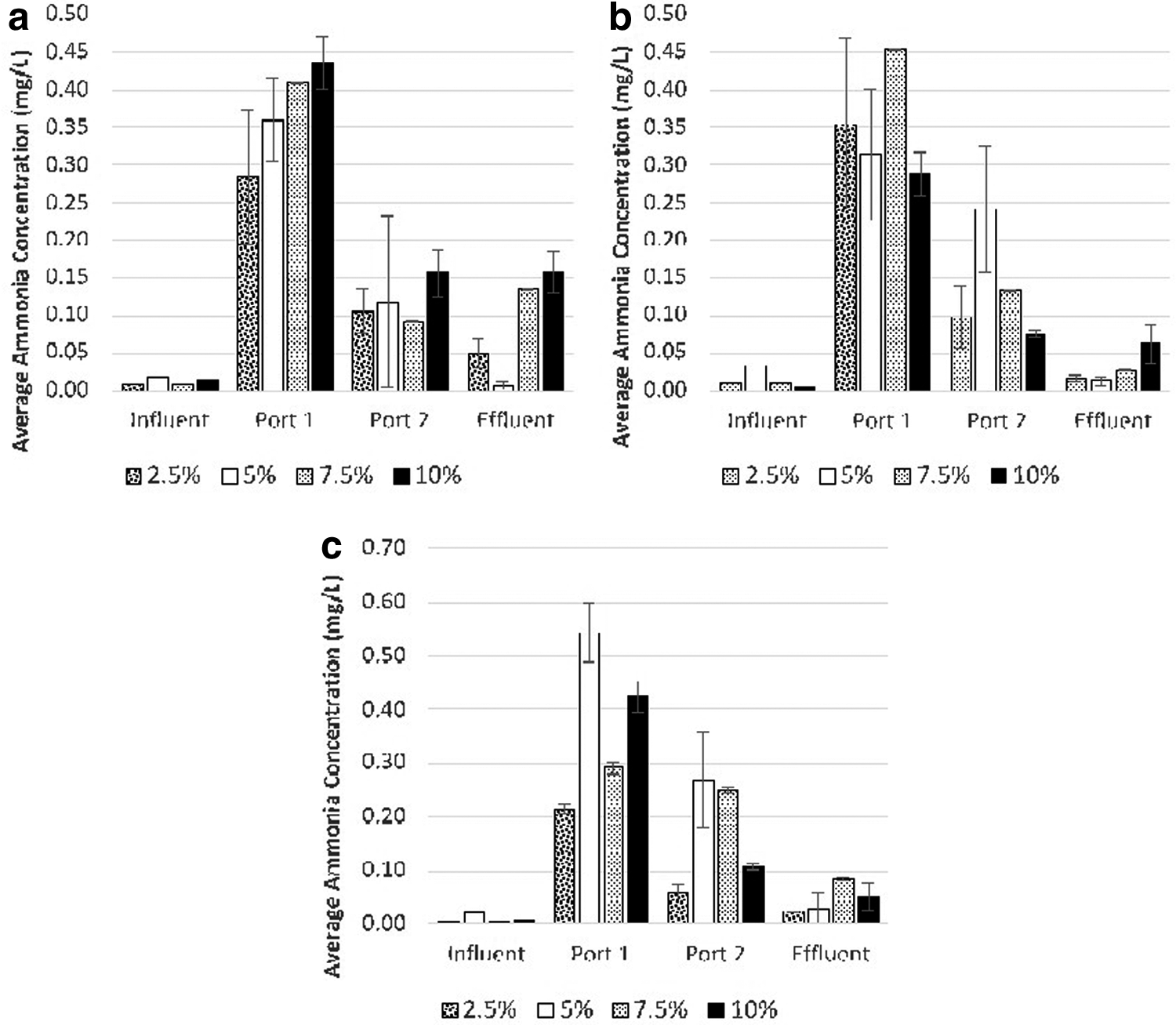
Average ammonia concentration for individual samples 2.5% iron filing content (10% tire crumb, 2% clay, 85.5% sand by volume), 5% iron filing content (10% tire crumb, 2% clay, 83% sand by volume), 7.5% iron filing content (10% tire crumb, 2% clay, 80.5% sand by volume), and 10.0% clay content (10% tire crumb, 2% clay, 78% sand by volume) for influent conditions of
The lowest TP and TN concentrations were obtained for the media with 5% iron filing content for influents 1 and 3, with a slightly higher TP concentration than 7.5% and 10% iron filing content for influent 2 (Fig. 6). The media with the 5% iron filing composition outperforms the other media in terms of overall ammonia removal. In all influent conditions, the highest effluent ammonia removal was attained by 5% iron filing content, followed by 2.5% iron filing. Similarly, this media had the highest TN removal for most of the influent conditions (Table 7). The effluent ammonia removal determined for influent 2 in iron filing content variations was very similar in range, and the TP removal was within close values for the second and third influent conditions, with the highest visible TP removal observed only in the first influent condition.
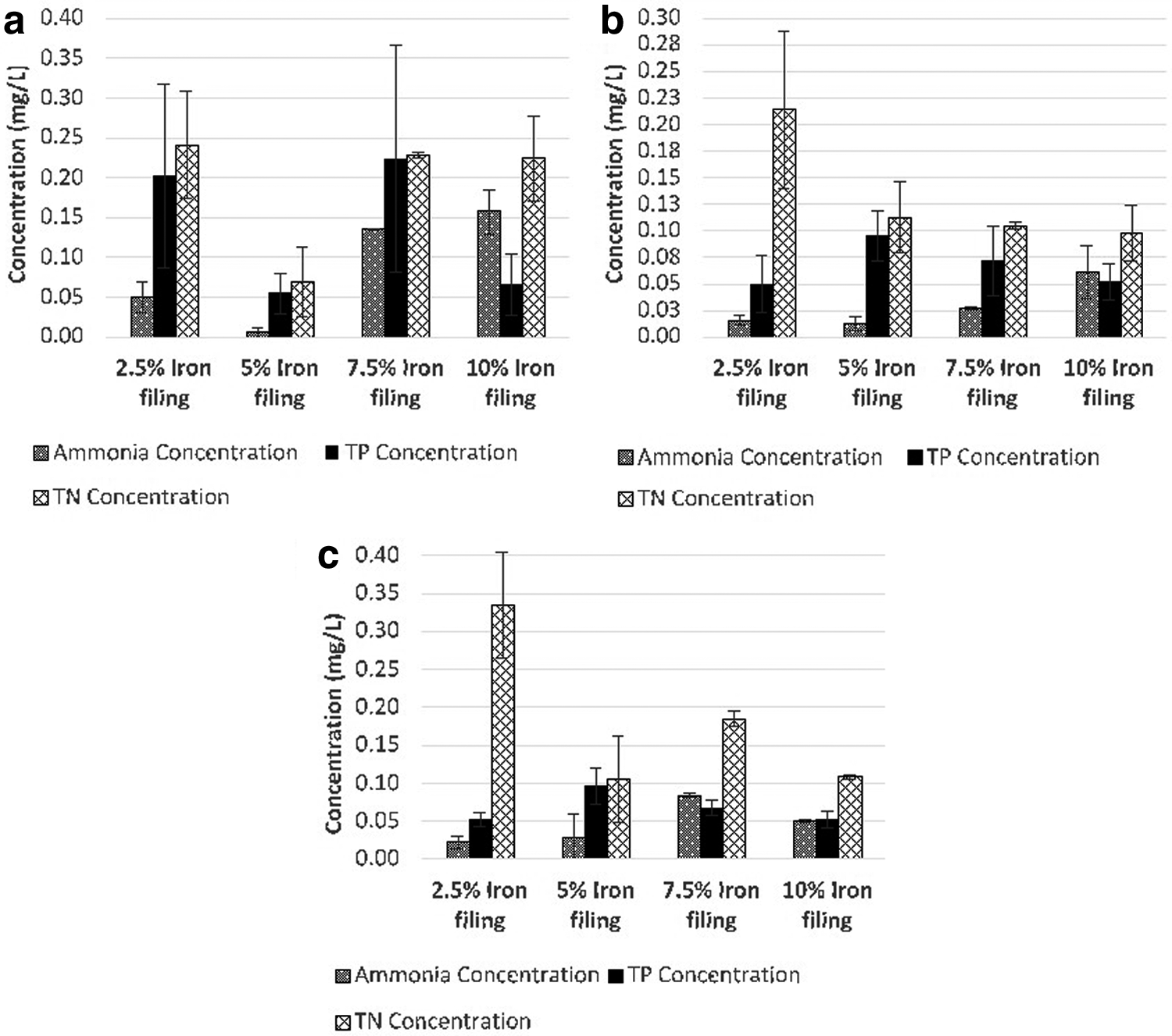
Effluent ammonia, TP, and TN concentration for iron filing variation for
Summary of Effluent Nutrient Removal for Iron Filing Variation
Bold values mark the highest % removals for the four iron filing contents.
The effluent iron concentration was measured to observe possible iron leakage. In terms of the iron filing variation media, the iron ion concentrations varied for each influent condition (Fig. 7). In addition, because of the impact that pH, DO, and ORP have on water quality, these parameters were measured (Table 8). The changes in ORP and DO can be related to the iron interaction with TP and ammonia removal. The pH ranged from 7 to 9, with ORP and DO between 150–348 mV and 7–11 mg/L, respectively. In general, the ORP values in the effluents were much smaller than those in the influents, which indicates the possibility that equilibrium was reached in the end of the column.

Effluent iron concentration for 2.5% iron filing content, 5.0% iron filing content, 7.5% iron filing content, and 10.0% iron filing content for influent condition
Average Measurements for Oxidation/Reduction Potential, Dissolved Oxygen, and pH for Iron Filing Content Variation When the Clay Content Was 2% by Volume
Analysis of variance
ANOVA was used to determine if there was any considerable variation in the experimental values obtained from the column study with regard to clay/iron variation, influent conditions, and the interactions between the two. The p-values obtained for average TN, TP, and ammonia removal for clay and iron filing content variation are presented in Tables 9 and 10. Each analysis was considered statistically significant at a confidence interval of 95% (α = 0.05).
Analysis of Variance and p-Values for Clay Content Variation
Analysis of Variance and p-Values for Iron Filing Content Variation
The p-value for TN and ammonia removal for the clay and influent interaction and influent condition specifies acceptance of the null hypothesis. As a result, the mean TN and ammonia removals for clay variations are not significantly different and demonstrate no interaction between the varying influent conditions and clay contents. However, p-values for clay content variation denote rejection of the null hypothesis for the columns with 2% clay, while the other three columns denote acceptance of the null hypothesis. This implies that the average nutrient removals for clay variations are different for columns with 2% clay, whereas the average nutrient removals for clay variations are the same for the other three columns. Overall, the p-values for TP removal for the clay content and influent variations specify interaction between influent conditions and clay variations in the columns by rejecting null hypothesis. Moreover, the majority of p-values for the individual clay content variations and the different influent conditions accept the null hypothesis, and thus, TP removal for clay variations and verifying influent conditions is not significantly different.
In iron filing content variation, most p-values for TN and TP removals for the iron filing variations and different influent conditions specify no interaction and accept the null hypothesis. Overall, the p-values for individual iron filing content variation and influent conditions denote the rejection of null hypothesis, suggesting a significant difference in TN removal between these two variables. It is suggested that the average TP removals for iron filing variations are not significantly different. However, the p-values for the different influent conditions suggest that TP removals for varying influent conditions are the same. For influent condition variations, the null hypothesis is rejected, specifying that ammonia removal for different influent conditions is not the same. The p-values for iron filing variation show rejection of the null hypothesis, suggesting a difference in ammonia removals for iron filing variations. In addition, most of the p-values indicate rejection of the null hypothesis, denoting an interaction between varying iron filing and influent conditions for ammonia removal.
Discussion
Nutrient removal
The quantity of clay and iron filing particles in media can influence the chemical reactions contributing to nutrient removal. Ammonia concentration can be affected by the quantity of iron filing particles present in the media, as iron can interact with nitrate to produce ammonium. Clay is inexpensive and has a high adsorption capacity (Moharami and Jalali, 2015). However, clay may adhere to the iron filing particles, reducing the available surface area required for TP removal. This implies that a higher clay content media may have a larger negative effect on TP removal. Yet, clay can interact with iron filings to attain TN removal (Chang et al., 2018b). For comparison of nutrient removal efficiency, other green sorption media with components similar to IFGEM 3 are delineated and compared in Table 11. The TP removal of IFGEM 3 is similar to the Minnesota filter and iron and aluminum hydroxide-coated filter media, while the TN and ammonia removal is higher than BAM.
Comparison of Nutrient Removal Performance for Green Sorption Media
BAM, biosorption activated media; LS, loamy sand; SCL, sandy clay loam; SL, sandy loam.
The results obtained from the clay content variation (2%, 4%, 6%, and 8% clay content) by volume suggest that the 2% clay content media has the highest ammonia removal (98.17%) in the effluent with respect to port 1, whereas 8% clay content has the lowest ammonia removal (61.46%) (Table 5). The change in ammonia concentration from port 1, port 2, and the effluent port demonstrates a decrease in ammonia concentration from port 1 to the effluent, contributing to ammonia removal and recovery (Fig. 2). The significant decrease in ammonia concentration between sample port 1 and port 2 suggests that the ammonia recovery potential of the media is related to the adsorption characteristics of clay.
Moreover, all the clay contents exhibit adequate TN removal. The 2% clay content media obtained the highest TN removal of 93.94%, whereas the 4% clay content media performed the least efficiently, with a TN removal of 76.61%. On the contrary, the TP removal was not consistent throughout the distinct influent conditions. For the first influent condition, the 4% clay content media obtained a TP removal (93.00%) in the effluent followed by 2% clay content (83.76%). In the second influent condition, the 6% clay was followed by 2% content media with a TP removal of 95.47% and 81.10%, respectively. In the third influent condition, the 2% clay media had the highest TP removal (91.76%). Furthermore, a comparison of the percent of ammonia concentration with the TN concentration in the effluent ports for the four clay variations suggests that the 4% clay content media has a larger ammonia concentration in the effluent in contrast with the 2%, 6%, and 8% clay contents.
The iron filing content variation results support identifying the optimal iron filing percent content once the clay percent content can be established. From the average port ammonia concentration (Fig. 5), a decreasing pattern was noted for the ammonia concentrations after port 1. In general, the media with the 5% iron filing percent content obtained the highest ammonia, TP, and TN percent removals (Table 7). This can be attributed to the oxidation of ferric ions by nitrite (Sørensen, 1982). The TP removal efficiencies for the second and third influent conditions were very similar, with the 5% iron filing content obtaining the highest TP removal for influent 1 and 3. The relationship observed between the clay content variation and TP removal was not consistent for all media. For the first influent, the 5% iron filing content obtained the maximum removal (83.76%) followed by 10% iron filing content (79.26%). In the second and third influent conditions, the 5% iron filing content did not obtain the highest TP removal. However, the determined TP removals of 81.15% and 91.76% were close in range to the maximum removals obtained by the other media.
The highest ammonia removal was accomplished by the 5% iron filing composition. For some influent conditions, the iron concentrations appeared relatively large, although the results were not consistent. Human factors could have impacted the homogeneity of the media mixture, as each media mix was produced by hand. In addition, an iron-filing particle could have been collected with the water sample, producing excess dissolved iron in the sample. Having excess iron filings in the media or iron filing particle(s) in the water sample after collection could have produced the observed high iron ion concentration in the effluent of the media. Thus, the measured iron concentration in the effluent may not be representative of iron leakage caused by iron filings.
Chemical interactions
Removal of phosphorus can be conducted via physical, chemical, and biological methods (Mateus and Pinho, 2010). Removal of phosphorus can be obtained from the addition of ferrous ion [Fe (II)] or ferric ion [Fe (III)] to produce a precipitate. The iron composition is introduced from the iron filing composition of the IFGEM 3 and even the stormwater characteristics. Phosphate precipitation from ferrous and ferric ions is presented in the chemical reactions [Eqs. (1) and (2)] (Ghassemi and Recht, 1971; Thistleton et al., 2002).
In ammonia removal, clay can serve as a medium for the ammonium ion to be adsorbed as an ion exchange process (Lee et al., 2009). In other words, iron filing material serves as an ion exchange for ammonium removal due to its high cation exchange. Clay also serves as a screen that can prevent molecular particles from passing (Eturki et al., 2012). Ammonia in liquids can occur as ammonium and ammonia, depending on the water characteristics, and this chemical reaction is expressed in Equation (3) (Eturki et al., 2012). Yet, the interaction between iron ion and nitrate in a liquid produces ammonia and ferrous ion [Eq. (4)]. This ferrous ion can further interact with phosphate and aid in phosphorus removal, and the nitrate reduced to ammonium can be recovered in the media (Ruangchainikom et al., 2006).
As a result, phosphorus removal may be achieved via chemical precipitation through the production of Fe3(PO4)2 which can be achieved with the aid of iron filing particles in the media matrix promoting precipitation (Fig. 8). The negatively charged surface of clay particles also effectively recovers phosphates (Moharami and Jalali, 2015). This implies that nitrogen removal in the form of ammonia/ammonium can be recovered with the aid of clay material through chemical reactions. Moreover, the resultant high ammonia, TP and TN removal efficiencies obtained from the interaction of the IFGEM components indicate a great potential for nutrient recovery. Nitrogen and phosphorus fertilizers can be supplemented or substituted by exhausted green sorption media (Bansiwal et al., 2006; Sibrell et al., 2009). Due to the capacity for ammonia adsorption and phosphorus precipitation, the reuse of the green sorption media (IFGEM 3) as soil amendment or fertilizer substitute is sustainable.
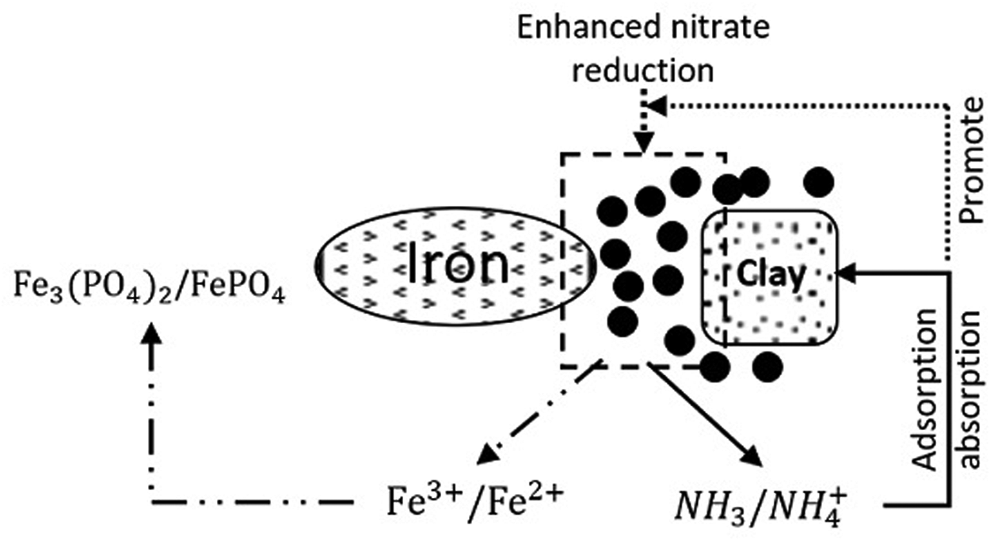
Interaction of IFGEM 3 components in nutrient removal and recovery.
Water quality characteristics
The ORP, DO, and pH values obtained from the influent and effluent ports for the clay and iron filing content variations indicate a relationship between each parameter. The decrease in ORP from the influent to the effluent ports in influent conditions 1 and 2 is observed (Table 5) in clay content variation. The cause could be attributed to ammonia oxidation and nitrate reduction due to the chemical interactions. The recipe with 6% clay content has the highest average ORP measurement indicating its higher capacity for oxidizing, whereas the recipe with 8% clay content has the lower average ORP measurement indicating its lower oxidizing capacity, while the 2% clay content media obtains a lower ORP indicating a lower oxidizing capability. The correlation between high ORP and DO values suggests higher oxygen availability and oxidative capability.
Similarly, there is a decrease in ORP between the influent and effluent ports in the iron filing content variation (Table 6). Furthermore, the DO values increase from influent to effluent for both component variations. However, these measured DO values were close in range. Thus, a relationship between TP, ammonia, and ORP can be addressed. When ORP variation is minimal and nutrient concentrations are not reduced further, an equilibrium state can be achieved. At this point, the chemical reaction has reached equilibrium, preventing further nutrient removal.
Conclusion
The recipe for 2% clay, 83% sand, 10% tire crumb, and 5% iron filing content by volume proved optimal for overall NRR. When analyzing the ammonia removal and recovery potential at the effluent with respect to port 1, this media had the highest ammonia removal efficiency (95–98%). The highest TP removal varied among media with respect to each influent condition. Nevertheless, the recipe of 2% clay and 5% iron filing content obtained high TP removals (81–92%). Alike, the highest TN removal (91–94%) by IFGEM 3 was consistent for most of the influent conditions. The effluent analysis of iron demonstrated varied results for each media and influent condition analyzed. This suggests that the measured iron in the effluent is dependent on sample collection and may not be representative of iron leakage. It is further concluded that all mixes studied have the potential to recover ammonia and orthophosphate, and thus, variations in the percent of iron filings (2.5–10% by volume) in the manufacturing of the media on a large scale would not significantly reduce recovery potential.
As the overall nutrient removals for ammonia, TN, and TP were above 80%, an adequate medium for nutrient abatement is suggested. This high nutrient removal positions IFGEM 3 as an adequate nutrient recovery media for fertilizer or soil amendment implementation. Since nutrient performance in real-world applications is unknown, future work would include the utilization of stormwater to determine the NRR potential for combined stormwater and reclaimed wastewater.
Footnotes
Disclaimer
The opinions, findings, and conclusions expressed in this publication are those of the author(s) and not necessarily those of the Florida Department of Transportation or the U.S. Department of Transportation.
Author Disclosure Statement
No competing financial interests exist.
Funding Information
The authors appreciate the funding and technical advice provided by the Florida Department of Transportation (Grant No. BDV24 977-20).