




Abstract
Traditional biological contact oxidation (BCO) process was modified; influent, stirring, aeration, sedimentation, and effluent were carried out alternately in the same BCO reactor to realize anaerobic reaction, anoxic reaction, and aerobic reaction. Micro-polluted water with low carbon-to-nitrogen (C/N) ratio was treated by the modified BCO process. Effects of aeration mode, hydraulic retention time (HRT), and ratio of air to water (A/W) on the removal of CODCr (chemical oxygen demand), NH4+-N, total nitrogen (TN), and total phosphorus (TP) were investigated, and the analysis of microbial community structure was also conducted. Results showed that when the A/W ratio was 6:1 and the HRT was 9 h, better removal effect was achieved for the operation mode of intermittent influent and intermittent aeration; the removal efficiencies of CODCr, NH4+-N, TN, and TP were 72.45%, 94.50%, 83.38%, and 74.23%, respectively. While for the operation mode of continuous influent and continuous aeration, when the HRT was 9 h and the A/W ratio was 6:1, removal efficiencies of CODCr, NH4+-N, TN, and TP were 71.90%, 99.10%, 28.48%, and 45.45%, respectively. Results of microbial community analysis showed that Ignavibacterium, Pirellula, Gemmata, and Candidatus Hydrogenedens with anaerobic ammonia oxidation (Anammox) function existed in the dominant populations; the relative abundances of the four bacteria in the intermittent aeration reactors were higher than those in the continuous aeration reactors. Relative abundances of Defluviimonas, Hyphomicrobium, and Longilinea with denitrification function were also higher in the intermittent aeration reactors. Results of microbial population analysis also showed that higher nitrogen removal efficiencies were observed for the intermittent aeration reactors. The modified BCO process was suitable for the treatment of micro-polluted water with low C/N ratio characteristics.
Introduction
With the development of modern society, a large amount of contaminated water such as agriculture wastewater, industry wastewater, and domestic sewage is discharged into the water environment, resulting in the destruction of aquatic ecosystems (Zhang et al., 2016b). The cumulative emission of nitrogen and phosphorus leads to serious eutrophication of water bodies; therefore, it is essential to develop efficient, reliable, and low-cost processes for the removal of aqueous nitrogen and phosphorus (Zhang et al., 2016b).
Micro-polluted water means that the concentrations of pollutants other than total nitrogen (TN) are slightly higher than those of Class V in the Environmental Quality Standard for Surface Water (GB 3838-2002, China), and the TN occurs at relatively low concentrations (typically <10 mg/L) (Tong et al., 2019; Yu et al., 2019b). For the micro-polluted water with low carbon-to-nitrogen (C/N) ratio (C/N ≤ 5) (Hua et al., 2016; Gao et al., 2019a), the removal of nitrogen by conventional biological treatment process is not efficient enough (He et al., 2016). If this problem is solved by adding an external carbon source, the operation cost and energy consumption will increase significantly (Deng et al., 2018).
In recent years, constructed wetlands have received more and more attention as a low-cost alternative for traditional sewage treatment (Jia et al., 2015; Guo et al., 2016). However, constructed wetlands require a considerable amount of area and also are susceptible to climate changes (Zhang et al., 2016b). Biological contact oxidation (BCO) is a relatively mature biological treatment process (House et al., 2016; Hakk et al., 2018), which is a combination of traditional activated sludge process and biological filter. Because of the tolerance to high ammonia nitrogen and strong impact loading, BCO process has been widely used in the treatment of organic wastewater (Miao et al., 2016; Zhang et al., 2016a). BCO process operated under anoxic and aerobic conditions has been successfully used for the treatment of domestic sewage, poultry wastewater, and industrial wastewater (Zhang et al., 2016a).
At present, there is little research on the use of BCO process to improve the removal efficiency of TN and total phosphorus (TP) in the micro-polluted water with low C/N characteristics. Furthermore, in the present work, we modify the continuous influent and effluent mode of the traditional BCO to intermittent influent and effluent mode; the influent, stirring, aeration, sedimentation, and effluent are carried out alternately in the same BCO reactor to realize anaerobic reaction, anoxic reaction, and aerobic reaction. By adjusting the running time of each stage, the removal of organic contaminants, nitrogen, and phosphorus can be achieved. Aeration and sedimentation are carried out in the same BCO tank, and there is no need for secondary sedimentation tank and sludge reflux system; the internal reflux of nitrification liquid is also not needed in biological denitrification, which can save the operation cost of sludge reflux and internal reflux. In addition, the alternating anoxic and aerobic conditions in the same reactor are not only conducive to efficient shortcut nitrification and denitrification but also can save oxygen consumption in the nitrification stage and the organic carbon source consumption in the denitrification stage (Miao et al., 2016; Zheng et al., 2018).
In the present work, the micro-polluted water with low C/N ratio is treated by the modified BCO process. The effects of aeration mode, hydraulic retention time (HRT), and ratio of air to water (A/W) on the removal of CODCr (chemical oxygen demand), NH4+-N, TN, and TP are investigated, and the analysis of microbial community structure is also conducted, which can provide a theoretical basis for the optimization and practical application of the modified BCO process.
Materials and Methods
Experimental setup
The schematic diagram of the BCO device is shown in Fig. 1. The experiments were carried out in three BCO reactors (denoted as R1, R2, and R3). The three BCO reactors (R1, R2, and R3) were made of plexiglass tubes with an inner diameter of 120 mm, an outer diameter of 150 mm, and a height of 3,200 mm. The effective volume of the BCO reactor was 32 L. The influent pipe extended to the bottom of the BCO reactor, which not only made the water to mix evenly but also reduced the hydraulic scour to the biofilm. The effluent was located in the middle of the BCO reactor, and the samples were taken from the effluent. As shown in Fig. 1, the reflux valve was designed to prevent backflow from the BCO reactor to the influent tank. The flowmeter was used to record the airflow intensity during aeration. The air for aeration was supplied by a rotary blower. Hydraulic mixing was conducted to mix the wastewater evenly in the BCO reactor. The control system was used to control the time and sequence of influent, stirring, aeration, sedimentation, and effluent. The biofilm carrier used in the BCO reactor was fiber bundle composite, and the main parameters of the biofilm carrier in each BCO reactor are shown in Supplementary Table S1. The filling rate of the biofilm carrier was 60%.
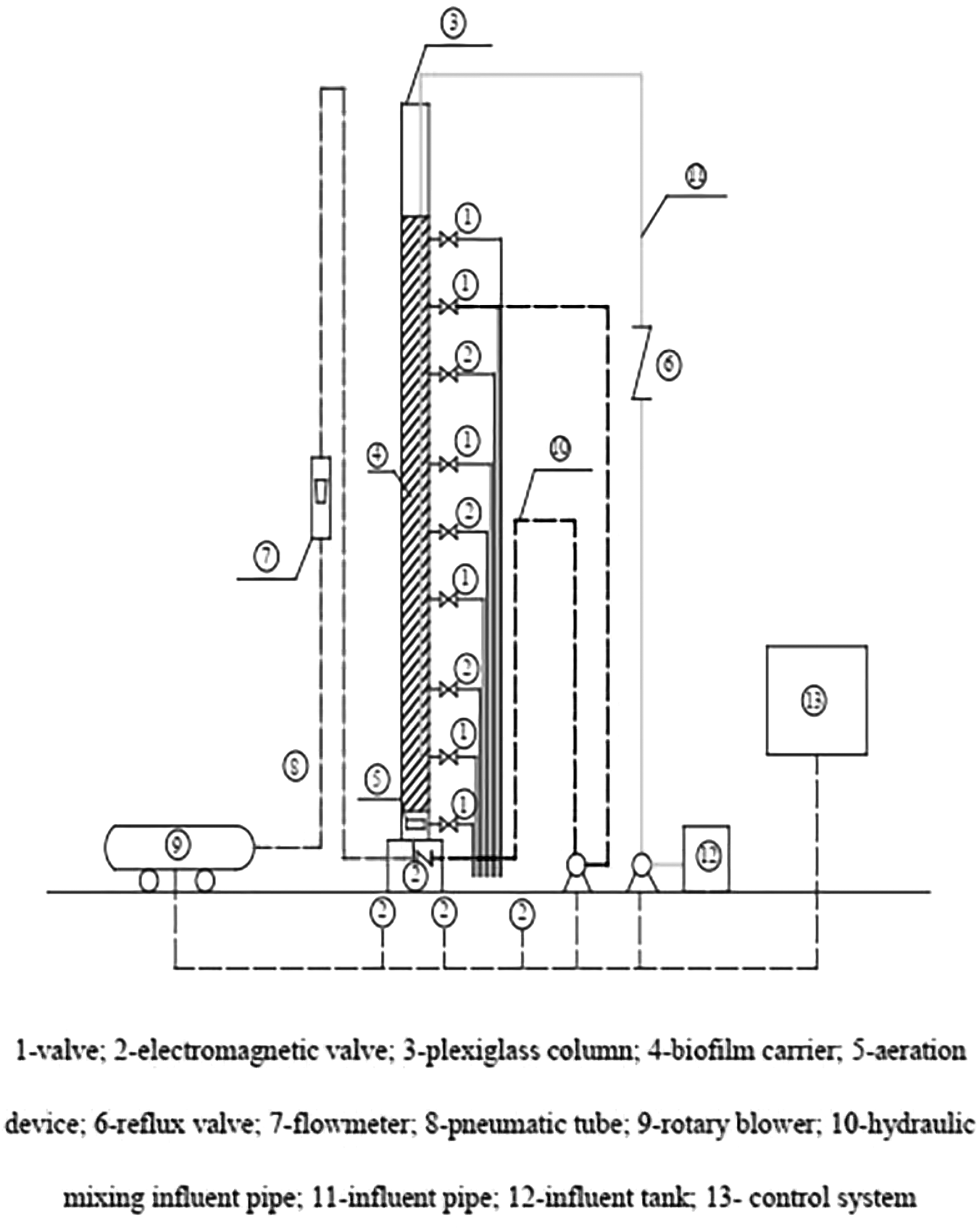
Schematic diagram of BCO device. BCO, biological contact oxidation.
Characteristics of synthetic wastewater and seed sludge
Synthetic wastewater was used during the experiment, and the water quality of the influent is shown in Table 1. The water quality of the synthetic micro-polluted water was the same as that of stage V shown in Table 1. The synthetic wastewater was prepared by using sodium acetate, ammonium chloride, potassium dihydrogen phosphate, magnesium sulfate, calcium chloride, and ferrous chloride.
Influent Water Quality of Biological Contact Oxidation Reactors
COD, chemical oxygen demand; TN, total nitrogen; TP, total phosphorus.
The seed sludge used in the experiment was taken from the secondary sedimentation tank of the Zhuzhuanjing Sewage Treatment Plant (Hefei City, China). The seed sludge was washed with a 40-mesh screen to remove impurities; the mixed liquid suspended solids of the sludge after washing was 17.5 g/L.
BCO startup and operation
At the early stage of the BOC reactor startup, the sludge from the secondary sedimentation tank of the Zhuzhuanjing Sewage Treatment Plant was inoculated into the three reactors to facilitate the biofilm cultivation. After aeration for 48 h in the BOC reactors, the intermittent influent and effluent mode was used, the drainage ratio was 50%, the HRT was 48 h, and the sludge was discharged after 6 days. The operating parameters of each stage are shown in Table 2. The method of transitioning from a high concentration of influent contaminants to a low concentration was beneficial to the propagation of microorganisms, and biofilm could be quickly formed. The purpose of stirring (hydraulic mixing) was to make the water in the reactor mix evenly; it was conducive to the denitrification of nitrate and the release of phosphorus. Aeration could convert ammonia nitrogen into nitrite nitrogen and nitrate nitrogen. At the same time, excess phosphorus uptake was achieved during the aeration process. The purpose of sedimentation was mainly denitrification.
Operating Parameters of Each Stage for Biological Contact Oxidation Reactors
Stirring/aeration/sedimentation time refers to the running time at the drainage ratio of 50%, influent time 3 min, and effluent time 3 min.
A/W, air to water; HRT, hydraulic retention time.
During the startup process, the removal efficiencies of CODCr, NH4+-N, TN, and TP in the wastewater were monitored. The temperatures of the wastewater during the experiment were 16.5–25.0°C and the pH values were 6.8–8.0.
Effect of the aeration mode on contaminants removal
The effect of the aeration mode on the contaminants removal was investigated. Two aeration modes were used, that is, intermittent aeration mode and continuous aeration mode. During the intermittent aeration mode, the BCO reactors (R1, R2, and R3) were operated according to the sequence of influent, stirring, aeration, sedimentation, and effluent. In continuous aeration mode, the continuous influent and effluent mode was adopted.
Bacterial community structure analysis
The DNA of the sample was extracted using an OMEGA kit (E.Z.N.ATM Mag-Bind Soil DNA Kit; Omega). The MiSeq platform was used to sequence the high-variation region of the 16S ribosomal RNA (rRNA) gene. V3+V4 region was selected for the sequencing region, the amplified fragment was 464 bp, and the sequencing primer was 341F-805R (Nan et al., 2016).
Biodiversity and species classification
Sequences were divided into different operational taxonomic units (OTUs) based on the similarity between sequences, and clustering analysis was performed on the OTUs at 97% similarity levels. To obtain the species classification information corresponding to each OTU, each sequence was analyzed and calculated at each classification level by RDP classifier Bayesian algorithm, and the community composition of each sample was counted. The abundance and diversity of biomes were obtained by single-sample Alpha diversity analysis.
Analytical methods
The analytical method of the water quality index and the main experimental instruments used in the experiment are shown in Supplementary Table S2. The biomass of the BCO reactor was determined by the method in the Technical Specification for Wastewater Treatment by Biological Contact Oxidation Process (HJ 2009-2011, China).
Results and Discussion
Removal of CODCr by BCO during biofilm formation stage
The average influent loading and the average removal loading of CODCr during the biofilm formation stage are shown in Supplementary Table S3. The C/N ratio decreased from 11.0 to 4.5 with the decreasing concentration of organic matter. The concentration and removal efficiency of CODCr under different HRT and A/W conditions are shown in Fig. 2. At stage I, the removal efficiencies of CODCr in the R1, R2, and R3 BCO reactors were relatively high, and the effect of A/W ratio on the removal efficiency of CODCr was not obvious, presumably because of the longer HRT. During the following four stages (stages II–V), the removal efficiencies of CODCr at A/W ratios of 6:1 and 9:1 were higher compared with those at the A/W ratio of 3:1. The fact might be that the removal efficiency of organic matter caused by the organisms gradually increased with the increasing aeration amount (Kornaros et al., 2010). The removal efficiency of CODCr successively reduced from the high organic loading stage to the low organic loading stage. It might be the reason that the HRT and the C/N ratio gradually reduced from the high organic loading stage to the low organic loading stage; furthermore, within a certain range, the lower the C/N ratio, the lower the removal efficiency of organic matter (Xin et al., 2016).
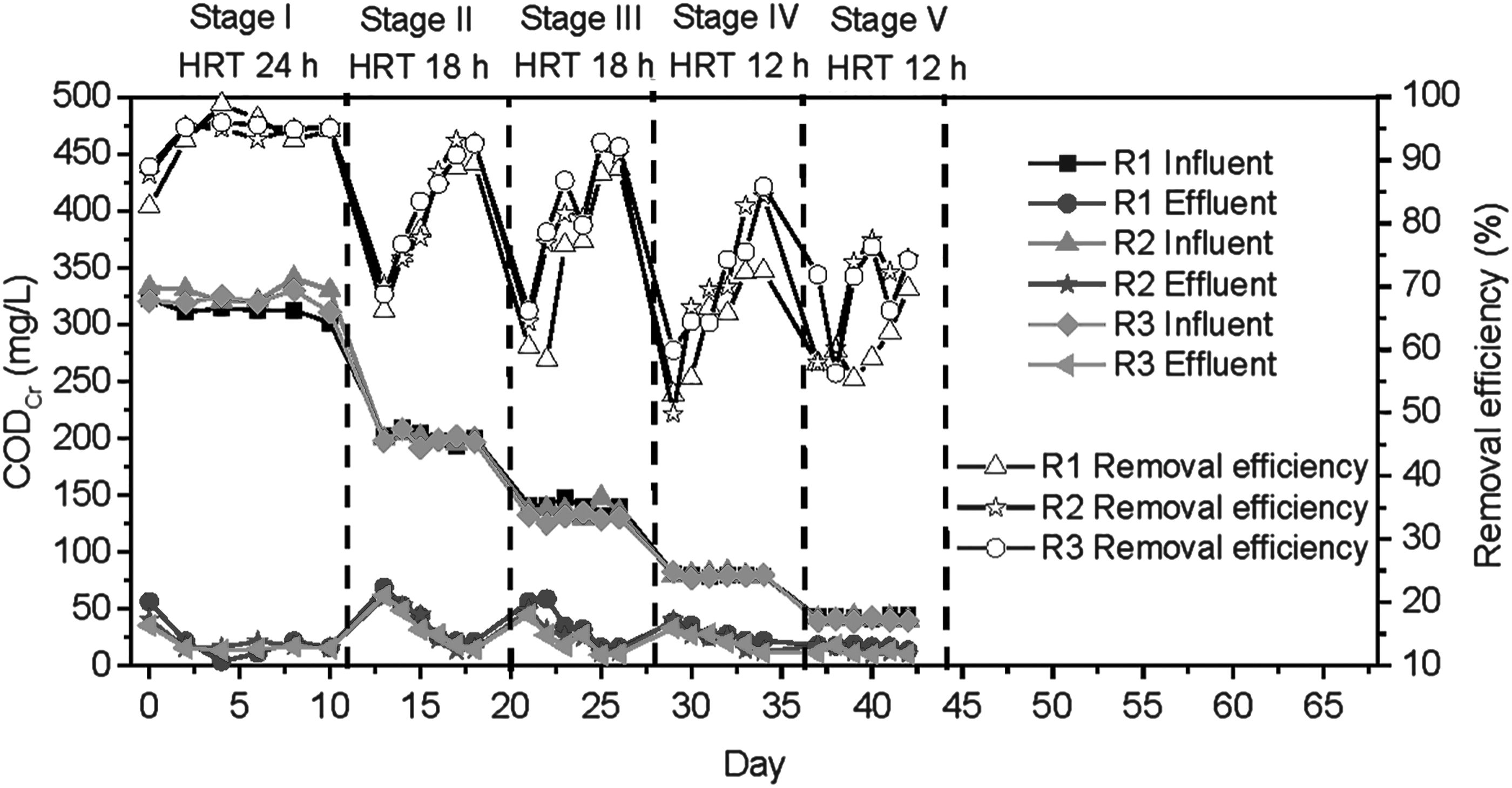
Changes of CODCr concentration and removal efficiency of CODCr during biofilm formation process. COD, chemical oxygen demand.
At the steady-state conditions (stage V), the fixed biomass of single biofilm carrier was 1.99 g/biofilm carrier, 1.87 g/biofilm carrier, and 1.86 g/biofilm carrier; the suspended biomass was 9.75, 9.60, and 9.50 g/m3; and the total biomass was 49.9, 46.9, and 46.6 g for the R1, R2, and R3 BCO reactors, respectively. Furthermore, the total fixed biomass was 49.8, 46.8, and 46.5 g and the total suspended biomass was only 0.1, 0.1, and 0.1 g for the R1, R2, and R3 BCO reactors, respectively. Therefore, the fixed biofilm was responsible for the removal of contaminants. It was worth noting that more fixed biofilm was formed at the A/W ratio of 3:1; the shear force exerted by gas on the biofilm was small at lower A/W ratio, which was conducive to the adhesion of microorganisms; and hence, the fixed biomass amount at the A/W ratio of 3:1 was higher than that at A/W ratios of 6:1 and 9:1.
Removal of NH4+-N and TN by BCO during biofilm formation stage
During the biofilm formation process, the loading of NH4+-N and TN has remained basically unchanged except for stage V (Supplementary Table S3). At different aeration modes and HRT, the concentrations of influent and effluent NH4+-N, TN, and their removal efficiencies are shown in Fig. 3. At stage I, the microorganisms were in the acclimatization stage, and the removal efficiencies of NH4+-N and TN were low. From stage II to stage V, the removal efficiencies of NH4+-N in the R1 reactor reached more than 80%, whereas they reached more than 90% in the R2 and R3 reactors. Therefore, from the viewpoint of NH4+-N removal, A/W ratios of 6:1 and 9:1 were better than that of 3:1. At stage I, the removal efficiencies of TN were low in each BCO reactor. The removal efficiencies of TN gradually increased in each reactor from stage II to stage IV, and the removal efficiencies of TN stabilized at stages IV and V. The removal efficiencies of TN were in the order of A/W ratio 6:1 > 9:1 > 3:1. The insufficient aeration reduced the conversion rate of NH4+-N, thereby the removal efficiencies of TN were limited; however, when the aeration was excess, although the conversion rates of NH4+-N were high, the residual dissolved oxygen (DO) in the reactor inhibited the denitrification, which might cause poor denitrification effect (Mannina et al., 2017). The aeration intensity and DO concentration under different conditions are shown in Supplementary Table S4.
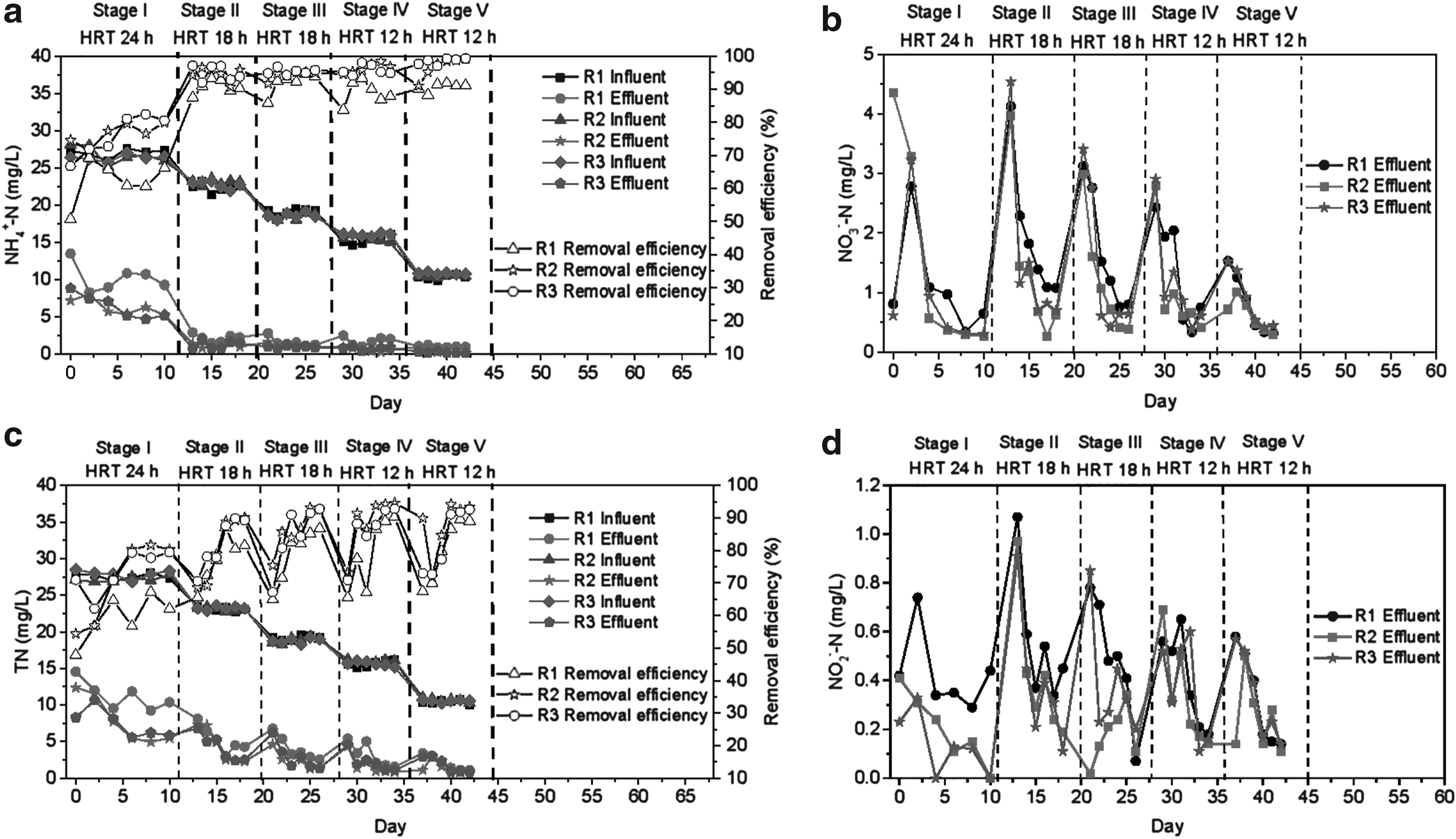
Changes of NH4+-N
The concentration changes of NO3−-N and NO2−-N during the biofilm formation process are shown in Fig. 3b and d. In the early stages (stages I–II), the concentration of NO3−-N in the effluent was relatively higher, and the maximum concentration of NO3−-N was observed (4.5 mg/L). In the following three stages (stages III–V), the concentration of NO3−-N decreased with increasing day at each stage; furthermore, lower NO3−-N concentration (<1.2 mg/L) was observed at the end of each stage. The accumulation of NO2−-N at the end of each stage was also lower (<0.5 mg/L).
In the early stage (stage I), the accumulation of NO3−-N and NO2−-N had little effect on the removal of CODCr, whereas at the following stages (stages II–V), higher concentration of NO3−-N and NO2−-N had significant effects on the decomposition of CODCr. For TN, higher concentration of NO3−-N and NO2−-N had a greater impact on the denitrification at each stage (stages I–V). The accumulation of NO3−-N and NO2−-N in the first stage (stage I) had a great influence on the removal rate of NH4+-N; however, little effect on the removal efficiency of NH4+-N was observed at stages II–V.
Removal of TP by BCO during biofilm formation stage
During the biofilm formation process, the concentration changes and the removal efficiency of TP are shown in Fig. 4. It has been revealed that it was easier to activate denitrification phosphorus accumulation bacteria in anoxic and anaerobic environments, NO3−-N and NO2−-N instead of oxygen could be used as electron acceptors; phosphorus removal could also be achieved in the absence of oxygen and extracellular carbon sources; therefore, when the C/P ratio was sufficient, the effect of C/P ratio on the phosphorus removal could be ignored (Jing et al., 2016; Sun et al., 2017). From stage I to stage V, the highest removal efficiency of TP was achieved at the A/W ratio of 6:1, and the insufficient or excessive aeration reduced the removal efficiency of TP (Wang et al., 2009b). At stages II and III, the operating conditions were the same except for the influent concentration of TP, and the removal efficiencies of TP during the two stages were quite different. While at stages IV and V, the operating conditions were also the same except for the influent concentration of TP; the differences in the removal efficiencies of TP during the two stages were very small, indicating that the BCO reactors were gradually stable at the low loading stage.
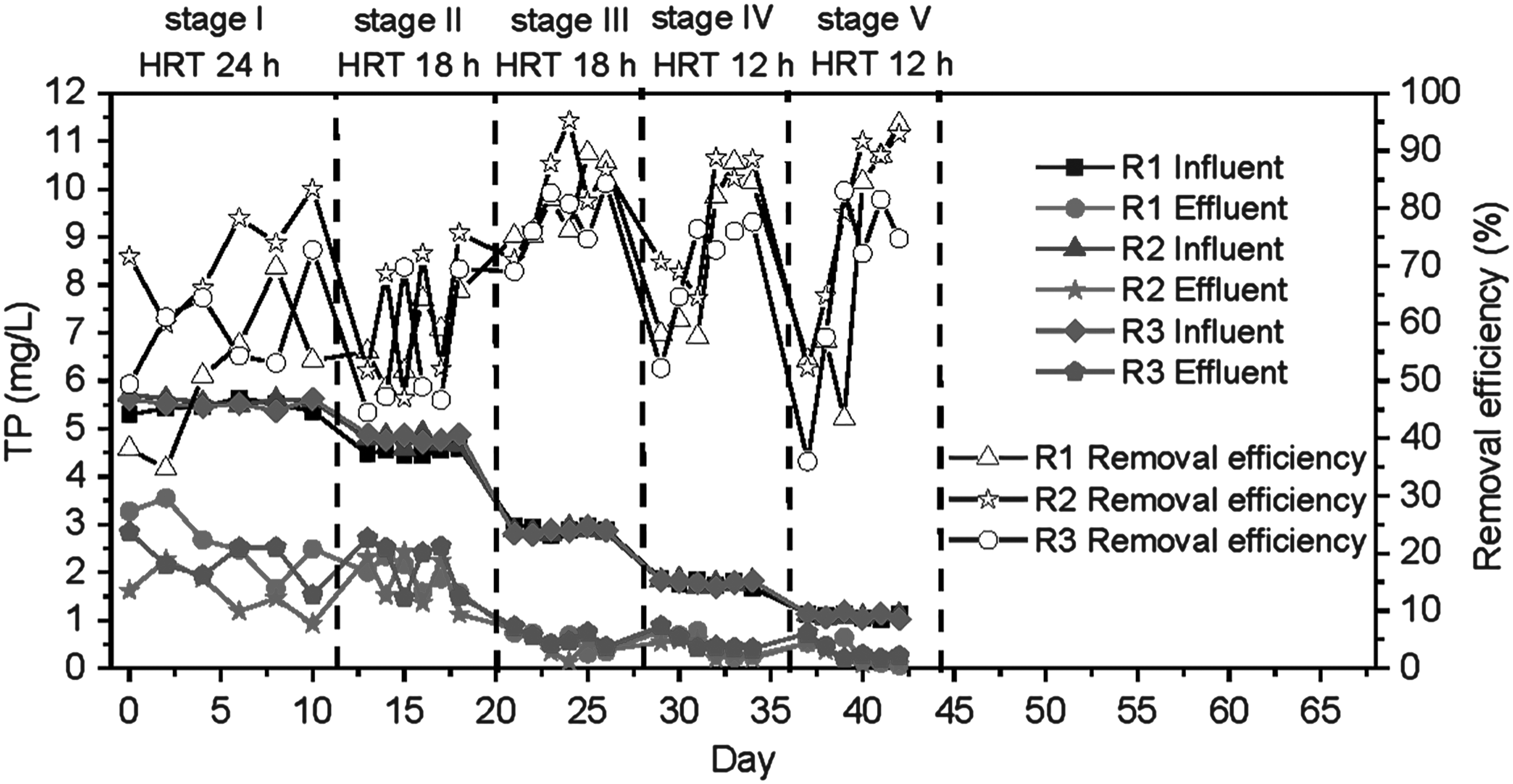
Changes of TP concentration and removal efficiency of TP during biofilm formation process. TP, total phosphorus.
Comparison of intermittent aeration and continuous aeration BCO for treatment of micro-polluted water
Removal of CODCr
Treatment of synthetic micro-polluted water by intermittent aeration and continuous aeration BCO reactors was carried out. The average influent loading and the average removal loading for the intermittent aeration and continuous aeration BCO reactors are shown in Supplementary Table S5. As shown in Figs. 5a and 6a, it could be calculated that there was no significant difference in the removal of CODCr between the intermittent aeration and continuous aeration BCO reactors (p > 0.05). The effluent concentrations of CODCr could meet Class IV (CODCr ≤ 30 mg/L) in the Environmental Quality Standard for Surface Water (GB 3838-2002, China). The removal efficiencies of CODCr at the two operating modes successively reduced when the HRT was 9, 6, and 3 h, respectively. The removal efficiencies of CODCr at the A/W ratio of 6:1 were higher than those at A/W ratios of 3:1 and 9:1, the reason might be that more organic matter was consumed at the A/W ratio of 6:1 during the removal of nitrogen and phosphorus (Ginige et al., 2013; Dai et al., 2019).
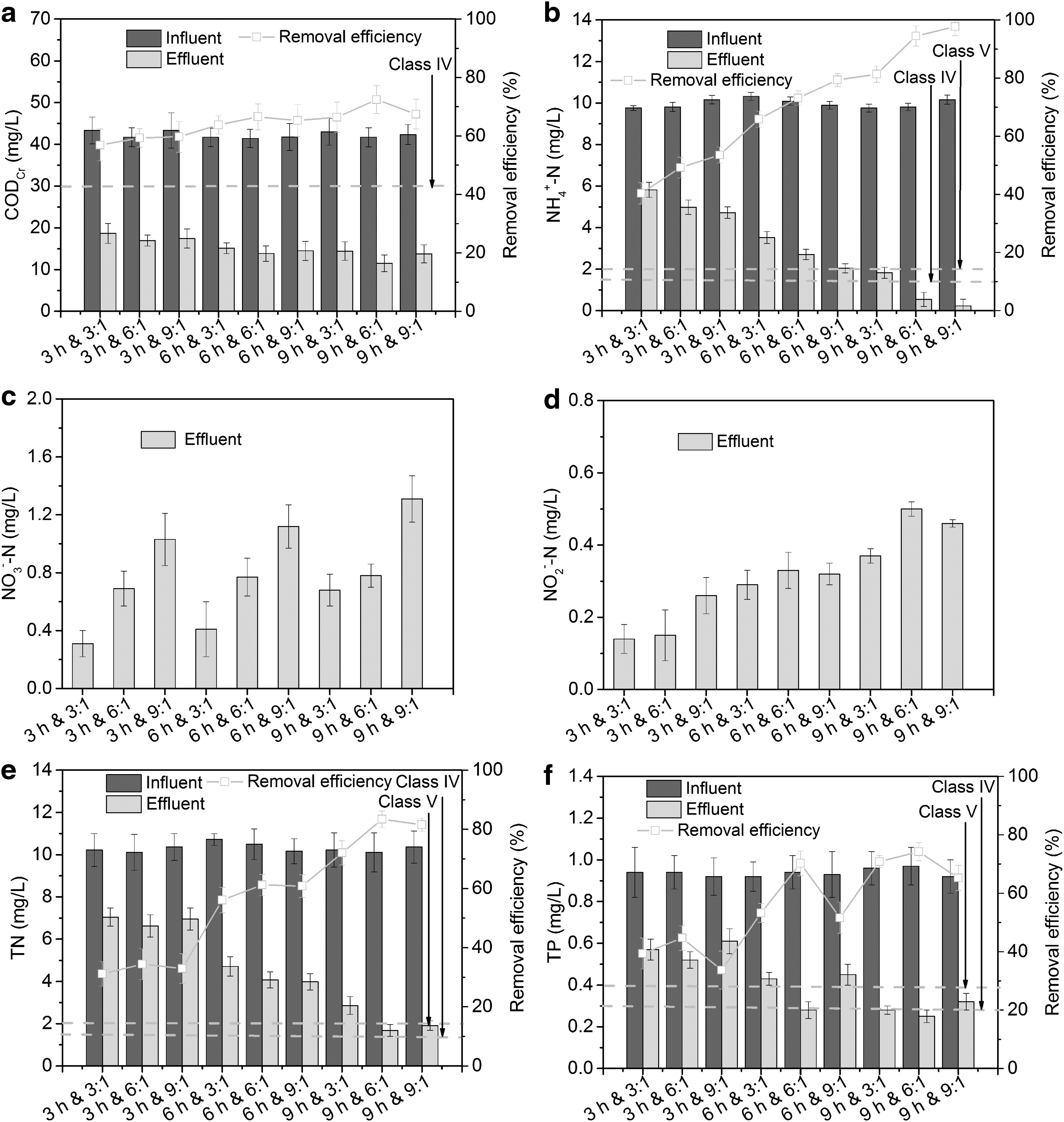
Water quality (
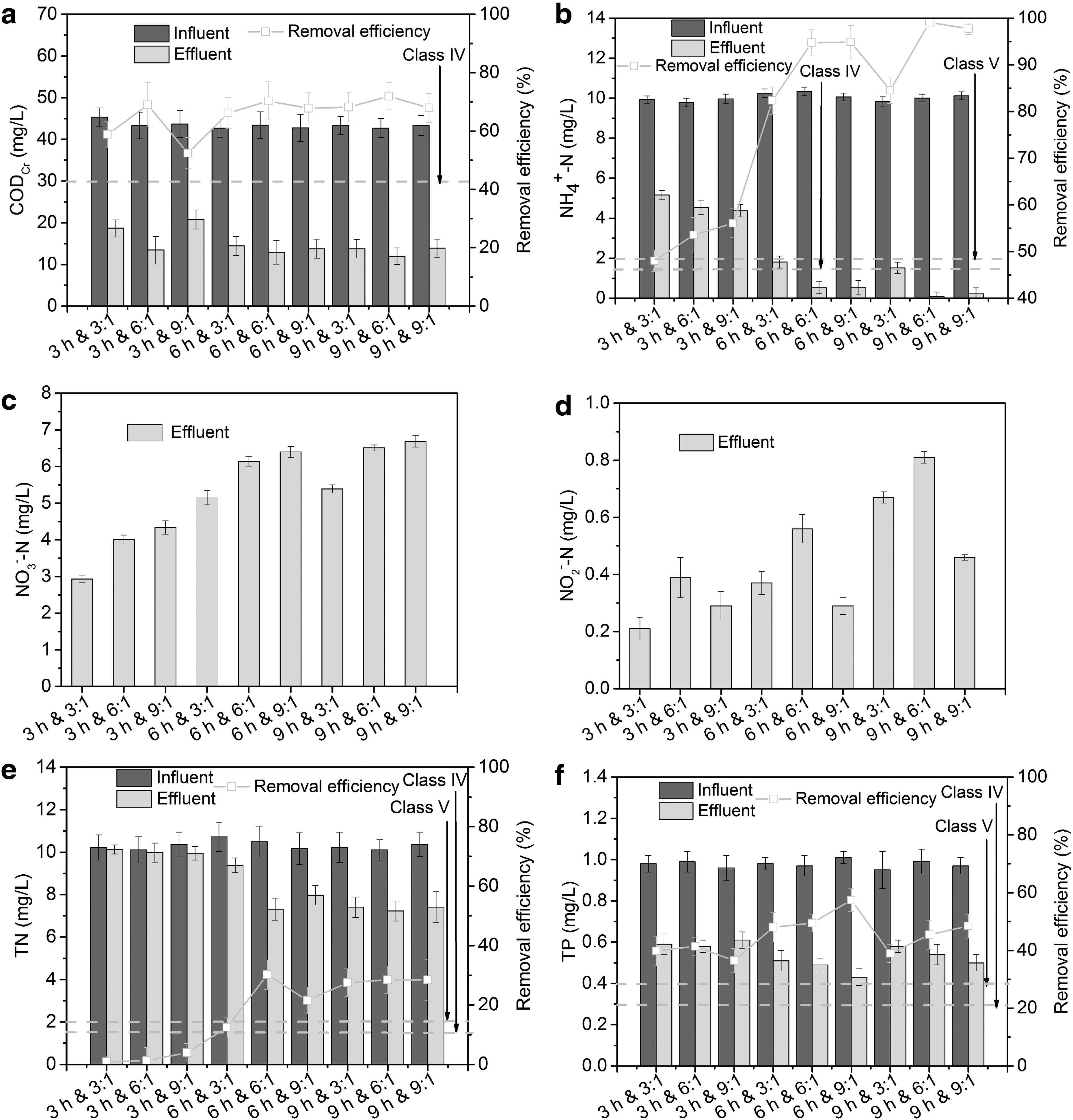
Water quality (
Removal of NH4+-N and TN
As shown in Figs. 5b and 6b, the removal efficiencies of NH4+-N increased with increasing A/W ratios. Under the two aeration modes, when the HRT was 9 h and A/W ratios were 6:1 and 9:1, the effluent concentrations of NH4+-N could meet Class IV in Environmental Quality Standard for Surface Water (GB 3838-2002, China). However, under the same HRT and A/W ratio, higher NH4+-N removal efficiencies for continuous aeration BCO reactors were observed compared with the intermittent aeration BCO reactors. Nitrification bacteria were sensitive to aeration intensity; the DO concentration with insufficient aeration was low, which reduced the oxidation rate of NH4+-N. Continuous aeration resulted in high DO concentration in the solution, which was beneficial to the nitrification. Therefore, the removal efficiencies of NH4+-N in continuous aeration BCO reactors were higher than those in the intermittent aeration BCO reactors (Zhao et al., 2018b).
As shown in Figs. 5c and 6c, compared with the continuous aeration mode, the concentration of the accumulated NO3−-N was relatively low in the intermittent aeration BCO reactors; the reasons were as follows: first, the concentrations of DO in the intermittent aeration reactors were lower than those in the continuous aeration reactors, and the relative abundances of the nitrification bacteria were also lower than those in the continuous aeration reactors; therefore, the nitrification rates and the concentrations of the accumulated NO3−-N in the effluent were low in the intermittent aeration reactors (Hasan et al., 2013; Dai et al., 2019). Second, the amounts of Anammox bacteria (anaerobic ammonia oxidation bacteria [AAOB]) in the intermittent aeration BCO reactors were higher than those in the continuous aeration BCO reactors; Anammox of NO2−-N and NH4+-N in water by the AAOB could produce N2, thus forming a competitive relationship with nitrification bacteria and affecting the reaction rate of nitrification (Wang et al., 2019a). Finally, under the intermittent aeration mode, the activity of nitrite-oxidizing bacteria (NOB) was low; hence, the amount of NO3−-N converted by NO2−-N was also less (Komorowska-Kaufman et al., 2006; Nie et al., 2019).
As shown in Figs. 5d and 6d, the concentrations of NO2−-N in the effluent of the intermittent aeration BCO reactors were lower than those in the continuous aeration BCO reactors. The concentration of the accumulated NO2−-N was mainly affected by three factors. First, NH4+-N was oxidized to NO2−-N by aerobic ammonia-oxidizing bacteria (AOB), the activity of AOB in the continuous aeration BCO reactor was higher than that in the intermittent aeration BCO reactor; hence, the concentrations of produced NO2−-N were higher in the continuous aeration BCO reactors. The second reason was the oxidation of NOB, NO2−-N was converted to NO3−-N by the NOB because the activity of NOB in the intermittent aeration BCO reactor was lower than that in the continuous aeration BCO reactor; thus, the amount of consumed NO2−-N in the intermittent aeration BCO reactor was less (Poot et al., 2016). The third reason was Anammox reaction, N2 was produced by the reaction between NO2−-N and NH4+-N. The amount of AAOB in the intermittent aeration BCO reactor was higher than that in the continuous aeration BCO reactor; therefore, more NO2−-N was consumed in the intermittent aeration BCO reactor.
As shown in Figs. 5e and 6e, significant difference in the removal of TN was observed between the intermittent aeration BCO reactors and continuous aeration BCO reactors. For the intermittent aeration BCO reactors, when the HRT was 9 h and the A/W ratio was 6:1, the concentrations of the effluent TN could meet Class V in the Environmental Quality Standard for Surface Water (GB 3838-2002, China). However, for the continuous aeration BCO reactors, the concentrations of the effluent TN under various operating conditions could not meet Class V in the Environmental Quality Standard for Surface Water (GB 3838-2002, China). In the aeration stage of the intermittent aeration BCO reactors, NH4+-N was converted to NO3−-N and NO2−-N by nitrification bacteria and nitrosating bacteria, and the produced NO3−-N and NO2−-N were converted to N2 by denitrification bacteria under anoxic conditions; therefore, higher TN removal efficiency and energy savings occurred in the intermittent aeration BCO reactors (Park et al., 2015; Sui et al., 2016). In addition, the AAOB could be easily cultured in an anoxic and aerobic environment caused by intermittent aeration. AAOB were autotrophic bacteria and could biochemically react to form N2 by using NH4+-N as the electron donor and NO2−-N as the electron acceptor; oxygen demand and external carbon source consumption could be saved (Lee et al., 2015). High concentration of DO during the continuous aeration would inhibit the synthesis of the nitrate-reducing enzyme system and the activities of nitrite reductase and nitrate reductase during denitrification. Therefore, the accumulation of NO2−-N and NO3−-N occurred at a higher DO condition; furthermore, the amount of accumulated NO3−-N increased and the amount of accumulated NO2−-N decreased with increasing DO concentration (Kartal et al., 2010; Zhao et al., 2018a).
Removal of TP
As shown in Figs. 5f and 6f, the removal efficiencies of TP in the intermittent aeration BCO reactors were much higher than those in the continuous aeration BCO reactors. In the intermittent aeration BCO reactors, the concentrations of the effluent TP could meet Class IV in the Environmental Quality Standard for Surface Water (GB 3838-2002, China) at the following experimental conditions: HRT 6 h, A/W 6:1 and HRT 9 h, A/W 3:1, 6:1. While in the continuous aeration BCO reactors, the concentrations of the effluent TP under various operating conditions did not meet the standard of Class IV (GB 3838-2002, China). At the intermittent aeration and anoxic stage, the external carbon source was used by the polyphosphate bacteria to synthesize polyhydroxyalkanoate (PHA); at the same time, polyphosphate was consumed releasing the decomposed phosphorus; at the aerobic stage, polyphosphate accumulating organisms (PAOs) absorbed the phosphate to synthesize polyphosphate using PHA as an energy source in solution. At the continuous aeration stage, PAOs consumed external carbon source to synthesize PHA and polyphosphate by the tricarboxylic acid cycle. When the external carbon source was consumed, it decomposed PHA as an energy source to synthesize a large amount of polyphosphate, which could also realize the aerobic phosphorus uptake (Lu et al., 2019).
Analysis of microbial community structure
Bacterial community changes at the phylum level
Twenty-eight bacterial phyla were obtained by sequencing all the samples. There were 10 samples of at least one bacterial phylum with relative abundance >1%, and the changes of relative abundances are shown in Fig. 7. In the intermittent aeration and continuous aeration BCO reactors, the dominant bacterial group included Proteobacteria (relative abundances 46.4–66.6%), Planctomycetes (relative abundances 2.9–17.4%), Acidobacteria (relative abundances 5.3–15.1%), Bacteroidetes (relative abundances 3.3–8.8%), and Chloroflexi (relative abundances 1.2–5.2%). Compared with the intermittent aeration BCO reactors, the relative abundances of Proteobacteria increased significantly, and the relative abundances of Planctomycetes, Bacteroidetes, and Chloroflexi decreased significantly in the continuous aeration BCO reactors. Proteobacteria contained a variety of metabolic bacteria, which had roles in the removal of organic matter, nitrogen, and phosphorus (Wang et al., 2009a; Jiang et al., 2018); Planctomycetes contained bacteria associated with Anammox (Lu et al., 2019); fiber hydrolysis-related bacteria were contained in Acidobacteria; Bacteroidetes contained bacteria that could degrade polysaccharides and starches; Chloroflexi contained bacteria related to hydrolysis and fermentation, which was beneficial to improve the removal of organic matter (Wang et al., 2019b). Therefore, the intermittent aeration mode contributed to the removal of nitrogen and phosphorus in the BCO reactors.
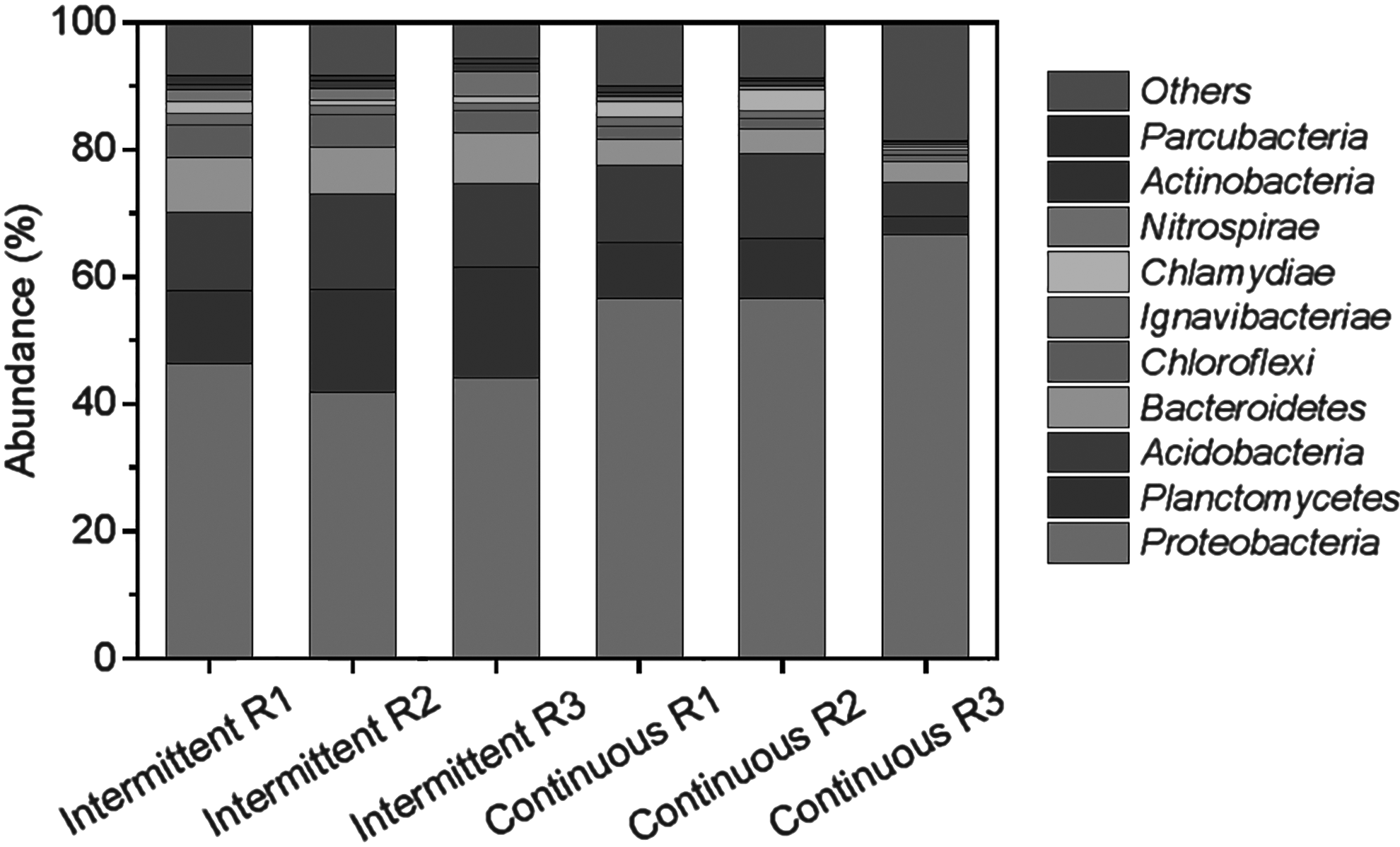
Relative abundance of bacterial community at the phylum level (Note: intermittent refers to the intermittent aeration mode used in BCO reactors; continuous refers to the continuous aeration mode used in the BCO reactors).
Bacterial community changes at the genus level
To further explore the changes of microbial community characteristics under different aeration modes, the microbial community structure at the genus level was analyzed. Two hundred seventy-six bacterial genus were obtained from sample sequencing, and the relative abundances of the top 30 bacterial genus are shown in Fig. 8. The main functional bacteria related to nitrogen removal are shown in Table 3. As shown in Table 3, the AAOB in the BCO reactors mainly include Ignavibacterium, Pirellula, Gemmata, and Candidatus Hydrogenedens (Antwi et al., 2019; Guo et al., 2019; Li et al., 2019; Zheng et al., 2019). The relative abundance changes of Ignavibacterium, Pirellula, Gemmata, and Candidatus Hydrogenedens under the two aeration modes were investigated. Under the intermittent aeration mode, the sums of relative abundances for the four AAOB (Ignavibacterium, Pirellula, Gemmata, and Candidatus Hydrogenedens) were 4.24%, 4.76%, and 3.80% in the R1, R2, and R3 BCO reactors, respectively. While, under the continuous aeration mode, the sums of relative abundances for the four AAOB in the R1, R2, and R3 BCO reactors were determined as 3.09%, 2.89%, and 1.30%, respectively. There was a significant difference in the sum of the relative abundances for the four AAOB between intermittent aeration mode and continuous aeration mode (p < 0.05). The Anammox effect generally improved during the intermittent aeration mode, and it was speculated that intermittent aeration was beneficial to the growth and reproduction of the Ignavibacterium, Pirellula, Gemmata, and Candidatus Hydrogenedens.
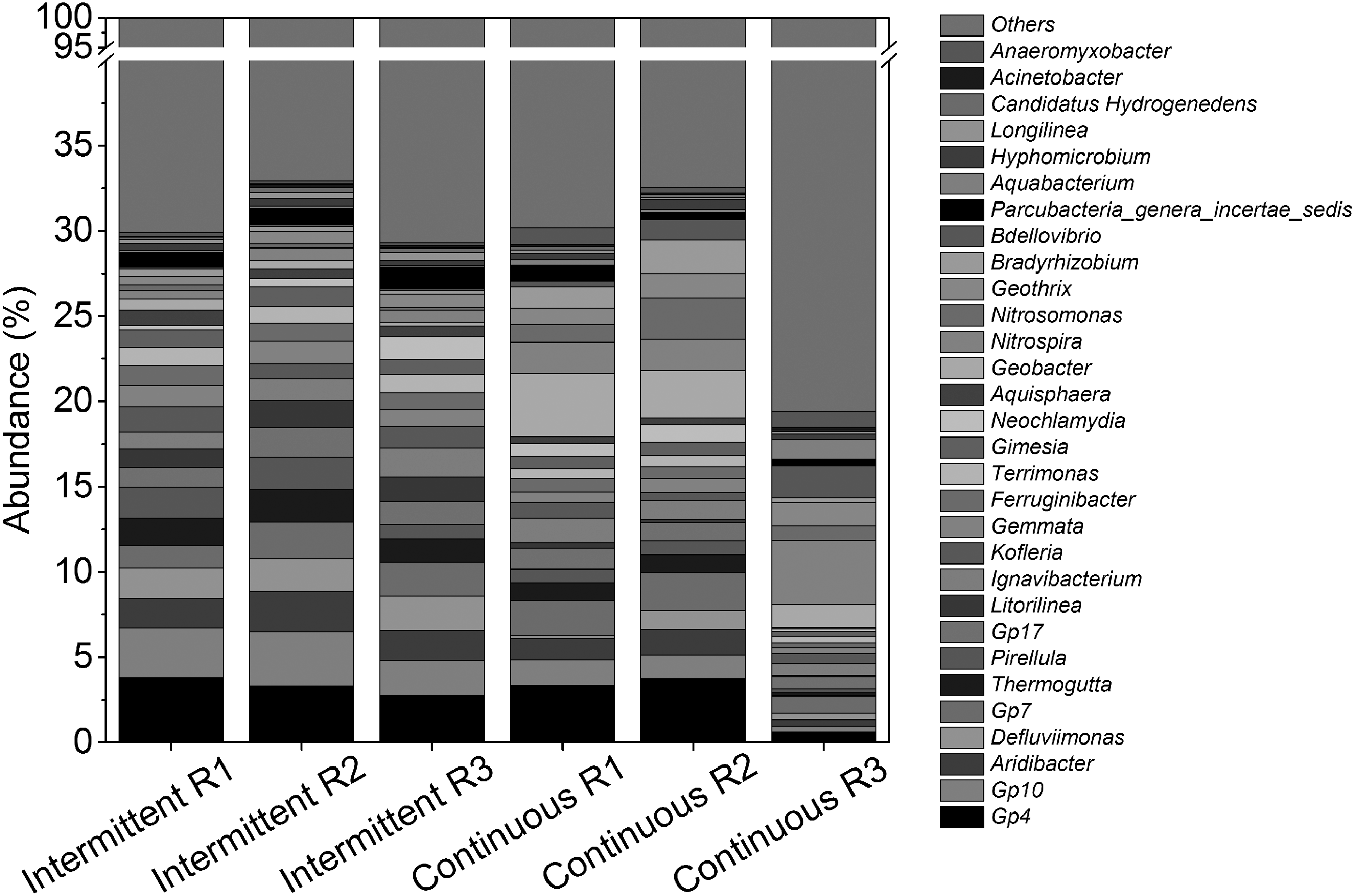
Relative abundance of bacterial community at genus level (Note: Intermittent refers to the intermittent aeration mode used in the BCO reactors; continuous refers to the continuous aeration mode used in the BCO reactors).
Relative Abundances of Genus-Level Bacteria Associated with Nitrogen Removal
AAOB, anaerobic ammonia oxidation bacteria; AOB, ammonia-oxidizing bacteria; DB, denitrification bacteria; NOB, nitrite-oxidizing bacteria.
In the dominant population, Defluviimonas, Hyphomicrobium, and Longilinea had the denitrification function (Gao et al., 2019b; Jia et al., 2019; Jiang et al., 2019). The sums of relative abundances for the three denitrification bacteria (Defluviimonas, Hyphomicrobium, and Longilinea) under the intermittent aeration conditions were 2.40%, 2.72%, and 2.78% in the R1, R2 and R3 BCO reactors, respectively, which they decreased to 1.77%, 1.76%, and 0.83% under the continuous aeration conditions, respectively. The sums of relative abundances for Defluviimonas, Hyphomicrobium, and Longilinea were significantly different under the two aeration modes (p < 0.05). The relative abundances of AAOB and denitrification bacteria in the intermittent aeration BCO reactors were higher than those in the continuous aeration BCO reactors. The differences in the relative abundances of Ignavibacterium, Pirellula, Gemmata, Candidatus Hydrogenedens, Defluviimonas, Hyphomicrobium, and Longilinea were the main reason for the different nitrogen removal effect (Figs. 5e and 6e).
Nitrosomonas had the nitrosation function and Nitrospira had the nitrification function (Feng et al., 2019; Yu et al., 2019a). The relative abundances of Nitrosomonas in the intermittent aeration R1, R2, and R3 reactors were 0.29%, 0.25%, and 0.13%, respectively, which increased to 1.05%, 2.44%, and 0.83% in the continuous aeration reactors, respectively. Furthermore, the relative abundances of Nitrospira in the intermittent aeration R1, R2, and R3 reactors were 0.52%, 0.75%, and 0.71%, respectively, which increased to 1.81%, 1.83%, and 3.74% in the continuous aeration reactors, respectively. The relative abundances of Nitrospira were significantly different under the two aeration modes (p < 0.05). When the concentrations of DO were relatively high, the relative abundances of Nitrospira were also higher (Chai et al., 2015). The differences in the relative abundances of Nitrosomonas and Nitrospira were the main cause of the difference in nitrification and nitrosation.
Aridibacter, Ferruginibacter, and Anaeromyxobacter had the function of organic matter degradation (Jin et al., 2018; Ge et al., 2019); the sums of the relative abundances for Aridibacter, Ferruginibacter, and Anaeromyxobacter in the intermittent aeration BCO reactors (R1, R2, and R3) were 3.15%, 3.58%, and 2.92%, respectively, which changed to 3.02%, 2.59%, and 1.63% in the continuous aeration BCO reactors, respectively. There was no significant difference in the sums of the relative abundances for Aridibacter, Ferruginibacter, and Anaeromyxobacter (p > 0.05); therefore, the difference in the removal of CODCr was not significant between the two aeration modes.
Conclusions
The modified BCO process had better treatment effect for the micro-polluted water with low C/N ratio. In the intermittent aeration BCO reactors, when the HRT was 9 h and the A/W ratio was 6:1, good effect on contaminants removal for the micro-polluted water was observed; and the concentrations of CODCr, NH4+-N, and TP in the effluent met Class IV of the Environmental Quality Standards for Surface Water (GB 3838-2002, China), and the TN concentration met Class V of this standard. In the continuous aeration BCO reactors, when the HRT was 9 h and the A/W ratio was 6:1, the concentrations of effluent CODCr and NH4+-N met Class IV in Environmental Quality Standard for Surface Water (GB 3838-2002, China), whereas the concentrations of effluent TN and TP did not meet Class V of this standard. The results of high-throughput sequencing showed that the relative abundances of AAOB and denitrification bacteria in the intermittent aeration BCO reactors were higher than those in the continuous aeration BCO reactors, that is, intermittent aeration was beneficial for the proliferation of AAOB and denitrification bacteria, and the nitrogen removal efficiencies in the intermittent aeration BCO reactors were higher than those in the continuous aeration BCO reactors.
Footnotes
Author Disclosure Statement
No competing financial interests exist.
Funding Information
This work was supported by the Open Project of Nanjing University and Yancheng Academy of Environmental Protection Technology and Engineering (NDYCKF201707), the National Water Pollution Control and Treatment Science and Technology Major Project (2017ZX07603-004), the National Natural Science Foundation of China (51208163, 21876040), and the Fundamental Research Funds for the Central Universities (PA2019GDQT0010).

References
Supplementary Material
Please find the following supplemental material available below.
For Open Access articles published under a Creative Commons License, all supplemental material carries the same license as the article it is associated with.
For non-Open Access articles published, all supplemental material carries a non-exclusive license, and permission requests for re-use of supplemental material or any part of supplemental material shall be sent directly to the copyright owner as specified in the copyright notice associated with the article.
