




Abstract
In this study, we present an optimized method for remediating multiple metals and metalloids using pumice permeable reactive barrier with zero-valent iron (ZVI) and with a modified reactor packing bed. The objective was to determine the effect of the contaminant breakthrough capacity of the modified bed, volumetric discharge of treated water, and the reactive material. Arsenic, manganese, iron, and zinc species with the initial concentrations of 0.001, 275.31, 0.61, and 0.063 mmol/L were used as the reference contaminants, respectively. ZVI and pumice were studied to remove the contaminants from synthetic groundwater. Contaminant breakthrough capacity (removal efficiency of 1) was not observed in the ZVI reactor bed with pumice for the 90-day period. The application of irregular reactive bed packing enhanced gas and water transport and removal of heavy metal(loid) for ZVI and pumice column reactor. Although contaminant breakthrough capacity (removal efficiency of 1) was not observed in the ZVI column reactor, clogging phenomena was characteristic. The column with only pumice exhibited zinc and manganese breakthrough capacity after 8 days owing to poor adsorption characteristics because the dominant remediation mechanism was cation exchange. Reactive material characteristics, and the remediation mechanism and for each reactive system, are described in this study. This study showed that the asymmetrical bed geometry could aid in the remediation process and venting of gas buildup.
Introduction
Provincial, mountainous, and low-income areas depend on groundwater and surface runoff for water resources (Lee et al., 2017a; Carrard et al., 2019). Groundwater, a near-horizontal flow of water in the aquifer, is usually influenced by the local heterogeneity of the subsurface drainage, making it challenging to determine the source of the groundwater contamination. The extent of groundwater contamination could be exacerbated by leaching from surface soils as a result of various human activities (Grootjans et al., 1988; Hyun, 2011; NIER, 2014; Lee et al., 2017b). The presence of contaminants in groundwater, together with the dynamic nature of the subsurface environment makes groundwater remediation among the most challenging and expensive environmental problems, and often the primary factor limiting closure of contaminated sites (Scherer et al., 2000; Naidu and Birke, 2015).
Acid mine drainage, a product of human mining activity, faces similar challenges, and it arises from the oxidation of minerals in the abandoned mines in the presence of oxygen, water, and, to some extent, microorganisms (Johnson, 2003; Ali, 2011; Simate and Ndlovu, 2014). The contaminants in acid mine drainage would eventually dissolve and leach to the groundwater (Galhardi and Bonotto, 2016).
The majority of published research has focused on the remediation of groundwater with a single contaminant. In reality, single-species contamination of groundwater is atypical. A survey in the Republic of Korea showed the presence of multiple contaminants in groundwater across the country (NIER, 2012; Lee et al., 2017a). Arsenic, zinc, iron, and manganese species are some of the common contaminants found in aquifers, landfill drainage, and mine tailings.
These metal compounds are labile and are easily mobilized by a combination of biogeochemical interactions (Landner and Reuther, 2004; Herath et al., 2016). For example, arsenic (III) exists in groundwater as inorganic arsenite and has a higher toxicity than arsenic (V) compounds (Cullen and Reimer, 1989; Kanel et al., 2005). Some researchers reported that arsenites could have a neutral state and increased mobility at pH 5–9 (Kanel et al., 2005; Hasanuzzaman et al., 2018). Preliminary speciation modeling using Visual MINTEQ showed that the arsenites could also exist as an anion. Zinc is present in groundwater as soluble compounds with considerable mobility at neutral pH (Evanko and Dzombak, 1997). Furthermore, soluble iron (Fe2+) is dominant in groundwater wells at pH <7.0 and at dissolved oxygen concentration <1 mg/L (Falck et al., 1988; Jensen et al., 1998). In many countries, the concentrations of metals and metalloids in aquifers and mine tailings exceed the hazard quotient, thereby increasing the human health risk (Lee et al., 2017a, 2017b).
A variety of remediation technologies have been tested and implemented for the remediation of contaminated groundwater. For example, arsenites and manganese could be removed through adsorption, chemical precipitation ion–anion exchange, reverse osmosis, among other treatment methods (Bissen and Frimmel, 2003; Kanel et al., 2005; Patil et al., 2016). Adsorption and precipitation processes have been used to remove zinc in groundwater (Esmaeili et al., 2019).
All the contaminants mentioned above could be removed using adsorption and precipitation process, and the permeable reactive barrier (PRB) could be the optimal treatment method. This method utilizes the natural hydraulic gradient to bring contaminated water in contact with selected materials designed to remove contaminants through reduction, precipitation, and adsorption. One of the advantages of this remediation method is the capacity to install without altering the groundwater hydrology (Naftz et al., 2002). Reactive materials in PRBs include zero-valent iron (ZVI), activated carbon, pumice, lapillus, and others (ITRC, 2011; Naidu and Birke, 2015; Madaffari et al., 2017).
Initial implementation of the PRBs used singular reactive material(s) (especially ZVI) and encountered challenges including but not limited to clogging, and selective removal of contaminants (Hocking and Wells, 2002; Bronstein, 2005; Madaffari, 2015). Clogging phenomena are characteristic of the ZVI PRBs. Clogging phenomena would reduce the lifespan of the barrier because of the volumetric changes (volumetric expansion, compression, or isovolumetric transformation) of ZVI or granular iron when the corrosion products are generated (Caré et al., 2013). Thus, several researchers resorted to PRBs with an admixture of reactive materials to overcome the limitations mentioned before to treat wastewaters or groundwaters (Calabrò et al., 2012; Bilardi et al., 2013, 2015; Madaffari et al., 2017). Admixtures introduce the nonexpansion factor into the PRB, which is a kind of compensation mechanism (Caré et al., 2013). The admixtures are a combination of iron with another inert or reactive substance such as lapillus, sand, gravel, and so on.
Bilardi et al. (2013) used ZVI and pumice in series and not as an admixture to remove copper, zinc, and nickel ions from water. The rationality behind this work was that using the reactive material in series would increase the sustainability of the PRB. Zinc and nickel were removed through initial adsorption, coprecipitation, and size exclusion. On the contrary, copper ions were removed through reduction process because of the difference in the electrode potential (Bilardi et al., 2013; Lopez-Tejedor et al., 2018). However, the volumetric expansion of ZVI and the precipitates formed would reduce porosity when the proportion of Fe0 increased.
The researchers also reported that contaminants could be removed with ZVI volumetric ratio of 10%. We envisaged that this low volumetric ratio would reduce the exploitation period of the PRB. Madaffari et al. (2017) reported that the ZVI:lapillus weight ratio is adjusted based on the flow velocity and the concentrations of the contaminants. We assumed that similar criteria were applicable to our study because lapillus and pumice have identical properties. Therefore, groundwater containing more than four contaminants will require further adjustments.
In addition, the researchers assumed that the phenomena associated with gas formation were negligible. Such assumptions are not applicable in column reactors with large internal diameters or in practical applications. Madaffari et al. (2015; 2017) used an admixture of ZVI and lapillus to remove nickel. The researchers concluded that a correlation between ZVI:lapillus weight ratio and the quantity or mass of contaminants to be removed was characteristic. However, the single contaminant used in that study could not provide sufficient information concerning multiple contaminants.
The researchers also reported on gas formation, but there is little information concerning the venting procedure. The reactive materials had similar grain sizes (d50:0.3–0.5 mm) and uniformity coefficient between 1.4 and 2; the resulting PRB bed would be less compact than that of pure ZVI. However, we considered that less compact PRB in the aforementioned research bed could result in increased hydrogen gas buildup and increased the pressure drop.
In this study, we used an admixture of ZVI and pumice (ZVI-P) with asymmetrical reactive barrier bed geometry to remediate the multispecies contaminants in groundwater. The asymmetrical PRB bed geometry had an irregular porous structure created owing to the difference in particle sizes between the ZVI and pumice. The pumice used had bigger particle sizes than the ZVI to provide the nonexpansion factor reported by other researchers (Caré et al., 2013). The asymmetrical bed geometry and, in particular, the pumice's porous structure would provide additional space for the volumetric change of the “fluid” corrosion products and contaminant precipitation, as given in Fig. 1.
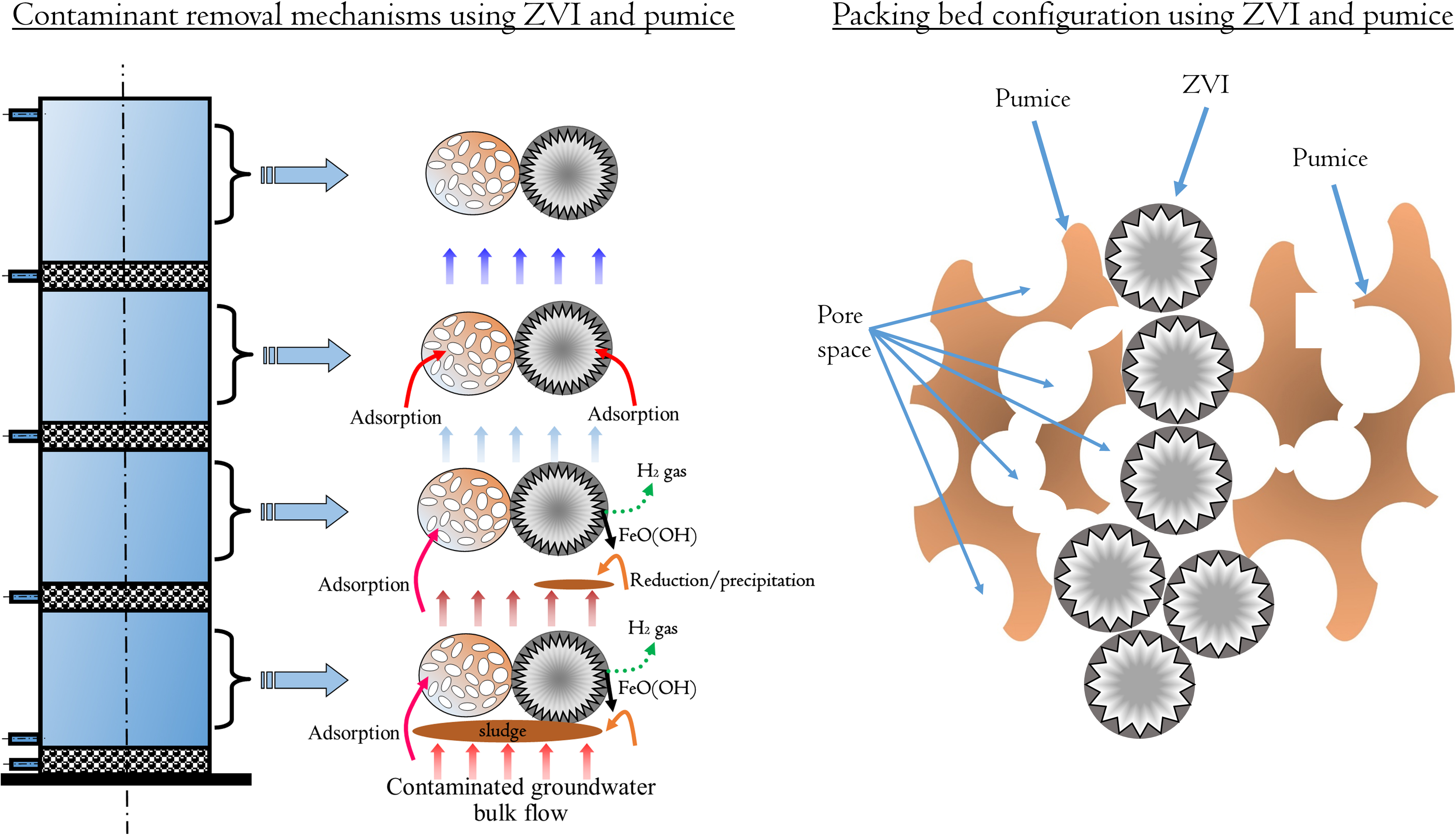
Proposed model of heavy metals removal mechanism in the ZVI and pumice column reactor. FeO(OH), corrosion products; ZVI, zero-valent iron.
Therefore, the resulting porosity and permeability of the reactor bed would be based on porosity distribution (bulk porosity) along the reactor radius, and the ZVI volumetric ratio could be increased (Atmakidis and Kenig, 2014). Therefore, if the porosity distribution is significant for a laminar groundwater flow through the filter bed, then the changes in the permeability and hydraulic conductivity is expected to be minimal with time. Therefore, if hydrogen gas is generated because of ZVI-H2O, as reported by Noubactep (2008), then the irregular packing bed and porous structure used in our study could be used as a venting system in the reactor (Fig. 1).
The additional porous spaces in pumice could also be used as adsorption sites. We analyzed the contaminant removal efficiencies with time across the thickness of the reactive material. The in situ PRB is designed to have permeability similar to or higher than the surrounding media. Thus, the volumetric discharge through the reactive material is an important parameter (ITRC, 2011), and we measured the changes in volumetric discharge of the treated water.
Materials and Methods
Groundwater sampling and synthetic water preparation
In this experiment, we used synthetic groundwater containing arsenic, zinc, manganese, and iron species. Initial concentrations of 0.001 mmol/L arsenic, 275.314 mmol/L zinc, 0.61 mmol/L manganese, and 0.063 mmol/L iron were used to make the synthetic groundwater. We used arsenic (III) oxide, zinc chloride, manganese (II) chloride tetrahydrate, and iron(II) sulfate. All the chemicals were obtained from Duksan Pure Chemicals (Korea), Daejung Chemicals (Korea), and Sigma Aldrich.
Experimental setup
The experimental setup (Fig. 2) consisted of a column reactor filled with permeable reactive material. Three polymethyl methacrylate columns were used in the experiment; each column reactor had an internal diameter of 150 mm and a length of 1050 mm. Channeling and wall effect are the essential criteria considered during the design of the column reactors (Moraci et al., 2016). Each column reactor was fitted with four sampling ports positioned equidistant from each other (Fig. 2) and was fitted with valves.
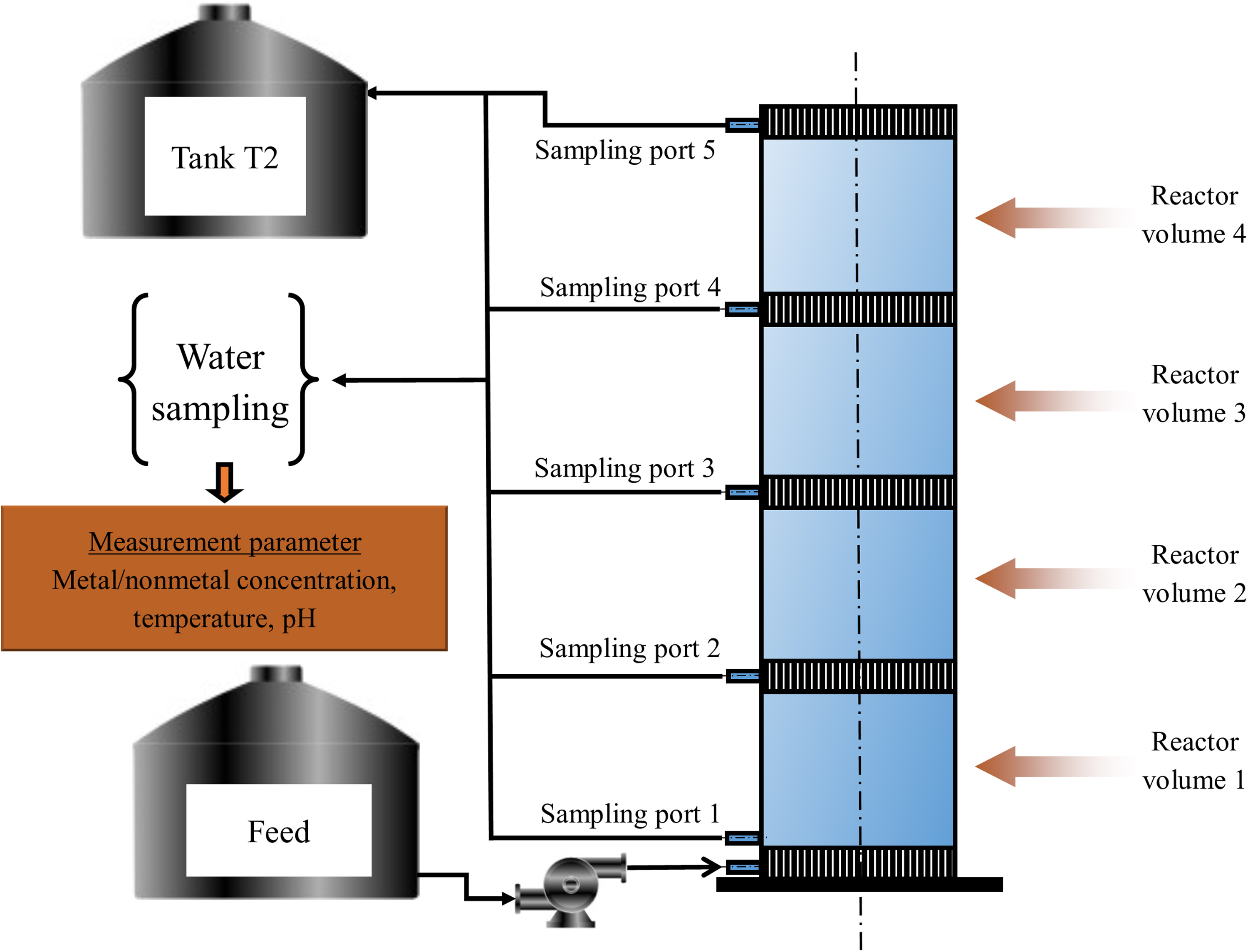
Vertical column-type reactors filled with permeable reactive barrier.
The reactor connected to a peristaltic pump that was used to feed synthetic groundwater into the reactor from the feed tank (Tank T1) through the inlet port. In this particular case, a multichannel peristaltic pump was used. After passing through the column reactor, the treated water was collected in a separate vessel (Tank T2). The column reactor was designed like a sequence-type column reactor, consisting of several reactor beds, separated by a layer of washed sand (Fig. 2) to avoid channeling.
In this experimental setup, the reactive material of choice was a mixture of ZVI (d60: 0.15 mm) and pumice. ZVI, pumice, and sand were supplied by a trading company (Daegu, Korea). According to the XRF analysis, the ZVI was composed of 99.85 Fe, whereas the composition of pumice was as follows: Si: 57.7%; Fe: 13.3%; K: 13.6%; Al: 8.4%; Ca: 1.8%; Na: 1.1%; other: 4%. The pumice was washed, crushed, and <2 mm pumice was sieved out for this experiment. The materials were mixed at 1:1 (vol/vol) ZVI:pumice (Noubactep and Caré, 2011). Washed sand (25–45 mesh size) was also used and positioned in locations given in Fig. 2. The X-ray diffraction (XRD) spectra of pumice and ZVI are provided in Supplementary Fig. S1.
Scope and experimental parameters
The focus of this study was the column reactor with ZVI-P. For comparison purposes, we used additional column reactors composed of pure ZVI and pumice (P). The ZVI column reactor was designed similar to ZVI-P (Fig. 2). The P column reactor was a monolith-type reactor composed of pumice material (d60:15mm) and washed sand layers (Fig. 2). The specifications for the columns are provided in Supplementary Figs. S2, S3, S4, S5.
The feed tank (T1) was filled with synthetic groundwater containing similar concentrations of metal(loid) ions, as previously described, and freshly prepared regularly. This study was carried out for 90 days at room temperature (22°C ± 4°C) during which raw groundwater (inlet port) and treated water (port 2–4) were sampled every 2 days beginning the eighth day after the start of the experiment. We measured the pH of the sampled water immediately after every sampling using multiparameter water quality meter (model HI 98194; Hanna). Any channeling was eliminated, and 7 days was assumed sufficient to obtain equilibrium concentration across the column height. An equivalent amount of sample water was obtained from each sampling port and was subjected to acid digestion using the EPA method 3005A.
We filtered out the digested products using cellulose acetate filters membranes, and the metal(loid) concentrations determined by ICP-OES (Perkin Elmer Optima 7300). We analyzed the membrane filters for possible adsorption of metal(loid) periodically. The volume of treated water in the collection vessel (T2) was measured daily, and the container emptied for further collection. In this study, the metal(loid) removal efficiency [C] was calculated as follows:
where Cp–0 and Cp–i represent the metal(loid) ions concentrations at the entry and the reference sampling port, respectively. In column reactors, the metal(loid) ions removal could be described using the advection-dispersion model inclusive of the sorption and precipitation process (Fetter et al., 2018). In this particular case, we assumed that the rate of change in metal(loid)s concentrations is much higher than the rate of change in other processes (e.g., sludge formation) and that the flow rate is slow enough for the treated water to maintain equilibrium concentration. Therefore, we assumed that the concentration at each port was equivalent to the concentration at each height.
After 90 days of experimental testing, the reactive materials from various sections of the reactor were extracted, vacuum dried at 50°C for 48 h, and analyzed for crystal structure. An X-ray diffractometer analyzed the crystal structure at 2θ range of 3–80°. The crystalline phases were analyzed and confirmed using phase identification software (MATCH version 3.10), together with other powder diffraction databases (RRUFF, NIST standard reference database). The morphology of the reactive materials was characterized by field-emission scanning electron microscope, followed by elemental analysis using scanning electron microscope/energy dispersive spectrometer (SEM-EDS).
Metal(loids) concentrations in treated water from port 3 were used as reference data in the Results and Discussion section. Thus XRD spectra and SEM-EDS data from reactor volume 2 are also presented in the Results and Discussion section. Concentrations from other sampling ports (sampling ports 2, 4, and 5) are provided in Supplementary Tables S1, S2, S3.
Results
Contaminants removal efficiency
The removal efficiency of the metal(loid)s using the ZVI-P column reactor was equivalent to 1 from sampling port 3 for all the metal(loid)s. The removal efficiencies for all the analyzed metal(loid)s were high, irrespective of fluctuations in the initial concentration of the feed water (Fig. 3). No breakthrough was observed at this sampling port for 90 days.

Removal efficiency of heavy metals in the P, ZVI, and ZVI-P column reactors. Symbols AS, FE, MN, and Zn represent the arsenite, iron, manganese, and zinc removal efficiencies from reference port 3. Colors gray, orange and blue represent the P, ZVI, and ZVI-P column reactors. P, pumice; ZVI-P, zero-valent iron and pumice mixture.
The removal efficiencies for all of the metal(loid)s using the ZVI column reactor was 1 (Fig. 3). Contaminant(s) breakthrough was not observed. The removal efficiencies for all the analyzed metal(loid) ions from sampling port 3 were high irrespective of fluctuations in the initial concentration of the feed water, daily discharge, and flow disruptions during the 90-day experimental period.
The removal efficiencies of the studied metal(loid) ions using the P column reactor varied with the treatment period and contaminants. There was a contaminant breakthrough of manganese and zinc from the ninth day (Fig. 3). The average removal efficiency ([C]) of iron and arsenic compounds (arsenite) was equivalent to 1 at reference port 3.
Reactive materials characteristics
In the P column reactor, minor changes in the diffraction pattern of the reactive material were evident and the changes diminished with an increase in the reactor volume (Fig. 4). Reactor volume 2 was characterized by elemental iron, silicon, potassium, sodium, and aluminum (Table 1). The presence of elemental arsenic was negligible. Because of the similarity in the EDS of elemental sodium and zinc, we concluded that the “cumulative” zinc concentration was a sum of the concentration of elemental zinc and sodium in the reactor volume 2 (Table 1).
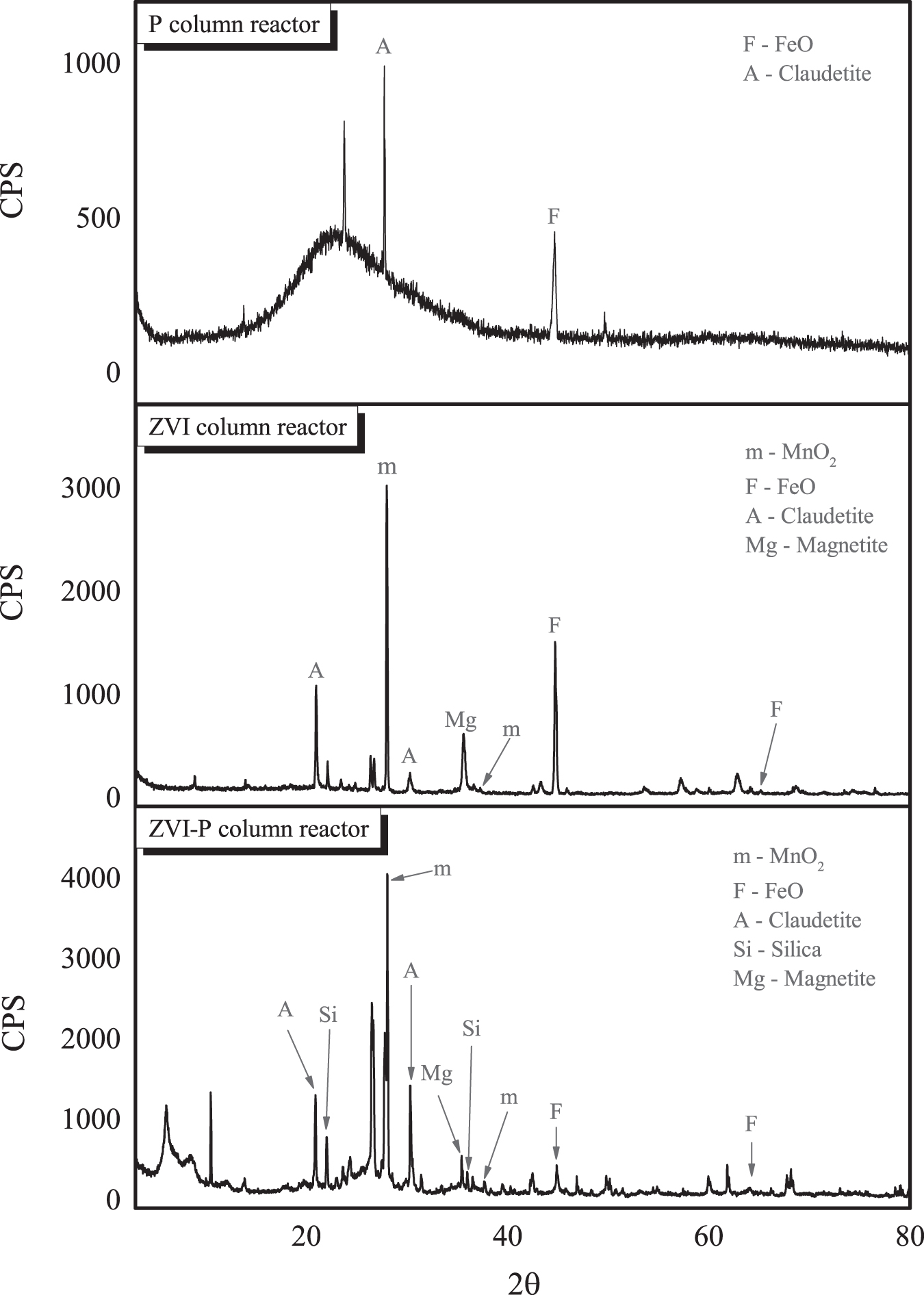
XRD spectra of the reactive materials in the ZVI-P, ZVI, and P column reactors. CPS, intensity; XRD, X-ray diffraction.
Scanning Electron Microscope/Energy Dispersive Spectrometer Spectra of the Reactive Materials in the Zero-Valent Iron and Pumice Mixture, Zero-Valent Iron, and Pumice Column Reactors After Reactor Volume 2
P, pumice; ZVI, zero-valent iron; ZVI-P, zero-valent iron and pumice mixture.
From Fig. 4, the dominant compounds in the ZVI column reactor were ZVI (2θ = 44.74°, 65°), claudetite (2θ = 20.79°, 30.30°), magnetite (2θ = 35.50°), and manganese compounds (2θ = 28.50°, 37.30°). Although the XRD spectra showed the presence of arsenic compounds (claudetite) in this reactor volume, the elemental arsenic in the SEM-EDS spectra was negligible (Table 1). Elemental zinc was present in the SEM-EDS spectra but insignificant in the XRD spectra. Owing to the similarity in the EDS of elemental sodium and zinc, we concluded that the “cumulative” zinc concentration was a sum of the concentration of elemental zinc and sodium in the reactor volume 2.
The reactive material in the ZVI-P column reactor exhibited changes in the diffraction patterns relative to the pure substances, that is, ZVI and pumice (Fig. 4). The second reactor volume was characterized by diffraction patterns corresponding to MnO2 (2θ = 28.50°, 37.30°), magnetite (2θ = 35.50°), ZVI (2θ = 44.74°, 65°), arsenic compounds (2θ = 20.79°, 30.30°), and silicon dioxide (2θ = 21.96°, 36.09°). The dominant elements in the SEM-EDS spectra were silicon, and iron, and aluminum (Table 1).
The SEM images of reactive materials recovered from the reactor volume 2 of the ZVI-P, ZVI, and P column reactors are given in Fig. 5. The cementation increased the particle sizes of the grains. In addition, cemented surfaces on the ZVI and pumice (from ZVI-P column reactors) were observed. Conversely, we also observed cemented surfaces on the reactive materials from the P column reactor. The images of the reactive materials from the other reactor volumes (1, 3, and 4) are given in Supplementary Tables S4, S5, S6.
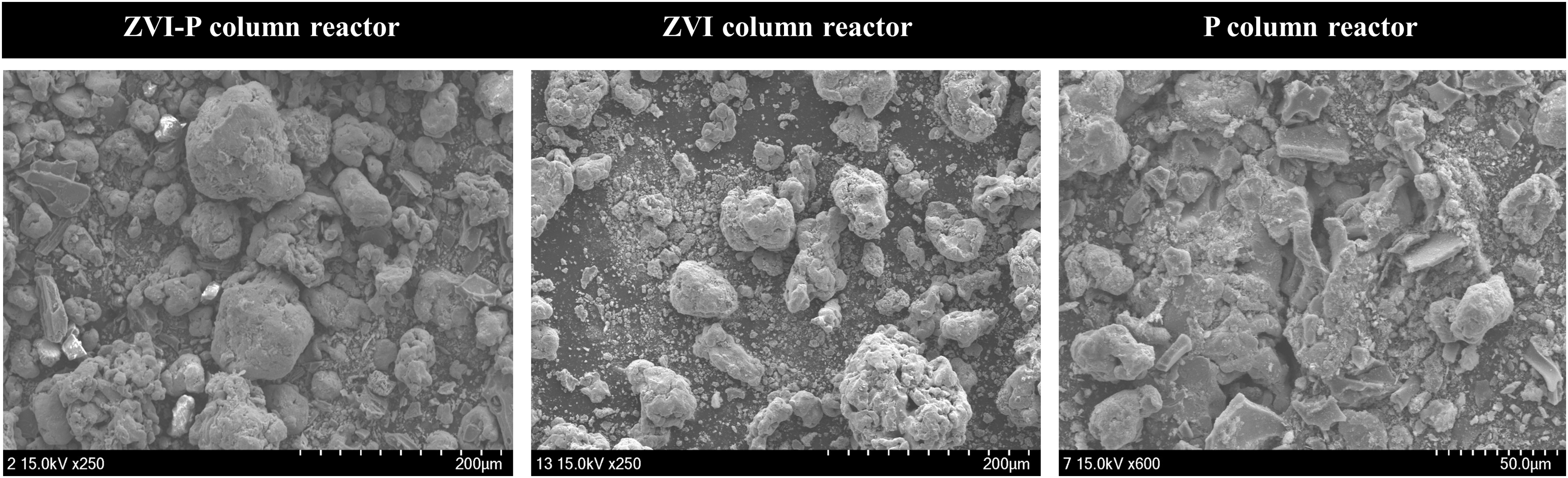
SEM images of the reactive materials in the P, ZVI, and ZVI-P column reactors. The materials represent the overall condition in reaction volume 2. SEM, scanning electron microscope.
Rate of treated water discharge
The daily discharge rate of the P column reactor was continuous (except minor interference), and the average discharge rate for the P column reactor was 15 L/day (Fig. 6). The P column reactor, like the ZVI-P column reactor, exhibited a continuous discharge rate of treated water throughout the experimental period.
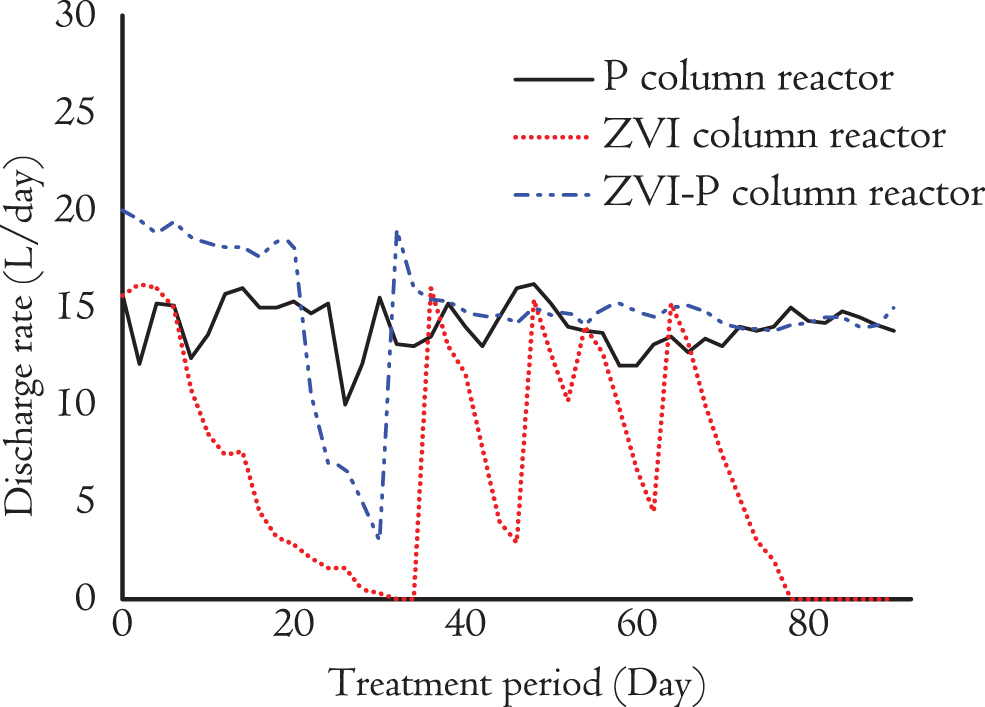
Discharge rates of P, ZVI, and ZVI-P column reactors.
The daily discharge rate of the ZVI column reactor exhibited fluctuations at regular intervals because of the clogging phenomena (Fig. 6). The discharge values were as high as 16 L per day and as low as 0 L. After deblocking, treated discharge water increased significantly, followed by a sharp decrease.
The daily discharge rate through the ZVI-P column reactor was constant (average discharge: 13.7 L/day) throughout the reaction period (Fig. 6). There was a decrease in the discharge rate from 20th to 30th day because of flow disruption at the inlet port. After deblocking the inlet port, the daily discharge was constant. ZVI column reactor exhibited regular flow disruptions because of the clogging phenomena in the reactor region near the inlet port. Deblocking was conducted regularly when the daily discharge rate of treated water showed a sharp decrease.
Discussion
The P column reactor exhibited a continuous discharge rate and almost complete removal of arsenite and Fe(II) ions because of the adsorption capacity and the developed porous structure in the reactive material (i.e., pumice). Batch experiments carried by other researchers showed that the adsorption process at an even higher concentration of arsenites was because of the highly developed porous structure and the cation exchange properties of the pumice (Nasseri and Heidari, 2012; Körlü et al., 2015; Hao et al., 2018; Ranjan et al., 2018). Indah et al. (2018) observed the adsorption of iron using pumice, and it is probable that cation-exchange mechanisms were characteristic.
The adsorption capacity of iron had a slight dependence on pH, and thus it was easy to remove iron irrespective of the pH (Sterba et al., 2008). The adsorption capacity of ions with higher valencies would be higher than that of lower valencies, and this could have impacted the adsorption process of arsenites (Steinhauser and Bichler, 2008). The concentration of the arsenite species in groundwater was low and could be adsorbed by pumice irrespective of the low valency.
The synthetic groundwater flowed through the porous structure and around the reactive material, and during this time, gas bubbles were generated. The gas produced could have influenced the upward flow of contaminants and the redox reaction of the same contaminants. We could not explain why gas bubbles were generated in the P column reactor. In addition, the P column reactor showed that at the influent chute, the arsenic(III) species were not accumulated at all. The elemental concentration of arsenic(III) species did not increase with the height of the column, which could signify complete adsorption of arsenite: these results support the conclusions made by other researchers (Nasseri and, Heidari, 2012; Ranjan et al., 2018).
Another possible reason for the complete removal of arsenite could have been adsorption and entrapment by the sludge formed in the reactor volume 1; Nguyen et al. (2019) observed adsorption of arsenic by unmodified iron-ore sludge. Other contaminants were not adsorbed because of the crystalline nature of the pumice and the valencies of the species. The adsorption of manganese was not observed, as the pumice's surface was unmodified; Çifçi and Meriç (2017) reported increased adsorption capacity when pumice was impregnated with other materials such as iron. Thus, it is necessary to modify the surface of pumice. Although pumice had a well-developed porous structure for adsorption and constant hydraulic conductivity, the remediation of multispecies-contaminated groundwater was insufficient.
The remediation process of the contaminated groundwater in the ZVI and ZVI-P column reactors were attributed to continuous precipitation adsorption of metal(loid)s in the first reactor volumes. Other researchers reported that the dominant remediation mechanisms for metal(loid) contaminants were precipitation, adsorption, and size exclusion (Madaffari et al., 2017; Bilardi et al., 2019).
When the contaminated groundwater with an initial pH of 6.35 flowed through the PRB, the ZVI (oxidation state = 0) was oxidized, resulting in the generation of various forms of iron species (Fe2+, Fe3+ species) and hydrogen gas (Noubactep, 2008; Hu et al., 2020). The pH of the solution increased (pH >8). As a result, the iron species or oxides created a coating on the ZVI; Noubactep (2008) reported that oxide film was a multilayered porous structure similar to sponge through which metalloid species were adsorbed and coprecipitated. Soluble metals precipitated in the form of hydroxides because of pH increase (Fig. 7). Therefore, parts of the manganese and iron species were probably removed through precipitation at this stage.
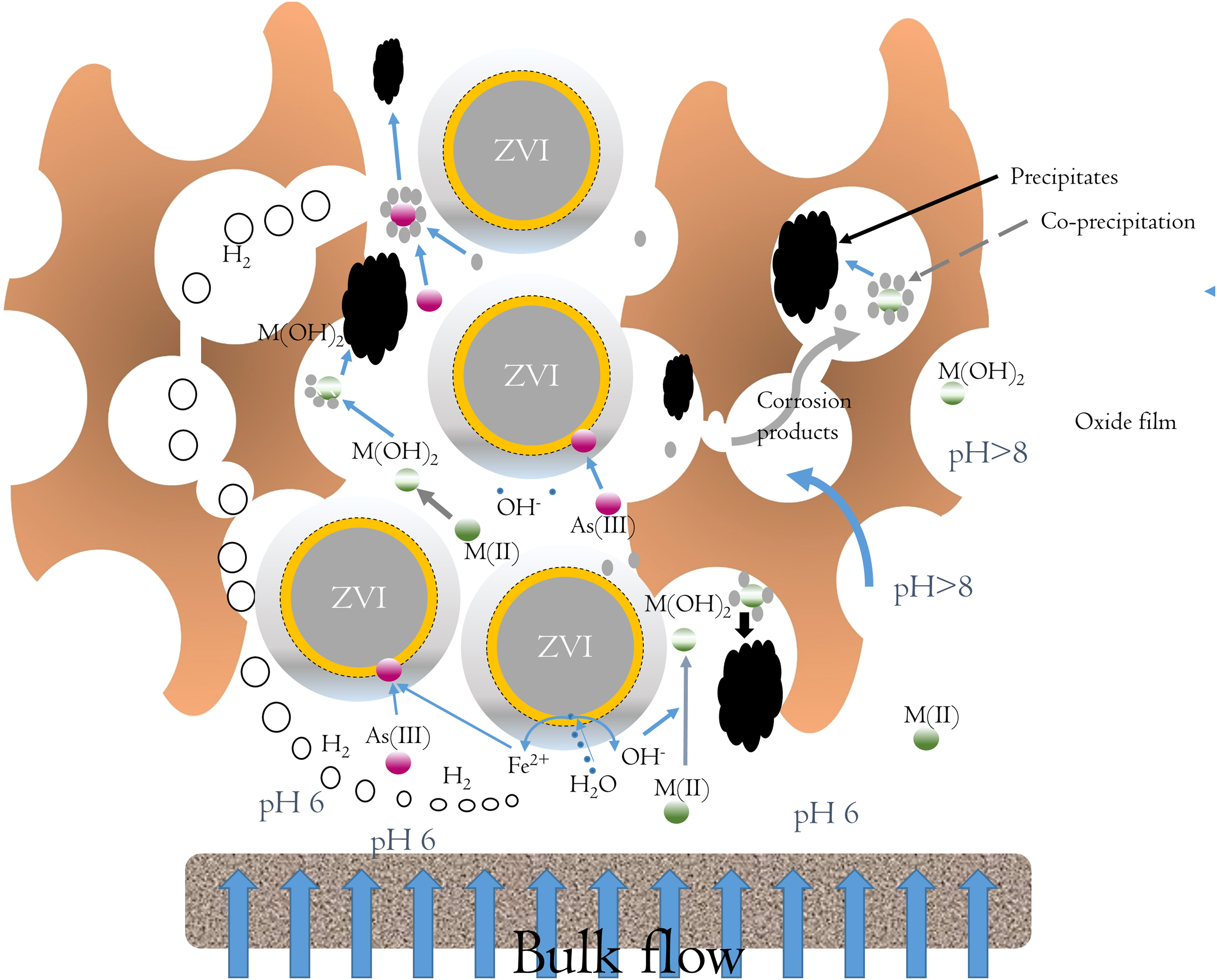
Contaminant removal mechanisms in the ZVI and ZVI-P column reactors. Blue thick arrows represent the groundwater bulk flow. Gray small arrows represent the movement of corrosion products. Blue small arrows represent chemical species and contaminant transport.
The Fe2+ ions generated from ZVI oxidation and the Fe2+ ions in the groundwater percolated to the porous structure of the oxide film together with the contaminants. The accumulation of the iron species in the oxide film, near the ZVI surface, yielded in precipitation of oxyhydroxides (Brown et al., 1999; Noubactep, 2008). The arsenite, zinc, and some manganese species were likely removed through adsorption into the oxide film, followed by entrapment by the oxyhydroxides (Bowell, 1994; Liang et al., 2014; Casentini et al., 2016). Removal mechanisms of these species have been reported (Liang et al., 2014; Agarwal and Patel, 2015; Kumar et al., 2016; Bui et al., 2017).
Iron oxidation and oxyhydroxides precipitation process is a continuous process. After adsorption and entrapment or adsorptive filtration, the oxyhydroxides became denser with less porous structure. The new porous oxide layer formed on the ZVI surface could dislocate the precipitated oxyhydroxides. The dislocated oxyhydroxides would precipitate away from the ZVI (Furukawa et al., 2002; Hu et al., 2020). The dislocated oxyhydroxides adsorbed more contaminants, thereby forming a denser and amalgamated material matrix. SEM images (Fig. 5) showed that the resulting grains with cemented surfaces had large particle sizes relative to the initial ZVI.
Continuous dislocation and replacement of the oxyhydroxides by the newly hydrated oxide layer resulted in the volumetric expansion of the corrosion products (oxyhydroxides) surrounding the ZVI. Thus in a ZVI column reactor with compact packed bed, the corrosion products increased in volume until all the voids between the ZVI particles were clogged (Caré et al., 2013).
As mentioned previously, clogging is one of the problems associated with ZVI column reactor. Clogging was concentrated at the inlet of the column reactors; published research showed that porosity losses were concentrated at the inlet of the column reactors (Kamolpornwijit et al., 2003; Liang et al., 2003). This meant the reactive material past the clogged area could not be used in the remediation process. The ZVI column reactor required a regular unclogging procedure for the rest of ZVI to be useful. The reactivity of the ZVI was inversely proportional to the particle size; big particle size would not solve the permeability loss problem.
ZVI-P column reactor system enhanced the continuous contaminant remediation process because of the nonexpansion factor created by the addition of pumice. One of the benefits derived from the ZVI-P column reactor system was that the remediation functions of the ZVI were integrated with those of pumice. The asymmetrical bed geometry and interparticle (ZVI and pumice) space in the admixtures facilitated the upward transport of water (Fig. 7). Hu et al. (2020) reported that the corrosion products generated by ZVI precipitate away from the core ZVI particle, and they could be attached to a surface or suspended in solution. We suppose that the corrosion products (oxyhydroxides) moved away from the core ZVI.
In the process, the products removed contaminants from the groundwater through adsorptive filtration. Noubactep (2008) showed that precipitation with contaminants often takes place in a matrix composed of corrosion products near the surface and not on the surface. The amalgamation of these corrosion products resulted in the formation of large deposits, which could be deposited in the porous structure of pumice (Fig. 7). The irregular bed packing could have acted as a “storage space” for precipitates and transport network for treated water. From the SEM images, grains with cemented surfaces were characteristic (similar to morphology in the ZVI-P column reactor); this was an indication of the formation of precipitates. Similar clogging phenomena have been reported (Fronczyk and Pwaluk, 2014; Pathirage, 2014; Madaffari, 2015).
In essence, the daily discharge of the treated groundwater was constant. The irregular porous bed geometry could have played a significant role in the mixing or interaction between the contaminants and the corrosion products (Fig. 7). Therefore, the untreated contaminated water could pass through the reactive material by convection to other sections of the porous structure for further precipitation and adsorptive filtration. According to the ICP, XRD, and SEM-EDS data, all the contaminants were likely removed at reactor volumes 1 and 2.
The other benefit of the ZVI-P over the ZVI column reactor was that the precipitation did not result in the hydraulic or permeability loss of the column reactor. On the contrary, the ZVI column reactor laden with precipitates could have reduced the permeability. More contaminant precipitation was effected in the reactor volume than at the inlet chute thanks to the porous structure. The contaminants were transported upwards to the asymmetrical bed geometry because of the convection effect. The formation of these precipitates (in the sand layer at inlet chute) was because of adsorptive filtration between the denser and fluid corrosion products and contaminants. This region could have been a “dead-zone” in as far as groundwater transport was concerned. Therefore, denser corrosion products would have sipped through the admixtures' structure and filtered out the contaminants.
Henderson (2010) observed that precipitate and gas buildup could be the dominant factors leading to hydraulic loss of the PRB. Published research showed that gas buildup in the PRB system could reduce the permeability decline of up to 82% when gas accumulated in 10% of the voids (Zhang and Gillham, 2005; Kamolpornwijit and Liang, 2006). In our case study, gas buildup in the column reactors (ZVI and ZVI-P) reactor was because of the continuous oxidation of ZVI as mentioned previously and reported in other publications (Kamolpornwijit et al., 2003; Henderson and Demond, 2011; Madaffari, 2015). The absence of a proper ventilation system could result in gas buildup in between the reactive material, occupy voids, and result in gas locks (Reardon 2005, 2014; Kamolpornwijit and Liang, 2006; Henderson and Demond, 2011).
Thus, thanks to the application of the asymmetric reactor bed geometry, gas buildup could be vented out through buoyant motion and bubble coalescence (Kamolpornwijit and Liang, 2006). Li et al. (2018) reported that different interfaces or structures could manipulate gas bubbles' characteristics and transport. Therefore, the porous network structures used in our study could have aided the movement of bubbles generated from reactor volume 1. This indicates that the ZVI-P reactive mixture could remediate the multispecies-contaminated groundwater at a constant hydraulic conductivity for at least 90 days of experiment period.
At the exit chute, the pH of the treated water reduced to 6.8 ± 0.4 because of the increased residence period of water treated in the column reactor.
Conclusion
This experimental study investigated the application of pumice (P), ZVI, and ZVI-P mixture as reactive barrier materials for the removal of heavy metals and metalloids from contaminated groundwater. We tested the benefits of using loose and asymmetrical reactor bed geometry in the multispecies contaminant remediation process. The following conclusions were made from the experimental results: (1) ZVI was the effective component in the complete remediation of multispecies contaminants through precipitation and adsorptive filtration in the ZVI-P and ZVI column reactors. (2) Pumice and ZVI admixture provided additional voids for corrosion products and conduits for gas venting. (3) Constant volume discharge was maintained in the ZVI-P column reactor with no contaminant breakthrough during the 90-day period. (4) ZVI column reactor had no contaminant breakthrough during the 90-day period, yet frequent clogging was observed. (5) The dominant remediation mechanism in the P column reactor was cation exchange, and iron together with arsenites species was remediated. (6) Contaminant breakthrough of zinc and manganese were observed after day 8 in P column reactor because of the nature of pumice.
This experimental study revealed the importance of using mixtures rather than singular material as reactive barriers. This study demonstrated the importance of using irregular reactor bed geometry to address the gas buildup and venting problem. This experiment also showed the possibility to achieve constant hydraulic conductivity values when a mixture of materials was used relative to the ZVI column reactor.
Footnotes
Acknowledgment
The authors acknowledge the valuable comments of the Editor-in-Chief and the reviewers from the Environmental Engineering Science journal. The authors also acknowledge the support provided under the BK 21 Plus Program, Republic of Korea.
Author Disclosure Statement
No competing financial interests exist.
Funding Information
This research received no specific grant from any funding agency in the public, commercial, or not-for-profit sectors.

References
Supplementary Material
Please find the following supplemental material available below.
For Open Access articles published under a Creative Commons License, all supplemental material carries the same license as the article it is associated with.
For non-Open Access articles published, all supplemental material carries a non-exclusive license, and permission requests for re-use of supplemental material or any part of supplemental material shall be sent directly to the copyright owner as specified in the copyright notice associated with the article.
