




Abstract
The goal of this research is phytoremediation of uranium-contaminated soil. In the preliminary investigation, Macleaya cordata (Willd.) R. Br. was found to grow in abundance around uranium tailings. Afterward, the field tests to remove uranium from the contaminated soil by the M. cordata (Willd.) R. Br. were conducted. After 3 years of treatment, the contents of uranium in the shallow, middle, and deep layers decreased by 51.2%, 16.6%, and 90.3%, respectively, indicating the transfer of uranium from the tailings. The content of uranium in the roots, stems, and leaves of M. cordata that had been planted for 3 years was significantly higher than that in the first year, indicating the transfer of uranium to M. cordata (The uranium content of the part of M. cordata underground is 1.870 ± 0.288 mg/kg and the content in the aboveground part is 79.815 ± 0.911 mg/kg after 3 years). The results of Mi-Seq indicated that microbial communities were exposed to variations and that microbes, such as Bacillus, Lactococcus, Nitrosomonadaceae, and Roseiflexus, were involved in the remediation of uranium-contaminated soil, demonstrating that the reduced uranium content in the tailings is a result of the joint action by plants and microbes. An infrared analysis indicated that the -OH and COO- groups are the main functional groups in M. cordata involved in the bioconcentration of uranium. Moreover, as time advances, the uranium in the tailings was readily concentrated by the plant, demonstrating that the remediation of radioactive contamination by M. cordata is viable.
Introduction
While uranium mining and milling have made great contributions to the development of atomic energy in China, the resulting tailings and uranium-containing wastewater have impacted the quality of the surrounding soil and water environment substantially (Xiang et al., 2019). Considered as a way to mitigate such an impact, phytoremediation of heavy metals and radioactive contaminants is environmentally friendly, cost-effective, and suitable for large-scale pollution control; hence, it is applicable for industrial applications. However, the toxic effect of uranium on plants will reduce the effect of phytoremediation (Lai et al., 2020). The removal efficiency of uranium by plants has been greatly improved by adding plant growth regulators (Chen et al., 2020a), chelating agents (Chen et al., 2020b), and endophytic bacteria (Ahsan et al., 2017).
As a plant that is highly effective at bioconcentration, Macleaya cordata (Willd.) R. Br. exhibited excellent resistance to pollution stress and strong bioconcentration capability toward various heavy metals (Hu et al., 2019; Pan et al., 2019). Sha et al. (2019) established and investigated a multi-plant remediation system consisting of M. cordata and other plants with high bioconcentration capability for remediation of uranium-contaminated soil, demonstrating that the multi-plant remediation system had an efficiency superior to that of single plant systems. This is because the coexistence of multi-plants changed the original microbial community structure of the soil and enhanced the phytoremediation capability of the system (Sha et al., 2019). To date, a variety of studies have demonstrated that microbial communities play a key role in plant growth and its remediation of uranium-contaminated soil.
This study aims at exploring a novel method for the phytoremediation of uranium that contaminates the soil. The M. cordata seedlings, which were cultivated in their early stage, were planted directly in the uranium tailings. Afterward, a comparative study on the uranium contents in the tailings and plants before and after 3 years of planting was performed. The variations of the microbial community structures in the tailings were analyzed, and the functional groups in the plant involved in the remediation of uranium-contaminated soil were analyzed to mechanistically study the role of M. cordata in the remediation of the contaminated sites. These experiments enhance the exploration of the feasible application of the plants in engineering practice and provide a theoretical basis for future research.
Materials and Methods
Materials
Many well-established specimens of M. cordata were found near a tailings warehouse in south China. In a previous study, it was observed that the contents of uranium in their leaves reached 0.111% with high absolute accumulated uranium mass. Moreover, the uranium content in the aboveground part of the plant is higher than that in the belowground part of the plant. Thus, the ability of M. cordata to perform the remediation of uranium tailings was investigated.
Planting of M. cordata
M. cordata seed germination under experimental conditions
M. cordata seeds were shelled and disinfected with 1% sodium hypochlorite for 10 min, immediately followed by washing with deionized water three to five times and soaking in deionized water for 12 h. The seeds were moved to a petri dish containing absorbent cotton in a light treatment incubator (28°C) to germinate for 2 weeks, as shown in Fig. 1.

Macleaya cordata seed germination.
Seed germination in the soil
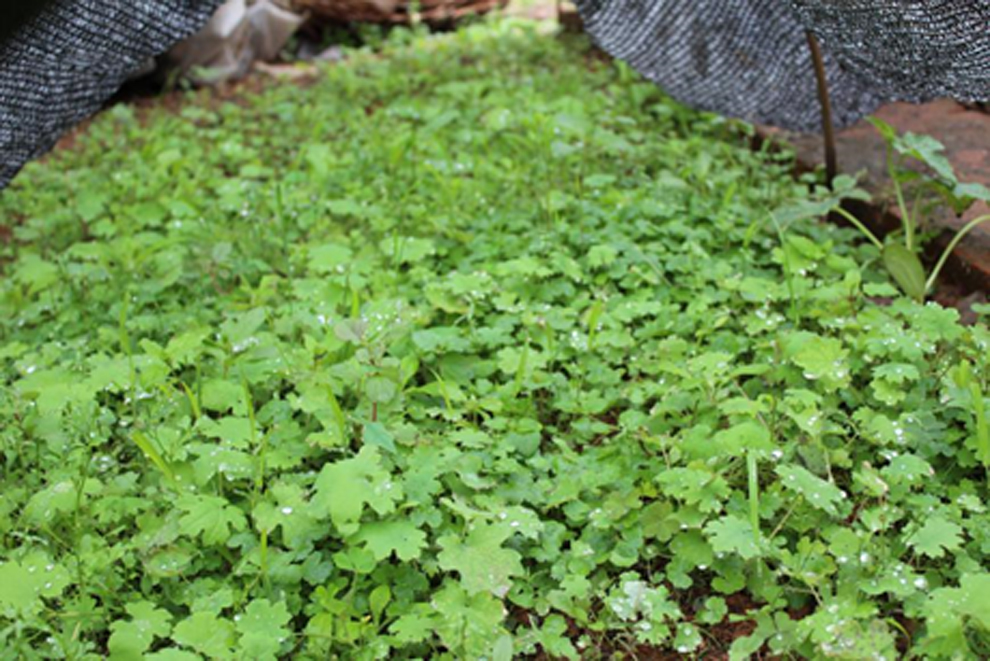
M. cordata seeds were shelled and disinfected with 1% sodium hypochlorite for 10 min and followed by immediate washing with deionized water three to five times and soaking in deionized water for 12 h. They were finally moved to a greenhouse for natural germination for 2 weeks, as shown in Fig. 2.
Seeds germinating in a greenhouse.
Transplantation of M. cordata
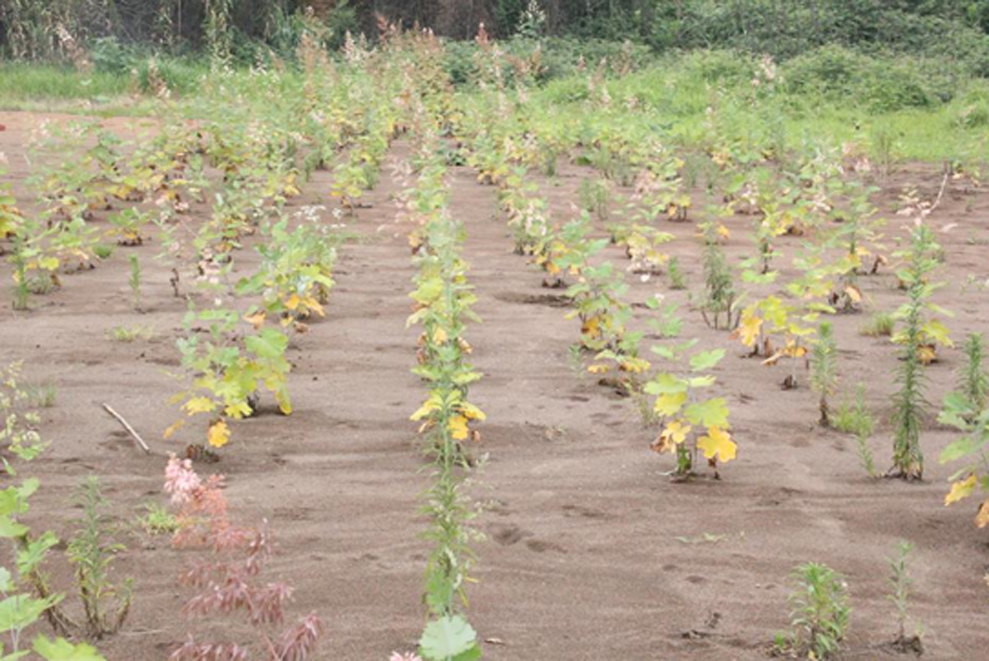
The seedlings that had germinated for 2 weeks were removed and transplanted into the uranium tailings after they had grown to maturity. There are 5 rows with 20 plants each to make up 100 seedlings of M. cordata in total. They were watered regularly every morning and evening, particularly during the dry summer. The mature M. cordata is shown in Fig. 3. Samples of the tailings were collected and tested after 1 and 3 years of growth.
M. cordata after transplantation.
Measurements of uranium content in M. cordata and tailings
Characteristics of uranium tailings
The characteristics of the uranium mill tailings are presented in Table 1 (Li et al., 2011).
Characteristics of the Tailings Deposited in the Uranium Mill Tailings Repository in South China
Treatment of M. cordata samples
One and 3 years after planting M. cordata, fresh samples of the roots, stems, and leaves were collected at tailings sampling sites Numbers 1, 2, and 3, and rinsed three times with deionized water after rinsing with tap water. Afterward, they were dried with filter paper, and the fresh weight was weighed. The sample was blanched at 85°C for 30 min in a blast drying oven, cooled to 65°C, and baked to a constant weight (48 h). After that, the sample was weighed, crushed to 0.5 mm, and placed in the drying apparatus for a standby application. Five grams of the plant sample was weighed in a ceramic crucible and gradually heated to 550°C in a muffle furnace, ashed for 3 h, and 1.5 mL HCl (37%) was added to dissolve the plant sample after cooling. The sample was diluted to 25 mL with deionized water, and the pH was immediately adjusted to 1–2 with 65% concentrated nitric acid. The sample was placed at 4°C for testing. Three parallel samples were collected for each sampling condition, as described earlier. The bioconcentration factor (BCF) was calculated using Equation (1), and the transfer factor (TF) of uranium was calculated using Equation (2) (Rastmanesh et al., 2010).
where BW is the bioconcentration weight; Ctailings is the uranium content in the tailings (mg/kg); Cground is the uranium content in the ground part (mg/kg); and Cunderground is the uranium content in the underground part (mg/kg).
Treatment of the tailing samples
The tailings samples were collected from the shallow (20 cm), middle (40 cm), and deep (60 cm) levels under the ground before and after 3 years of planting M. cordata. The tailings around the root of M. cordata were collected. Approximately 20 g of the sample was removed by quartering and naturally air-drying the disk. Afterward, the air-dried sample was crushed in a grinder for 5 min, poured out, and passed through a 100-mesh sieve. A total of 0.5 g of the resulting soil sample was weighed and placed in a polytetrafluoroethylene crucible (accurate to 0.1 mg). The soil sample was moistened with a small amount of water. Ten milliliters of concentrated HCl was added to the sample, and it was slowly heated on an electric hot plate. When the solution had evaporated to ∼5 mL, 15 mL of concentrated HNO3 was added. The sample continued to be heated until the mixture had nearly thickened. Then, 10 mL of hydrofluoric acid was added and the heating continued, followed by addition of 5 mL of HClO4. The mixture was covered to decompose and eventually, when the crucible was tilted, a nonflowing viscous mixture could be observed. The inner wall and the lid of the crucible were washed with water. The residue was dissolved through a wet heat treatment. After cooling, the sample was diluted to 100 mL with water and stored at 4°C for testing. Three parallel samples were set up in each of the treatments. Calculations were performed using Equation (3):
where C is the concentration of uranium (mg/kg) in the tailings sample; C1 is the concentration of the sample solution (mg/L); C0 is the blank concentration of the samples treated in the same batch (mg/L); V is the constant volume (mL); and M is the quality of tailings after decomposition (g).
Test method
The determination of the contents of uranium in the tailings and M. cordata were done using the common acid decomposition method and alkali fusion method in “Modern Analysis Methods of Elements in Soil.” The amount of uranium in the treated samples was determined by inductively coupled plasma–mass spectrometry (ICP-MS) (Agilent Technologies 7700 Series, Santa Clara) with a detection limit of 0.03 ng/L for U.
Analysis of microbial communities in tailings
The tailings samples with and without M. cordata plants were delivered directly to Hunan Zhongyan Environmental Protection Technology Co., Ltd. (Hunan, China) to analyze the changes in the microbial communities and the structure of the microbial communities using an Mi-Seq system.
Statistical analysis
The comparative analysis of the data was performed with SPSS 18.0 software (IBM, Armonk, NY), and the results of an LSD analysis were expressed as “mean ± standard deviation.” When the significance level α is below 0.05, there is a statistically significant difference.
Analysis of functional groups
The functional groups in the M. cordata plants involved in the remediation of uranium-contaminated soil were analyzed by infrared (IR) spectroscopy. The samples of both the aboveground and belowground parts were sent to Shanghai Huiming Testing Equipment Co., Ltd. ((Shanghai, China) for sample analysis after drying and crushing.
Results and Discussion
Measurement of the uranium content in tailings
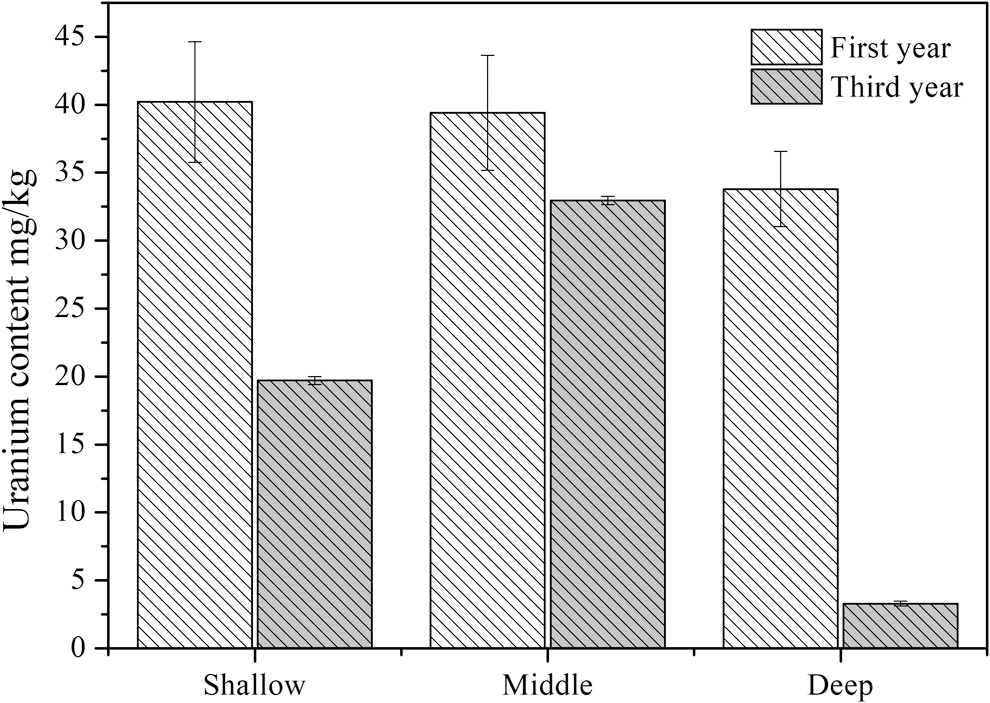
The uranium contents in the tailings are shown in Tables 2 and 3 and Fig. 4.
Comparison of uranium content in tailings.
Uranium Content in the Tailings 3 Years After Planting
# Indicates the sampling point. The tailings samples were collected from the shallow (20 cm), middle (40 cm), and deep (60 cm) levels of the ground.
Uranium Content in the Tailings Before Planting
# Indicates the sampling point. The tailings samples were collected from the shallow (20 cm), middle (40 cm), and deep (60 cm) levels of the ground.
As the tables and charts indicate, the content of uranium in the tailings in the third year is lower than that in the first year in all samples. In particular, the content of uranium in the tailings in the depth of 60 cm decreased significantly, indicating that the M. cordata planted there was capable of performing the phytoremediation of the uranium tailings through its ability to bioconcentrate the uranium. The decrease of the content of uranium in tailings at the depth of 60 cm was the most remarkable, because this region was within the typical range of growth of the roots of M. cordata, as well as the primary area of the bioconcentration of uranium by the plant. It also demonstrated that the bioconcentration weight in the range reached by the root of the plant was greater.
Measurement of the uranium content in M. cordata
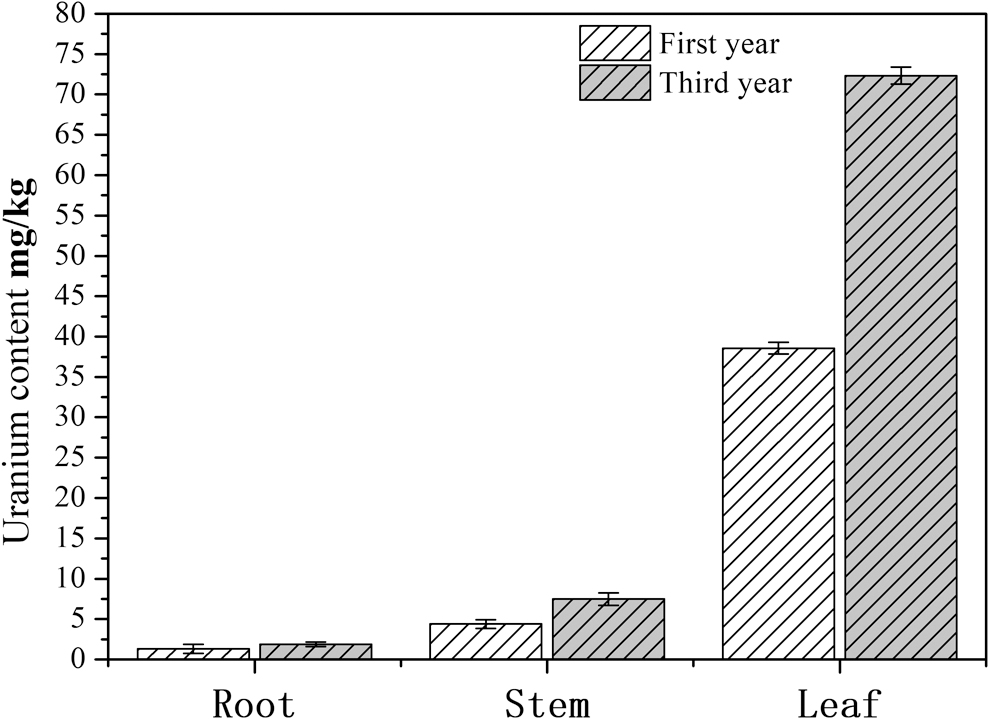
After pretreatment, the contents of uranium in the roots, stems, and leaves of M. cordata and its bioconcentration weights were measured and summarized in Table 4 and Fig. 5.
Uranium contents in M. cordata.
Uranium Content in Each Part of Macleaya cordata and Its Bioconcentration Weight After Being Planted for 1 and 3 Years
Measured value ± standard deviation, n = 3.
By performing a comparative analysis on M. cordata samples collected in the first year and the third year, it was found that the uranium contents in the roots, stems, and leaves after M. cordata had been planted for 3 years were significantly higher than that in the first year, demonstrating that M. cordata enriched its system with the uranium from the tailings.
Transfer factor is an important indicator to evaluate the ability of the plant to transfer uranium from the underground to the ground, and a larger TF indicates a stronger transfer ability (Zehra et al., 2020). BCF reflects the bioconcentration capability of the plant toward uranium in the uranium solution of a certain concentration, and a larger BCF indicates a stronger bioconcentration capability of the plant in uranium of the same concentration (Ahmad et al., 2019). The roots of M. cordata were defined as the belowground part and the stems and leaves were defined as the aboveground part to calculate the magnitude of the transfer factor. A tailings uranium sample of 38.0 mg/kg was measured, which is the same as the average value. The TF and BCF on uranium were calculated, and the results are shown in Table 5.
Transfer Factor and Bioconcentration Factor of Uranium by Macleaya cordata
BCF, bioconcentration factor; TF, transfer factor.
In terms of the results, the TF of the uranium was higher in the first and the third year after the planting of M. cordata, and the content of uranium in the aboveground part was much higher than that in the belowground part. In particular, the content of uranium in the leaves of M. cordata was the highest. After planting for 3 years, the BCF to uranium ratio was close to 1. This value indicates that M. cordata is capable of hyperaccumulating uranium. These studies suggested that the phytoremediation of uranium tailings by M. cordata is viable. After the 3-year planting, the bioconcentration effect on the uranium had obviously improved, and the BCF had doubled, indicating a remarkable degree of remediation. The preliminary conclusions are that the increase in M. cordata BCF after several years is due to the increase of uranium activity in the tailings and the change of the internal environment of plant.
Diversity of microbial communities in the tailings
The structure of microbial communities in the sediment was analyzed by the Mi-Seq system and monitored. The result is shown in Fig. 6.

Structure diagram of the microbial communities.
A statistical analysis was performed on the results of Mi-Seq, with a# representing the tailings planted without M. cordata, whereas b# and c# were representing the tailing samples that had been planted. Microbes with a genus level >5% are listed to analyze the role of microbes in the soil samples analyzed. The results are shown in Table 6.
Microbes That Were Present at >5% at Each Site
Bacillus is a predominant microbe that is capable of adsorbing uranium (Manobala et al., 2019; Yuan et al., 2019; Zhang et al., 2019), and Manobala et al. found that uranium could be adsorbed on its surface and combined with amide groups, -OH and amino groups (Obeid et al., 2016). Obeid et al. (2016) demonstrated that GSH in Lactococcus could mitigate the toxicity of uranium. Wang et al. (2020) found that Nitrosomonadaceae could promote the ability of the plant to metabolize carbon. Roseiflexus is a beneficial microbe for plants that helps the plant to survive in soil containing heavy metals (Yang et al., 2019). The presence of these functional microbes demonstrated that the reduced content of uranium in the tailings is a result of the joint action of plant and microbes. The role of microbes in remediation is firmly established.
Functional groups involved in the bioconcentration of uranium
The functional groups involved in the bioconcentration of uranium by the plant were investigated using Fourier transform IR spectroscopy, as shown in Figs. 7 and 8. The original absorption peak at 3423.08 shifted to 3446.23 and another absorption peak shifted from 1039.46 to 1046.21, both of which indicate a -OH stretch in the carbohydrate C-OH after M. cordata was planted in a uranium-contaminated area, demonstrating that the -OH in M. cordata made a substantial contribution to the bioconcentration of uranium. Previous studies revealed that the -OH groups in plants played a key role in the process of integrating with uranium (Nie et al., 2015; Naeem et al., 2017; Bayramoglu et al., 2018; Boghi et al., 2018).
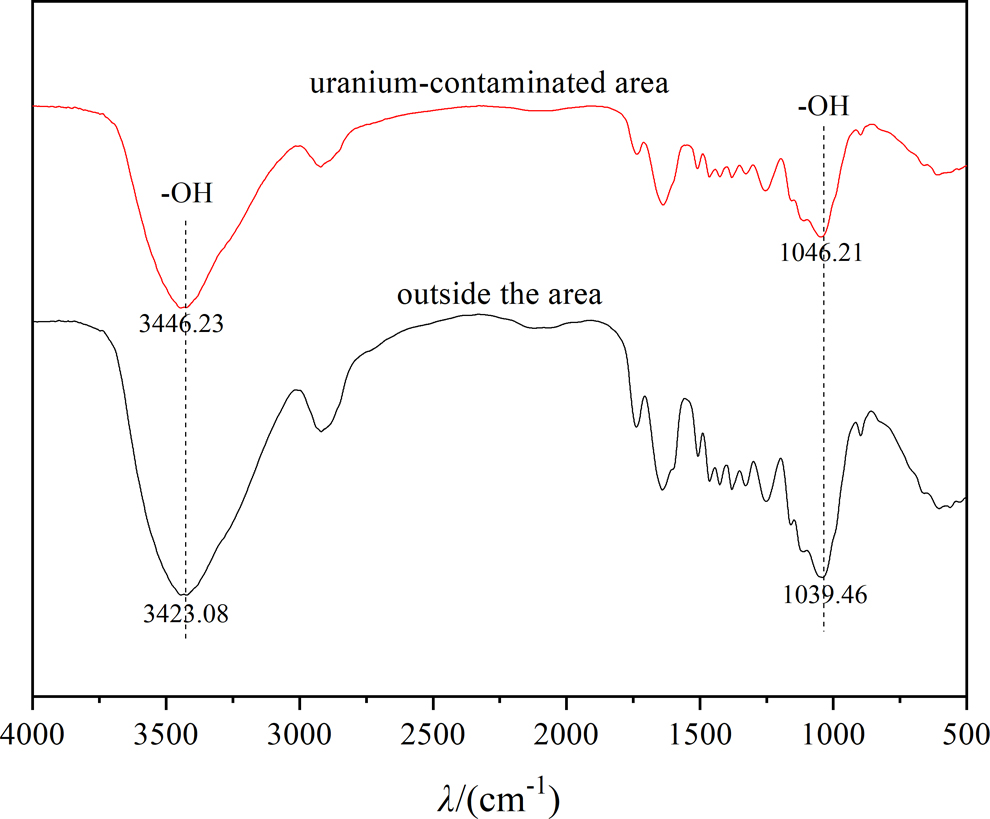
FTIR spectral result of the belowground part. FTIR, Fourier transform infrared spectroscopy.

FTIR spectral result of the aboveground part.
According to the analysis of the IR characterization results of the M. cordata stems, the absorption peak at 3448.16 shifted to 3420.19 and another absorption peak shifted from 1052.96 to 1076.10, which indicate a carbohydrate C-OH stretch or an alcohol C-OH stretch, confirming that the -OH contributes to the uranium binding in the stem of plant. After M. cordata was planted in an area contaminated with uranium, the absorption peak at 1380.81 disappeared and a new absorption peak at 1424.20 appeared. Compared with the IR characterization results of the M. cordata stem, it was found there were two absorption peaks at 1425.76 and 1379.84 in the root, and the peak segment is the COO- symmetrical stretching of an amino acid, demonstrating that the existence of uranium may affect the structural synthesis of proteins in the stem of the plant and the crucial role of COO- groups in the uranium binding (Bayramoglu et al., 2018; Velasco et al., 2019).
Concluding Remarks
In this research, plant and tailings samples were collected from M. cordata planted in uranium tailings for 3 years. The contents of uranium in the tailings and M. cordata were determined by ICP-MS, whereas the diversity of microbial communities was analyzed using the Mi-Seq method and the functional groups involved in the remediation of uranium contamination in plant were analyzed using IR spectroscopy. The bioconcentration of uranium by M. cordata was discussed through the methods stated earlier, as well as a comparative analysis on data. The experimental results indicate the following:
The content of uranium in the tailings in the shallow, middle, and deep ground had all been reduced after planting M. cordata. In particular, the contents of uranium in the shallow, middle, and deep layers decreased by 51.2%, 16.6%, and 90.3%, respectively, demonstrating a transfer of uranium from the tailings;
The content of uranium in the roots, stems, and leaves of M. cordata that had been planted for 3 years was significantly higher than that in the first year, demonstrating the transfer of uranium from the tailings to M. cordata. In addition, the content of uranium in the aboveground part was higher than that in the belowground part whereas the highest TF at 42.682 and the BCF of the plant at 0.98 in the third year exhibited the most significant remediation effect. In addition, as time advances, the uranium in the tailings would become increasingly enriched.
The results of Mi-Seq indicated that microbial communities were exposed to variations and that microbes, such as Bacillus, Lactococcus, Nitrosomonadaceae, and Roseiflexus, were involved in the remediation of uranium-contaminated soil, demonstrating that the reduced uranium content in the tailings is a result of the joint action of plants and microbes. An IR analysis indicated that the -OH and COO- groups are the main functional groups in M. cordata involved in the bioconcentration of uranium. Moreover, as time advances, the uranium in the tailings was readily concentrated by the plant, demonstrating that the remediation of radioactive contamination by M. cordata is viable.
Footnotes
Acknowledgments
The authors would like to thank the individuals and organizations that have contributed to this study. They thank Hunan Zhongyan Environmental Protection Technology Co., Ltd. (Hunan, China) and Shanghai Huiming Testing Equipment Co., Ltd. (Shanghai, China) for their analysis of the samples.
Author Disclosure Statement
No competing financial interests exist.
Funding Information
This research was supported by the Natural Science Foundation of Hunan Province (Grant No. 2018JJ2330) and the Scientific Research Project of Hunan Provincial Department of Education (Grant No.16B223).