




Abstract

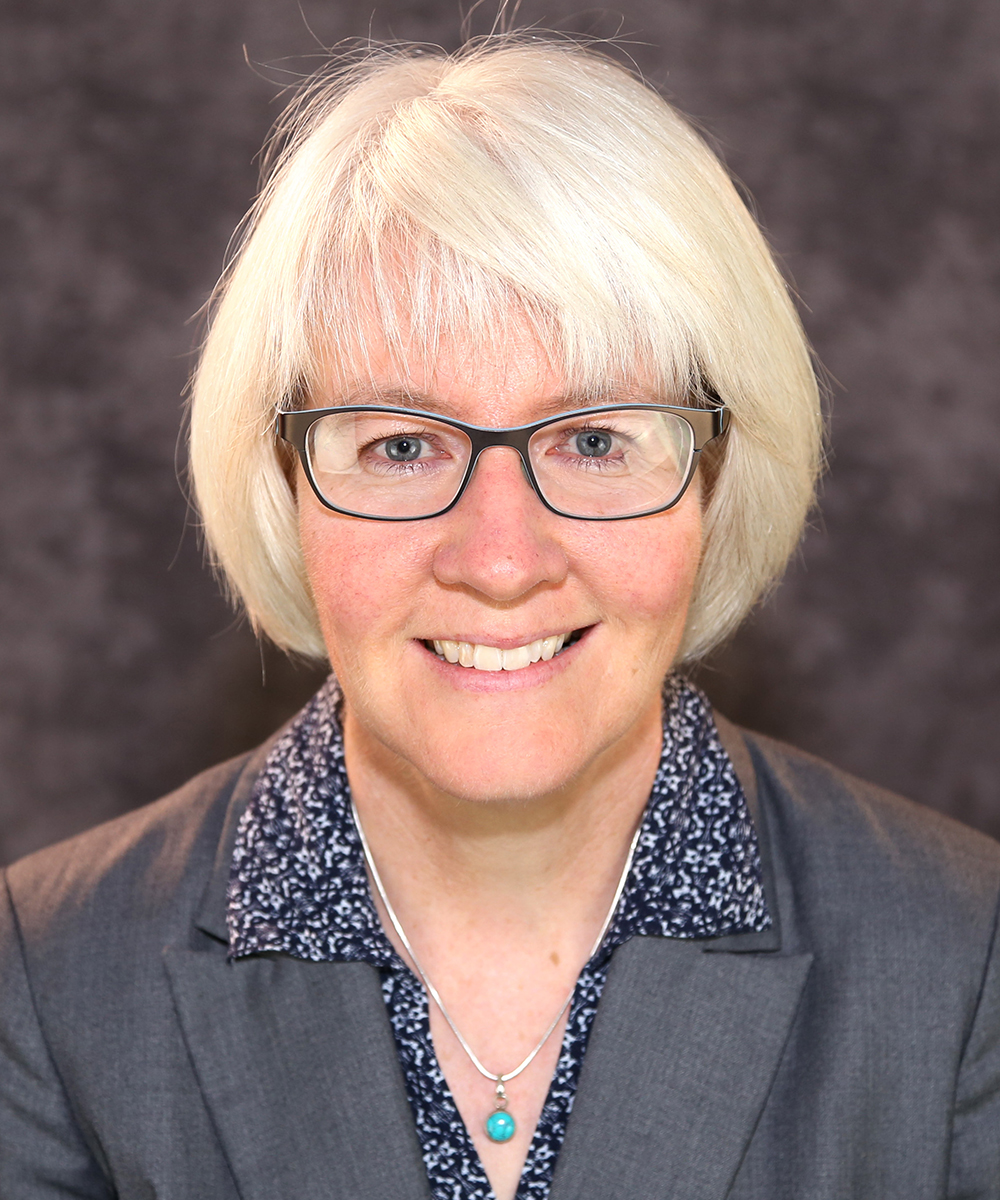
Happy New Year! As someone who, to quote my family, “has never really left school,” September is a time of professional renewal. This is the case too for the AEESP organization as it moves into its 60th year of operation. The leadership of recent AEESP Presidents Joel Ducoste and Bill Arnold to launch and implement a new strategic plan has renewed and refocused the AEESP organization as it moves toward a Diamond Anniversary in 2023. The iconic characteristics of a diamond—shining brilliance and strength—are also emblematic of the AEESP membership.
Indeed, the participants in the strategic planning efforts affirmed the strongest asset of this organization to be the lived experience of the whole AEESP membership. The collaborative contributions of members' ideas and skills have sustained AEESP as an all-volunteer organization through six decades. Most recently, the excellent and inspiring 2022 AEESP Research and Education Conference was the product of the collective efforts of 4 academic institutions, >100 workshop organizers, and >800 attendees! What an amazing organization!
The 2022 AEESP Research and Education Conference challenged us again, as an organization, to imagine and mobilize the roles of environmental engineers and scientists in solving problems laid out as the aspirational UN Sustainable Development Goals and the National Academies Grand Challenges of Environmental Engineering. AEESP can rise to this challenge as a community because this is the one organization that brings together professors from across the breadth of environmental engineering and science practice and application.
To achieve these ends, AEESP will continue to be guided by our strategic plan for our members, as environmental engineers and scientists, to advance solutions to these hugely complex problems, along with the full team of environmental professionals—other technical specialists, social scientists, economists, policy makers, and stakeholders.
As we move into our 60th year as an organization, it is fitting to reflect on the vision of AEESP that emerged from the strategic planning efforts: “AEESP is a collaborative and supportive community of diverse researchers and educators that advances the professional development of its members to be successful innovators and leaders in creating solutions to local, regional and global environmental problems.” Outgoing President Bill Arnold led efforts during 2021–2022 to realize this vision by re-energizing and empowering AEESP committees with activities across the three themes of the strategic plan:
Foster member connections by providing programs for members to develop academic networks and skills. In the past year, AEESP has maintained programs with a tradition of success, such as early career faculty development and new faculty mentoring. AEESP has added career showcases and committee conversations to develop midcareer and leadership mentoring programs that address the unique nature of the environmental engineering and science discipline. Increase societal impact of environmental engineering and science scholarship and creative expression. One highlight is strategy development for identifying opportunities to place AEESP members on science advisory boards and other venues for policy guidance. A larger initiative was the creation of a task force on community-engaged research in environmental engineering and science that will report out in this coming year. Reimagine the skills necessary for future environmental engineers and scientists to provide solutions to environmental problems. This involved stronger engagement with state-of-the-art practice through sustaining member relations and potential collaborations to the K12 pipeline with the North American Association for Environmental Education.
The cross-cutting concept of equity mindset to create an inclusive climate in all of the organization's work across these themes was advanced by AEESP joining an ACCESS+ cohort in May 2021. This National Science Foundation-funded initiative, amplifying the alliance to catalyze change for equity in science, technology, engineering, mathematics (STEM) success, aims to advance inclusion within STEM disciplines through policies, practices, and programs within STEM professional societies. These complement on-going efforts by STEM professionals to create inclusive education and workspace culture.
At this transition point, I share my deepest appreciation of Bill's leadership on these initiatives. I also note the personalized attention that Bill committed to understand and support the board members, committee chairs, and other stakeholders. He made sure that they each had the resources and strategies to be successful in their roles. His approach is truly a great model to emulate as we undertake the annual AEESP leadership transition.
The high-level initiatives of AEESP in the 2022–2023 year will comprise both on-going and new activities.
Moving AEESP to a diversity, equity and inclusion-engaged organization. AEESP will maintain momentum to sustain and develop committee projects that were launched in this past year. Periodic engagement through bimonthly virtual coffee hours will allow us to come together around thematic topics. Transparency across the organization will be increased with the improved website, for example, clarity on joining committees and access to the strategic planning documents. The biennial conference cycle will be returned to odd-numbered years with the June 2023 AEESP Research and Education Conference hosted by Northeastern University in Boston, MA.
Throughout AEESP, we will look to continue practicing and implementing best practices as we learn from our engagement with our ACCESS+ cohort. Our organizational scan indicated that an important starting point is, understanding the members whom we serve through more detailed data collection.
Education for a rapidly changing future. As a growing number of AEESP members are building out critical research discovery in thematic grand challenge goals, we need to come together as a community to discuss the accompanying adjustments in educational training. The National Academies of Science, Engineering and Medicine report charts out an educational agenda prioritizing systems thinking, decision making, community engagement, and communication skills. Implementation brings some unique challenges for environmental engineering professors who are usually affiliated with a smaller sized program in their home departments.
Fortunately, the challenges of low carbon energy futures, water scarcity, and resource circularity are recognized in many engineering professions, so there is opportunity for environmental engineers and scientists to provide leadership to other disciplines as well. Furthermore, the rapid and continued growth of ABET-accredited environmental engineering programs prompts reflection on graduate student training as the advanced specialization for civil and chemical engineering students is now gained in Bachelor of Science programs. In parallel, AEESP will continue to partner with the American Academy of Environmental Engineers and Scientists' renewed efforts to upgrade the environmental engineering body of knowledge.
Pipeline for a diverse workforce. There is an urgent need to expand the environmental engineering and science workforce, both in its diversity and size, to staff the creative teams tasked with solving complex environmental problems. The pathway to that future is through each of our home departments, yet those potential students are unknown. AEESP, through its national reach, has potential to connect member's institutions with a broader pool of students interested in environmental engineering than is achievable through individual faculty or department outreach. Establishing such a pipeline from high school through bachelor and graduate programs to the practice space of sustaining members is a long-term strategy that will require new AEESP partnerships.
I close on a personal note by sharing how honored I am to serve as the president of AEESP for the 2022–2023 year. In the 20 years, since my first AEESP conference, I have benefited immensely, in both professional and personal growth, from my engagement with members of this organization. It is my pleasure to now have a leadership role in collaborating with so many other committed members to sustain the excellent work of this organization.
In particular, I highlight the creativity and enthusiasm of the AEESP board with whom I have enjoyed working this past year—Bill Arnold, Rob Nerenberg, Willie Harper, Treavor Boyer, Junko Munakata Marr, Debora Frigi Rodrigues, Lee Blaney, Susan Masten, and Mira Olsen. With heartfelt thanks, I recognize Bill, Rob, and Willie whose terms end this month. I welcome and look forward to the contributions of our new board members Kara Nelson, Claudia Gunsch, and Donna Fennell. It will be an exciting and unique year as we also end this board's tenure with the 2023 AEESP Research and Education Conference in Boston.