




Abstract
Nitrogen-rich effluents from anaerobic processes present nutrient resource recovery opportunities for fertilizer applications in hydroponic systems, thus facilitating agricultural production in less conventional contexts such as urbanized areas. However, the high ammonia and soluble chemical oxygen demand, which is common in anaerobic digestate, can inhibit crop development in a hydroponic system, requiring conditioning to enable optimal performance of the system. This study examines the use of three nutrient sources to support the growth of lettuce (Lactuca sativa) in vertical hydroponic systems: (i) synthetic permeate (SP) solution, (ii) desorption solution (DS) from an anaerobic membrane bioreactor (AnMBR), and (iii) DS modified with acetic acid addition. Two light conditions were used to observe the effect of photon flux (from 150–200 to 10–15 μmol/[m2·s]) on lettuce crop development and nitrification efficiency of the treated AnMBR permeate. Fresh and dry mass of the harvested lettuce crops as well as chlorophyll content were measured as an indicator of crop quality after a 13-day development period. Crops grown under well-lit conditions in DS had harvested fresh weight (2929.0 ± 454.6 mg/plant) than SP-grown crops (2646.2 ± 908.8 mg/plant). The lighting conditions did not significantly impact the nitrification efficiency; thus nitrate, the preferred form of nitrogen for supporting lettuce crop development, was sufficiently available to support crop growth in the recirculating hydroponic systems.
Introduction
Hydroponic cultivation methods facilitate high productivity relative to the resources used. Hence, hydroponic systems are a potential sustainable technology for enabling agricultural production in areas that lack access to essential agricultural inputs (Khan, 2018). Resources of nutrients, water, and land may not always be intended for use in agricultural applications. Agriculture is not always prioritized, especially in urban contexts (Davidson et al., 2015). Densely populated urban areas, for example, do not prioritize agricultural land use areas, creating food insecurity, and even “food deserts,” especially in the developing world.
Several methodologies have been explored to overcome the challenges of lacking access to essential agricultural inputs. Hydroponics are effective for overcoming space constraints and do not depend on soil quality, as nutrition is supplied to the plants through a liquid medium (Resh, 2012). Nutrients are typically provided from a synthetic source. However, organic hydroponics generate nutrient fertilizer from processing organic waste material in an effort to enhance the sustainability of urban agricultural practices (Siddiqui et al., 2023).
Calabria et al. (2019) explored the use of synthetic permeate (SP) from an anaerobic membrane bioreactor (AnMBR) as a possible source of nutrients for hydroponic cultivation systems, representing a renewable supply of nutrients to support crop production.
A novel reusable nutrient recovery system (RNRS) was developed for the targeted recovery of nutrients from wastewater for use in hydroponic cultivation systems and is described in detail by Calabria et al. (2019). The RNRS captures ammonium ions (NH4+) from an anaerobically-treated wastewater stream and then releases the captured NH4+ ions into an appropriate hydroponic system.
Light is another essential input for agricultural and horticultural production, especially in controlled environment agriculture (CEA) operations. Thus, exposure to sunlight is desirable for lowering production costs. However, ideal light conditions can be challenging to provide in some urban contexts where there is shading from structures.
Direct sun exposure is necessary to efficiently generate electricity using solar photovoltaic (PV), which is advantageous in contexts where access to power is insecure. On the other hand, this practice can result in competition for access rights to land exposed to sunlight. Footprint competition is a much larger issue in densely populated urban areas.
The rise of urban agriculture and increasing availability of solar PV cells present the potential for enhancing food and energy security in areas where access to food and power is not reliable, for example, densely populated urban areas of developing countries (Dinesh and Pearce, 2016).
The effect of reduced light exposure on crops grown in CEA systems is of interest to ascertain the feasibility of co-location of solar PV panels and CEA greenhouses and also to observe the effect of reduced photon flux intensity resulting from PV panel shading on crop development (Dinesh and Pearce, 2016).
Co-location of solar PV systems mounted on the roofing of CEA production greenhouses presents the possibility of generating power and agricultural products, but the shading caused by solar PV panels affects agricultural productivity (Bugbee and Salisbury, 1988). Optimizing crop production for low-light conditions resulting from co-location of hydroponic crop cultivation systems and solar PV panels could provide potential benefits of enhancing air quality, expanding urban greenery, mitigating urban heat island effects, and producing value-added products that complement the primary land use of power generation via solar PV arrays (Touil et al., 2021).
Reducing the dependency on ideal light conditions and synthetic nutrient fertilizers can enable the practice of hydroponic cultivation to support urban agriculture. Nevertheless, only a few studies explored the effects of light conditions on the crops grown in hydroponic systems using nutrients recovered from wastewater. Vertical hydroponics represents a great alternative to conventional farming strategies since it reduces land and water requirements (Cifuentes-Torres et al., 2021). Nevertheless, ideal light conditions are not guaranteed in overpopulated urban areas. Therefore, it is important to establish whether such technology is effective also under limited light conditions.
This work investigated the effect of light intensity, that is, low photon flux (10–15 μmol/[m2·s]) versus high photon flux (150–200 μmol/[m2·s]) lighting on the growth of lettuce (Lactuca sativa) in vertical hydroponic systems, with the objective of showing that such a configuration is viable for crop growth even under not ideal light conditions.
The use of different nitrogen sources was investigated as the growing medium for lettuce, that is, SP, a desorption solution (DS) obtained from an AnMBR (Calabria et al., 2019), and modified DS with acetic acid addition (DSa). Utilization of effluent media from anaerobic processes for hydroponic systems development can open new perspectives in the field, prompting the recycling of nutrients in a circular economy perspective. In particular, the AnMBR effluent is rich in NH4+, which can be biologically converted to nitrate (NO3−), which is a more favorable form of nitrogen for plant assimilation (Resh, 2012).
Materials and Methods
Light conditions
Low photon flux (10–15 μmol/[m2·s]) lighting was supplied by 38 cm segments of 4:1, red and blue LED light strips adhered to a parabolic light concentrator positioned ∼20 cm from the growing surface. The low photon flux here proposed was selected based on the work of Meng and Runkle (2019), who indicated 20–30 μmol/(m2·s) as relatively low flux densities for lettuce development. High photon flux lighting (150–200 μmol/[m2·s]) was supplied by an OSRAM HQI-T 400 W/D PRO metal halide lamp (OSRAM GmbH, Munich, Germany) positioned ∼1.5 m from the growing surface.
Photon flux was measured with a LI-COR Biosciences® Li-250 A photometer and a Vernier pyranometer (Vernier Software and Technology, Beaverton, OR). The high photon flux was selected according to the optimal range indicated by Kelly et al. (2020) for lettuce growth.
Hydroponic configuration
Lettuce (L. sativa) seeds were germinated in 2-inch rock wool cubes for 14 days. Seedlings that were ∼7.5 cm tall were transplanted to ZipGrow™ towers (ZGT; Bright Agrotech, Laramie, WY) to start a 2-week crop development cycle. The hydroponic configuration utilized for this study consisted of vertical plant support towers with nutrient solution recirculation.
The ZGT comprised a 5 × 5 cm2 polyvinyl chloride (PVC) conduit containing a 2.54 cm slit spanning the length of the post (Fig. 1). The inside of the PVC post was filled with a fibrous, thermo-polypropylene medium used to anchor crops in place and provide a high void matrix for root development. The fibrous medium facilitates passive aeration of the circulating hydroponic solution as it flows by gravity through the root zone. The low-photon flux lighting fixtures were positioned at a distance of ∼15 cm from the hydroponic towers.

Diagram of single hydroponic, ZipGrow™ tower system.
Reusable nutrient recovery system
The RNRS comprised a standard, 25.4 cm clear filter housing (Pentek, Inc., Coraopolis, PA). The filter housing was modified to facilitate upward fluid flow by installing an inner pipe that introduces influent to the bottom of the inside of the housing, flowing upward through the cartridge, and exiting the housing from the top of the housing (Fig. 2).
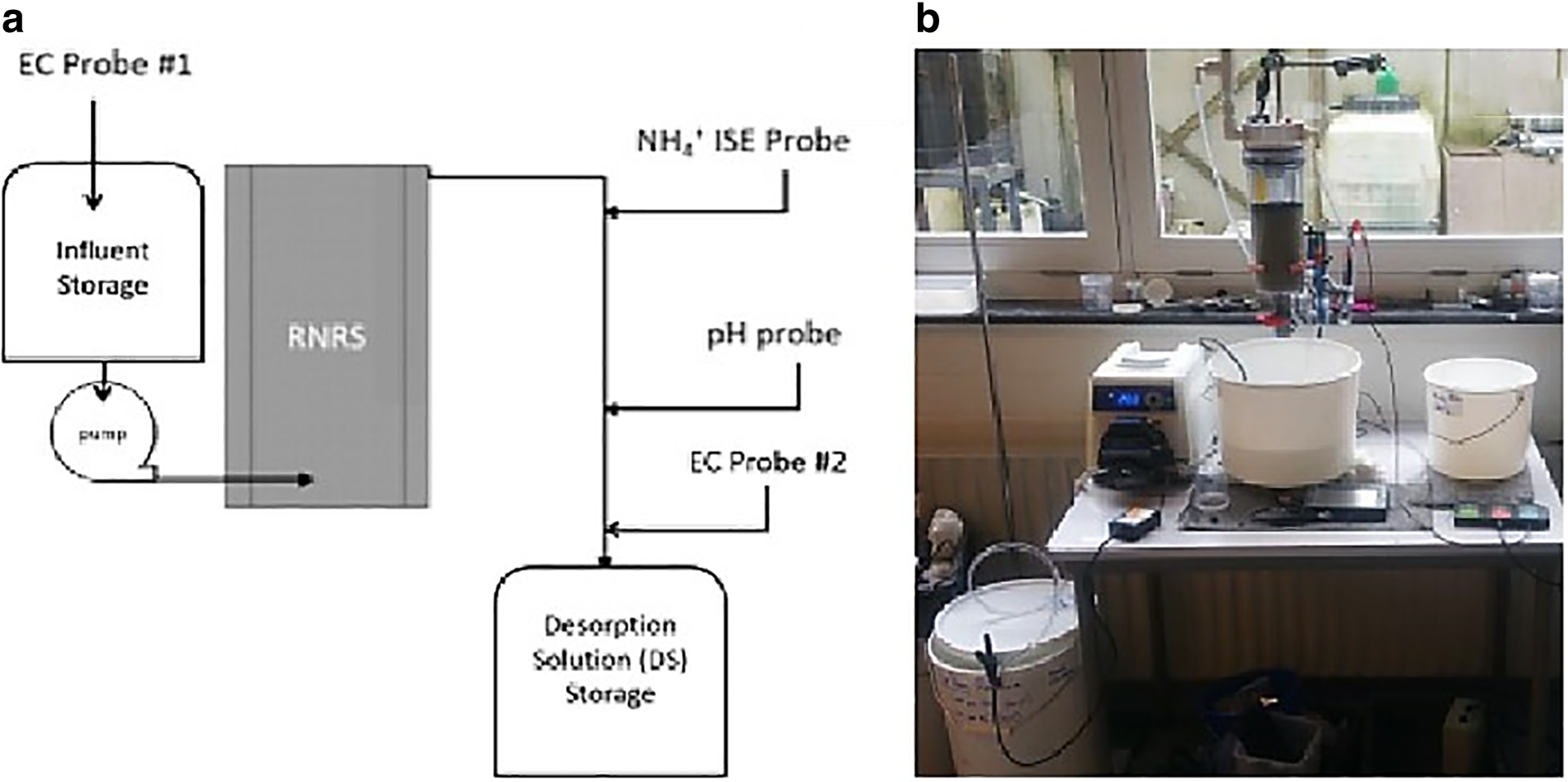
Schematic of experimental RNRS column operation
A peristaltic pump (Cole Parmer, St Neots, United Kingdom) conveyed liquid through the filter housing. The granular filter material used within the housing comprised clinoptilolite zeolite (ChemSorb, Wood Dale, IL) and granular activated carbon (Marineland Spectrum Brands Blacksburg, VA). During the operation of the column, effluent electrical conductivity (EC), pH and NH4+ concentration was monitored using Vernier EC and pH probes (Vernier Software and Technology) and a NeuLog ammonium sensor NUL-240 (NeuLog, Rochester, NY).
SP was produced by adding 0.445 g NH4Cl/L, 0.092 g K2HPO4/L, 0.074 g Na2SO4/L, and 0.254 g NaCl/L to tap water (TW). The prepared SP solution served as the influent solution during the nutrient recovery operation mode. SP was introduced to the RNRS at a flow rate of 100 mL/min.
Nutrient recovery operation was stopped when 30% of the incoming NH4+ concentration was observed in the effluent of the RNRS. Nutrient release was facilitated by passing 50 L of TW through the RNRS column. RNRS effluent from the nutrient-release operation mode was collected and labeled as DS.
Experimental design
Two ZGT were each cut into four, 38 cm sections, yielding eight hydroponic towers. Two towers were stacked in a series configuration utilizing nutrient solution from a 20-L reservoir placed below the bottom tower (Fig. 3). Peristaltic pumps conveyed nutrient solution from the bottom of the reservoir to the top of the first tower. The nutrient solution was trickled down the inside tower system and captured in a reservoir for recirculation. Figure 3 depicts the vertical, recirculating hydroponic systems in both dim (low photon flux) and well-lit (high photon flux) conditions.
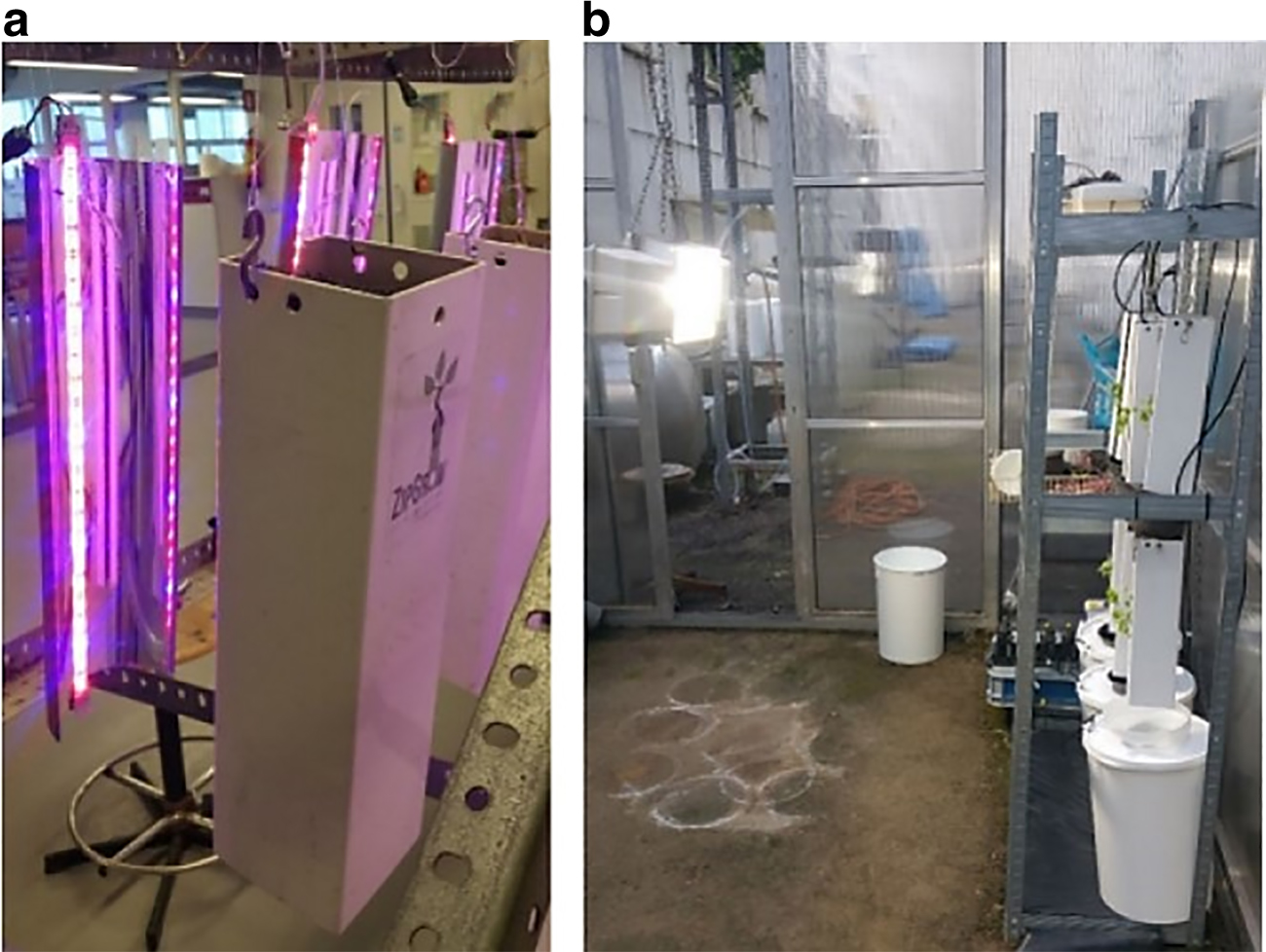
Images of the vertical, recirculating hydroponic systems. Low photon flux
The four experimental series are depicted in Fig. 4. Each of the four experimental series included reservoirs with 10 L of a nutrient solution characterized as follows: (i) TW, (ii) 12% dilution of an SP developed by Calabria et al. (2019) to simulate the average nitrogen concentration observed in the permeate produced by a small-scale AnMBR system developed by Bair et al. (2015), (iii) DS as presented by Calabria et al. (2019), and (iv) DSa amended with acetic acid to 0.02%.
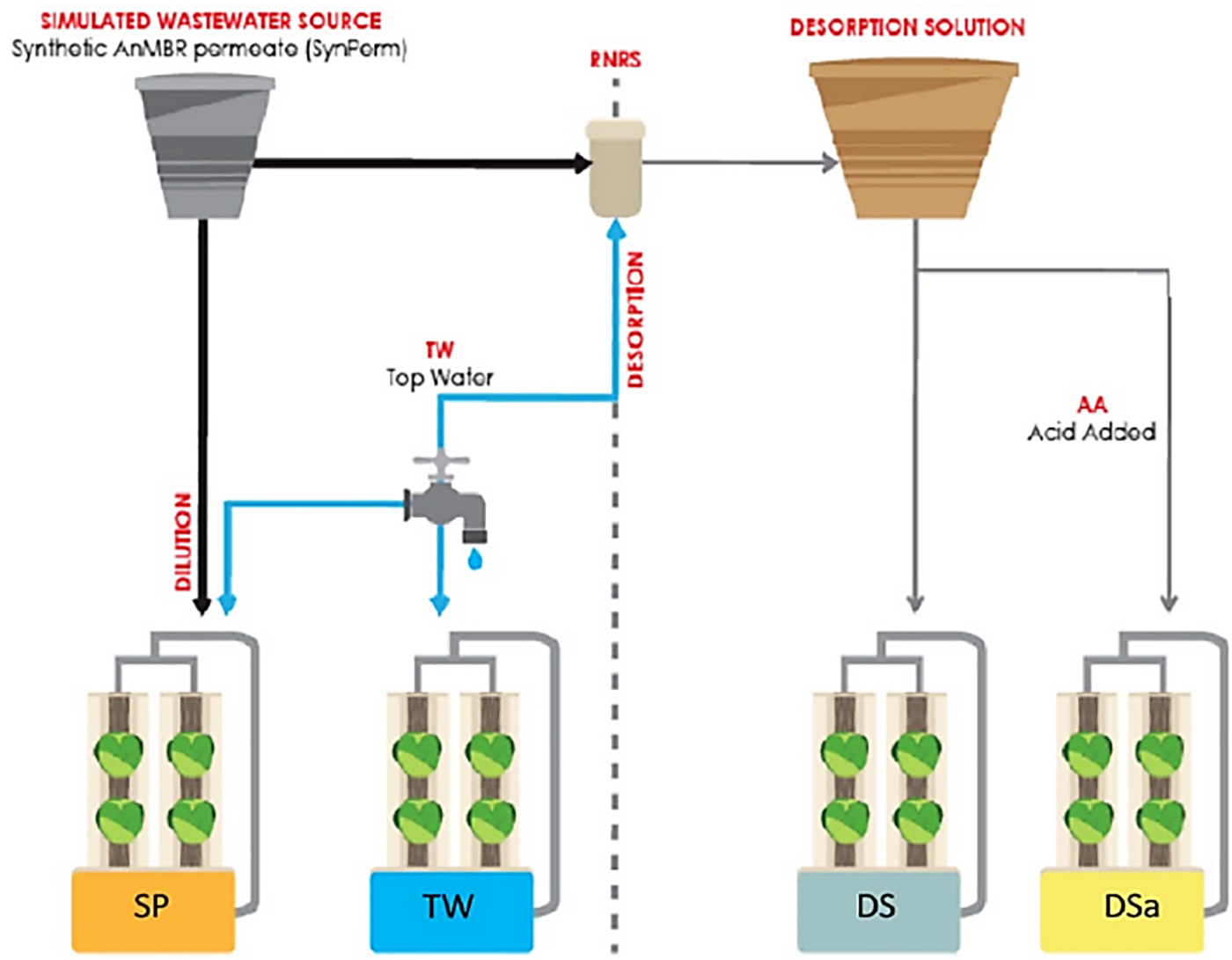
Experimental operation schematic of RNRS intervention for the recovery of nutrients from synthetic AnMBR permeate for reuse in vertical hydroponic systems. AnMBR, anaerobic membrane bioreactor.
These solutions were prepared similarly for the hydroponic configurations in both high- and low-light conditions. TW was used as the experimental blank solution. The effect of RNRS intervention on the release of nutrients captured from synthetic wastewater is compared with direct fertigation with diluted synthetic wastewater. An additional experimental series was carried out using DSa to lower the solution pH to 4.5, which literature shows is more favorable for hydroponic growing conditions since it reduces root rot development (Gillespie et al., 2020).
Sample collection and analysis
Samples of the recirculating hydroponic solutions were collected daily from the nutrient solution feed lines at the top tower of each circulating tower configuration. Total ammonium concentrations were measured using the standardized spectrophotometric method referenced in NEN-ISO 7150-1 (Nederlands Normalisatie Instituut, 2002).
Nitrate, phosphate, chloride, and sulfate ion concentrations in the reservoir solution samples were measured via ion chromatographic spectroscopy using a Dionex ICS-1100 equipped with a DV-sampler manufactured by ThermoFisher (Thermo Fisher Scientific, Inc., Waltham, MA) as previously described by Calabria et al. (2019). Sample pH measurements were performed with a pH probe manufactured by Vernier (Vernier Software and Technology).
At the end of the 13-day crop growth cycle, lettuce plants were harvested by cutting at the base of each plant where they emerge from the rockwool seedling support material. Fresh weights of plants were recorded using an analytical balance immediately after harvest to mitigate the loss of moisture content. Harvested plant material was then dried at 70°C for 12 h and cooled in desiccators.
The dry mass of harvested lettuce crops was measured using an analytical balance as performed by Cometti et al. (2011). Before drying and after fresh weight measurement, leaf samples were taken from old and new leaves of lettuce crops grown in “high-light” conditions for chlorophyll analysis. Chlorophyll was analyzed according to the spectrophotometric method proposed by Wintermans and De Mots (1965).
Results
Water quality parameters
Table 1 conveys the average initial water quality parameters for the individual nutrient solutions. The NH4+ concentration of the nutrient solutions was lowest for control TW (i.e., 0.13 mg/L), followed by the DS (i.e., 9.74 mg/L). The NO3− concentration ranged between 2.25 and 3.08 mg/L. The phosphate levels were not detected in the DS and the TW.
Initial Characteristics of the Nutrient Solutions
Cl−, chloride; DS, desorption solution; DSa, desorption solution with acetic acid addition; NH4+, ammonium ions; NO3−, nitrate; PO43−, phosphate; SO42−, sulfate; SP, synthetic permeate; TW, tap water.
The sulfate concentration was similar in all the nutrient solutions used for this study, ranging from 49.92 to 55.28 mg/L. The chloride concentration was the highest for the SP (i.e., 95.41 mg/L). The pH was 4.55 for the DSa and was around neutrality for the other solutions.
Nitrification performance
The ammonium concentrations were monitored throughout the experimental study under both high- and low-light conditions for all the nutrient solutions studied (Fig. 5a, b). The NH4+ concentrations decreased in the nutrient solution under high- and low-light conditions. NH4+ in the DS solution exhibited a rapid decrease, dropping to around 0.56 and 0.36 mg/L on day 6 under high- and low-light conditions, respectively. NH4+ concentrations on day 10 in SP, Dsa, and TW amounted to 0.23, 0.23, and 0.14 and 0.13, 0.23, and 0.03 mg/L under high- and low-light conditions, respectively. Complete nitrification of NH4+ was observed on day 12 for all the nutrient solutions tested.

Effects of high-light (left column) and low-light (right column) conditions on NH4+ ), DS ( ), DSa (
 ), and TW (
 ). DS, desorption solution; DSa, desorption solution with acetic acid addition; SP, synthetic permeate; TW, tap water.
The nitrate concentrations increased in the nutrient solutions (Fig. 5c, d). Under light conditions, SP showed a maximum nitrate concentration of 11.5 mg/L, followed by DS having 9.92 mg/L on day 9. The nitrate concentration in the DSa solution increased linearly, reaching a maximum concentration of 10.07 mg/L on day 13. The nitrate concentration remained almost constant in the nutrient solution TW under both high- and low-light conditions.
The addition of acetic acid to yield a 0.02% solution resulted in a delayed production of nitrate in both lighting conditions. The nitrification rates were the highest at start-up when the availability of NH4+ was maximal, and they decreased over time for all the nutrient solutions tested. The DS showed a higher maximum nitrification rate, generating 3.6 g NO3−/m3d, whereas SP and DSa achieved 3.0 g NO3−/m3d and 0.14 g NO3−/m3d, respectively, over the same period.
The nutrient solutions at light conditions exhibited varying effects on solution pH (Fig. 5e, f). An initial increase in solution pH was observed in all solutions except with TW. A trend of decreasing pH was observed from day 5 to 7, which correlates with the observed peak of nitrate production in the DS and SP systems, indicative of biological nitrification (Ergas and Aponte-Morales, 2013). No significant pH change was observed in hydroponic systems containing TW. On the other hand, the pH of the DSa solution rose rapidly from 4.7 to 7.7 by day 5.
The sulfate (SO42−) and chloride (Cl−) concentrations were monitored during the study period (Table 2). The sulfate concentration increased for all the nutrient solutions (i.e., SP, DS, and DSa), except in TW under both high- and low-light conditions (Table 2). At the end of 13 days, the sulfate concentration ranged around 60.15–68.31 mg/L in the nutrient solutions, whereas TW had an average concentration of ∼50 mg/L.
Development of Fresh and Dry Crop Mass As Well As Chlorophyll Content of Harvested Lettuce Plants Grown Under High-Light and Low-Light Conditions. Sulfate and Chloride Concentrations of the Hydroponic Nutrient Solution After 13 Days of Recirculation
Data could not be acquired due to low biomass developed under those conditions.
Cl−, chloride; DS, desorption solution; DSa, desorption solution with acetic acid addition; HL, high light; LL, low light; SO42-, sulfate; SP, synthetic permeate; TW, tap water.
The chloride concentration also followed a trend similar to the sulfate concentration, showing an increase over the 13 days under both high- and low-light conditions. The maximum chloride concentration was observed in the DS solution, that is, 152.2 and 145 mg/L for the high- and low-light conditions, respectively, followed by SP and DSa. TW had a concentration of 68.5 and 82.42 mg/L for high- and low-light conditions over 13 days, respectively (Table 2).
Crop development
The lettuce crop mass development was assessed by measuring the crop mass and chlorophyll content in the harvested lettuce material (Table 2). High-light conditions compared with low-light conditions facilitated better growth, resulting in an increase in both dry and wet weight mass harvested. The crops grown in DS and SP solutions developed the most crop mass, with the DS solution supporting slightly more crop growth (i.e., wet mass: 2929.0 ± 454.6 mg and dry mass: 194.9 ± 44.7 mg) than the SP solution (i.e., wet mass: 2646.2 ± 908.8 and dry mass: 163.2 ± 59.2 mg) in high-light conditions (Table 2).
A similar observation was also observed for low-light conditions with DS (i.e., wet mass: 713.2 ± 21.9 mg and dry mass: 56.2 ± 5.4 mg) showing better crop mass than SP (i.e., wet mass: 534.0 ± 2.0 mg and dry mass: 39.4 ± 2.32 mg).
Single-factor analysis of variance (ANOVA) conveys there is a significant difference (p < 0.05) in mass accumulation of crops grown in DS and SP solutions under low-light conditions (p = 0.015). However, for high-light conditions, single-factor ANOVA revealed a nonsignificant difference in crop mass accumulation between DS and SP-grown crops (p = 0.81).
For crops grown in DSa and TP (control) solution, the wet and dry mass increased greatly under high-light as compared with low-light conditions. For DSa, the dry and wet crop mass amounted to 198 ± 53 and 1,201 ± 608 mg under high-light conditions, respectively. TW under high-light conditions developed crops with dry and wet crop masses of 229 ± 3.85 and 1417.5 ± 279.4 mg, respectively. The ANOVA was not conducted, as TW and DSa samples were severely underdeveloped compared with DS and SP samples. Root rot inhibition was more pronounced under well-lit conditions in this trial than under low-light conditions.
With high crop mass accumulation, the DS solution also had a higher chlorophyll (Chl-ɑ and Chl-β) compared with other nutrient solutions (Table 2). SP crops maintained a higher chlorophyll content in older leaves (i.e., Chl-ɑ: 8.07 ± 1.41 mg/g and Chl-β: 4.68 ± 1.67 mg/g), whereas DS crops exhibited a higher chlorophyll content (i.e., Chl-ɑ: 8.07 ± 2.34 mg/g and Chl-β: 4.60 ± 2.39 mg/g) in newer leaves. SP and DS crops showed higher Chl-ɑ than Chl-β compared with DSa and TW under both high- and low-light conditions. High-light conditions in general facilitated the accumulation of chlorophyll in SP and DS nutrient solutions.
Discussion
Effect of light conditions on nitrification of treated effluents in hydroponic systems
This study showed that a complete reduction of ammonia was achieved by all hydroponic systems, regardless of the lighting conditions. Nitrifying bacteria are commonly reported to be sensitive to light in water bodies (Kim and Park, 2021). Nevertheless, ammonia removal (Fig. 5) and crop growth (Table 2) were equally observed under low- and high-light conditions, indicating that nitrification occurred in the hydroponic tower medium.
Previous studies reported no effect on nitrification activity under a light intensity of 250 μmol/(m2·s), which is similar to the photon flux used in the present study (Vergara et al., 2016). On the other hand, higher photon fluxes, that is, 500–1,250 μmol/(m2·s), significantly inhibited nitrifying bacteria (Vergara et al., 2016). In addition, the shading provided by lettuce may have contributed to nullifying the inhibitory effect of light on the nitrifiers in the present study.
The presence of acetate, resulting from the addition of acetic acid to the DS, delayed nitrate production in both high-light and low-light environments. Dimly lit conditions yielded an even greater suppression in the production of nitrate (Fig. 5). Acetate contributed to the growth of heterotrophic bacteria that compete with nitrifying bacteria for oxygen required to fully oxidize ammonia to nitrate (Nardi et al., 2020).
Complete nitrification may have been delayed in the DSa solution where ammonia removal was observed, but the observed nitrate concentrations did not account for the total mass of NH4+ removed. Another hypothesis is that simultaneous denitrification occurred using the acetate as an electron donor and resulting in a lower accumulation of nitrate compared with the other conditions tested in the present study (Yang et al., 2022).
Adequate lighting facilitated normal crop growth, which, in turn, facilitated nitrate uptake. The DS produced by the RNRS consisted mainly of leached NH4+, avoiding background Na+ ions that are potentially present in the AnMBR permeate. Crops grown in DS displayed greater nitrate uptake, increasing the solution pH as a result (Ergas and Aponte-Morales, 2013). As plants uptake ions out of the solution, OH− or H3O+ are released back into the solution to achieve a neutral charge (Resh, 2012).
Thus, the uptake of NO3− coincides with increasing solution pH observed in adequately lit systems (Fig. 5c, e). Contrarily, the lack of sufficient lighting was not conducive to crop development; thus, nitrate assimilation was delayed, and solution pH exhibited slight decreases (Fig. 5d, f).
Sulfate has been identified as a key parameter to ensure effective lettuce growth in hydroponic systems (Dhal et al., 2023). In particular, scarce sulfur supply can limit root growth as it is used by plants to synthesize enzymes. On the other hand, a high sulfur concentration has been reported to enhance nutrient uptake (Lee et al., 2021).
In the present study, apart from the control, that is, TW, no significant difference in sulfate accumulation was observed among the growth media at the end of the 13-day growing cycles. The sulfate concentration ranged between 60 and 68 mg/L, being within the values previously reported by other authors for lettuce growth (Delaide et al., 2016; Lee et al., 2021).
Lettuce crop chlorophyll content
The chlorophyll content of the developing lettuce crops was analyzed to serve as a proxy for crop quality and an indicator of nitrogen assimilation. Several studies have evaluated the correlation between nitrogen fertilization and chlorophyll development to identify ideal nitrogen fertilization to maximize chlorophyll development, thus enhancing the nutritional quality and aesthetic value of the crop (Barickman and Kopsell, 2016; Kopsell et al., 2007; Song et al., 2019).
The SP crops maintained higher chlorophyll content (both chlorophyll-ɑ and -β) in older leaves than did the DS crops (Table 2), indicating mobilization of plant nutrients from older leaves to newer leaves in DS crops (Resh, 2012). The higher Chl-ɑ:Chl-β ratios in DS crops indicate higher rates of photosynthesis, positively affecting crop mass development (Patil et al., 2020).
Phaeopigments resulting from the decomposition of chlorophyll by acidification with HCl (data not shown) were observed in SP crop tissues, indicating less healthy crops (Wintermans and De Mots, 1965). SP crop pigment development could have been compromised by the relatively high sodium content present in the solution. Indeed, high salt concentrations can affect L. sativa development as it is not a highly salt-tolerant crop (Azarmi-Atajan and Sayyari-Zohan, 2020).
Phaeopigments in DS crops were not observed within measurable limits. Additional crop quality parameters that would serve better to evaluate nutritional quality, such as plant tissue mineral composition, antioxidant content, and carotenoid pigments, were not assessed in this study but should be included in future analyses to further characterize the multifunctional value of the lettuce grown with DS from the proposed RNRS platform.
Lettuce crop development with modified effluents in vertical hydroponic systems
Illumination significantly influenced lettuce crop mass development, as the only substantial crop masses were produced by SP and DS solutions under well-lit conditions. The addition of acetic acid, a common component of digestate, to the DS facilitated the development of root rot in the root zone of the DSa hydroponic tower systems, effectively suffocating plant roots and affecting crop growth (Fig. 6).

Occurrence of root rot (highlighted by yellow circles) in lettuce crops grown in the DSa (0.02% acetic acid)
This finding is in contrast with what was observed by Gillespie et al. (2020), where a low pH was beneficial to reduce root rot development. Nevertheless, Gillespie et al. (2020) used inorganic chemicals to adjust the pH, for example, sulfuric acid or sodium hydroxide, whereas acetate was used in the present study. The cause of the rotted root zone observation is suspected to be a result of the increased soluble chemical oxygen demand (sCOD) in the form of acetate that was added to the DS configuration with the addition of acetic acid to lower the solution pH.
Heterotrophic microorganisms establish faster than nitrifying bacteria (Nogueira et al., 2002), thus they can be correlated to the delayed nitrate production that was observed in the DSa configuration. This result should be avoided by removing COD from liquid nutrient solutions used in hydroponic systems.
Low-light crop cultivation warrants investigation to reduce energy costs associated with artificial indoor lighting as well as capitalizing on the possibility of the co-location of land-intensive processes that utilize sunlight, for example, solar energy generation, with agriculture (Touil et al., 2021). The integration of hydroponics utilizing nutrients recovered from wastewater treated by advanced decentralized technologies such as AnMBR can further intensify productivity while reducing nutrient material input.
However, the lettuce crops investigated in this study did not develop significant crop mass to warrant low-light cultivation. More ideal candidate crops could include conventional shade-grown crops such as coffee or crops grown to produce micro-greens that require short (i.e., 3–4 week) cultivation periods (Resh, 2012).
Conclusions
The present study demonstrated that effluents from wastewater treatment plants are ideal candidates for nitrogen supply to vertical hydroponic systems for lettuce growth. DS medium showed the greatest performance in terms of NH4+ removal, achieving complete nitrification after 5 and 6 days of operation under low- and high-light conditions, respectively. The RNRS DS exhibited the highest ammonium removal rate via nitrification per unit length in the hydroponic tower system (i.e., 56.82 mg NH4+ m/d).
Ammonia removal via nitrification in the recirculating vertical hydroponic systems was not significantly impacted by the change in lighting intensity from 200 to 10 μmol/(m2·s), indicating that nitrogen from wastewater streams can be used also in urban areas with limited light conditions. On the other hand, low-light conditions experienced greater inhibition of nitrate production in the hydroponic systems supplemented with acetic acid, likely due to microbial interactions with heterotrophic microorganisms growing on the elevated dissolved organic carbon content.
The utilization of wastewater streams for hydroponics opens new perspectives in the farming and wastewater field since such technology can be seen either as a secondary treatment of wastewater or as a low-cost nitrogen source to support agriculture. Nevertheless, limited knowledge about nutrient concentrations in the effluents of full-scale wastewater treatment plants can hinder crops' growth due to nutritional limitations or excess.
Footnotes
Acknowledgments
The authors wish to acknowledge the laboratory staff at IHE Delft for their technical support and material contributions that facilitated this research.
Authors' Contributions
J.L.C.: conceptualization, data curation, formal analysis, investigation, validation, visualization, and writing—original draft; A.O.: writing—review and editing; P.N.L.L.: supervision, writing—review and editing, project administration, and funding acquisition; D.H.Y.: supervision, resources, writing—review and editing, project administration, and funding acquisition.
Author Disclosure Statement
Any opinions, findings, conclusions, or recommendations expressed in this material are those of the author(s) and do not necessarily reflect the views of the National Science Foundation. The corresponding author, that is, Dr. Armando Oliva, additionally reports that Dr. Jorge Calabria and Dr. Daniel Yeh hold a patent: “Systems and Methods for Nutrient Recovery and Use” with royalties paid by Eram Scientific Solutions Pvt. Ltd.
Funding Information
This work was made possible by financial support from the Alfred P. Sloan Foundation University Center of Exemplary Mentoring, the Florida Education Fund (FEF) McKnight Dissertation Fellowship Award, and The National Science Foundation through the Partnership for International Research and Education (PIRE) grant (Award#1243510).