




Abstract

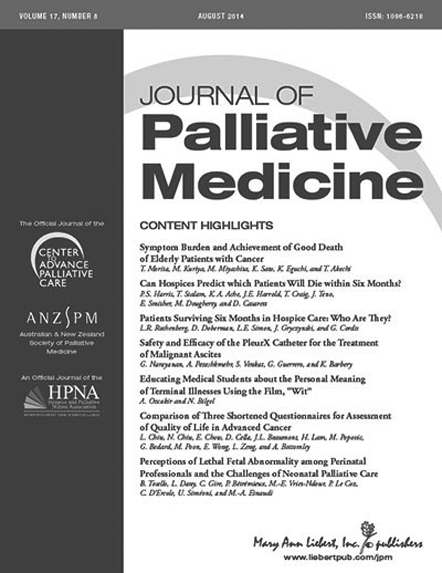
Letter to the Editor
Findings from a small study (n = 21) of hospice patients regarding the frequency with which they thought about their own death (page 879)
Brief Reports
Cross-sectional, survey-based study embedded within a randomized controlled trial describing patterns of missing data in the Pediatric Quality of Life and Evaluation of Symptoms Technology (PediQUEST) study, highlighting challenges in asking sensitive research questions. (page 953)
Fast Facts and Concepts
#197 Chemotherapy-Induced Peripheral Neuropathy (page 965)
Personal Reflection
“And that's the first time I really looked at her that morning, not as a postoperative surgical patient with a terminal illness who needed my pity, but as a loving, courageous woman who understood and accepted her body and disease in a way that I never could (even after looking inside her body).” (page 967)
Book and Media Reviews
(page 974)
Recent Literature
(page 976)
Can Hospices Predict Which Patients Will Die within Six Months?
Researchers from the CHOICE network (Coalition of Hospices Organized to Investigate Comparative Effectiveness) conducted an electronic health record based retrospective study to identify predictors of patient death within 6 months of hospice enrollment. Of note, among more than 126,000 patients admitted to 10 hospices, 93.6% died within 6 months. (page 894)
Who Are the Hospice Patients Surviving at Six Months?
Researchers found that patients with a primary diagnosis of dementia or debility were more likely to remain in hospice care beyond six months and require face-to-face recertification. (page 899)
Caregiver Anxiety and Self-Efficacy
In this cross-sectional survey, caregivers with the highest anxiety and distress reported lower self-efficacy. There was a strong correlation between caregivers' psychological functioning and access to respite and self-care. (page 939)
Hospice Emergency Kits
The authors provide promising evidence that hospice emergency kits are a feasible and well-tolerated method for achieving timely relief of emergent symptoms in home hospice patients and possibly avoiding unwanted ED visits and hospitalizations. (page 931)
Tunneled Catheters for Drainage of Ascites
In this retrospective study of 38 patients, researchers report a high rate of procedural success with tunneled catheters for drainage of malignant ascites for patients with metastatic cancer. They had a low incidence of serious adverse events, infections, and catheter-related complications. (page 906)
Cinemeducation
The authors describe how the film “Wit” gave medical students an opportunity to explore their beliefs, values, and attitudes in terms of the biopsychosocial-spiritual aspects of health care and encouraged them to think more about humanitarian issues in the medical profession. (page 913)
Palliative Needs in Elderly Cancer Patients
In this outpatient data analysis, the authors found older cancer patients experienced generally lower levels of nausea and pain, but higher levels of dyspnea, fatigue, and emotional distress, as well as needs for information and help with decision making. (page 887)
Rating Quality of Life
Quality of life (QoL) assessment questionnaires can be burdensome to advanced cancer patients, and this study compares three shortened QoL questionnaires on their characteristics, validity, and reliability. (page 918)
Challenges of Perinatal Palliative Care
French researchers describe the need for clarity in introducing and providing perinatal palliative care for families with pregnancies with lethal fetal abnormalities. (page 924)