




Abstract

Letters to the Editor
Development of the Pediatric Palliative Care Quality Network (PedPCQN) which is, to our knowledge, the first nationally available pediatric palliative care (PPC) quality network in the United States that measures structures and processes of care as well as patient-level outcomes for children receiving inpatient PPC services. (page 747)
Brief Reports
Retrospective study of the clinical aspects of cancer patients who experienced opioid switching from other opioids to methadone. (page 844)
Fast Facts and Concepts
Management of Chronic Dyspnea #376 (page 858)
Personal Reflection
The studies about the use of psilocybin-assisted psychotherapy for existential fear intrigued me. I do not have anything in my therapeutic pocket that is remotely as impactful as what these studies and anecdotes describe. But I felt that I needed to take a journey myself before discussing it seriously, much less recommending it to a patient. (page 861)
Case Discussions in Palliative Medicine
This is a case of a veteran with terminal lung cancer and comorbid psychiatric illness who attempted suicide while under the care of an inpatient interdisciplinary hospice team. (page 870)
Book and Media Reviews
(page 873)
Recent Literature
(page 874)
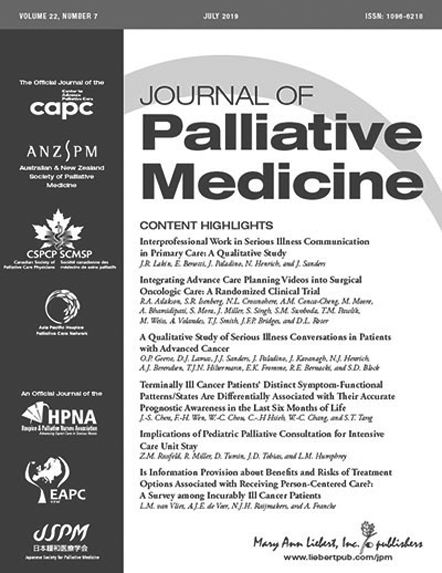
Interprofessional Conversations About Serious Illness
This qualitative study provides themes on improving serious illness conversations by interprofessional teams: establishing clear roles and responsibilities, paying close attention to relationships, and preparing and organizing workflows. (page 751)
Discussing Goals and Values with Cancer Patients
Thematic analysis of conversations between clinicians and people with advanced cancer suggests that patients are open to discussing values and goals. However, clinicians often struggled when disclosing a time-based prognosis and in responding to patients' emotions. (page 773)
Palliative Care in End-Stage Liver Disease
The authors surveyed ∼800 clinicians and identified barriers to palliative care for patients with end-stage liver disease, including primary clinician discomfort with the consultant role, patients' eligibility for liver transplant, perception that palliative care is end-of-life care, unclear triggers for consultation, and concern about opioid-based pain palliation. (page 804)
Advance Care Planning Videos for Surgical Patients
This randomized controlled comparative effectiveness trial found that videos about advance care planning (ACP) were successfully integrated into surgical care without harm and rated as helpful by patients. However, the videos did not significantly change the ACP content or nature of patient–surgeon communication. (page 764)
Reducing Conflict Through Advance Care Planning
In this prospective cohort study, families felt less conflict with surrogate decision making if they had participated in previous discussions with doctors regarding the patients' care goals. The authors conclude that early-stage anticipatory guidance and discussion are a good opportunity for families to prepare for surrogate decision making. (page 814)
Intensive Care Unit Length of Stay After Palliative Care Consult
In an analysis of >700 admissions, researchers found that children hospitalized with a serious illness were less likely to be in the intensive care unit on a given day after palliative care consultation. (page 790)
Information Sharing in Cancer Care
The authors report that two-thirds of 212 patients with incurable cancer felt incompletely informed about the benefits and risks of their treatment. However, most felt they were always involved in their care and that their preferences were taken into account by all providers. (page 797)
Leadership Skills in Palliative Care
The 2016 Cambia Health Foundation Sojourns cohort reflects on several key leadership skills critical for successful change in the care of patients with serious illness, and encourages palliative care clinicians to seek leadership growth opportunities. (page 823)