




Abstract
Since its creation, the Czech Republic has developed an advanced health system and social system. Life expectancy at birth has increased by an average of 7 years in only 20 years. However, polymorbidity and multicausality have now become topics of concern. In some ways they are products of our success. Yet, the health system and social system were not designed for these patients nor are health care professionals trained and willing to assess and address clinical needs of fragile, chronically ill, and incurable patients. This is true in much of the developing world where initial improvements have led to this new population-based challenge. In that sense, the Czech Republic is an example of what needs to happen in developing countries. Inpatient hospice care, which has been developing in the Czech Republic since 1993, is not the answer to this problem. Rather, approaches to ensure that the early introduction of palliative care in the course of serious illness care, personalized medicine, and a multidisciplinary approach in the system is required. Focusing only on terminal illness care is insufficient. Beginning in 2005–2006, we have worked to create a system of education and clinical services in specialized palliative care in the health and social system. This article seeks to describe the leadership steps of this systemic change in the Czech Republic with the objective of helping others make the same journey.
Introduction
The success of the development and establishment of specialized palliative care in the Czech Republic is due to many years of political, educational, and often voluntary work of many health professionals. I have been in this journey since 2003. In 2009, I was a founding member and then served eight years as chairman of the Czech Society for Palliative Medicine, Czech Medical Association of Jan Evangelista Purkyně (CSPM). In 15 years, from 2005 to 2019, specialized palliative care has become an established part of Czech health care because of the work with professional societies, the public, government ministries, politics, regions of the country, and insurance companies.1–7
The Timeline
2003, Austria—Salzburg—my first foreign course in palliative care (EPEC—Education for Physicians on End-of-Life Care). There I first met Professor Frank D. Ferris, who fundamentally influenced the development of Czech palliative medicine. He stayed in touch with me during the following years, and invited me to participate in the Leadership Development Initiative (LDI, 2009–2011, San Diego). I invited Dr. Ondrej Slama (scientific secretary of CSPM) to join me. In this two-year program, we learned from palliative care world leaders, were mentored by Professor Lucas Radbruch (chairman of the European Palliative Care Association at that time), and achieved a fundamental knowledge of palliative care in a public health context. This experience directed and motivated us to improve the Czech Society of Palliative Medicine.
Professors Radbruch and Ferris supported me in persuading the Czech Society of Palliative Medicine to host the World Palliative Care Congress in 2013 in Prague. It required more than a year of demanding work, including leadership and health-political work. I served as chairman of the local organizing committee of the Congress, with the aid of my assistant, Marta Duchonova, and with the support of Dr. Slama (scientific secretary of CSPM), Martina Spinkova (founder of Home coming Prague), and members of CSPM committee. At the beginning of the congress, during the Minister of Health's address, I realized how much we had shifted the perception of palliative care to be on equal footing with basic medical disciplines.
We needed to influence health insurance companies. We succeeded in convincing colleagues, politicians, payers, and the public that not only kindness, spirituality, and opioids were needed, but also much more sophisticated communication techniques, symptomatic treatments, precise knowledge of disease path, and the quality of care organization are required for quality palliative and hospice care. We conveyed that our subspecialty has rules, expertise, principles, and necessary organization/form. CSPM contributed significantly to this. In collaboration with my colleagues, the work achieved our goal. In shaping them, it also shaped me. When starting out in 2003, I could not have imagined how this journey would end.
Establishment of the Palliative Medicine Section SSLB ČLS JEP (1998)
SSLB has been a professional association of pain treatment physicians in the Czech Republic. The society has been a great influence for payers; for example, they ensured availability of opioids in the 1990s. At this time, the topic of palliative medicine was first named as an academic field in the Czech Republic. The key role was played by Professor MUDr. Jiri Vorlicek, CSc., highly influential in Czech medicine, then chairman of the Czech Society for Oncology, CLS JEP. I proposed Professor Vorlicek be appointed Honorary Chairman of the CSPM for his significant contributions to laying the foundations of specialized palliative care in 2013. In 1992–1993 Professor Vorlicek visited the English hospice system and realized that the hospice idea should be implemented in standard care in the Czech Republic. However, it took more than 25 years.
Establishment of a Common Discipline Palliative Medicine and Pain Treatment (2005)
Highlighting the fact that, in the Czech Republic, the “incurably ill exist, they are not properly cared for; improvement is possible, but requires education” was an essential first step. Professor Vorlicek convinced us, young and motivated pioneers, that formal recognition of a medical field, including establishment of a formal academic field, is a key step in gaining authority for a topic that other fields do not want, are afraid of, and avoid. This, of course, also applied to oncology. However, at that time it was just oncology to which palliative care was perceived to be germane. Even in cancer, it was only initially perceived as terminal hospice care (last hours, days, and weeks). I believe that our work for the next 10 years, also at the European level by the European Association for Palliative Care (EAPC), we have influenced oncology by becoming more interested in supportive care—and then in palliative care. Nevertheless, I also perceive the important role of the establishment of complex cancer centers in Czech Republic, under the influence of Professors Vorlicek and Dusek (www.biostatistika.cz/index-en.php) as enabling factors.
Initiation of Specialized Training and Internships in Cooperation with the St. Joseph's Hospice Rajhrad (2006, Palliative Medicine and Pain Treatment)
From 2006 to 2014, the main specialized education in palliative medicine was conducted under the leadership of the Brno palliative group, primarily in Rajhrad Hospice (https://rajhrad.charita.cz/dum-lecby-bolesti-s-hospicem-sv-josefa/)—with support of the Masaryk Cancer Institute Brno, which was led this time by Professor MUDr. Jiri Vorlicek, CSc. The internships in the hospice, which I, as the head physician, and Jiri Prokop, as director (2007–2012), led to expertise and contact with standard health care, were invaluable to us in education for specialized palliative care. The seminars for physicians initially lasted only 10 days. Now, that duration has nearly doubled since the specialty of palliative medicine was established in 2011. Hospice Rajhrad trained hundreds of physicians for 10 years and was a key comprehensive accredited workplace for palliative medicine and long-term care education up to my leaving in 2014.
Foundation of the Czech Society of Palliative Medicine CLS JEP (2009)
Founding members were Vorlicek J., Kabelka L., Slama O., Kalvach Z., and Prokop J. After the establishment, in March 2009, we were officially contacted by the Ministry of Health of the Czech Republic to discuss the need for developing mobile palliative care to see patients and families in their homes with the Association of Hospice and Palliative Care Providers. We needed to overcome resistance from those who believed only inpatient hospices were needed. It is interesting to note that they construed palliative care as something different and unnecessary from the hospice movement. This antagonism between hospice care and the larger field of palliative care recurs frequently, both in the Czech Republic and elsewhere in the world.
Promoting Independent Education in the Field of Palliative Medicine (2011)
One of the most important achievements in the development of Czech specialized palliative care was formalizing education in clinical care and leadership for future palliative care professionals. The new palliative medicine program in 2010 was prepared by Kabelka, Slama, and Alexandrova.
The program demonstrated how significantly the content of education differs between palliative medicine and pain medicine. The new program, already organized by CSPM CLS JEP, began to operate in 2011. Courses were held in the St. Joseph's Hospice Rajhrad. Similar courses were not developed elsewhere in the Czech Republic until 2015.
The Czech Society of Palliative Medicine has included methods to support motivation and leadership in its education of physicians. Innovative teaching styles, such as interactive teaching, and inclusion of group dynamics, as a way to impart motivation, clinical skills, and medical knowledge is not common among Czech lecturers. It seems to me that these teaching methods need to be incorporated broadly since this “learning” is very much linked to self-reflection and leadership issues. It is not easy to change prevalent teaching methods. However, it is the best way to promote the reflection and growth of the new generation of palliative care specialists/leaders.
Organization of the EAPC World Congress in Prague (2013)
It was pivotal to the development of Czech specialized palliative care. It promoted significant visibility of the Czech environment in the European context. But most importantly, it drove broader support for palliative care within the Czech Republic. There was a change in perception from an activity of several enthusiasts to a fundamental theme of EU, WHO, as an independent and respected field of expertise.
Pilot Project of Mobile Specialized Palliative Care
It has become a key linking model in the further development of Czech palliative care for the past three years. The project was organized by the General Health Insurance Company, the Czech Society of Palliative Medicine, the Ministry of Health, and the Institute of Health Information and Statistics of the Ministry of Health (2014–2016). Organizational meetings illustrated that care of chronically ill people, fragile geriatric patients, or the concept of incorporating the social determinants of health (and hence palliative care) were not part of standard health planning in the Czech Republic. The existing system was very rigid; there was neither database nor interest. It seemed to us that development of palliative care in the Czech Republic was more difficult than developing palliative care in Africa.
A turning point occurred in January 2014 when Czech Television asked me (as a president of medical society for palliative medicine) to record the program “Dying in the Czech Republic,” which took place live on March 26, 2014 in Rajhrad near Brno (available in the Czech Television archive, www.ivysilani.cz). This broadcast demonstrated how palliative care is an important topic of contemporary health and social care. Furthermore, it made the case for why much more effort from Ministry of Health and other state authorities was needed. Professor Vymazal, radio-oncologist, who represented the Ministry of Health during the program, promised on live television to advance the topic. In June 2014, several facilities in the Czech Republic (Prague, Trebic, Brno, Zlin, Ostrava, and Cerveny Kostelec) were nominated to implement the pilot project of Mobile Specialized Palliative Care. The pilot started in April 2015.
Despite positive results from the pilot, in September 2016, the political support for the project was in jeopardy. Strong personal advocacy and rallying significant support of the Vysocina Region Governor, MUDr. Jiri Behounek, were required to keep the program active into 2017. I. Závadová, head physician of Home coming Prague, took over the management of Mobile Specialized Palliative Care pilot program in January 2017. At the beginning of 2018, the pilot program was formally completed and mobile palliative care was financed by health care insurance. I learned that data alone do not drive formal acceptance; personal advocacy and diplomacy are critical components.
Program for Development of Hospital Palliative Care (December 2017)
The Avast Endowment Fund supported the establishment of the Palliative Care Center in Prague. Together with the strong involvement of the Home Palliative Care, they helped to raise the profile of the field. A key element was the joint work on the Hospital Palliative Care project, which was initiated by the Ministry of Health in July 2016. With the support of Dr. Slama, we overcame surprising resistance by some colleagues to initiate hospital-based palliative care teams in December 2017.
Project Paliatr Vysocina (from September 2017)
The Vysocina Region has been developing a palliative care system for >10 years. The region developed community palliative care beginning in 2006. A social component of palliative care was included. In 2014, CSPM ČLS JEP (head MUDr. Ladislav Kabelka, PhD., Chairman) and the governor of the region (MUDr. Jiri Behounek, at that time chairman of a main health care insurance company board) led the launch of the mobile palliative care pilot. Two organizations of Vysocina became participants. The governor and the region's management supported the importance of palliative care in the current health and social system. They included palliative care in the conceptual development of the regional health and social care policy since September 2015. A Strategy Task Force was set up in September 2015 to transform the thinking and approach of existing home and inpatient palliative care services. I was delegated the role of coordinator. One of the main challenges was from a common standard: to use the same terminology and adopt mobile palliative care as a possible new stream of community care development.
In June 2017, the Vysocina Regional Council approved the document: Palliative Care Strategy to guide public financing for the Vysocina Region for the period up to 2020. This achievement required the excellent work of professionals and officials of the Regional Health and Social Department, with the strong support of the regional governor. I was named the coordinator and guarantor of the project Paliatr Vysocina (www.paliatrvysocina.cz). The key elements of the project were education, mobile specialized, and outpatient palliative care, hospital and inpatient palliative care. Importantly, this strategy for the region creates a stable system of support for the entire population who experience the final phase of life with incurable disease, in any environment where they receive care (at home, in a hospital, in a retirement home, or in a hospice).
Palliative Care as a Way: A Leadership Experience
I played a leadership role in the development of palliative care in the Czech Republic. When I look back, I remember learning a lot that can be summarized with the path “trial-error-patience-reflection-success”. Dr. Ondrej Slama and I both learned that reaching a goal such as improved care for all terminally patients can be achieved despite having no experience, and feeling uncertainty with each step. The amount of effort required was enormous. I routinely worked a minimum of 10–11 hours daily. The support of my wife and family were essential; I will never cease to be grateful to them. But I loved this journey—every patient, every success motivated me. The leadership and support of Professor Ferris throughout the journey brought both motivation and experience to our efforts.
I changed my job many times during this journey. I was head of Rajhrad Hospice in the years 2007–2012. In 2012–2013 I was promoted as director. I left this role at the end 2014 for the simple reason that I wanted to be with the clinical team myself. I could not do that in the role of director. When the hospice did not want to participate in the Mobile Special Palliative Care pilot project, I left the hospice to lead the second largest hospital for long-term patients in the Czech Republic. Then I left that role for the internal medicine department. I then returned to hospice care, but with mobile palliative care. The Paliatr Vysocina project and the amazing mobile hospice team in Trebic gave me the energy and motivation for a new journey again. Each change helped me be refreshed and eager for new challenges.
My role as a manager changed during this period as well. Initially, the most difficult thing was to take on the role of a “young head physician” with skills in teamwork and communication. Beginning in 2007–2008 I worked to promote the admission of patients with nononcological diagnoses. This represented completely new thinking in Czech hospice care; only oncology was connected with hospice care. In addition, I advocated for care of the frail elderly. I learned it was difficult or impossible to combine both terminal care and proactive palliative care for populations in a single facility.
I now recognize the importance of collaboration with colleagues. I see that it is essential to demonstrate respect for more experienced colleagues, even if we disagree. I remember strongly disagreeing over some issues. I could advocate strongly, yet I needed to listen, receive feedback, and change my position. That ability opened doors. The path to success could be summarized as “not only divide and rule but also prepare-motivate-delegate-help-finish.” That path has lasted almost 10 years for me. I see a number of up-and-coming, hopeful professionals around me who can develop palliative care effectively. They must travel a similar path; they will have doubts and make mistakes. I feel obliged to help in this without preventing them from learning their own lessons. After leaving the role of chairman of CSPM CLS JEP in spring 2017, it was not easy for me to see some of my mistakes repeated by others. Yet, I understand this is inevitable for professional growth.
Author Biography
prim. MUDr. Ladislav Kabelka, PhD
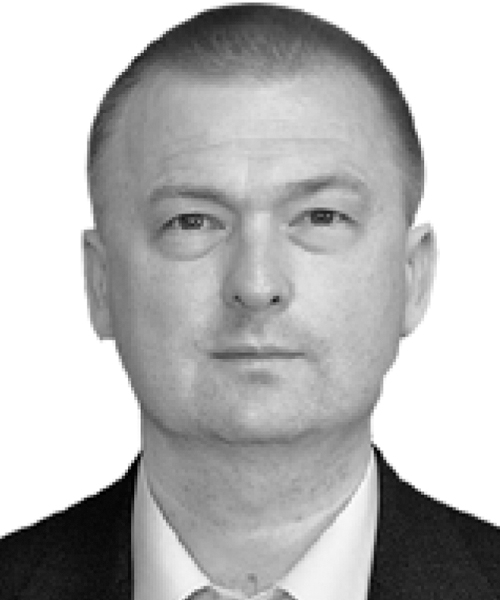
He has been one of the leading specialists in the fields of geriatrics and palliative medicine in the Czech and also European context for 15 years. He worked for 6 years at the geriatric clinic, then for 12 years in the largest Czech hospice in Rajhrad near Brno, in the position of a doctor, then a head physician, and director. In 2016, he founded the Palliative Institute Brno project, which is dedicated to the development and promotion of quality multidisciplinary care for fragile geriatric patients and mobile specialized palliative care. He is an experienced and sought-after lecturer and mentor in the areas of geriatrics, palliative medicine, and teamwork. He has been involved in health policy for many years and is an initiator and guarantor of the concept of multilevel palliative care in regions, now mainly in the Vysocina Region. He is the founder and subsequently eight years chairman of the Czech Society of Palliative Medicine ČLS JEP. www.geriatricka-paliativni-pece.cz, www.paliatrvysocina.cz
Footnotes
Funding Information
No funding was received.
Author Disclosure Statement
No competing financial interests exist.