




Abstract

Dear Editor:
Kidney failure, or end-stage kidney disease (ESKD), is a life-altering condition, with a one-year mortality rate of 20%–25%, 1 and the incidence is expected to rise 11%–18% by 2030, compared with 2015 levels. 2 Patients with kidney failure experience a high burden of symptoms that are often unaddressed during their dialysis treatments.
The COVID-19 pandemic has presented novel challenges in administering nonpharmacological pain and symptom management techniques while ensuring social distancing and avoiding unnecessary close contacts—this is especially true in hemodialysis units. Our research (1) assessed the acceptability and feasibility of a yogic breathing/mindfulness meditation intervention administered through a novel digital delivery system in patients receiving dialysis and (2) evaluated the impact on symptom burden after this intervention.
Patients were recruited during their hemodialysis sessions and engaged in a 10-minute yogic breathing/mindfulness meditation recording delivered through an MP3 player. Participants completed an acceptability survey and the Edmonton Symptom Assessment System (ESAS-r Renal) questionnaire before and after their participation.
Between June and August 2020, 17 patients enrolled in the study (mean age 67.8 years, 53% male, 33% with prior meditation/yoga experience), and 15 (88%) completed the study. In addition, 76.5% of participants reported that the intervention was acceptable, and two-thirds wished to continue the study longitudinally.
Issues that diminished feasibility were related to an inability to hear the audio file adequately and difficulty in understanding the breathing instructions as delivered. In addition, two participants reported that they were interrupted by staff during their audio recording, which may have diminished the effectiveness of the intervention.
Participants in this study reported a significant decline in overall symptom burden (from 24.66 to 17.73 points on the ESAS scale, p = 0.01), as well as improved thirst, well-being, and pain (Fig. 1). Seventy-seven percent of participants who reported experiencing elevated anxiety related to COVID-19 felt the intervention reduced their overall anxiety related to the pandemic.
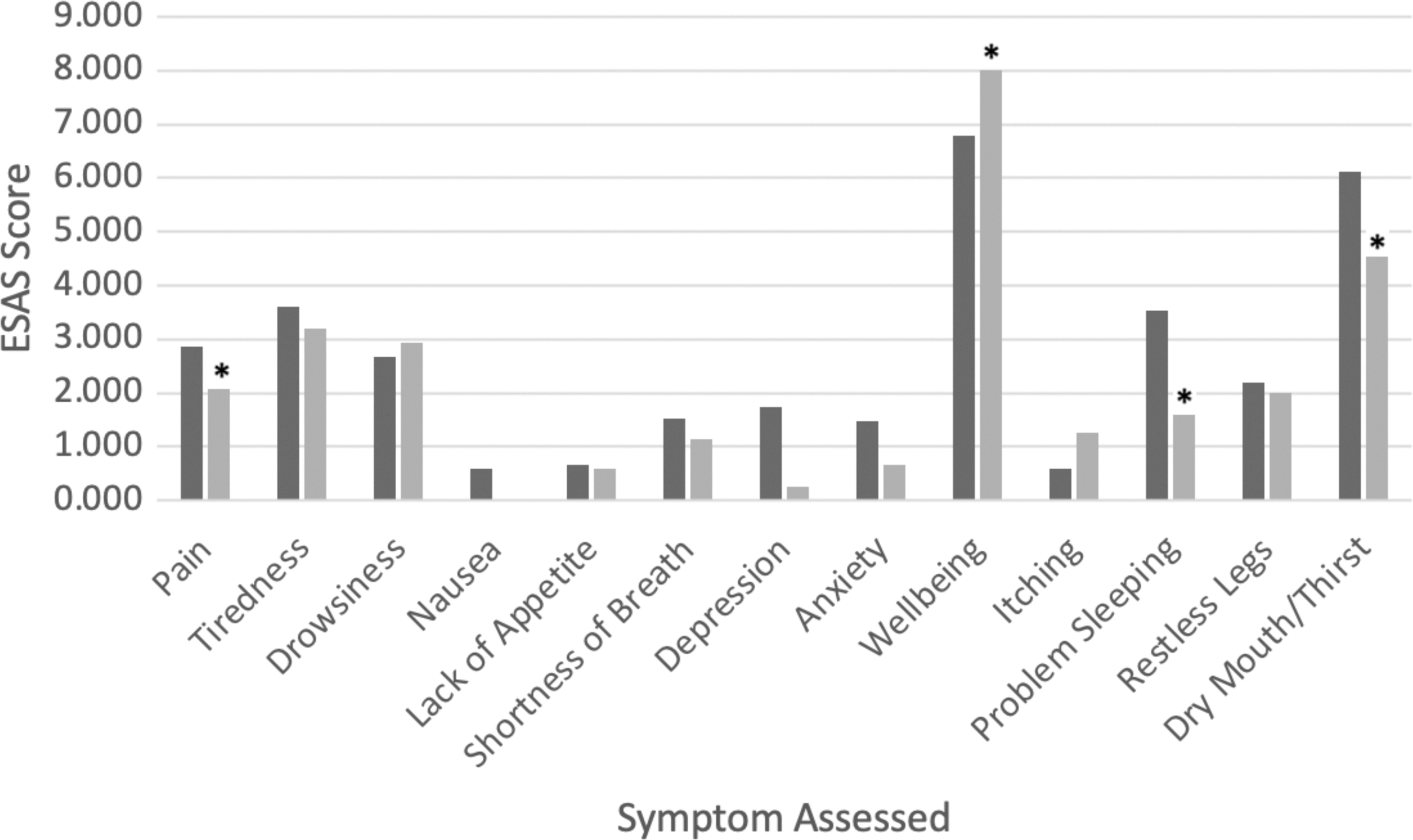
Participant-reported ESAS symptom burden level, statistically significant symptom changes denoted with “*”, n = 15. Dry mouth/thirst is not officially on the ESAS symptom survey and was added as an additional assessment question in this study. Significance level of the mean total ESAS score, pre- versus post-intervention, is reported as p = 0.01. ESAS, Edmonton Symptom Assessment System.
Although we did not expect symptom burden to improve after a single intervention, patients reported a significant reduction in symptom burden. The ESAS-r Renal correlates strongly with health-related quality of life, therefore, interventions that reduce symptoms deserve further investigation.3,4
There are important limitations to consider in this pilot study. It is conceivable that symptom burden decreased for other reasons: the small sample size allows for a greater influence from random chance events. In addition, the patients could have been subject to response bias as the questionnaires were read allowed by the research personnel. Feasibility issues related to hearing devices and interruptions from staff could be addressed in a future study design; for example, by expanding the intervention to use at home before dialysis, utilizing over-the-ear noise-canceling headphones, and better education of dialysis staff to minimize nonessential interruptions.
This pilot study demonstrates that even in restrictive circumstances such as the COVID-19 pandemic, patients can participate in an electronically delivered yogic breathing/mindfulness meditation intervention aimed at reducing symptom burden and improving quality of life.
Footnotes
Funding Information
This study was supported by the Robert Larner, MD College of Medicine Summer Research Fellowship Grant (2020) and the University of Vermont Medical Center Department of Nephrology (2020).