




Abstract
Background:
Palliative care, a cornerstone of comprehensive healthcare, prioritizes quality of life for individuals with life-threatening illnesses. Aromatherapy, with its holistic approach and patient-reported benefits, emerges as a promising complementary therapy for managing symptoms and enhancing well-being in palliative care.
Objective:
The objective of this systematic review is to assess the efficacy of aromatherapy interventions in symptom management, with a focus on pain, anxiety, nausea, and sleep disturbances among palliative care patients.
Design:
A comprehensive search was conducted across various databases to identify relevant studies. Eligibility criteria were applied, resulting in the inclusion of eight studies for analysis. The review assessed the efficacy of aromatherapy interventions, primarily through massage, in symptom management. Variations in intervention procedures and outcome measures were noted, necessitating a critical examination of the findings.
Results:
The review’s findings suggest promising outcomes associated with aromatherapy in palliative care. Aromatherapy interventions demonstrated significant efficacy in reducing pain, anxiety, nausea, and improving sleep quality among patients. However, considerable heterogeneity was observed across studies, highlighting the need for standardized methodologies and larger-scale trials.
Conclusion:
This systematic review underscores the potential of aromatherapy as a complementary intervention in palliative care. While the findings support its efficacy in symptom management, methodological inconsistencies across studies warrant further research. Standardized approaches and larger trials are essential to validate the tailored effectiveness of aromatherapy for different symptoms encountered in palliative care, ultimately enhancing its clinical utility and integration into therapeutic practices.
Introduction
Palliative care, an essential component of comprehensive health care, addresses the multifaceted needs of individuals grappling with life-threatening illnesses. Rooted in a patient-centered approach, palliative care prioritizes quality of life, focusing on symptom management, psychosocial support, and holistic well-being throughout the disease trajectory. As a complementary therapy within this domain, aromatherapy has garnered attention for its potential to alleviate distressing symptoms and improve the overall quality of life for patients undergoing palliative care. 1
Aromatherapy, the therapeutic use of aromatic plant extracts and essential oils, embodies a holistic modality that engages olfactory and tactile senses, influencing emotional, physical, and psychological realms. 2 Its application in palliative care extends beyond conventional medical interventions, offering a promising avenue for managing symptoms such as pain, anxiety, nausea, and sleep disturbances, among others. 3 The multifaceted nature of aromatherapy and its perceived safety and patient-reported benefits has positioned it as a complementary strategy to conventional palliative care.4,5
This systematic review aimed to critically examine the literature on aromatherapy in palliative care, examining efficacy, safety issues, and modality of use in symptoms in various applications. Combining evidence from different studies, this review seeks to clarify the potential of aromatherapy to alleviate symptoms and address patients’ emotional needs.
Methods
The review protocol is registered on PROSPERO (CRD42023482105). The systematic review approach followed Cochrane guidelines on evaluating evidence from randomized controlled trials (RCTs) on effectiveness. It provides a structured and transparent approach for rating confidence in effect estimates.
Research framework
The study proposes a qualitative methodology through a systematic literature review, enabling us to identify, evaluate, and interpret studies on aromatherapy in palliative care. This thematic area involves exploring the experiences, perceptions, and qualitative data on using aromatherapy as a complementary intervention for symptom management and overall well-being in palliative care settings.
Research question
The determination of the research question was used to define the scope to develop a clear focus for the study. This research question was developed in response to the needs of the chosen topic, namely:
RQ1: What is aromatherapy’s overall safety and efficacy as a complementary intervention in addressing symptoms and improving the quality of life in palliative care patients? RQ2: What specific symptoms (e.g., pain, anxiety, nausea, sleep disturbances) are most commonly targeted by aromatherapy in palliative care, and what evidence supports its effectiveness for each symptom?
Literature search
To address the research objectives of this study, a comprehensive literature search was conducted to identify relevant articles related to the scientific evidence that supports the efficacy and safety of aromatherapy in palliative medicine. The search was performed in the following databases: b-on, PubMed, Web of Science, and Scopus. These databases were selected based on their coverage of relevant fields, including the medical, nursing, and complementary and alternative medicine literature. The search strategy involved a combination of Medical Subject Headings (MeSH) terms, keywords, and Boolean operators, including but not limited to “aromatherapy,” “essential oils,” “palliative care,” “symptom management,” “end-of-life care,” “cancer patients,” and “quality of life.” These search terms were chosen to encompass the core elements of our research, ensuring that we capture articles addressing aromatherapy as a complementary intervention in palliative settings.
In addition, synonyms and related terms were included to maximize the retrieval of pertinent studies. This approach is intended to yield a comprehensive selection of peer-reviewed articles that meet our inclusion criteria and contribute to a thorough evaluation of the evidence on aromatherapy’s efficacy and safety in palliative medicine. The search included peer-reviewed articles published between January 2004 and February 2024 written in English, German, or Portuguese, the languages the researchers speak.
Inclusion criteria
The following studies were included: (1) RCTs and observational studies published in peer-reviewed journals. (2) Studies involving human participants aged 18 years or over, of any gender and ethnicity in a palliative care setting or described by the authors as having an advanced disease such as metastatic cancer or renal failure. (3) Studies that evaluate aromatherapy interventions, including the inhalation, topical application, or diffusion of essential oils. (4) Studies on various essential oils or aromatherapy techniques. (5) Studies reporting quantitative or qualitative data on the efficacy and safety of aromatherapy interventions in palliative care. (6) Studies that report outcomes related to symptom management (e.g., pain, anxiety, nausea, sleep disturbances), quality of life, patient and caregiver satisfaction, and adverse events.
Exclusion criteria
The following studies were excluded: (1) Gray literature, conference abstracts, unpublished studies, review articles, books, book chapters, and nonempirical studies. (2) Studies conducted on animals or in vitro studies that do not involve human participants. (3) Studies that do not involve patients in palliative care. (4) Studies assessing interventions other than aromatherapy (e.g., traditional pharmaceuticals, acupuncture). (5) Studies that do not specifically address aromatherapy as a primary intervention. (6) Studies lacking relevant data on the efficacy and safety of aromatherapy in palliative care. (7) Articles that do not report on symptom management or quality of life outcomes. (8) Studies published in languages other than English, German, or Portuguese. The search summary is summarized in Table 1.
The Search Strategy Summary
Types of outcomes measured
The primary outcomes of interest were the efficacy of essential oils and aromatherapy on symptom control in patients in palliative care and the occurrence of adverse events.
Study selection
The screening process was conducted in duplicate by independent reviewers. One author (S.G.) meticulously screened all citations (including records of title and, if available, abstract) to identify relevant studies initially. Simultaneously, another author (R.S.M.) performed a duplicate screening. In cases where a citation appeared relevant or lacked sufficient information for a decision, we retrieved the full-text article for further assessment. Any discrepancies in eligibility during screening and full-text assessment stages were anticipated to be resolved through discussion within the wider review team, ensuring a comprehensive and rigorous evaluation of the selected studies.
Risk of bias
One author (S.G.) assessed the risk of bias for each study using the criteria recommended by the Cochrane Collaboration; 6 this was checked by the second author (R.S.M.), resolving any disagreements by discussion. We assessed risk for selection, performance, detection, attrition, and sample size.
Results
The search was executed in the selected databases, initially retrieving a total of 156 articles across all databases. All extracted references were added to a PubMed collection and exported to Rayyan 7 for title and abstract screening. Duplicate articles were removed, and records marked as ineligible by the automation tool were removed, resulting in a preliminary pool of 94 unique articles. The search included peer-reviewed articles published between January 2004 and February 2024 written in English, German, or Portuguese, the researchers’ languages.
Titles and abstracts of the articles were reviewed to identify potentially relevant studies. Articles irrelevant to the research topic were excluded at this stage, leading to a refined set of 40 articles. Full-text access to these articles was obtained through institutional subscriptions and interlibrary loan services when necessary. However, six reports based on titles and abstracts were not retrieved during the screening process owing to inaccessibility to the full text. The search process and the inclusion of articles were documented and tracked using reference management software. The entire search process is summarized in a flowchart (Fig. 1), illustrating the number of articles identified, screened, and included at each stage by the Preferred Reporting Items for Systematic Reviews and Meta-Analyses (PRISMA) guidelines. 8
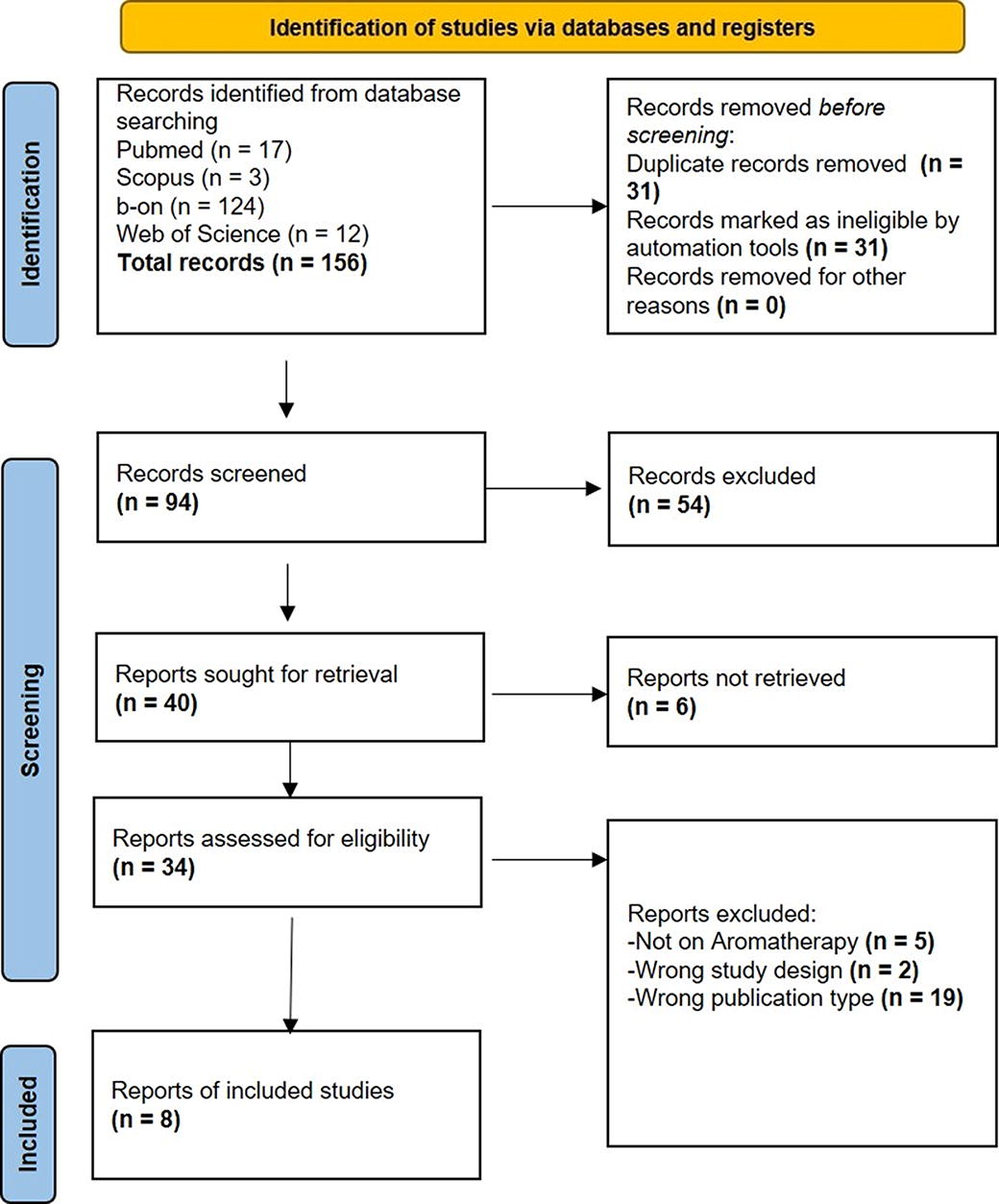
Diagram of article selection and inclusion process on the PRISMA methodology by Page et al. 8
We obtained eight articles for analysis after the inclusion and exclusion criteria (Table 2).
Systematic Review Articles n = 8
The studies included in this review encompass a diverse range of trial designs spanning eight trials. The participant count across these trials totaled 1162 individuals, with study samples varying from 46 to 280 participants. Aromatherapy was evaluated in all these trials: massage in seven and pads in one. Notably, three studies specifically investigated whether massage combined with aromatherapy provided more significant benefits than massage alone. The majority of these trials primarily focused on participants with cancer diagnoses, emphasizing the relevance of complementary therapies in oncological contexts. All studies were published in English, reflecting a common language of dissemination within this research domain. The follow-up time points after the intervention were predominantly immediate postintervention, focusing on short-term effects. Aromatherapy interventions were delivered through varied means, such as inhalation only or as part of a massage with essential oils, conducted in diverse settings, including participants’ homes or purpose-built units like hospices. Similarly, massage sessions varied in duration and frequency, often conducted in participants’ homes and administered by trained massage therapists or nurses. Across the studies, diverse scales were utilized for the outcome, and comparators ranged from usual care and placebo controls to different active interventions, providing a multifaceted landscape for evaluating the efficacy of these complementary therapies (Table 3).
Characteristics of Included Studies
The reviewed studies exhibit design, sampling, and outcome variations while exploring aromatherapy in palliative care. RCTs (Studies 2, 4, 5, 8) employ computer-generated tables or block randomization methods. Samples, varying in size, are drawn from diverse cancer care settings, including daycare, oncology centers, and self-help groups. Inclusion criteria commonly involve age restrictions, cancer diagnoses, and consent capability. Exclusion criteria contribute to heterogeneity, ranging from participation in other studies to specific medical conditions. Aromatherapy interventions, predominantly involving massage with essential oils like lavender and chamomile, are conducted weekly over specified durations. Outcome measures assess changes in physical and psychological symptoms, sleep quality, and anxiety/depression reduction. Positive effects on quality of life, symptom reduction, and patient satisfaction are commonly reported across studies. The conclusions generally emphasize the positive impact of interventions on participants’ well-being. Despite shared themes, distinctions exist in study settings, designs, and specific criteria, highlighting the nuanced landscape of aromatherapy research in palliative care.
Risk of bias
The assessment of the risk of bias across the included studies demonstrates overall favorable methodological adherence, portraying a considerable level of rigor in most studies (Fig. 2). The majority maintain a low risk across various key domains, signaling robust randomization, blinding, and data handling practices. However, a few studies exhibit moderate risks, notably in domains associated with blinding procedures and potential biases, indicating some concerns regarding the reliability of these specific study aspects. Only five studies adequately describe methods to conceal group allocation, by using, for example, sealed packs and opaque envelopes.9,10,12,14,15 Two studies lacked explicit information regarding which essential oils were used, resulting in a moderate overall risk.13,15 While most studies maintain a solid methodological foundation, those with moderate risks emphasize the need for enhanced reporting and more transparent methodological descriptions to facilitate a more comprehensive assessment of potential biases.11,13,15

Risk of bias.
Discussion
The systematic review of eight diverse studies exploring the impact of aromatherapy on individuals diagnosed with cancer reveals promising insights into the potential benefits of this complementary intervention. The studies, employing various designs, interventions, and outcome measures, collectively contribute to a nuanced understanding of aromatherapy’s effects in the oncology setting.
Positive impacts on quality of life
Several studies, particularly those utilizing aromatherapy massage (ATM), reported positive impacts on physical and psychological symptoms, self-care activities, and overall quality of life. The improvement observed in Study 1 across multiple domains suggests a potential holistic benefit of aromatherapy interventions, reinforcing the notion that these interventions may contribute positively to the well-being of cancer patients.
Feasibility challenges and retention issues
Study 2, conducted in a specialist palliative care setting, highlights the challenges in applying a RCT design to study aromatherapy. The feasibility of such an approach is demonstrated, but the study also underscores the importance of addressing recruitment and retention challenges, advocating for multicenter trials to ensure sufficient statistical power and generalizability.
Efficacy in nausea and vomiting reduction
The efficacy of aromatherapy using lemon oil pads in reducing nausea and vomiting in palliative care patients (Study 3) presents a specific application of aromatherapy with potential clinical relevance. The reported 73% efficacy and patient satisfaction suggest a practical avenue for managing distressing symptoms in this population.
Sleep quality considerations
Study 4, focusing on the impact of a single night-time ATM on sleep quality, provides nuanced insights. While the intervention did not exhibit significant advantages over no massage for the overall cohort, post hoc analysis suggests potential benefits for specific subgroups, such as elderly patients and those with poor health conditions. This highlights the importance of considering individual characteristics in tailoring aromatherapy interventions.
Differential effects across cancer types
The variation in outcomes across cancer types, as seen in Study 5, underlines the need for personalized approaches in aromatherapy interventions. The significant improvement in quality of life and symptom reduction in breast cancer patients undergoing chemotherapy implies potential differential effects based on the type and stage of cancer.
Patient perspectives in qualitative study
The qualitative study (Study 6) provides valuable insights into patient perspectives. Female cancer patients perceived ATM positively, reporting immediate changes and no side effects. The emergent themes underscore the multifaceted impact of aromatherapy on patients, ranging from immediate comfort to dignity enhancement.
Short-term benefits in pain and psychological well-being
Studies 7 and 8, employing a pragmatic approach and RCT design, respectively, converge on the short-term benefits of ATM in addressing clinical anxiety and/or depression, particularly in anxiety. While pain and sleep quality improvements are noted, sustained effects and comparative assessments with psychological interventions warrant further exploration.
Individualized treatment
Study 8, distinguished in Table 3 for its incorporation of individualized treatment plans in essential oil selection and massage techniques, offers valuable insights into the potential benefits of personalized aromatherapy interventions. Including 20 selected essential oils, with therapists tailoring treatments based on individual patient needs within an established protocol, underscores the importance of a patient-centric approach. The positive outcomes observed in this study, particularly in terms of symptom reduction and enhanced quality of life, suggest that individualization plays a crucial role in optimizing the therapeutic effects of aromatherapy. This finding aligns with the discussion in Differential effects across cancer types section, emphasizing the need for personalized approaches to aromatherapy interventions, as demonstrated by the variation in outcomes across different cancer types. The success of individualized treatment plans in Study 8 prompts consideration of future research directions that specifically explore the impact of tailored aromatherapy on symptom management, quality of life, and overall well-being, considering the diverse landscape of cancer types and stages.
Adverse effects considerations
Adverse effects were not explicitly mentioned in the majority of studies, with only one withdrawal owing to a rash reported in Study 2. This highlights aromatherapy’s generally favorable safety profile, but the limited reporting necessitates a cautious interpretation.
In reviewing the essential oils utilized across the studies in Table 3, it is noteworthy that various aromatic compounds were employed to implement aromatherapy interventions. Lavender was a commonly employed essential oil, featured in Studies 1, 2, 4, 6, and 7, highlighting its widespread recognition for potential therapeutic effects. Lemon oil, the focus of Study 3, demonstrated efficacy in reducing nausea and vomiting in palliative care patients, while Study 8 stands out for its unique approach. In Study 8, therapists individually tailored treatments using what they considered the most appropriate essential oil from 20 options. This approach signifies a departure from a single essential oil and emphasizes a personalized treatment strategy. Other studies incorporated a range of essential oils, including chamomile, orange, mint, jasmine, violet, rosemary, and eucalyptus. The diversity in essential oil selection may contribute to the variations in outcomes observed across studies, emphasizing the importance of considering individual essential oils’ specific properties and effects in aromatherapy interventions.
In addressing the efficacy of aromatherapy as a complementary intervention within palliative care, this review consolidates evidence supporting its multifaceted impact on symptom management and the overall quality of life (RQ1). Across diverse studies, aromatherapy demonstrates promising efficacy in alleviating a spectrum of symptoms commonly encountered in palliative care settings. Specifically, findings reveal its notable effectiveness in ameliorating pain, anxiety, nausea, and sleep disturbances, offering a multidimensional approach to symptom relief. Studies consistently underscore the potential of aromatherapy in mitigating pain perception, reducing anxiety levels, easing nausea-related distress, and improving sleep quality. However, while the overall trend suggests positive outcomes, variations in methodologies, intervention protocols, and outcome measures present challenges in drawing definitive conclusions. The heterogeneity across studies necessitates a cautious interpretation of findings and highlights the need for more standardized approaches and larger-scale trials to establish robust evidence regarding the specific symptom-relieving capacities of aromatherapy within palliative care (RQ2). Addressing these research gaps could provide tailored insights into the application of aromatherapy for different symptoms, enhancing its clinical utility in holistic patient care.
Conclusion
The reviewed evidence suggests the potential of aromatherapy, particularly ATM, as a valuable adjunct to conventional cancer care and palliative support. However, the observed variability in methodologies, interventions, and outcomes among the studies underscores the ongoing need for cautious interpretation. The identified areas of methodological concerns, particularly in blinding and reporting, emphasize the necessity for standardized approaches in future investigations. Larger-scale trials with more rigorous methodologies are essential to better understand aromatherapy’s efficacy and safety within palliative care contexts. Future research should prioritize standardized protocols tailored to specific cancer types and integrate patient perspectives to enhance intervention tailoring and overall efficacy.
It is imperative to extend the discussion beyond the confines of oncology and consider the applicability and generalizability of aromatherapy to a broader spectrum of palliative care populations. While the current review primarily delves into the impact of aromatherapy within the context of cancer care, recognizing its potential benefits and the inherent variability in study methodologies, interventions, and outcomes prompts a broader reflection on its relevance to diverse palliative care scenarios. The observed variability across studies necessitates future research exploring aromatherapy’s efficacy in addressing symptoms and enhancing the quality of life in palliative care populations with various medical conditions. Acknowledging the potential versatility of aromatherapy as a holistic intervention, the discussion should underscore the need for rigorous investigations in nononcological palliative care settings. This approach ensures a comprehensive understanding of aromatherapy’s effectiveness and aids in formulating tailored interventions for individuals receiving palliative care, regardless of their specific medical context.
Footnotes
Authors’ Contributions
S.G.: Conceptualization, Methodology, Writing—Original Draft, Visualization, Supervision, and Project administration; S.G. and R.S.M.: Investigation, Data Curation, Resources, and Formal Analysis; R.S.M.: Validation; S.G., R.S.M., and P.M.: Writing—Review & Editing.
Data Sharing Statement
Data supporting the findings and conclusions are available upon request from the corresponding author.
Funding Information
This research received no specific grant from public, commercial, or not-for-profit funding agencies.
Author Disclosure Statement
No competing financial interests exist.