



Abstract
Black Lives Matter (BLM) has arisen as a social movement in response to the numerous killings of unarmed African Americans. It has been criticized by some as too confrontational and divisive. The purpose of this study is to undertake a comparative analysis of the BLM Movement and the civil rights movement (1954-1965). As social movements, both have evolved out of the need to continue the Black liberation struggle for freedom. I have conducted a content analysis of the New York Times newspaper during a 2-year period for both social movements to examine the issue framing of each. I argue that the civil rights movement framed its issues in a more inclusive manner than BLM. BLM should take a lesson from the civil rights movement by boldly taking on an issue like police brutality of African Americans and expanding the boundaries of something that is politically unacceptable to being acceptable.
The legacy of slavery and Jim Crow laws has left a residue of systemic racism in the United States that has devalued the lives of African Americans. Black Lives Matter, a social movement rooted in the collective and individual experience of Black people in this country, encourages active resistance to the continuing dehumanization and devaluation of their lives. Like other movements which preceded it, such as the Tea Party Movement and Occupy Wall Street, “Black Lives Matter is anchored in the physical occupation of public space and amplified by social media” (Altman, 2015, para. 9). As a grassroots organization, Black Lives Matter has grown from a hashtag to a network that now encompasses over 30 chapters in the United States and other countries. Building on strategies used by the civil rights movement in the 1960s, Black Lives Matter engages in nonviolent direct action to bring attention to police killings and abuse of African Americans.
There is a continuous struggle for human equality among African Americans in the United States. The Black Lives Matter Movement addresses some of the same issues that previous Black liberation movements addressed: Black people are seen as criminal, and Black bodies are seen as expendable. Both movements have been opposed to racism and systemic oppression. Many see Black Lives Matter as the new civil rights movement. That movement, from 1954 to 1965, demanded basic equality for African Americans in the 20th century. Black Lives Matter has focused on police abuse of African Americans. To that end, it is instructive to examine the similarities and differences between the civil rights movement and the Black Lives Matter Movement.
The stimuli for the creation of Black Lives Matter did not happen overnight but rather evolved over time: The organization of the social movement was a response to deeply entrenched problems in this country. Black Lives Matter is loosely structured, and “as a confederation of local groups, empowers each one to set its own agenda” (Altman, 2015, para. 12). As an organization, its goal is to eliminate the racial injustice which permeates and surrounds a wide variety of places in society. Black Lives Matter has brought out into the open not just the racial inequalities of the criminal justice system but, as Darsheel Kaur, a community organizer with the Ohio Student Association, stated, “It’s about systems in place that continue to devalue the lives of black and brown people in different aspects, including the prison industrial complex, economic and food systems, the housing market, and voting rights” (Shor, 2015, para. 2). Black Lives Matter has had an impact on America, and has helped mold the current discussions concerning race and the criminal justice system in this country. From protests in every major city to being mentioned in television series such as Law and Order, Black Lives Matter has “pierced a big hole in the ideology of a post-racial America and exposed the deep and persistent patterns of racism in the United States” (Petersen-Smith, 2015, para. 43).
The civil rights movement of the 1960s and the Black Lives Matter Movement today gained the full attention of the mainstream media. However, what do we really know about the Black Lives Matter Movement’s message, and what it is trying to accomplish? As social movements intent on rectifying social injustice and grave social inequality, but separated by more than 50 years, what comparisons can be drawn between the two: How do they differ, and how are they similar? Does Black Lives Matter have an overarching strategy and, if so, what are the tactics it is employing to accomplish its goals? These are some of the questions that led to this research investigation. Specifically, by examining the following topics: (a) inclusive and exclusive messaging, (b) leadership style, (c) issue framing, and (d) media coverage, I draw out the similarities and differences between the two movements. Admittedly, extrapolating meaning from such an inquiry is limited by the infancy of the Black Lives Matter Movement. Still, I argue that to date, Black Lives Matter has received less favorable media coverage than the early days of the civil rights movement. To test this hypothesis, I conducted a content analysis of the New York Times coverage of the Black Lives Matter Movement and the civil rights movement for two, 2-year periods (2014-2016 and 1960-1962, respectively).
First, I review the literature on social movement theory and examine the significance of the civil rights movement to the Black liberation struggle in the United States. Black Lives Matter, as a social movement, is still in the early days of its formation. It began with the shooting in 2012 of Trayvon Martin, a 17-year-old African American in Sanford, Florida. There are striking similarities between the shooting of Martin and the lynching of Emmett Till, a 14-year-old African American boy from Chicago, who was visiting relatives in Money, Mississippi, in 1955. Most media have focused on who those two individuals are; however, what is more important is not who they are but what they represent to each respective movement as a whole. Their slayings are the flashpoints of pivotal protests and boycotts that took shape due to the subsequent perceived injustices of the trials (by the state) of their assailants. Both movements encountered staunch resistance by the status quo, and both faced structural and ideological impediments.
I conducted a content analysis of articles about Black Lives Matter and the civil rights movement in the New York Times using a 2-year time frame for each. I selected the New York Times for my content analysis for several reasons: First, it is a national newspaper and considered the newspaper of record for the United States. As such, academic researchers have utilized the newspaper as a reliable archival record of major public events. Moreover, it covered events of the civil rights movement in the 1950s and 1960s as well as events of the Black Lives Matters Movement and the murders of Black people in this country since 2014. Also, I chose to examine the same newspaper during the two time periods to ensure accuracy and consistency for the comparative analysis.
I searched for key terms used in coverage of both movements, seeking, for comparative purposes, to explore media coverage of the formative years of each movement. This was done to assess if one of these social movements received more favorable coverage overall, and if so, why? How the media frames issues to the public can largely influence the level of public support for any given social movement. After discussing the methods and results, I conclude with an examination of what this tells us about the success of Black Lives Matter and the civil rights movement as social movements, and movements in general.
After reading this article, the reader will learn that much of the criticism Black Lives Matter has received for being too militant in its tactics to bring about change is no different from the criticism that was leveled at the civil rights movement during its early days a half century ago. Also, the reader should learn that mostly youth and student activists provided the real impetus for changing the segregated conditions in the Jim Crow South in the 1950s and 1960s, and young activists are driving the new movement to end police brutality against Black people in this country today. “#BlackLivesMatter” has become a rallying cry throughout America and by utilizing social media, young activists have been able to organize and mobilize a cadre of protesters on a moment’s notice. Finally, the reader should learn that the two Black liberation movements are very similar in many ways; however, they are also vastly different in many other ways.
Literature Review
According to scholars Walton, Smith, and Wallace (2017), “A social movement may be understood as a group of persons organized in a sustained, self-conscious challenge to an existing system and its values or power relationships” (p. 110). The contemporary body of literature on theories of social organization and collective action is grounded in an empirical understanding of the African American civil rights movement (1954-1965). Resource mobilization strategy emerged as the dominant theoretical framework from this body of literature, asserting that social movements, a form of collective action, involved rational actors engaging in action through formal organization to both secure resources and foster mobilization (Oberschall, 1973; Tilly, 1978; Zald & McCarthy, 1987). This was a dramatic departure from the traditional view of social movements that considered them spontaneous, disorganized, and unstructured phenomena (Morris & Herring, 1987). It was commonly held that during the civil rights movement, protesters were “‘reacting blindly to uncontrollable forces’ and that lunch counter sit-ins were a spontaneous collegiate phenomenon” (Engler & Engler, 2016, p. xii).
In essence, prior to the civil rights movement, participants in social movements in the United States were seen as irrational actors charged with emotion. This was the traditional view. The civil rights movement, however, demonstrated exceptional leadership, coordinated protests, and structured organization; as a result, scholars had to reconceptualize the traditional understanding of collective action that was now proven obsolete. When Dr. Martin Luther King and the Southern Christian Leadership Conference (SCLC) announced a civil rights initiative in Birmingham, Alabama, in 1963, they were prepared. The demonstrations in Birmingham came on the heels of a stinging defeat for King and the SCLC in Albany, Georgia, the year before (Branch, 1988). Determined not to repeat that failure, they studied the laws of Birmingham and knew what actions were grounds for an arrest. They planned a direct action campaign, named Project C (for “confrontation”), that was to challenge the existing police brutality and put the horrors of racism on full display for the national media (J. Williams, 2013). Scenes of police attack dogs biting student marchers and firefighters turning high-pressure water hoses on children galvanized much of White Americans to support the cause of African American freedom (Engler & Engler, 2016). Today’s scholarship acknowledges that repressing “nonviolent campaigns may backfire if the campaigns have widespread sympathy among the civilian population by turning erstwhile passive supports into active participants in the resistance” (Chenoweth & Stephan, 2011, p. 50). Such was the case in Birmingham in 1963.
In addition to challenging the existing literature on social movements, the civil rights movement, as Morris (1999, p. 528) notably stated, “fertilized the ground in which numerous American social movements took root and flowered into widespread collective action.” These movements include the feminist, environmentalist, disability, antiwar, and gay rights movements that exploded in the 1960s and 1970s, and more recently, the Occupy Wall Street and Black Lives Matter demonstrations. The largely successful strategies and tactics employed during the civil rights movement have become a model of inspiration for social movements throughout the world. These strategies primarily consist (then and often now) of nonviolent protest in the form of boycotts, lunch counter sit-ins, Freedom Rides, and mass demonstrations (Sitkoff, 2008). Social scientists Frances Fox Piven and Richard Cloward argued that in creating social change, what is important is the willingness to disrupt business as usual. They asserted, “Protest movements . . . gain real leverage only by causing ‘commotion among bureaucrats, excitement in the media, dismay among influential segments of the community, and strain for political leaders’” (Engler & Engler, 2016, p. 43). President John F. Kennedy acknowledged privately to civil rights leaders in 1963 that the demonstrations in the streets had caused the executive branch to act faster and “were forcing Congress to entertain legislation which a few weeks before would have had no chance” (Schlesinger, 1965, p. 970).
Black Lives Matter
How did Black Lives Matter begin? On February 26, 2012, Trayvon Martin was walking back to his father’s home in a middle-class-gated community in Sanford, Florida. He was wearing a dark hoodie, and had in his possession a bag of Skittles and an iced tea. He was pursued by a White, volunteer neighborhood watchman, George Zimmerman, who apparently felt Martin was a threat and in the wrong neighborhood. Zimmerman, after being told by a police dispatcher not to pursue Martin, confronted him anyway, and when Martin, unarmed, defended himself Zimmerman shot and killed him (Griffin, 2015). Zimmerman was subsequently arrested and charged, but at trial a year later his defense argued “that Zimmerman had felt threatened” (Griffin, 2015, p. 44). In July 2013, Alicia Garza was at a bar in Oakland, California, when the verdict in the trial was delivered; Zimmerman was found not guilty of second-degree murder and acquitted of manslaughter charges. Garza said that she took the verdict particularly hard because she had a younger brother whose height and build were close to those of Martin. The next day, she logged into Facebook and “. . . wrote an impassioned online message, ‘essentially a love note to black people’, and posted it on her page. It ended with ‘Black people, I love you. I love us. Our lives matter’” (Day, 2015, para. 5). A close friend of Garza, Patrisse Cullors, 300 miles away read the post that night and shared it with her friends online. She used a hashtag each time she reposted it: #blacklivesmatter and “in those four syllables she recognized a distillation not only of the anger that attended Zimmerman’s acquittal but also of the animating principle at the core of black social movements dating back more than a century” (Cobb, 2016, para. 8). Cullors, a community organizer, spoke to Garza about “how they could organize a campaign around these sentiments” (Day, 2015, para. 6). Garza and Cullors began touting the hashtag and Opal Tometi, an immigration-rights activist Garza knew, agreed to build a social media platform using Facebook and Twitter. However, Black Lives Matter did not really gain momentum until a White police officer named Darren Wilson shot and killed 18-year-old, African American Michael Brown in Ferguson, Missouri, in August 2014. With the aid of social media, Black Lives Matter organized Freedom Rides (reminiscent of the 1961 Freedom Rides during the civil rights movement) for more than 500 people to Ferguson, from over 18 cities all across the United States, including New York, Boston, Los Angeles, Philadelphia, Miami, Detroit, Houston, San Francisco, and Portland (Cobb, 2016).
Within a few weeks of Brown’s death, hundreds of people who had never participated in organized protests took to the streets, and that campaign eventually exposed Ferguson as a case study of structural racism in America and a metaphor for all that had gone wrong since the end of the civil-rights movement. (para. 14)
As the protesters began peaceful protests in Ferguson in the form of marching, carrying signs and banners, and chanting “black lives matter,” they were met by armed resistance from local and state police departments. Some of the protests turned violent when police and protesters clashed, and the governor called in the National Guard and declared a state of emergency.
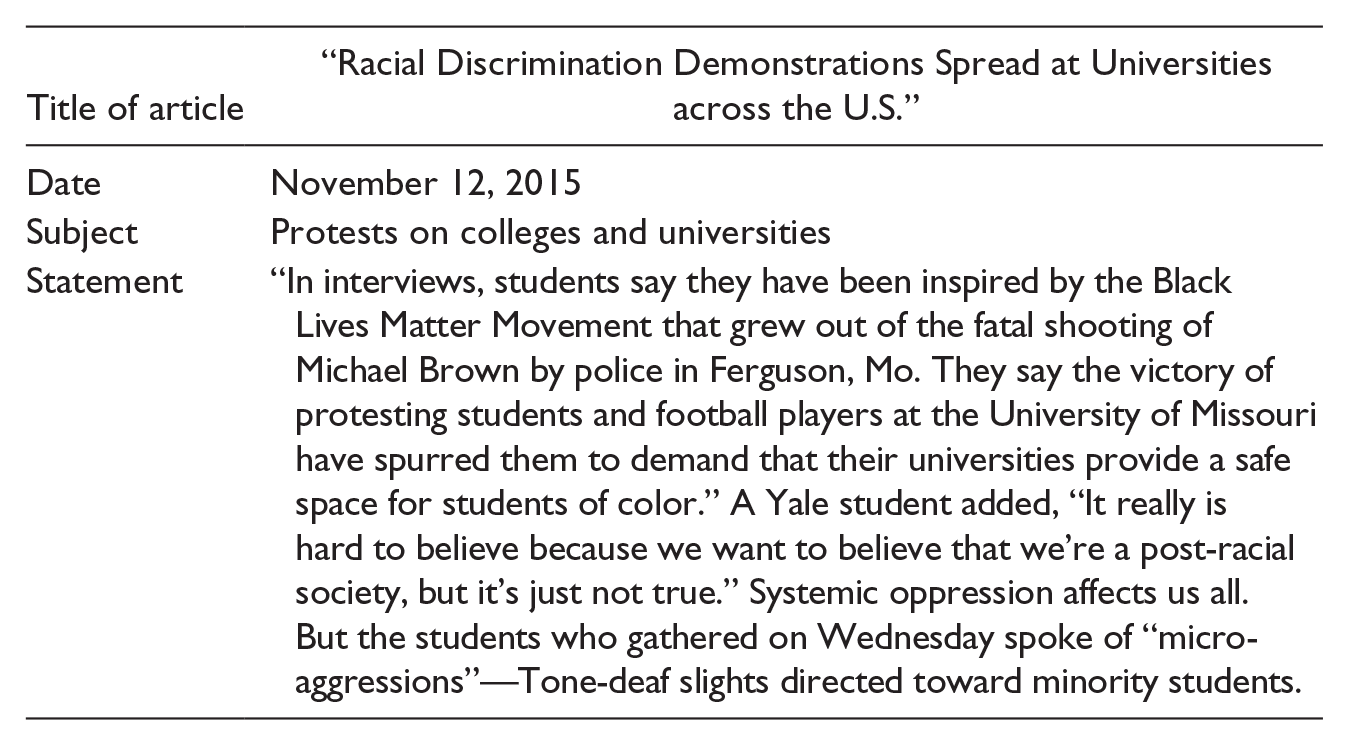
In 2015, in Baltimore, similar protests erupted after the arrest and death of Freddie Gray from injuries sustained while in police custody. Again, police and protesters clashed, a state of emergency was declared, and the National Guard was called in to help restore order. As more unarmed Black men and women continued to be killed by police officers in cities around the country, Black Lives Matter began using social media, primarily Twitter and Facebook, to organize protests in response to police violence against African Americans. Black Lives Matter has grown from a moment into a social movement and has over 30 chapters around the country. The phrase #BlackLivesMatter has appeared on t-shirts, coffee mugs, and badges; it is being used by candidates seeking public office, and has been featured in television series such as Law and Order and Empire. In July 2016, four National Basketball Association (NBA) basketball players, each dressed in a black suit, opened the Espy Awards with a Black Lives Matter speech in which they called for an end to police violence against Black people in America (Dessem, 2016). Since 2014, student demonstrations, marches, and die-ins have sprung up on college campuses around the country with the refrain “Black Lives Matter.”
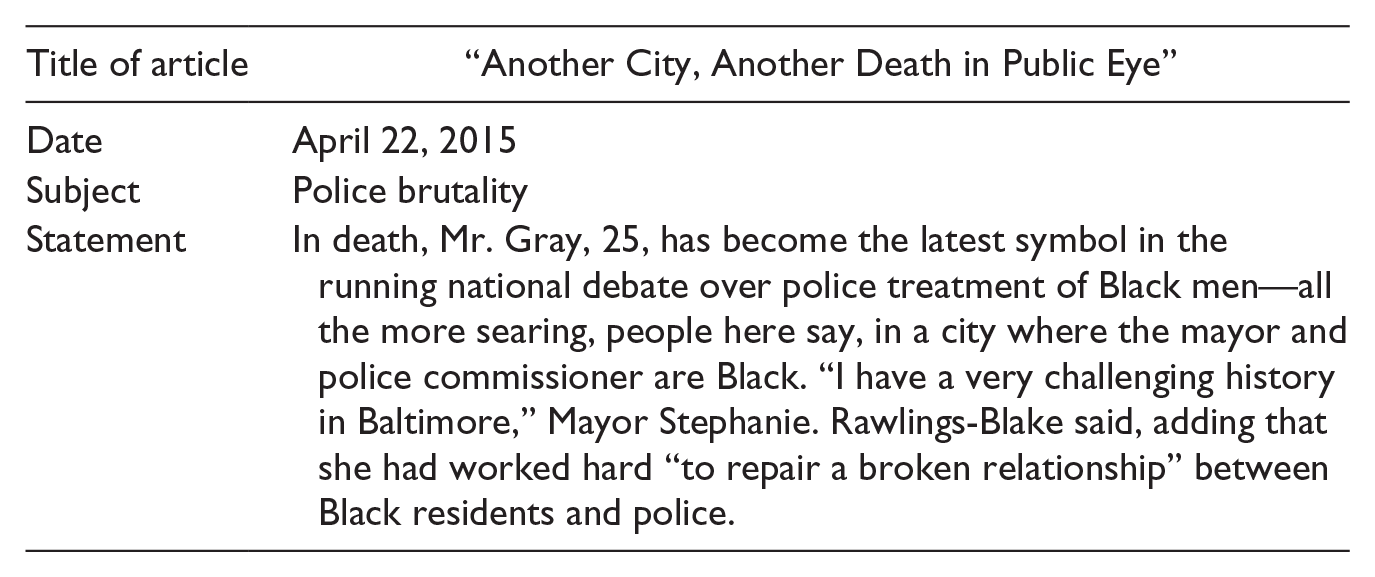
The movement has faced opposition since its inception, however. In 2014, two police officers were killed in New York City, and the social movement faced its strongest backlash from police in that city. The police officers were killed in late December 2014 by Ismaaiyl Brinsley. On the day of the shooting, Brinsley (who committed suicide later that day) purportedly wrote on his Instagram account of his intentions to kill police as retribution for the recent deaths of Eric Garner and Michael Brown. The shootings occurred only weeks after grand juries refused to indict Daniel Pantaleo for the death of Eric Garner in July 2014 and Darren Wilson, the police officer who shot Michael Brown in Ferguson, Missouri, in August 2014. The two grand jury decisions resulted in widespread protests against police brutality in New York City, Ferguson, Missouri, and across the nation (Petersen-Smith, 2015). After the police shootings, the mayor of New York called for a moratorium on protests, and the Patrolman’s Benevolent Association (PBA) and right-wing media argued that Black Lives Matter was responsible for the killings. Black Lives Matters officially condemned the shooting deaths of the two police officers (Hanson, 2014). PBA President Patrick Lynch noted, “There’s blood on many hands tonight—those that incited violence on the street under the guise of protests, that tried to tear down what New York City police officers did every day” (Petersen-Smith, 2015, para. 9). Moreover, the PBA has appropriated the language from Black Lives Matter to confront injustice and created “Blue Lives Matter.” As Ebony magazine senior editor noted,
There will be no end to the cry of Black Lives Matter and this movement will not take on the responsibility for crimes it did not commit. Period. I don’t have to say that “Blue lives matter,” because neither society nor “the system” has ever suggested otherwise—quite the opposite, in fact. (Petersen-Smith, 2015, para. 11)
As a social movement, Black Lives Matter has been criticized for not having a coherent set of goals. In a meeting between some of its activists and then-Democratic presidential candidate Hillary Clinton, a leaked video showed several activists unprepared to outline a straightforward agenda. Clinton gave them some sound advice: “Marches and pressure tactics are good first steps, but real change comes from goals and a political endgame” (J. P. Williams, 2015, para. 5). As a result, Black Lives Matter created a new website called “Campaign Zero” and came up with 10 policy solutions for ending police violence (http://www.joincampaignzero.org/#campaign).
Civil Rights Movement
Although Black Lives Matter has relied on social media, the civil rights movement relied on the energy and enthusiasm of young people. During the infancy of the civil rights movement, four African American male college students sat in at a Woolworth’s in Greensboro, North Carolina, on February 1, 1960. They were there to protest Jim Crow laws in the South that segregated lunch counters, and were criticized by some Black people and White liberals as being too radical (Dreier, 2015). Within weeks, the sit-in movement began spreading throughout cities in the South, and the nation with Black and White students engaged in nonviolent passive resistance. Frank Porter Graham, former United States Senator and president of the University of North Carolina, added that the “black protestors are ‘in their day and generation renewing springs of American democracy, . . . sitting down they are standing up for the American dream’” (Sitkoff, 2008, p. 80). In 2 months, over 300 Black and White college students from across the nation would meet at Shaw University in Raleigh, North Carolina, and form the Student Nonviolent Coordinating Committee (SNCC). Ella Baker, a SCLC advisor to the students, openly told them to be independent of older groups and to set their own goals. Diane Nash, a student at Fisk University who led the Nashville Student Movement, would later remark that “the media and history refer to it as Martin Luther King’s movement, but young people should realize that it was people just like them, their age, that formulated goals and strategies, and actually developed the movement” (J. Williams, 2013, p. 184).
These young students would go on to play a major role in the Freedom Rides in 1961, the March on Washington for Jobs and Freedom in 1963, the Mississippi Freedom Summer Project in 1964, and major voting registration efforts throughout the South in 1965. These events would eventually lead to the passage of the Civil Rights Act of 1964 and (Dreier, 2015; the Voting Rights Act of 1965). Young people transformed the civil rights movement and gave it energy, enthusiasm, dedication, and idealism: Segregation was wrong, and they were determined to end it. President John F. Kennedy (1961) remarked in his inaugural address in 1961 that
the torch has been passed to a new generation of Americans—born in this century, tempered by war, disciplined by a hard and bitter peace, proud of our ancient heritage, and unwilling to witness or permit the slow undoing of those human rights to which this nation has always been committed, and to which I am committed today . . . (para. 3)
Many young Black and White Americans took those words to heart. In addition, they were determined to change this country for the better. Ironically, the death of a 14-year-old African American boy in Money, Mississippi, in 1955 helped spark that change. All the young members of SNCC would later have a story to tell about where they were when they heard about the death of Emmett Till. John Lewis, a former chairman of SNCC, stated in his memoir, Walking with the Wind,
As for me, I was shaken to the core by the killing of Emmett Till, I was fifteen, black, at the edge of my own manhood, just like him. He could have been me. That could have been me, beaten, tortured, dead at the bottom of a river. (Lewis & D’Orso, 1998, p. 47)
Lewis would go on to write, “But as I began to come of age in the mid-1950s, the landscape had begun to shift. The time had come. I could feel it. I could see it” (p. 48). Martin Luther King would refer to this feeling as well, calling it the zeitgeist, or spirit of the times. Moreover, members of Black Lives Matter identify with the death of Emmett Till. In fact, they see similarities between the death of Emmett Till and the death of Michael Brown, so much so that at some of their rallies they can be heard chanting, “How many black kids will you kill? Michael Brown, Emmett Till!” (Tyson, 2017, p. 213).
Movement Similarities and Differences
Inclusive and Exclusive Messaging
Not unlike the college students of the 1960s, the young activists of the Black Lives Matter Movement are being criticized by African Americans and White people alike as also being too militant. Author and activist in the civil rights movement Barbara Reynolds wrote that she finds it hard to get behind Black Lives Matter. She drew a contrast between the civil rights protesters in the 1960s and the Black Lives Matter protesters of today:
. . . at protests today, it is difficult to distinguish legitimate activists from the mob actors who burn and loot. The demonstrations are peppered with hate speech, profanity, and guys with sagging pants that show their underwear. Even if the Black Lives Matter activists are not the ones participating in the boorish language and dress, neither are they condemning it. (Reynolds, 2015, para. 4)
Oprah Winfrey, television talk show host and philanthropist, has criticized Black Lives Matter for lacking clearly defined leadership at the top that lays out a plan of action (Reynolds, 2015). After a series of confrontations between Black Lives Matter members and Democratic candidates for President in 2015, the lone African American Republican presidential candidate Ben Carson declared, “‘The BlackLivesMatter’ movement is focused on the wrong targets, to the detriment of blacks who would like to see real change . . .” (Stableford, 2015). Appearing on cable news network CNN, conservative African American law professor, Carol Swain, proclaimed she would like to see an end to Black Lives Matter because it is a very destructive force in America (Diaz, 2016). Other Black scholars, such as economist Glen Loury, want the movement to succeed, but feel it is going about it in the wrong way. Loury wrote in an op-ed piece that the movement was off on the wrong foot “with tactics that alienate needed allies” (Loury, 2015, para. 1). According to Loury, simply shouting down White politicians who state All Lives Matter rather than Black Lives Matter hardly constitutes racial justice (Loury, 2015).
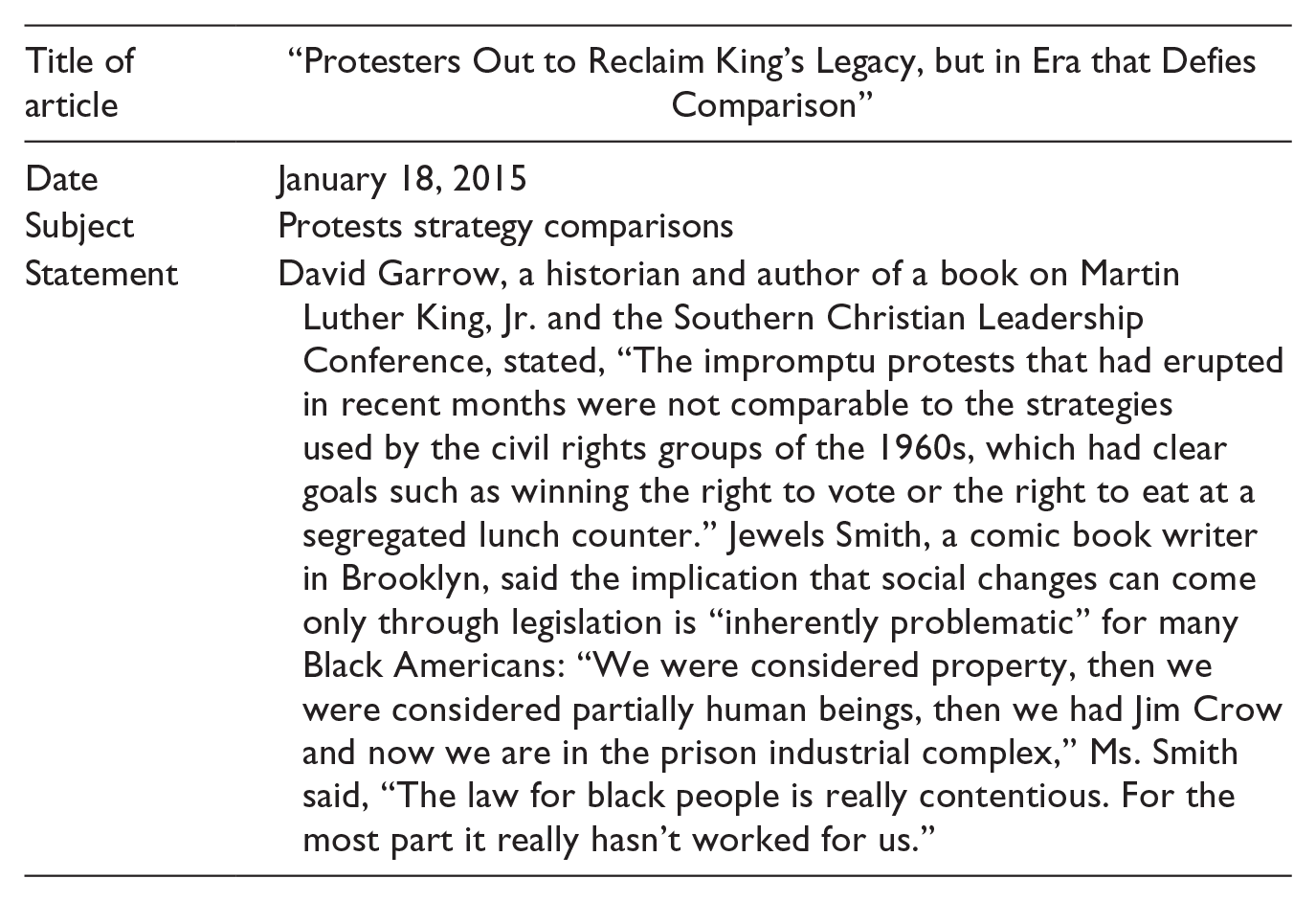
But Reynolds and other Black critics who were activists 50 years ago during the civil rights movement may not remember how they, too, were criticized by their elders as being too militant and lashed out at them as well. In addition, Black Lives Matter has been criticized for some of its extreme forms of civil disobedience, from “disrupting the St. Louis Symphony, to interrupting presidential campaigns . . .” (Chancellor, 2016, para. 9).
Ironically, during a “Justice for All” march against police violence held in Washington, D.C., Black Lives Matter activists took over the stage and appropriated the microphone from Al Sharpton, organizer of the march and a longtime civil rights activist. Furthermore, Black Lives Matter interrupted a town hall meeting held by a progressive organization that had invited presidential candidates Senator Bernie Sanders and Governor Martin O’Malley, “demanding they present concrete actions for addressing racial injustice” (Dreier, 2015, para. 13). At a subsequent rally in Seattle on Social Security, when Bernie Sanders began speaking, a Black Lives Matter activist took the microphone away from him and began a rant about racism in Seattle. She would not give the microphone back to Sanders, so organizers ended the rally without Sanders getting to speak.
After a march in New York City in response to the death of Eric Garner and others, the crowd shouted that they wanted to see “dead cops.” The event was organized as the Millions March, which included a coalition of different organizations, but a conservative television commentator attributed the chant to Black Lives Matter, and for a month stoked controversy by showing video footage of the march to his audience and calling the movement a hate group (Cobb, 2016). However, at a Net Roots Nation Presidential Town Hall meeting in Phoenix, Arizona, not long after the protests in Ferguson and Baltimore, Patrisee Cullors, one of the founders of Black Lives Matter, can be seen on videotape shouting, “Burn everything down” and “Shut this crap down,” and exhorting her fellow Black Lives Matter members to join in (Chumley, 2015, para. 2). The expression “Shut it down” has become a popular theme in Black Lives Matter street protests and on social media, and is more than just a refrain:
Beyond a rhetorical slogan, this has found expression in the real world as activists in dozens of cities have marched onto highways to disrupt traffic; linked arms across railroad tracks to stop trains; sat down in urban intersections; delayed sporting events; and temporarily occupied shopping malls, major retail stores, police departments, and city halls. (Petersen-Smith, 2015, para. 4)
Although some of these tactics by Black Lives Matter are considered extreme (and more militant than the civil rights movement from its beginning), social movements have always engaged in confrontation in order to place their issues at the top of the public agenda. When the SCLC began its campaign in Birmingham, Alabama in 1963, Martin Luther King was admonished by a local group of White clergy who published a diatribe against him in the local newspaper “calling him a troublemaker and a communist, and saying he was there stirring up trouble to get publicity” (Hampton & Fayer, 1990, p. 130). King was in jail in Birmingham in 1963 on Good Friday because of violating a court injunction not to hold a march, and while in solitary confinement he wrote a response to his White brethren, which was later published as the essay “Letter from a Birmingham Jail.” In it, King provided the justification as to why nonviolent direct action is more appropriate than negotiation. King (1963) wrote, “The purpose of our direct-action program is to create a situation so crisis-packed that it will inevitably open the door to negotiation” (para. 9). According to King, nonviolent direct action meant confrontation. Simone Sebastian wrote, “Whether in the 1960s or the 2010s, the aggressive disruption of American race relations has caused the same anger and fear—from Northerners and Southerners, from blacks and whites, from liberal ‘allies’ and racist adversaries” (Sebastian, 2015, para. 4).
Leadership Styles
Black Lives Matter, though considered as continuing the struggle for Black liberation where the civil rights movement left off, is indeed similar in many ways but vastly different in others. Because of the infancy of Black Lives Matter, it is difficult to make a complete comparison with the civil rights movement. One major difference, however, is the leadership structure of the two organizations. Black Lives Matter has rejected the civil rights movement’s “hierarchical style of leadership, with the straight black male at the top giving orders” (Reynolds, 2015, para. 16). As a movement, it is highly decentralized and unstructured. Political scientist Fredrick Harris has noted,
In some ways, the new tools of technology—particularly social media and especially Twitter—have facilitated the emergence of just such a bottom-up insurgency led by ordinary people, and have displaced the top-down approach of old guard civil rights organizations. (Harris, 2015, para. 11)
Moreover, Black Lives Matter “gives special attention to the needs of black queers, the black transgendered, the black undocumented, black incarcerated, and others . . .” (Reynolds, 2015, para. 16). In fact, three women founded the movement. Conversely, the civil rights movement of the 1950s and 1960s was male dominated. There were heroines of the civil rights movement, women such as Ella Baker, who was the adviser to SNCC and a lieutenant in the SCLC, SNCC activist Fannie Lou Hamer, and Rosa Parks, who helped spark the Montgomery bus boycott by refusing to give up her seat to a White man. However, they were relegated to secondary roles at the March on Washington in 1963, and were not allowed to speak or march with the male leaders (Reynolds, 2015). In addition, although much of the police violence in this country is directed at African American males, the Black Lives Matter Movement does not allow the abuse of Black women to go unnoticed. When Sandra Bland, an African American woman, died in a jail cell after she was arrested for a minor traffic violation, Black Lives Matter made sure the media gave her case full coverage. Unlike the civil rights movement, Black Lives Matter is decentralized, and does not want one leader but rather encourages leaders from communities all across this country. Because of social media, individuals in Black Lives Matter can engage in grassroots organizing in their local communities. Furthermore, the civil rights movement grew out of the African American church and engaged in respectability politics. Martin Luther King, Jr. and southern Black ministers founded the SCLC as an organization committed to breaking down “Jim Crow” laws in a nonconfrontational manner. The Black church played a pivotal role for African Americans in cities and towns throughout the South in the Black struggle for freedom. In a system of legal apartheid, the Black church was one of the few public places that African Americans could meet and speak openly and freely. Many of these Black churches held mass meetings, rallies, and planned strategies for protests and marches. In addition, the Black church was one of the few places that African Americans could exercise positions of leadership in a segregated society—many of the Black leaders of the movement came out of the Black church and the structure it provided (J. Williams, 2013).
For example, when college students sat at lunch counters throughout the South during the sit-ins, they were dressed in their Sunday best. They sat quietly with their school textbooks and did their homework. They were courteous at all times, they sat up straight, always facing the counter, and they did not strike back or curse when abused. Furthermore, they were respectful of authority figures and the police. When the integrated group of students traveled on the Freedom Rides from Washington, D.C., to New Orleans in 1961, they, too, were handsomely attired, mild mannered, and well behaved. They, too, sat quietly, and read their textbooks and newspapers as they waited patiently for transportation at the bus terminals throughout the South. In Nashville, and across the South, students had prepared for the sit-ins and Freedom Rides by engaging in nonviolent workshops conducted by Jim Lawson. Lawson had been a missionary in India, and studied the teachings of Mahatma Gandhi and brought Gandhi’s philosophy and tactics of nonviolence to this country. Training is a common occurrence among successful movements. Lewis would note in his memoir that protests are extremely stressful and often met with fierce opposition. Training allowed the young activists to maintain discipline and to have a shared sense of purpose (Satell, 2016). In addition, the students believed in Martin Luther King Jr.’s philosophy of nonviolence based on the teachings of Jesus and Christianity. The students were showing the country and the world that their social values were the mainstream values of America. That strategy, known as “respectability politics,” refers to attempts by marginalized groups (in this case, African Americans) to show their social values as being continuous and compatible with mainstream values rather than challenging the mainstream for its failure to accept difference (Harris, 2014). Conversely, Black Lives Matter wants to move beyond respectability politics. During the civil rights movement, respectability politics was the
concept of the “Talented Tenth”: it commanded black elites to “lift as I climb,” or to prove to white America that blacks were worthy of full citizenship rights by getting the untalented nine-tenths to rid themselves of bad customs and habits. (para. 4)
As a social movement, Black Lives Matter would just as soon challenge the mainstream values as they are doing with the multiple identities that coexist within the movement: class, race, gender, and sexuality. Noted Alicia Garza, one of the founders, “People think we’re engaged in identity politics. The truth is that we’re doing what the labor movement has always done—organizing people who are at the bottom” (Cobb, 2016, para. 26).
Historian Peniel Joseph has remarked that “today’s #BlackLivesMatter is being waged in the ‘long shadow’ of the Civil Rights Movement in the quest to do nothing less than to redefine American democracy” (Chancellor, 2016, para. 18). Both social movements have had to face the ideological and structural impediments of racism that still exist in the United States. In fact, the systemic racism that exists in America today has brought about the need for Black Lives Matter in the continuing struggle for Black liberation in America. In response to the slogan “Black Lives Matter,” some White people have countered with the slogan “All Lives Matter.” Judith Butler has stated that “those who assert All Lives Matter misunderstand the problem, not because the message is untrue. It is true that all lives matter, but it is equally true that not all lives are understood to matter . . .” (Shor, 2015, para. 17). Shor argued that the major impediments are “not just ideological but structural, that these young activists confront the role of neoliberalism in the economic and political policies of the state.” In addition, he argued that during the 1960s, the civil rights movement won its political victories in a climate of the expanding welfare state and democratic rights. Conversely, the neoliberal state has reduced those rights and looks to privatization (corporate sources) rather than government solutions (Shor, 2015). It is that resistance that both social movements have in common.
During the civil rights movement, resistance came in the form of cries of “We Shall Overcome” by the young students of SNCC and Congress of Racial Equality (CORE). Today, the young activists’ refrain is “Black Lives Matter.” Just as the civil rights protesters faced resistance and were referred to as outside agitators and Communists, the Black Lives Matter members face resistance from law enforcement entities around the country as well as others who believe the movement has declared war on police departments. Some go so far as to argue that police officers have been killed “because political rhetoric has turned against them” (Weigel & Zezima, 2015, para. 11).
Issue Framing
Nonviolent strategies alone do not account for the success of the civil rights movement. Historian Adam Faircloth asserted that King “maintained to the end of his life that it was far more important to dramatize the broader issues and generate the pressure for change than to draft precise or specific legislation” (Engler & Engler, 2016, p. 141). The legal achievements and articulation of Black grievances in terms of “equal rights” paved the constitutional ground on which African Americans could begin to demand change (Hamilton, 1986; Tarrow, 1998). This articulation of the Black struggle as a matter of equal rights was a strategic tactic: It provided a context to frame the myriad issues faced by Black people. Moreover, the civil rights movement framed the confrontation between nonviolent peaceful protesters and volatile southern police chiefs with dogs and fire hoses as a fight between good and evil.
According to social movement scholars Snow and Benford (1992), the process of framing an issue constitutes a major avenue through which collective action is possible. The respective social movements that followed the civil rights movement adopted the movement’s issue framing of equal rights and opportunities to express their own grievances (Hamilton, 1986; Norman, 2009; Tarrow, 1998). This reflects what Snow and Benford (1992) referred to as the “master frame.” To “master frame” is to provide a broad, generic collective action framework for an issue that allows numerous groups to articulate their own cause within its borders. It is wider in scope and influence than run-of-the-mill social movement frames (Snow & Benford, 1992). In scholar Doug McAdam’s (1996) analysis of the civil rights movement, he stated that Martin Luther King, Jr. used both conventional and novel themes to construct a coherent and resonant master frame: “In his unique blending of familiar Christian themes and conventional democratic theory, King succeeded in grounding the movement in two of the ideational bedrocks of American culture” (p. 347). Moreover, asserted McAdam, the theme of Christian forgiveness was reassuring to a White America burdened by guilt and fear of Black anger and violence (McAdam, 1996).
Social movement scholar Greg Satell argued that this emphasis on Christian values and nonviolence promised a redemptive and peaceful healing to America’s racial divide (Satell, 2015). This was demonstrated tactically in the early years of the movement by sit-ins, Freedom Rides, and other nonviolent and dramatic events. Despite media coverage of Blacks being brutally beaten and verbally abused, the movement did not gain much traction (Doctson, 2016). Satell argued that before the March on Washington in 1963, many Americans saw civil rights as a Black problem or a southern problem (Satell, 2015). However, the March on Washington was designed not to preach to the choir but to appeal to mainstream America. King accomplished this by harkening back to democratic theory. In his “I Have a Dream” speech, he invoked the ideals embedded in the Declaration of Independence. The speech “spoke not just to the problems of African Americans, but to the founding principles of the nation” (para. 5). This example of framing draws on connections that people are familiar with: Very few people have experienced real oppression; however, the principles codified in the Declaration of Independence are integral to our beliefs (Satell, 2015). The issue of civil rights now came to be seen as a problem of national identity (Satell, 2015). Ordinary people and politicians outside the movement were now inspired to support it. Thus, the civil rights movement contained an ideology of many frames (Doctson, 2016).
The literature on social movement theory teaches that the expansiveness or constraint of the organizing principle on which the movement is grounded—the choice of master frame—is crucial to its power and longevity (FrameWorks Institute, 2005). Benford asserted that once a social movement fashions and espouses a highly resonant frame that is broad and interpretive in scope, other social movements within a cycle of protest will modify that frame and apply it to their own cause. Benford (2013) noted that
once the Civil Rights Movement in the United States experienced a series of successes in the 1950s and 1960s based on the equal rights and opportunities frame, several other movements, including the American Indian, women’s, LGBTQ, Chicano/a, and Grey Panthers,
1
adopted and proffered a similar frame to their specific movement campaigns.
In retrospect, the wealth of literature that emerged from collective action, because of the groundbreaking victories of the civil rights movement, reveals a crucial point of reference, which any scholarship on social movements must consider.
Media Coverage: Newspaper Content Analysis
To further the comparative analysis between the civil rights movement and the Black Lives Matter Movement, I conducted a content analysis of the New York Times newspaper to determine whether its coverage was more favorable to one group as opposed to the other. Upon completion of the analysis, the reader should better understand the similarities and differences between the two movements.
Data and method
Political protest and the participation of people in social movements are both forms of collective action. These collective actions provide important insight for predicting and defining occurrences of change within society. The recent development of collectivity under the banner “Black Lives Matter” serves as the focal interest of this article. Black Lives Matter gained widespread publicity in numerous demonstrations and protests, demanding reform in social justice and the police excessive use of force. In light of this, I wanted to learn more about Black Lives Matter, how the media has come to frame it, and the prospect of meeting the demands of the movement. I began with a search of the New York Times for a 2-year period: January 1, 2014, to January 1, 2016. Although the Black Lives Matter Movement officially began when George Zimmerman was acquitted of murdering Trayvon Martin, the movement did not reach national awareness until the deaths of Eric Garner in New York and Michael Brown in Ferguson, Missouri, in 2014, at the hands of police officers (Cobb, 2016). For my search, I selected the database ProQuest New York Times (Comprehensive full-text coverage of the New York Times, 1980-present). I began by searching for articles containing the following terms: “Black Lives Matter” or “#BlackLivesMatter.” Next, I selected articles containing statements made by participants based on whether they were framed as Human Rights statements or as Institutional Criticism statements. To accomplish this, I used key terms to identify articles that showed Black Lives Matter in one of those two categories. The keywords I selected to identify Human Rights statements were as follows: human rights, civil rights, values, liberty, freedom, equal protection under the law, dignity, free speech, respect, and democratic principles, The keywords selected to identify Institutional Criticism statements were police, government, institutions, criminal justice system, law, discrimination, prejudice, Jim Crow segregation, inequality, and racism.
I decided to search coverage of the civil rights movement in its formative years with the purpose to draw out similarities and possible comparison with the new Black Lives Matter Movement. Repeating the format used for Black Lives Matter, I selected the database ProQuest Search Historical Newspapers: New York Times. 2 The articles were chosen based on whether they were framed as Human Rights statements or as Institutional Criticism statements. I selected the same keywords to identify the different statements as I did for Black Lives Matter. I limited my content analysis of the civil rights movement to articles published between the dates January 1, 1960, and January 1, 1962—a 2-year time frame during the early days of the movement. This choice corresponded to my selection of a 2-year period of publications during the initial stages of the Black Lives Matter Movement. In addition, I selected the years 1960 and 1961 because those were the years in which two major Civil Rights events, largely conducted by young student members of the SNCC and the CORE, occurred. SNCC students held the sit-ins throughout the South in 1960, and CORE and SNCC combined, engaged in the Freedom Rides by traveling throughout the South in 1961. Although the sit-ins at lunch counters in the South and the death of Michael Brown are certainly incomparable, both events spurred protests and boycotts, and both relied on the enthusiasm and energy of young people for their activism.
Hypotheses
Article Reviews: Black Lives Matter
Institutional Criticism Statements. 3


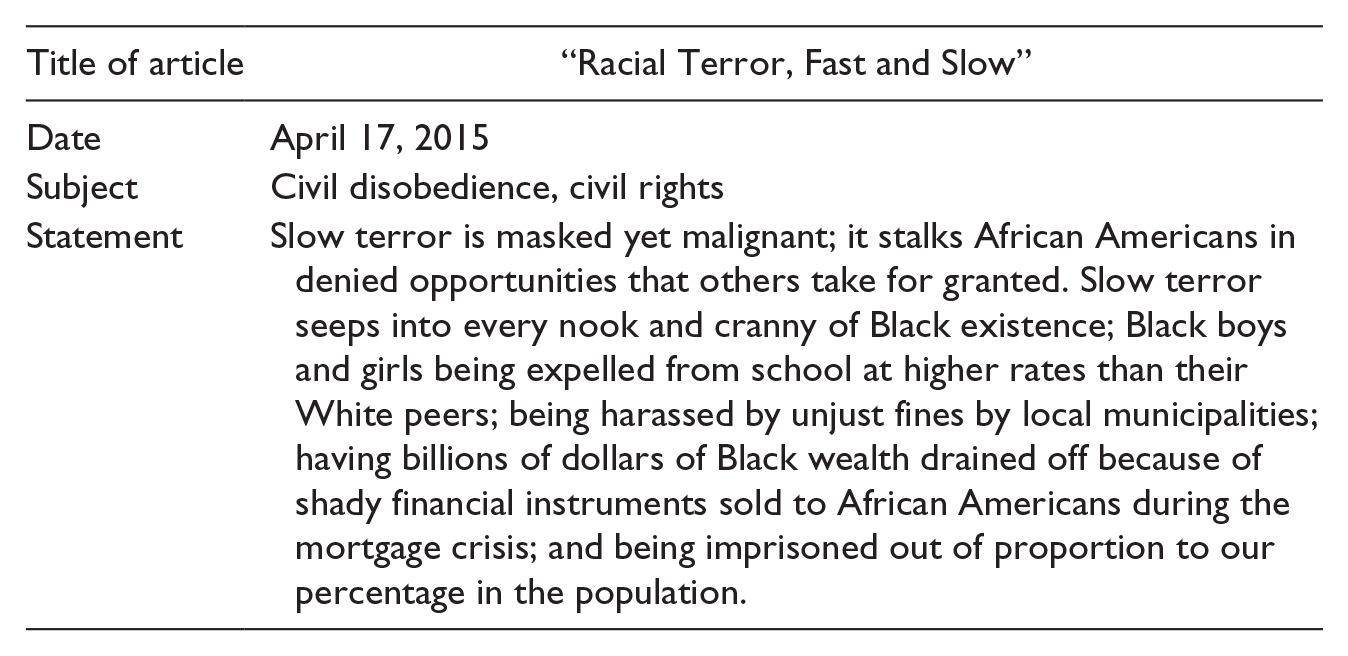
Human Rights Statements. 4

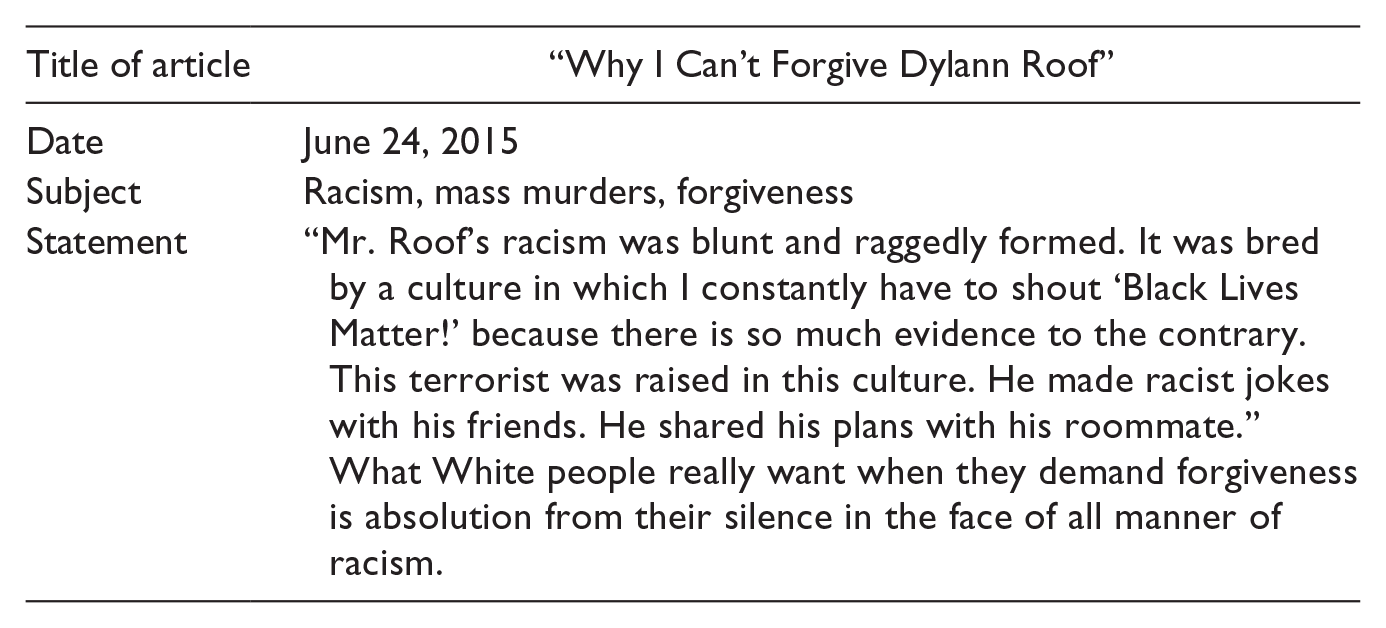
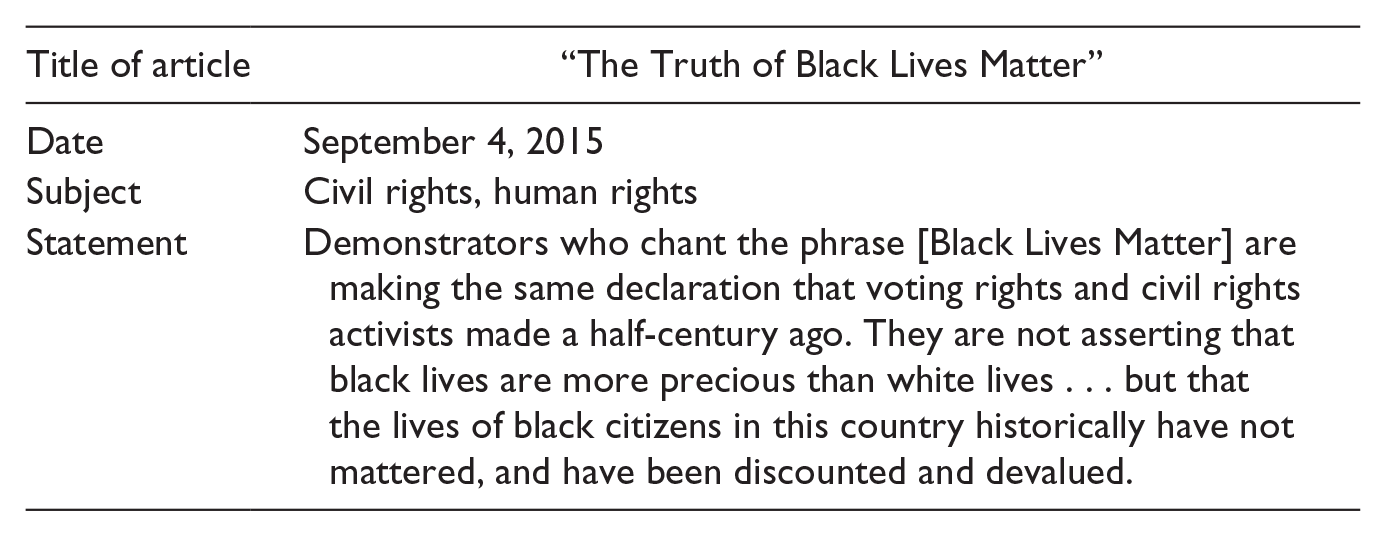

Article Reviews: The Civil Rights Movement
Institutional Criticism Statements.

Institutional Criticism Statements.


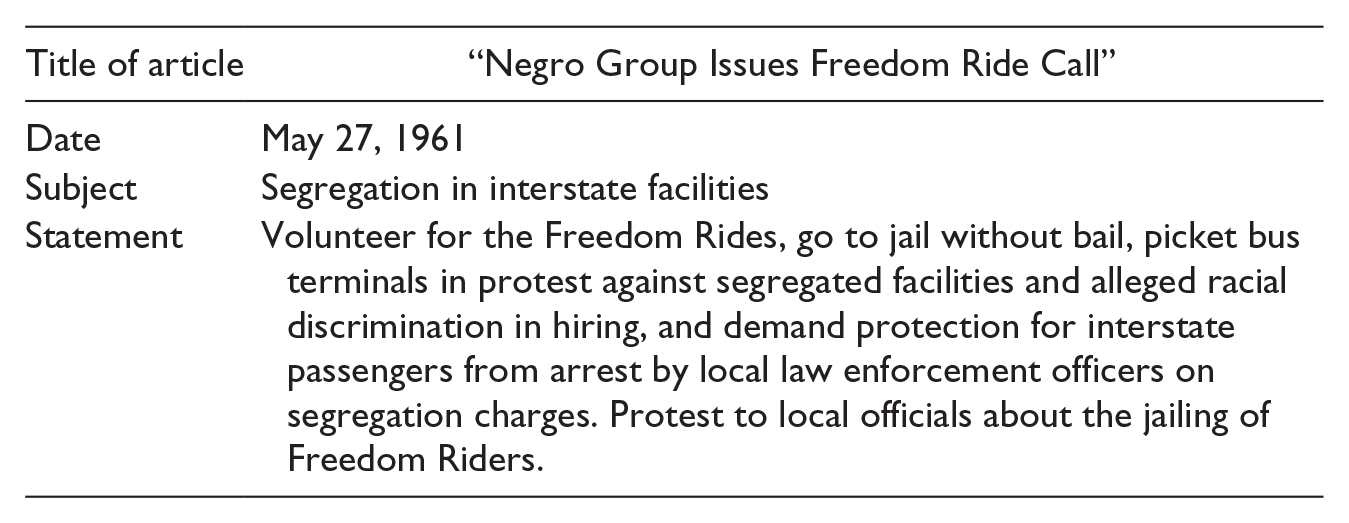
Human Rights Statements.
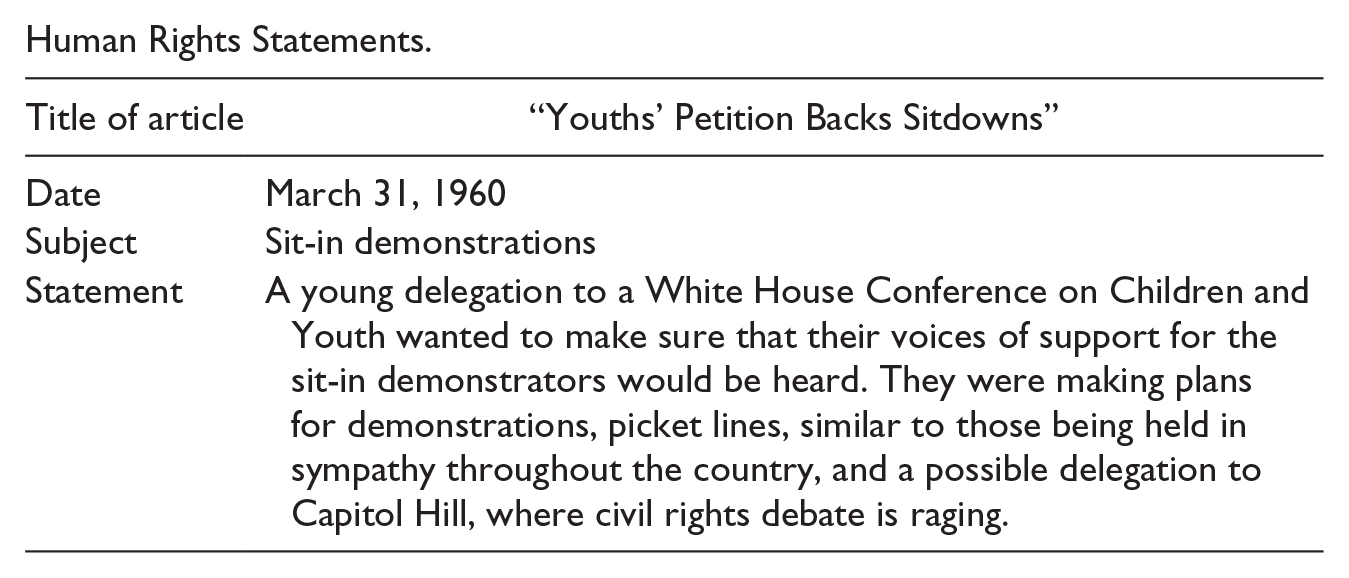
Human Rights Statements.
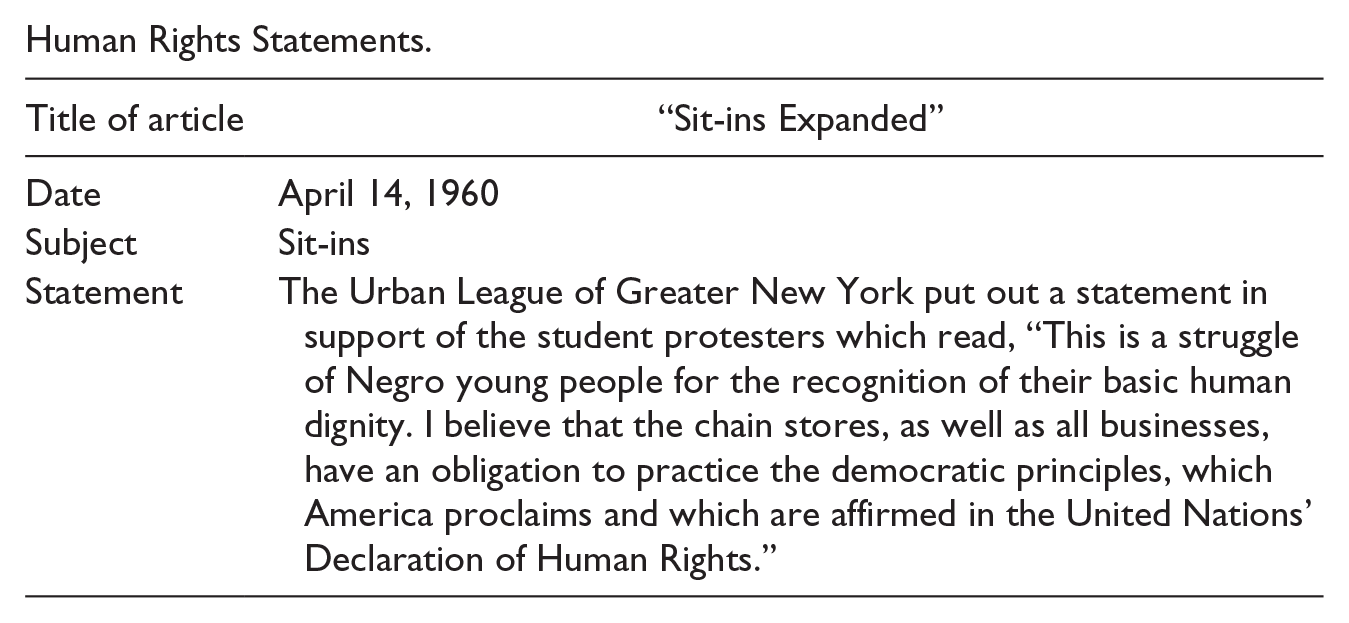
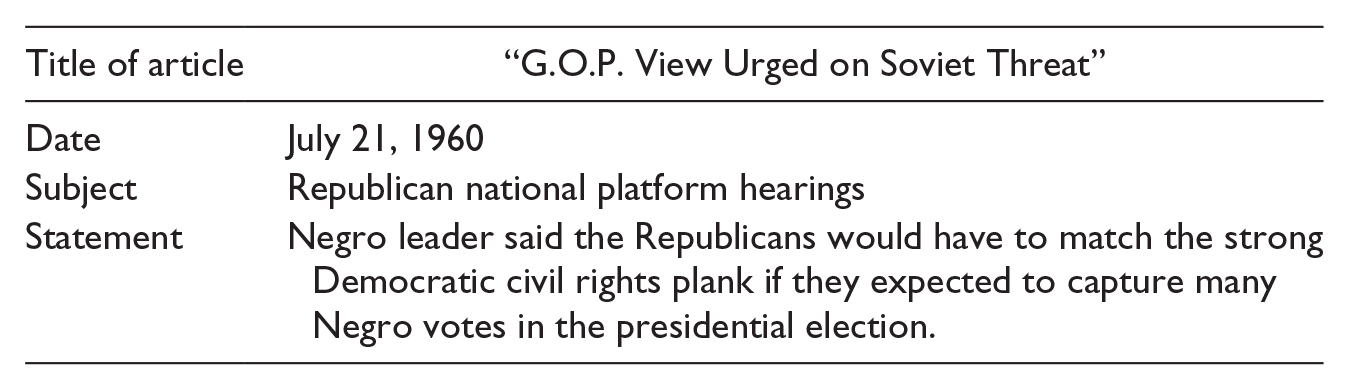
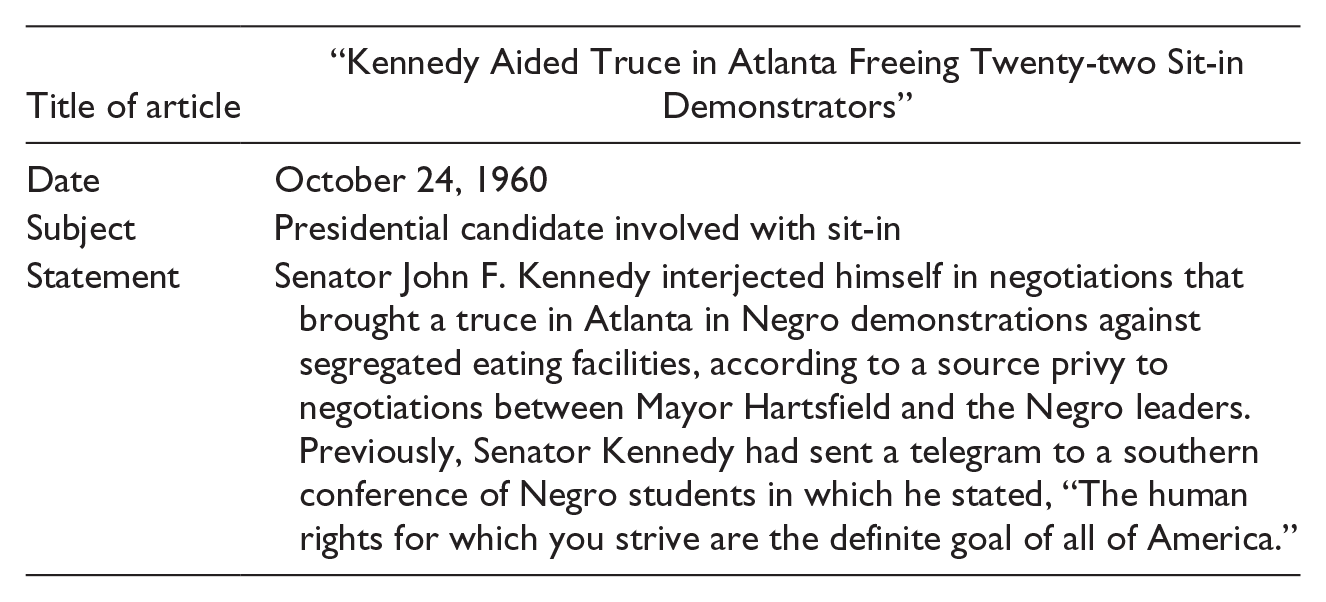
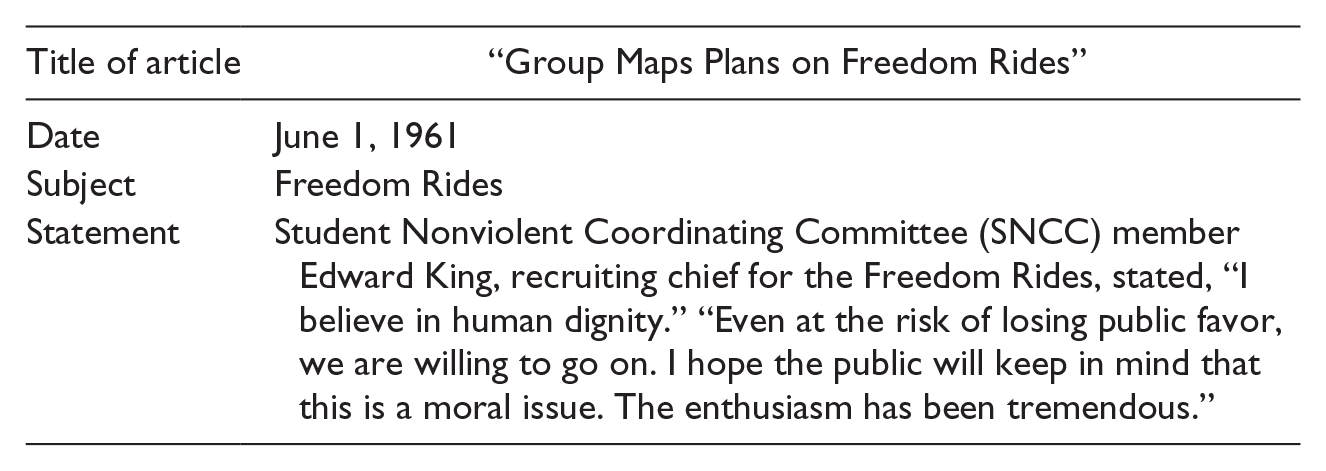
Findings
As previously stated, I examined the New York Times for articles about the civil rights movement from January 1, 1960, to January 1, 1962, and about the Black Lives Matter Movement from January 1, 2014, to January 1, 2016. The search of the New York Times for articles about the Black Lives Matter Movement yielded 209 articles. Of the 209 articles reviewed, only 42 articles contained keywords that identified them as Human Rights statements or Institutional Criticism statements. Of the 42 articles identified, 39 (92.8%) contained Institutional Criticism statements, six (14.2%) contained Human Rights statements, and three (7.1%) contained both statements. The search of the New York Times for articles about the civil rights movement during these years identified 39 articles. However, of these 39 articles, 36 (92.3%) contained keywords that identified them as Human Rights statements or Institutional Criticism statements or both. Of the 36 articles reviewed, 35 (97.2%) contained an Institutional Criticism statement, 10 (27.7%) referenced a Human Rights statement, and nine (25%) contained both a Human Rights statement and an Institutional Criticism statement.
Both an overwhelming majority of civil rights movement statements and Black Lives Matter Movement statements contained Institutional Criticism statements. I would expect to find this, given the analysis was conducted on two Black resistance social movements. However, based on my original hypothesis (H1—Media framing of the civil rights movement is more likely to have a Human Rights focus than an Institutional Criticism focus), I did not expect to find the civil rights movement articles to have a larger percentage of Institutional Criticism statements than the Black Lives Matter Movement. So, my content analysis proved my alternative hypothesis (H2—Media framing of the Black Lives Matter Movement is more likely to have a Human Rights focus than an Institutional Criticism focus) rather than the original hypothesis.
I expected to find more civil rights movement articles containing Human Rights statements, because of how Dr. Martin Luther King, who became the symbol of the movement, spoke with a new voice. His message of nonviolent, passive resistance was inclusive, and appealed to America’s ideals that “all men are created equal” and to the democratic principles of equality, human rights, and freedom for all. Conversely, the Black Lives Matter Movement, though nonviolent, espouses a message of human rights and Black dignity, and has been portrayed by the media and academics as concerned primarily with aggressive policing and police brutality and on occasion, promoting violence (see above).
When analyzing the Human Rights statements and Institutional Criticism statements for both movements, 74 of the 78 articles (94.8%) contained Institutional Criticism statements. In addition, only 16 of the 78 articles (20%) contained Human Rights statements. Of the 78 articles reviewed, only 12 articles (15.3%), from both the Black Lives Matter Movement and the civil rights movement, contained both a Human Rights statement and an Institutional Criticism statement (see Table 1).
Cross-Tabulation: Human Rights Statements and Institutional Criticism Statements.

Discussion
I hypothesized that the Black Lives Matter Movement received less favorable media coverage from the New York Times than the civil rights movement. To test this, my research method was to conduct a content analysis of the New York Times coverage of the two groups for a 2-year period. Next, I identified newspaper articles from the civil rights movement and the Black Lives Matter Movement based on whether they contained Institutional Criticism statements or Human Rights statements. I selected several illuminating examples from each and flagged those I felt were most representative of the statements based on the keyword search (see Article Reviews). What I found was the New York Times coverage of both social movements did not portray the civil rights movement more favorably than the Black Lives Matter Movement. In other words, the New York Times framed the issues as the events unfolded, and from the perspective of the participants and observers involved. So, both the civil rights movement and the Black Lives Matter Movement each framed its own issues and not the New York Times.
Overall, in this study, the majority of Black Lives Matter articles published by the New York Times were institutional criticisms. This was to be expected because, as a social movement, Black Lives Matter has been primarily concerned with excessive policing, police brutality, and criminal justice reform. Their members see these as the civil rights issues of today. Moreover, the majority of civil rights movement articles by the New York Times also contained Institutional Criticism statements. This was not expected. Given that the civil rights movement of the 1960s was 50 years ago, I think that many today view that movement through rose-colored glasses. Contemporary textbooks portray King as “turning the other cheek and loving thy enemy.” In other words, many, but not all scholars and journalists, view the language coming out of the civil rights movement as appealing to the universal rights of man, the democratic principles this nation was founded on, and the U.S. Constitution. In reality, at that time, the southern region of this nation had a state-sanctioned system of racial apartheid. And White police departments and the power structures throughout southern cities and states were determined to maintain segregation down in Dixie.
Based on the keywords used to identify whether the articles contained Human Rights statements or Institutional Criticism statements, there were roughly 5 times fewer articles written on the civil rights movement (39) by the New York Times during the 1960-1961 period than on the Black Lives Matter Movement during the 2014-2015 period (209). One possible explanation for this is that in the early 1960s, the New York Times may not have given the civil rights movement (as a social movement) as much coverage as it would give a social movement today. Furthermore, news concerning African Americans was not covered extensively by the mainstream media in the 1960s. Another possible explanation is that the media today, with its 24/7 news coverage, is more expansive, given that there is much more competition with so many other newspapers and news outlets, including print and broadcast media, the Internet, and other forms of social media.
Conclusion
At the beginning of this article, I examined some major topics related to both social movements, and I hoped to tease out the similarities and differences of these two. For messaging, the messaging of the civil rights movement was one of inclusion. They defied authority, but they sought to attract converts from outside the movement. According to Satell (2015), “It’s easy to cater to passionate enthusiasts, but unless you can appeal to everyone else, you won’t get very far” (para. 11). Conversely, Black Lives Matter has struggled with a message of inclusion—many see their message as exclusive, specifically as anti-police. For leadership styles, the two organizations are vastly different. Black Lives Matter has rejected the traditional model of leadership: male-centered, top-down hierarchical style of the civil rights movement. The Black Lives Matter Movement prefers a more grassroots style of organizing and decentralized leadership that includes women, and those who identify as queer and transgender. For issue framing, both movements have taken a different approach to issue framing. The civil rights movement focused on core democratic values of equality, freedom and justice for all, and the rights of man. Furthermore, the genius of the civil rights movement is that they were able to elaborate these values into a master frame that made the civil rights problem an American problem. Today, Black Lives Matter does not utilize the same framing—it has yet to appeal to mainstream America and convince them that its concerns are part of the national identity. One key difference in the framing of Black Lives Matter is for the broader goal of “black humanity” (Harris, 2015). For media coverage, the media (New York Times) did not attempt to frame the issues of either movement (see the content analysis above).
People engage in activism because of some perceived societal problem. In the case of the civil rights movement, it was de jure segregation. In the case of the Black Lives Matter Movement, it is police brutality. Simply by saying “Black Lives Matter” does not mean that all lives do not matter. Black Lives Matter activists will tell anyone they are not against the police. They realize the difficult role the police have in maintaining order in their society. However, they are against bad policing practices—practices that shoot African Americans first and ask questions later. Some White people, however, have countered with the phrase “All Lives Matter.” And while at first glance this looks reasonable, author David Bedrick (2015) argues, “They are taking race out of the conversation. While the statement masquerades as a bright and inclusive light, in the shadow of this statement hides a willful ignorance of America’s racist past and present” (para. 4).
There are no laws in this country requiring police to treat Black people and White people differently; however, there are numerous examples of disparate treatment of African Americans by police such as racial profiling, broken windows policing, and stop-and-frisk policies. This country has a history of bias-based policing of African Americans that dates back to the days of slavery and through the Jim Crow era to the present. Therefore, Black Lives Matter activists have framed their issues in terms of racial bias in our criminal justice system. Many White Americans see the police as public servants who are there to protect them from harm. However, many in the Black community have a different experience with police officers. The slogan “Black Lives Matter” is offensive to some Americans—they would prefer the slogan “All Lives Matter.” Black Lives Matter as a rallying cry stands in sharp contrast to the rallying cry of the civil rights movement, “We Shall Overcome.”
But one could argue that Black Lives Matter is more inclusive than the civil rights movement. Many of the Black Lives Matter activists are women and members of the lesbian, gay, bisexual, transgender, and queer (LGBTQ) community. In addition, in spite of initial criticism and opposition, it has increasingly gained support from Black, White, and Hispanic Americans. Furthermore, 43% of all Americans support the movement, with a majority of African Americans, 65%, supporting it. Only 22% said that they opposed the movement. Conversely, public opinion polling in 1961 shows less public support at that time for the civil rights movement than current public opinion polling does for Black Lives Matter in 2016 (see Tables 2 and 3).
Support for the Black Lives Matter Movement.
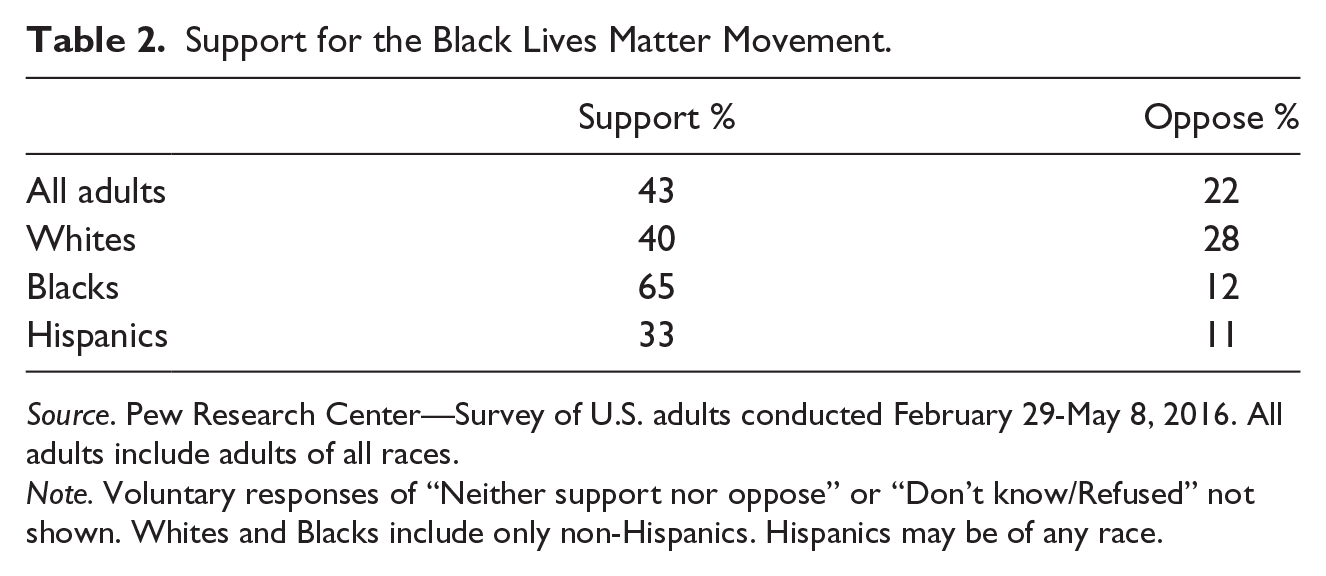
Source. Pew Research Center—Survey of U.S. adults conducted February 29-May 8, 2016. All adults include adults of all races.
Note. Voluntary responses of “Neither support nor oppose” or “Don’t know/Refused” not shown. Whites and Blacks include only non-Hispanics. Hispanics may be of any race.
Effectiveness of Sit-Ins and Freedom Rides.
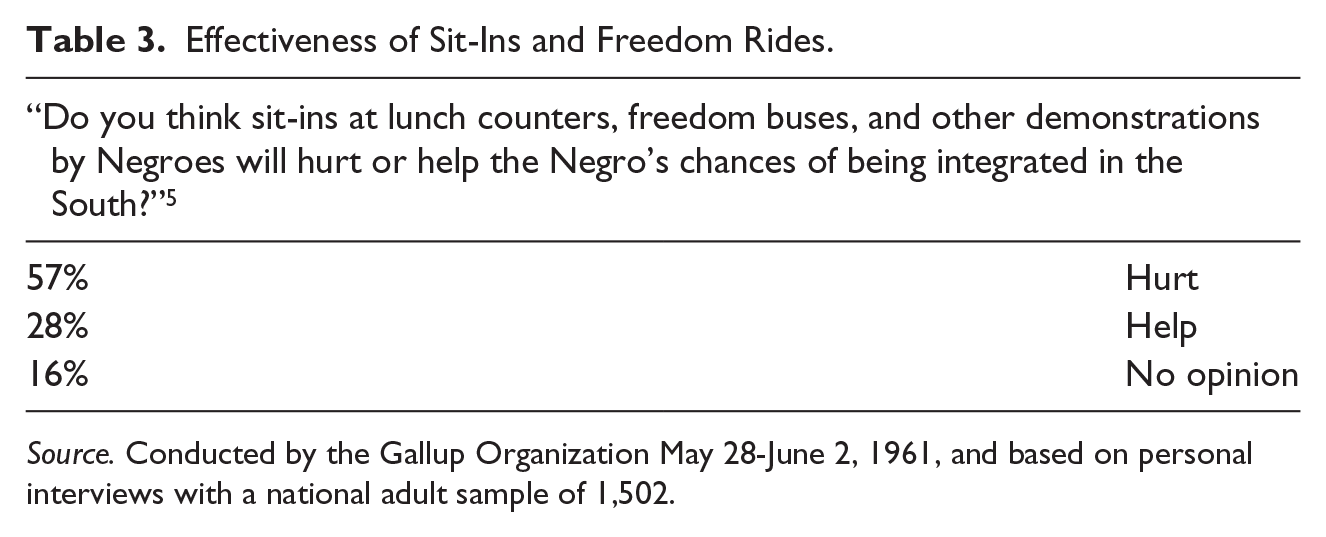
Source. Conducted by the Gallup Organization May 28-June 2, 1961, and based on personal interviews with a national adult sample of 1,502.
In retrospect, the civil rights movement is viewed as a positive element in advancing equality for all Americans. By the time of the March on Washington in 1963, Dr. Martin Luther King, Jr. was seen as the leader of the movement. However, no single person has surfaced from the Black Lives Matter Movement to exercise this kind of moral leadership. To be able to sustain itself, Black Lives Matter needs a dynamic, persuasive leader to emerge with a clear strategy as to the steps the movement should take to achieve its goals.
It is the purpose of social movements to be disruptive, to use combative tactics, and to interrupt business as usual. The civil rights movement led to the passage of landmark civil rights legislation in the 1960s: the Civil Rights Act of 1964 and the Voting Rights Act of 1965. Enough time has yet to pass to be able to evaluate how effective Black Lives Matter will be in ending police brutality against Black people in America. Nevertheless, it has already had an impact: It has placed the topic of police brutality and criminal justice reform at the top of the national agenda. Furthermore, scholars, civil rights organizations, public policy think tanks, and government officials at the national, state, and local levels are examining the issue of criminal justice reform, including members of the U.S. Congress, due in part to the Black Lives Matter Movement. The U.S. Department of Justice has entered into consent decrees with police departments around the country to make them accountable for use of excessive or deadly force.
Finally, future research needs to examine the role of social media in the organization and mobilization of Black Lives Matter. In addition, future research needs to examine the limitations of social media because the battle for Black lives is in the streets and not in cyberspace. Although social media has been an effective tool for Black Lives Matter, the civil rights movement was able to frame and reframe issues to attract support from mainstream America. Black Lives Matter is the newest iteration in the long struggle for Black liberation in this country. The style and approach of this new generation of activists to the issue of racial inequality differ from the civil rights movement, and that is refreshing. However, there are lessons to be learned from the civil rights movement, and this young movement should incorporate some of its more successful strategies.
Footnotes
Acknowledgements
The author would like to thank Maria Delaine and Asset Abuov as research assistants for their contributions, and for their comments and suggestions.
Declaration of Conflicting Interests
The author declared no potential conflicts of interest with respect to the research, authorship, and/or publication of this article.
Funding
The author received no financial support for the research, authorship, and/or publication of this article.